 View larger
100 Chart Printables
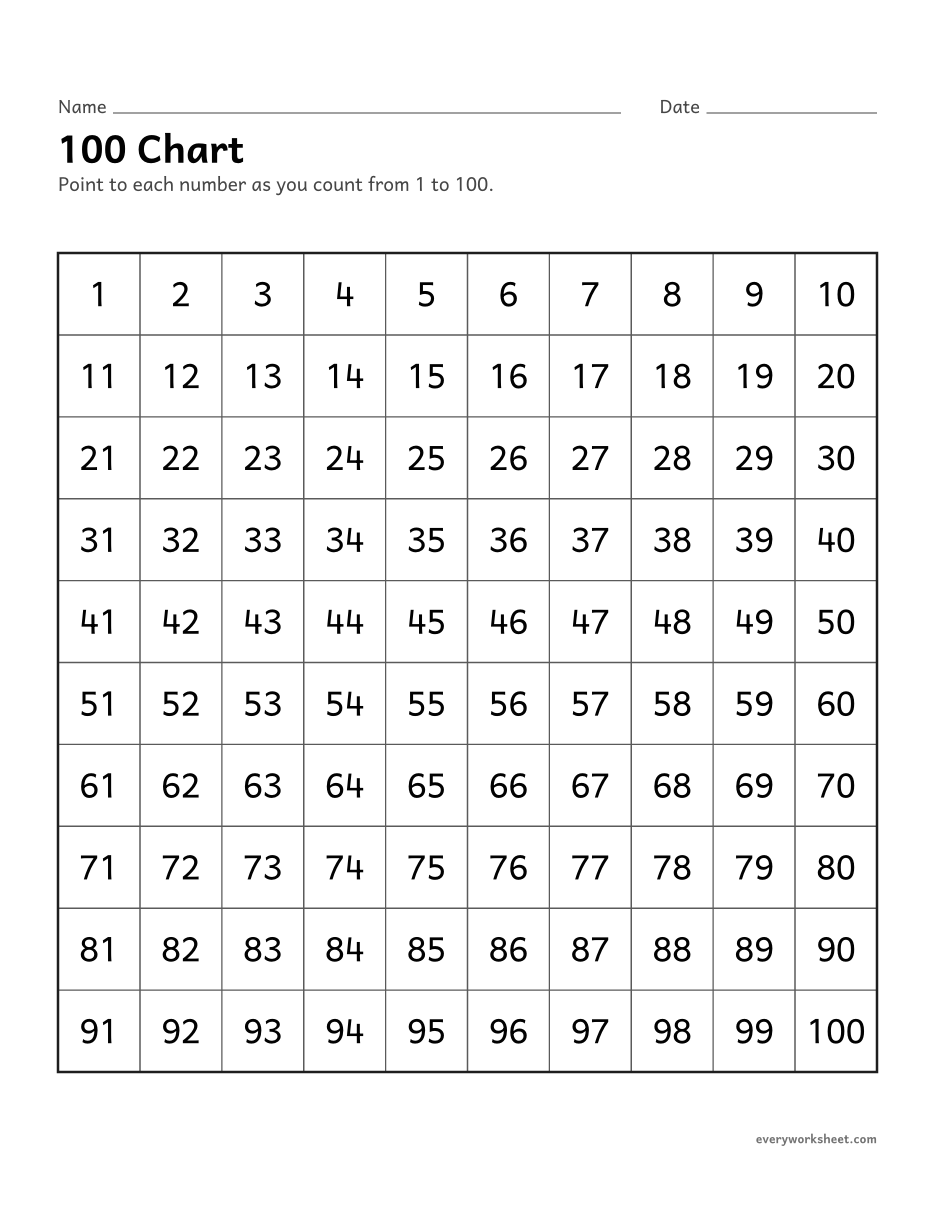
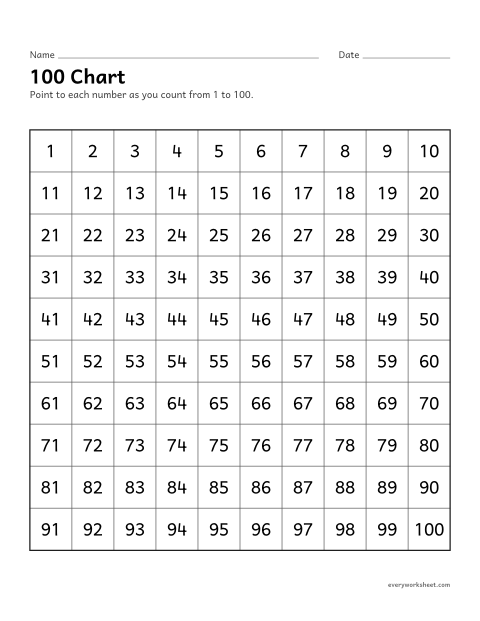
A clean number chart 1–100, a blank 100 chart, fill-in-the-missing-number charts, count by tens and fives, and 1–50 and 1–20 charts.
Download the 100 chart worksheets
 View larger
 View larger
 View all 2 pages
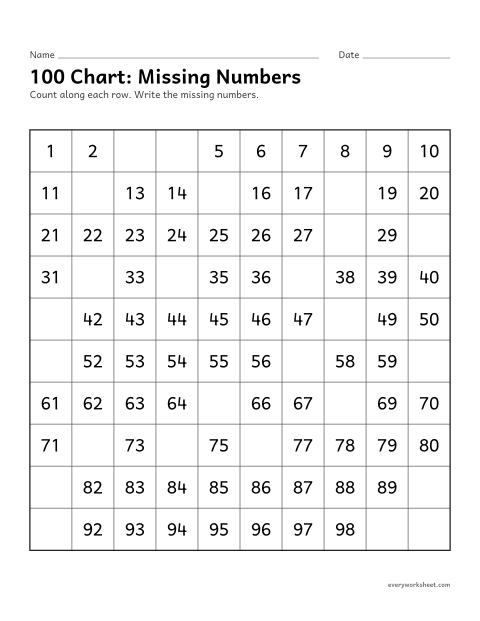
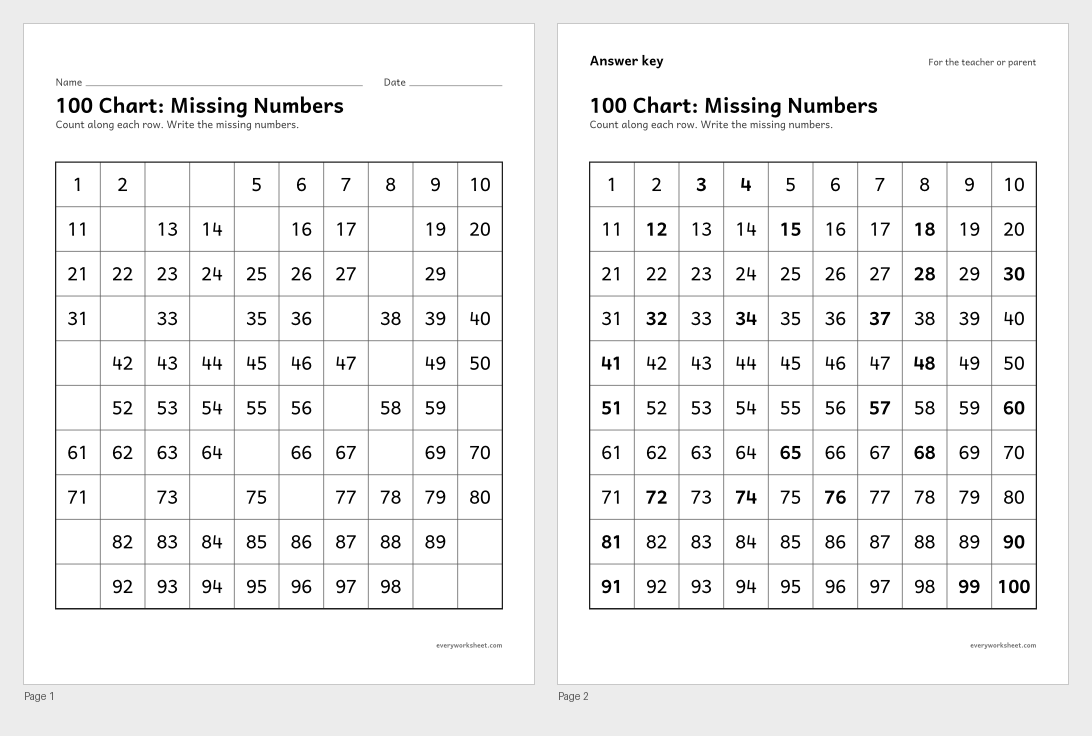
100 Chart: missing numbers
Filling in missing numbers on a 100 chart
Answer key on page 2
2 pages32 KB
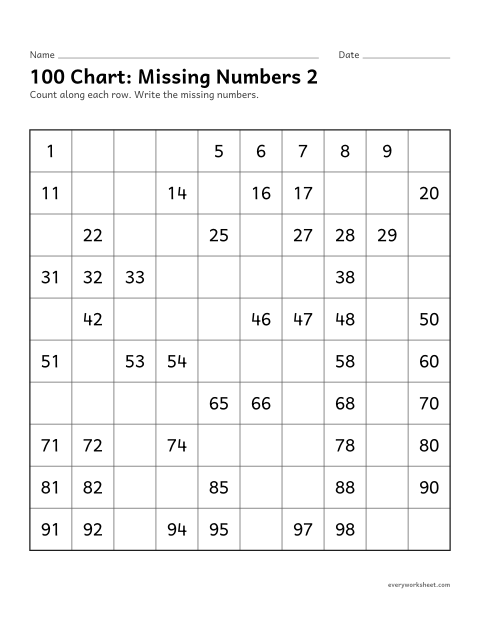 View all 2 pages
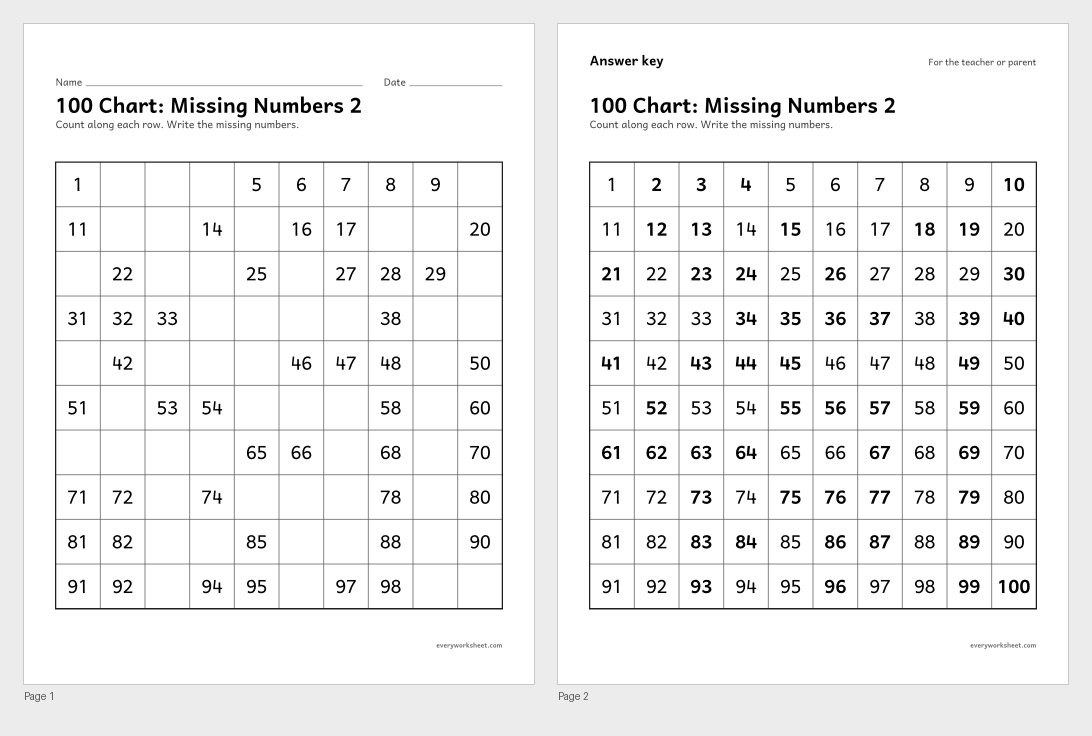
100 Chart: missing numbers 2
Filling in missing numbers on a 100 chart
Answer key on page 2
2 pages32 KB
 View all 2 pages
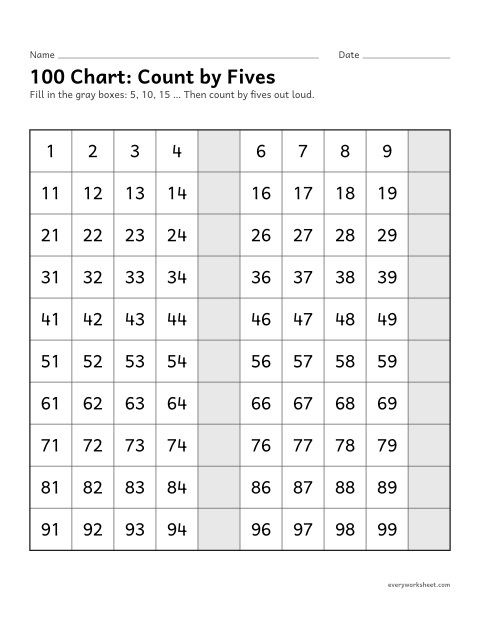 View all 2 pages
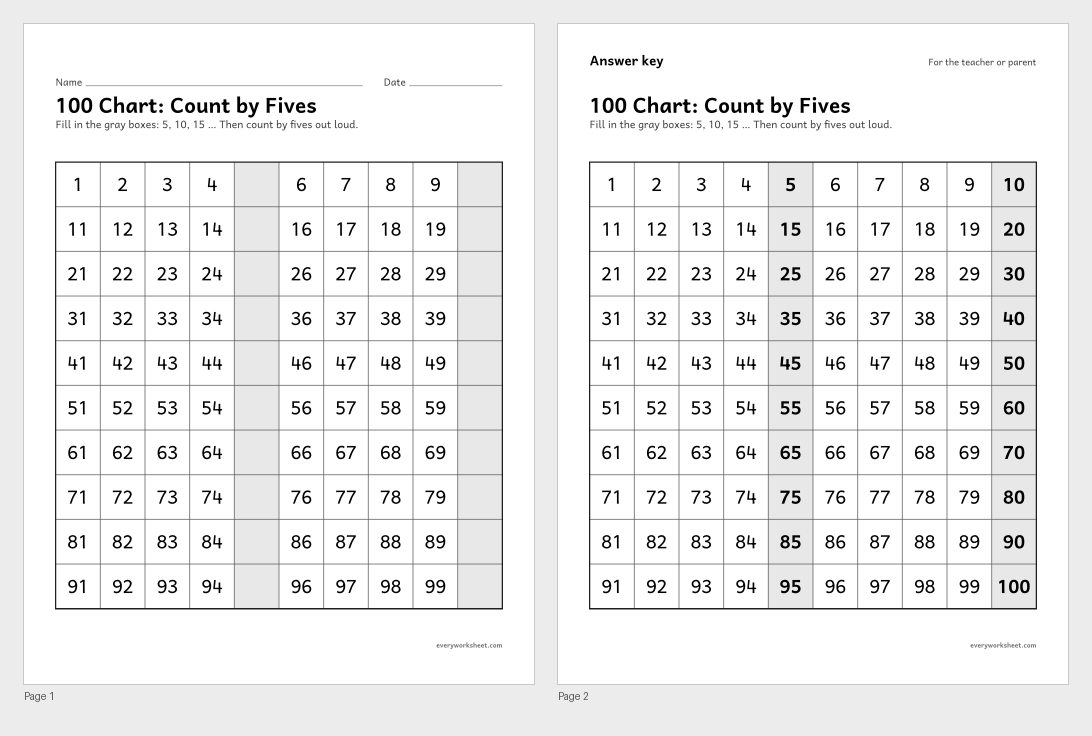
100 Chart: count by fives
Skip counting by 5s to 100
Answer key on page 2
2 pages33 KB
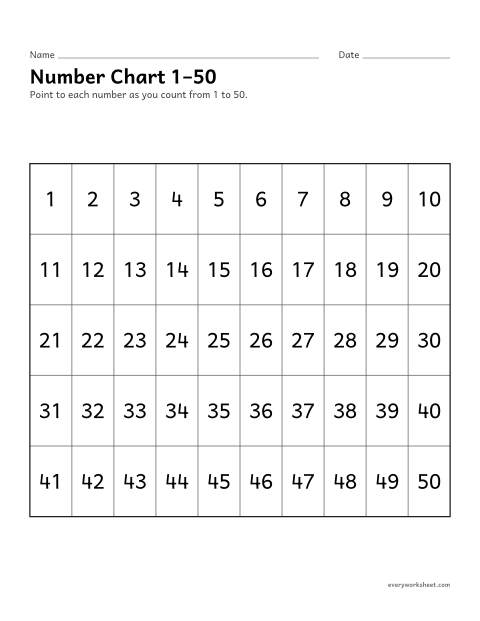 View larger
 View all 2 pages
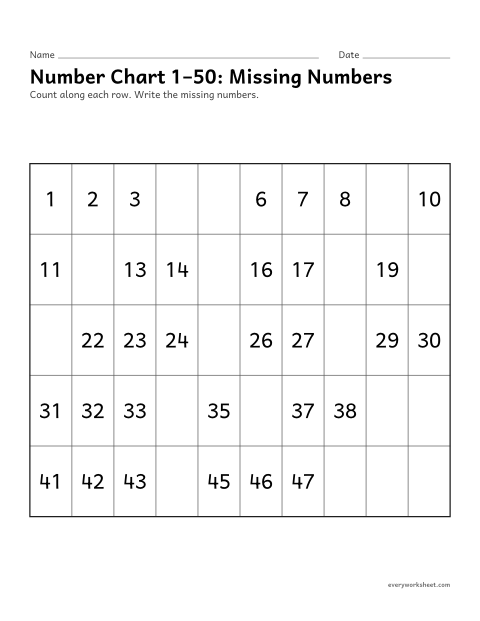
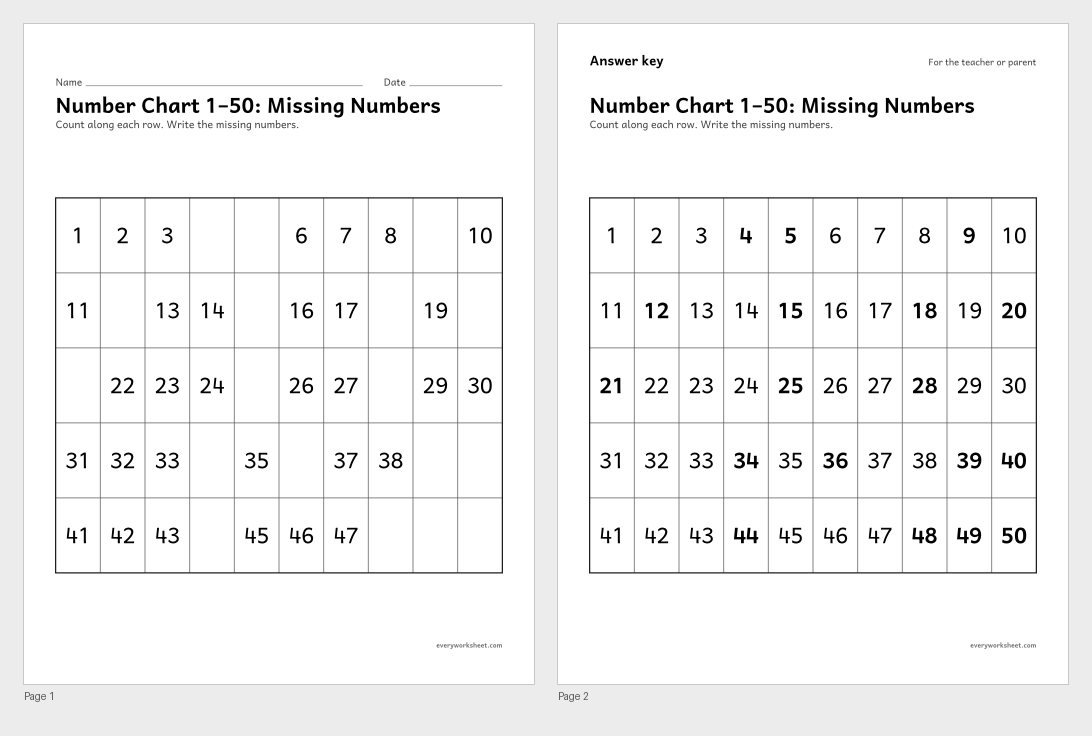
Number chart 1–50: missing numbers
Filling in missing numbers to 50
Answer key on page 2
2 pages31 KB
 View larger
 View all 2 pages
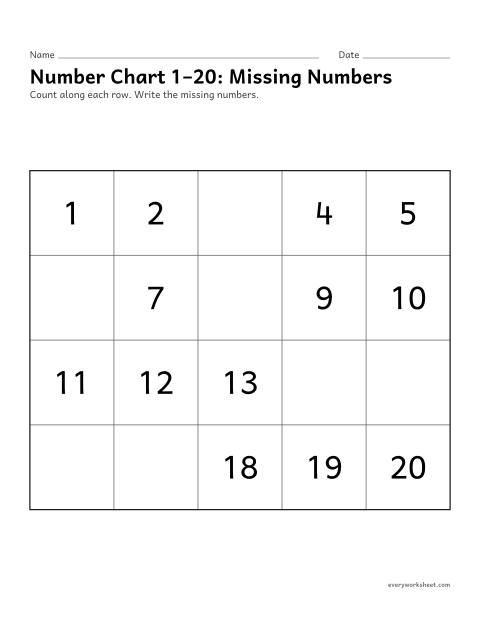
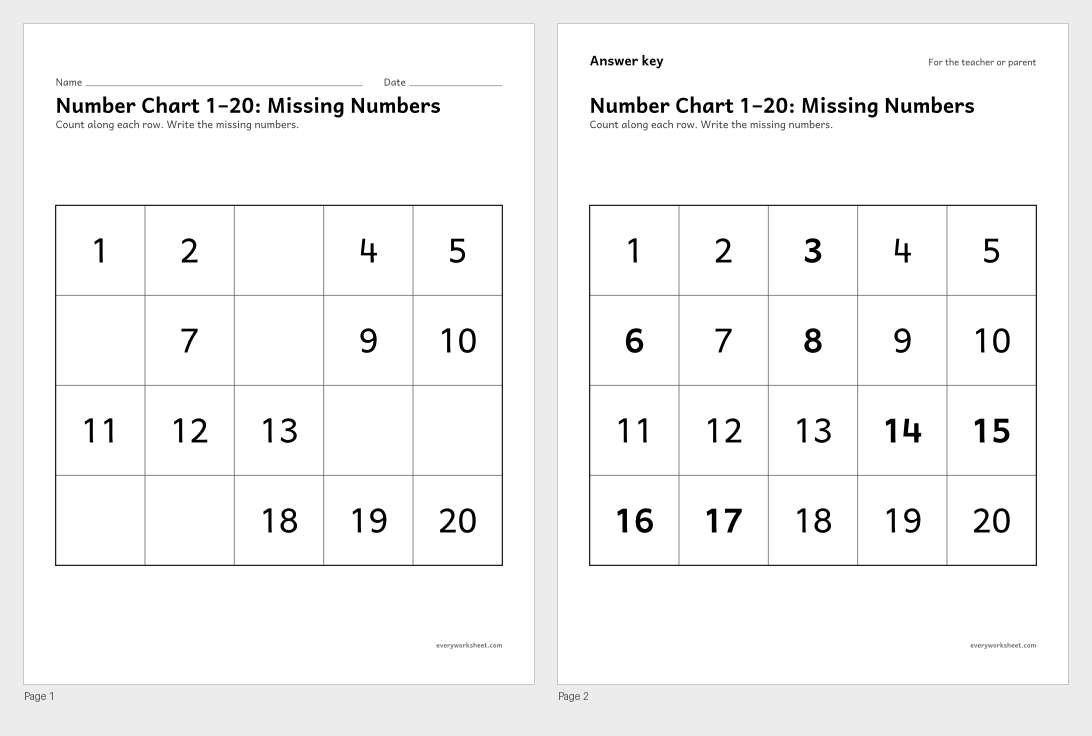
Number chart 1–20: missing numbers
Writing missing numbers 1 to 20
Answer key on page 2
2 pages29 KB
Print at 100% (actual size) for the cleanest tracing lines.
About these 100 chart worksheets
A 100 chart, also called a hundreds chart, lays out the numbers 1 to 100 in ten rows of ten. Read across a row and the numbers go up by one; read down a column and they go up by ten. That simple layout makes it the best tool for counting to 100, the main counting goal in kindergarten.
This page has a filled number chart 1–100 printable for desks, folders and walls, a blank 100 chart for writing every number, and two charts with missing numbers to fill in, each with an answer key. Two skip counting charts shade the tens column and the fives so children can count by 10s and 5s.
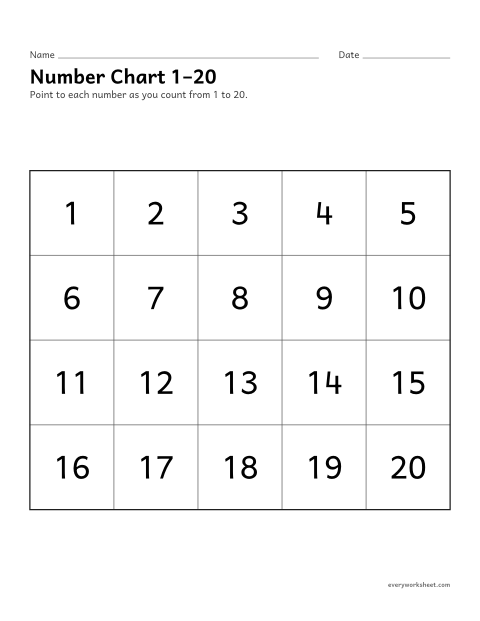
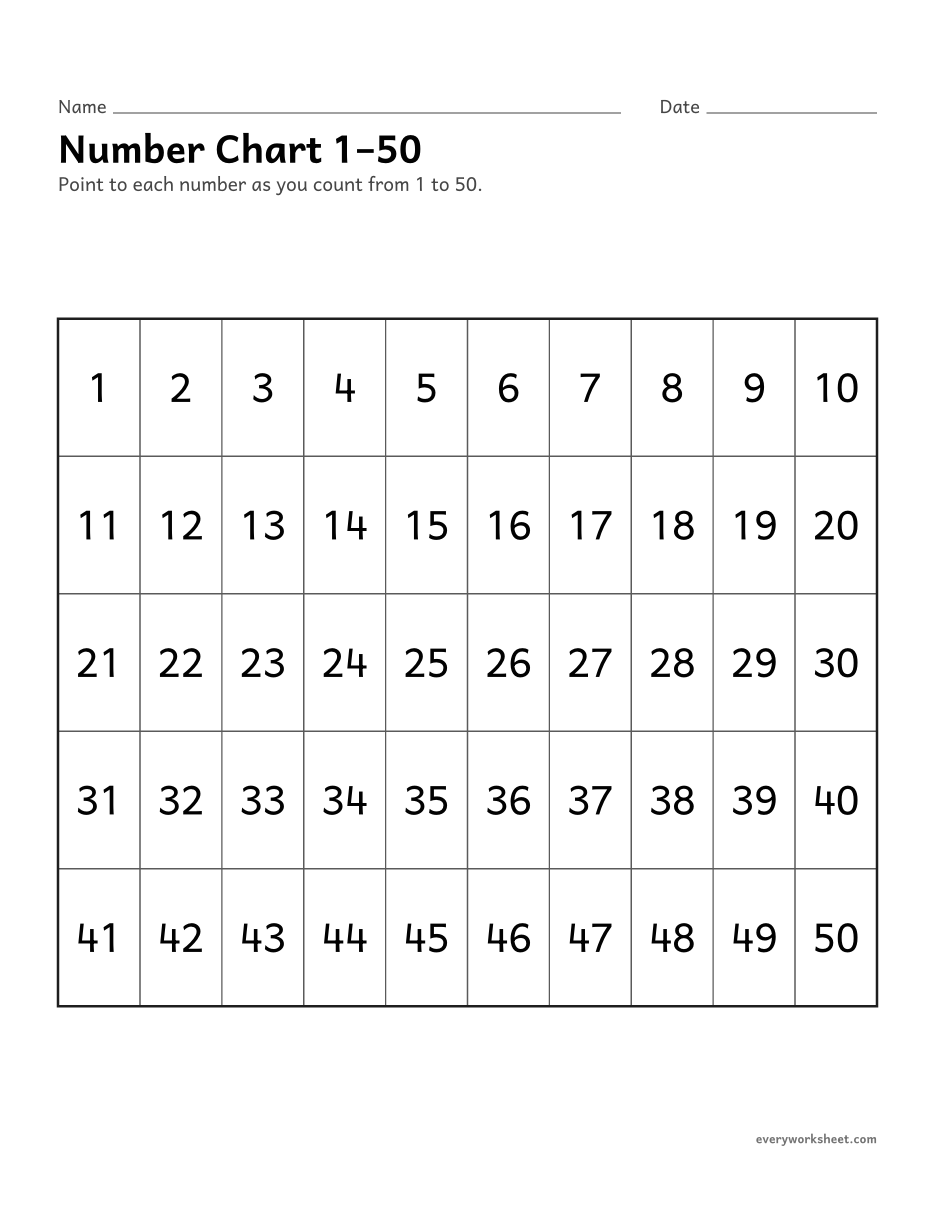
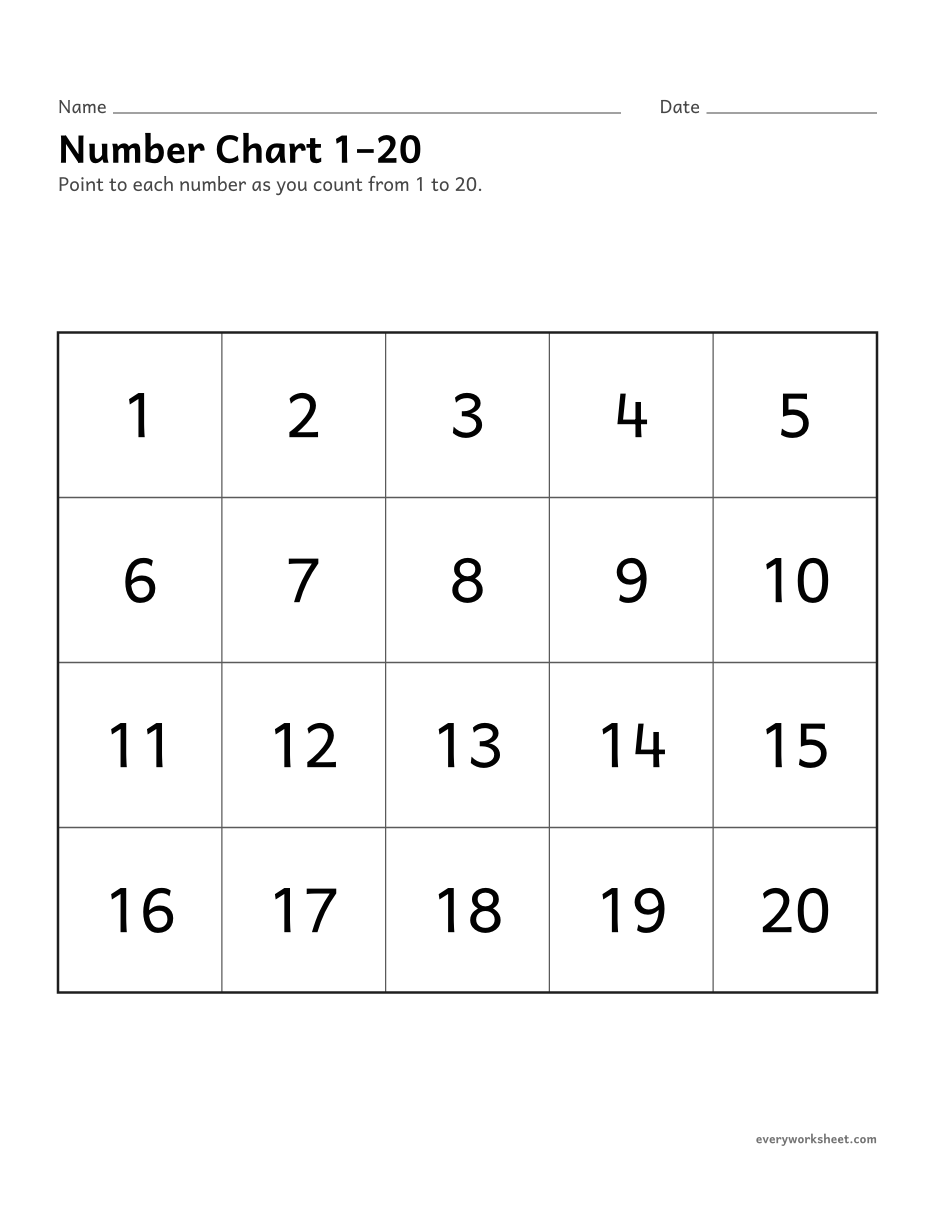
For children who are not ready for 100, there is a number chart 1–50 and a big number chart 1–20, each in a filled version and a missing numbers version. Every chart prints in black and white on US Letter or A4.
Standards
CCSS.MATH.CONTENT.K.CC.A.1Count to 100 by ones and by tens.CCSS.MATH.CONTENT.K.CC.A.2Count forward beginning from a given number within the known sequence (instead of having to begin at 1).CCSS.MATH.CONTENT.K.CC.A.3Write numbers from 0 to 20. Represent a number of objects with a written numeral 0-20 (with 0 representing a count of no objects).
How to use them
- Start with the number chart 1–20, then 1–50, then the full 100 chart as your child’s counting grows.
- Count together while your child points to each number. Then ask them to start from a number you choose and count on.
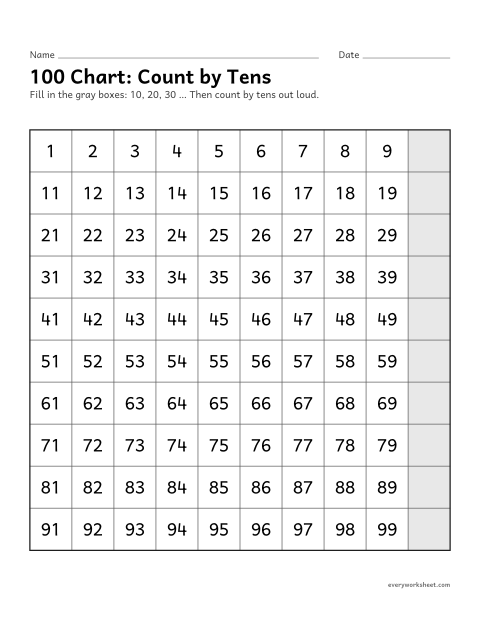
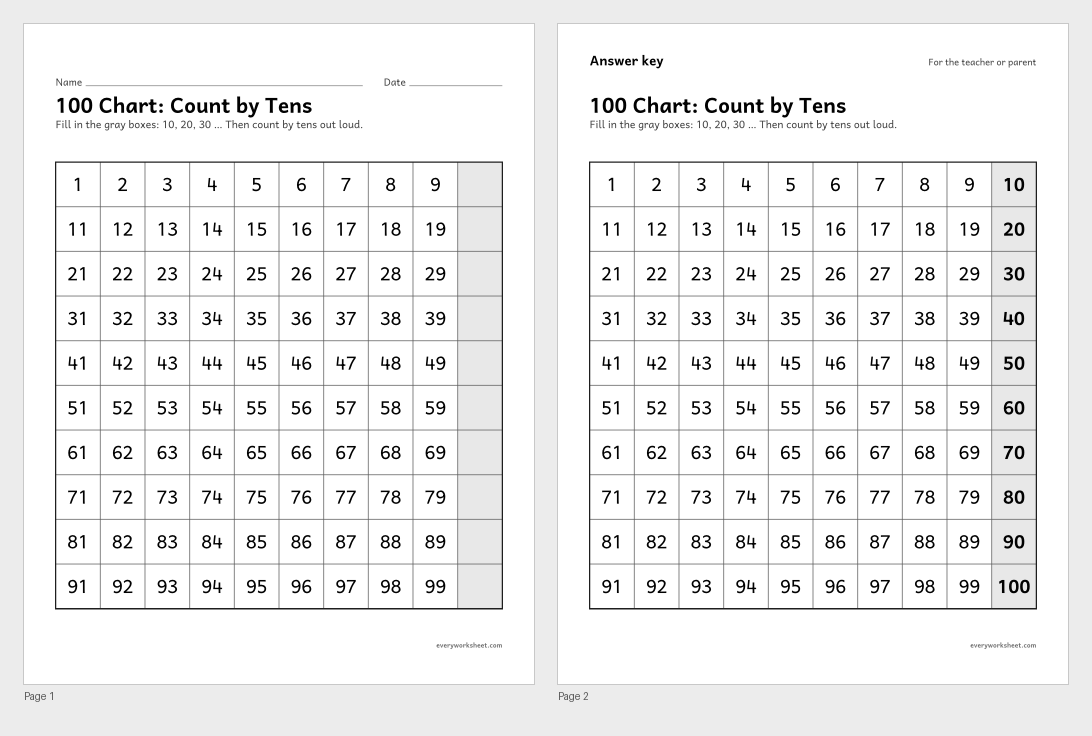
- Use the count by tens chart to fill in 10, 20, 30 … down the gray column, then count by tens out loud.
- Use the missing numbers charts once your child can count to 100. The first chart has 2 or 3 gaps in each row; the second has about half the chart to fill.
- Keep a filled 100 chart in a sheet protector as a reference. It is also a good tool for spotting patterns: what is the same about every number in a column?
Teaching tips
- Many children get stuck at the decade change: 29 to 30, 39 to 40. Point to the end of the row and the start of the next one.
- Look down the columns together. Every number in a column ends with the same digit, and the first digit goes up by one each row.
- Children who reverse digits can check their writing against the filled chart.
- Use a counter or a small sticky note to mark a starting number for counting on practice.
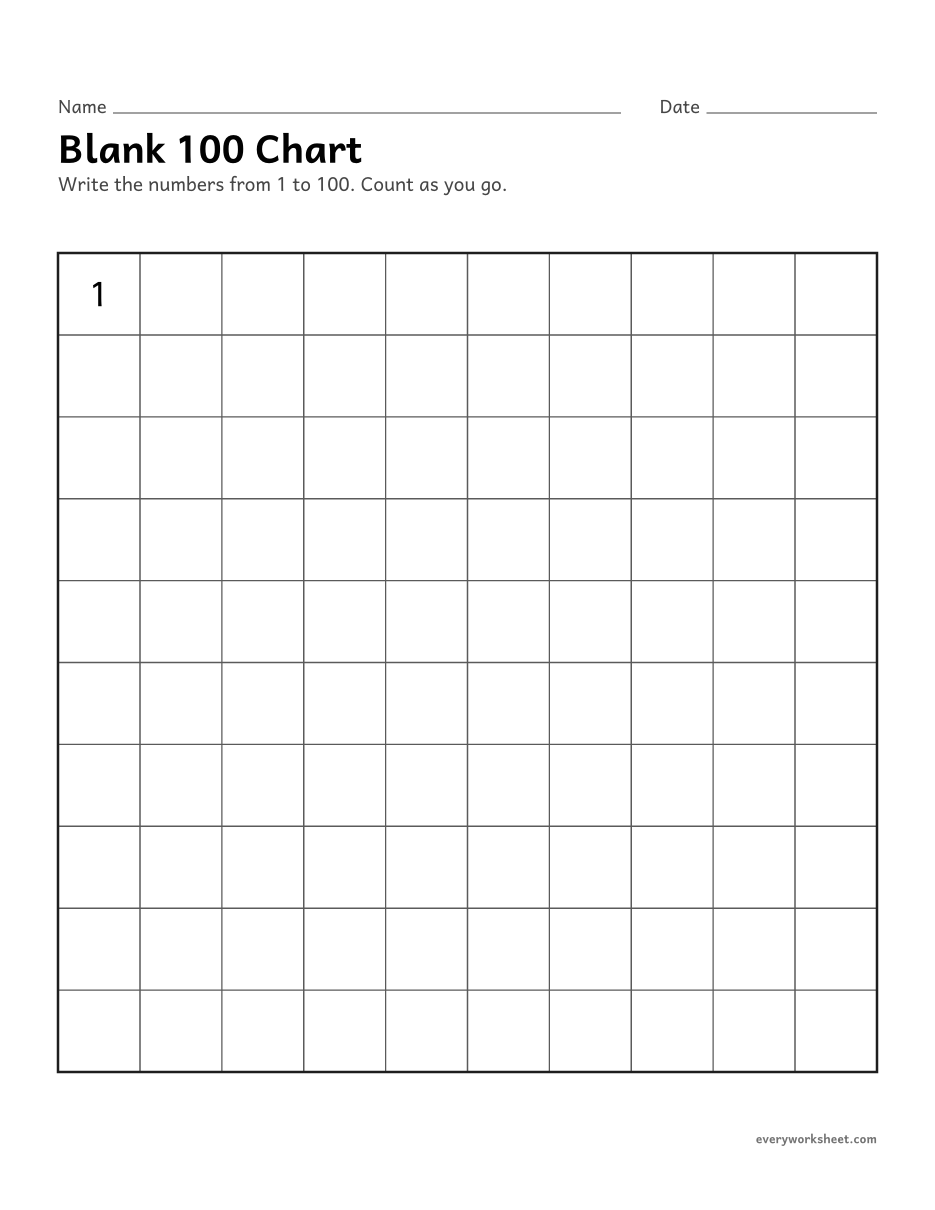
- The blank 100 chart is long. Let children fill a row or two a day rather than all 100 at once.
Questions teachers and parents ask
Is a 100 chart the same as a hundreds chart?
Yes. A 100 chart, hundreds chart and number chart 1–100 all mean the same thing: the numbers 1 to 100 in ten rows of ten.
When should kindergartners use a 100 chart?
Kindergartners are expected to count to 100 by ones and tens by the end of the year. Many classes count on a 100 chart every day, starting in the first weeks of school, with smaller 1–20 and 1–50 charts for children who are just starting.
Should the chart start at 0 or 1?
These charts start at 1 and end at 100, which is the most common layout in US kindergarten classrooms. Each row ends in a ten, so the tens line up in the last column.