 View larger
Download the number tracing worksheets
 View larger
 View larger
 View larger
 View larger
 View larger
 View larger
 View larger
 View larger
 View larger
 View larger
 View larger
 View larger
 View larger
 View larger
 View larger
 View larger
 View larger
 View larger
 View larger
 View larger
 View larger
 View larger
 View larger
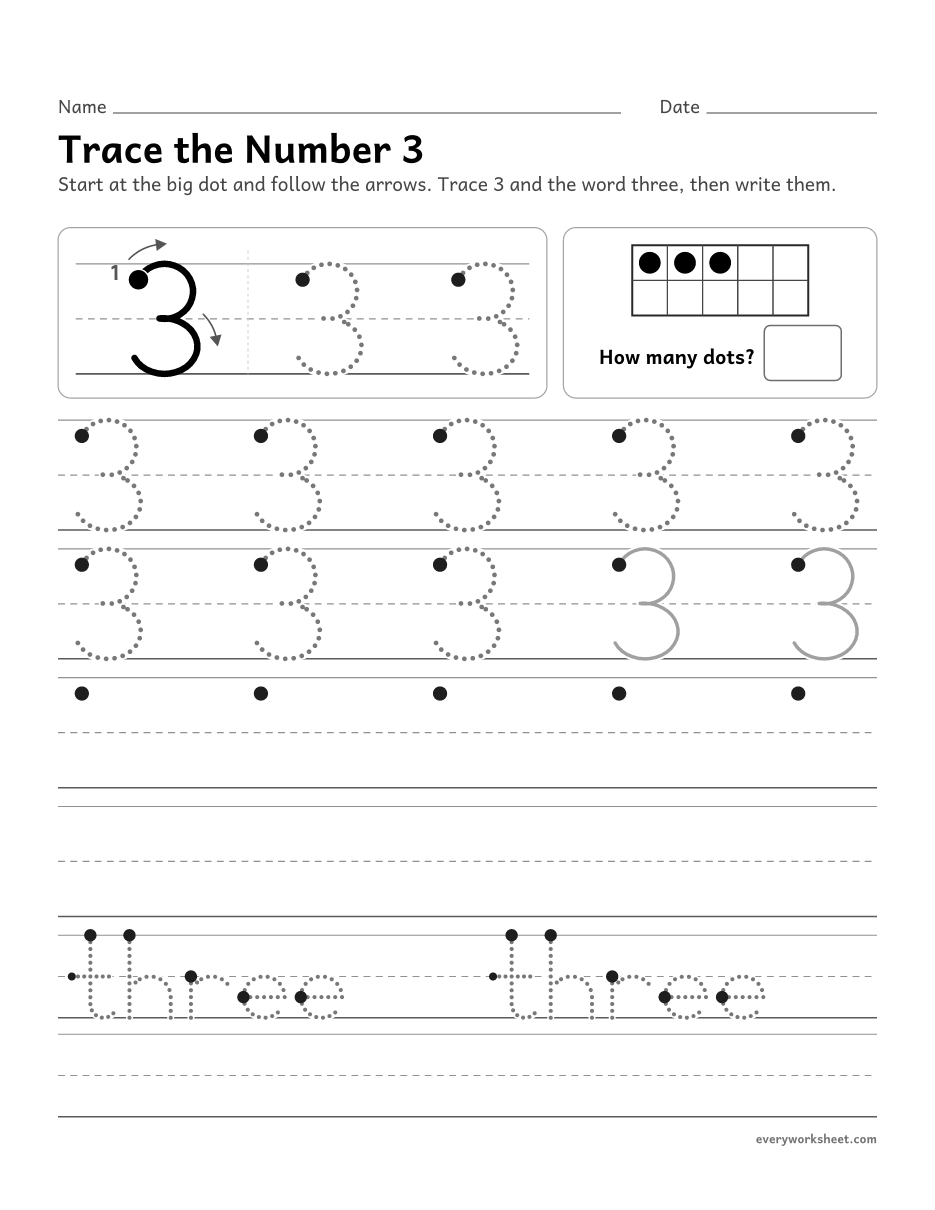
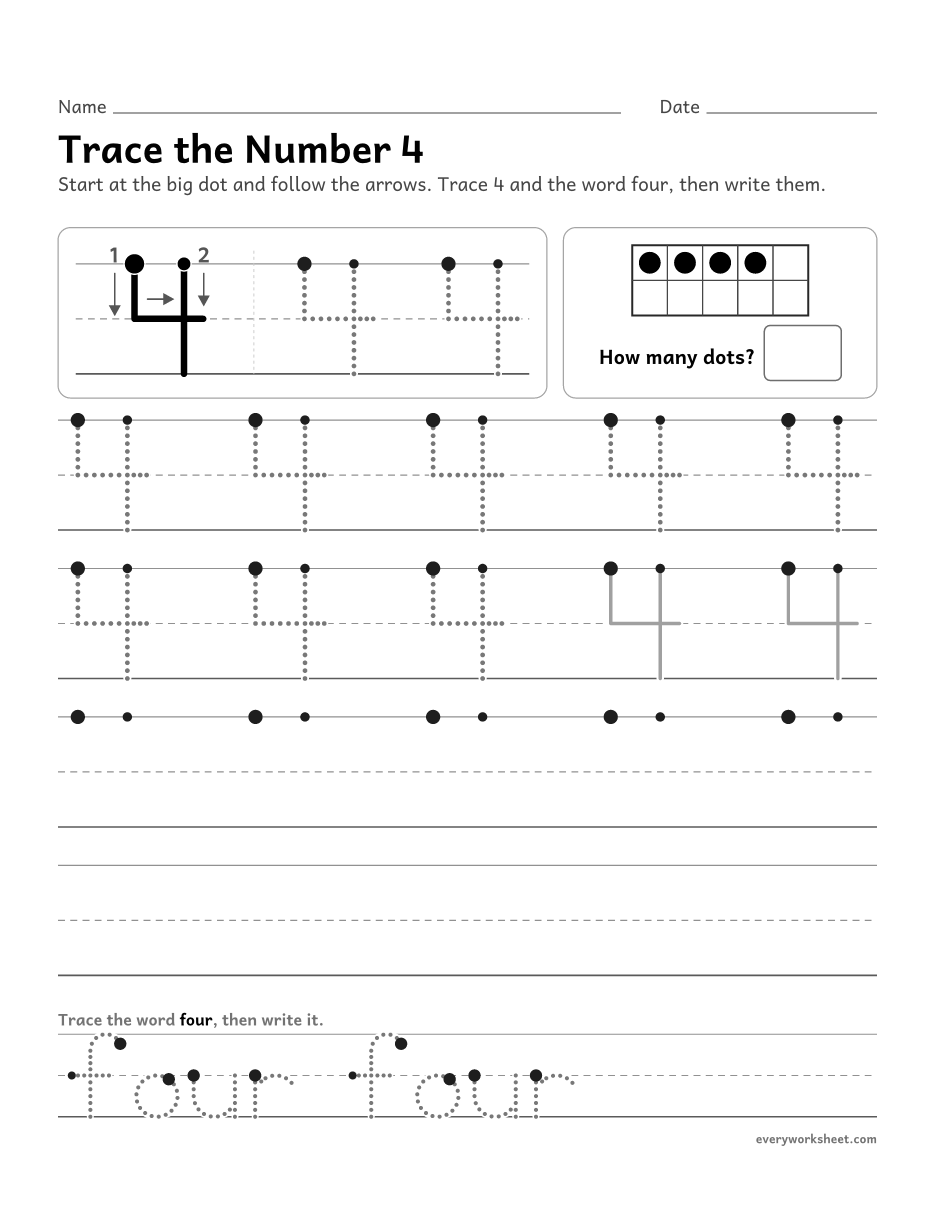
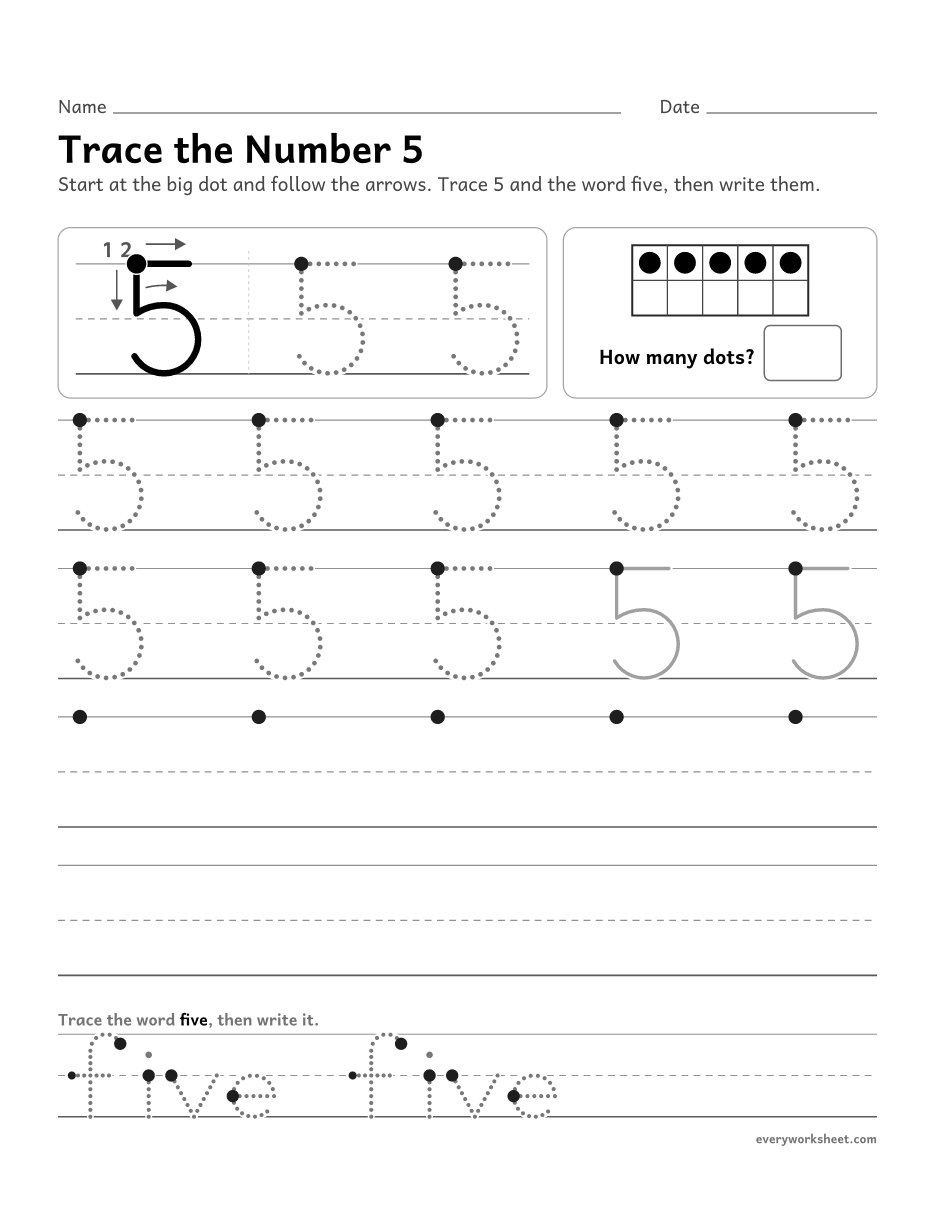
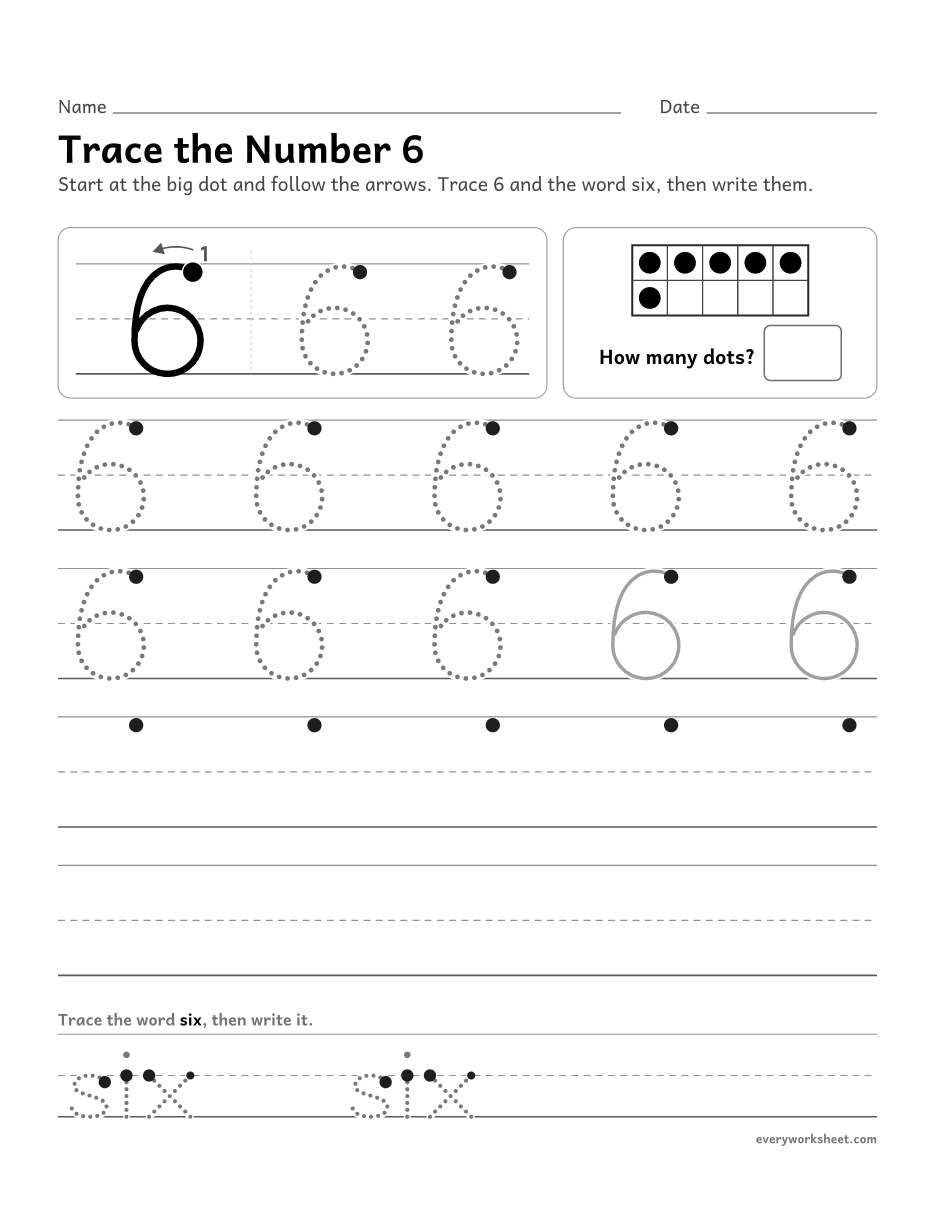
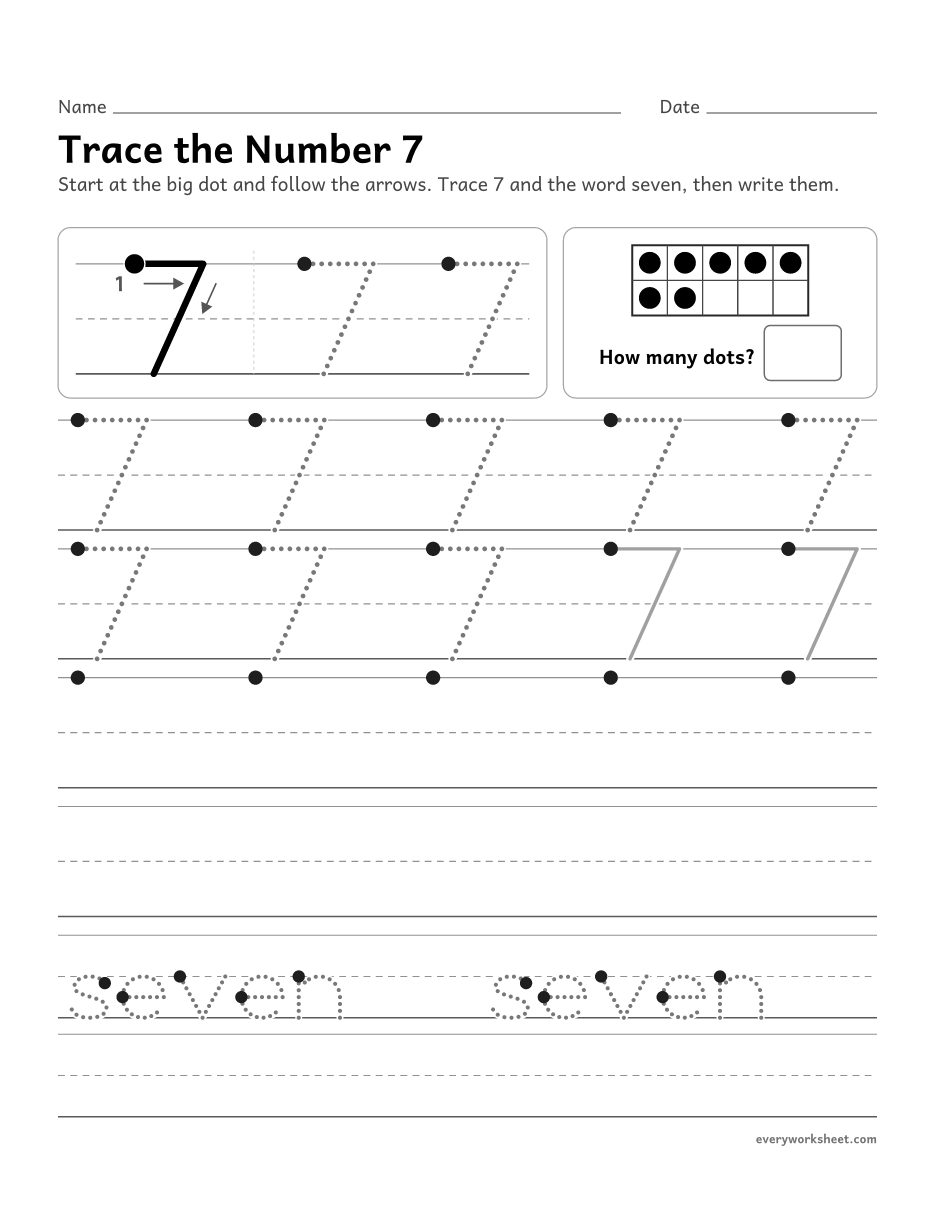
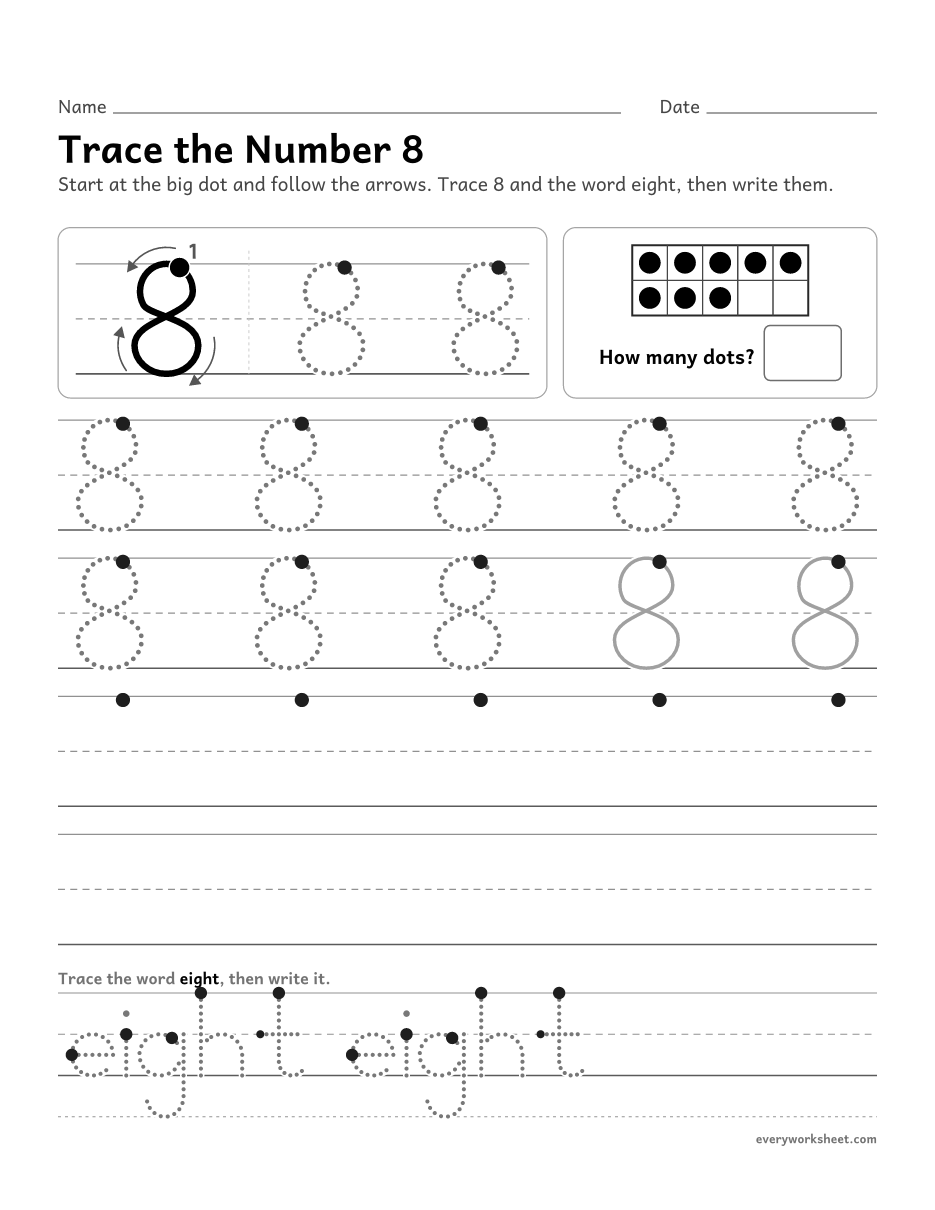
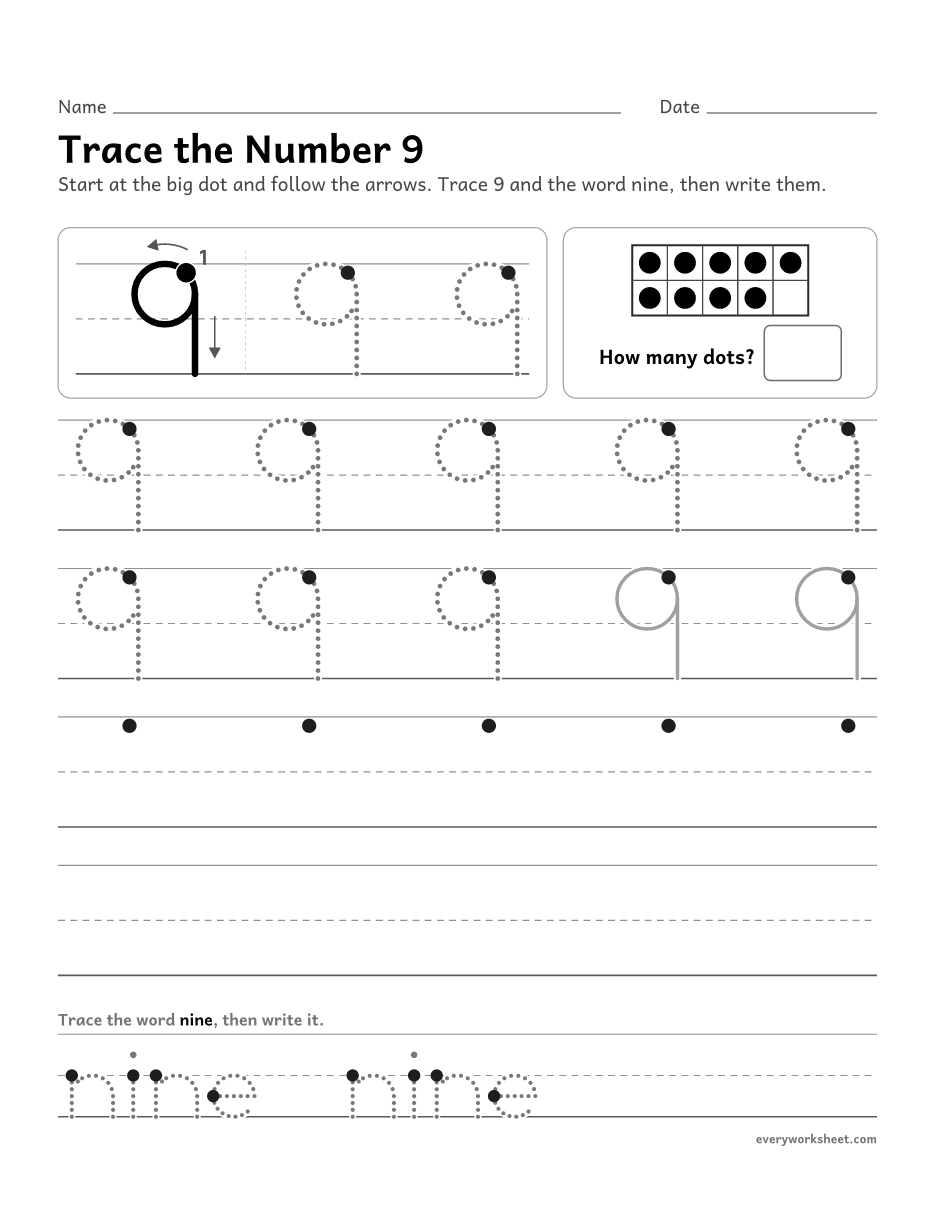
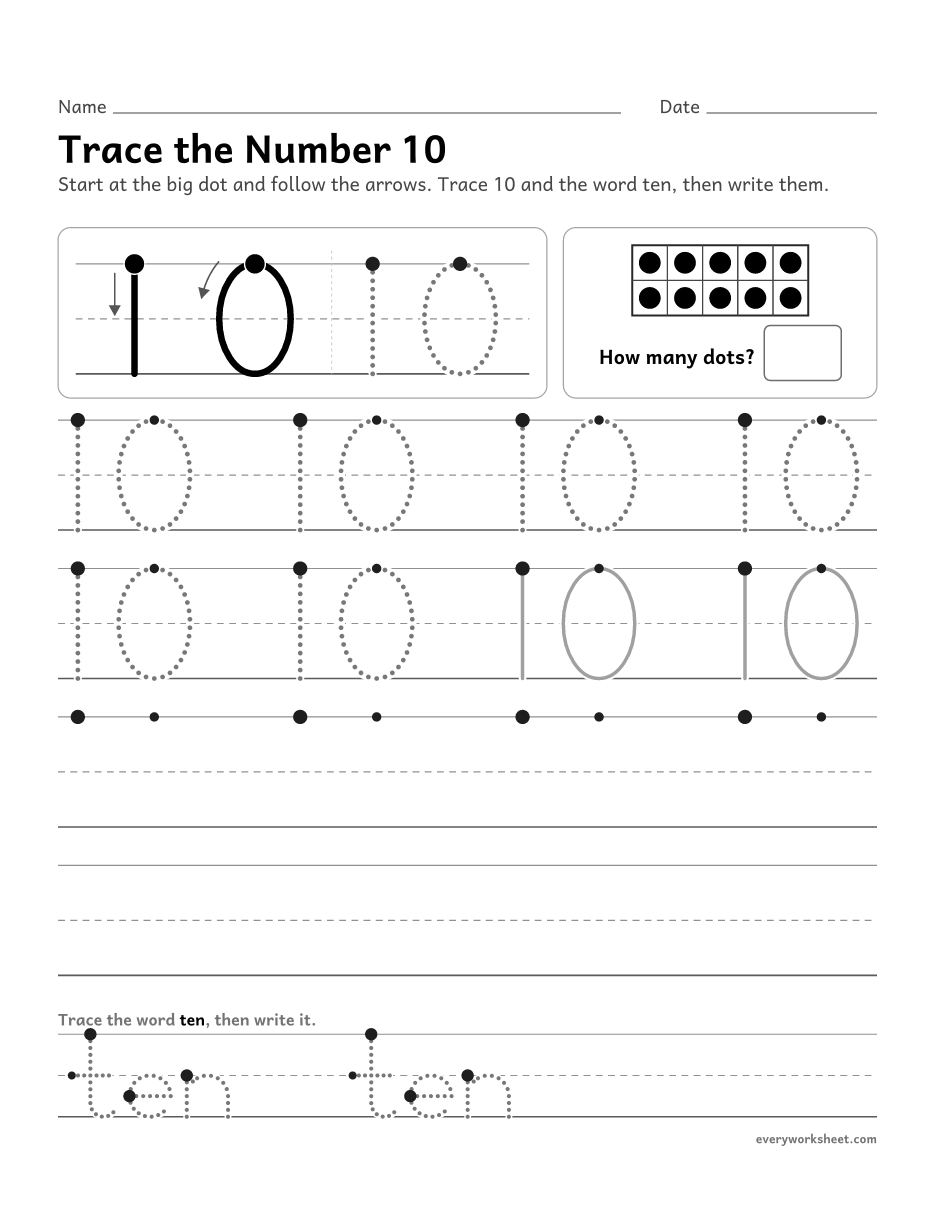
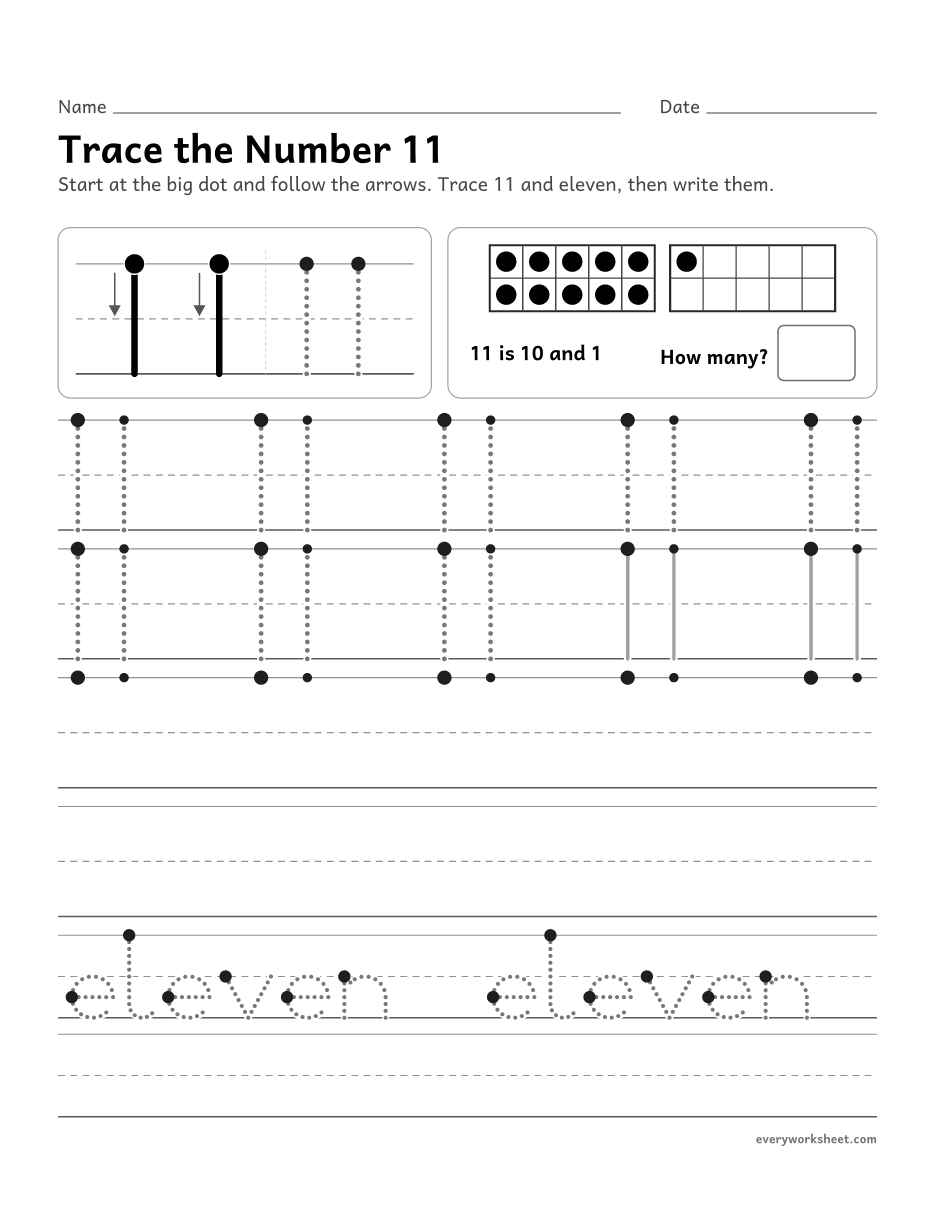
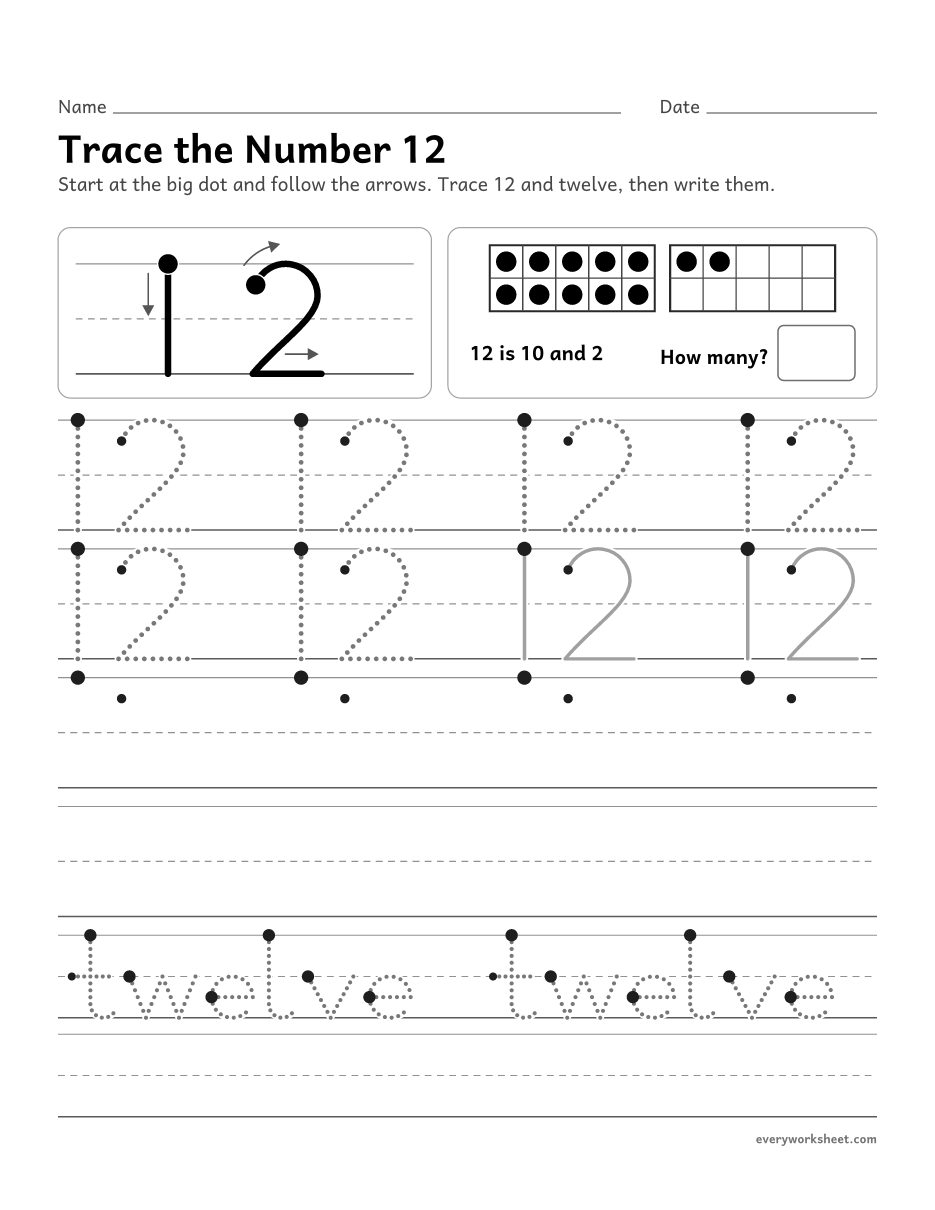
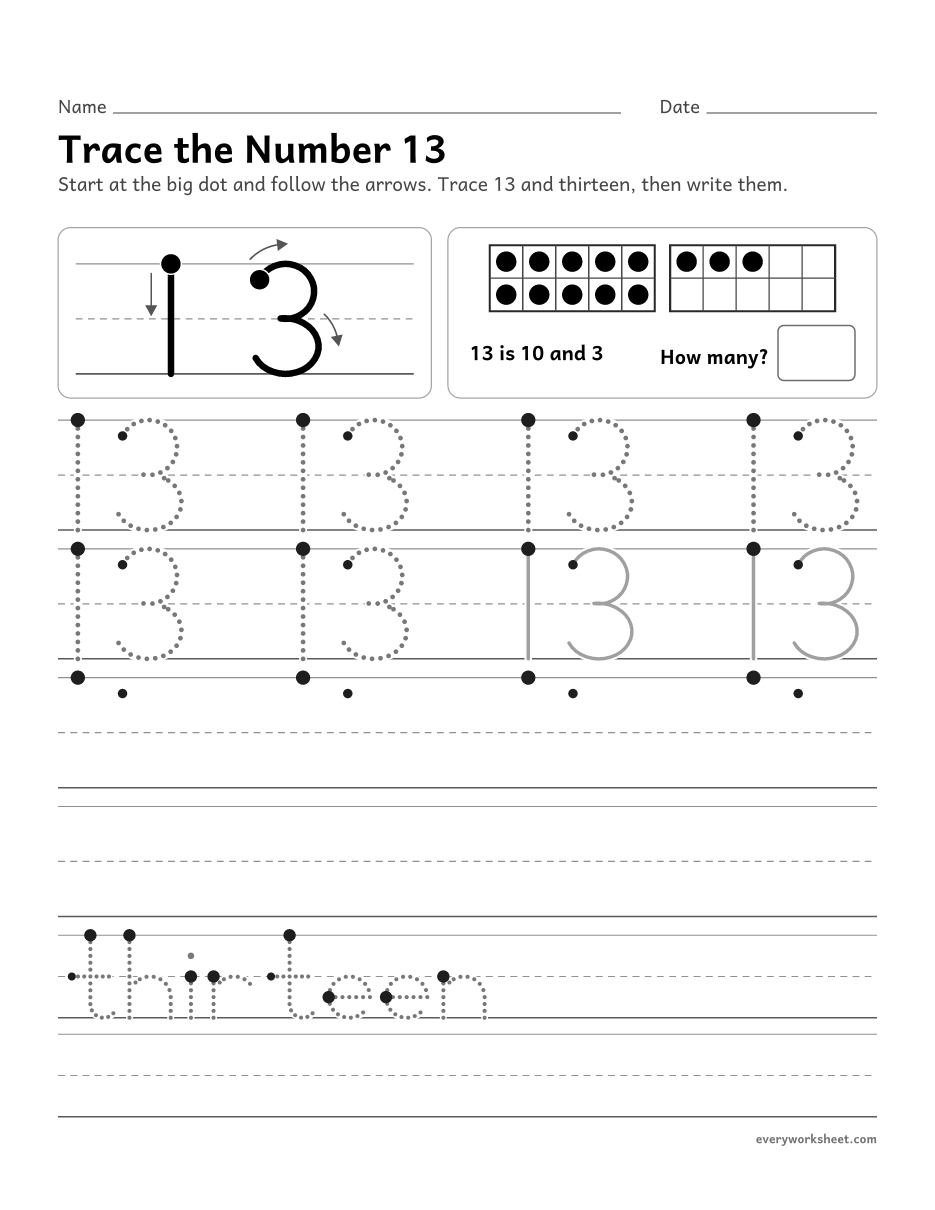
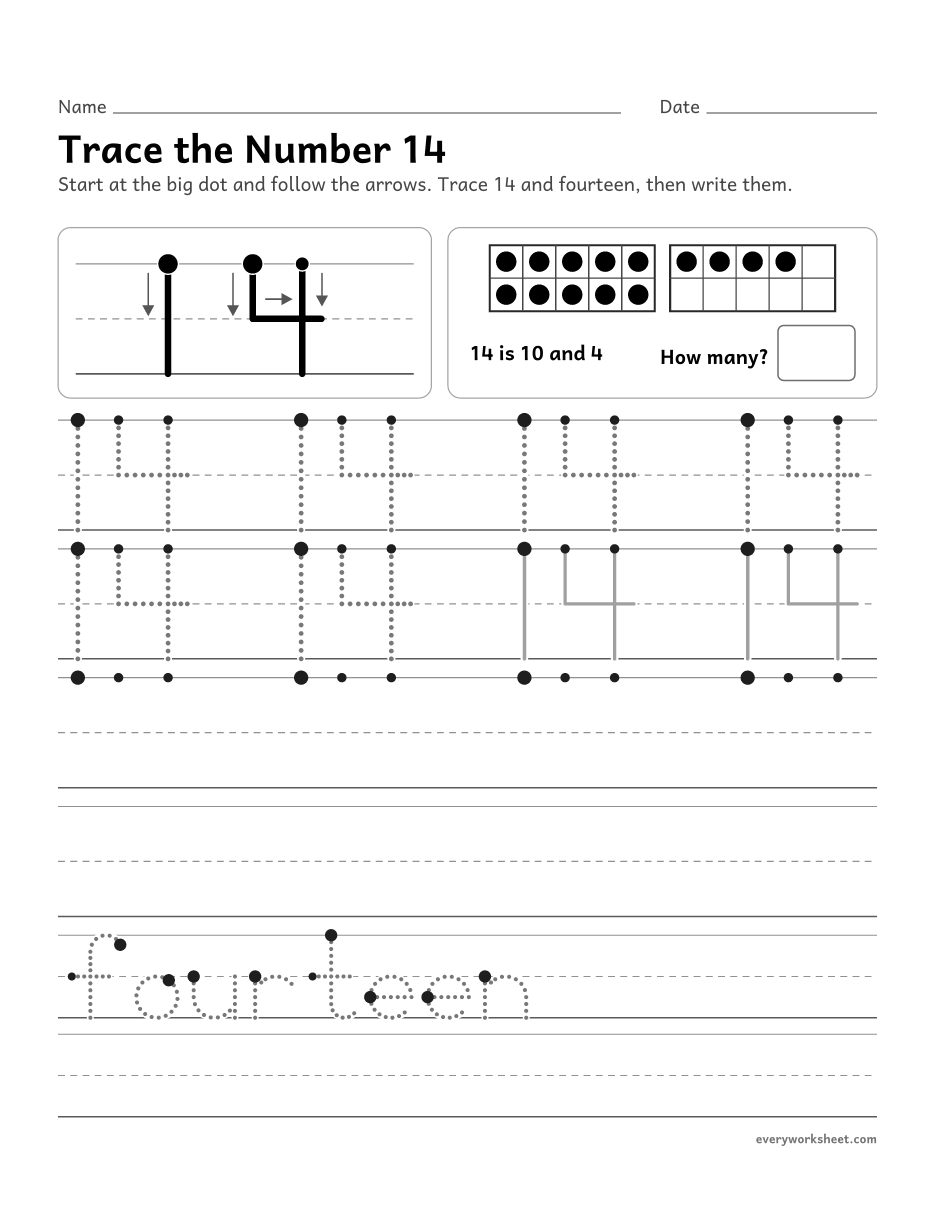
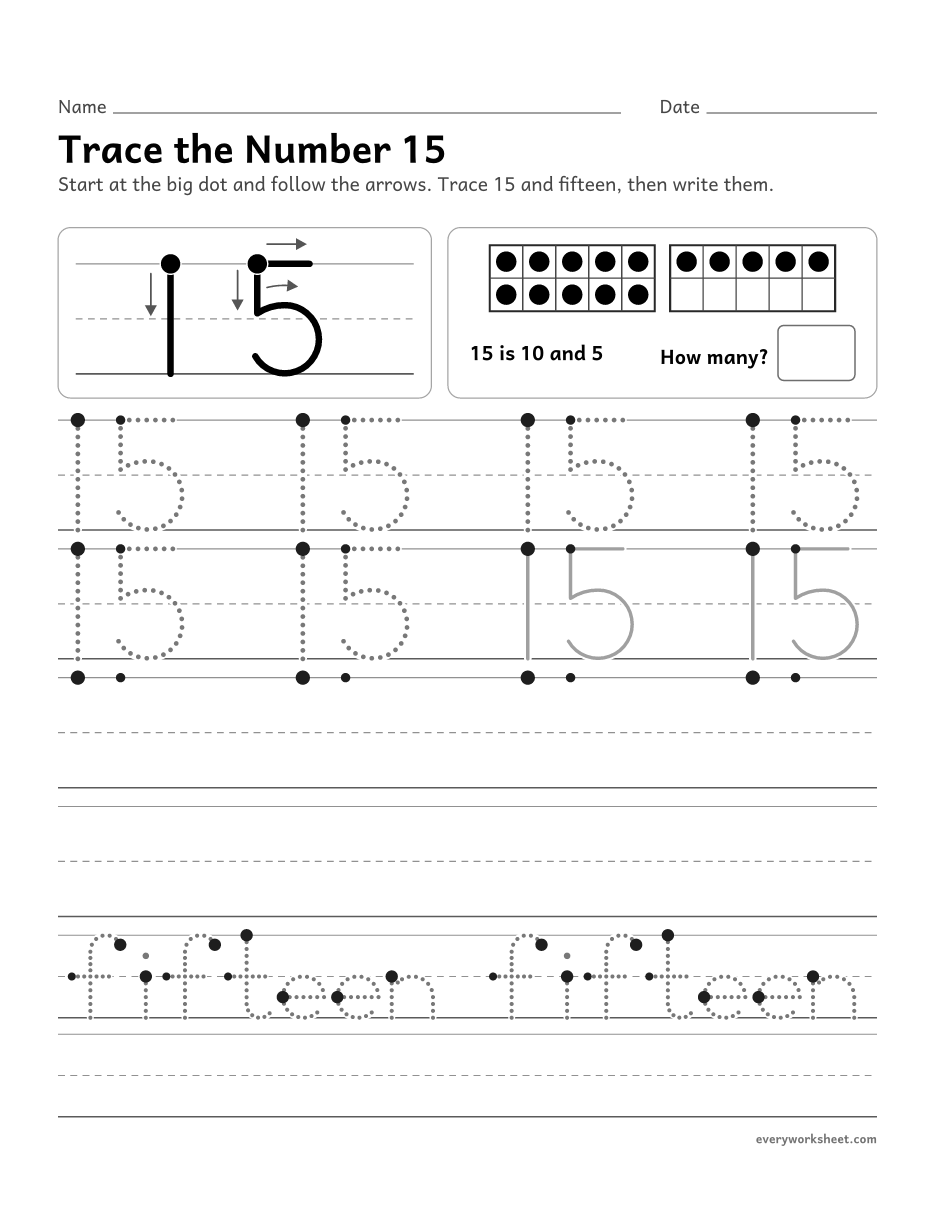
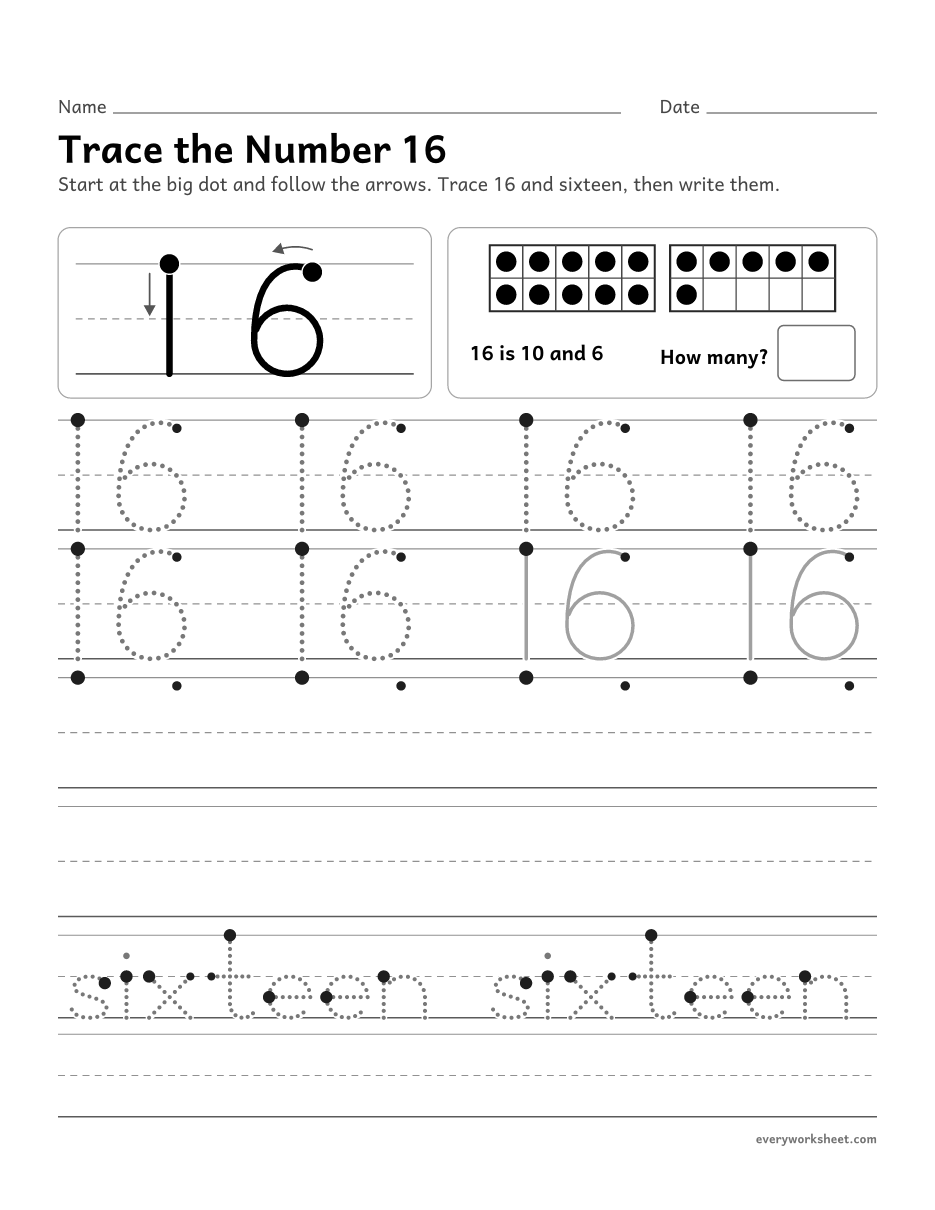
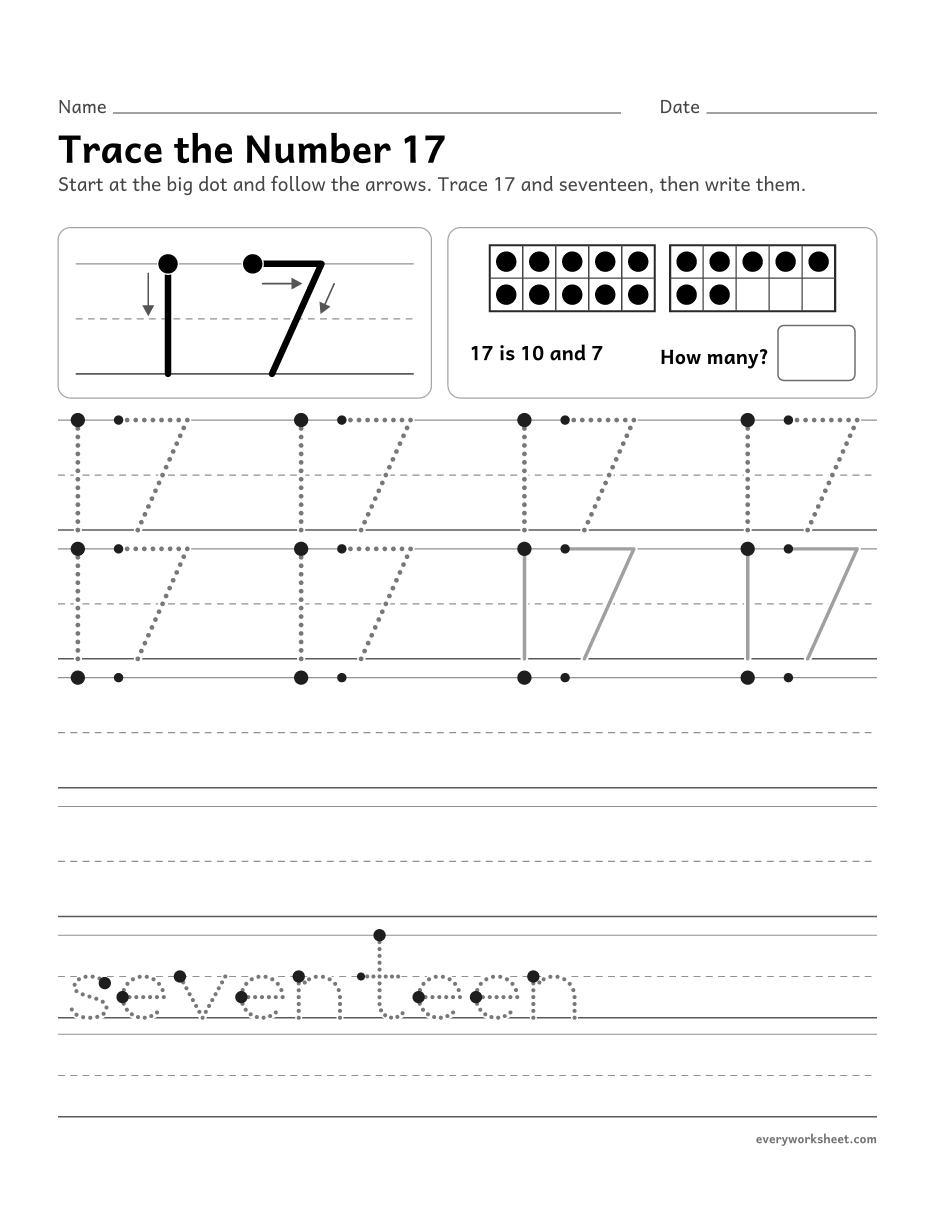
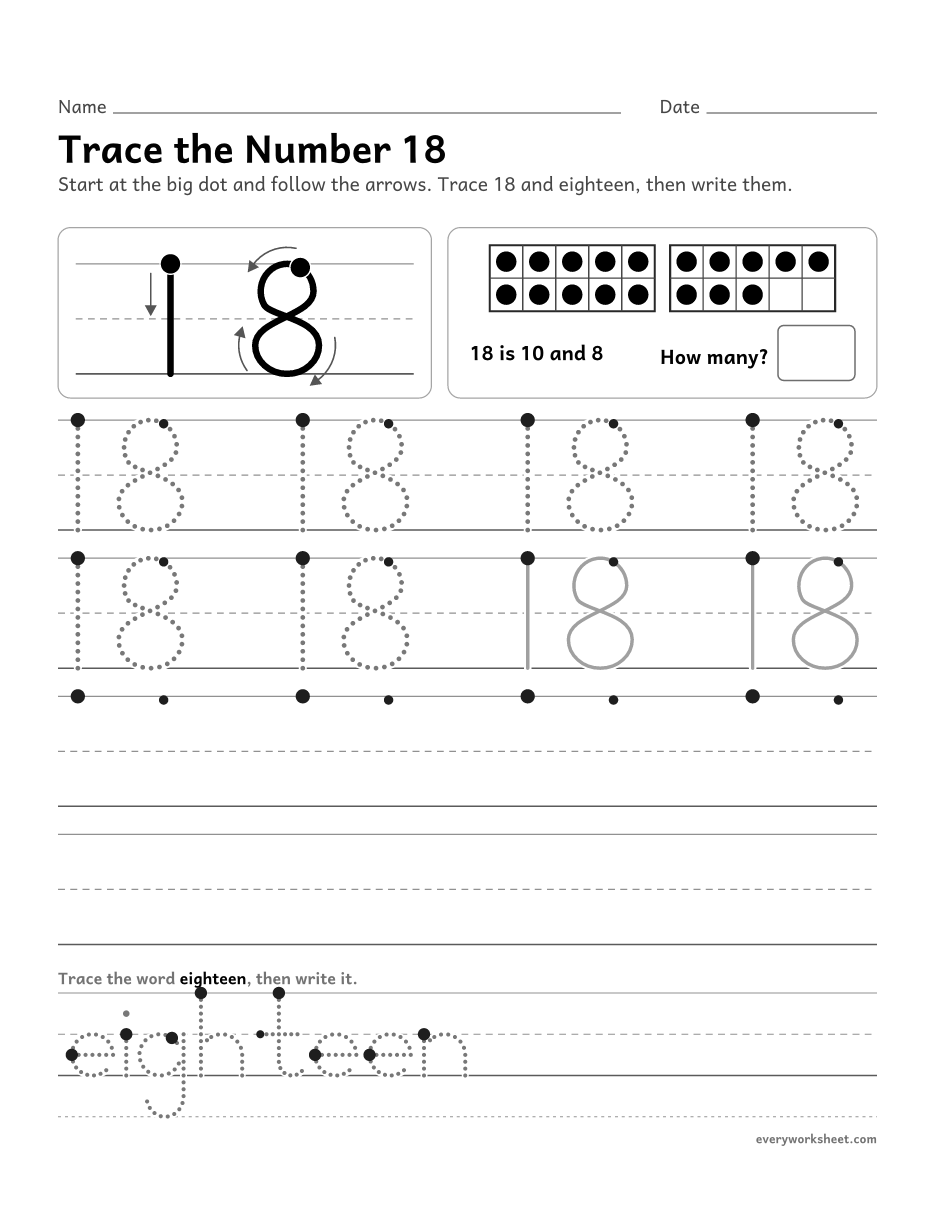
Print at 100% (actual size) for the cleanest tracing lines.
About these number tracing worksheets
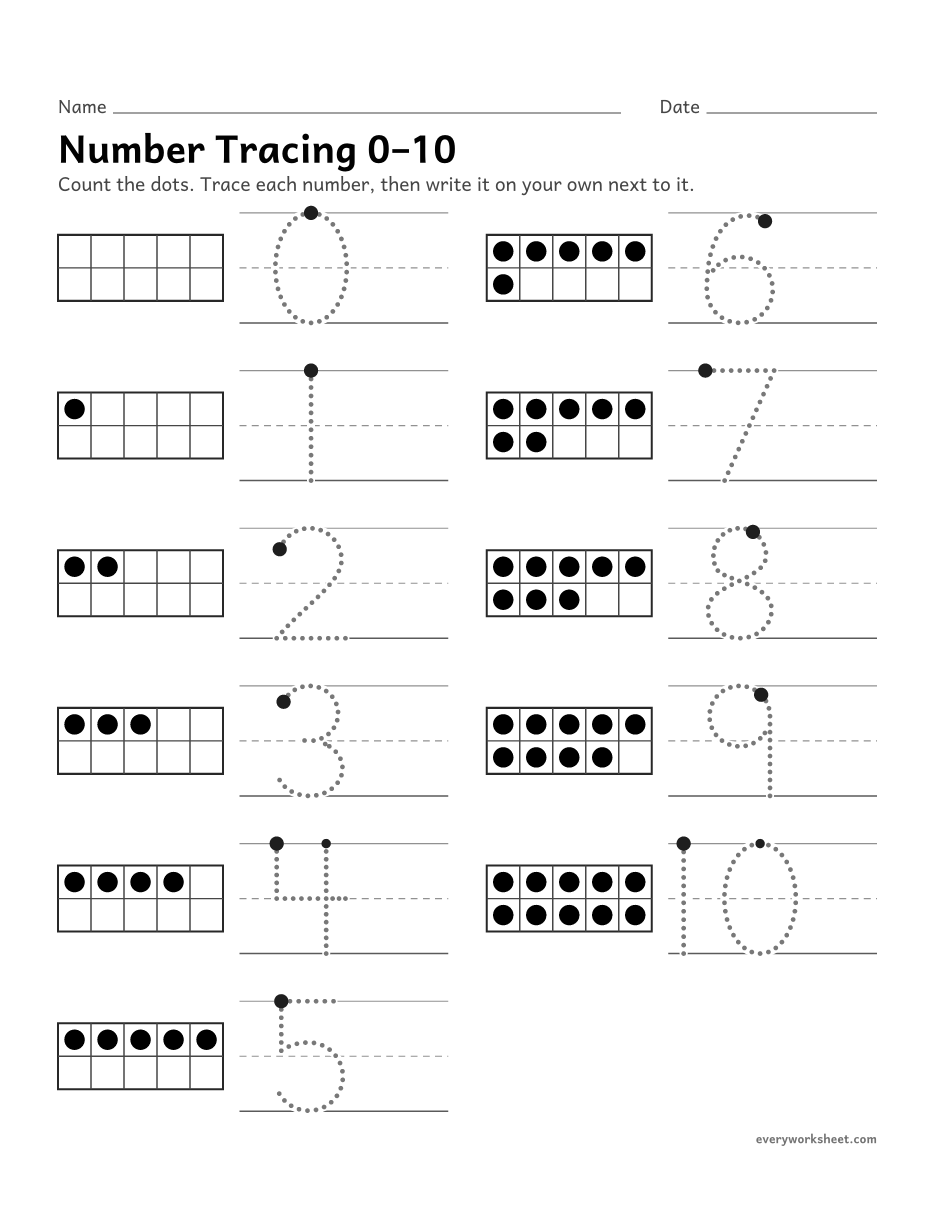
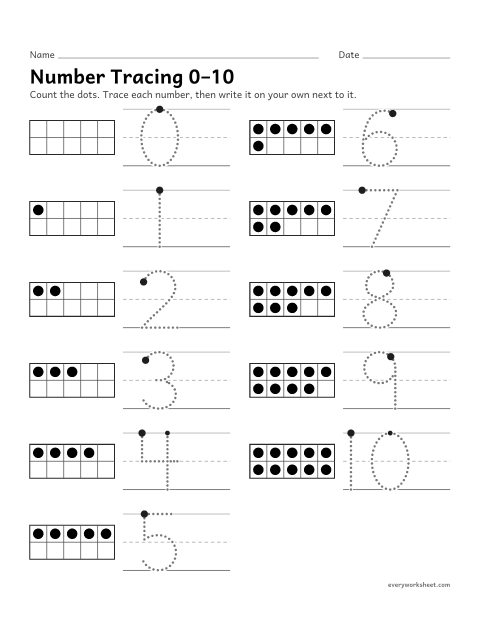
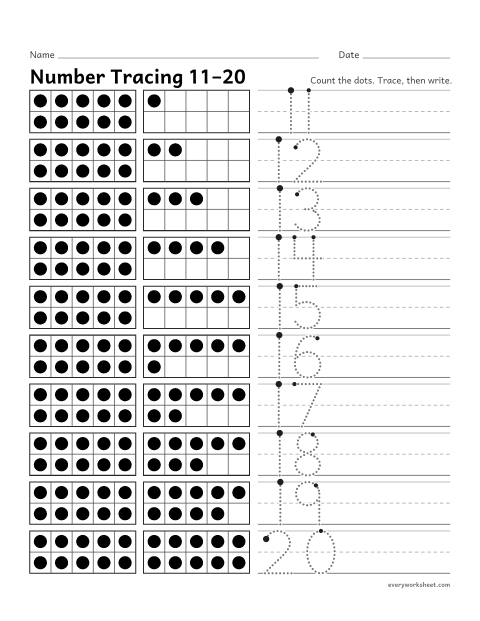
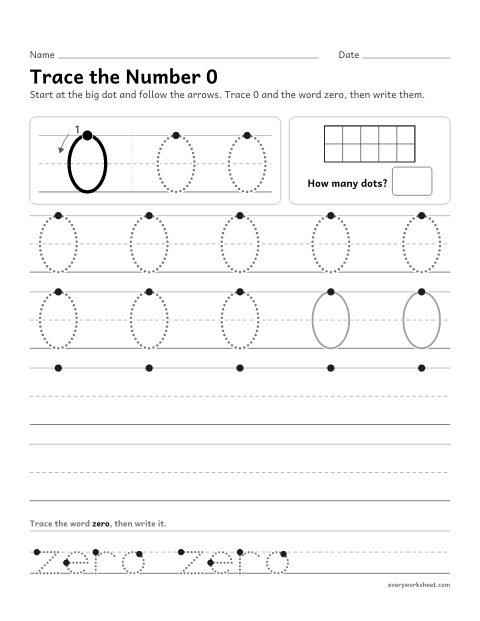
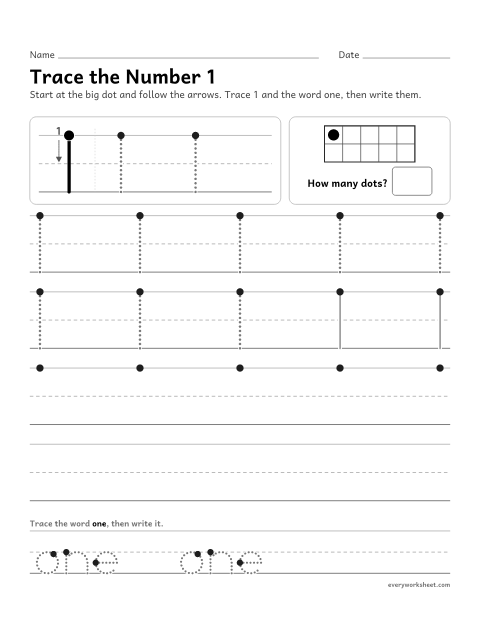
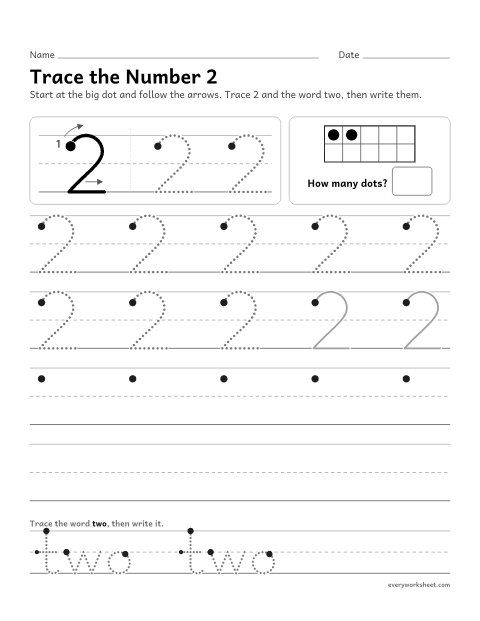
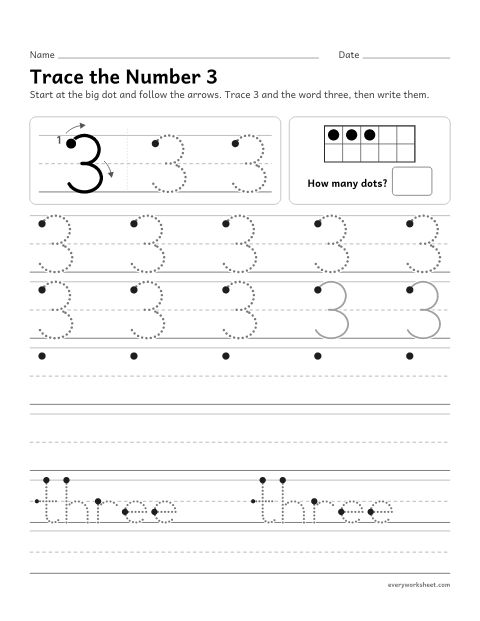
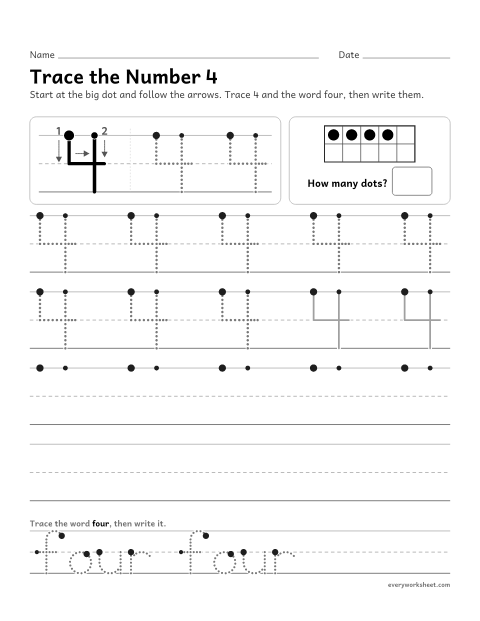
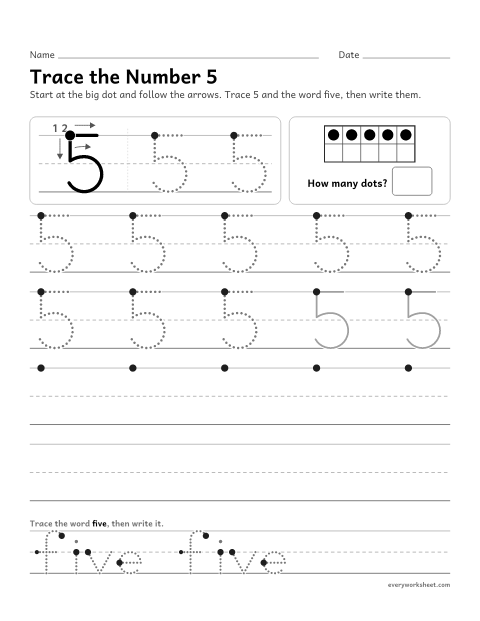
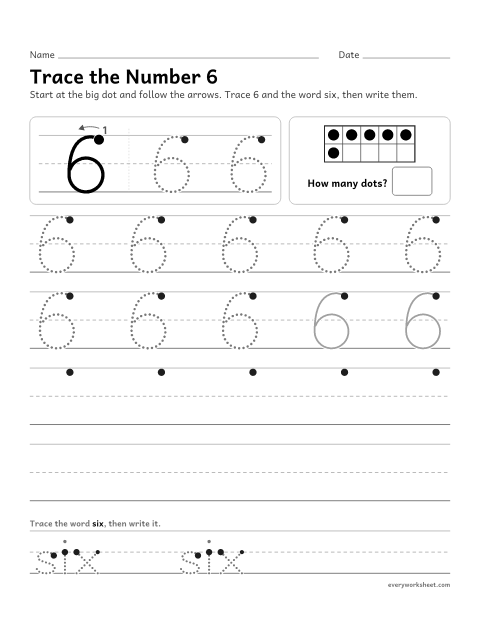
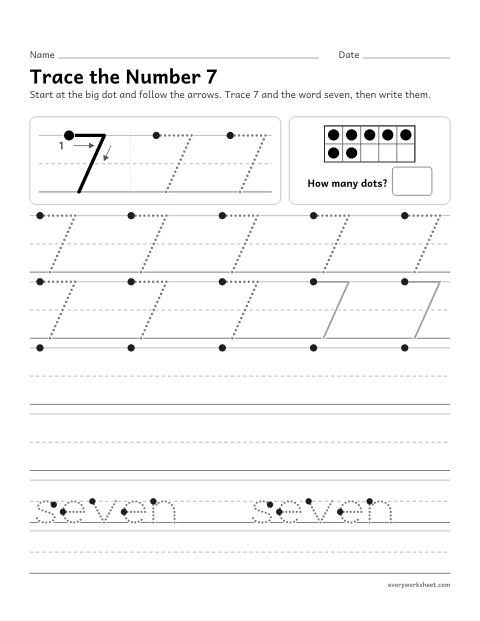
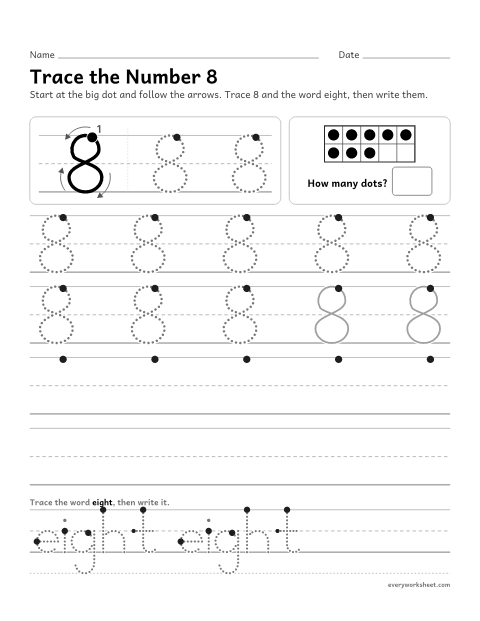
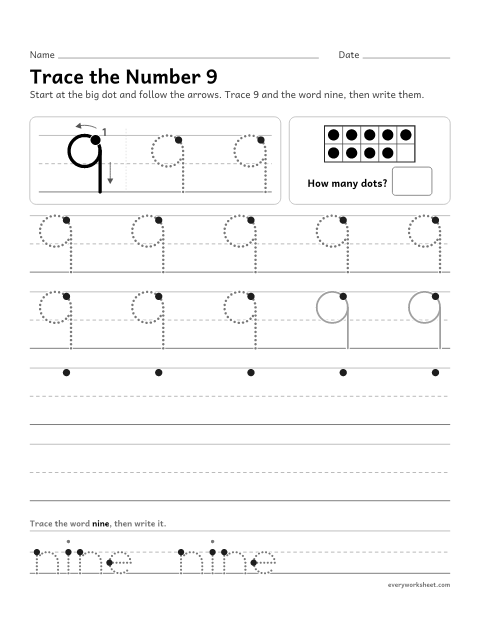
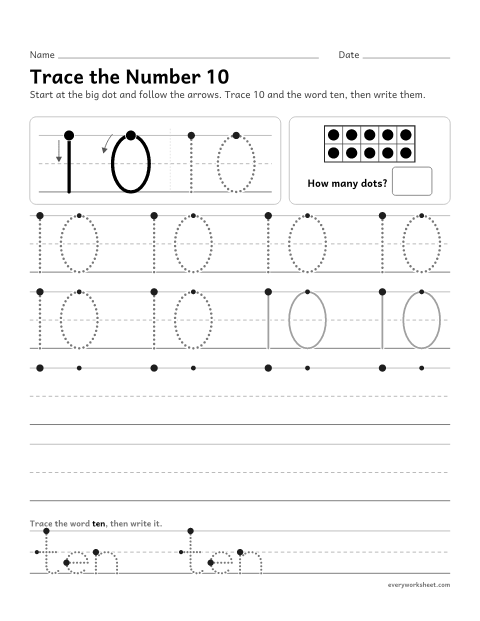
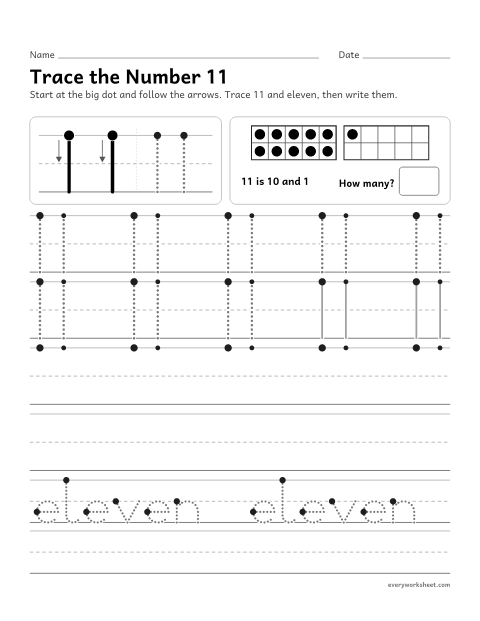
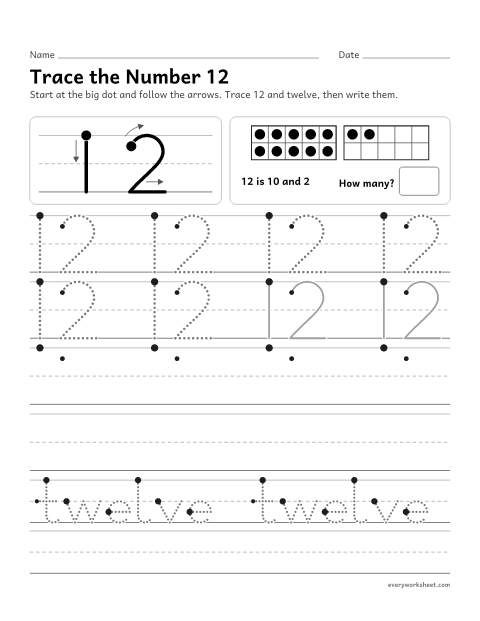
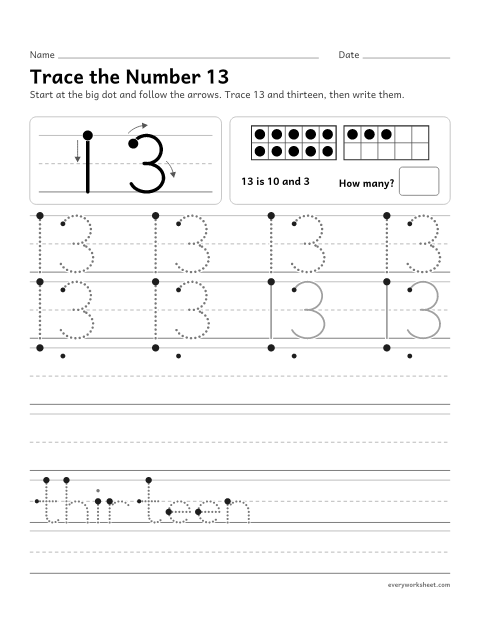
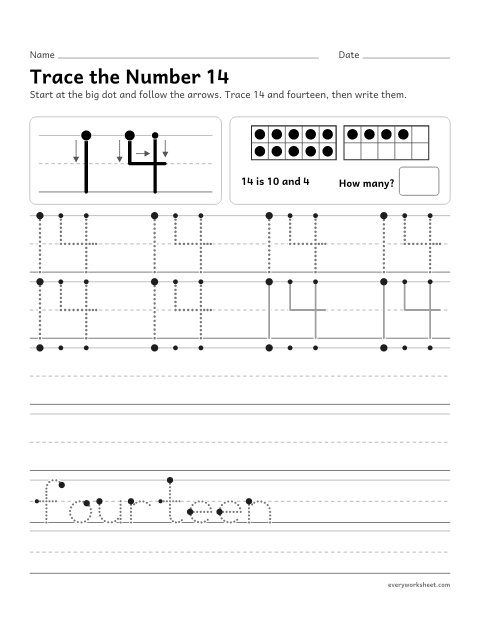
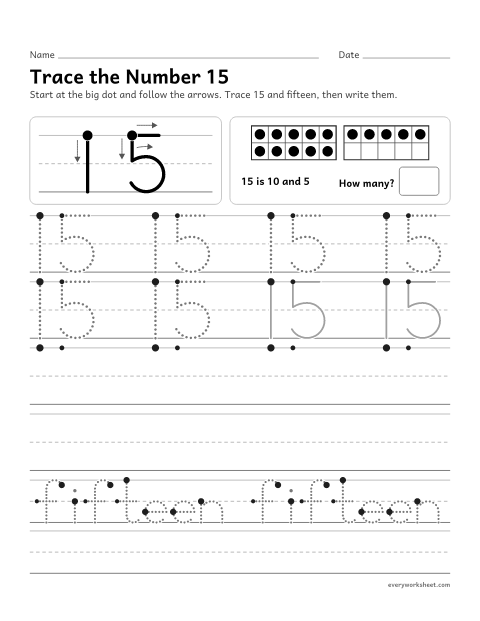
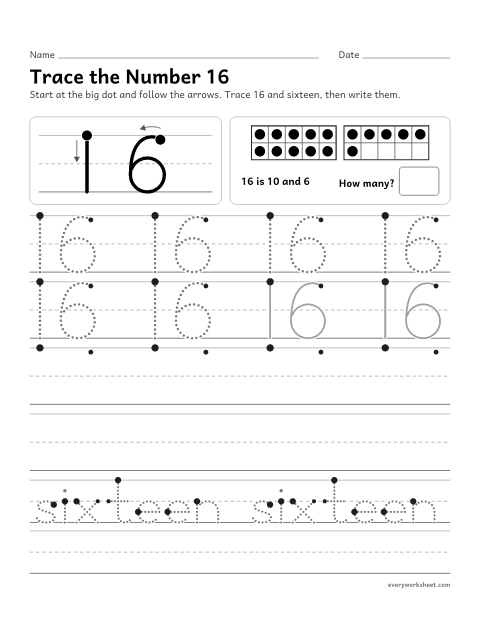
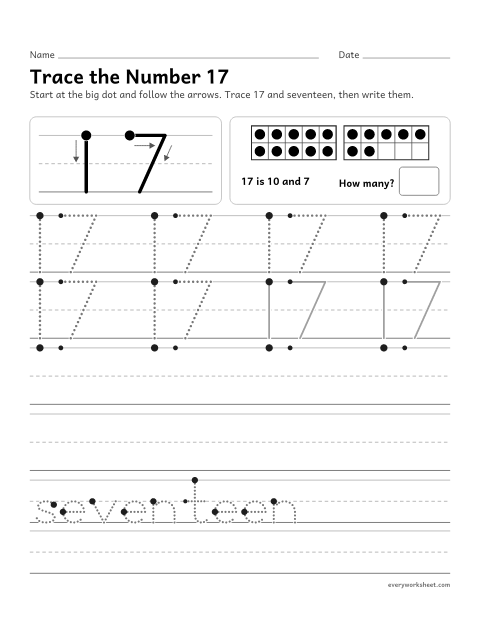
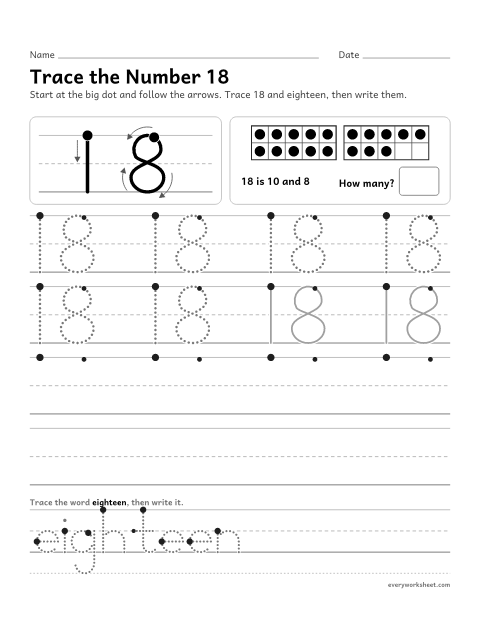
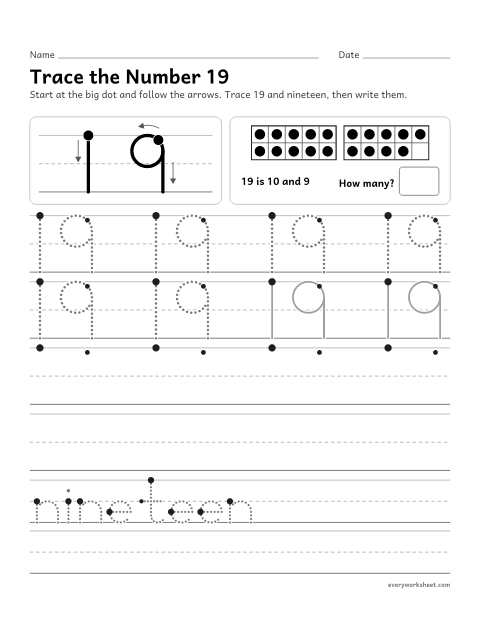
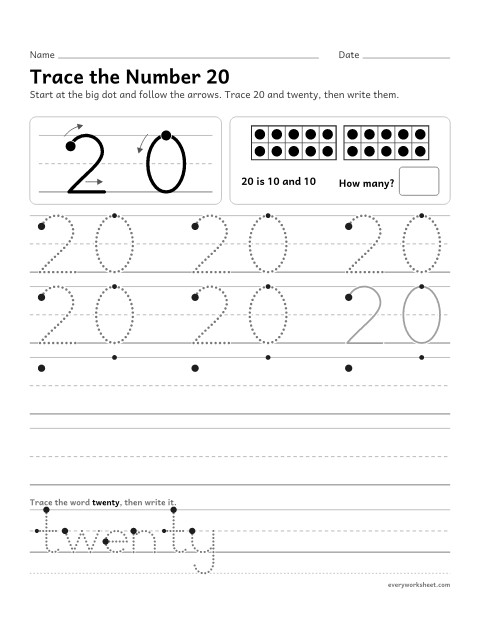
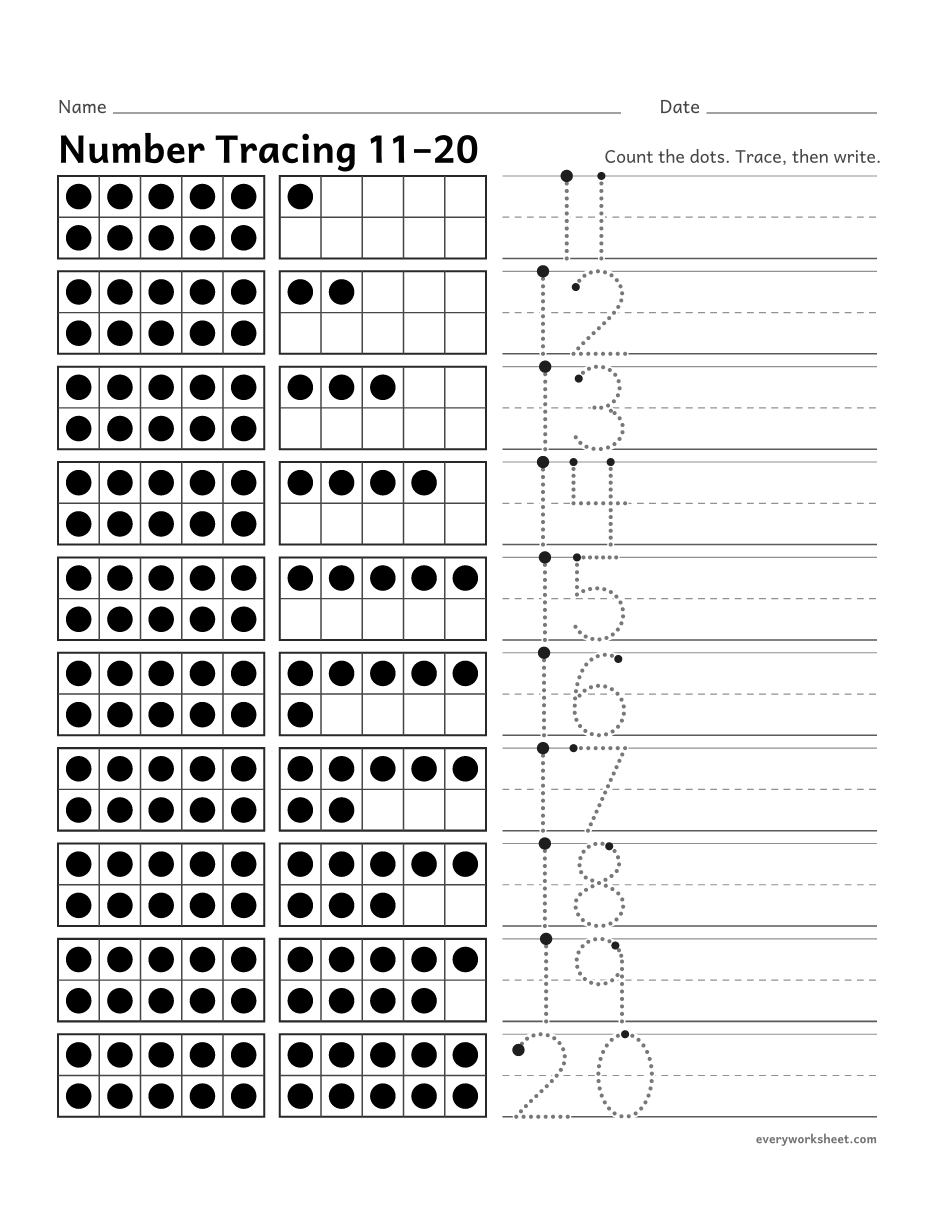
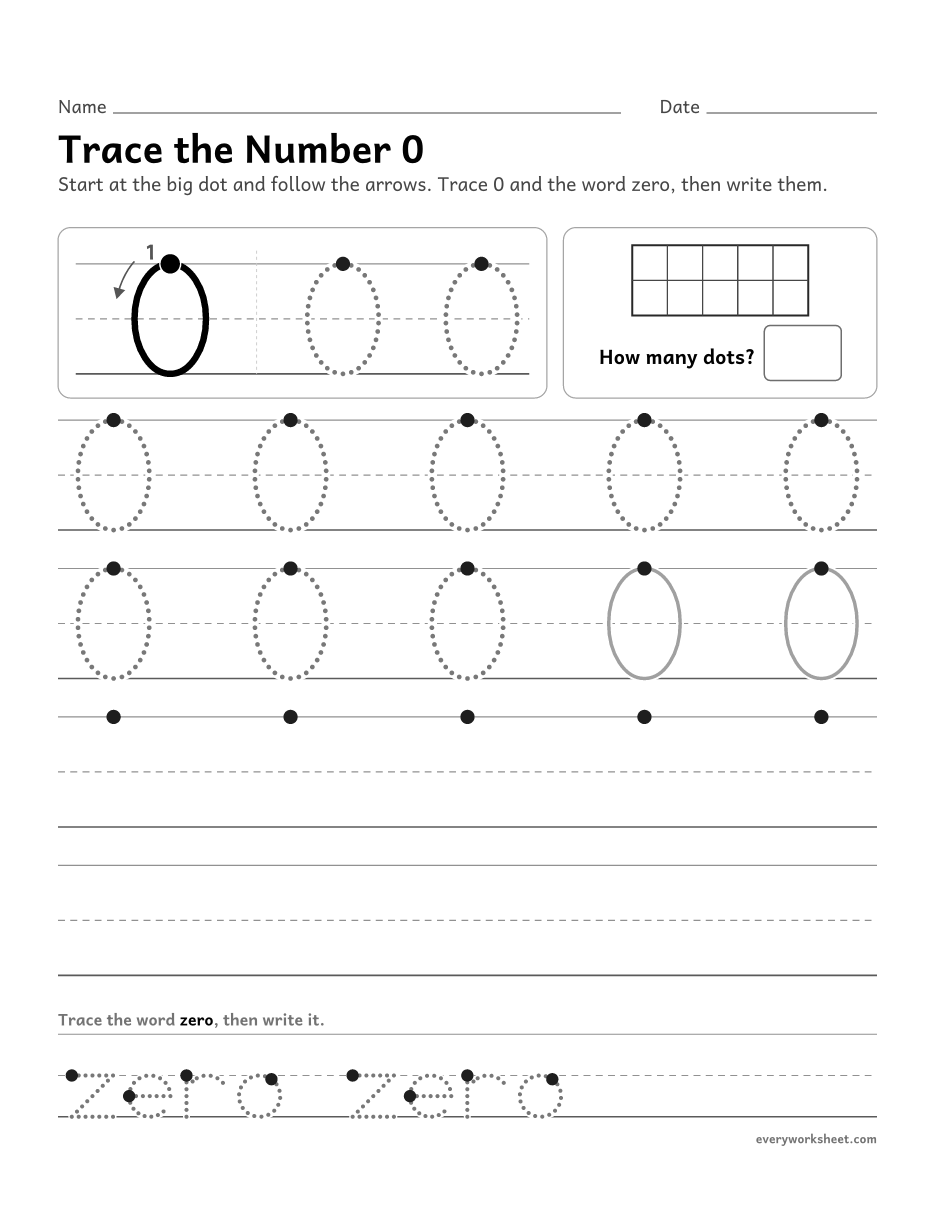
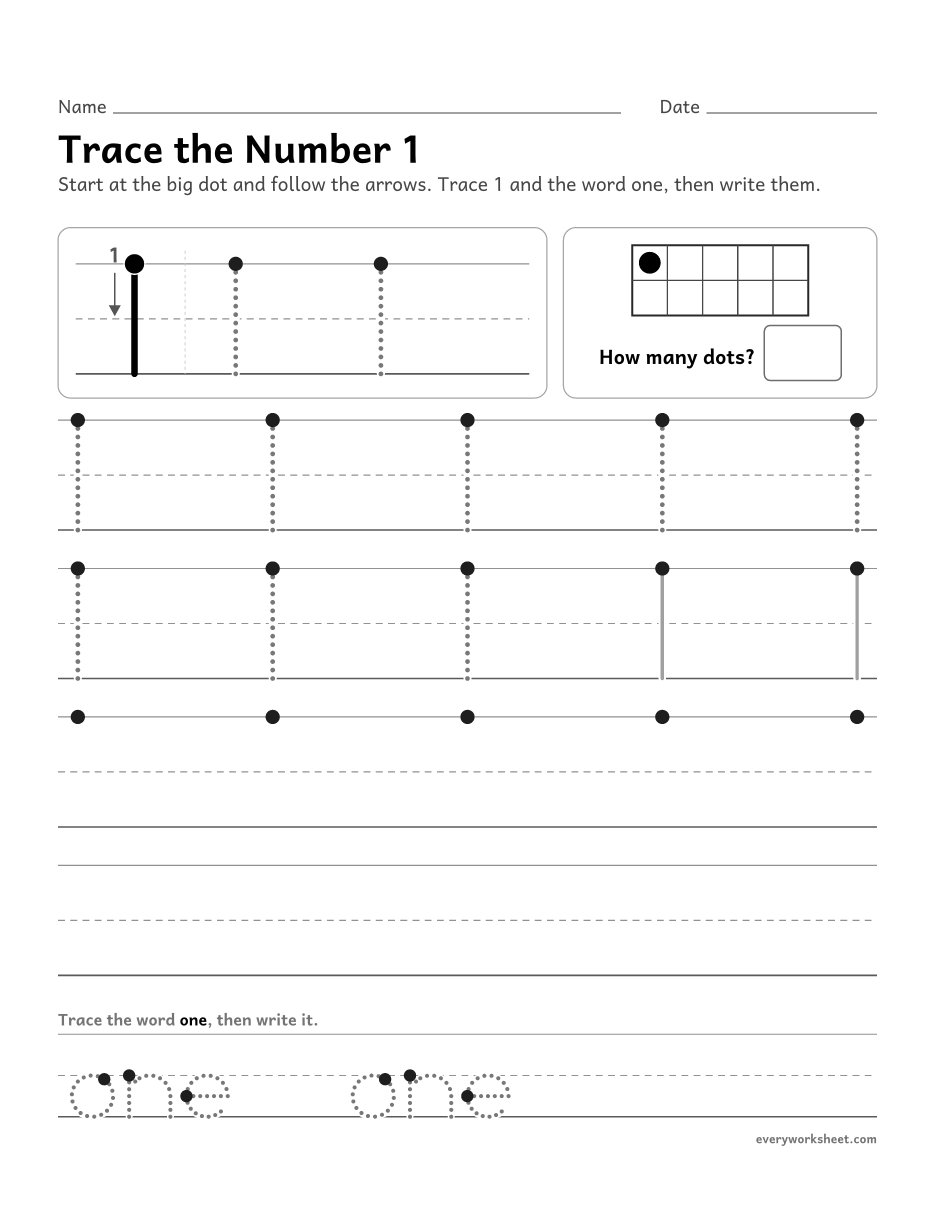
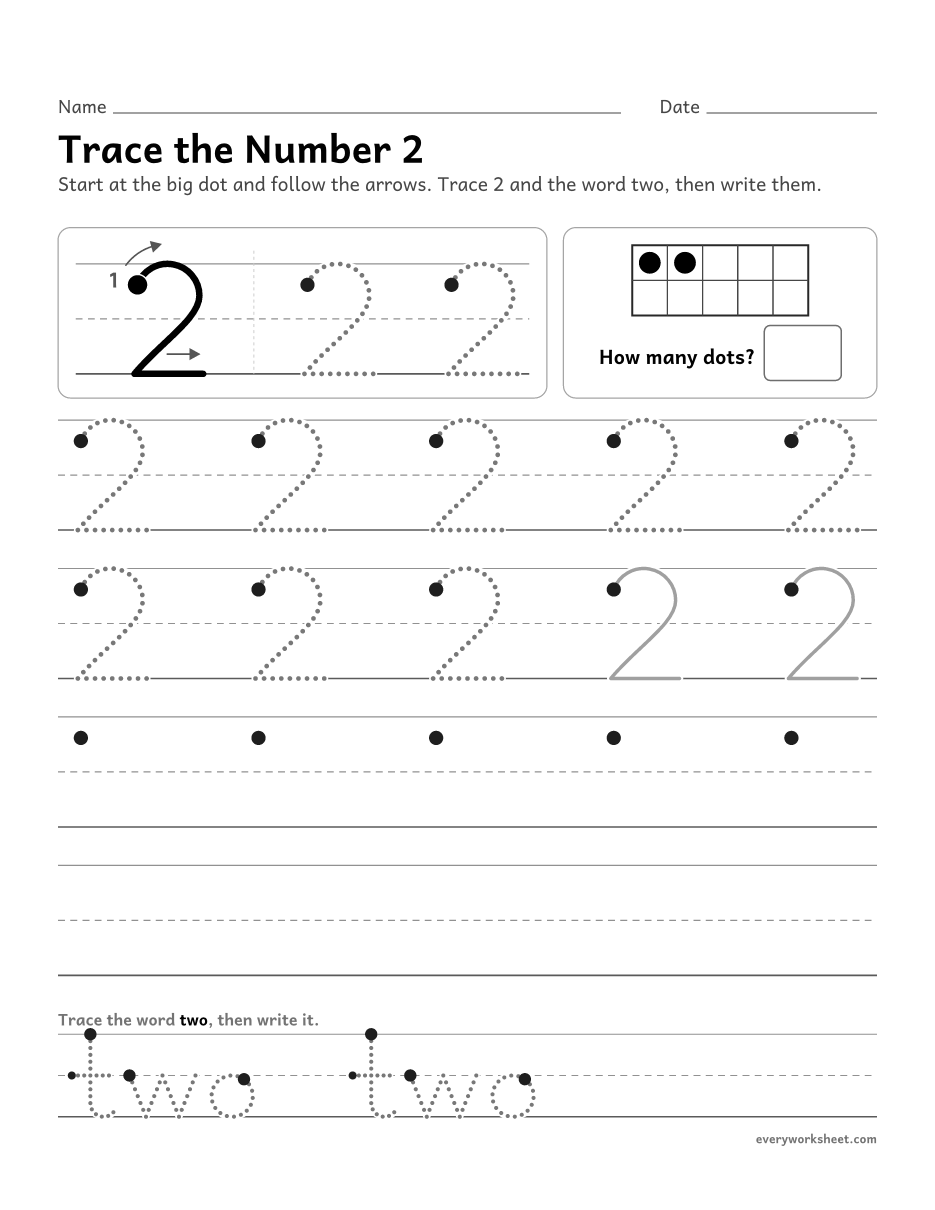
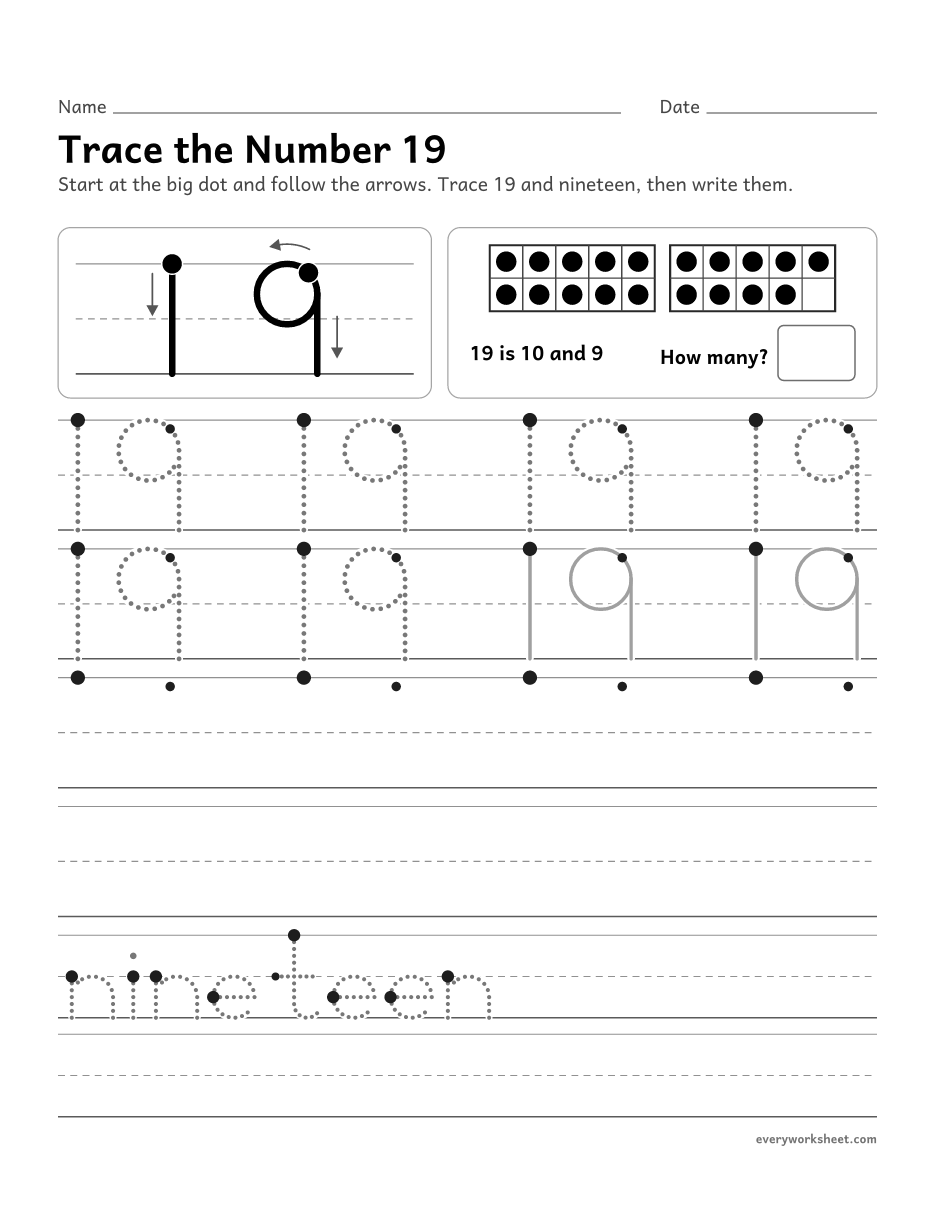
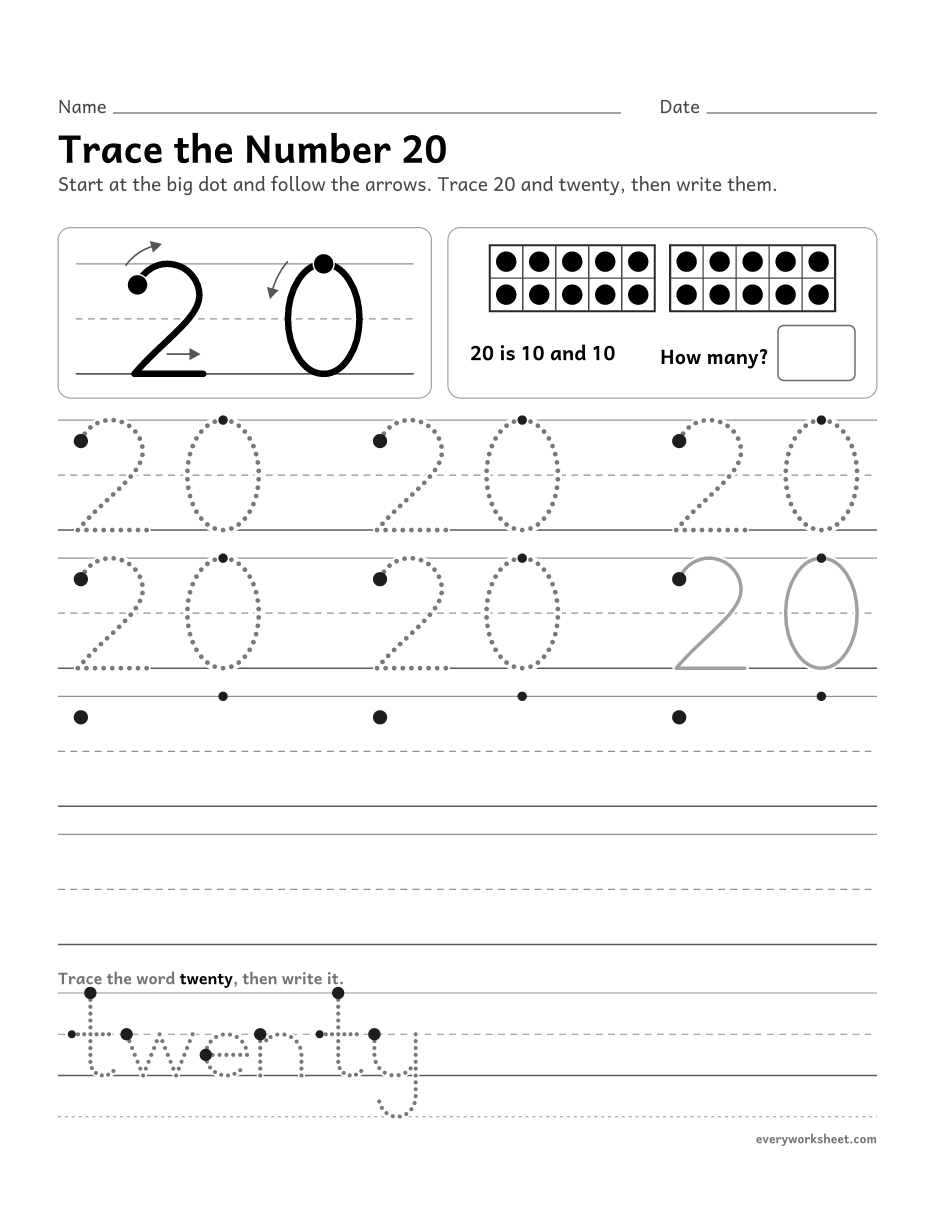
These number tracing worksheets cover every number a kindergartner is expected to write, from 0 to 20. Each number has its own page: a large model numeral with start dots and arrows, rows that move from dotted to blank, the number word to trace, and a ten frame (two past 10) with dots to count. For quick practice tracing numbers, two one-page sheets, 0–10 and 11–20, put each range together for review.
Writing numerals is a kindergarten standard of its own, but the ten frames matter just as much. Seeing 7 as a full row of five and two more, or 14 as a full ten frame and four more, builds the number sense that addition and place value rest on. Zero gets its own page with an empty frame, because none is an amount too.
Standards
CCSS.MATH.CONTENT.K.CC.A.3Write numbers from 0 to 20. Represent a number of objects with a written numeral 0-20 (with 0 representing a count of no objects).CCSS.MATH.CONTENT.K.CC.B.4Understand the relationship between numbers and quantities; connect counting to cardinality.CCSS.MATH.CONTENT.K.CC.B.5Count to answer “how many?” questions about as many as 20 things arranged in a line, a rectangular array, or a circle, or as many as 10 things in a scattered configuration; given a number from 1-20, count out that many objects.
How to use them
- Work through 0–10 first, one or two numbers a day. Have your child count the dots in the ten frame before tracing, so the numeral stands for something.
- Say the formation out loud while your child traces the model with a finger, then move on to the dotted rows.
- Trace the number word, but don’t expect your child to read it yet. Point to it as you read it aloud.
- For 11–19, talk about the two ten frames: one full ten and some more. Fourteen is ten and four.
- Use the 0–10 and 11–20 sheets for review. Note which numbers your child hesitates on or reverses, and go back to those pages.
Teaching tips
- Reversals of 2, 3, 5, 7 and 9 are very common at this age. Correct the starting point rather than the finished numeral.
- Watch the teens. Because we say “four” first in fourteen, many children write 41. Point to the ten frames: the full ten comes first, so the 1 comes first.
How to form each number
- 0Start at the top and circle back, to the left, all the way around; it is narrower than the letter O.
- 1Start at the top line and pull straight down.
- 2Start on the left just below the top, curve forward up and over to the right, slant down to the left to the baseline, and slide right.
- 3Curve forward to the middle, then curve forward again to the bottom.
- 4Pull down to just below the middle and slide right; lift, then pull a long line straight down from the top line.
- 5Pull down a short line, curve forward to make the round belly, lift, and add the flat top.
- 6Start near the top right, curve down the left side and circle up into a loop.
- 7Slide right along the top line, then slant down to the left.
- 8Curve back like an S, curve around the bottom, and slant back up to the start.
- 9Circle back to make a small ball at the top, then pull straight down.
Questions teachers and parents ask
Why does my child write 14 as 41?
Because we say teen numbers with the ones first: four-teen. Use the ten frames to show that 14 is one ten and four ones, and that the ten is written first.
Are backward numbers a problem?
Usually not in kindergarten; many five- and six-year-olds reverse a few numerals. Teach the start point and direction, and keep a number line on the table to check against. If reversals continue well past first grade, mention it to your child’s teacher.
What are the ten frames for?
A ten frame is a 2-by-5 grid that holds up to ten dots. It lets children see amounts without counting one by one, such as 8 as a full row and three more.