 View larger
Letter K Worksheets
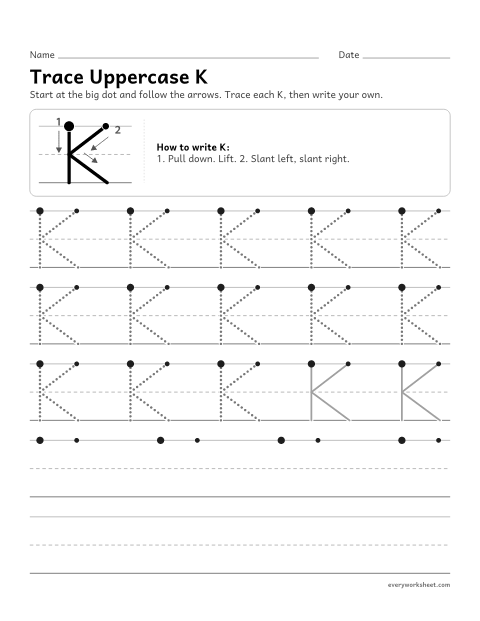
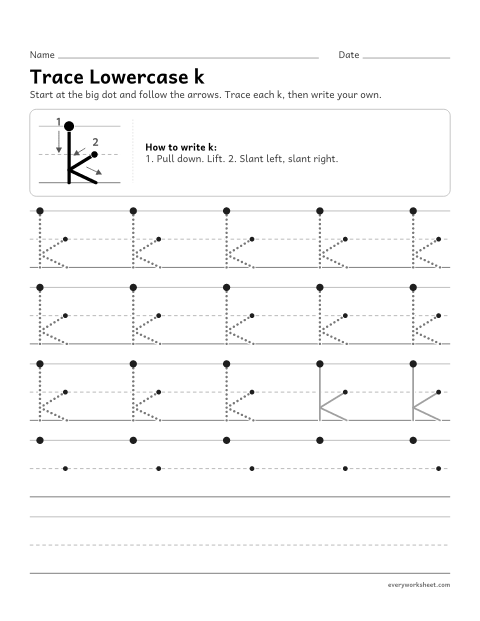
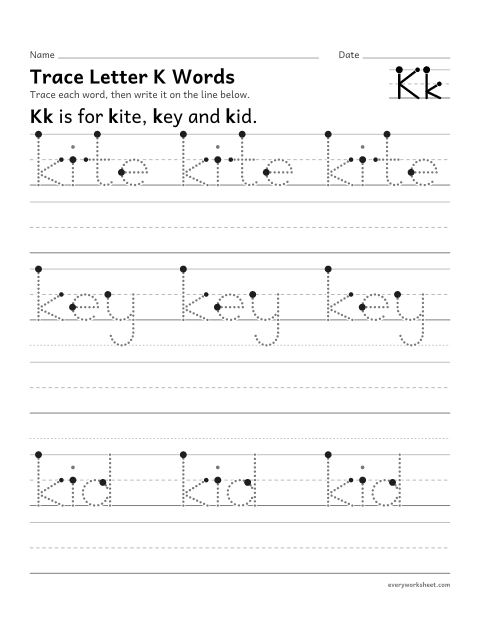
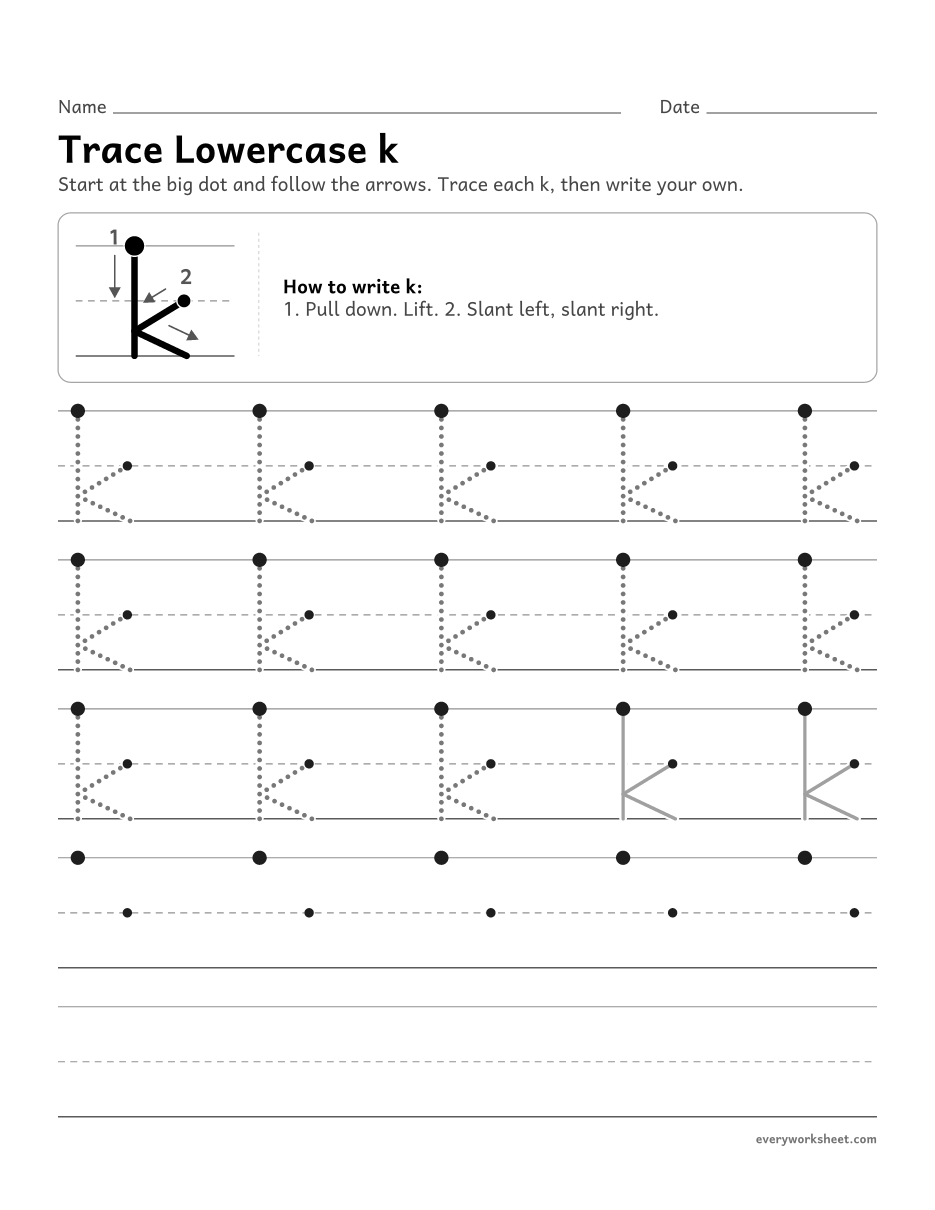
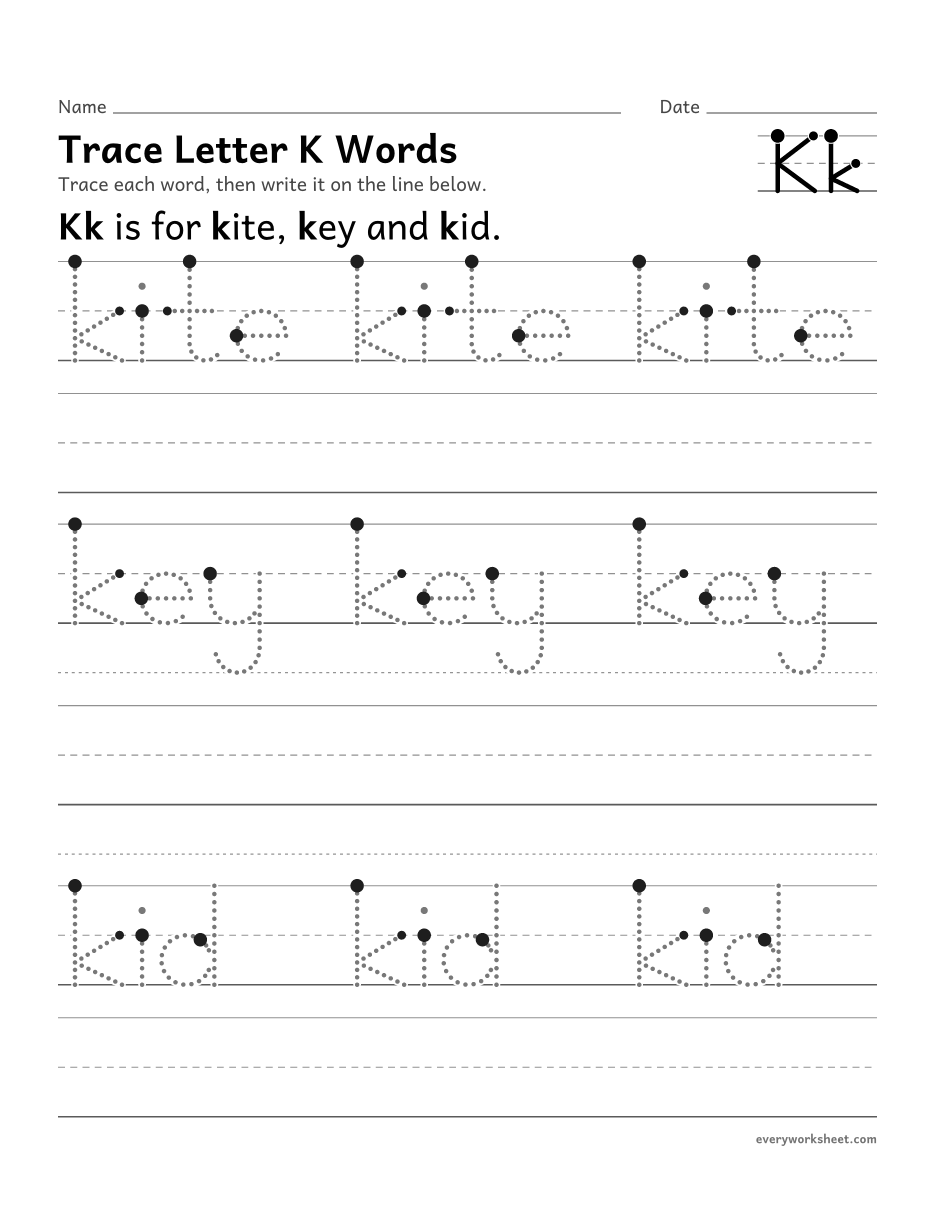
Trace uppercase K and lowercase k, trace the words kite, key and kid, and circle every K and k in a letter hunt.
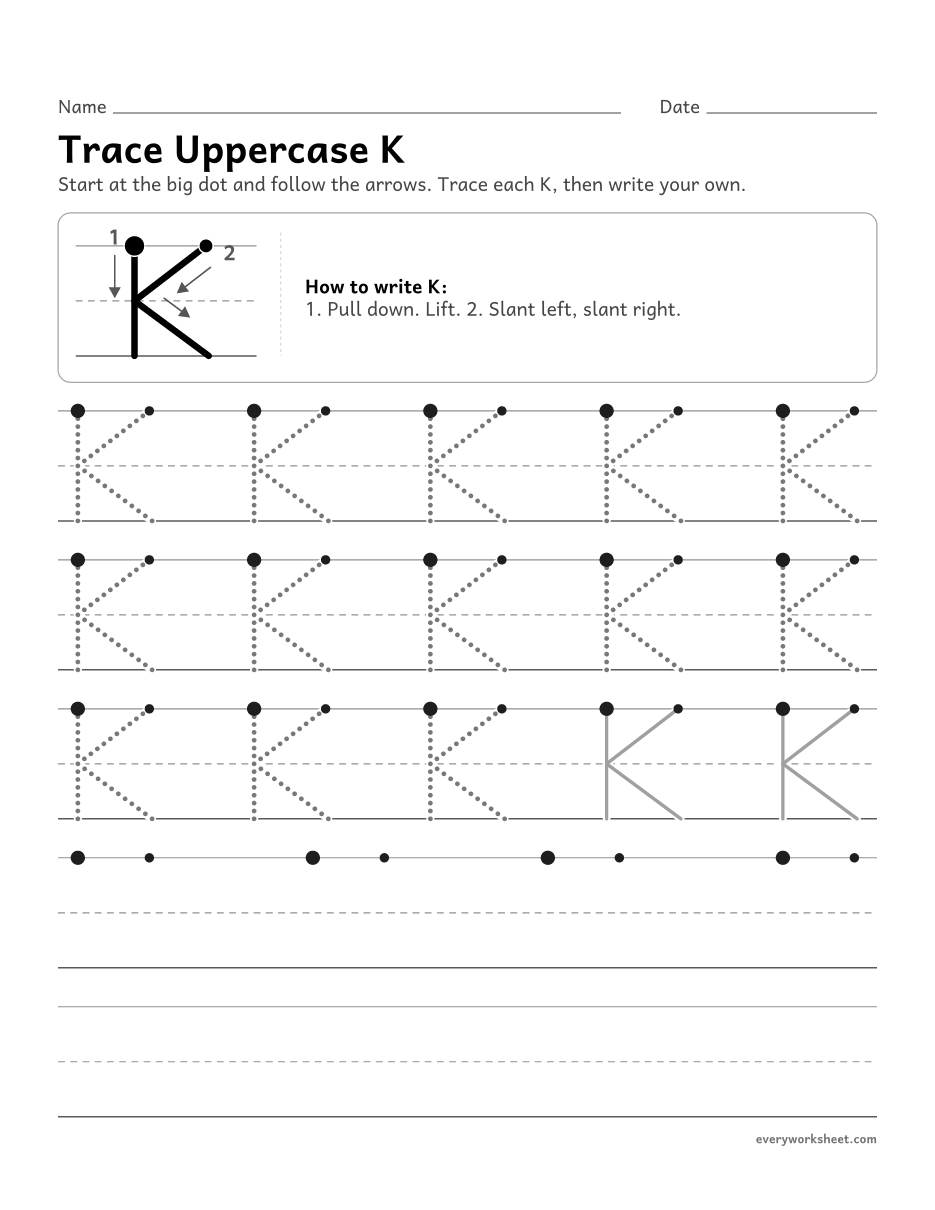
Down, slant in, slant out.
How to form uppercase KDownload the Letter K worksheets
 View larger
 View larger
 View larger
 View all 2 pages
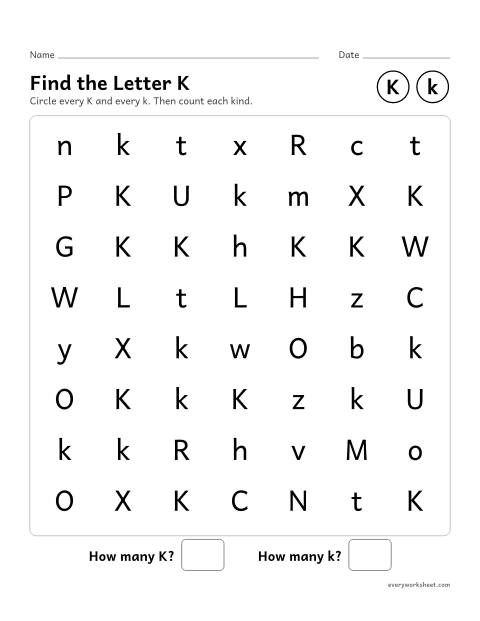
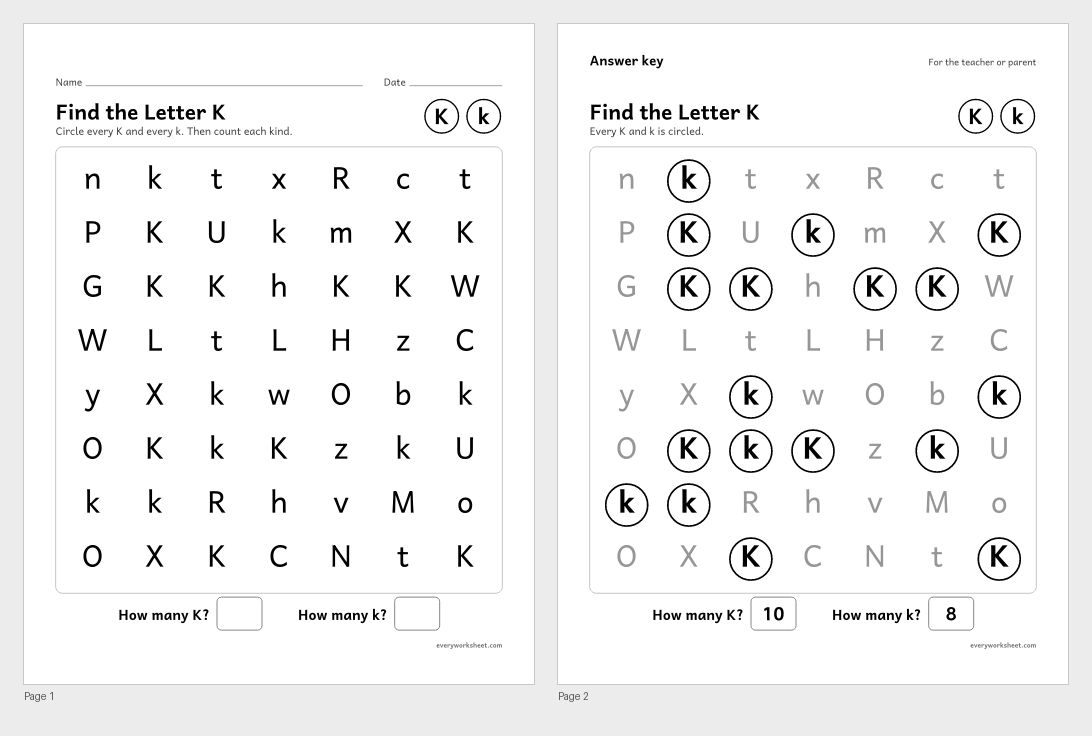
Find the letter K
Recognizing uppercase K and lowercase k
Answer key on page 2
2 pages55 KB
Print at 100% (actual size) for the cleanest tracing lines.
More letters
About these letter K worksheets
These letter K worksheets cover uppercase K, lowercase k, the words kite, key and kid, and a letter hunt with an answer key. K makes the /k/ sound, the same sound C makes in cat.
K is one straight line and two slants. On the capital, the slants meet the line at the dashed midline; on the lowercase, they’re smaller and meet the line between the midline and the baseline. Getting the two arms to touch the line, rather than float beside it, is the main thing to watch.
Standards
CCSS.ELA-LITERACY.L.K.1.APrint many upper- and lowercase letters.CCSS.ELA-LITERACY.RF.K.1.DRecognize and name all upper- and lowercase letters of the alphabet.
How to use them
- Start with the uppercase page. Have your child make the tall line first, then the two arms in one motion: slant in, slant out.
- Before the lowercase page, compare K and k side by side. The tall line is the same height; only the arms shrink.
- Trace kite, key and kid. Then show your child that cat and kite start with the same sound but different letters.
- Finish with the letter hunt and check the answer key.
Teaching tips for K
- Uppercase K: start at the top line and pull down straight to the baseline. Lift and start at the top line, to the right. Slant left down to touch the line at the dashed midline, then slant right down to the baseline. Say it while writing: “1. Pull down. Lift. 2. Slant left, slant right.”
- Lowercase k: start at the top line and pull down straight to the baseline. Lift and start at the dashed midline, to the right. Slant left in to touch the line, then slant right out to the baseline. Say it while writing: “1. Pull down. Lift. 2. Slant left, slant right.”
- Common mix-ups: arms that don’t touch the line, a lowercase k with arms as big as the capital’s, and a K with a rounded top arm, which turns it into an R.
- Body letter: stand straight as the line, then stick one arm up and one leg out to the side to make a K.
- Quick activities: tie a ribbon tail to a paper kite and write k’s along it; hide a key under one of three cups and have your child say a /k/ word before lifting each one.
Questions about letter K
Why do cat and kite start with different letters if they sound the same?
C and K can both spell the /k/ sound. In kindergarten, children just need to know that both letters can make it. Spelling rules for which one to use come in first and second grade.
How is lowercase k different from uppercase K?
The tall line is the same. The arms on lowercase k start at the dashed midline and are smaller, so the letter looks like a K whose arms were pushed down.