 View larger
Letter C Worksheets
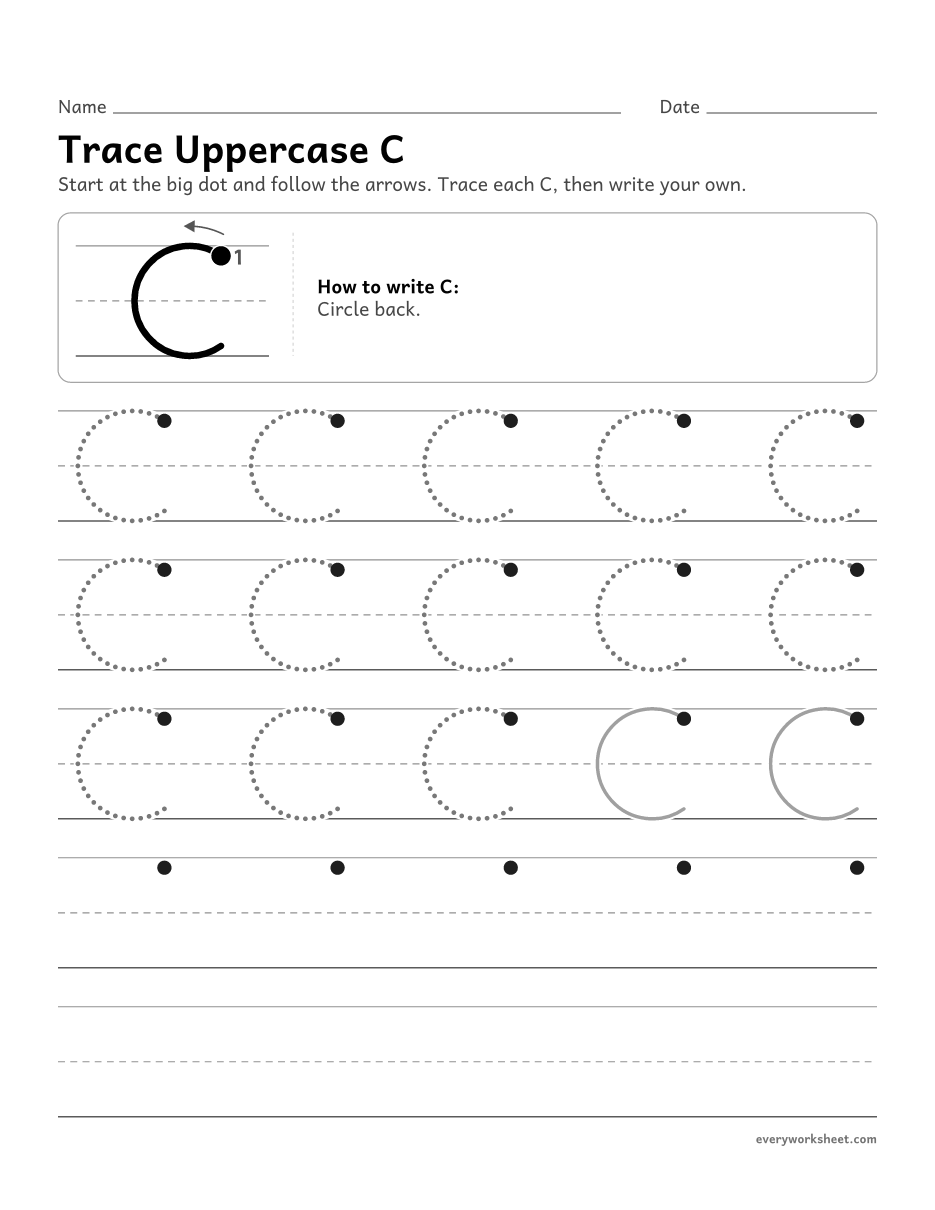
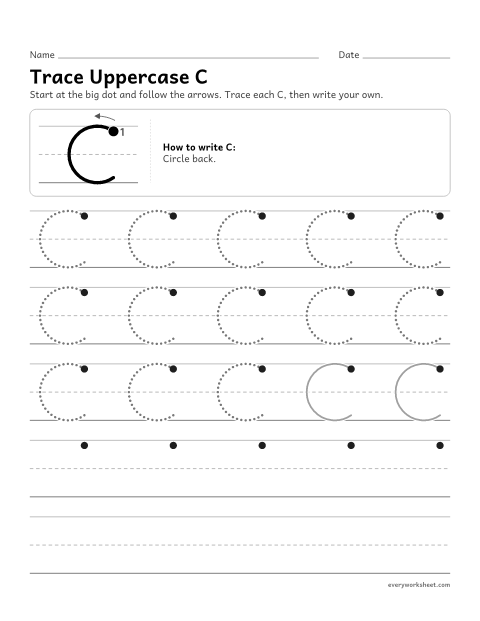
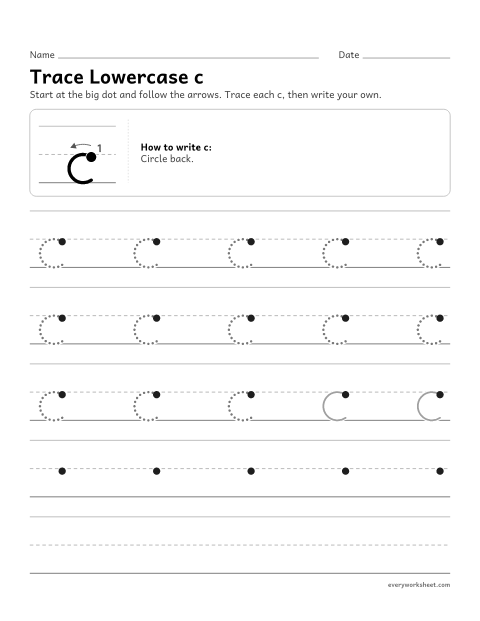
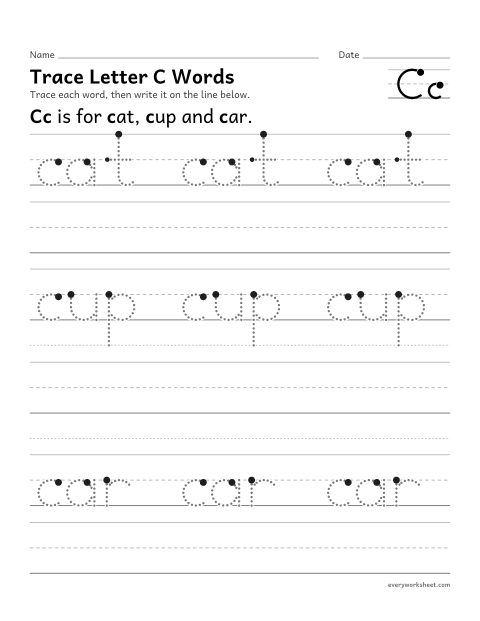
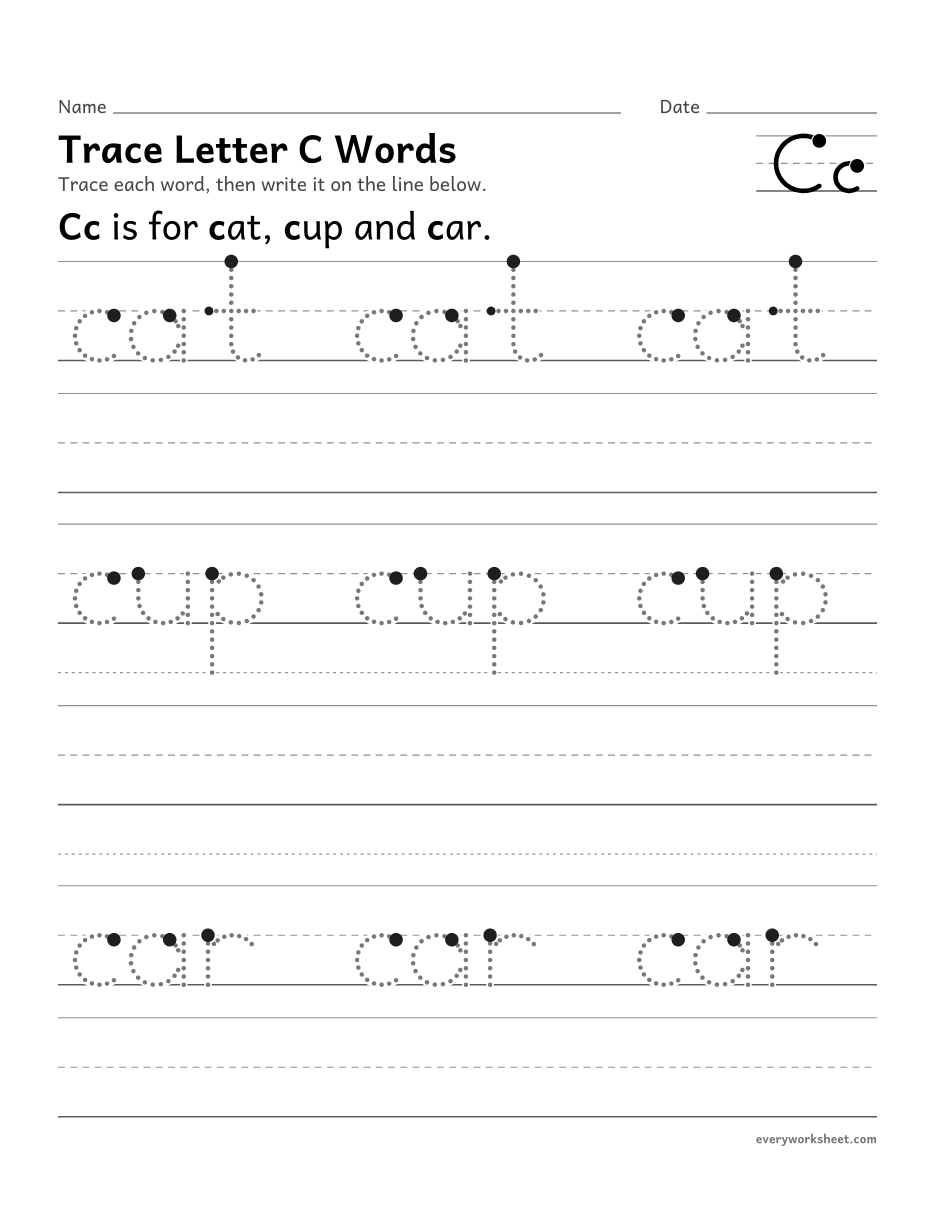
Trace uppercase C and lowercase c, trace the words cat, cup and car, and circle every C and c in a letter hunt.
Circle back and stop.
How to form uppercase CDownload the Letter C worksheets
 View larger
 View larger
 View larger
 View all 2 pages
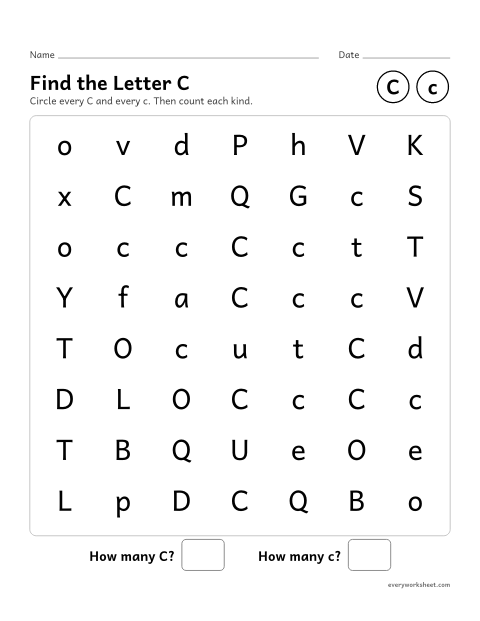
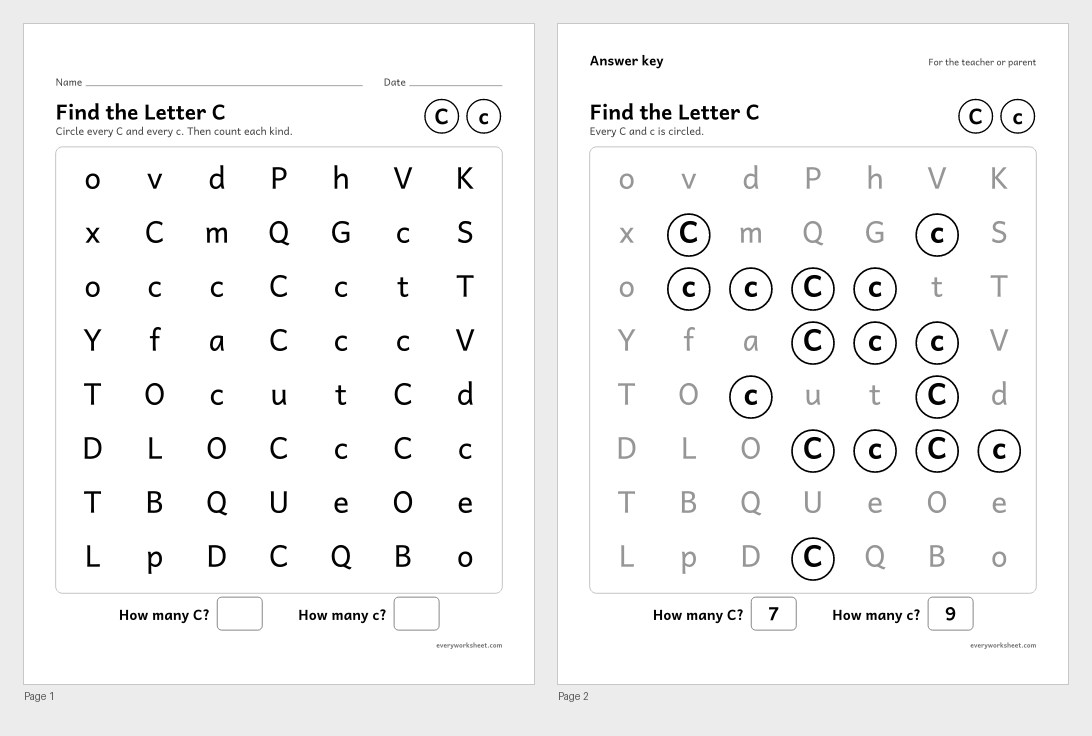
Find the letter C
Recognizing uppercase C and lowercase c
Answer key on page 2
2 pages55 KB
Print at 100% (actual size) for the cleanest tracing lines.
More letters
About these letter C worksheets
These letter C worksheets give your child four ways to practice: trace uppercase C, trace lowercase c, trace the words cat, cup and car, and hunt for every C and c on a page with an answer key. In these words C makes its hard sound, /k/, the same sound K makes.
C is one of the most useful letters to get right early. The backward circle that makes c is the first stroke of a, d, g, o and q, and of capital G, O and Q too. Uppercase and lowercase c are the same shape and only the size changes, which makes C a good letter for learning how tall letters should be.
Standards
CCSS.ELA-LITERACY.L.K.1.APrint many upper- and lowercase letters.CCSS.ELA-LITERACY.RF.K.1.DRecognize and name all upper- and lowercase letters of the alphabet.
How to use them
- Start with the uppercase page. Ask your child to find the start dot near the top right and say “start at the top, go back” before tracing.
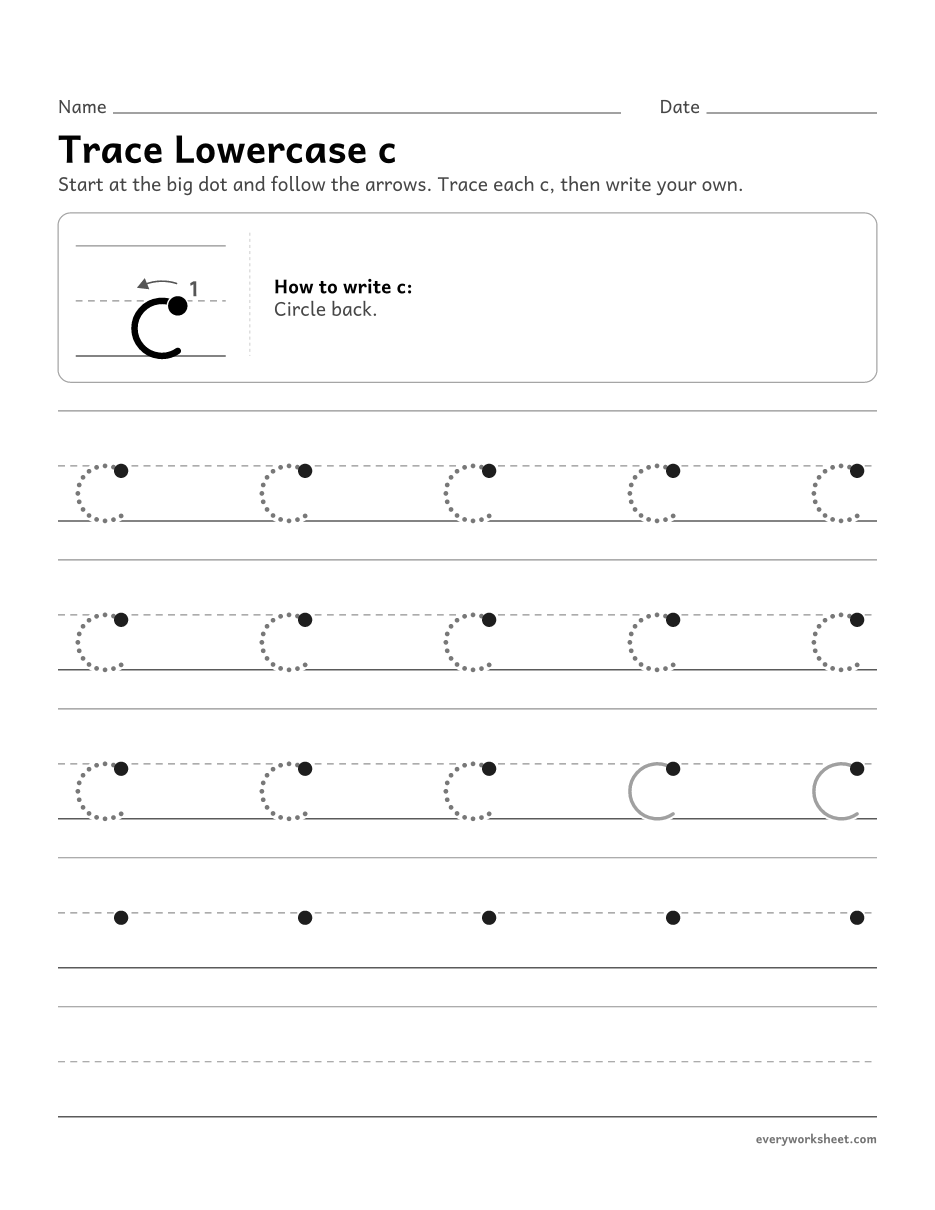
- On the lowercase page, check size. Lowercase c starts just under the dashed midline and stops just above the baseline. If it pokes above the midline, it is turning into a capital.
- Trace cat, cup and car on the words page. Say each word slowly and have your child make a C shape with one hand each time they hear /k/ at the start.
- Finish with the letter hunt and compare the count with the answer key.
Teaching tips for C
- Uppercase C: start just below the top line on the right side. Circle back, up over the top, down around the left side, and stop just above the baseline on the right. Leave the mouth open. Say it while writing: “Circle back.”
- Lowercase c: the same path, made small, starting just below the dashed midline and finishing just above the baseline. Say it while writing: “Circle back.”
- Clock cue: imagine a clock face, start near the 2, go backward past 12, 9 and 6, and stop near the 4. Children who start at the bottom or go forward around the clock end up with a backward C.
- Common mix-ups: closing the circle (it becomes o), making lowercase c as tall as capital C, and starting at the bottom.
- Quick activities: drive a toy car around a big C taped on the floor, starting at the top; take a bite out of a round cracker to make a C; trace around the rim of a cup, then erase a small piece on the right to leave a c.
Questions about letter C
Why do C and K make the same sound?
Both letters can spell the /k/ sound, so cat and kite start with the same sound but different letters. Kindergartners mostly need to know that C often says /k/. The rules for choosing C or K come later, in first and second grade.
How can my child tell uppercase C from lowercase c?
By size. Uppercase C fills the space from the top line to the baseline. Lowercase c fits between the dashed midline and the baseline. Ask your child to check the top of each c against the midline.
Does C ever make another sound?
Yes. Before e, i or y, C often says /s/, as in city and face. Kindergartners usually meet the hard /k/ sound first; the soft sound is taught later.