 View larger
Letter B Worksheets
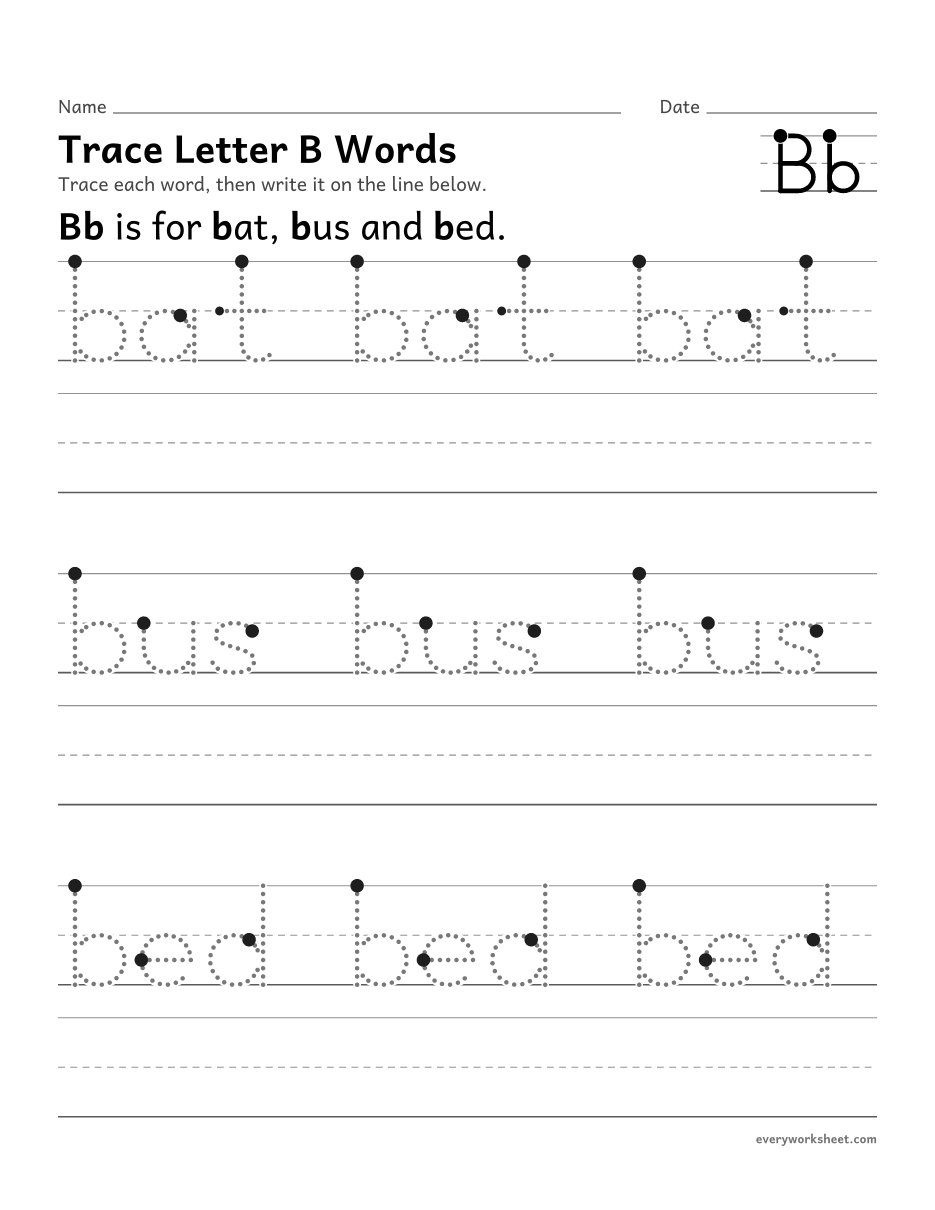
Trace uppercase B and lowercase b, trace the words bat, bus and bed, and circle every B and b in a letter hunt.
Down, back up, bump, bump.
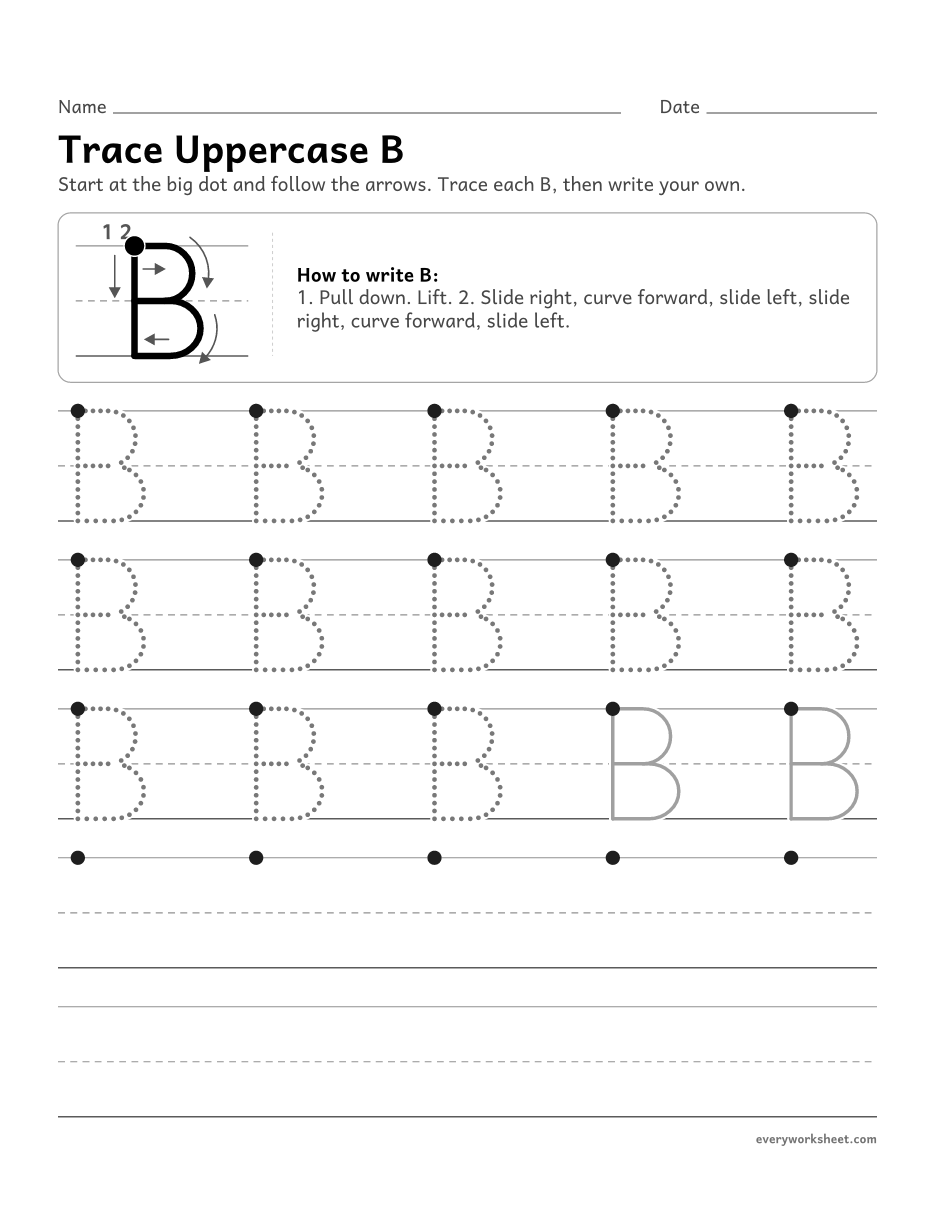
How to form uppercase BDownload the Letter B worksheets
 View larger
 View larger
 View larger
 View all 2 pages
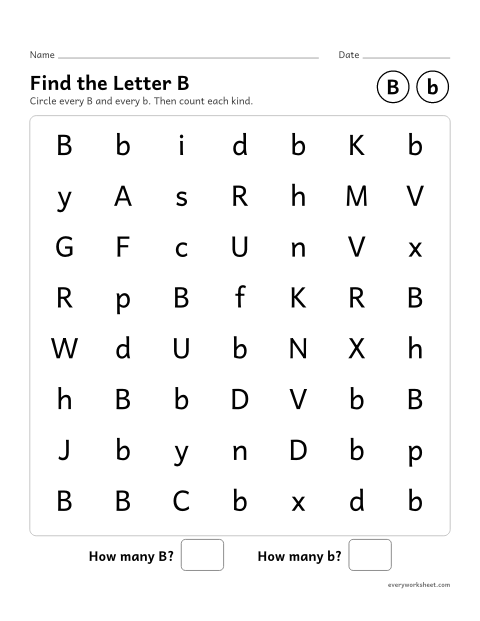
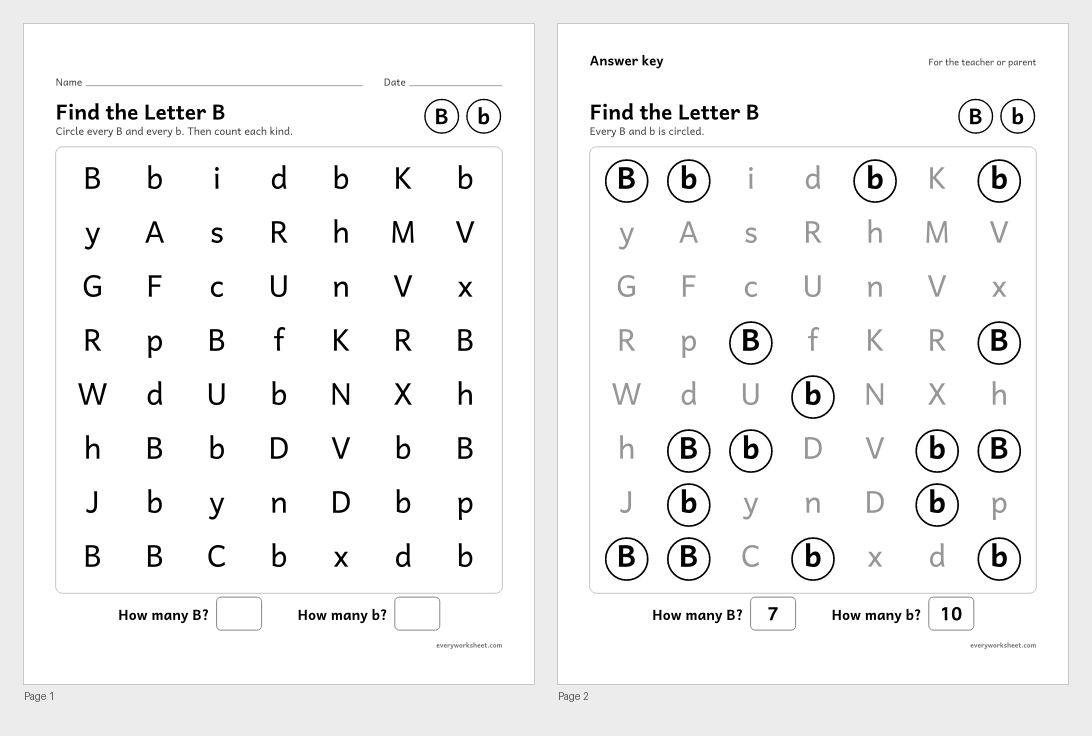
Find the letter B
Recognizing uppercase B and lowercase b
Answer key on page 2
2 pages55 KB
Print at 100% (actual size) for the cleanest tracing lines.
More letters
About these letter B worksheets
These letter B worksheets cover the shape, the sound and the spotting of B. Your child traces uppercase B and lowercase b, traces the words bat, bus and bed, and then circles every B and b in a letter hunt that comes with an answer key. B makes the /b/ sound: lips pressed together, then a quick pop.
Lowercase b is one of the letters kindergartners most often write backward, usually as d. That is a normal stage, not a warning sign, but it helps to teach b with a clear starting point: b always begins with a tall line, then the ball. Uppercase B is about two bumps facing the same way, one stacked on top of the other.
Standards
CCSS.ELA-LITERACY.L.K.1.APrint many upper- and lowercase letters.CCSS.ELA-LITERACY.RF.K.1.DRecognize and name all upper- and lowercase letters of the alphabet.
How to use them
- Do the uppercase page first. A child who can make B with both bumps on the right has a built-in reminder of which way lowercase b faces.
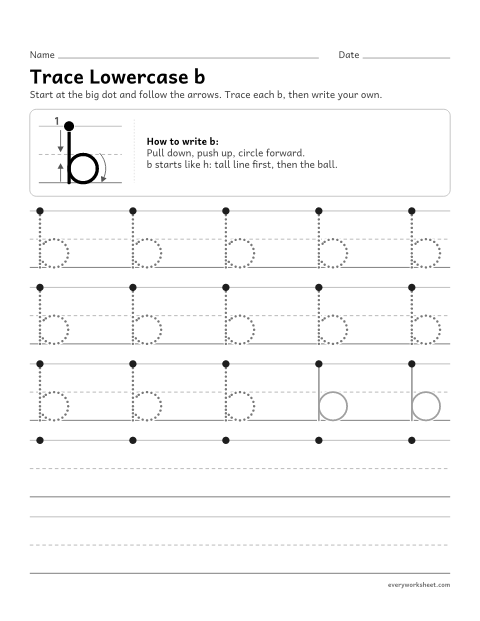
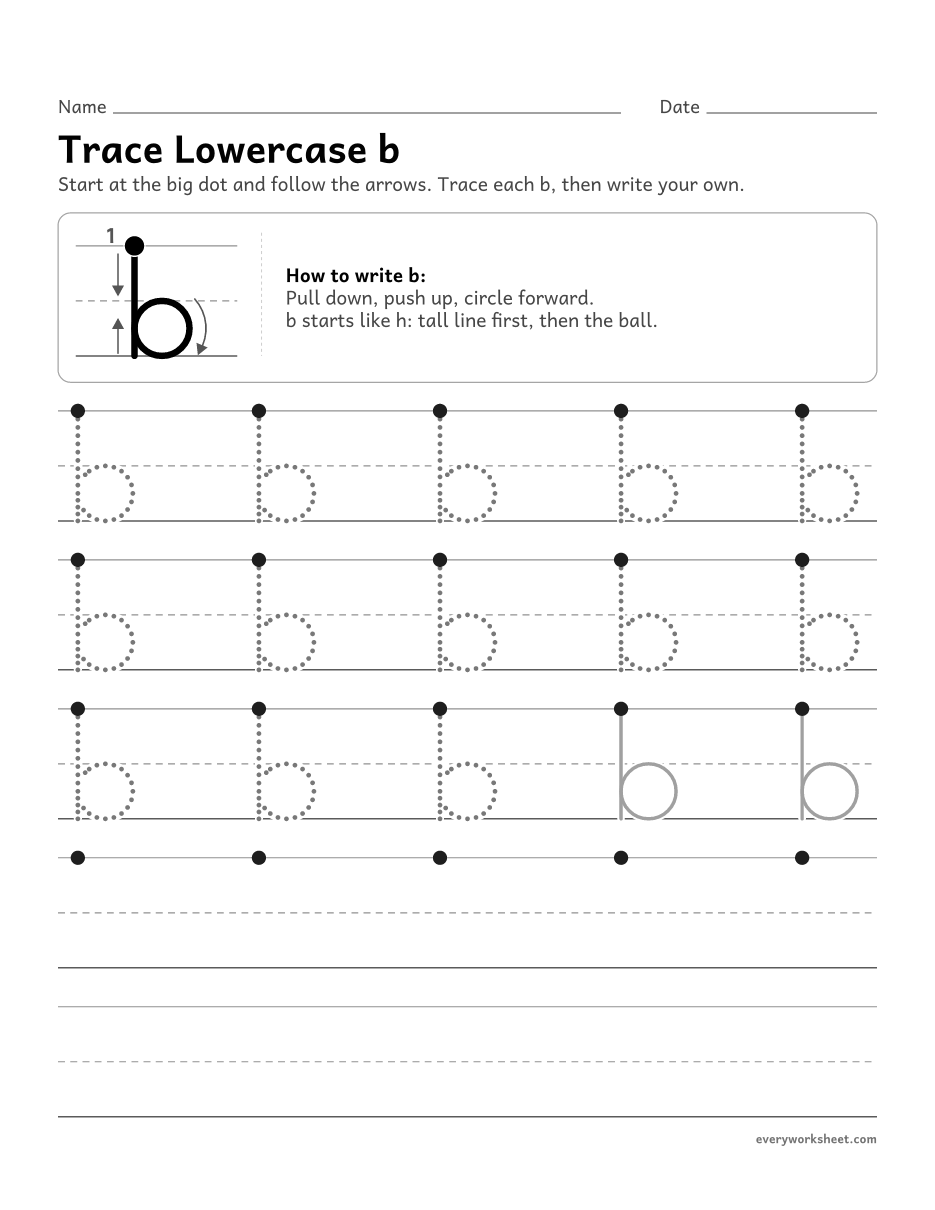
- Before the lowercase page, say the cue together: “Bat first, then the ball.” Your child pulls the tall line (the bat) from the top line to the baseline, pushes back up and circles the ball forward to the right.
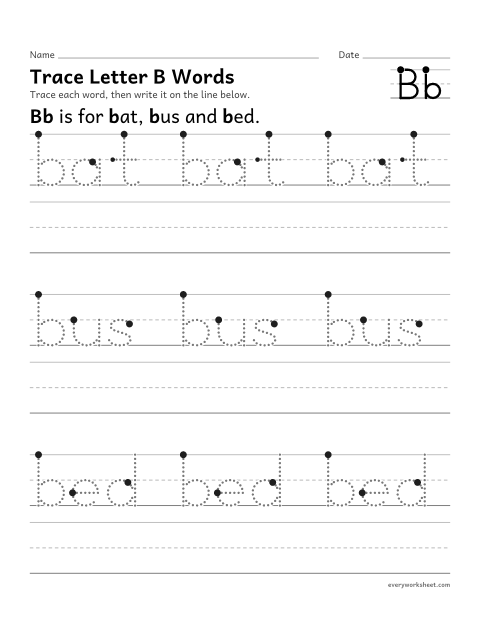
- On the words page, bed is worth a pause. Point out the b at the start and the d at the end: the two letters face each other like the ends of a bed.
- Do the letter hunt last. If your child circles a d by mistake, have them trace it with a finger and say where it starts.
Teaching tips for B
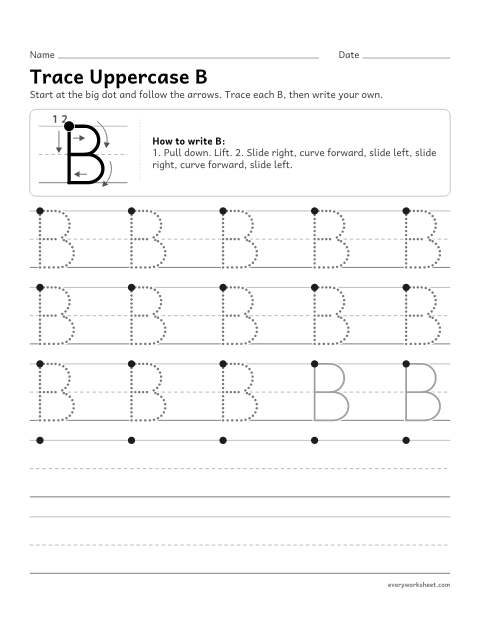
- Uppercase B: start at the top line and pull down straight to the baseline. Lift, go back to the top, slide right, curve forward to the dashed midline and slide back to the line. Then slide right, curve forward to the baseline and slide back. Two bumps, both on the right. Say it while writing: “1. Pull down. Lift. 2. Slide right, curve forward, slide left, slide right, curve forward, slide left.”
- Lowercase b: start at the top line and pull down straight to the baseline. Without lifting, push back up a little and circle forward, to the right, all the way around until the ball closes against the line. Say it while writing: “Pull down, push up, circle forward.” b starts like h: tall line first, then the ball.
- The bed trick: have your child make two fists with thumbs up and knuckles facing each other. The left hand makes a b, the right hand makes a d, and together they look like a bed. Spell b-e-d between them.
- Another check: lowercase b fits inside the bottom half of uppercase B. If your child isn’t sure which way b goes, write a B and cover the top bump.
- Keep the sound short. Say a crisp /b/, not “buh.” Clipped sounds make blending easier later: b-a-t blends into bat, but buh-a-t doesn’t.
- Quick activities: bounce a ball and say a /b/ word on each bounce; make a b from a pencil and a playdough ball; line up toy buses along a big B on the floor.
Questions about letter B
My child keeps writing d instead of b. Should I worry?
Mixing up b and d is one of the most common things kindergartners do, because the two letters are the same shape flipped. It usually fades with practice through first grade. Keep the start consistent: b starts with a line, d starts with a circle.
Should I teach b and d in the same week?
Many teachers keep them apart. Teach b until your child forms it the same way every time, then introduce d a few weeks later with its own cue. Practicing both at once can make the confusion stronger.