 View larger
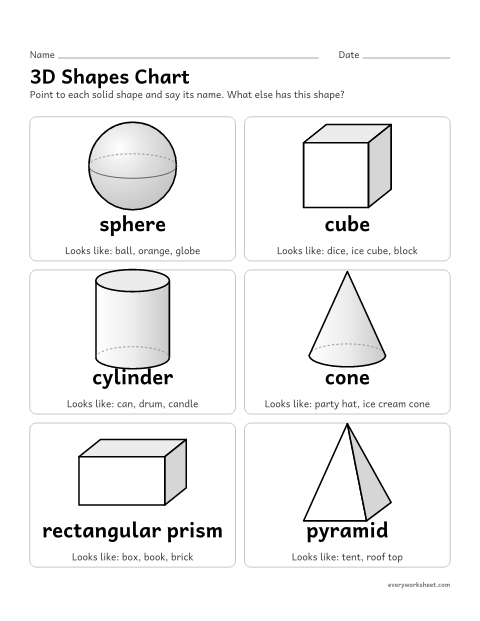
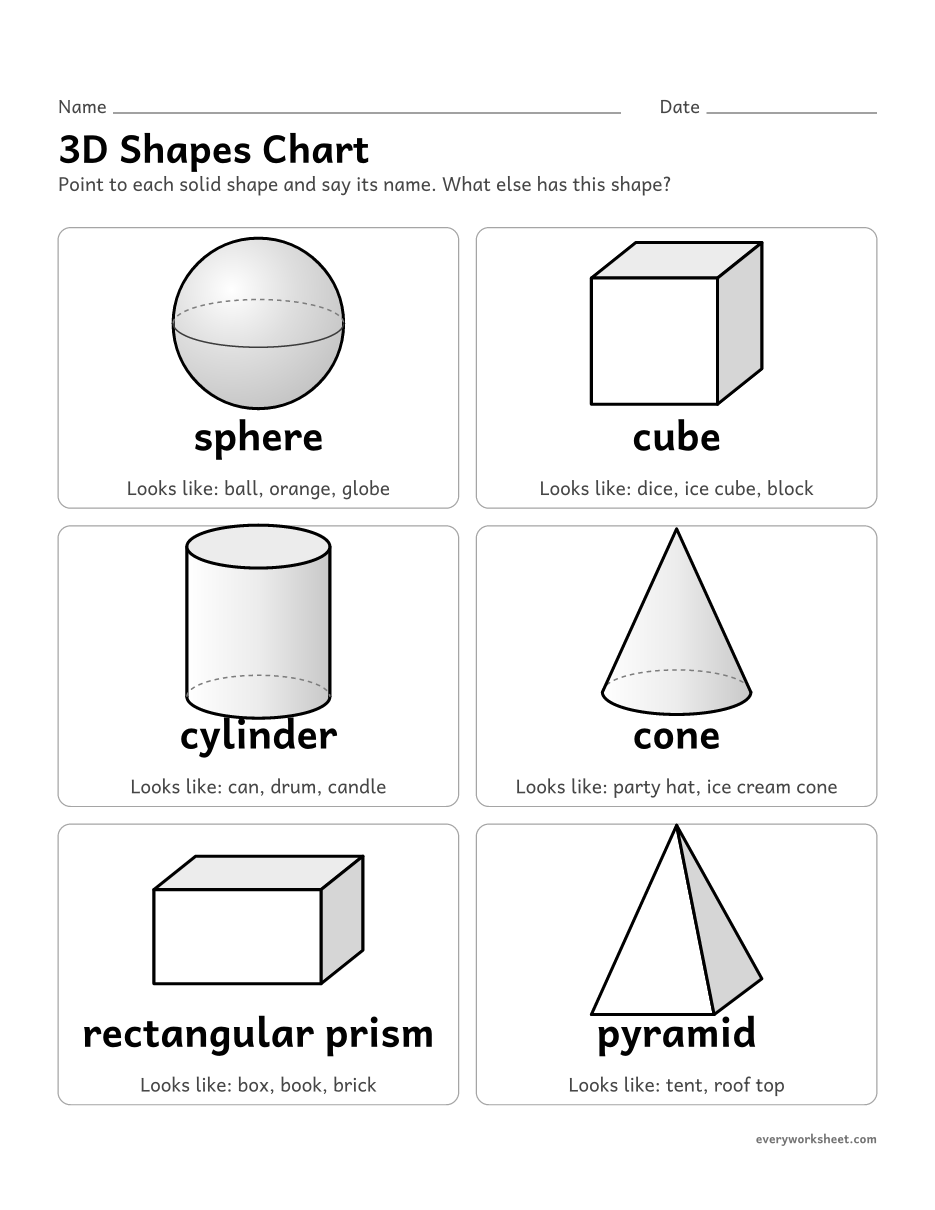
3D shapes chart
Naming solid shapes and everyday things with the same shape
1 page35 KB
Solid shapes for kindergarten: a 3D shapes chart, names to trace, flat or solid sorting, faces, roll or stack, everyday objects and counting.
View largerNaming solid shapes and everyday things with the same shape
1 page35 KB
 View larger
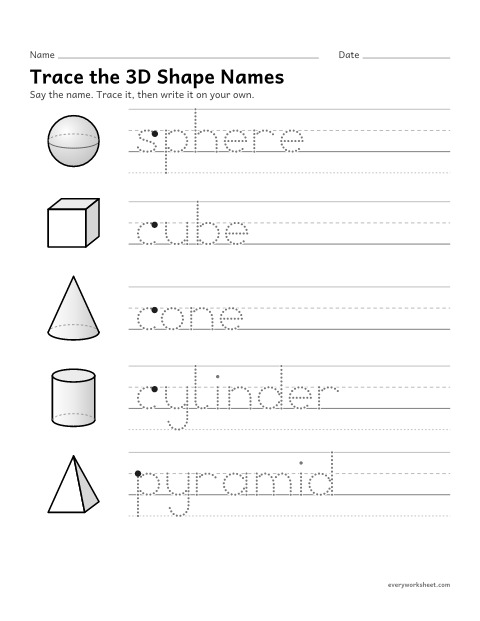
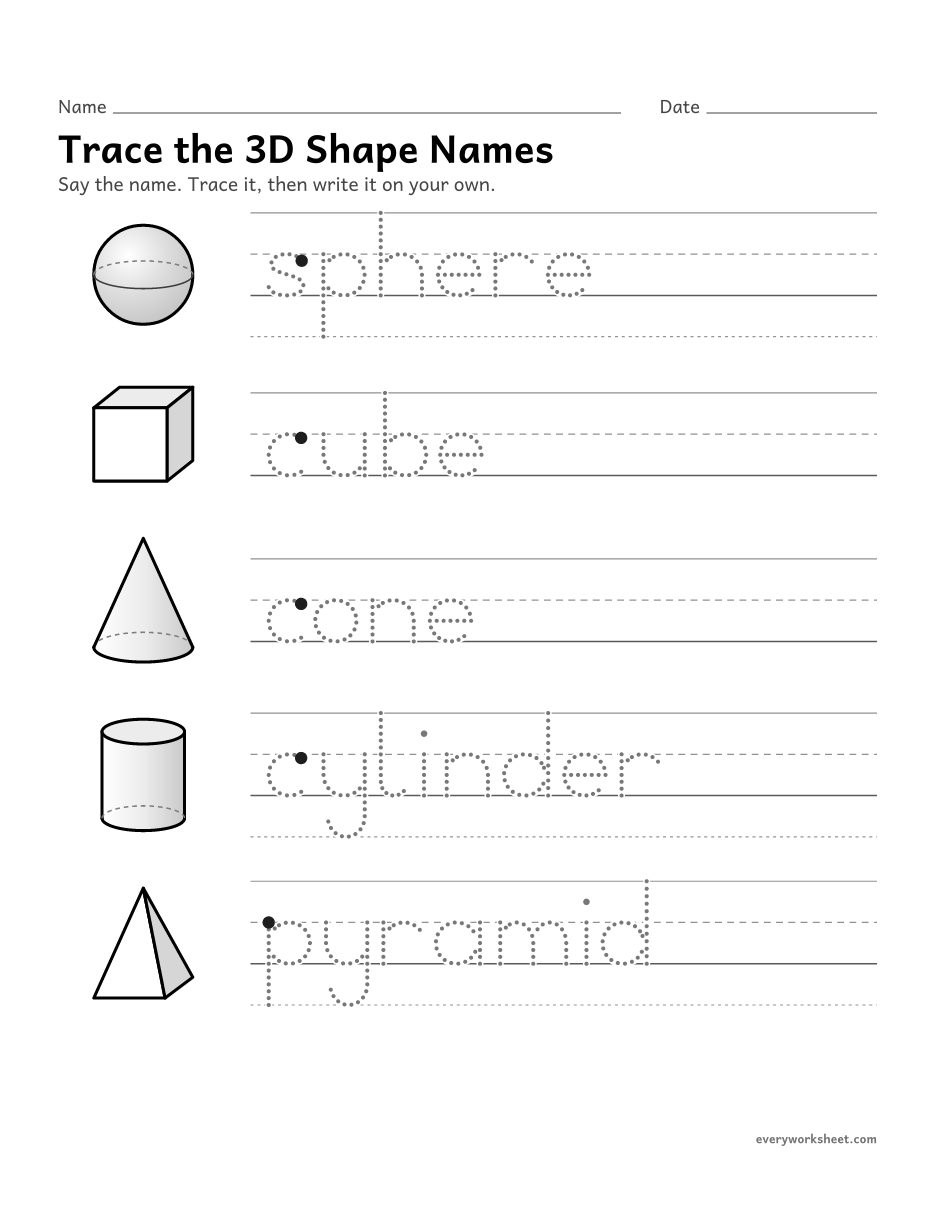
Naming and writing sphere, cube, cone, cylinder and pyramid
1 page32 KB
 View all 2 pages
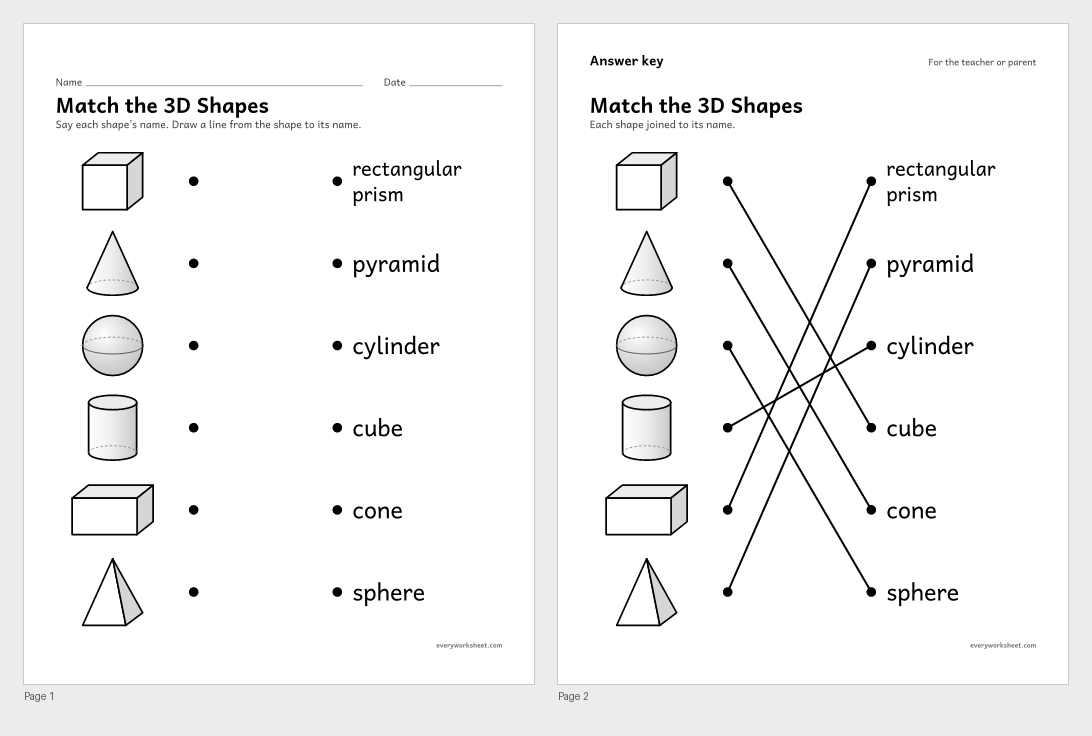
Matching solid shapes to their names
Answer key on page 2
2 pages36 KB
 View all 2 pages
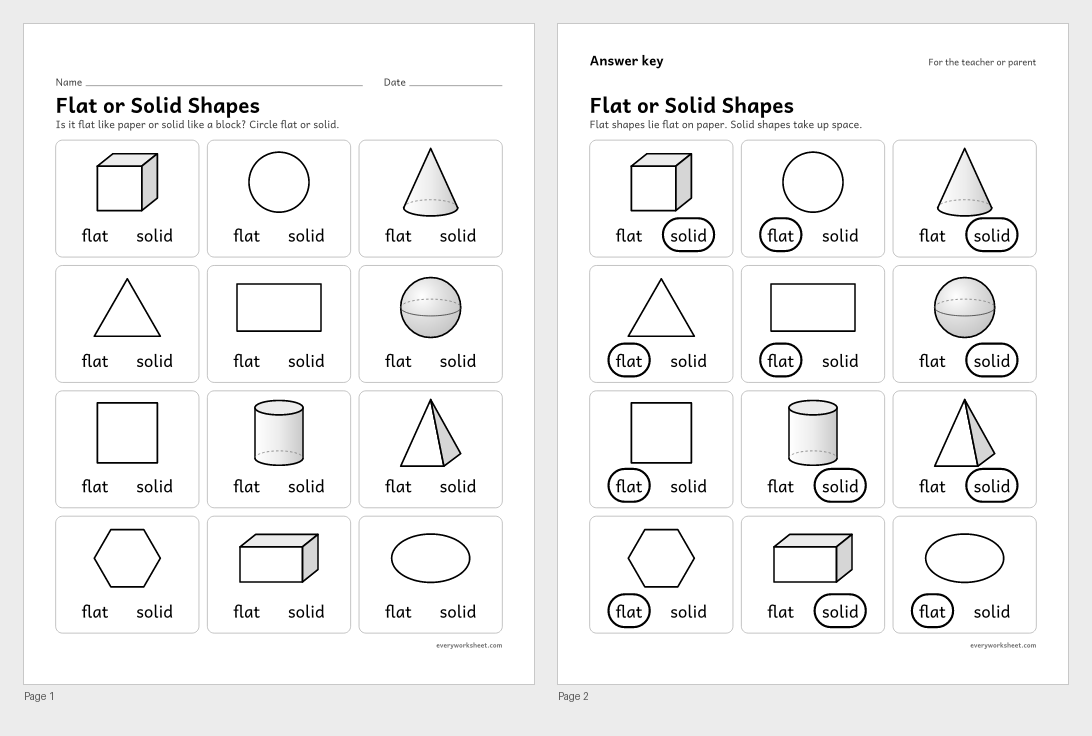
Telling flat (2D) shapes from solid (3D) shapes
Answer key on page 2
2 pages51 KB
 View all 2 pages
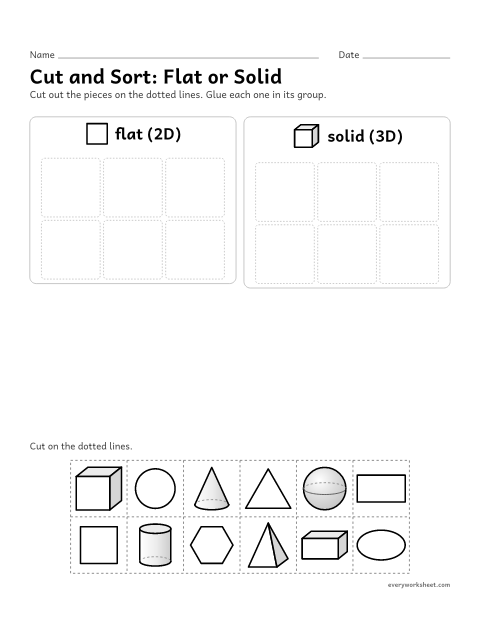
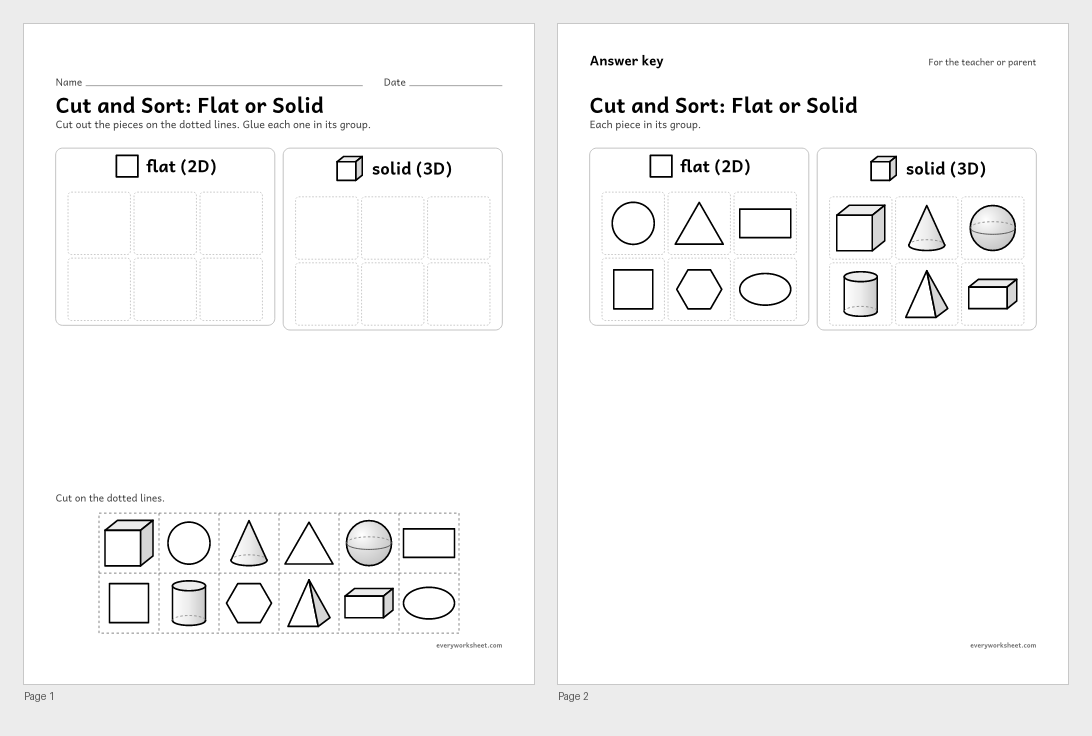
Sorting flat (2D) and solid (3D) shapes
Answer key on page 2
2 pages45 KB
 View all 2 pages
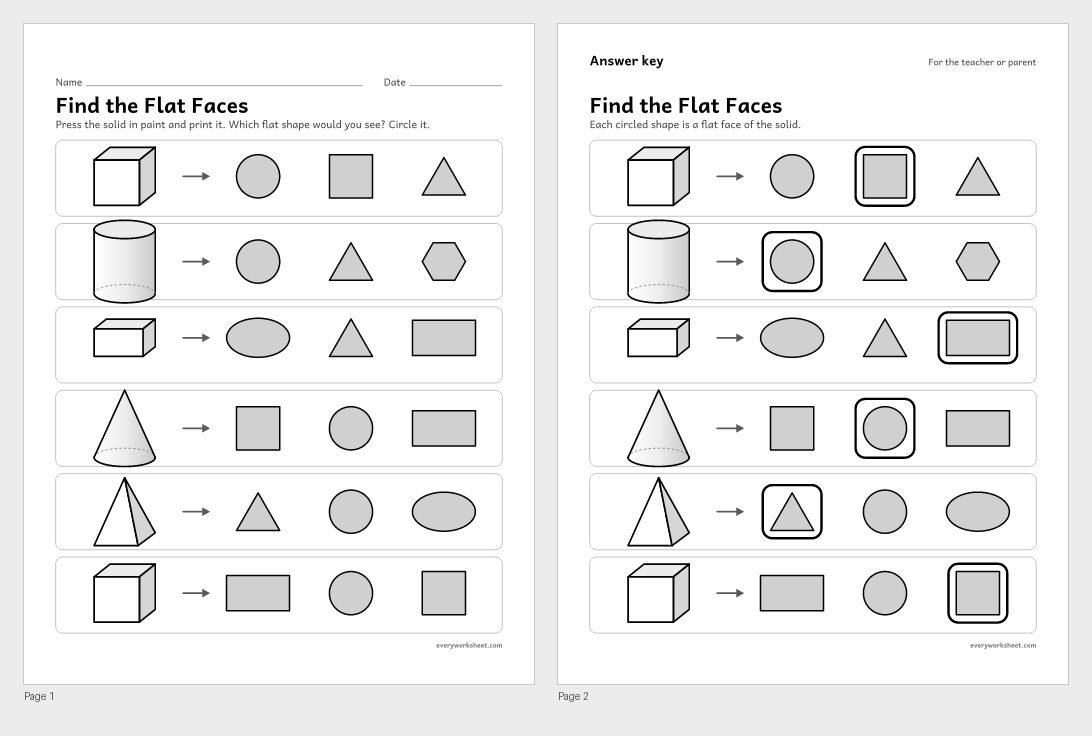
Matching solid shapes to the flat shapes on their faces
Answer key on page 2
2 pages45 KB
 View all 2 pages
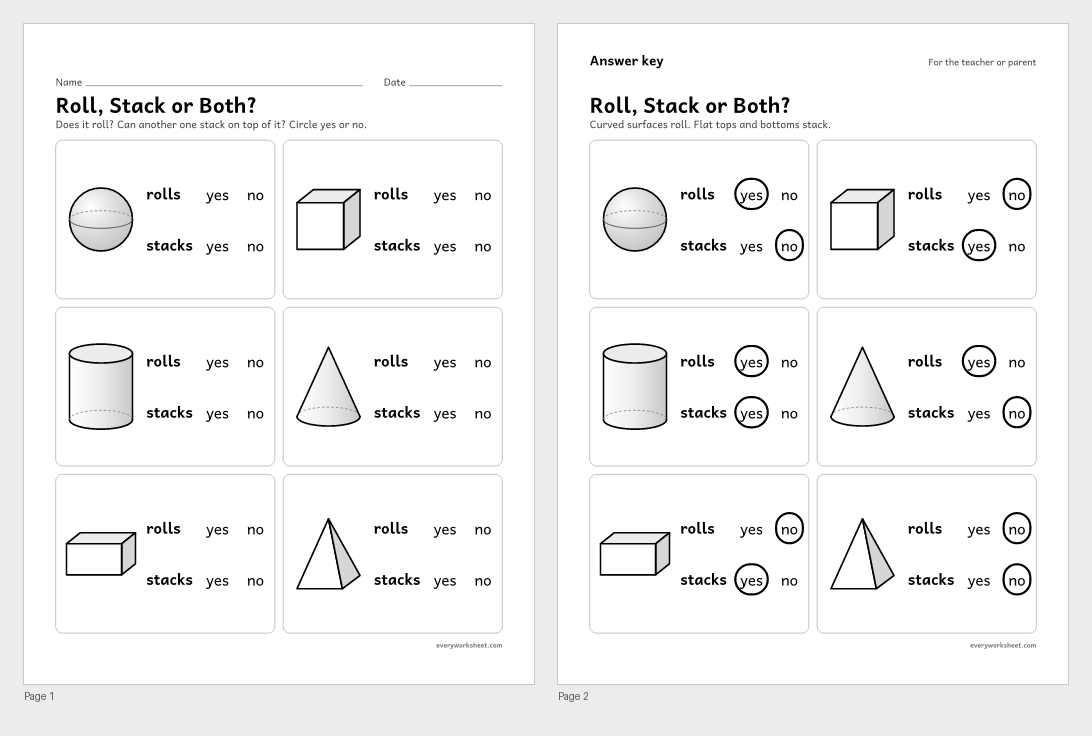
Describing solid shapes: which roll and which stack
Answer key on page 2
2 pages56 KB
 View all 2 pages
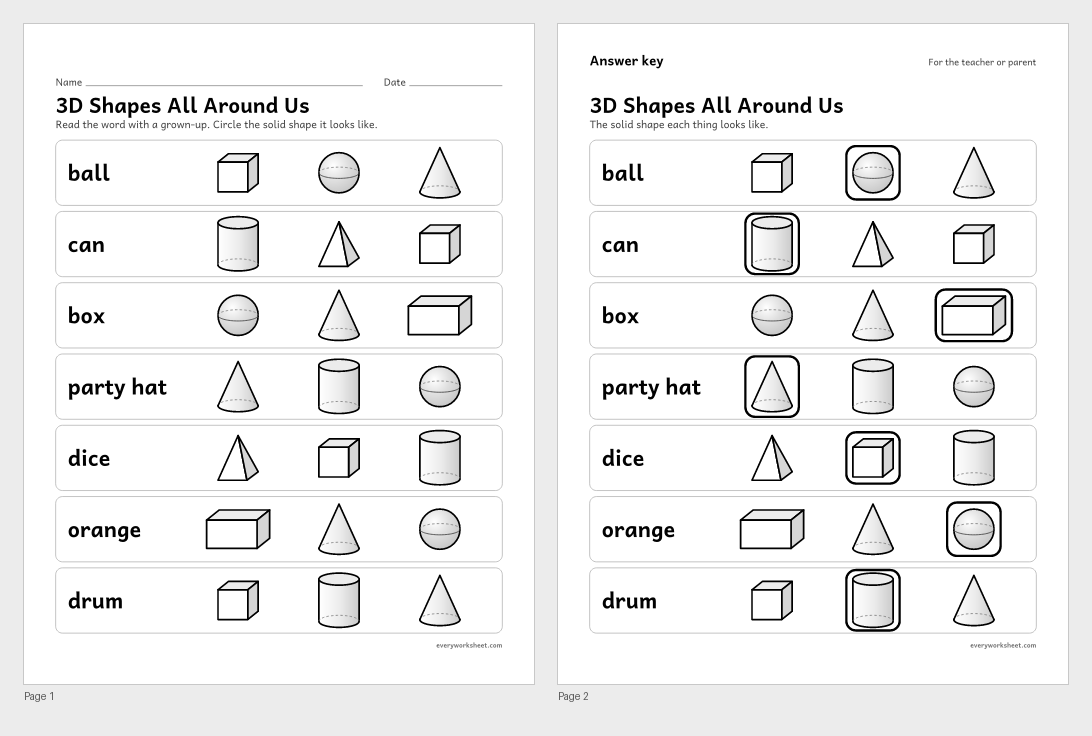
Naming the solid shape of everyday things
Answer key on page 2
2 pages49 KB
 View all 2 pages
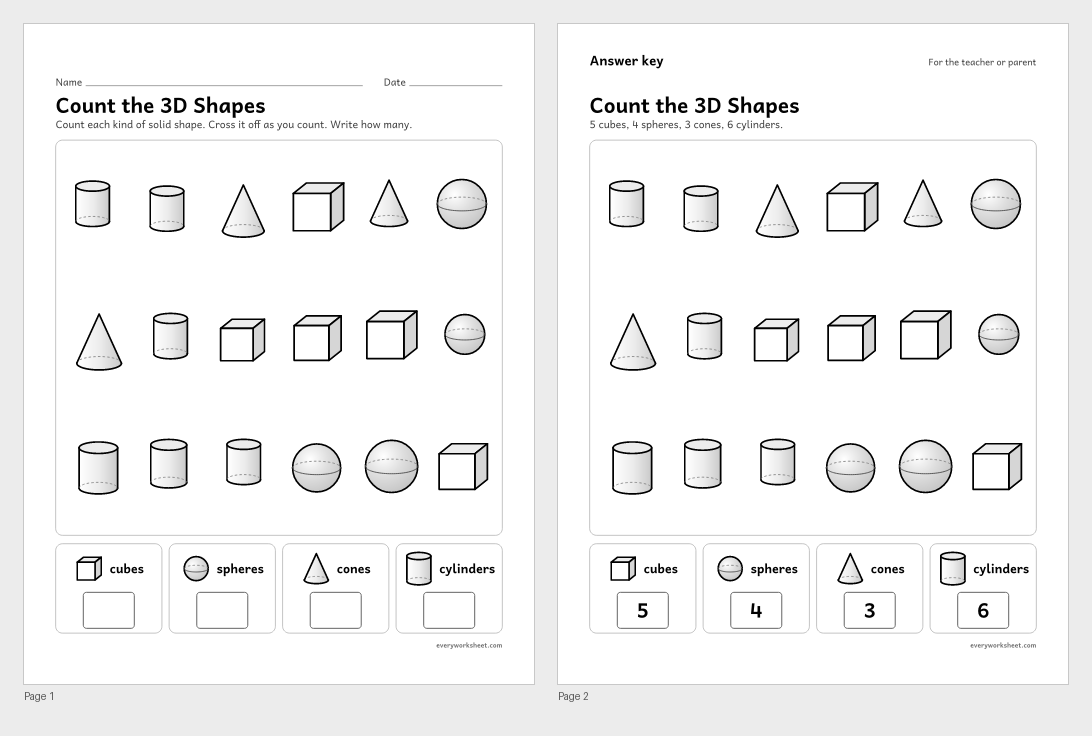
Sorting and counting solid shapes
Answer key on page 2
2 pages72 KB
Print at 100% (actual size) for the cleanest tracing lines.
3D shapes are solid shapes you can pick up: sphere, cube, cone, cylinder, rectangular prism and pyramid. In kindergarten, children learn to name them, to tell them apart from flat 2D shapes, and to talk about what they can do. A sphere rolls, a cube stacks, and a cylinder does both.
The 3D shapes chart shows each solid as a clean line drawing with light shading, its name, and everyday things with the same shape, like a ball, a can or a box. Use it as a poster or a reference card. The tracing page pairs each solid with its name to trace and write.
The practice pages sort flat and solid shapes (with a cut-and-sort version), find the flat faces on solids, decide what rolls and what stacks, match everyday words like ball, can and party hat to their shapes, and count a mixed group of solids. Pages with right answers have an answer key on page 2.
CCSS.MATH.CONTENT.K.G.A.1Describe objects in the environment using names of shapes, and describe the relative positions of these objects using terms such as above, below, beside, in front of, behind, and next to.CCSS.MATH.CONTENT.K.G.A.2Correctly name shapes regardless of their orientations or overall size.CCSS.MATH.CONTENT.K.G.A.3Identify shapes as two-dimensional (lying in a plane, "flat") or three-dimensional ("solid").CCSS.MATH.CONTENT.K.G.B.4Analyze and compare two- and three-dimensional shapes, in different sizes and orientations, using informal language to describe their similarities, differences, parts (e.g., number of sides and vertices/"corners") and other attributes (e.g., having sides of equal length).Most kindergarten classes cover sphere, cube, cone and cylinder, and many add rectangular prism and pyramid. Children name them, sort them from flat shapes and describe them.
Say that flat shapes live on paper and solid shapes take up space. Hand your child a ball and a paper circle and ask which one they can hold and roll.
A ball or an orange is a sphere, dice and ice cubes are cubes, a can or drum is a cylinder, a party hat is a cone, and a box or book is a rectangular prism.
Yes. Every page with right answers has an answer key on page 2 of the PDF.