 View larger
Consonant Blends Worksheets and Chart
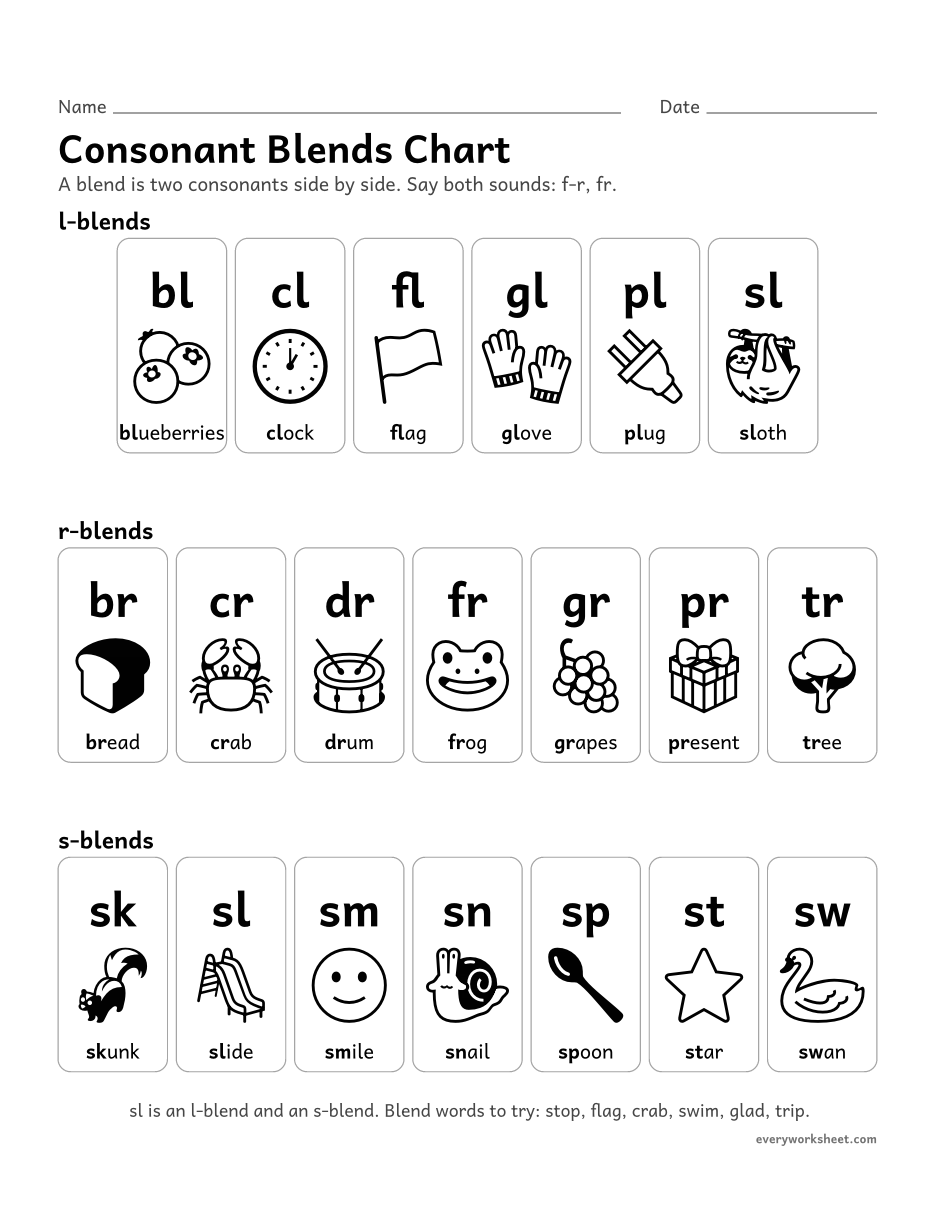
A consonant blends chart and word list, l-, r- and s-blend fill-ins, circle-the-blend pages, a picture sort, ending blends and tracing pages.
Download the consonant blends worksheets
Blends chart and word list
 View larger
 View larger
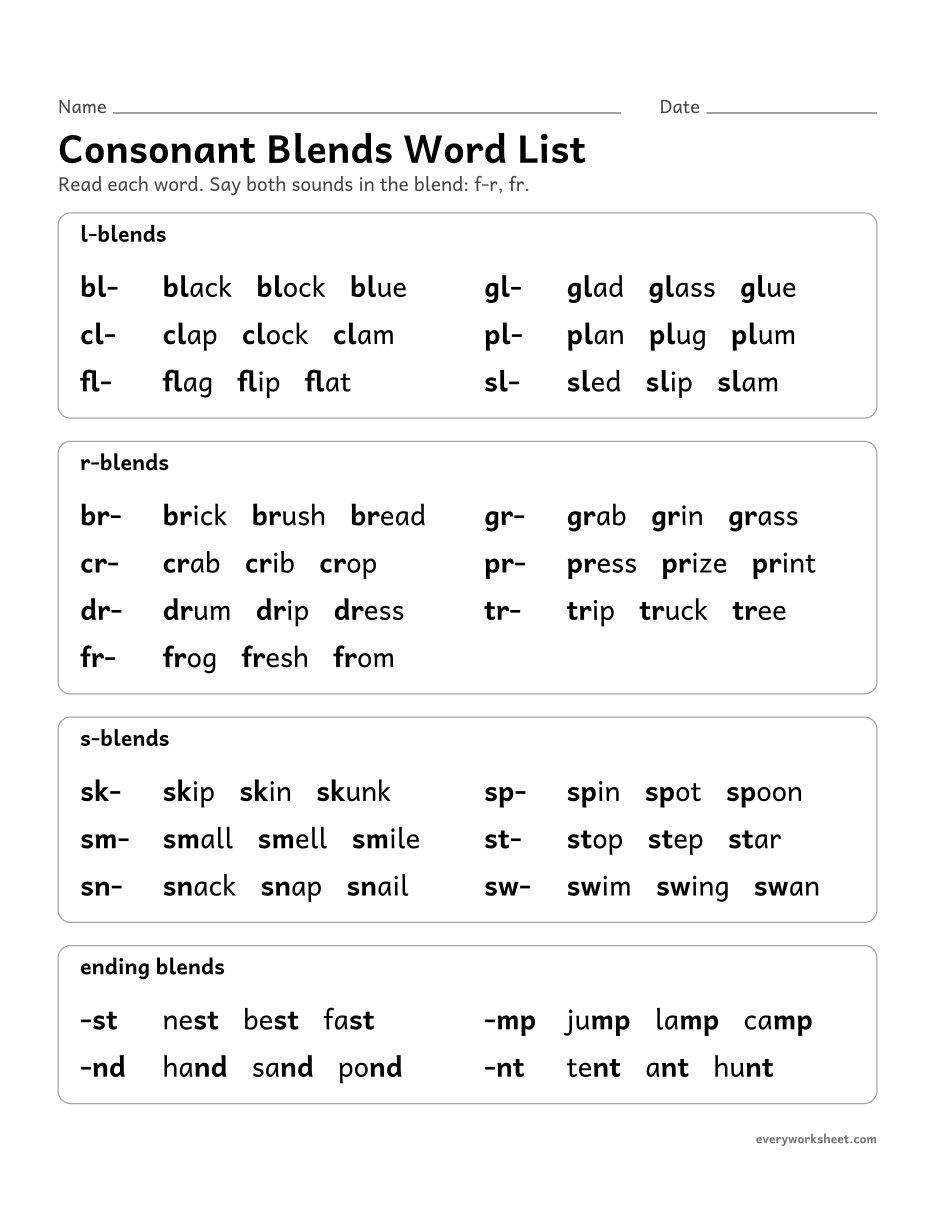
Consonant blends word list
Reading words with beginning and ending consonant blends
1 page42 KB
Write the blend
 View all 2 pages
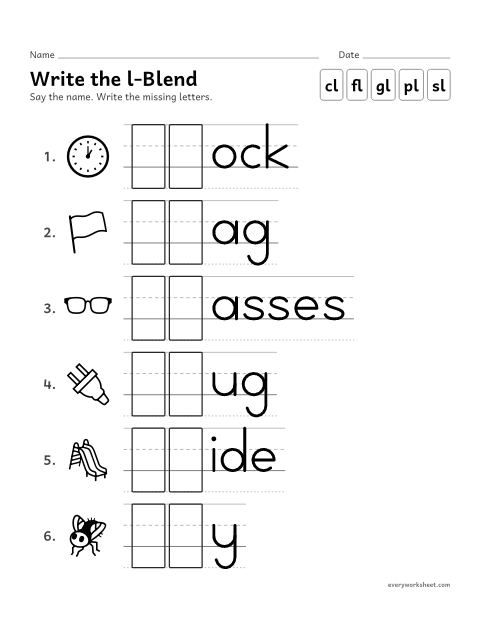
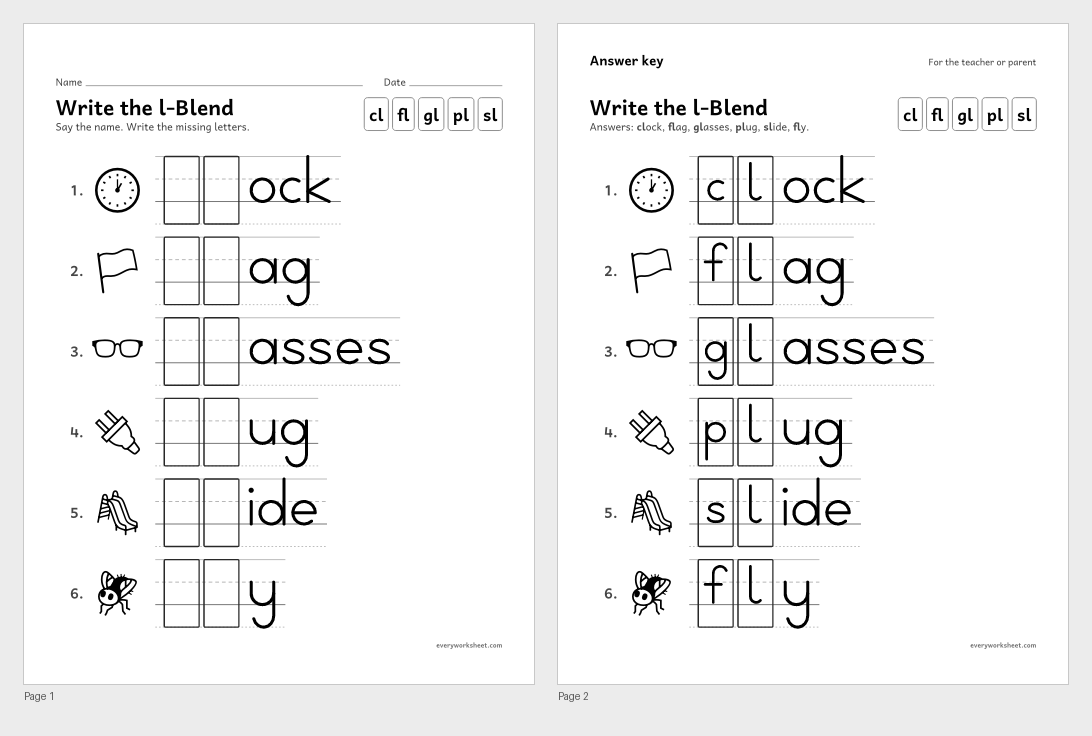
Write the l-Blend
Writing the l-blend that begins a word
Answer key on page 2
2 pages44 KB
 View all 2 pages
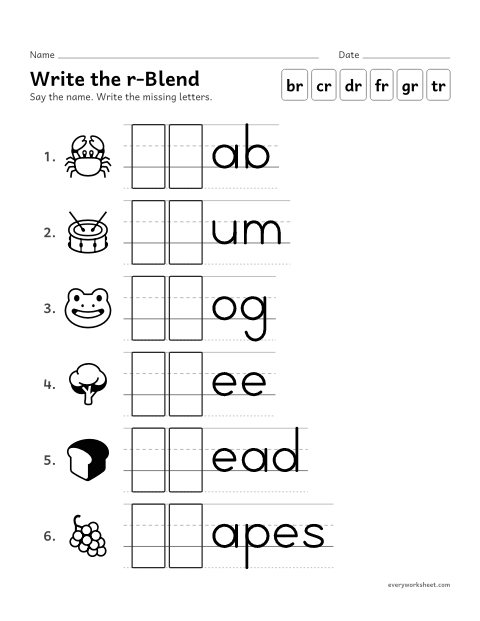
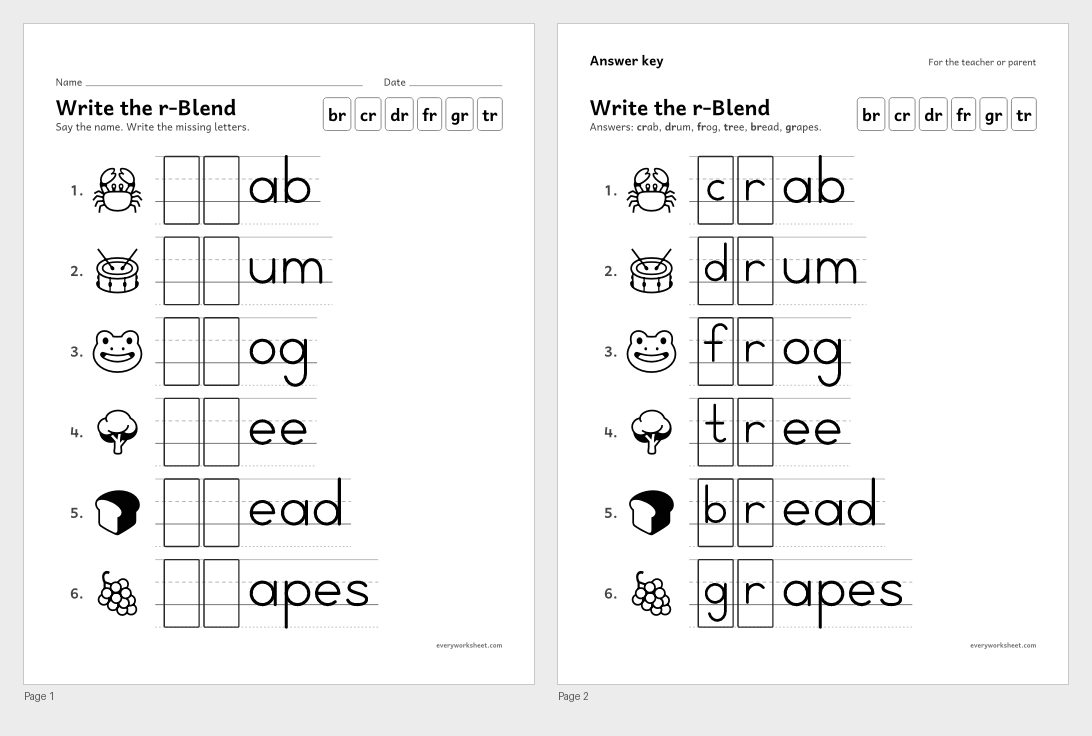
Write the r-Blend
Writing the r-blend that begins a word
Answer key on page 2
2 pages44 KB
 View all 2 pages
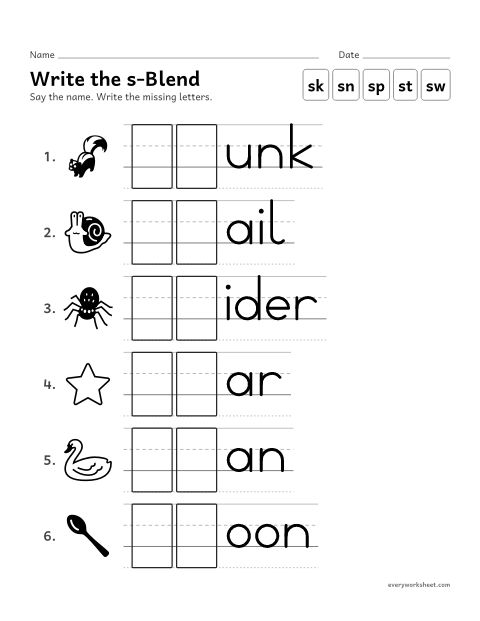
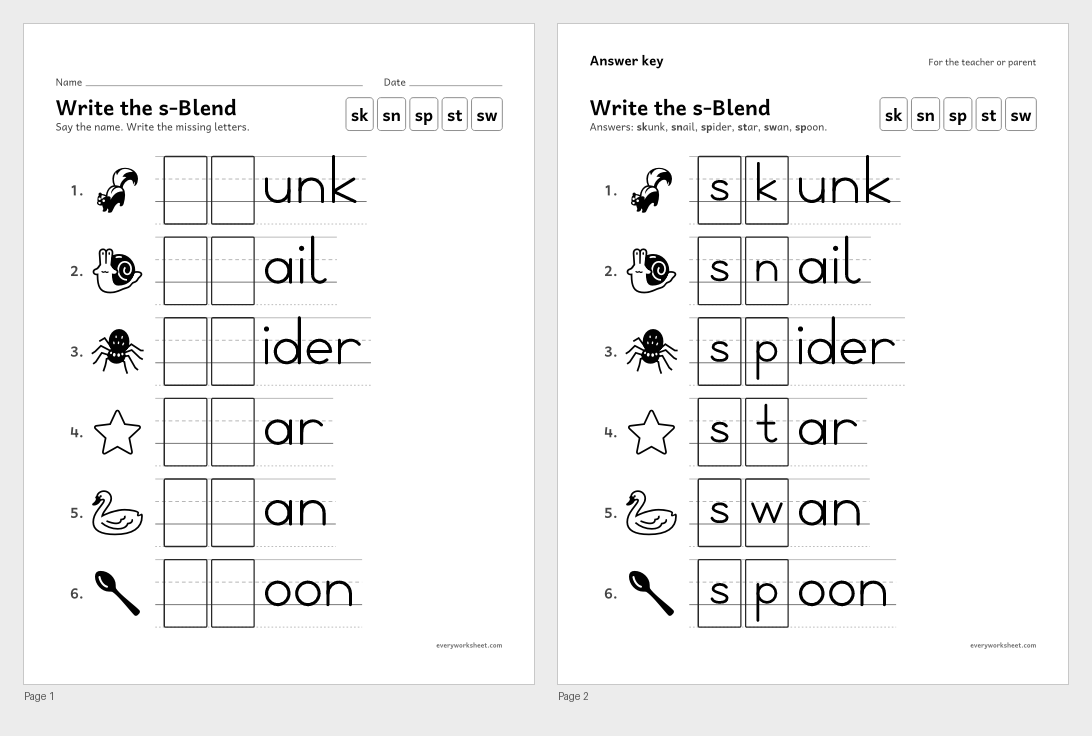
Write the s-Blend
Writing the s-blend that begins a word
Answer key on page 2
2 pages43 KB
 View all 2 pages
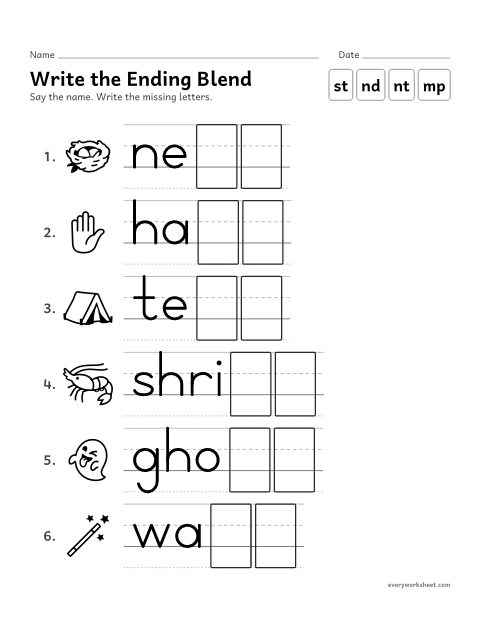
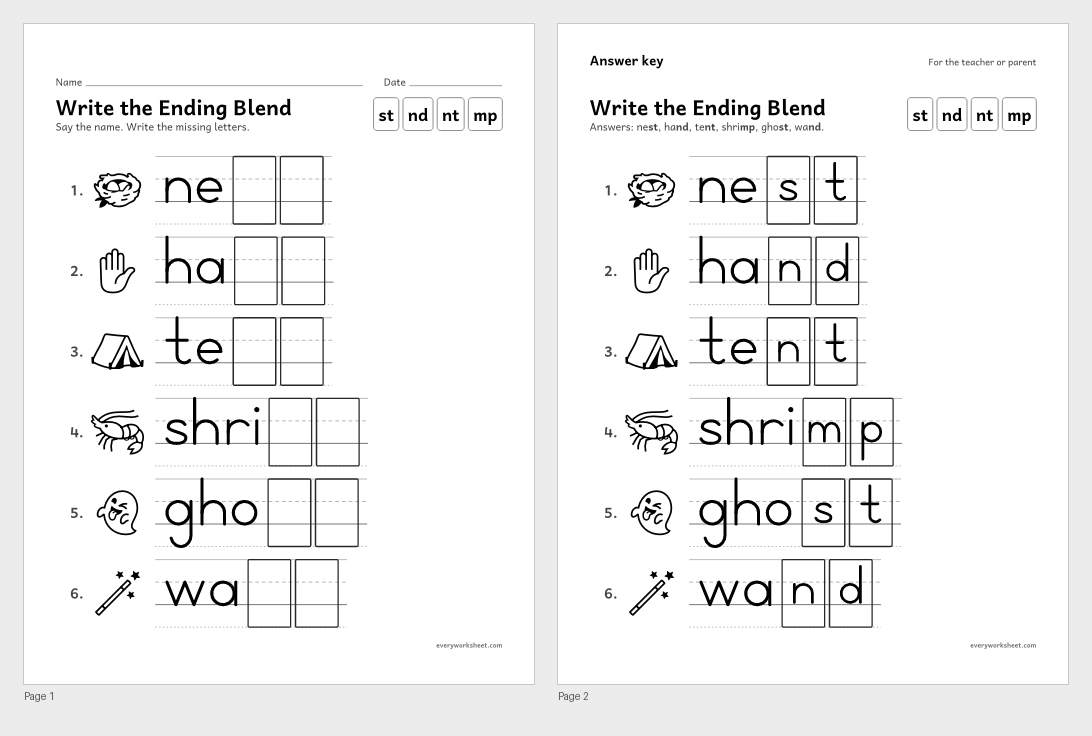
Write the ending blend
Writing the blend at the end of a word (-st, -nd, -nt, -mp)
Answer key on page 2
2 pages44 KB
Hear and sort the blends
 View all 2 pages
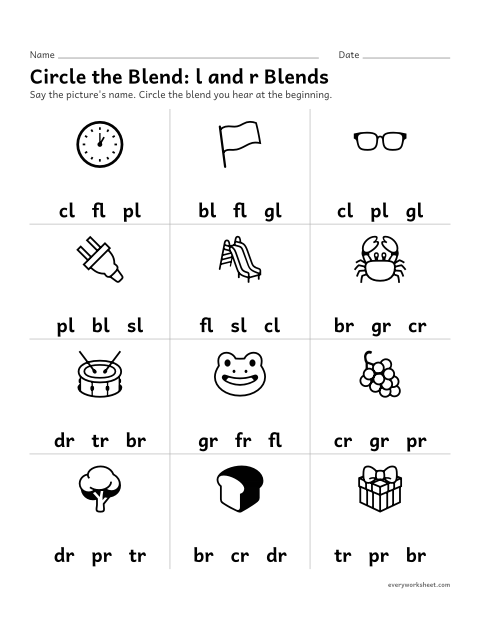
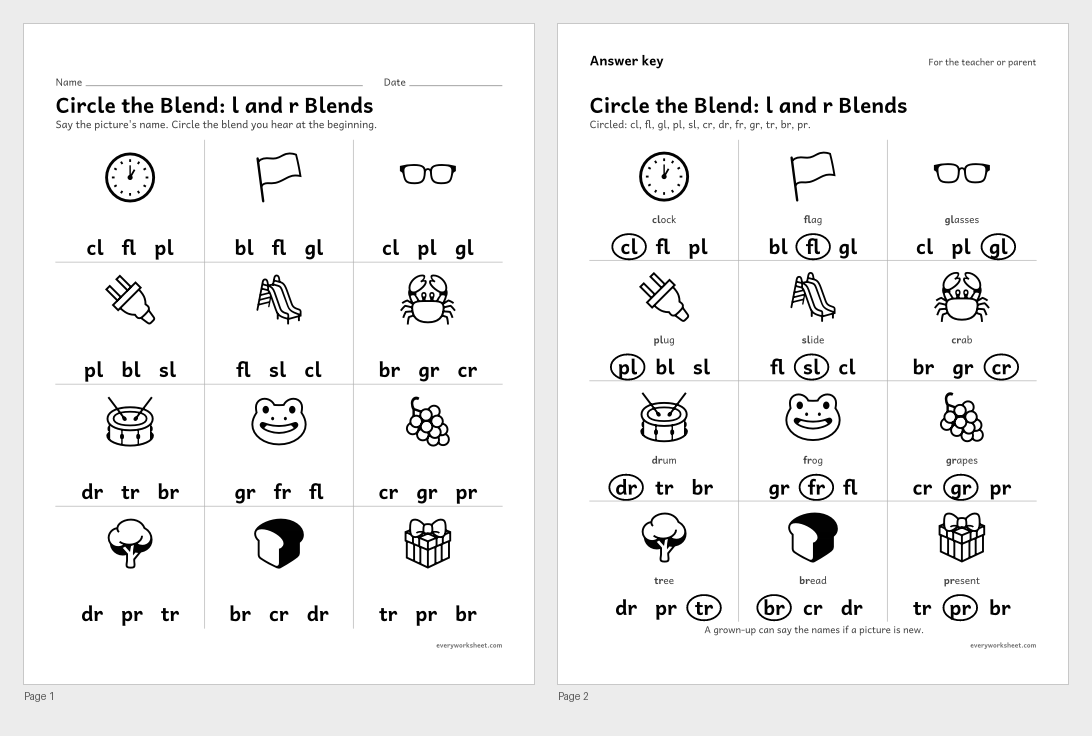
Circle the Blend: l and r blends
Hearing the l- or r-blend at the beginning of a word
Answer key on page 2
2 pages48 KB
 View all 2 pages
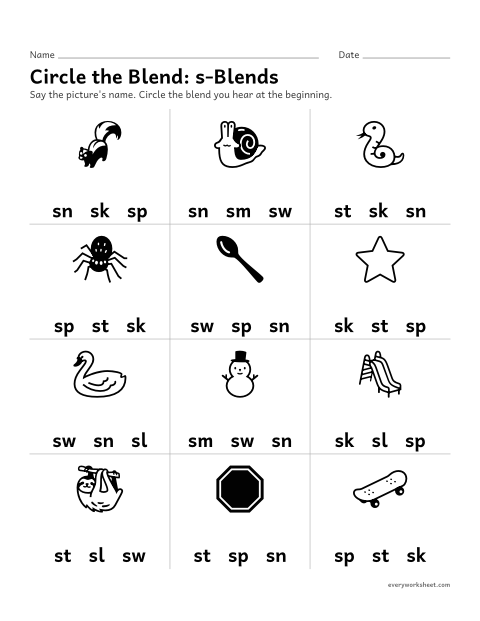
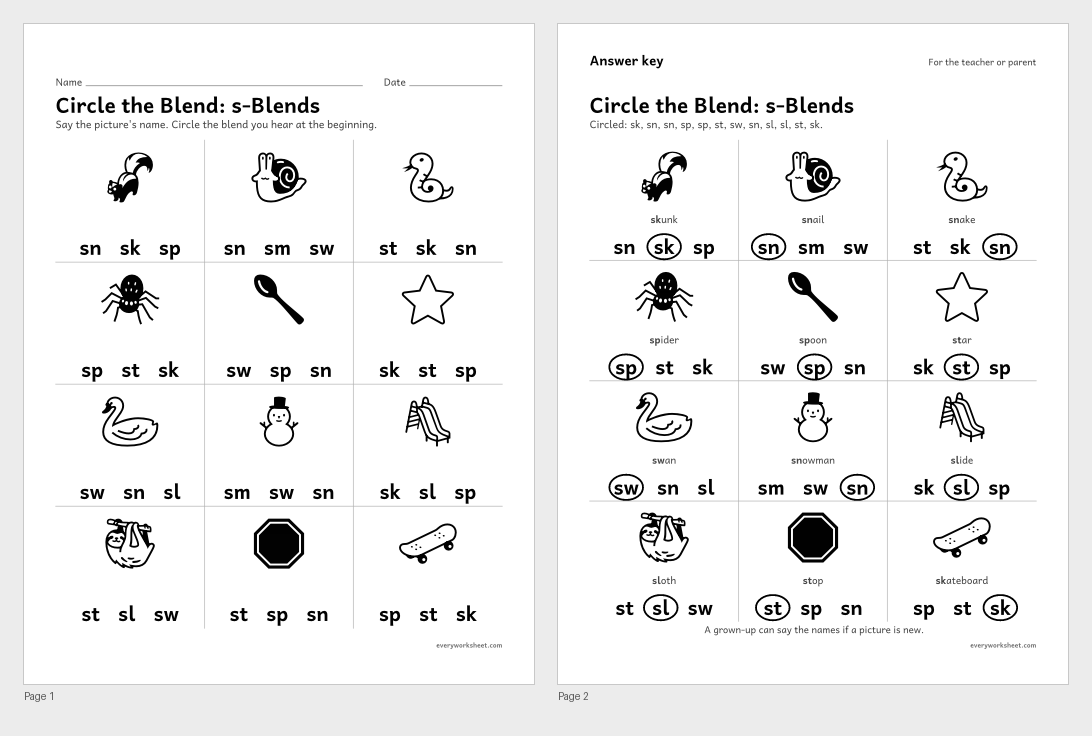
Circle the Blend: s-Blends
Hearing the s-blend at the beginning of a word
Answer key on page 2
2 pages47 KB
 View all 2 pages
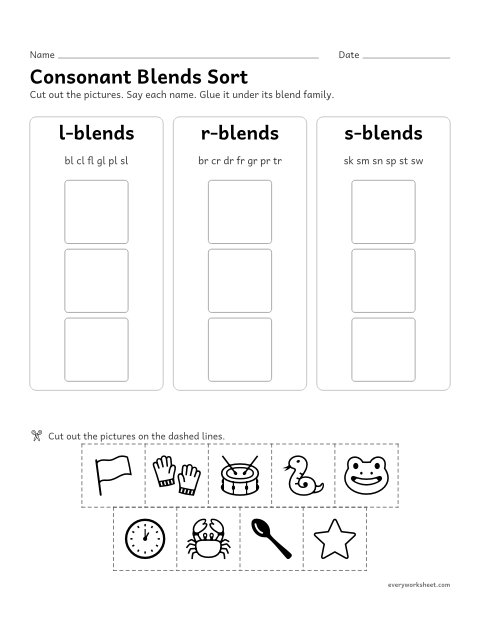
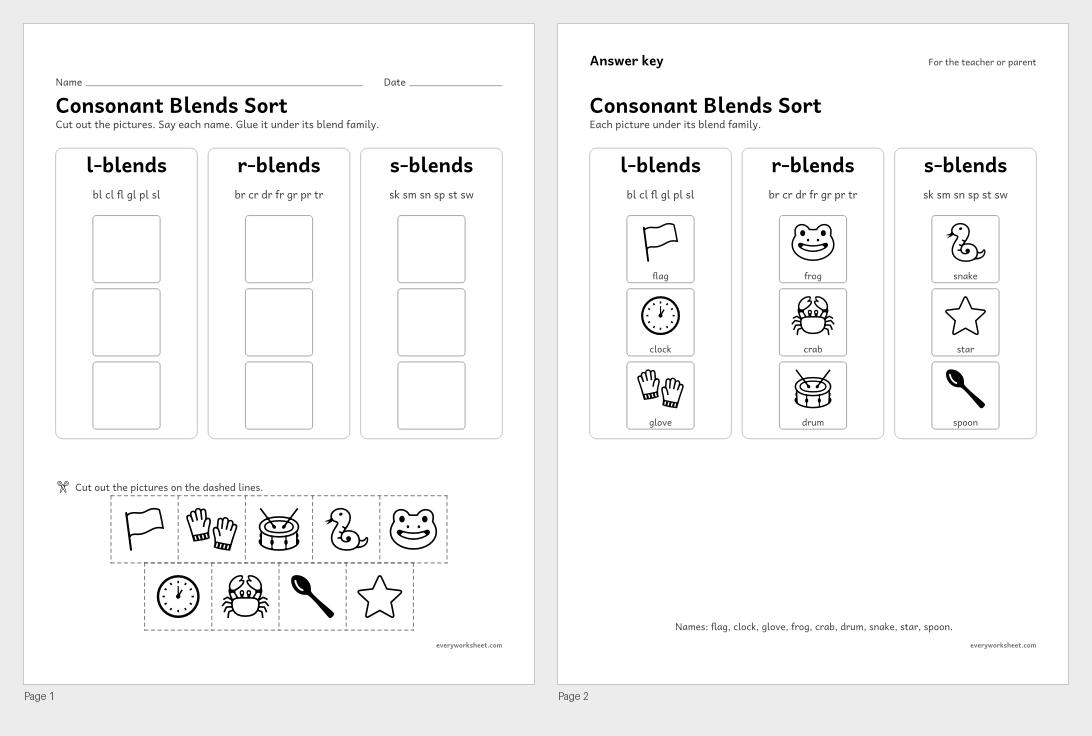
Consonant blends sort
Sorting pictures into l-, r- and s-blend families
Answer key on page 2
2 pages43 KB
Trace blend words
 View larger
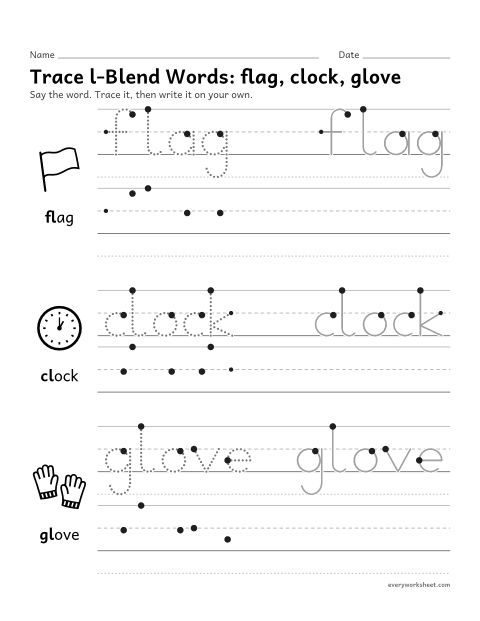
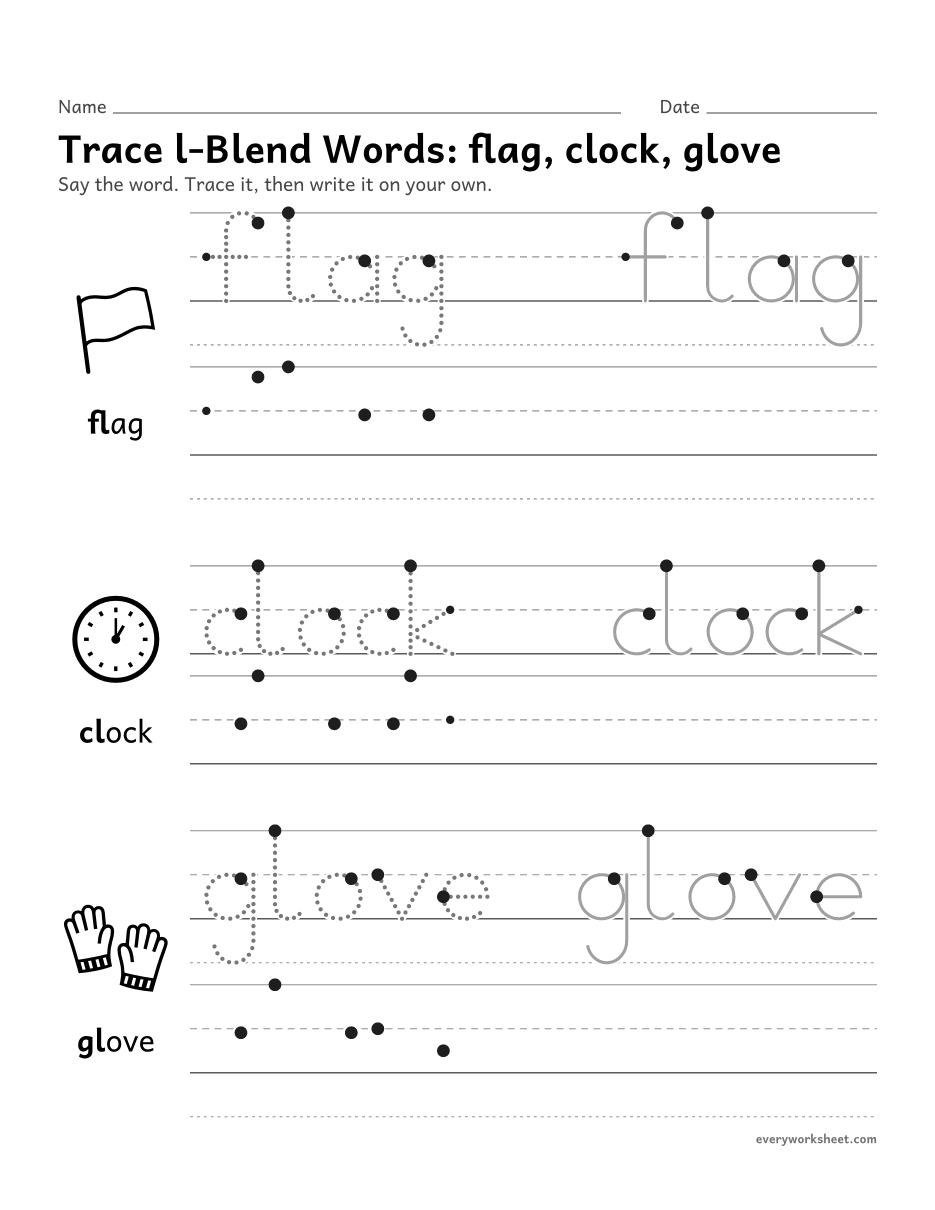
Trace l-Blend Words: flag, clock, glove
Writing words that begin with l-blends
1 page33 KB
 View larger
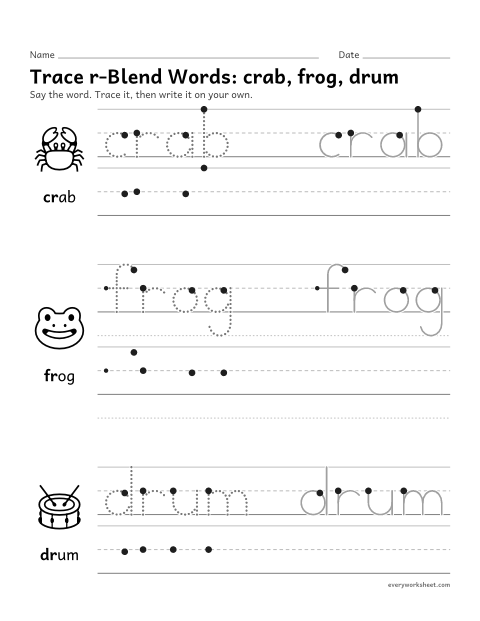
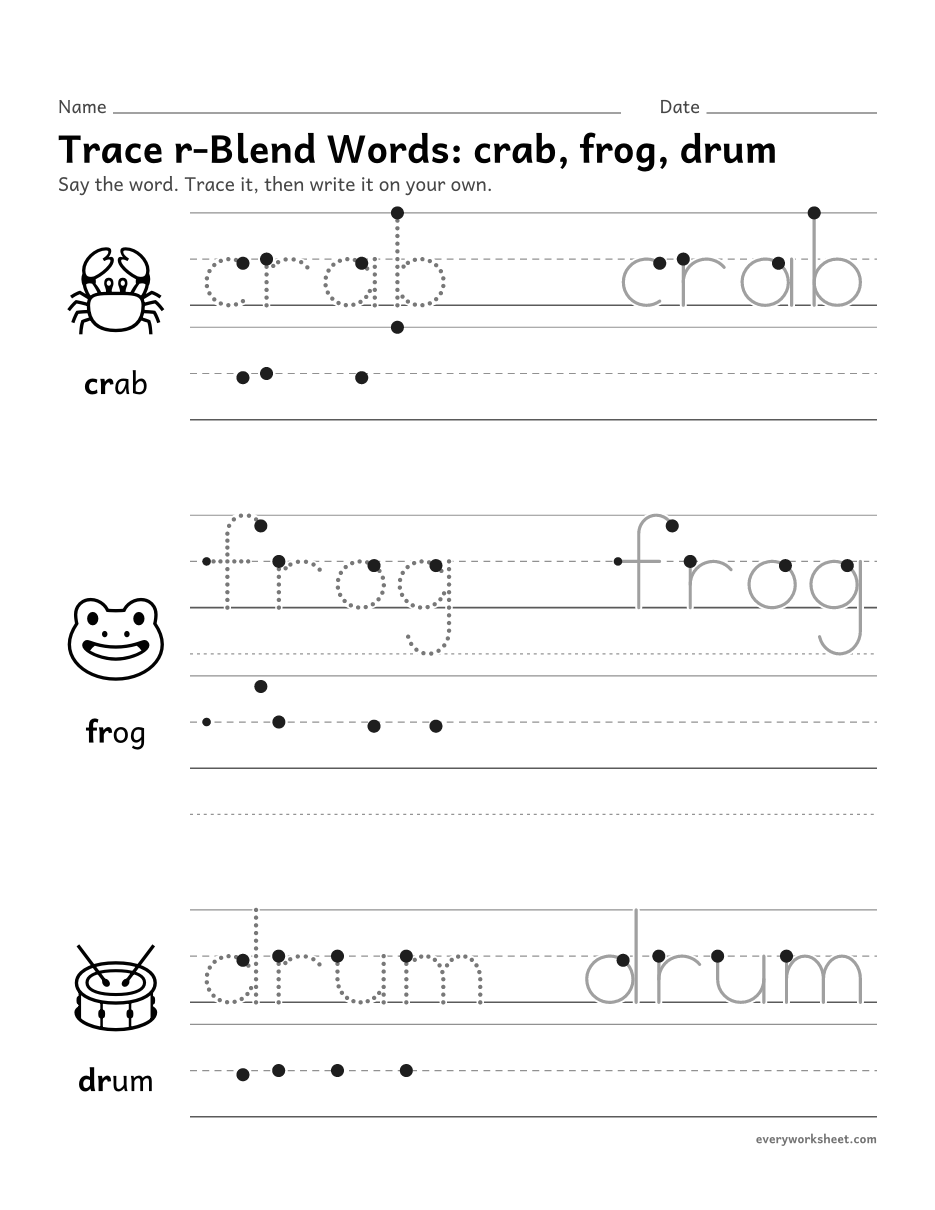
Trace r-Blend Words: crab, frog, drum
Writing words that begin with r-blends
1 page33 KB
 View larger
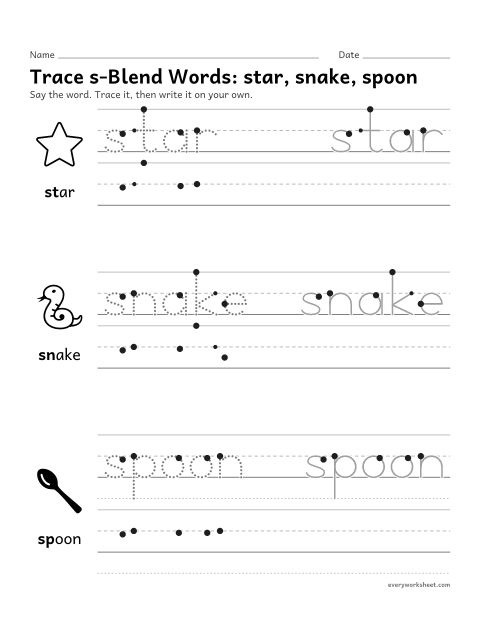
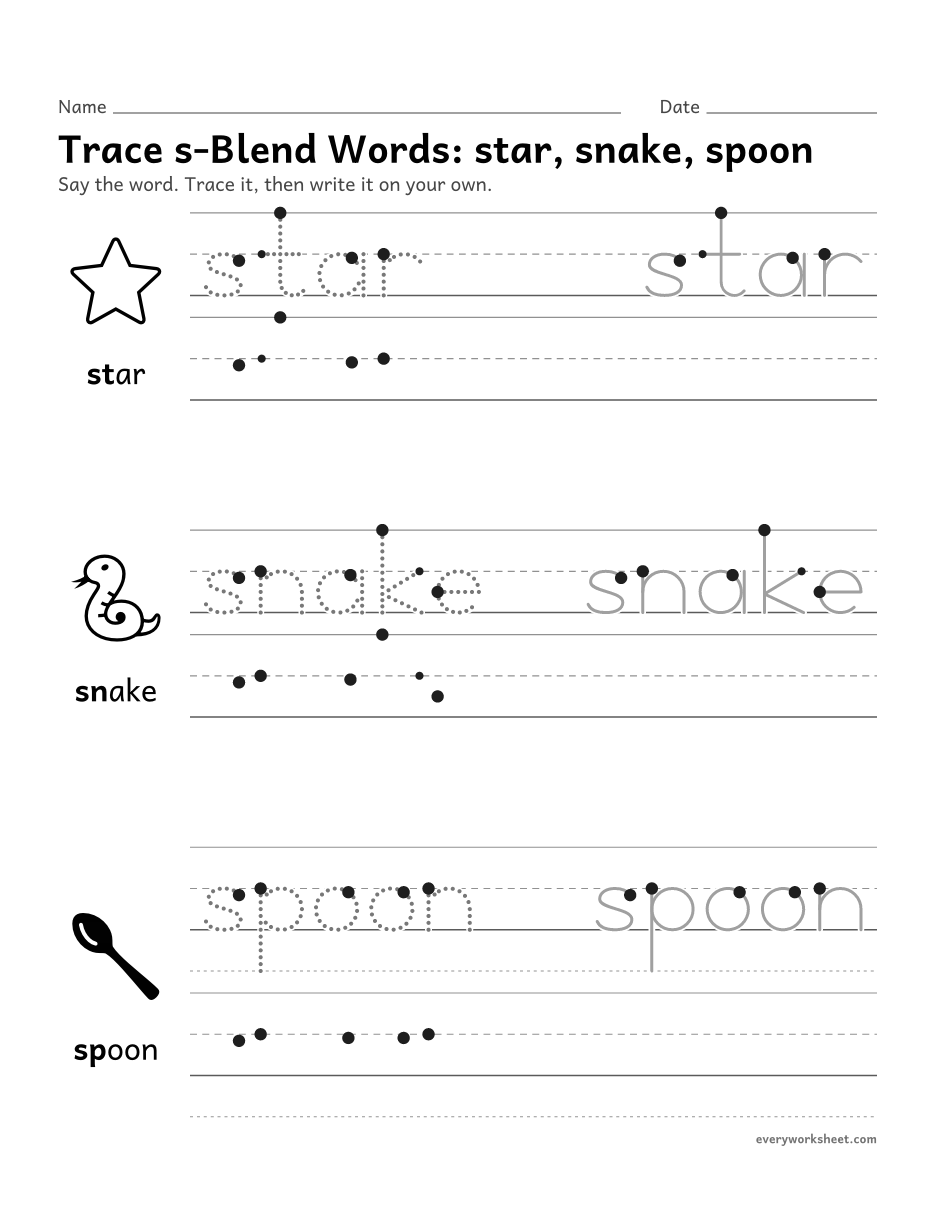
Trace s-Blend Words: star, snake, spoon
Writing words that begin with s-blends
1 page32 KB
Print at 100% (actual size) for the cleanest tracing lines.
About these consonant blends worksheets
A consonant blend is two consonants side by side where you still hear both sounds, said quickly together: f-r in frog, s-t in star. That is the difference from a digraph like sh, where two letters make one new sound.
Blends come in families. l-blends: bl, cl, fl, gl, pl, sl. r-blends: br, cr, dr, fr, gr, pr, tr. s-blends: sk, sl, sm, sn, sp, st, sw. Ending blends sit at the end of a word: -st (nest), -nd (hand), -nt (tent) and -mp (shrimp).
Blending sounds, including consonant blends, is a 1st grade standard, and many children start it in late kindergarten once they can read CVC words. The chart and word list come first, then pages to hear, write and sort the blends. Pages with right answers have an answer key on page 2.
Standards
CCSS.ELA-LITERACY.RF.1.2.BOrally produce single-syllable words by blending sounds (phonemes), including consonant blends.CCSS.ELA-LITERACY.RF.1.3.BDecode regularly spelled one-syllable words.CCSS.ELA-LITERACY.RF.K.3.ADemonstrate basic knowledge of one-to-one letter-sound correspondences by producing the primary sound or many of the most frequent sounds for each consonant.CCSS.ELA-LITERACY.RF.K.2.DIsolate and pronounce the initial, medial vowel, and final sounds (phonemes) in three-phoneme (consonant-vowel-consonant, or CVC) words.CCSS.ELA-LITERACY.L.K.2.CWrite a letter or letters for most consonant and short-vowel sounds (phonemes).
How to use them
- Teach one family at a time: s-blends first (the s can be held: sss-top), then l-blends, then r-blends. Ending blends come last.
- Use the chart to practice: point to a blend, say both sounds slowly (f-r), then fast (fr), then the word (frog).
- On the circle-the-blend and fill-in pages, say each picture's name together first. Your child listens for the first two sounds and circles or writes them.
- Use the cut-and-glue sort to check that your child hears the family: does the word have an l, an r or an s in its blend?
Teaching tips
- The most common mistake is dropping the second sound: fog for frog, sap for snap. Stretch the word and ask, “What do you hear after the f?”
- Another common one is adding a vowel between the sounds: fuh-rog. Practice saying the two sounds closer and closer until they join.
- sl is an l-blend and an s-blend. Either family is right on the sort.
- Build blends with letter tiles: make top, then add s to make stop. Make lip, then add f to make flip.
- Ending blends are easiest to hear when a child taps one finger for each sound: n-e-s-t.
Questions teachers and parents ask
What are consonant blends?
Consonant blends are two or three consonants together where each one keeps its sound, like bl in black, st in stop or str in string.
What are examples of consonant blends?
l-blends: bl, cl, fl, gl, pl, sl. r-blends: br, cr, dr, fr, gr, pr, tr. s-blends: sk, sl, sm, sn, sp, st, sw. Ending blends include -st, -nd, -nt and -mp.
Is sh a blend?
No. sh is a digraph: the two letters make one new sound. In a blend you still hear both letters, as in st or fl.
When should kids learn blends?
Most children work on blends in late kindergarten and 1st grade, after they can read CVC words. Blending sounds with consonant blends is a 1st grade standard.