 View all 2 pages
Count and write 1–10
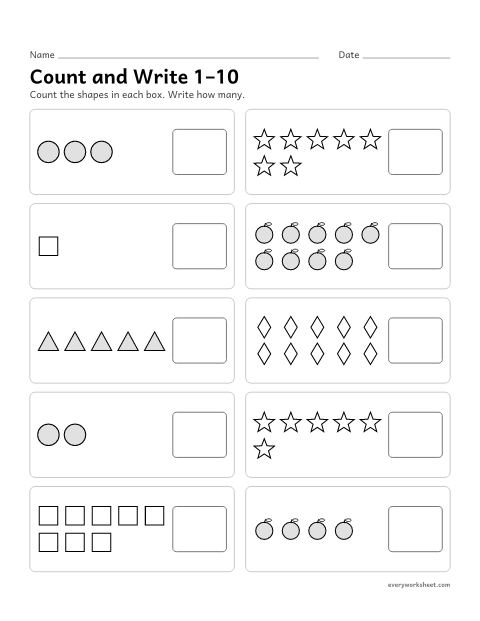
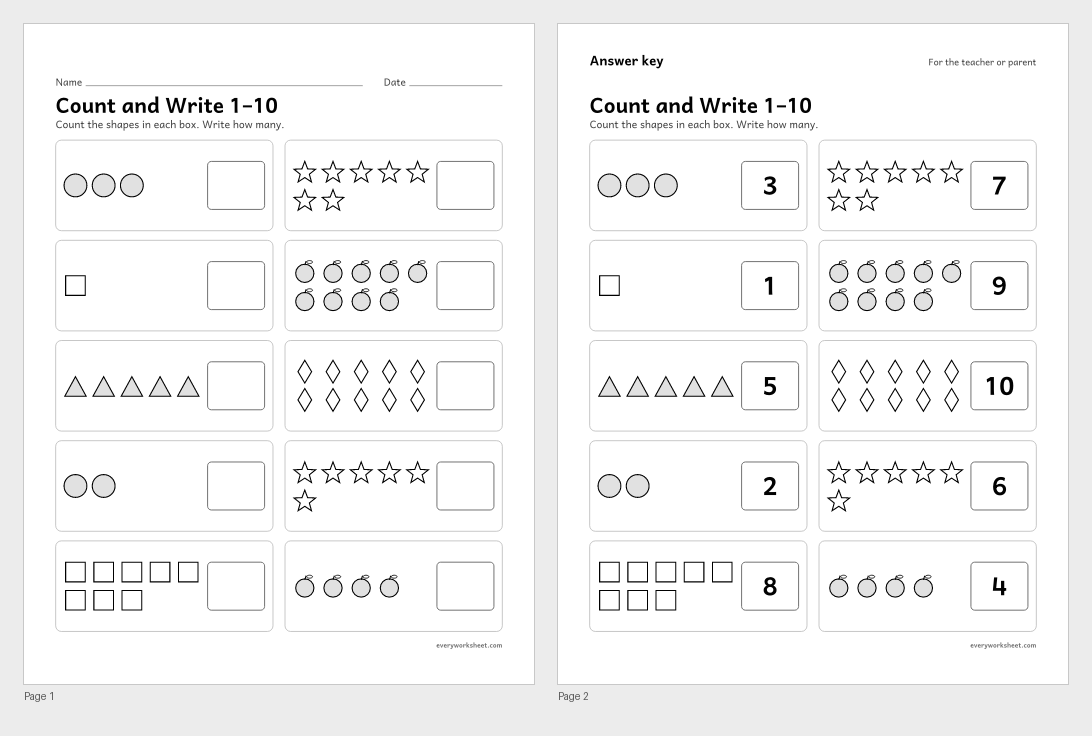
Counting groups of 1 to 10 and writing how many
Answer key on page 2
2 pages37 KB
Count objects to 20, count on, fill in missing numbers, skip count by 2s, 5s and 10s, and find and color numbers, with answer keys.
View all 2 pagesCounting groups of 1 to 10 and writing how many
Answer key on page 2
2 pages37 KB
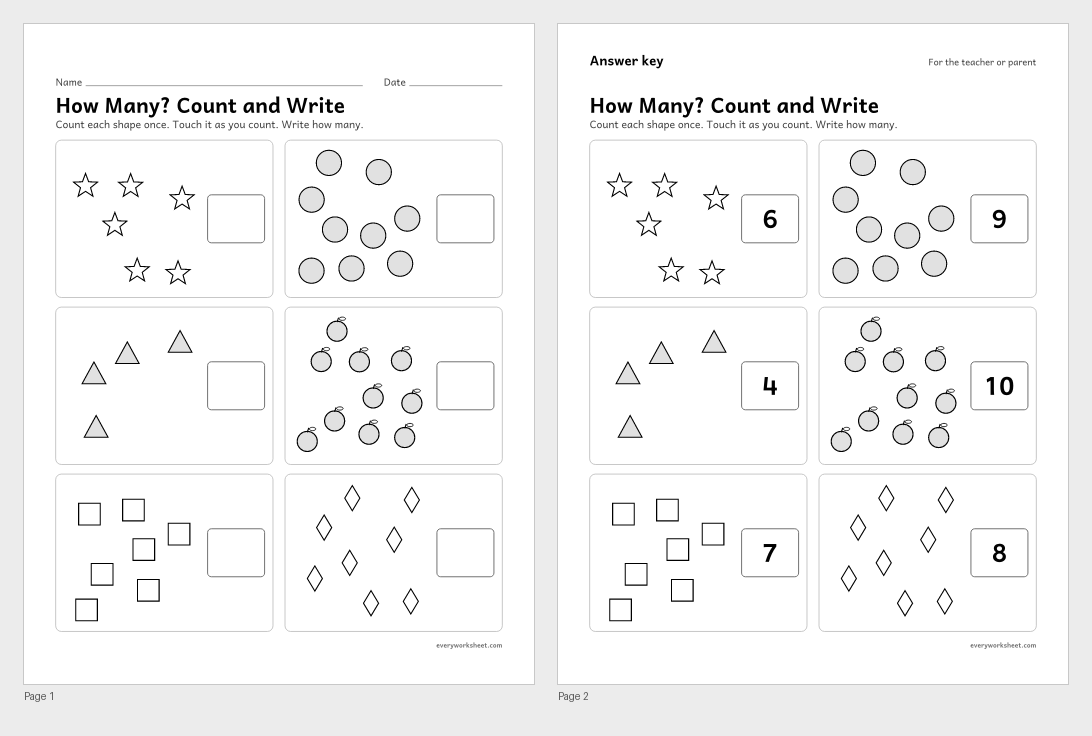 View all 2 pages
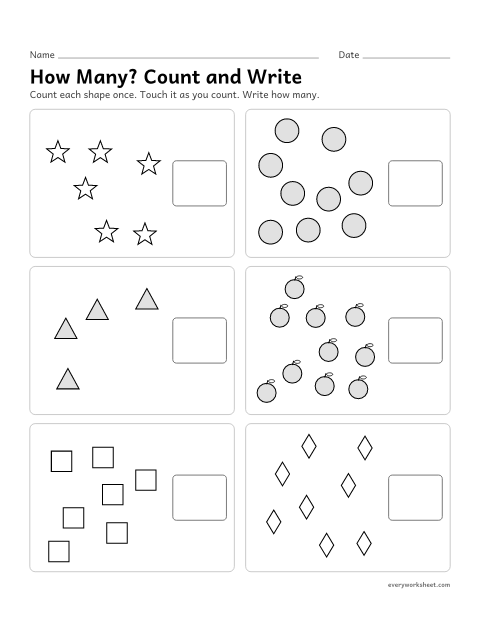
Counting scattered groups of up to 10
Answer key on page 2
2 pages34 KB
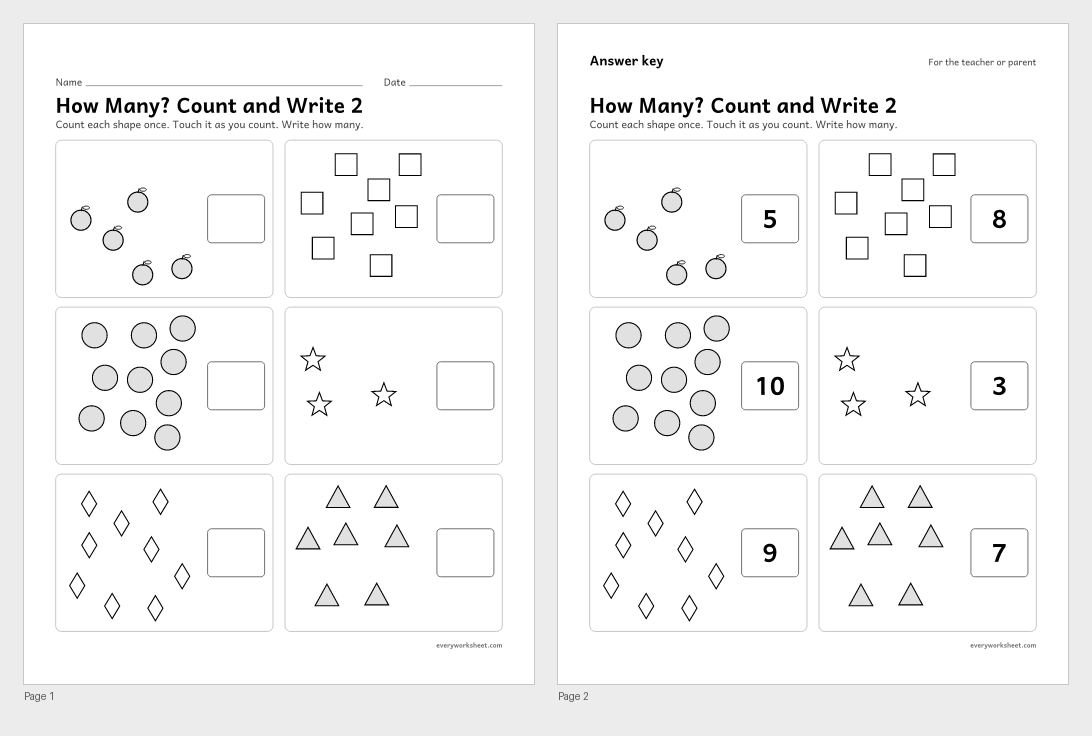 View all 2 pages
Counting scattered groups of up to 10
Answer key on page 2
2 pages34 KB
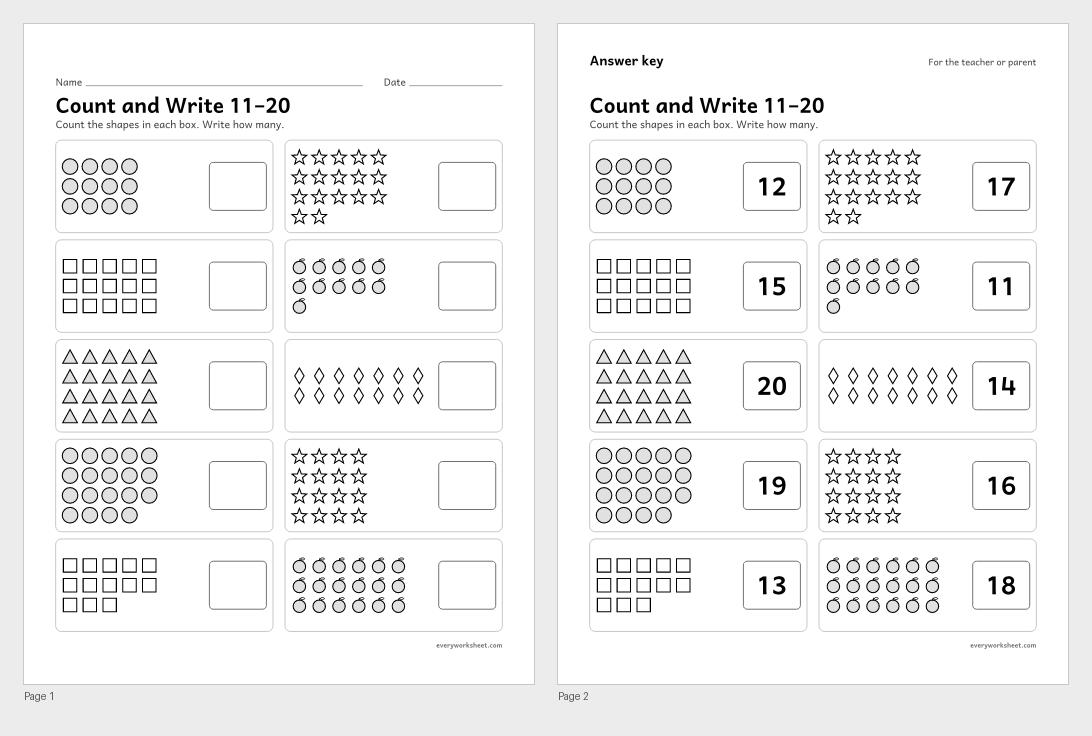 View all 2 pages
Counting rows and arrays of 11 to 20 and writing how many
Answer key on page 2
2 pages39 KB
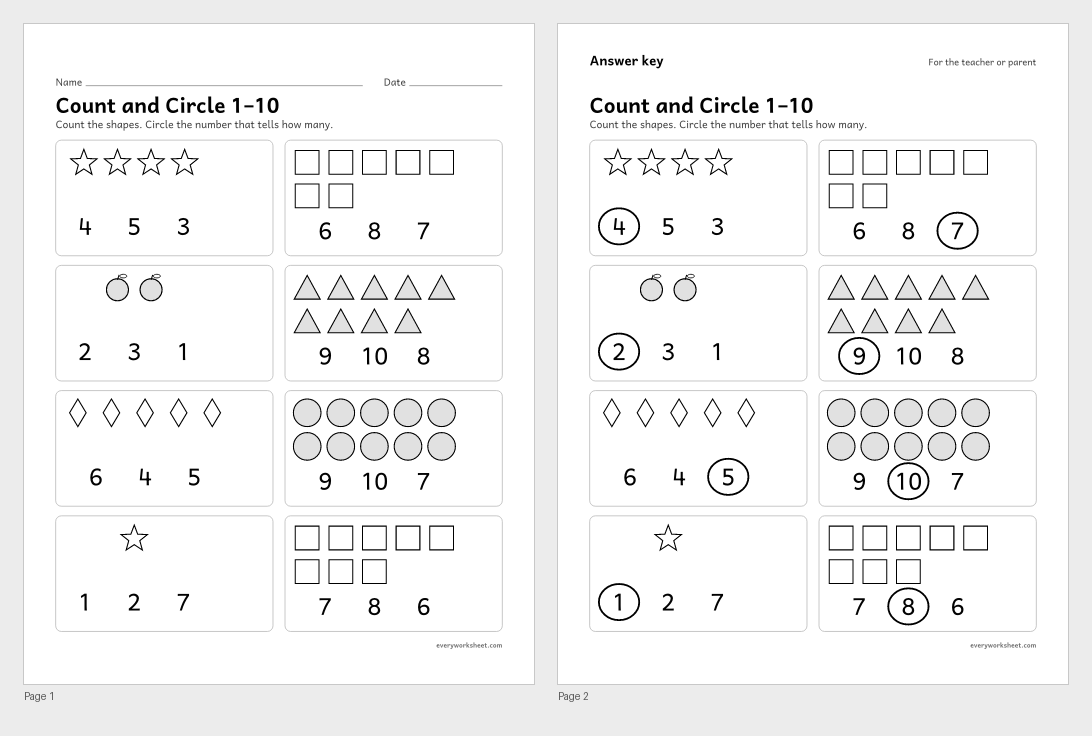 View all 2 pages
Counting groups of 1 to 10 and matching the number
Answer key on page 2
2 pages33 KB
 View all 2 pages
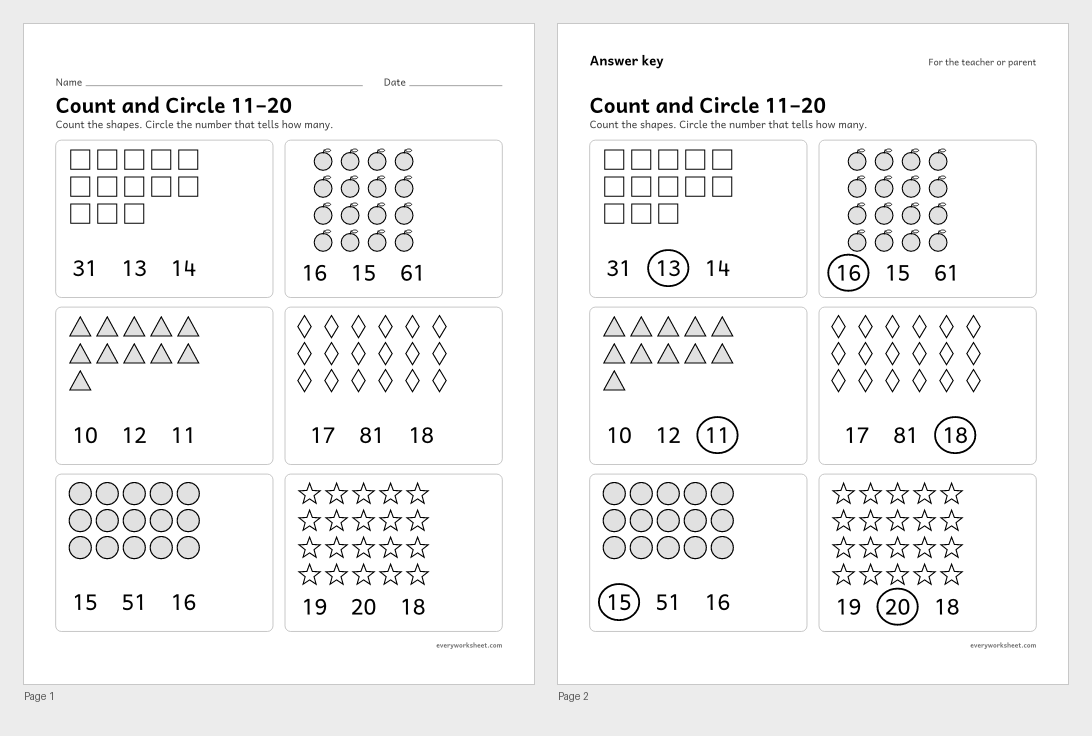
Counting arrays of 11 to 20 and matching the number
Answer key on page 2
2 pages33 KB
 View larger
 View larger
 View all 2 pages
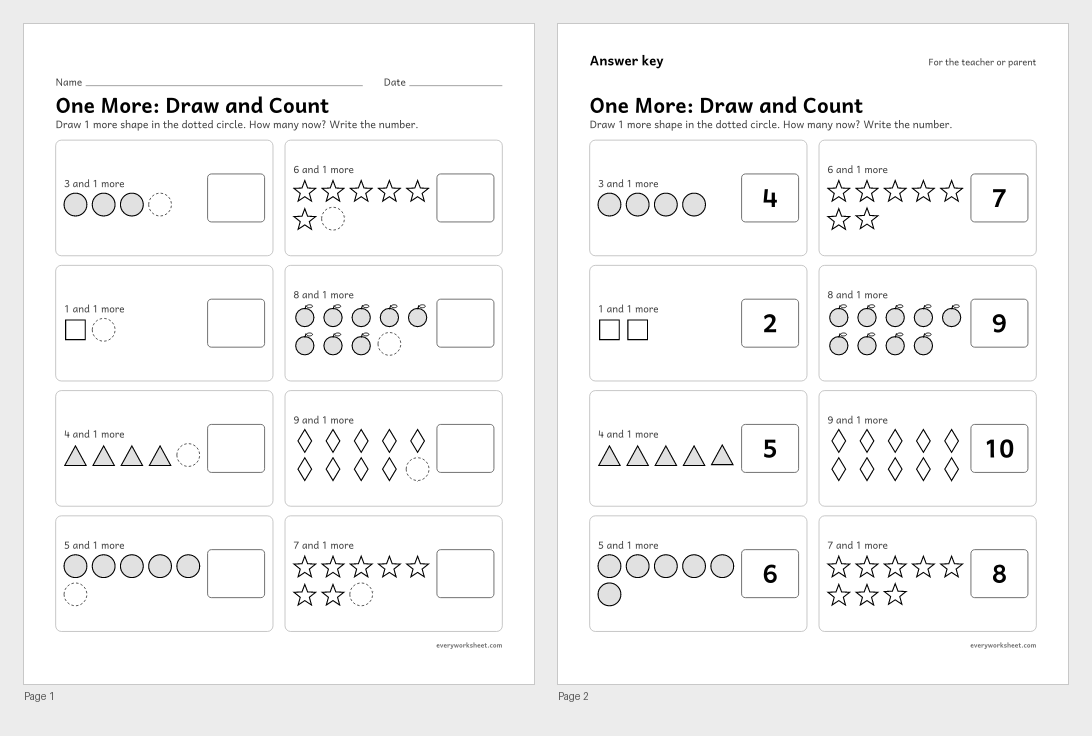
Seeing that one more makes the next number
Answer key on page 2
2 pages40 KB
 View all 2 pages
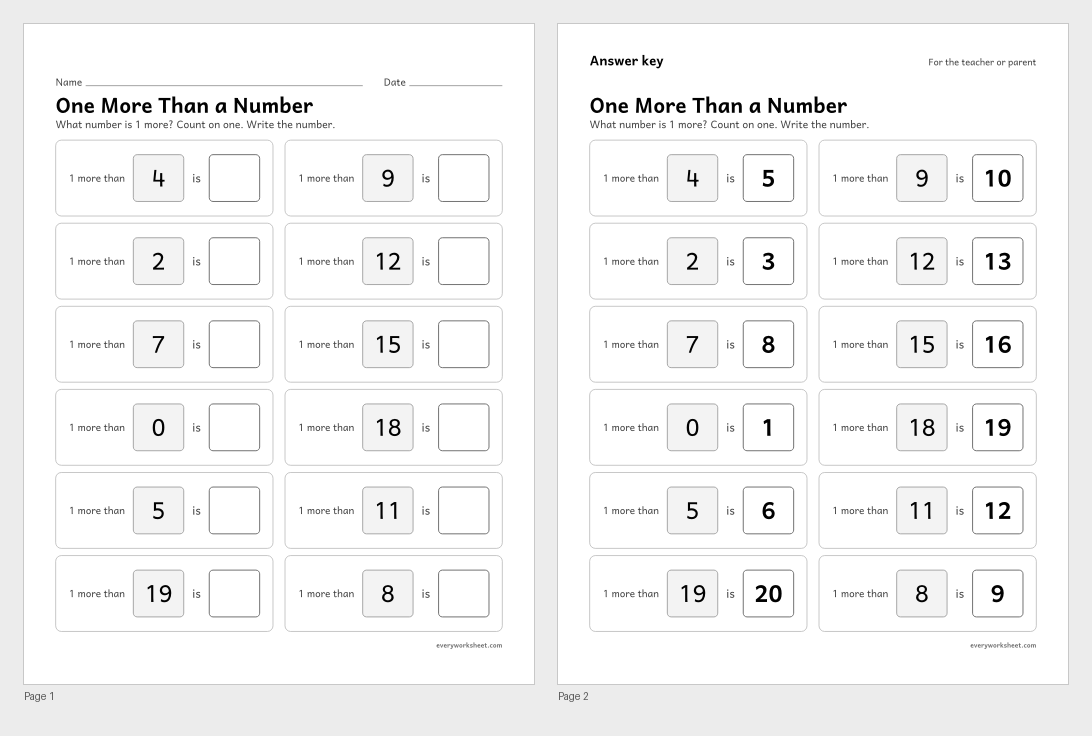
Finding one more than a number to 20
Answer key on page 2
2 pages35 KB
 View all 2 pages
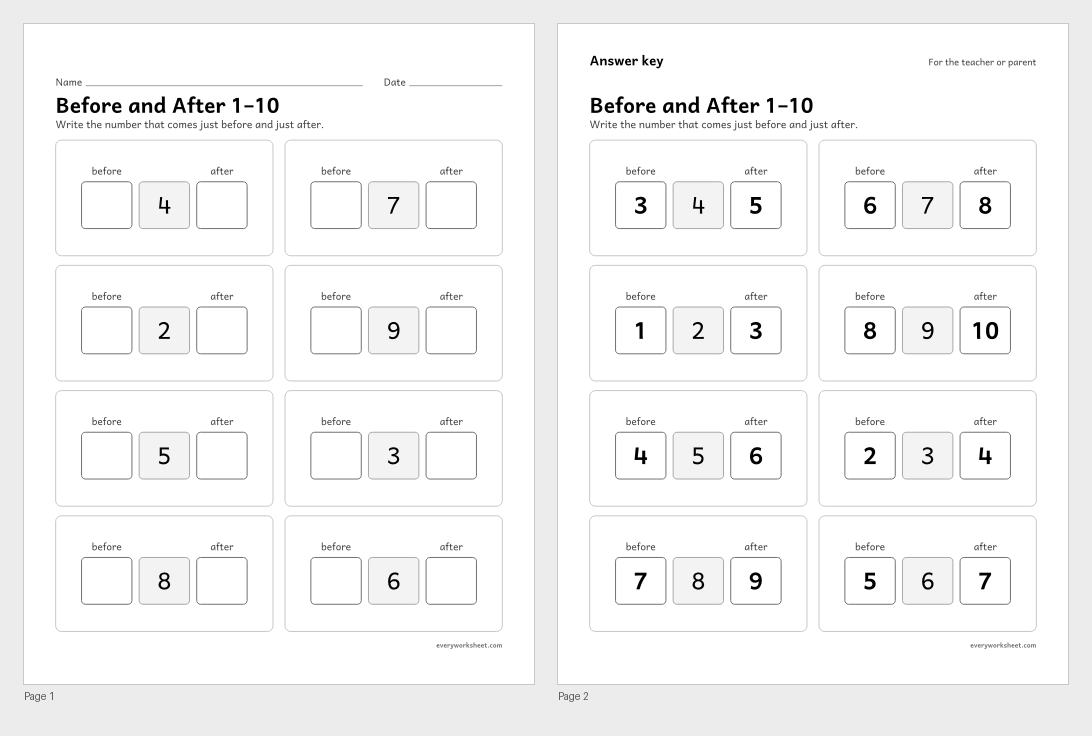
Naming the number just before and just after, 1 to 10
Answer key on page 2
2 pages43 KB
 View all 2 pages
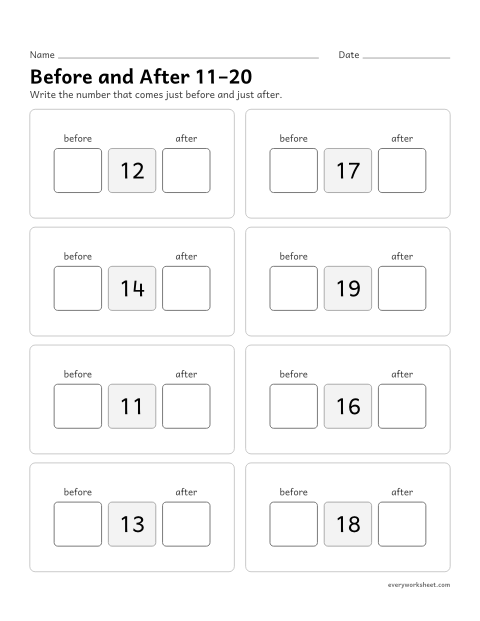
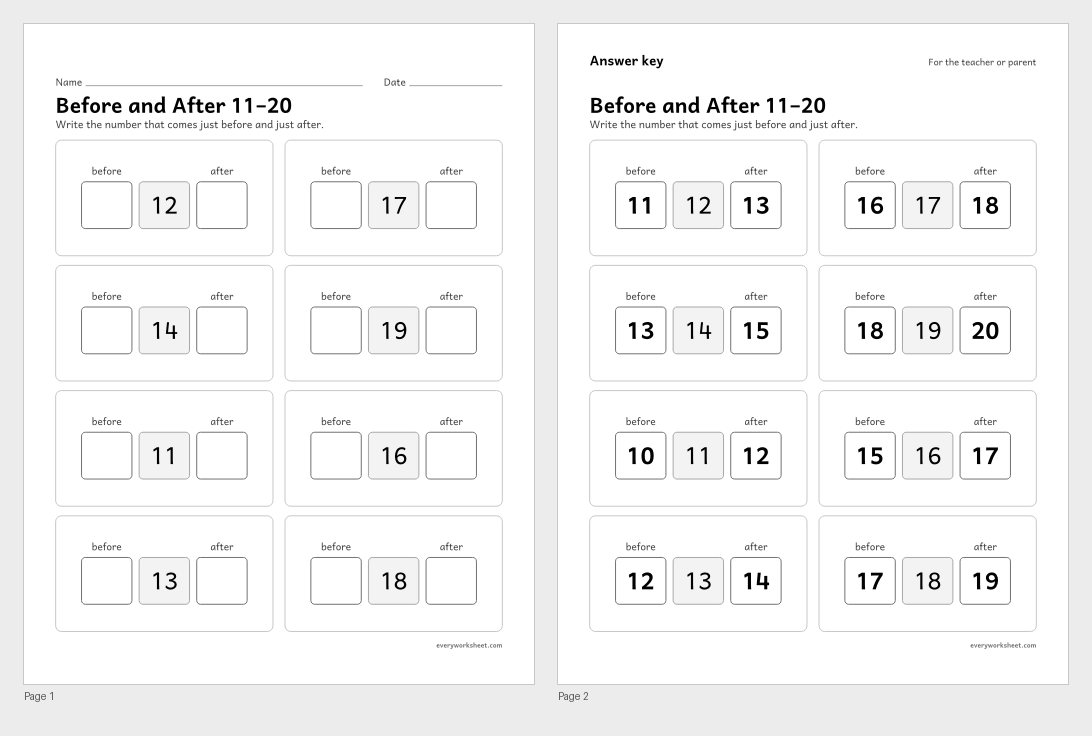
Naming the number just before and just after, 11 to 20
Answer key on page 2
2 pages43 KB
 View all 2 pages
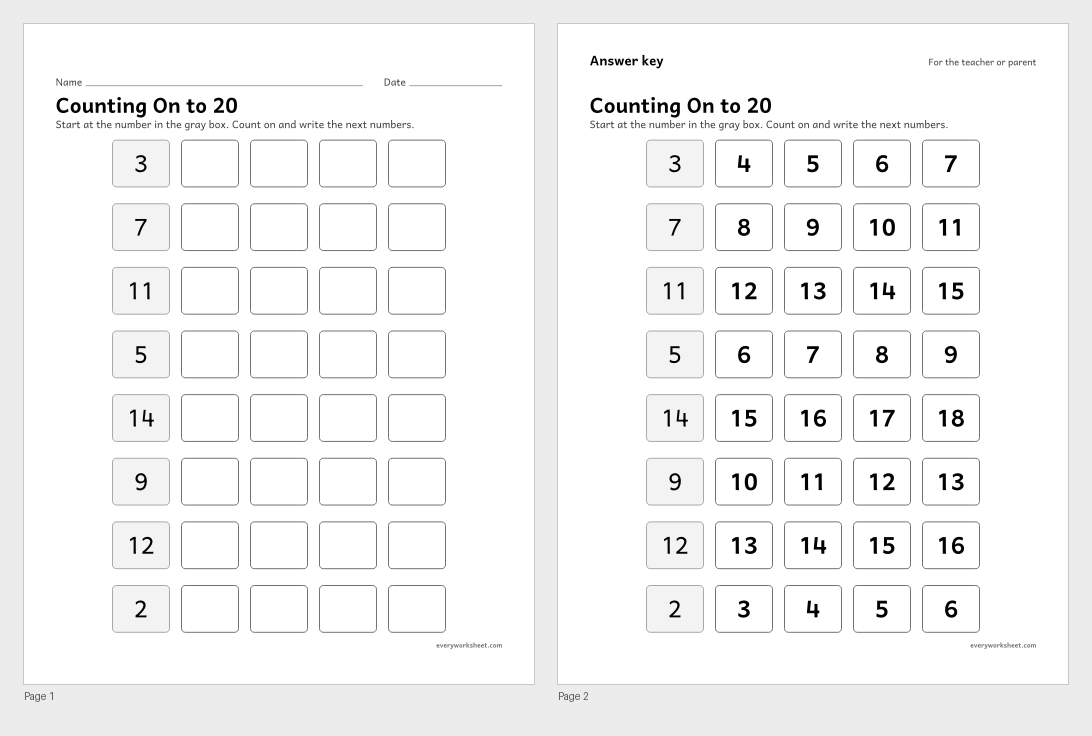
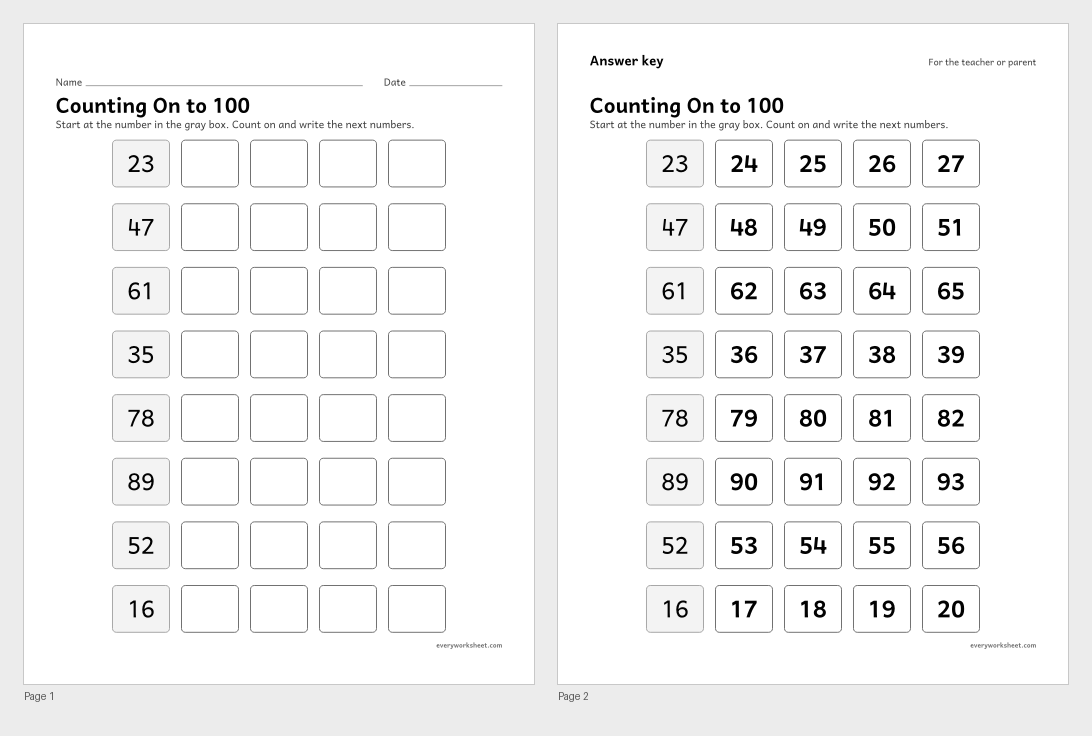
Counting forward from a given number within 20
Answer key on page 2
2 pages30 KB
 View all 2 pages
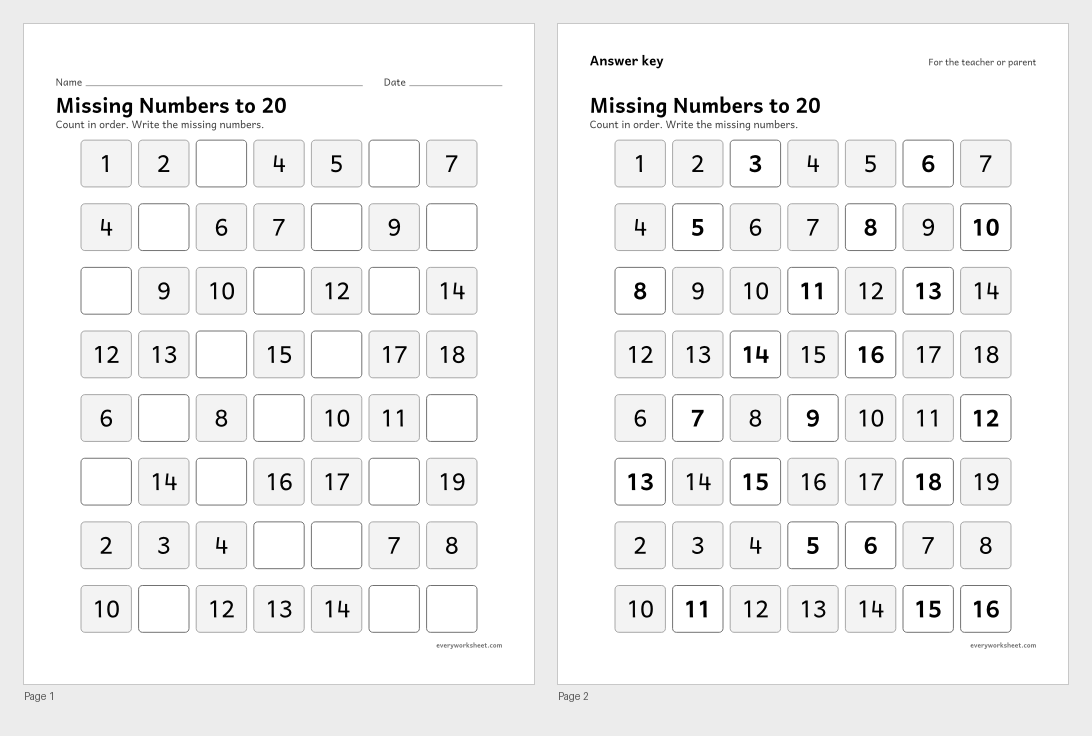
Counting forward from a given number within 100
Answer key on page 2
2 pages30 KB
 View all 2 pages
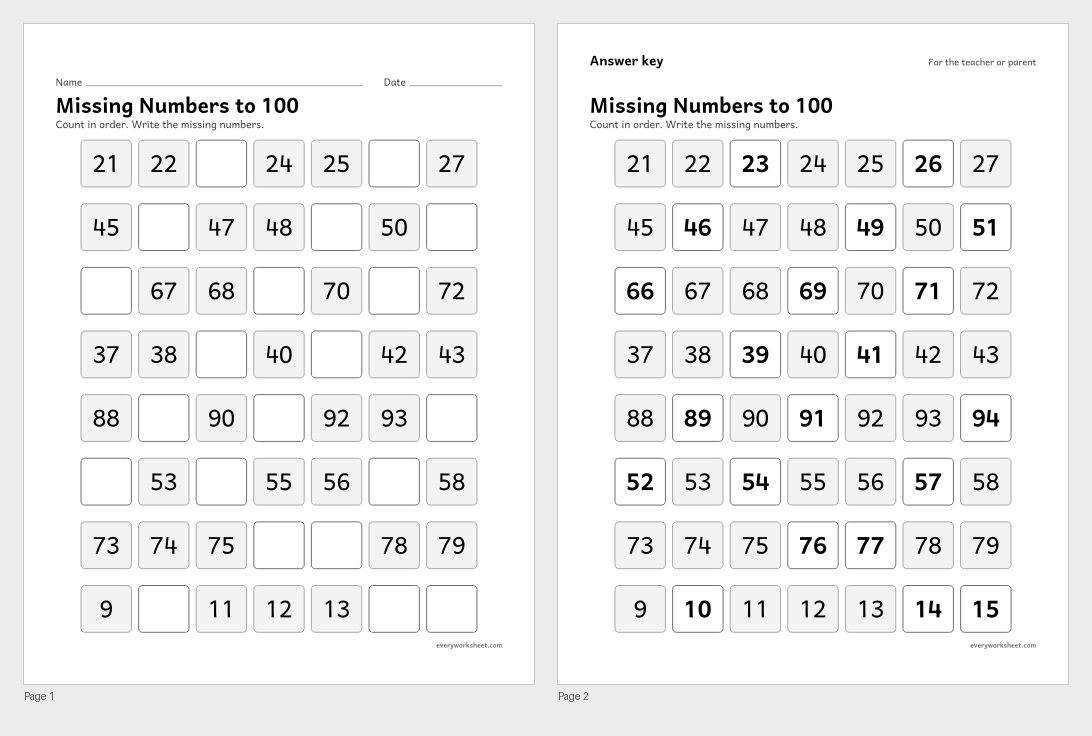
Filling in missing numbers in a counting sequence to 20
Answer key on page 2
2 pages31 KB
 View all 2 pages
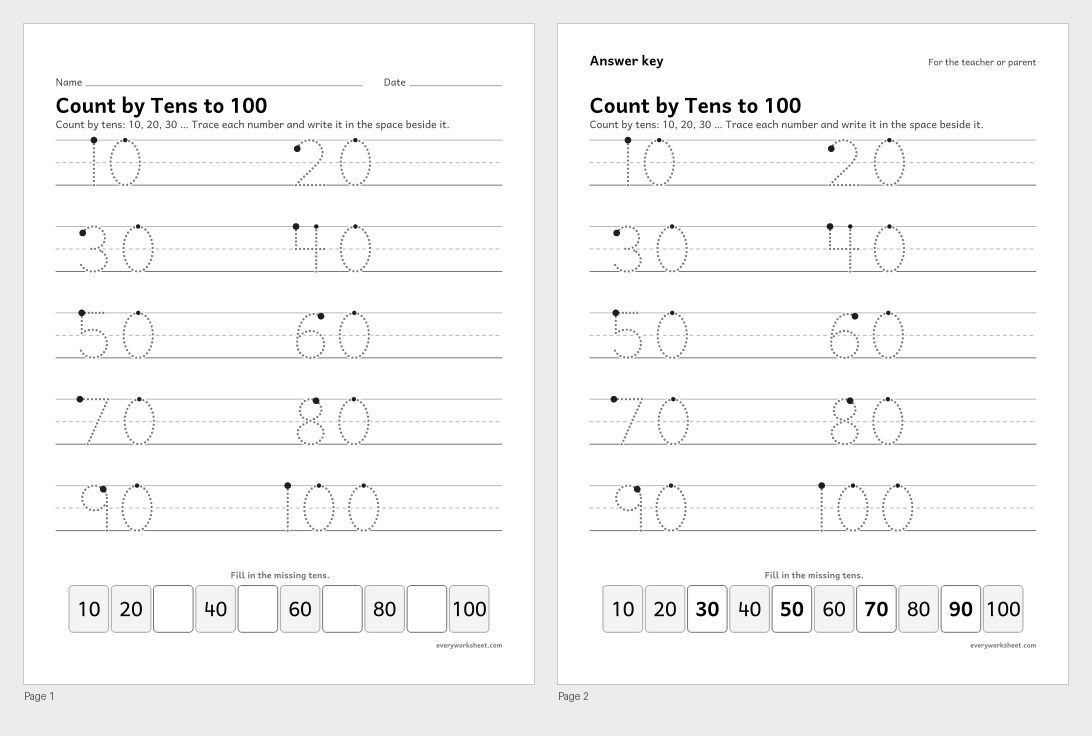
Filling in missing numbers in a counting sequence to 100
Answer key on page 2
2 pages31 KB
 View all 2 pages
 View all 2 pages
 View all 2 pages
 View all 2 pages
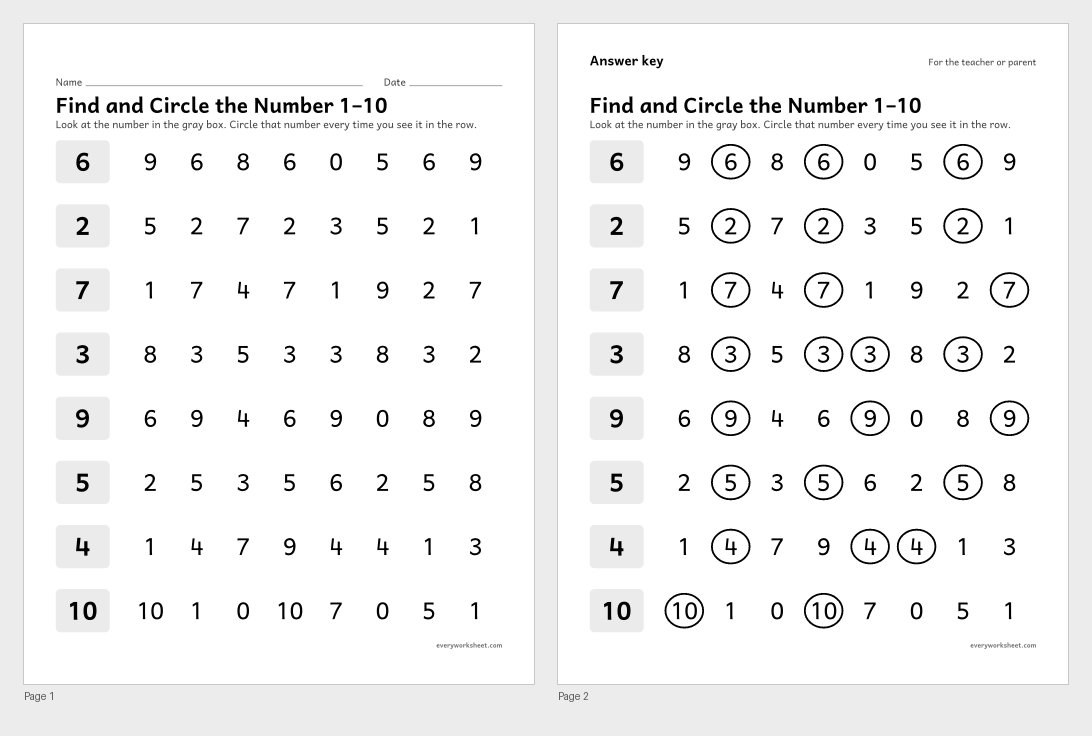
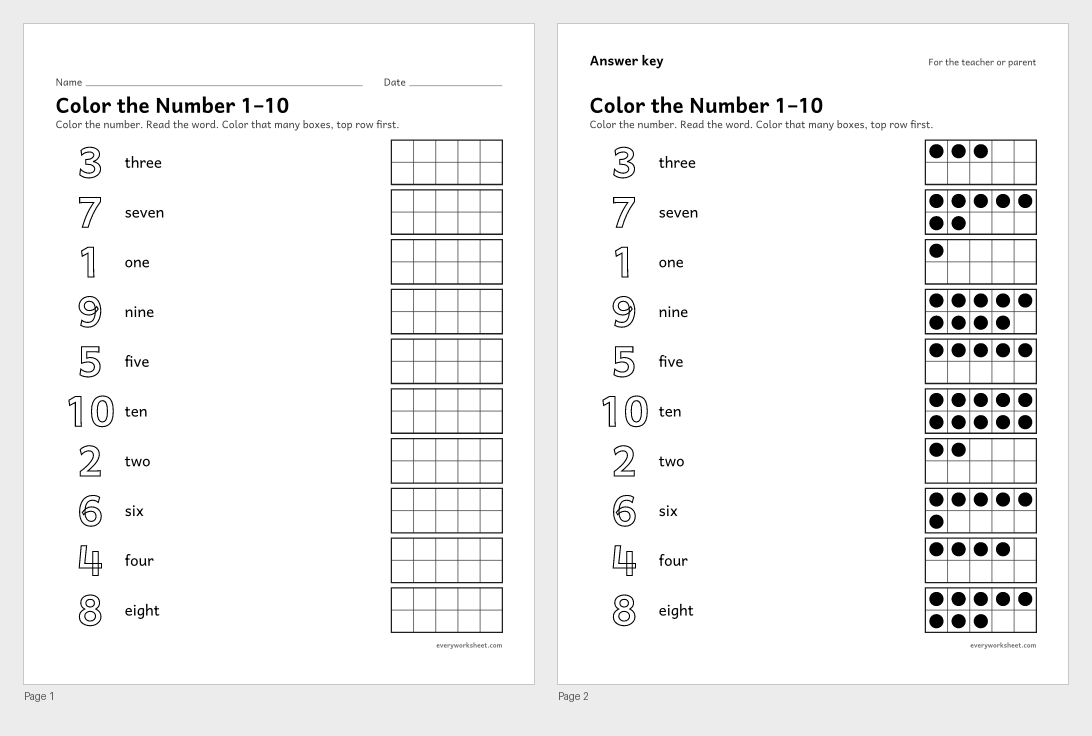
Recognizing the numbers 1 to 10
Answer key on page 2
2 pages40 KB
 View all 2 pages
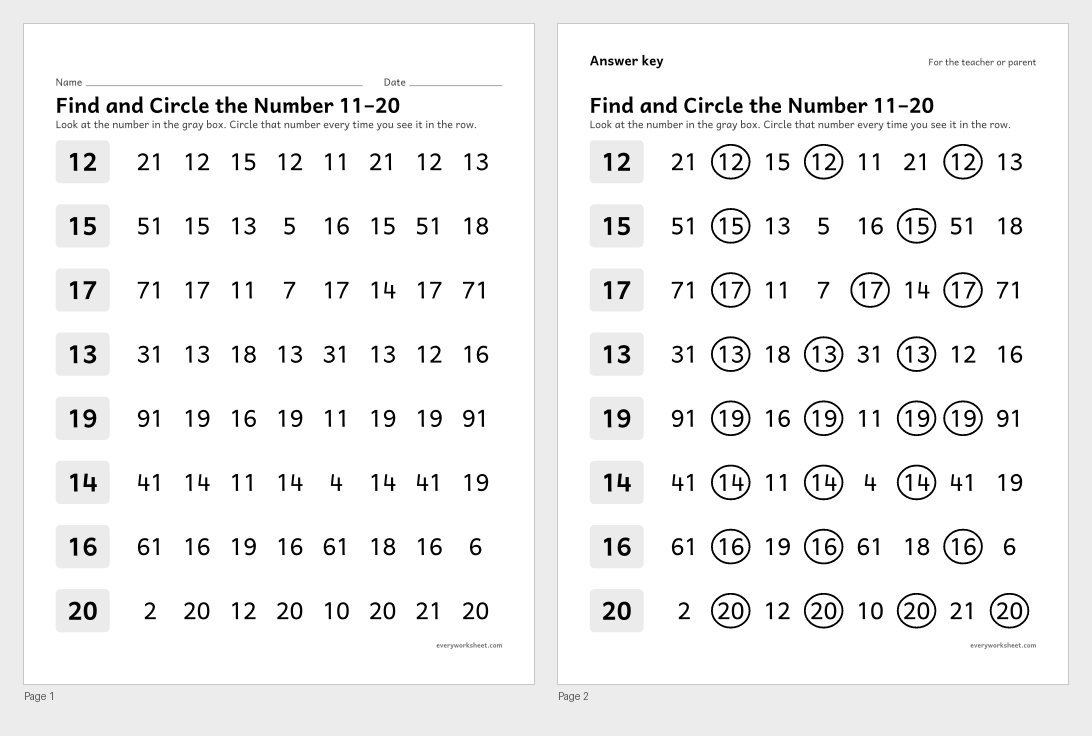
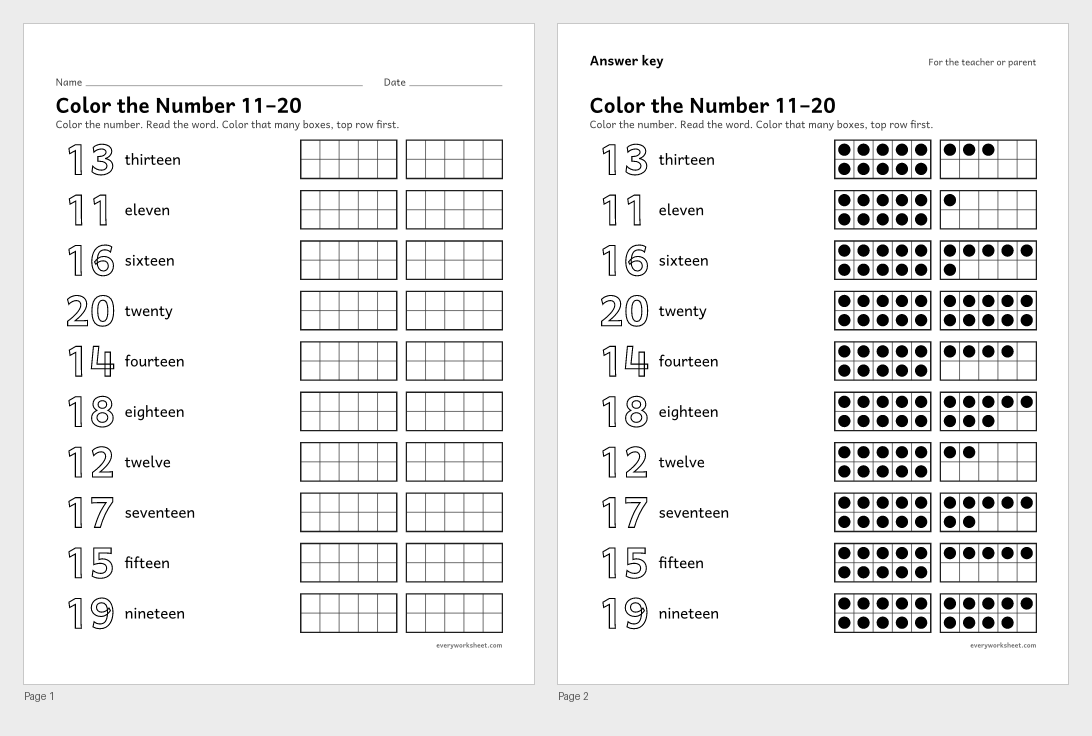
Recognizing the numbers 11 to 20
Answer key on page 2
2 pages40 KB
 View all 2 pages
Matching numbers 1 to 10 to number words and amounts
Answer key on page 2
2 pages42 KB
 View all 2 pages
Matching numbers 11 to 20 to number words and amounts
Answer key on page 2
2 pages43 KB
Print at 100% (actual size) for the cleanest tracing lines.
These kindergarten counting worksheets cover the whole counting year, from counting to 10 with shapes in a row to counting to 100 by tens. Children count groups and write how many, circle the matching number, draw a set of dots, and color exactly as many shapes as a number says. Every sheet with right answers comes with an answer key on page 2.
Counting in kindergarten is really three skills. Children learn the counting words in order (one, two, three … up to 100), they match one number to each object so the last number they say tells how many, and they learn to start from any number instead of always going back to 1. The counting on, before and after, and missing numbers pages practice that last skill, which is the one children need most for adding later.
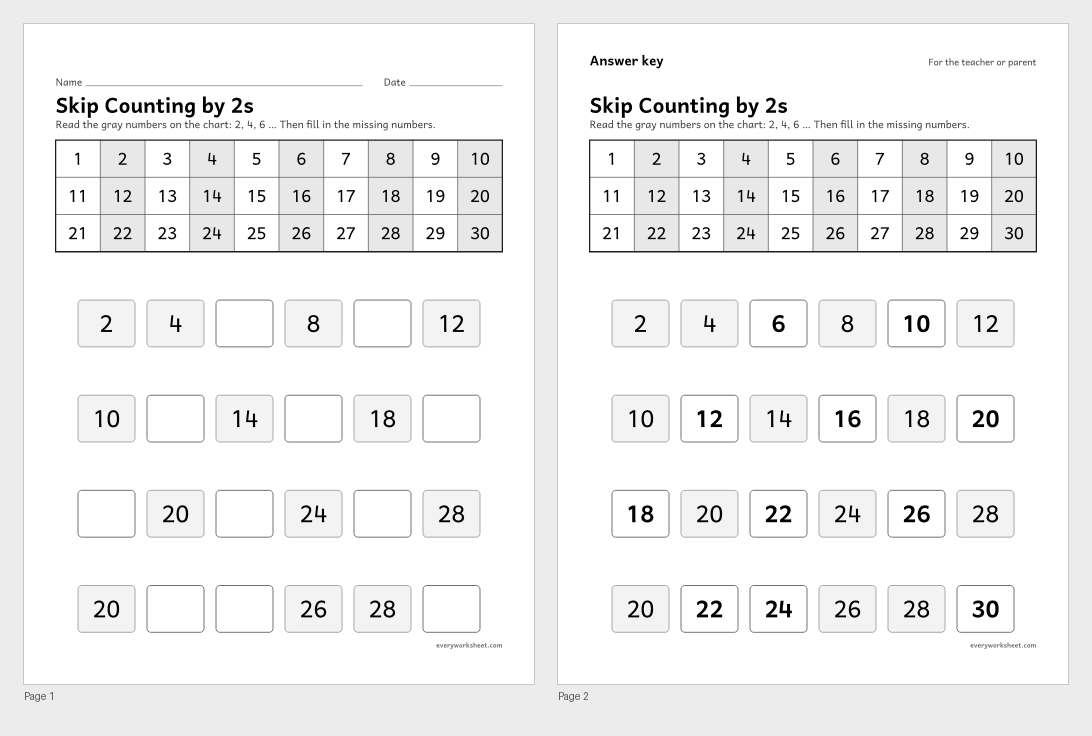
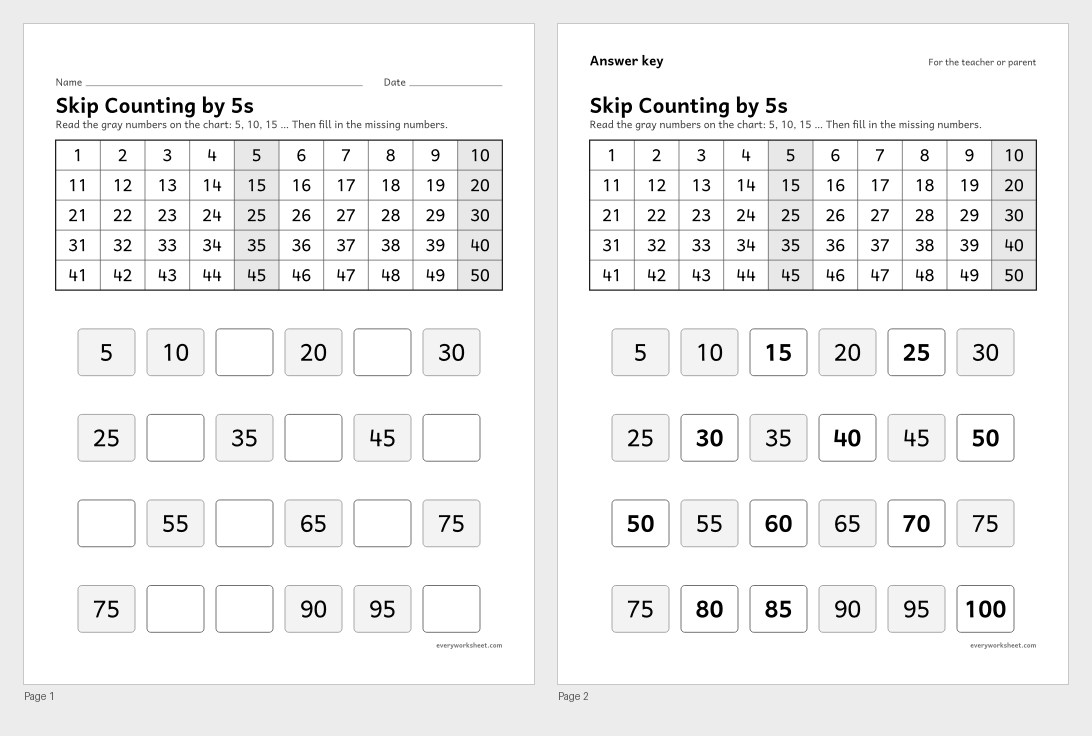
The set also includes skip counting worksheets for counting by 2s, 5s and 10s, each with a small number chart to read from, and number recognition worksheets where children find and circle a number in a row or color a number, read its number word and fill a ten frame. Together they make a full set of kindergarten numbers worksheets that print in black and white on US Letter or A4.
CCSS.MATH.CONTENT.K.CC.A.1Count to 100 by ones and by tens.CCSS.MATH.CONTENT.K.CC.A.2Count forward beginning from a given number within the known sequence (instead of having to begin at 1).CCSS.MATH.CONTENT.K.CC.A.3Write numbers from 0 to 20. Represent a number of objects with a written numeral 0-20 (with 0 representing a count of no objects).CCSS.MATH.CONTENT.K.CC.B.4Understand the relationship between numbers and quantities; connect counting to cardinality.CCSS.MATH.CONTENT.K.CC.B.4.CUnderstand that each successive number name refers to a quantity that is one larger.CCSS.MATH.CONTENT.K.CC.B.5Count to answer “how many?” questions about as many as 20 things arranged in a line, a rectangular array, or a circle, or as many as 10 things in a scattered configuration; given a number from 1-20, count out that many objects.By the end of kindergarten, children are expected to count to 100 by ones and by tens, count up to 20 objects to tell how many, and write numbers from 0 to 20. Most children start the year counting to 10 or 20 and build from there.
Counting on means starting from a given number instead of starting at 1. If you say “12,” your child continues “13, 14, 15.” It is a key step toward adding, because adding 3 to 12 is just counting on three more.
Counting by tens to 100 is part of the kindergarten standards. Counting by 2s and 5s usually comes in first grade, but many kindergartners enjoy it, and the charts make the pattern easy to see.
Rows and rectangles are easier to count because the order is clear. Scattered groups are harder, so kindergarten keeps them to 10 or fewer. Practicing both helps children count anything they find around them.