 View all 2 pages
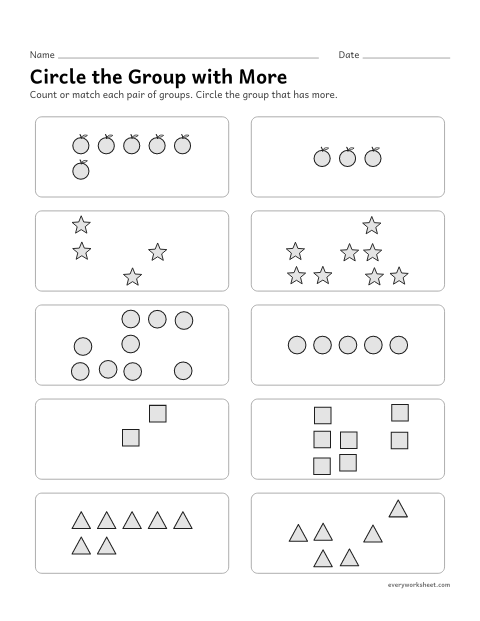
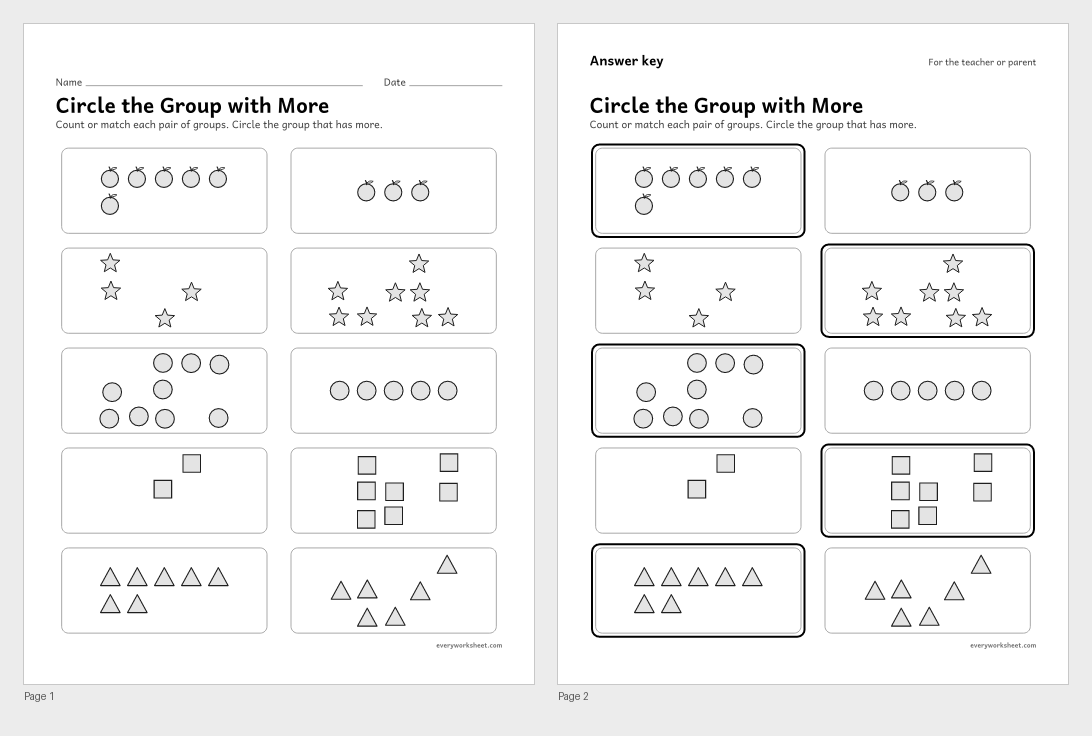
Circle the group with more
Finding the group with more
Answer key on page 2
2 pages30 KB
More or less, comparing numbers and the > < = symbols: from circling the group with more to comparing two-digit numbers, with answer keys.
View all 2 pagesFinding the group with more
Answer key on page 2
2 pages30 KB
 View all 2 pages
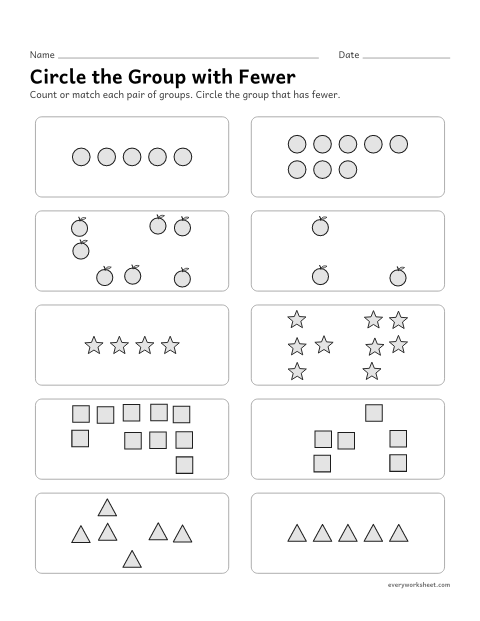
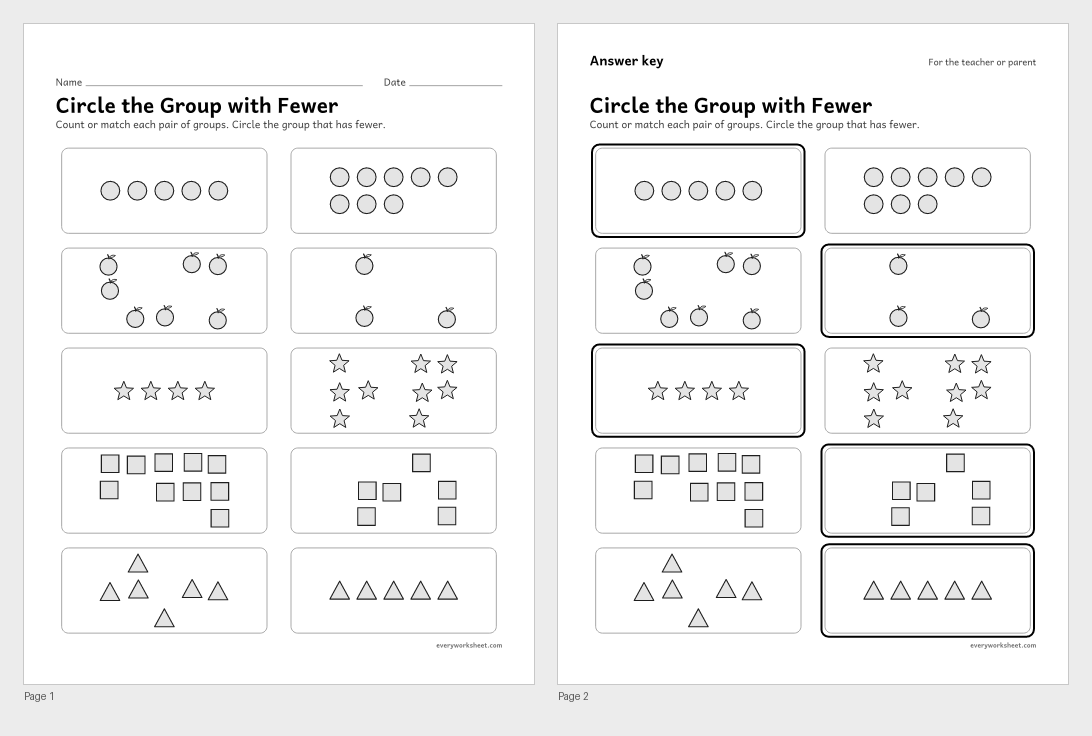
Finding the group with fewer (less)
Answer key on page 2
2 pages30 KB
 View all 2 pages
 View all 2 pages
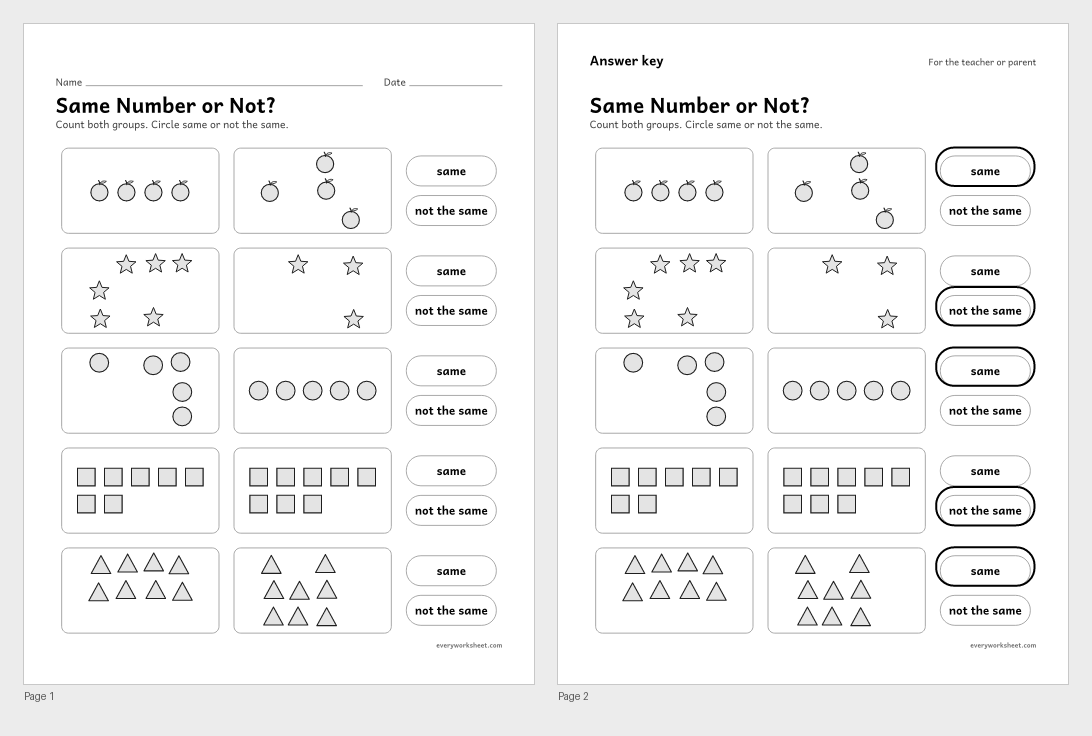
Telling whether two groups are equal
Answer key on page 2
2 pages34 KB
 View all 2 pages
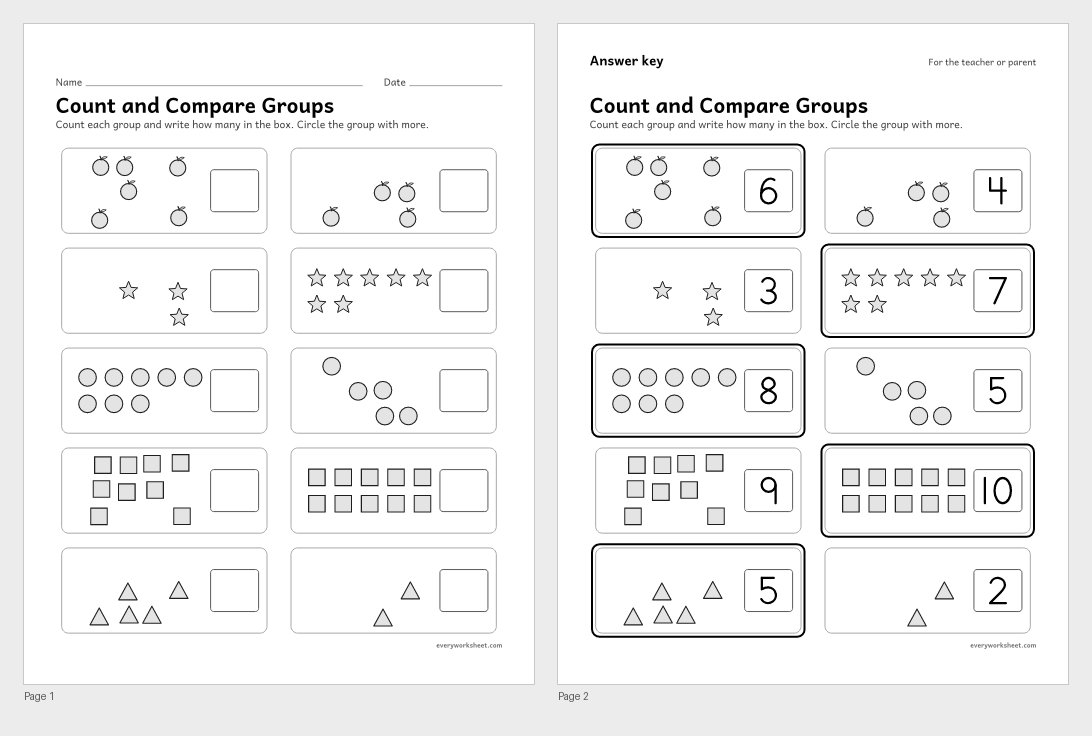
Counting two groups and finding the one with more
Answer key on page 2
2 pages32 KB
 View all 2 pages
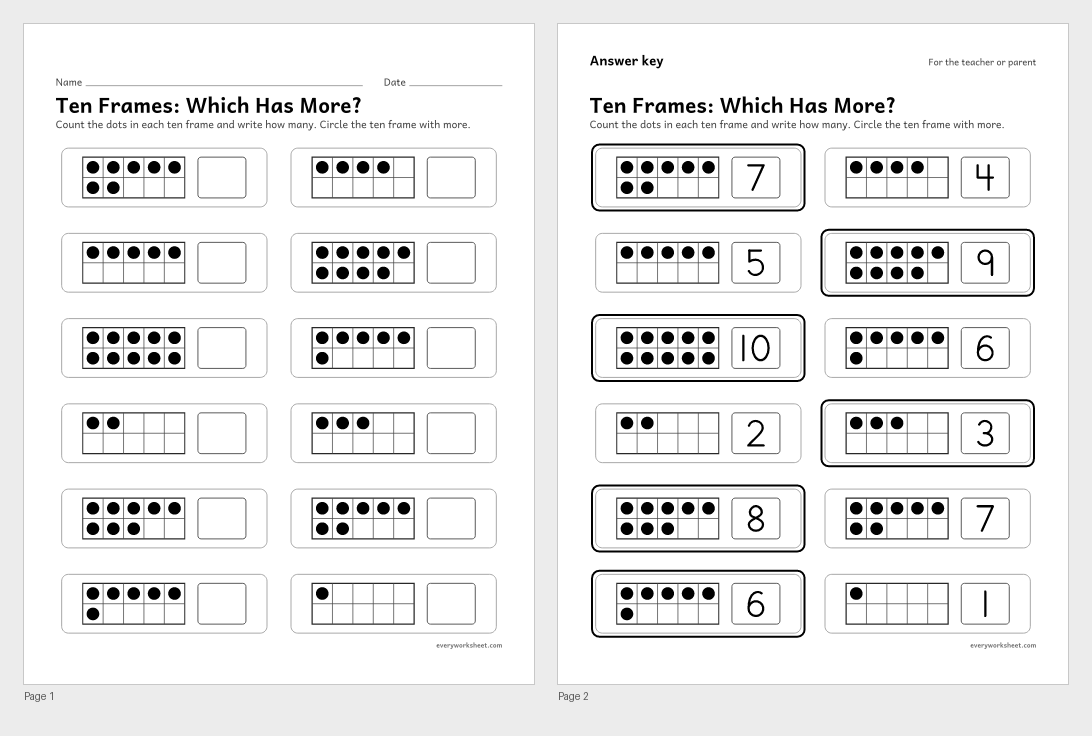
Comparing amounts in ten frames
Answer key on page 2
2 pages32 KB
 View all 2 pages
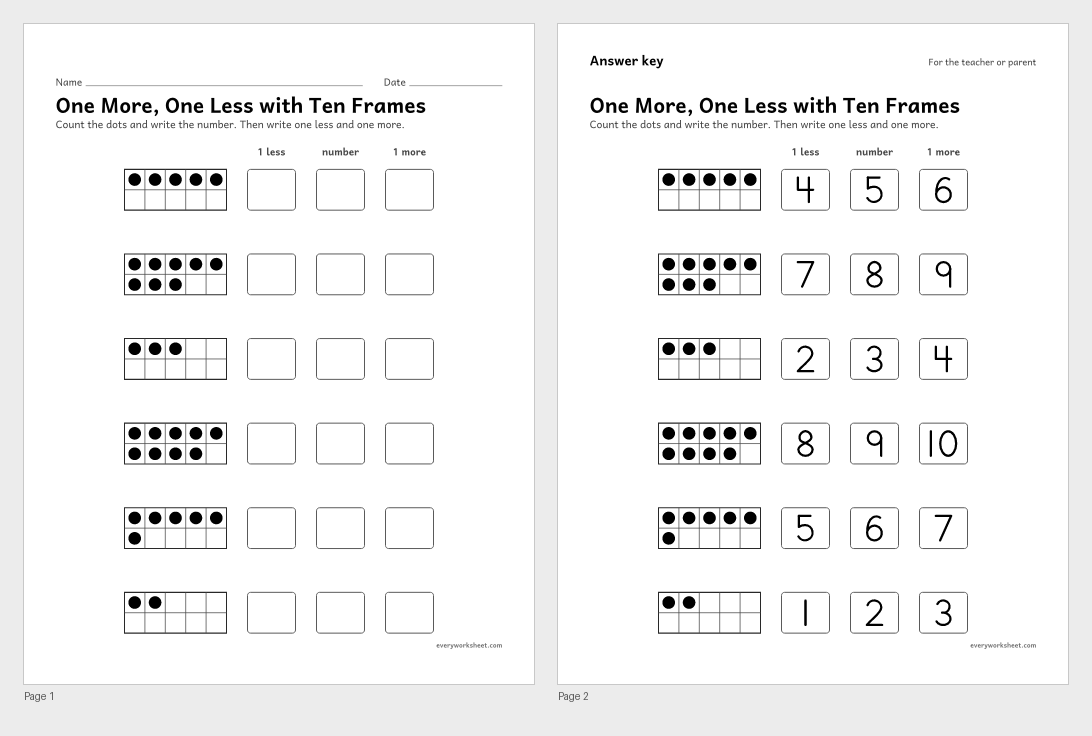
Finding one more and one less within 10
Answer key on page 2
2 pages35 KB
 View all 2 pages
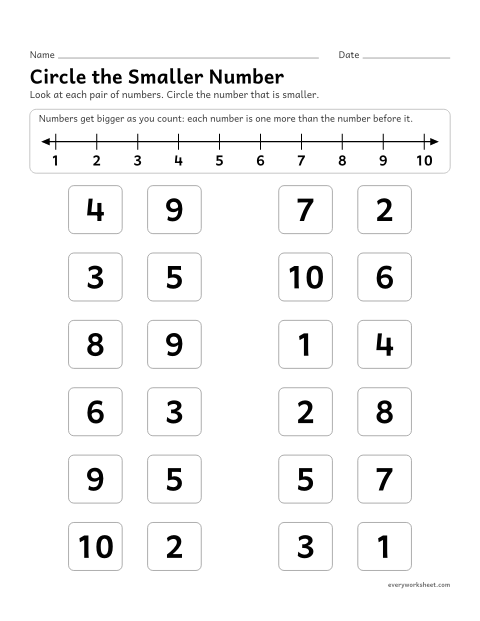
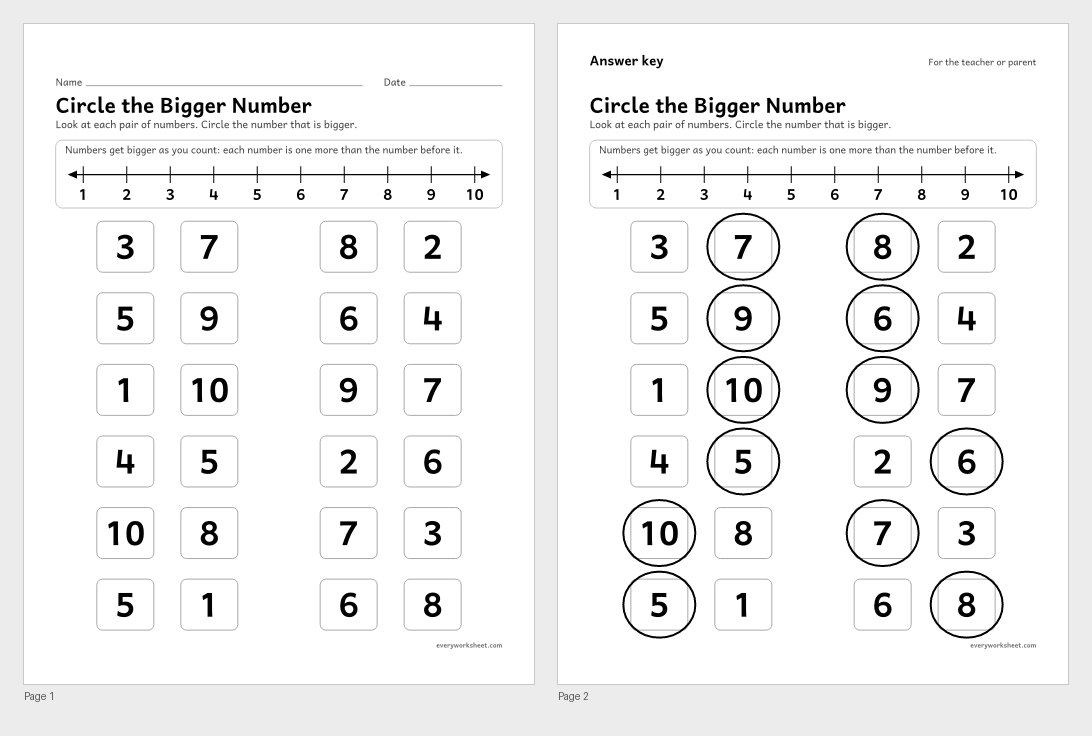
Comparing two numbers from 1 to 10
Answer key on page 2
2 pages36 KB
 View all 2 pages
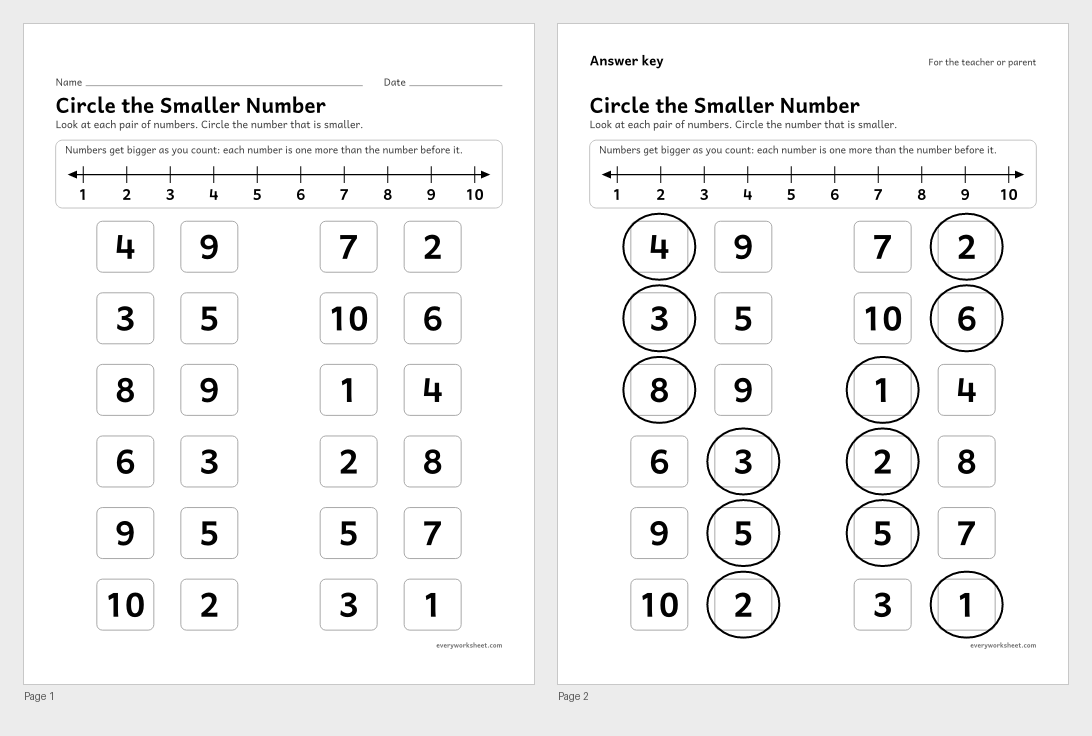
Comparing two numbers from 1 to 10
Answer key on page 2
2 pages36 KB
 View larger
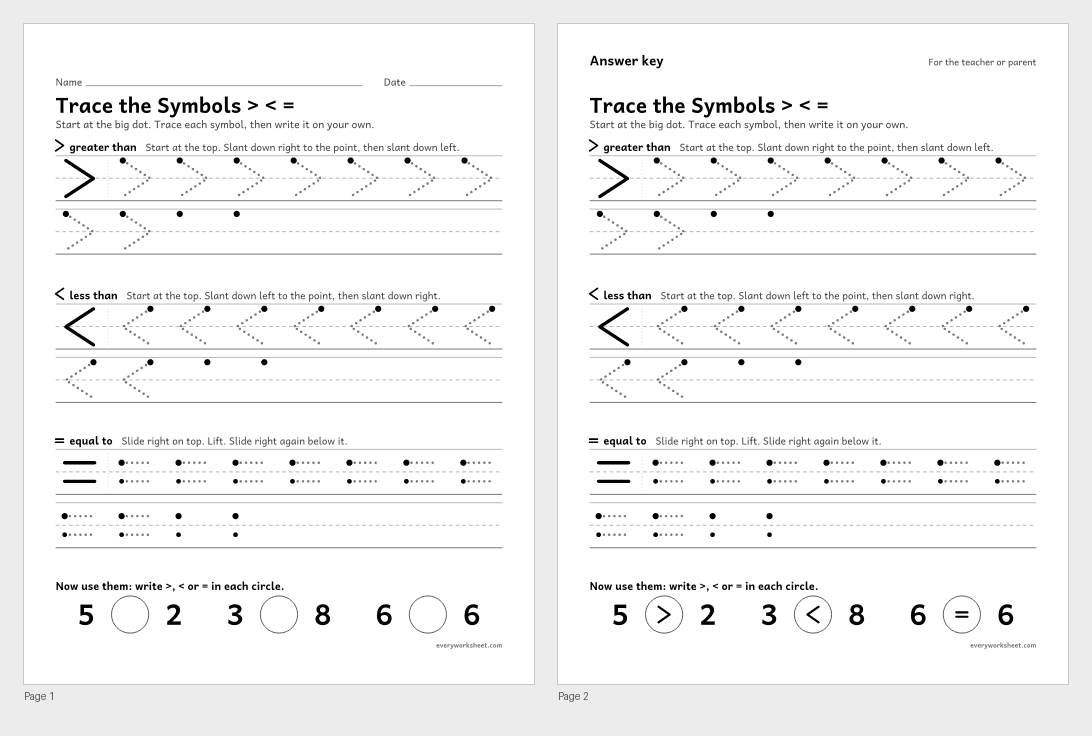 View all 2 pages
Writing the symbols >, < and =
Answer key on page 2
2 pages33 KB
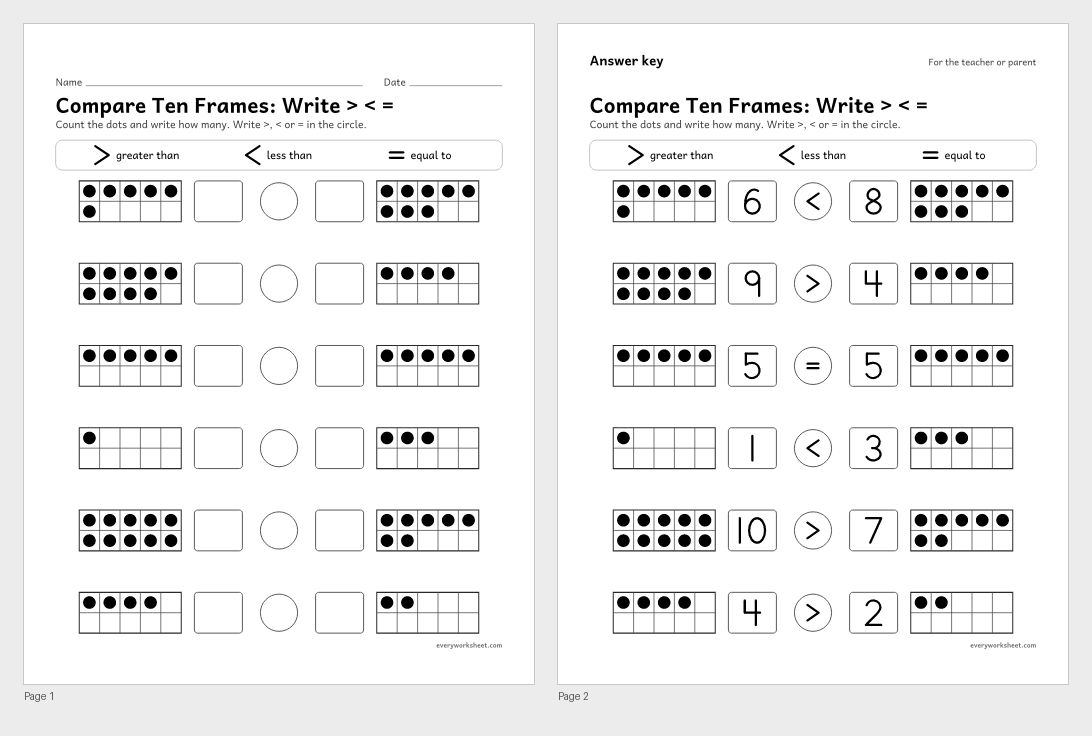 View all 2 pages
Comparing amounts to 10 with >, < and =
Answer key on page 2
2 pages33 KB
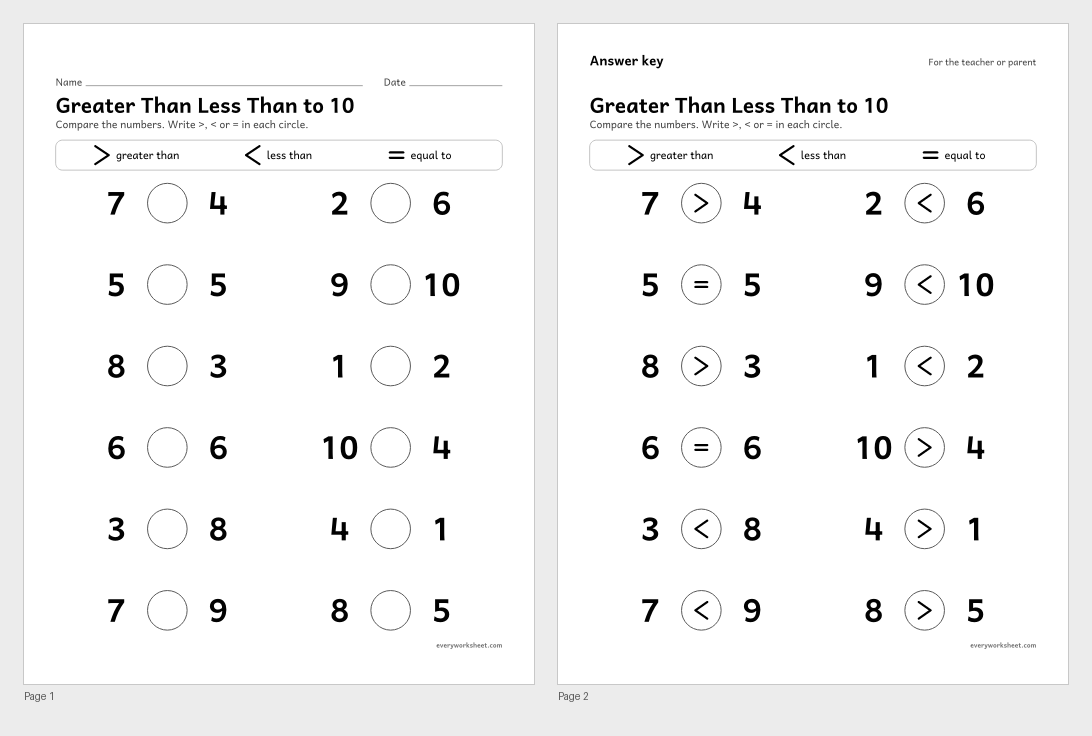 View all 2 pages
Comparing numbers to 10 with >, < and =
Answer key on page 2
2 pages37 KB
 View all 2 pages
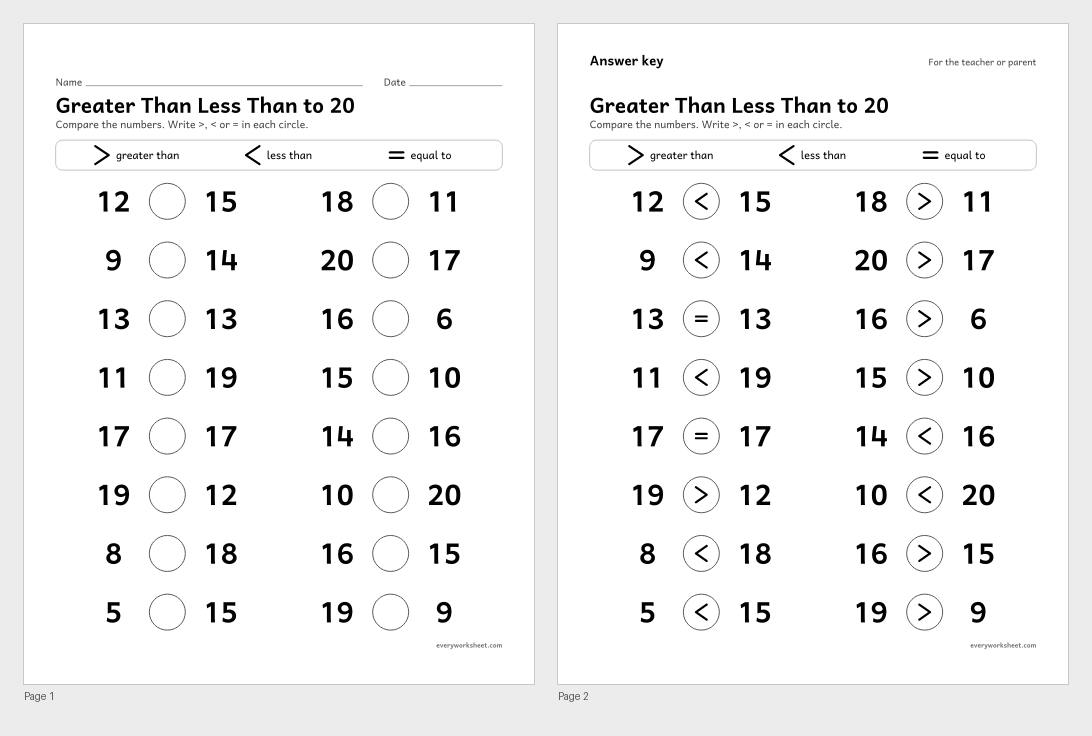
Comparing numbers to 20 with >, < and =
Answer key on page 2
2 pages40 KB
 View all 2 pages
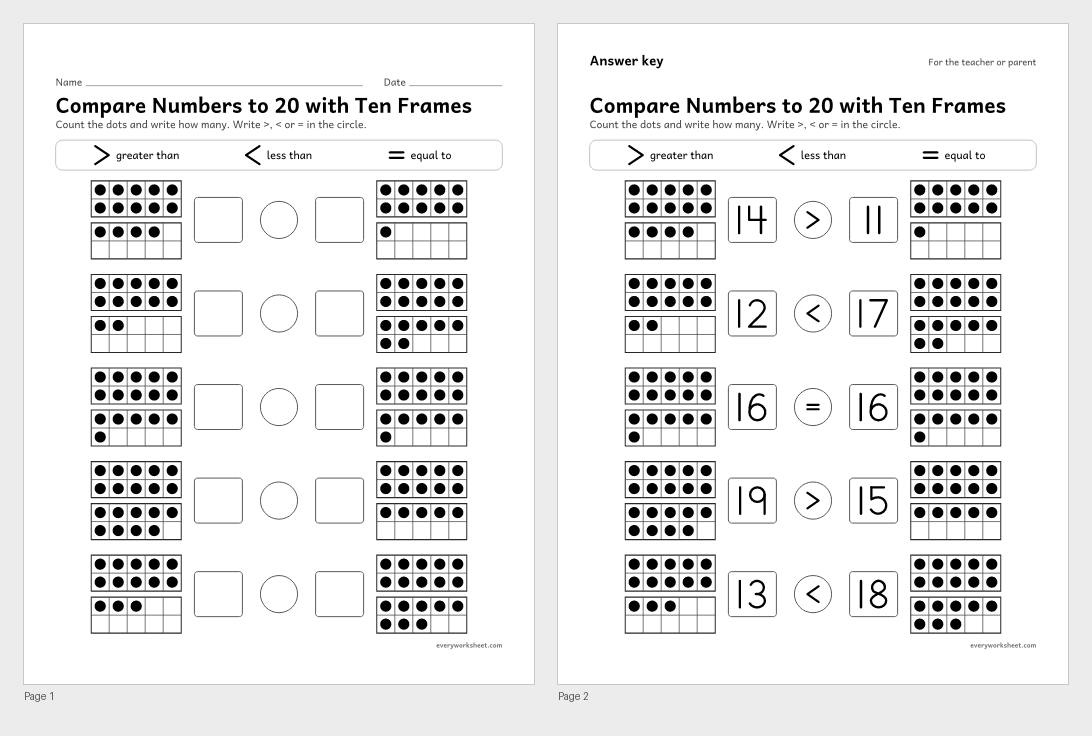
Comparing teen numbers with ten frames
Answer key on page 2
2 pages35 KB
 View all 2 pages
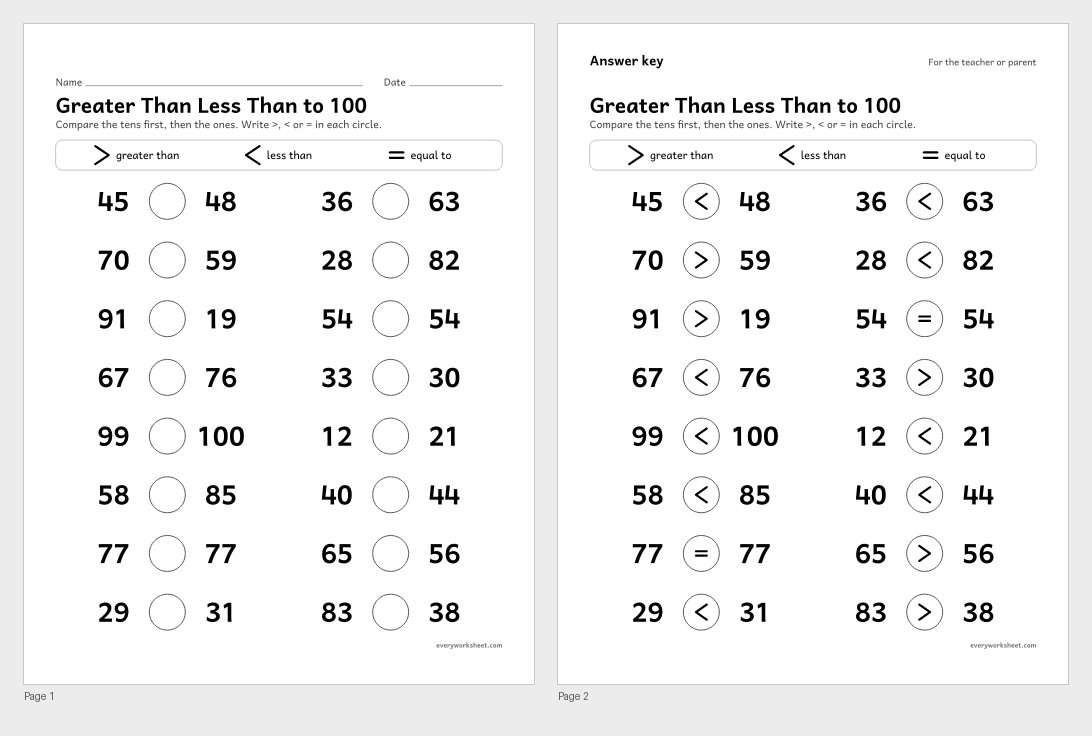
Comparing two-digit numbers with >, < and =
Answer key on page 2
2 pages40 KB
 View all 2 pages
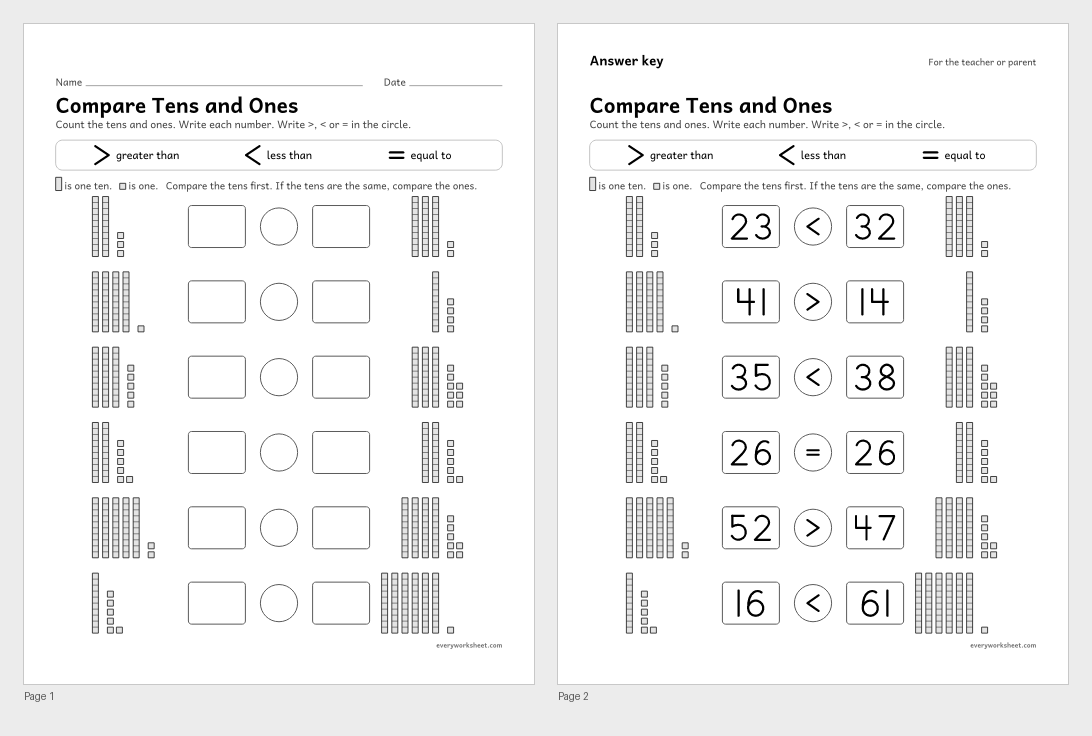
Comparing two-digit numbers using tens and ones
Answer key on page 2
2 pages37 KB
Print at 100% (actual size) for the cleanest tracing lines.
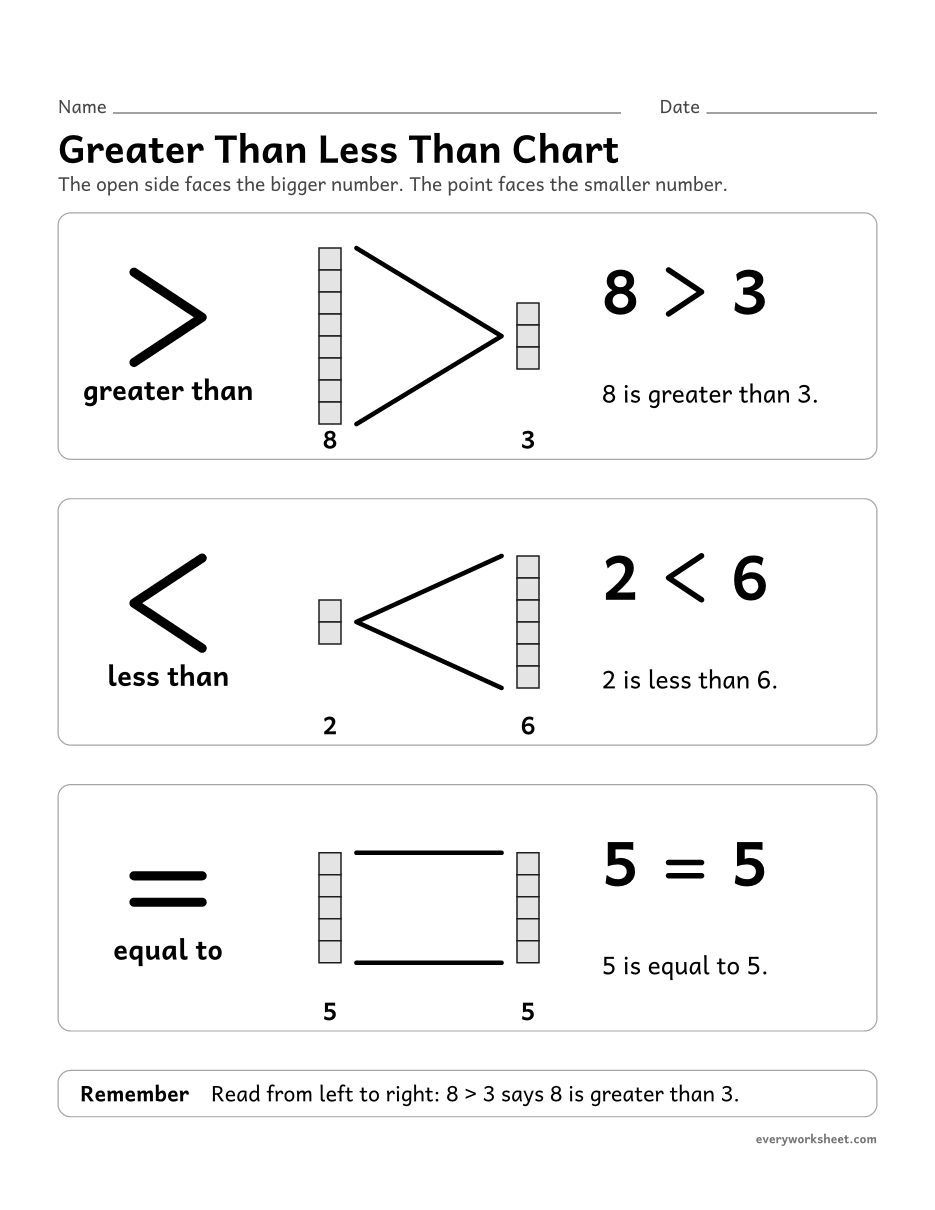
Greater than and less than are how children say which amount is bigger. The symbol > means greater than and < means less than; = means equal to. The easy way to remember them: the open side always faces the bigger number, and the point faces the smaller number. So 8 > 3 reads "8 is greater than 3" and 2 < 6 reads "2 is less than 6". Read every comparison from left to right, just like a sentence.
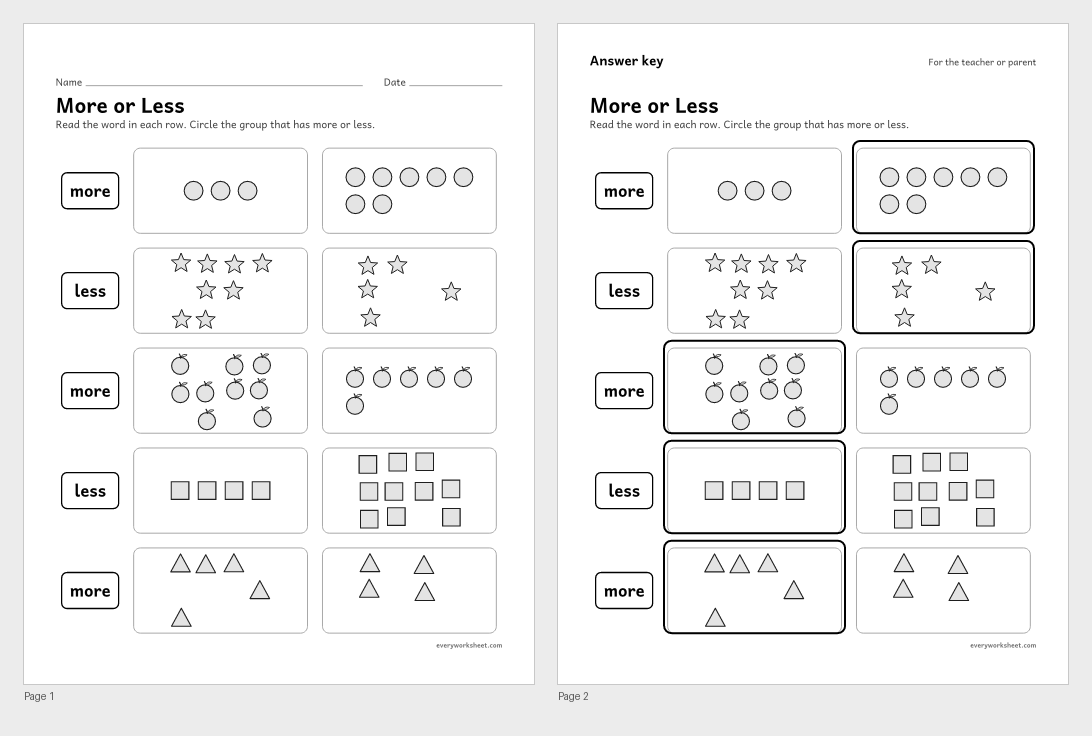
More or less comes first. Before kindergartners write any symbols, they compare real groups: which group has more, which has less (fewer), or are they the same? The more or less worksheets here have children circle the group with more, circle the group with fewer, follow a mixed more or less page, decide whether two groups are the same, and count two groups to see which is bigger. One more, one less pages with ten frames round out the set.
Next come numbers on their own. Children circle the bigger or smaller of two numbers from 1 to 10, with a counting line at the top to check against. Then the symbols: a printable greater than less than chart, a page to trace > < and =, and sheets to write the symbols between ten frames and between numbers to 10. For older kindergartners and 1st grade, there are pages to 20, a page that compares tens and ones, and a page of two-digit numbers to 100. Every page that has right answers comes with an answer key on page 2.
CCSS.MATH.CONTENT.K.CC.C.6Identify whether the number of objects in one group is greater than, less than, or equal to the number of objects in another group, e.g., by using matching and counting strategies.CCSS.MATH.CONTENT.K.CC.C.7Compare two numbers between 1 and 10 presented as written numerals.CCSS.MATH.CONTENT.K.CC.B.4Understand the relationship between numbers and quantities; connect counting to cardinality. Understand that each successive number name refers to a quantity that is one larger.CCSS.MATH.CONTENT.1.NBT.B.3Compare two two-digit numbers based on meanings of the tens and ones digits, recording the results of comparisons with the symbols >, =, and <.The open side faces the bigger number and the point faces the smaller number. 9 > 4 means 9 is greater than 4; 4 < 9 means 4 is less than 9. Both say the same thing, read from left to right.
More or less worksheets ask children to compare two groups of objects and find the one with more, the one with less (fewer), or say that they are the same. It is the kindergarten step before comparing written numbers and using the > < = symbols.
Kindergartners compare groups and numbers up to 10 using words like more, less and the same. Most classes introduce the > < = symbols late in kindergarten or in 1st grade, when children compare numbers to 100 by looking at the tens and ones.
Fewer is used for things you can count (fewer apples) and less for amounts (less water), and the worksheets use both. Young children usually say less for everything, and that's fine while they learn what it means.
Look at the tens first: 52 is greater than 47 because 5 tens is more than 4 tens. If the tens are the same, like 35 and 38, compare the ones.