 View all 2 pages
Longer or Shorter?
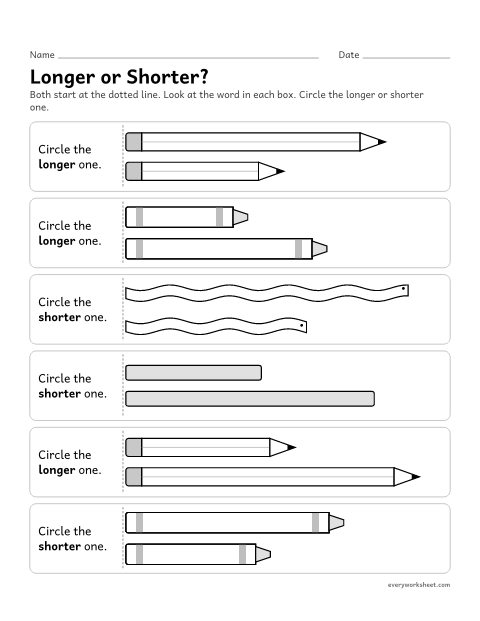
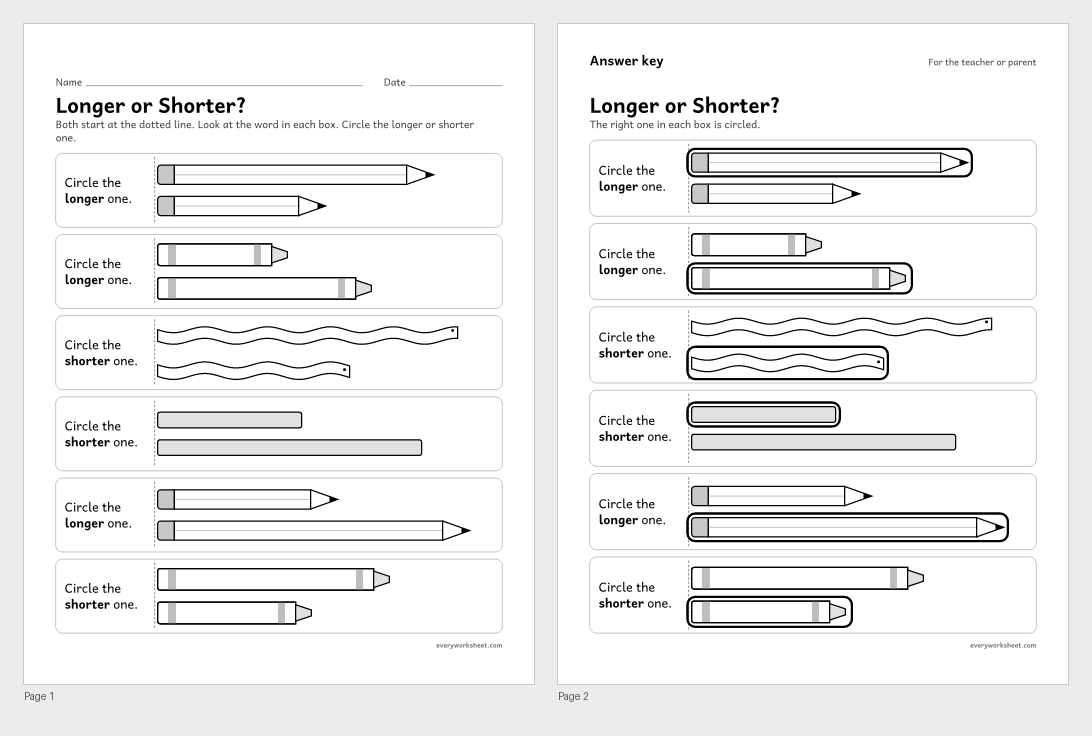
Comparing length: longer and shorter
Answer key on page 2
2 pages38 KB
Compare length, height, weight and capacity, then measure with cubes and paper clips, with answer keys.
View all 2 pagesComparing length: longer and shorter
Answer key on page 2
2 pages38 KB
 View all 2 pages
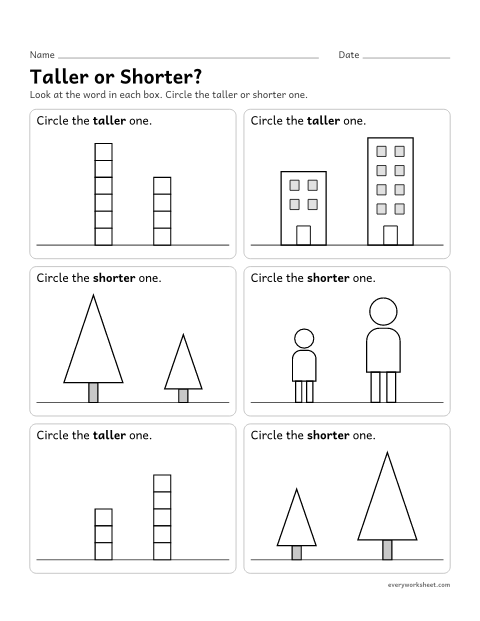
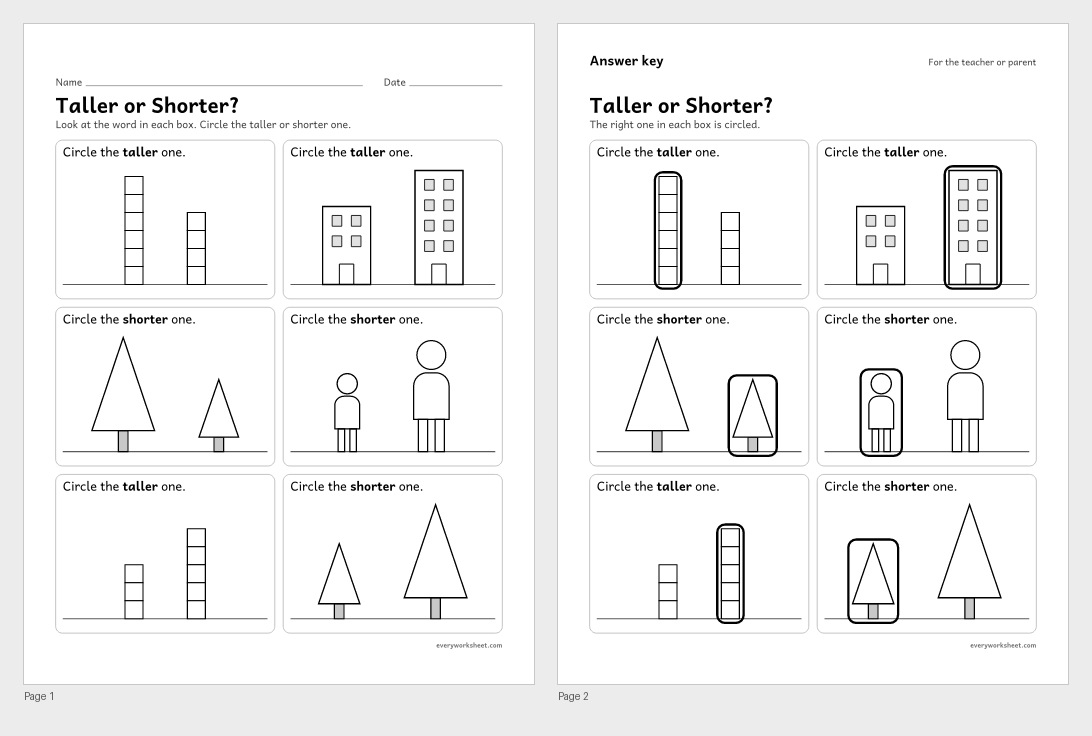
Comparing height: taller and shorter
Answer key on page 2
2 pages35 KB
 View all 2 pages
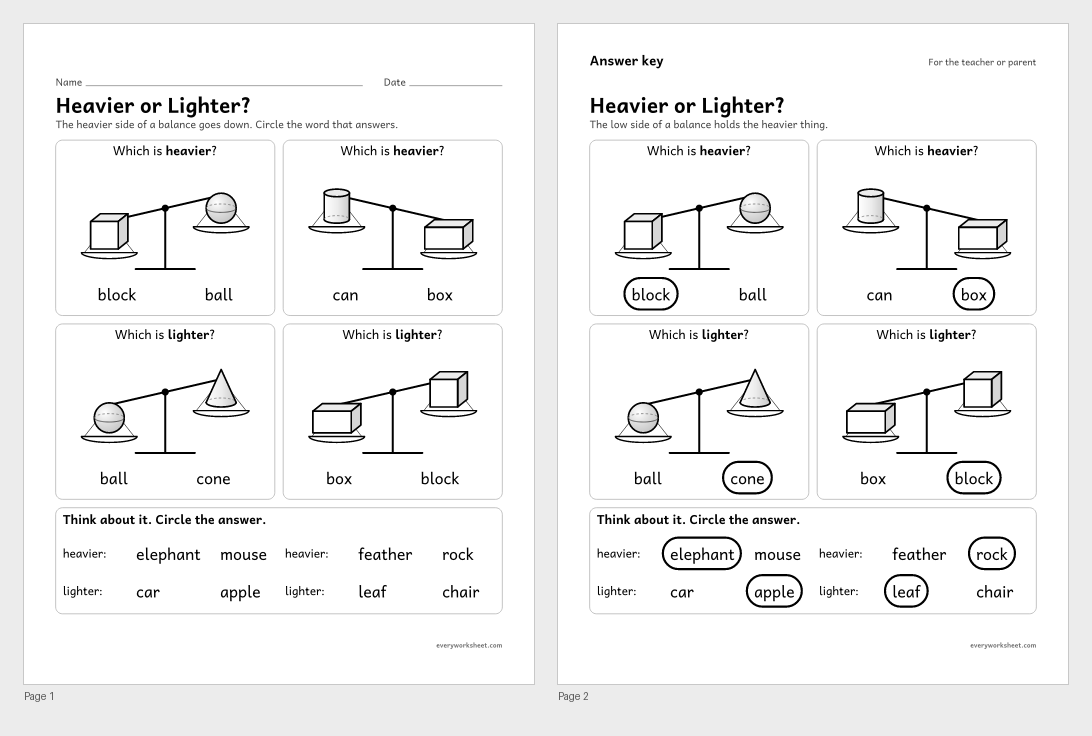
Comparing weight: heavier and lighter
Answer key on page 2
2 pages54 KB
 View all 2 pages
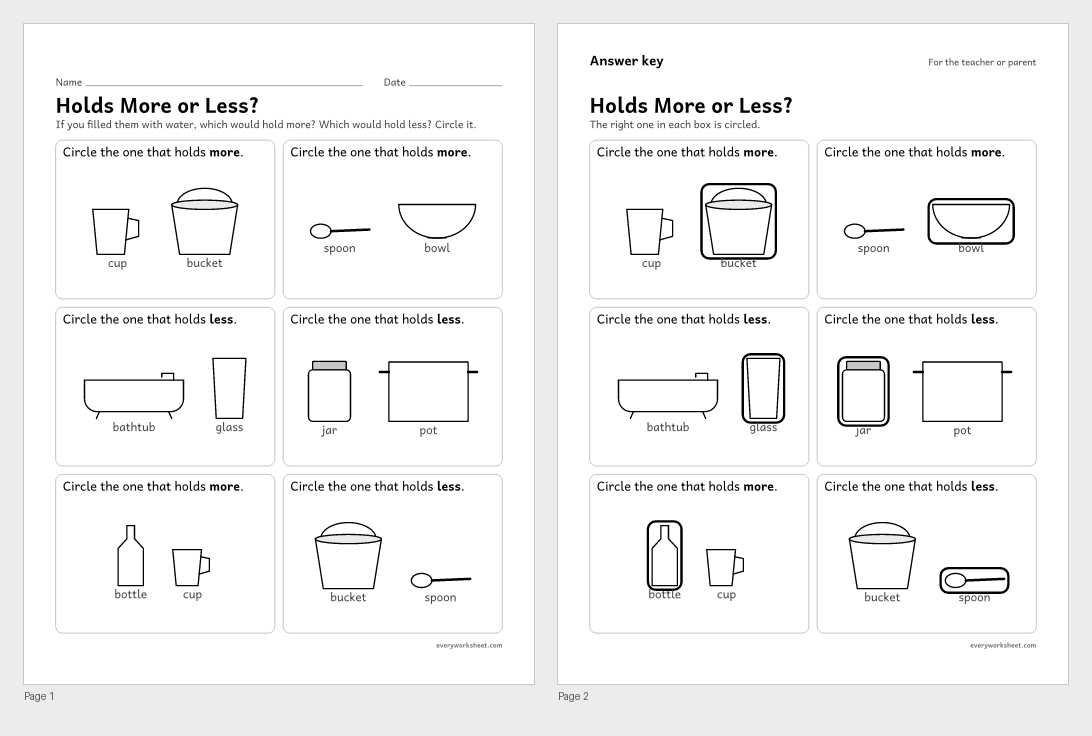
Comparing capacity: holds more and holds less
Answer key on page 2
2 pages50 KB
 View all 2 pages
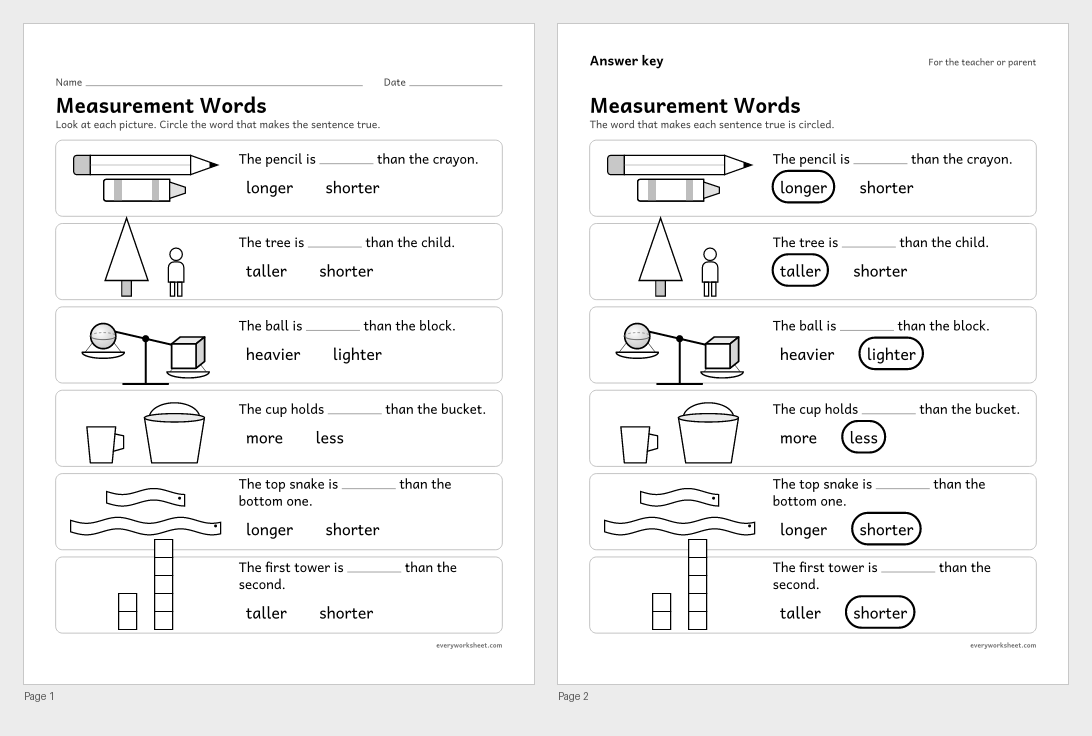
Describing length, height, weight and capacity
Answer key on page 2
2 pages45 KB
 View all 2 pages
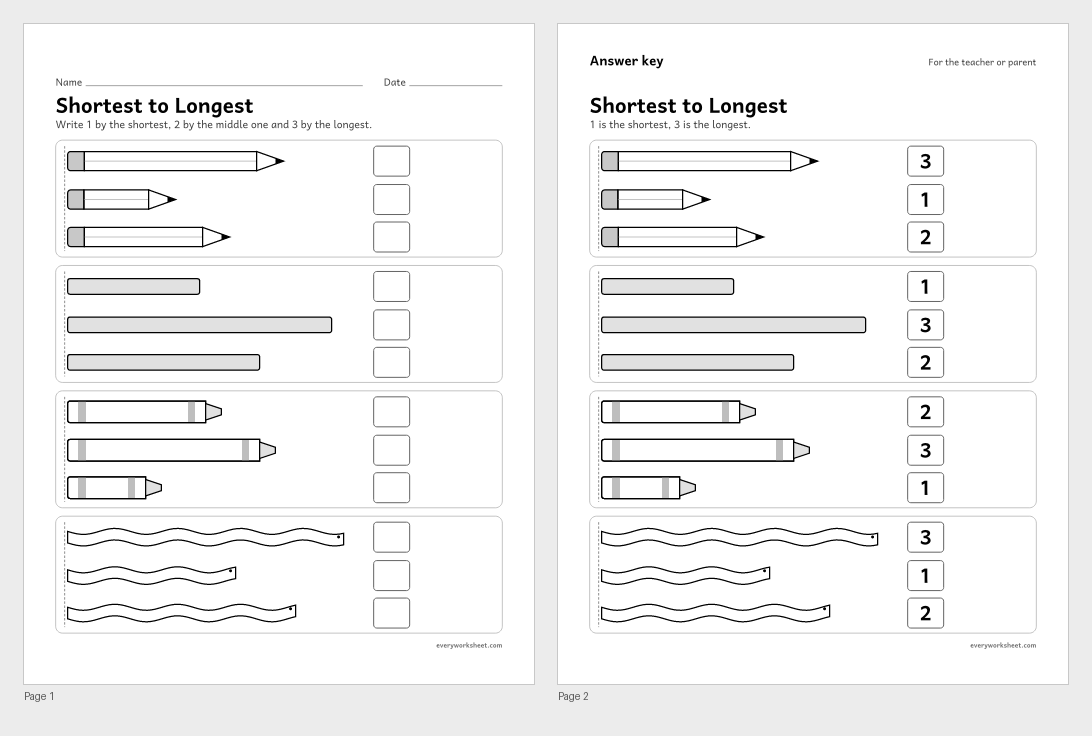
Ordering three objects by length
Answer key on page 2
2 pages42 KB
 View larger
 View all 2 pages
 View all 2 pages
 View all 2 pages
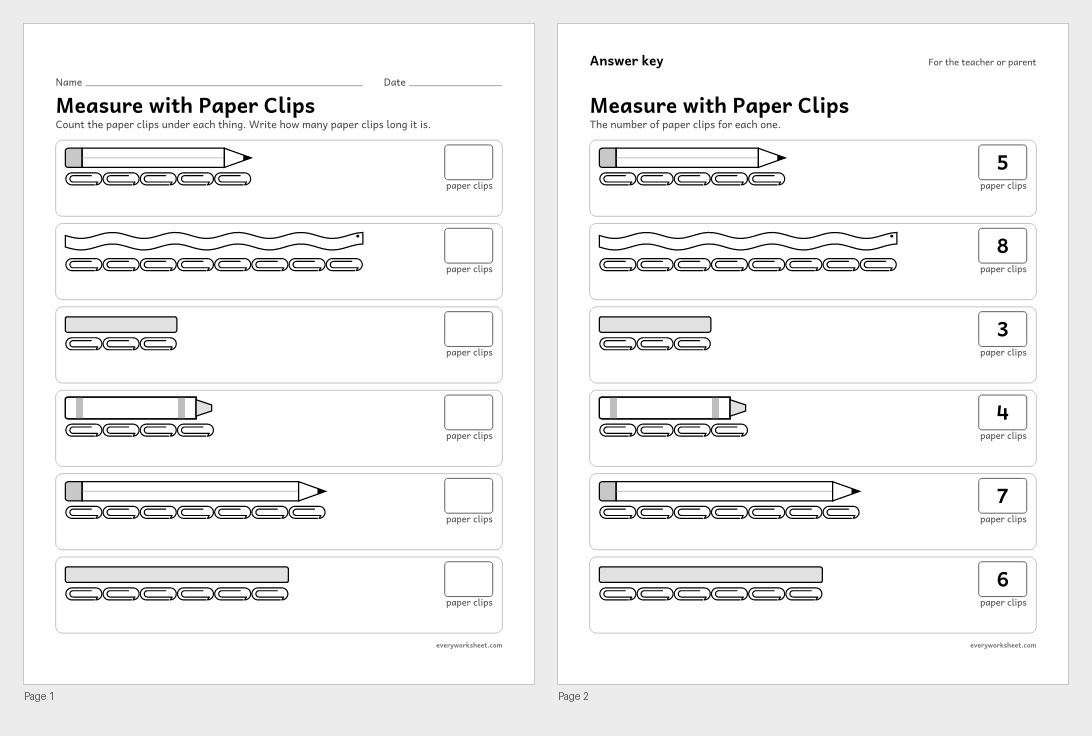
Measuring length with paper clips
Answer key on page 2
2 pages37 KB
Print at 100% (actual size) for the cleanest tracing lines.
In kindergarten, measurement starts with comparing. Is this pencil longer or shorter than that one? Which tower is taller? Which side of the balance is heavier? Which container holds more water? Children learn the words for each kind of measuring before they ever use a ruler.
These worksheets cover all four: length, height, weight and capacity. Objects are drawn from simple shapes, like pencils, crayons, towers of cubes, buildings, trees and cups, so pages stay clear and print well. Things being compared always start at the same line, which is the first rule of fair measuring.
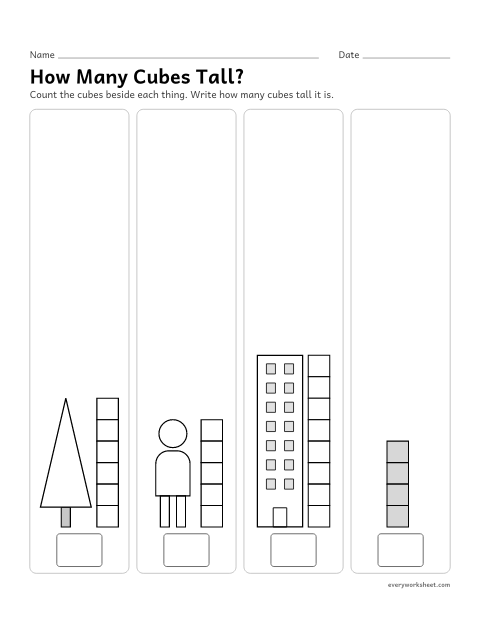
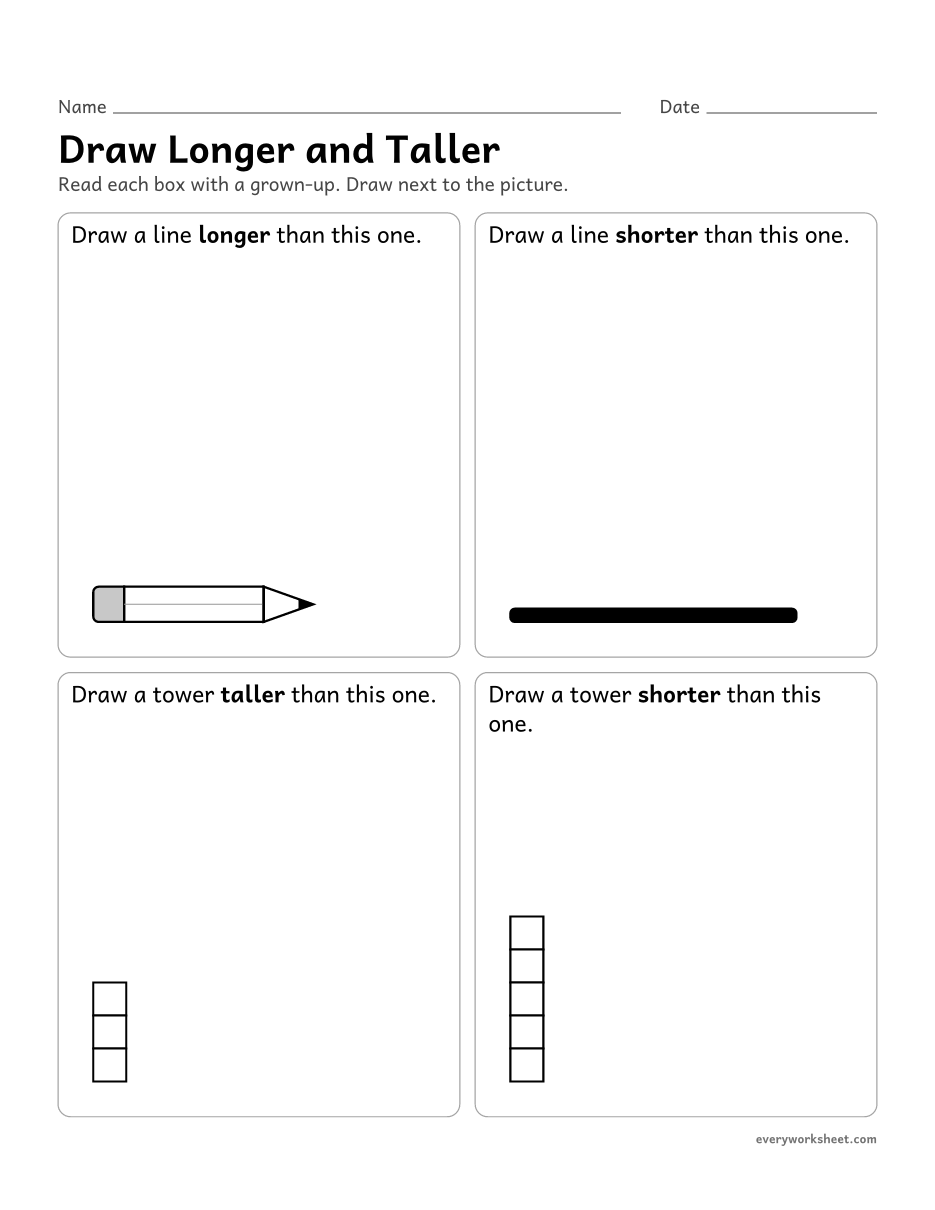
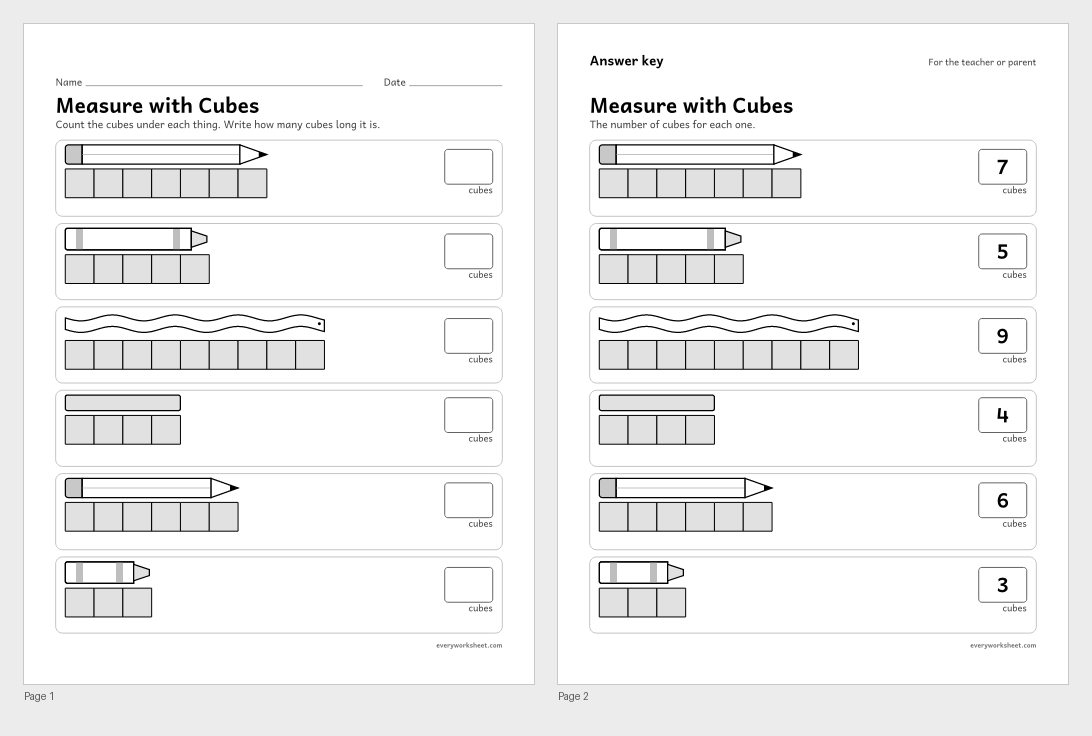
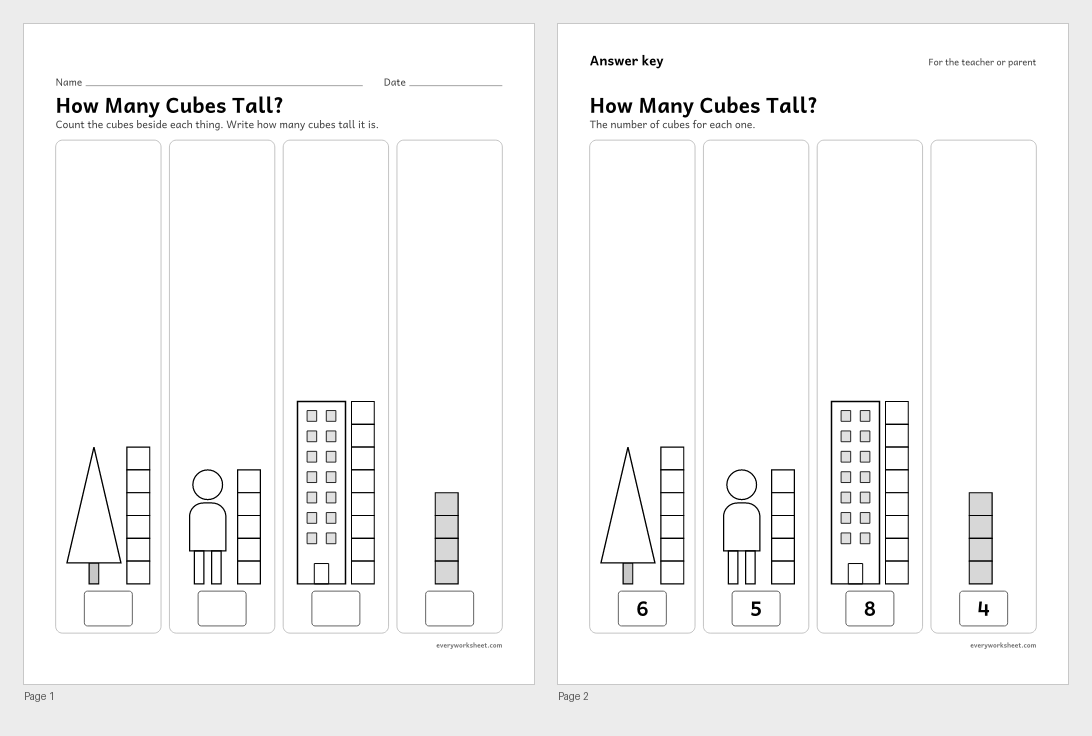
Then children measure with units. They count the cubes under a pencil, the cubes beside a tree, or the paper clips along a ribbon, and write the number. Other pages put three things in order from shortest to longest, use measurement words in sentences, and ask children to draw something longer or taller. Answer keys are on page 2.
CCSS.MATH.CONTENT.K.MD.A.1Describe measurable attributes of objects, such as length or weight. Describe several measurable attributes of a single object.CCSS.MATH.CONTENT.K.MD.A.2Directly compare two objects with a measurable attribute in common, to see which object has "more of"/"less of" the attribute, and describe the difference. For example, directly compare the heights of two children and describe one child as taller/shorter.Kindergartners describe things by length, height, weight and capacity, and compare two objects to say which is longer, taller, heavier or holds more. Many also measure with non-standard units like cubes or paper clips.
Cubes and paper clips show what measuring means: counting equal units laid end to end. Rulers make sense later, once that idea is clear.
Let your child hold two objects, one in each hand, then check with a balance. The heavier side goes down. Then try the balance pages.
Yes. Every page with right answers has an answer key on page 2 of the PDF.