 View larger
My favorite food writing prompt
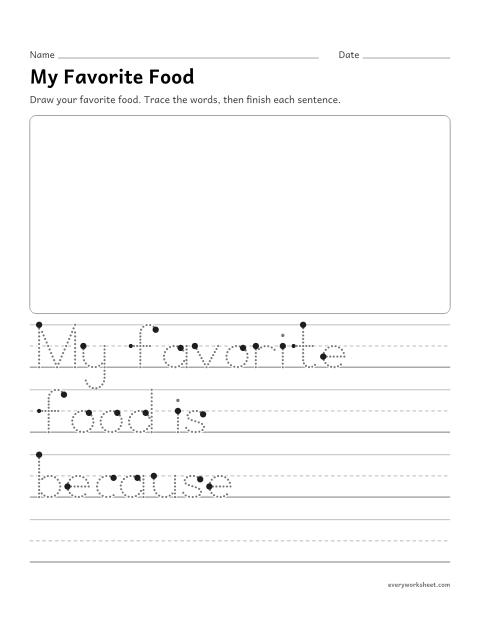
Stating an opinion about a favorite food and giving a reason
1 page28 KB
Draw-and-write pages with traceable sentence starters for opinion, informative, how-to and story writing, plus revising and journal pages.
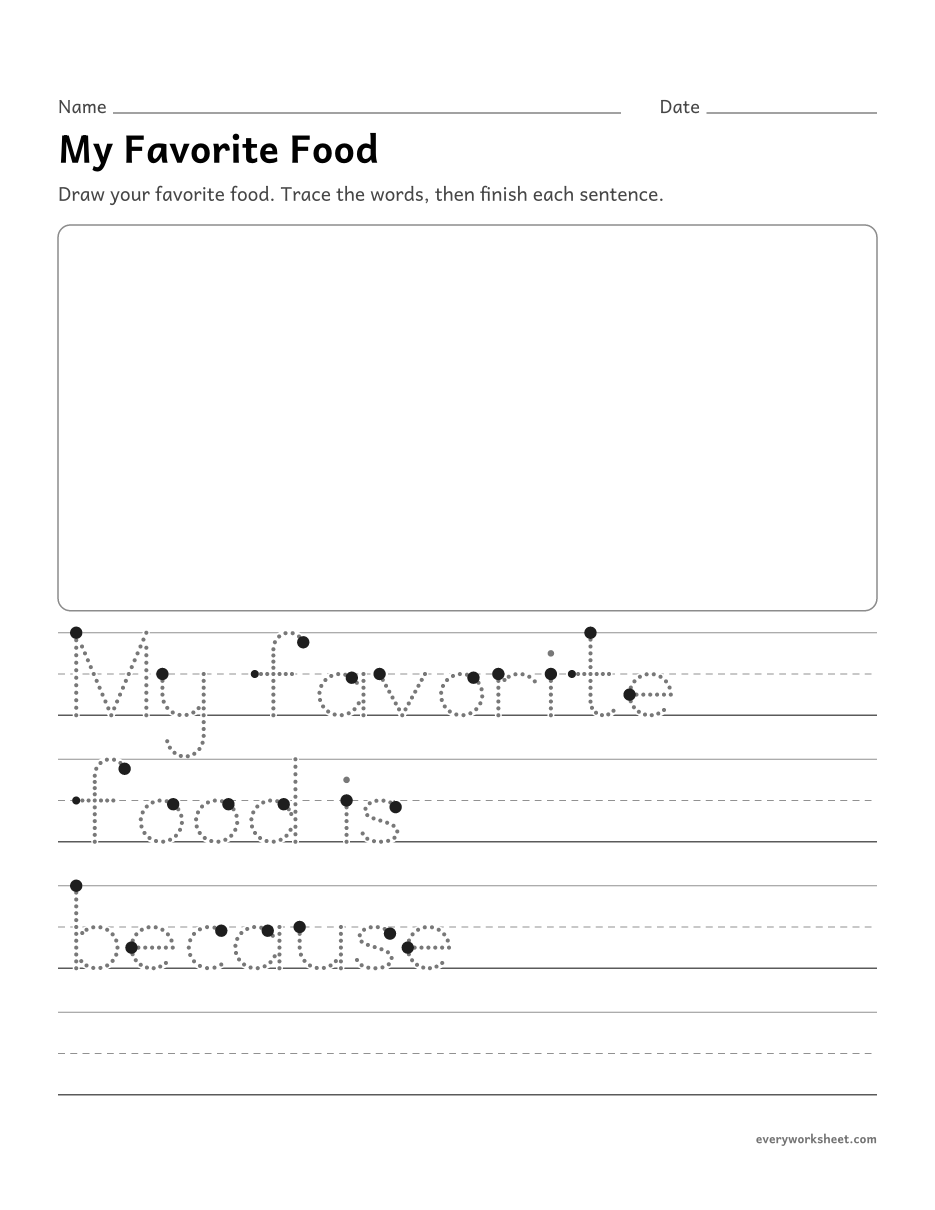
View largerStating an opinion about a favorite food and giving a reason
1 page28 KB
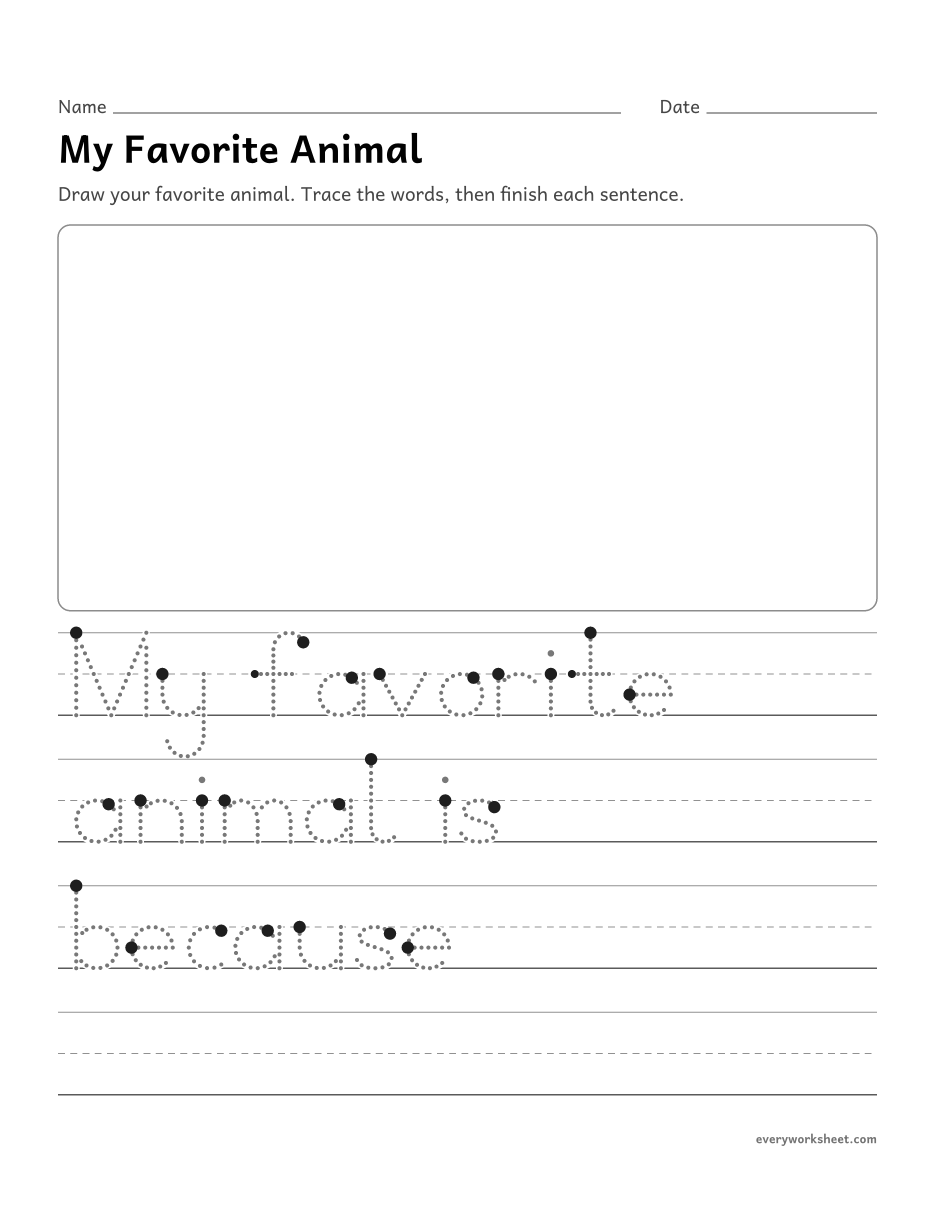 View larger
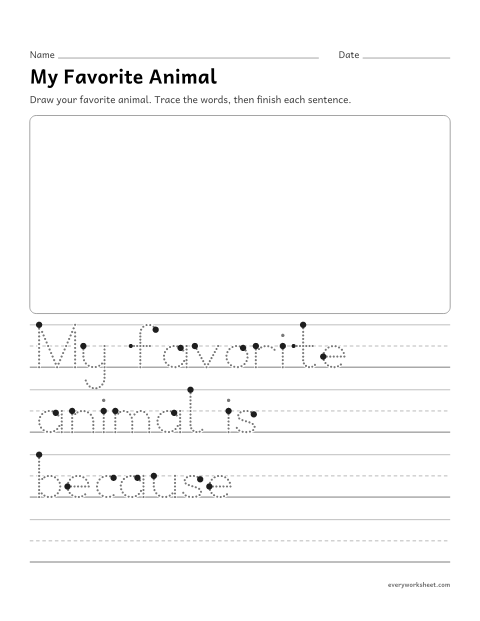
Stating an opinion about a favorite animal and giving a reason
1 page28 KB
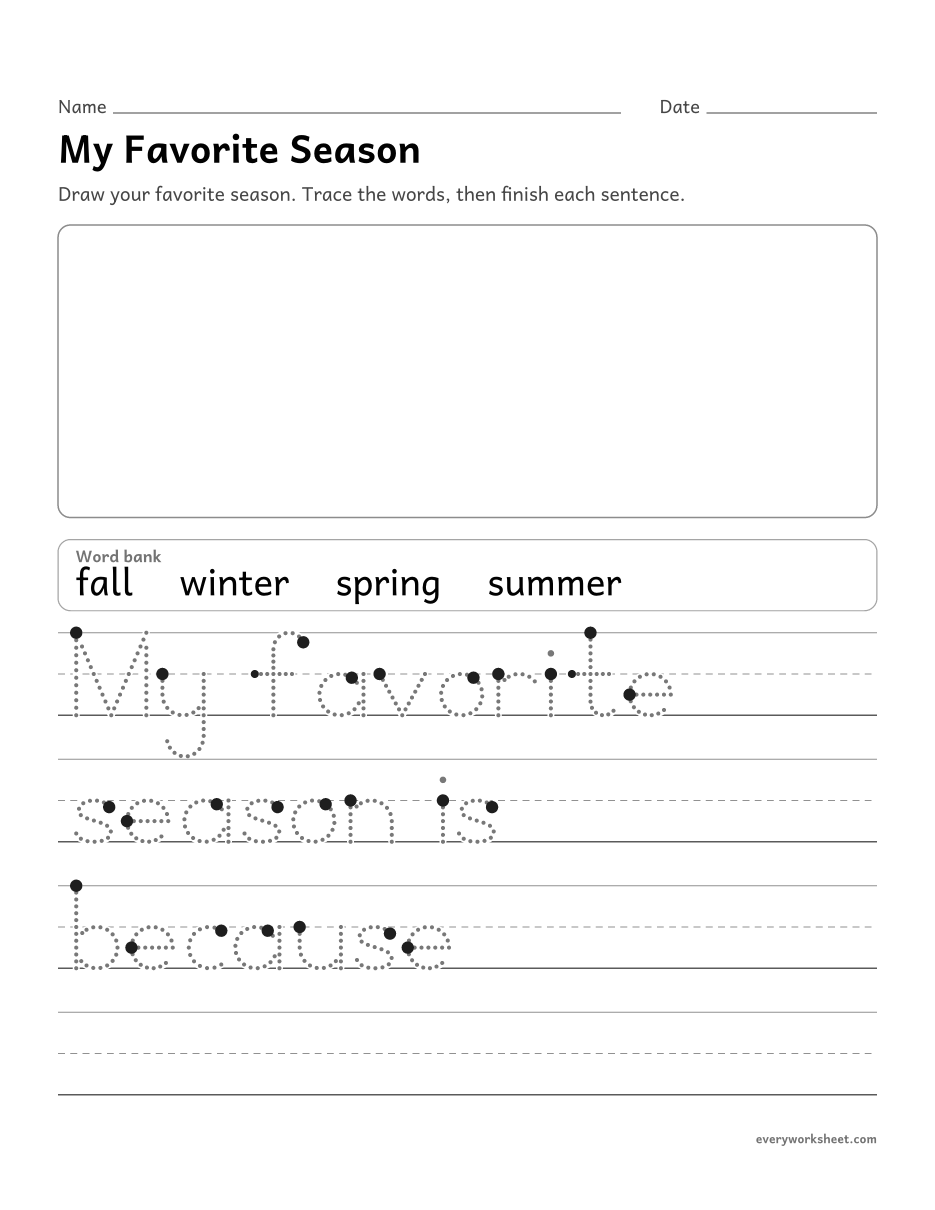 View larger
Stating an opinion about a favorite season and giving a reason
1 page29 KB
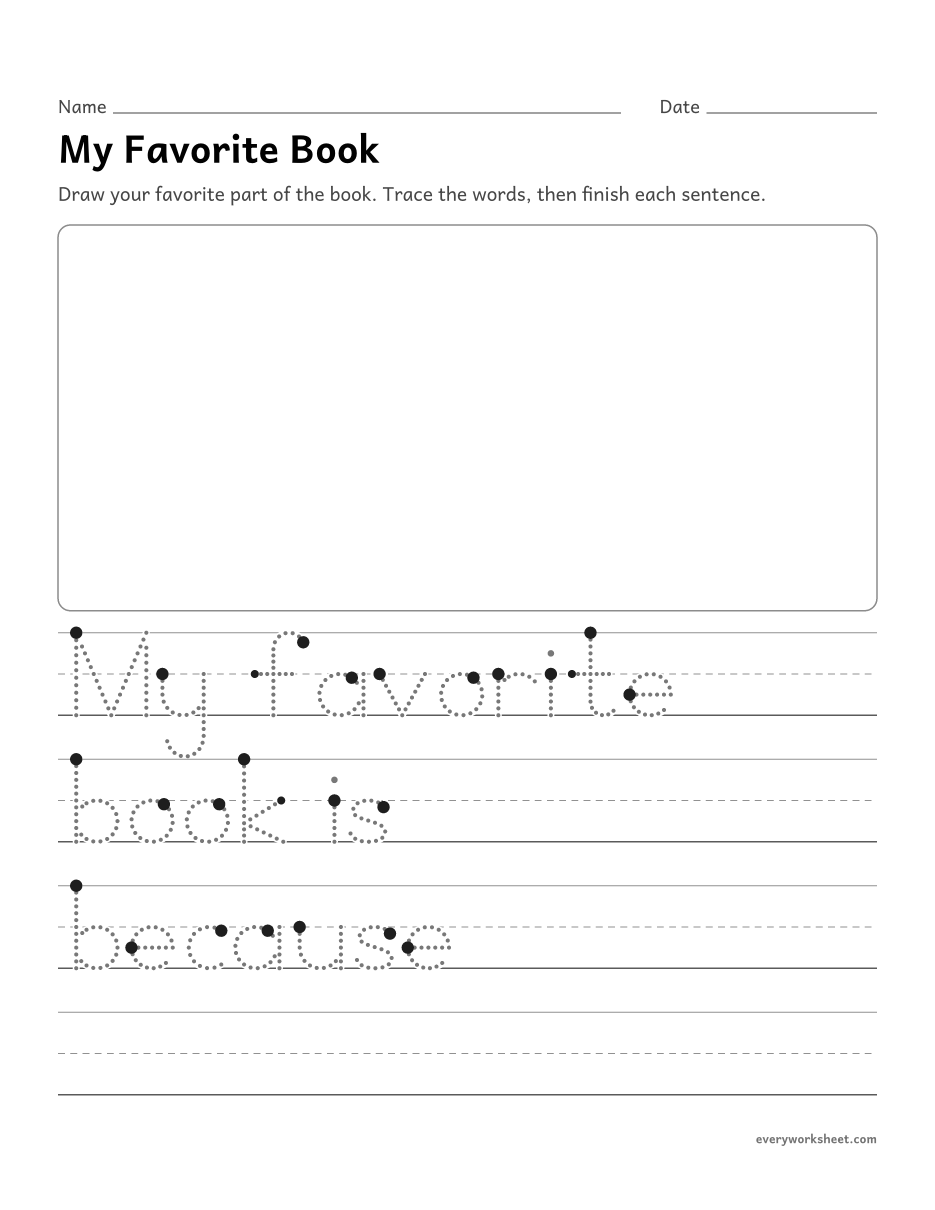 View larger
Stating an opinion about a favorite book and giving a reason
1 page28 KB
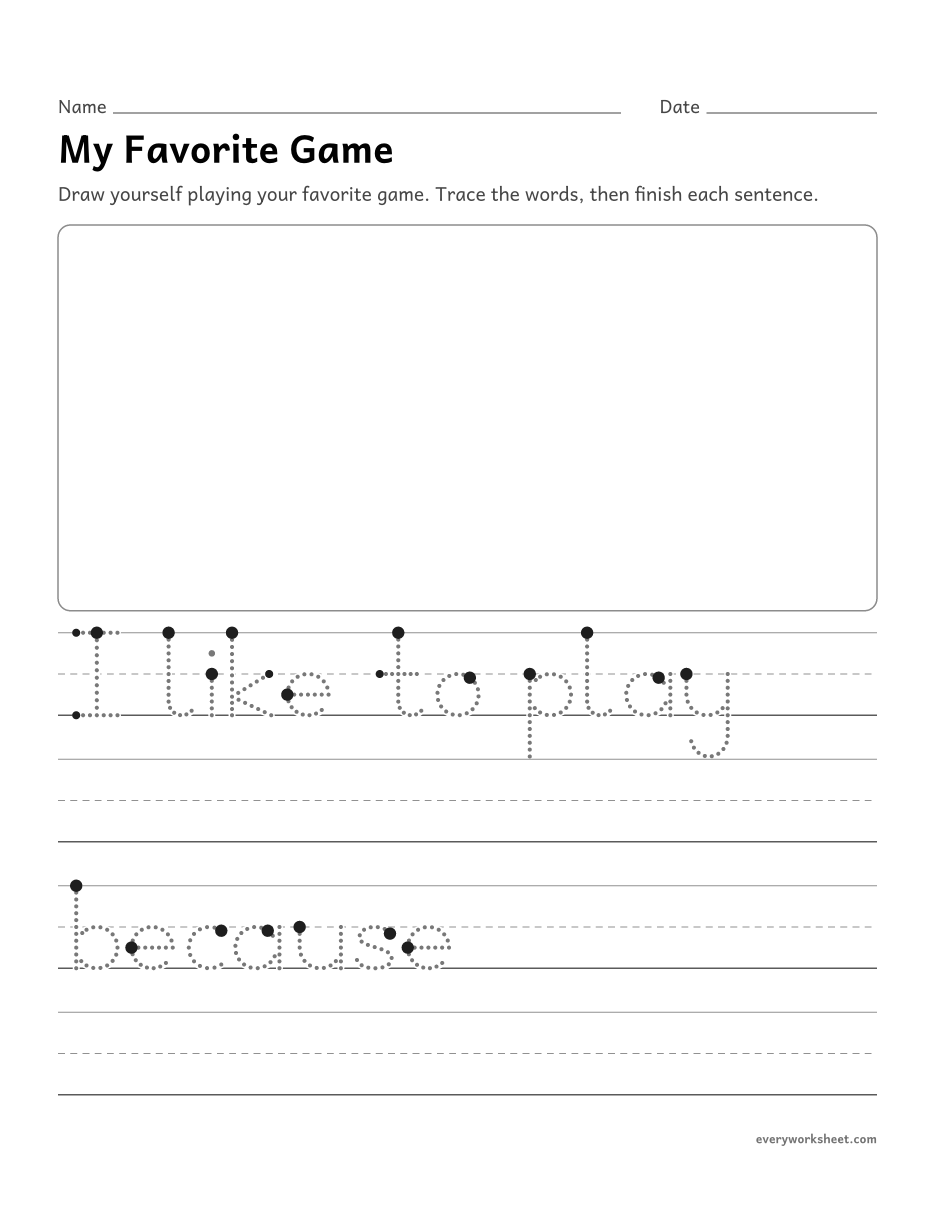 View larger
Stating an opinion about a favorite game and giving a reason
1 page27 KB
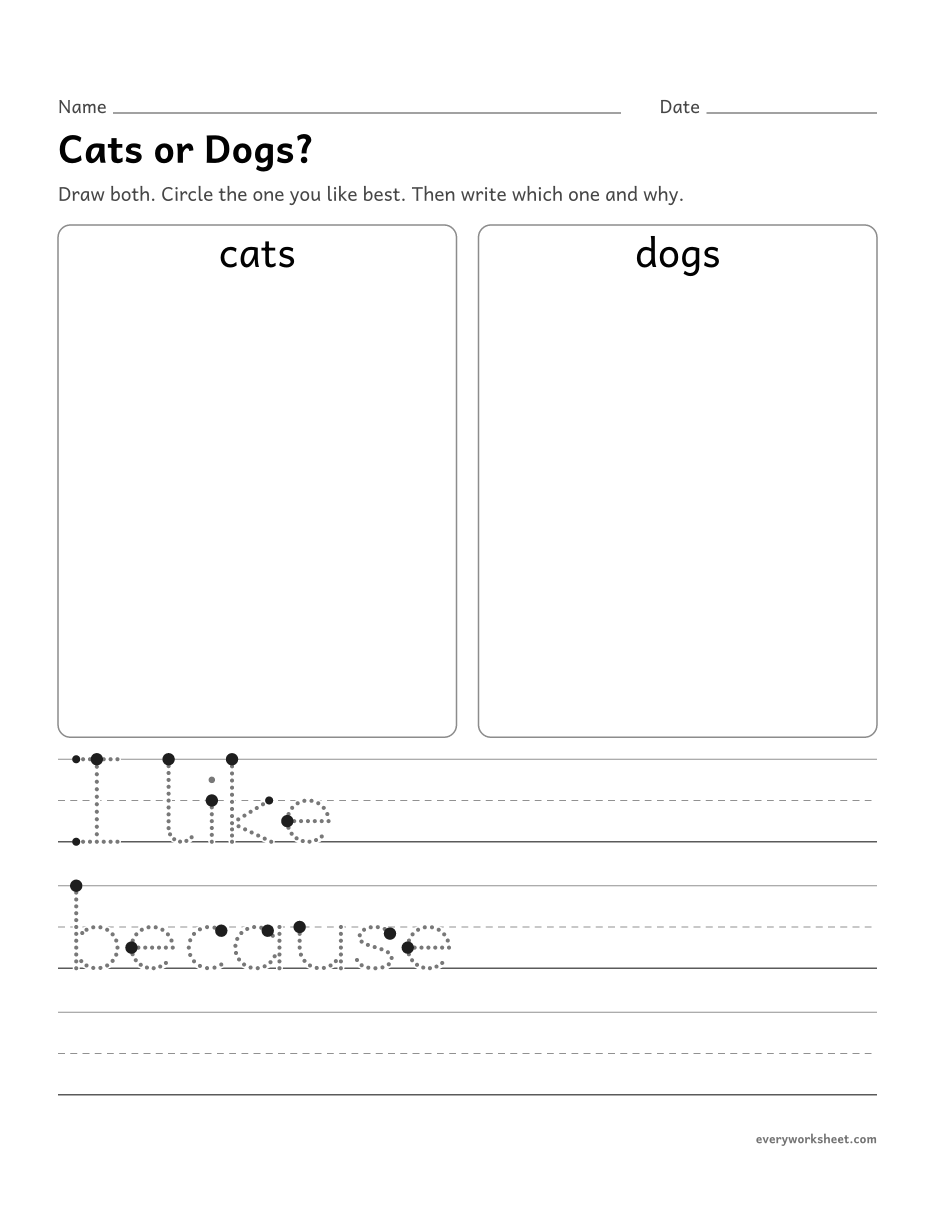 View larger
Choosing between cats and dogs and telling why
1 page27 KB
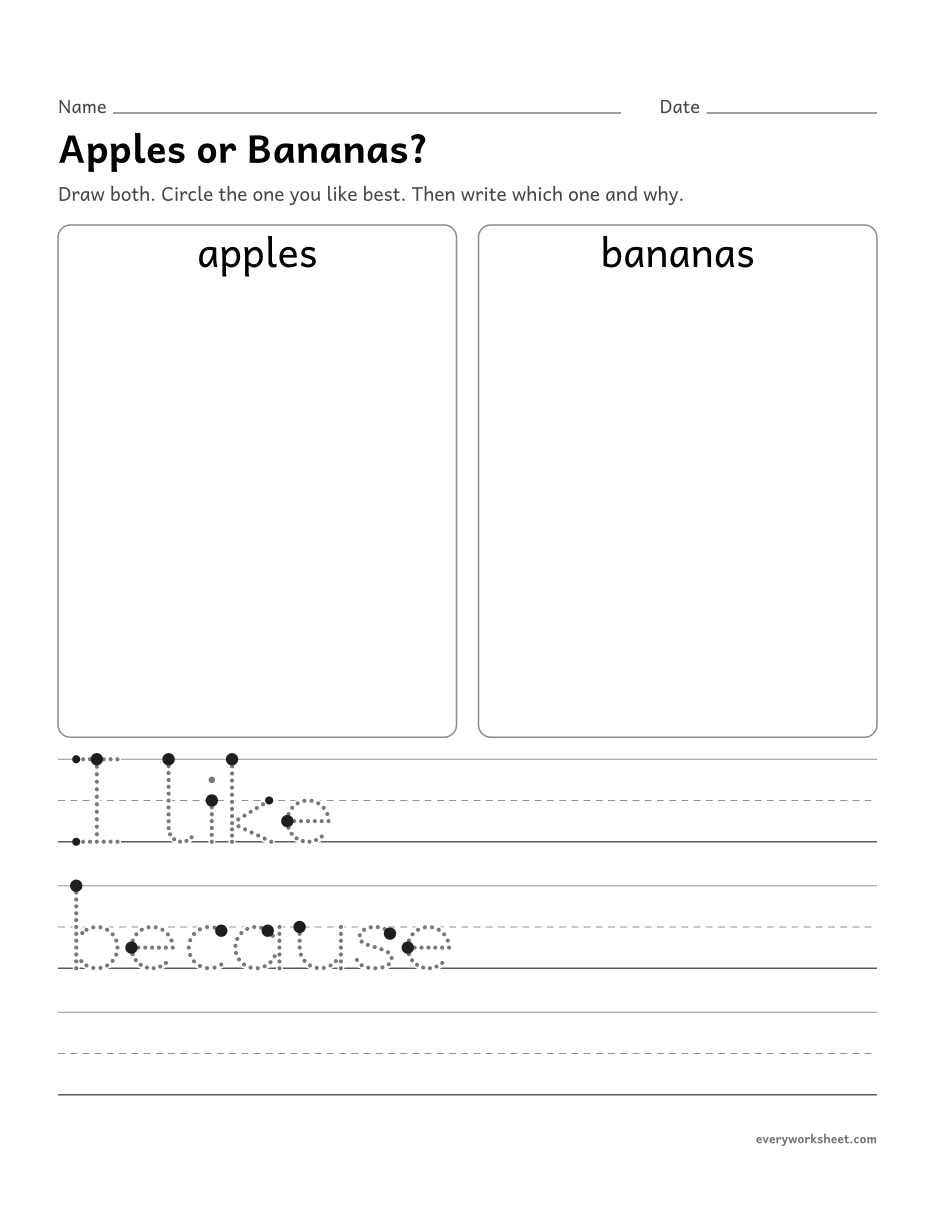 View larger
Choosing between apples and bananas and telling why
1 page27 KB
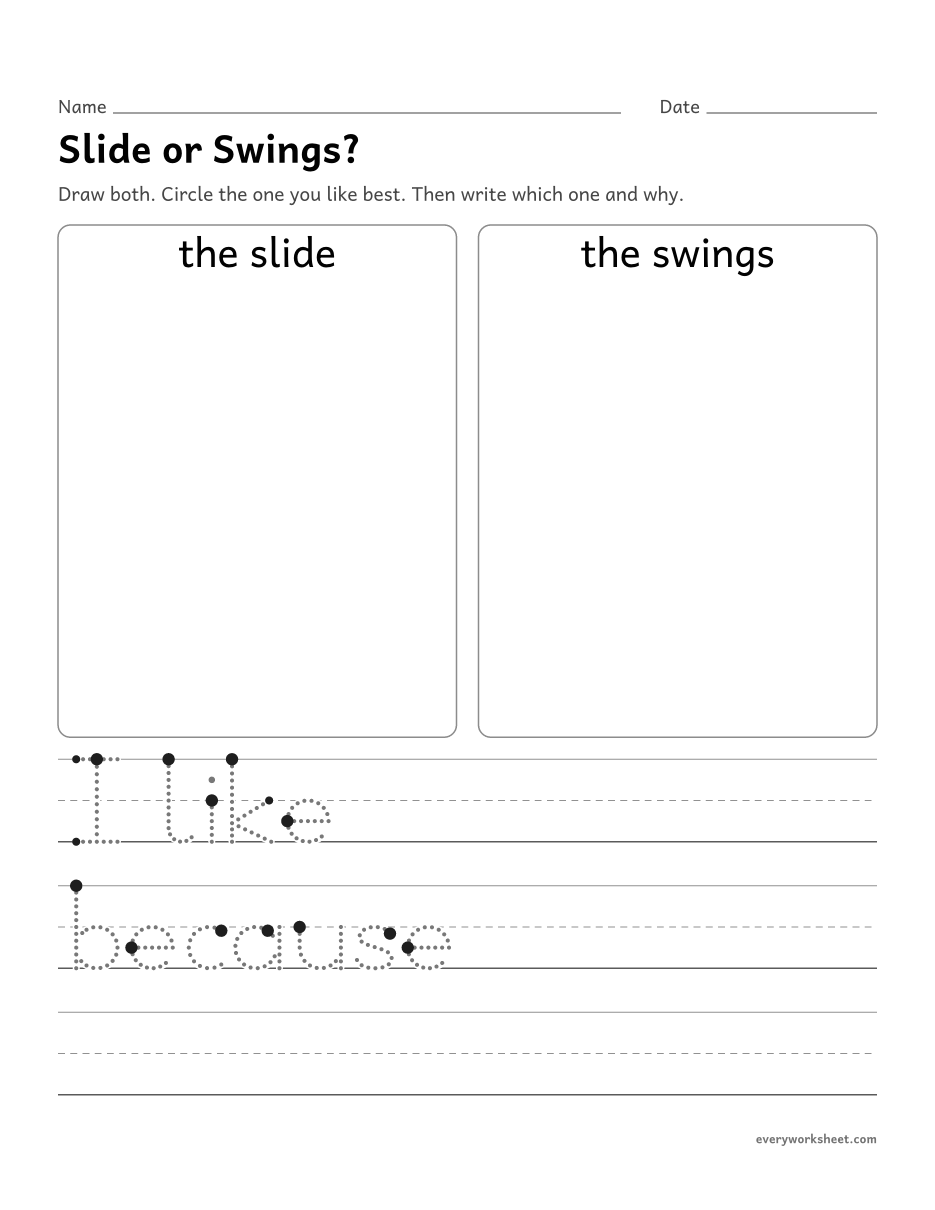 View larger
Choosing between the slide and the swings and telling why
1 page27 KB
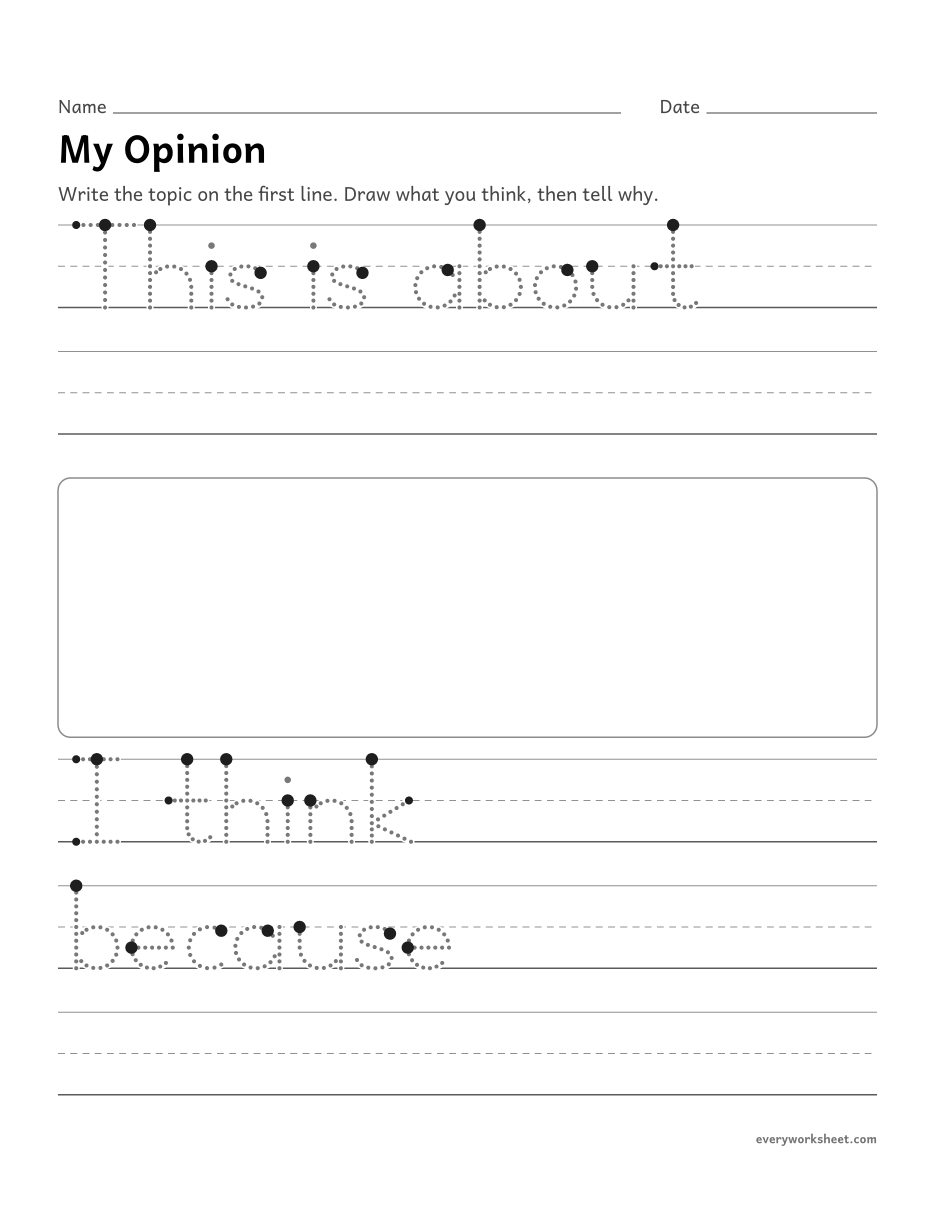 View larger
Telling the topic and an opinion about it with a reason
1 page27 KB
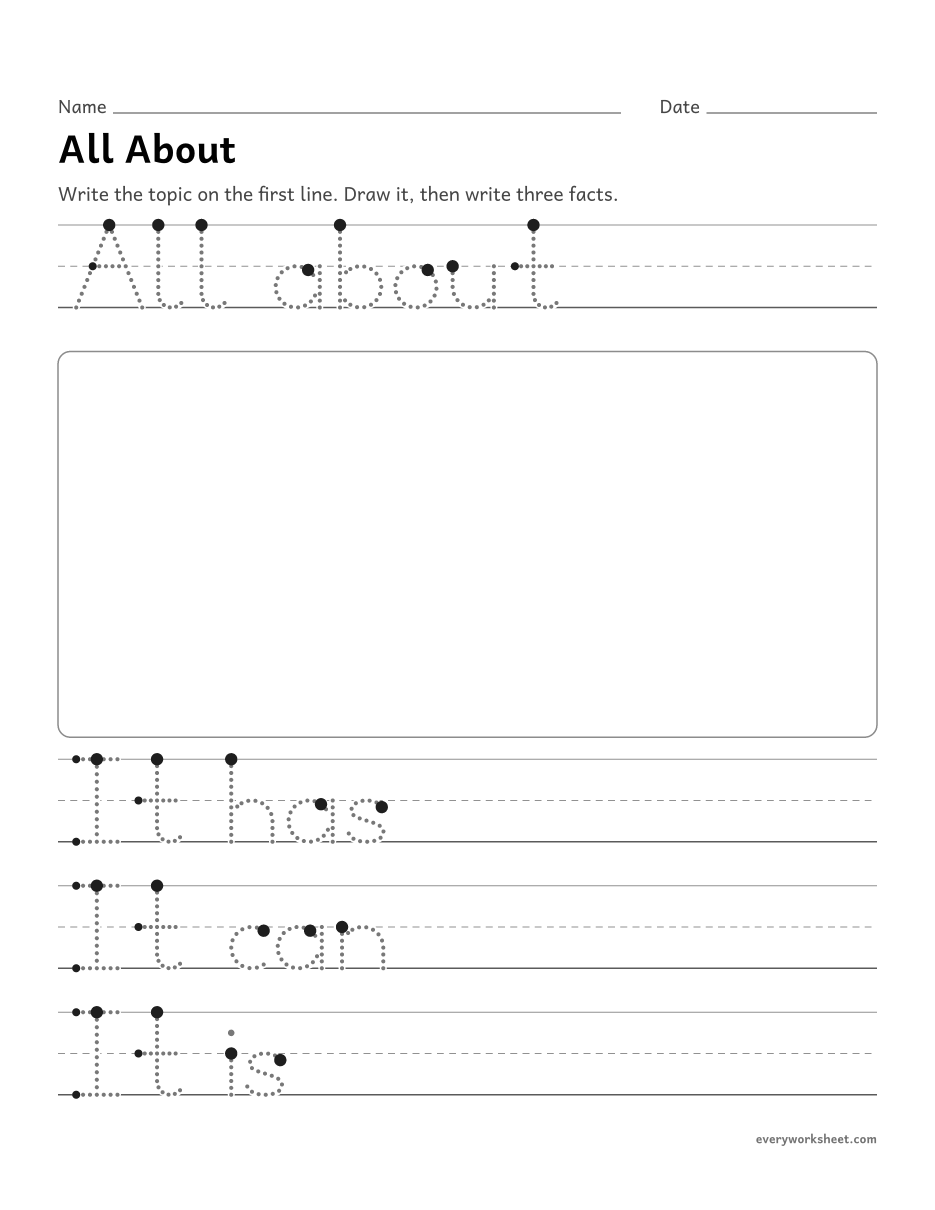 View larger
Naming a topic and writing three facts about it
1 page26 KB
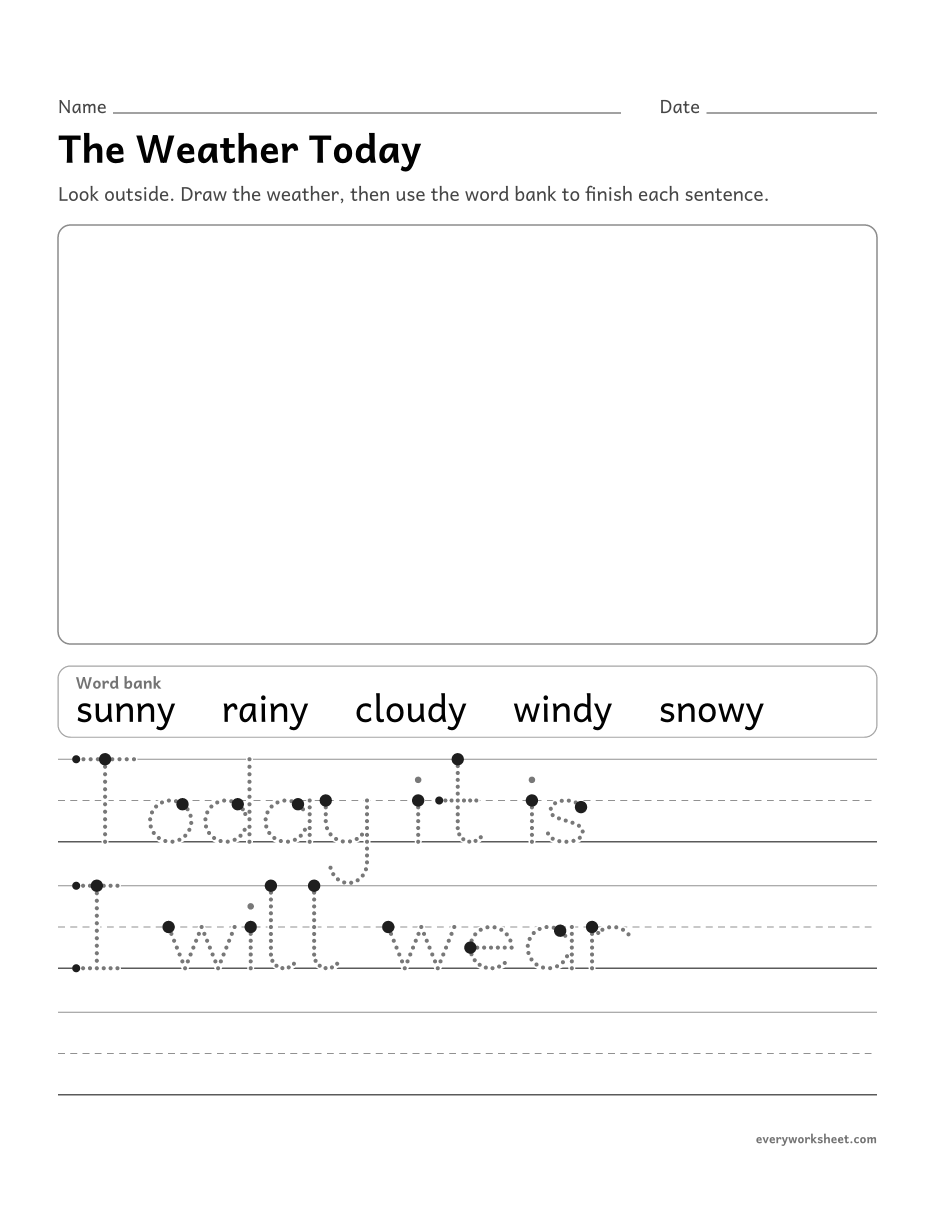 View larger
Telling about the weather and what to wear
1 page27 KB
 View larger
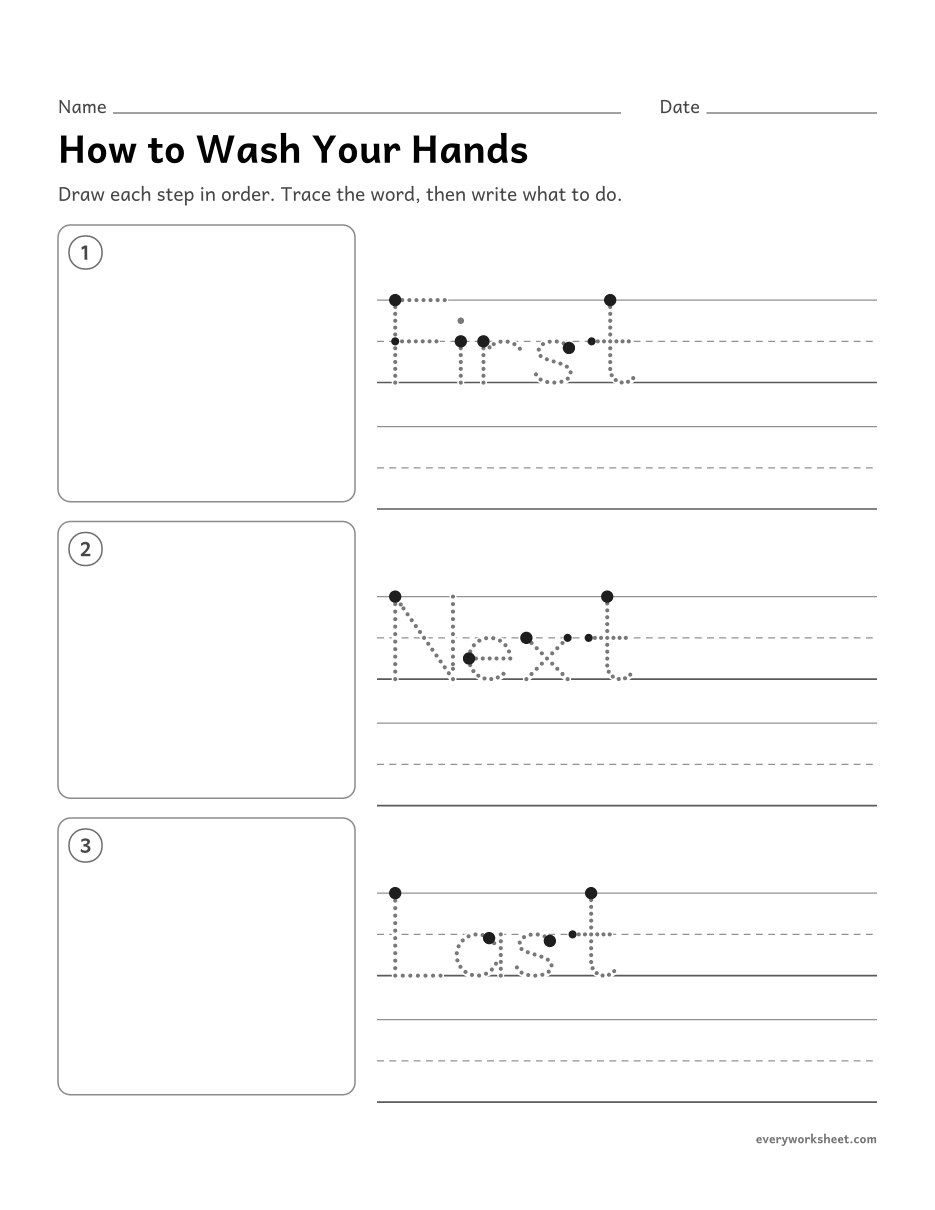 View larger
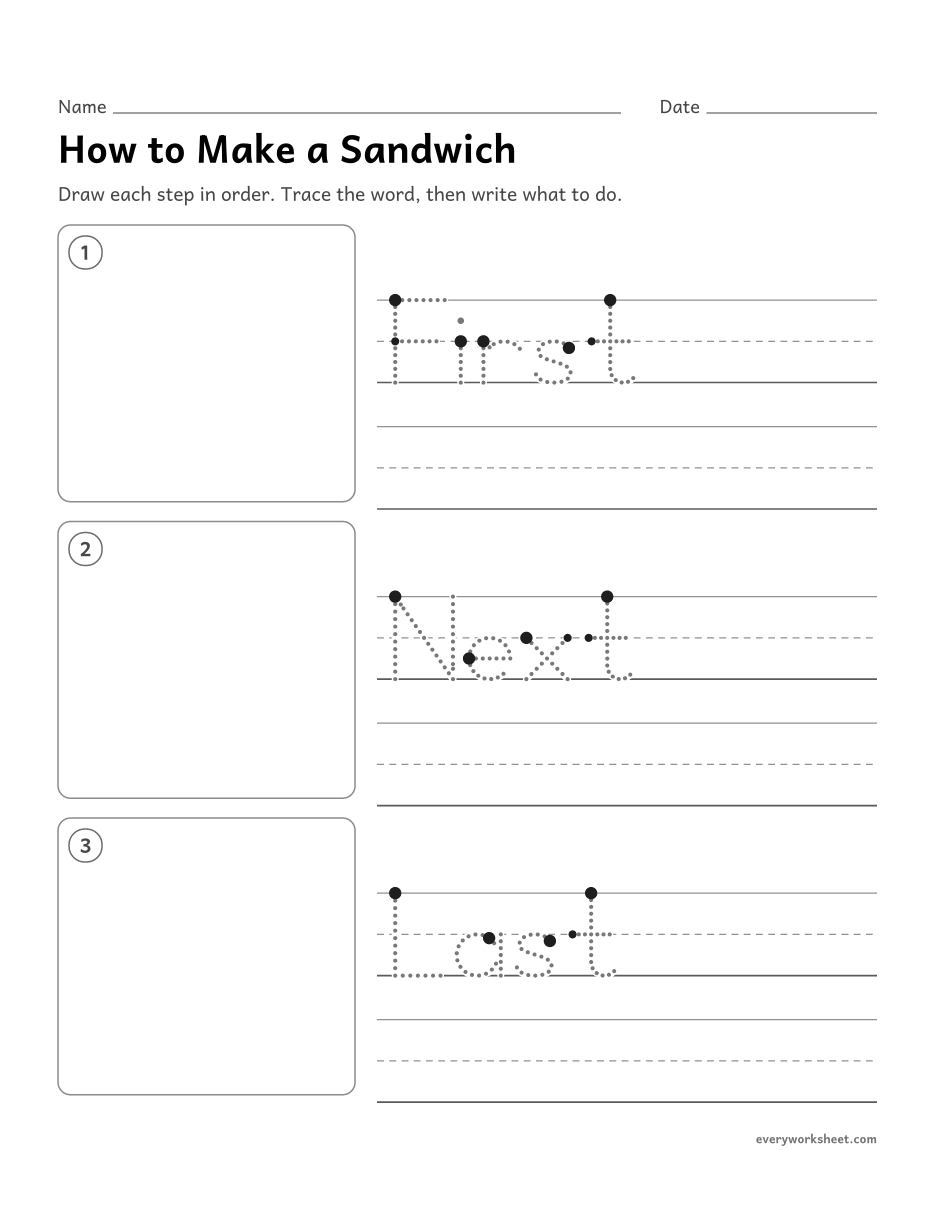
Telling the steps of how to do something in order
1 page28 KB
 View larger
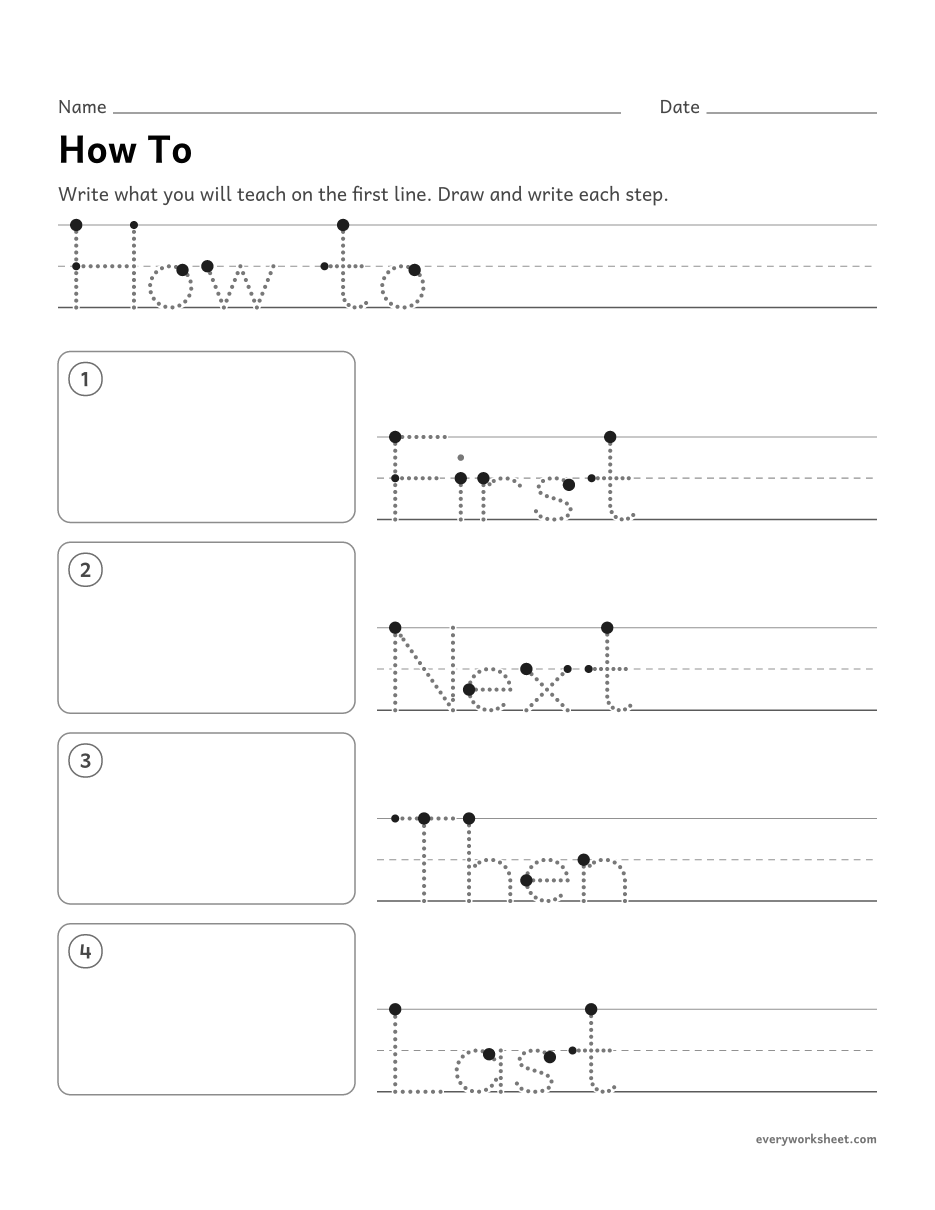
Telling the steps of how to do something in order
1 page28 KB
 View larger
Naming a topic and telling its steps in order
1 page29 KB
 View larger
 View larger
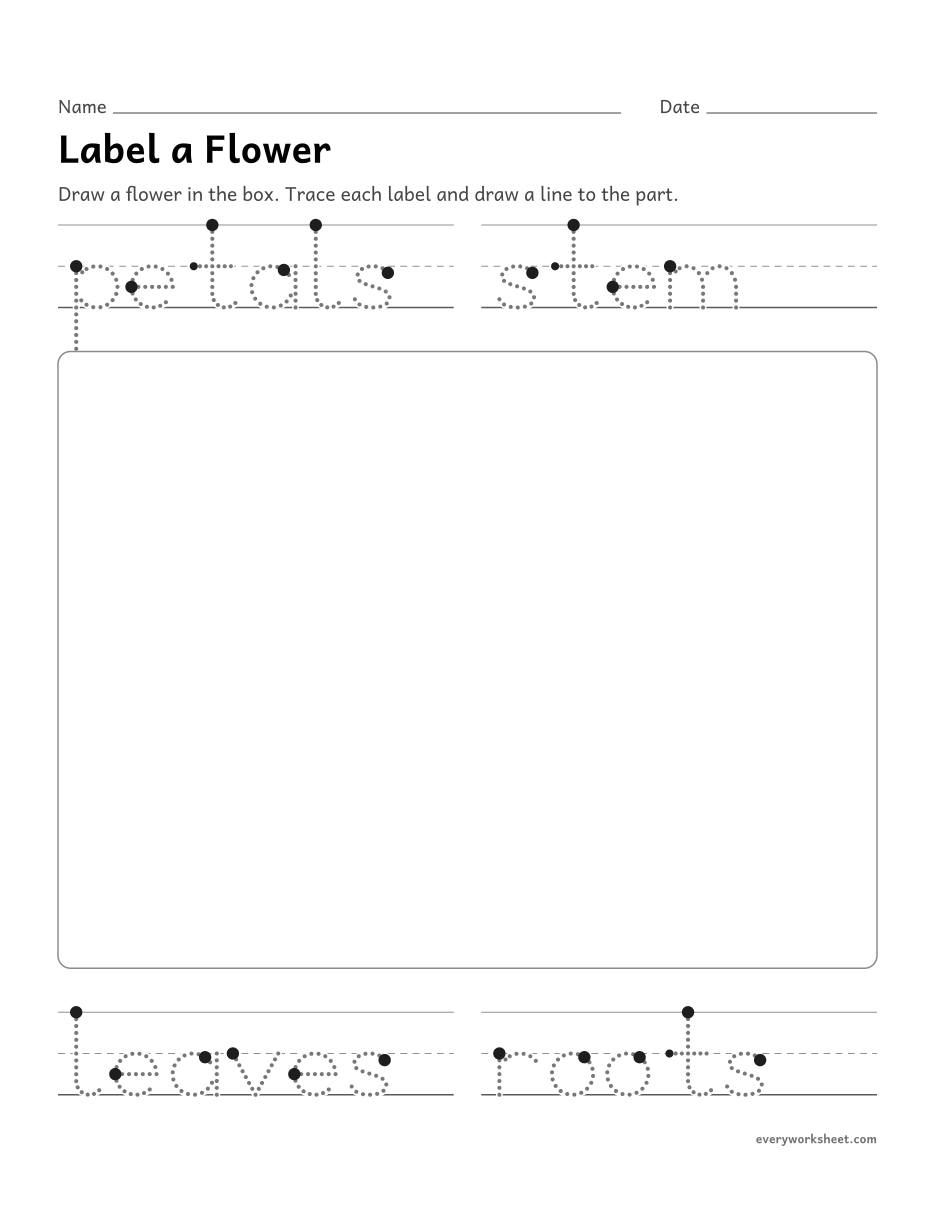 View larger
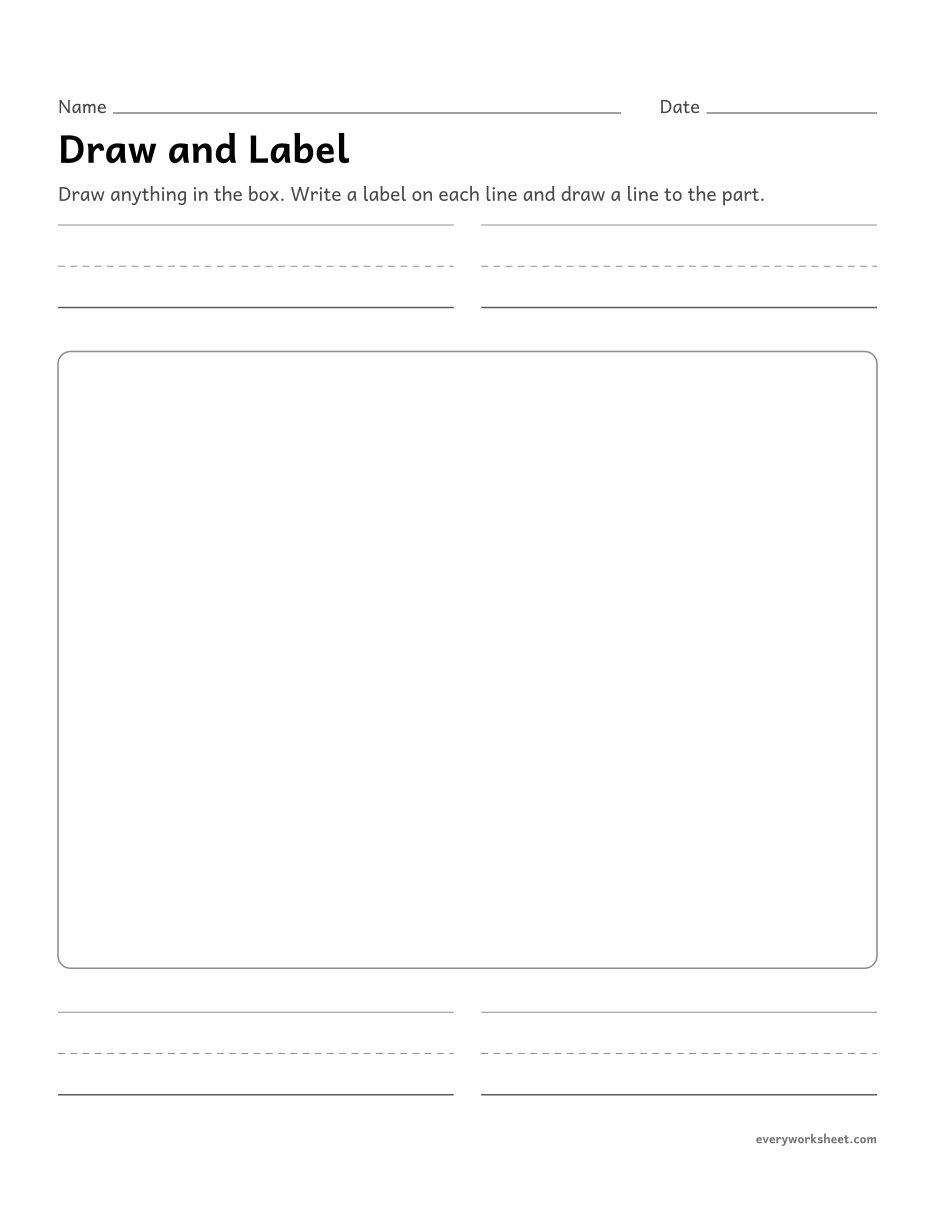 View larger
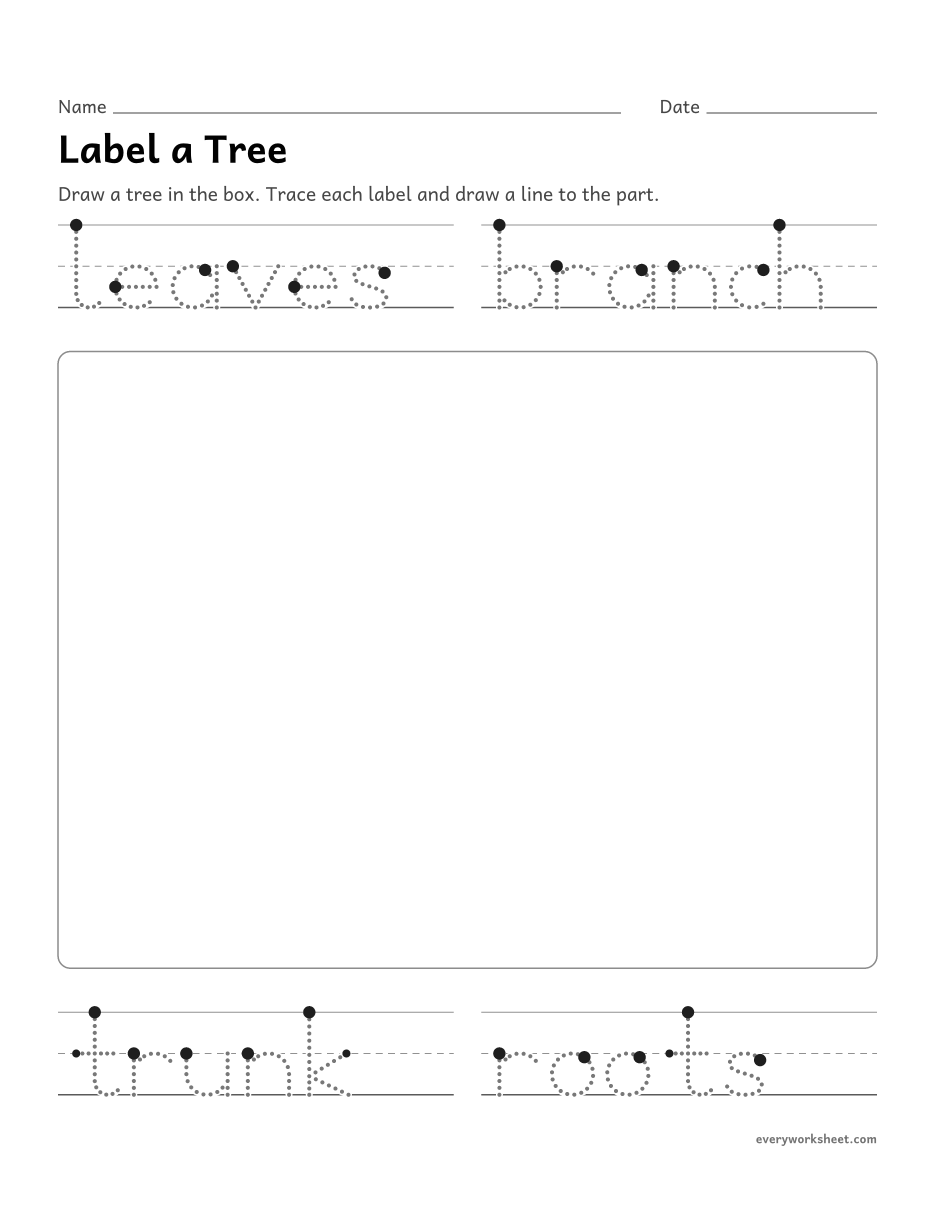
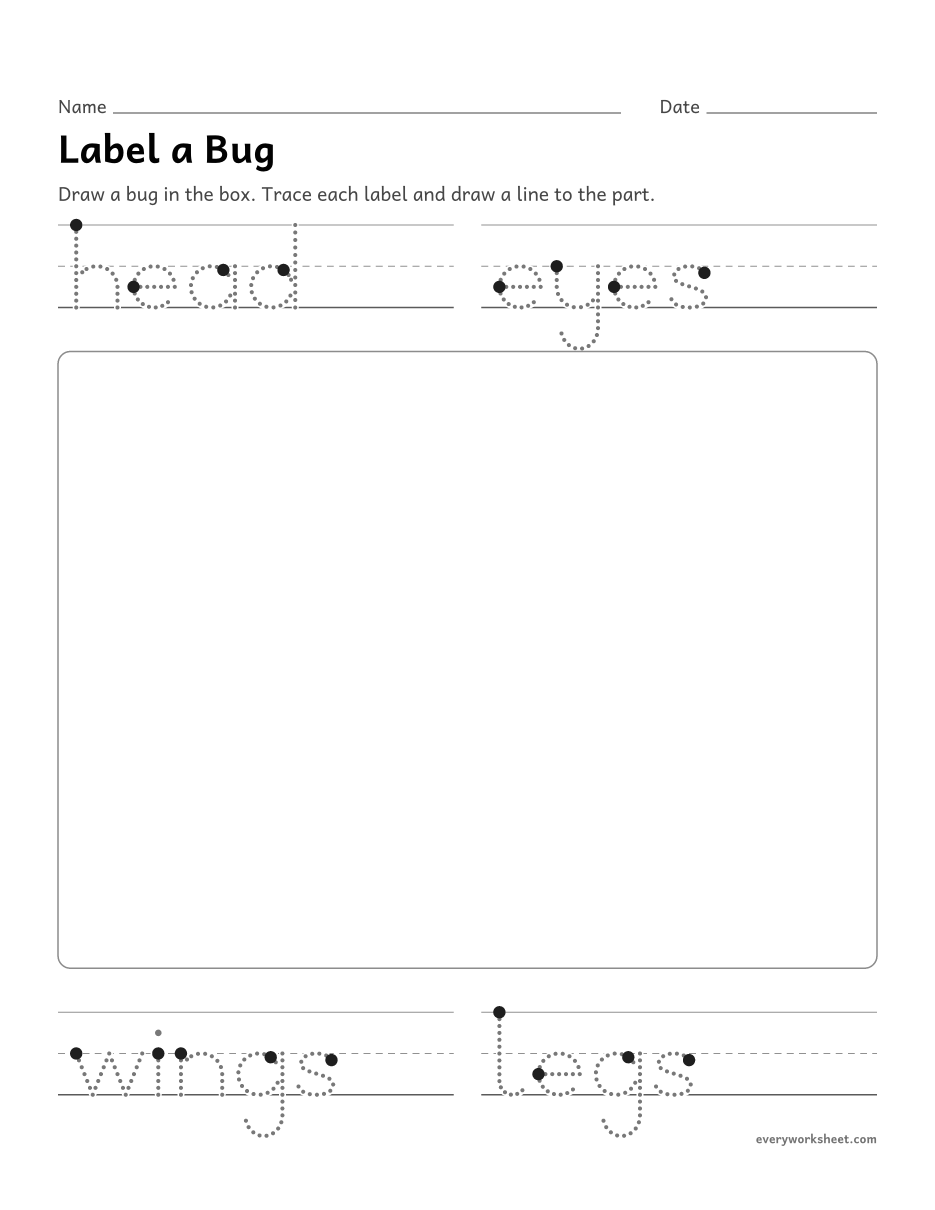
Drawing a picture and writing labels for its parts
1 page24 KB
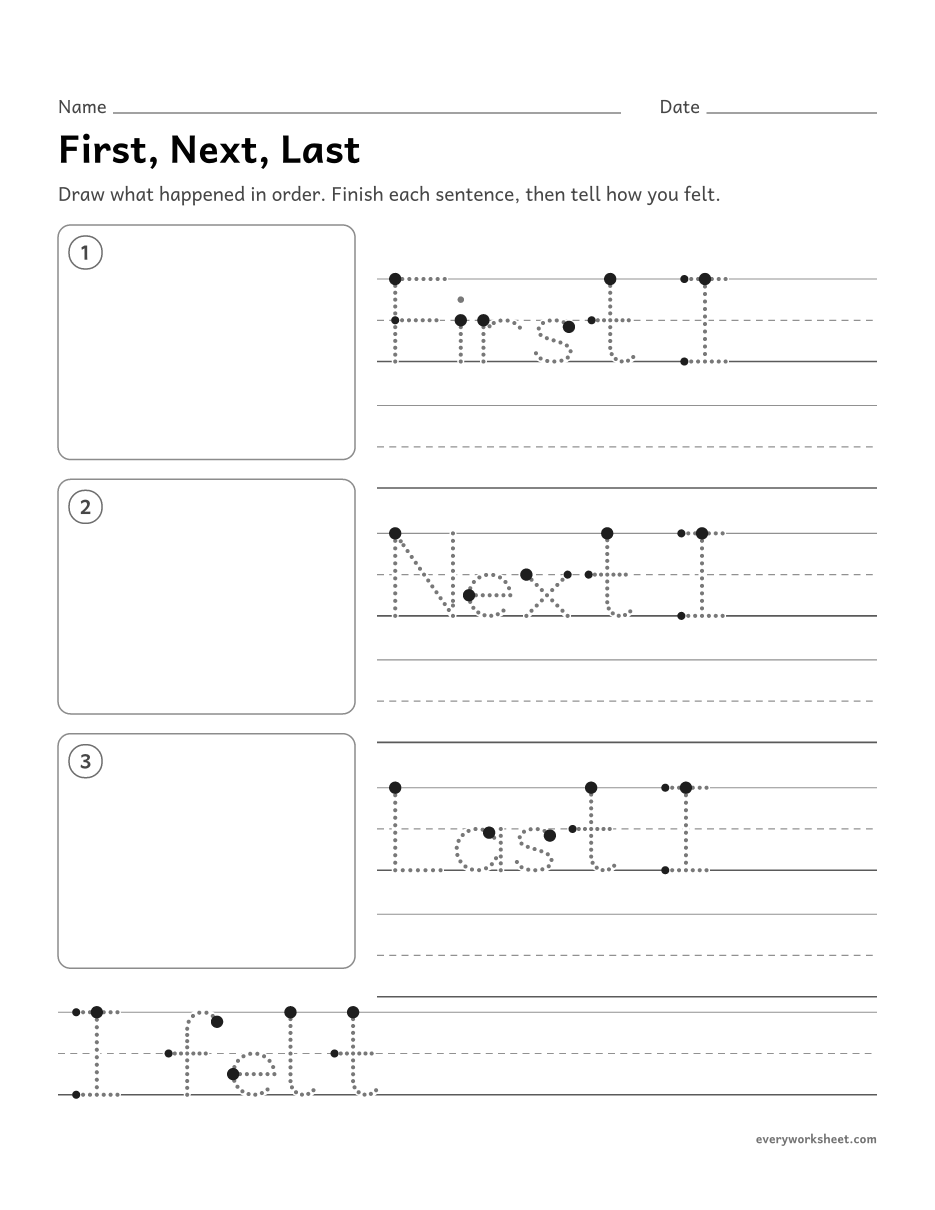 View larger
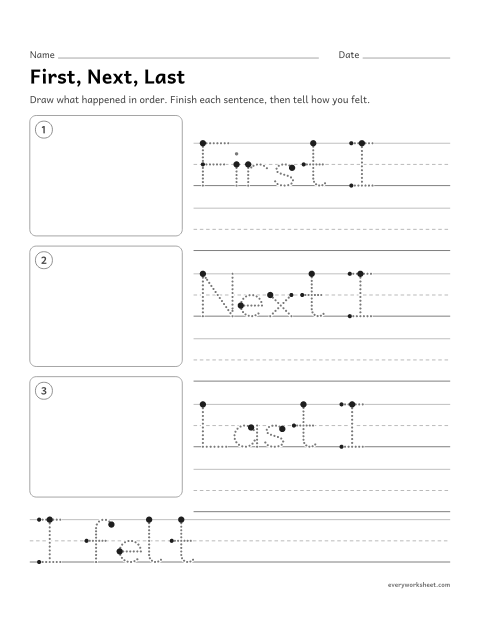
Telling events in order and how the writer felt
1 page29 KB
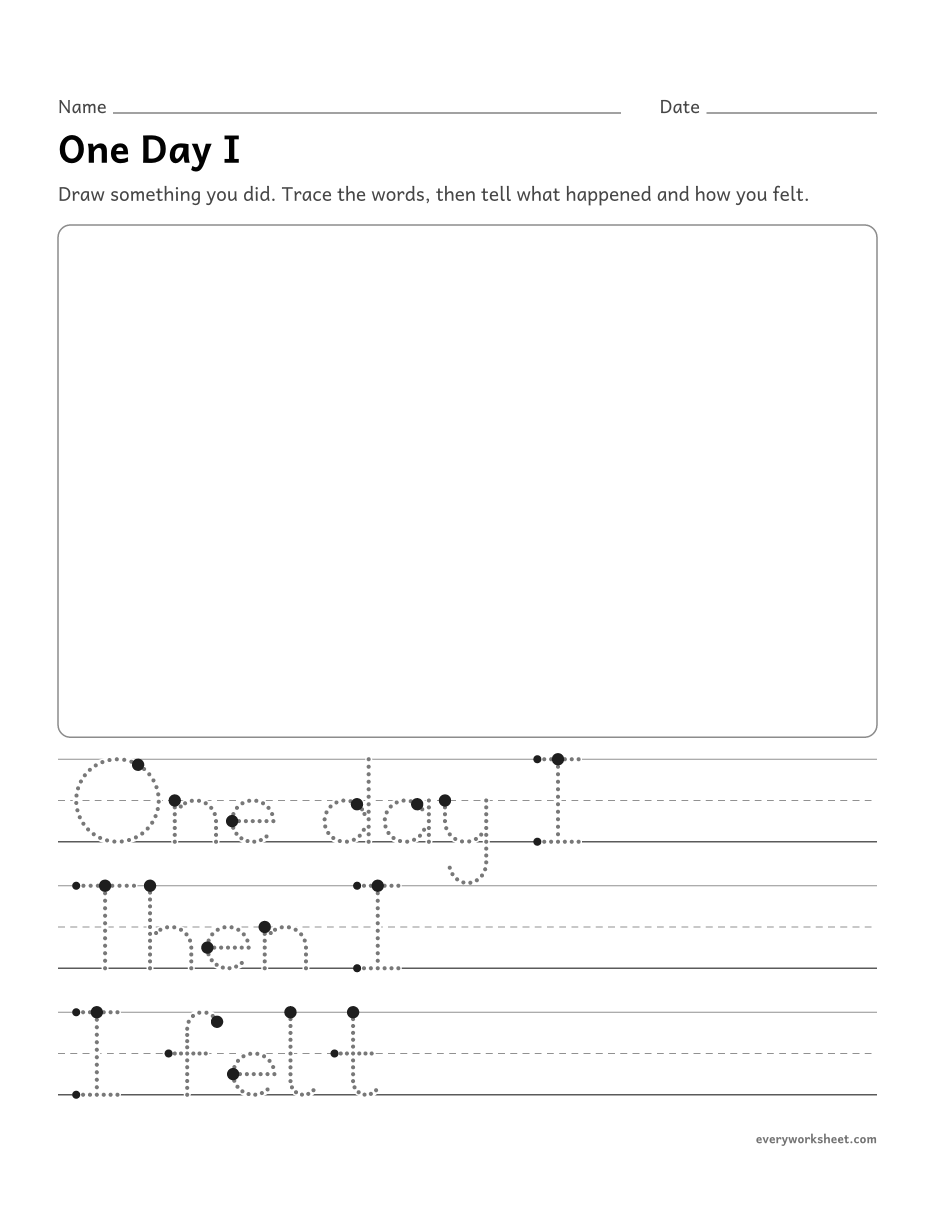 View larger
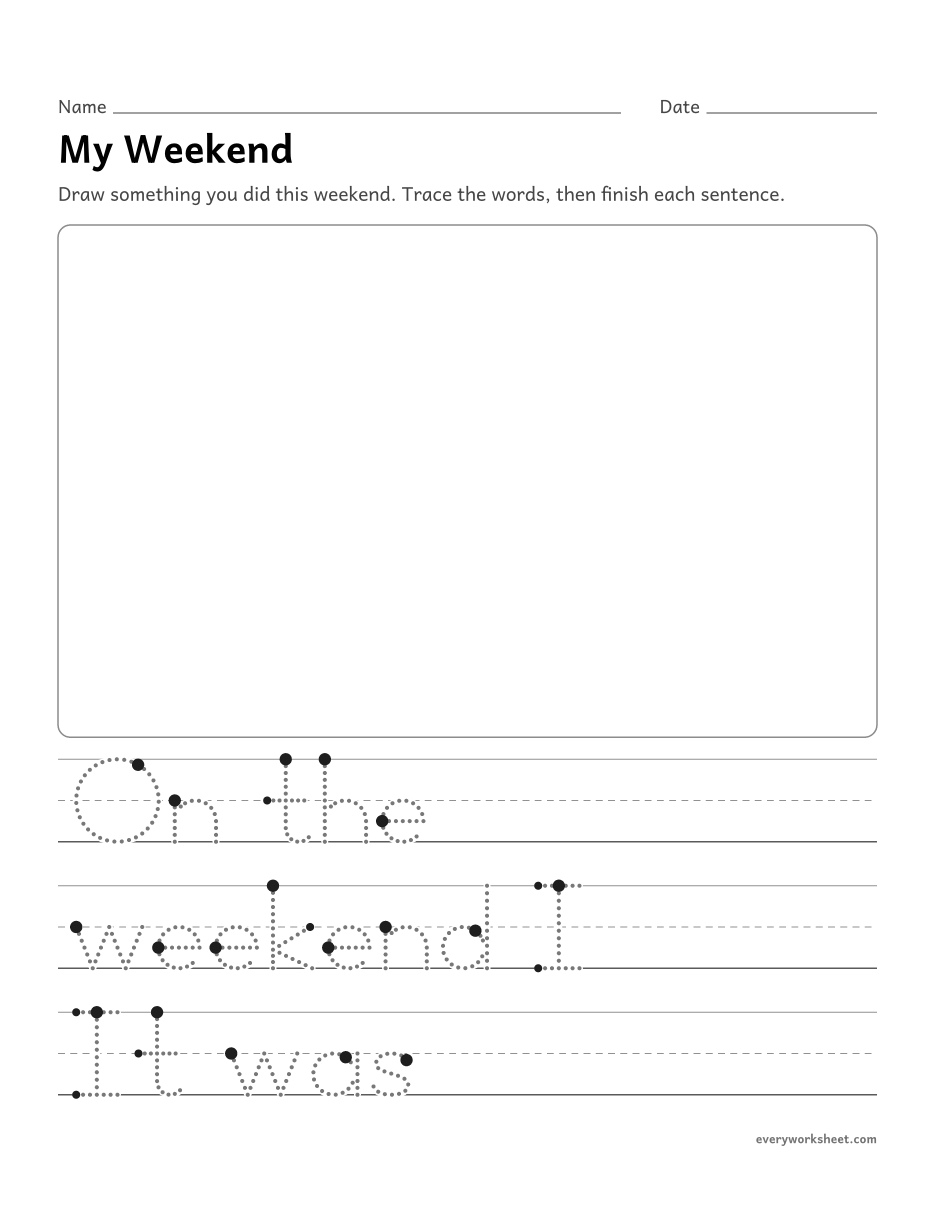 View larger
Telling about something that happened, in order
1 page27 KB
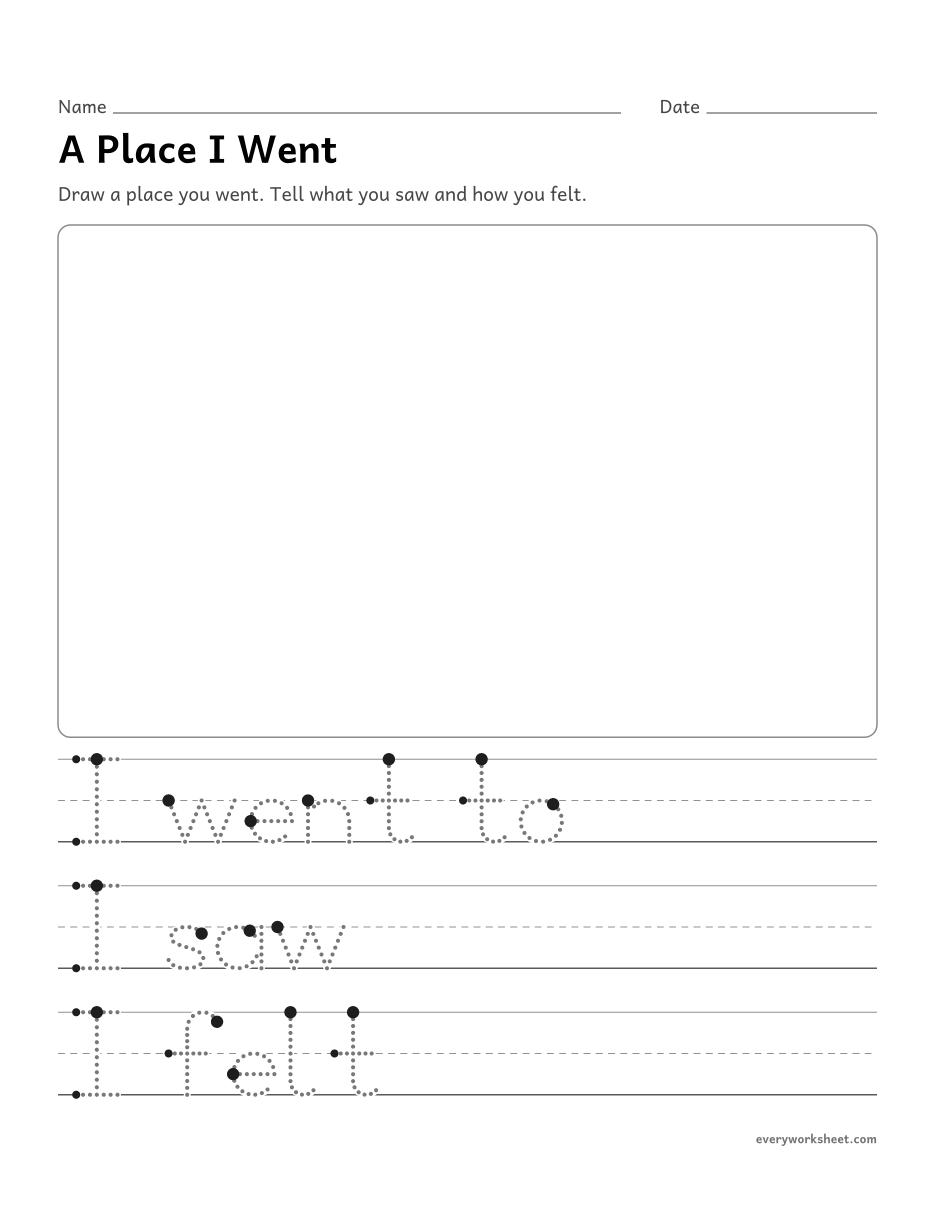 View larger
Telling about something that happened, in order
1 page26 KB
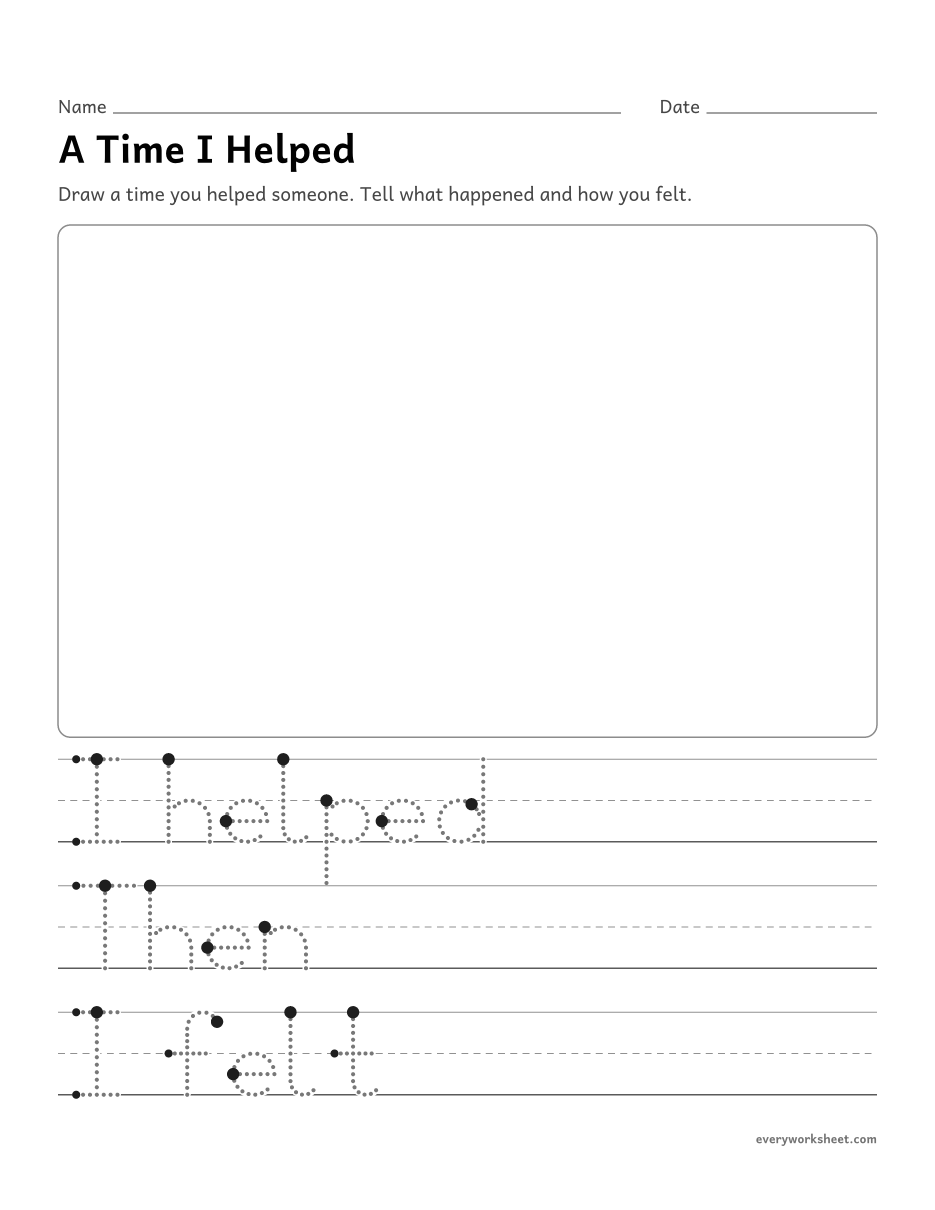 View larger
Telling about something that happened, in order
1 page26 KB
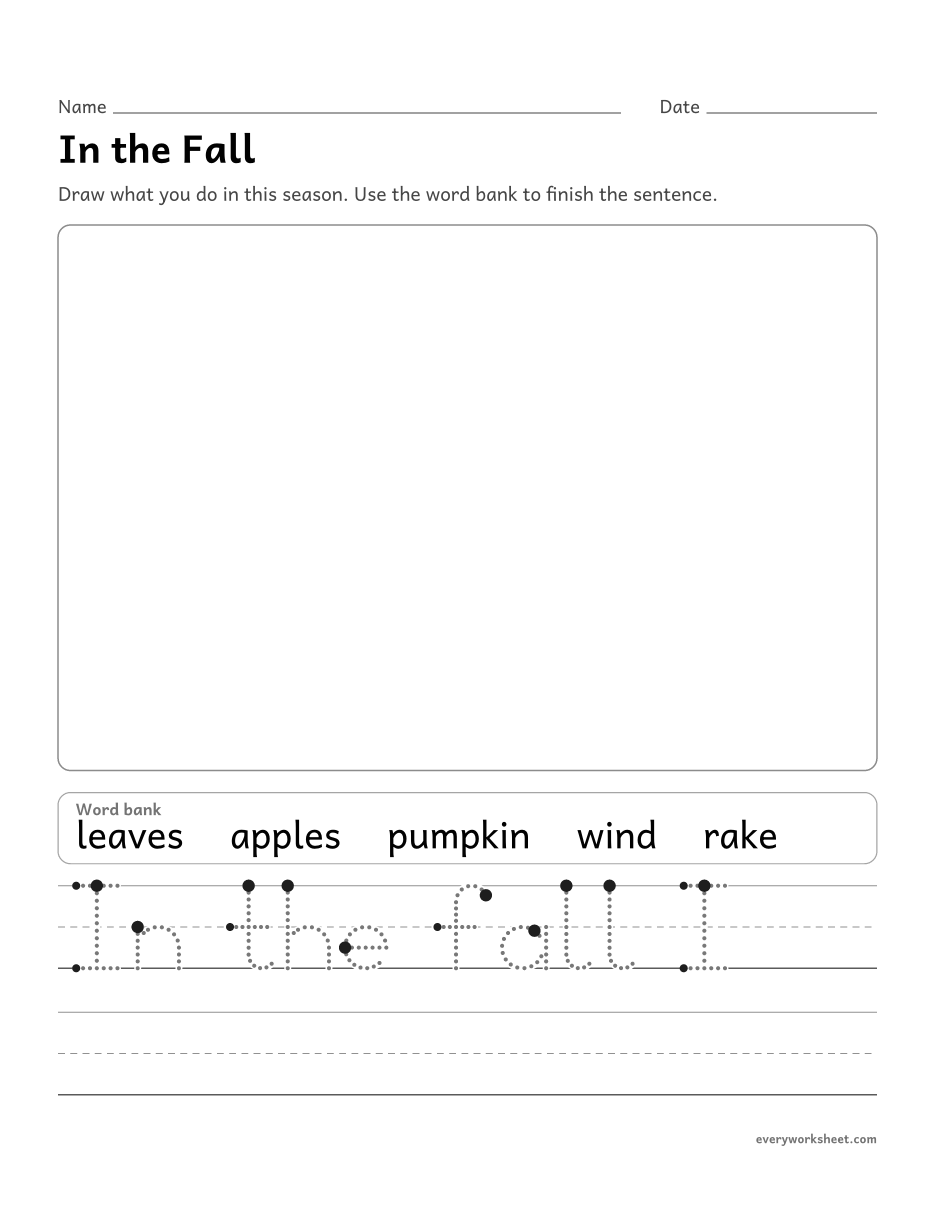 View larger
 View larger
 View larger
 View larger
 View larger
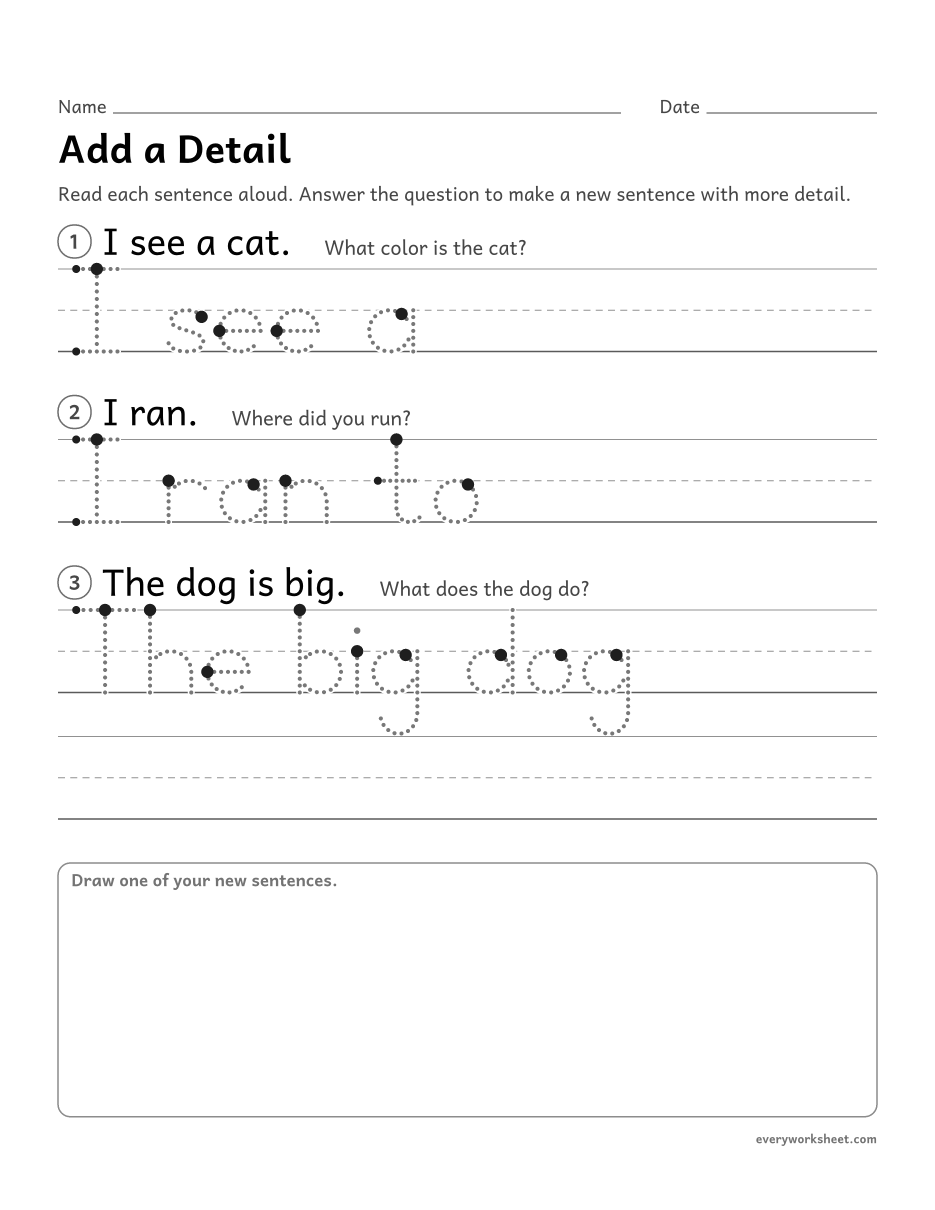
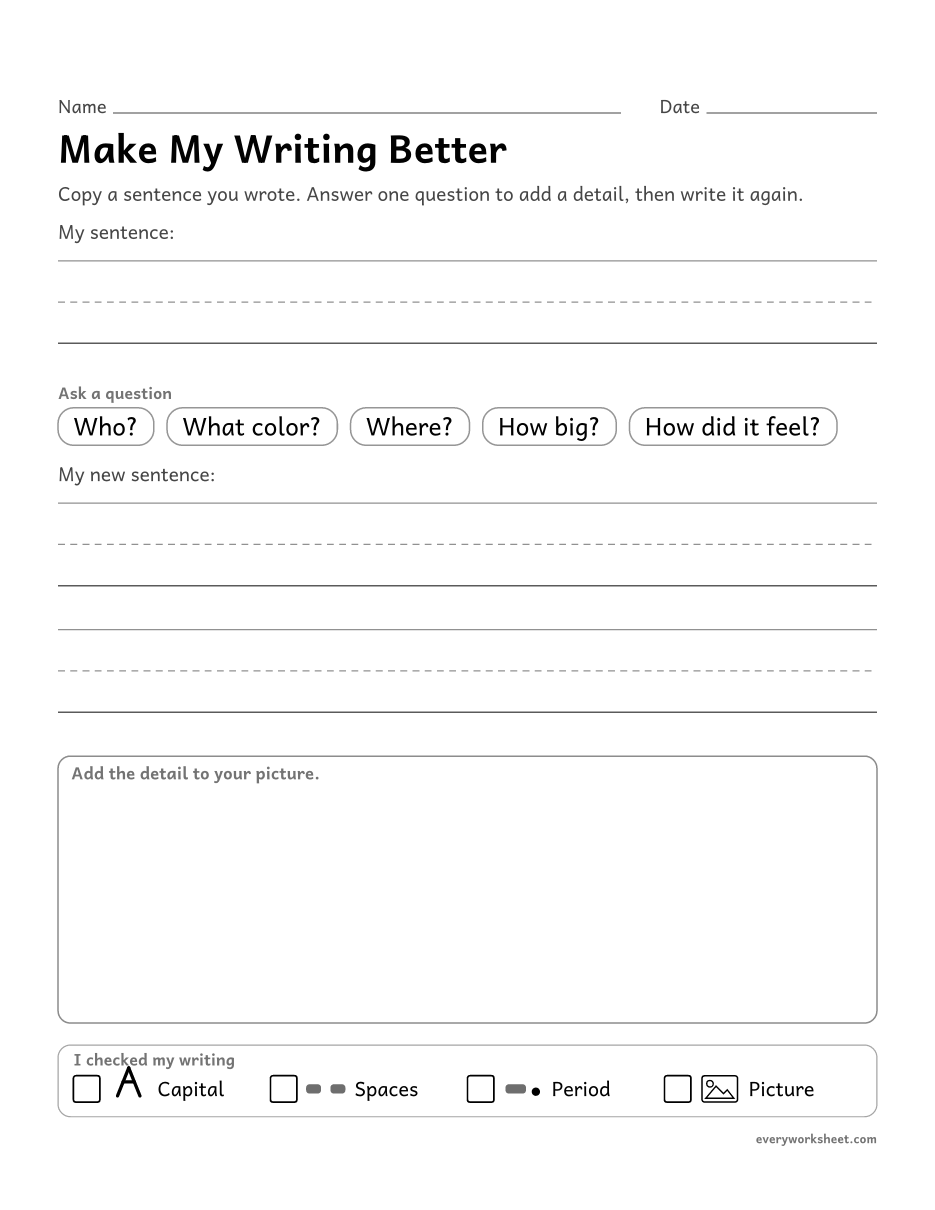
Answering a question to add a detail to a sentence
1 page31 KB
 View larger
Responding to questions to add details to writing
1 page28 KB
 View larger
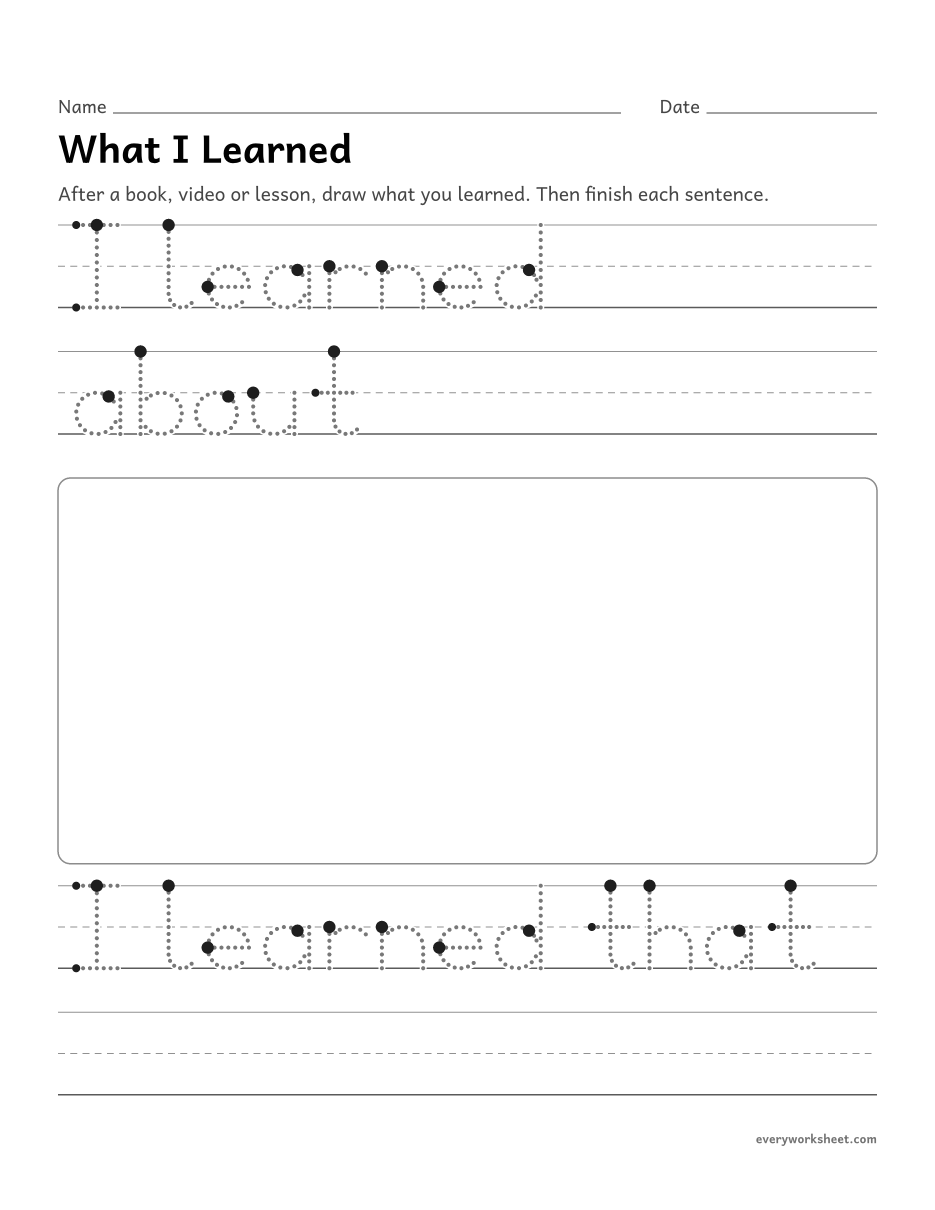
Recalling information to tell what was learned
1 page27 KB
 View larger
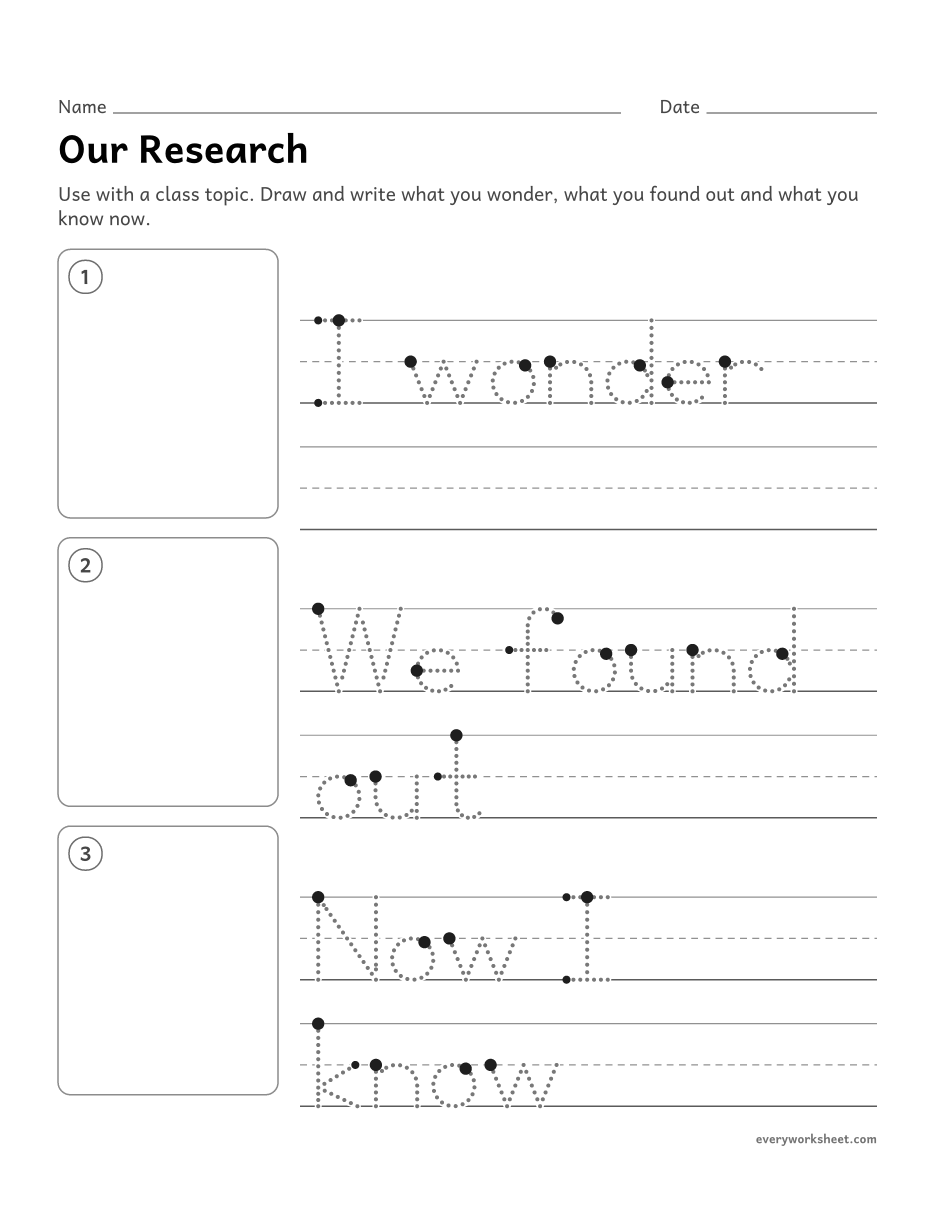
Taking part in shared research and writing what we found out
1 page29 KB
 View larger
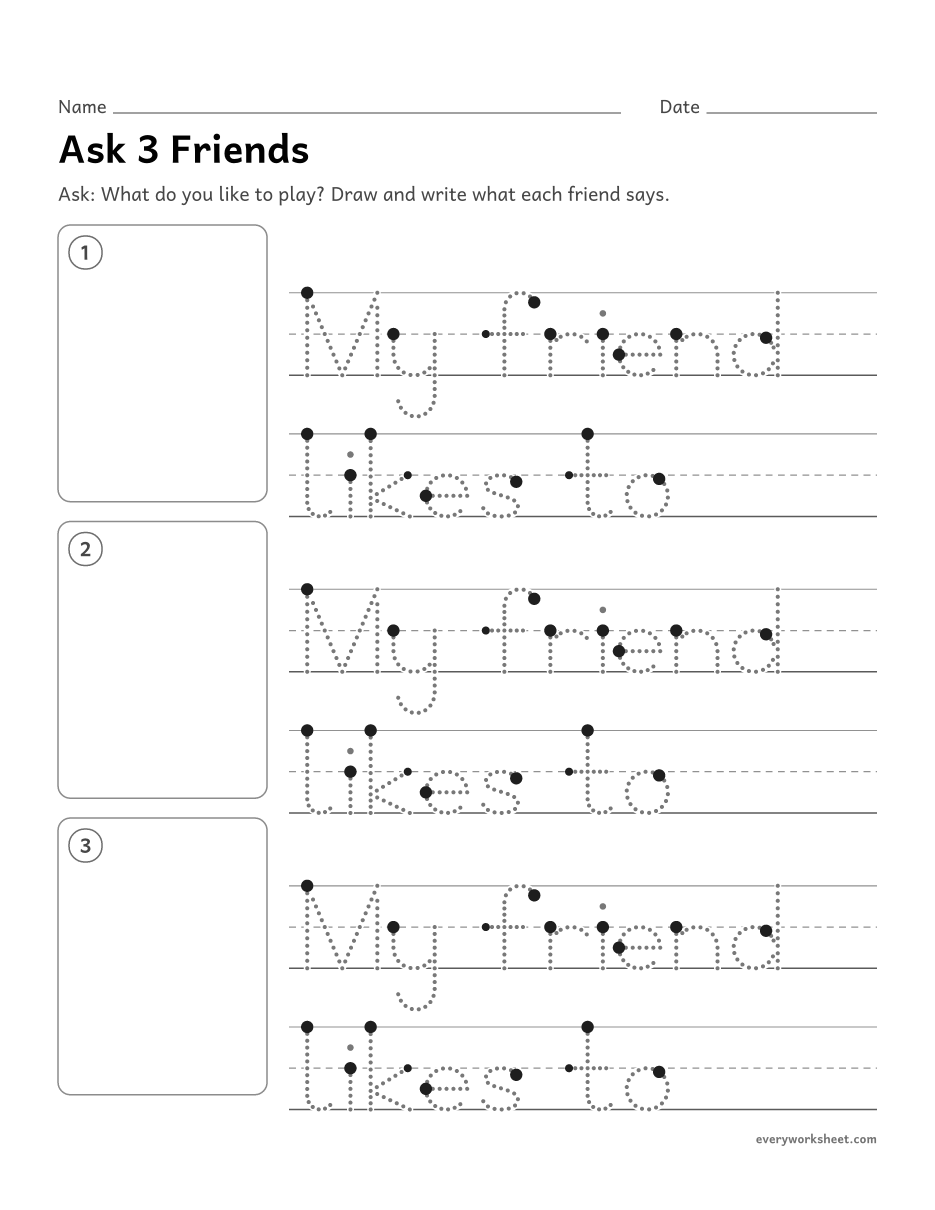
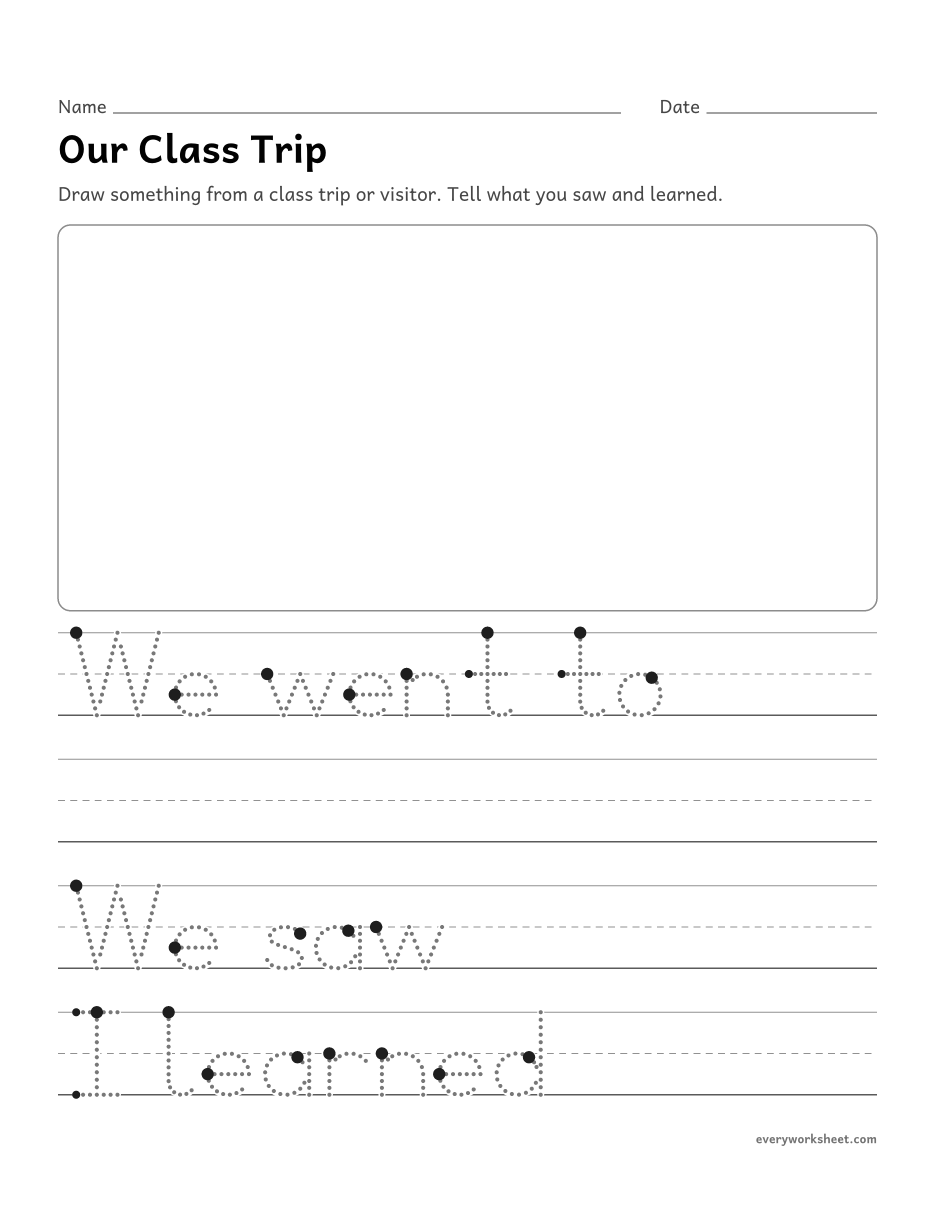
Gathering information from others to answer a question
1 page30 KB
 View larger
 View larger
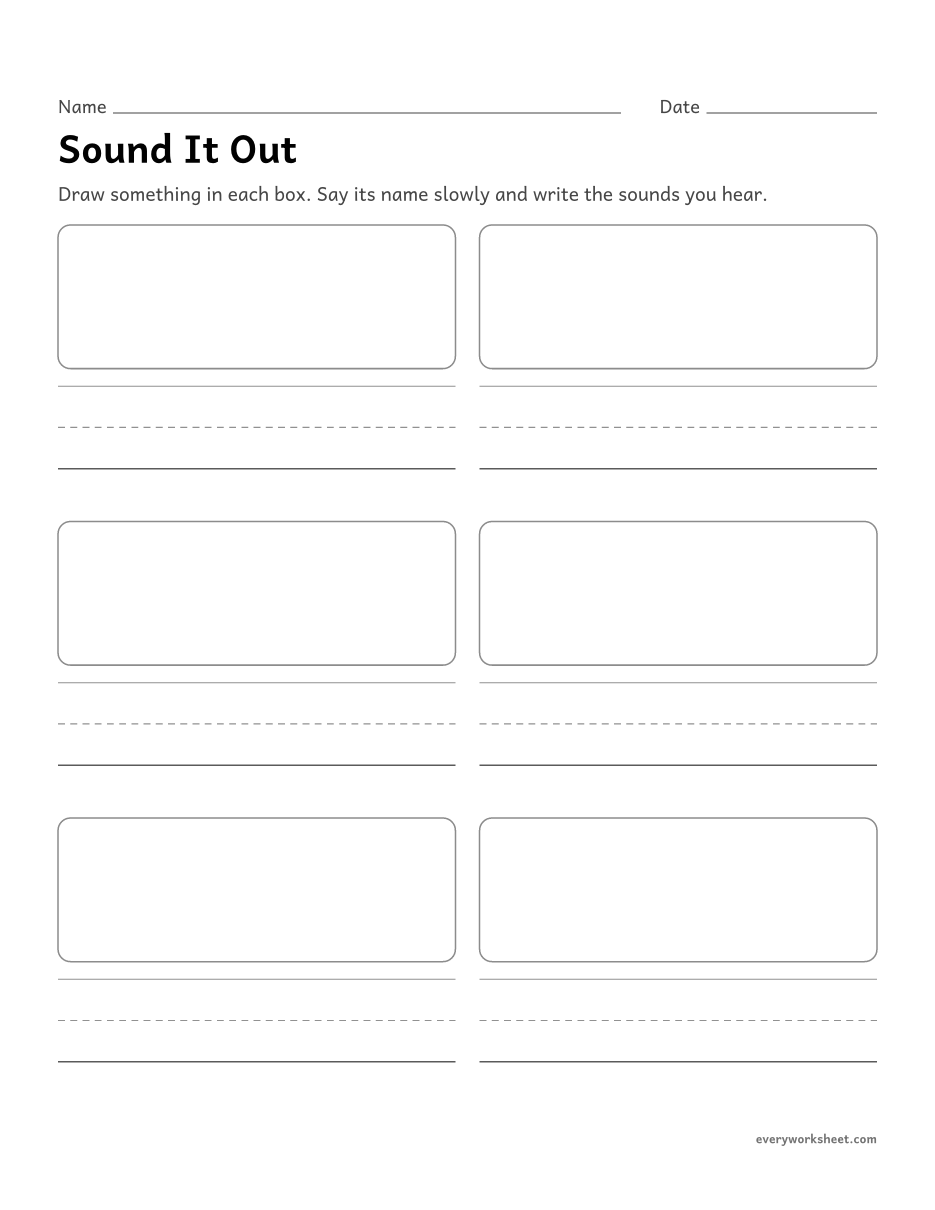
Writing words by listening for the sounds
1 page24 KB
 View larger
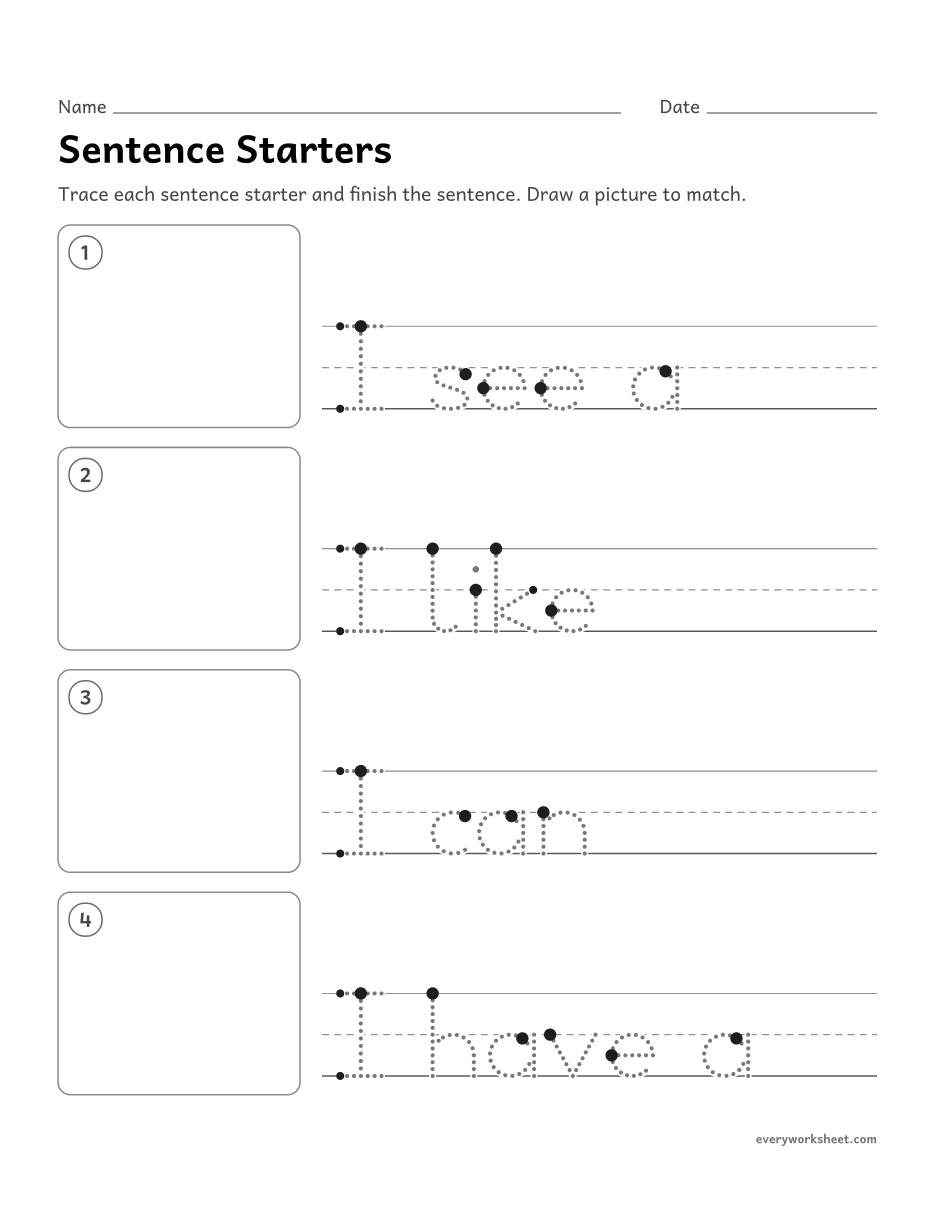
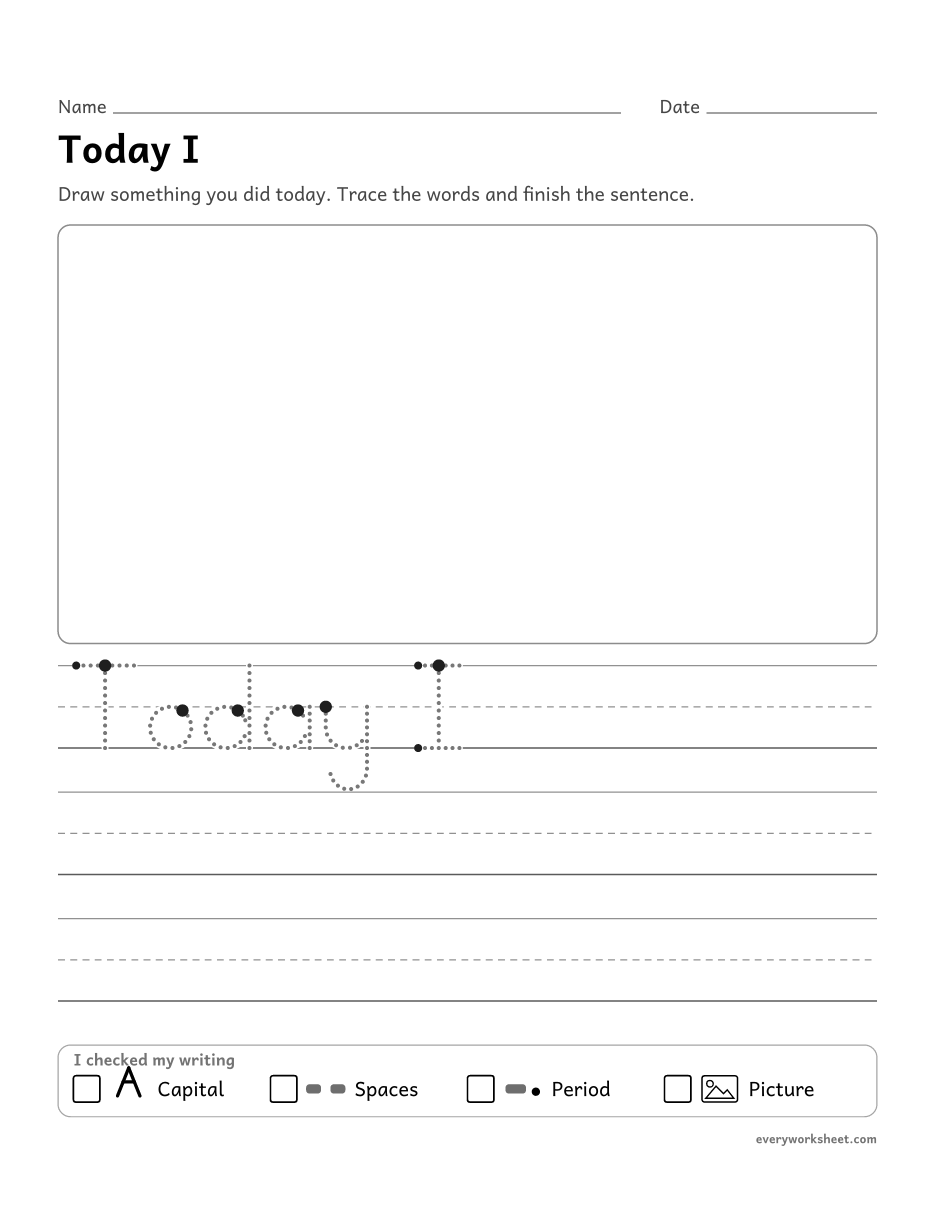
Finishing simple sentences that start with I
1 page28 KB
 View larger
 View larger
Print at 100% (actual size) for the cleanest tracing lines.
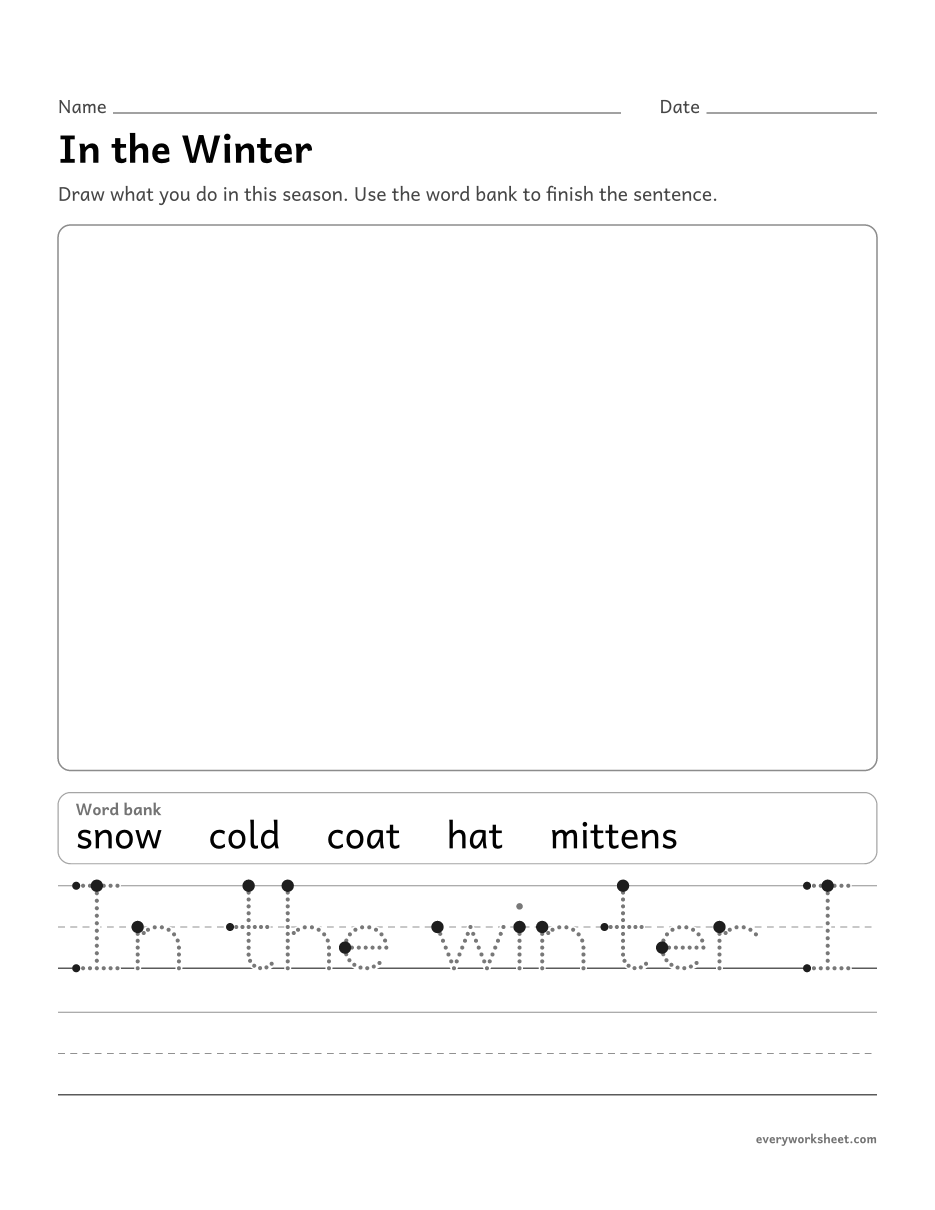
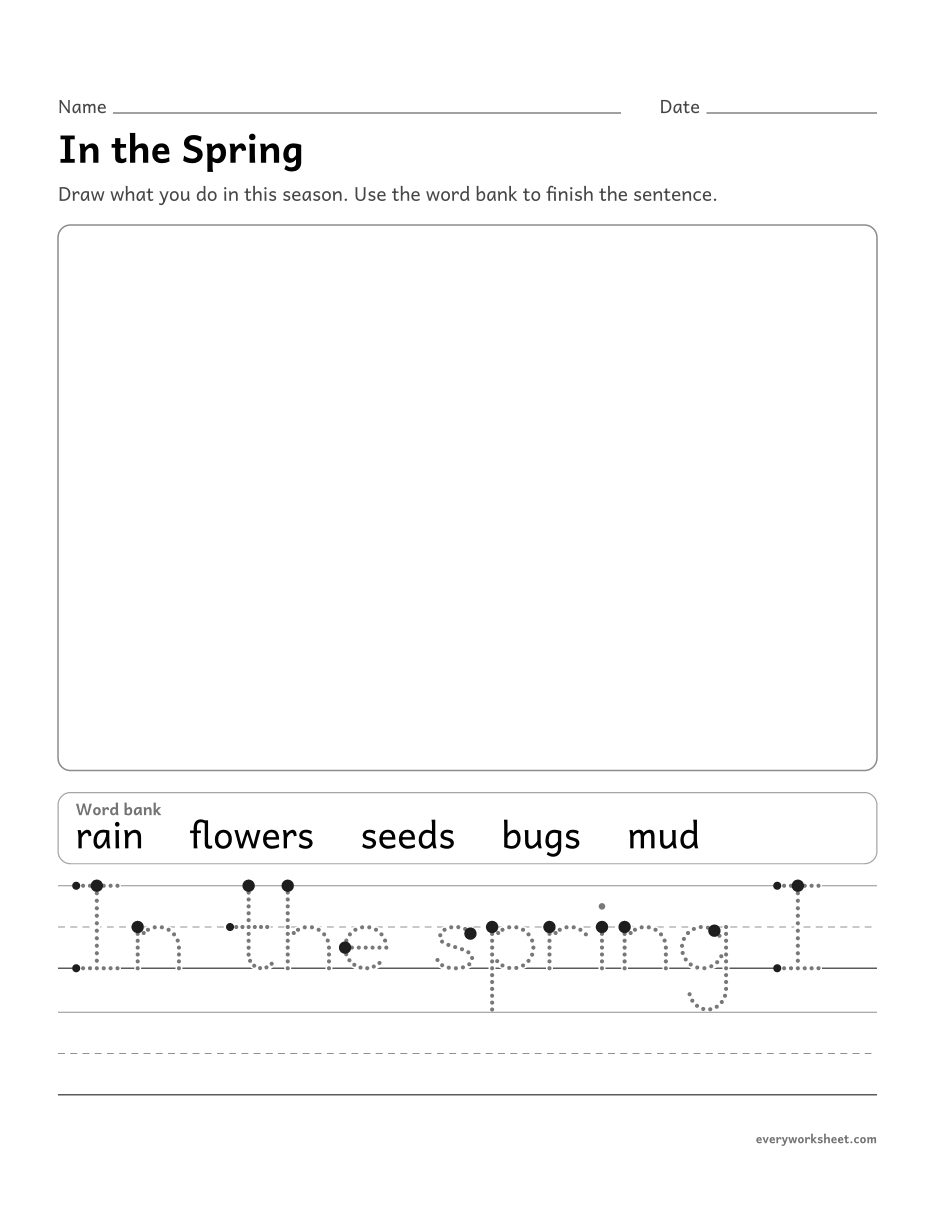
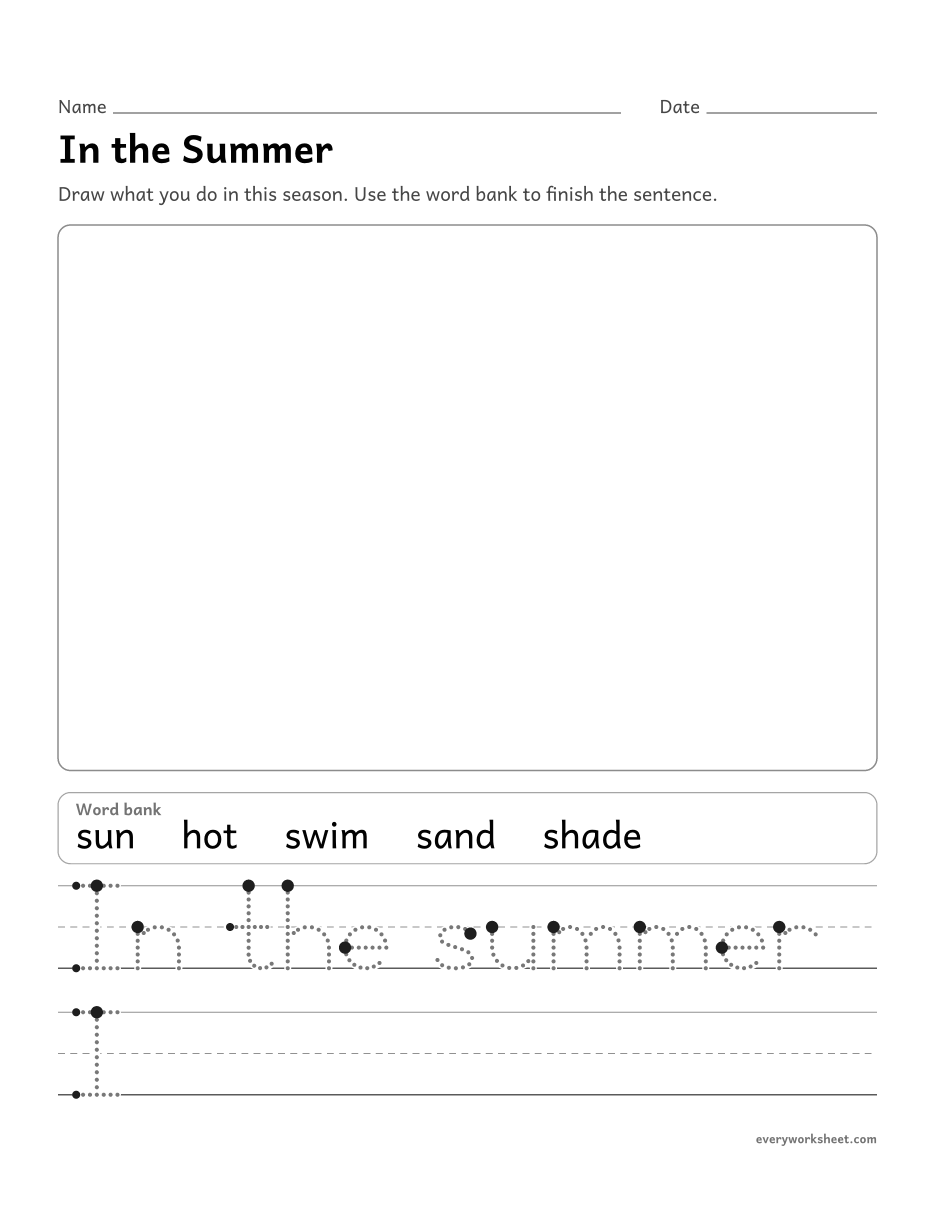
These kindergarten writing prompts start where five-year-olds start: with a picture. Every page has a big box to draw in, a sentence starter to trace, and kindergarten-size lines to finish the sentence. Children who are just starting can draw and tell you their idea while you write it down; children who are ready can trace the starter and sound out the rest on their own.
The prompts cover each kind of writing kindergartners are asked to do. Opinion pages such as My Favorite Food and Cats or Dogs? ask for a choice and a reason. All About and How To pages name a topic and give facts or steps in order. Story pages like First, Next, Last and One Day I tell what happened and how it felt. There are also pages for writing about what the class learned, asking friends a question, adding a detail, and sounding out words.
Every sheet is black and white with no clip art, so it copies cleanly and leaves the pictures to the children. All pages print on US Letter or A4.
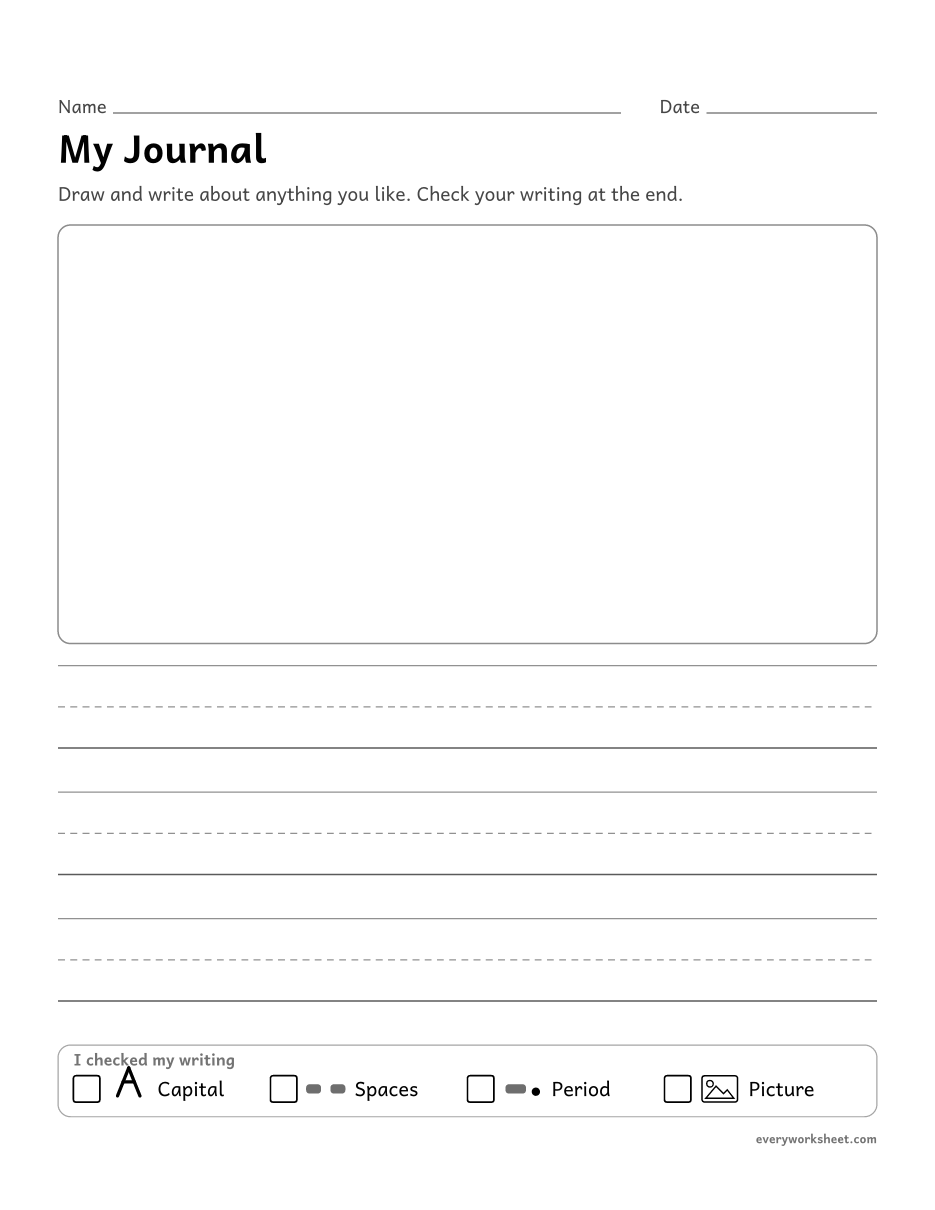
CCSS.ELA-LITERACY.W.K.1Use a combination of drawing, dictating, and writing to compose opinion pieces in which they tell a reader the topic or the name of the book they are writing about and state an opinion or preference about the topic or book (e.g., My favorite book is...).CCSS.ELA-LITERACY.W.K.2Use a combination of drawing, dictating, and writing to compose informative/explanatory texts in which they name what they are writing about and supply some information about the topic.CCSS.ELA-LITERACY.W.K.3Use a combination of drawing, dictating, and writing to narrate a single event or several loosely linked events, tell about the events in the order in which they occurred, and provide a reaction to what happened.CCSS.ELA-LITERACY.W.K.5With guidance and support from adults, respond to questions and suggestions from peers and add details to strengthen writing as needed.CCSS.ELA-LITERACY.W.K.7Participate in shared research and writing projects (e.g., explore a number of books by a favorite author and express opinions about them).CCSS.ELA-LITERACY.W.K.8With guidance and support from adults, recall information from experiences or gather information from provided sources to answer a question.CCSS.ELA-LITERACY.L.K.2.ACapitalize the first word in a sentence and the pronoun I.CCSS.ELA-LITERACY.L.K.2.BRecognize and name end punctuation.CCSS.ELA-LITERACY.L.K.2.DSpell simple words phonetically, drawing on knowledge of sound-letter relationships.By the end of kindergarten most children can draw a picture and write a sentence or two about it, using a capital at the start, spaces between words, a period at the end and sounded-out spelling for words they don't know yet.
Yes. Have your child draw and tell you their idea, then write it for them on the lines. Tracing the dotted sentence starter is a good first step toward writing on their own.
Not on these pages. Praise the sounds your child heard and wrote. Correct spelling comes later; at this age the goal is getting ideas down by listening for sounds.
A sentence starter gives the first words of a sentence, such as 'My favorite food is' or 'First I'. Here they are dotted so children can trace them and then finish the sentence on their own.
A short daily page works well, often as a journal time. Many classrooms use one prompt a day and come back to a favorite kind of writing several times a week.