 View all 2 pages
Letter Sounds Worksheets
One alphabet sounds page for every letter from A to Z, with pictures to circle, letters to trace and four review pages, all with answer keys.
Download the letter sounds worksheets
Letter sounds A to Z
 View all 2 pages
 View all 2 pages
 View all 2 pages
 View all 2 pages
 View all 2 pages
 View all 2 pages
 View all 2 pages
 View all 2 pages
 View all 2 pages
 View all 2 pages
 View all 2 pages
 View all 2 pages
 View all 2 pages
 View all 2 pages
 View all 2 pages
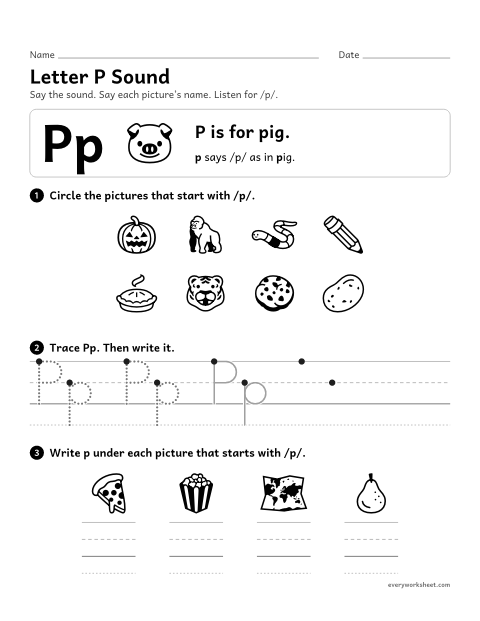 View all 2 pages
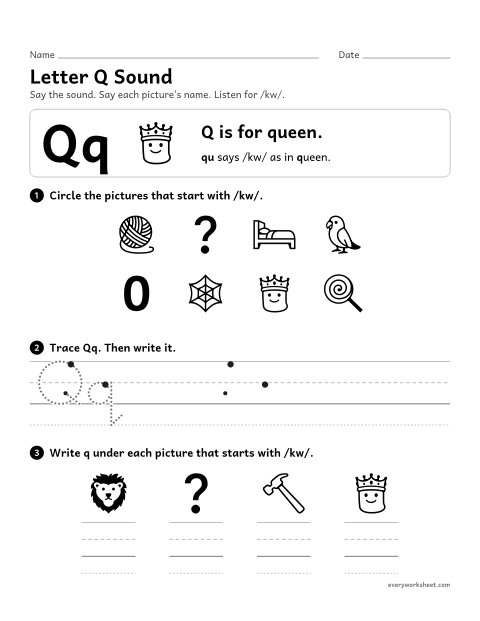 View all 2 pages
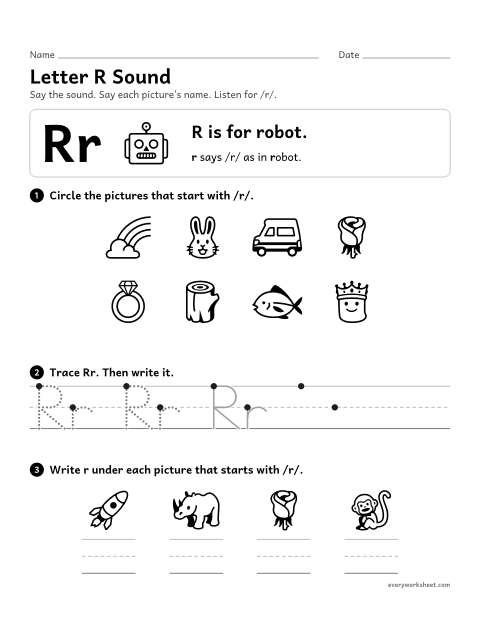 View all 2 pages
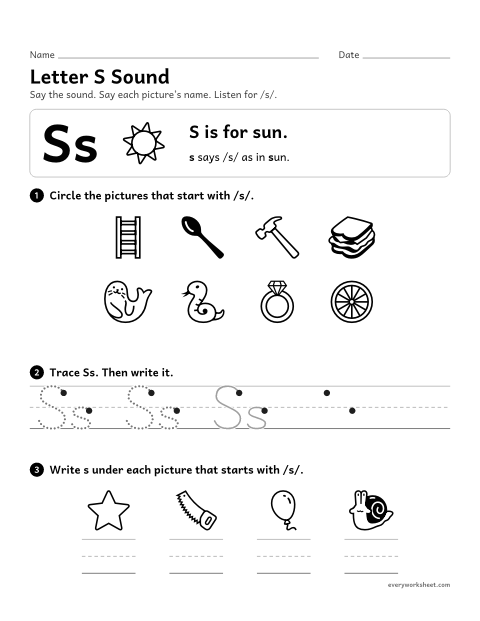 View all 2 pages
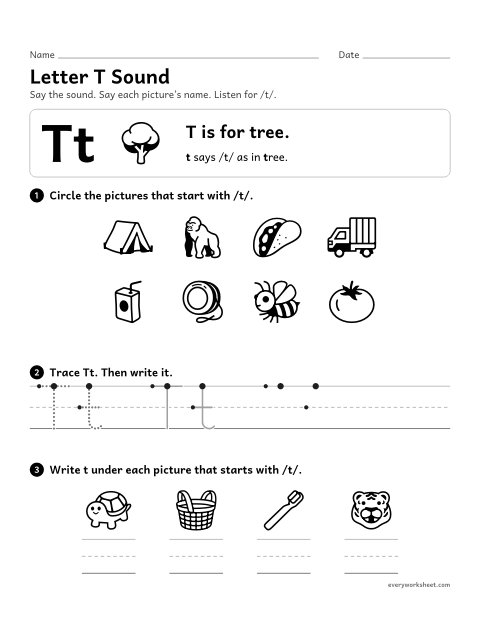 View all 2 pages
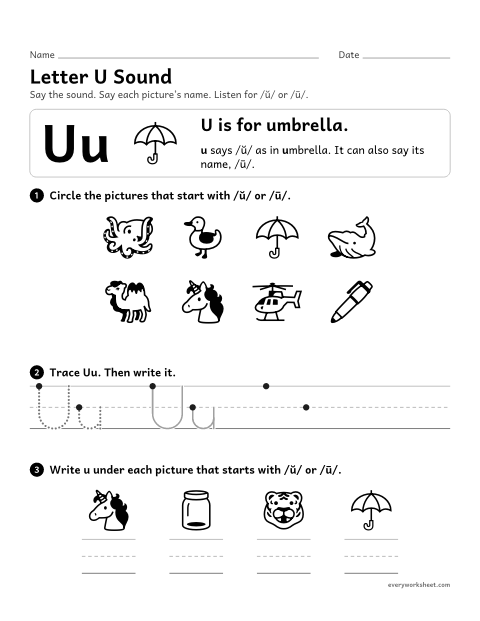 View all 2 pages
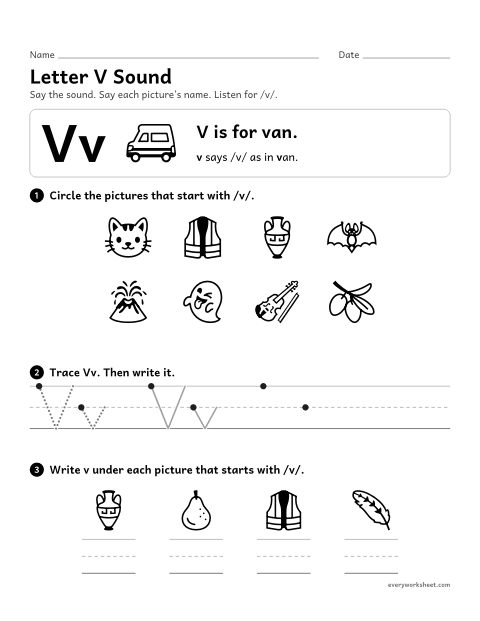 View all 2 pages
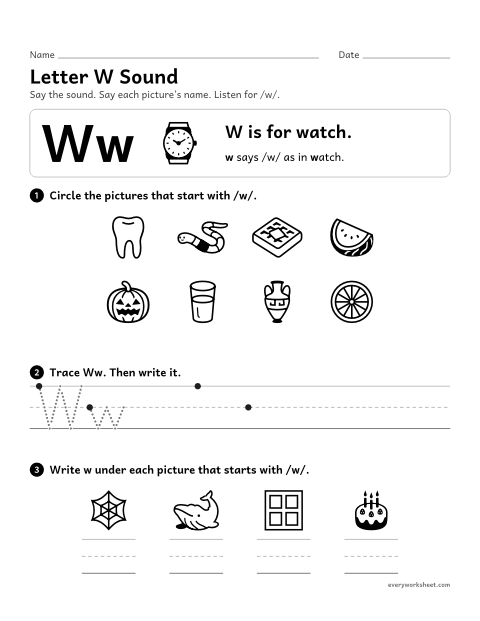 View all 2 pages
 View all 2 pages
 View all 2 pages
 View all 2 pages
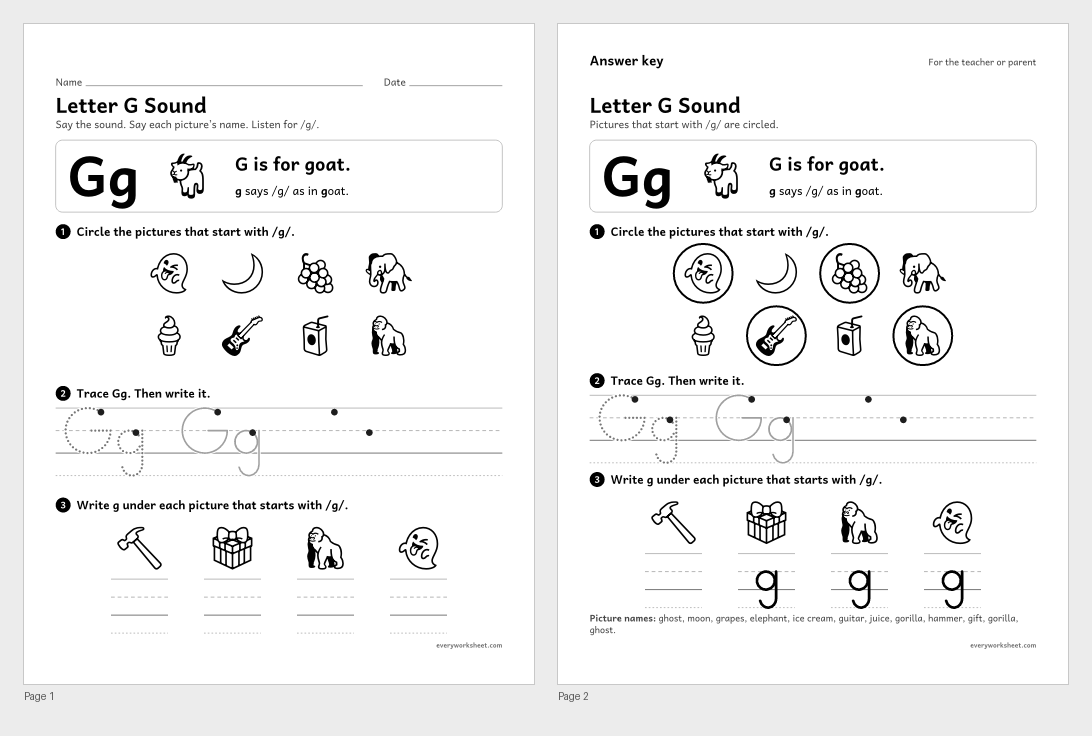
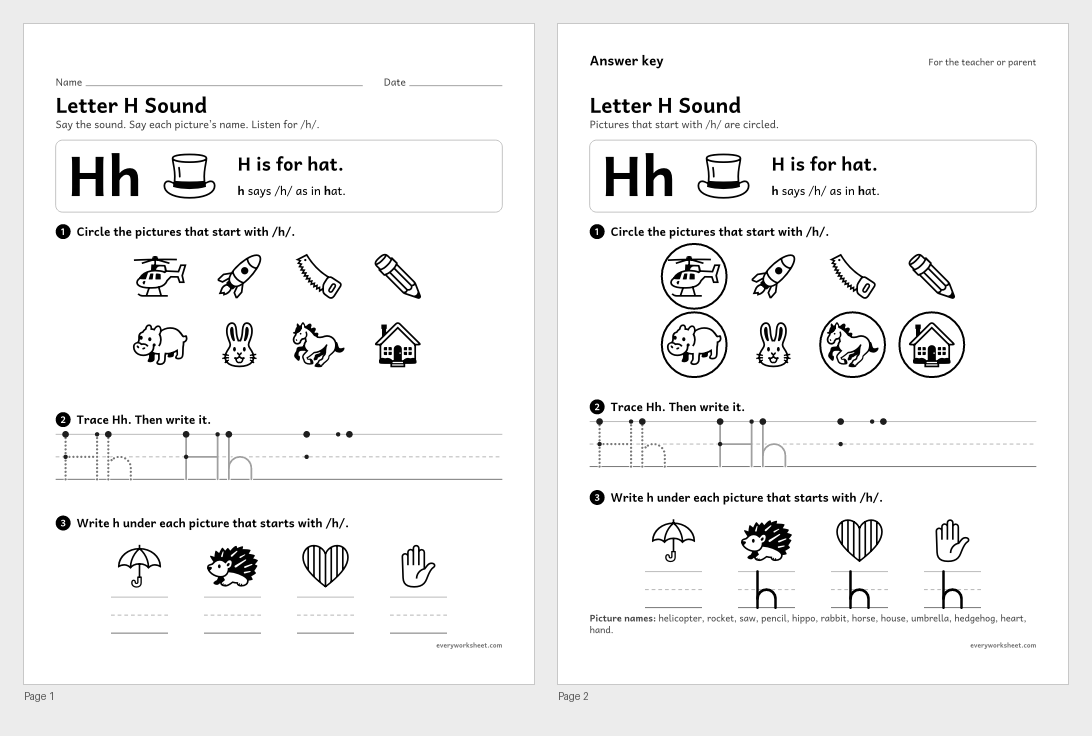
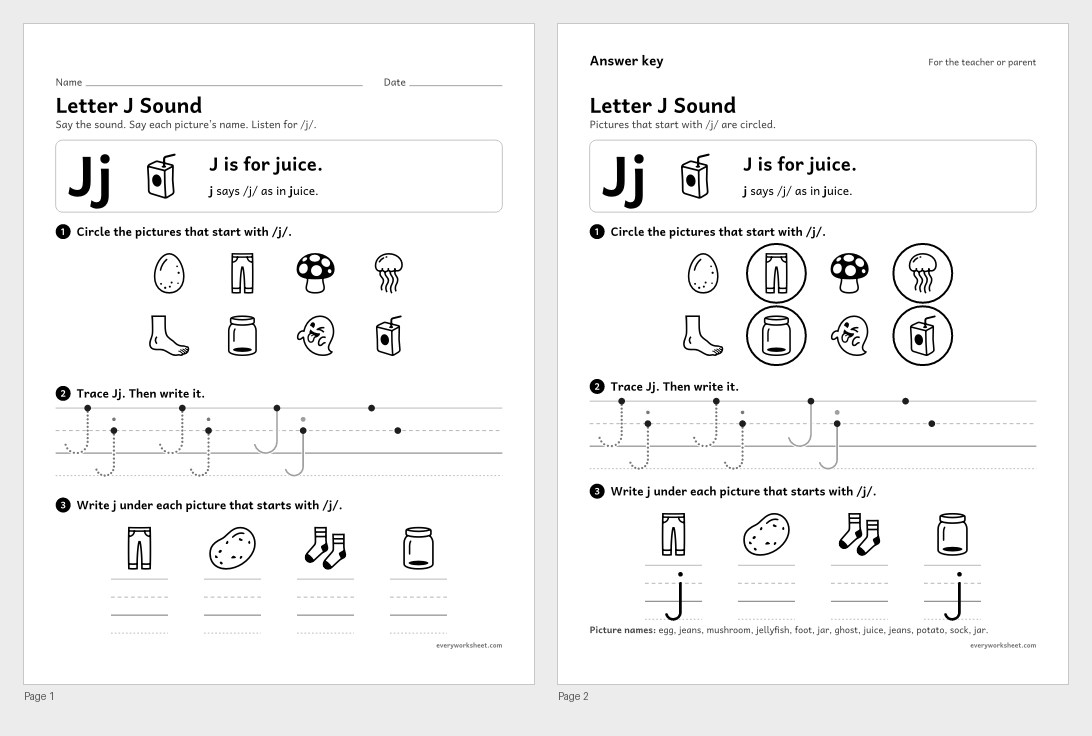
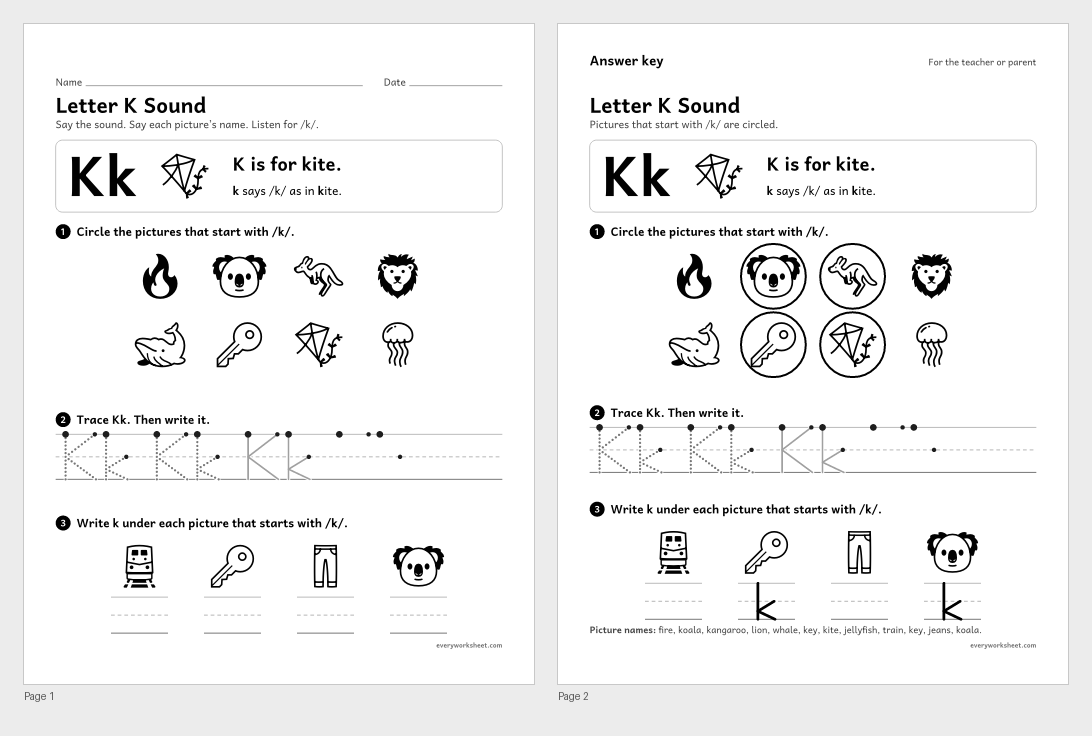
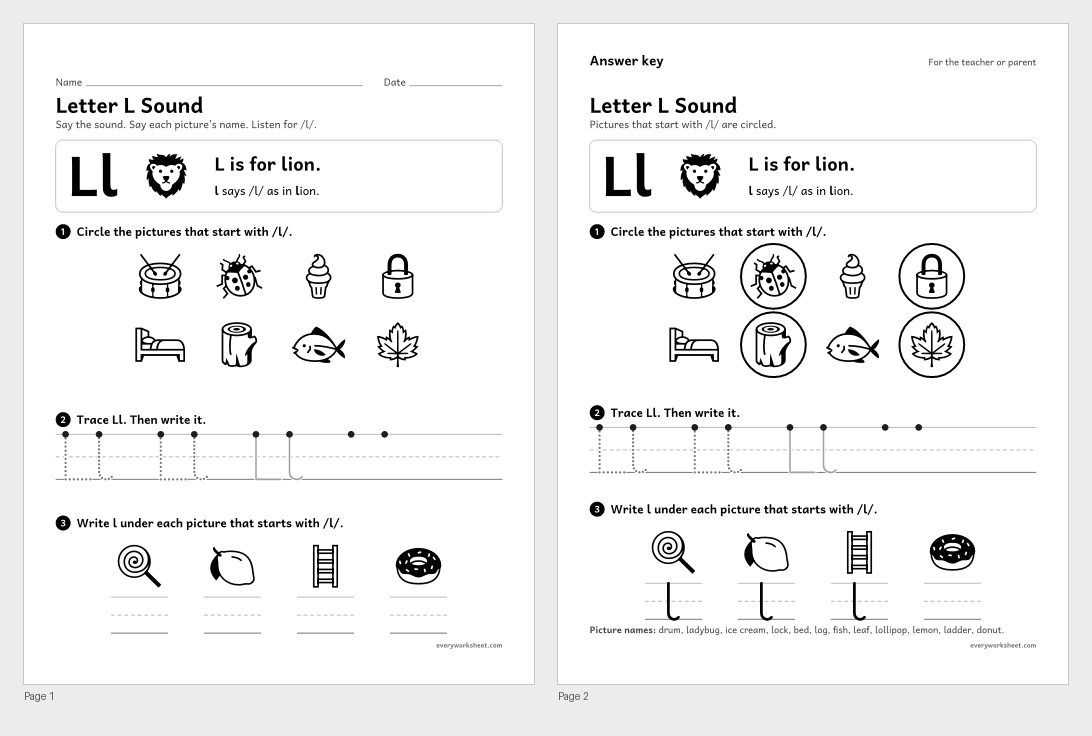
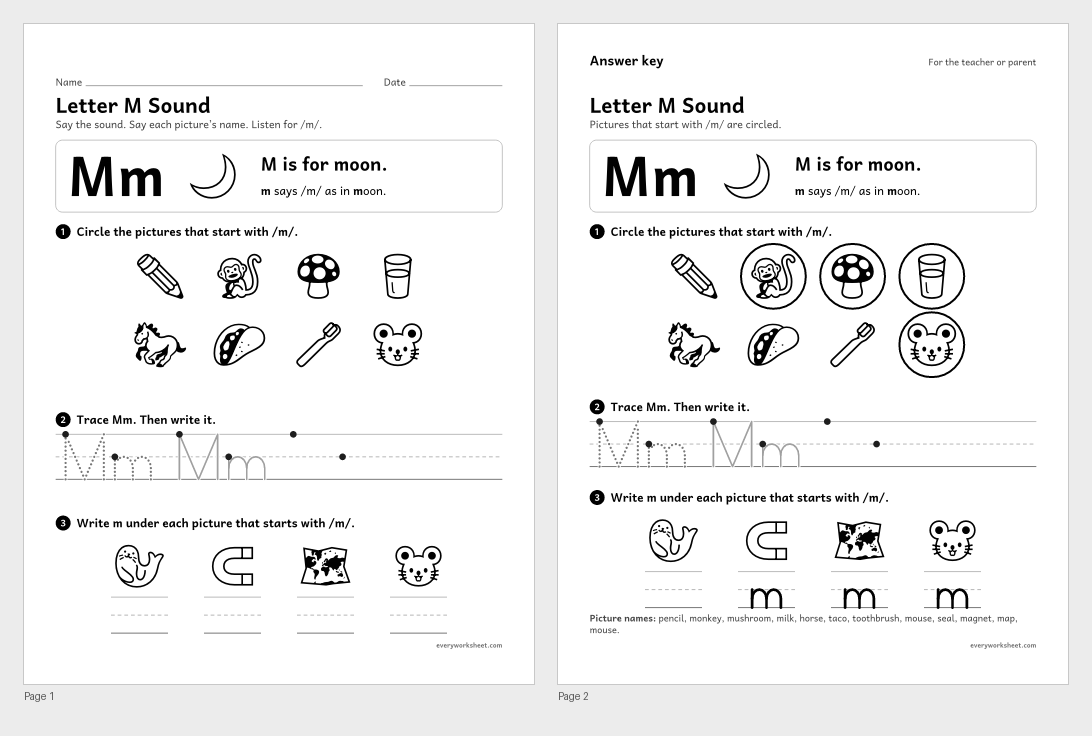
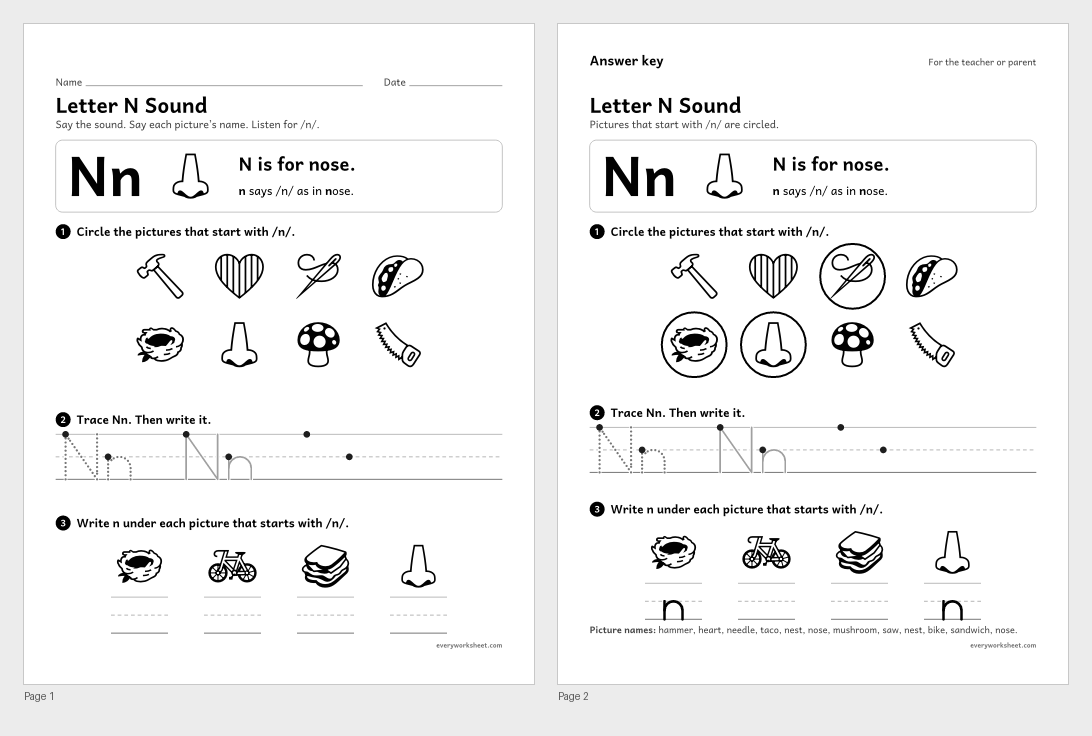
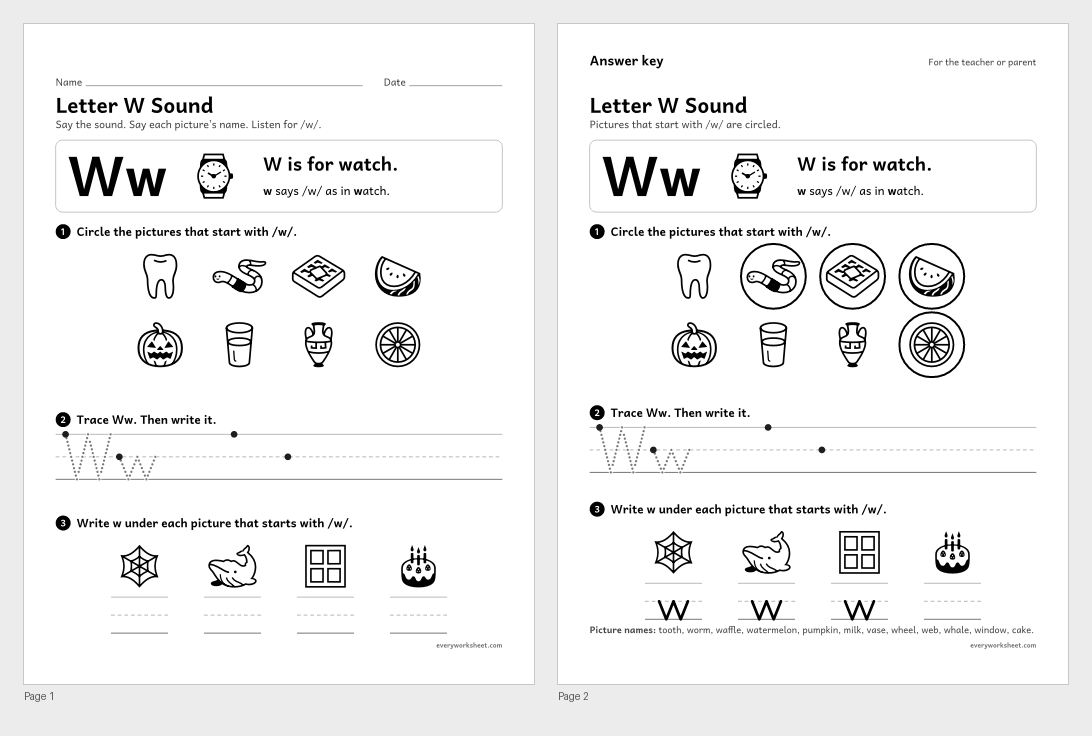
Letter sounds review
 View all 2 pages
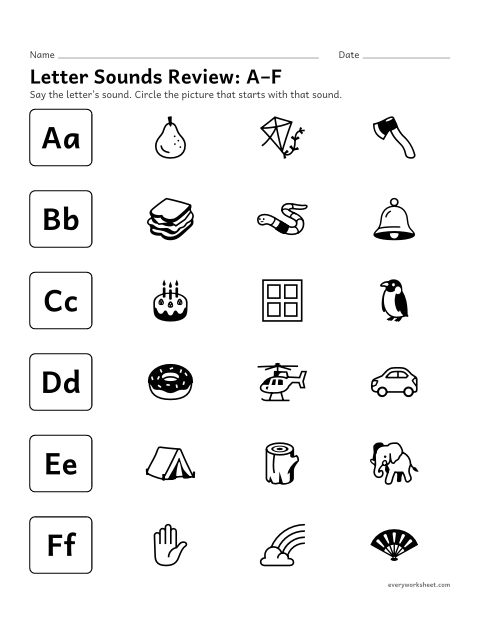
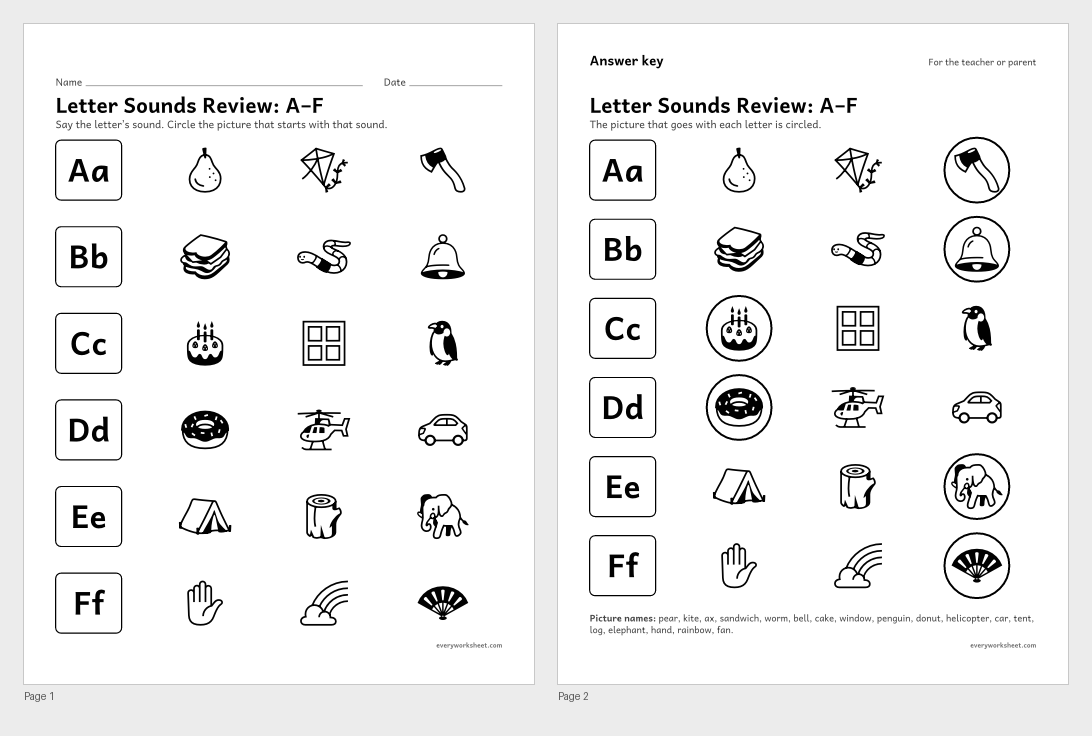
Letter sounds Review: A–F
Matching letters A–F to their sounds
Answer key on page 2
2 pages52 KB
 View all 2 pages
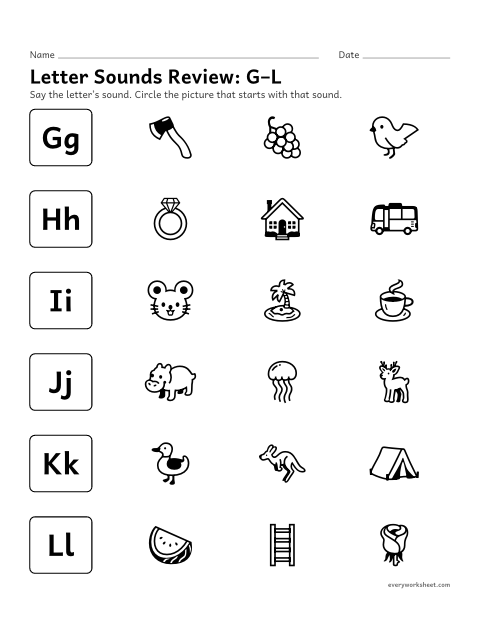
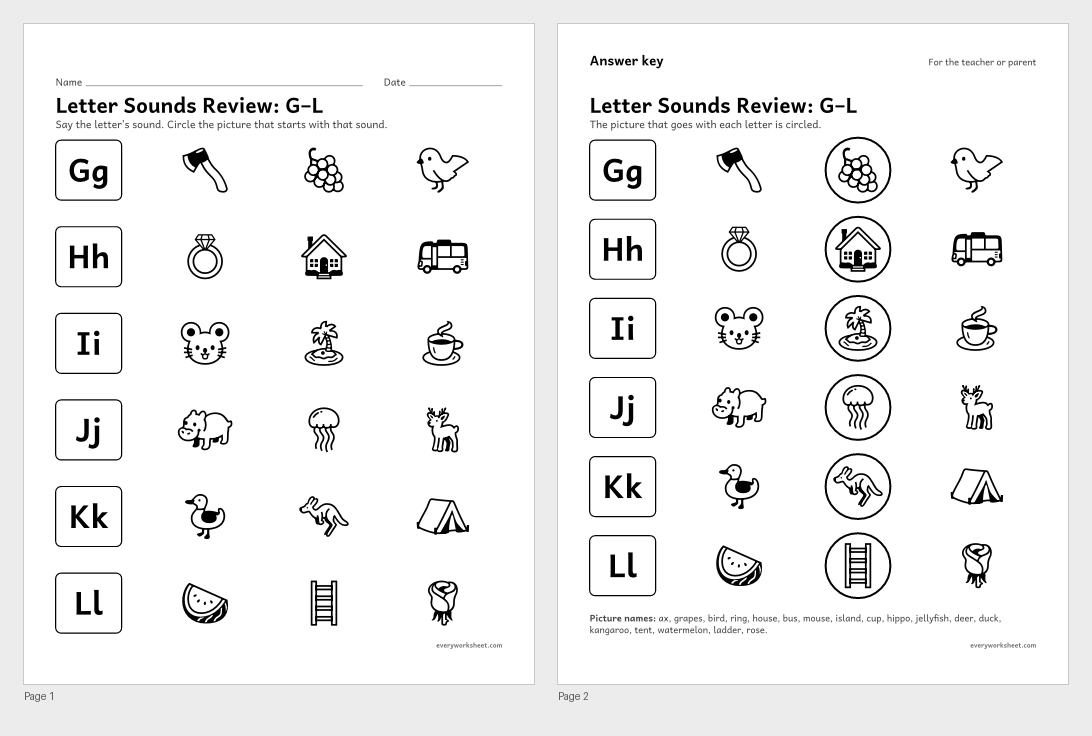
Letter sounds Review: G–L
Matching letters G–L to their sounds
Answer key on page 2
2 pages54 KB
 View all 2 pages
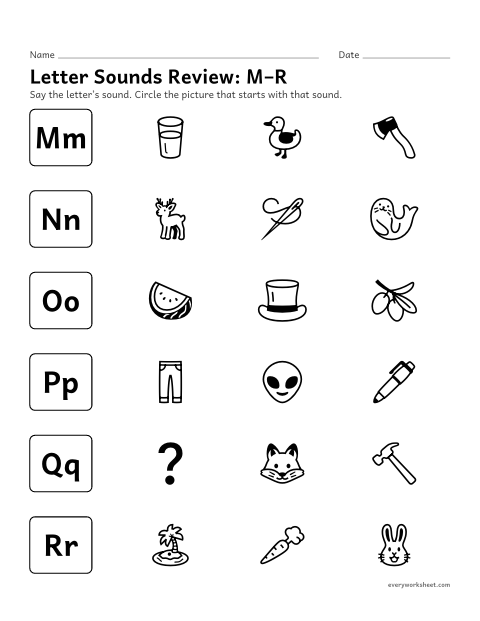
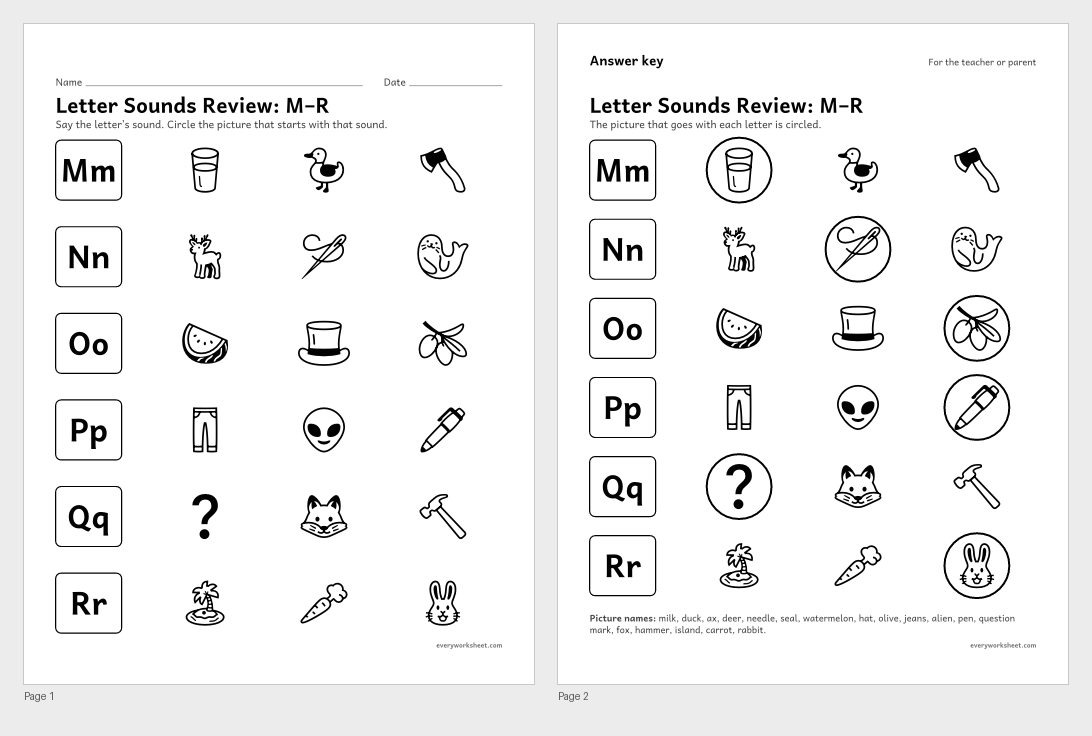
Letter sounds Review: M–R
Matching letters M–R to their sounds
Answer key on page 2
2 pages53 KB
 View all 2 pages
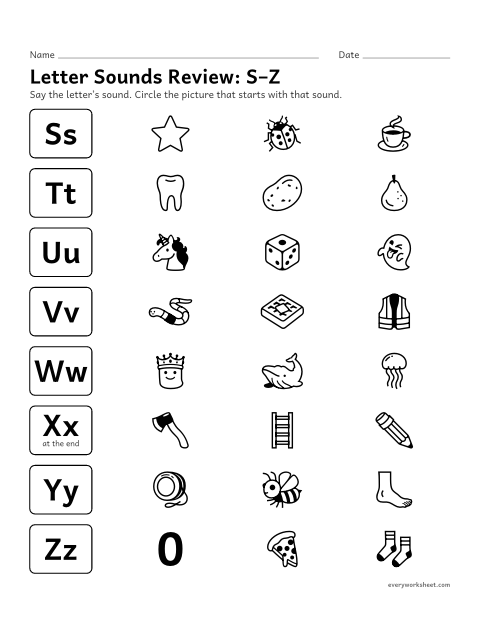
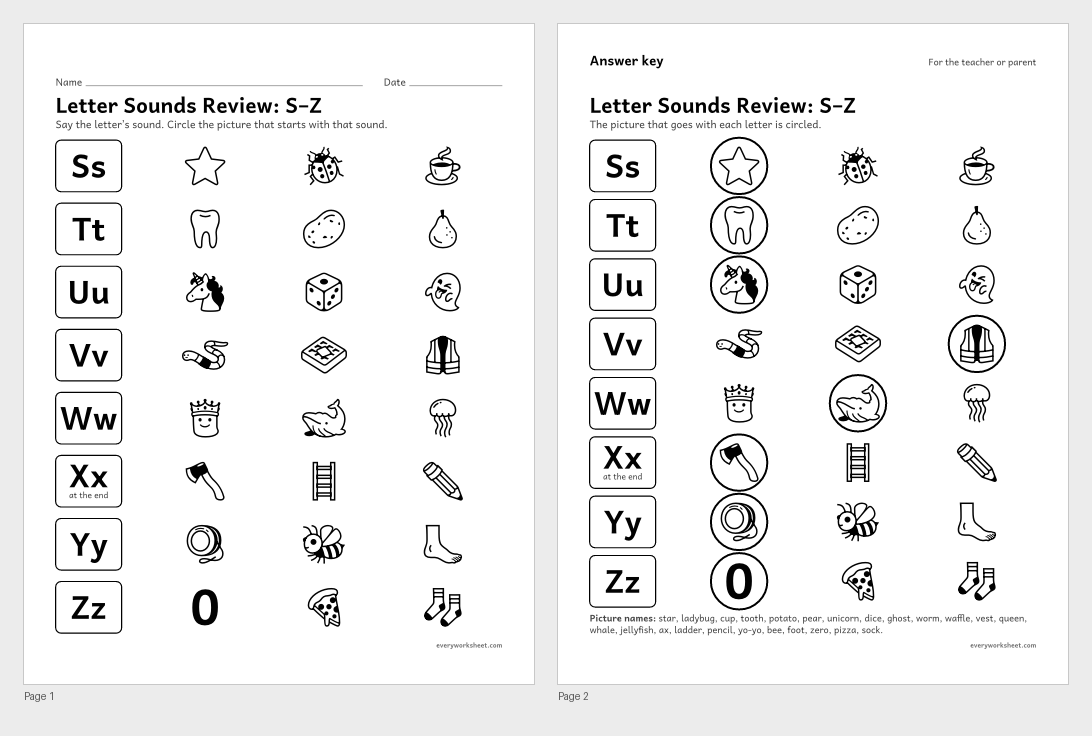
Letter sounds Review: S–Z
Matching letters S–Z to their sounds
Answer key on page 2
2 pages61 KB
Print at 100% (actual size) for the cleanest tracing lines.
About these letter sounds worksheets
Letter sounds are the bridge between knowing the alphabet and reading words. A child who knows that b says /b/, m says /m/ and a says /ă/ can start to sound out bat, map and sit. These letter sounds worksheets give every letter of the alphabet its own page, from A to Z.
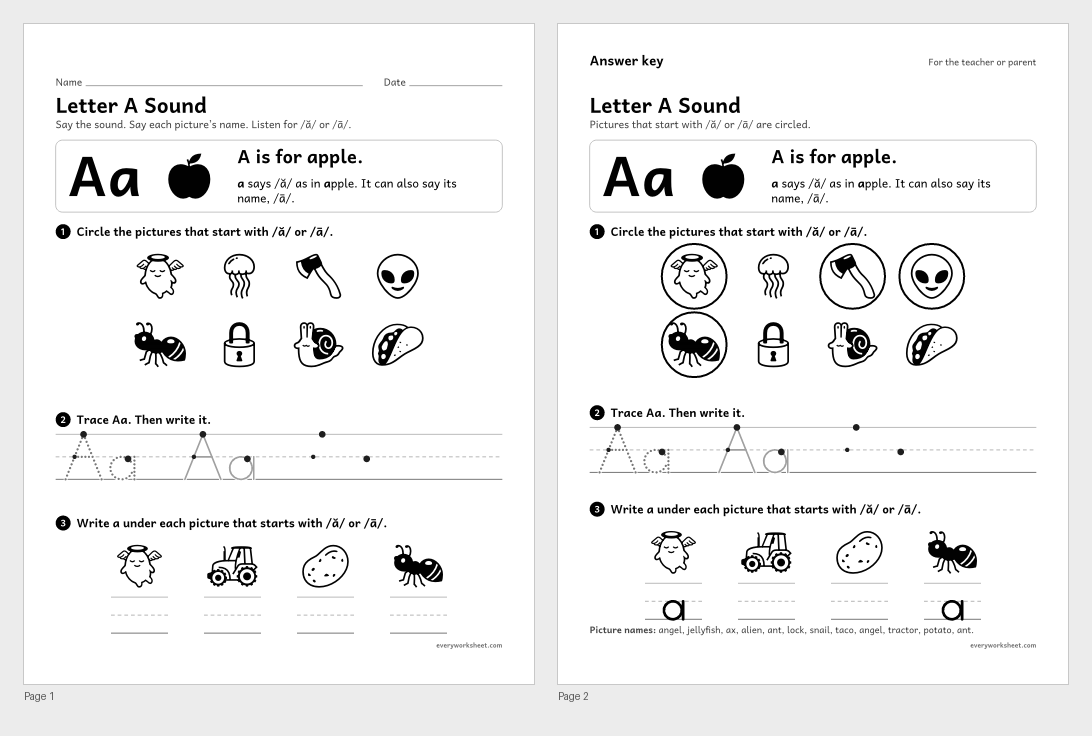
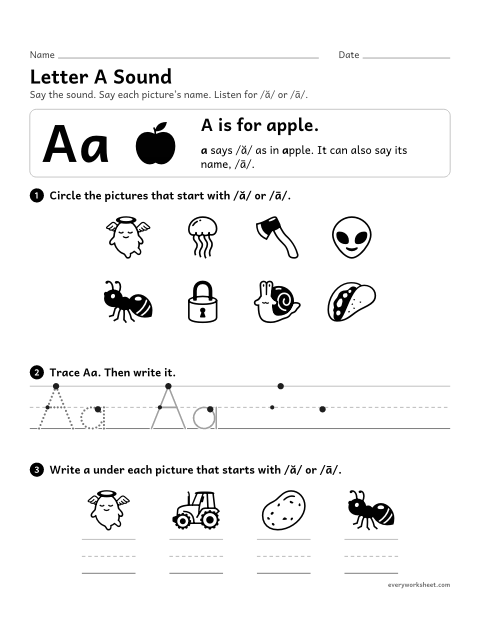
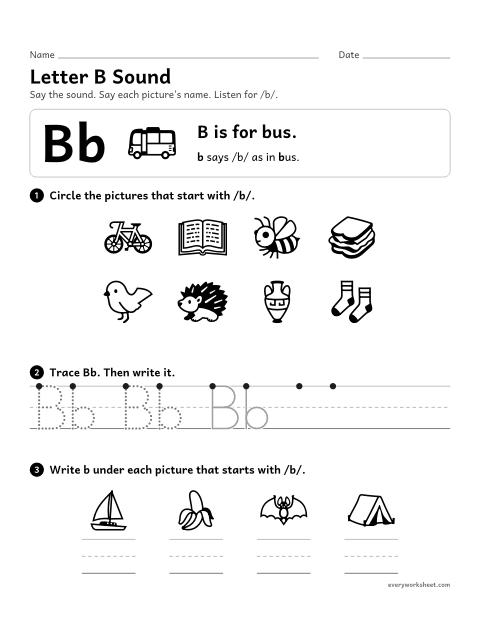
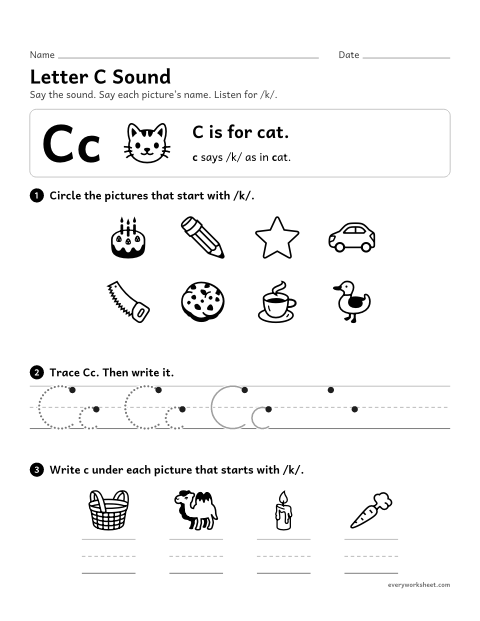
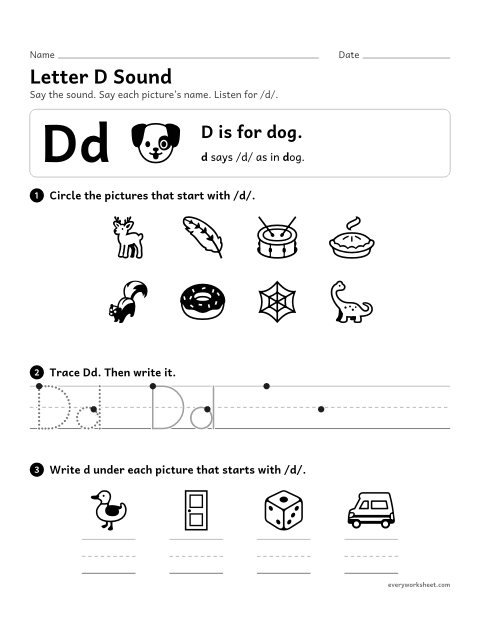
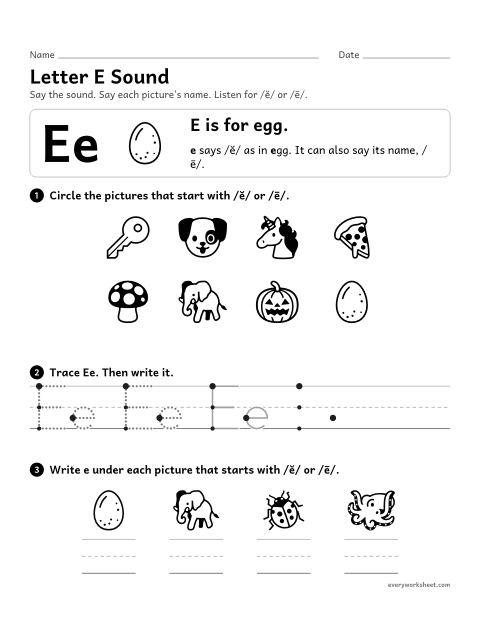
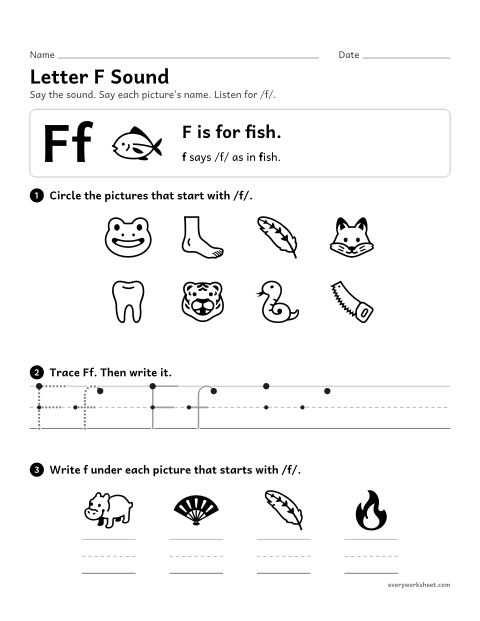
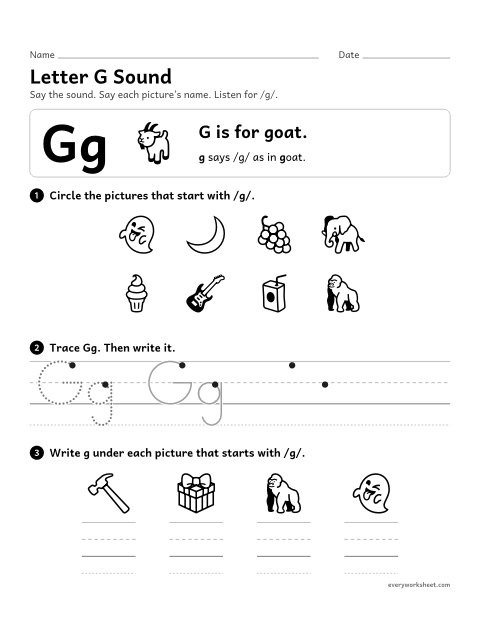
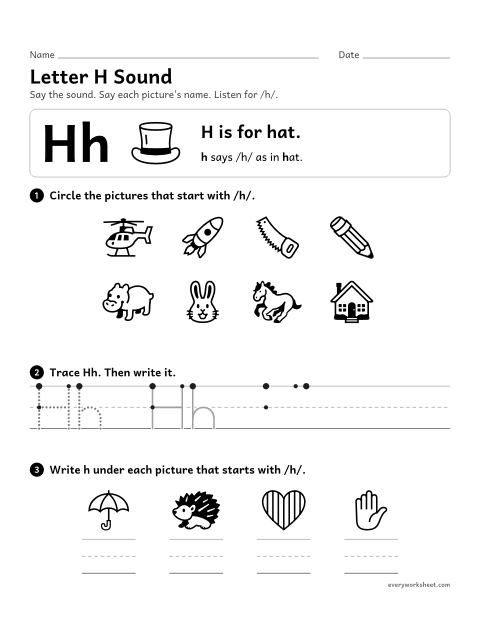
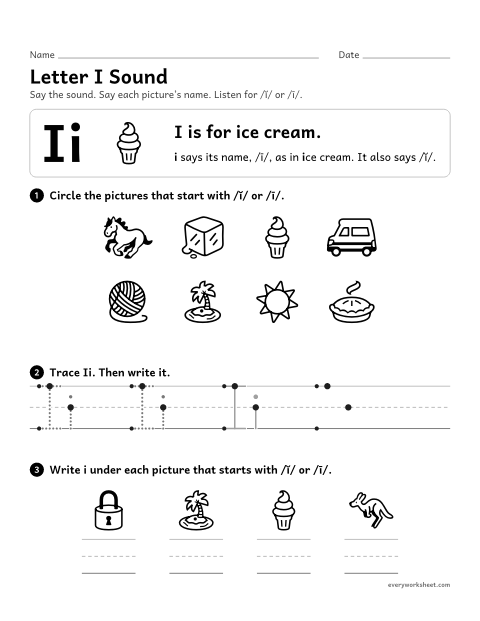
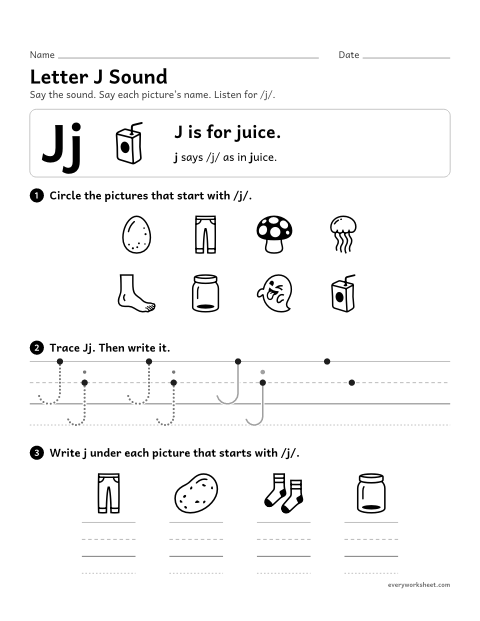
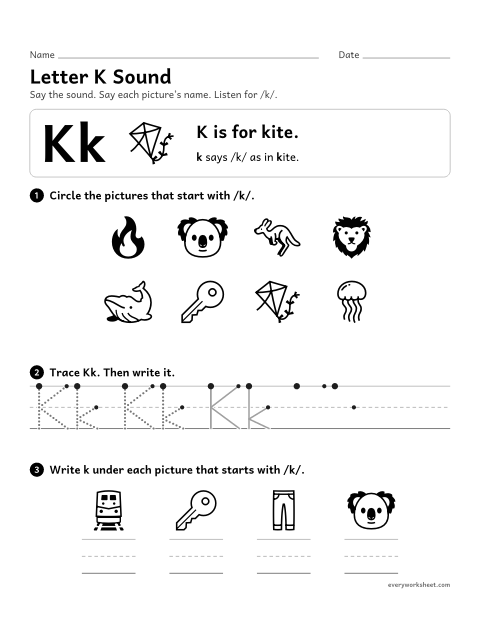
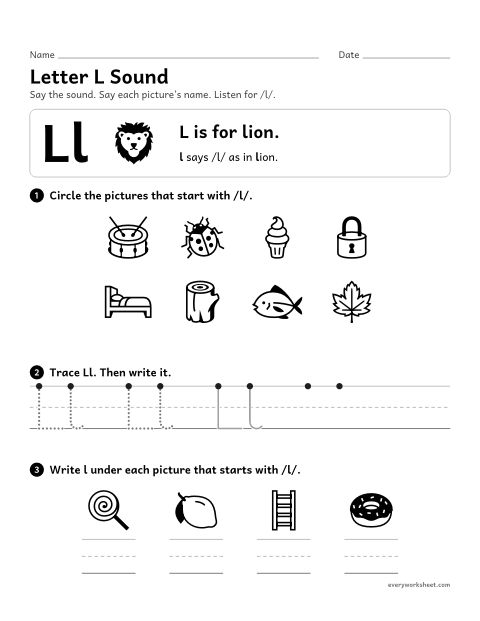
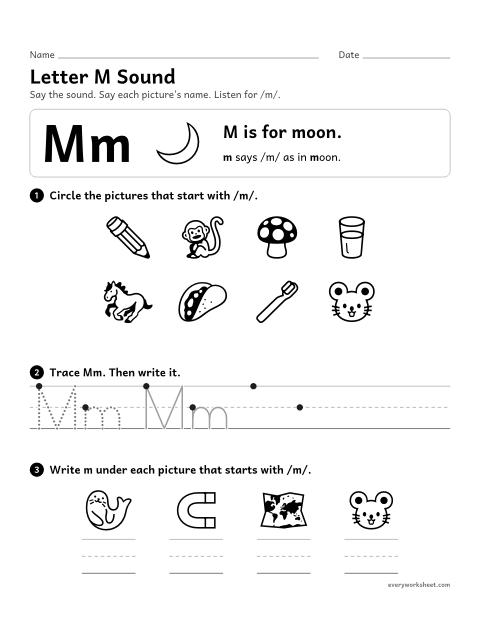
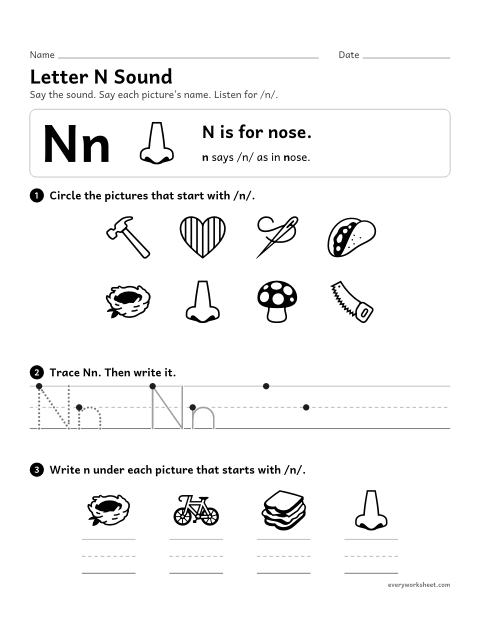
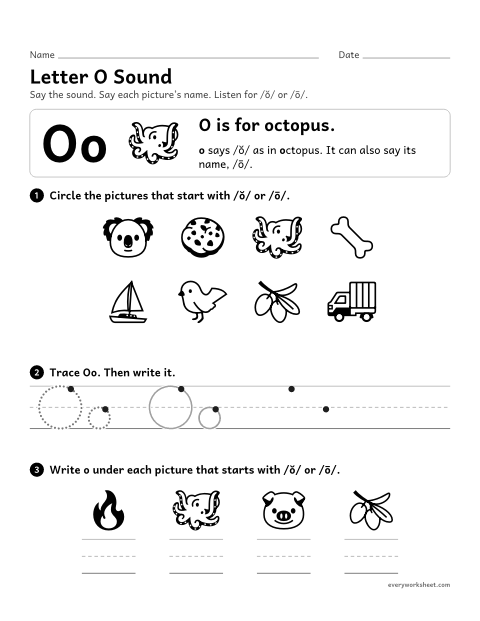
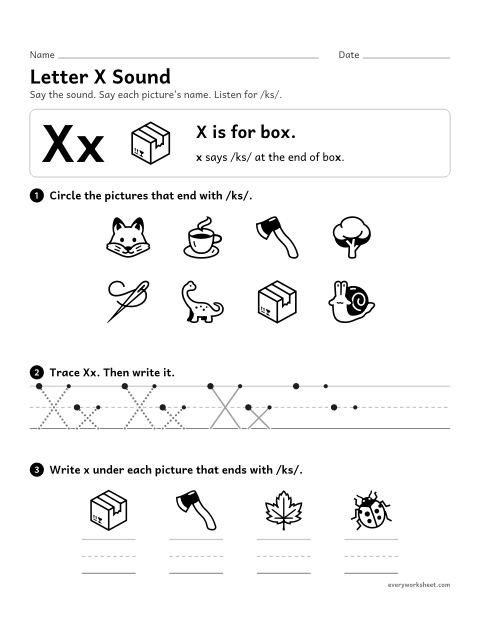
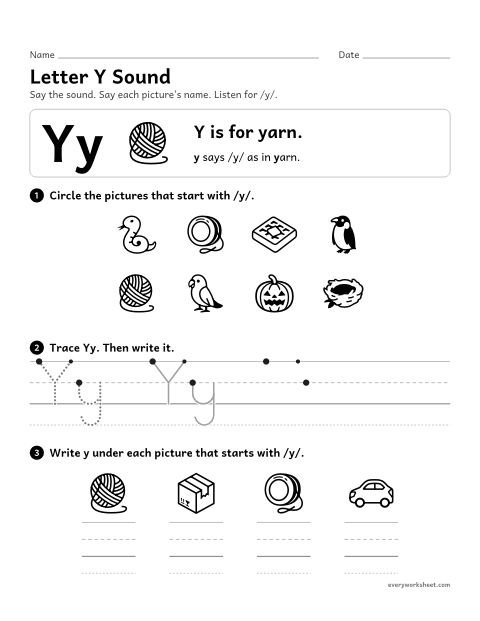
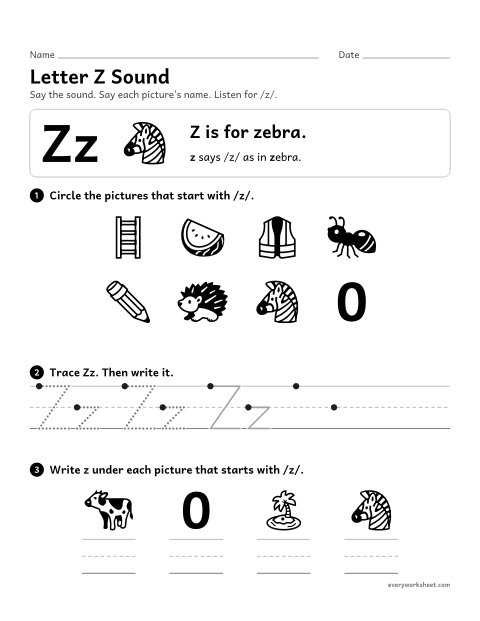
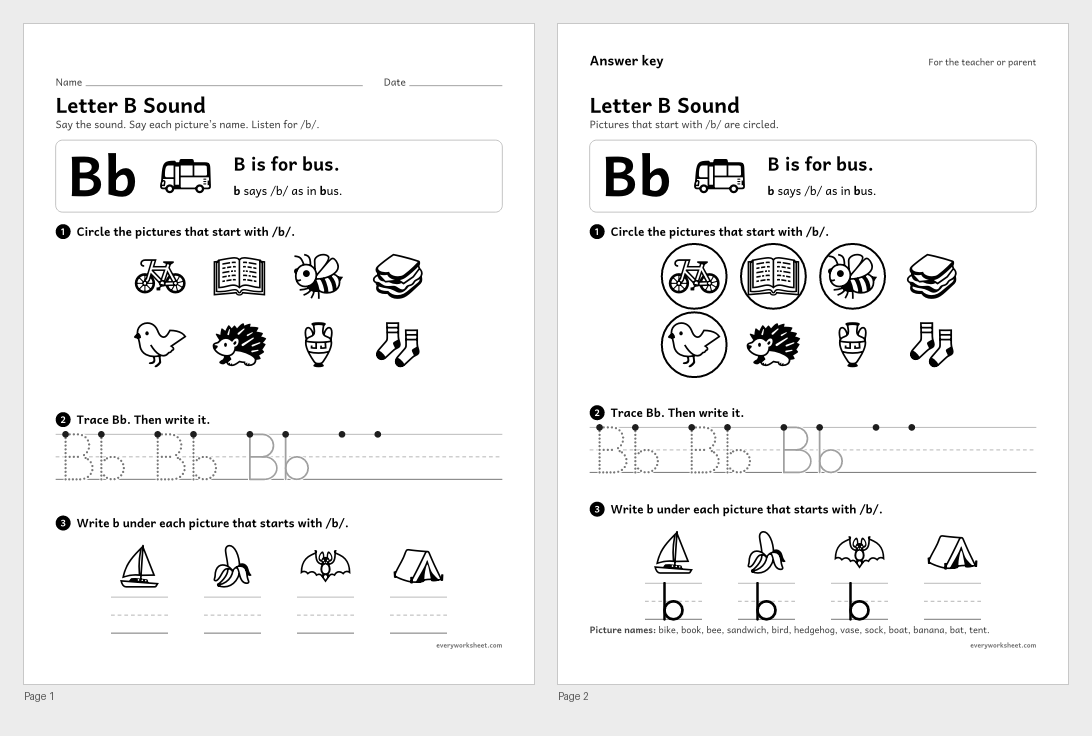
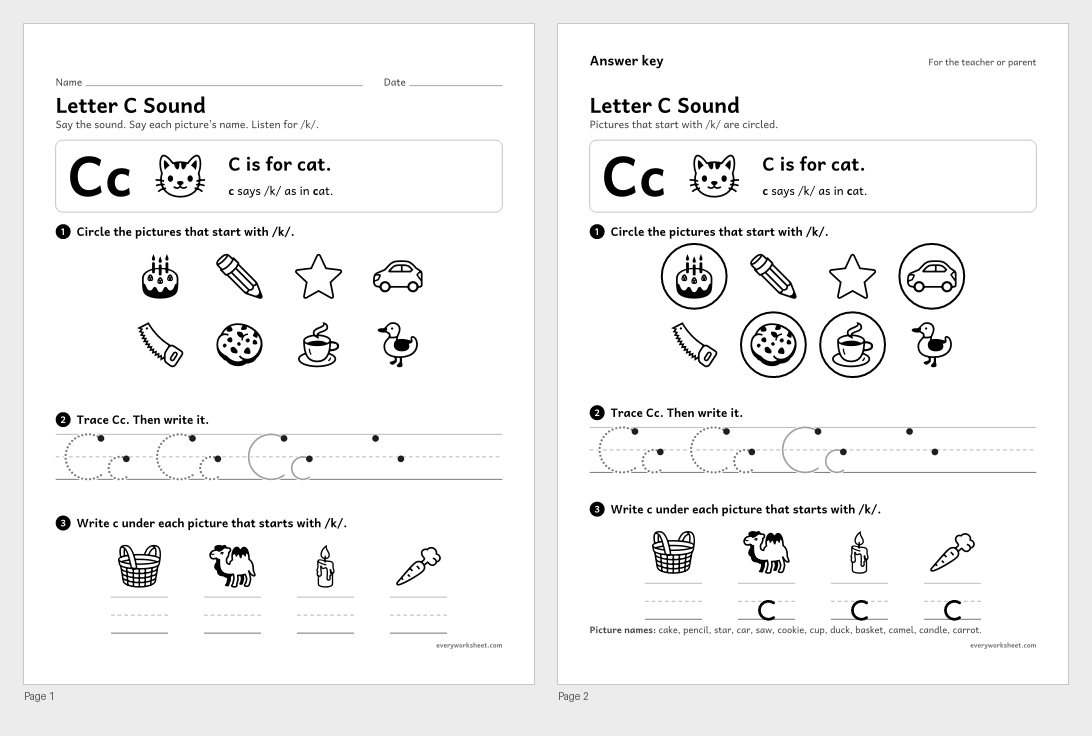
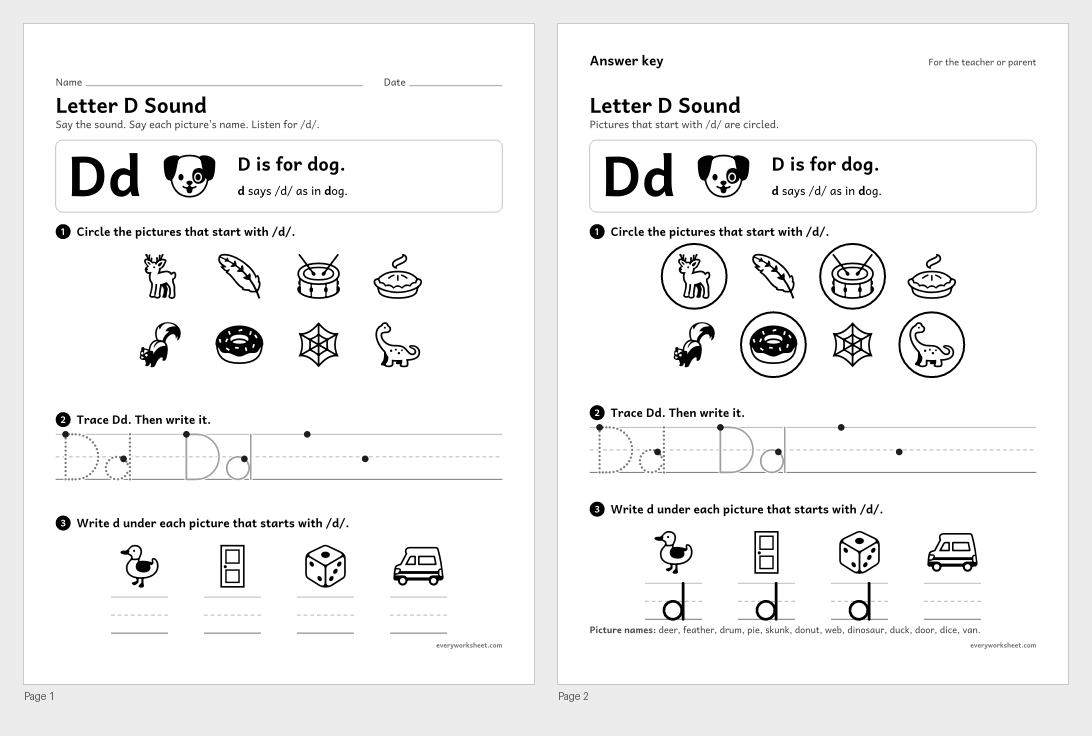
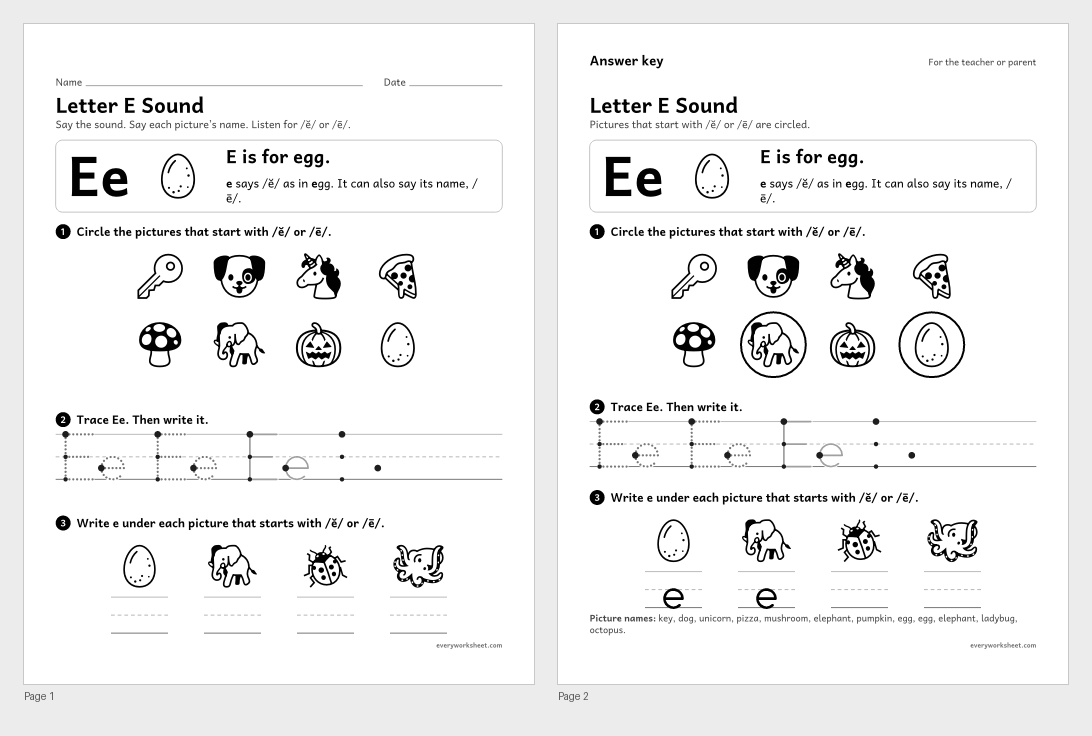
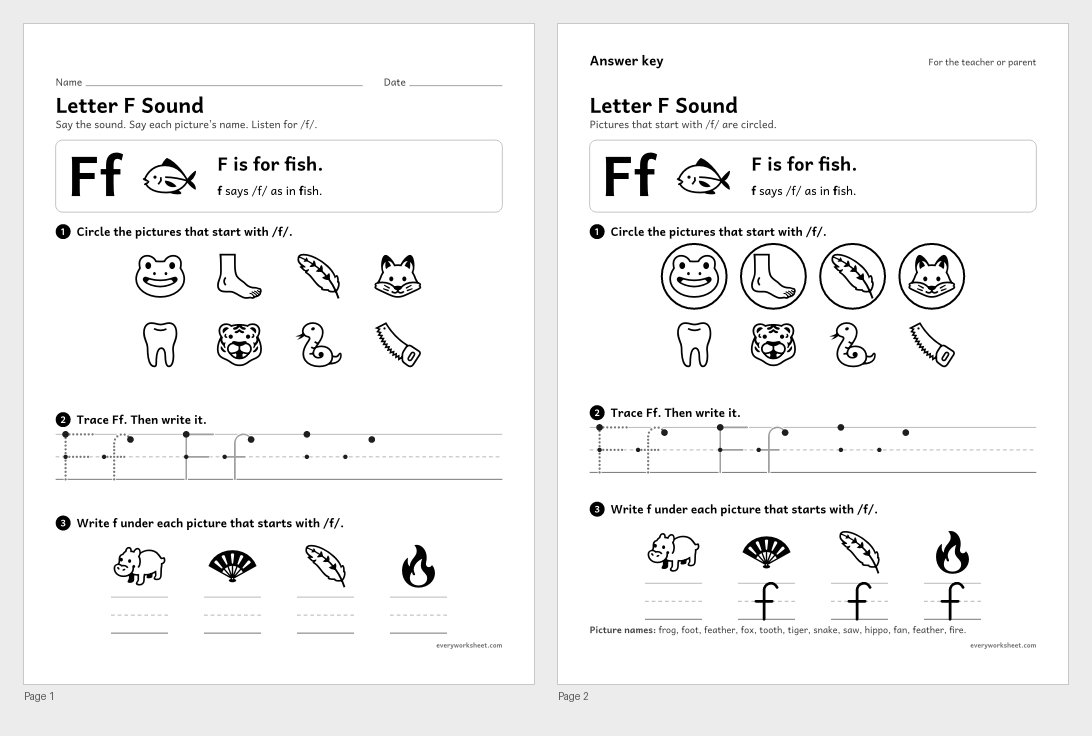
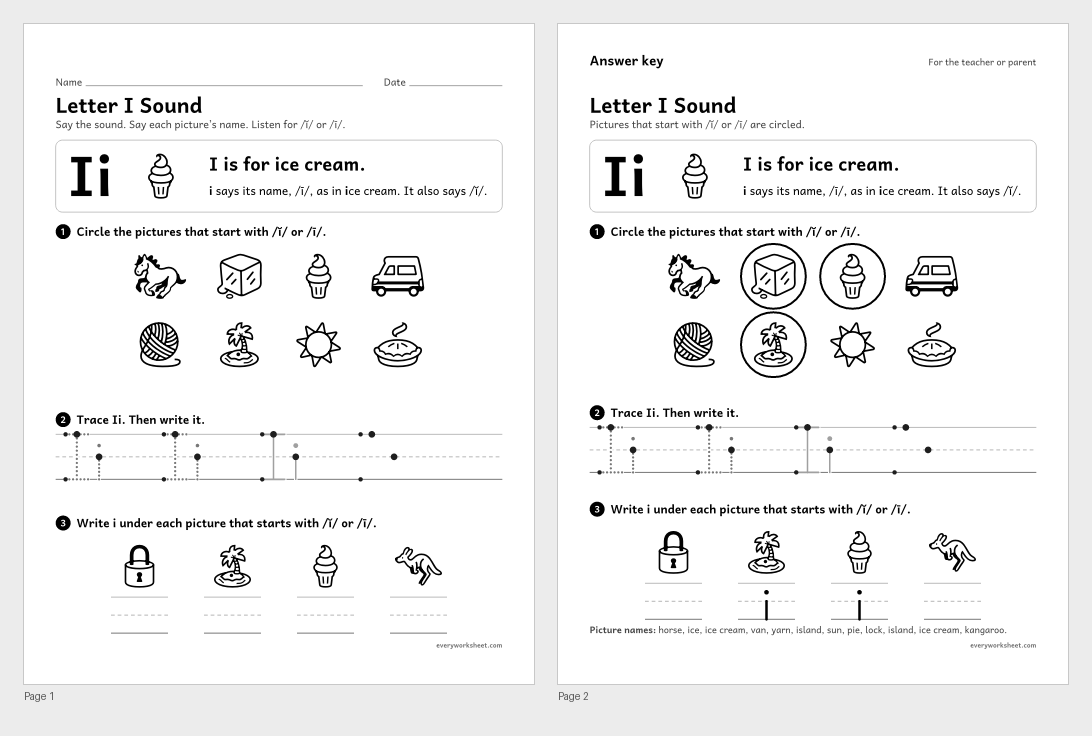
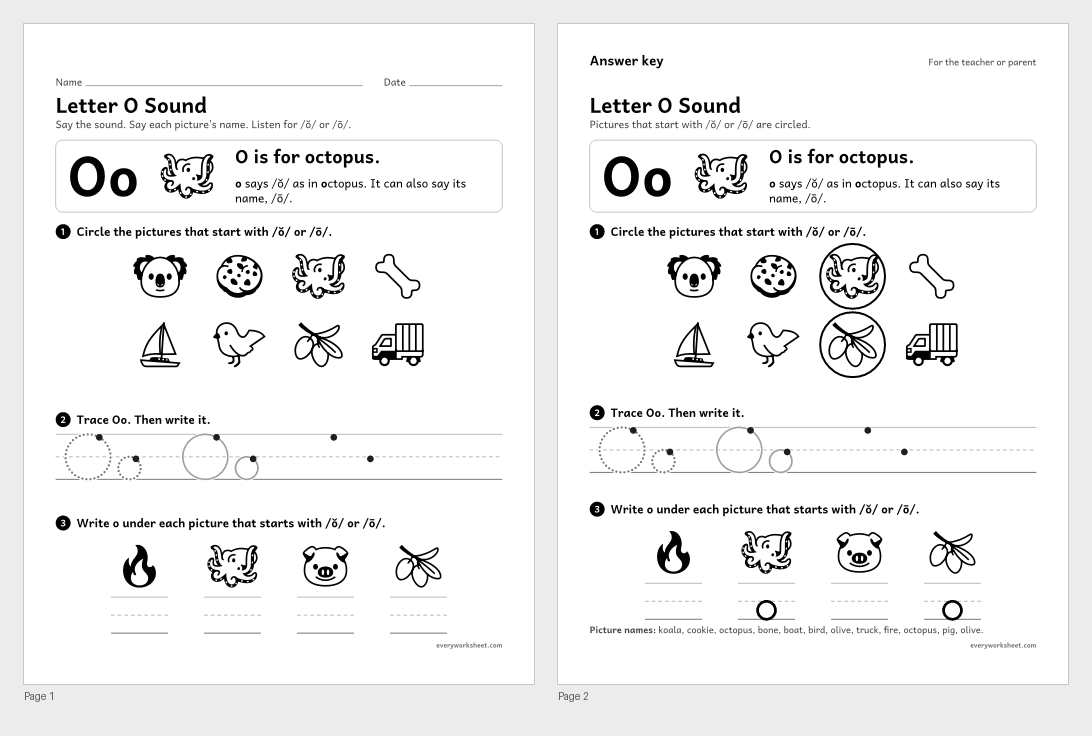
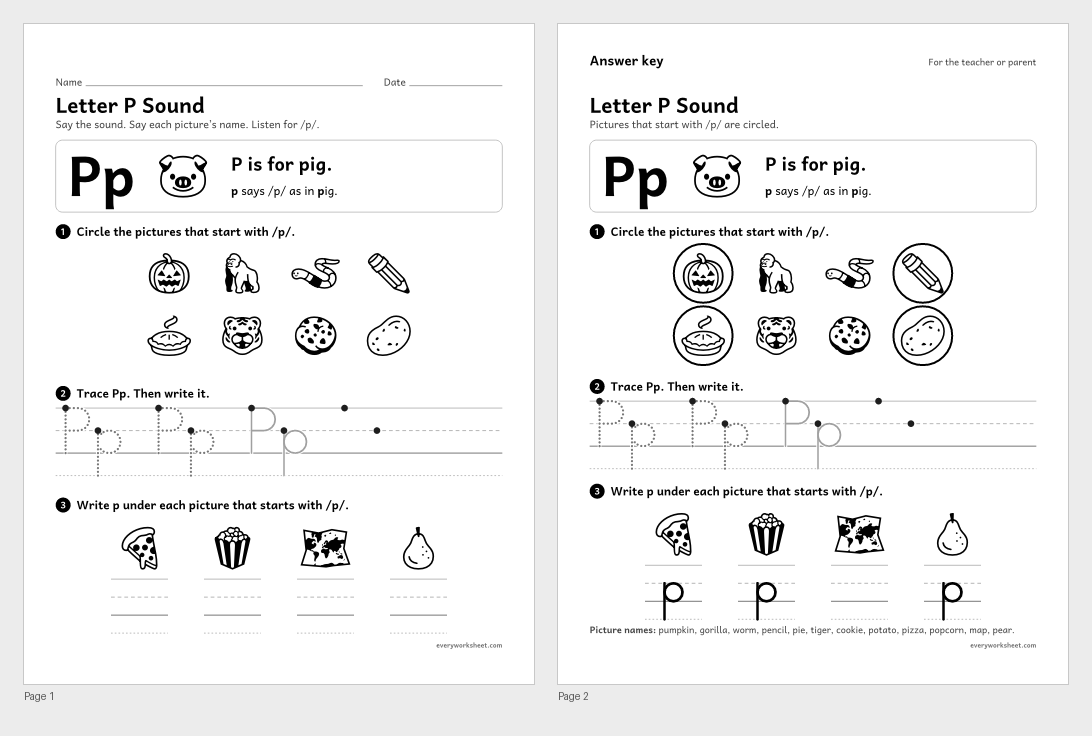
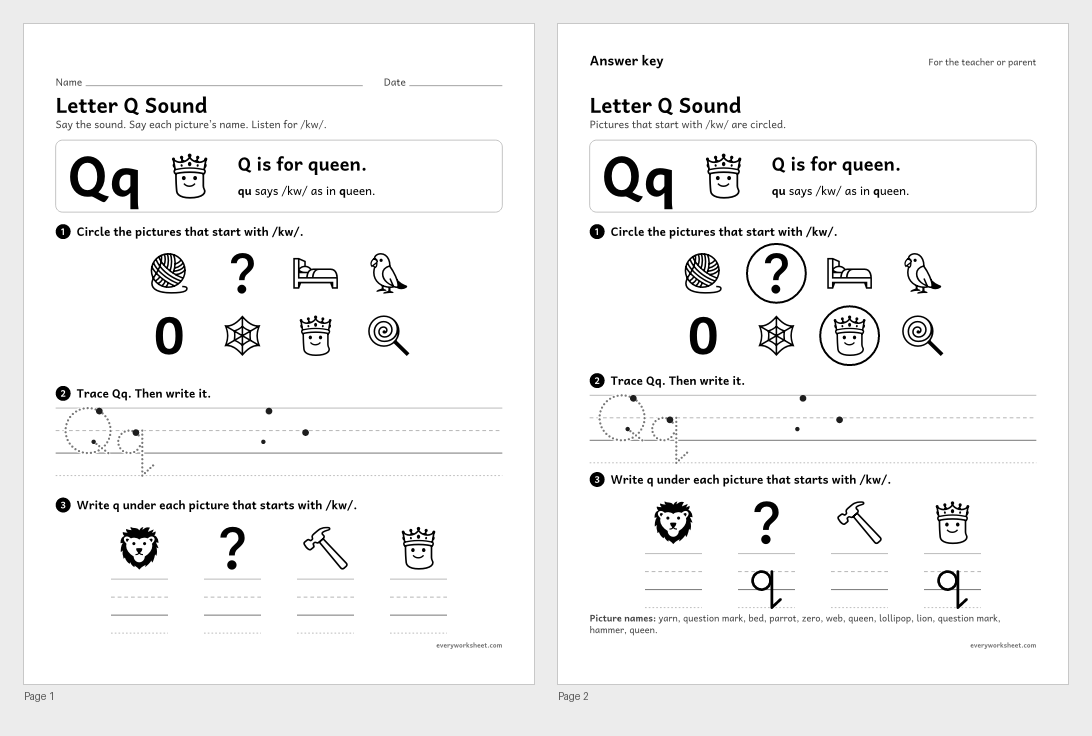
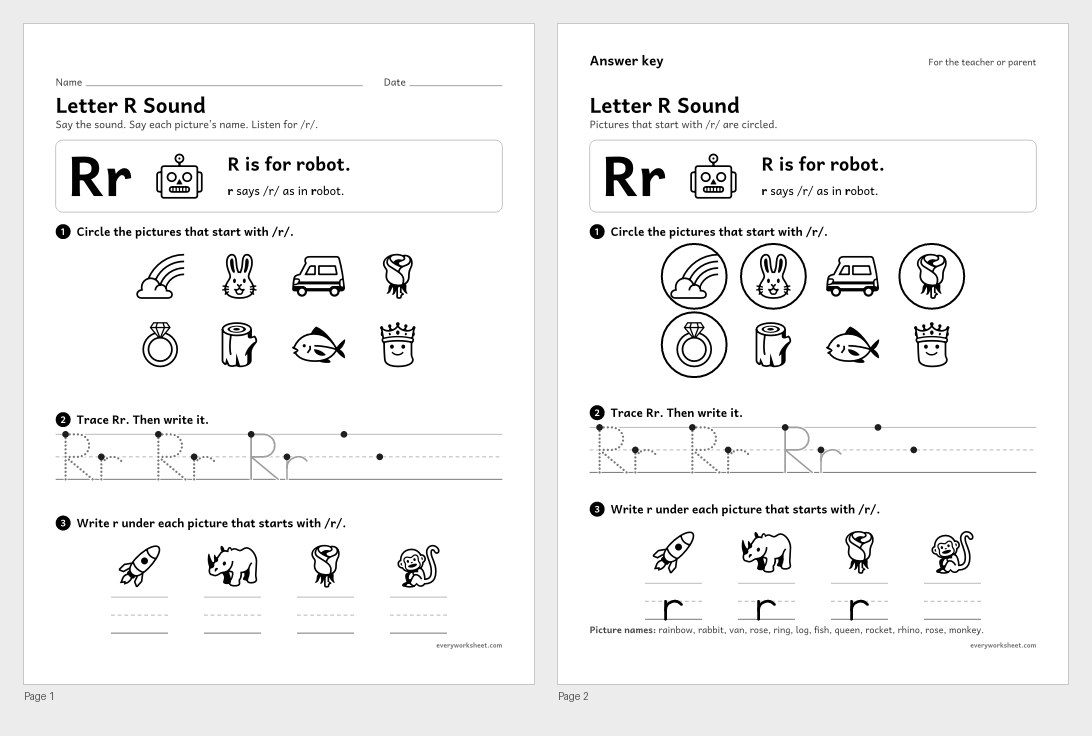
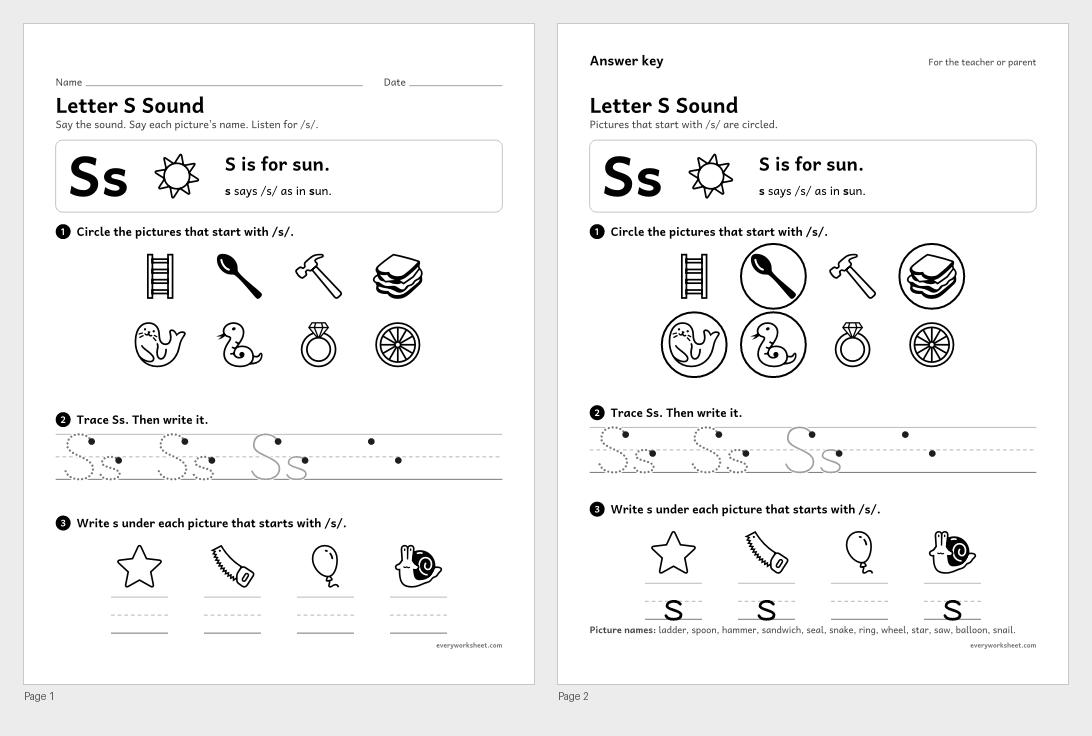
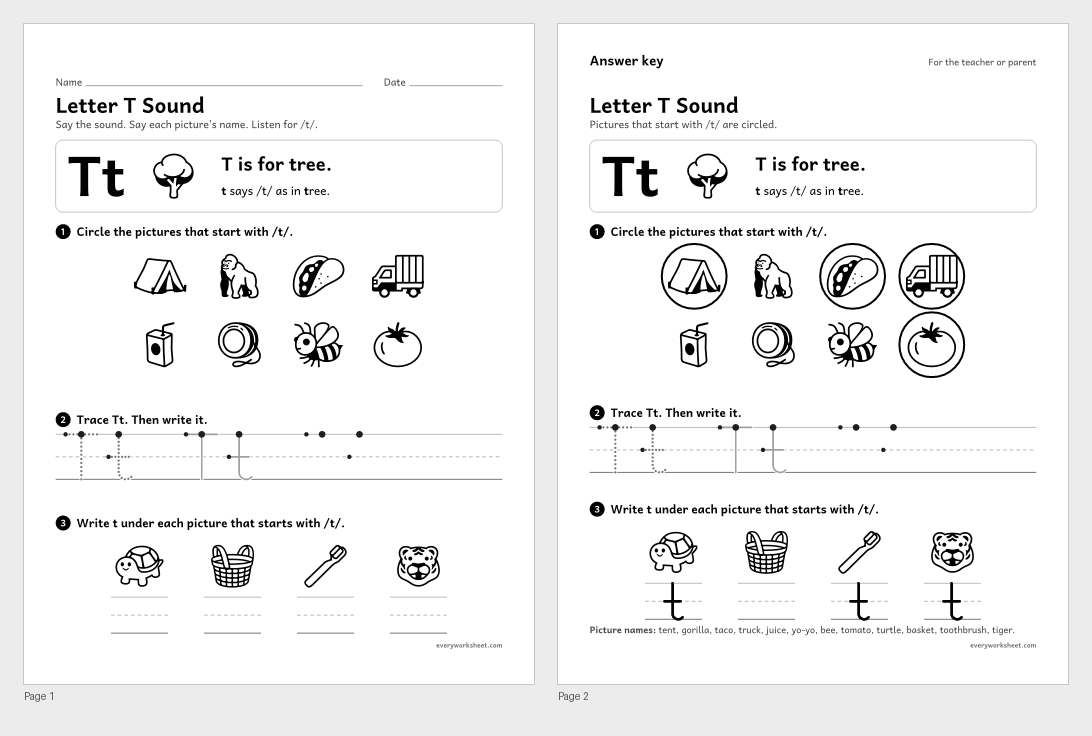
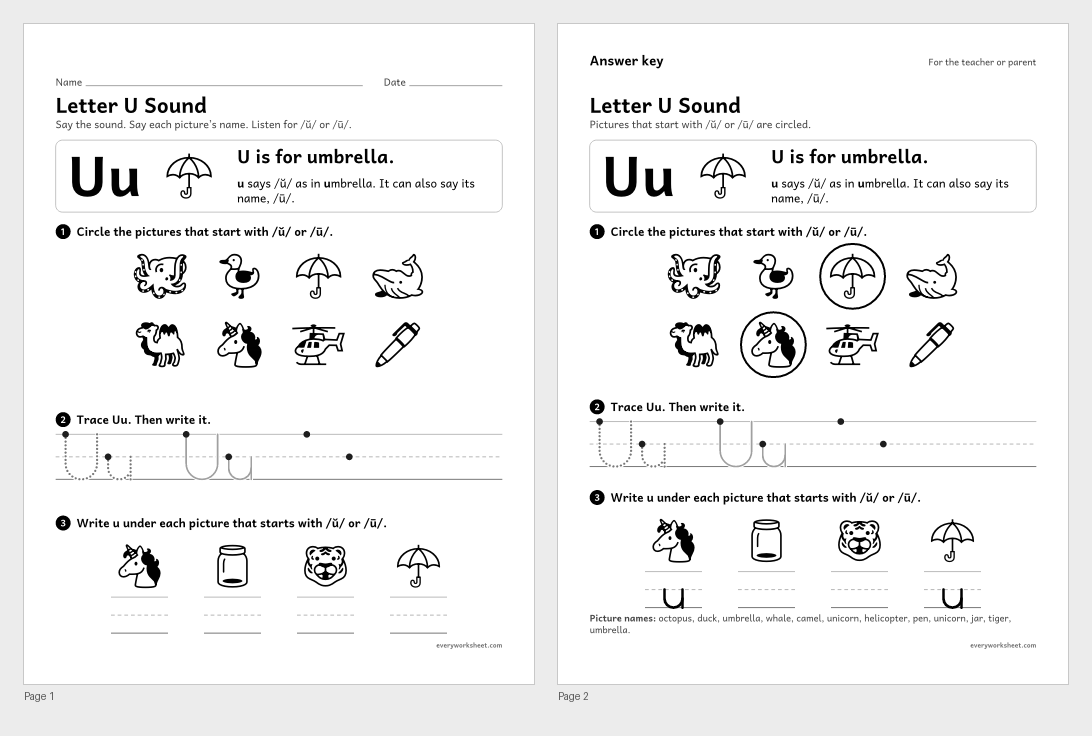
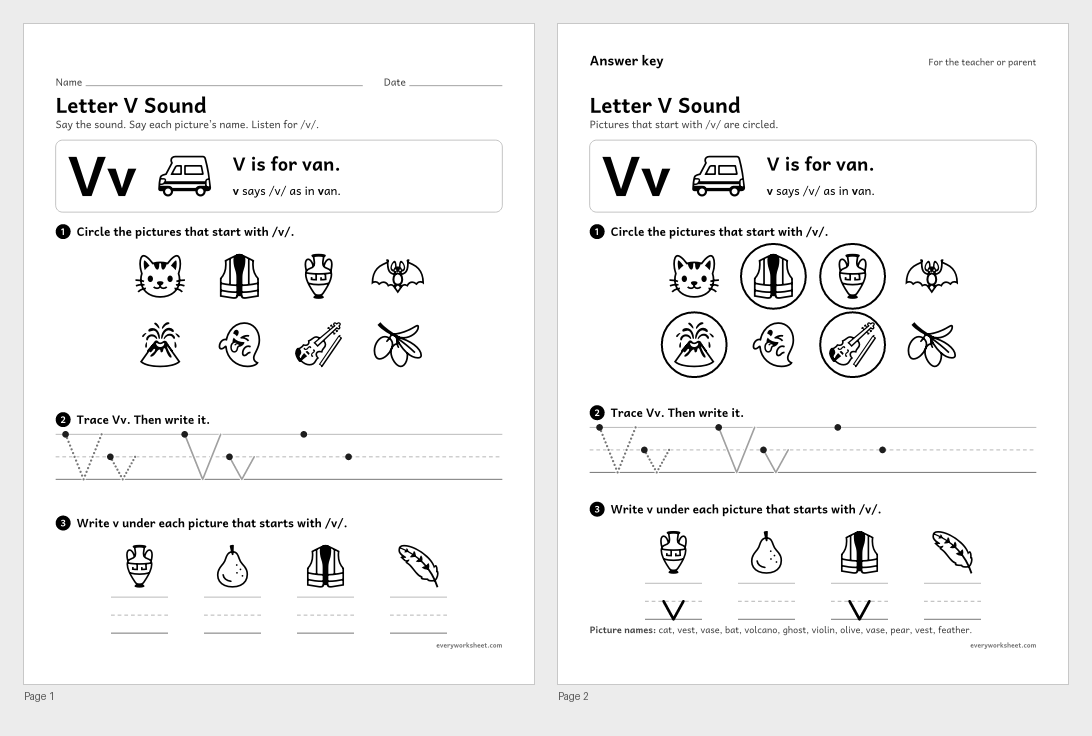
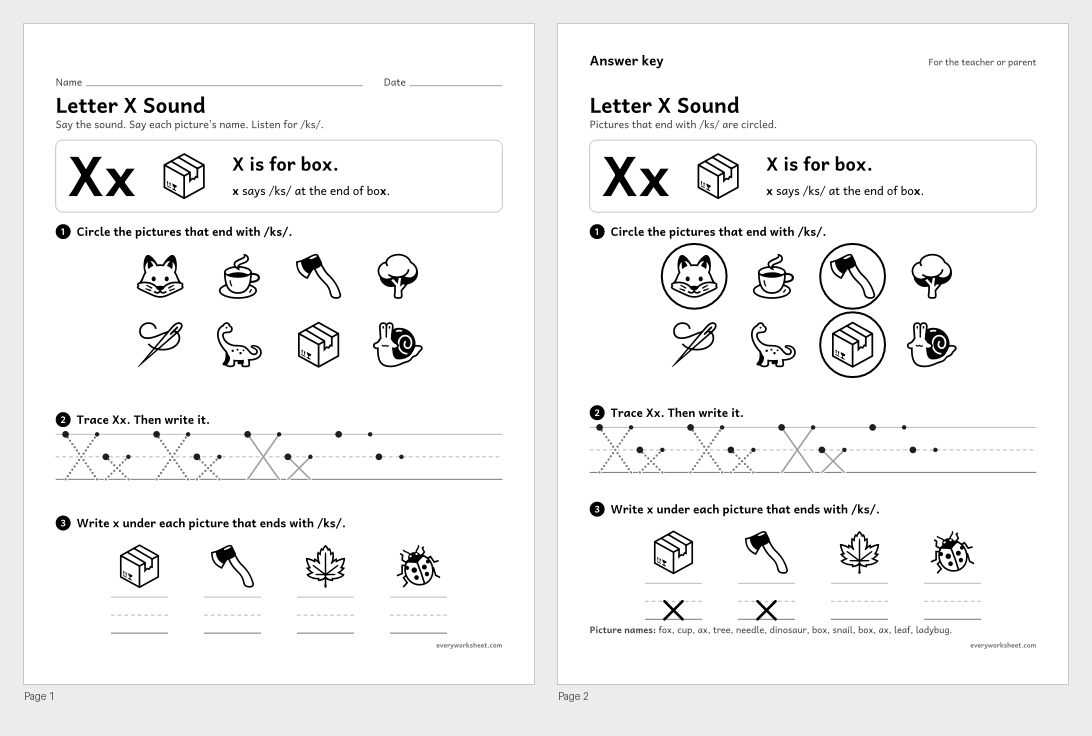
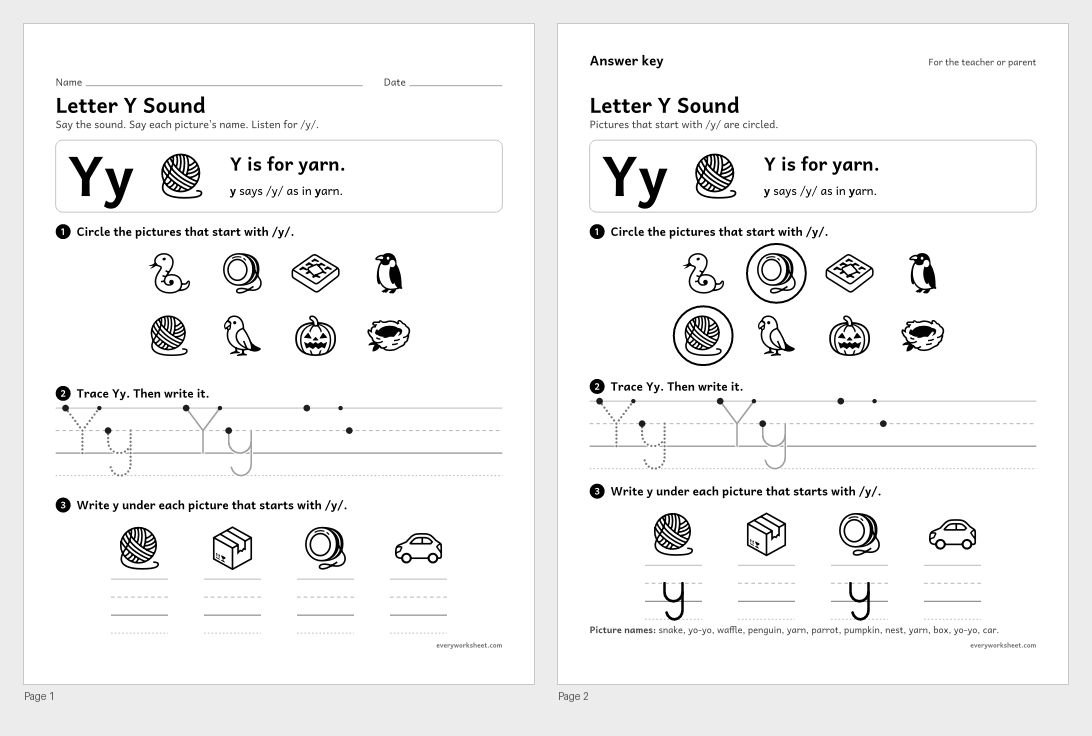
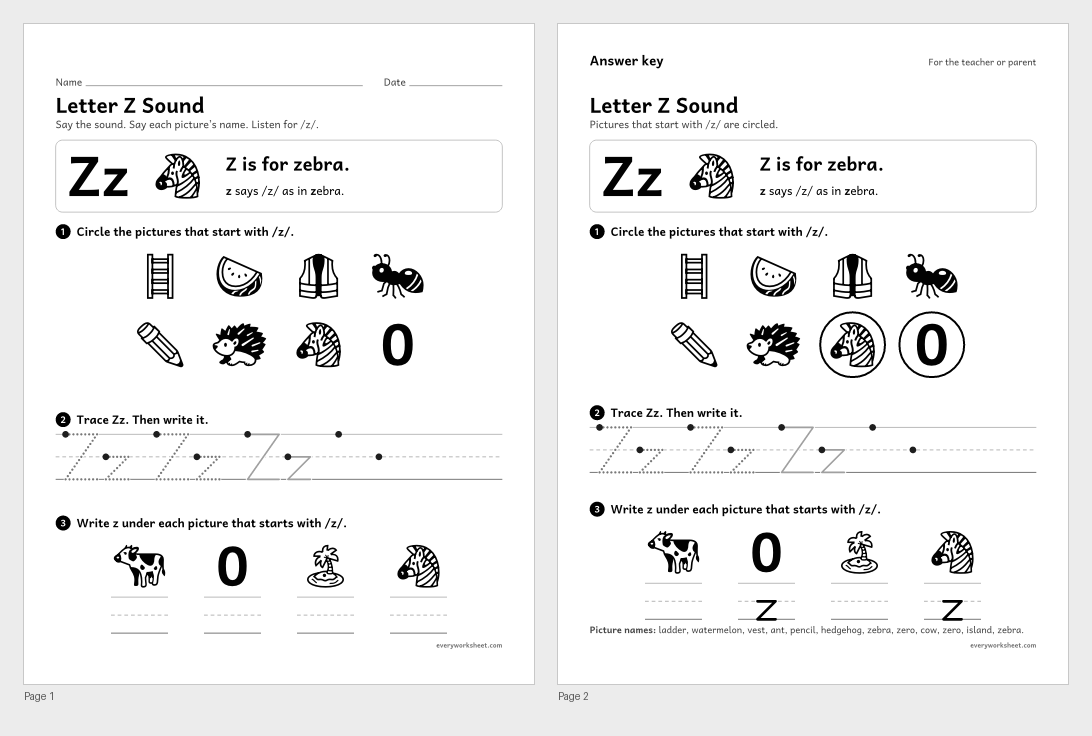
Each page shows the letter, a picture for it and its sound in plain words: "b says /b/ as in bus." Then children say the names of eight pictures and circle the ones that start with that sound, trace the uppercase and lowercase pair, and write the letter under each picture that starts with it. The vowel pages show both sounds, the short sound and the long sound that says the letter's name. The x page teaches x where children really hear it, at the end of words like box and fox.
When a group of letters is done, the review pages mix them up: say the letter's sound, then circle the one picture of three that starts with it. Every page has an answer key on page 2 that also lists the picture names, so there is never a guess about what a picture is called.
Standards
CCSS.ELA-LITERACY.RF.K.3.ADemonstrate basic knowledge of one-to-one letter-sound correspondences by producing the primary sound or many of the most frequent sounds for each consonant.CCSS.ELA-LITERACY.RF.K.3.BAssociate the long and short sounds with the common spellings (graphemes) for the five major vowels.CCSS.ELA-LITERACY.L.K.2.CWrite a letter or letters for most consonant and short-vowel sounds (phonemes).CCSS.ELA-LITERACY.RF.K.1.DRecognize and name all upper- and lowercase letters of the alphabet.
How to use them
- Say the sound first, before your child picks up a pencil. Point to the letter, say its sound, and have your child repeat it two or three times.
- Name the pictures together. Say each one slowly and stretch the first sound: "mmmoon." Then ask, "Does moon start with /m/?" The picture names are on the answer key if one is unclear.
- Teach the letters in any order your class uses. Many teachers start with s, a, t, p, i and n because they make lots of short words quickly, then add the rest a few at a time.
- Use a review page after every five or six letters. If a letter is shaky, go back to its single page the next day.
- Keep it short. One letter sound page takes about ten minutes, and a little practice every day works better than a long session once a week.
Teaching tips
- Say sounds clipped and short: /b/, not "buh." Adding "uh" to the end makes blending harder later ("buh-a-tuh" does not sound like bat).
- c and k make the same /k/ sound, so the c page never uses k pictures as wrong answers, and the k page never uses c pictures.
- If your child names a picture another way (a "bunny" for rabbit), accept it, then share the name on the key and listen to its first sound together.
- Children often confuse b and d, and p and q. Practice those sounds on different days, and use the find and color pages for the shapes.
- Print at actual size (100%). Pages are black and white with simple pictures, so they copy well.
Questions teachers and parents ask
What are letter sounds?
A letter sound is the sound a letter stands for in a word, not the letter's name. The letter b is called "bee," but in bus it says /b/. Knowing these sounds lets children sound out and spell simple words.
Should I teach letter names or letter sounds first?
Most children learn both at the same time. Say the name and the sound together, "B says /b/," and use pictures to tie the sound to real words.
What order should I teach letter sounds in?
There is no single right order. Many classes start with s, a, t, p, i and n so children can build words like sat, pin and tap right away, then add the other letters a few each week. These pages work in any order.
How do the vowel pages work?
Each vowel page shows both sounds. The short sound is the one in apple, egg and octopus. The long sound says the letter's name, like the a in angel. Kindergarten reading leans on the short sounds first.
Why does the x page look for x at the end?
Very few words a five-year-old knows start with the /ks/ sound. Children hear x clearly at the end of box, fox and ax, so that is where the page teaches it.