 View larger
Name Tracing Worksheets
Make a name tracing worksheet for any child in seconds, or paste your class list for a full set, plus printable name writing practice pages.
Free name tracing maker
Make a name tracing worksheet
Type a name, or paste your whole class list to get one page per child. Each page goes from a solid model to dotted letters to writing the name alone.
One name per line (or separated by commas). Each name gets its own page.
Sample page. Type a name to make your own.
Print at 100% (actual size). To keep a copy, choose Save as PDF in the print window. Names stay on this device: nothing is uploaded or saved.
Name writing practice worksheets
 View larger
 View larger
 View larger
 View larger
Print at 100% (actual size) for the cleanest tracing lines.
About these name tracing worksheets
A child's own name is usually the first word they learn to write, and the one they care about most. Type a name into the name tracing maker above and you get a print-ready page in the same simple ball-and-stick print as the rest of our worksheets. Paste a whole class list and you get one page per child, ready to print in one go.
Each page moves from support to independence. The first row shows the name in solid letters, with a big dot where every letter starts. Then come dotted letters to trace, a row of light letters, a row with only the starting dots, and finally blank lines to write the name alone. You can choose more tracing for children who are just starting or more writing for children who are nearly there.
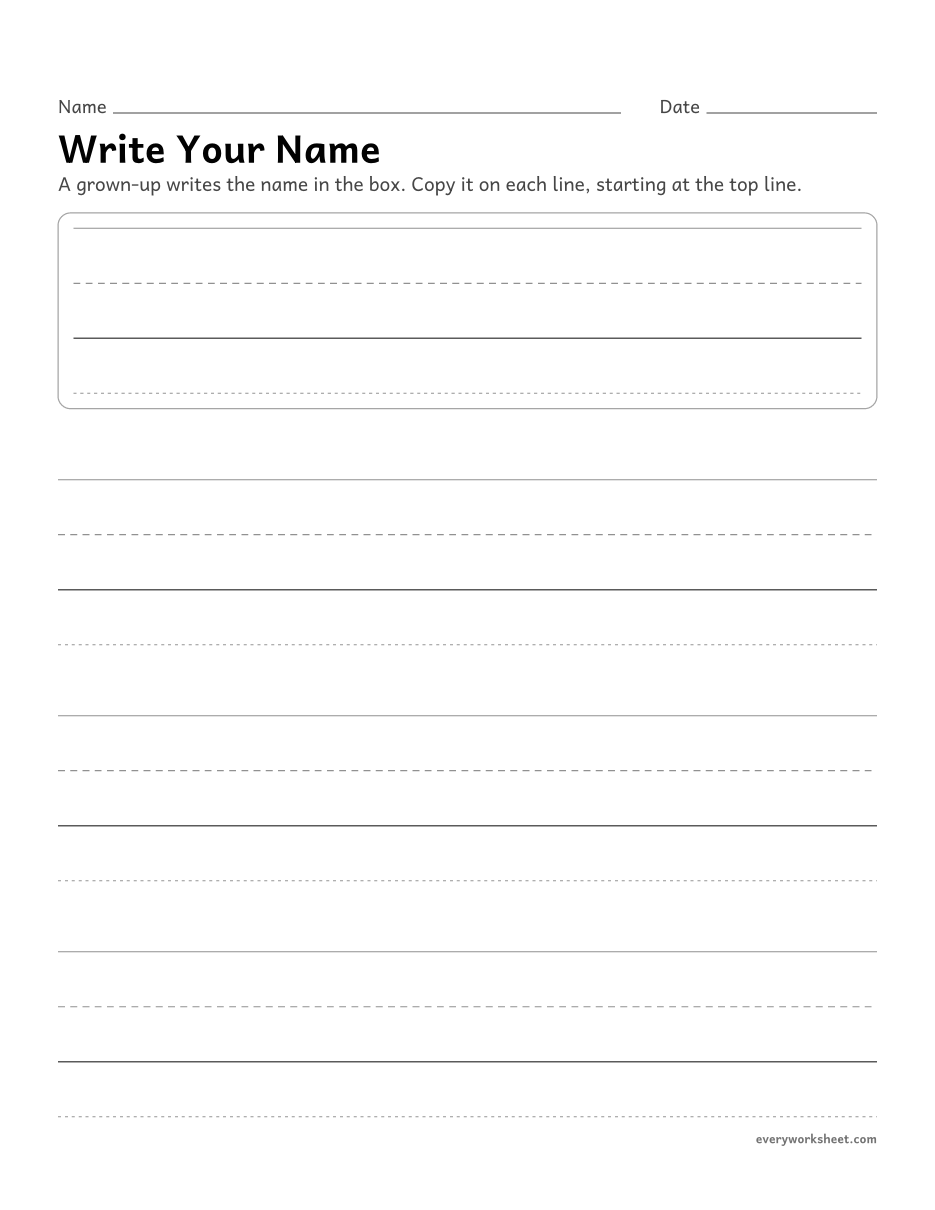
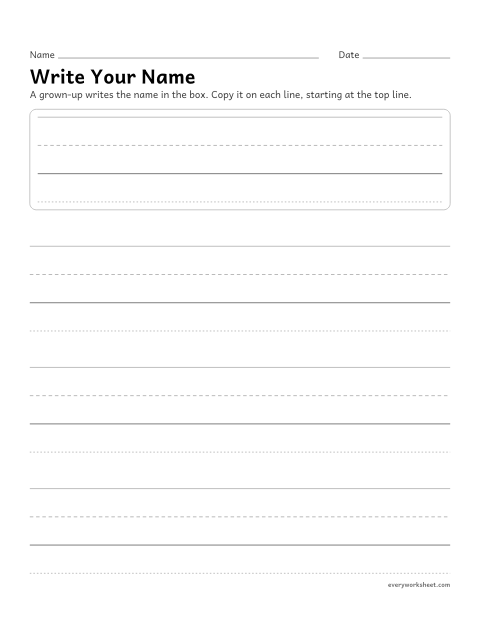
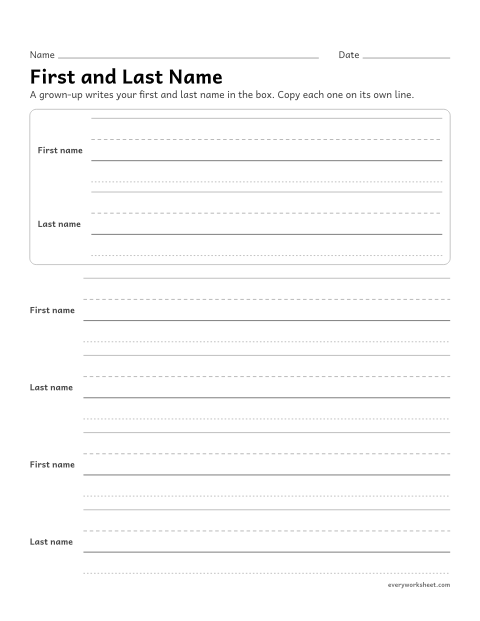
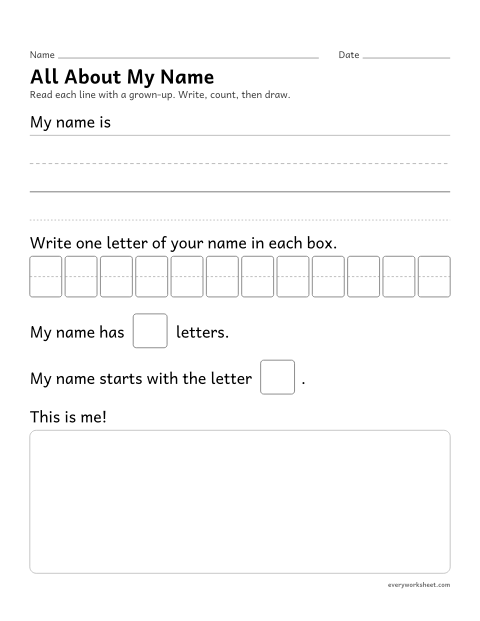
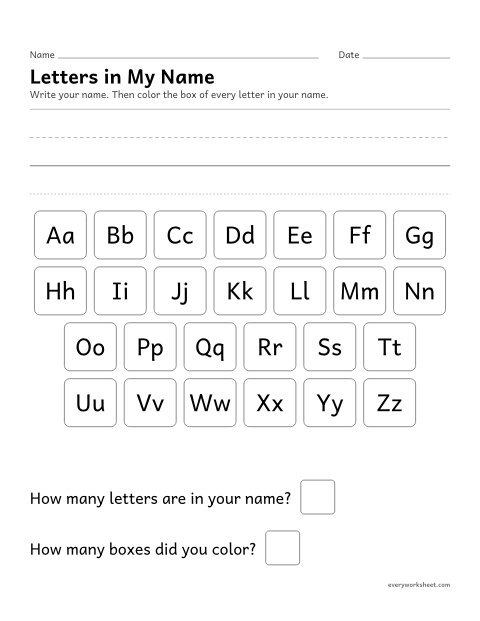
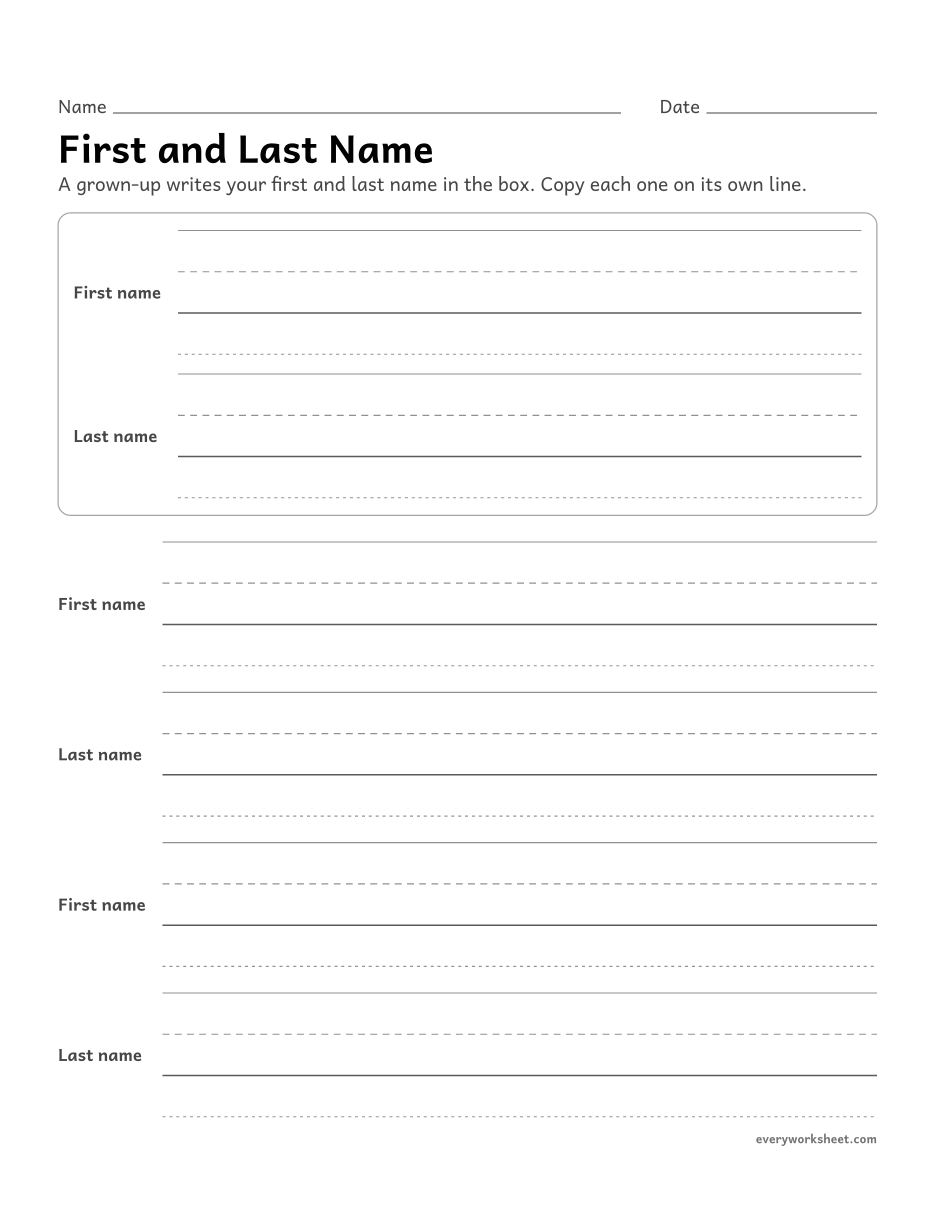
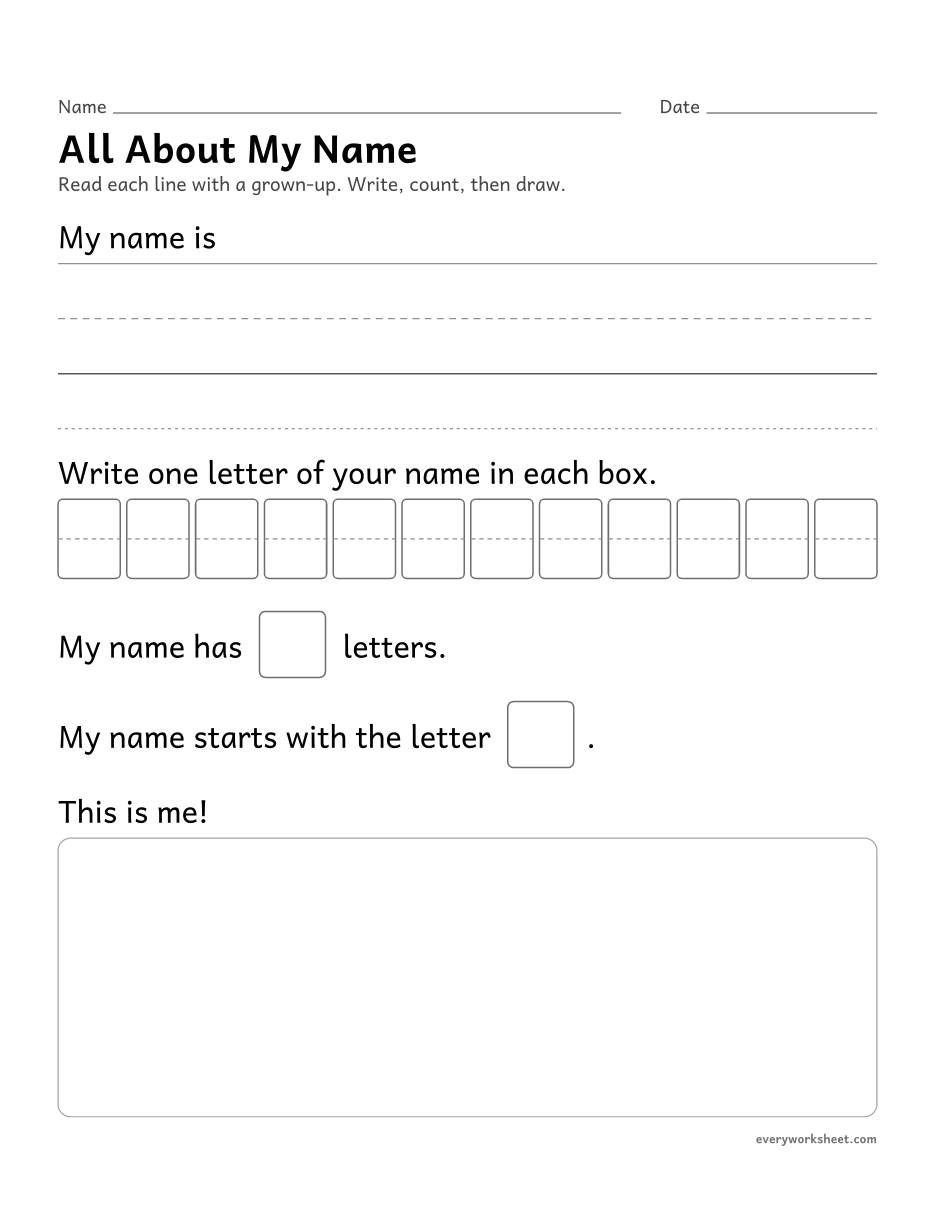
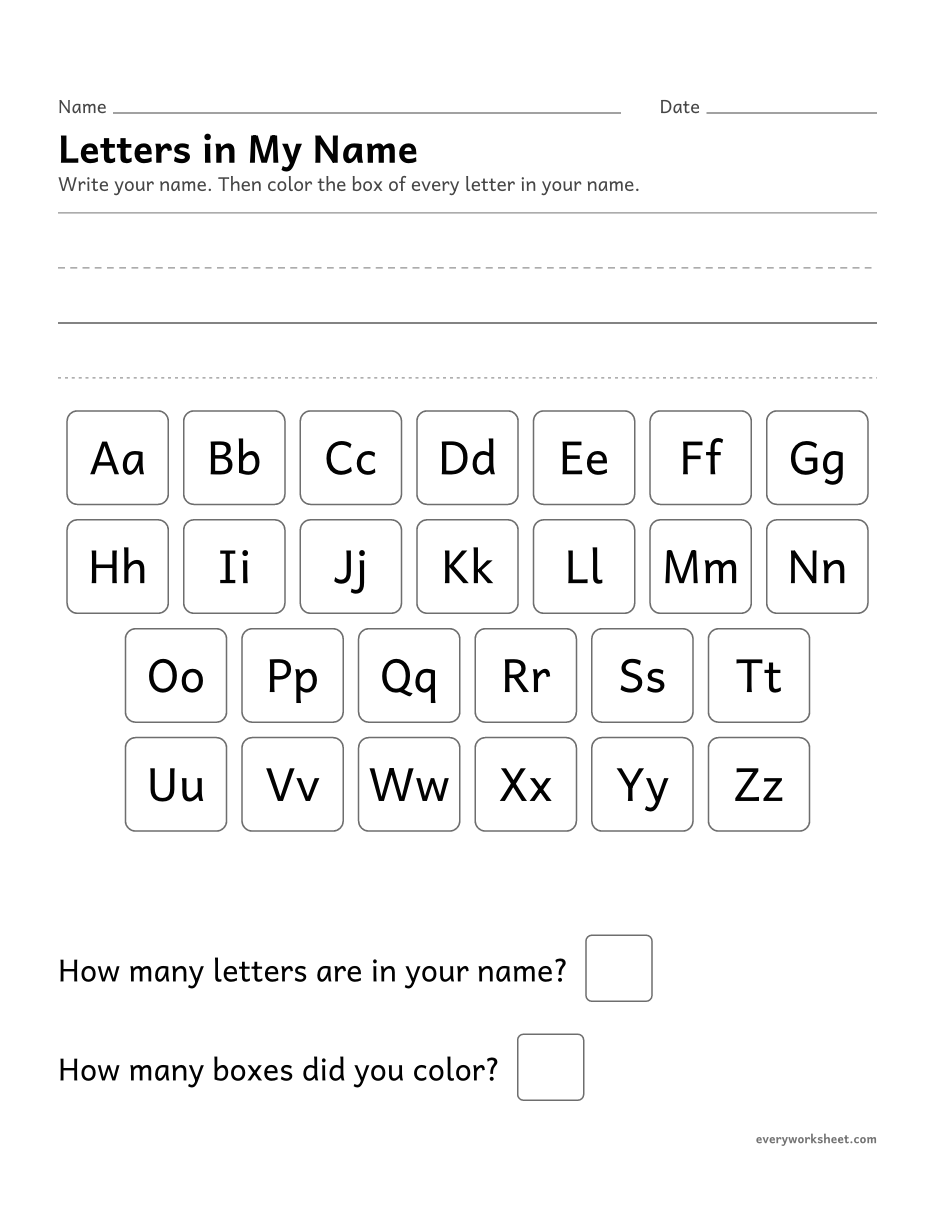
The ready-made name writing practice worksheets below work for any child without typing anything: a grown-up writes the name once in the box at the top, and the child copies it. There is also a first and last name page, an All About My Name page for counting the letters, and a letter hunt that has children find every letter of their name in the alphabet.
By the end of kindergarten, Common Core expects children to print many upper- and lowercase letters and to recognize and name all of them. Writing their own name is where most children practice both, every single day.
Standards
CCSS.ELA-LITERACY.L.K.1.APrint many upper- and lowercase letters.CCSS.ELA-LITERACY.RF.K.1.BRecognize that spoken words are represented in written language by specific sequences of letters.CCSS.ELA-LITERACY.RF.K.1.DRecognize and name all upper- and lowercase letters of the alphabet.
How to use them
- Type the name with a capital first letter and lowercase letters after it (Maya, not MAYA). This is how children will write their name in school. Choose All capitals only for a child who already writes their name that way and needs a bridge.
- For a class set, paste your class list into the Names box, one name per line or separated by commas, then print all pages at once. Each child gets a page with their own name.
- Show your child where each letter starts before they trace. Every letter has its own big starting dot, so they never have to guess.
- Keep it short: one careful page is plenty for a five-year-old. Repeat the same page over several days rather than doing several pages at once.
- Once your child can trace their first name smoothly, switch to More writing, then add the last name with the First and last name option.
- The Write Your Name worksheet is handy for name practice at a center or at home: write the name in the box with a marker, and your child copies it on the lines below.
Teaching tips
- Print at 100% (actual size). The letters are kindergarten size, 1 inch from the top line to the baseline, to match kindergarten writing paper.
- Children often write their whole name in capitals because capitals are easier to form. Praise the effort, then model the capital first letter followed by lowercase letters.
- Watch where each letter starts, not just how it looks at the end. Letters drawn from the bottom up slow children down later, when they write longer words.
- Hyphens and apostrophes are traced too (Mary-Kate, O'Brien). Accent marks are left off the dotted letters, so add them by hand after your child traces.
- If a name is long, the maker shrinks the letters a little so the whole name stays on one line. For first and last names, each name gets its own rows.
- Slide the page into a clear sheet protector and use a dry-erase marker to practice the same name again and again.
- Names stay on your device. The maker runs in your browser, so nothing you type is uploaded or saved.
Questions teachers and parents ask
Is the name tracing maker free?
Yes. Type as many names as you like and print as many pages as you need. There is no account, no email sign-up and no watermark.
How do I make name tracing worksheets for my whole class?
Paste your class list into the Names box, one name per line or separated by commas. The maker makes one page per child, up to 40 at a time, and prints them all at once. Use the arrows above the preview to check each page first.
Can I save the worksheet as a PDF?
Yes. Click Print, then choose Save as PDF as the printer in your browser's print window. The page keeps its size and half-inch margins.
Should my child trace their name in capitals or lowercase?
Start with a capital first letter and lowercase letters after it, the way names are written in books and at school. Children who learned their name in all capitals can use the All capitals option for a while, then switch.
When should children learn to write their last name?
Most children work on their last name once they can write their first name on their own, often in the second half of kindergarten. Choose First and last name and each name gets its own rows.
Do these name worksheets print on A4 paper?
Yes. Choose A4 under Paper before you print and the page is laid out for A4 with the same margins.