 View larger
Printable Number Lines and Number Line Worksheets
Printable number lines 0–10, 0–20 and 0–100, blank number lines, and practice pages for missing numbers, hopping to add and subtract, and comparing.
Download the number line worksheets
Printable number lines
 View larger
 View larger
 View larger
 View larger
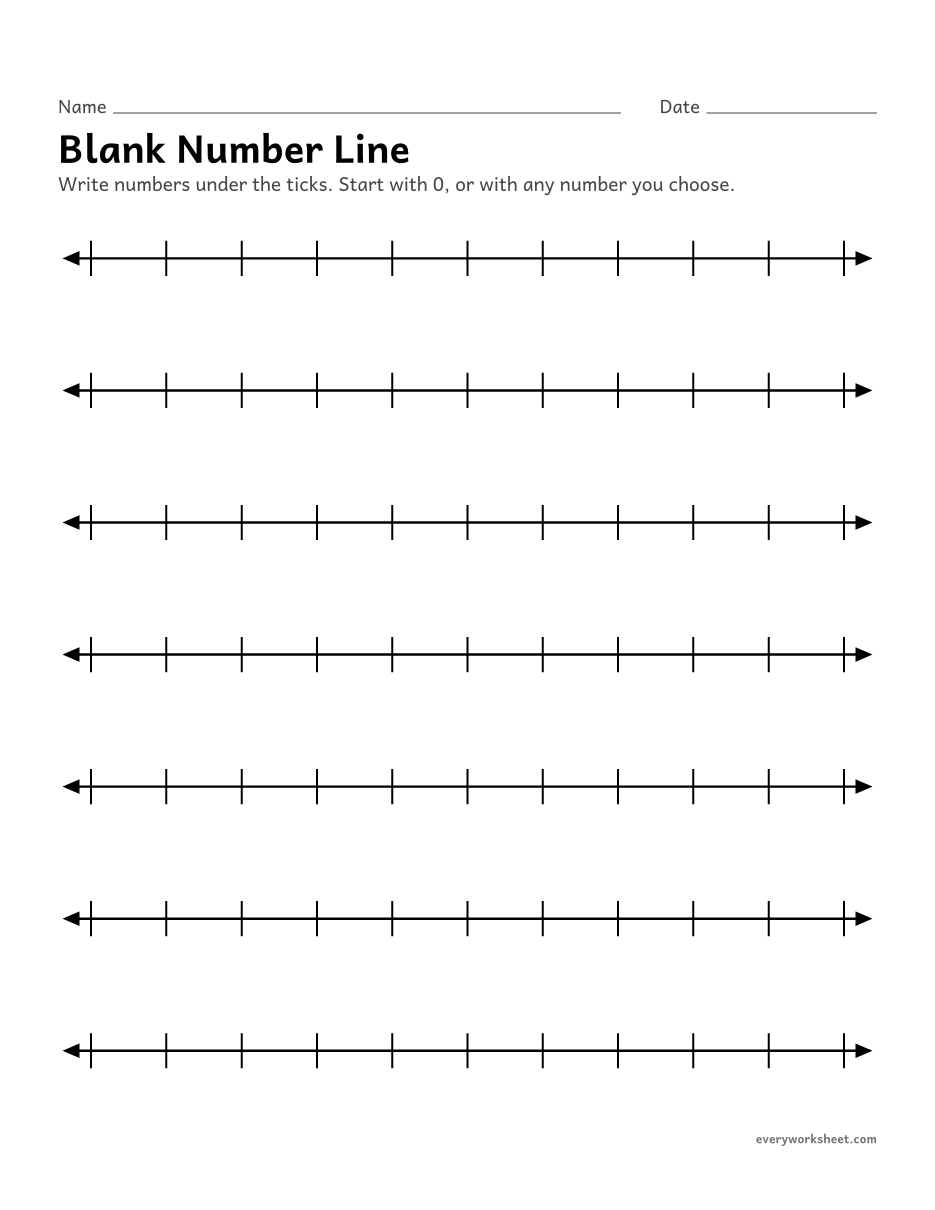
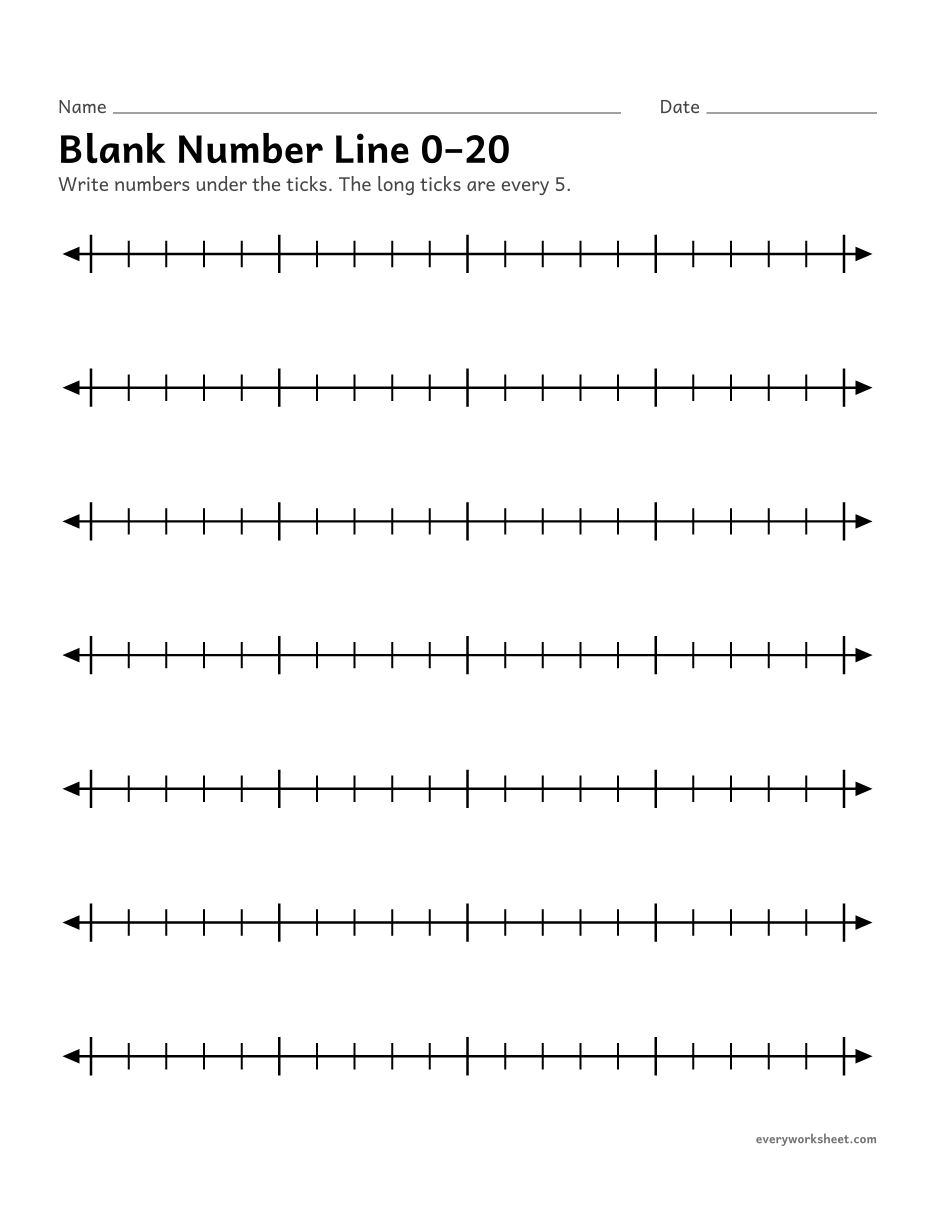
Blank number lines
Number line worksheets
 View all 2 pages
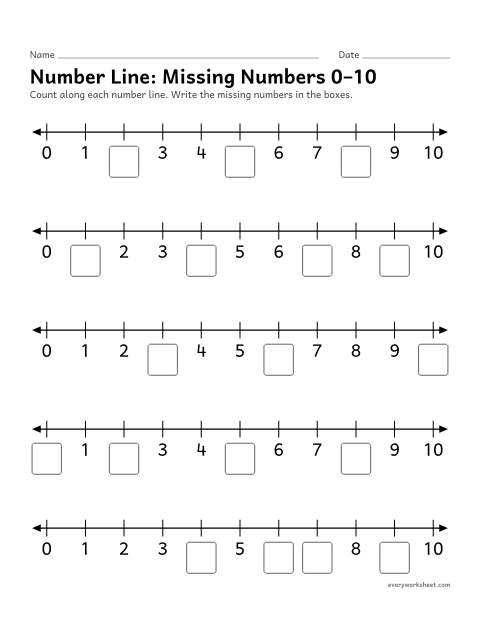
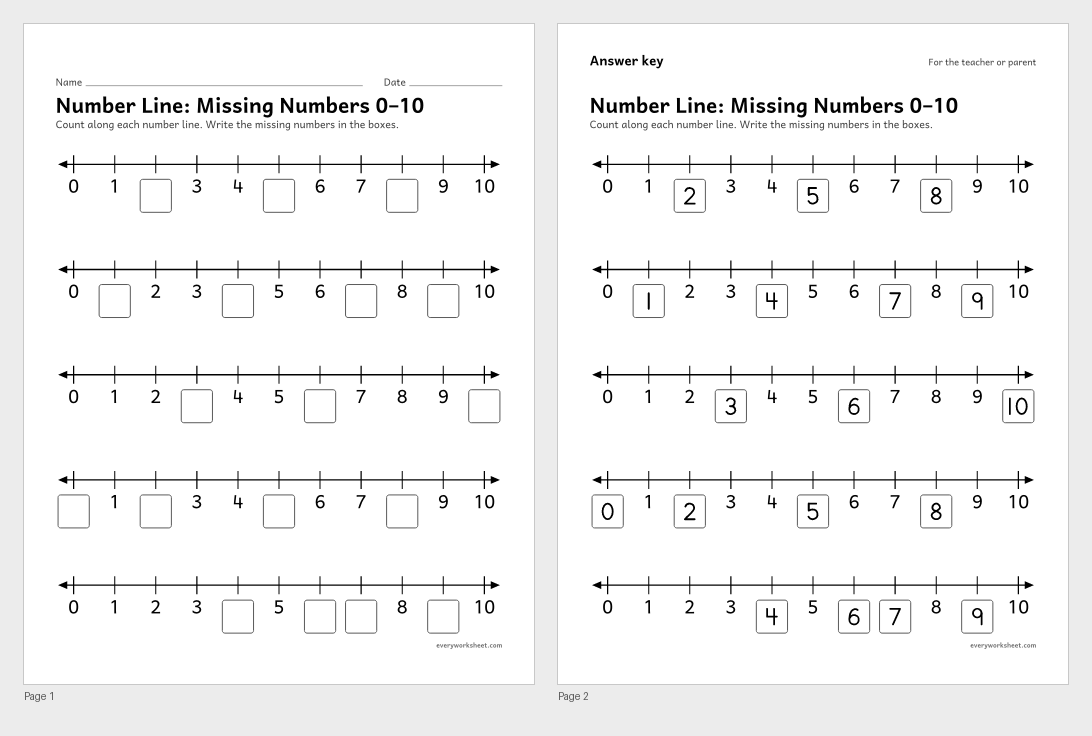
Number Line: missing numbers 0–10
Counting forward to find missing numbers
Answer key on page 2
2 pages32 KB
 View all 2 pages
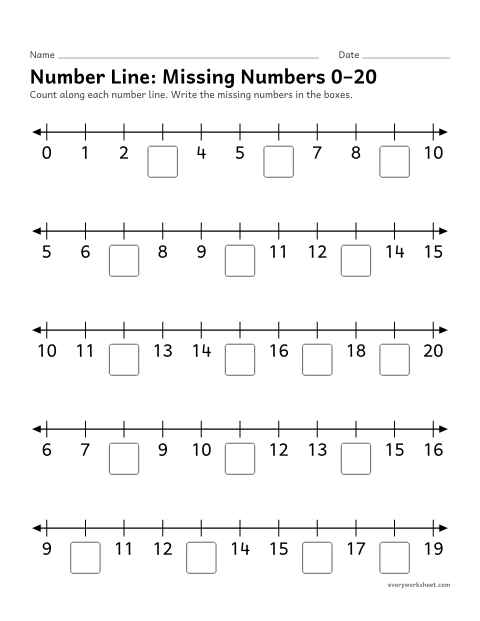
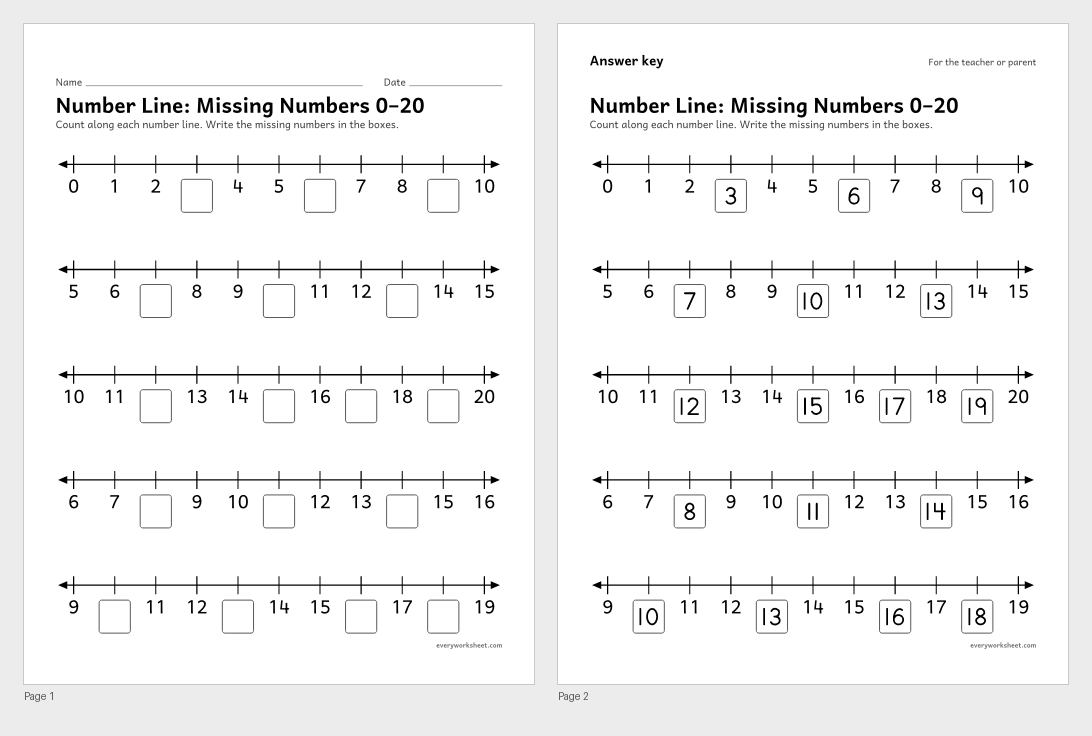
Number Line: missing numbers 0–20
Counting forward from any number to find missing numbers
Answer key on page 2
2 pages32 KB
 View all 2 pages
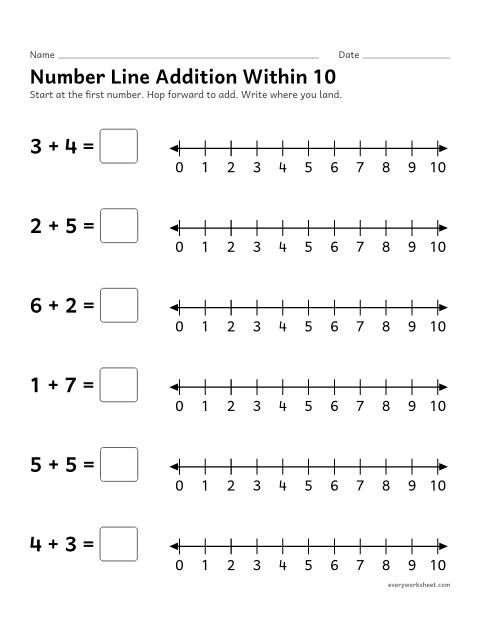
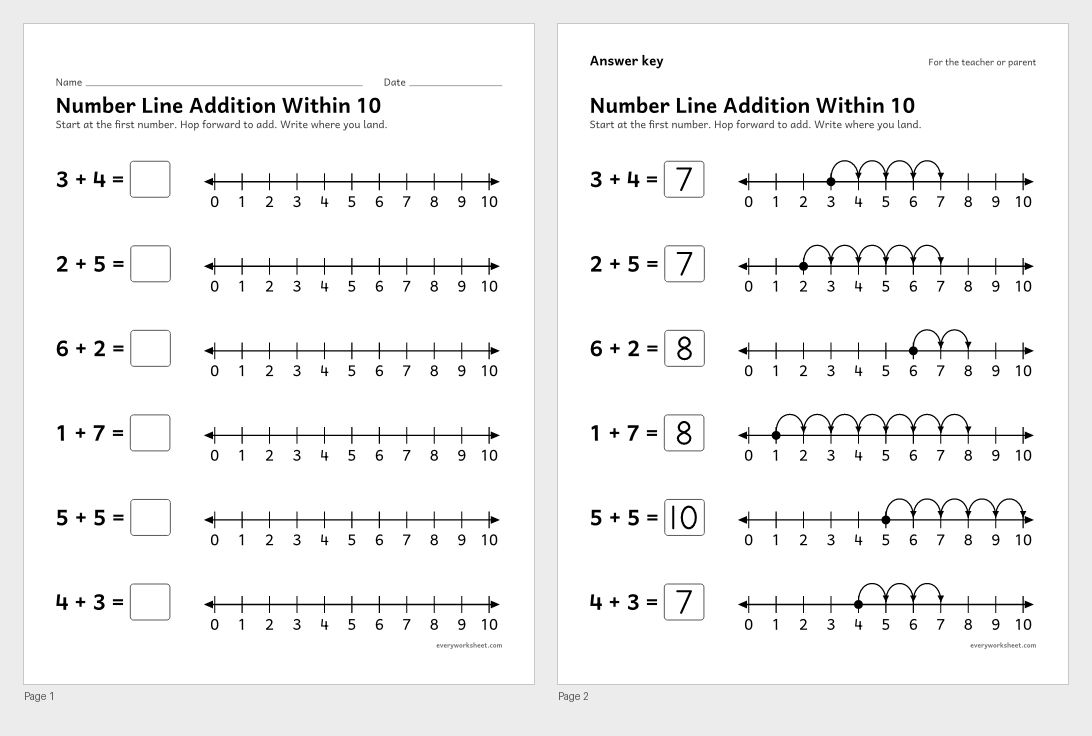
Number line addition within 10
Adding by hopping forward on a number line
Answer key on page 2
2 pages39 KB
 View all 2 pages
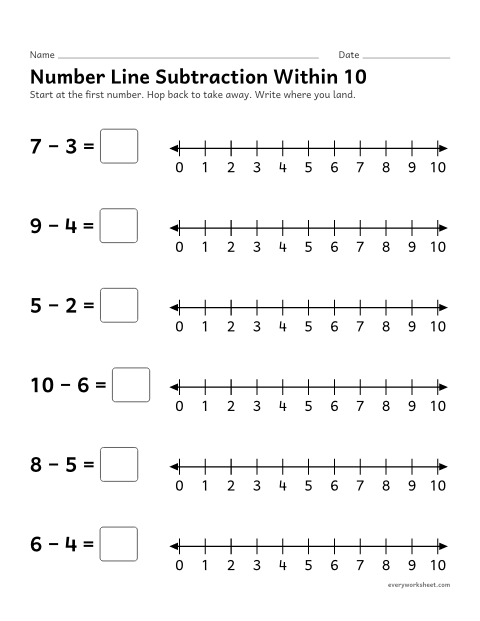
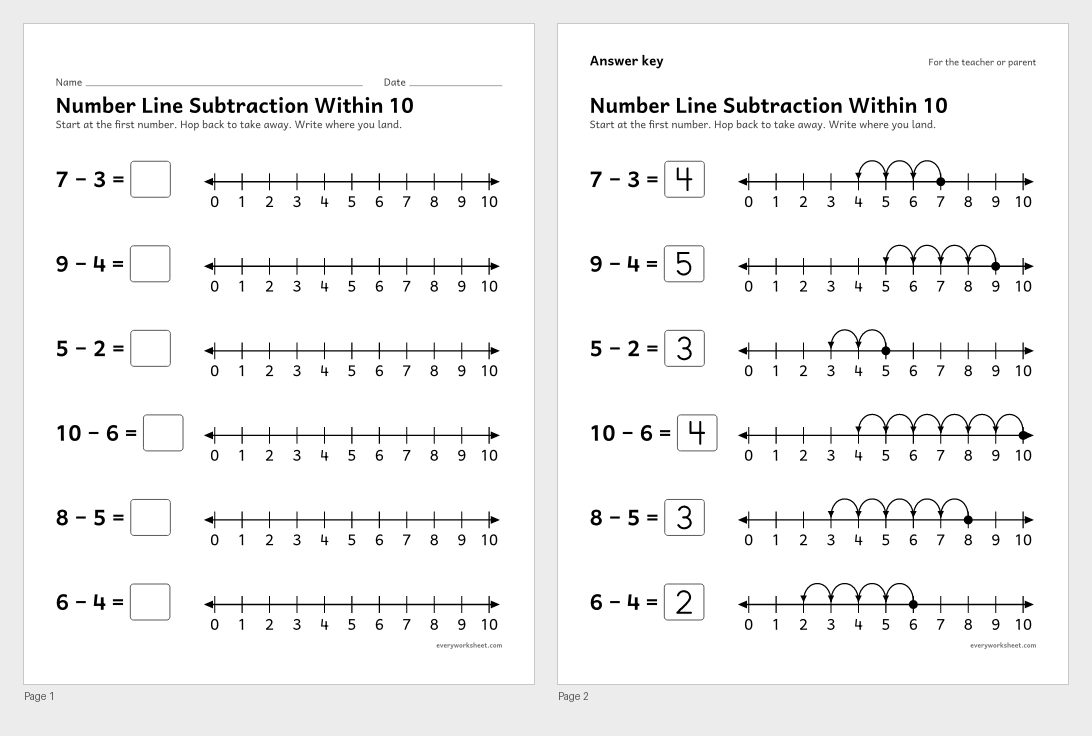
Number line subtraction within 10
Subtracting by hopping back on a number line
Answer key on page 2
2 pages40 KB
 View all 2 pages
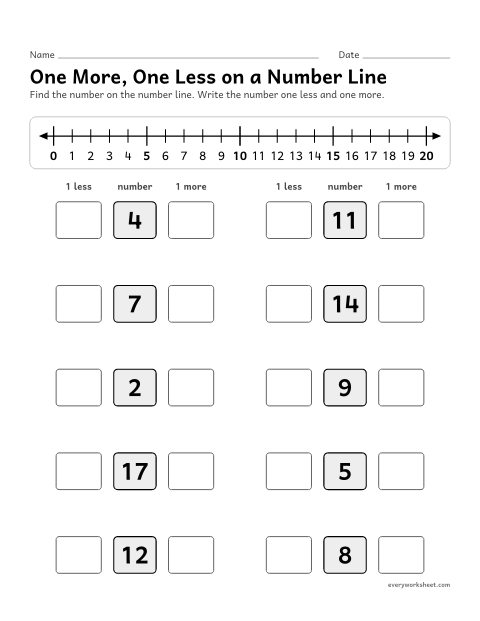
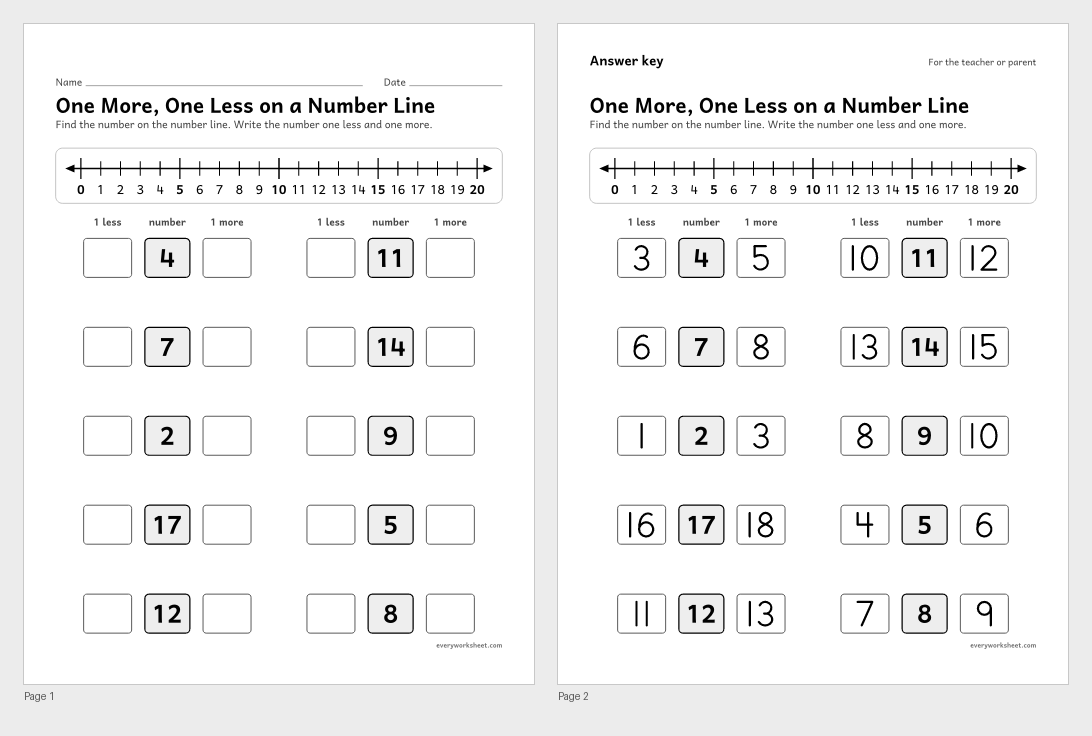
One More, one less on a number line
Finding one more and one less within 20
Answer key on page 2
2 pages38 KB
 View all 2 pages
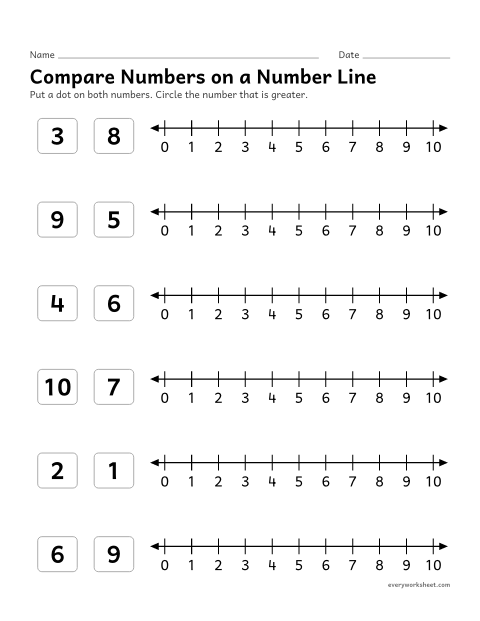
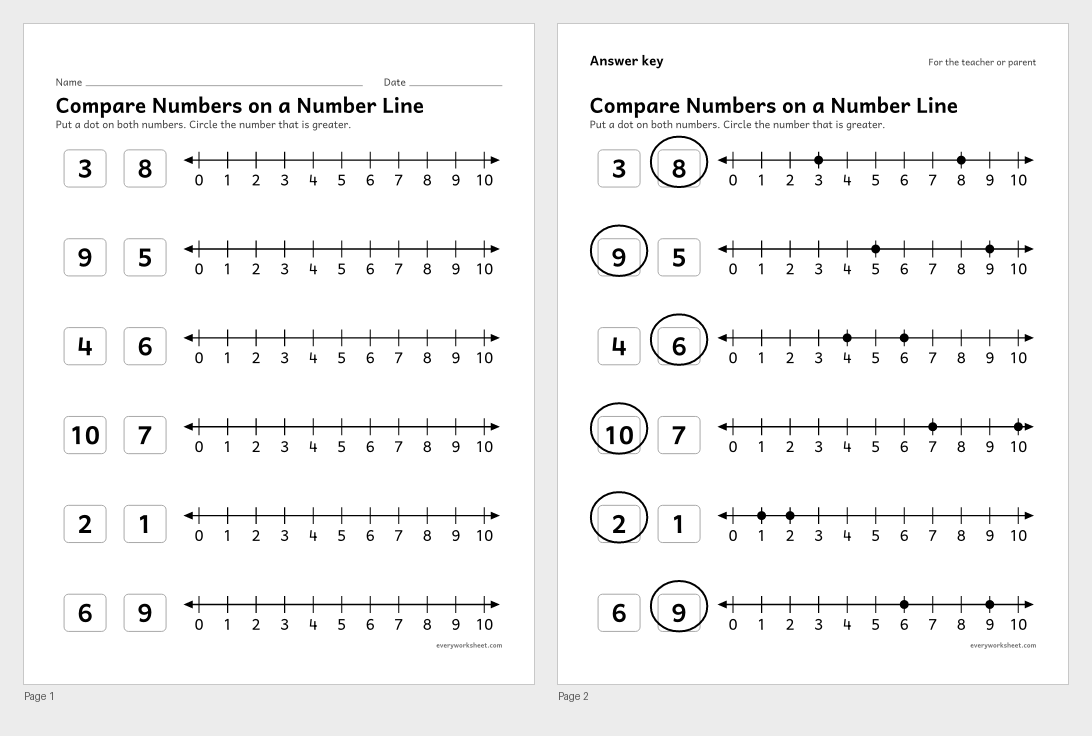
Compare numbers on a number line
Comparing numbers by their place on a number line
Answer key on page 2
2 pages39 KB
Print at 100% (actual size) for the cleanest tracing lines.
About these number line worksheets
A number line puts numbers in order along a line, with the same space between each one. Numbers get bigger as you move right and smaller as you move left. That one idea helps children count on from any number, find one more and one less, see which of two numbers is greater, and later add and subtract by hopping along the line.
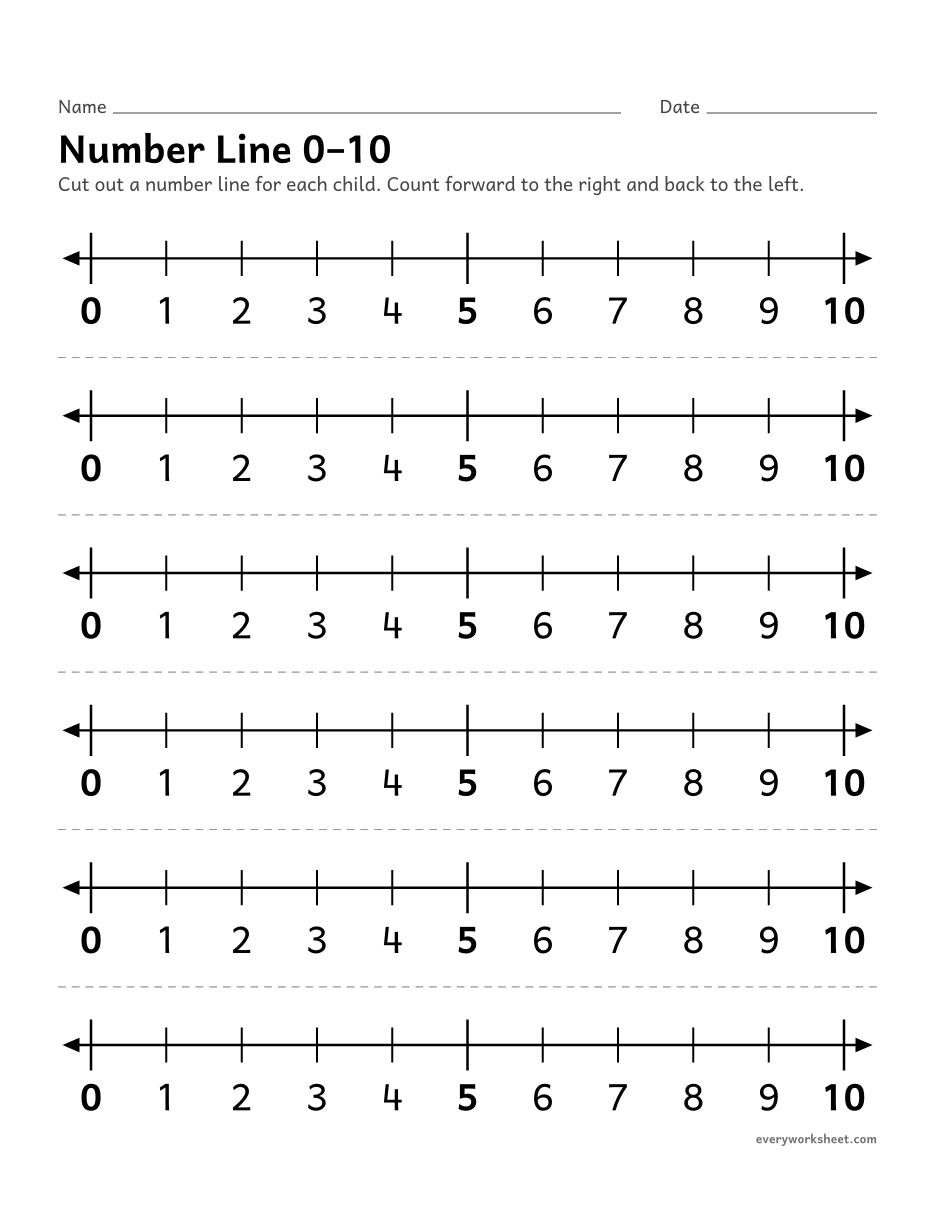
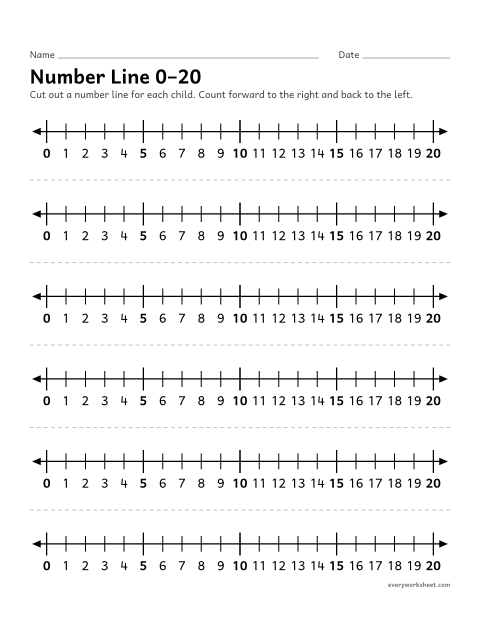
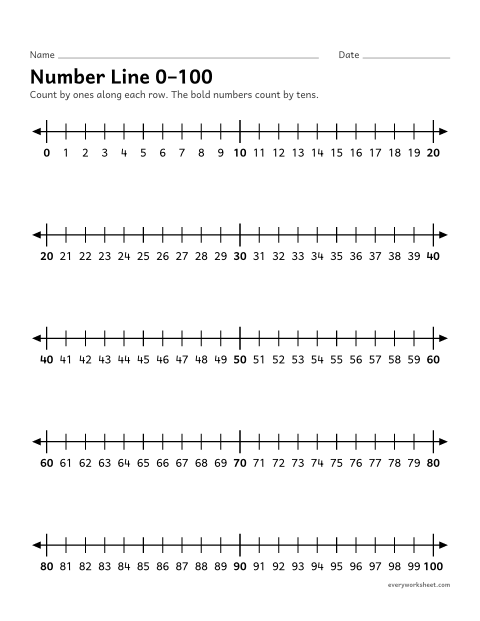
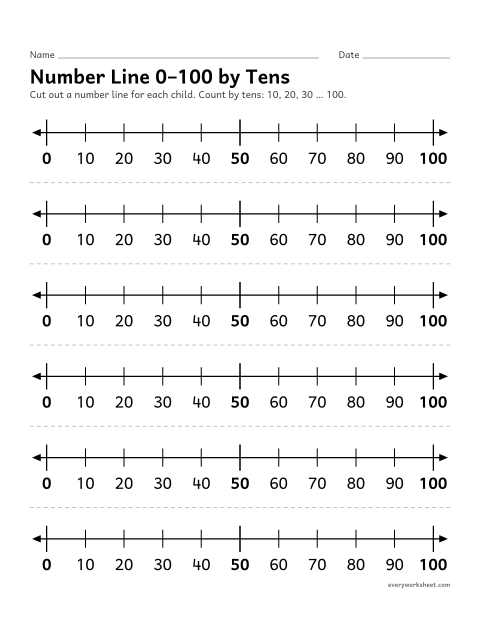
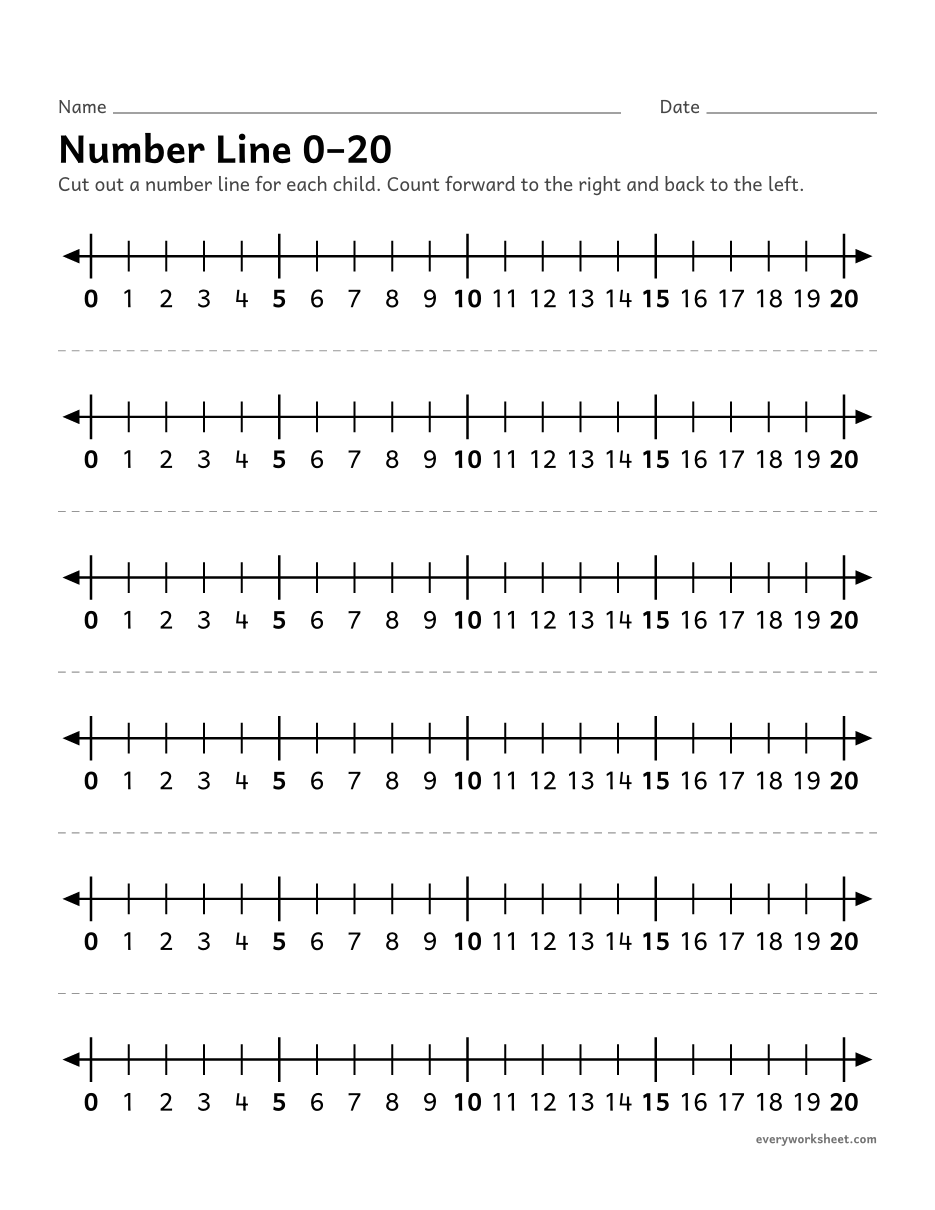
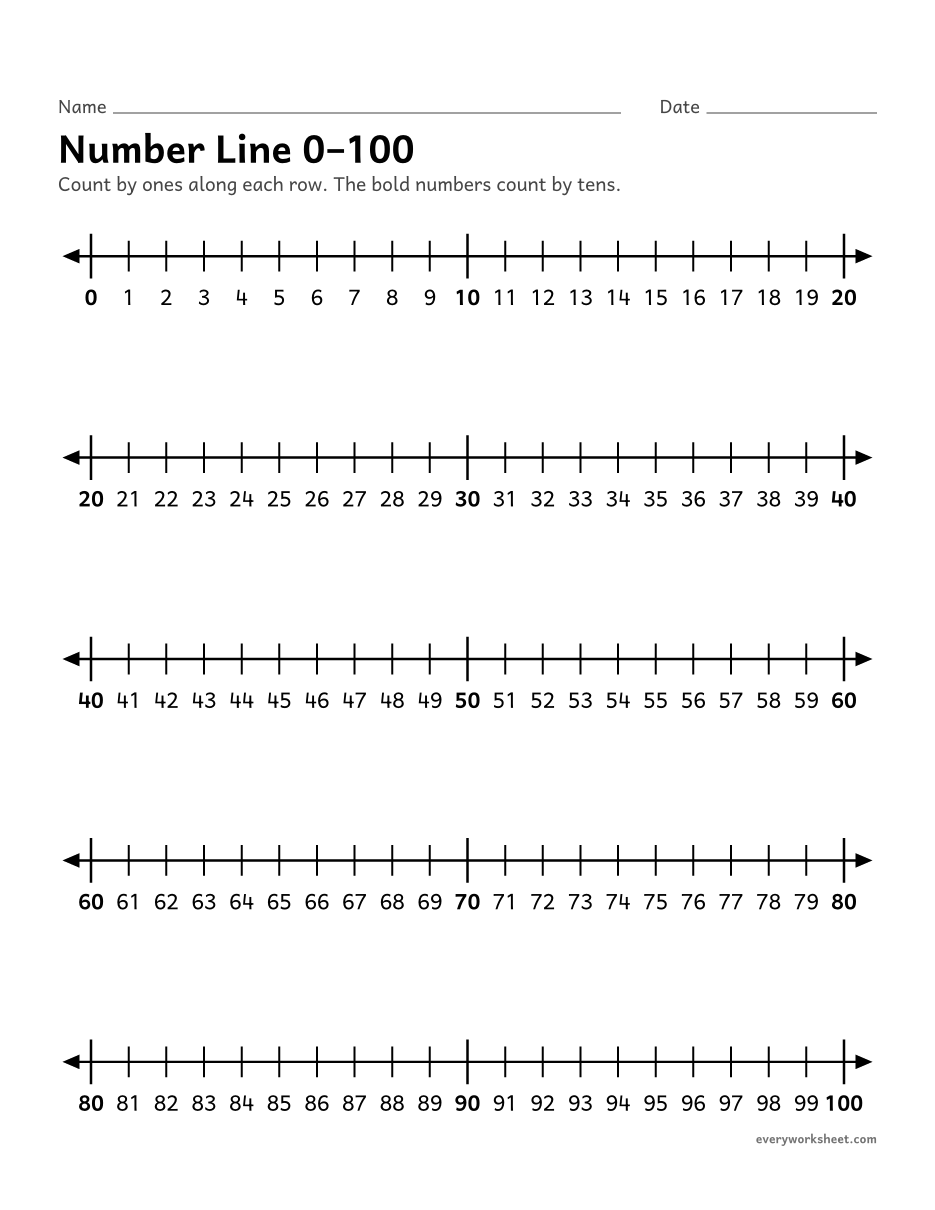
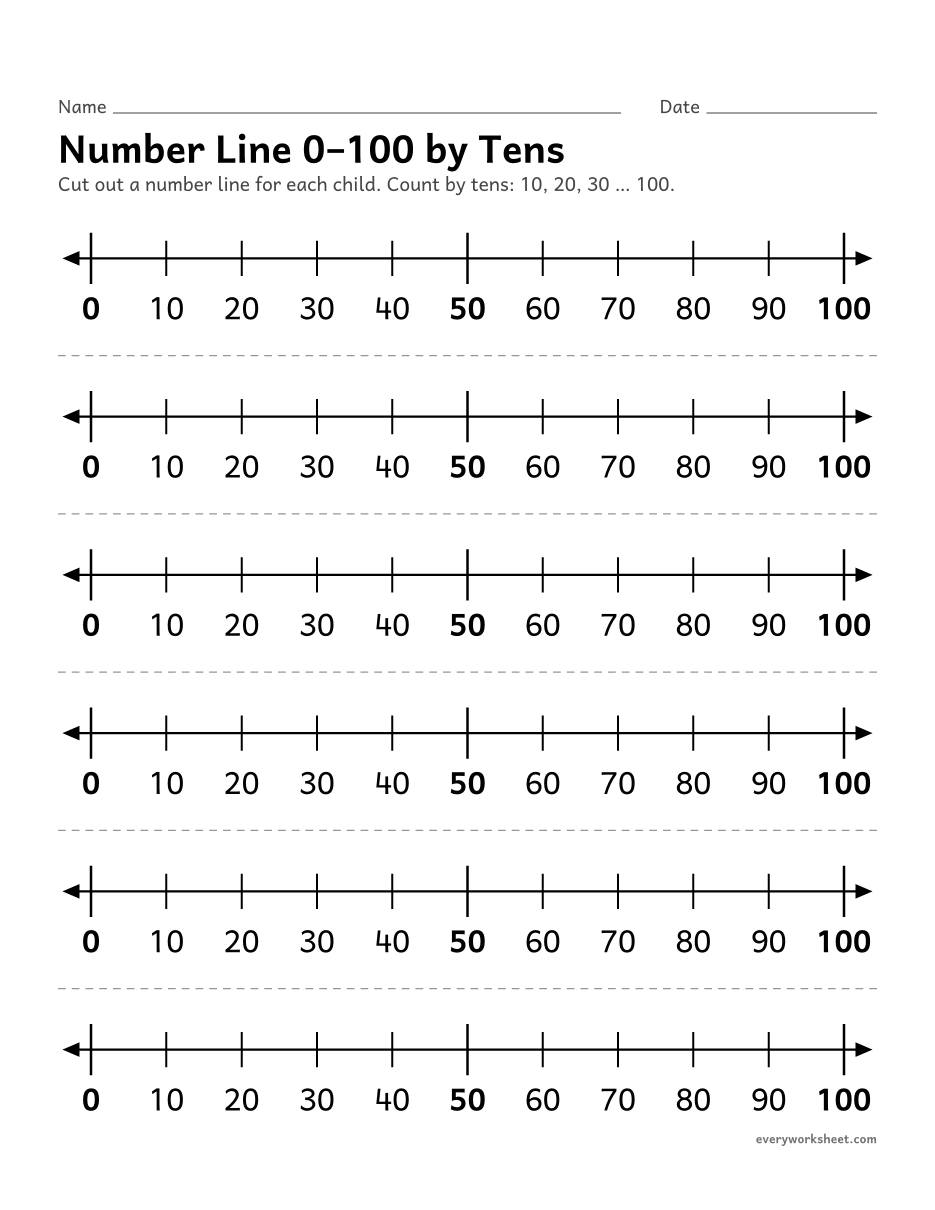
Here you'll find a number line printable for every stage. The 0–10 and 0–20 pages have six number lines to cut apart, one for each child or desk. The 0–100 page runs in five rows of twenty, with the tens in bold, and the 0–100 by tens page helps with counting by tens. The blank number line pages have the tick marks but no numbers, so children (or you) can write in any range.
The number line worksheets turn the line into practice: fill in the missing numbers on lines that start at 0 and at other numbers, hop forward to add and hop back to subtract within 10, find one more and one less, and mark two numbers to see which is greater. Each practice page has an answer key on page 2.
Standards
CCSS.MATH.CONTENT.K.CC.A.1Count to 100 by ones and by tens.CCSS.MATH.CONTENT.K.CC.A.2Count forward beginning from a given number within the known sequence (instead of having to begin at 1).CCSS.MATH.CONTENT.K.CC.A.3Write numbers from 0 to 20. Represent a number of objects with a written numeral 0-20 (with 0 representing a count of no objects).CCSS.MATH.CONTENT.K.CC.B.4Understand the relationship between numbers and quantities; connect counting to cardinality. Understand that each successive number name refers to a quantity that is one larger.CCSS.MATH.CONTENT.K.CC.C.7Compare two numbers between 1 and 10 presented as written numerals.CCSS.MATH.CONTENT.K.OA.A.1Represent addition and subtraction with objects, fingers, mental images, drawings, sounds (e.g., claps), acting out situations, verbal explanations, expressions, or equations.
How to use them
- Start with the 0–10 number line. Have your child point to each number and count out loud, forward and then backward.
- Play "start here": put a finger on any number and count on from there. This is the skill behind the missing numbers pages, where some lines start at 5 or 9 instead of 0.
- For the hop pages, have your child put a dot on the first number, then draw one hop for each number added or taken away. The number they land on is the answer.
- Use the blank number lines for your own practice: write a start number and let your child fill in the rest, or leave a few numbers out on purpose.
- Tape a 0–20 strip to the table during math time. It is a quick way for children to check how to write a number or which number comes next.
Teaching tips
- Count the hops, not the numbers. A common mistake on 3 + 4 is to count the 3 as the first hop and land on 6. The first hop goes from 3 to 4.
- To subtract, hop to the left. Say it as you go: "Start at 9, take away 4: 8, 7, 6, 5."
- If a child reverses a number while writing it on a blank line, have them check it against a printed number line rather than correcting it for them.
- To compare two numbers, find both on the line: the one further to the right is greater.
- Print at actual size (100%). The 0–10 and 0–20 strips are spaced so children can point to each number.
Questions teachers and parents ask
What is a number line?
A straight line with numbers placed in order at equal spaces. Numbers get bigger to the right and smaller to the left, and the arrows at each end show that the numbers keep going.
How do you add and subtract on a number line?
Start at the first number. To add, hop to the right once for each number you add; to subtract, hop to the left. The number you land on is the answer: for 3 + 4, start at 3 and hop 4 times to land on 7.
What is a blank number line for?
A blank number line has the tick marks but no numbers. Children write the numbers in order, starting from 0 or any number you choose, which practices counting on and writing numbers.
Which number line should a kindergartner use?
Start with 0–10, then move to 0–20 once your child counts past ten with ease. The 0–100 lines are for counting by ones and tens later in the year and in 1st grade.