 View all 2 pages
Blend the onset and rime
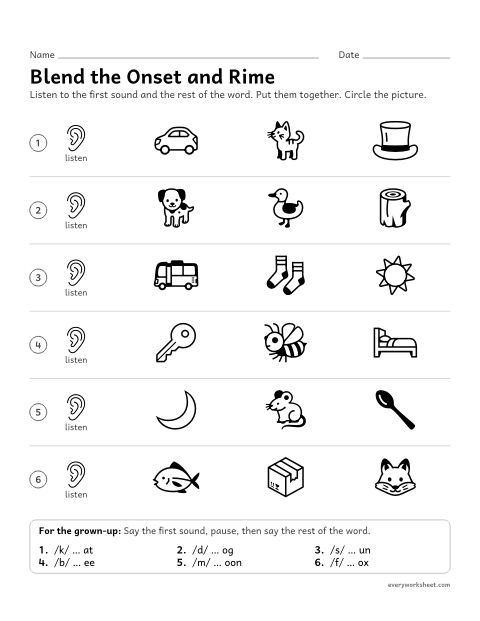
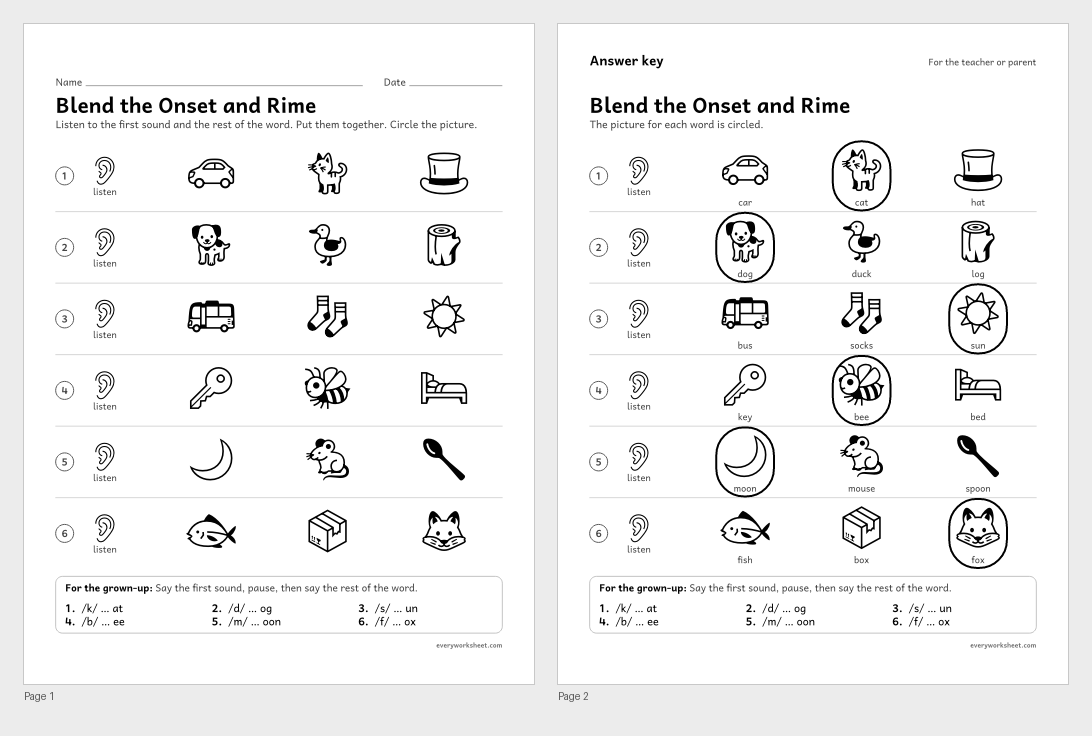
Blending an onset and a rime to say a word
Answer key on page 2
2 pages63 KB
Picture worksheets for blending and splitting onsets and rimes (c + at = cat), with answer keys, plus cut-out word slides for the -at, -og, -ig and -en families.
View all 2 pagesBlending an onset and a rime to say a word
Answer key on page 2
2 pages63 KB
 View all 2 pages
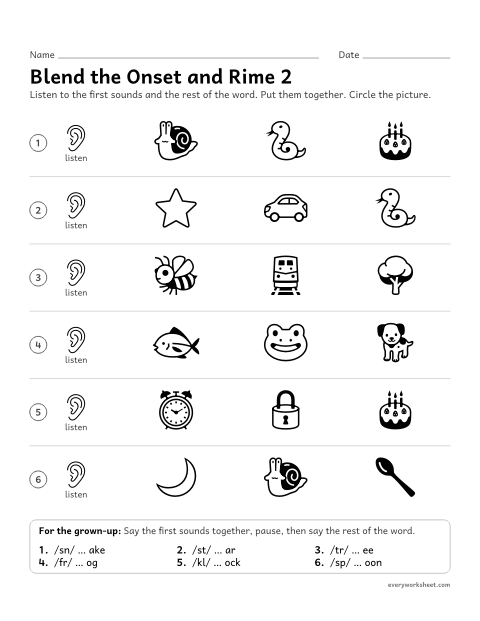
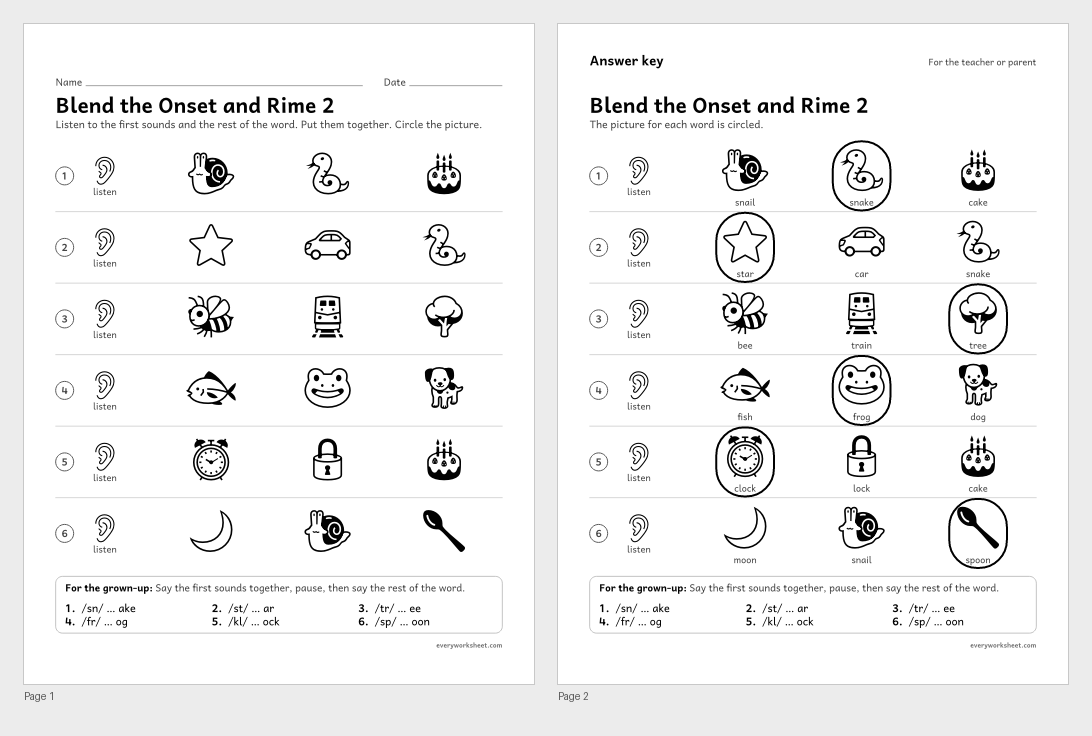
Blending a two-letter onset and a rime
Answer key on page 2
2 pages62 KB
 View all 2 pages
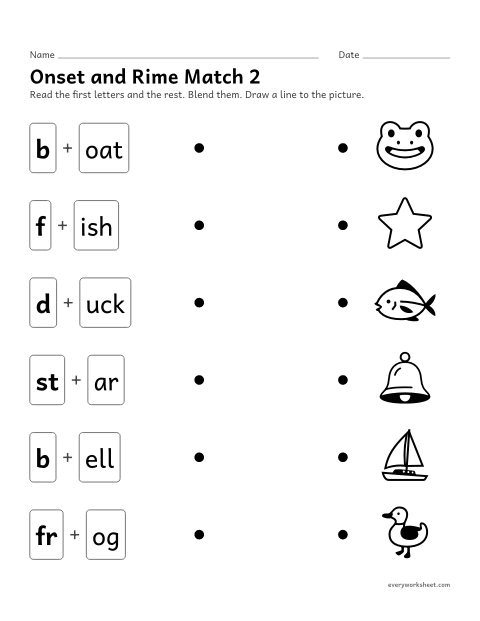
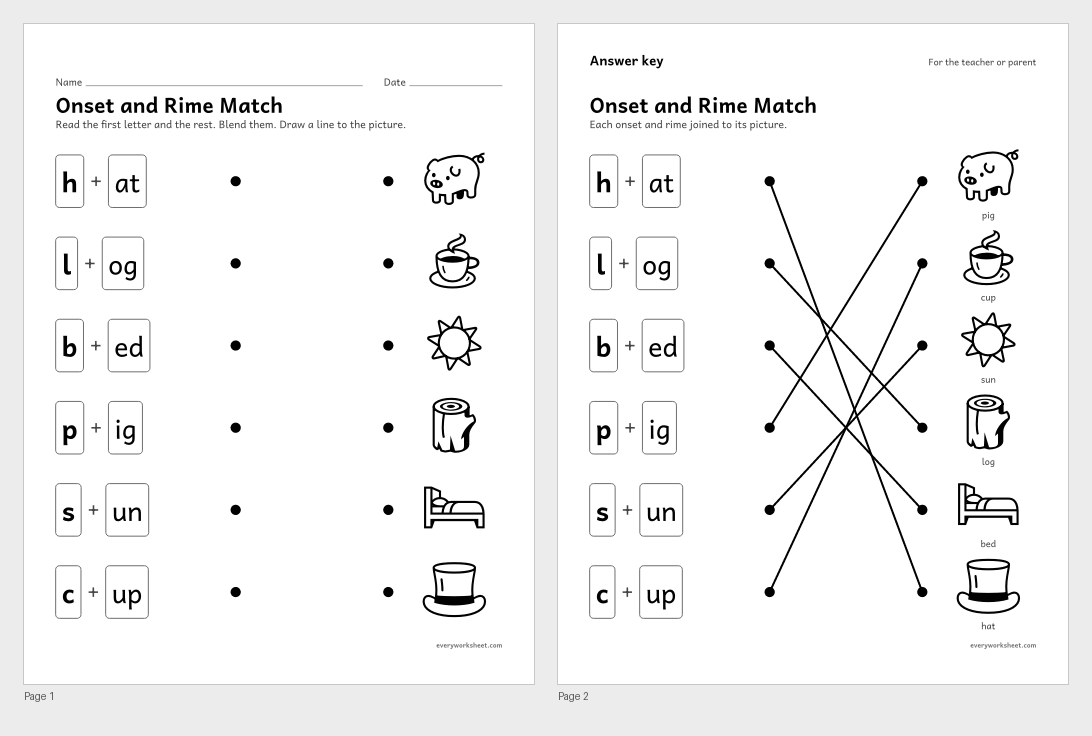
Reading an onset and rime and matching the picture
Answer key on page 2
2 pages34 KB
 View all 2 pages
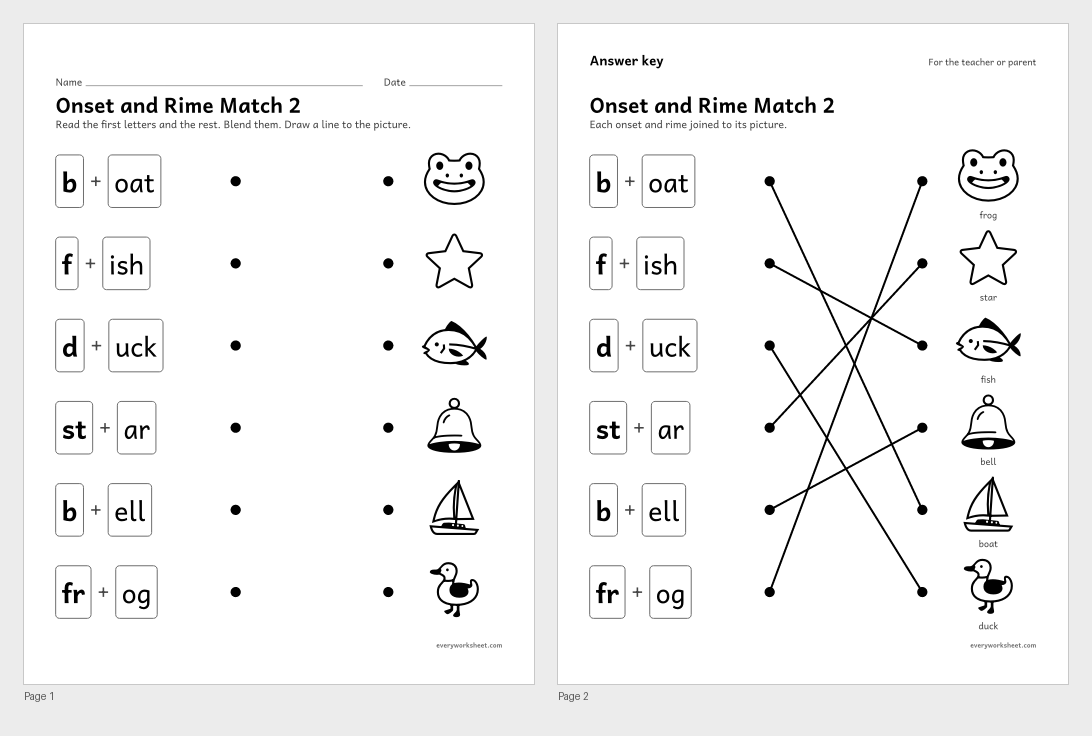
Reading an onset and rime and matching the picture
Answer key on page 2
2 pages34 KB
 View all 2 pages
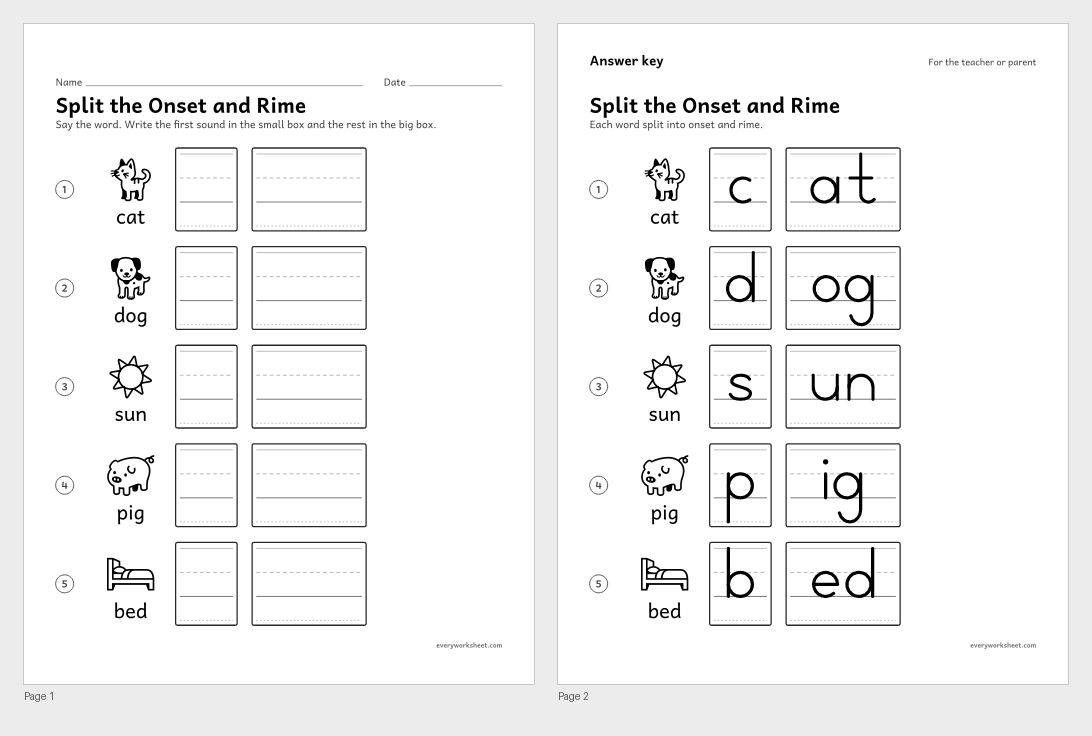
Splitting a word into its onset and rime
Answer key on page 2
2 pages42 KB
 View all 2 pages
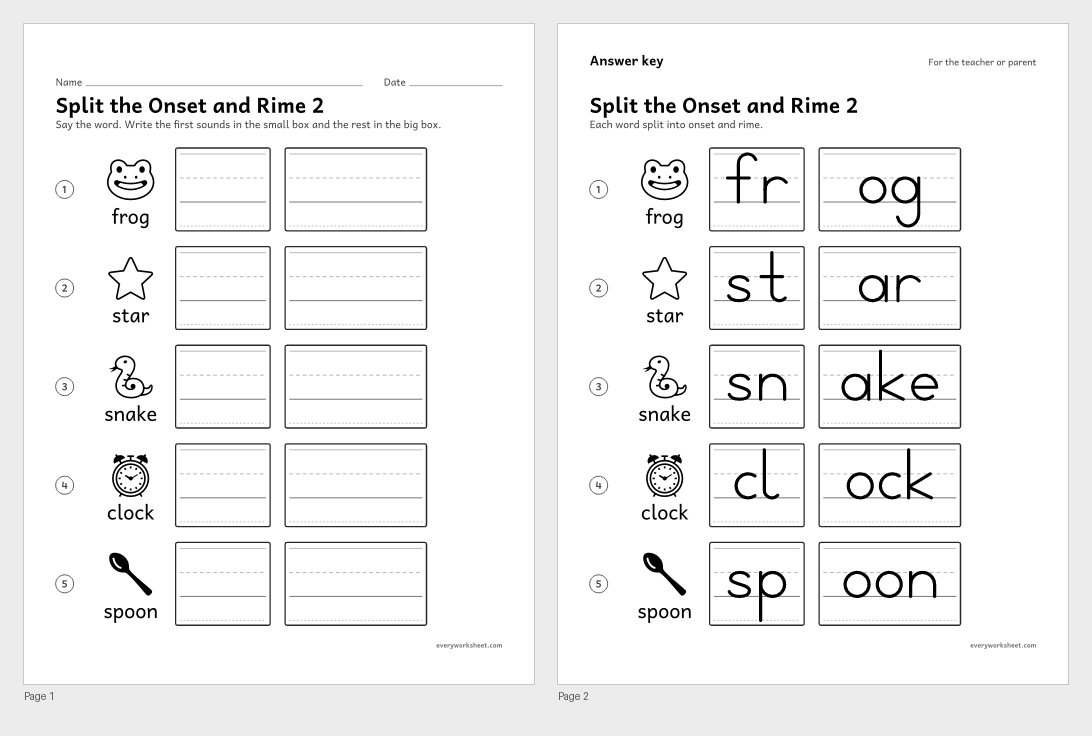
Splitting words with a two-letter onset
Answer key on page 2
2 pages41 KB
 View larger
Print at 100% (actual size) for the cleanest tracing lines.
The onset is the first sound or sounds of a word, before the vowel. The rime is the vowel and everything after it. In cat, the onset is c and the rime is at. In star, the onset is st and the rime is ar. Rhyming words share a rime, so cat, hat and bat differ only in their onsets.
Working with onsets and rimes is the step between hearing syllables and hearing single sounds. Children first blend the two parts back into a word (/k/ … at makes cat), then break a word into its two parts. On the listening pages you say the parts and your child circles the picture. On the match and split pages, children read and write the parts themselves.
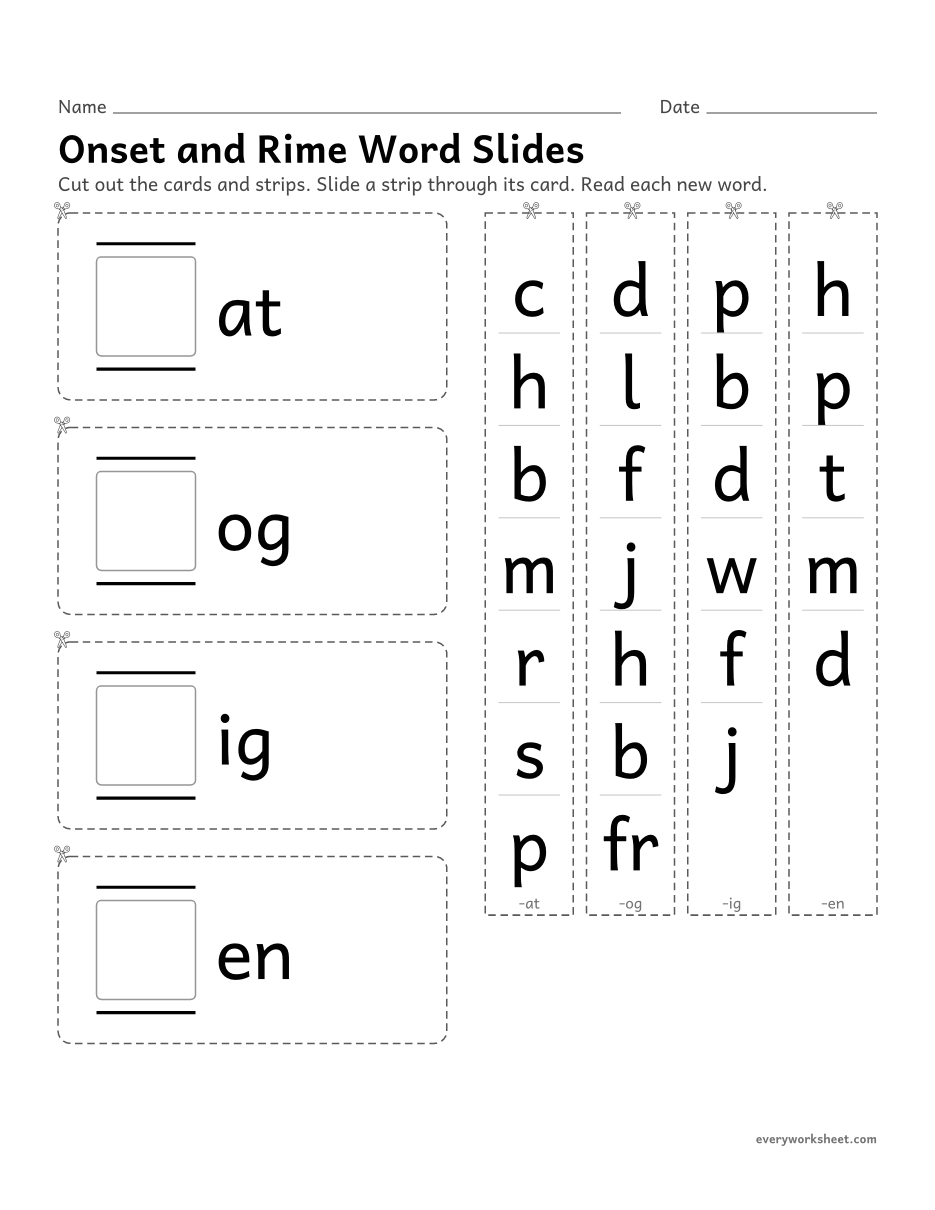
The word slides are a hands-on way to change the onset and keep the rime: cut out the card and strip, slide the strip, and read cat, hat, bat, mat. Words with two-letter onsets such as fr-og, st-ar and sn-ake are on the second page of each set.
CCSS.ELA-LITERACY.RF.K.2.CBlend and segment onsets and rimes of single-syllable spoken words.CCSS.ELA-LITERACY.RF.K.2Demonstrate understanding of spoken words, syllables, and sounds (phonemes).CCSS.ELA-LITERACY.RF.K.2.ARecognize and produce rhyming words.CCSS.ELA-LITERACY.RF.K.2.EAdd or substitute individual sounds (phonemes) in simple, one-syllable words to make new words.CCSS.ELA-LITERACY.RF.K.3.ADemonstrate basic knowledge of one-to-one letter-sound correspondences by producing the primary sound or many of the most frequent sounds for each consonant.The onset is the part of a one-syllable word before the vowel, and the rime is the vowel and the rest. In dog, d is the onset and og is the rime. In frog, fr is the onset.
They are related. The rime is the part of the word; words that rhyme share the same rime, like cat, hat and mat (-at).
No. Words that start with a vowel, like egg, up and on, have a rime but no onset.
Print on card stock, cut out each card and strip, cut the two short slits on the card and thread the strip through. Slide it to show a new first letter and read each word.
Yes. Every page is a free PDF with no sign-up, in US Letter and A4. Sheets with right answers have an answer key on page 2.