 View all 2 pages
Phonemic awareness activities
Daily oral games for hearing and changing sounds
2 pages55 KB
Picture worksheets for blending sounds, segmenting and counting sounds, first, middle and last sounds, and adding or changing a sound, plus a guide of daily oral games.
View all 2 pagesDaily oral games for hearing and changing sounds
2 pages55 KB
 View all 2 pages
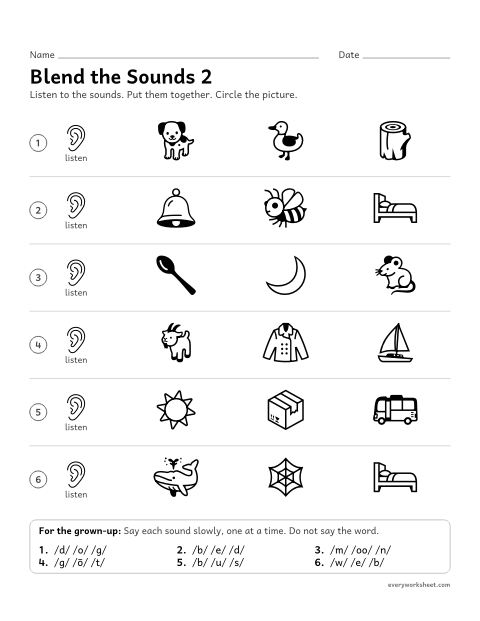
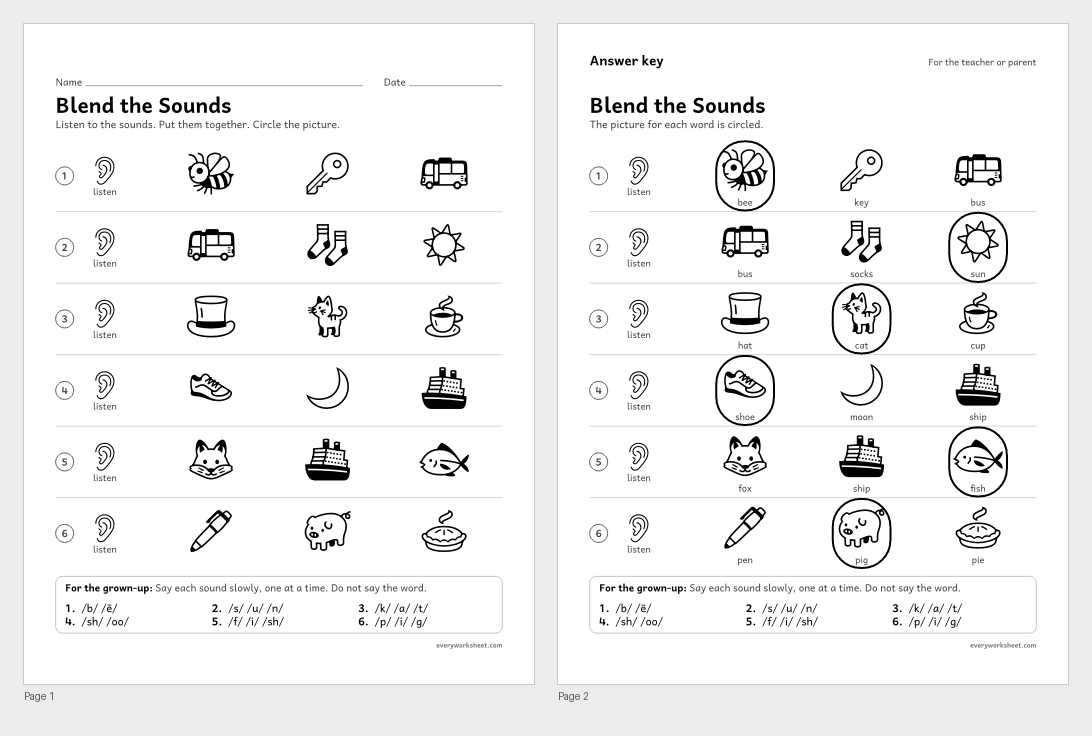
Blending two or three sounds into a word
Answer key on page 2
2 pages63 KB
 View all 2 pages
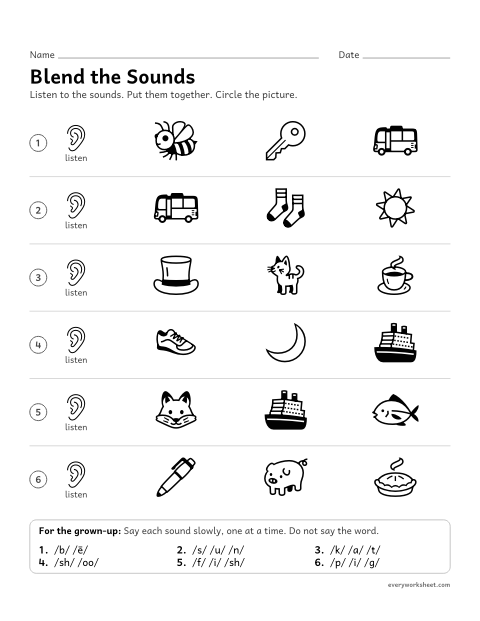
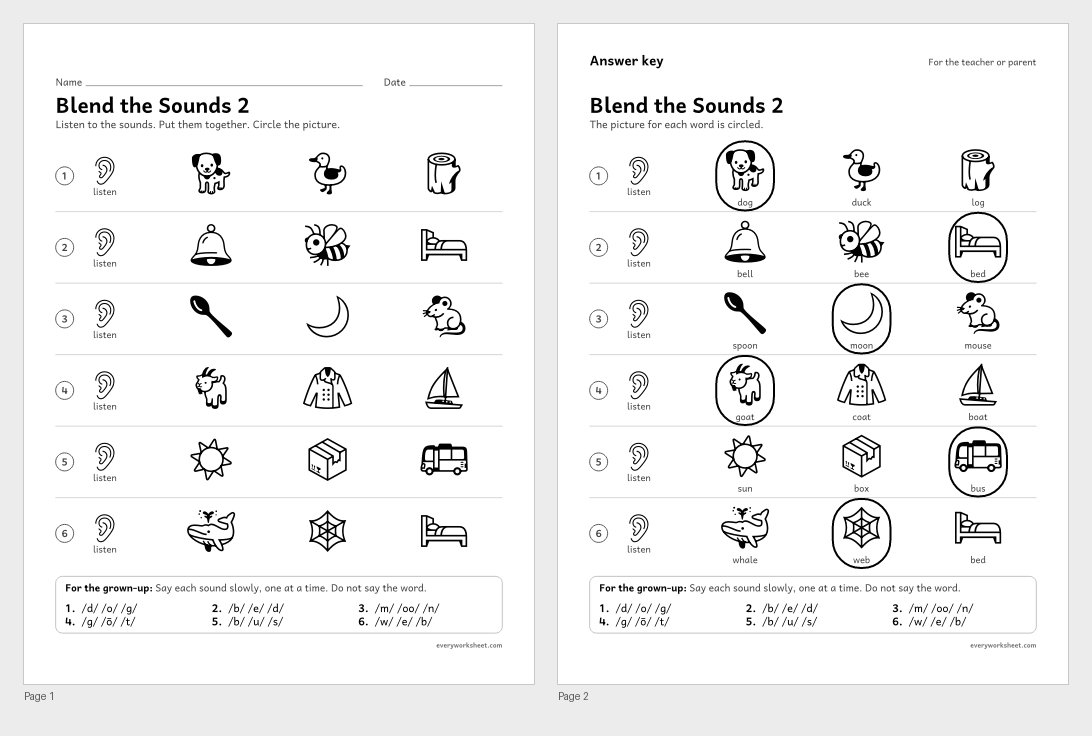
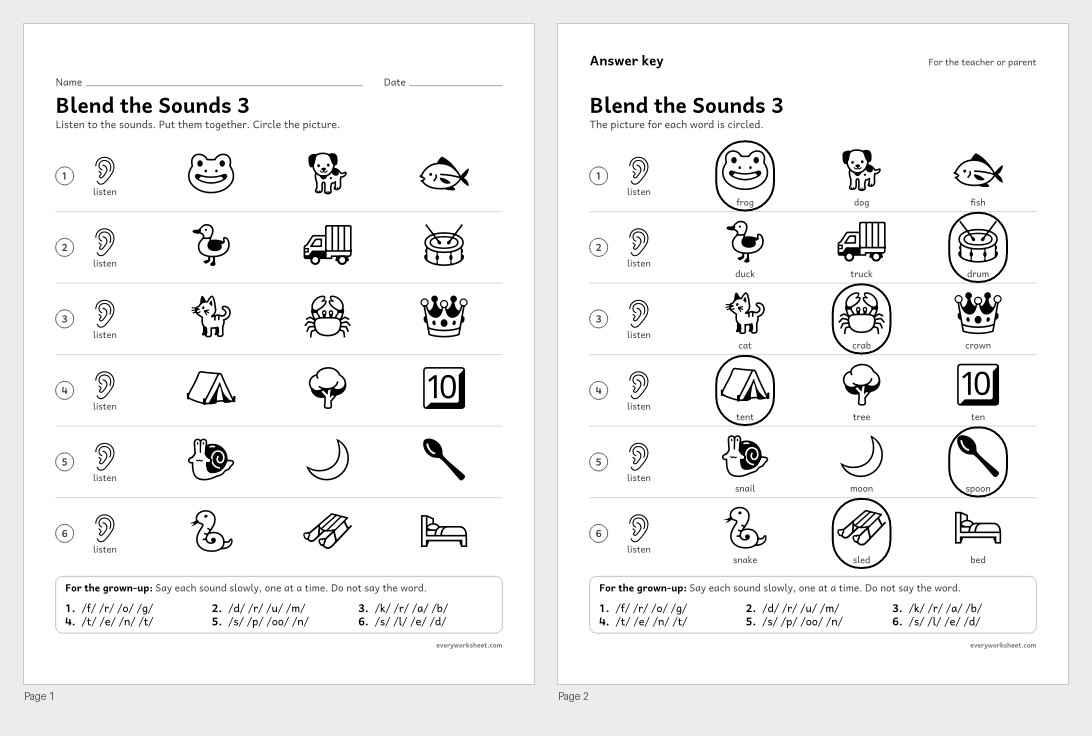
Blending three sounds into a word
Answer key on page 2
2 pages63 KB
 View all 2 pages
 View all 2 pages
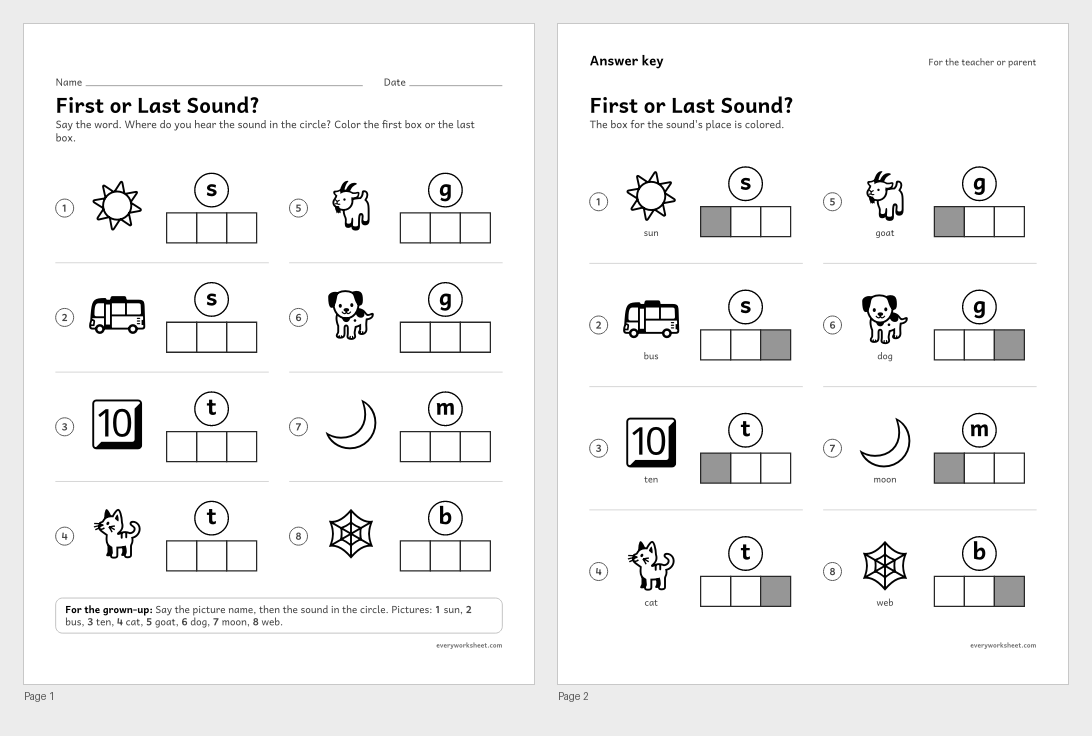
Hearing whether a sound comes first or last in a word
Answer key on page 2
2 pages51 KB
 View all 2 pages
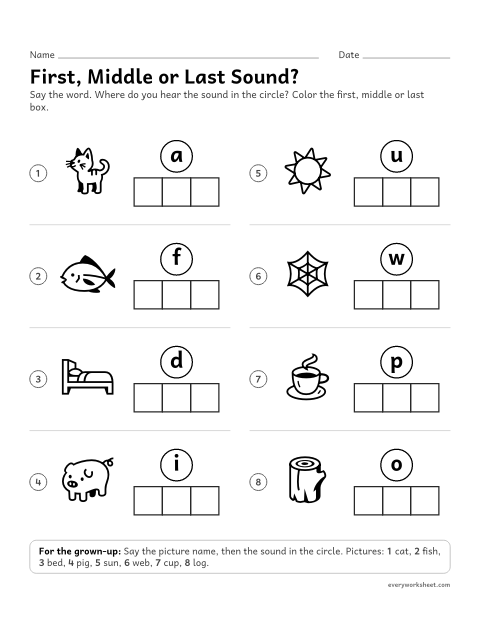
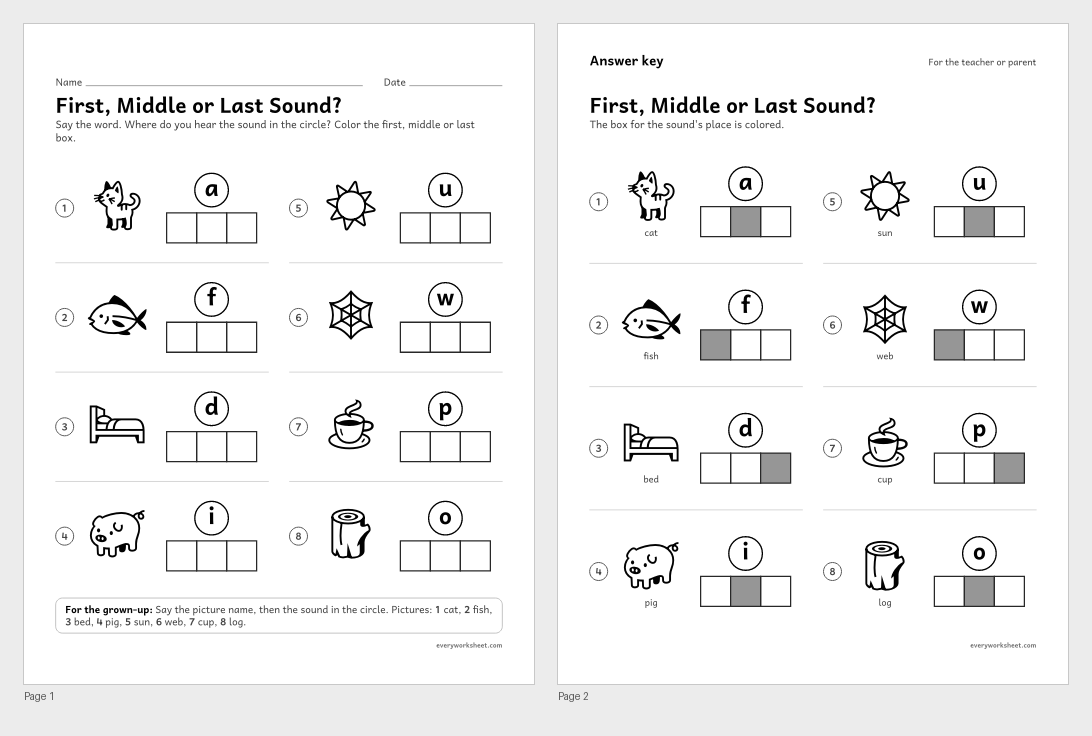
Finding the first, middle or last sound in a CVC word
Answer key on page 2
2 pages51 KB
 View all 2 pages
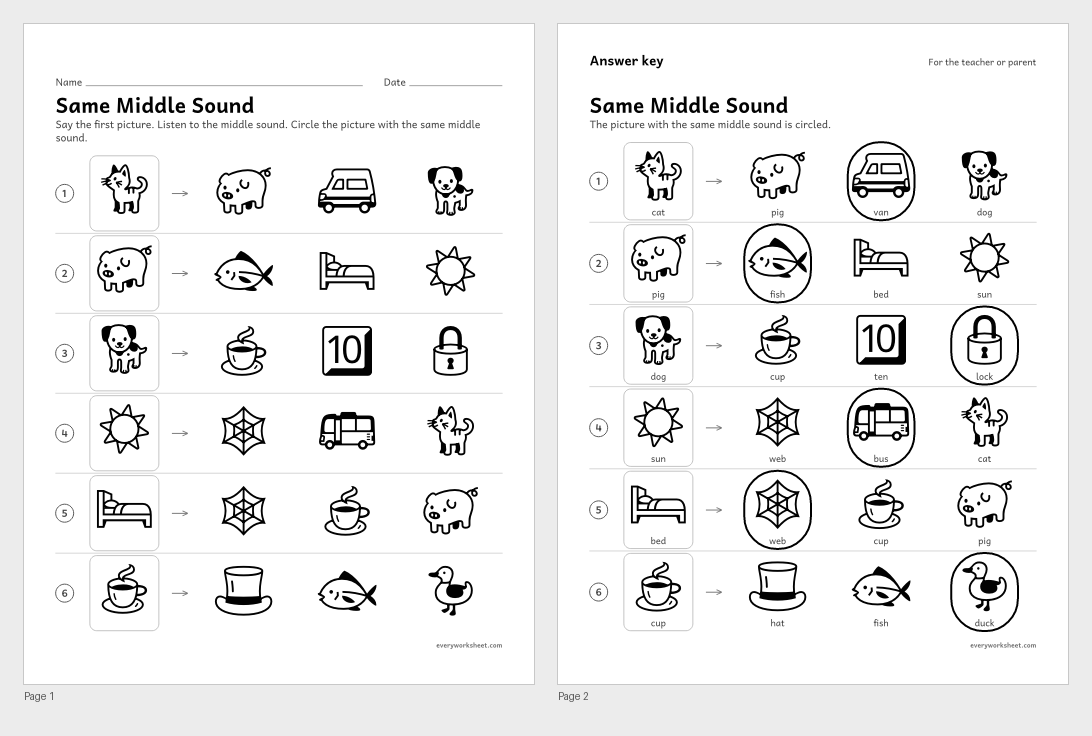
Matching words by their middle vowel sound
Answer key on page 2
2 pages58 KB
 View all 2 pages
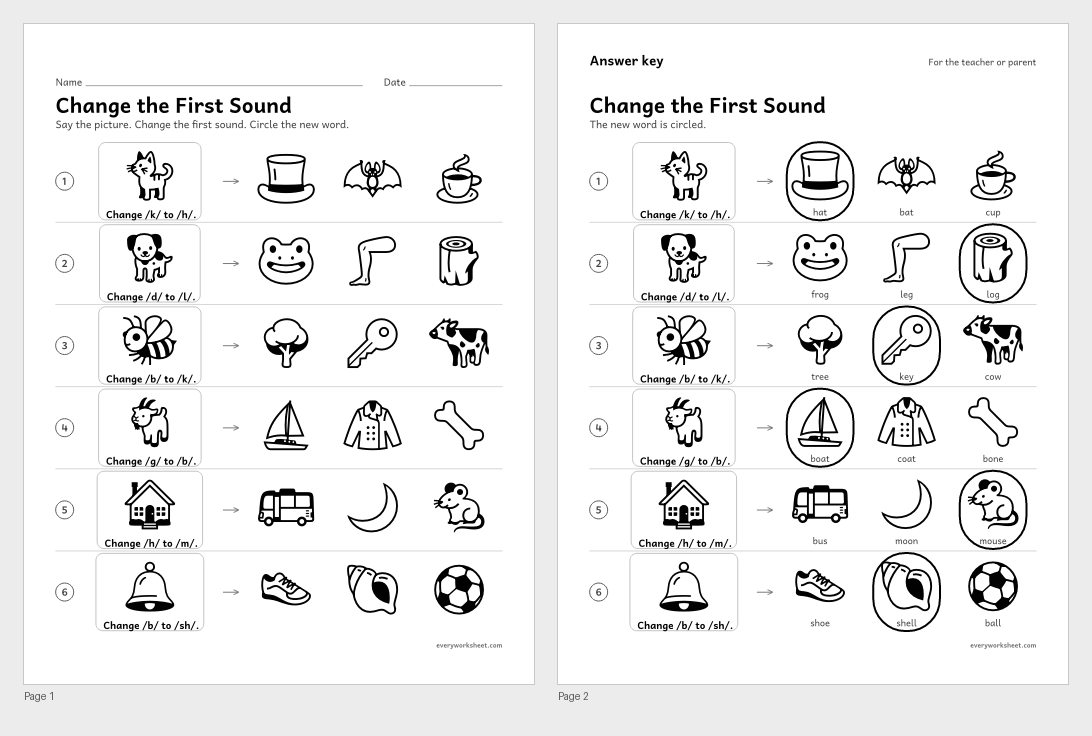
Changing the first sound to make a new word
Answer key on page 2
2 pages65 KB
 View all 2 pages
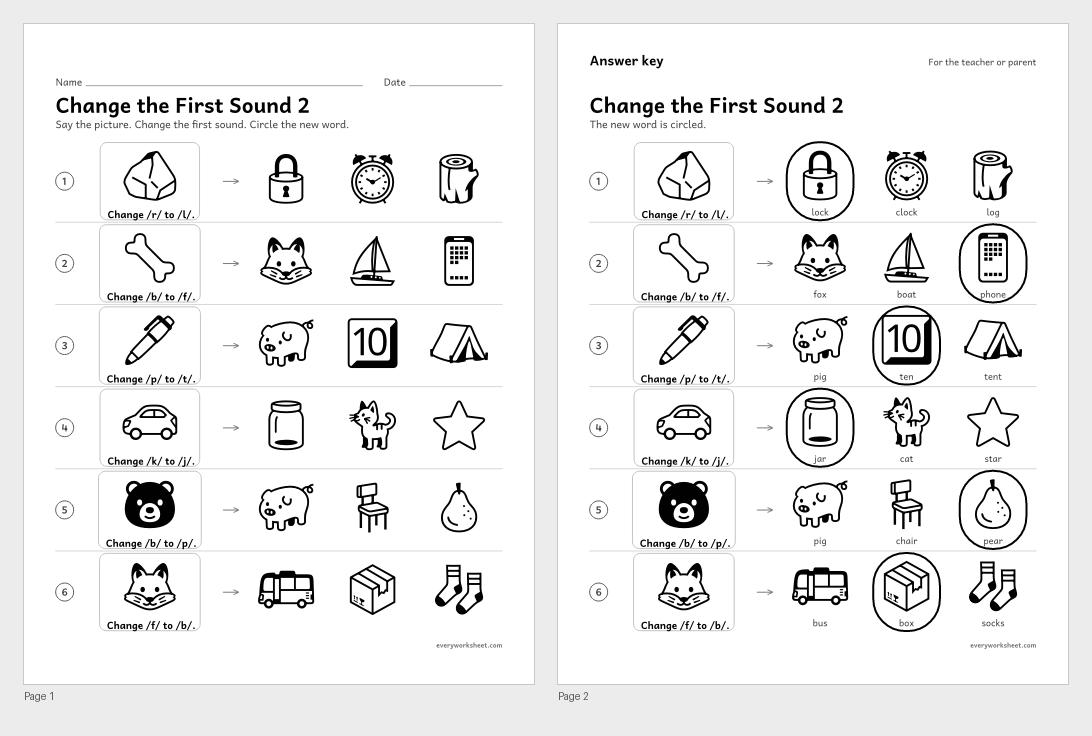
Changing the first sound to make a new word
Answer key on page 2
2 pages63 KB
 View all 2 pages
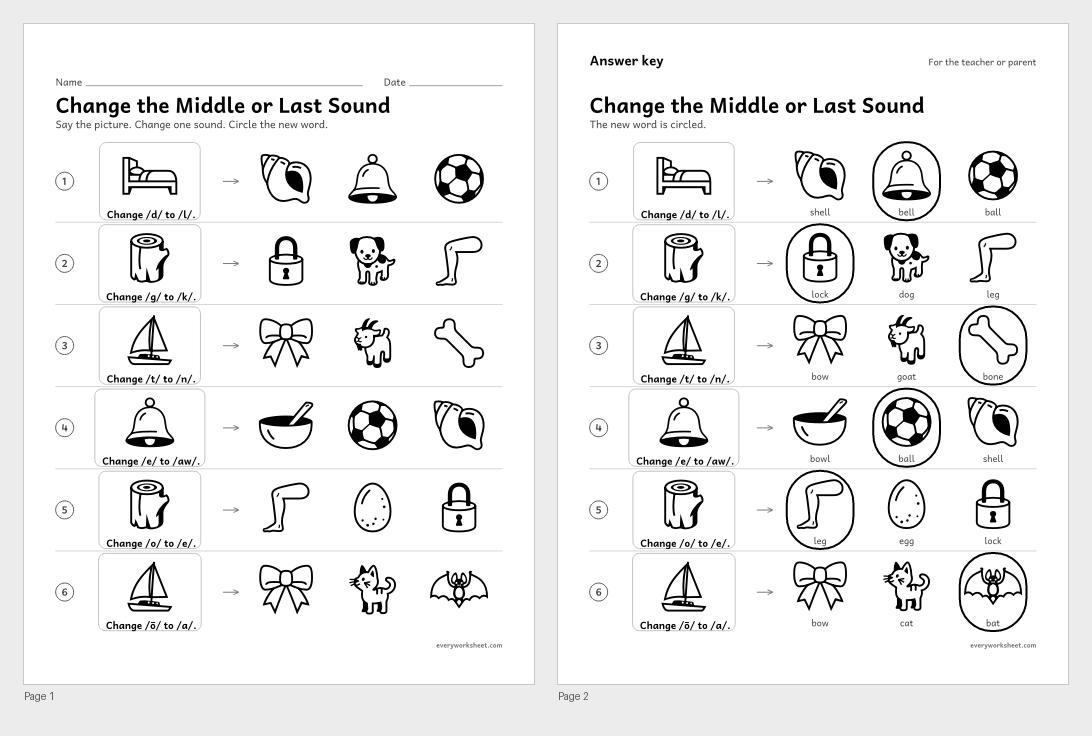
Changing the middle or last sound to make a new word
Answer key on page 2
2 pages61 KB
 View all 2 pages
 View all 2 pages
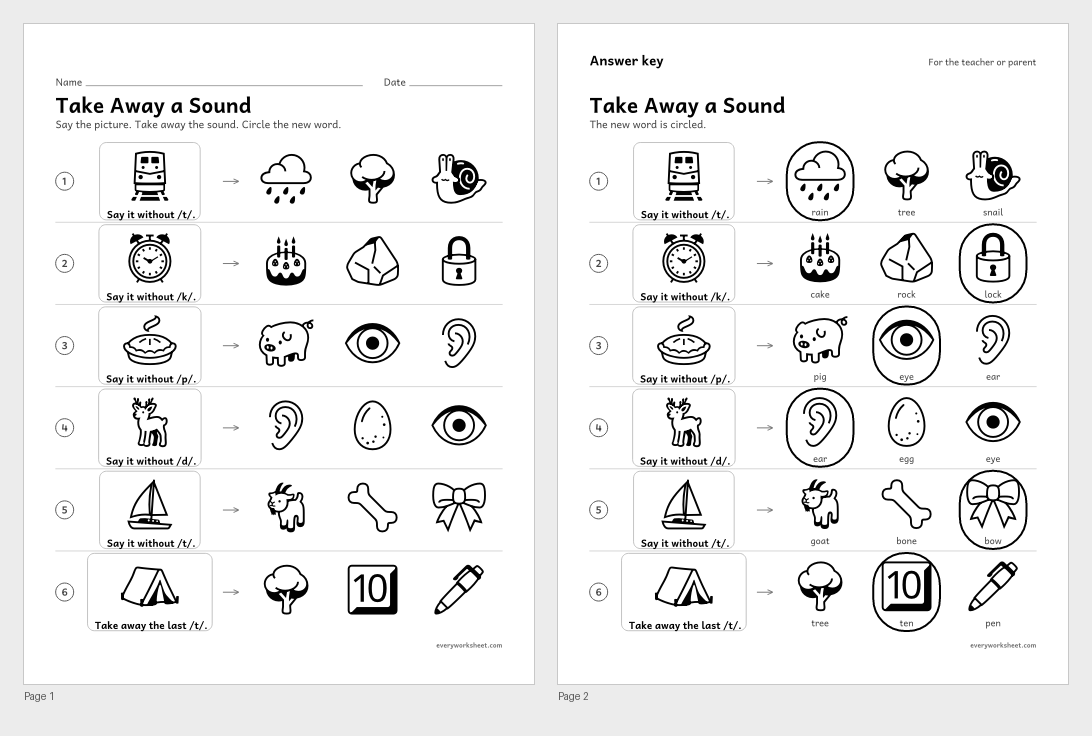
Taking away a sound to make a new word
Answer key on page 2
2 pages61 KB
Print at 100% (actual size) for the cleanest tracing lines.
Phonemic awareness is hearing and working with the single sounds in spoken words. Cat has three sounds, /k/ /a/ /t/. A child who can blend those sounds into cat, or say the sounds in sun one at a time, is ready to connect sounds to letters when reading and spelling.
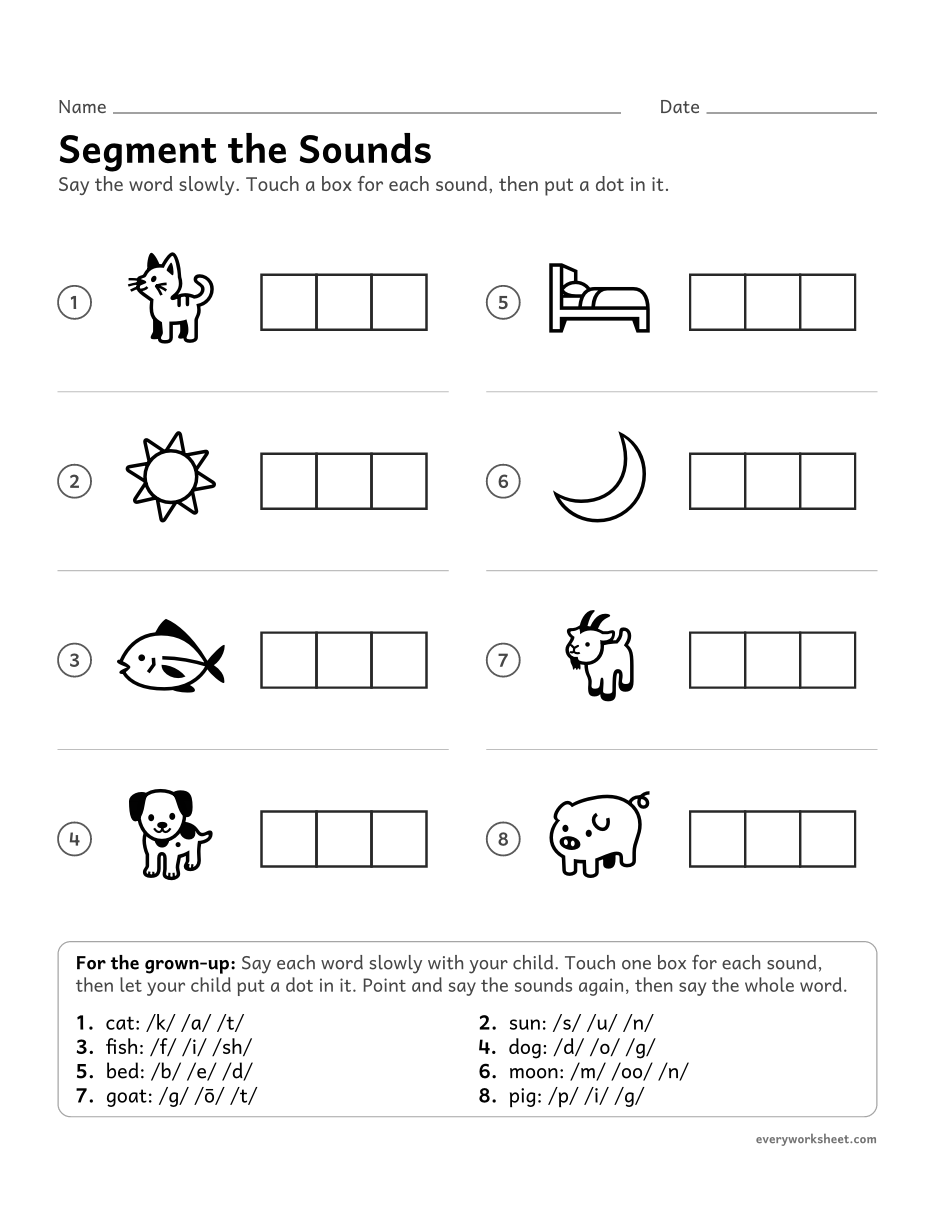
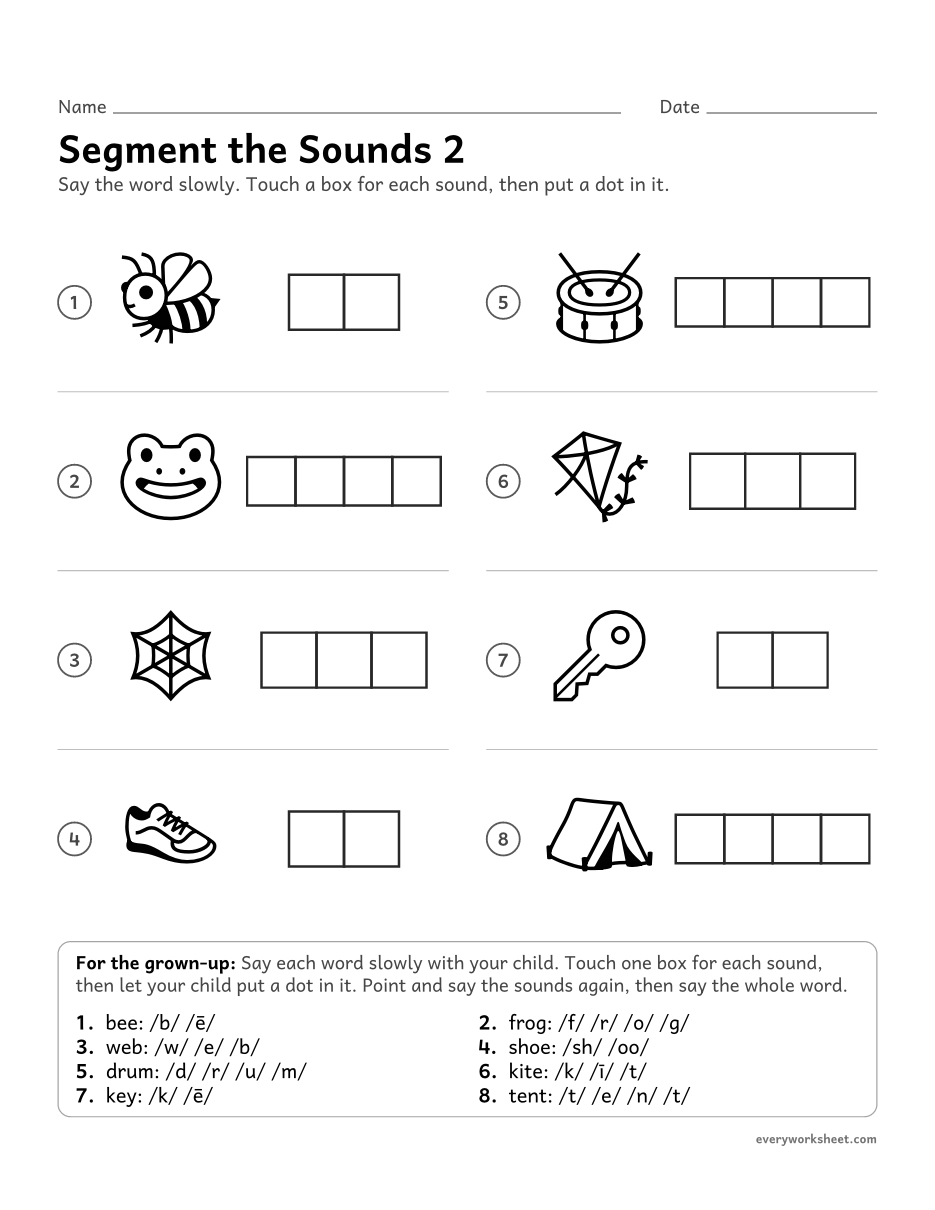
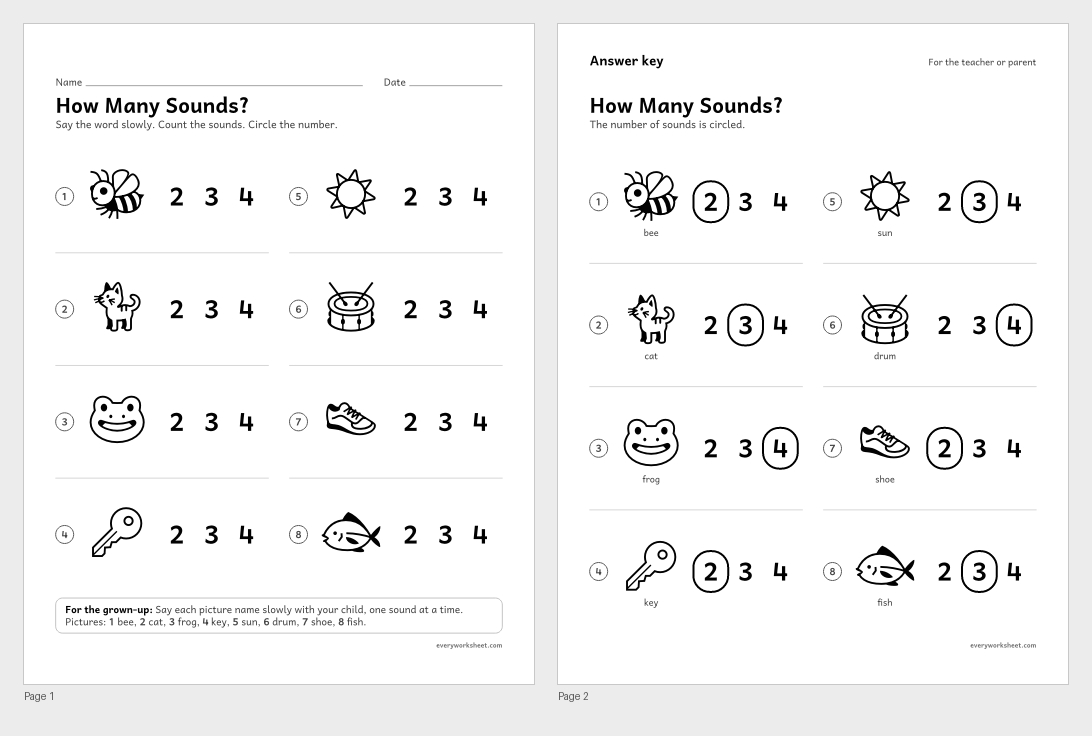
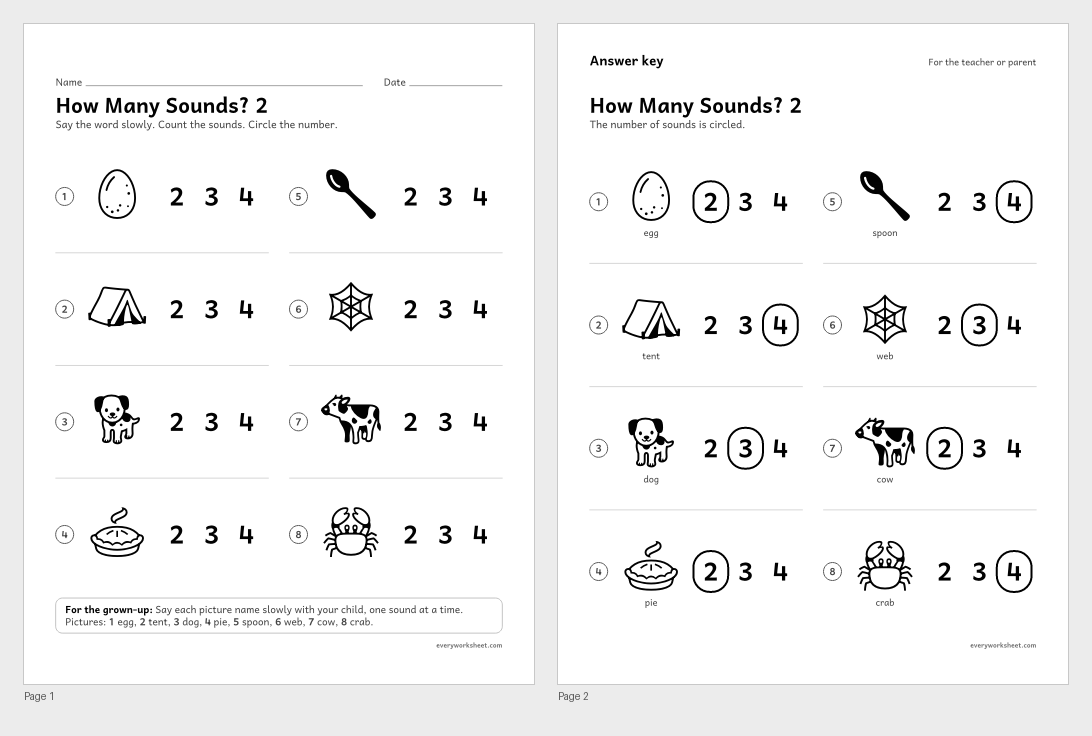
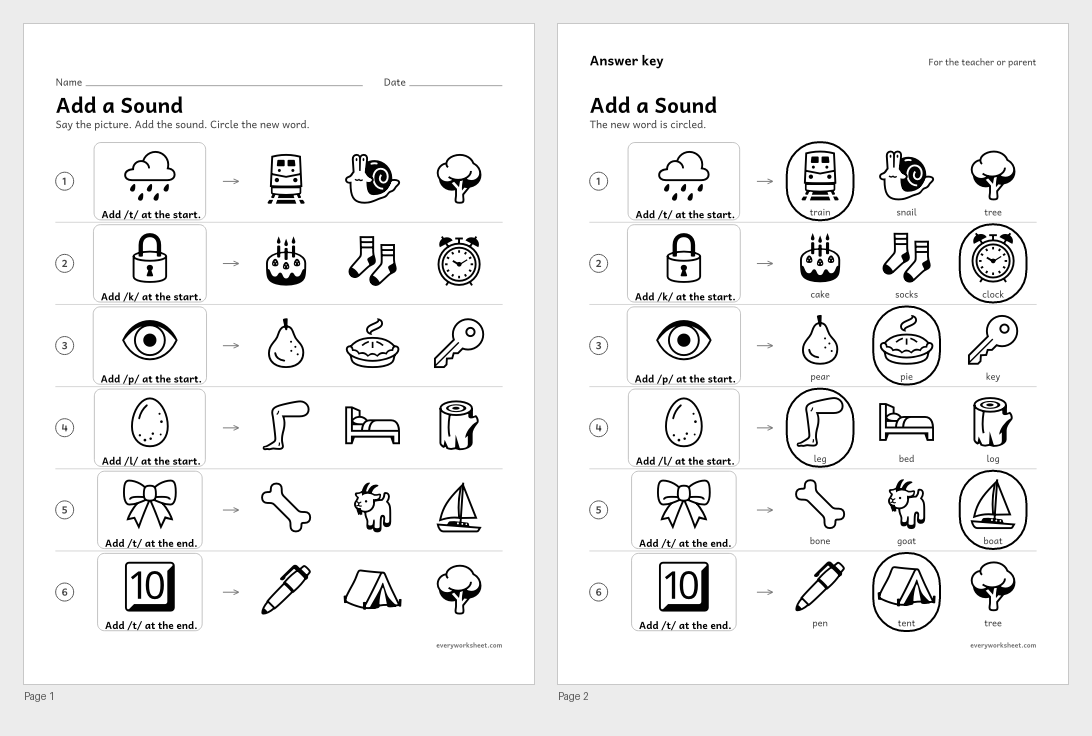
Most phonemic awareness work is done out loud, so these pages are built for a grown-up and a child together. On the blending sounds pages you say the sounds and your child circles the picture. The segmenting pages have one box per sound to touch and mark. Other pages ask where a sound is (first, middle or last), how many sounds a word has, and what new word you get when you change, add or take away a sound: cat becomes hat, rain becomes train.
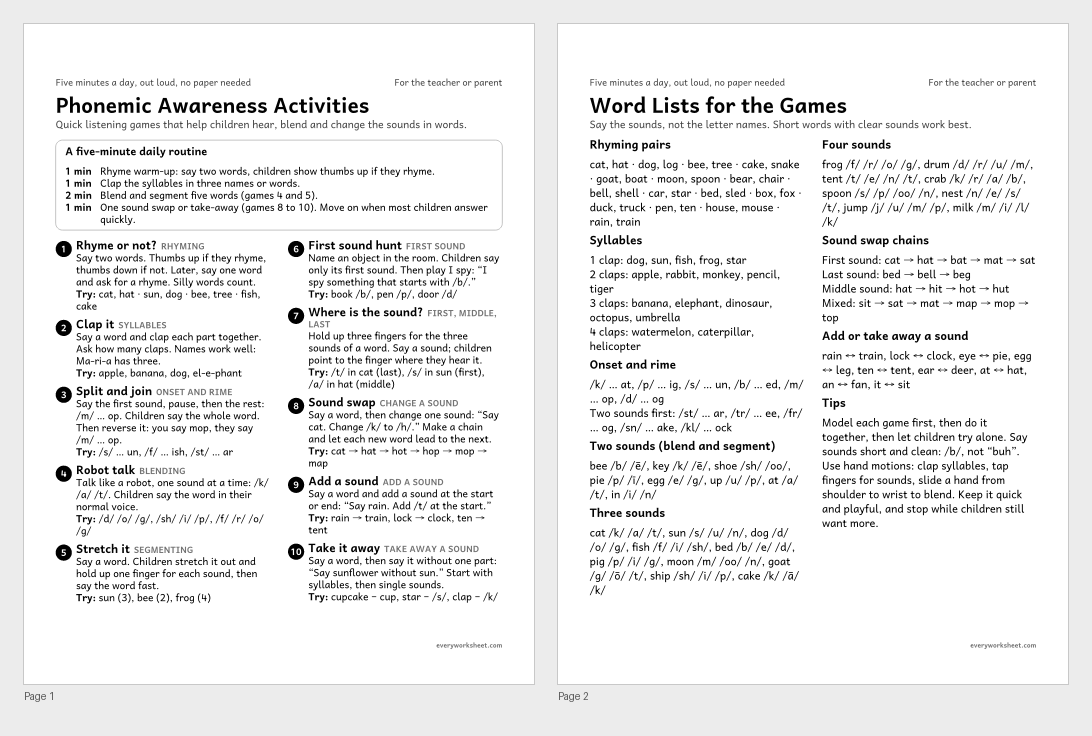
The phonemic awareness activities guide is a two-page printable for the teacher or parent: a five-minute daily routine, ten oral games from rhyming to sound swapping, and word lists to use with them.
CCSS.ELA-LITERACY.RF.K.2.DIsolate and pronounce the initial, medial vowel, and final sounds (phonemes) in three-phoneme (consonant-vowel-consonant, or CVC) words.CCSS.ELA-LITERACY.RF.K.2.EAdd or substitute individual sounds (phonemes) in simple, one-syllable words to make new words.CCSS.ELA-LITERACY.RF.K.2Demonstrate understanding of spoken words, syllables, and sounds (phonemes).CCSS.ELA-LITERACY.RF.K.2.BCount, pronounce, blend, and segment syllables in spoken words.CCSS.ELA-LITERACY.RF.K.2.CBlend and segment onsets and rimes of single-syllable spoken words.CCSS.ELA-LITERACY.RF.1.2.BOrally produce single-syllable words by blending sounds (phonemes), including consonant blends.CCSS.ELA-LITERACY.RF.1.2.DSegment spoken single-syllable words into their complete sequence of individual sounds (phonemes).It is the ability to hear and work with the single sounds (phonemes) in spoken words: blending /d/ /o/ /g/ into dog, saying the sounds in sun, or changing the first sound of cat to make hat.
Phonemic awareness is about sounds you hear, with no letters needed. Phonics connects those sounds to letters. Children who can hear the sounds in a word find phonics much easier.
Short daily oral games: robot talk for blending, stretching words and holding up a finger for each sound, finding the first sound, and swapping sounds (cat, hat, hot). The activities guide lists ten with word lists.
Blending is putting single sounds together to say a word: /s/ /u/ /n/ makes sun. It is usually the first phonemic awareness skill children master, and it is what they do when they sound out a word to read it.
Segmenting is the reverse of blending: hearing a word and saying each of its sounds, like sun into /s/ /u/ /n/. It is what children do when they spell a word.
Yes. Every page is a free PDF with no sign-up, in US Letter and A4. Sheets with right answers have an answer key on page 2.