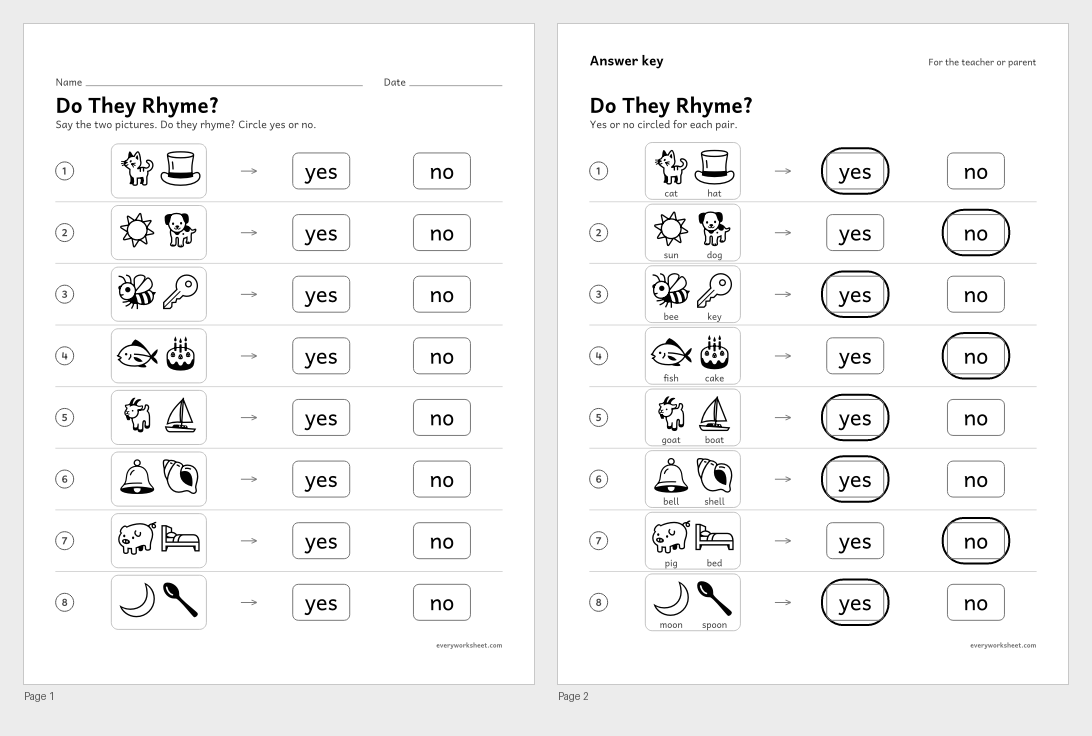
 View all 2 pages
Rhyming Words Worksheets for Kindergarten
Picture-based rhyming practice for kindergarten: match and circle rhymes, spot the word that does not rhyme, write the first letter, and a printable rhyming words list.
Download the rhyming words worksheets
Hear the rhyme
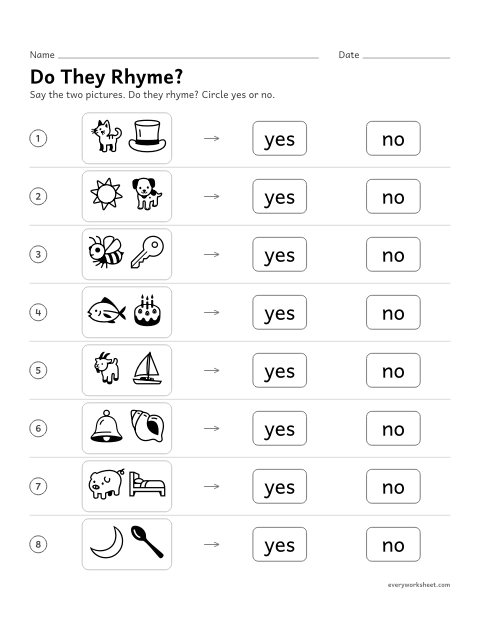 View all 2 pages
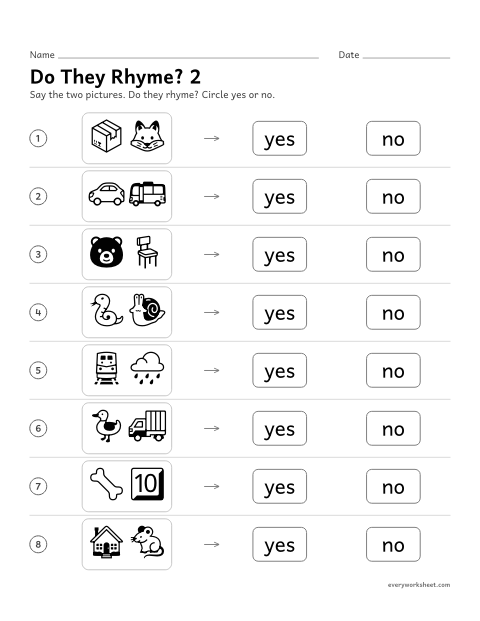 View all 2 pages
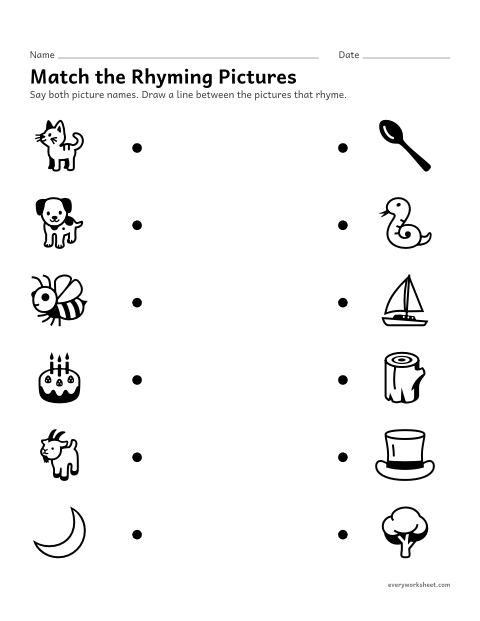 View all 2 pages
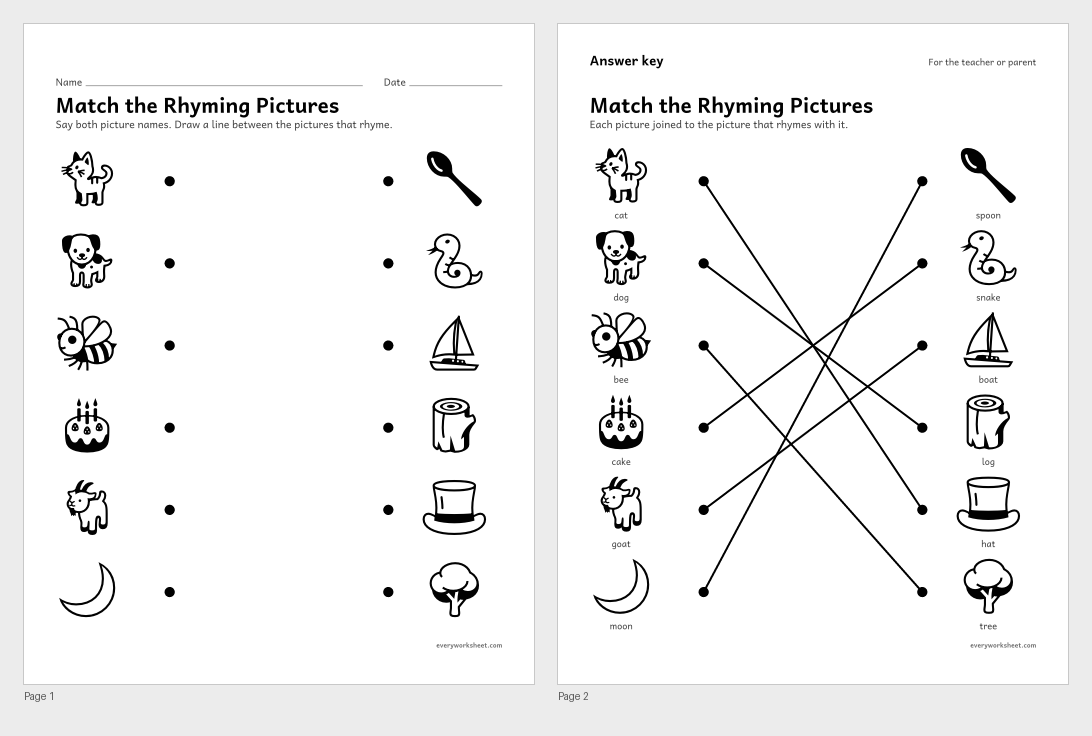
Match the rhyming pictures
Matching pictures whose names rhyme
Answer key on page 2
2 pages35 KB
 View all 2 pages
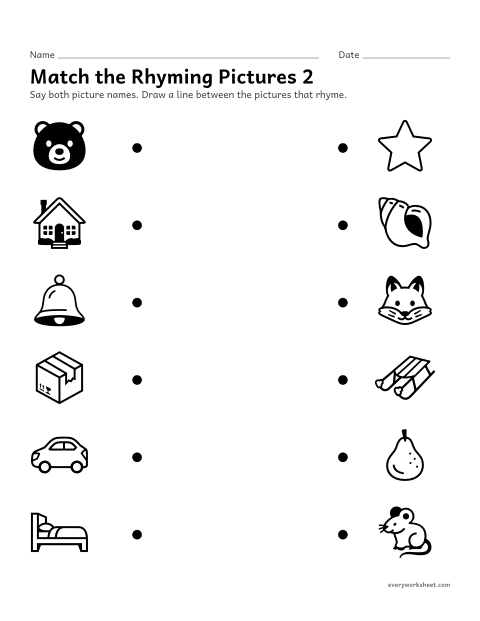
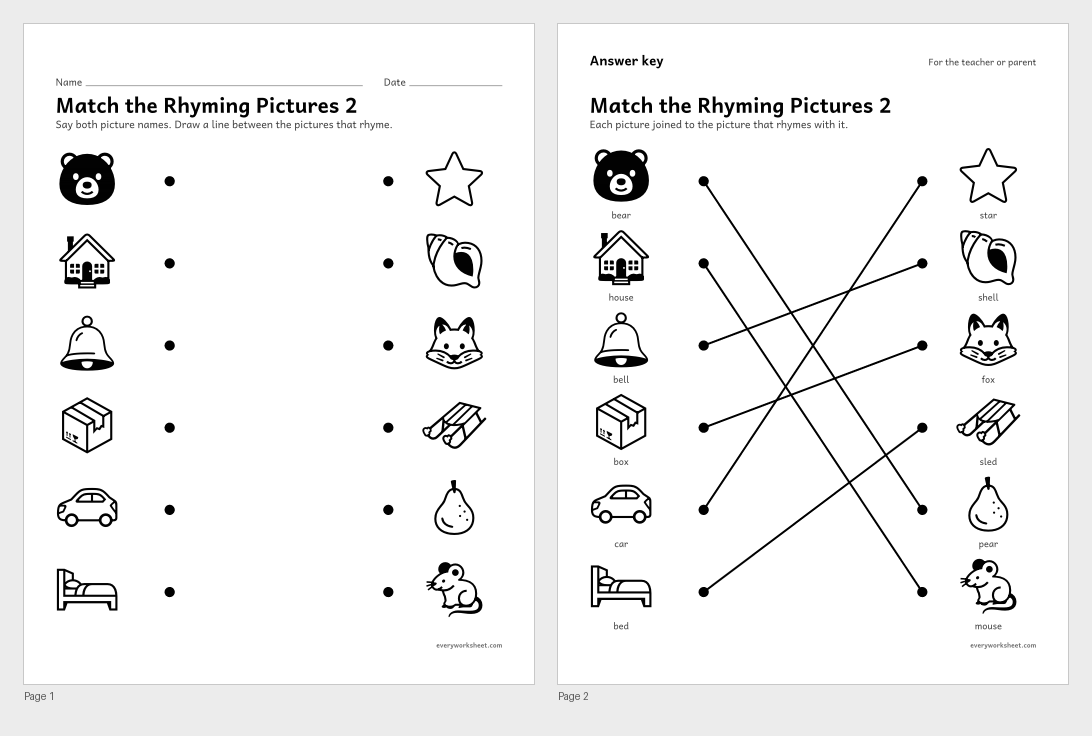
Match the rhyming pictures 2
Matching pictures whose names rhyme
Answer key on page 2
2 pages35 KB
 View all 2 pages
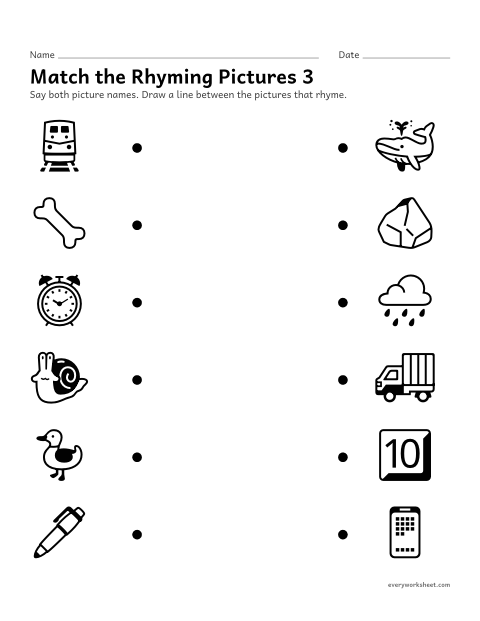
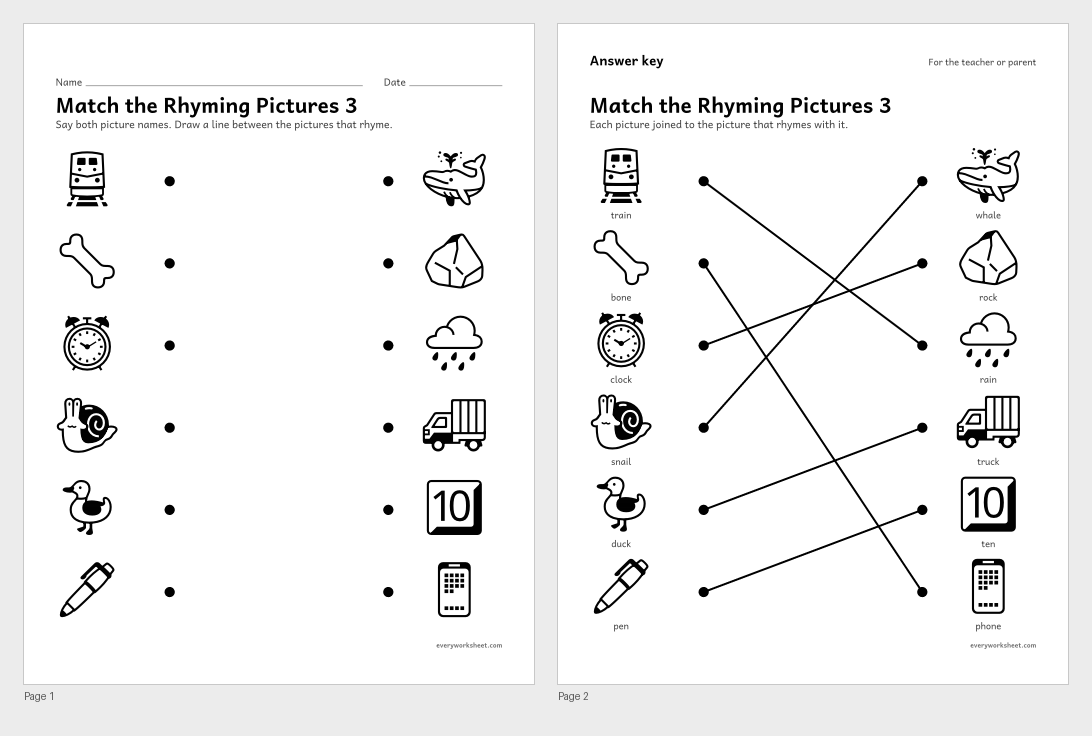
Match the rhyming pictures 3
Matching pictures whose names rhyme
Answer key on page 2
2 pages35 KB
Circle, cross out and draw
 View all 2 pages
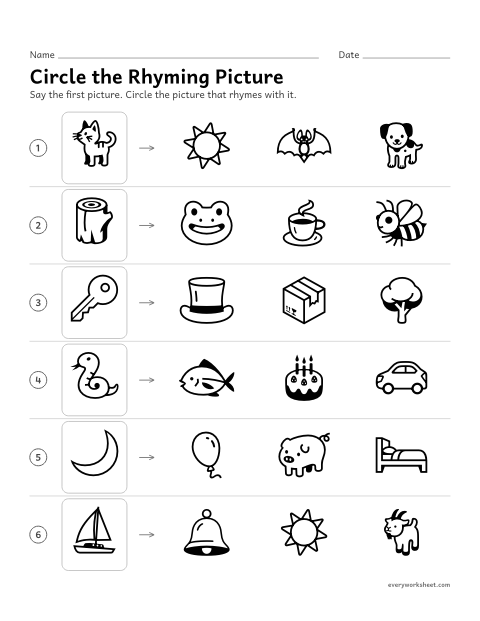
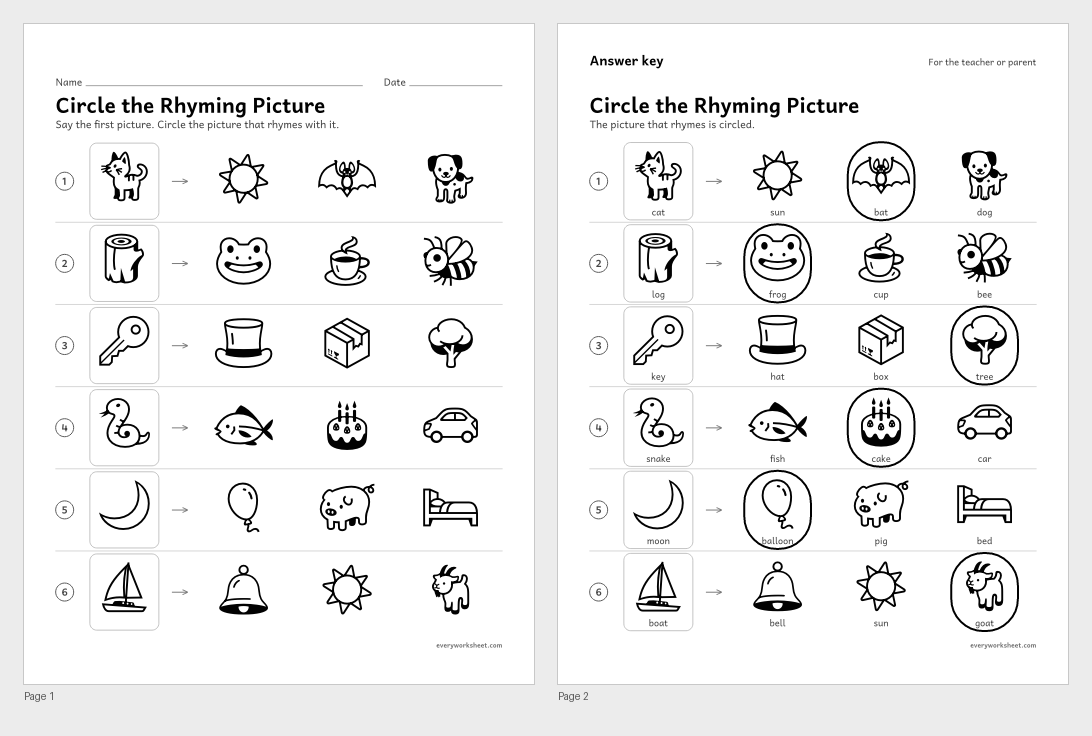
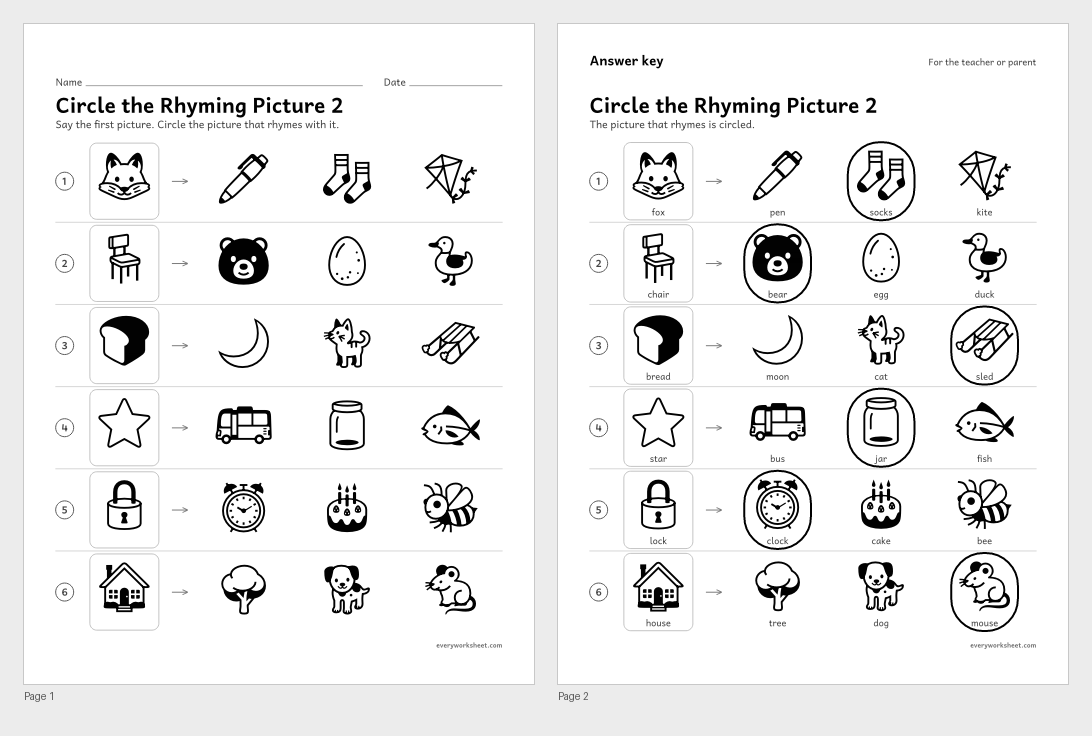
Circle the rhyming picture
Finding the picture that rhymes with a word
Answer key on page 2
2 pages62 KB
 View all 2 pages
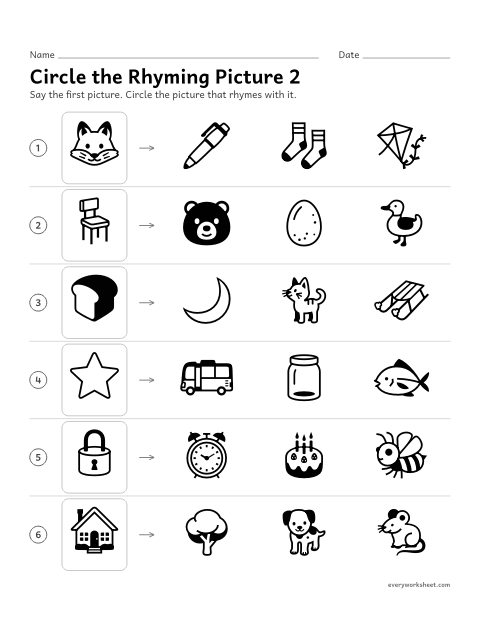
Circle the rhyming picture 2
Finding the picture that rhymes with a word
Answer key on page 2
2 pages62 KB
 View all 2 pages
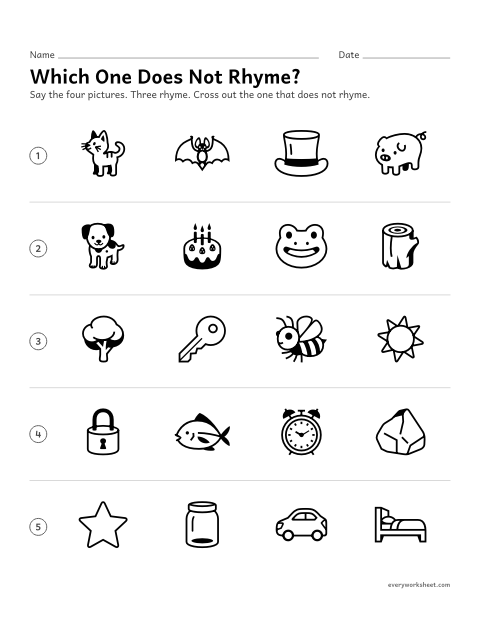
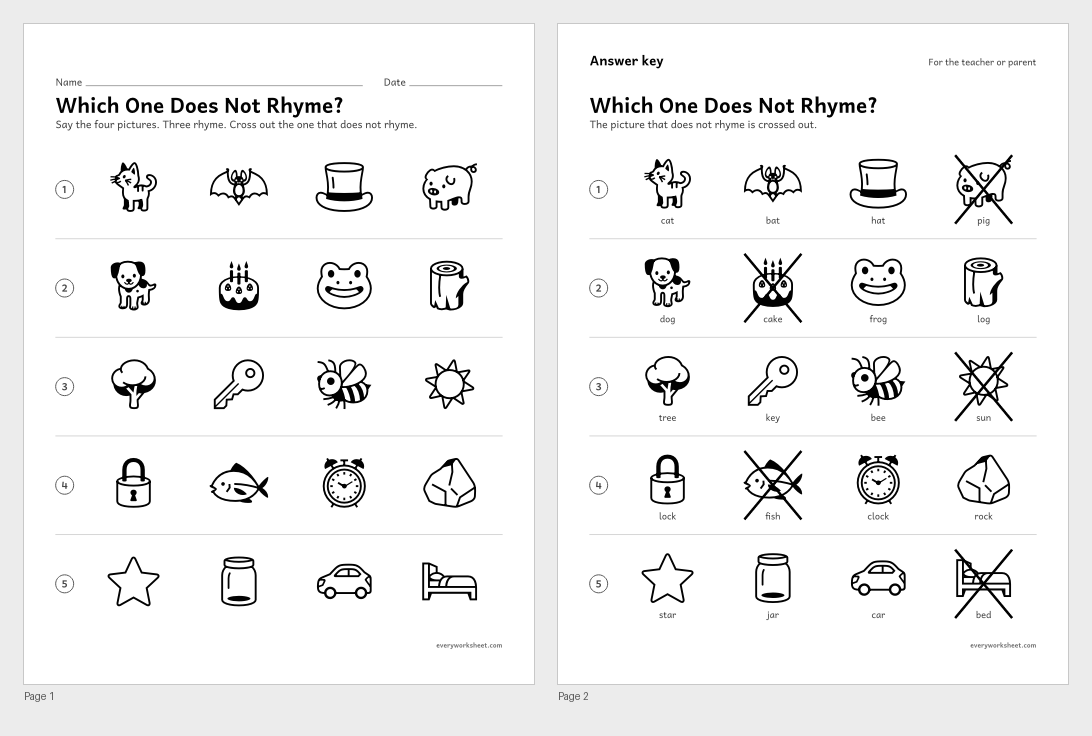
Which one does not Rhyme?
Finding the word that does not rhyme
Answer key on page 2
2 pages55 KB
 View all 2 pages
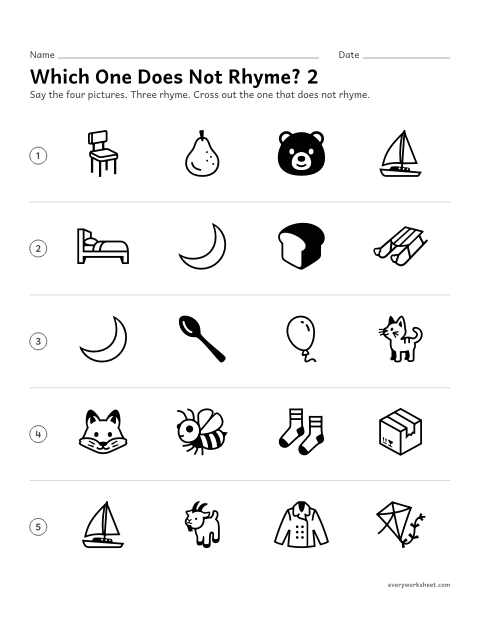
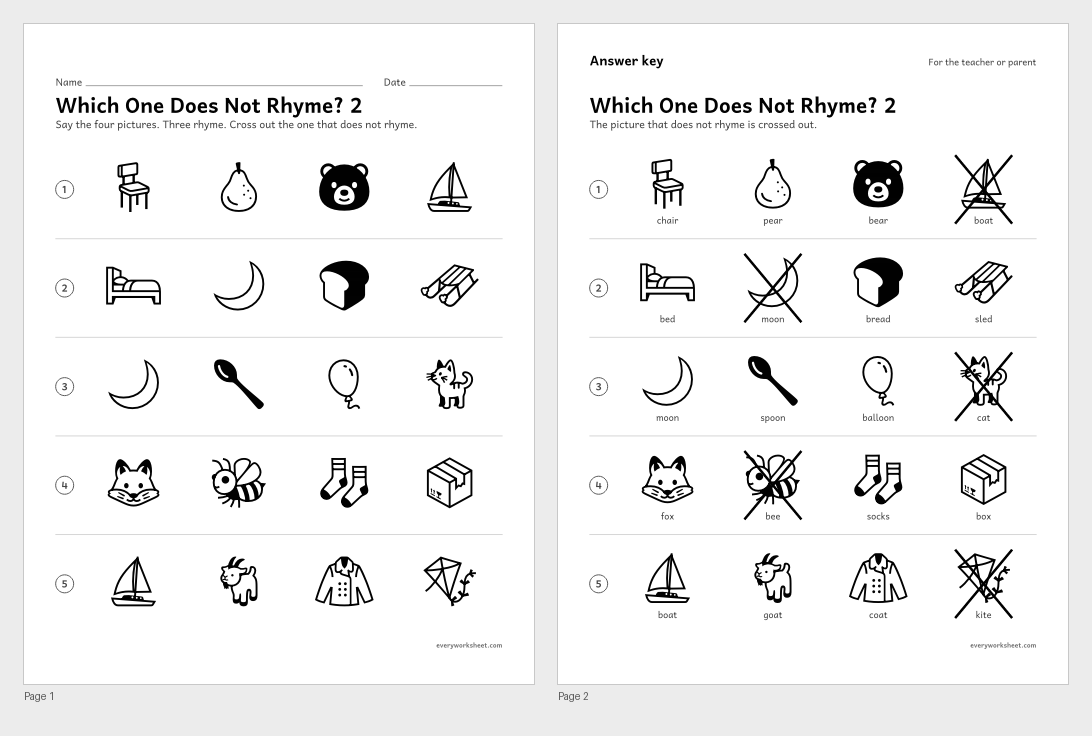
Which one does not Rhyme? 2
Finding the word that does not rhyme
Answer key on page 2
2 pages54 KB
 View larger
Rhyming words with letters
 View all 2 pages
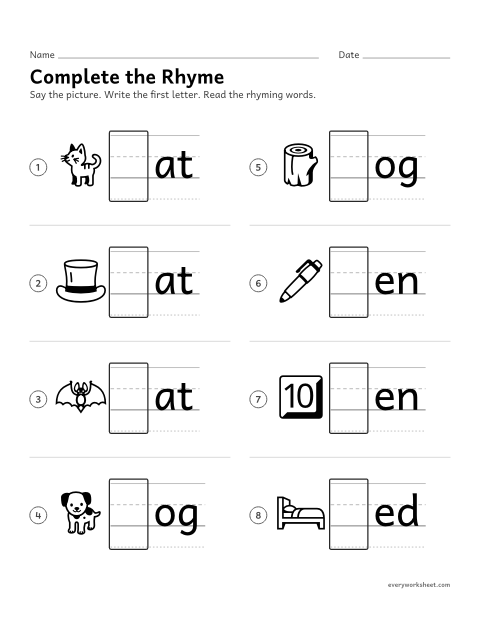
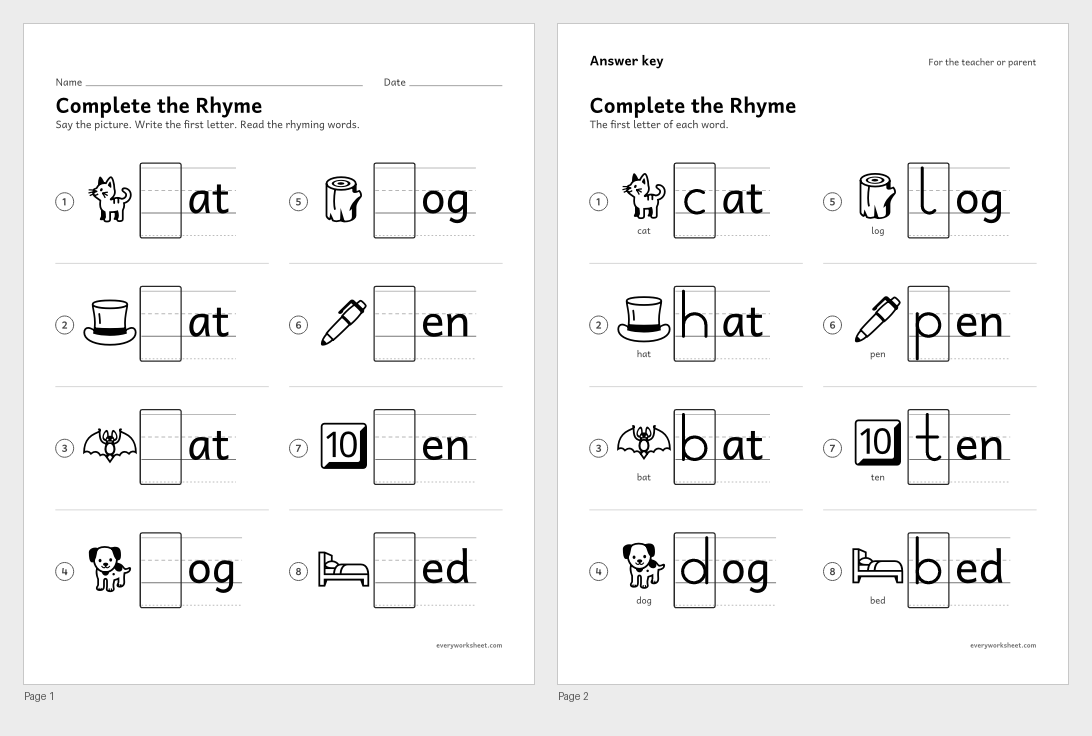
Complete the rhyme
Writing the first letter to make rhyming words
Answer key on page 2
2 pages49 KB
 View all 2 pages
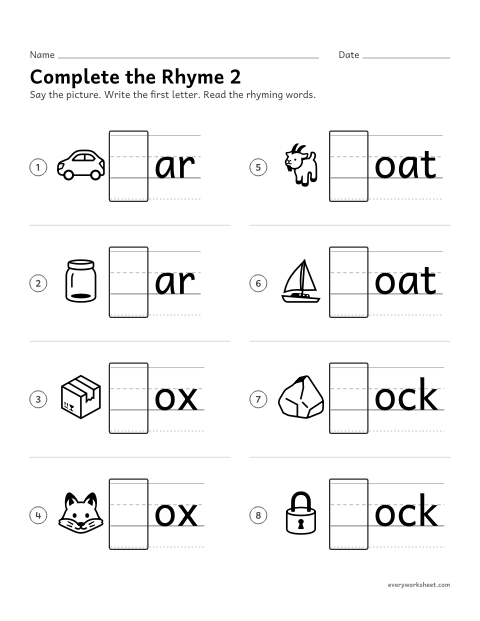
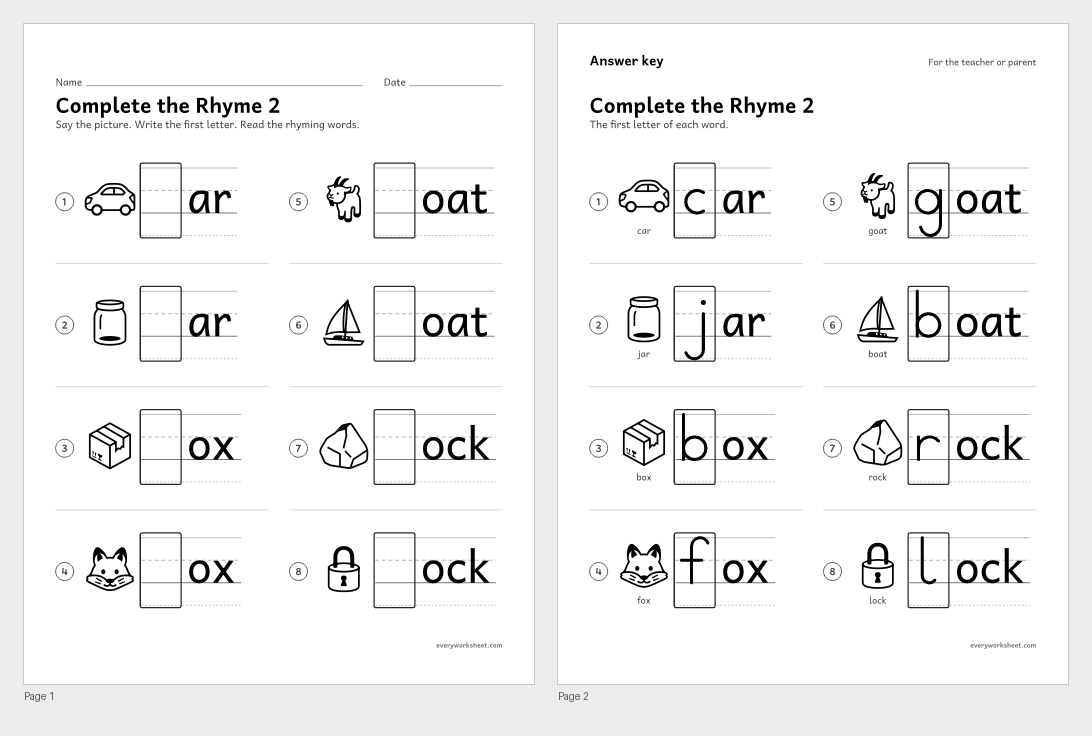
Complete the rhyme 2
Writing the first letter to make rhyming words
Answer key on page 2
2 pages49 KB
 View larger
Print at 100% (actual size) for the cleanest tracing lines.
About these rhyming words worksheets
Rhyming words end with the same sounds, like cat and hat or moon and spoon. Hearing rhymes is one of the first listening skills kindergartners build, and it helps them notice that words are made of parts they can change.
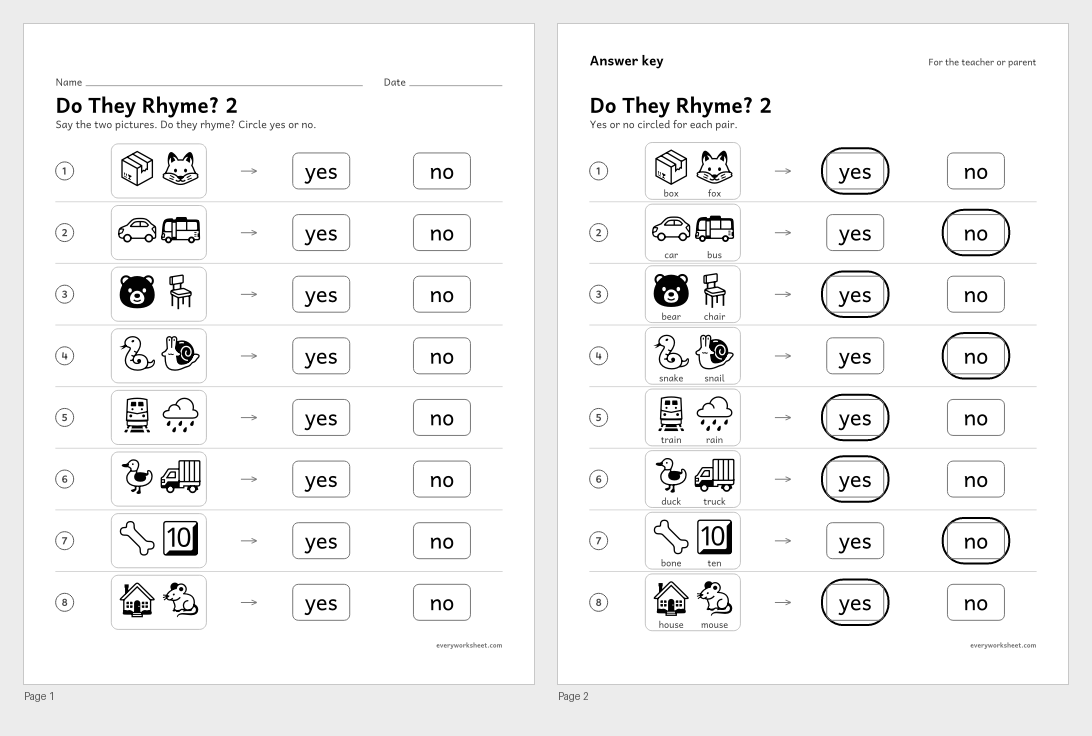
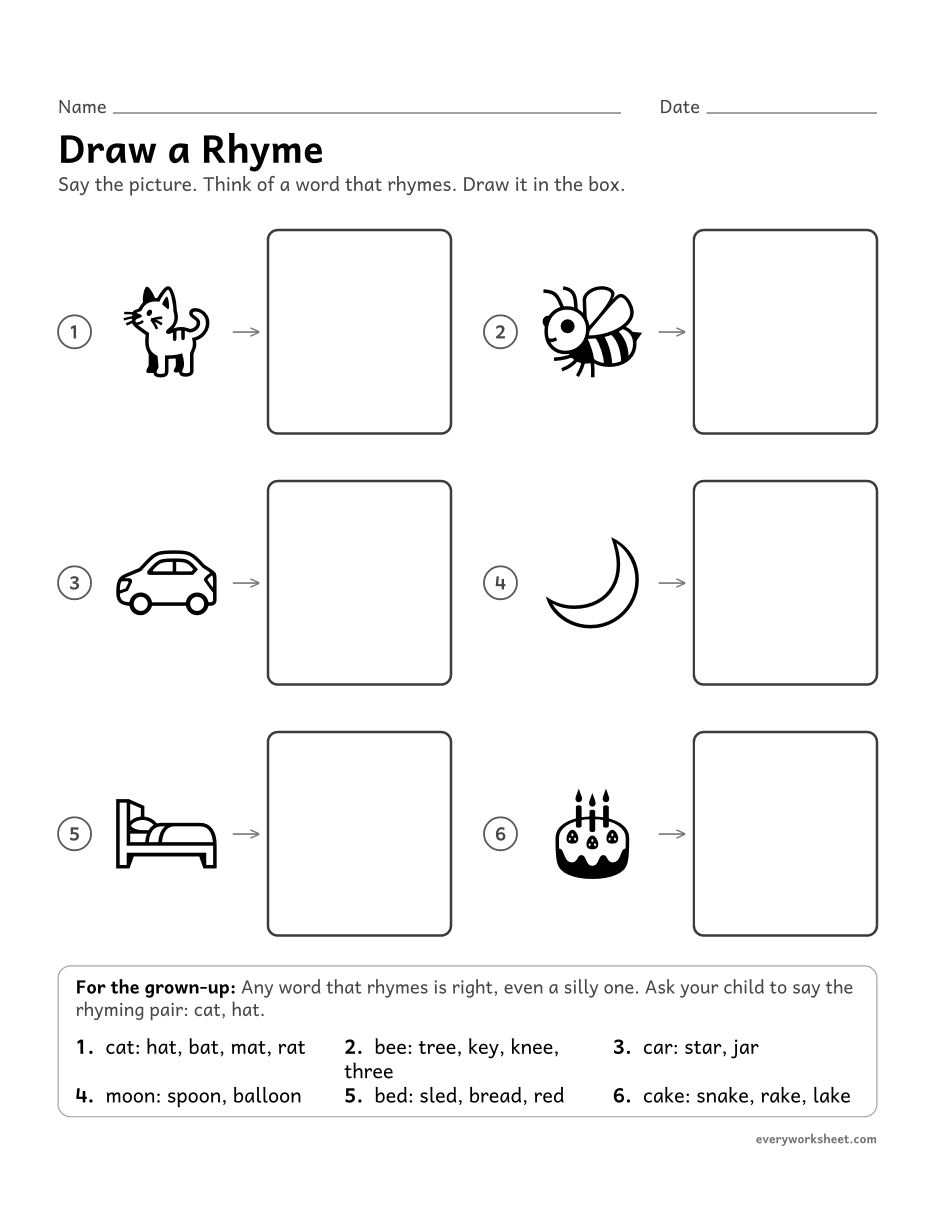
These sheets use simple black-and-white pictures, so children who cannot read yet can still do them. They say the picture names out loud and listen for the ending. The matching, circling, odd-one-out and yes-or-no pages build the skill of hearing a rhyme. The draw-a-rhyme page asks children to make their own. The complete-the-rhyme pages add letters: children write the first letter in front of a word ending such as -at or -og.
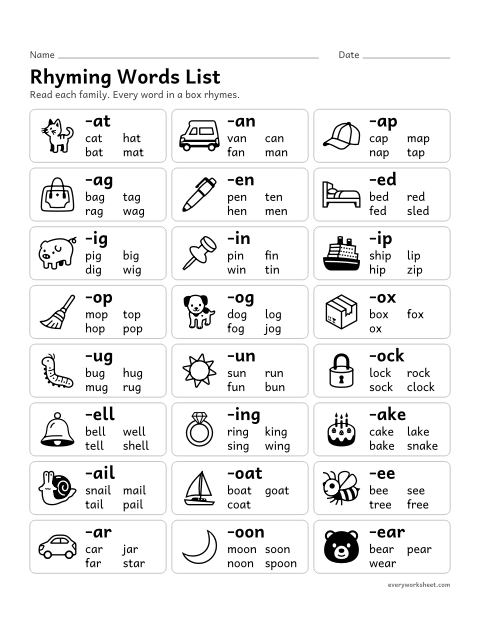
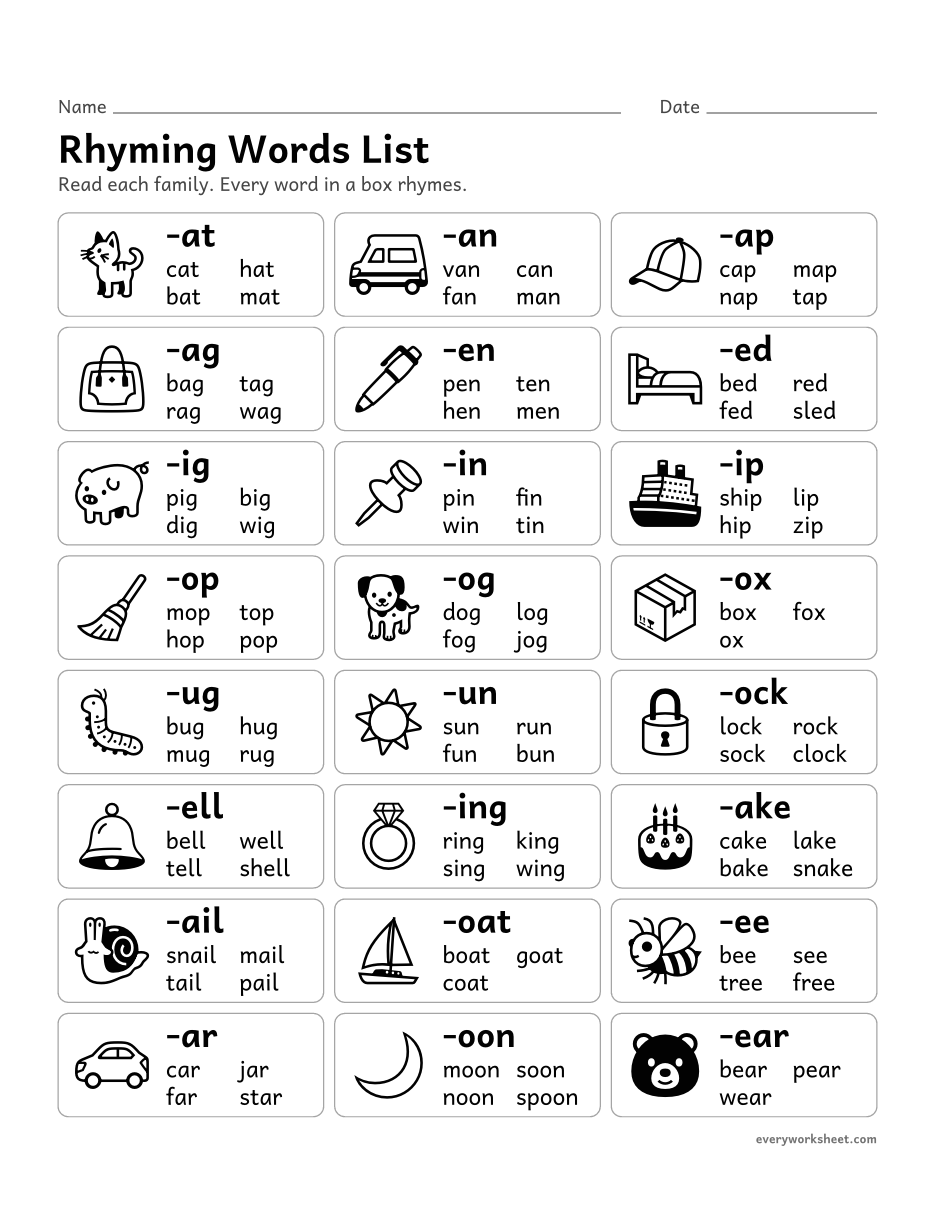
Here are some rhyming words for kindergarten to start with: cat, hat, bat; dog, log, frog; bee, tree, key; cake, snake; goat, boat, coat; moon, spoon, balloon; bear, pear, chair; car, star, jar. The one-page rhyming words list has 24 word families with a picture for each, ready to keep at the table or send home.
Standards
CCSS.ELA-LITERACY.RF.K.2.ARecognize and produce rhyming words.CCSS.ELA-LITERACY.RF.K.2Demonstrate understanding of spoken words, syllables, and sounds (phonemes).CCSS.ELA-LITERACY.RF.K.2.CBlend and segment onsets and rimes of single-syllable spoken words.CCSS.ELA-LITERACY.RF.K.3.ADemonstrate basic knowledge of one-to-one letter-sound correspondences by producing the primary sound or many of the most frequent sounds for each consonant.CCSS.ELA-LITERACY.L.K.2.CWrite a letter or letters for most consonant and short-vowel sounds (phonemes).
How to use them
- Name every picture together before your child starts. A rhyme only works if you both call the bat a bat, not a vampire.
- Say the two words slowly and stretch the ending: c-at, h-at. Ask, “Do they sound the same at the end?”
- Start with the yes-or-no and matching pages, then move to circling and odd one out, which ask children to compare three or four words.
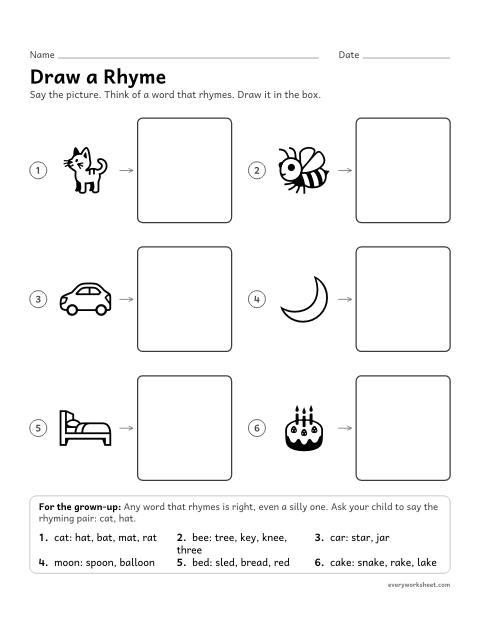
- On the draw-a-rhyme page, any rhyme is right, even a made-up word like “zat”. Ask your child to say the pair out loud.
- Use the complete-the-rhyme pages once your child knows most consonant sounds. Cover the ending and ask for the first sound, then write its letter.
Teaching tips
- Children often pick a word that starts the same (cat, cup) instead of one that ends the same. Say both endings on their own: “-at, -up. Same or different?”
- Keep rhyme games oral as well: say a word in the car and take turns adding rhymes until someone gets stuck.
- Nursery rhymes and rhyming picture books give children lots of rhymes to hear. Pause before the rhyming word and let them fill it in.
- If rhyming is still hard, spend more time on it. Some children need many weeks of listening before they can produce a rhyme on their own.
Questions teachers and parents ask
What are rhyming words for kindergarten?
Short words that end with the same sounds, like cat and hat, bee and tree, or cake and snake. Kindergartners learn to hear whether two words rhyme and then to say a rhyme of their own.
Why is rhyming important?
Rhyming helps children hear that words have a beginning and an ending. That makes it easier to learn word families like -at and -ig and to change one sound to make a new word.
My child says cat and cup rhyme. What should I do?
That is a common mix-up: they start the same. Say the ending parts alone, -at and -up, and ask if those sound the same. Then try a real rhyme, cat and hat, side by side.
What is in the rhyming words list?
24 rhyming families such as -at, -an, -ig, -op, -ug, -ake and -ee, each with a picture and four rhyming words to read together.
Are these rhyming worksheets free?
Yes. Every page is a free PDF with no sign-up, in US Letter and A4. Sheets with right answers have an answer key on page 2.