 View larger
Trace Sentences: I see
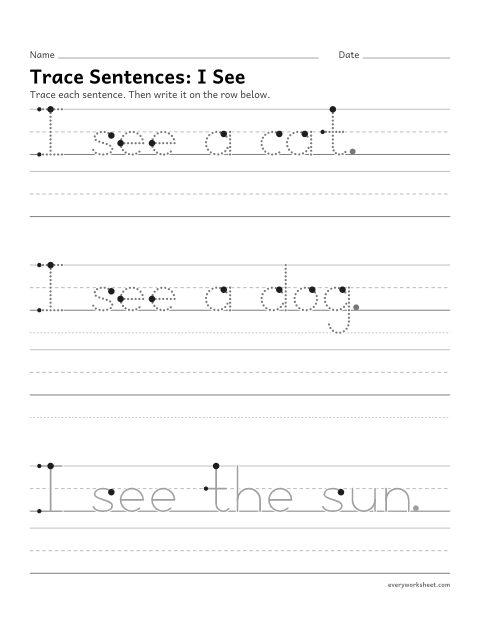
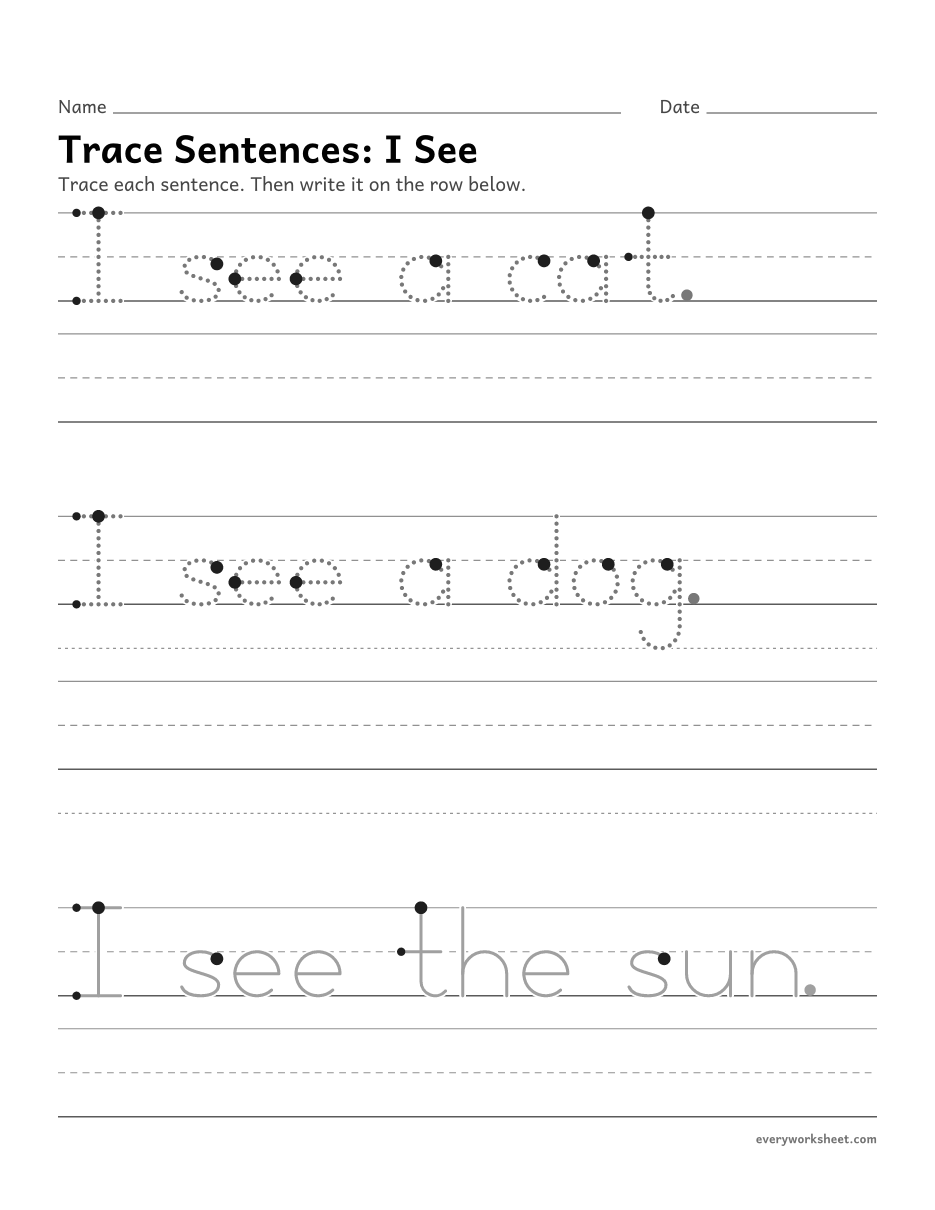
Tracing and writing simple sentences (I see a cat.)
1 page26 KB
Trace, build and fix simple sentences: capitals, finger spaces, end marks, question words, naming and action words, plurals and position words.
View largerTracing and writing simple sentences (I see a cat.)
1 page26 KB
 View larger
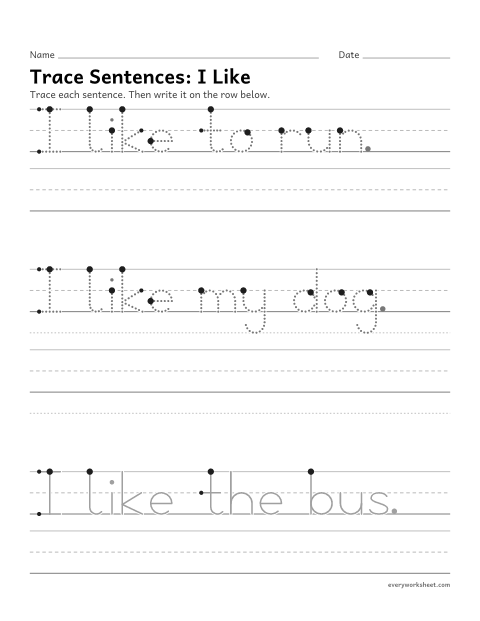
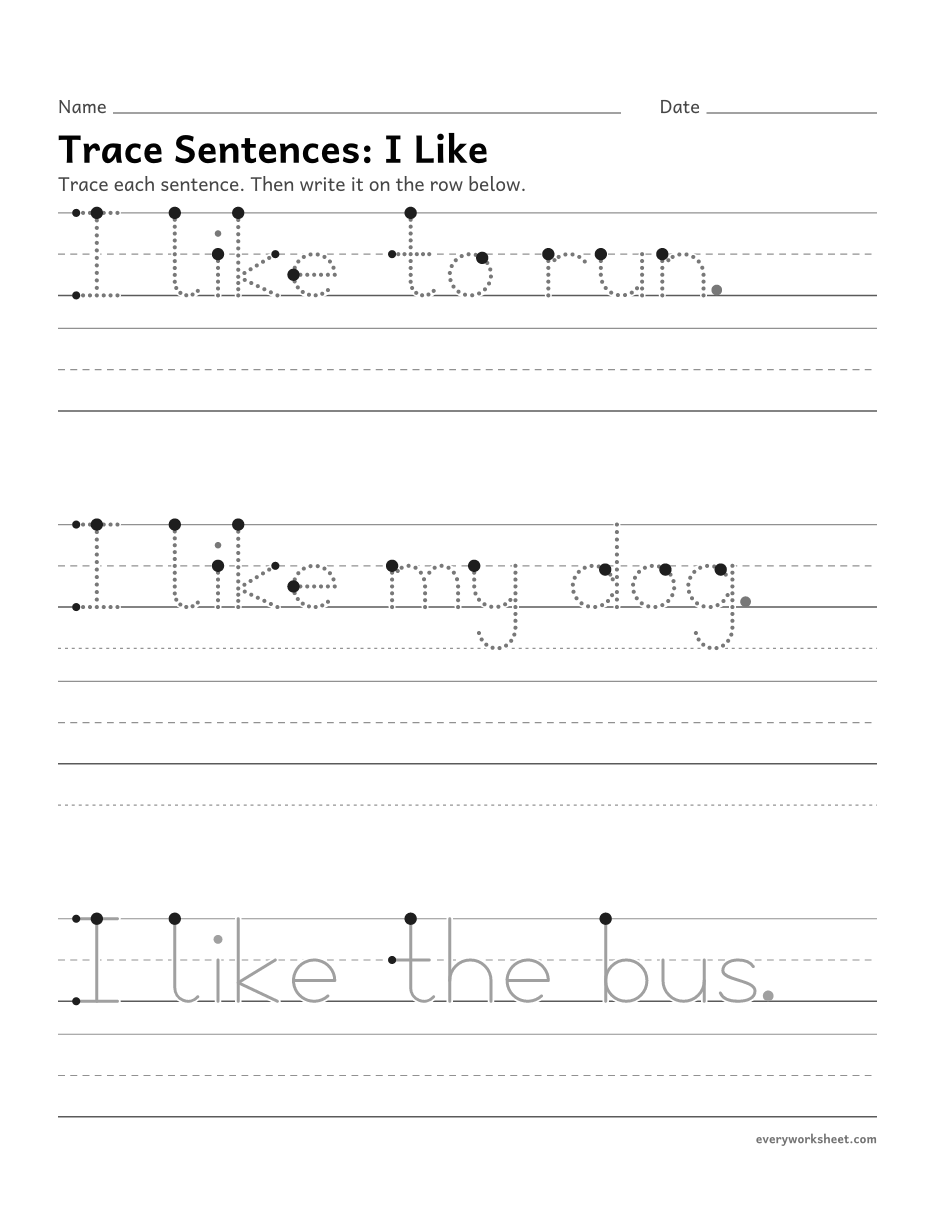
Tracing and writing simple sentences (I like to run.)
1 page27 KB
 View larger
 View larger
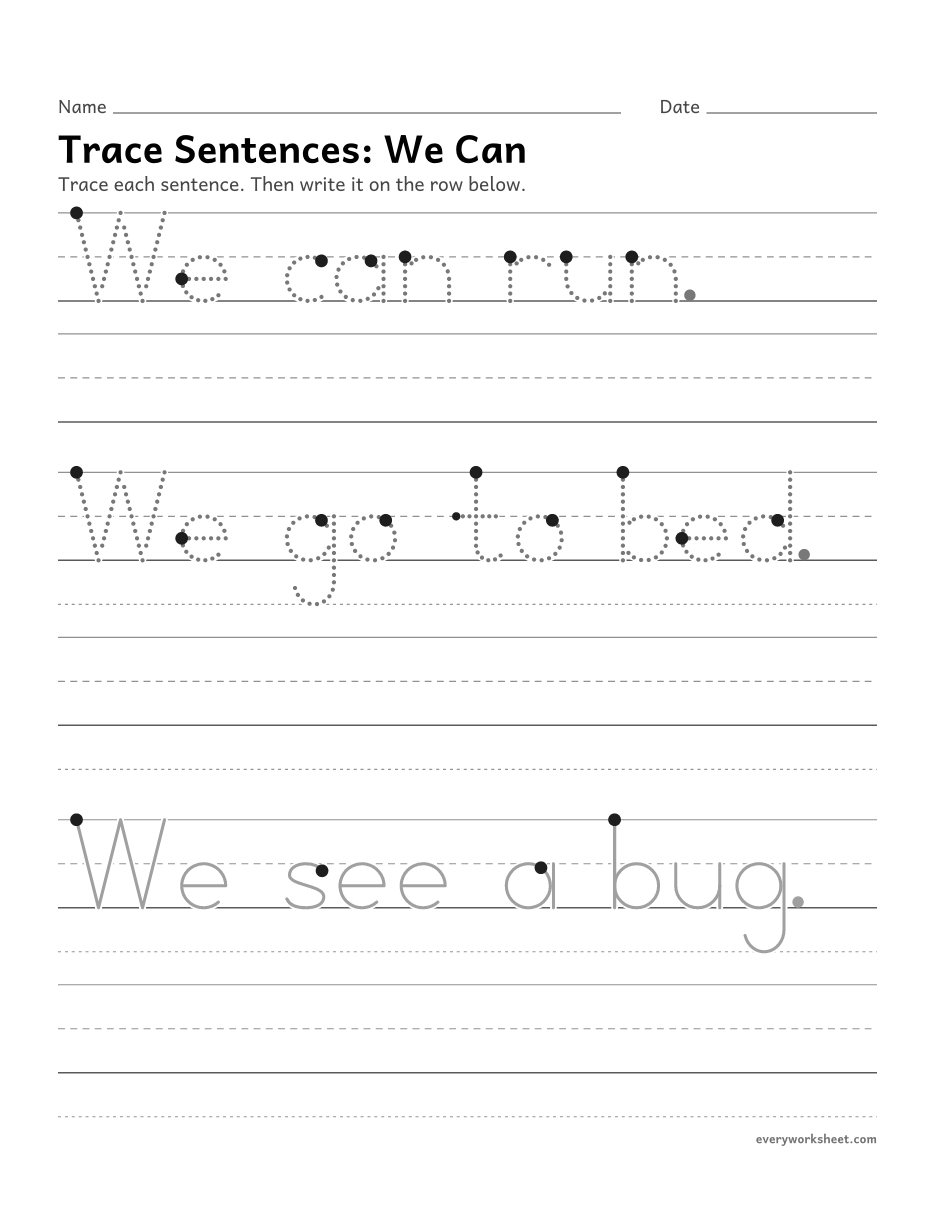
Tracing and writing simple sentences (We can run.)
1 page27 KB
 View larger
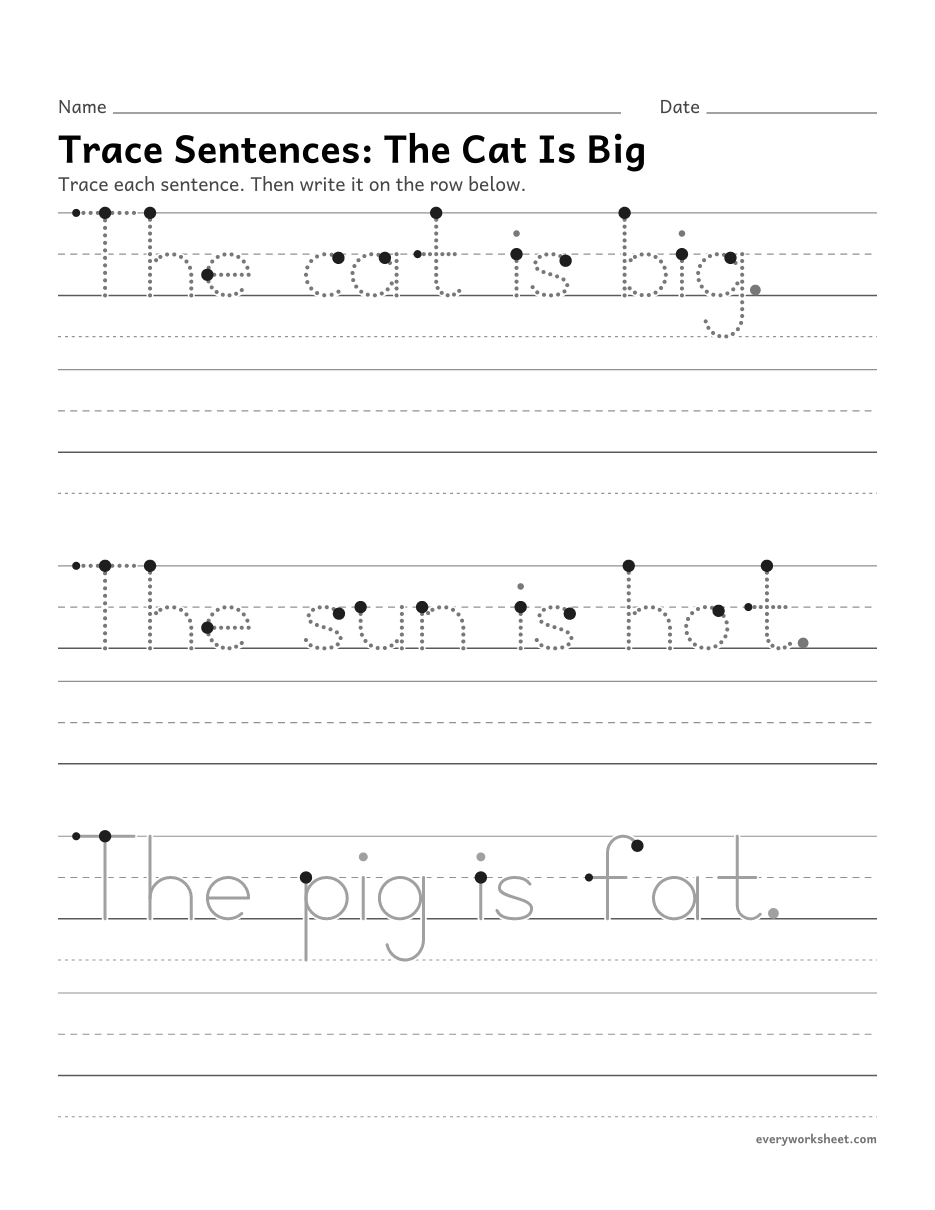
Tracing and writing sentences that tell about something
1 page27 KB
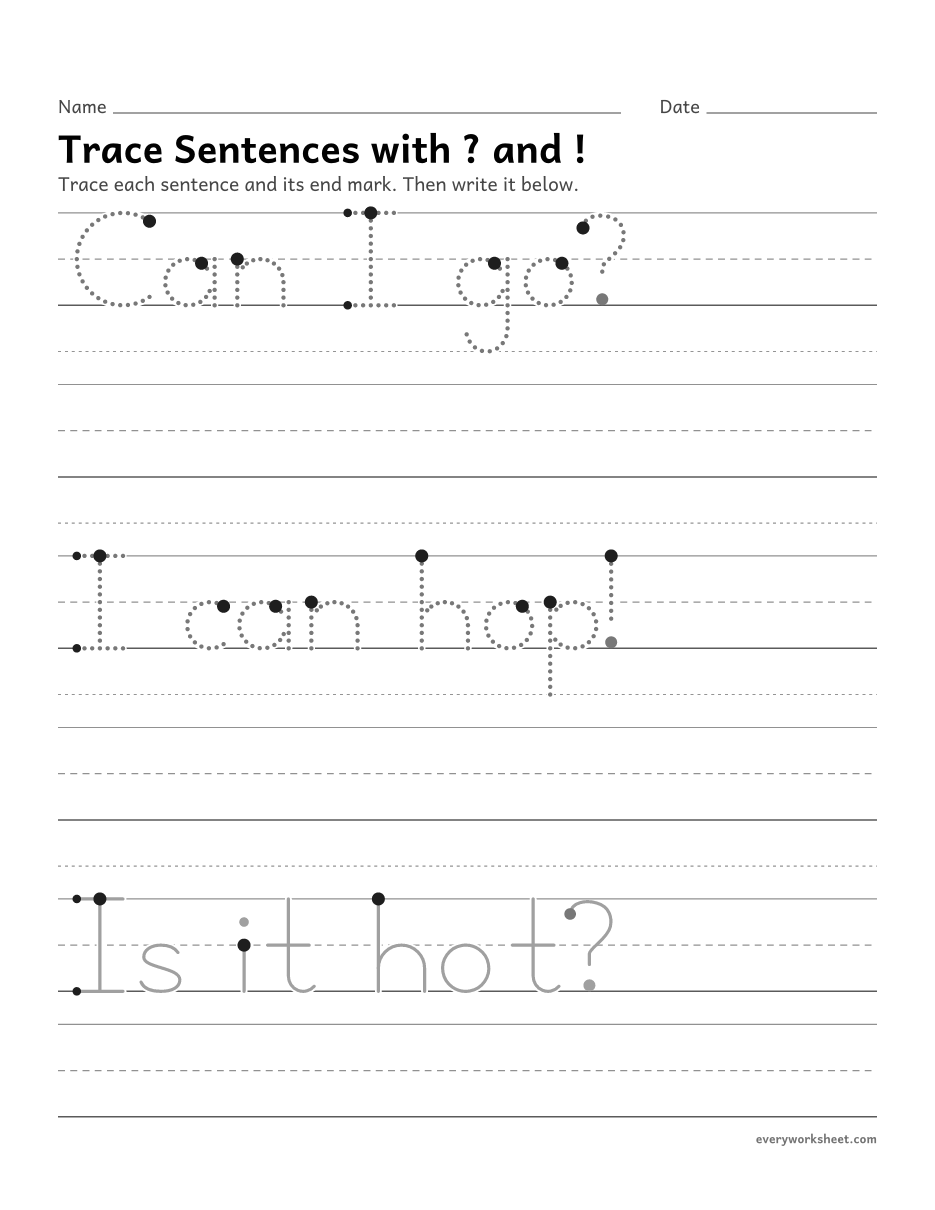 View larger
Writing sentences that end with a question mark or exclamation point
1 page27 KB
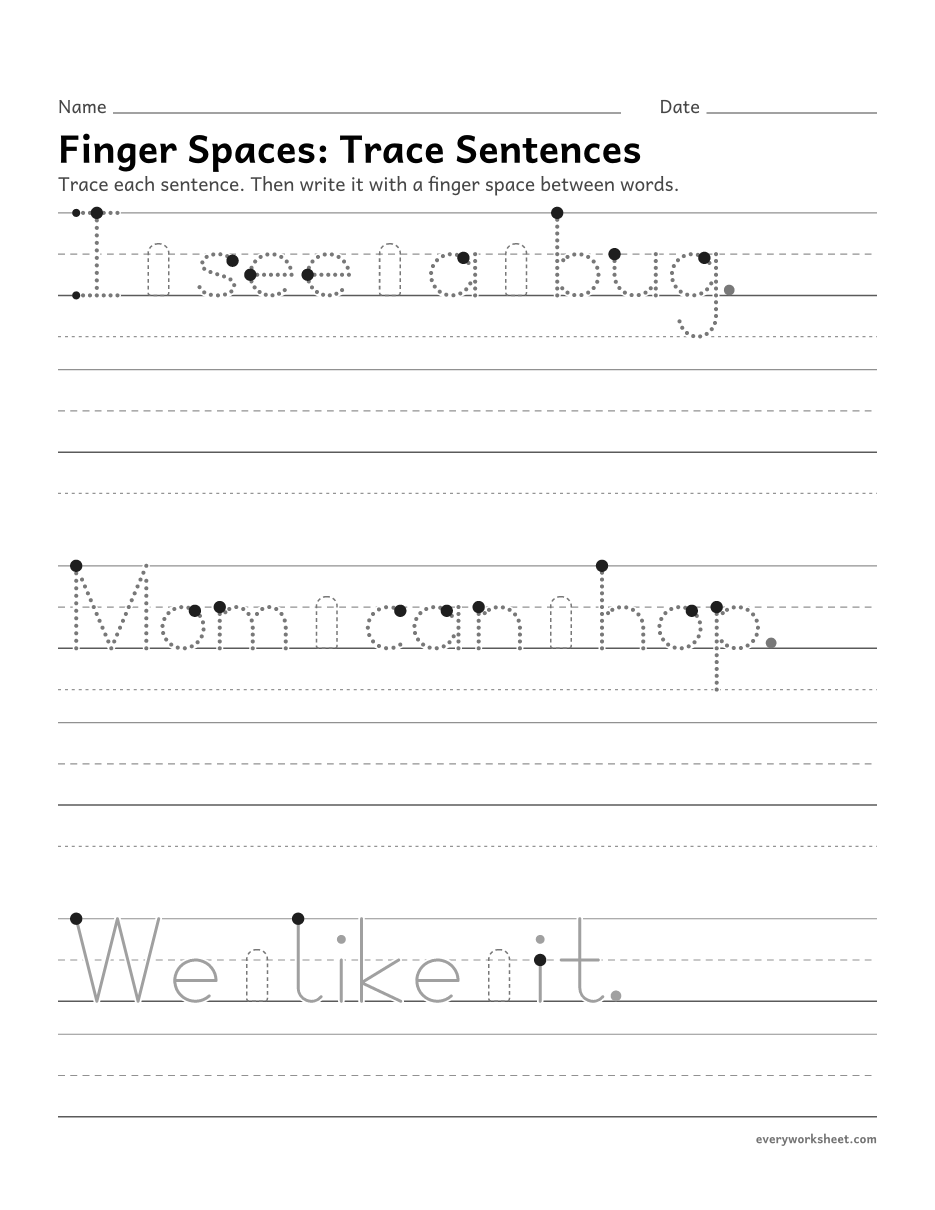 View larger
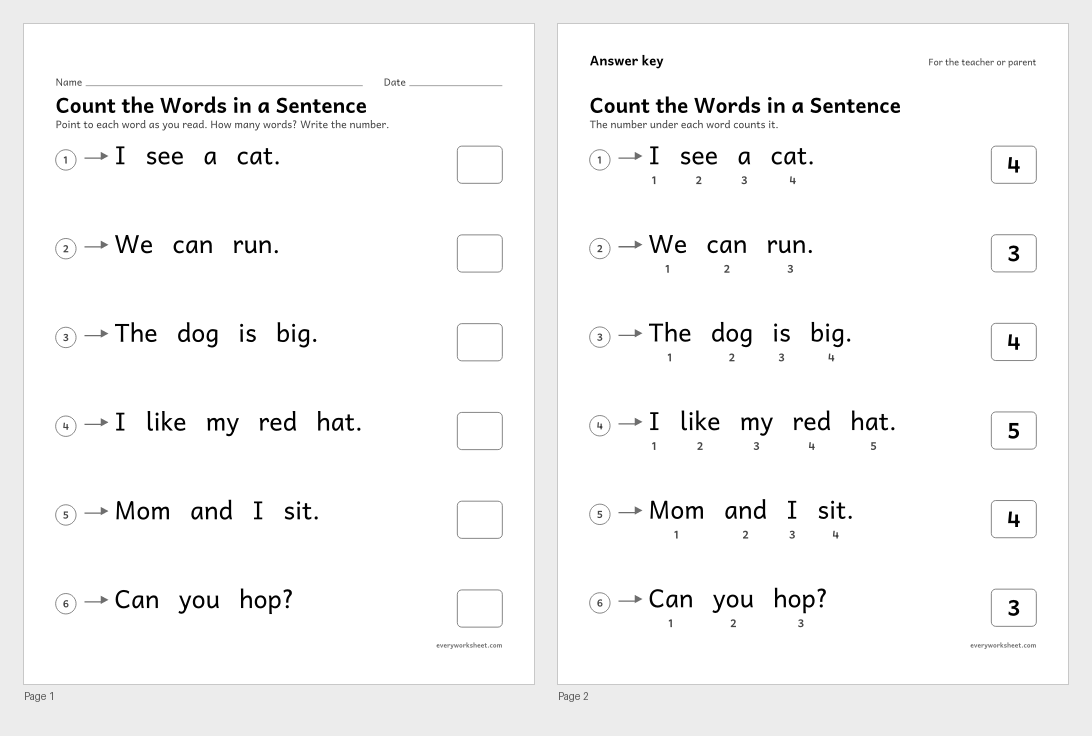 View all 2 pages
Reading left to right and counting the words in a sentence
Answer key on page 2
2 pages39 KB
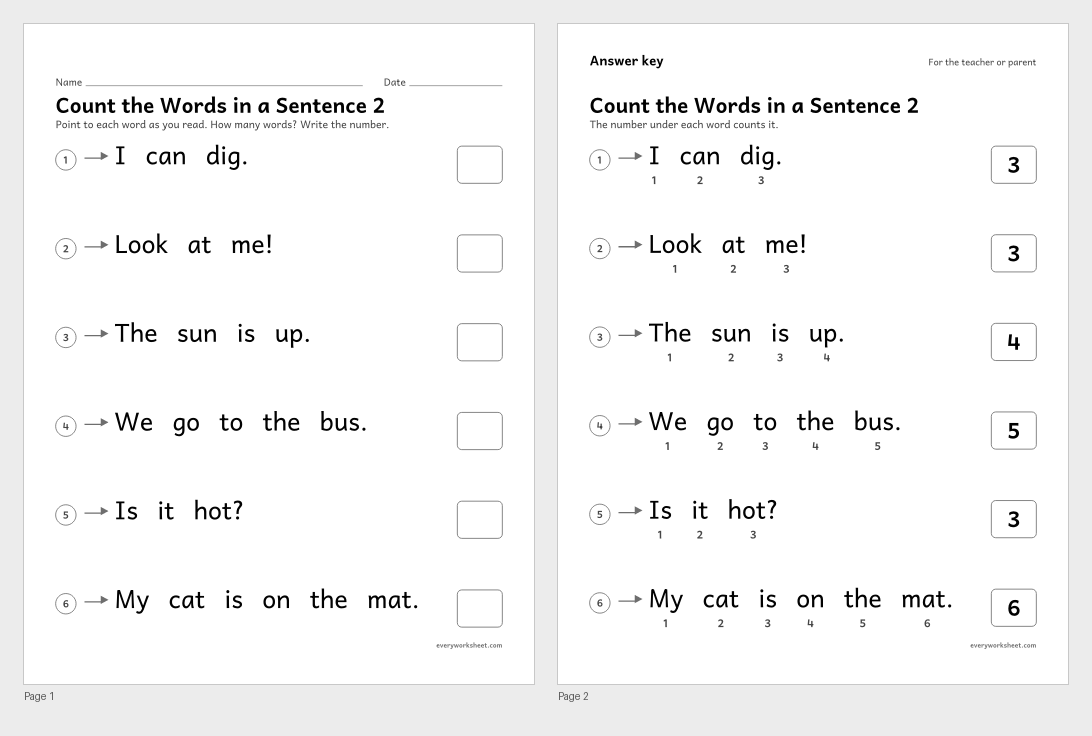 View all 2 pages
Reading left to right and counting the words in a sentence
Answer key on page 2
2 pages39 KB
 View all 2 pages
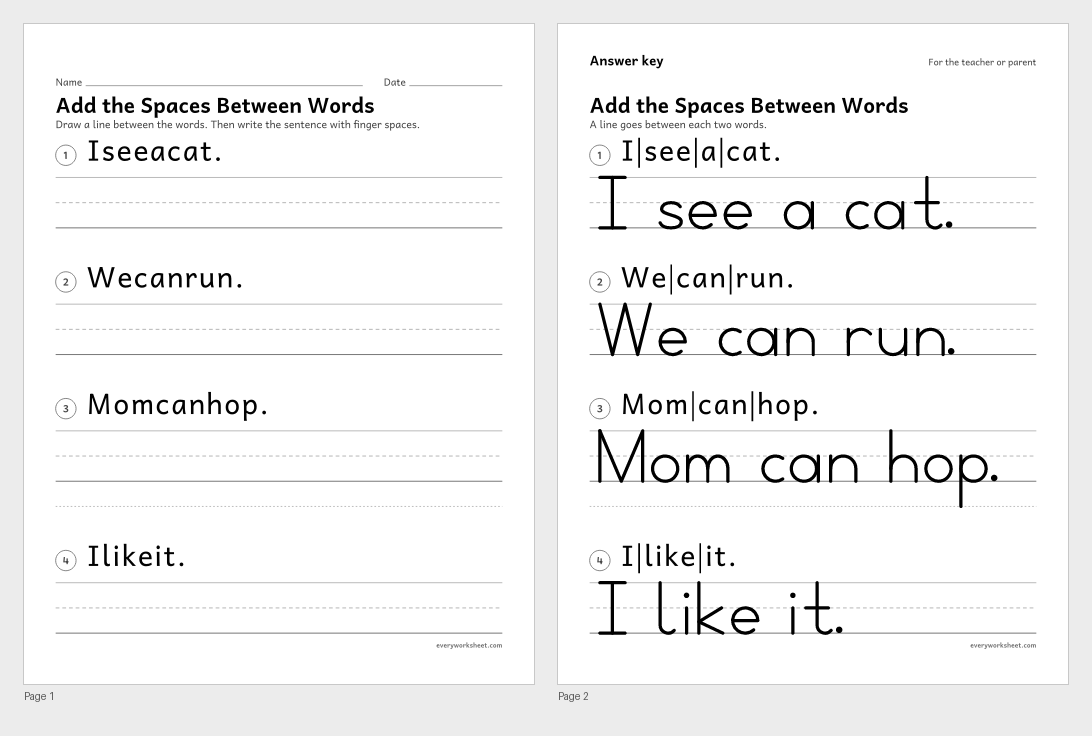
Finding where words begin and end, and writing them with spaces
Answer key on page 2
2 pages30 KB
 View all 2 pages
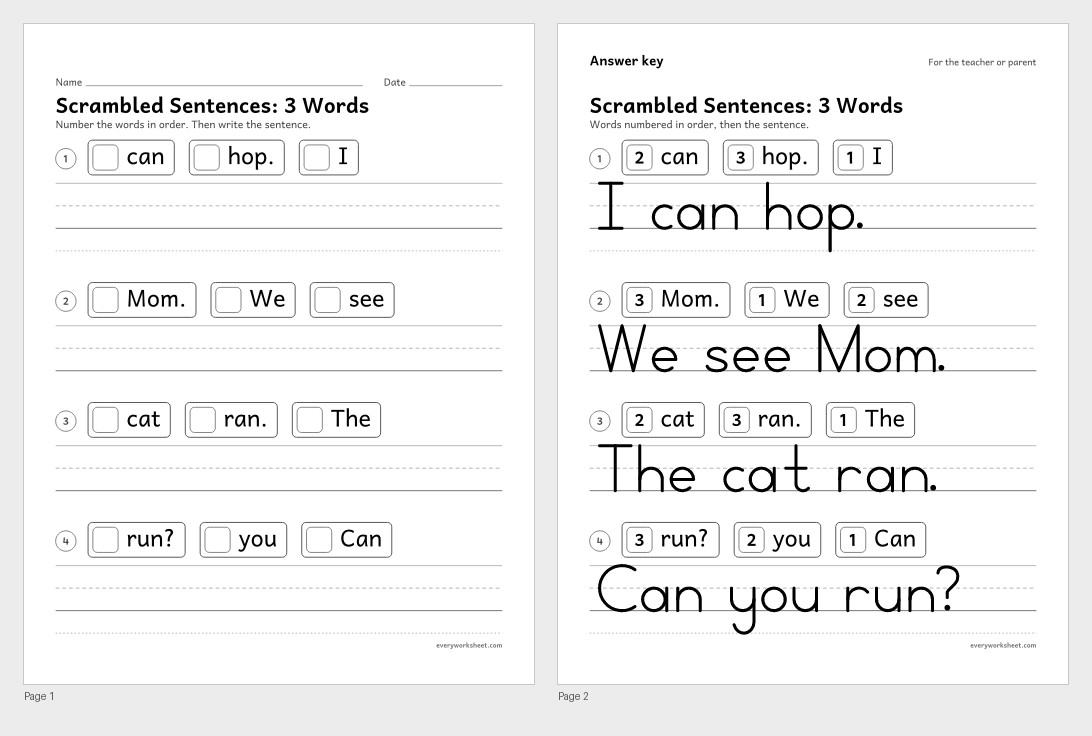
Putting three words in order to make a sentence
Answer key on page 2
2 pages32 KB
 View all 2 pages
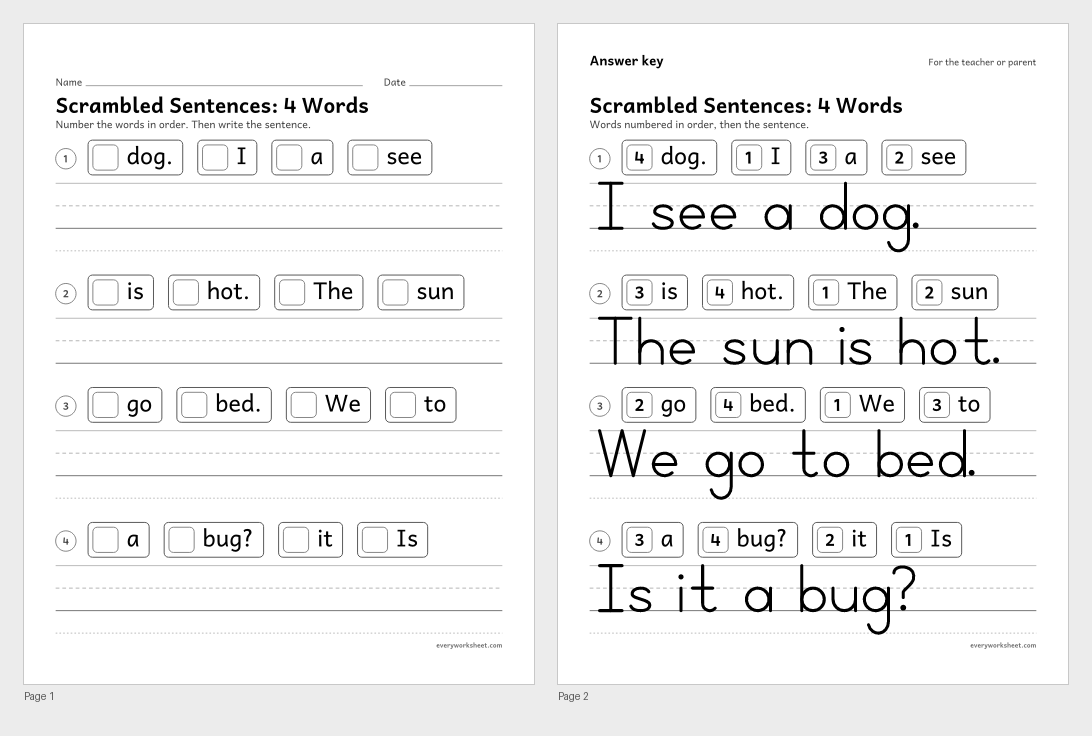
Putting four words in order to make a sentence
Answer key on page 2
2 pages32 KB
 View larger
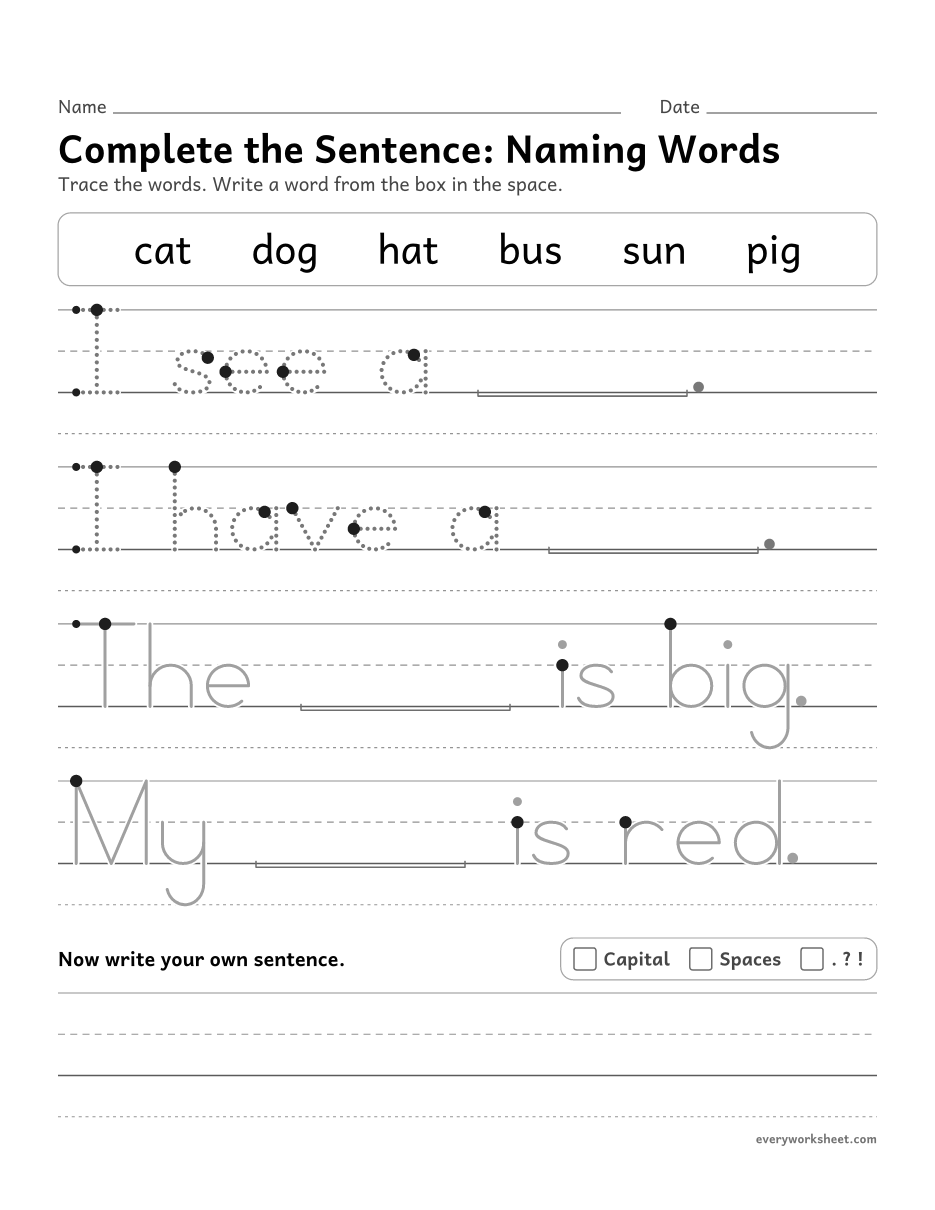
Using naming words (nouns) in sentences
1 page30 KB
 View larger
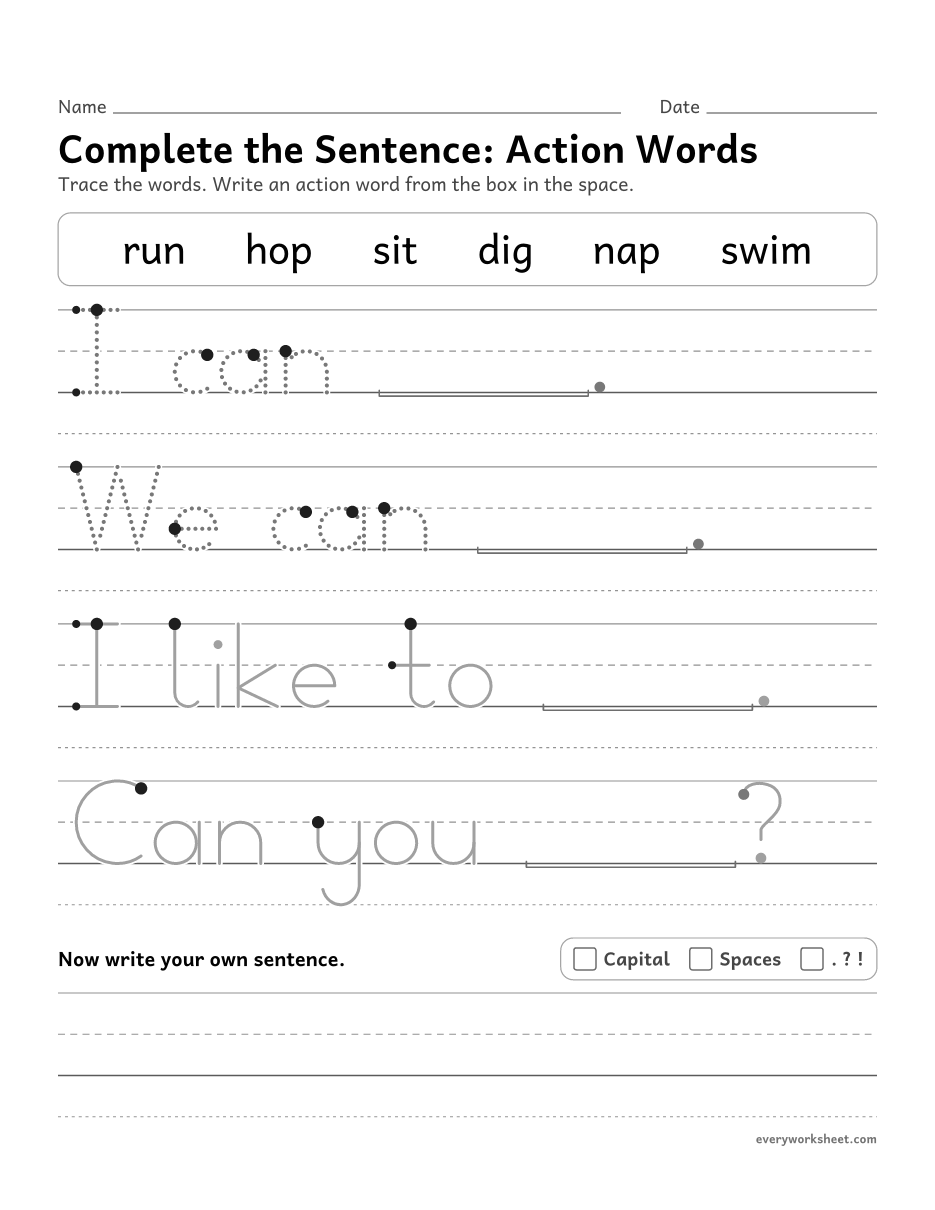
Using action words (verbs) in sentences
1 page30 KB
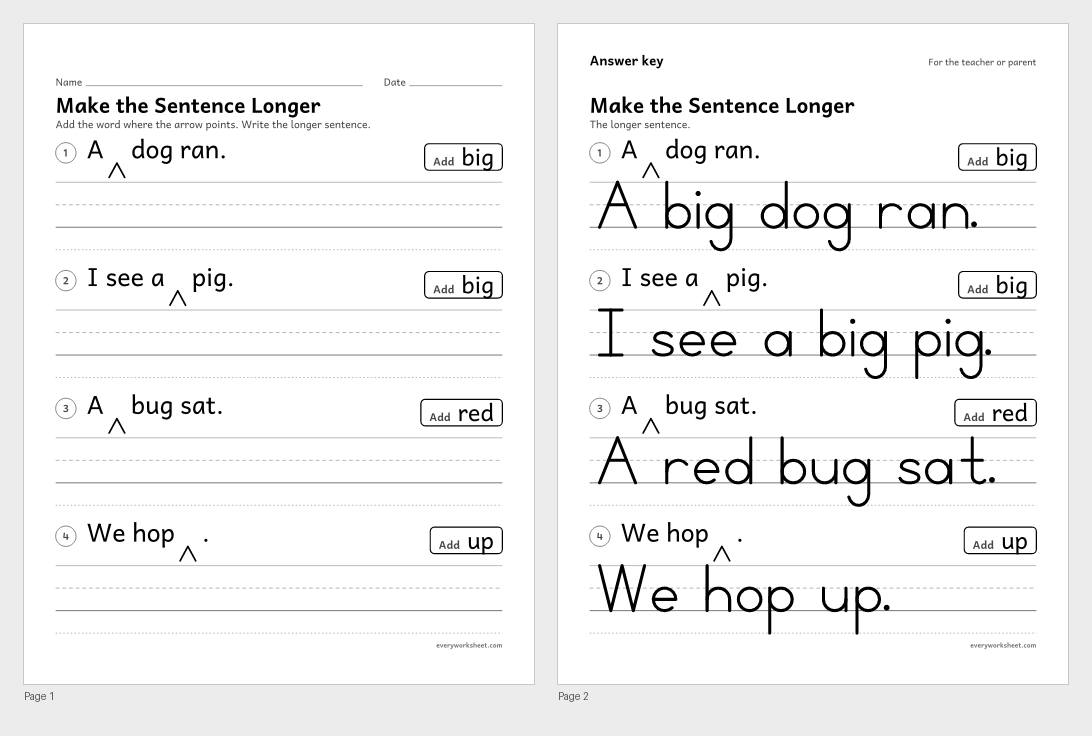 View all 2 pages
Expanding a sentence by adding a word
Answer key on page 2
2 pages30 KB
 View larger
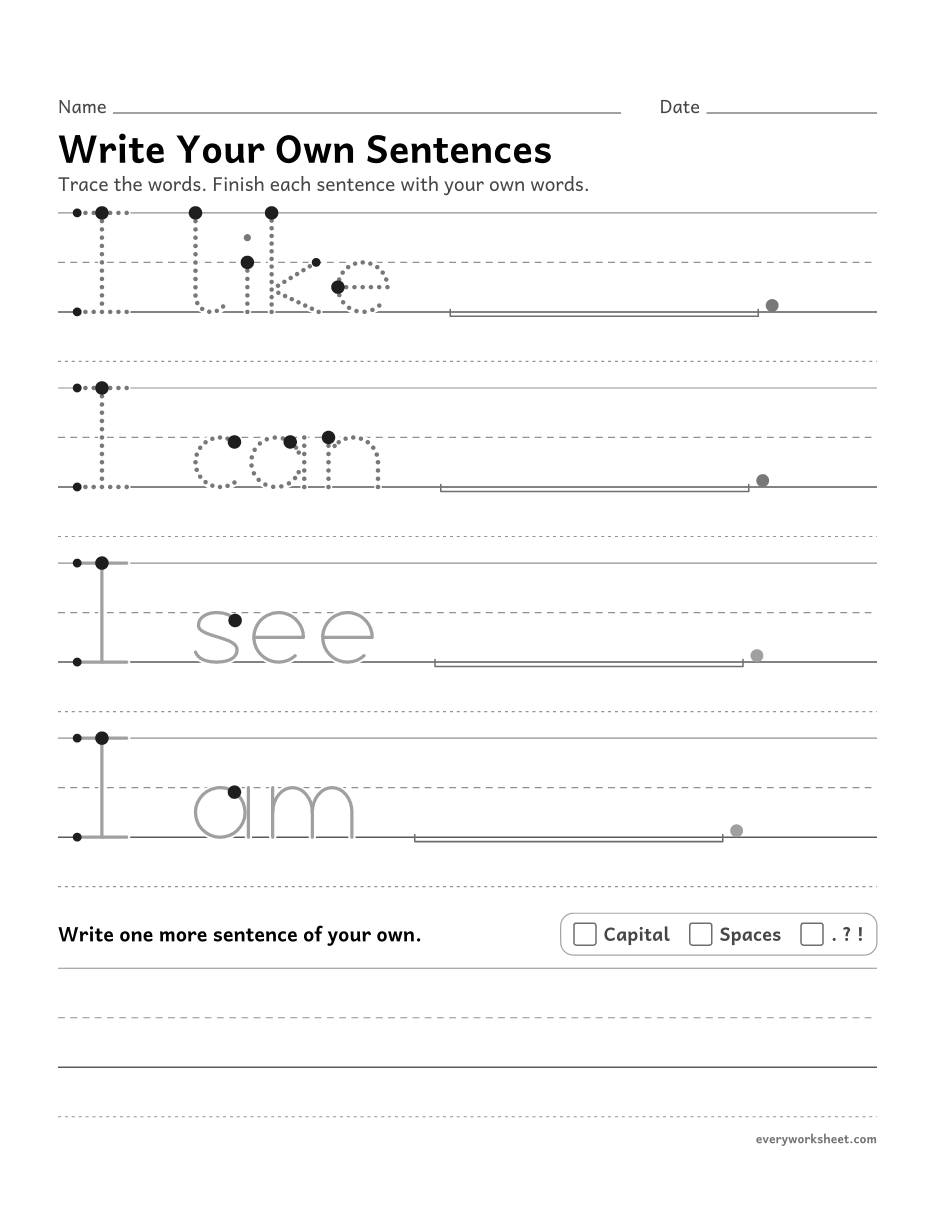
Writing complete sentences with sentence starters
1 page28 KB
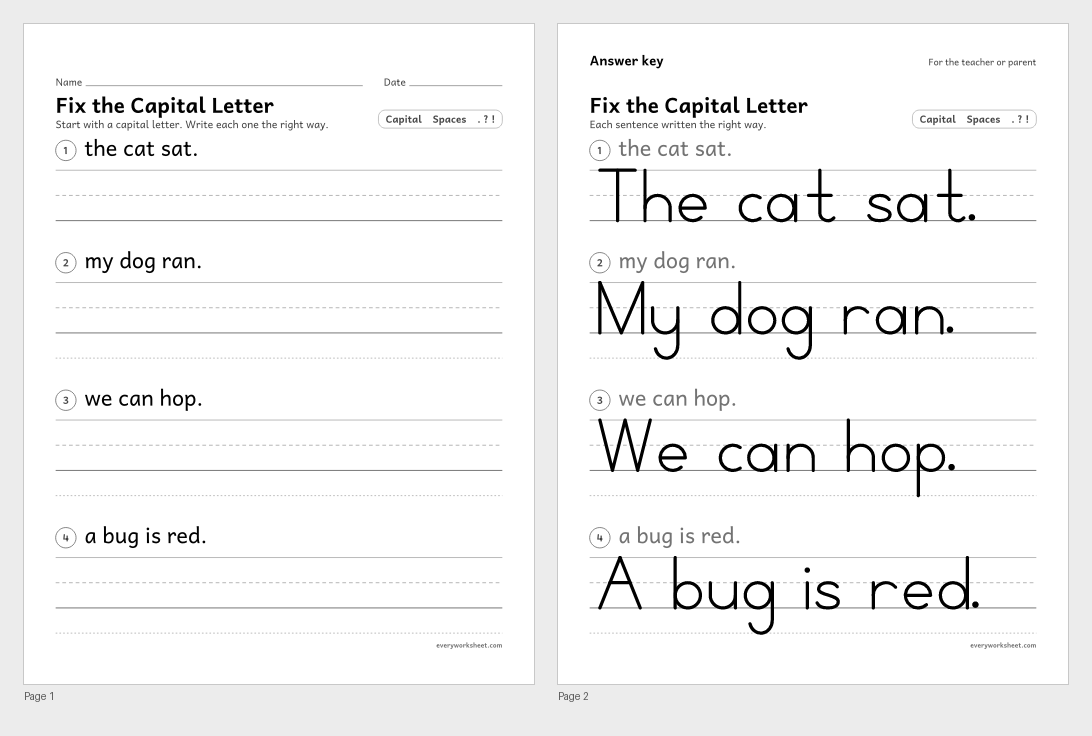 View all 2 pages
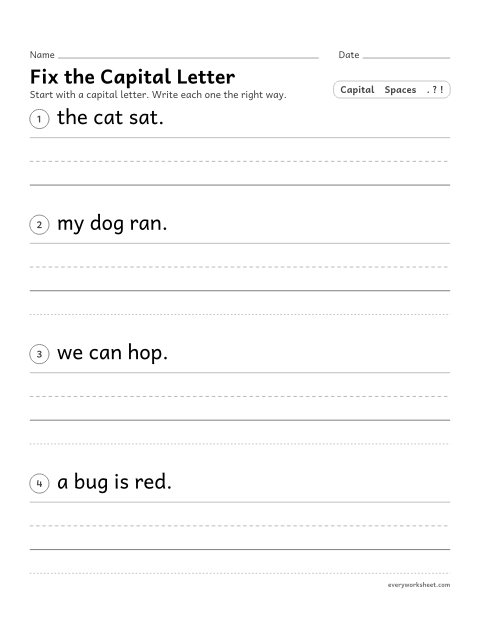
Starting a sentence with a capital letter
Answer key on page 2
2 pages30 KB
 View all 2 pages
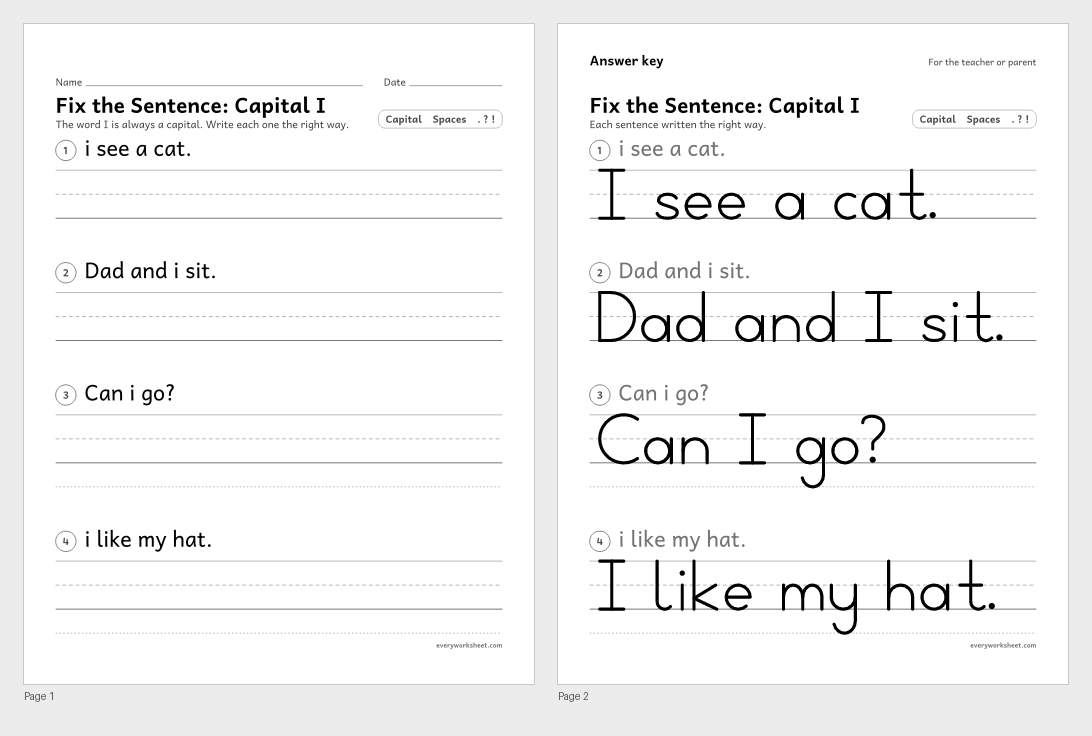
Writing the word I as a capital letter
Answer key on page 2
2 pages31 KB
 View all 2 pages
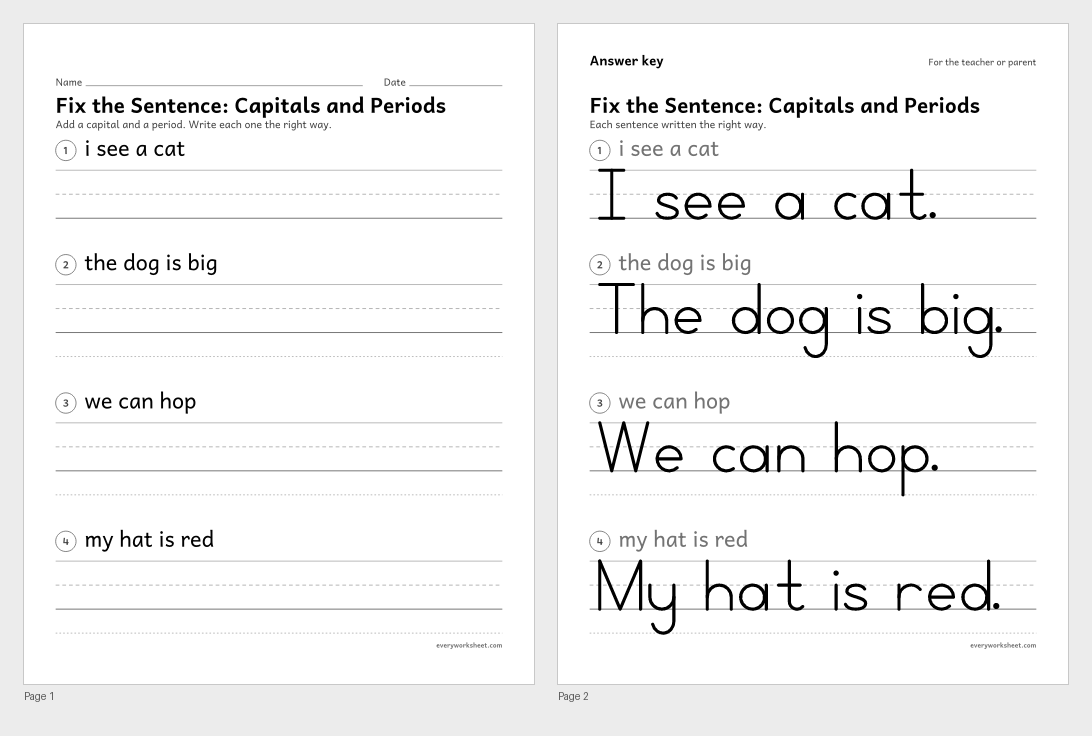
Correcting sentences with a capital letter and a period
Answer key on page 2
2 pages29 KB
 View all 2 pages
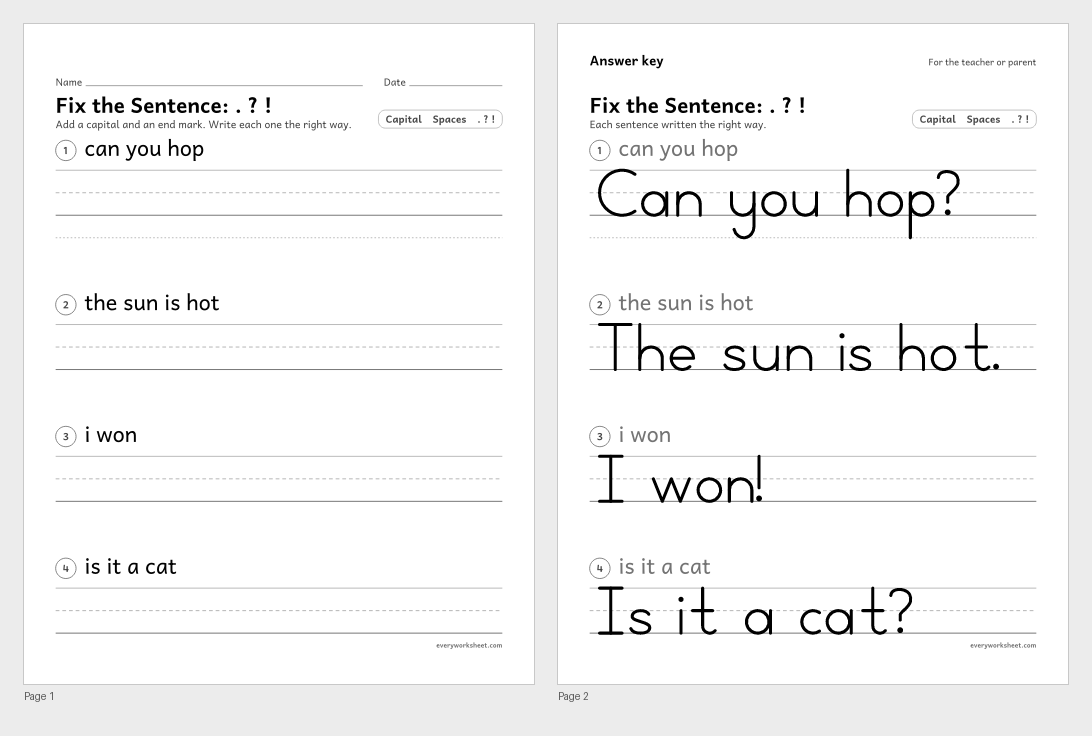
Correcting sentences with a capital and the right end mark
Answer key on page 2
2 pages30 KB
 View larger
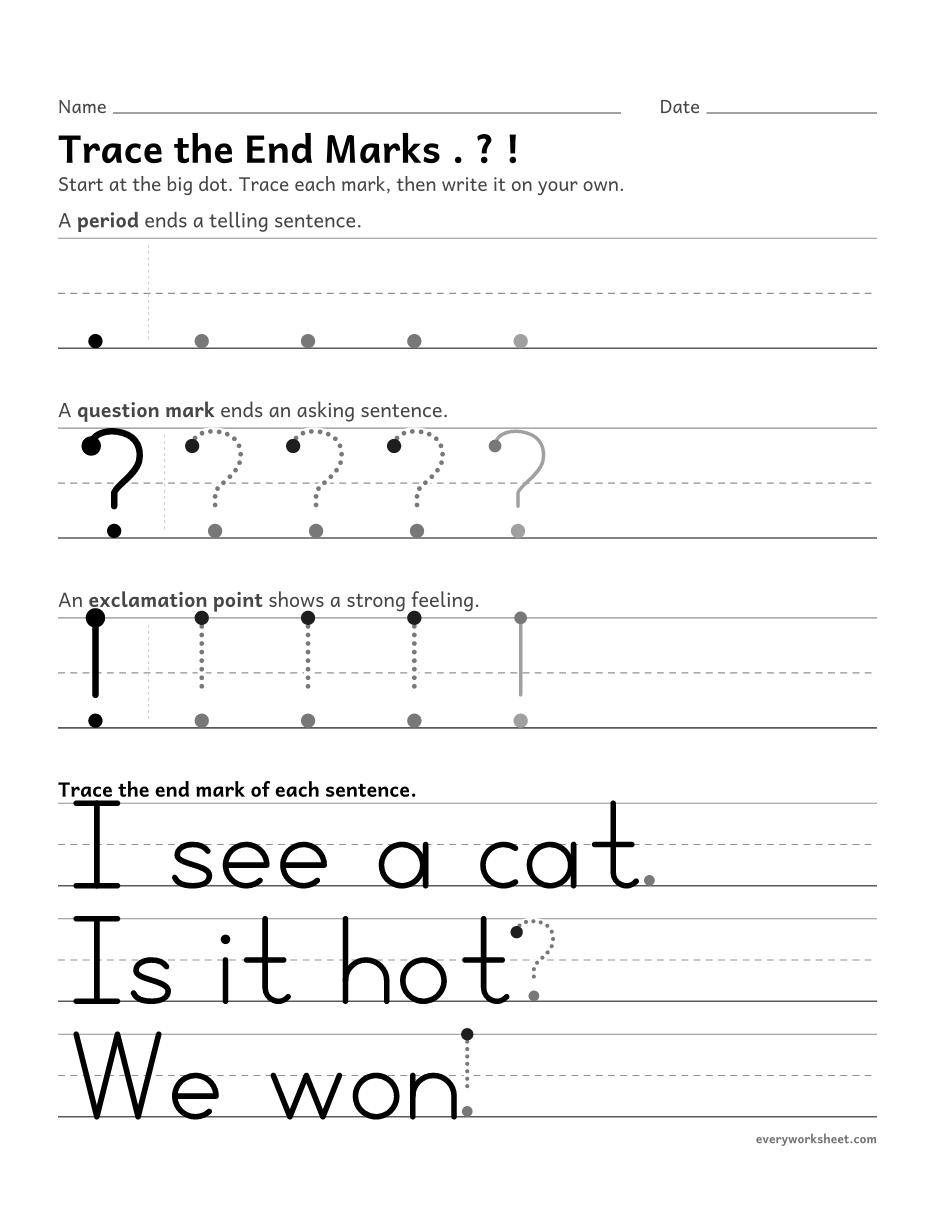
Writing periods, question marks and exclamation points
1 page28 KB
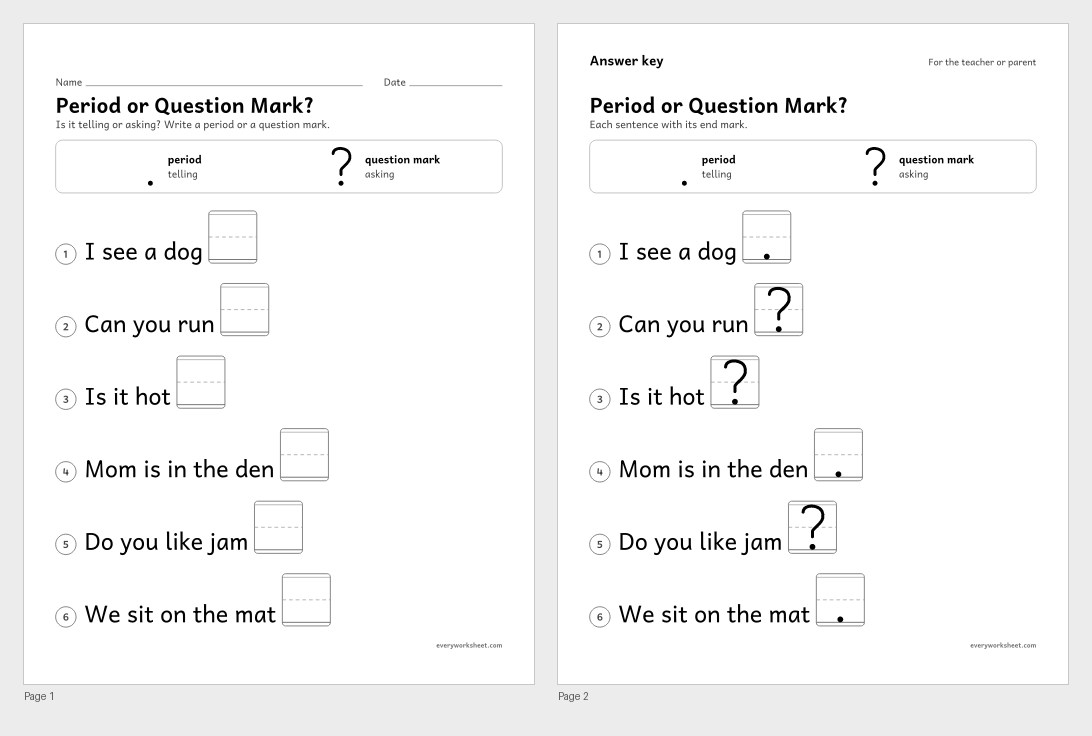 View all 2 pages
Telling sentences and asking sentences
Answer key on page 2
2 pages32 KB
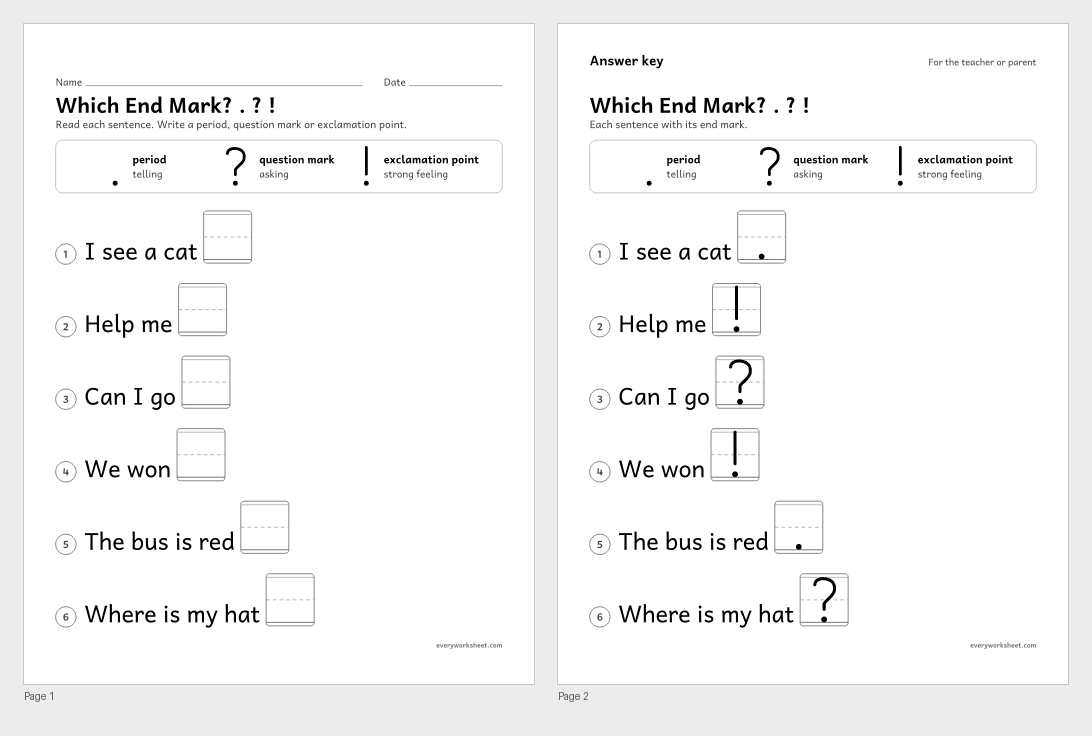 View all 2 pages
Choosing a period, question mark or exclamation point
Answer key on page 2
2 pages33 KB
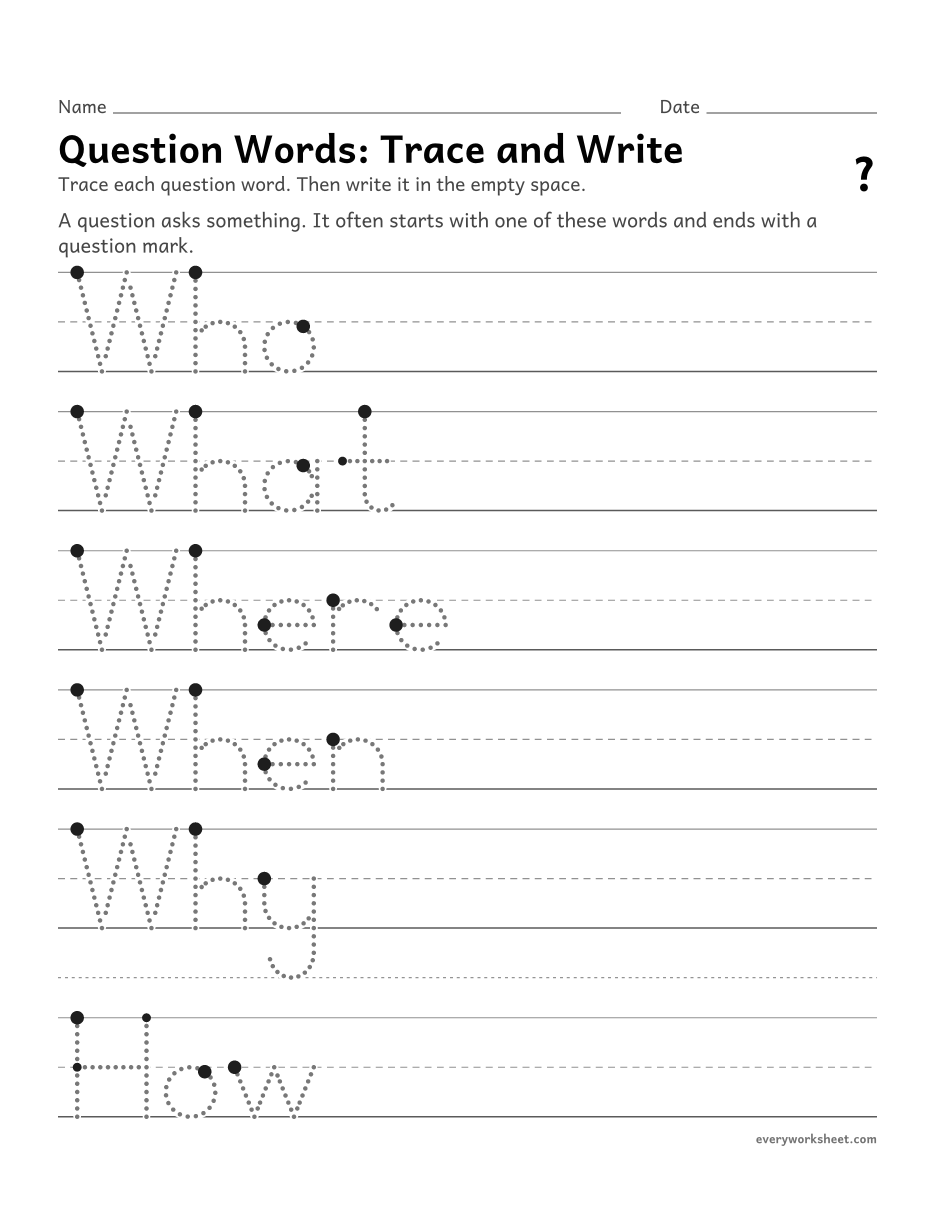 View larger
Writing the question words who, what, where, when, why and how
1 page29 KB
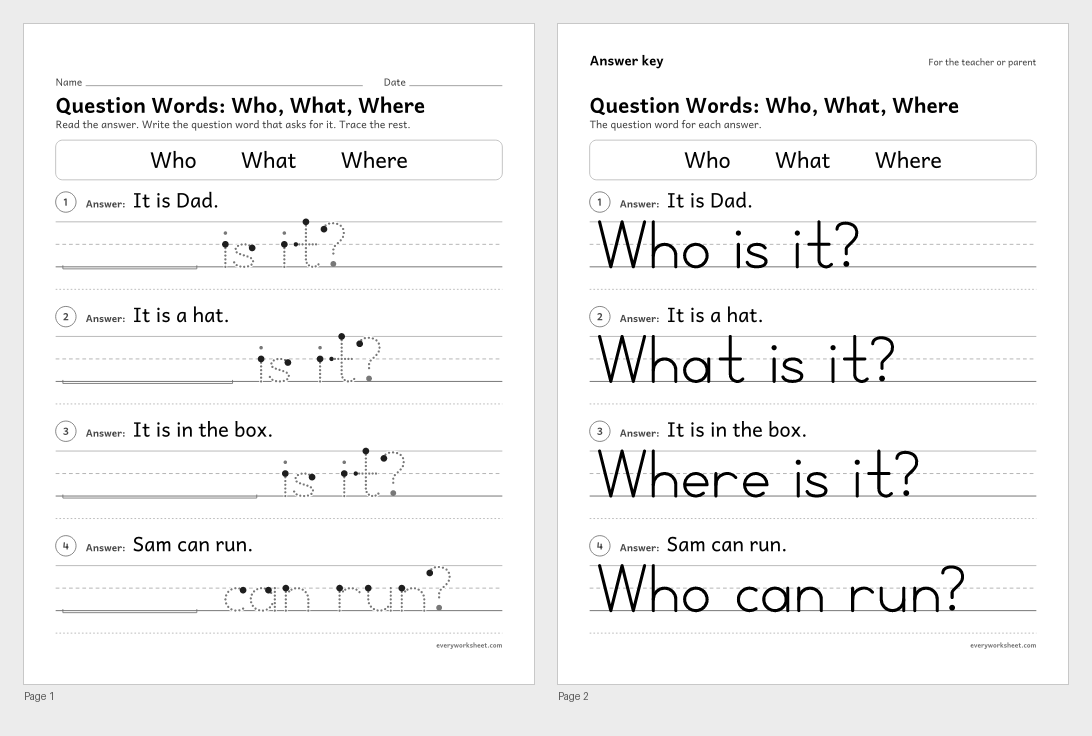 View all 2 pages
Using who, what and where to ask questions
Answer key on page 2
2 pages33 KB
 View all 2 pages
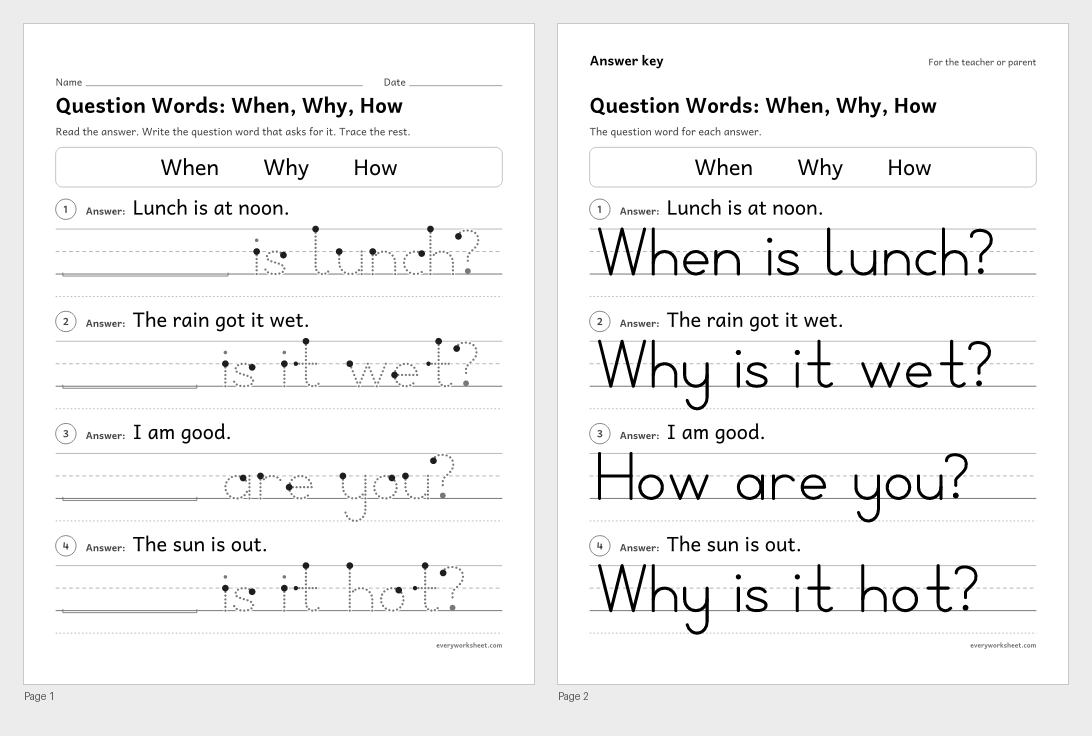
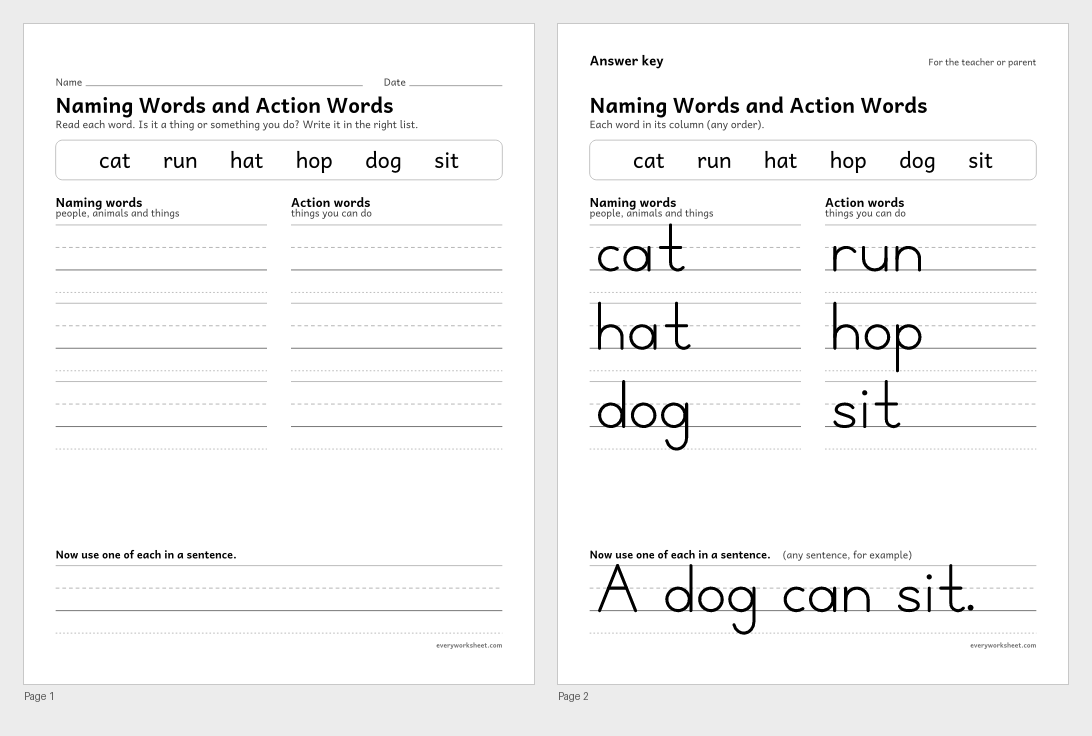
Using when, why and how to ask questions
Answer key on page 2
2 pages35 KB
 View all 2 pages
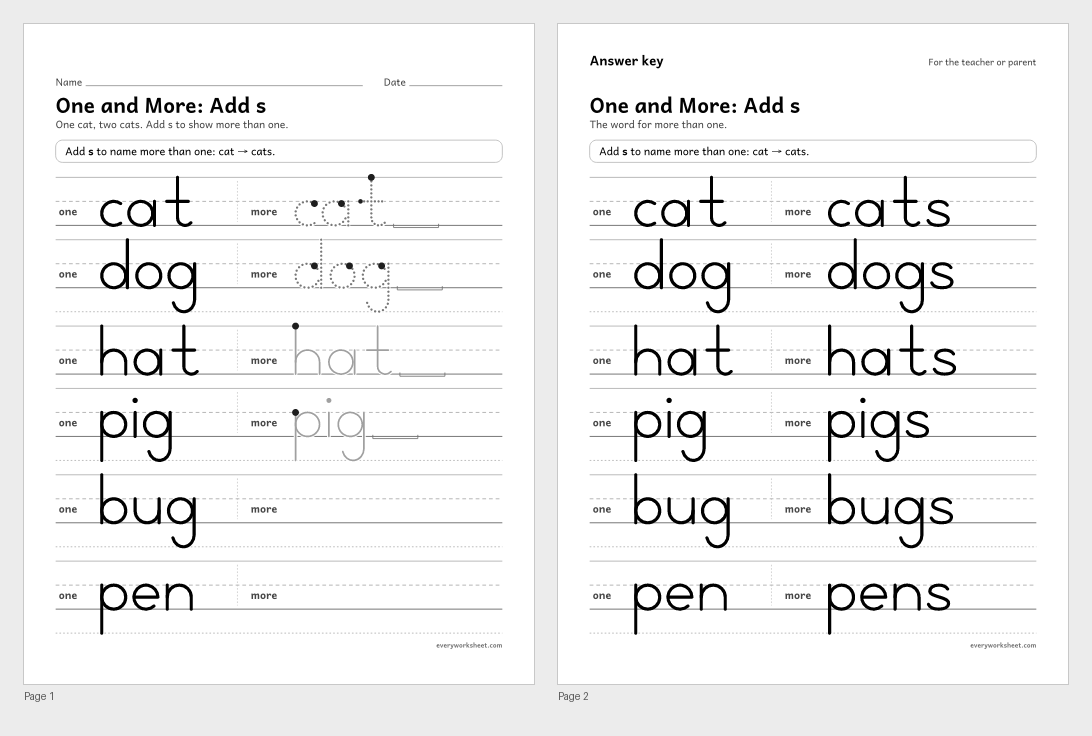
Sorting nouns and verbs
Answer key on page 2
2 pages31 KB
 View all 2 pages
 View all 2 pages
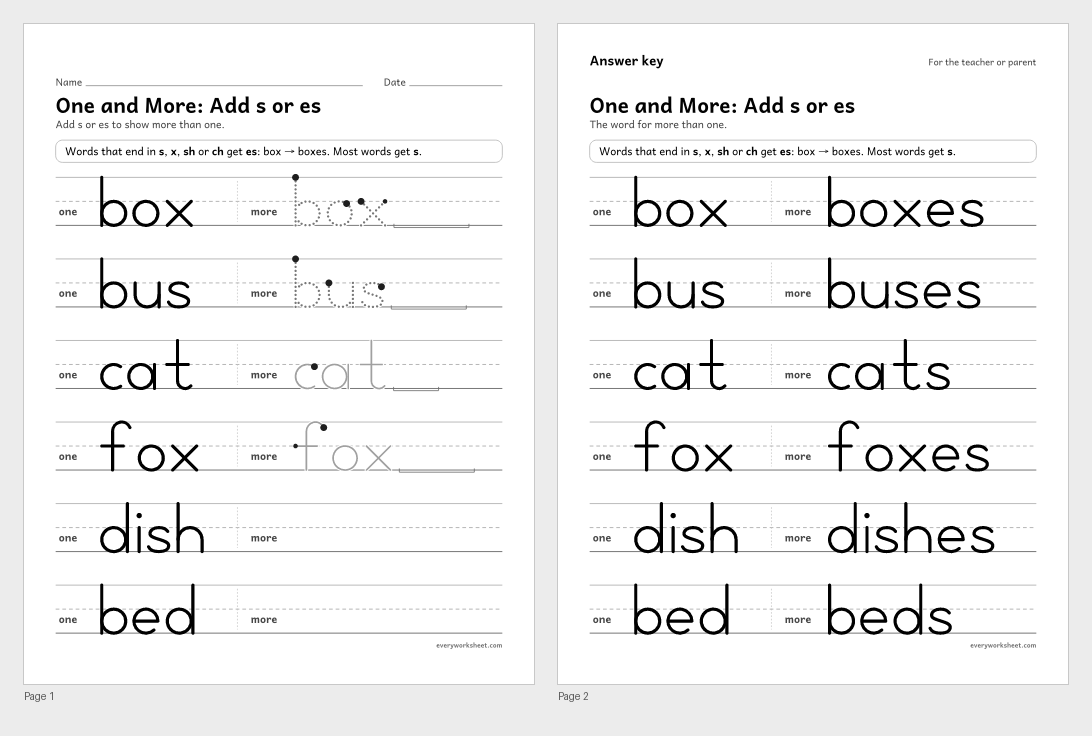
Making plural nouns by adding s or es
Answer key on page 2
2 pages35 KB
 View all 2 pages
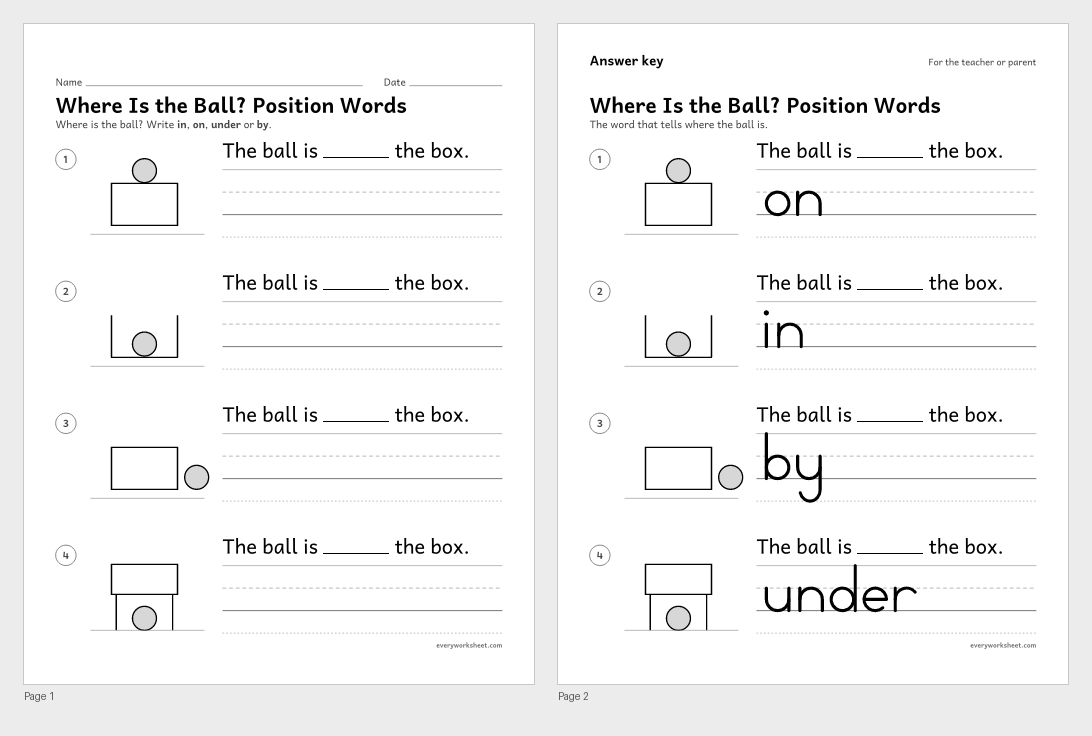
Using the position words in, on, under and by
Answer key on page 2
2 pages31 KB
 View larger
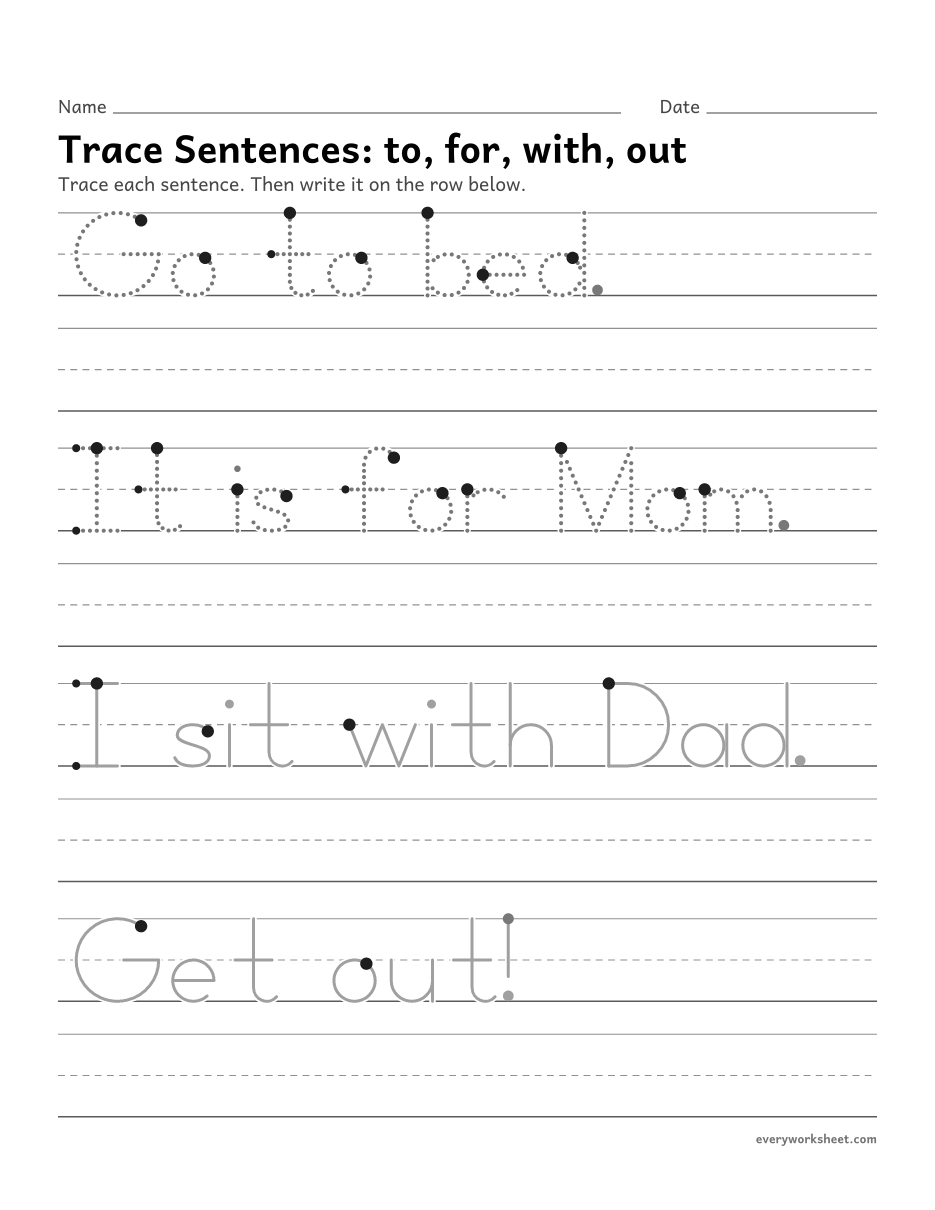
Writing sentences with the position words to, for, with and out
1 page29 KB
 View larger
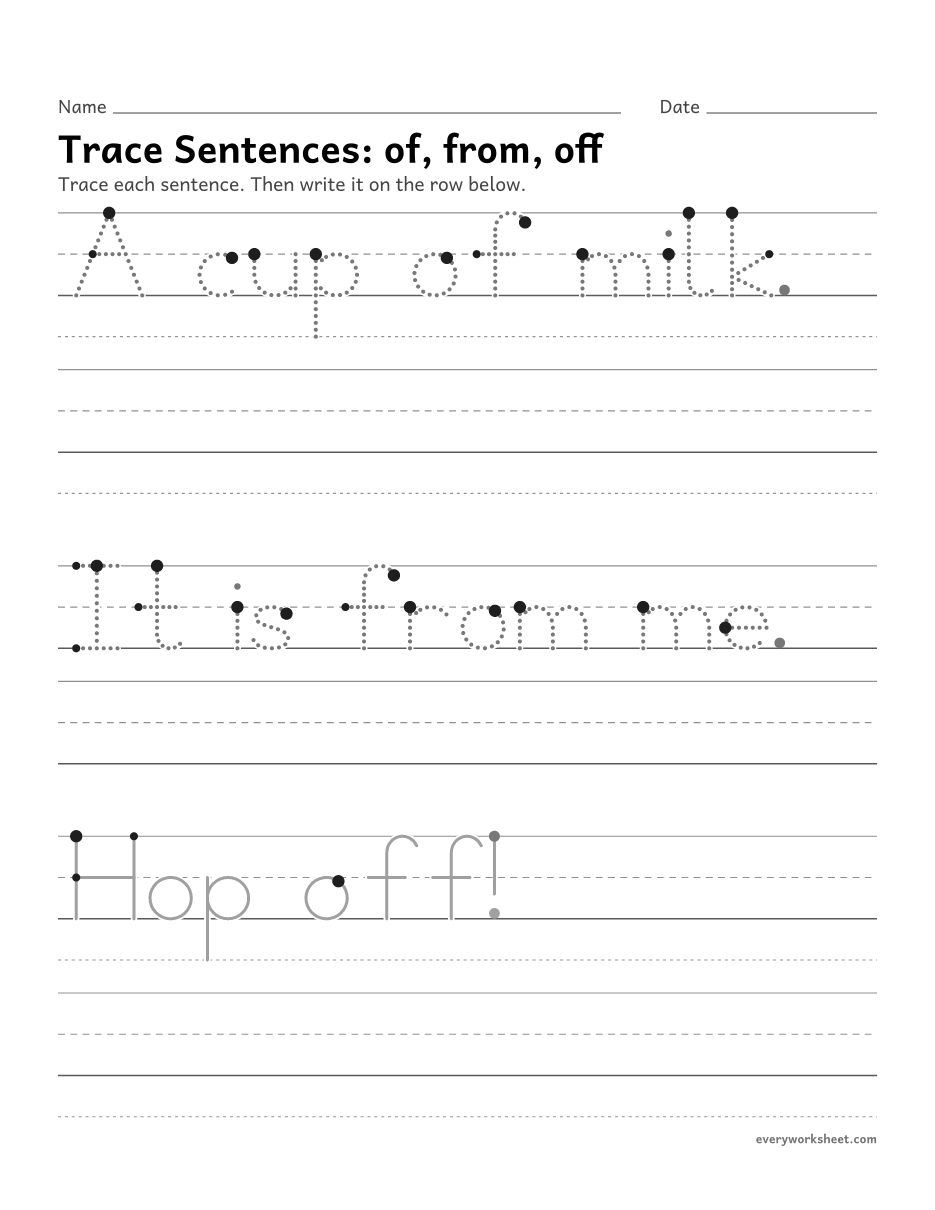
Writing sentences with the position words of, from and off
1 page28 KB
Print at 100% (actual size) for the cleanest tracing lines.
These kindergarten sentence writing worksheets take children from tracing a short sentence to writing one of their own. Every sentence uses words a five-year-old can sound out or already knows by sight, like I see a cat, We can run and Is it hot? The letters are the same simple ball-and-stick print as our letter tracing pages, with a big dot where each letter starts, on kindergarten-sized lines.
A good kindergarten sentence has four things: a capital letter at the start, a space between each word, words in an order that makes sense, and a mark at the end. The sheets below practice each of those on its own, then put them together. Sentence tracing pages fade from dotted letters to light letters to an empty line. Fix-the-sentence, scrambled sentence and end mark pages have an answer key on page 2, so they work for independent centers and for checking at home.
There are no pictures to color on these pages yet. Each sheet is black and white and copies cleanly, and the position words page uses simple line drawings of a ball and a box instead of clip art.
CCSS.ELA-LITERACY.L.K.1.FProduce and expand complete sentences in shared language activities.CCSS.ELA-LITERACY.L.K.2.ACapitalize the first word in a sentence and the pronoun I.CCSS.ELA-LITERACY.L.K.2.BRecognize and name end punctuation.CCSS.ELA-LITERACY.L.K.1.DUnderstand and use question words (interrogatives) (e.g., who, what, where, when, why, how).CCSS.ELA-LITERACY.L.K.1.BUse frequently occurring nouns and verbs.CCSS.ELA-LITERACY.L.K.1.CForm regular plural nouns orally by adding /s/ or /es/ (e.g., dog, dogs; wish, wishes).CCSS.ELA-LITERACY.L.K.1.EUse the most frequently occurring prepositions (e.g., to, from, in, out, on, off, for, of, by, with).CCSS.ELA-LITERACY.L.K.1.APrint many upper- and lowercase letters.CCSS.ELA-LITERACY.RF.K.1.AFollow words from left to right, top to bottom, and page by page.CCSS.ELA-LITERACY.RF.K.1.BRecognize that spoken words are represented in written language by specific sequences of letters.CCSS.ELA-LITERACY.RF.K.1.CUnderstand that words are separated by spaces in print.Most children are ready to trace a short sentence once they know most letters, often by the middle of kindergarten. Writing a sentence alone usually comes later in the year. Start with tracing and saying sentences out loud, and move to the empty lines when tracing feels easy.
A complete kindergarten sentence names who or what, tells something about it, and is written with a capital at the start, spaces between words and an end mark. I see a cat. and The dog can run. are both complete sentences.
A finger space is the gap between two words. Children put their pointer finger down after a word and start the next word on the other side, so the words don't run together.
No. Children write a number in the box on each word to show its place, then write the sentence on the line. There is nothing to cut or glue.
Yes. Every sheet with a right answer, such as fix the sentence, scrambled sentences, end marks, question words, plurals and position words, has an answer key on page 2 of the same PDF. Print page 1 for students.
Yes. Every worksheet comes as a US Letter PDF and an A4 PDF with the same layout.