 View larger
Kindergarten sight words checklist
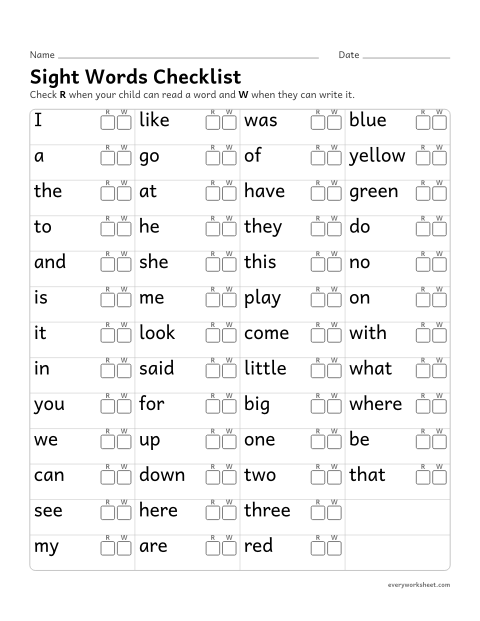
Tracking which sight words a child can read and write
1 page68 KB
One page for each of 50 kindergarten sight words, from I and the to where and that, plus a checklist to track the words your child can read and write.
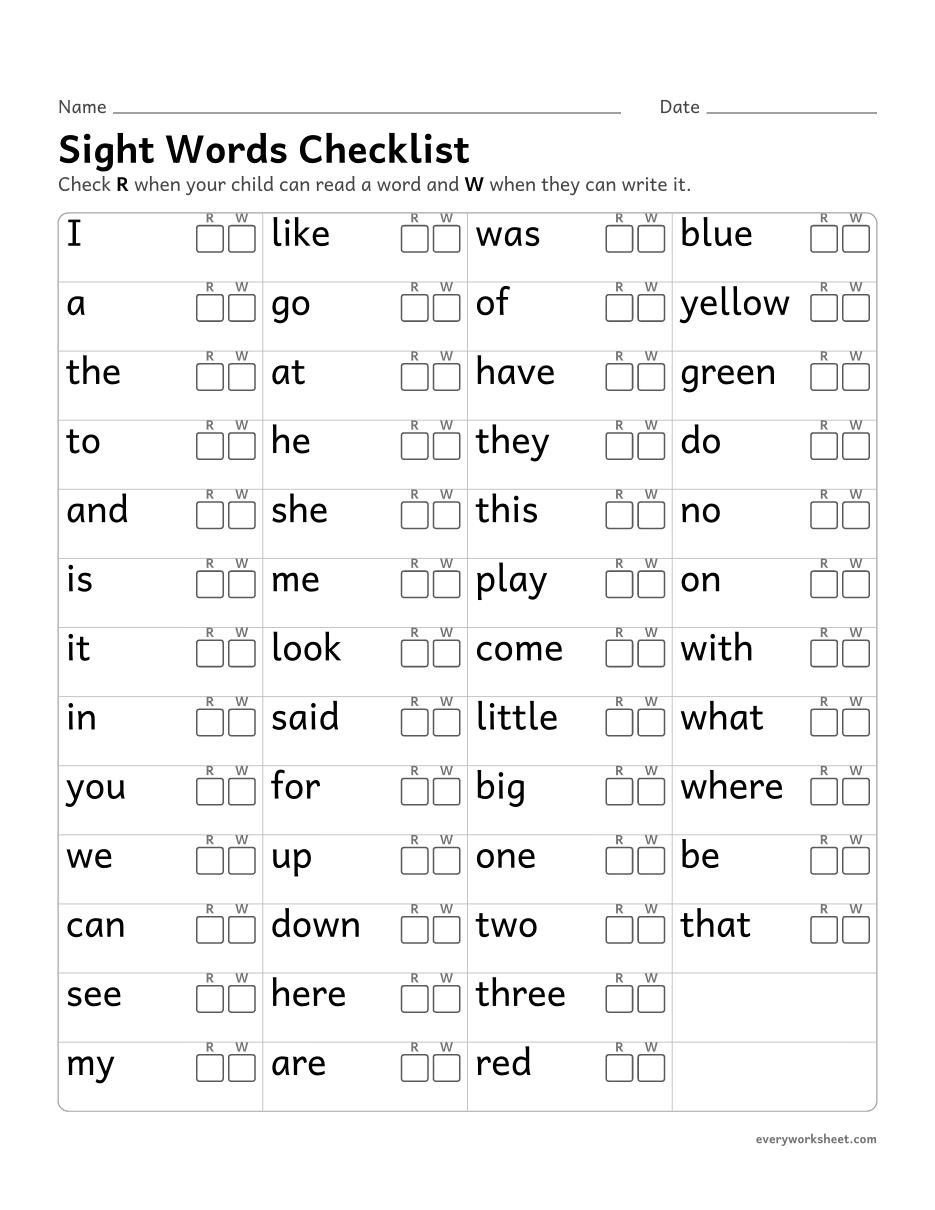
View largerTracking which sight words a child can read and write
1 page68 KB
 View all 2 pages
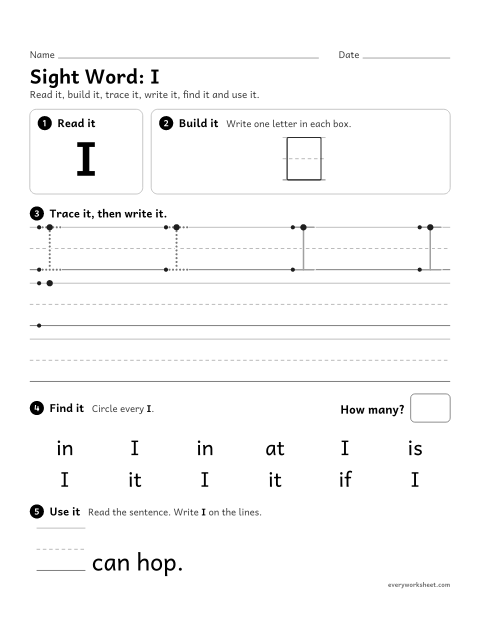
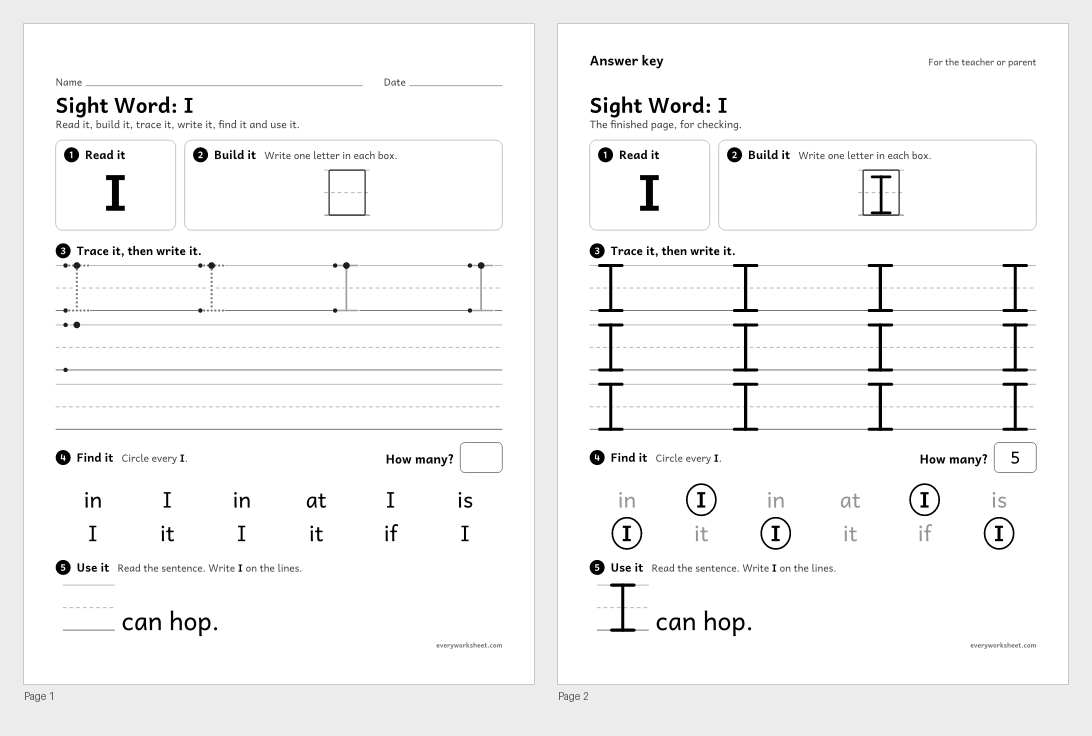
Reading and writing the sight word "I"
Answer key on page 2
2 pages41 KB
 View all 2 pages
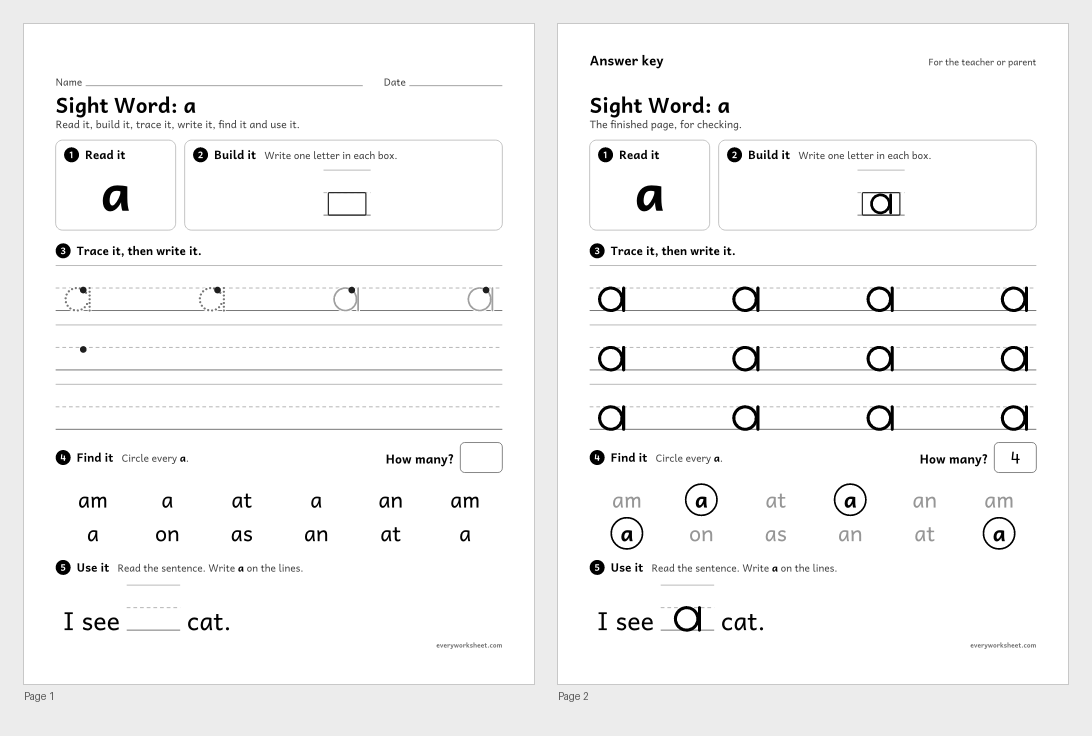
Reading and writing the sight word "a"
Answer key on page 2
2 pages41 KB
 View all 2 pages
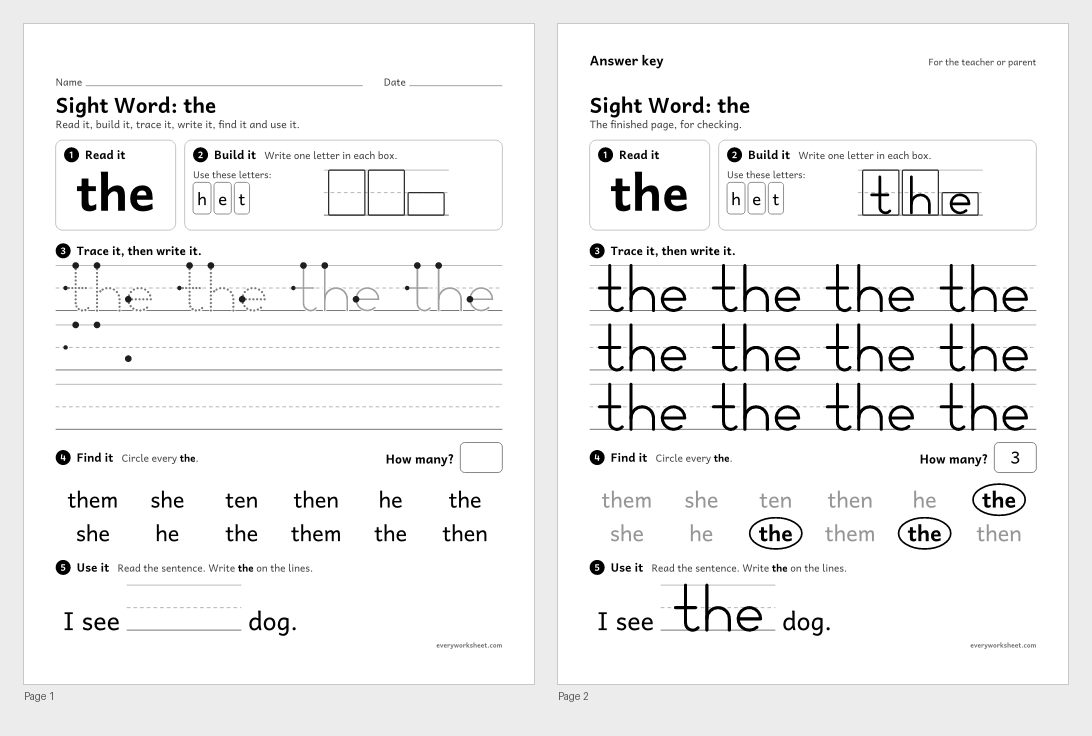
Reading and writing the sight word "the"
Answer key on page 2
2 pages46 KB
 View all 2 pages
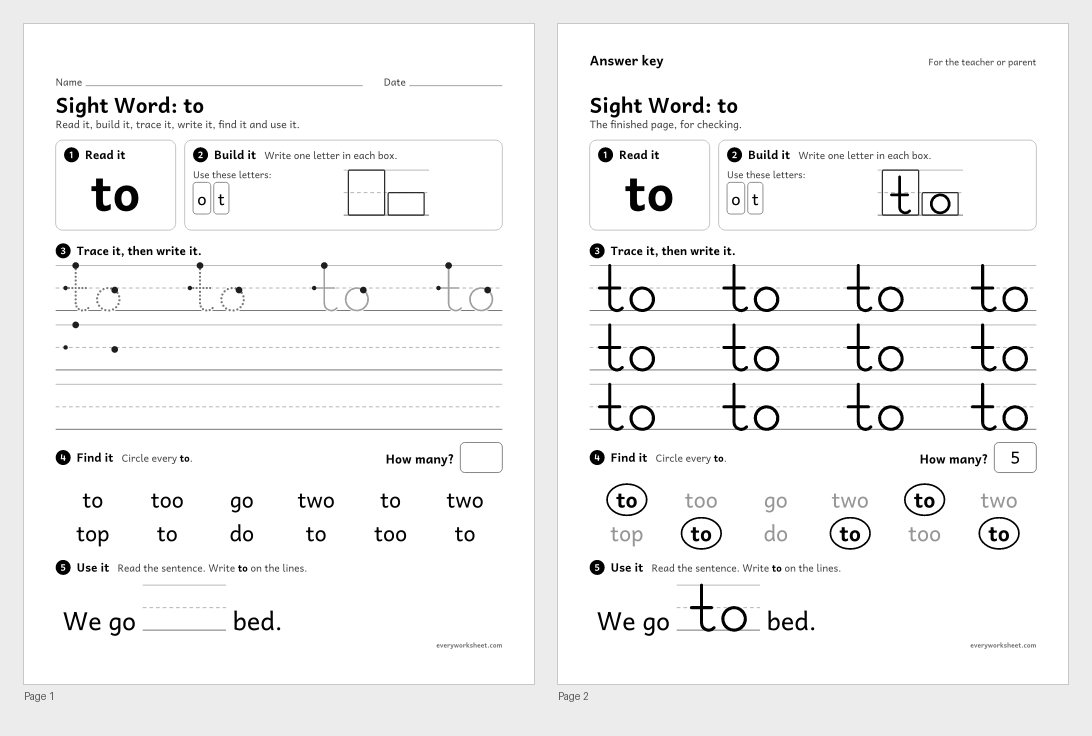
Reading and writing the sight word "to"
Answer key on page 2
2 pages44 KB
 View all 2 pages
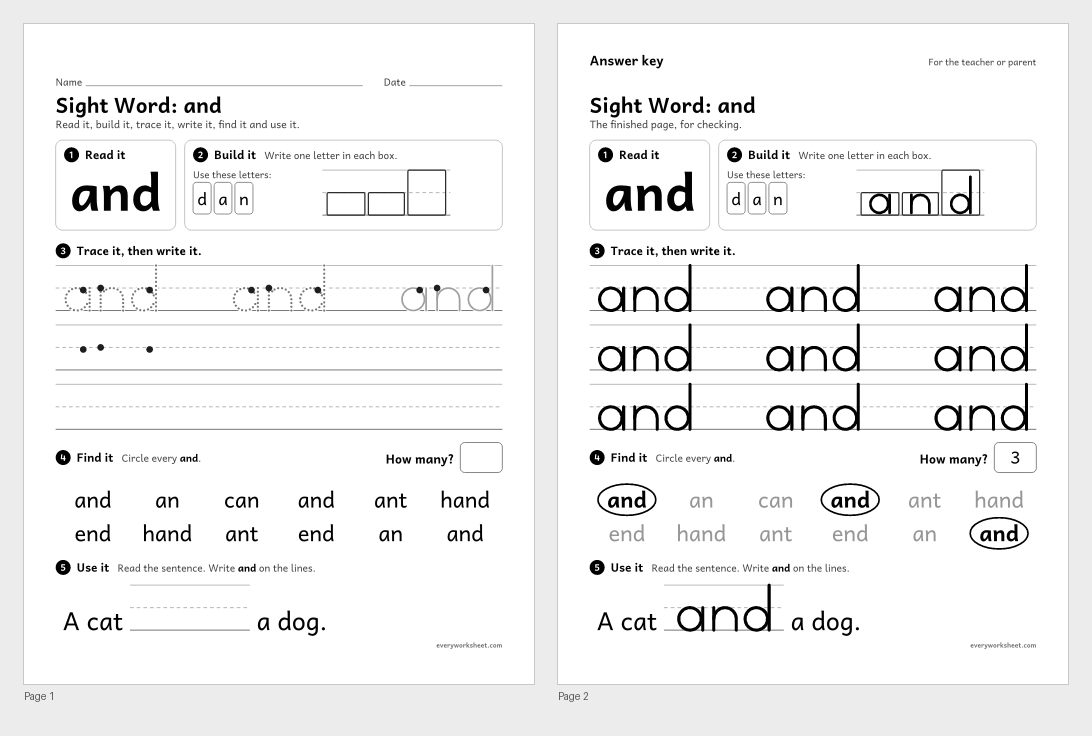
Reading and writing the sight word "and"
Answer key on page 2
2 pages45 KB
 View all 2 pages
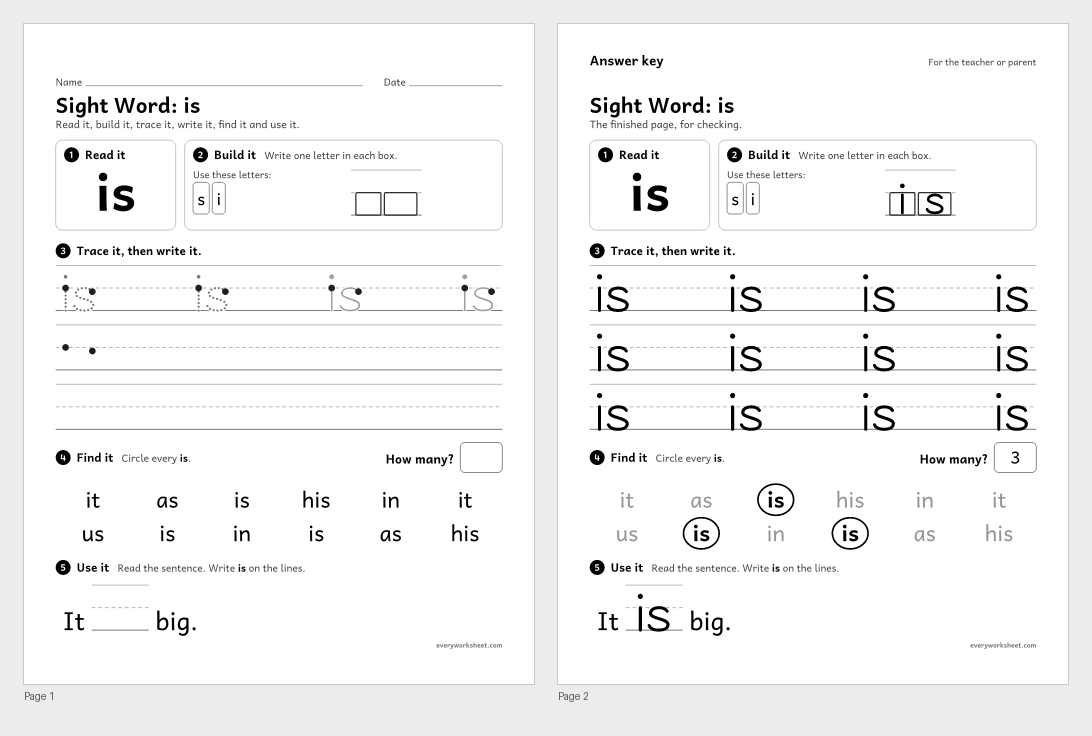
Reading and writing the sight word "is"
Answer key on page 2
2 pages44 KB
 View all 2 pages
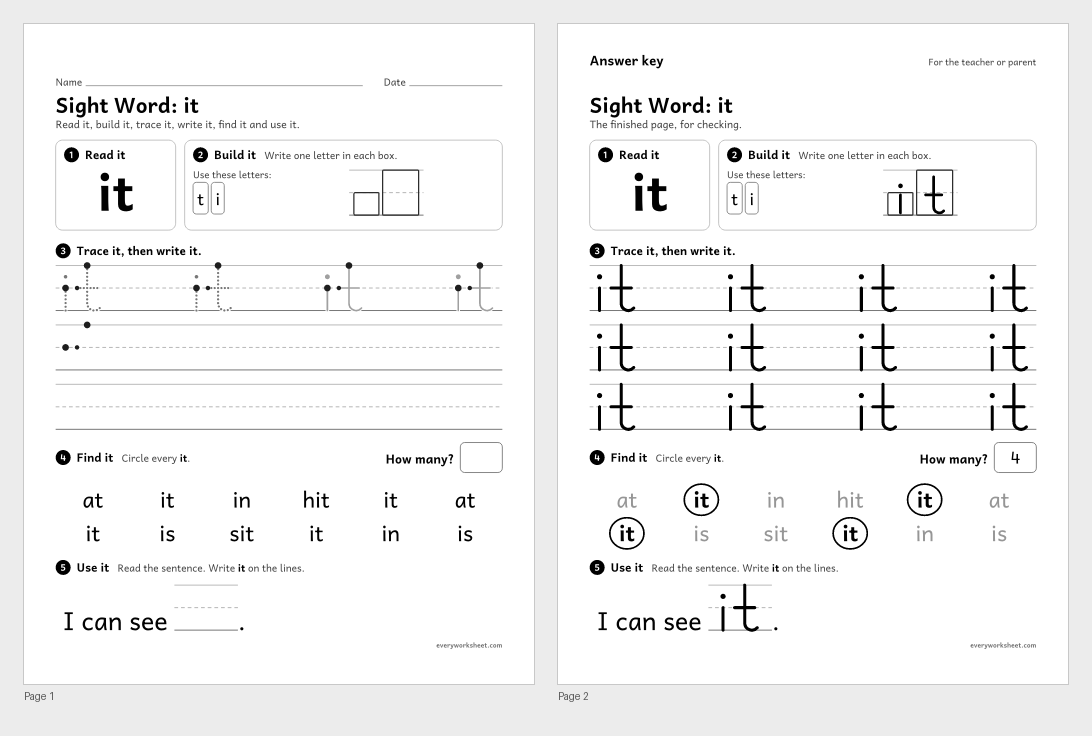
Reading and writing the sight word "it"
Answer key on page 2
2 pages44 KB
 View all 2 pages
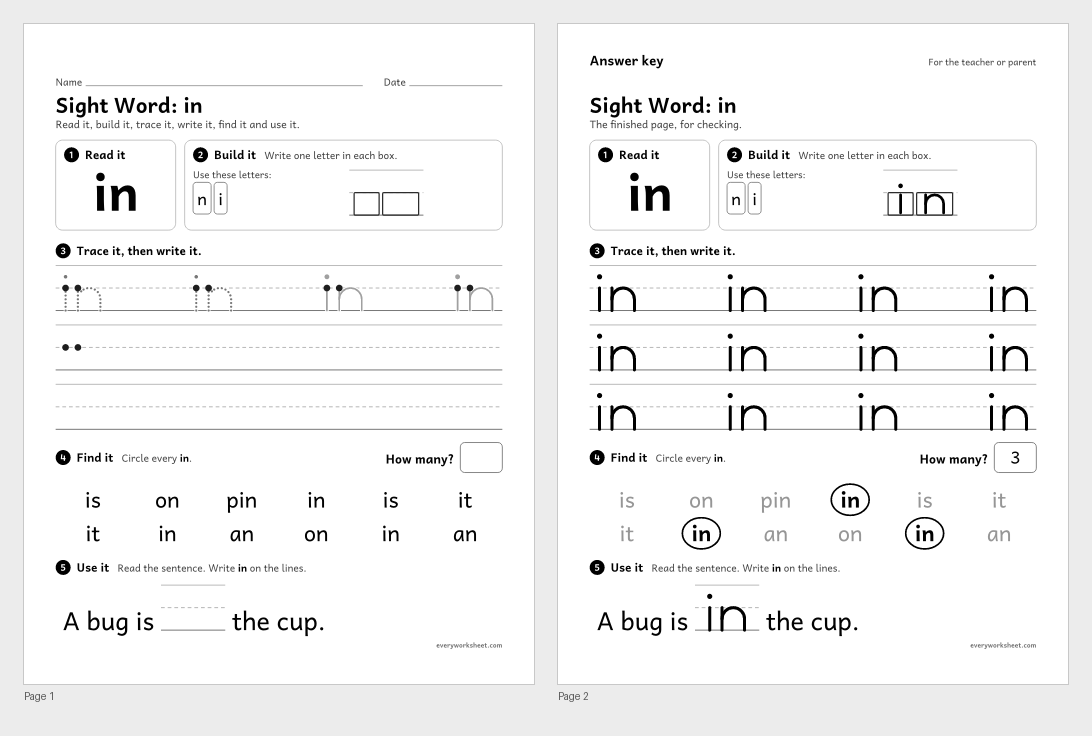
Reading and writing the sight word "in"
Answer key on page 2
2 pages44 KB
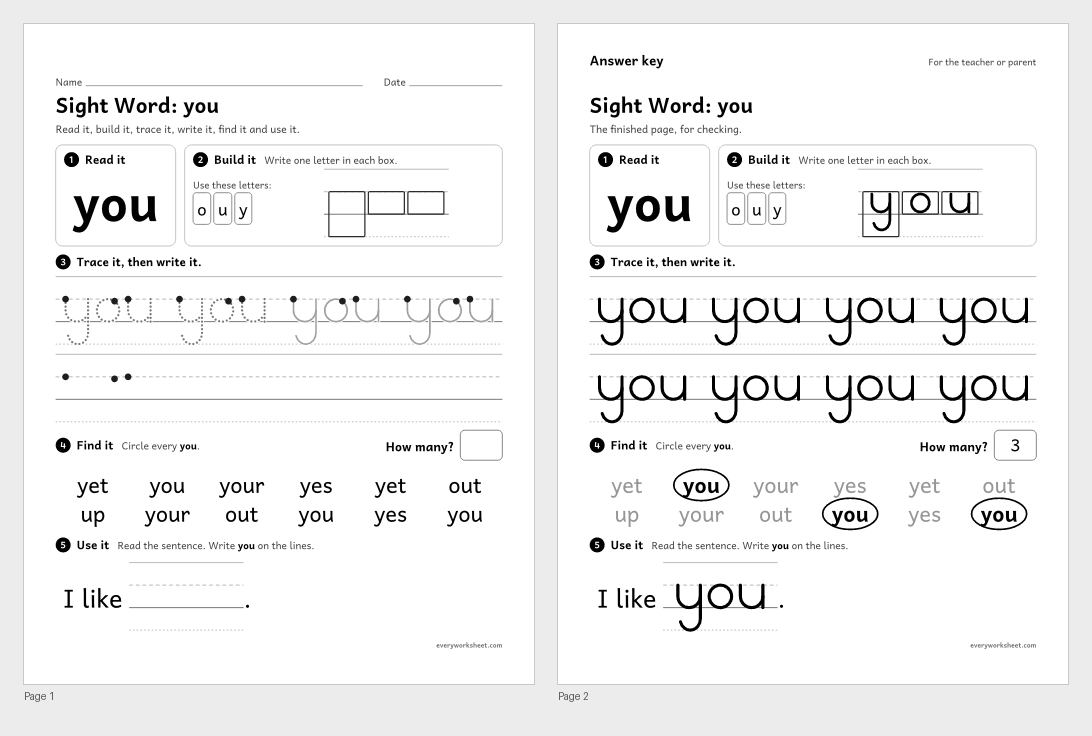 View all 2 pages
Reading and writing the sight word "you"
Answer key on page 2
2 pages45 KB
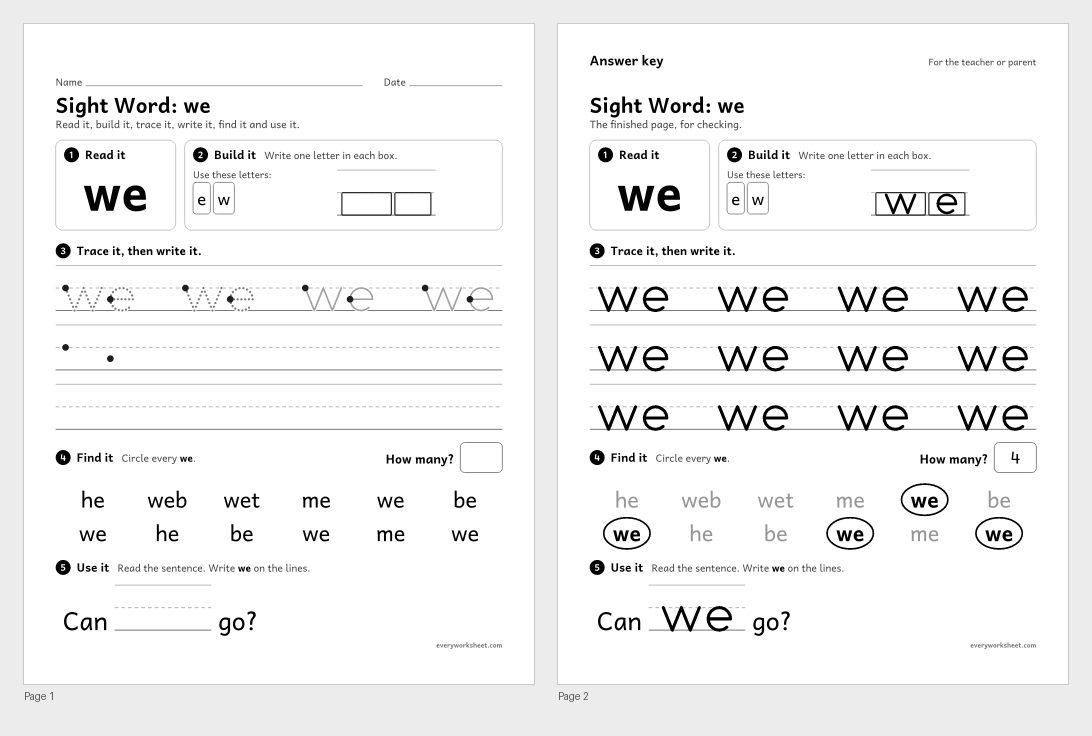 View all 2 pages
Reading and writing the sight word "we"
Answer key on page 2
2 pages44 KB
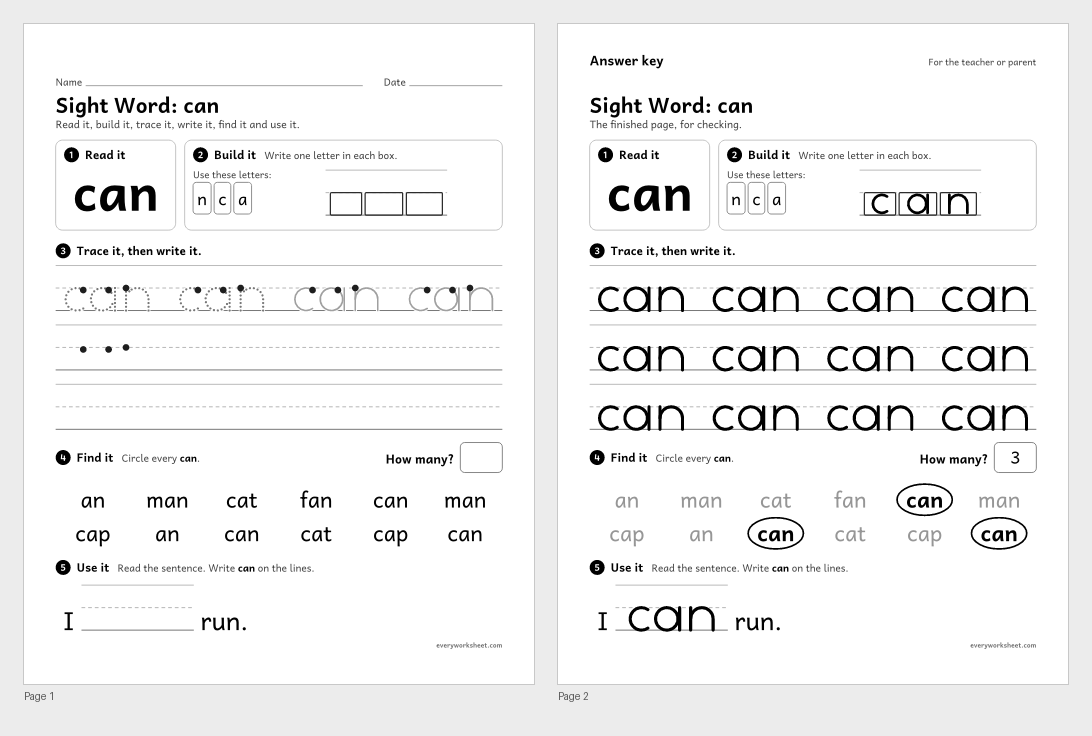 View all 2 pages
Reading and writing the sight word "can"
Answer key on page 2
2 pages46 KB
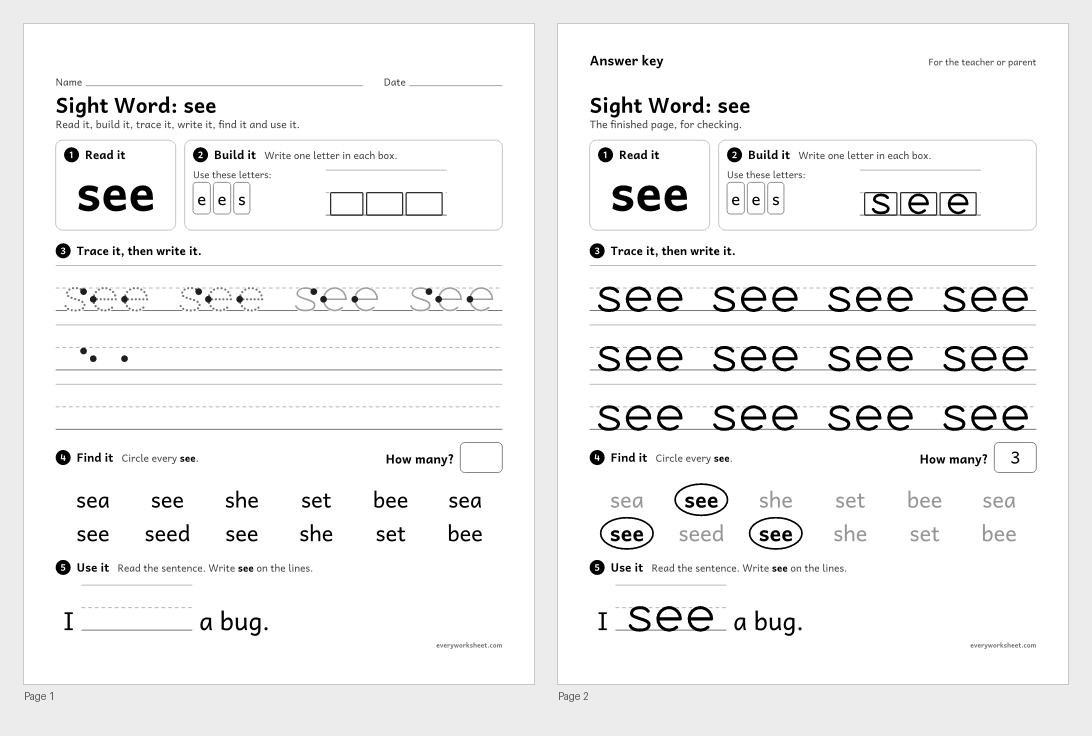 View all 2 pages
Reading and writing the sight word "see"
Answer key on page 2
2 pages45 KB
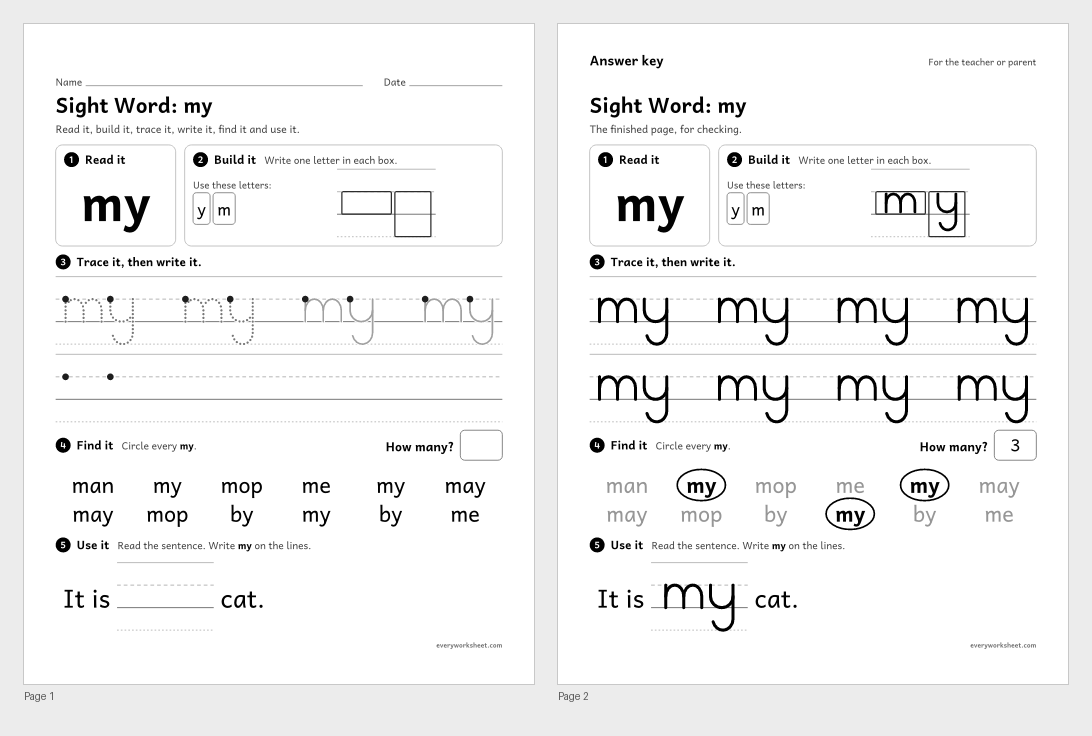 View all 2 pages
Reading and writing the sight word "my"
Answer key on page 2
2 pages44 KB
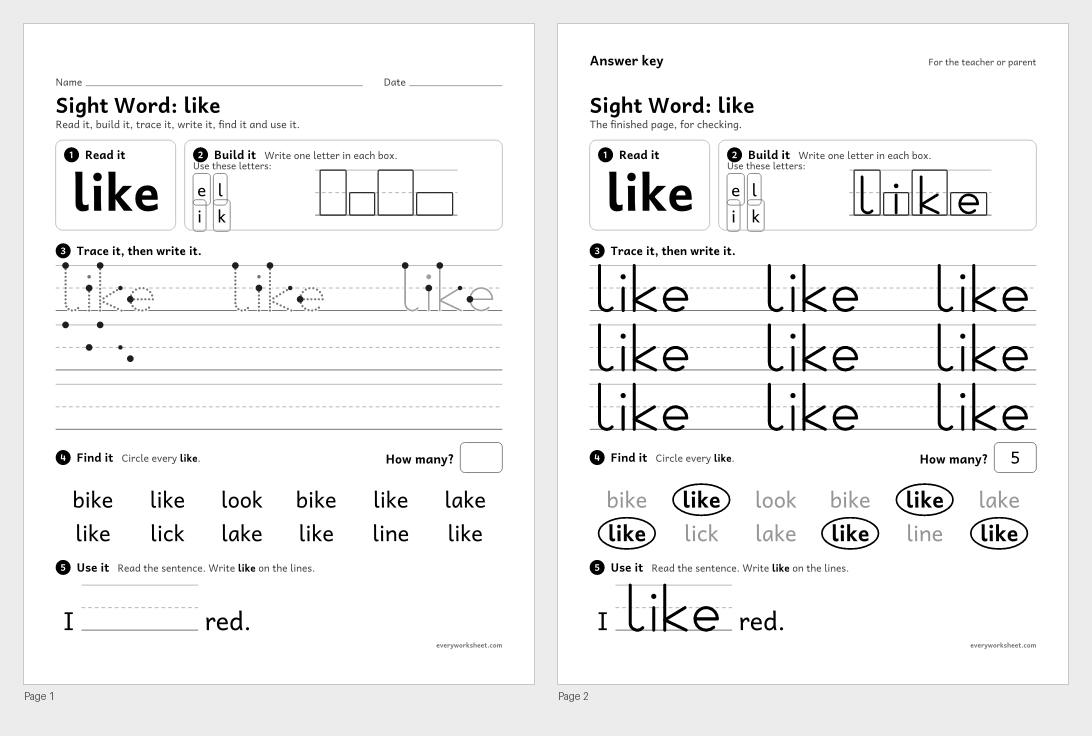 View all 2 pages
Reading and writing the sight word "like"
Answer key on page 2
2 pages46 KB
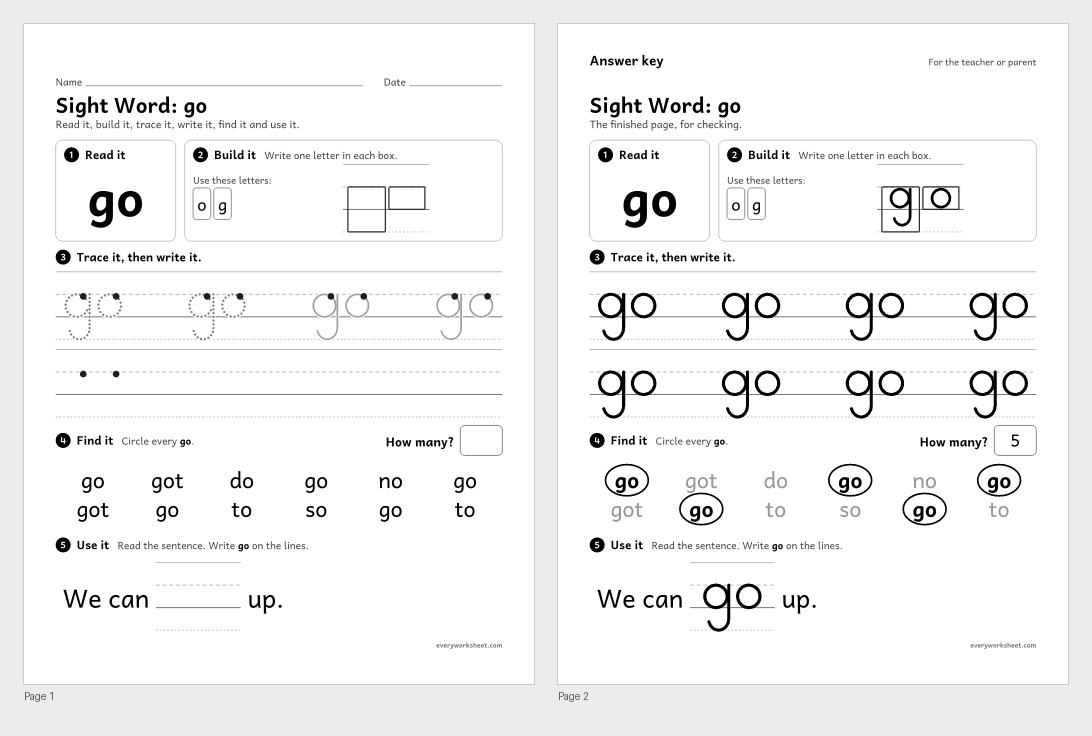 View all 2 pages
Reading and writing the sight word "go"
Answer key on page 2
2 pages44 KB
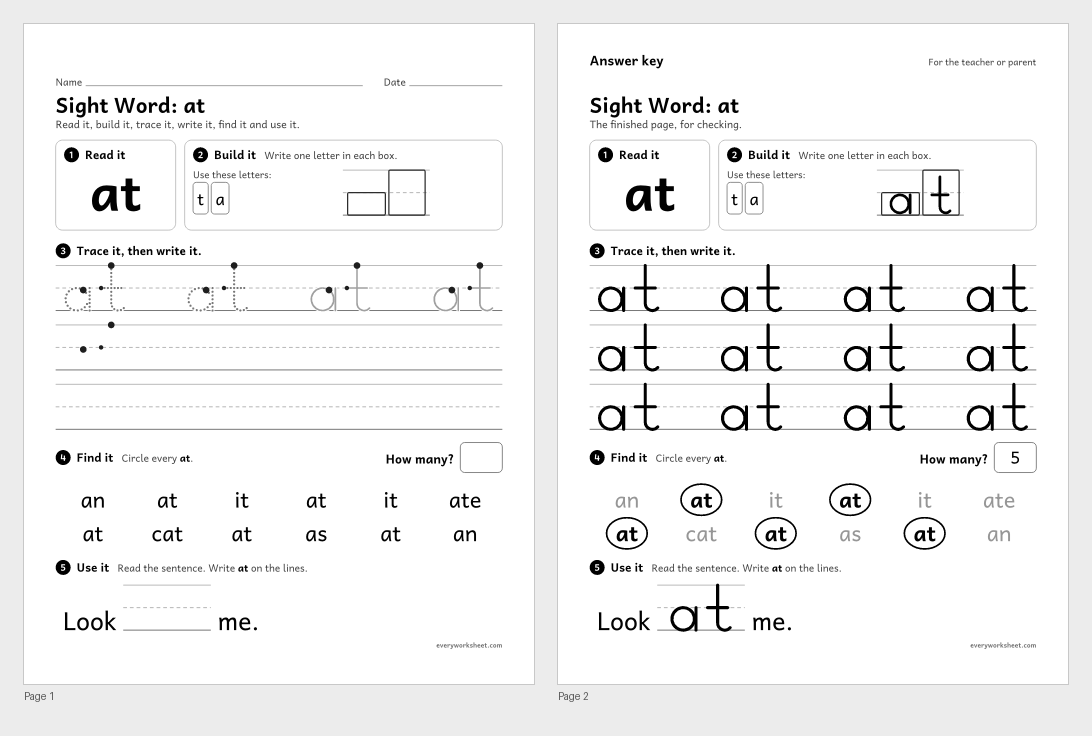 View all 2 pages
Reading and writing the sight word "at"
Answer key on page 2
2 pages44 KB
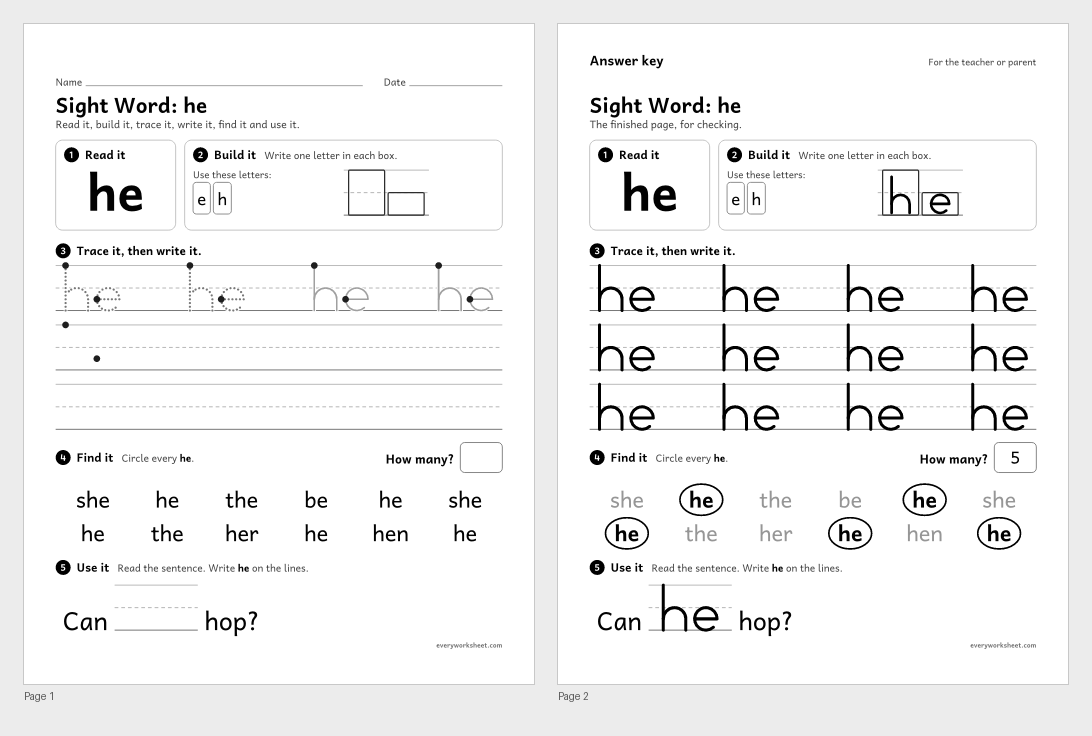 View all 2 pages
Reading and writing the sight word "he"
Answer key on page 2
2 pages44 KB
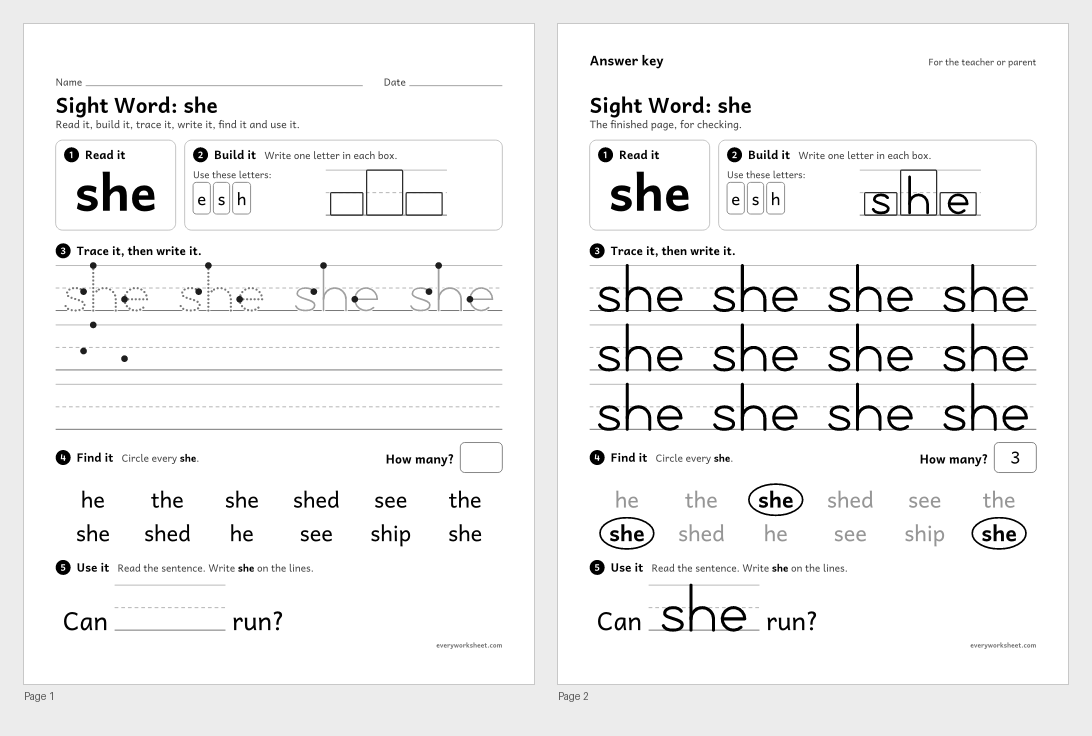 View all 2 pages
Reading and writing the sight word "she"
Answer key on page 2
2 pages46 KB
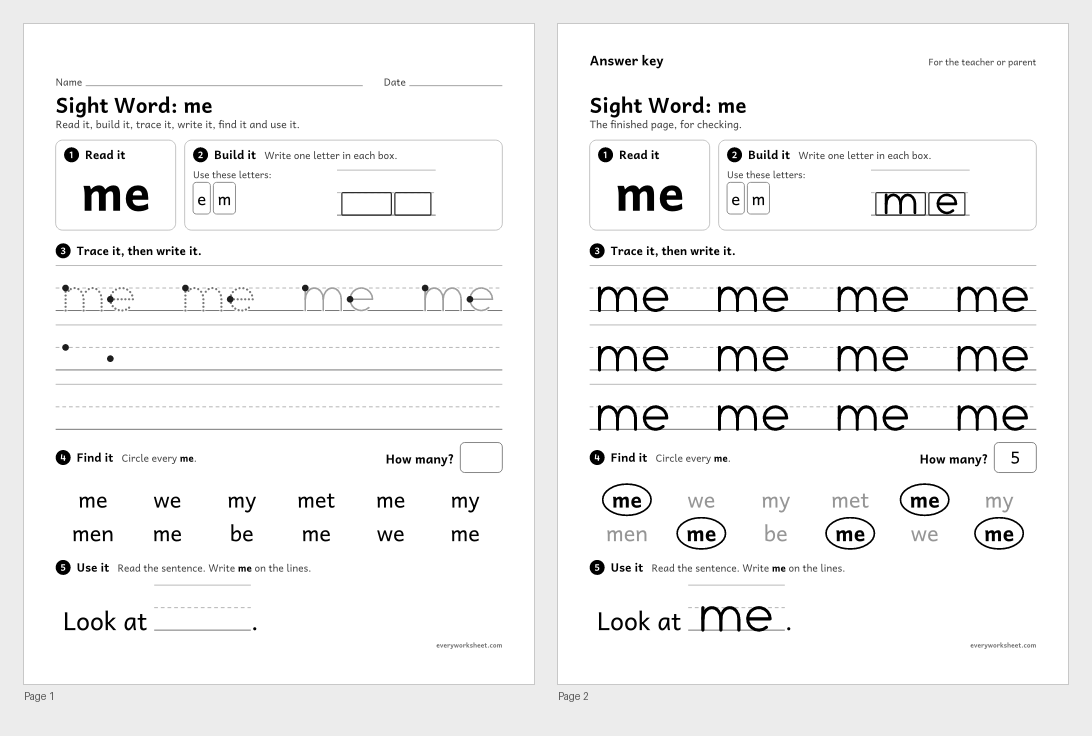 View all 2 pages
Reading and writing the sight word "me"
Answer key on page 2
2 pages44 KB
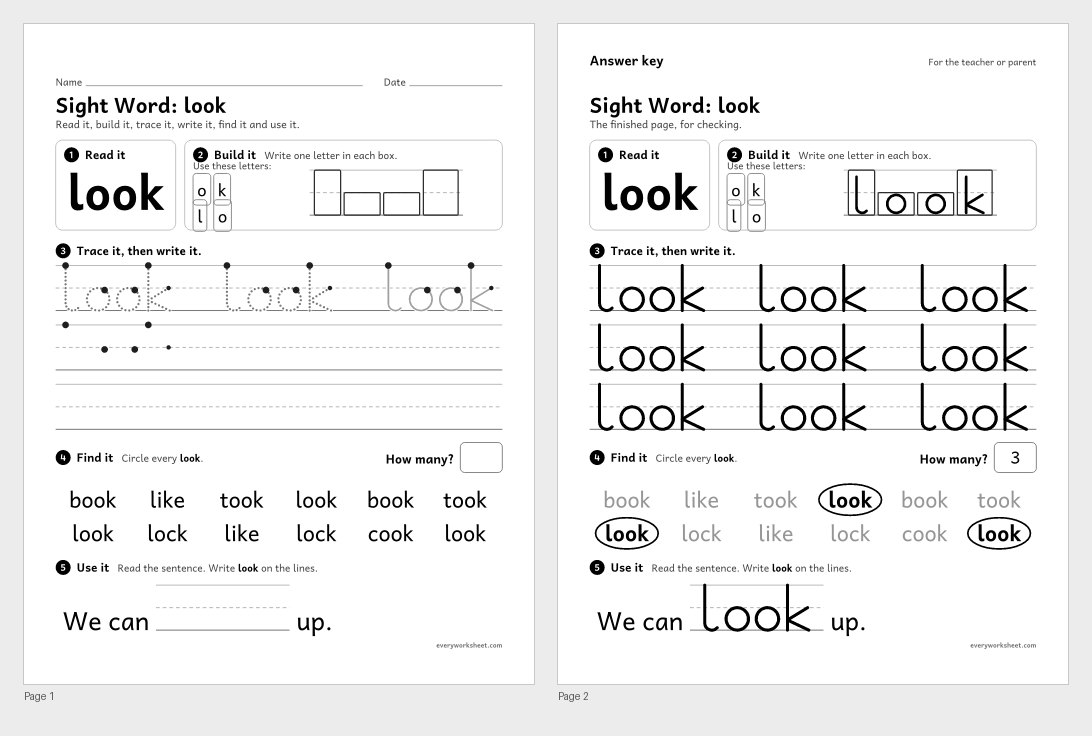 View all 2 pages
Reading and writing the sight word "look"
Answer key on page 2
2 pages46 KB
 View all 2 pages
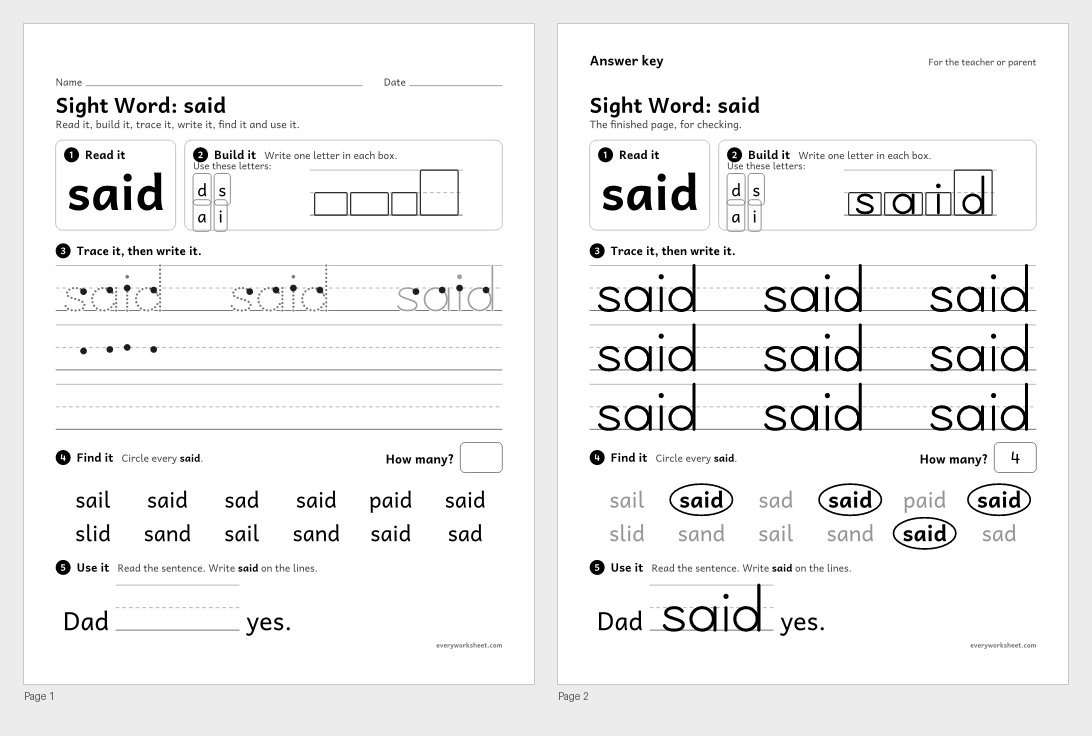
Reading and writing the sight word "said"
Answer key on page 2
2 pages46 KB
 View all 2 pages
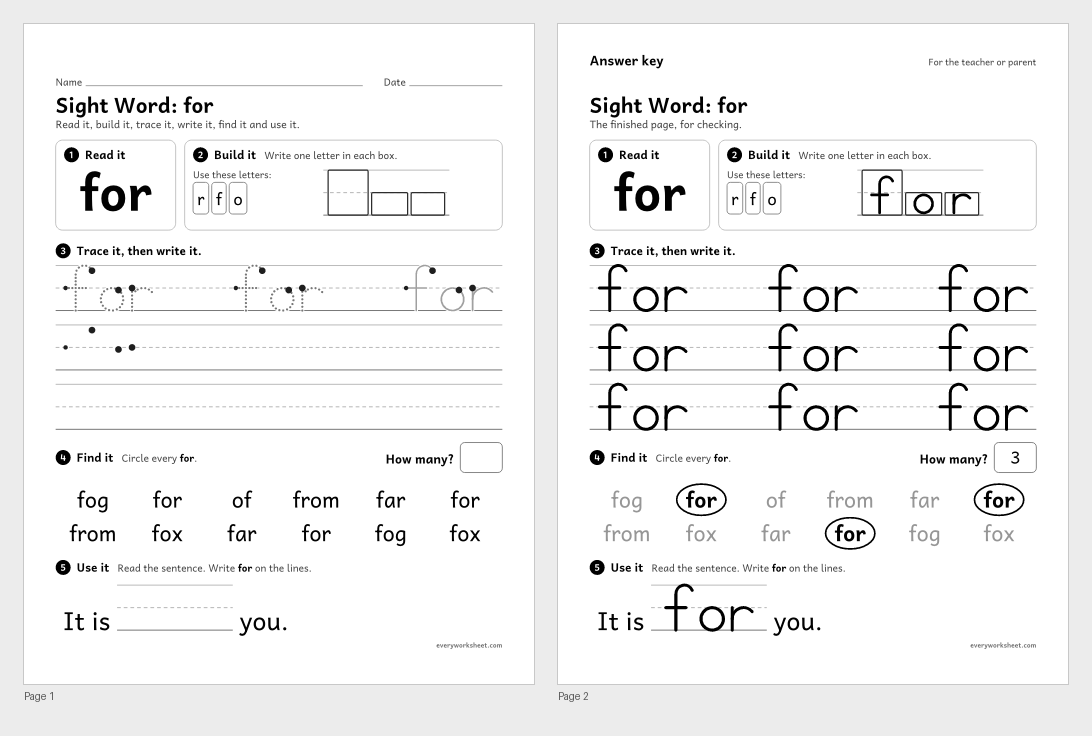
Reading and writing the sight word "for"
Answer key on page 2
2 pages46 KB
 View all 2 pages
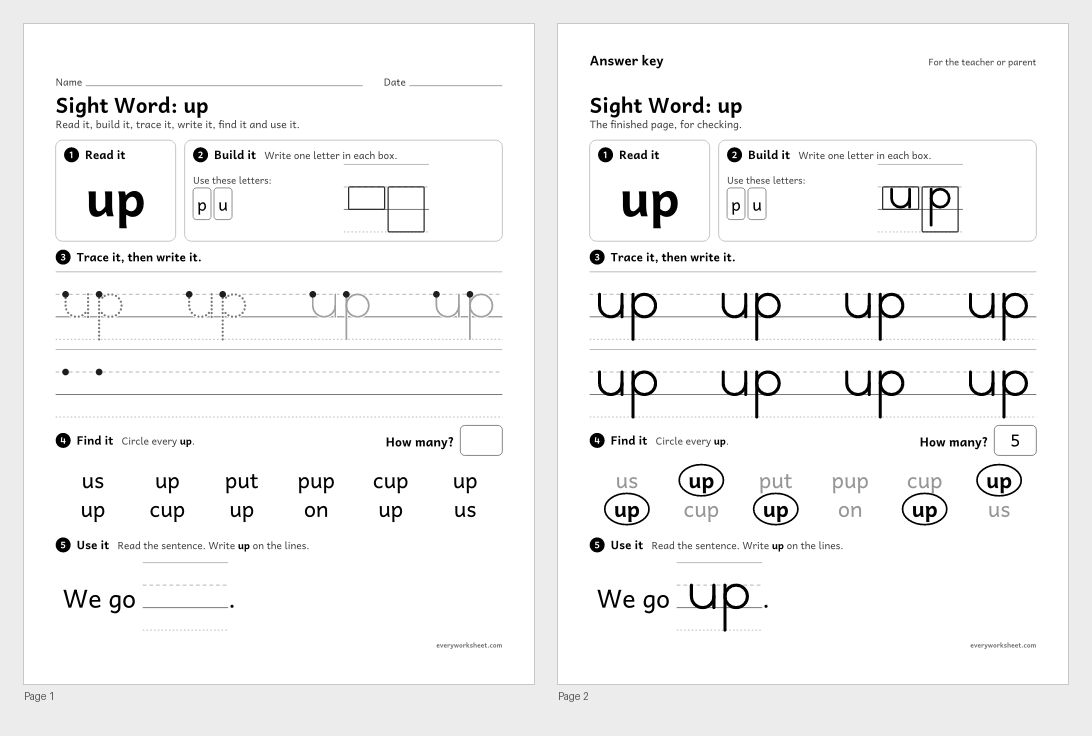
Reading and writing the sight word "up"
Answer key on page 2
2 pages44 KB
 View all 2 pages
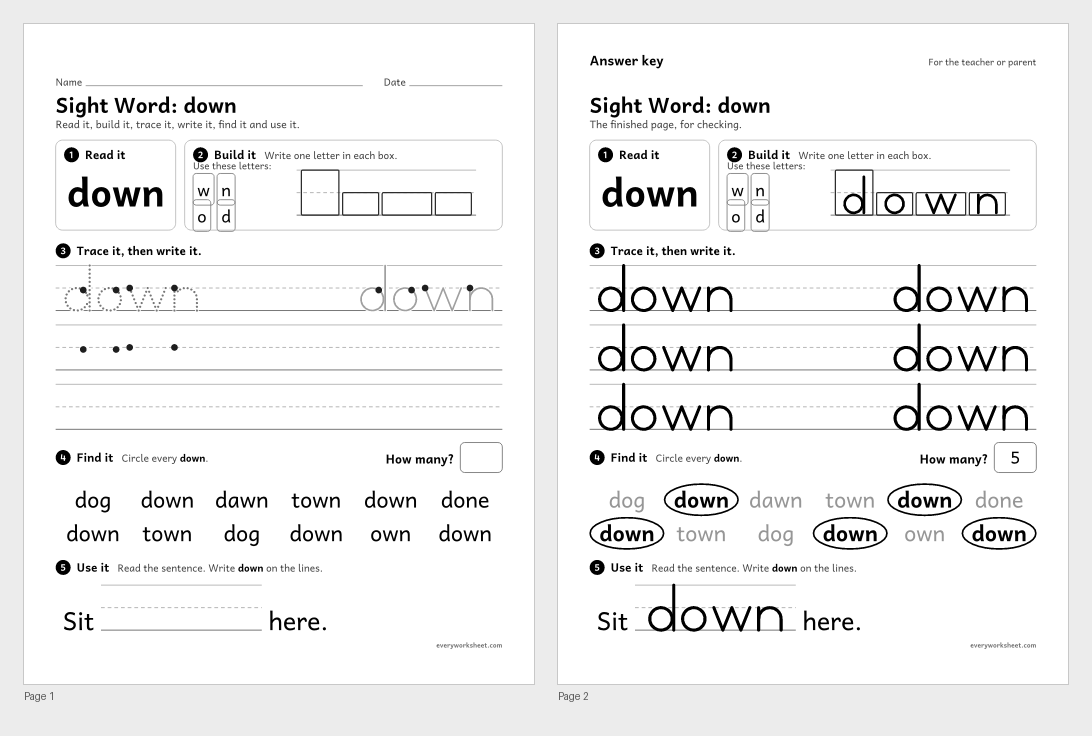
Reading and writing the sight word "down"
Answer key on page 2
2 pages46 KB
 View all 2 pages
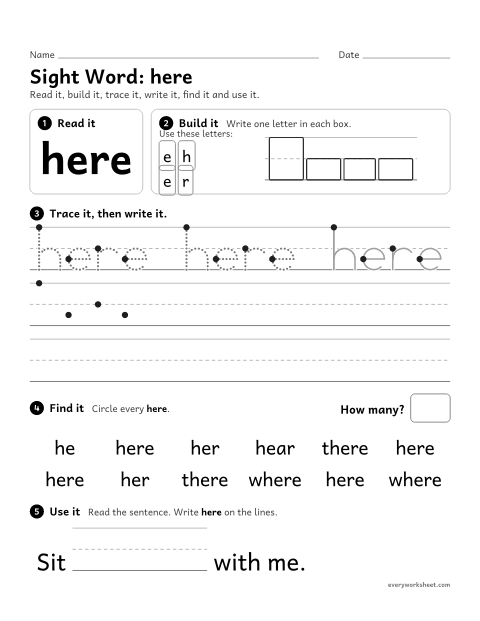
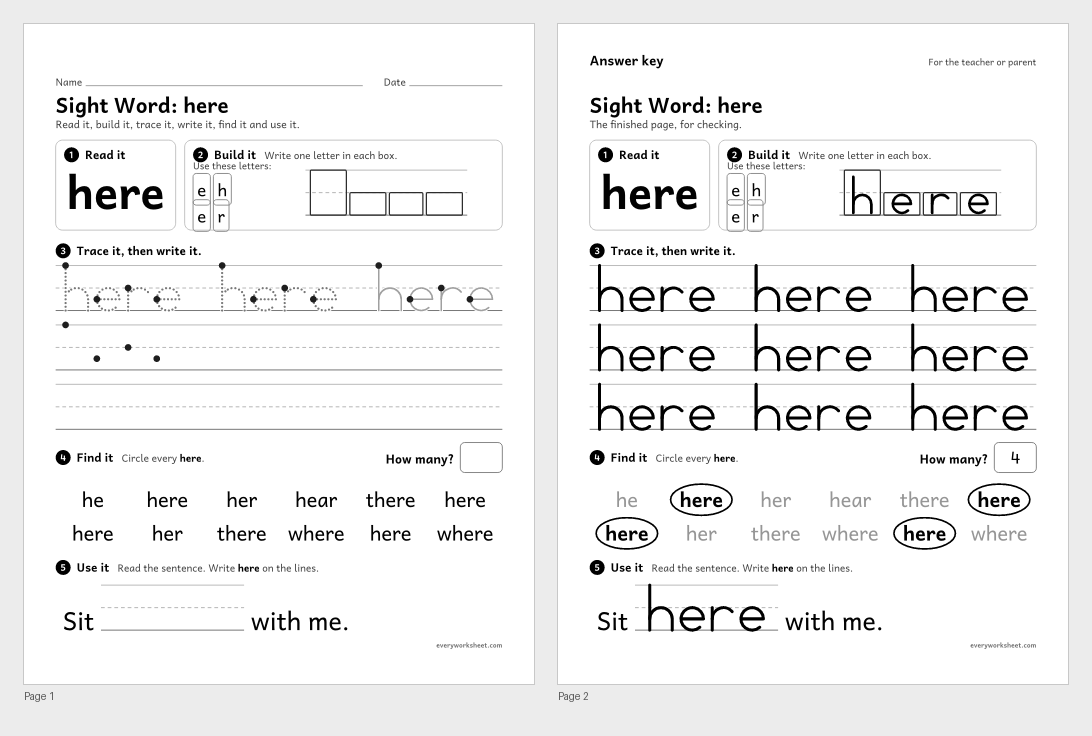
Reading and writing the sight word "here"
Answer key on page 2
2 pages46 KB
 View all 2 pages
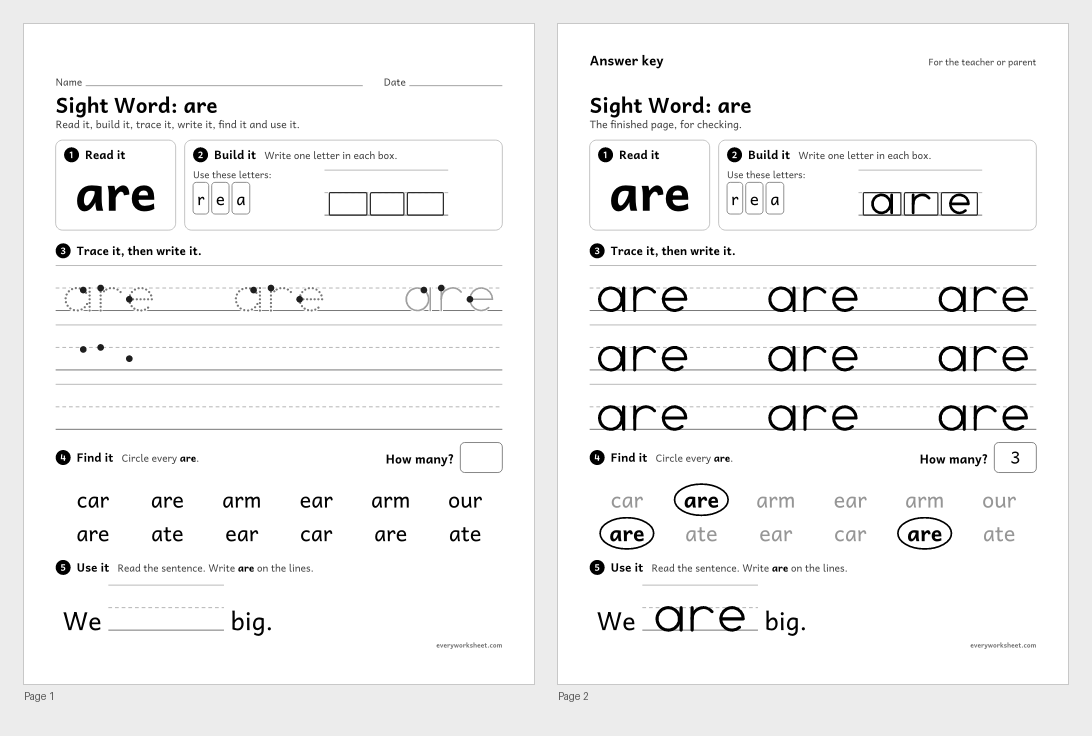
Reading and writing the sight word "are"
Answer key on page 2
2 pages46 KB
 View all 2 pages
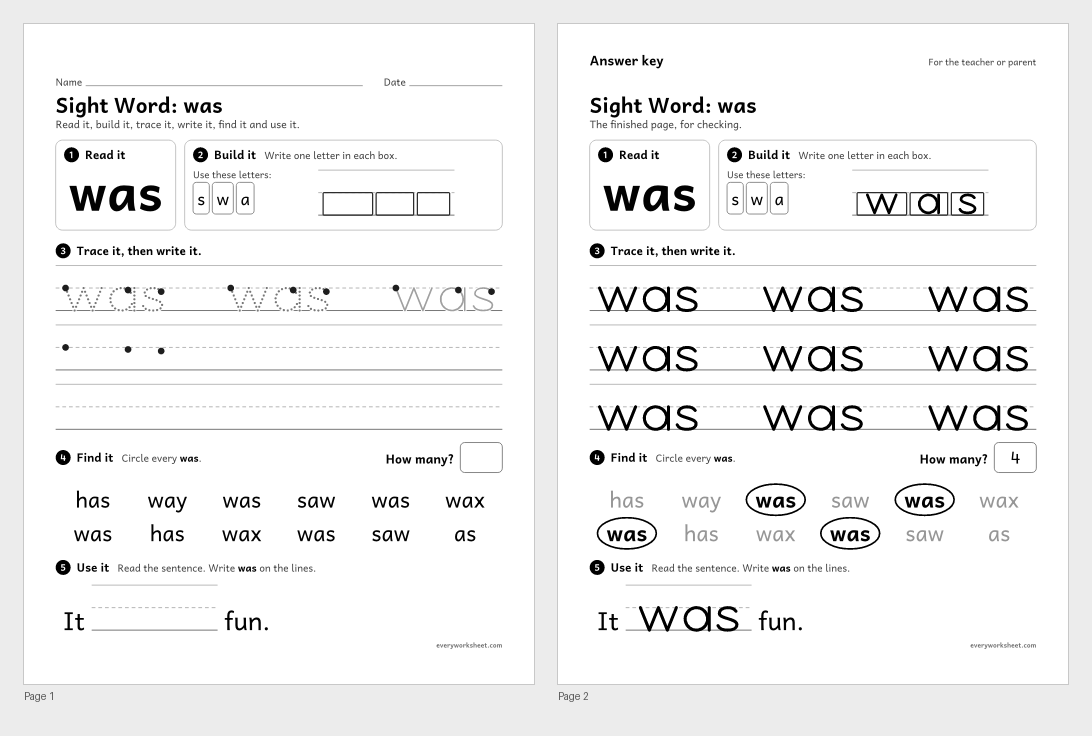
Reading and writing the sight word "was"
Answer key on page 2
2 pages45 KB
 View all 2 pages
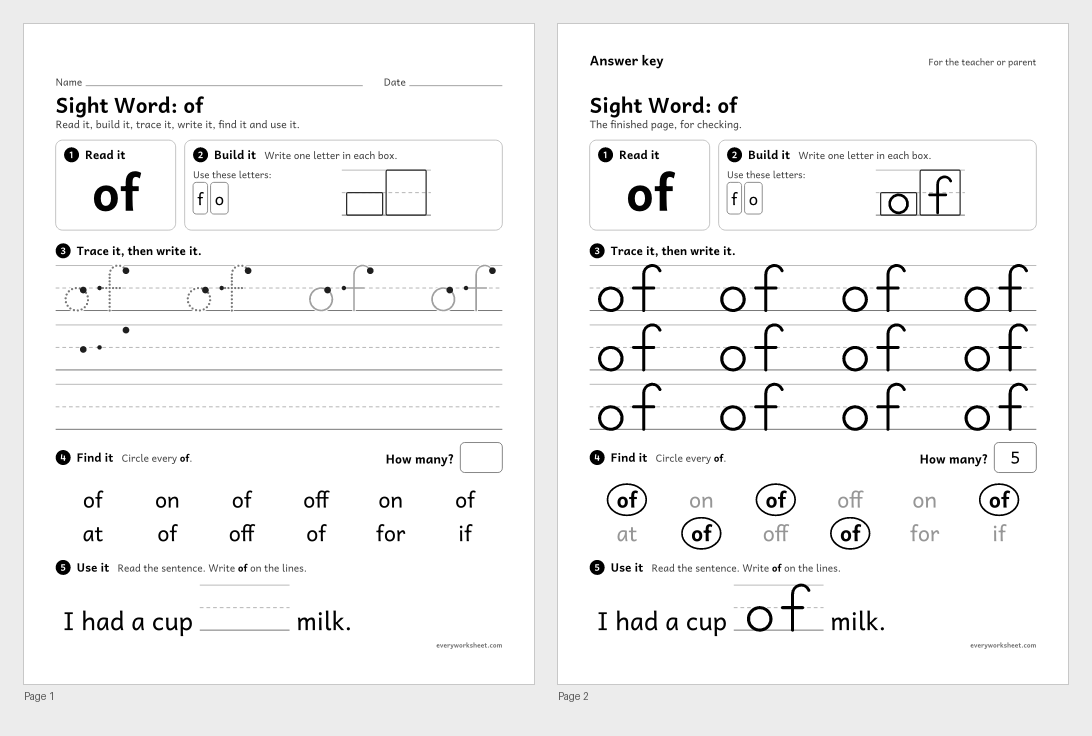
Reading and writing the sight word "of"
Answer key on page 2
2 pages45 KB
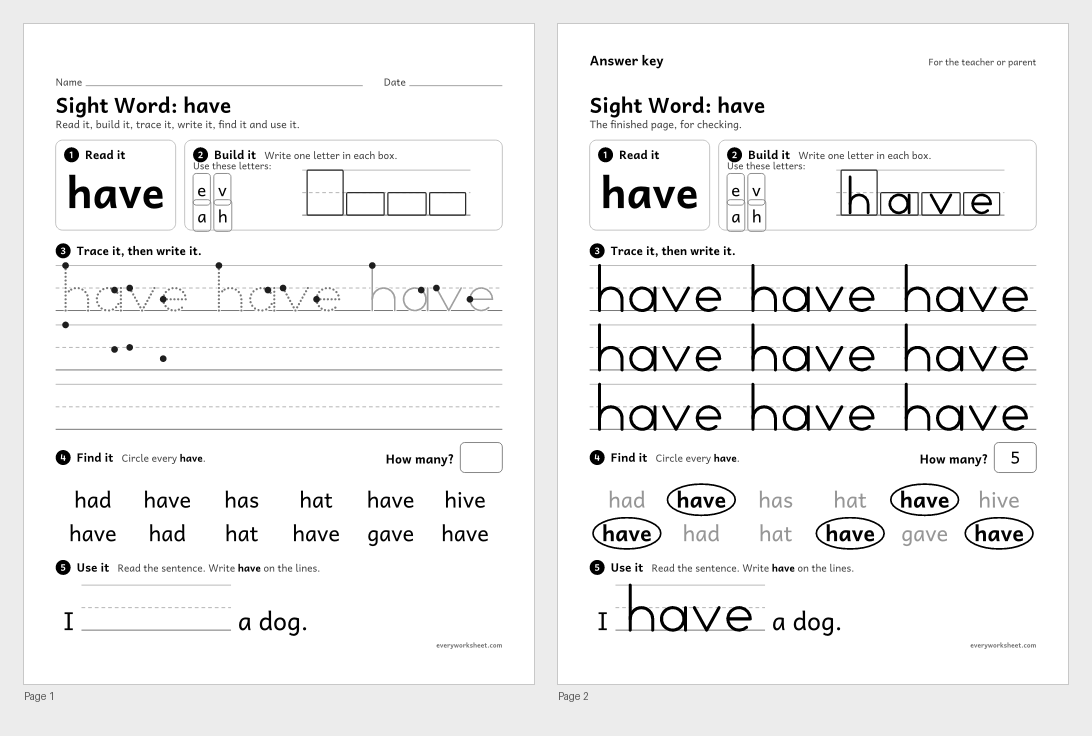 View all 2 pages
Reading and writing the sight word "have"
Answer key on page 2
2 pages47 KB
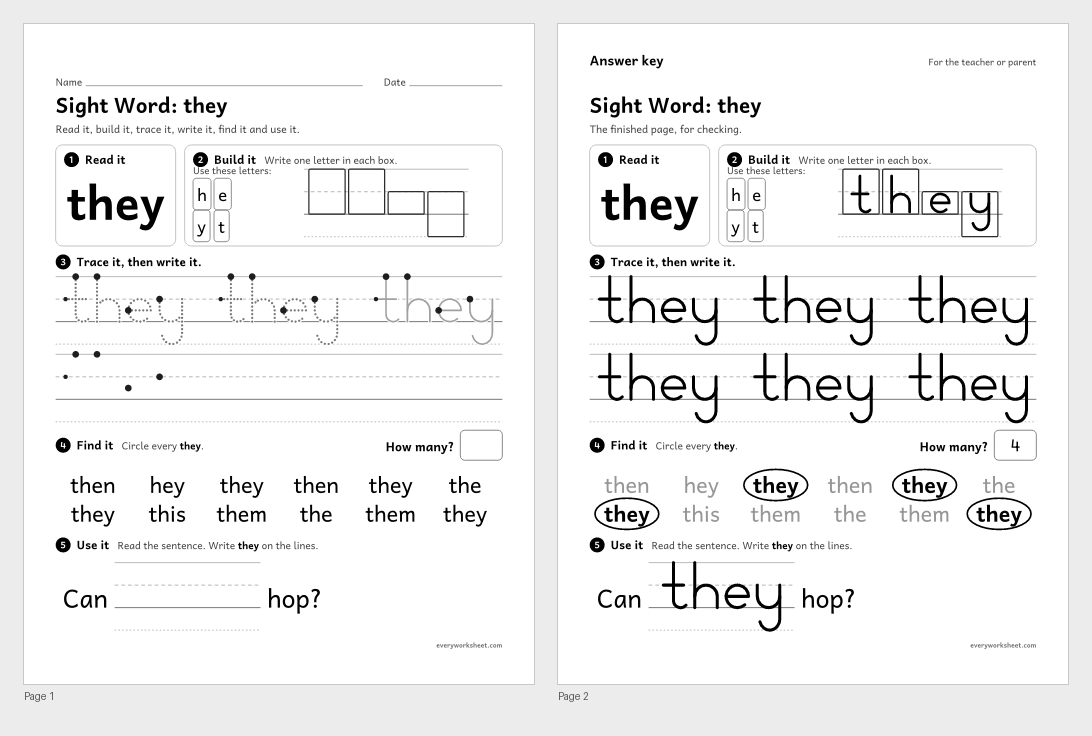 View all 2 pages
Reading and writing the sight word "they"
Answer key on page 2
2 pages47 KB
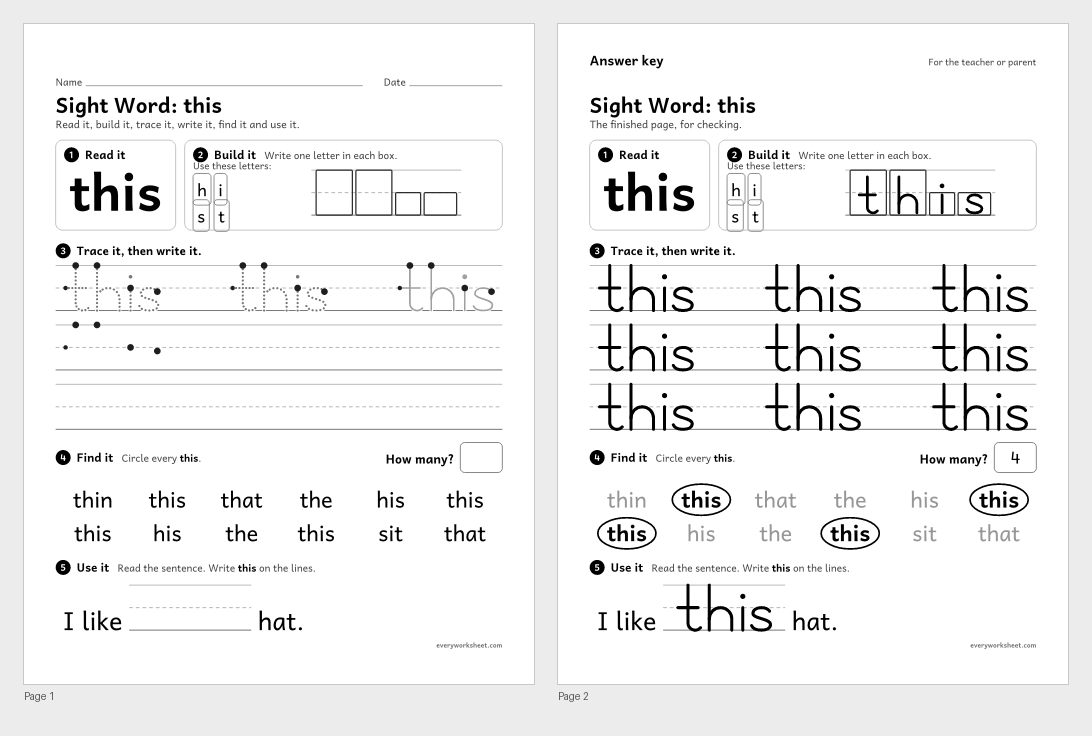 View all 2 pages
Reading and writing the sight word "this"
Answer key on page 2
2 pages46 KB
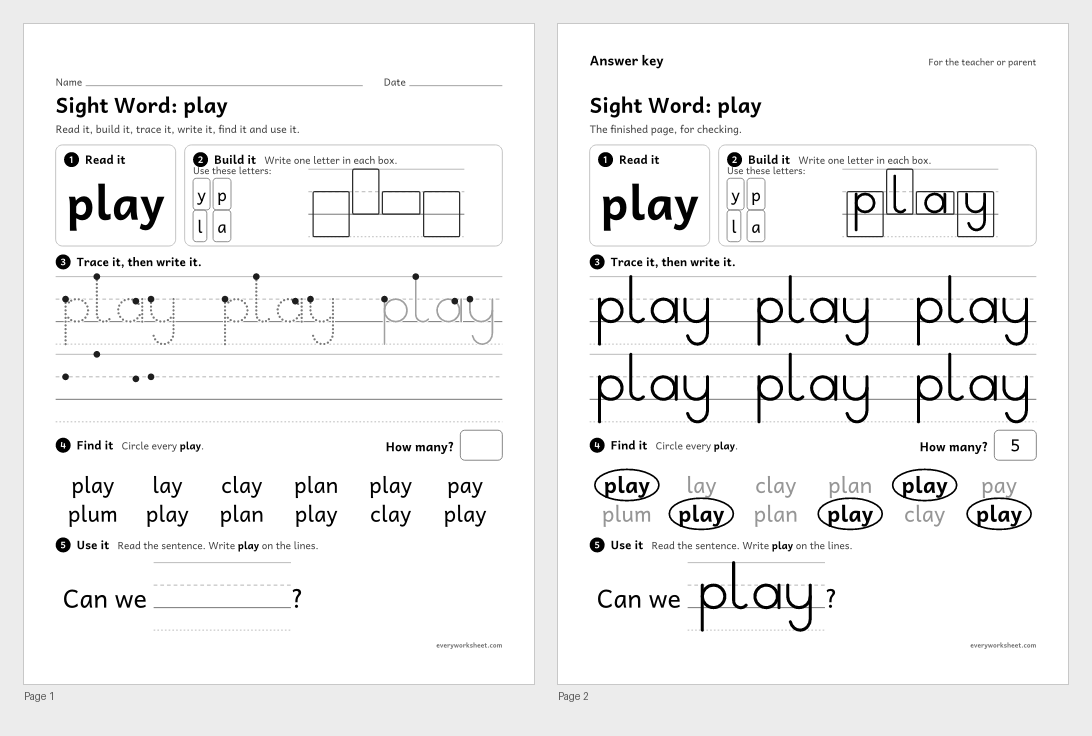 View all 2 pages
Reading and writing the sight word "play"
Answer key on page 2
2 pages47 KB
 View all 2 pages
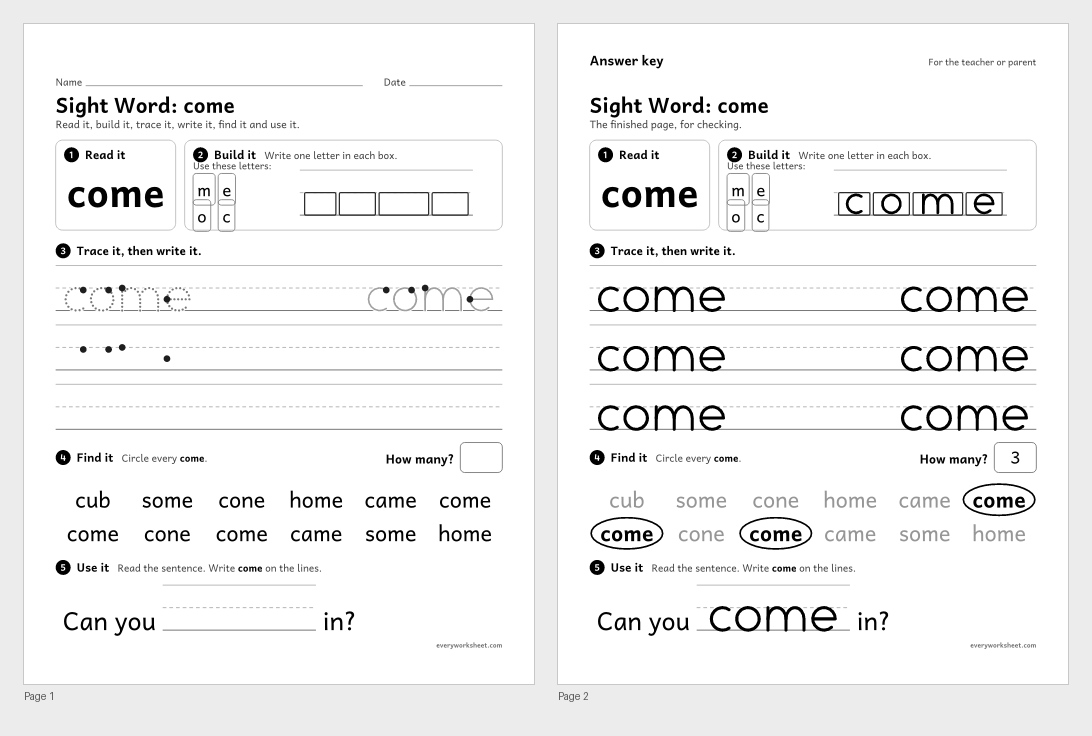
Reading and writing the sight word "come"
Answer key on page 2
2 pages47 KB
 View all 2 pages
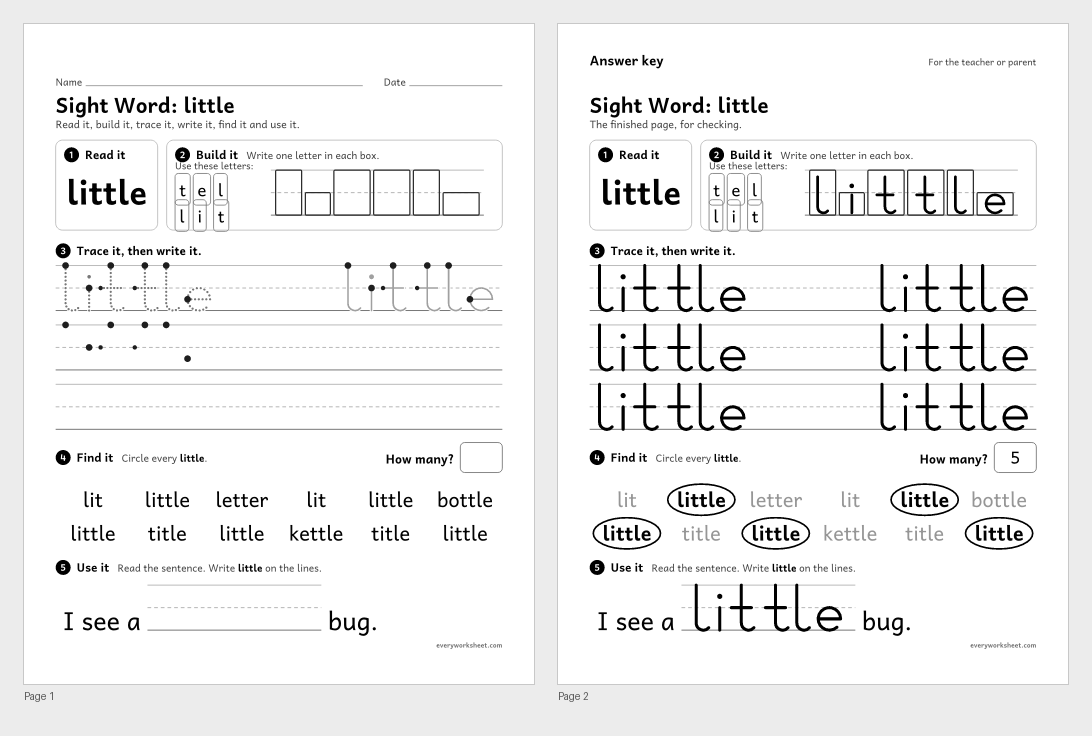
Reading and writing the sight word "little"
Answer key on page 2
2 pages48 KB
 View all 2 pages
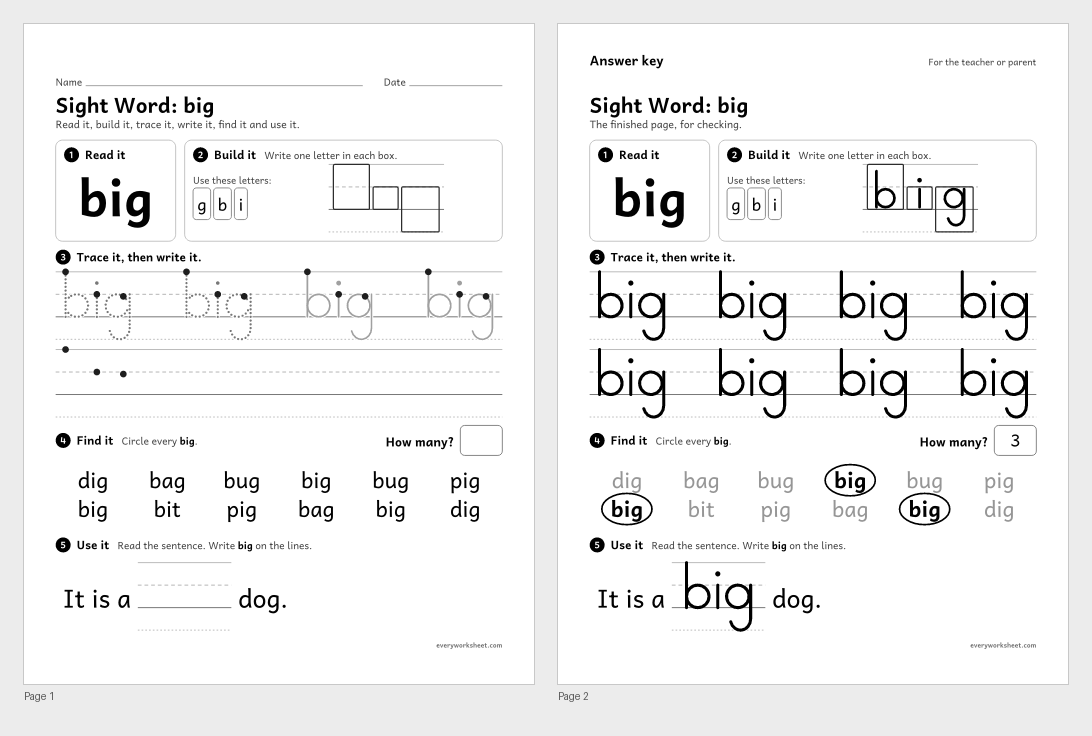
Reading and writing the sight word "big"
Answer key on page 2
2 pages46 KB
 View all 2 pages
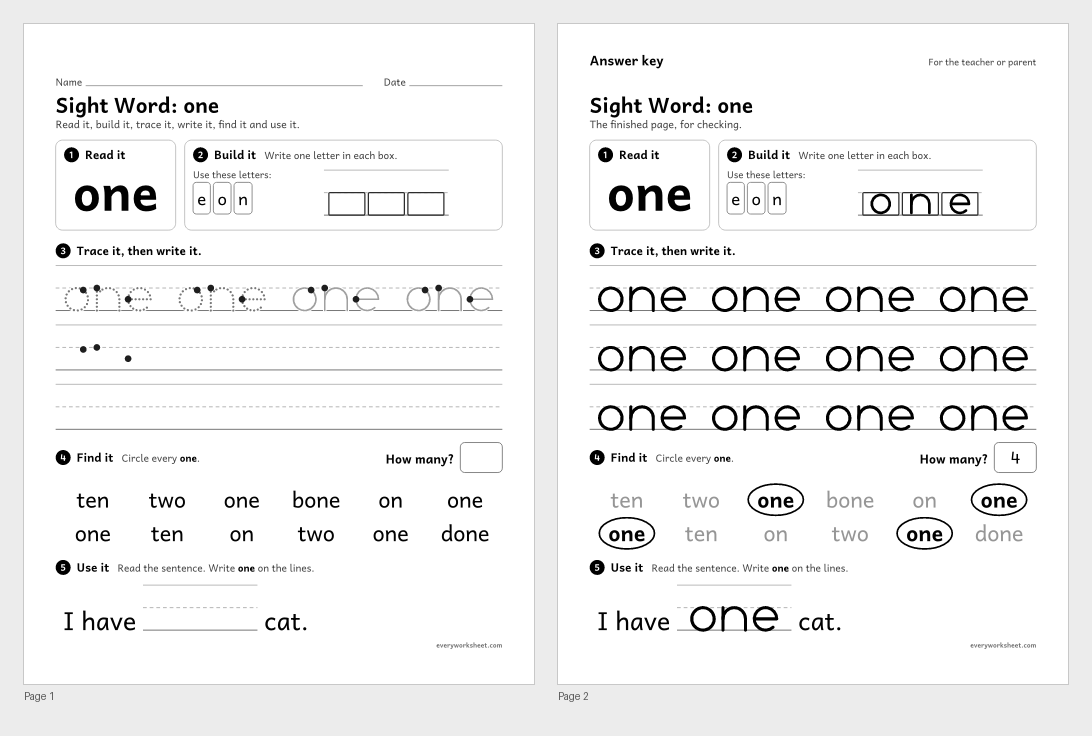
Reading and writing the sight word "one"
Answer key on page 2
2 pages46 KB
 View all 2 pages
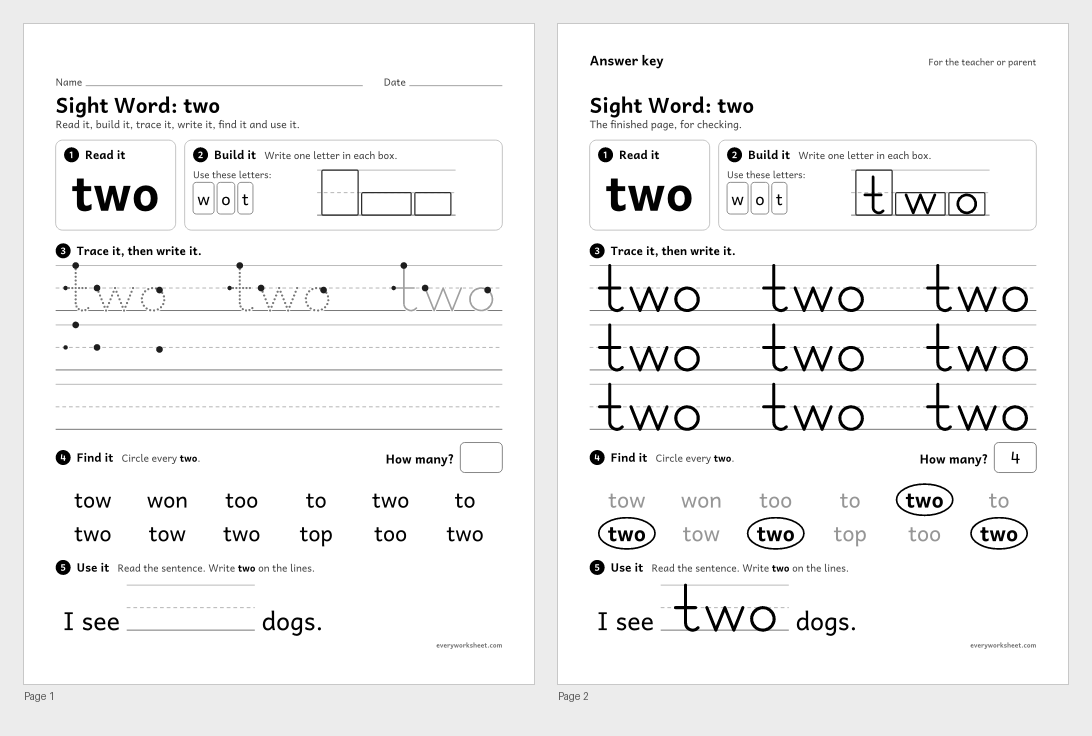
Reading and writing the sight word "two"
Answer key on page 2
2 pages45 KB
 View all 2 pages
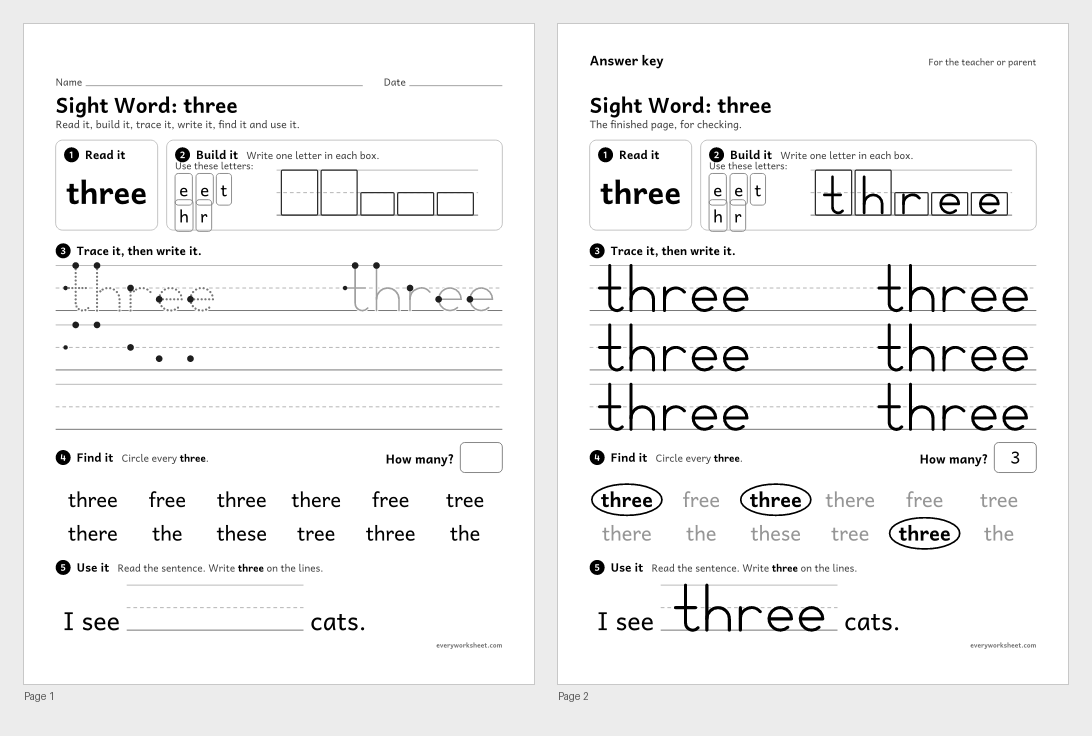
Reading and writing the sight word "three"
Answer key on page 2
2 pages47 KB
 View all 2 pages
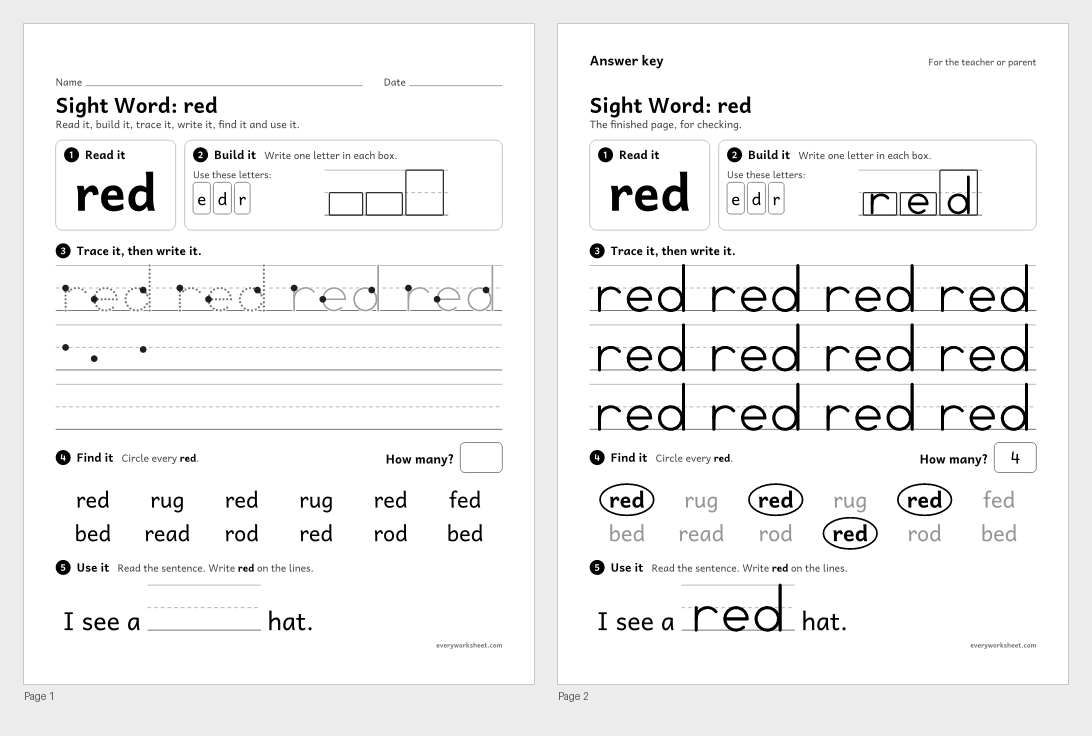
Reading and writing the sight word "red"
Answer key on page 2
2 pages46 KB
 View all 2 pages
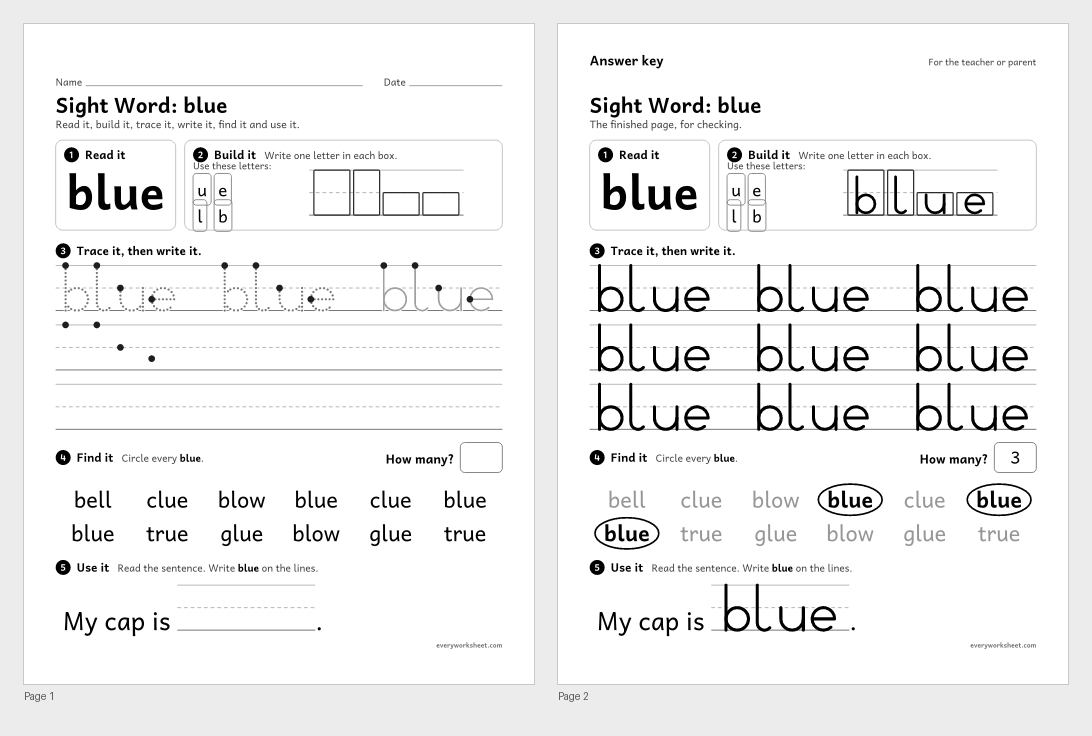
Reading and writing the sight word "blue"
Answer key on page 2
2 pages47 KB
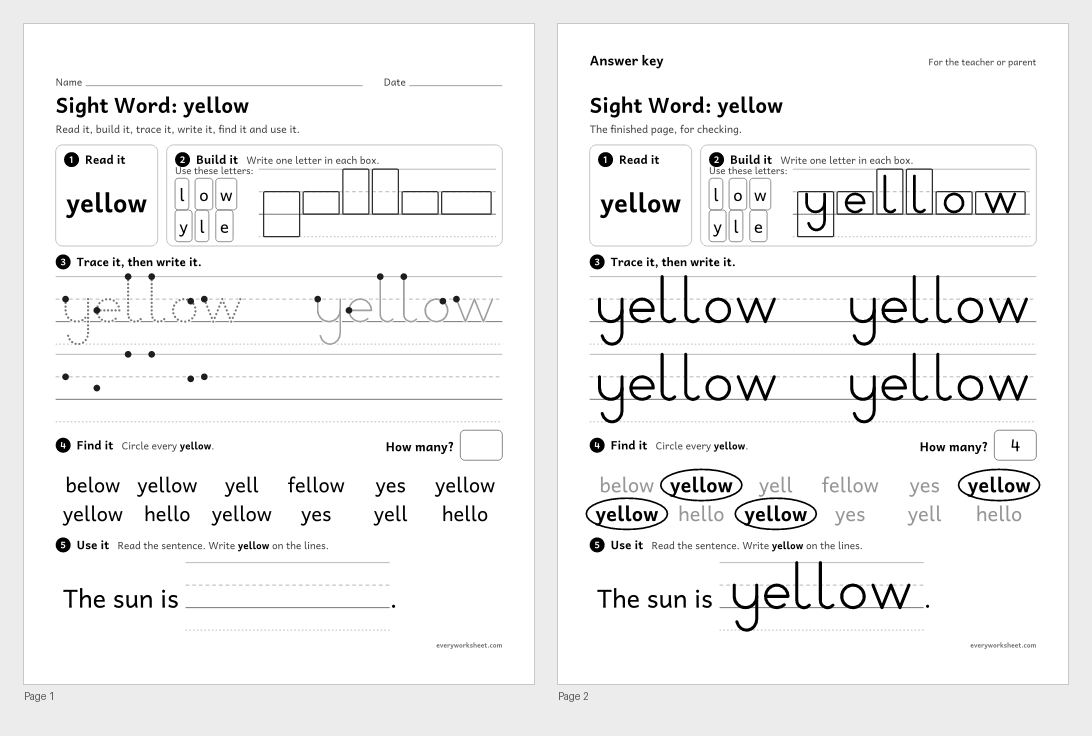 View all 2 pages
Reading and writing the sight word "yellow"
Answer key on page 2
2 pages48 KB
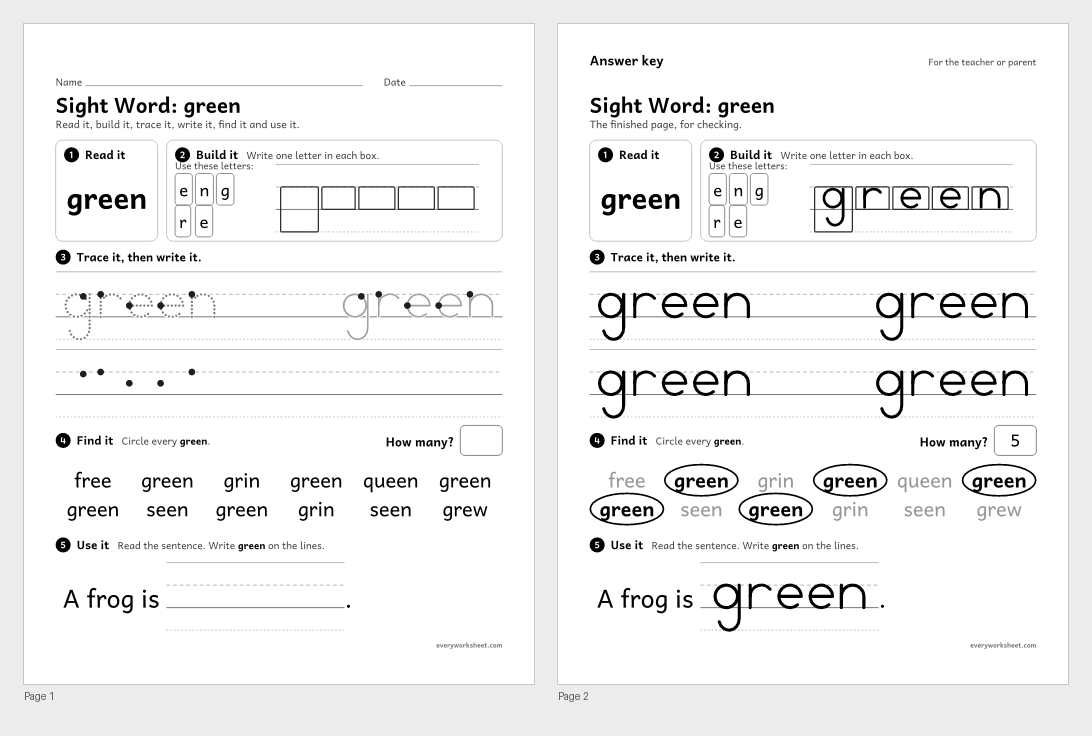 View all 2 pages
Reading and writing the sight word "green"
Answer key on page 2
2 pages48 KB
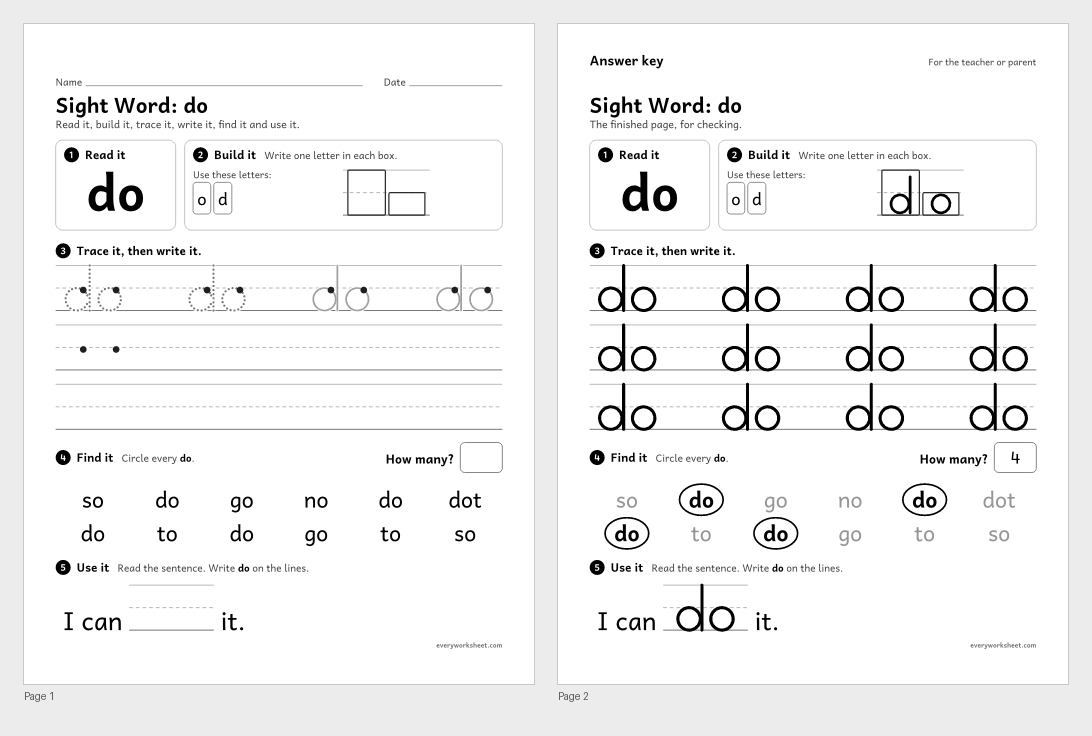 View all 2 pages
Reading and writing the sight word "do"
Answer key on page 2
2 pages44 KB
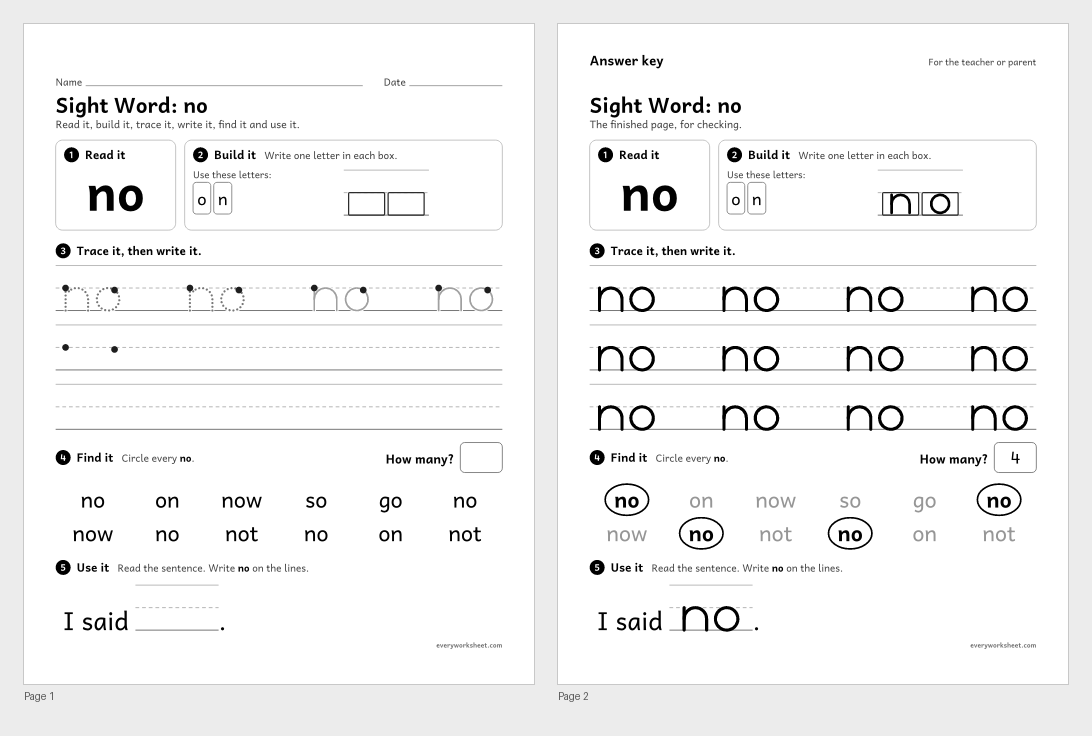 View all 2 pages
Reading and writing the sight word "no"
Answer key on page 2
2 pages44 KB
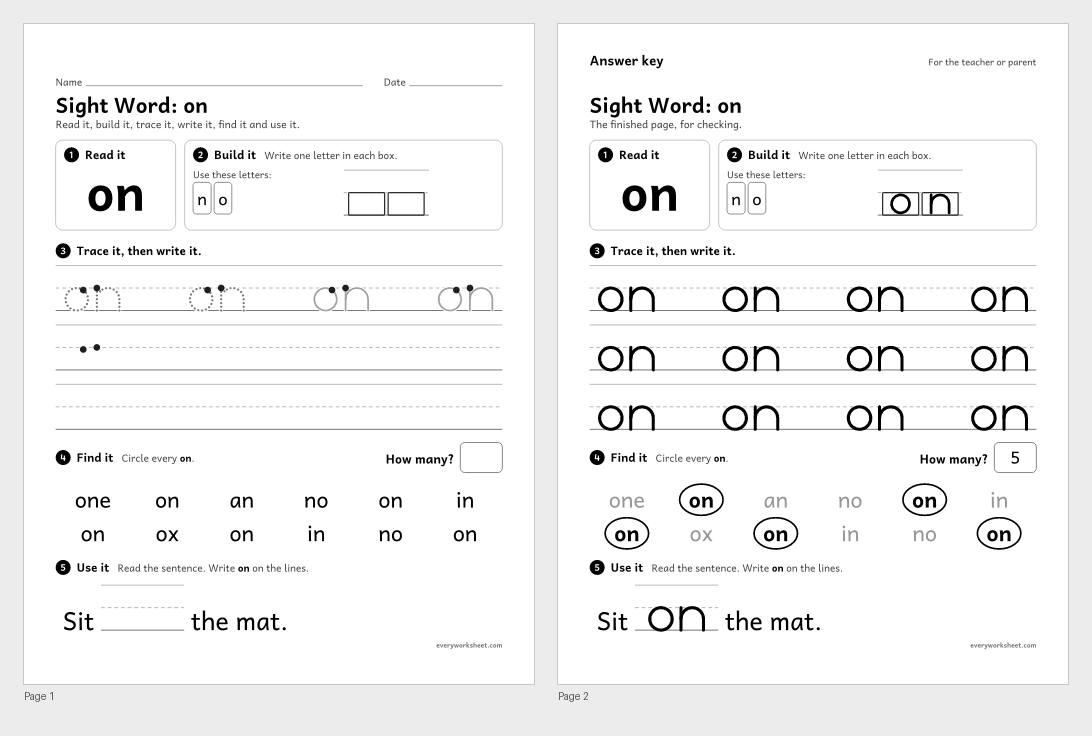 View all 2 pages
Reading and writing the sight word "on"
Answer key on page 2
2 pages44 KB
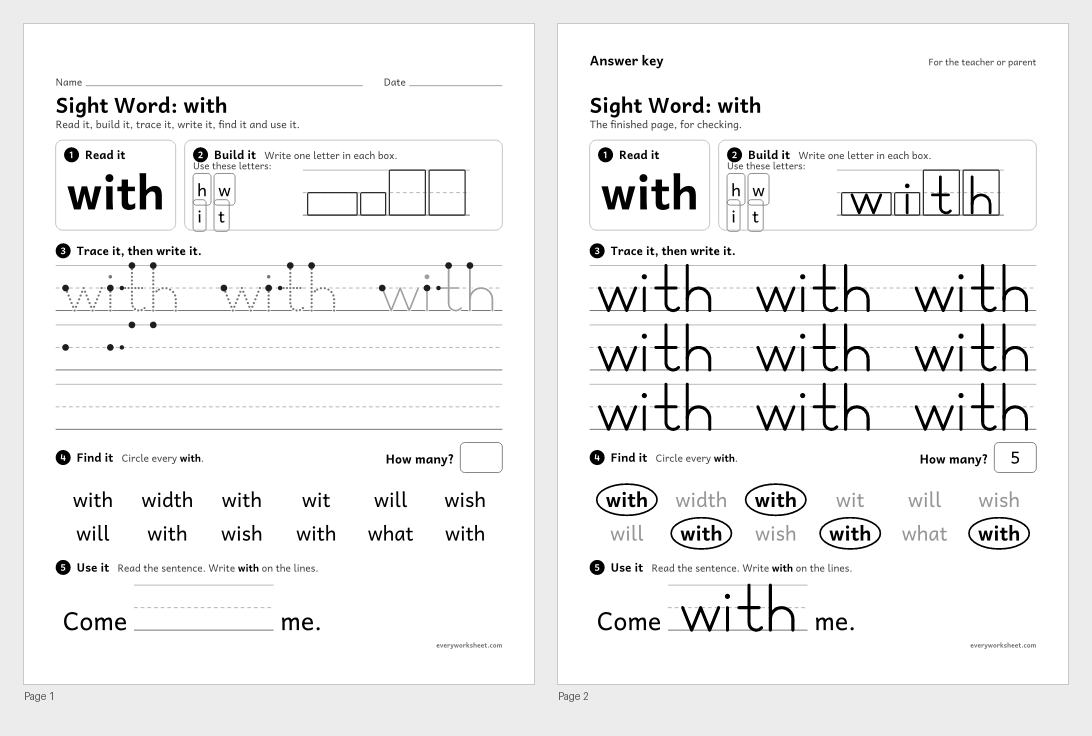 View all 2 pages
Reading and writing the sight word "with"
Answer key on page 2
2 pages46 KB
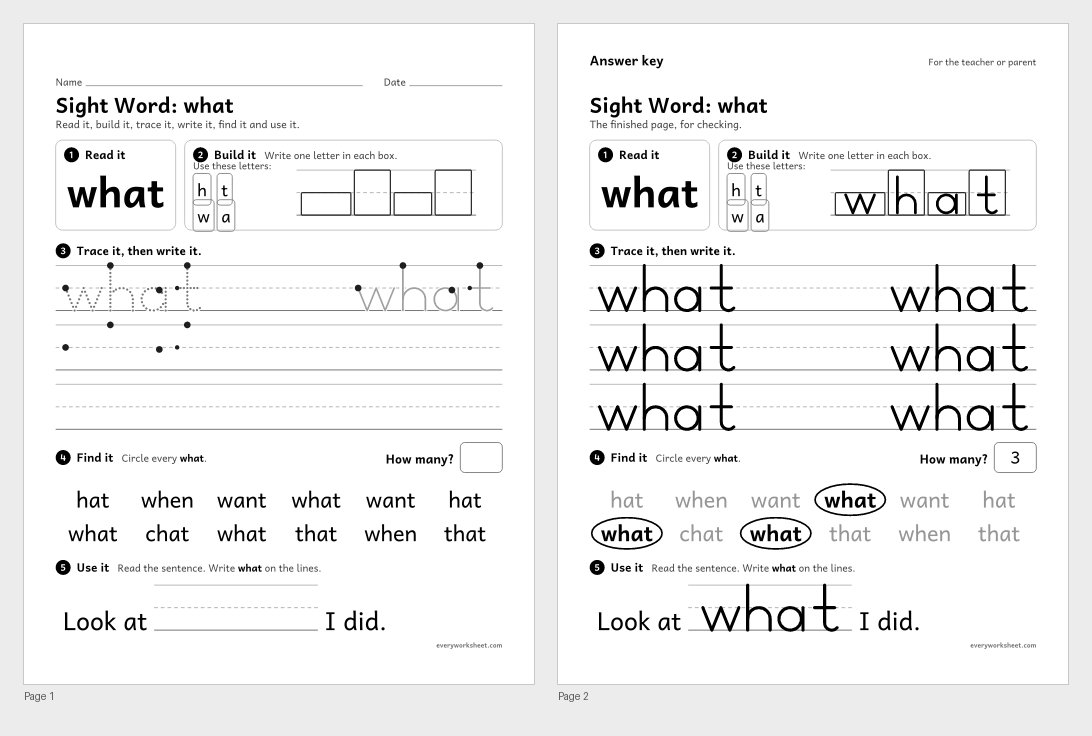 View all 2 pages
Reading and writing the sight word "what"
Answer key on page 2
2 pages47 KB
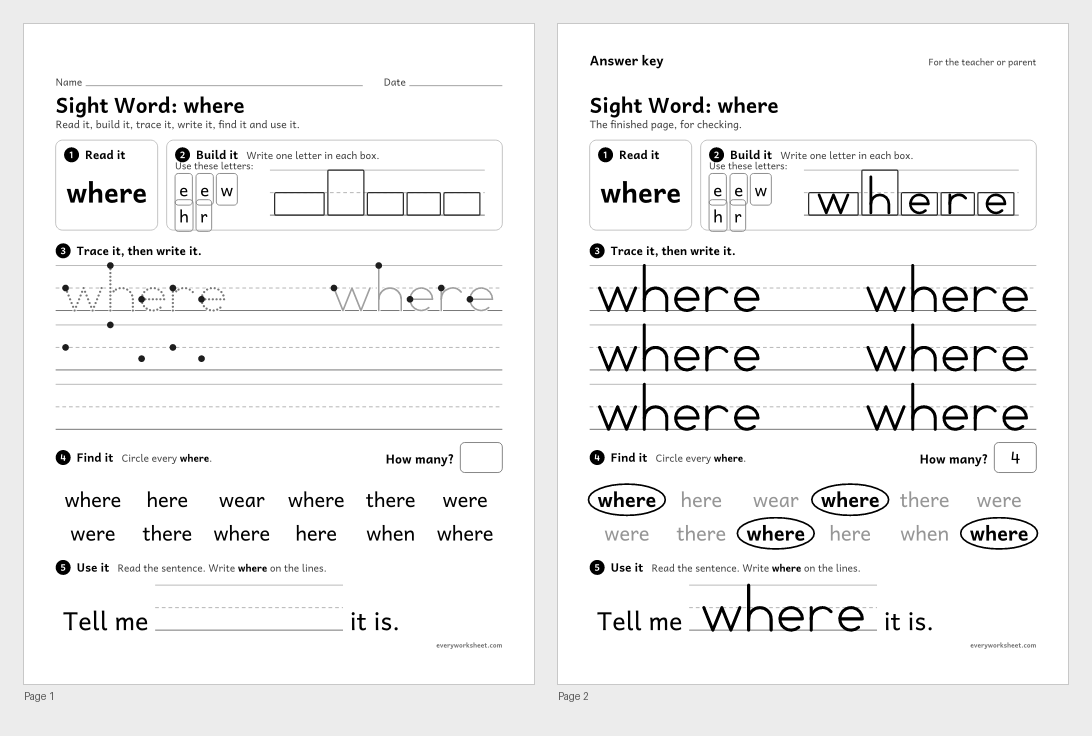 View all 2 pages
Reading and writing the sight word "where"
Answer key on page 2
2 pages47 KB
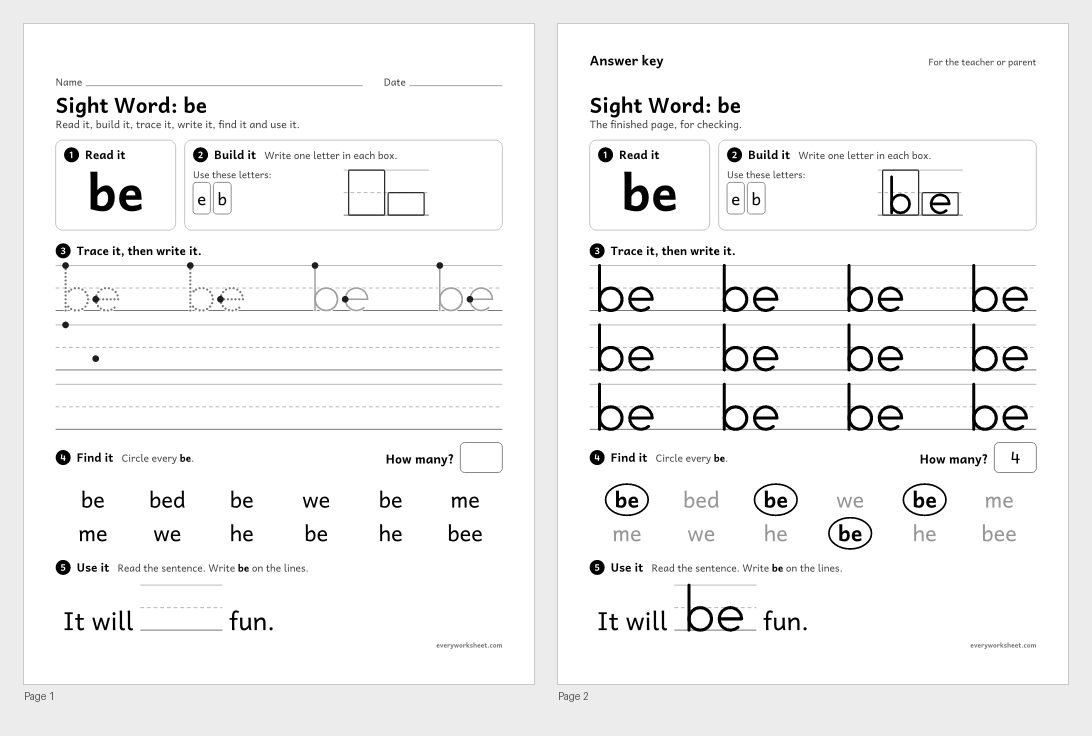 View all 2 pages
Reading and writing the sight word "be"
Answer key on page 2
2 pages44 KB
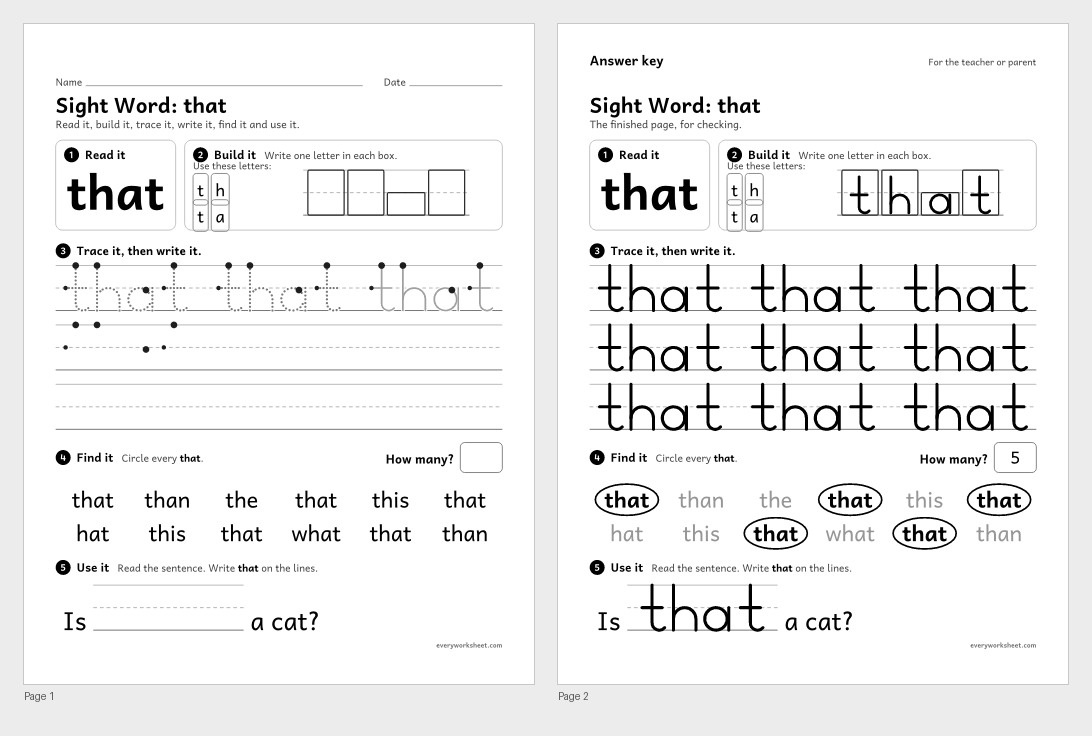 View all 2 pages
Reading and writing the sight word "that"
Answer key on page 2
2 pages46 KB
Print at 100% (actual size) for the cleanest tracing lines.
Sight words are the small, common words children meet on almost every page they read, like the, and, is and you. Kindergartners learn to read them quickly and automatically, and many can also write them by the end of the year. These worksheets cover 50 words: I, a, the, to, and, is, it, in, you, we, can, see, my, like, go, at, he, she, me, look, said, for, up, down, here, are, was, of, have, they, this, play, come, little, big, one, two, three, red, blue, yellow, green, do, no, on, with, what, where, be, that.
Every page follows the same six steps, so children know what to do after the first one. Read it: the word in big print. Build it: write the scrambled letters into boxes shaped like the word's tall, short and tail letters. Trace it, then write it with less help on each row. Find it: circle the word among look-alike words and count them. Use it: write the word to finish a short sentence. An answer key is on page 2.
The sentences use only sight words and simple sound-it-out words, so children can read them on their own. The checklist has every word in teaching order with boxes for reading and writing.
CCSS.ELA-LITERACY.RF.K.3.CRead common high-frequency words by sight.CCSS.ELA-LITERACY.L.K.1.APrint many upper- and lowercase letters.CCSS.ELA-LITERACY.L.K.2.DSpell simple words phonetically, drawing on knowledge of sound-letter relationships.Sight words are common words children learn to read instantly, without sounding them out every time. Many, like the, said and was, have parts that are not spelled the way they sound.
Expectations vary by school, but many kindergarten classrooms aim for somewhere between 25 and 50 high-frequency words by the end of the year. These 50 pages cover a full kindergarten list.
Start with the words children see most: I, a, the, to, and, is, it and in. The checklist lists all 50 words in a sensible teaching order.
Yes. Page 2 of every sheet shows the finished page: the built word, the circled words with the count, and the completed sentence.
Yes. Every PDF is free to download and print for your classroom or home, with no account or email sign-up.