 View larger
Ten Frame Printables and Worksheets
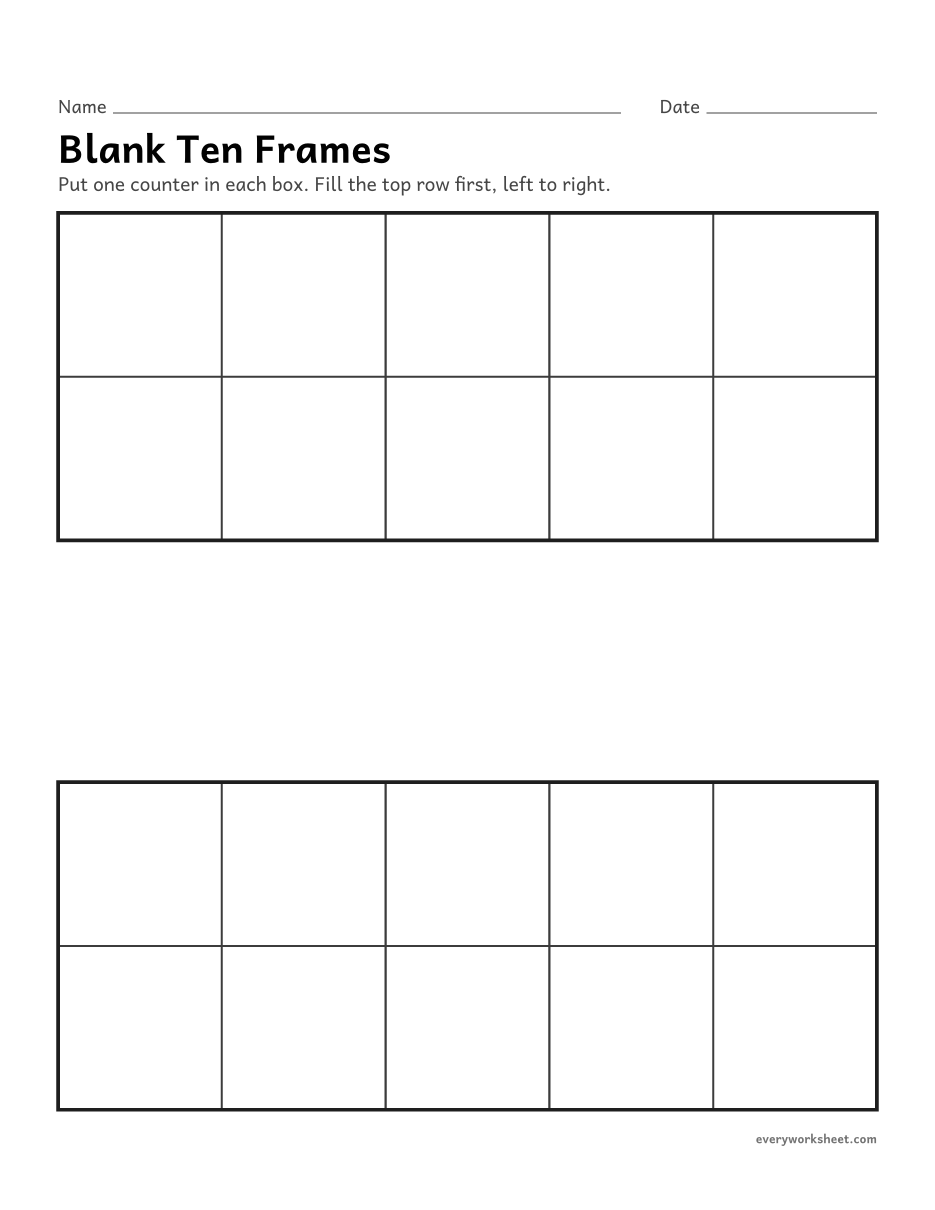
Blank ten frame printables, a double ten frame, and ten frame worksheets for counting to 10, making 10 and teen numbers.
Download the ten frames worksheets
 View larger
 View larger
 View larger
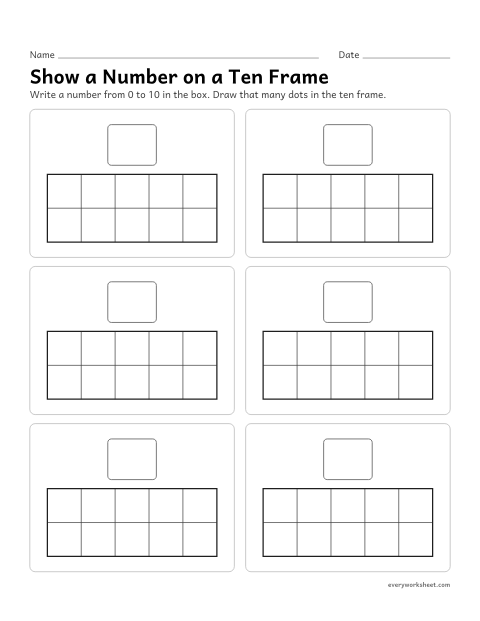
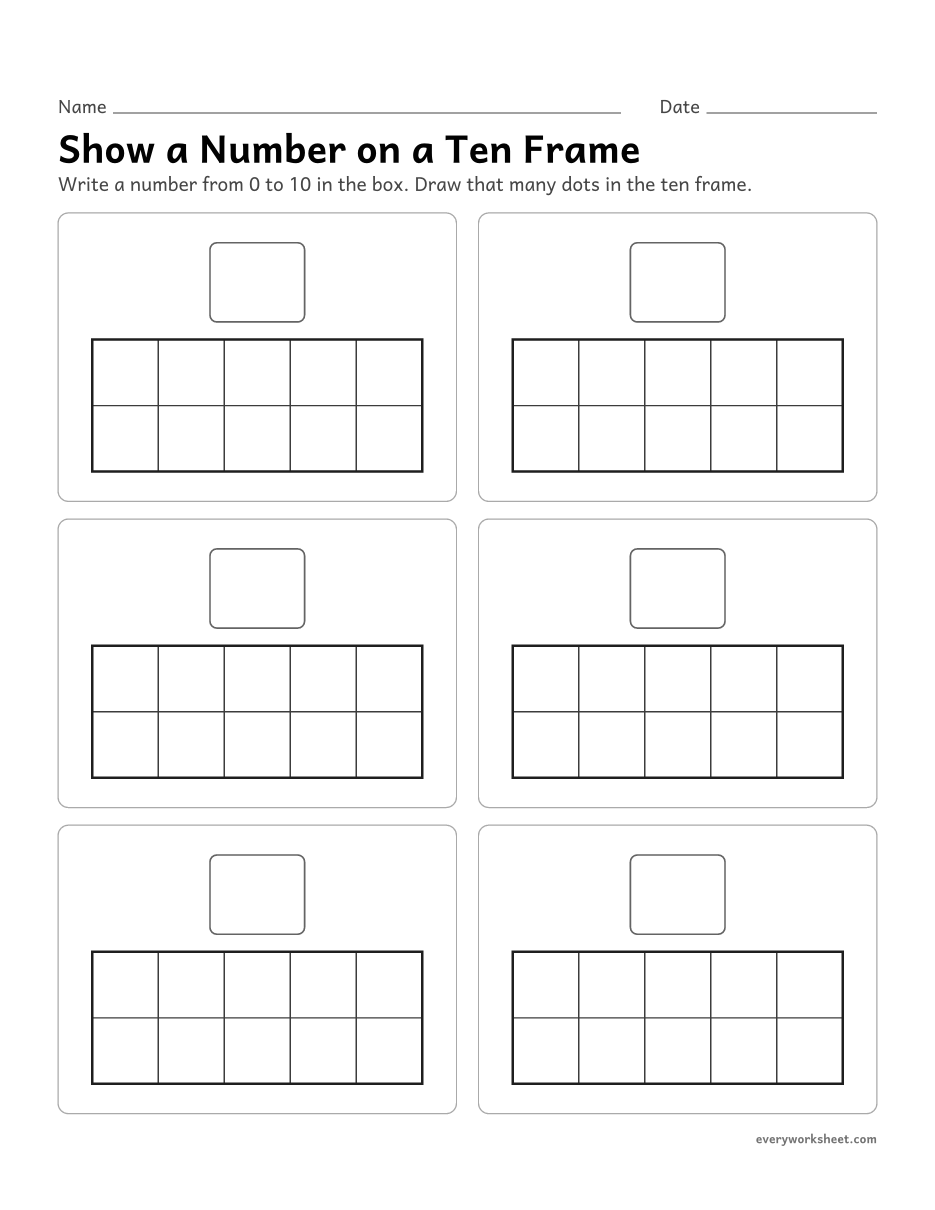
Show a number on a ten frame
Writing a number and showing it on a ten frame
1 page25 KB
 View all 2 pages
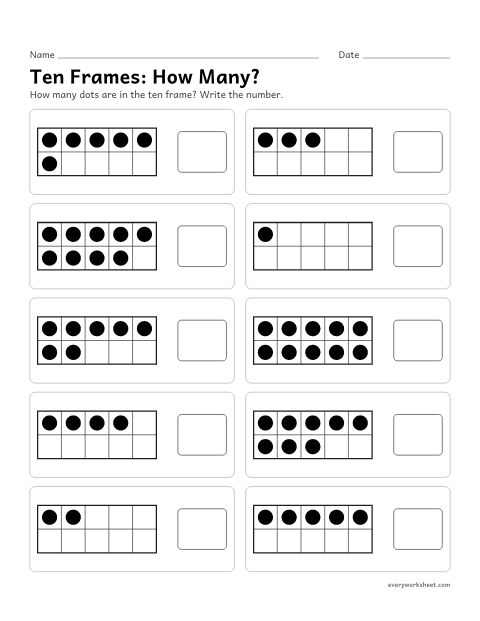
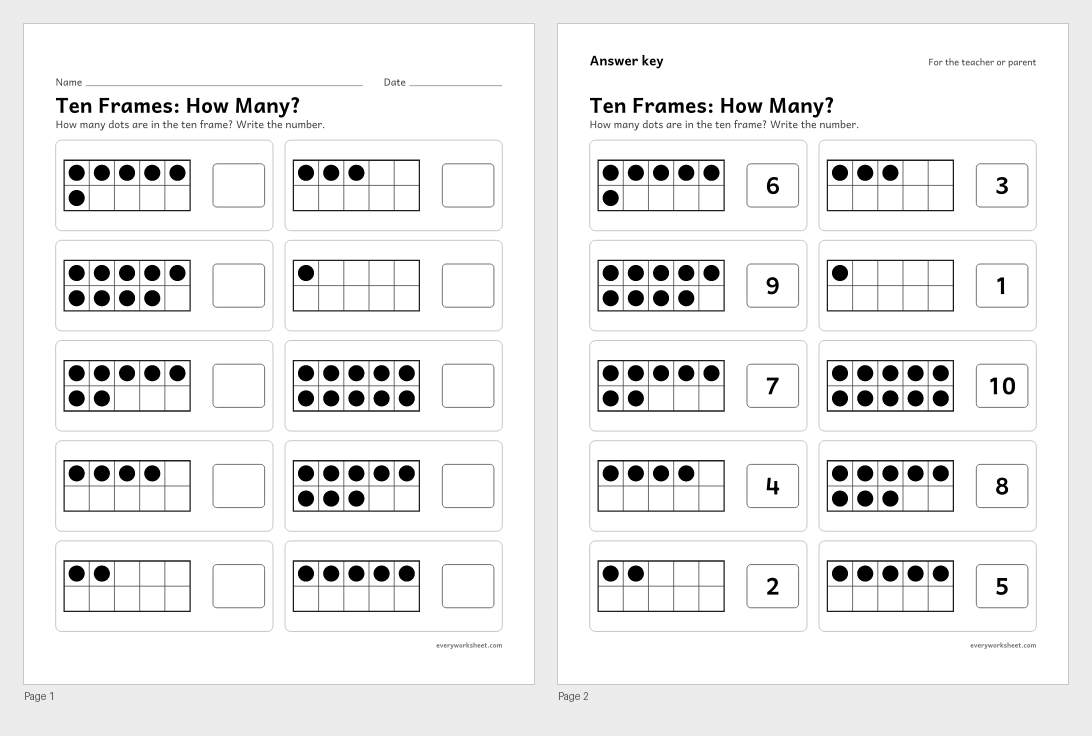
Ten Frames: how Many?
Reading amounts 1 to 10 on a ten frame
Answer key on page 2
2 pages37 KB
 View all 2 pages
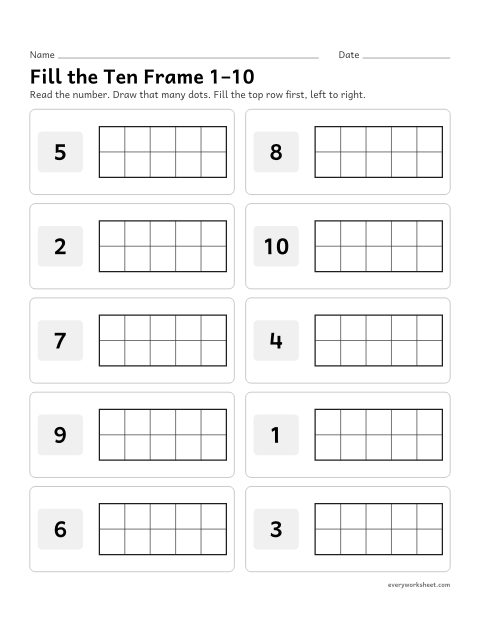
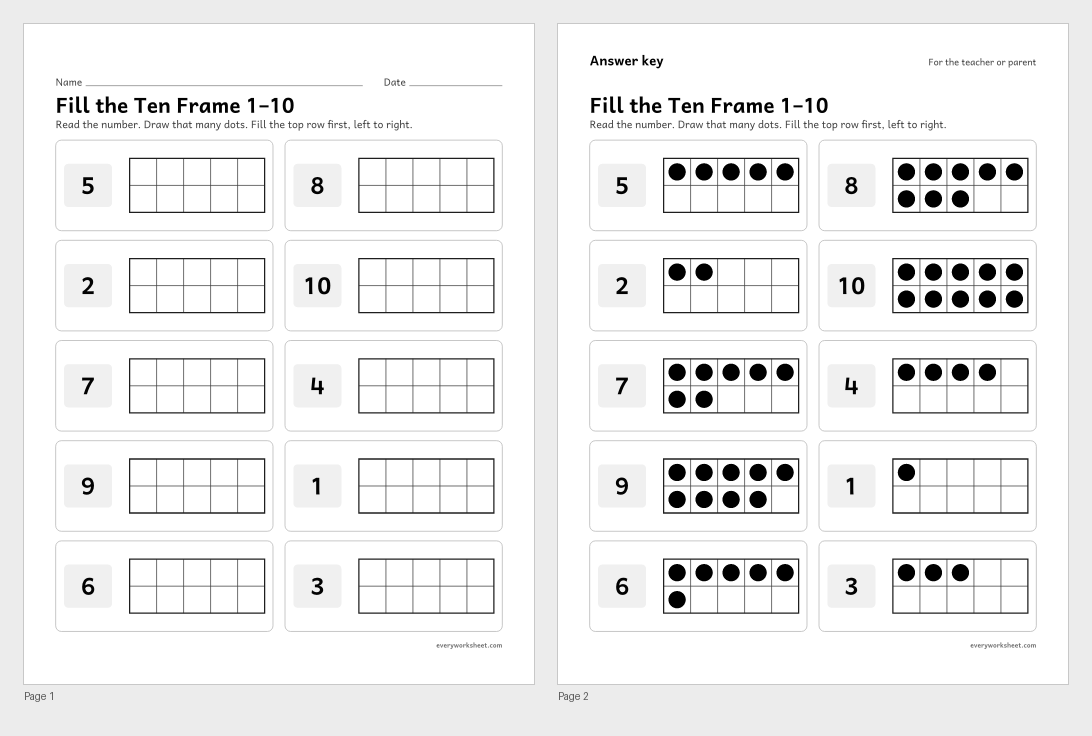
Fill the ten frame 1–10
Showing numbers 1 to 10 on a ten frame
Answer key on page 2
2 pages39 KB
 View all 2 pages
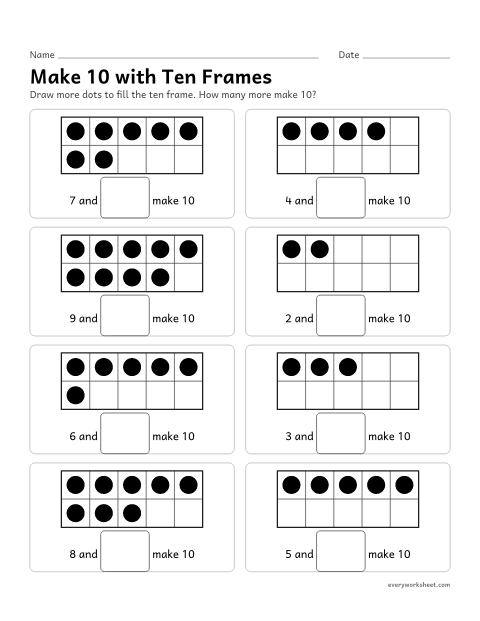
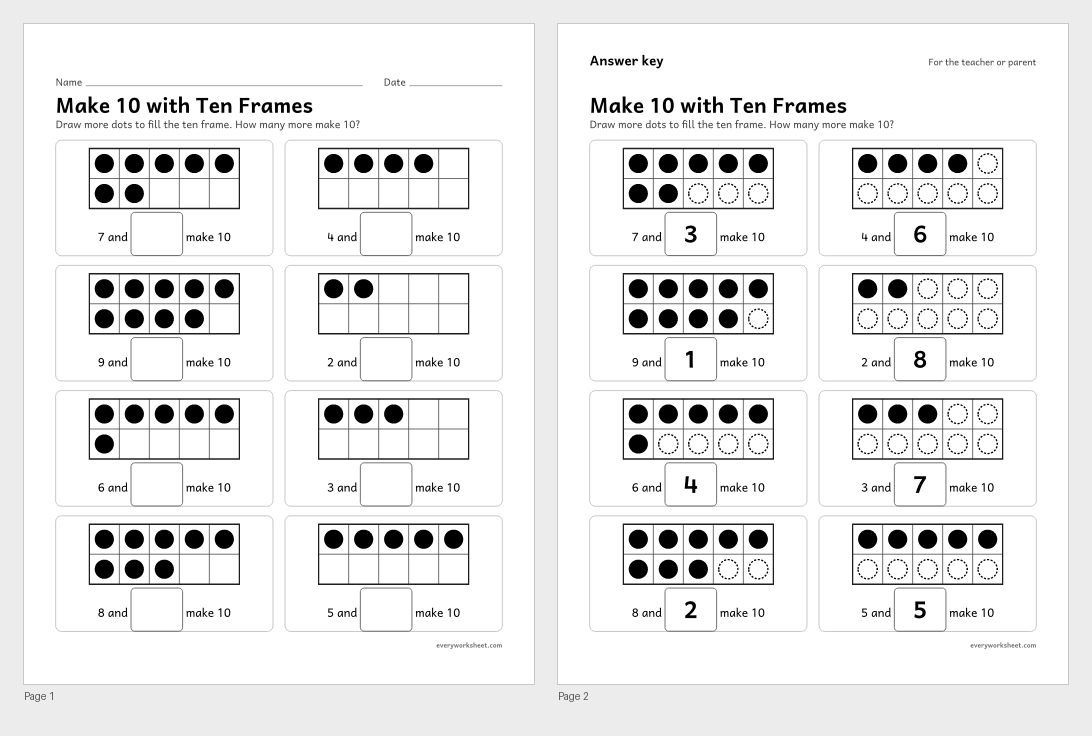
Make 10 with ten frames
Finding the number that makes 10
Answer key on page 2
2 pages34 KB
 View all 2 pages
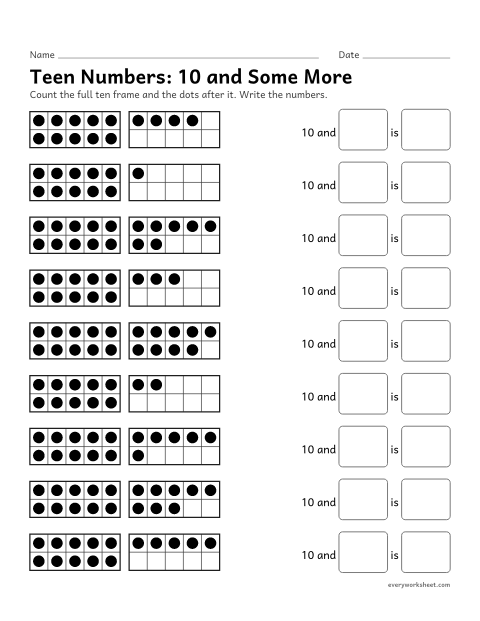
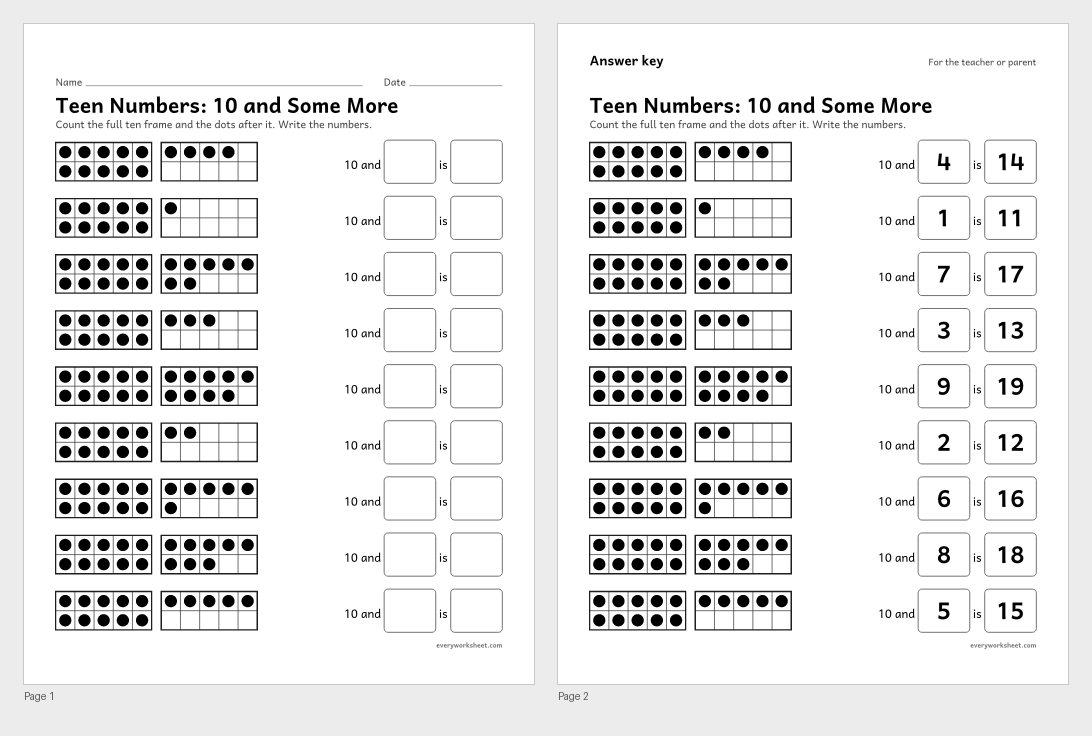
Teen Numbers: 10 and some more
Seeing 11 to 19 as ten ones and some more ones
Answer key on page 2
2 pages38 KB
 View all 2 pages
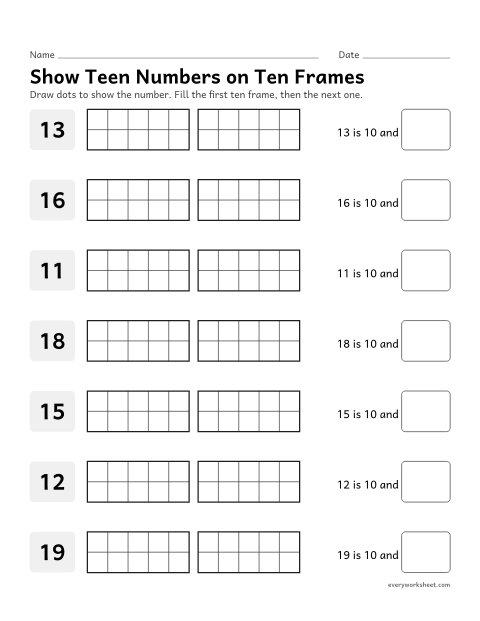
Show teen numbers on ten frames
Building 11 to 19 from ten ones and some more ones
Answer key on page 2
2 pages39 KB
 View all 2 pages
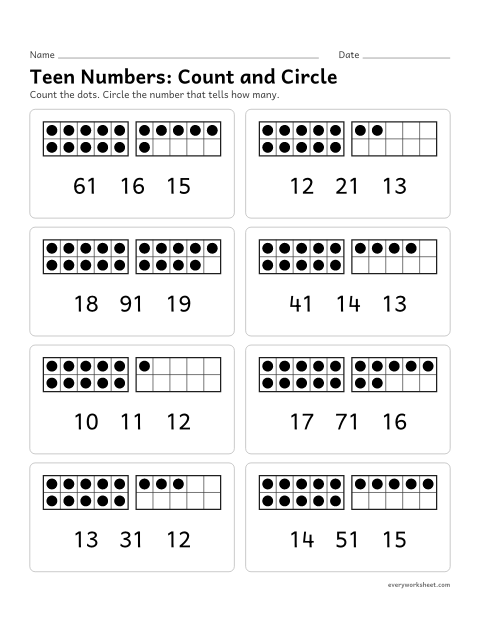
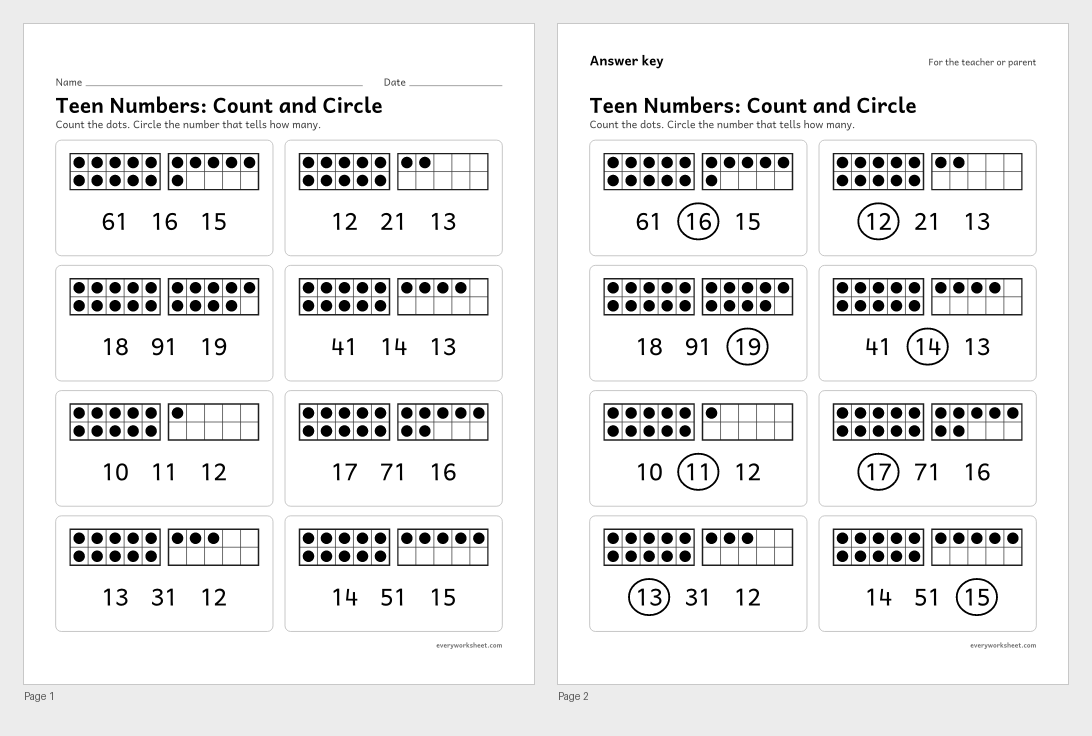
Teen Numbers: count and circle
Matching ten frames to teen numbers 11 to 19
Answer key on page 2
2 pages34 KB

Print at 100% (actual size) for the cleanest tracing lines.
About these ten frames worksheets
A ten frame is a 2-by-5 grid that holds up to ten counters, one in each box. Because the frame always holds ten, children can see an amount at a glance: a full top row is 5, a full frame is 10, and a frame with two empty boxes is 8. That quick seeing is what turns counting one by one into real number sense.
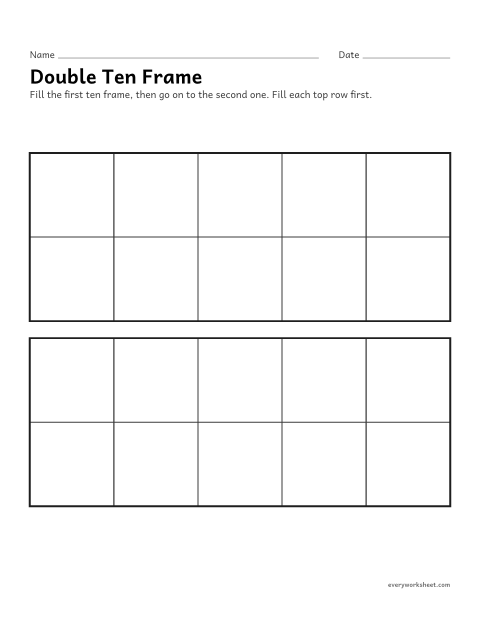
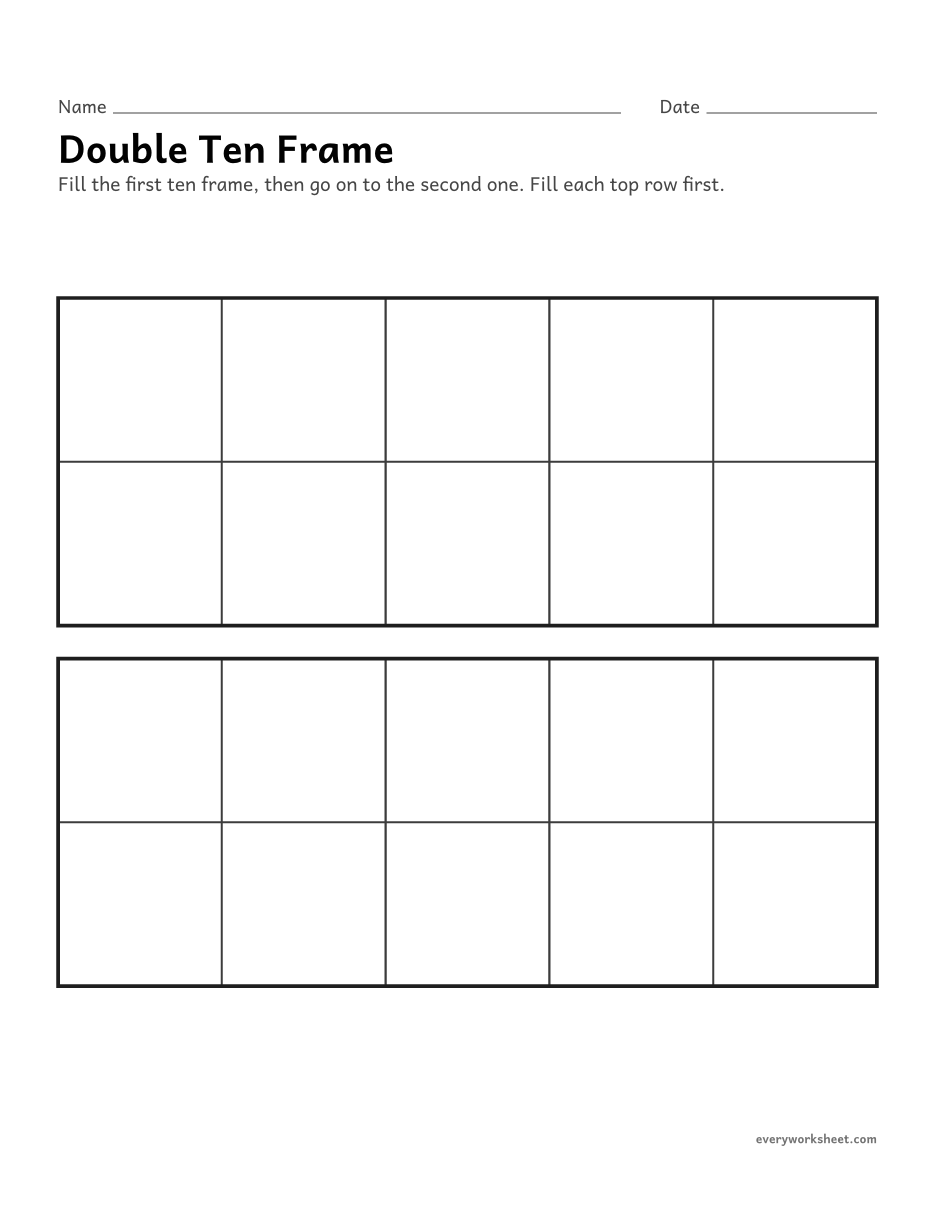
This page has a blank ten frame printable with two large frames sized for counters, a double ten frame for numbers to 20, and a page of six small frames for writing a number and drawing it. The worksheets then use the frames to count how many, show a number, find how many more make 10, and build the teen numbers.
The three teen number worksheets show 11 to 19 as a full ten frame and some more, so 16 is 10 and 6. Seeing the full ten first helps children understand why the 1 in 16 comes first, and it heads off writing 61 for 16.
Standards
CCSS.MATH.CONTENT.K.CC.B.5Count to answer “how many?” questions about as many as 20 things arranged in a line, a rectangular array, or a circle, or as many as 10 things in a scattered configuration; given a number from 1-20, count out that many objects.CCSS.MATH.CONTENT.K.CC.A.3Write numbers from 0 to 20. Represent a number of objects with a written numeral 0-20 (with 0 representing a count of no objects).CCSS.MATH.CONTENT.K.OA.A.4For any number from 1 to 9, find the number that makes 10 when added to the given number, e.g., by using objects or drawings, and record the answer with a drawing or equation.CCSS.MATH.CONTENT.K.NBT.A.1Compose and decompose numbers from 11 to 19 into ten ones and some further ones, e.g., by using objects or drawings, and record each composition or decomposition by a drawing or equation (e.g., 18 = 10 + 8); understand that these numbers are composed of ten ones and one, two, three, four, five, six, seven, eight, or nine ones.
How to use them
- Print the blank ten frames on card stock and use them with counters, buttons, cereal or small blocks. Ask your child to show a number, then ask how many empty boxes are left.
- Fill the top row from left to right first, then the bottom row. Keeping the same order every time is what lets children see 7 as 5 and 2 more.
- Use Ten Frames: How Many? and Fill the Ten Frame for counting to 10. Encourage your child to tell how many without counting every dot.
- Make 10 with Ten Frames asks for the missing part. Have your child draw the extra dots first, then count them to write the number.
- Use the double ten frame for numbers to 20 and the teen number pages for 11 to 19. Always fill the first frame completely before starting the second.
Teaching tips
- Flash a ten frame for two seconds and ask how many. Short looks build the habit of seeing groups instead of counting by ones.
- Talk about the parts: “8 is 5 and 3,” “8 is 2 away from 10.” These are the same facts children will use for adding and subtracting.
- Zero is an empty frame, and 10 is a full frame. Both are worth showing.
- For teen numbers, say “10 and 4 is 14” while pointing to the full frame first, then the 4 extra dots.
- If a child writes 41 for 14, point to the two frames: the full ten comes first, so the 1 comes first.
Questions teachers and parents ask
What is a ten frame?
A ten frame is a rectangle split into two rows of five boxes. Each box holds one counter, so the frame shows any number from 0 to 10 in a way children can see at a glance.
Why fill the top row first?
Filling the top row left to right, then the bottom row, means every number always looks the same. Children learn that a full row is 5, so 7 is a full row and 2 more, without counting each dot.
What is a double ten frame?
A double ten frame is two ten frames together, for numbers up to 20. Children fill the first frame completely, then go on to the second, which shows teen numbers as 10 and some more.
What can I use as counters?
Anything small and flat works: buttons, coins, dry beans, cereal, small blocks or paper squares. Children can also draw dots directly on the printed frames.