 View larger
2D Shapes Worksheets for Kindergarten
Flat shapes for kindergarteners: a 2D shapes chart, names to trace, find-and-color pages, sides and corners, drawing, joining shapes and position words.
Download the 2d shapes worksheets
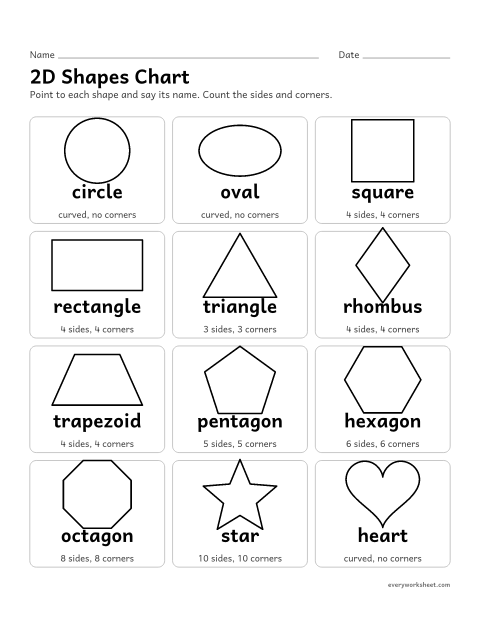
Shapes chart and shape names
 View larger
 View larger
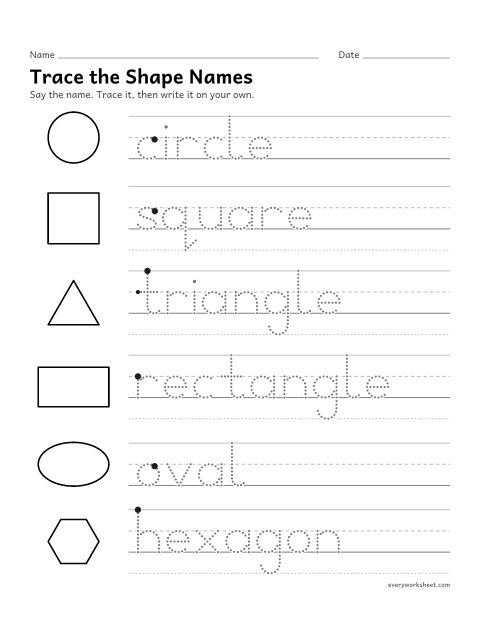
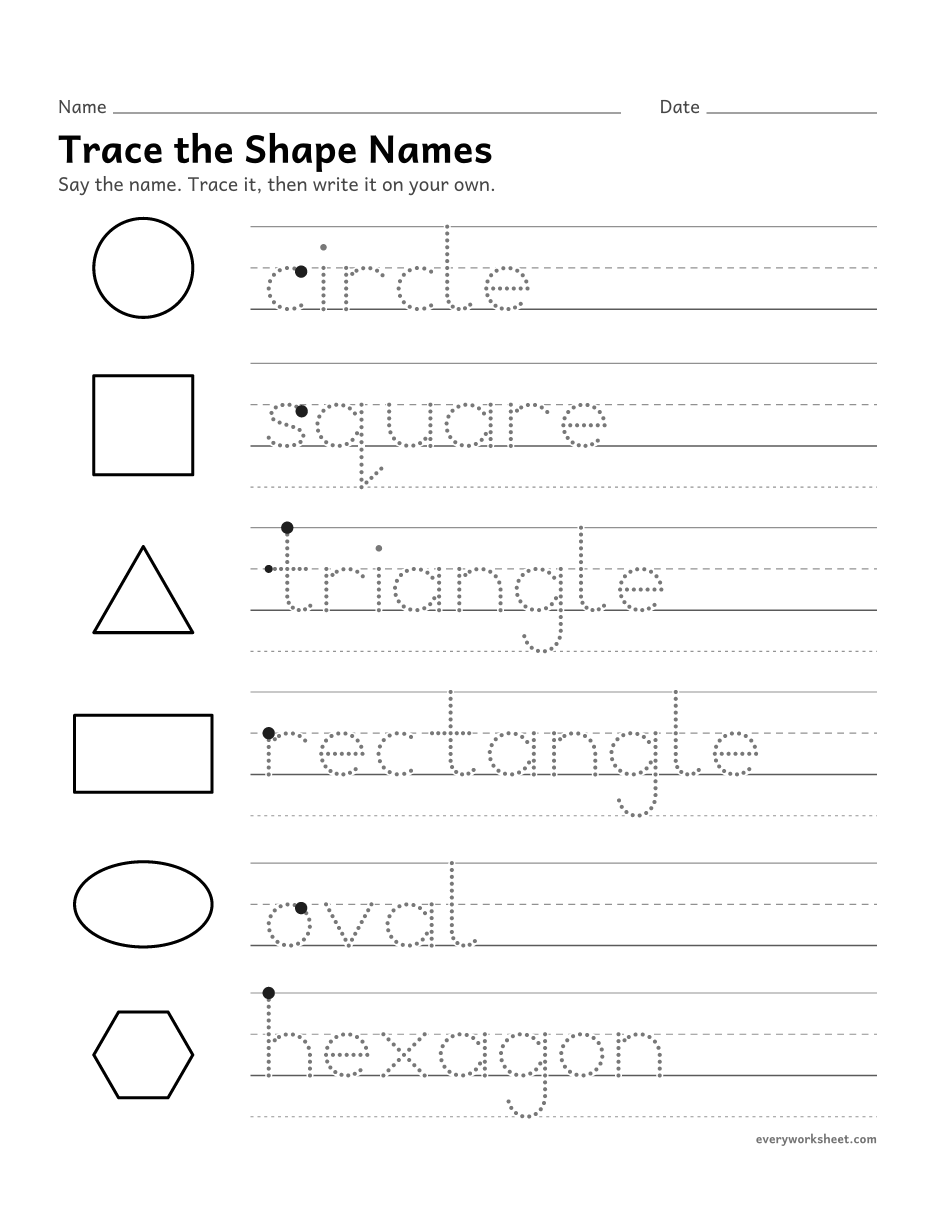
Trace the shape names
Naming and writing circle, square, triangle, rectangle, oval and hexagon
1 page29 KB
 View larger
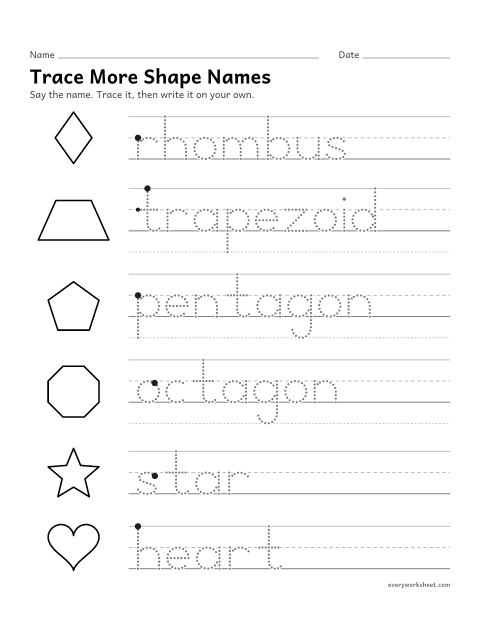
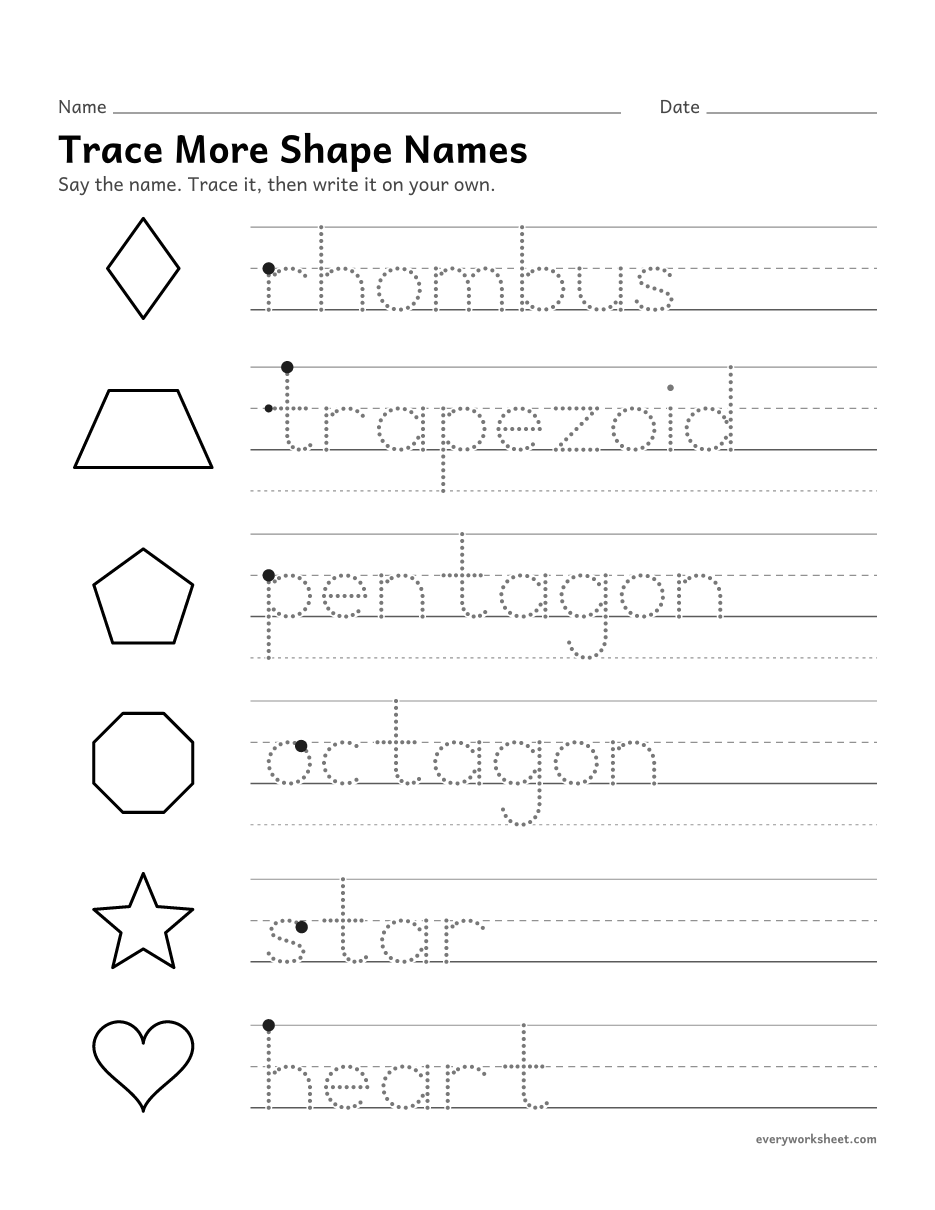
Trace more shape names
Naming and writing rhombus, trapezoid, pentagon, octagon, star and heart
1 page29 KB
 View all 2 pages
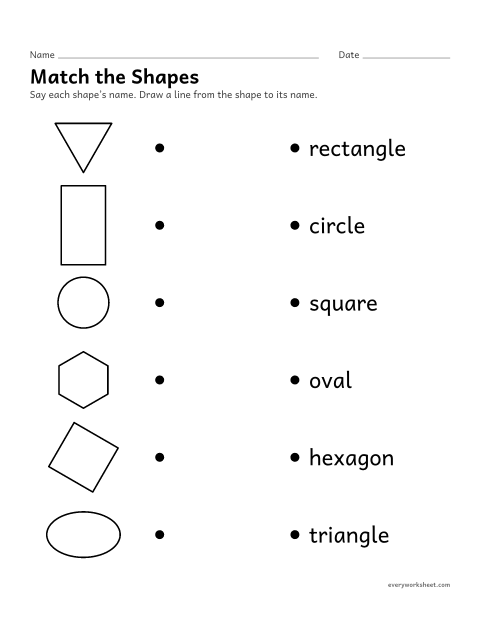
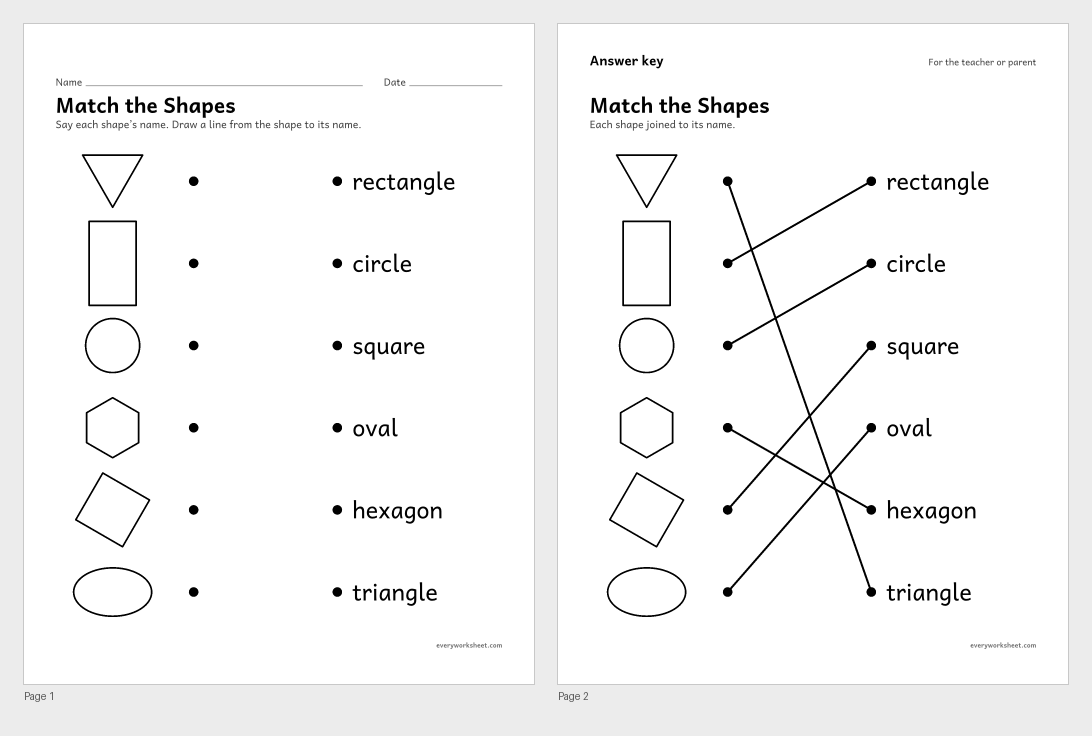
Match the shapes
Matching turned shapes to their names
Answer key on page 2
2 pages30 KB
Find and color the shapes
 View all 2 pages
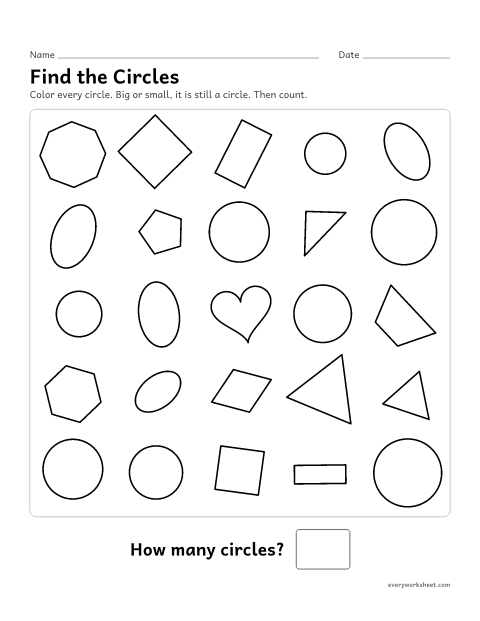
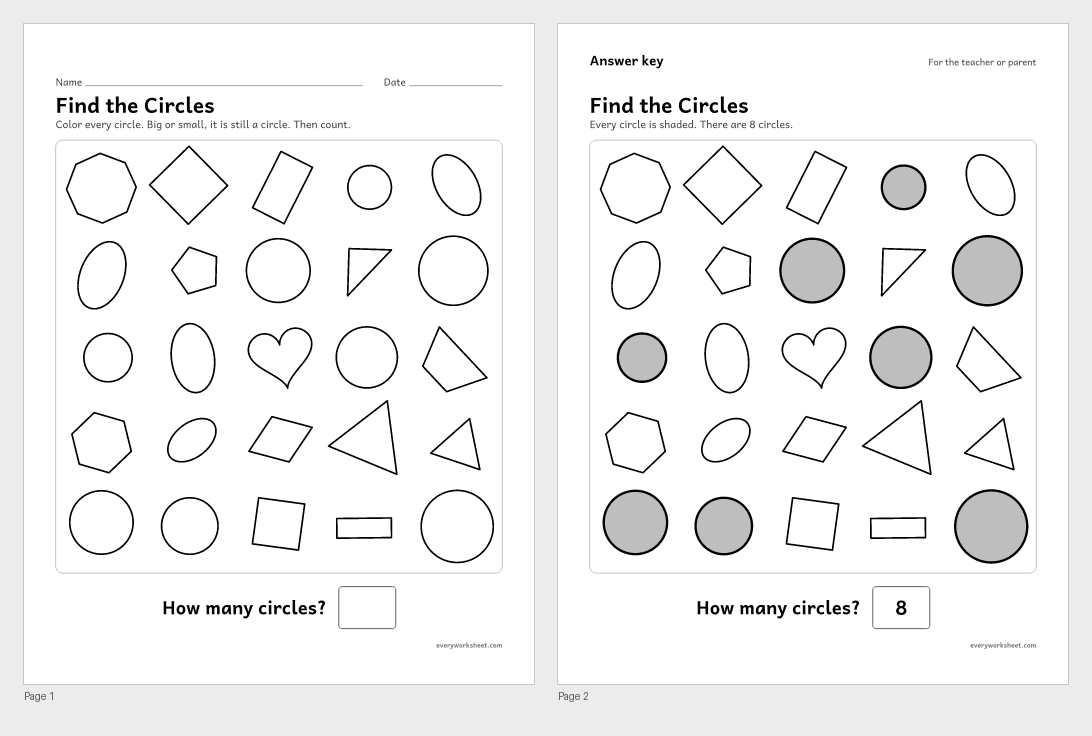
Find the circles
Finding circles of any size or turn
Answer key on page 2
2 pages56 KB
 View all 2 pages
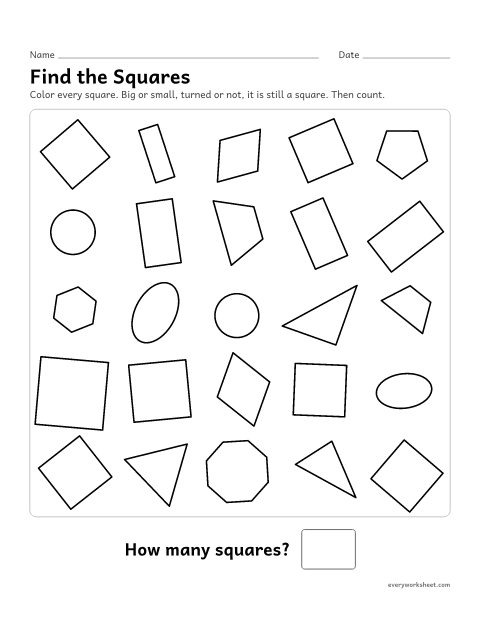
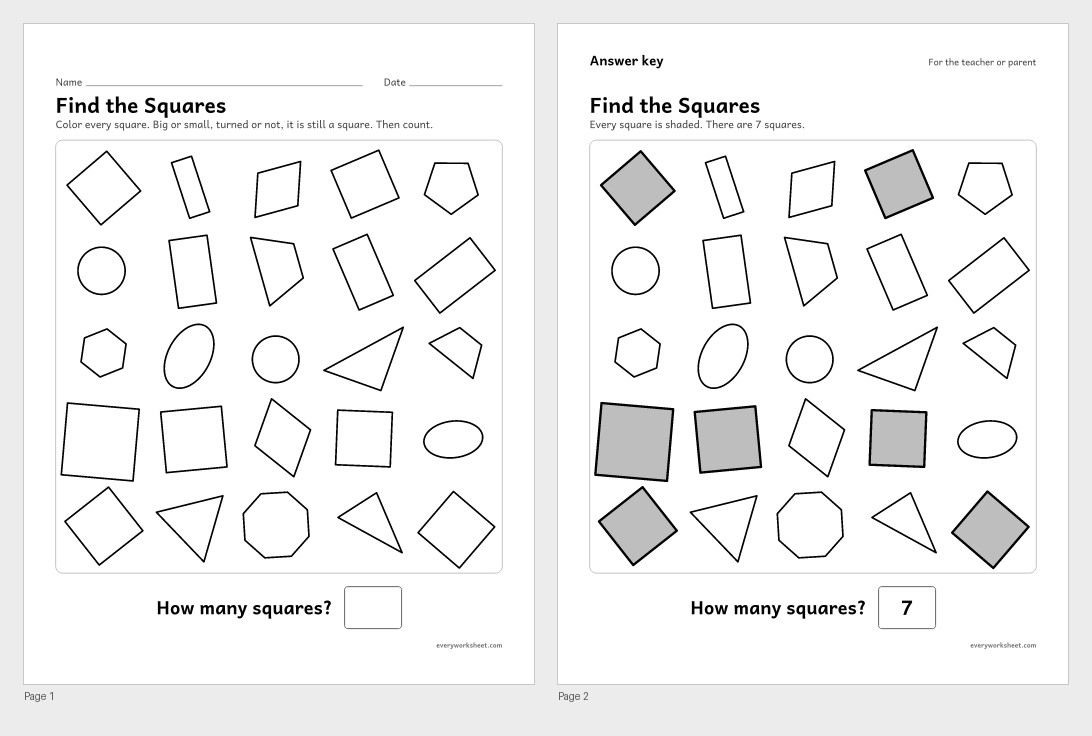
Find the squares
Finding squares of any size or turn
Answer key on page 2
2 pages38 KB
 View all 2 pages
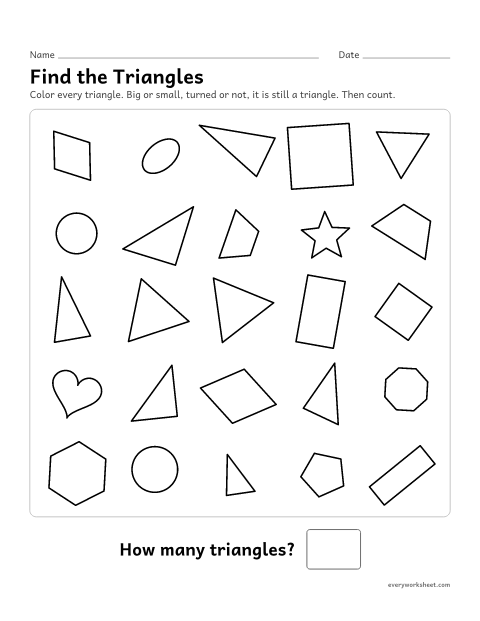
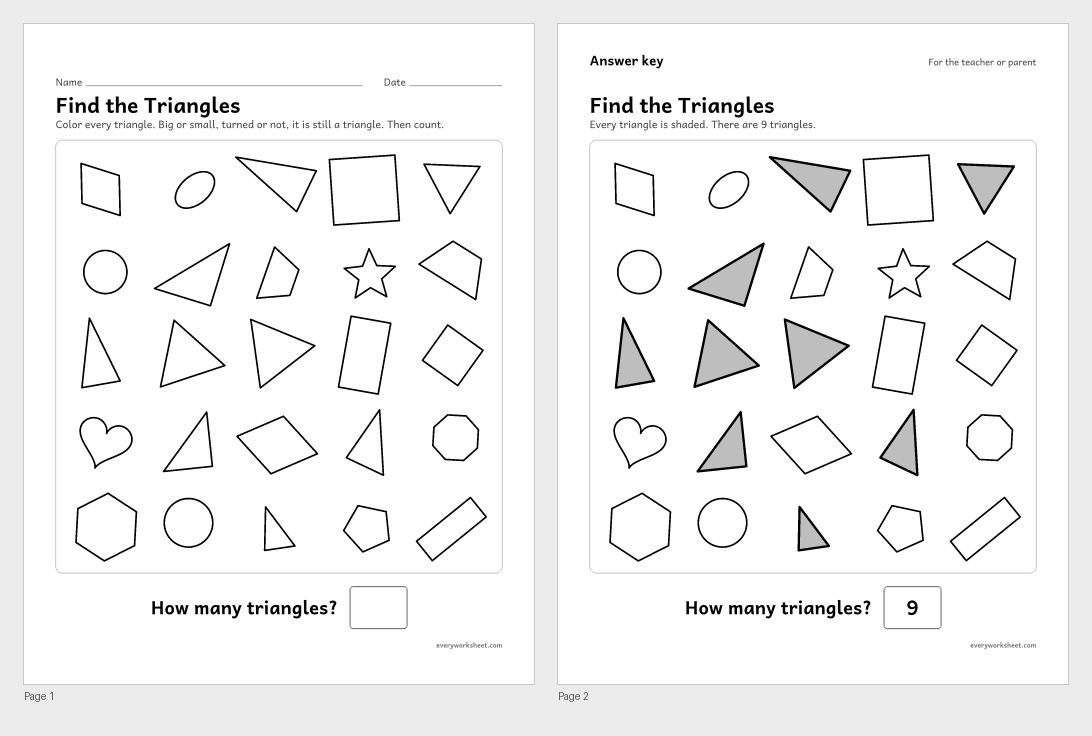
Find the triangles
Finding triangles of any size or turn
Answer key on page 2
2 pages38 KB
 View all 2 pages
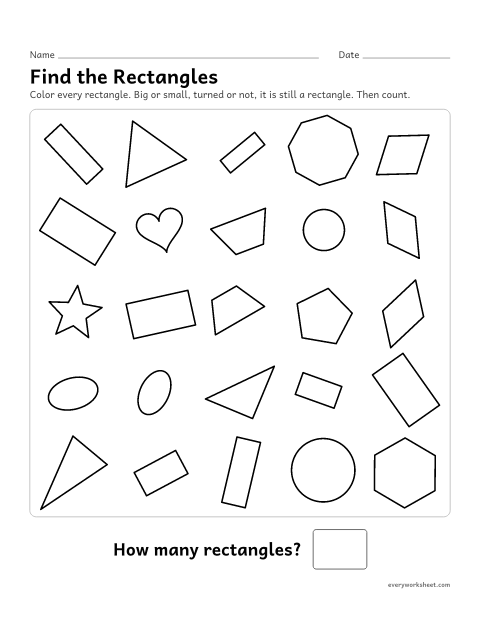
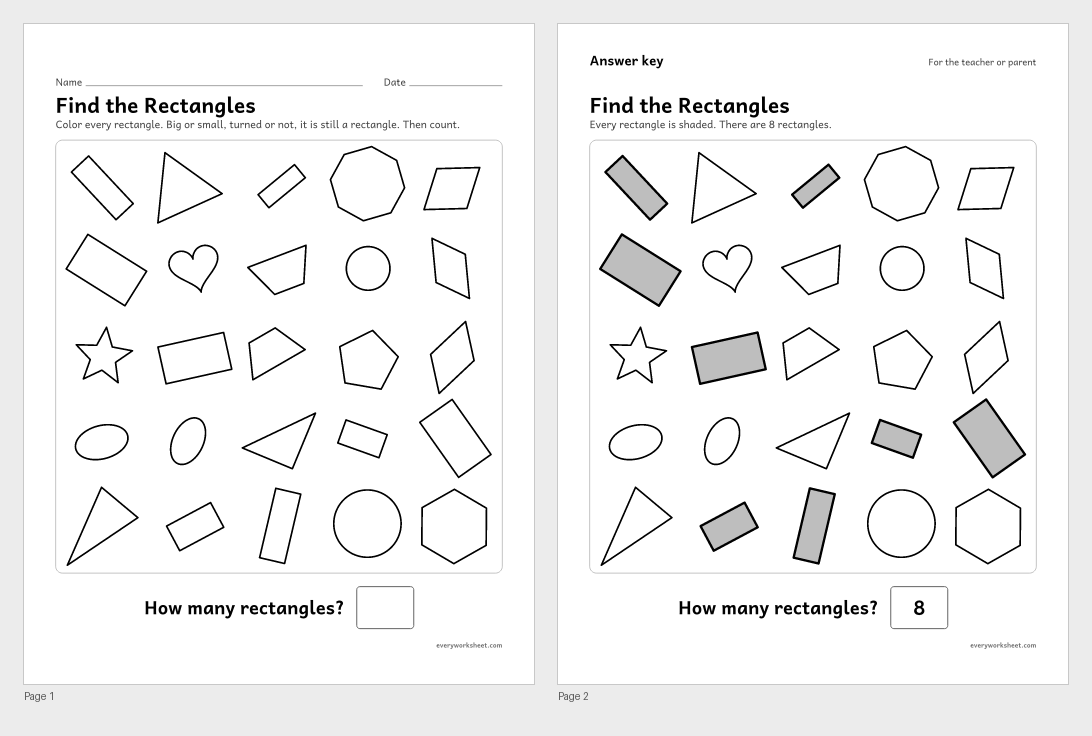
Find the rectangles
Finding rectangles of any size or turn
Answer key on page 2
2 pages41 KB
 View all 2 pages
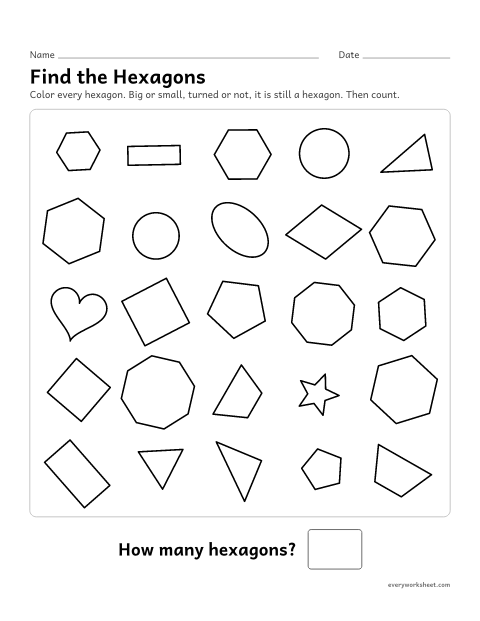
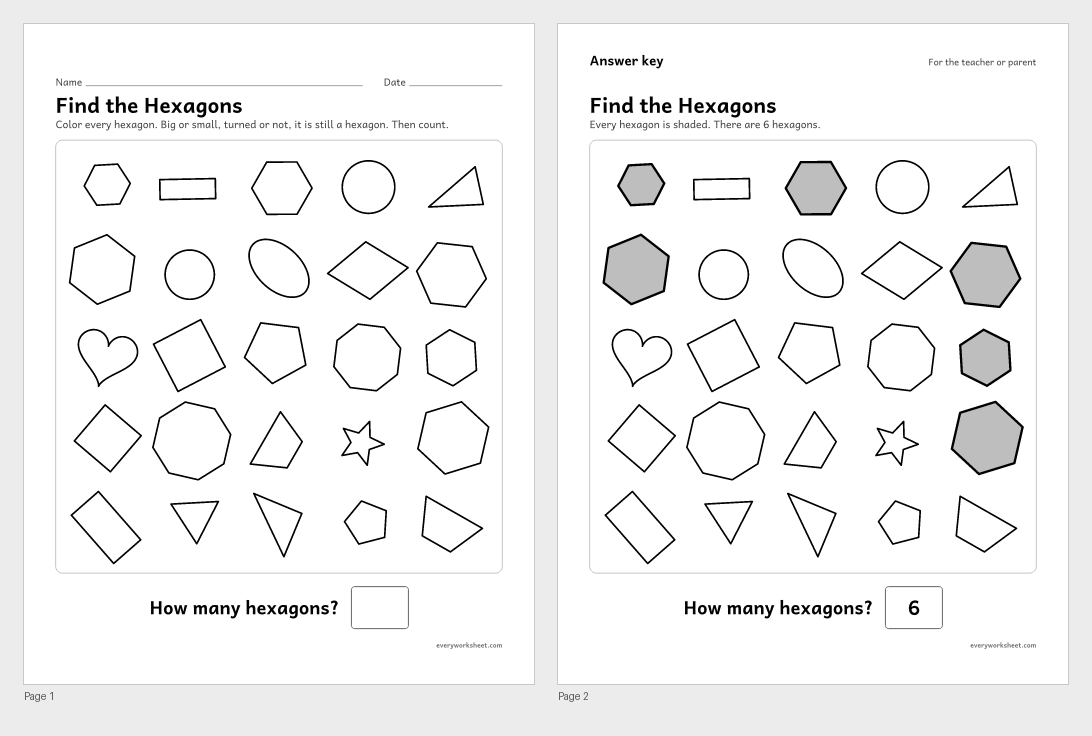
Find the hexagons
Finding hexagons of any size or turn
Answer key on page 2
2 pages39 KB
Sides, corners and what makes a shape
 View all 2 pages
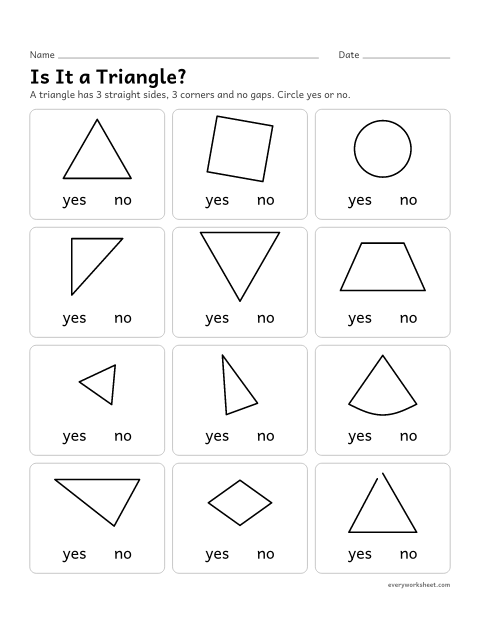
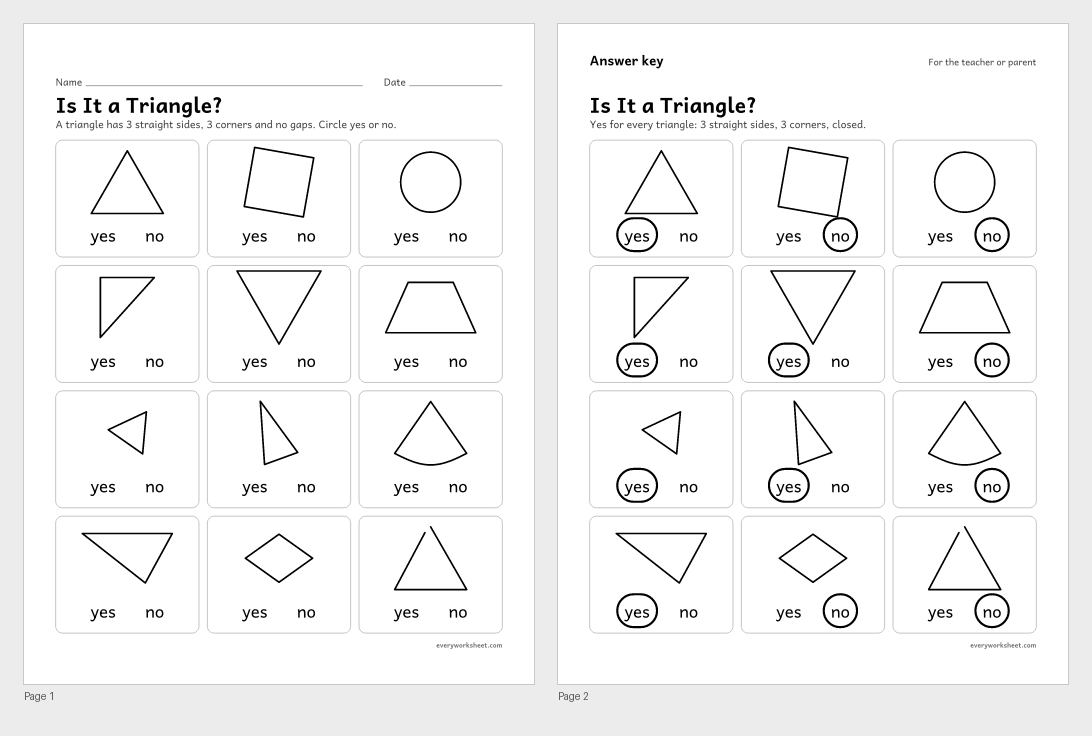
Is it a Triangle?
Telling what makes a shape a triangle
Answer key on page 2
2 pages41 KB
 View all 2 pages
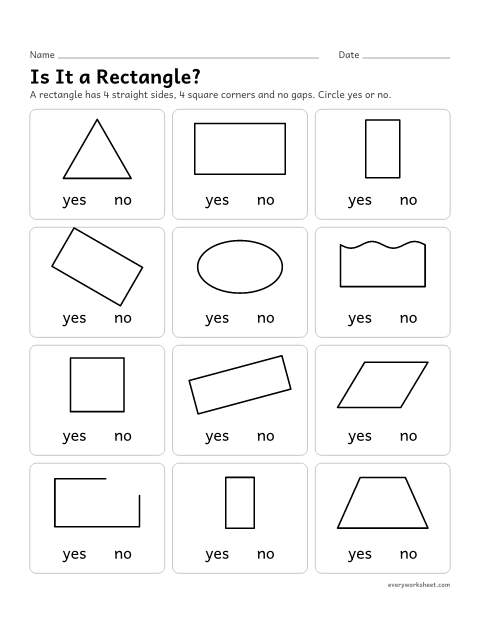
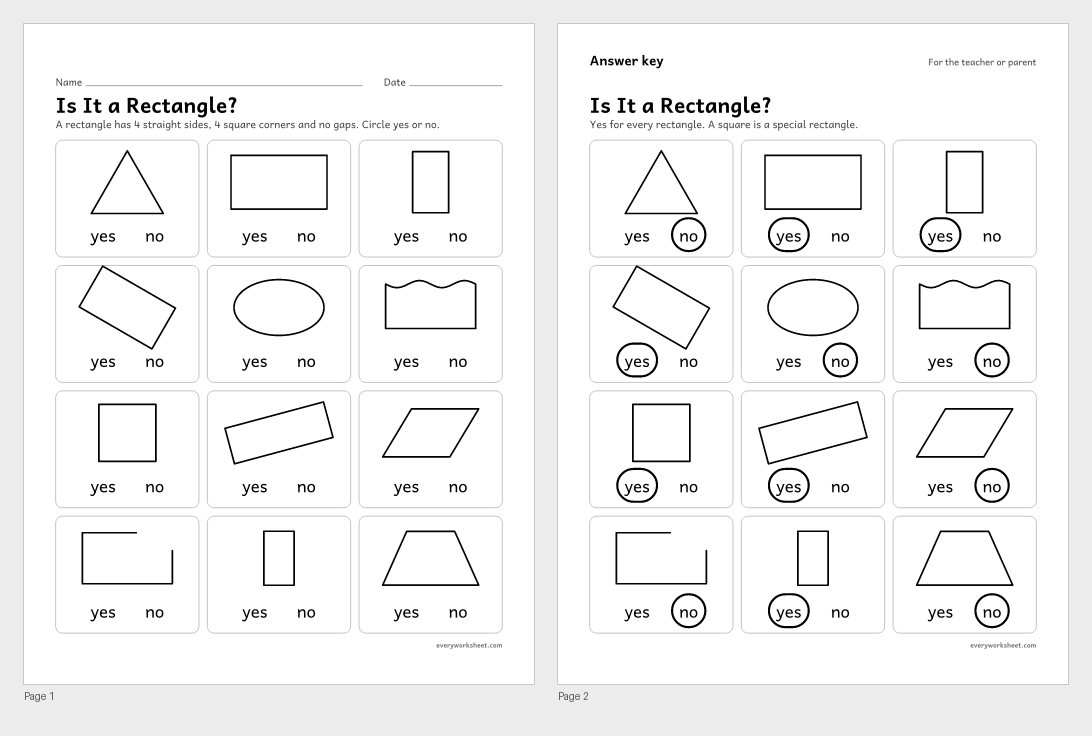
Is it a Rectangle?
Telling what makes a shape a rectangle
Answer key on page 2
2 pages41 KB
 View all 2 pages
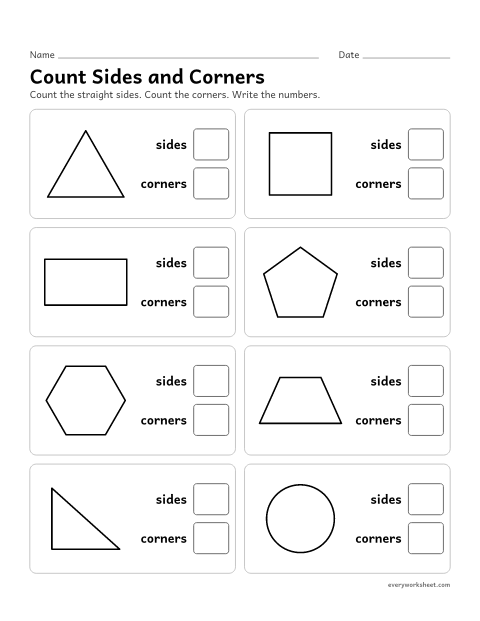
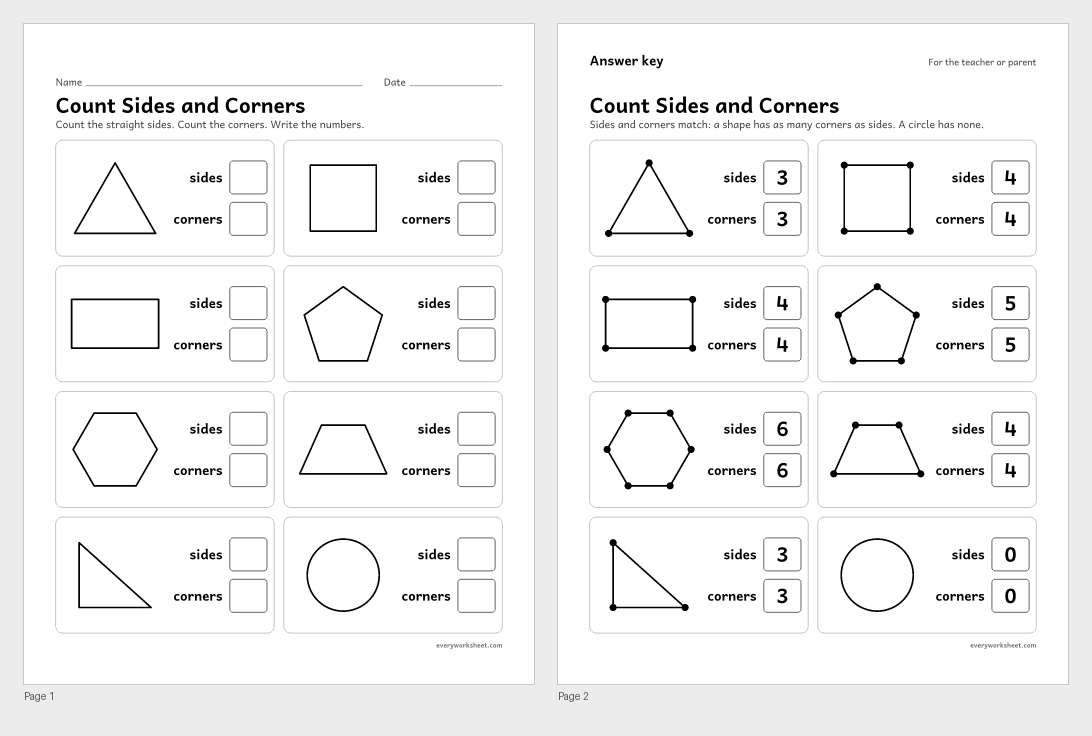
Count sides and corners
Counting the sides and corners of flat shapes
Answer key on page 2
2 pages49 KB
Draw shapes and put shapes together
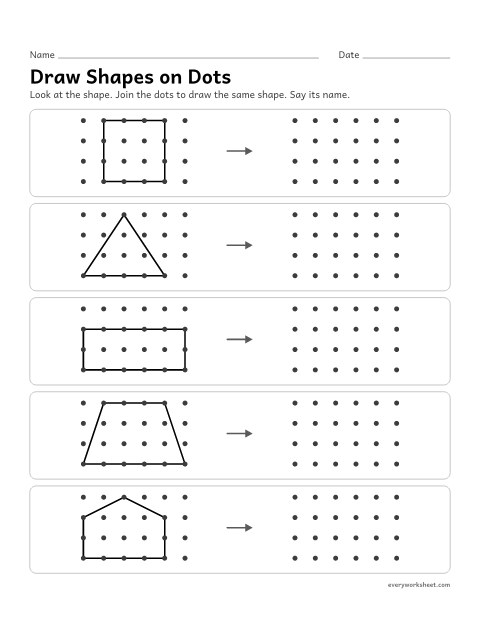 View larger
 View all 2 pages
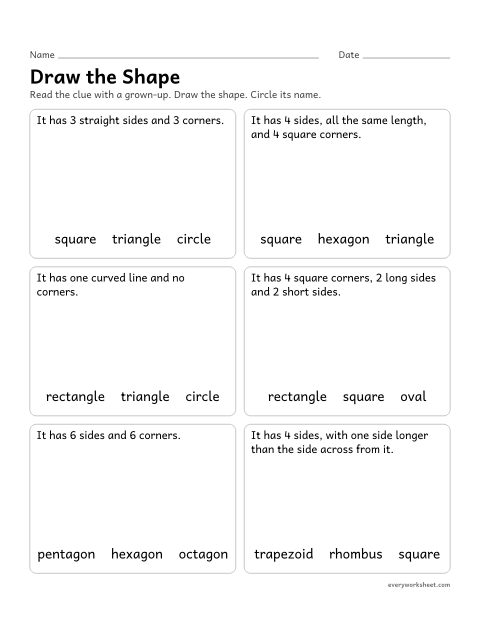
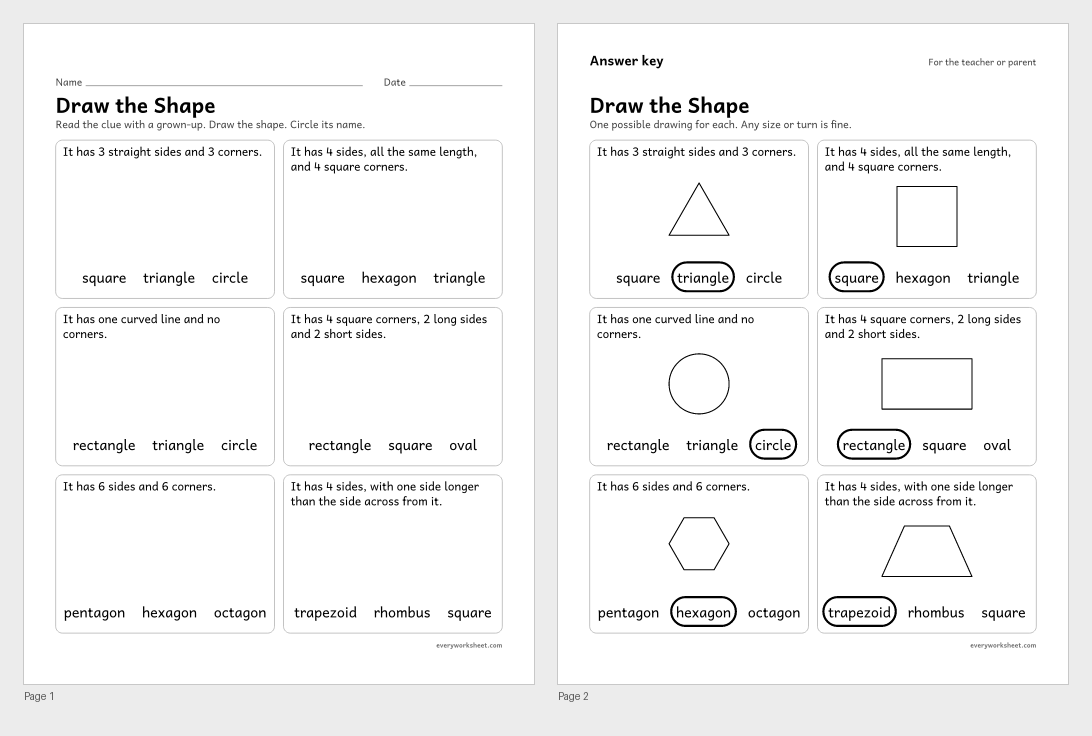
Draw the shape
Drawing a shape from its sides and corners
Answer key on page 2
2 pages39 KB
 View all 2 pages
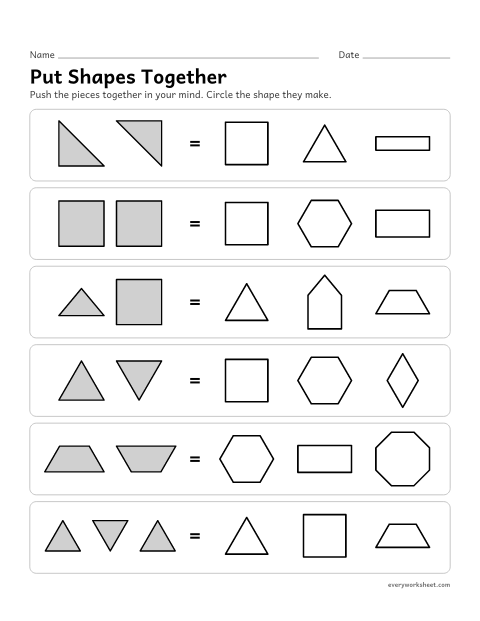
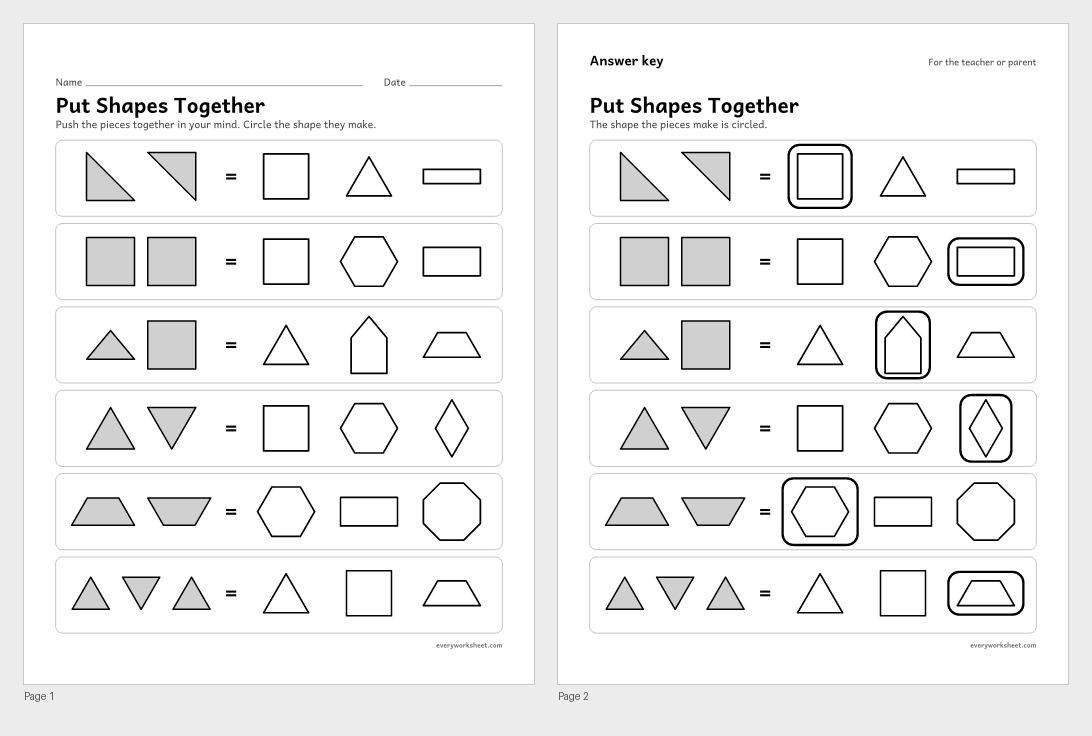
Put shapes together
Joining two or three shapes to make a new shape
Answer key on page 2
2 pages37 KB
 View all 2 pages
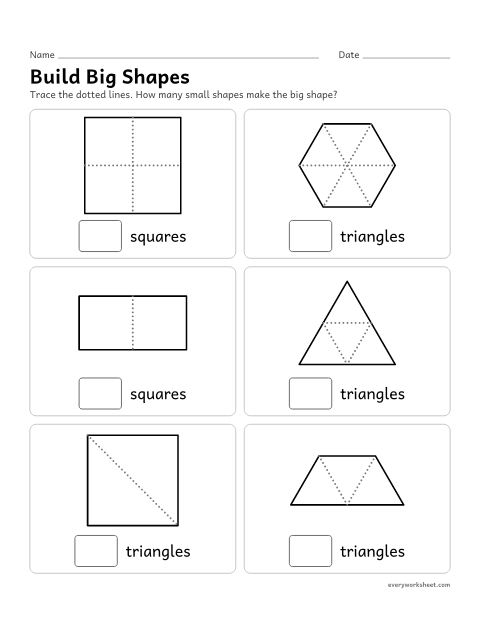
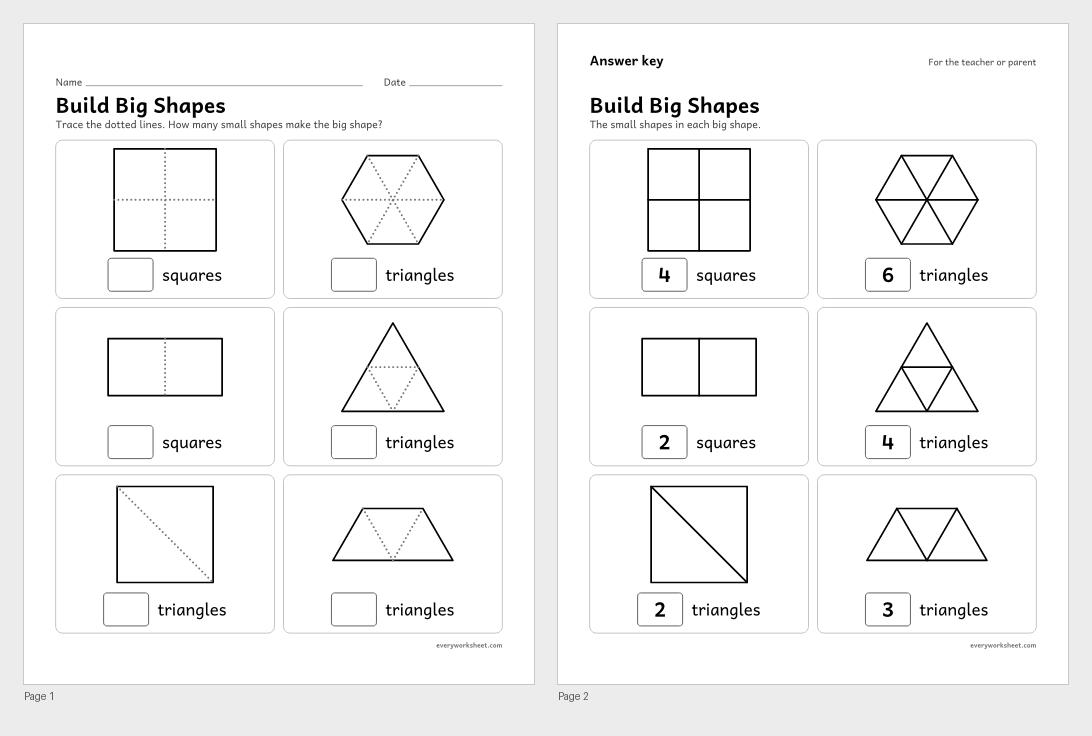
Build big shapes
Seeing the small shapes that make a big shape
Answer key on page 2
2 pages38 KB
Position words
 View all 2 pages
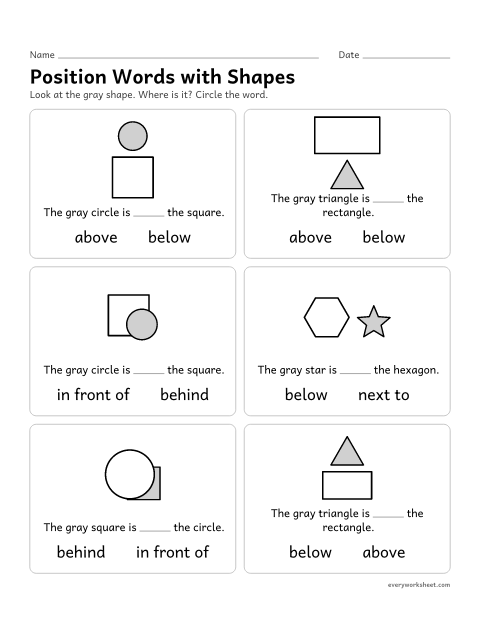
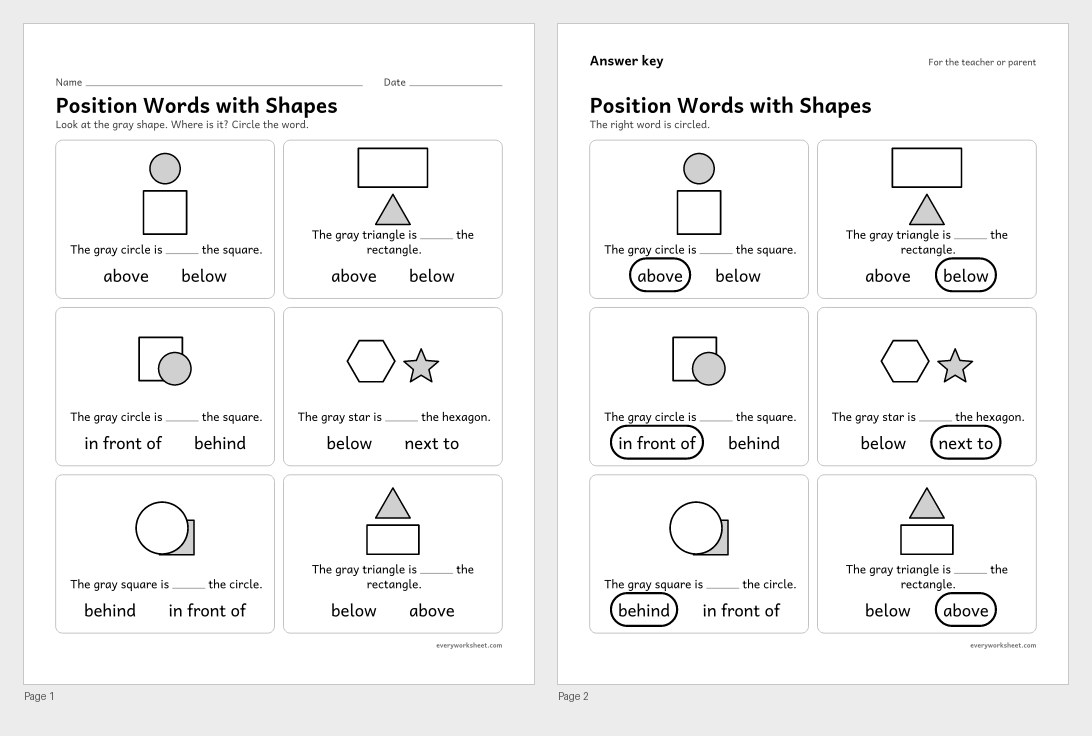
Position words with shapes
Describing where shapes are: above, below, next to, in front of, behind
Answer key on page 2
2 pages43 KB
 View larger
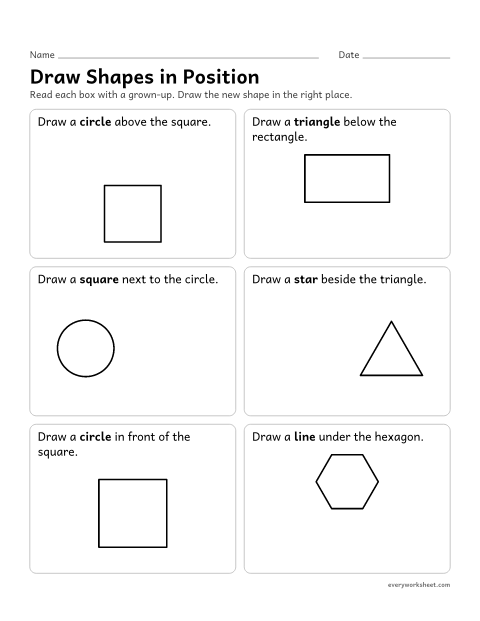
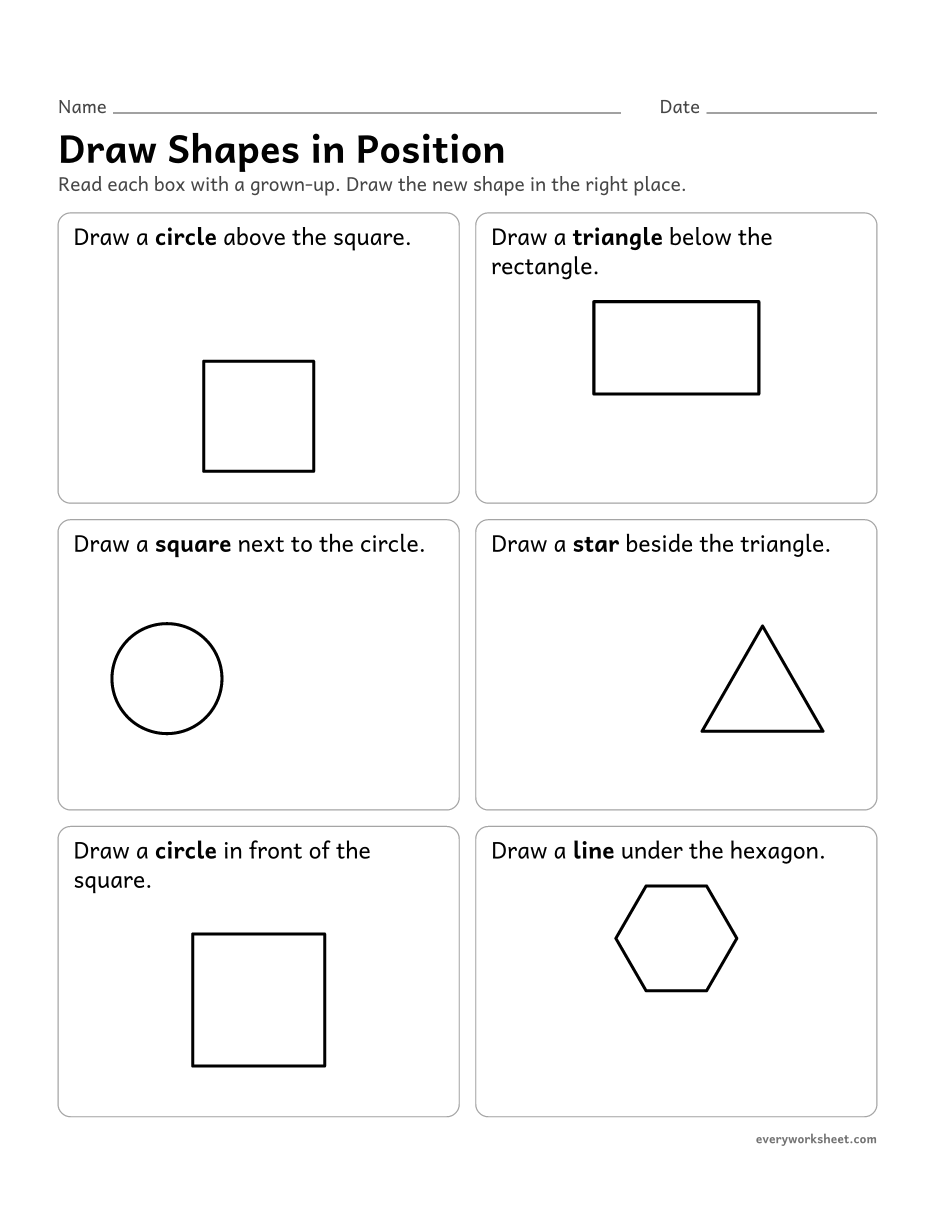
Draw shapes in position
Drawing shapes above, below, beside and in front of other shapes
1 page30 KB
Print at 100% (actual size) for the cleanest tracing lines.
About these 2d shapes worksheets
2D shapes are flat shapes: circle, square, triangle, rectangle, oval and hexagon, plus rhombus, trapezoid, pentagon and octagon for children who are ready for more. Kindergartners learn to name each one, to count its sides and corners, and to spot it whether it is big, small or turned on its side.
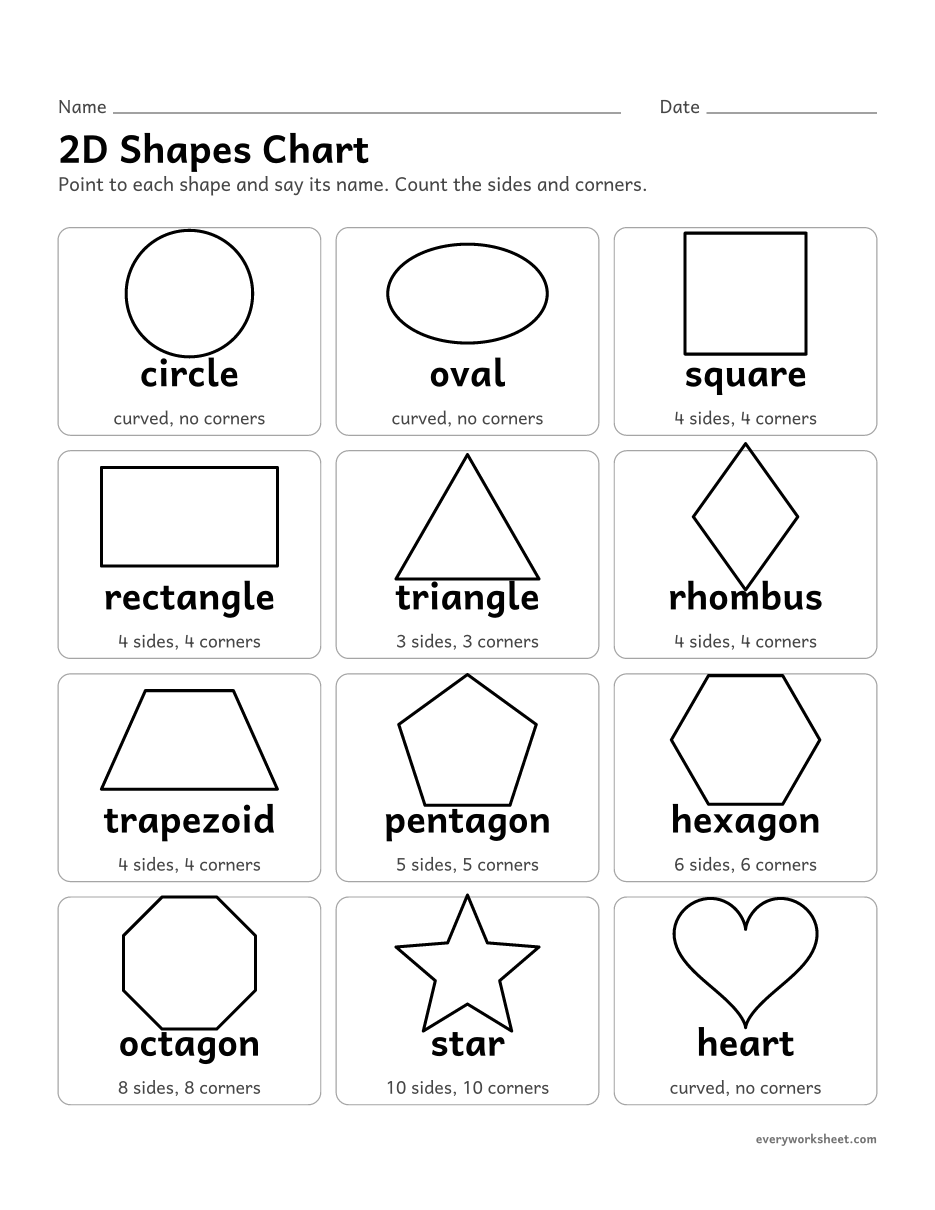
Start with the 2D shapes chart. It shows twelve shapes with their names and how many sides and corners each has, so it works as a classroom poster or a reference at the table. The trace-the-name pages pair each shape with its name in dotted letters, then leave room to write it alone.
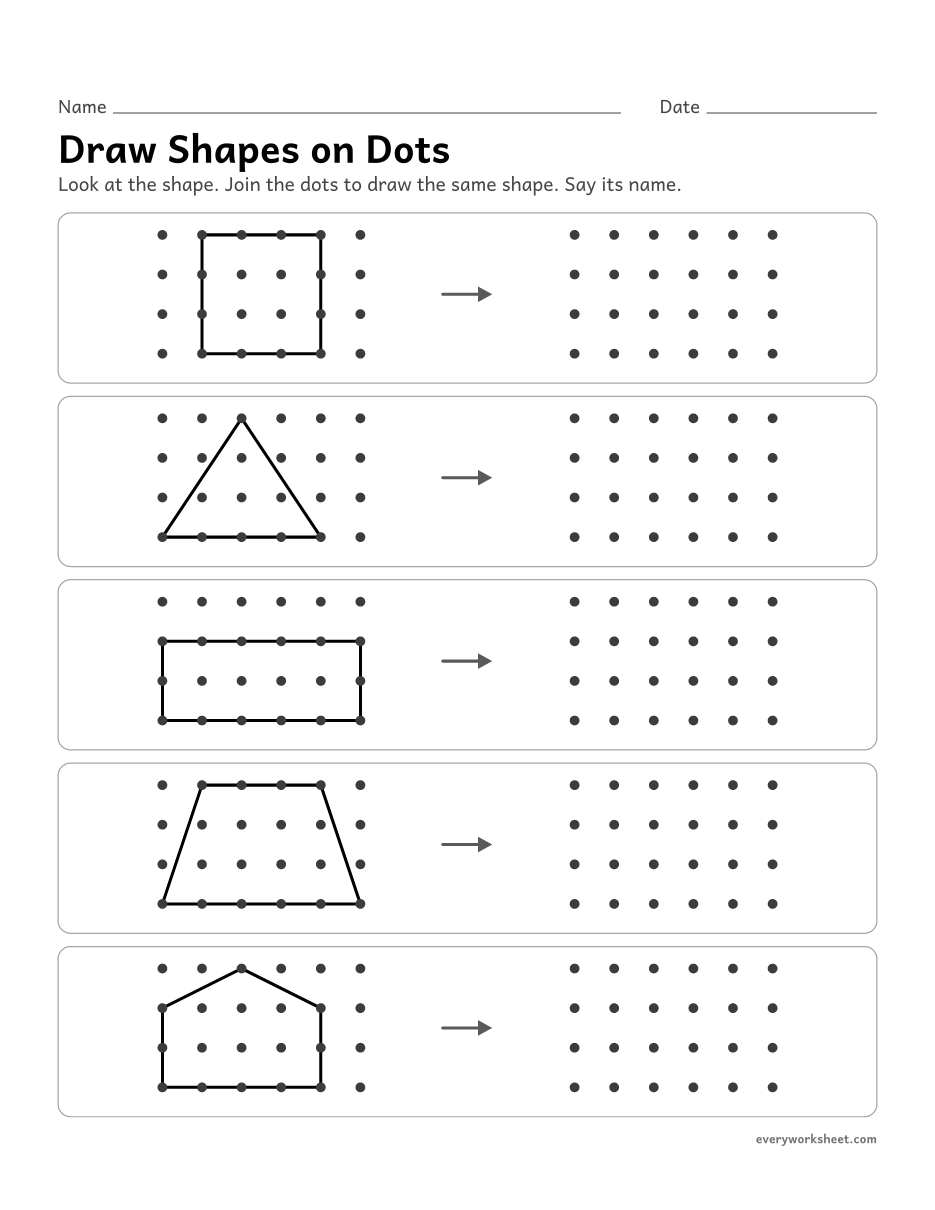
The practice pages build from there. On the find-the-shape pages, children color every circle, square, triangle, rectangle or hexagon in a mix of look-alikes, then count them. Other pages ask "Is it a triangle?", count sides and corners, draw shapes on dot grids and from clues, join small shapes into bigger ones, and use position words like above, below, next to, in front of and behind. Every page with right answers has an answer key on page 2.
Standards
CCSS.MATH.CONTENT.K.G.A.1Describe objects in the environment using names of shapes, and describe the relative positions of these objects using terms such as above, below, beside, in front of, behind, and next to.CCSS.MATH.CONTENT.K.G.A.2Correctly name shapes regardless of their orientations or overall size.CCSS.MATH.CONTENT.K.G.B.4Analyze and compare two- and three-dimensional shapes, in different sizes and orientations, using informal language to describe their similarities, differences, parts (e.g., number of sides and vertices/"corners") and other attributes (e.g., having sides of equal length).CCSS.MATH.CONTENT.K.G.B.5Model shapes in the world by building shapes from components (e.g., sticks and clay balls) and drawing shapes.CCSS.MATH.CONTENT.K.G.B.6Compose simple shapes to form larger shapes. For example, "Can you join these two triangles with full sides touching to make a rectangle?"
How to use them
- Go on a shape hunt first. Find a circle (a clock), a rectangle (a door) and a square (a window pane) in the room before you hand out a page, so the names connect to real things.
- Use the chart for a week of short warm-ups: point to a shape, say its name together, and trace its sides with a finger while you count them.
- On the find-the-shape pages, have your child turn the paper or tilt their head. A triangle standing on its point is still a triangle. Coloring each one before counting stops double counting.
- For "Put Shapes Together," cut two paper triangles and let your child slide them into a square. Doing it with real pieces first makes the picture version easy.
- Read the position-word sentences aloud. Children who are still learning to read can point to the word they think is right while you read both choices.
Teaching tips
- If your child calls a turned square a "diamond," agree that it looks like one and then count its sides together: four equal sides and four square corners still make a square.
- Ovals and circles get mixed up. Ask, "Is it round the same all the way around, or is it stretched?"
- Corners are where two sides meet. Have your child put a dot on each corner before counting, so none are missed or counted twice.
- A square is a special kind of rectangle. The rectangle pages count squares as rectangles, and the answer key says so.
- Print at actual size (100%). Shapes are big, black and white, and easy to color, with no clip art.
Questions teachers and parents ask
What 2D shapes should kindergartners know?
Kindergartners should know circle, square, triangle, rectangle and hexagon, and many also learn oval, rhombus and trapezoid. They should name each one in any size or turn and say how many sides and corners it has.
What is the difference between 2D and 3D shapes?
A 2D shape is flat, like a drawing on paper. A 3D shape is solid and takes up space, like a ball or a box. The 3D shapes pages cover cubes, spheres, cones and cylinders.
Is a square a rectangle?
Yes. A rectangle has four straight sides and four square corners, and a square has all of that with four equal sides. Our rectangle pages count squares as rectangles.
Do the shapes worksheets have answer keys?
Yes. Every page with right answers has an answer key on page 2 of the same PDF. Charts, tracing and open drawing pages do not need one.
Are these shapes worksheets free?
Yes. Every worksheet is a free PDF in US Letter and A4, with no sign-up.