 View larger
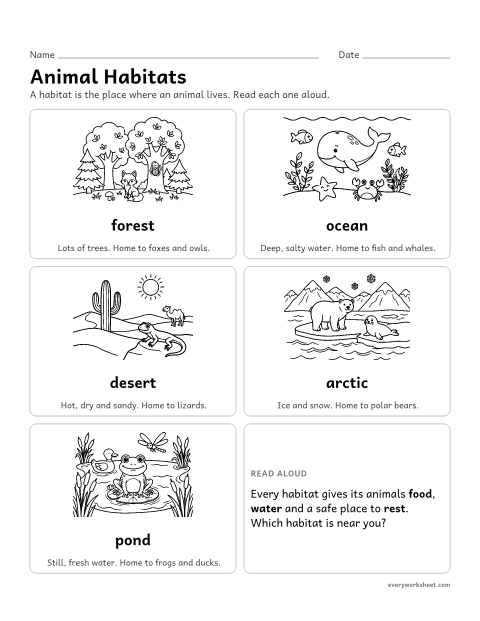
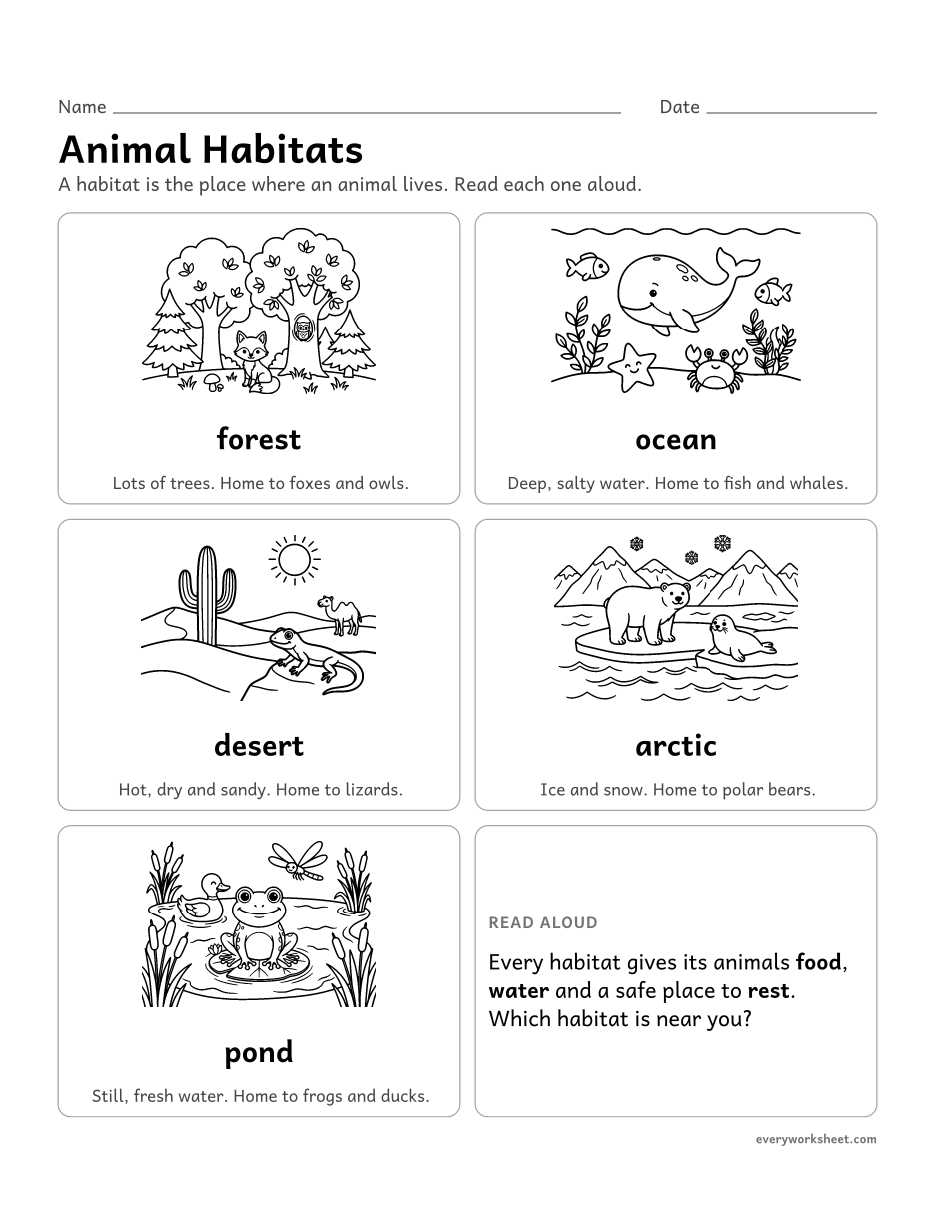
Animal habitats chart
Naming five habitats and animals that live in them
1 page156 KB
Forest, ocean, desert, arctic and pond: a habitats chart with a picture of each place, matching, sorting, cut and paste, a read-aloud page and what animals need.
View largerNaming five habitats and animals that live in them
1 page156 KB
 View all 2 pages
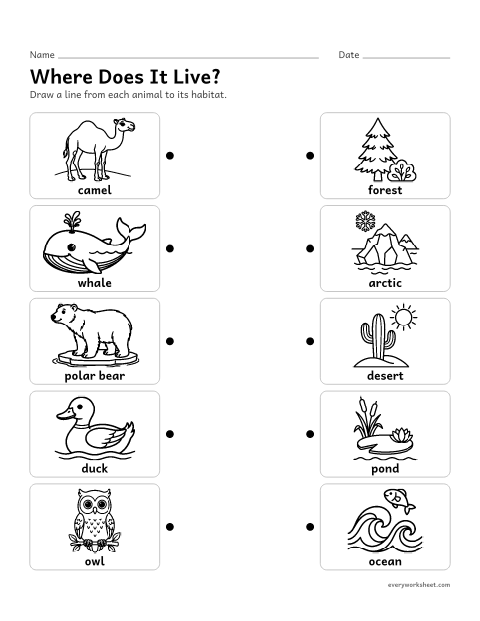
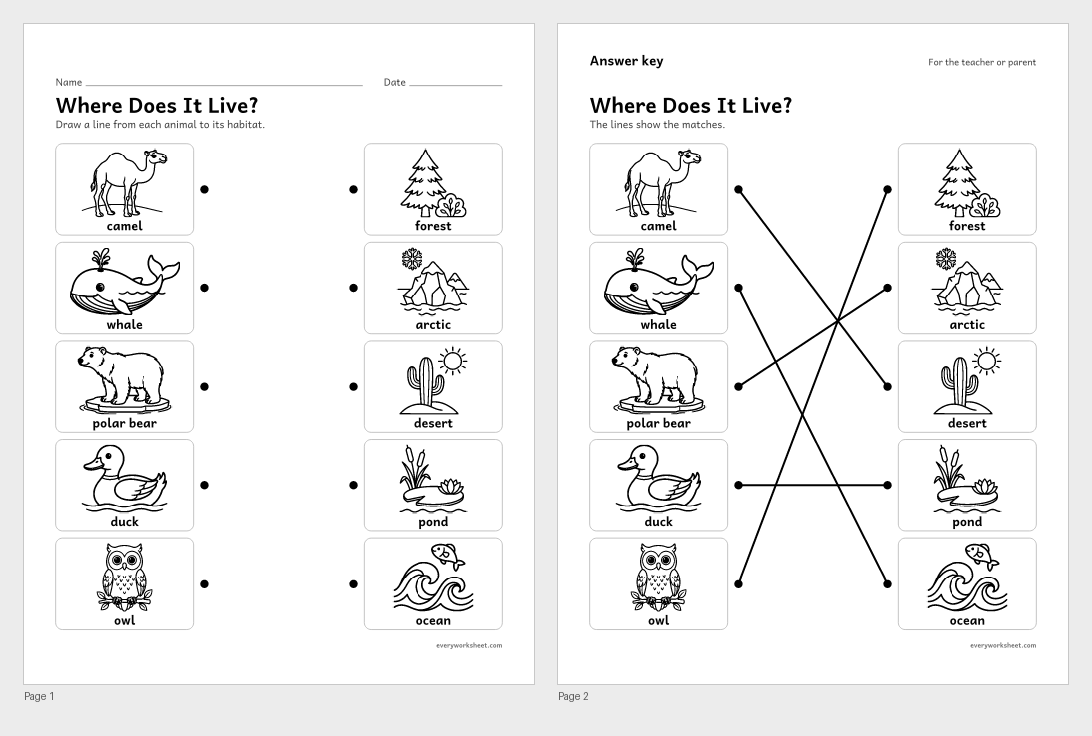
Matching animals to the habitats they live in
Answer key on page 2
2 pages239 KB
 View all 2 pages
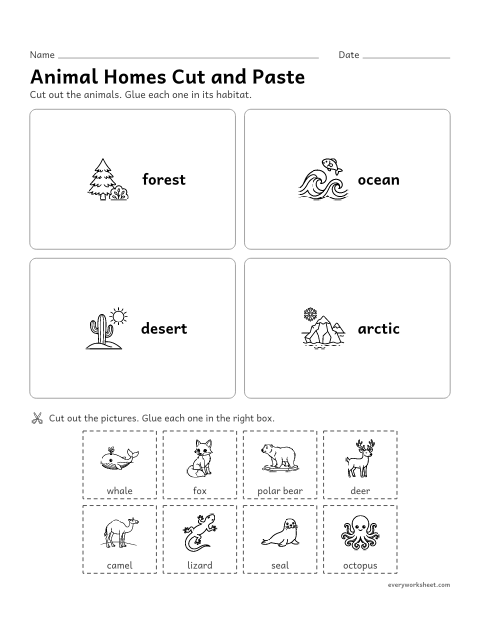
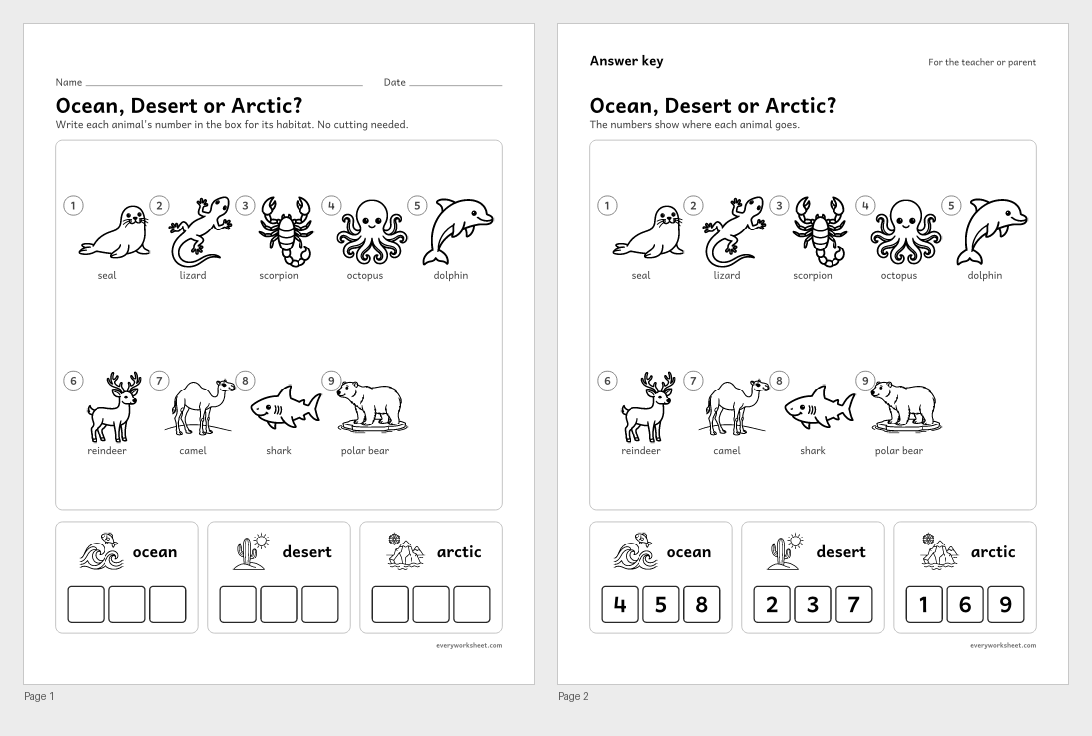
Sorting animals by habitat: ocean, desert and arctic
Answer key on page 2
2 pages314 KB
 View all 2 pages
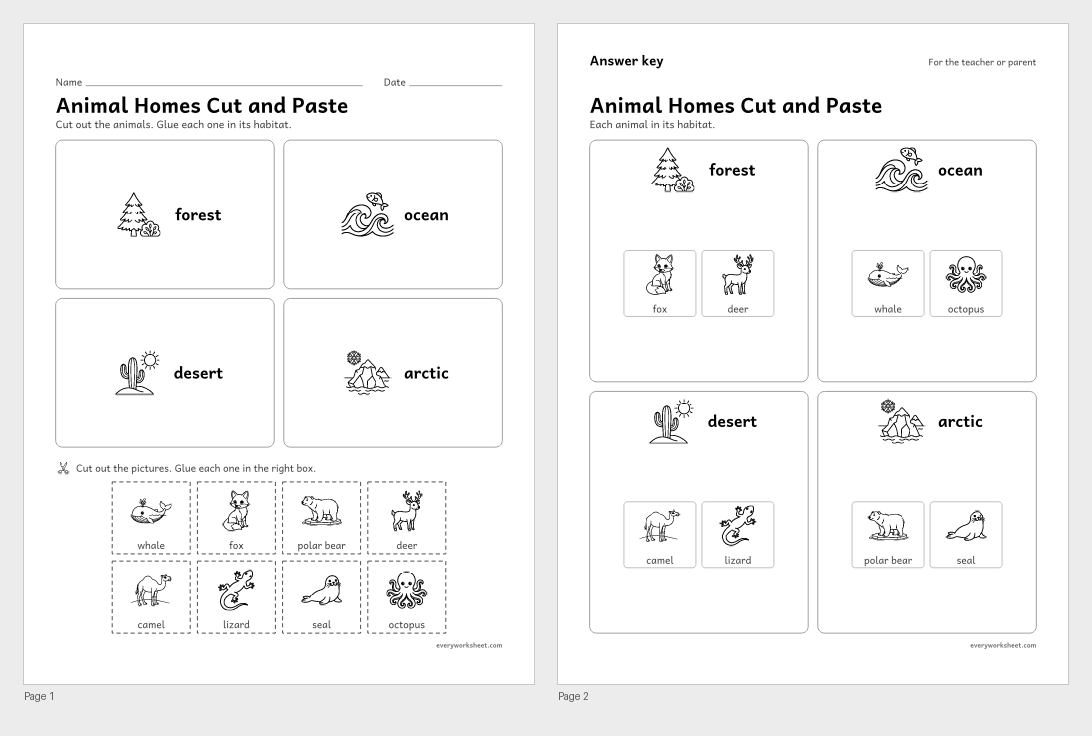
Sorting animals into the habitats they live in
Answer key on page 2
2 pages319 KB
 View all 2 pages
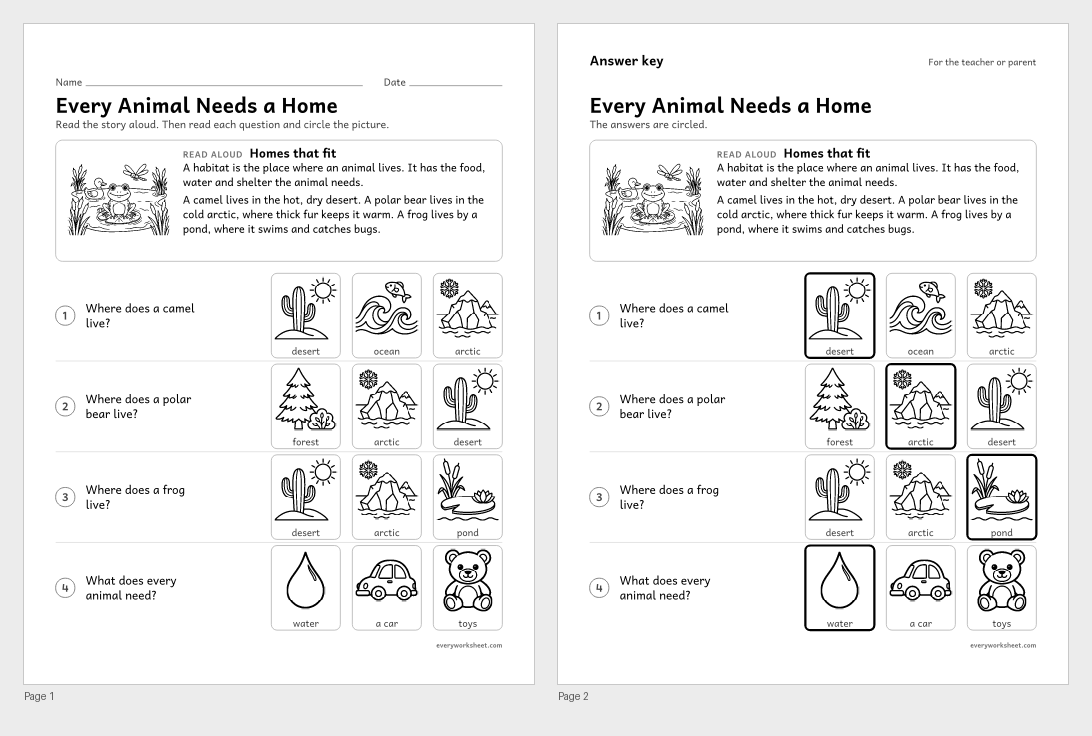
Answering questions about habitats read aloud
Answer key on page 2
2 pages353 KB
 View all 2 pages
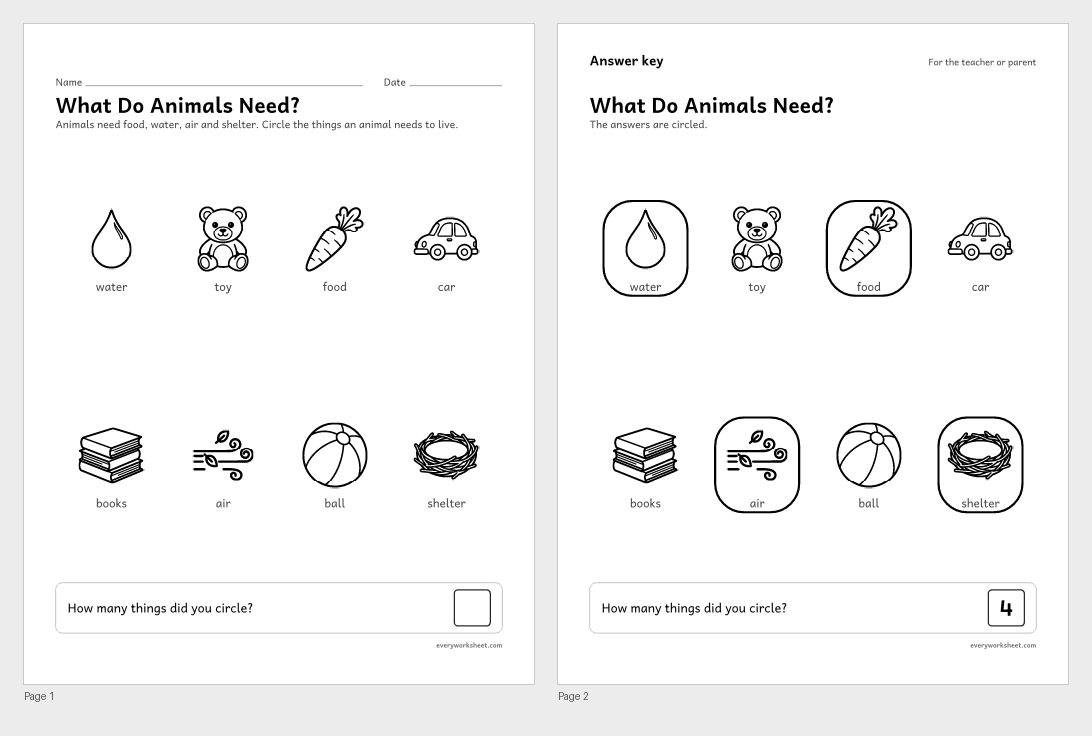
Telling what animals need to survive
Answer key on page 2
2 pages274 KB
 View larger
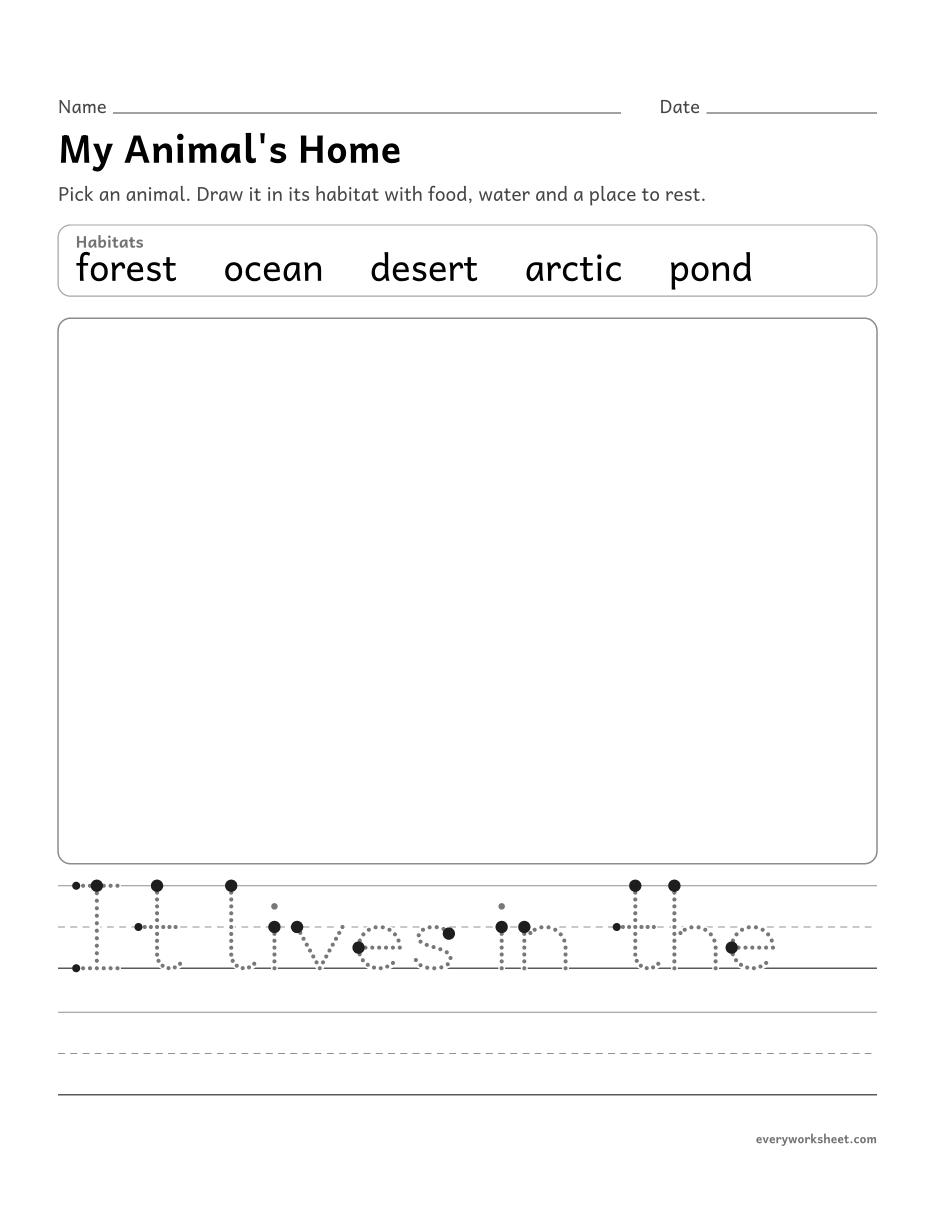
Drawing an animal in the habitat that meets its needs
1 page26 KB
Print at 100% (actual size) for the cleanest tracing lines.
A habitat is the place where an animal lives and finds what it needs: food, water, air and a safe place to rest. A camel is at home in the hot desert, a polar bear on the arctic ice, and a frog by a pond.
These animal habitats worksheets show five habitats as simple, clear line-drawn scenes children can color. Children read the habitats chart, draw lines to match animals to their homes, sort animals by writing numbers, cut and paste animals into their habitats, listen to a short story and circle answers, and draw an animal in its own habitat.
One page focuses on what animals need to survive: circling food, water, air and shelter. Pages with one right answer have an answer key.
NGSS K-ESS3-1Use a model to represent the relationship between the needs of different plants or animals (including humans) and the places they live.NGSS K-LS1-1Use observations to describe patterns of what plants and animals (including humans) need to survive.CCSS.MATH.CONTENT.K.MD.B.3Classify objects into given categories; count the numbers of objects in each category and sort the categories by count.CCSS.MATH.CONTENT.K.CC.B.5Count to answer "how many?" questions about as many as 20 things arranged in a line, a rectangular array, or a circle, or as many as 10 things in a scattered configuration.CCSS.ELA-LITERACY.L.K.5.ASort common objects into categories (e.g., shapes, foods) to gain a sense of the concepts the categories represent.CCSS.ELA-LITERACY.RI.K.1With prompting and support, ask and answer questions about key details in a text.CCSS.ELA-LITERACY.SL.K.2Confirm understanding of a text read aloud or information presented orally or through other media by asking and answering questions about key details and requesting clarification if something is not understood.CCSS.ELA-LITERACY.W.K.2Use a combination of drawing, dictating, and writing to compose informative/explanatory texts in which they name what they are writing about and supply some information about the topic.A habitat is the natural home of an animal, the place where it finds food, water, air and shelter.
Common ones are forest, ocean, desert, arctic (polar) and pond or wetland. Some classes add rainforest and grassland.
Food, water, air and shelter, a safe place to rest and raise their young.
Yes. The matching, sorting, cut and paste, circling and read-aloud pages have an answer key on page 2.