 View larger
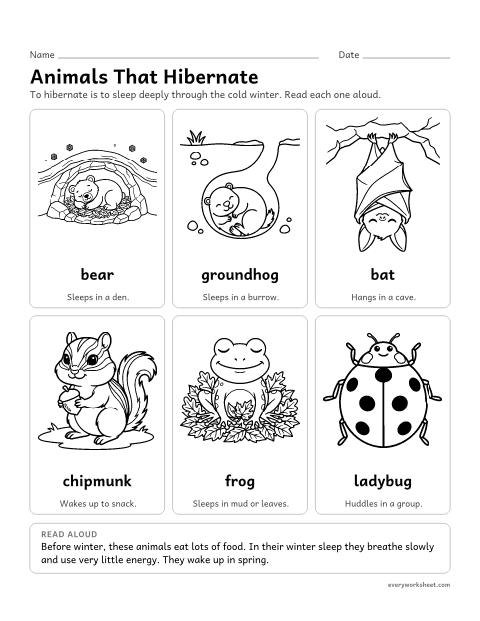
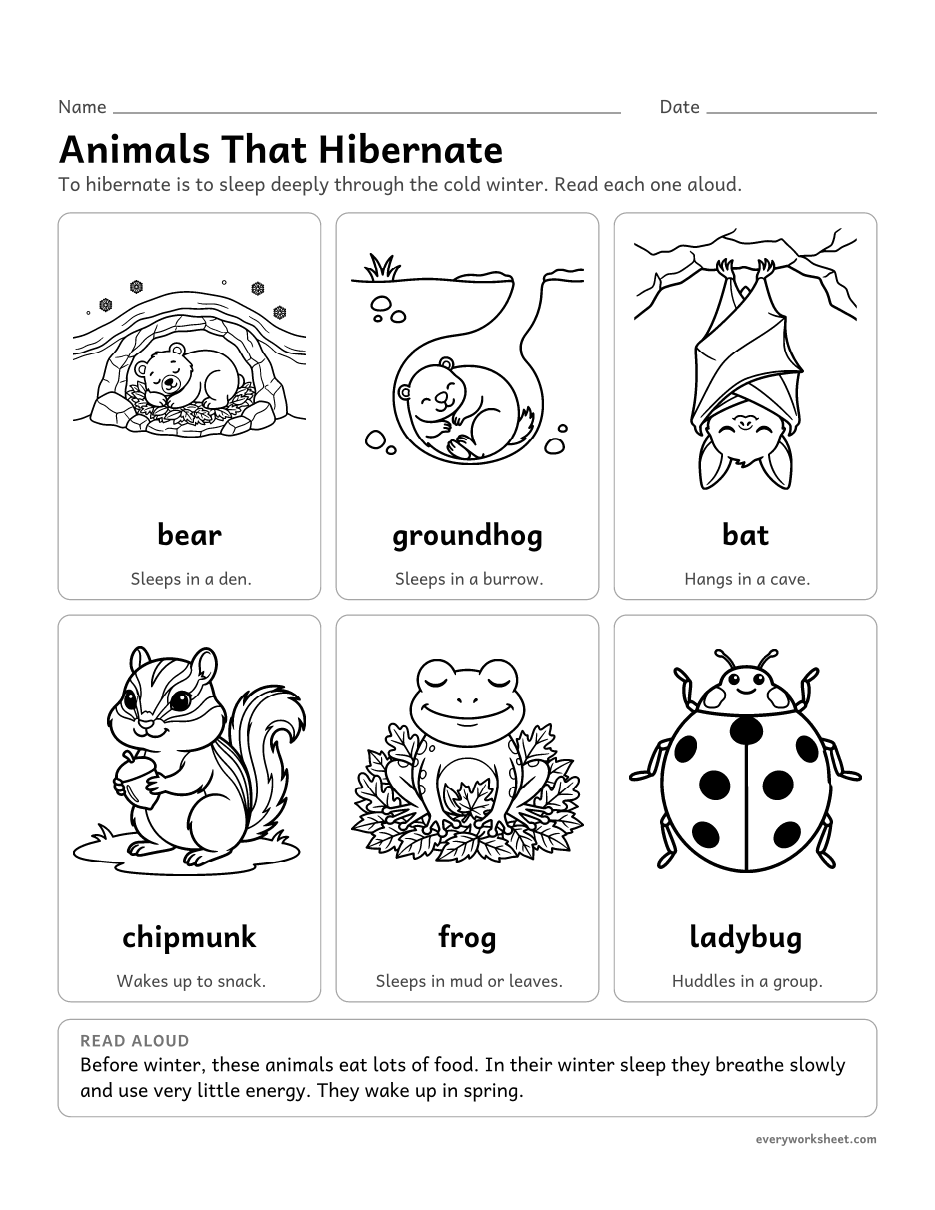
List of animals that hibernate with pictures
Naming animals that hibernate in winter
1 page146 KB
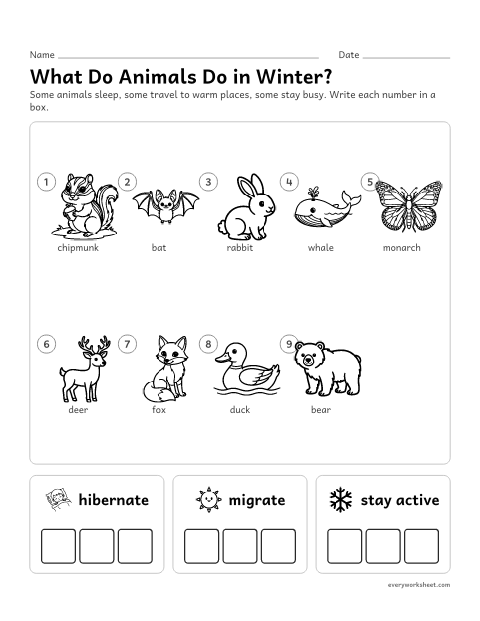
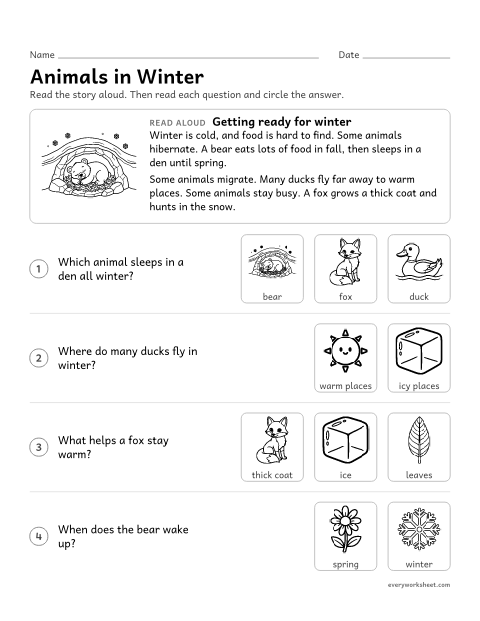
A picture list of animals that hibernate, a hibernate, migrate or stay active sort, an animals in winter read-aloud page and a drawing page.
View largerNaming animals that hibernate in winter
1 page146 KB
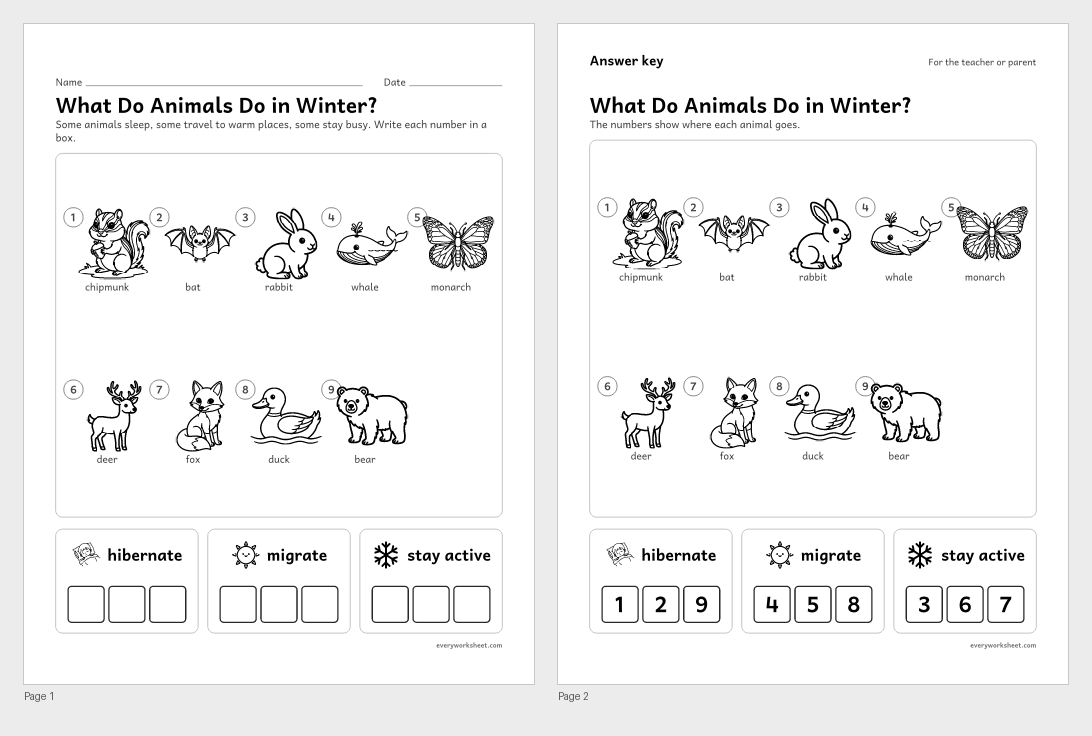 View all 2 pages
Sorting animals that hibernate, migrate or stay active in winter
Answer key on page 2
2 pages365 KB
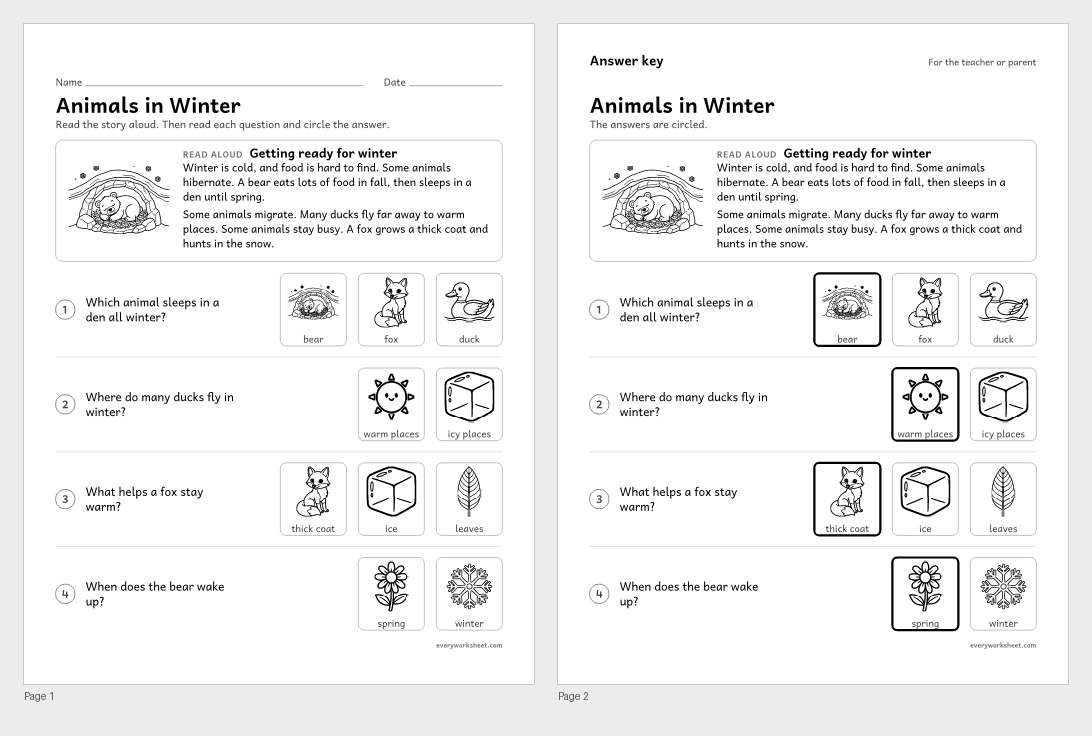 View all 2 pages
Answering questions about animals in winter read aloud
Answer key on page 2
2 pages349 KB
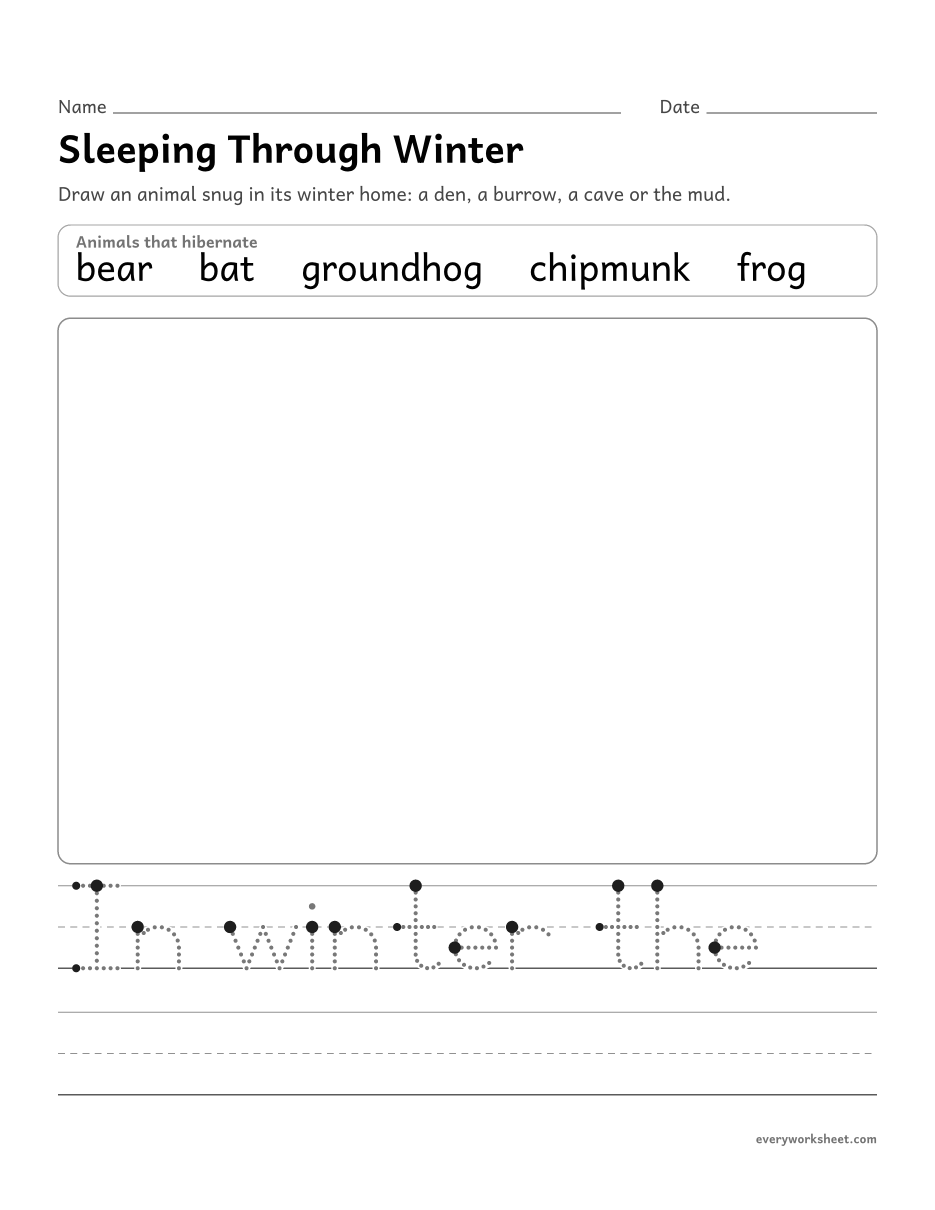 View larger
Drawing and writing about an animal that hibernates
1 page27 KB
Print at 100% (actual size) for the cleanest tracing lines.
Winter is hard for animals: it is cold and food is hard to find. Some animals hibernate, sleeping deeply until spring. Some migrate, traveling to warmer places. Others stay active, with thick coats and stored food.
These animals that hibernate worksheets start with a list of six animals that sleep or rest through the winter, from a bear asleep in its den to a bat hanging in a cave and a ladybug, each drawn in detail with a simple fact. Children sort animals into hibernate, migrate or stay active, listen to a short story about animals in winter and circle answers, and draw an animal snug in its winter home.
The pages connect to kindergarten work on what animals need and on weather and seasons.
NGSS K-LS1-1Use observations to describe patterns of what plants and animals (including humans) need to survive.NGSS K-ESS3-1Use a model to represent the relationship between the needs of different plants or animals (including humans) and the places they live.NGSS K-ESS2-1Use and share observations of local weather conditions to describe patterns over time.CCSS.MATH.CONTENT.K.MD.B.3Classify objects into given categories; count the numbers of objects in each category and sort the categories by count.CCSS.MATH.CONTENT.K.CC.B.5Count to answer "how many?" questions about as many as 20 things arranged in a line, a rectangular array, or a circle, or as many as 10 things in a scattered configuration.CCSS.ELA-LITERACY.L.K.5.ASort common objects into categories (e.g., shapes, foods) to gain a sense of the concepts the categories represent.CCSS.ELA-LITERACY.RI.K.1With prompting and support, ask and answer questions about key details in a text.CCSS.ELA-LITERACY.SL.K.2Confirm understanding of a text read aloud or information presented orally or through other media by asking and answering questions about key details and requesting clarification if something is not understood.To hibernate is to go into a deep sleep through the winter. The animal's breathing and heartbeat slow down so it uses very little energy.
Bears, groundhogs, many bats and chipmunks hibernate, and some frogs and ladybugs rest through the winter too.
Animals that hibernate stay and sleep through the winter. Animals that migrate travel to warmer places with more food and come back in spring.
Yes. The sort and read-aloud pages have an answer key on page 2.