 View larger
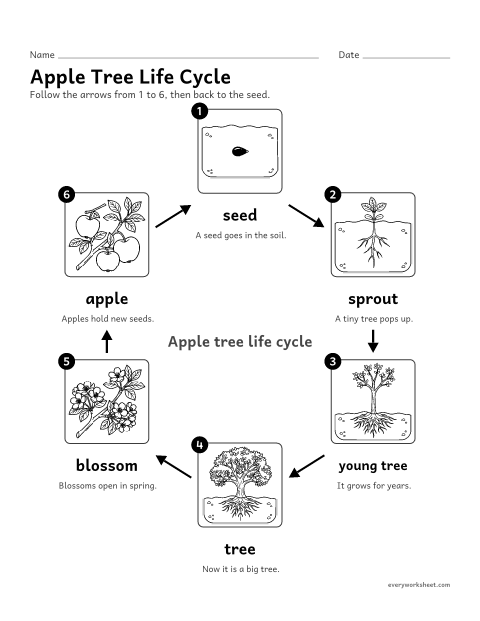
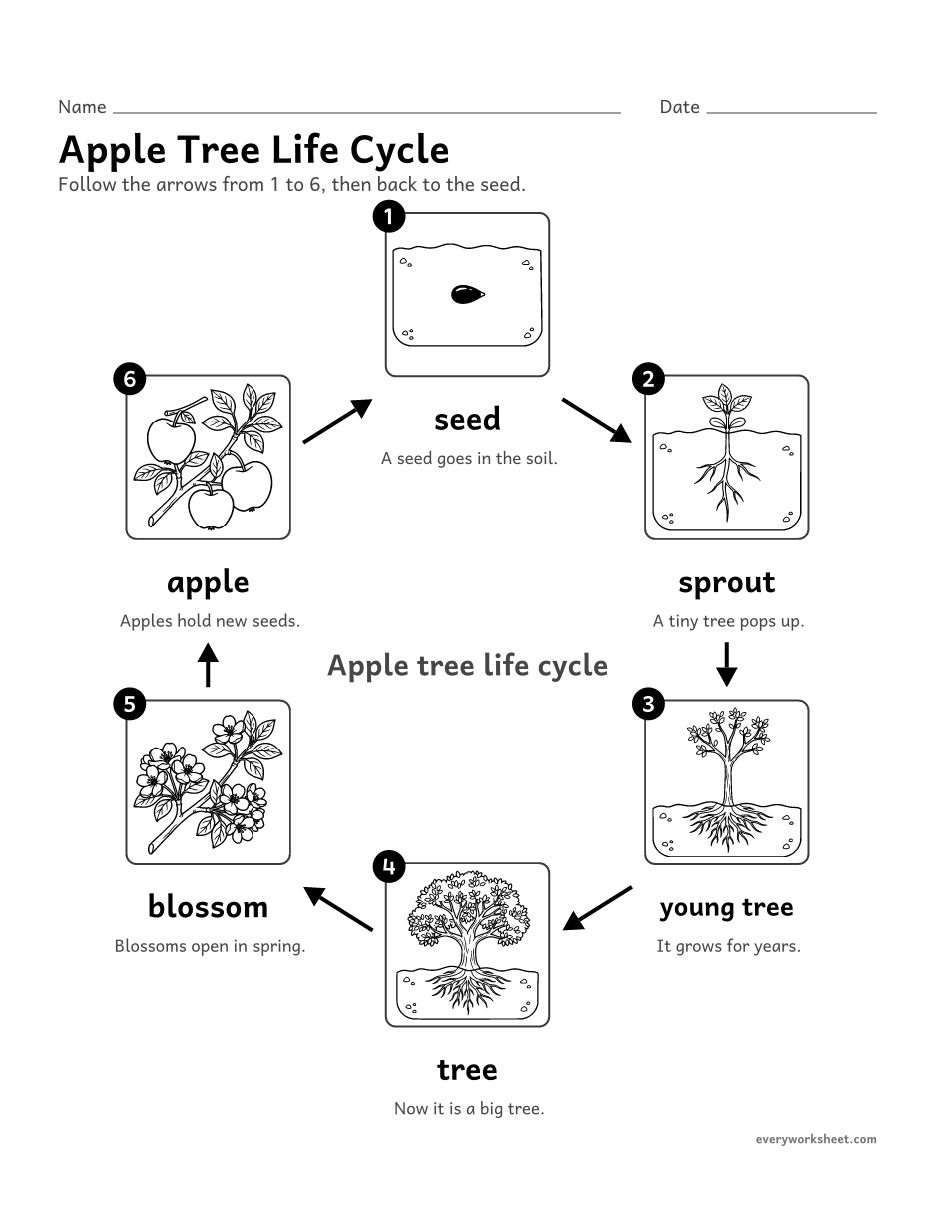
Apple tree life cycle chart
Naming the stages of the apple tree life cycle in order
1 page181 KB
Seed, sprout, young tree, tree, blossom and apple: a chart, cut and paste, a wheel to spin, parts of an apple and apple math.
View largerNaming the stages of the apple tree life cycle in order
1 page181 KB
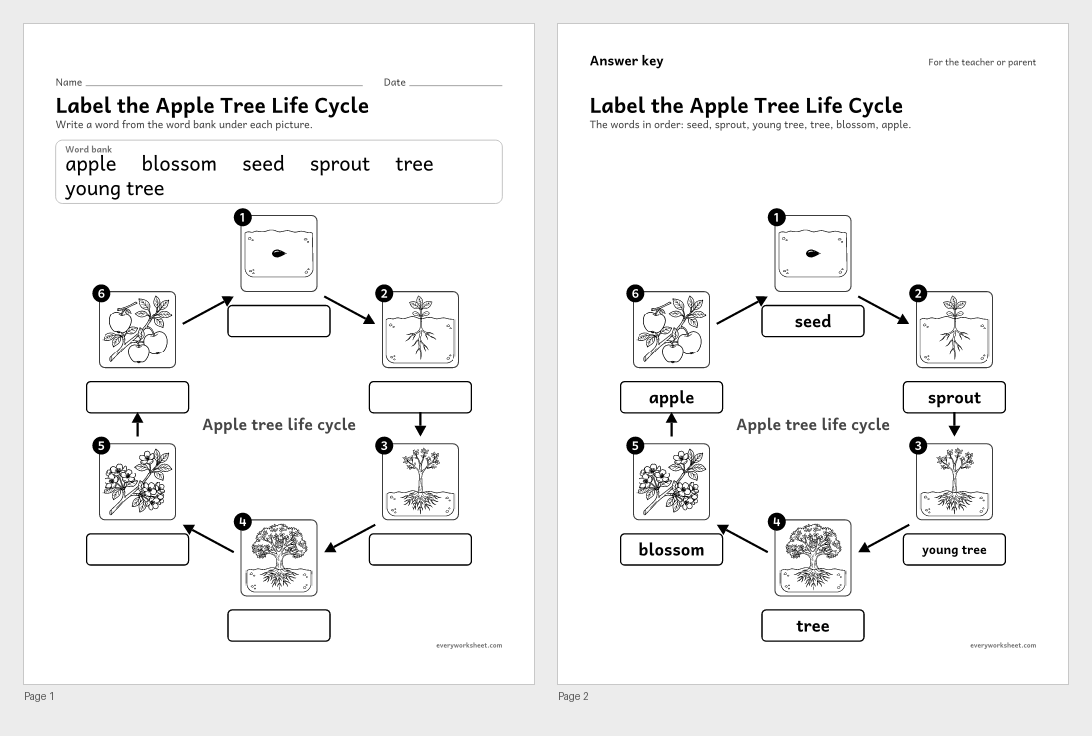 View all 2 pages
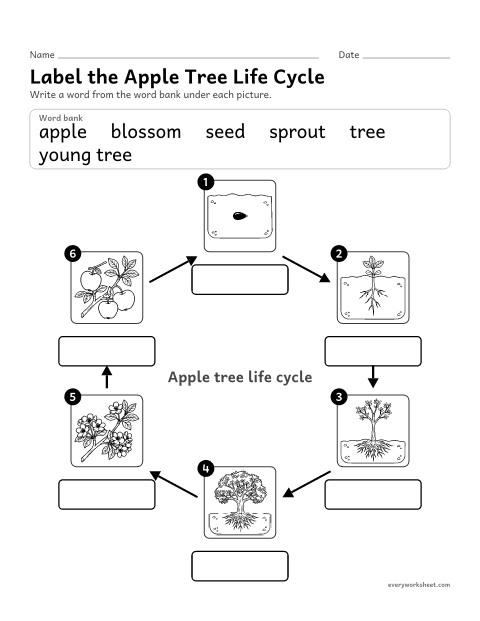
Writing the name of each life-cycle stage
Answer key on page 2
2 pages337 KB
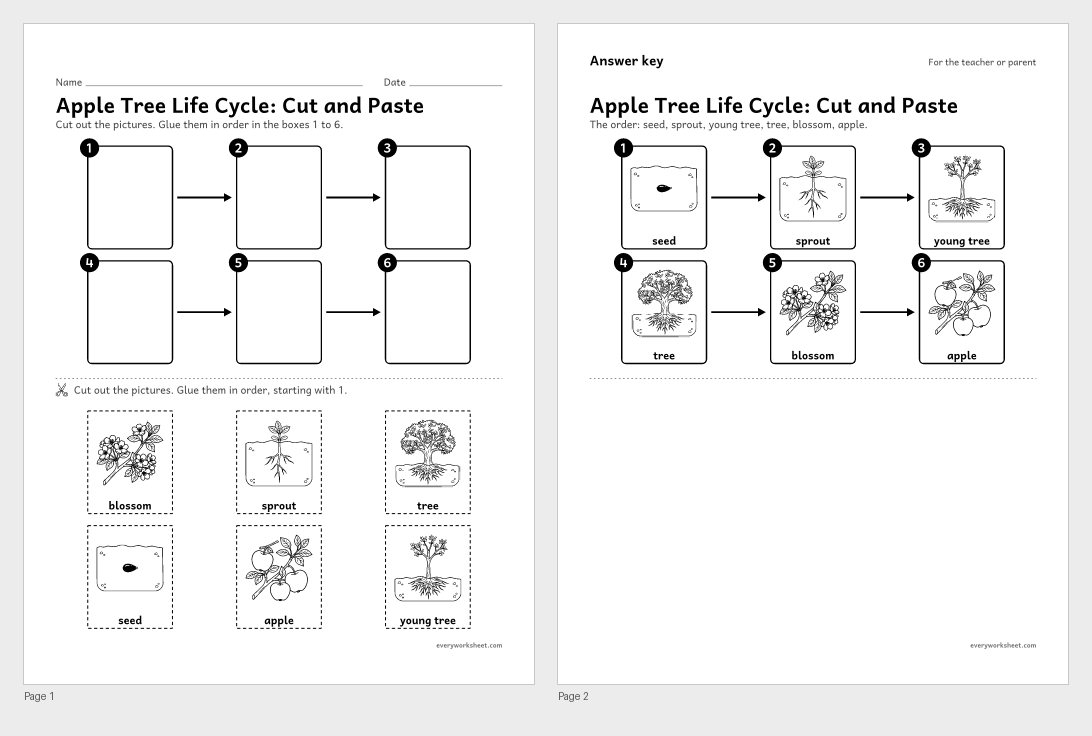 View all 2 pages
Putting the apple tree life-cycle pictures in order
Answer key on page 2
2 pages361 KB
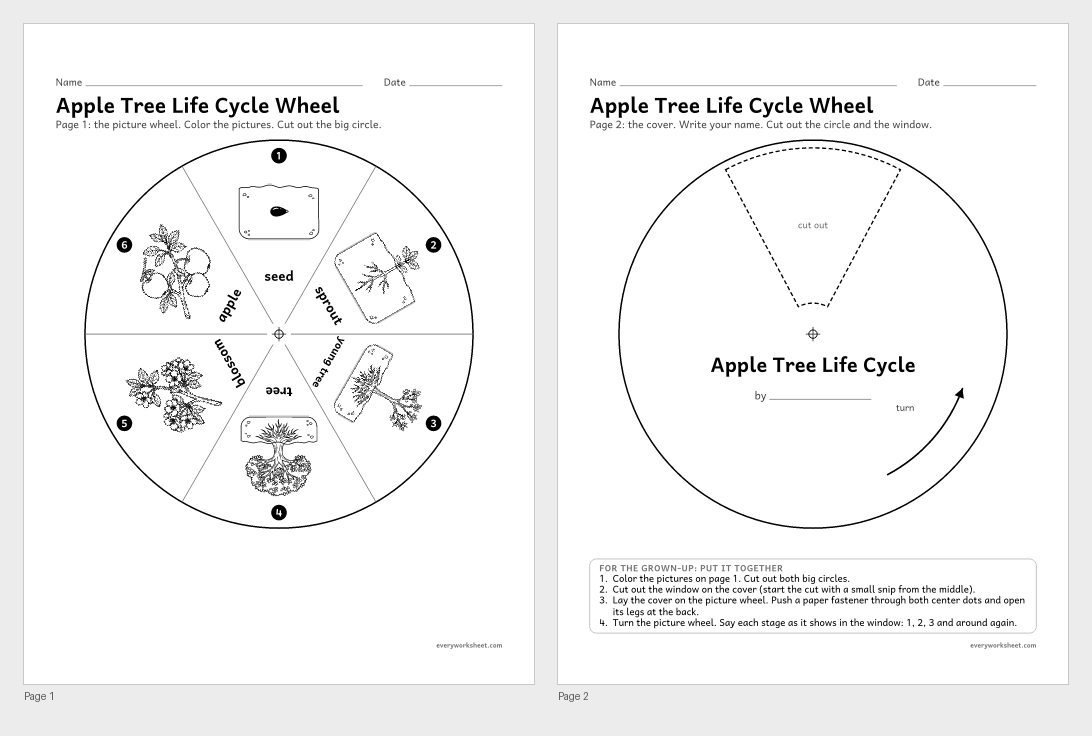 View all 2 pages
Making a turning wheel that shows the apple tree life cycle
2 pages186 KB
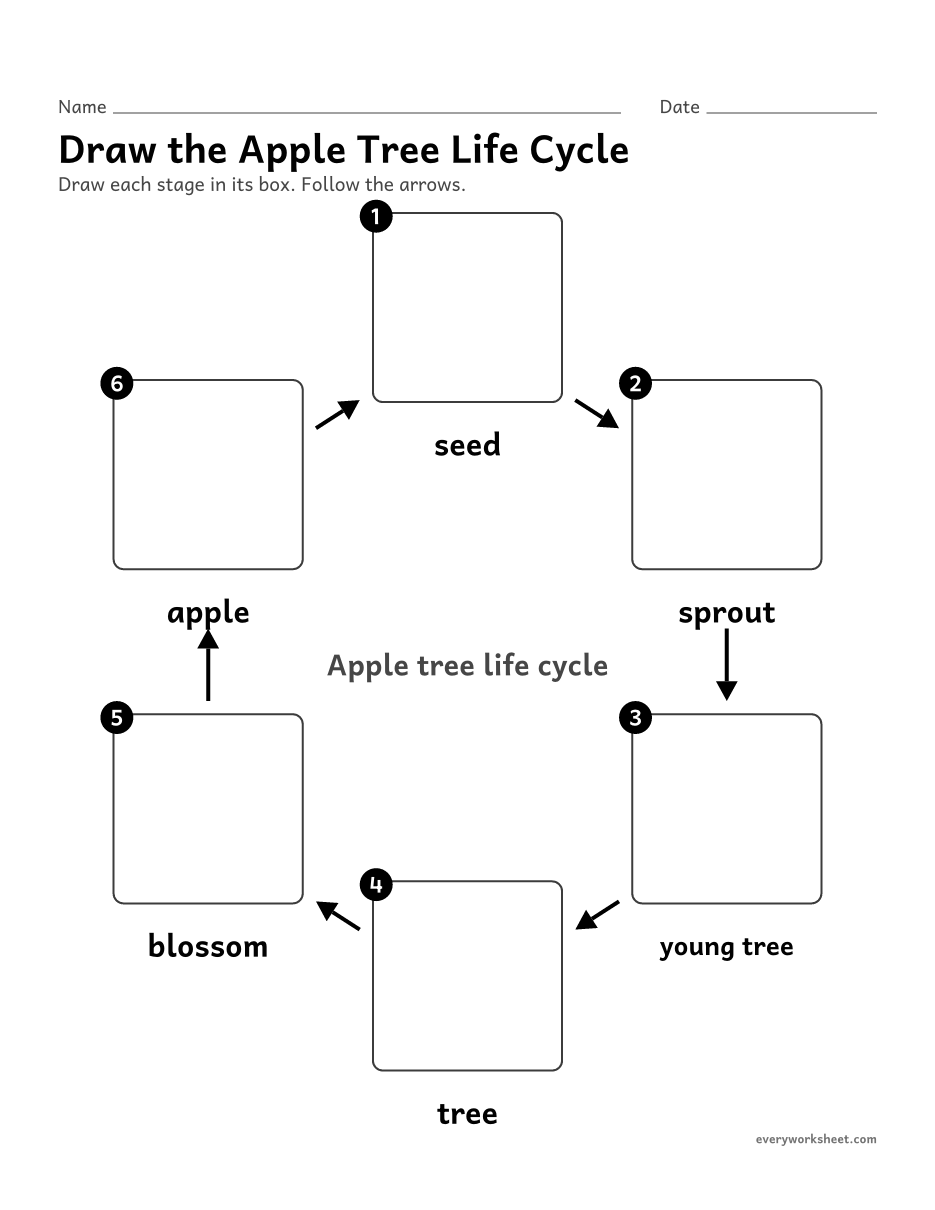 View larger
Drawing each stage of the apple tree life cycle
1 page27 KB
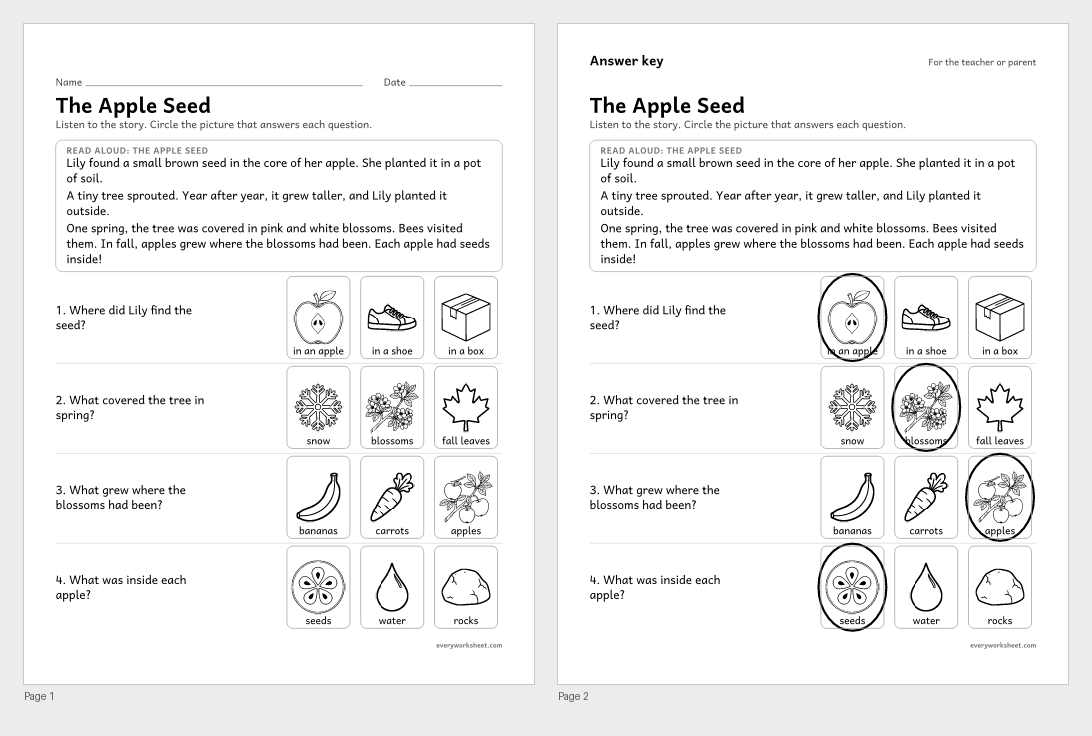 View all 2 pages
Listening to a passage about the apple tree life cycle and answering questions
Answer key on page 2
2 pages370 KB
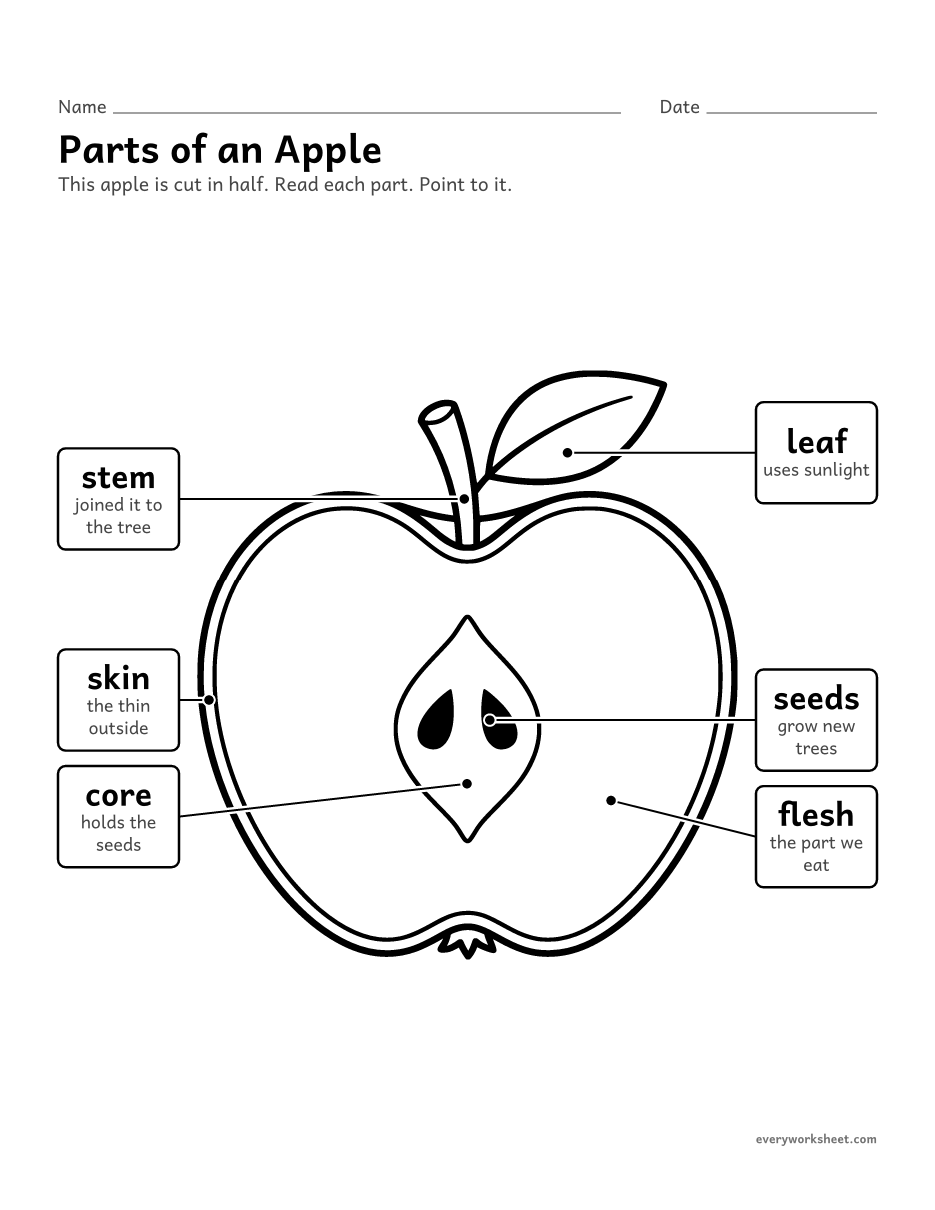 View larger
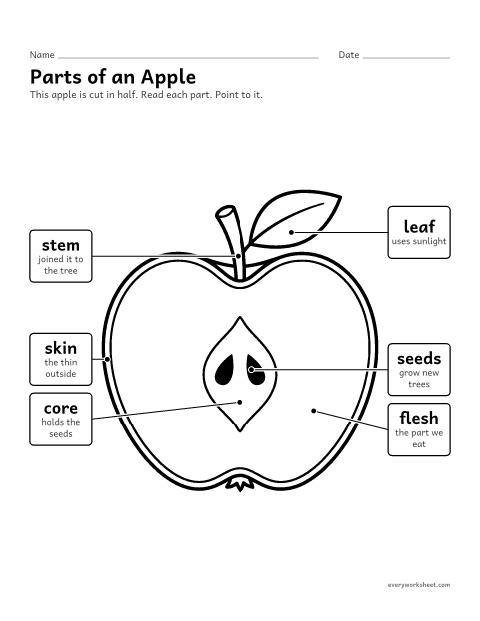
Naming the parts of an apple and what each part does
1 page30 KB
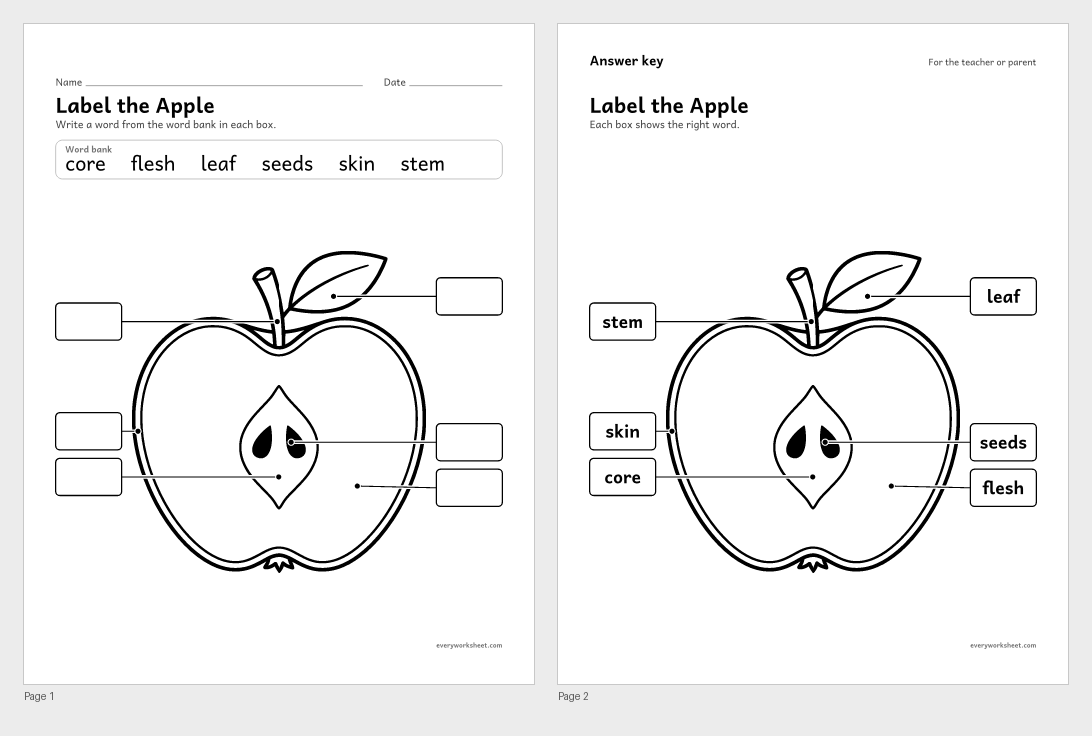 View all 2 pages
Labeling the stem, leaf, skin, flesh, core and seeds
Answer key on page 2
2 pages37 KB
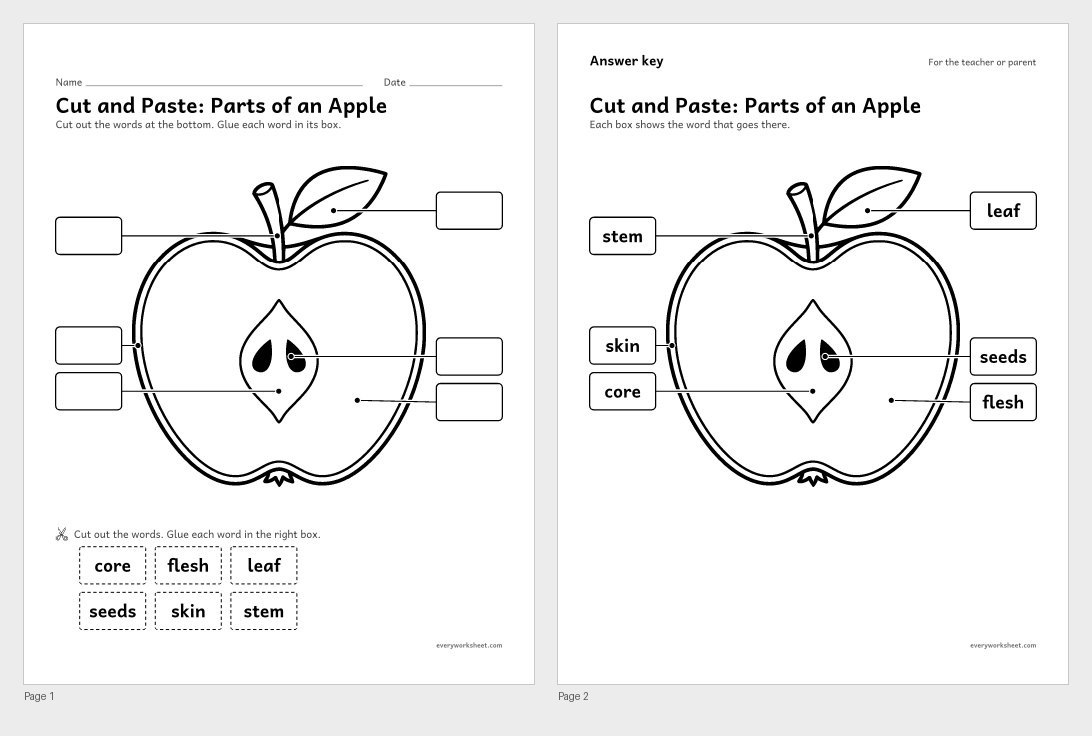 View all 2 pages
Matching the words stem, leaf, skin, flesh, core and seeds to the parts
Answer key on page 2
2 pages66 KB
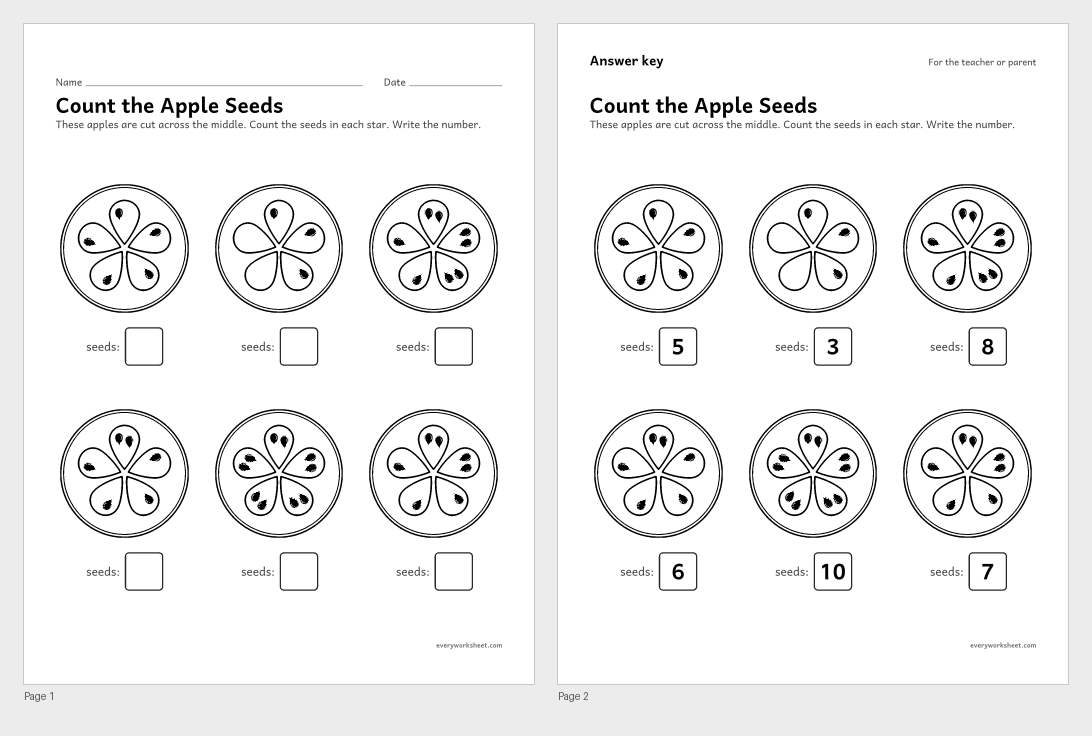 View all 2 pages
Counting apple seeds to 10 and writing the number
Answer key on page 2
2 pages55 KB
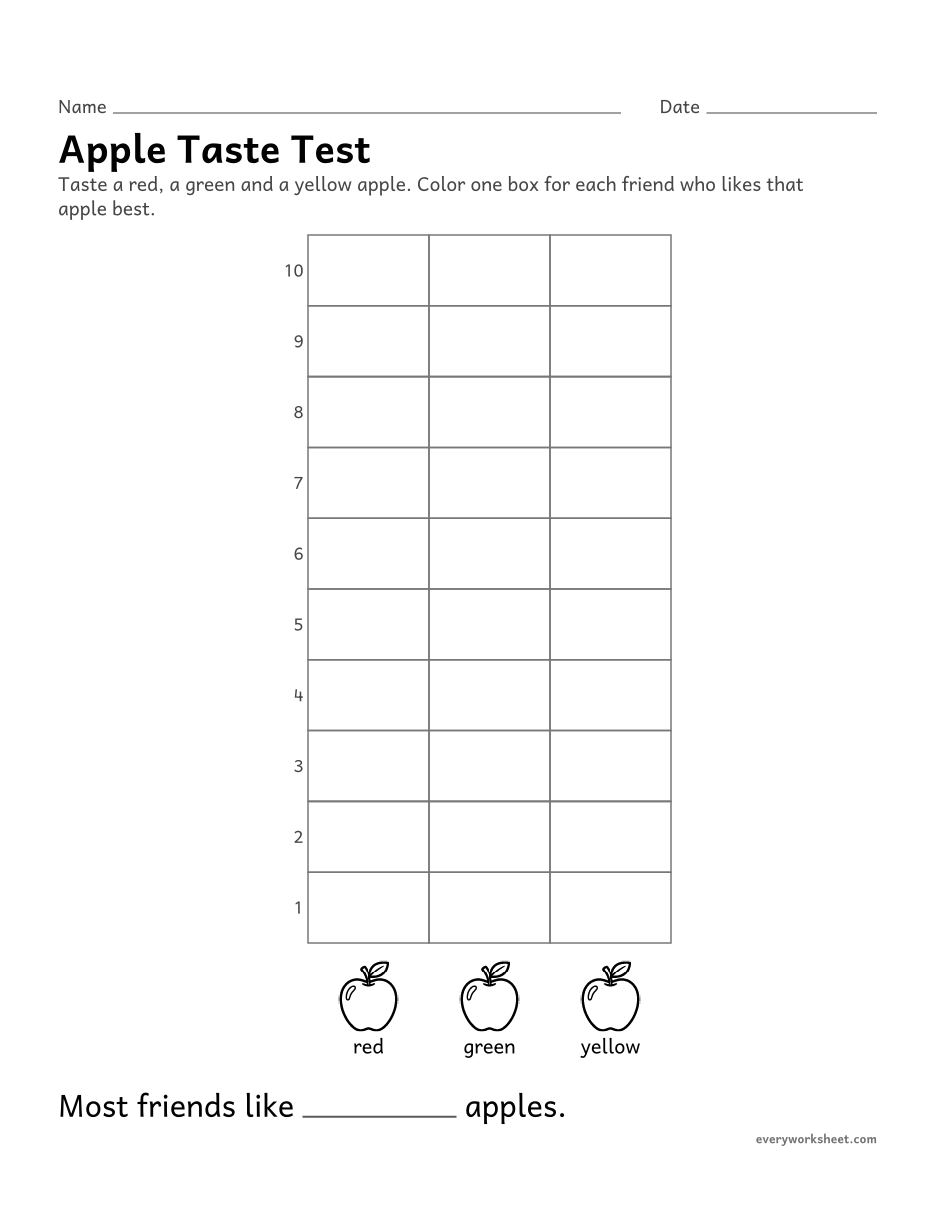 View larger
Graphing class votes and comparing which group has more
1 page76 KB
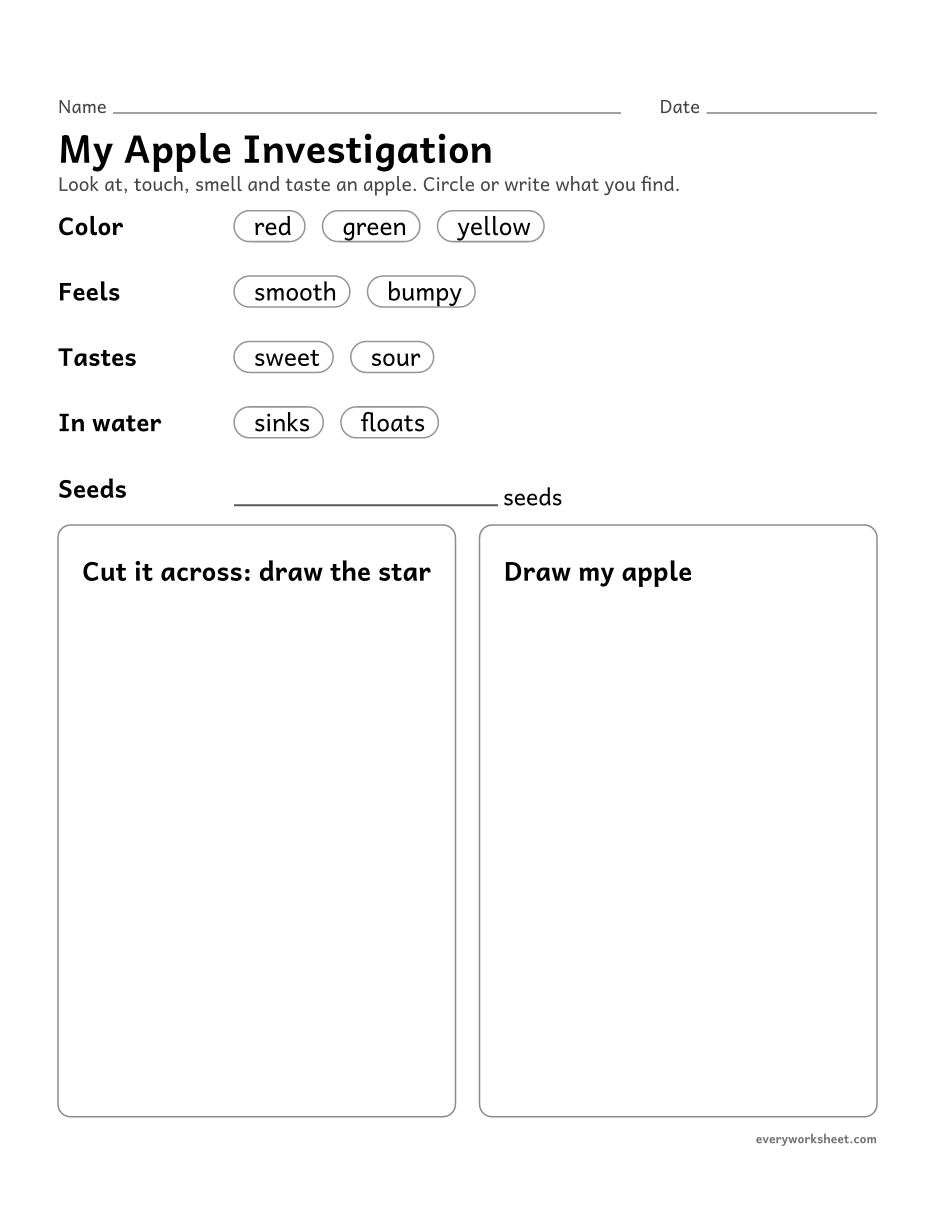 View larger
Observing and describing a real apple's color, feel, taste and seeds
1 page30 KB
Print at 100% (actual size) for the cleanest tracing lines.
The apple tree life cycle starts with a small brown seed from the core of an apple. It sprouts, grows into a young tree, and after several years becomes a big apple tree. Each spring the tree is covered in blossoms, and apples grow where the blossoms were, each with seeds inside.
These apple life cycle worksheets show all six stages in detailed line drawings. Every life cycle set has a chart, a label the stages page, a cut and paste sequence, a life cycle wheel to color and spin, a draw the stages page and a read-aloud story with picture questions.
The parts of an apple pages show an apple cut in half, with the stem, leaf, skin, flesh, core and seeds to label. The counting page shows apples cut across the middle, where the seeds sit in a star, and a taste test graph and an apple investigation page bring in math.
NGSS 3-LS1-1Grade 3, introduced early: develop models to describe that organisms have unique and diverse life cycles but all have in common birth, growth, reproduction, and death.NGSS 4-LS1-1Grade 4, introduced early: construct an argument that plants and animals have internal and external structures that function to support survival, growth, behavior, and reproduction.CCSS.ELA-LITERACY.W.K.2Use a combination of drawing, dictating, and writing to compose informative/explanatory texts in which they name what they are writing about and supply some information about the topic.CCSS.ELA-LITERACY.SL.K.2Confirm understanding of a text read aloud or information presented orally or through other media by asking and answering questions about key details and requesting clarification if something is not understood.CCSS.ELA-LITERACY.L.K.6Use words and phrases acquired through conversations, reading and being read to, and responding to texts.CCSS.MATH.CONTENT.K.CC.B.5Count to answer "how many?" questions about as many as 20 things arranged in a line, a rectangular array, or a circle, or as many as 10 things in a scattered configuration; given a number from 1–20, count out that many objects.CCSS.MATH.CONTENT.K.MD.B.3Classify objects into given categories; count the numbers of objects in each category and sort the categories by count.CCSS.MATH.CONTENT.K.MD.A.1Describe measurable attributes of objects, such as length or weight. Describe several measurable attributes of a single object.Seed, sprout, young tree, adult tree, blossom and apple. Each apple holds seeds that can grow into new apple trees.
A tree grown from a seed usually takes several years, often 6 to 10, before it makes apples.
Yes. The label, cut and paste, read-aloud, parts of an apple and seed counting pages each have an answer key on page 2.