 View larger
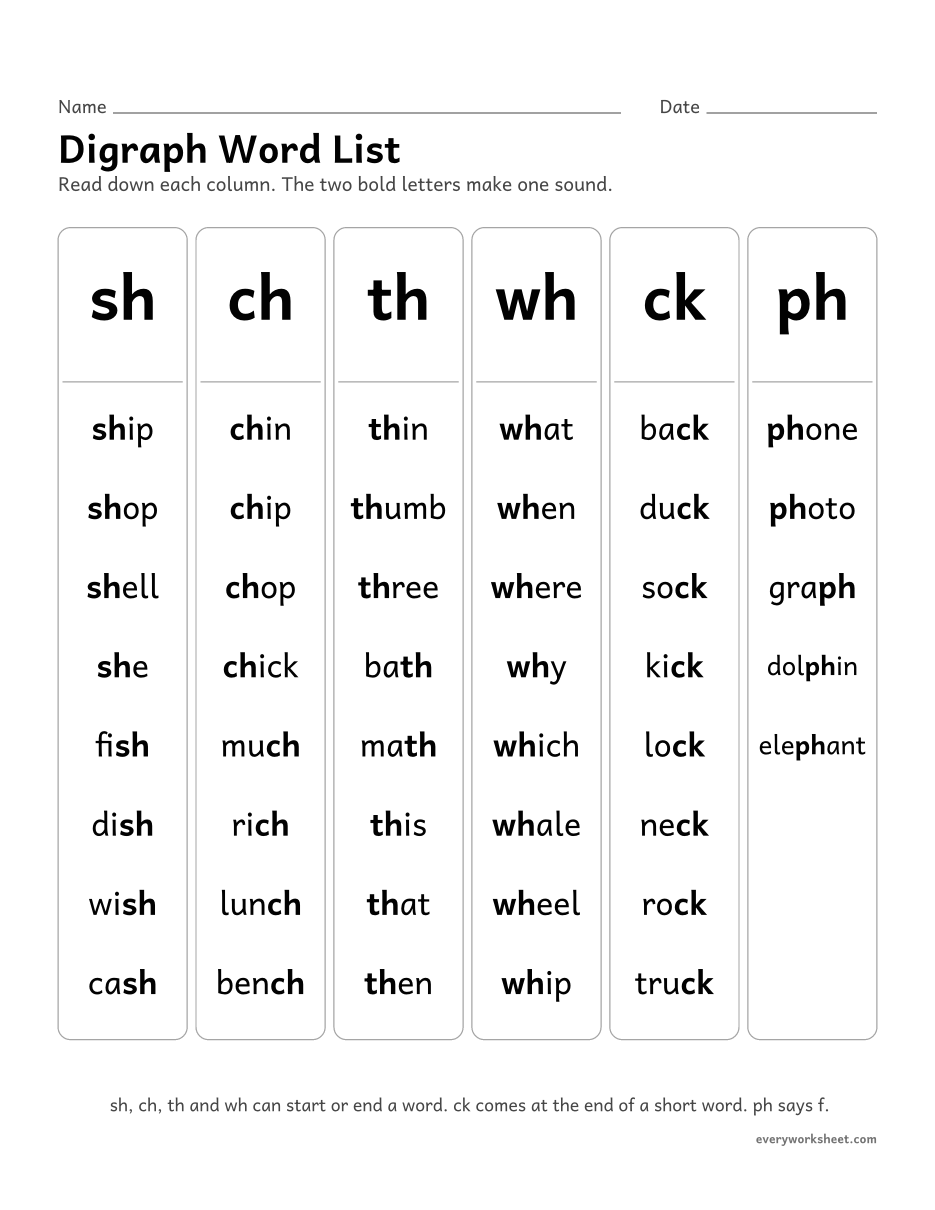
Digraphs chart
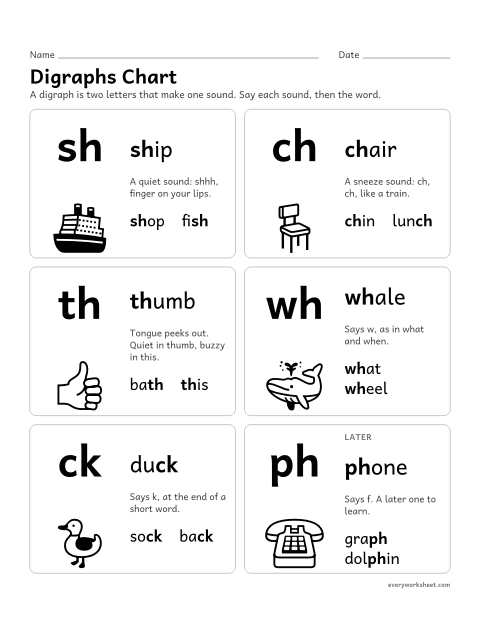
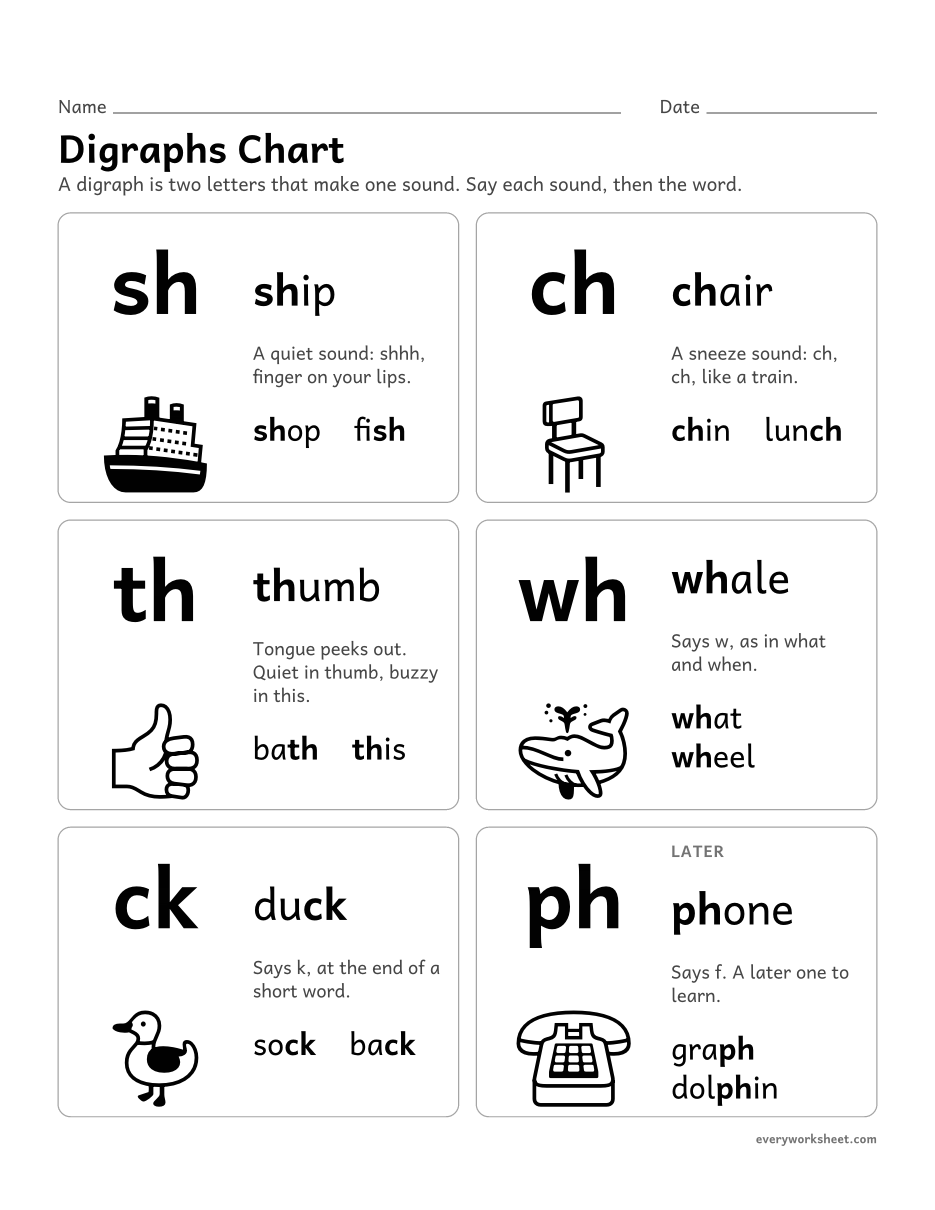
Matching the digraphs sh, ch, th, wh, ck and ph to their sounds
1 page37 KB
A digraphs chart, a word list and picture sorts, fill-ins and read-and-match pages for sh, ch, th, wh and ck, each with an answer key.
View largerMatching the digraphs sh, ch, th, wh, ck and ph to their sounds
1 page37 KB
 View larger
 View all 2 pages
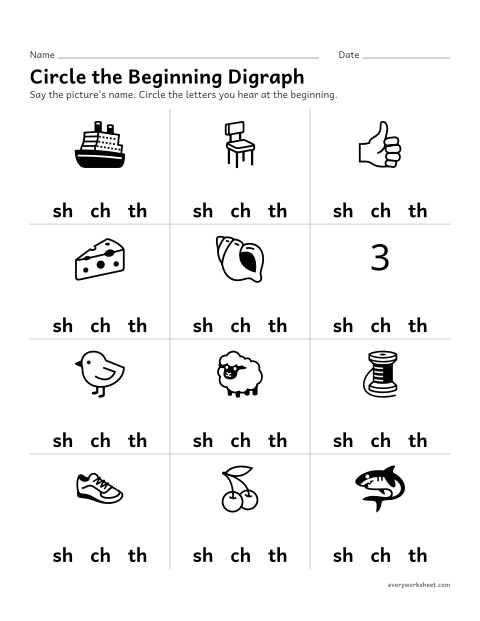
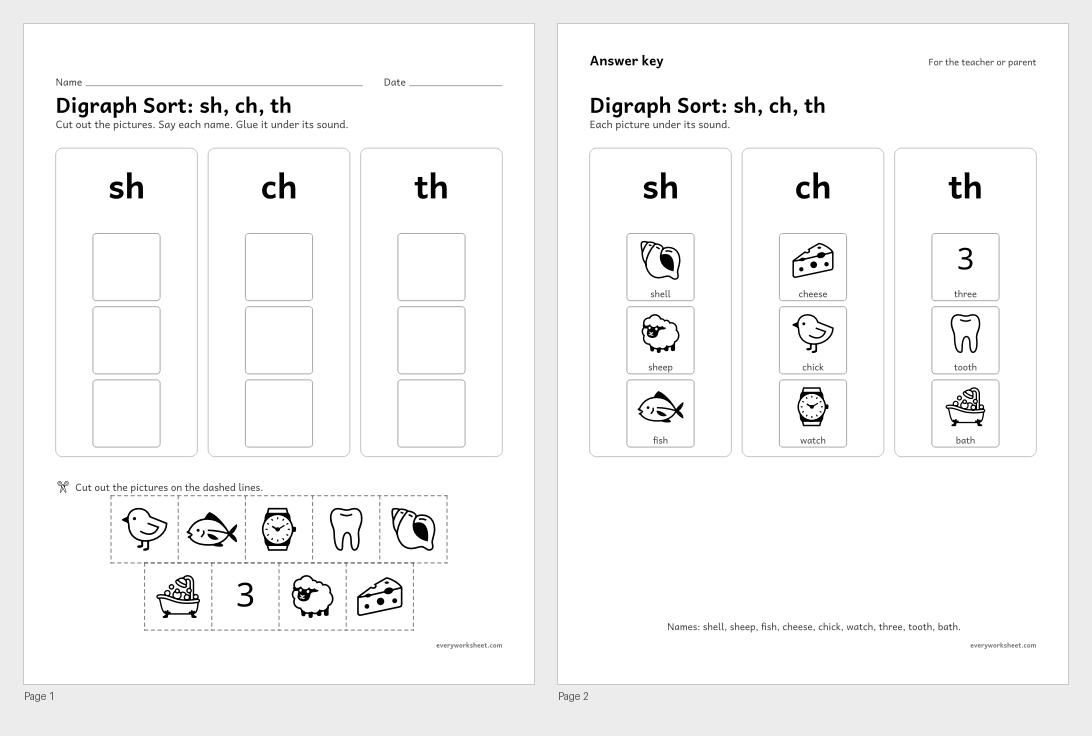
Sorting pictures by the sh, ch or th sound
Answer key on page 2
2 pages41 KB
 View all 2 pages
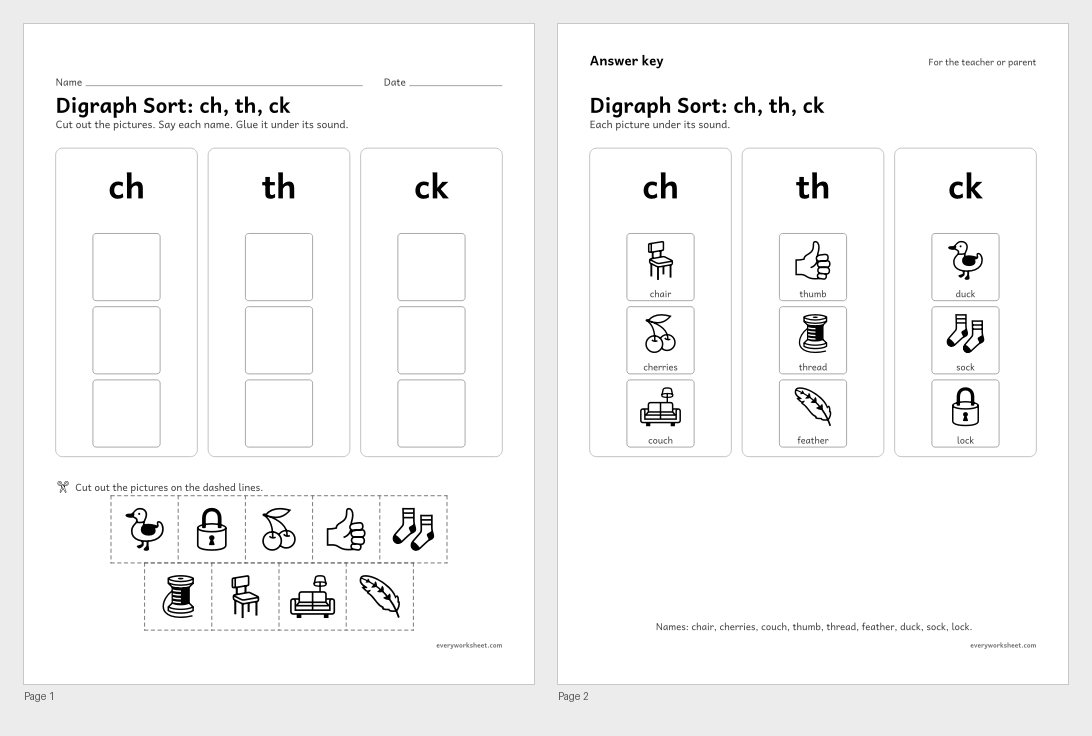
Sorting pictures by the ch, th or ck sound
Answer key on page 2
2 pages41 KB
 View all 2 pages
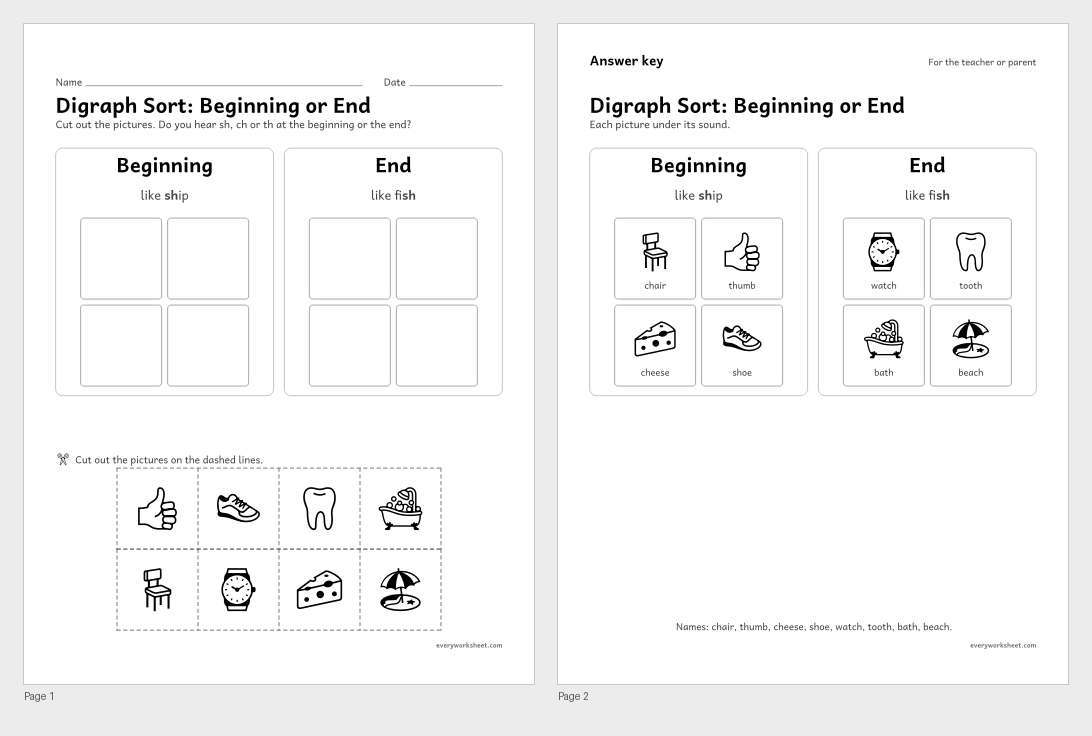
Hearing whether a digraph is at the beginning or end of a word
Answer key on page 2
2 pages41 KB
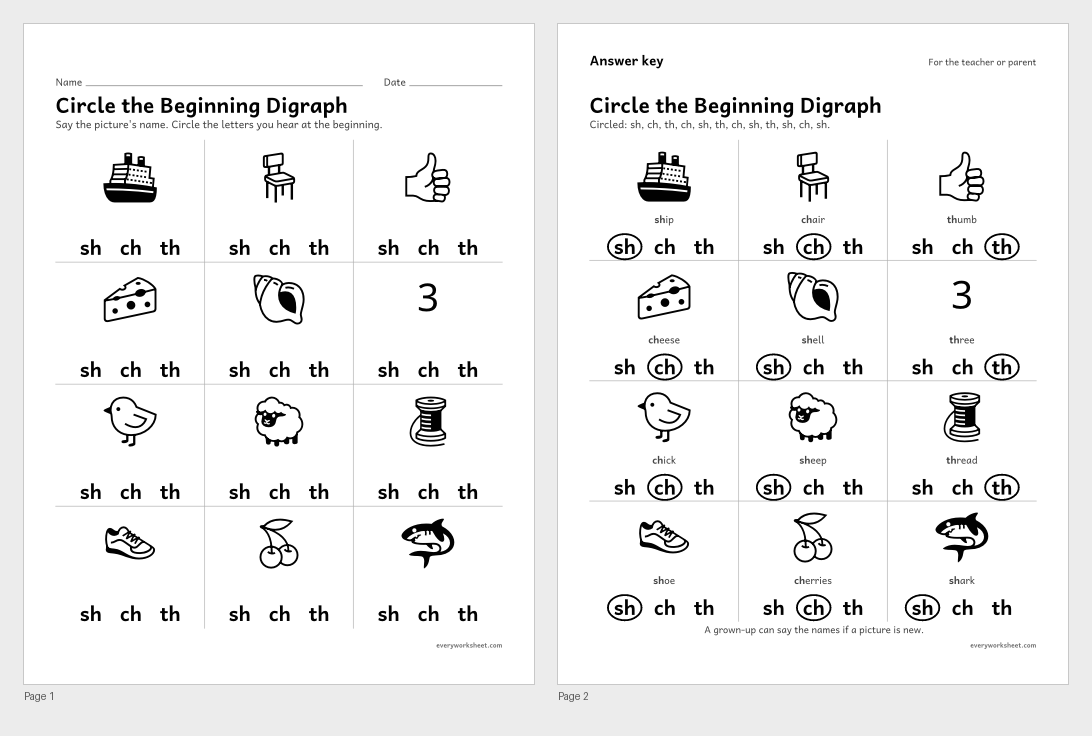 View all 2 pages
Hearing sh, ch or th at the beginning of a word
Answer key on page 2
2 pages47 KB
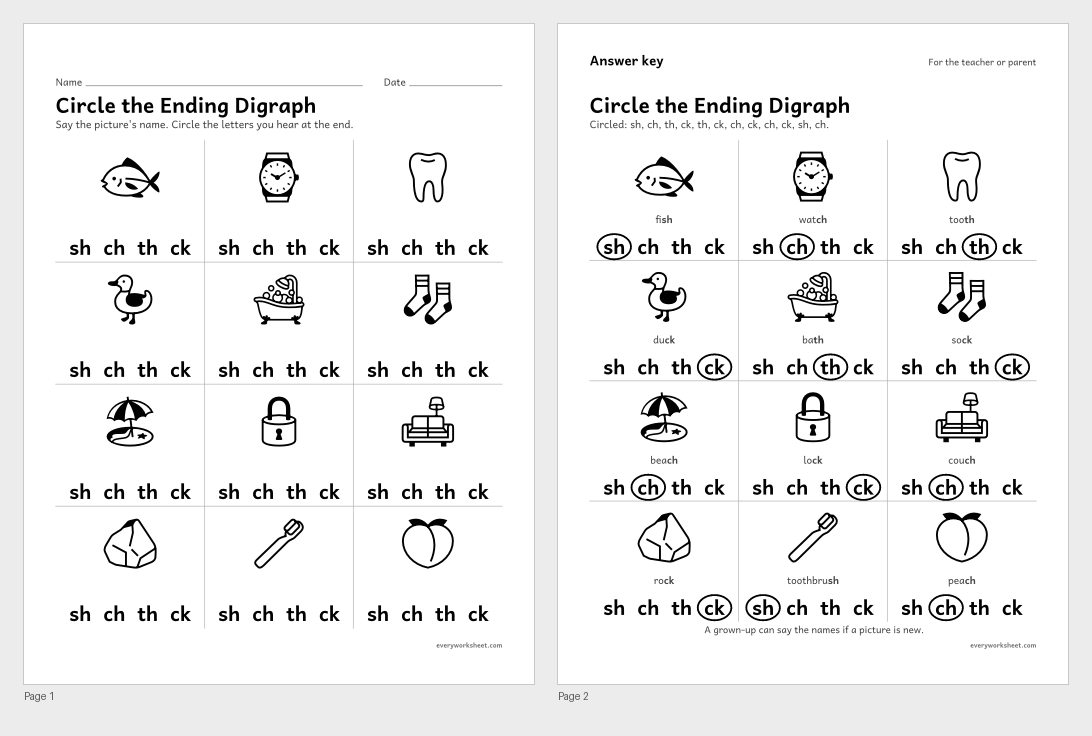 View all 2 pages
Hearing sh, ch, th or ck at the end of a word
Answer key on page 2
2 pages47 KB
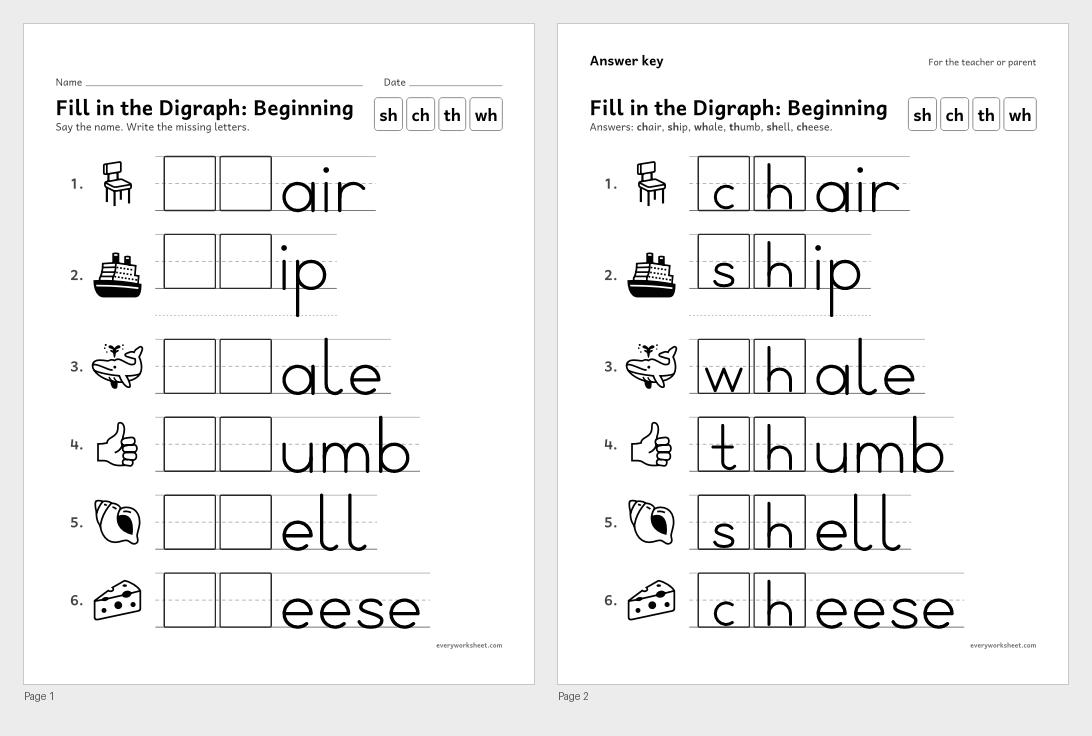 View all 2 pages
Writing the digraph that begins a word
Answer key on page 2
2 pages44 KB
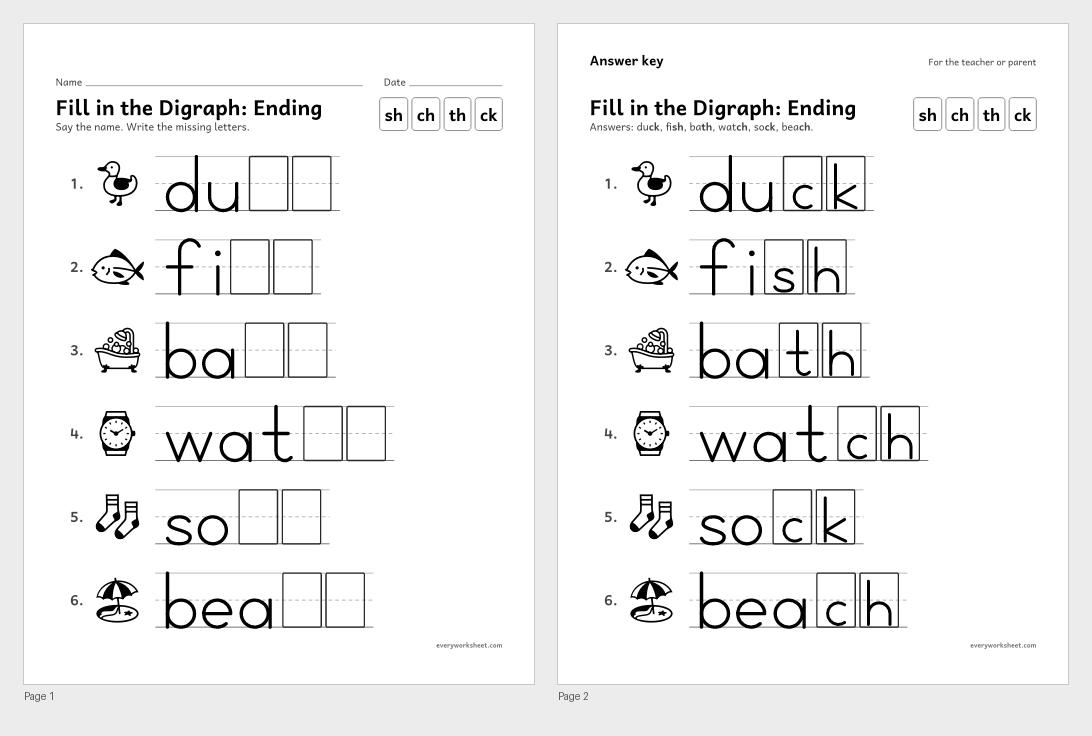 View all 2 pages
Writing the digraph that ends a word
Answer key on page 2
2 pages45 KB
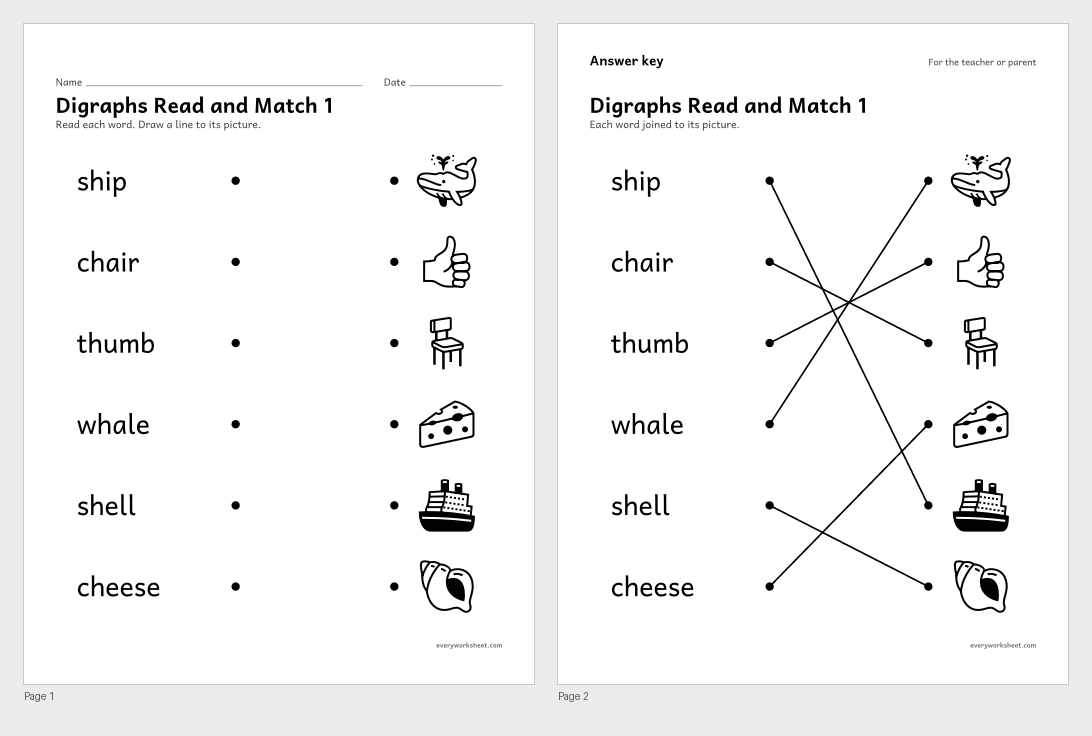 View all 2 pages
Reading sh, ch, th and wh words and matching them to pictures
Answer key on page 2
2 pages32 KB
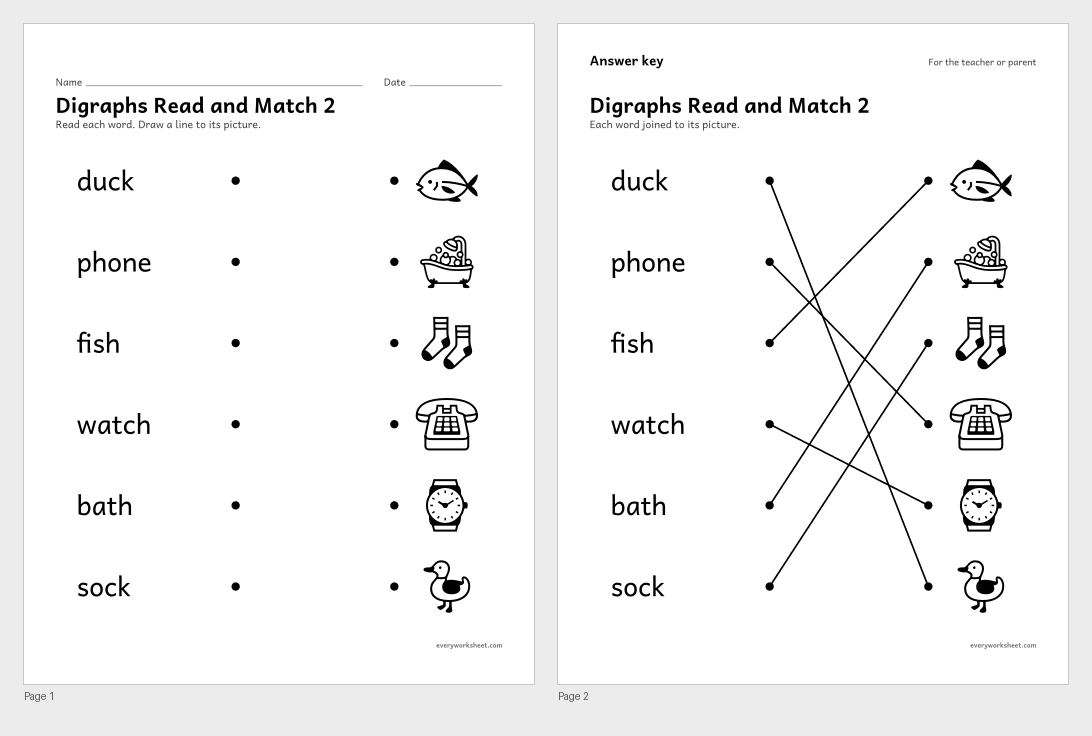 View all 2 pages
Reading ck, ph, sh, ch and th words and matching them to pictures
Answer key on page 2
2 pages33 KB
Print at 100% (actual size) for the cleanest tracing lines.
A digraph is two letters that make one sound. The common consonant digraphs are sh (ship), ch (chair), th (thumb), wh (whale) and ck (duck). Children can't sound them out letter by letter: s-h does not make sh. They have to learn each pair as one sound, the same way they learned single letters.
Digraphs are a 1st grade standard, and many children start them in the second half of kindergarten, once they know their single letter sounds and can read simple CVC words like cat and hop. These pages are written for that point: big pictures, short words and one job per page.
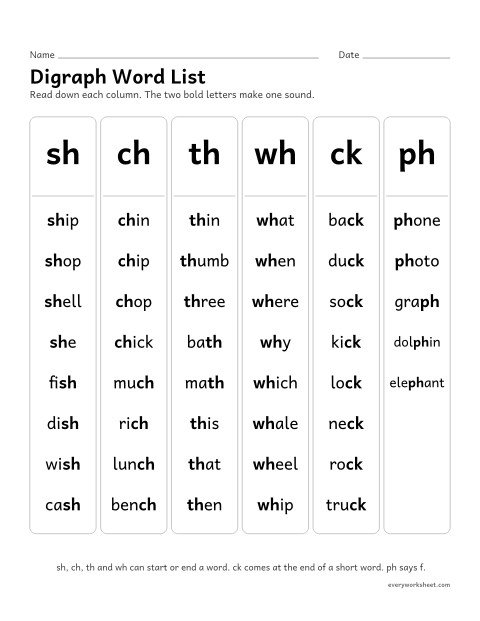
Start with the digraphs chart and word list below, then move to the sorts, fill-ins and read-and-match pages. Each digraph also has its own page of worksheets and a word list: sh words, ch words, th words and wh words. Pages with right answers have an answer key on page 2.
CCSS.ELA-LITERACY.RF.1.3.AKnow the spelling-sound correspondences for common consonant digraphs.CCSS.ELA-LITERACY.RF.1.3.BDecode regularly spelled one-syllable words.CCSS.ELA-LITERACY.RF.K.3.ADemonstrate basic knowledge of one-to-one letter-sound correspondences by producing the primary sound or many of the most frequent sounds for each consonant.CCSS.ELA-LITERACY.RF.K.2.DIsolate and pronounce the initial, medial vowel, and final sounds (phonemes) in three-phoneme (consonant-vowel-consonant, or CVC) words.CCSS.ELA-LITERACY.L.K.2.CWrite a letter or letters for most consonant and short-vowel sounds (phonemes).A digraph is two letters that spell one sound, like sh in ship or ch in chair. A child can't blend the two letters; they learn the pair as a single sound.
The common consonant digraphs are sh, ch, th, wh and ck. ph (phone) is another one, usually taught later. Some lists also include ng (ring) and kn (knee).
In a digraph the two letters make one new sound (sh). In a blend you still hear both sounds, said quickly together (s-t in stop).
Digraphs are a 1st grade standard, and many children begin them late in kindergarten, once they know their letter sounds and can read CVC words like cat, pig and hop.