 View larger
Fiction and Nonfiction Worksheets
A fiction and nonfiction anchor chart, book cover sorts, real or make-believe sentences, storybook, poem or information pages, and compare two texts.
Download the fiction and nonfiction worksheets
What is fiction and nonfiction?
 View larger
 View larger
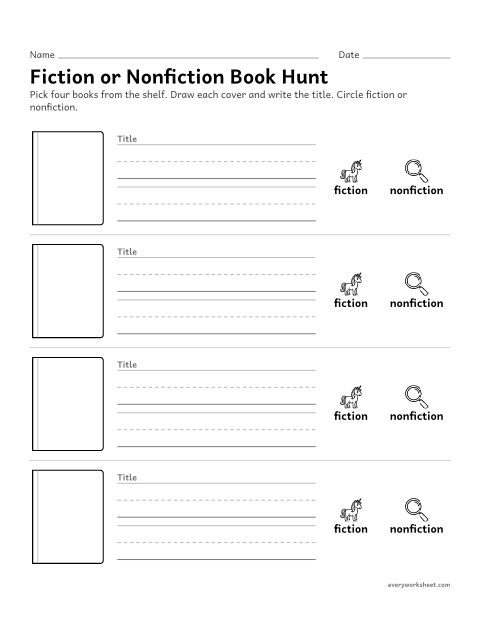
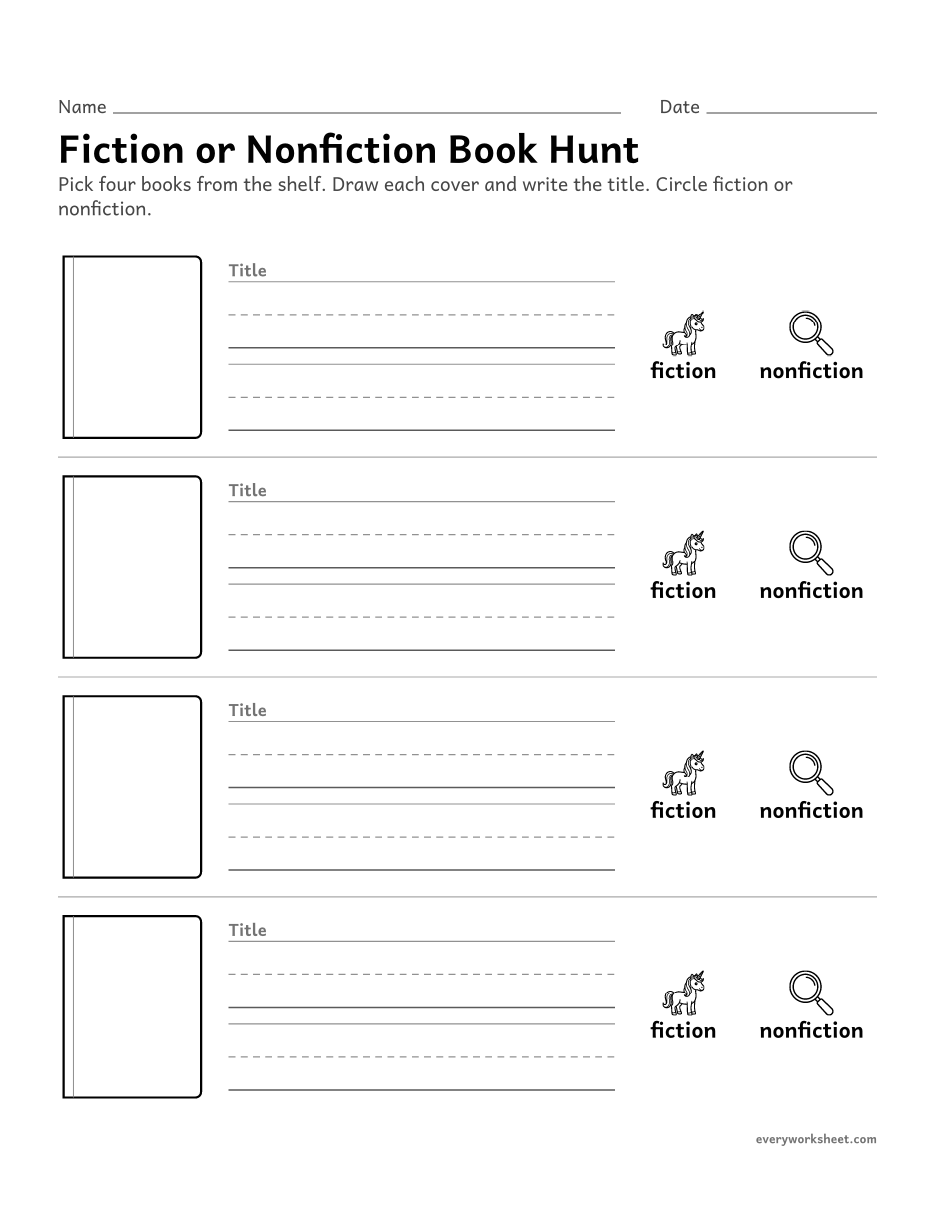
Fiction or nonfiction book hunt
Sorting real books into fiction and nonfiction
1 page198 KB
Fiction and nonfiction sorts
 View all 2 pages
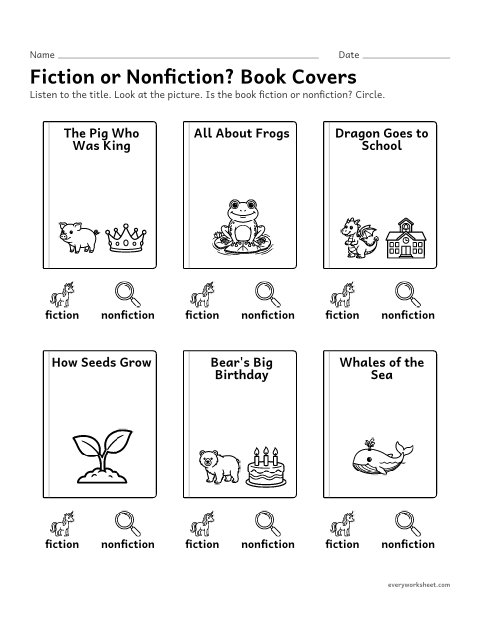
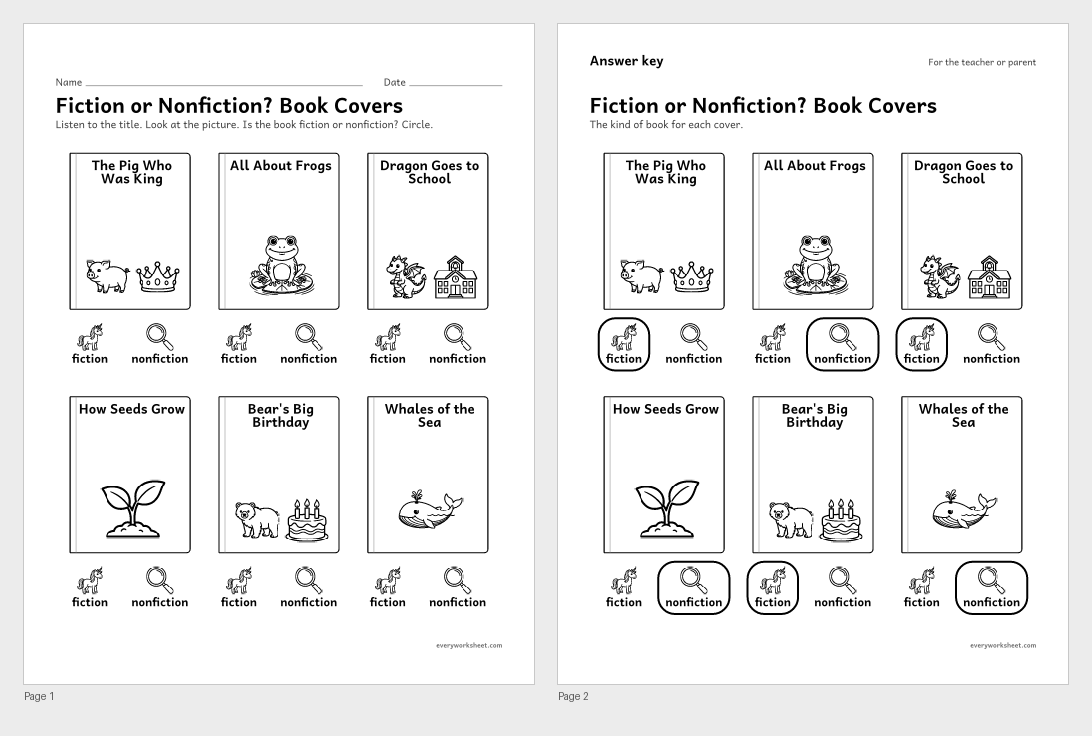
Fiction or Nonfiction? book covers
Sorting books into fiction and nonfiction
Answer key on page 2
2 pages860 KB
 View all 2 pages
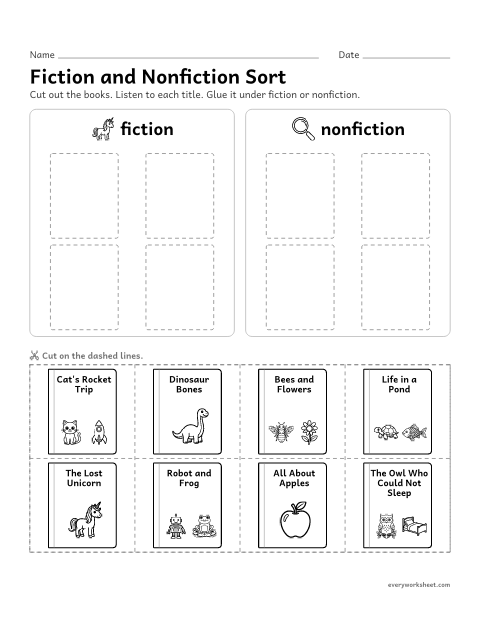
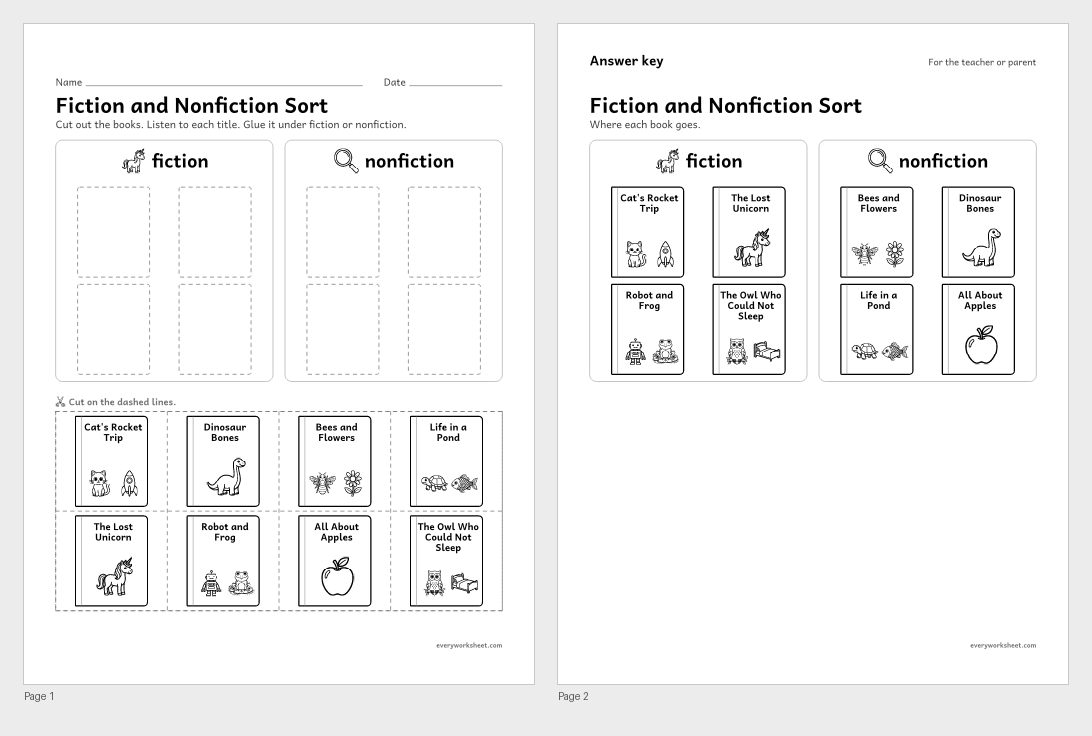
Fiction and nonfiction sort
Sorting books into fiction and nonfiction
Answer key on page 2
2 pages611 KB
 View all 2 pages
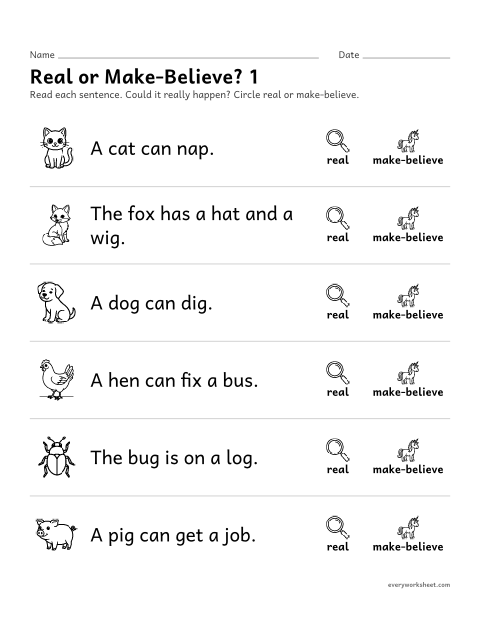
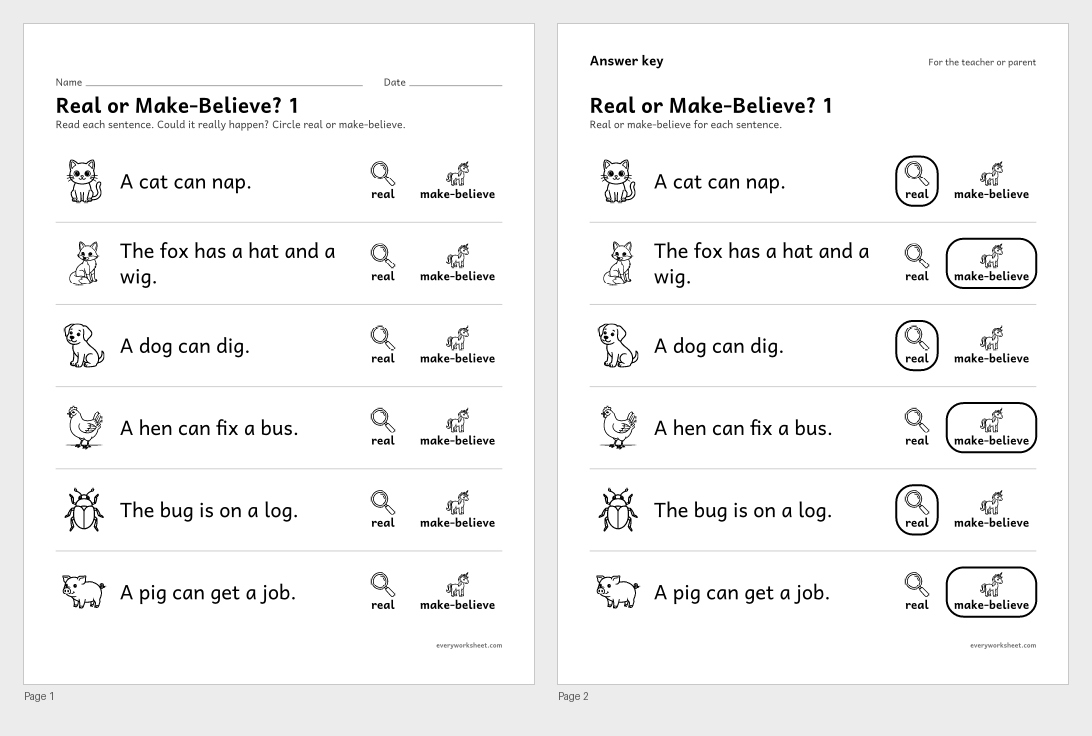
Real or Make-Believe? 1
Reading sentences and telling real from make-believe
Answer key on page 2
2 pages720 KB
 View all 2 pages
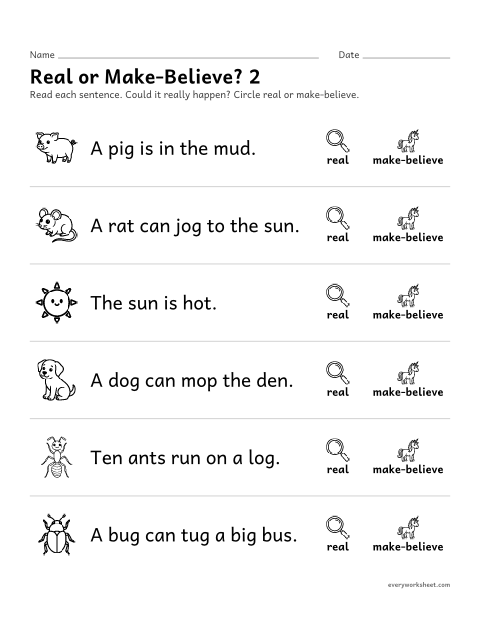
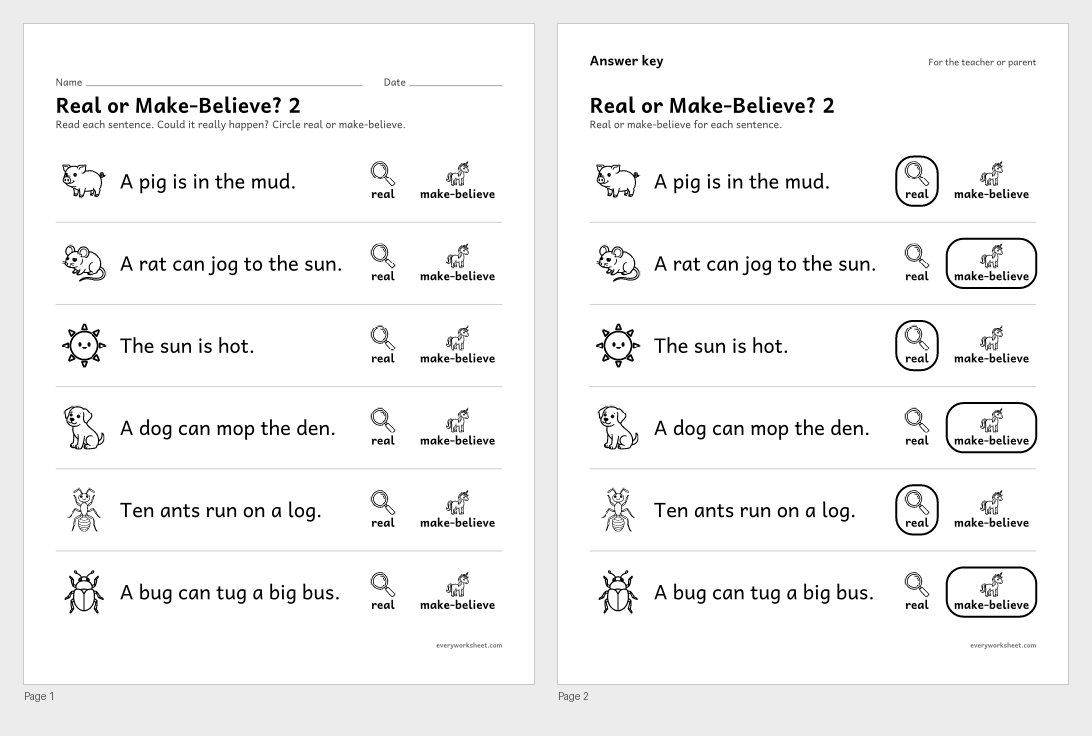
Real or Make-Believe? 2
Reading sentences and telling real from make-believe
Answer key on page 2
2 pages705 KB
 View larger
Storybooks, poems and information
 View all 2 pages
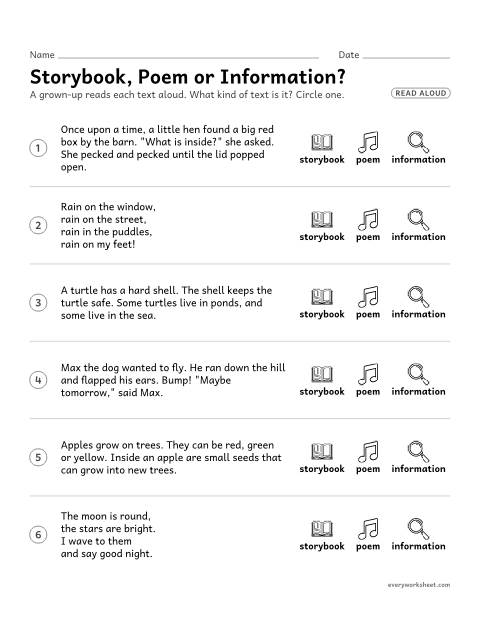
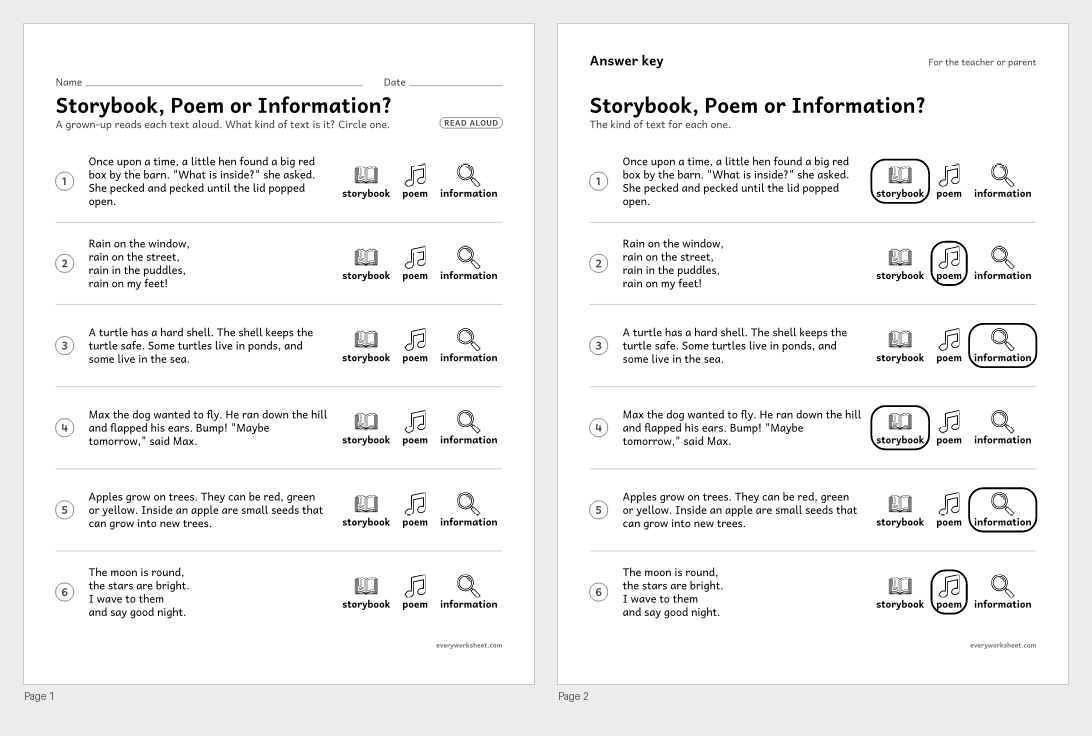
Storybook, poem or Information?
Recognizing storybooks, poems and informational text
Answer key on page 2
2 pages547 KB
 View all 2 pages
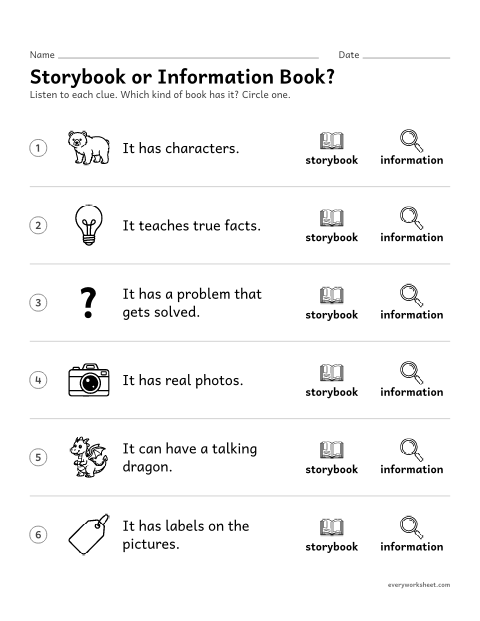
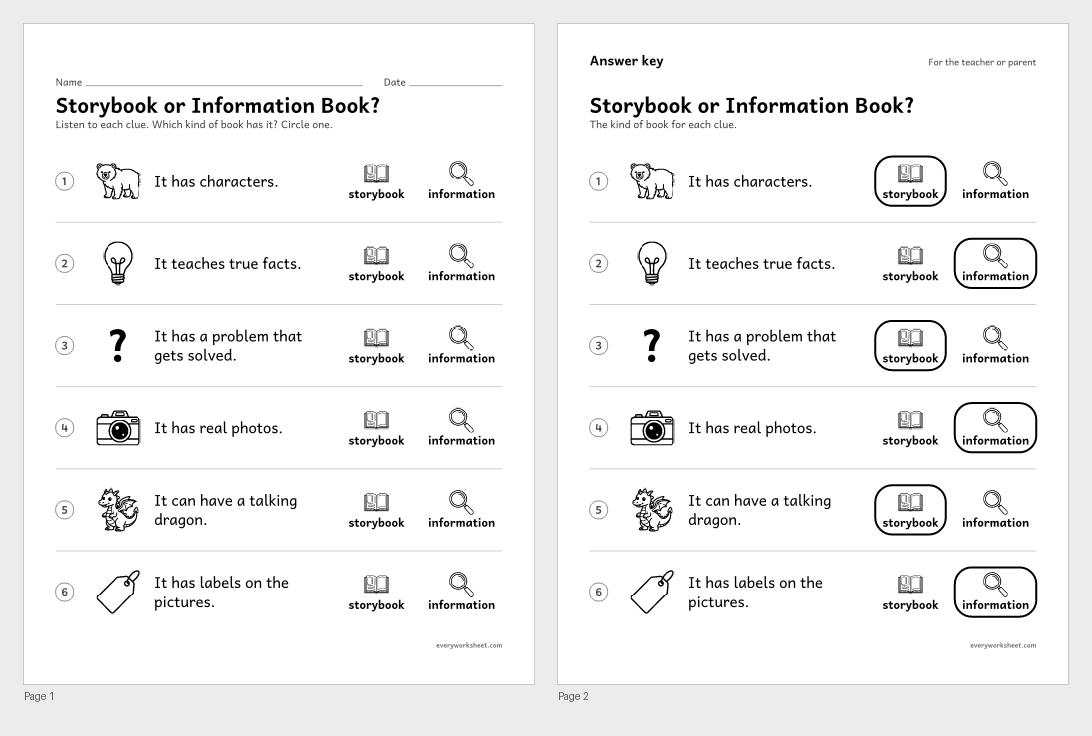
Storybook or information Book?
Telling a storybook from an informational text
Answer key on page 2
2 pages594 KB
Compare two texts
 View all 2 pages
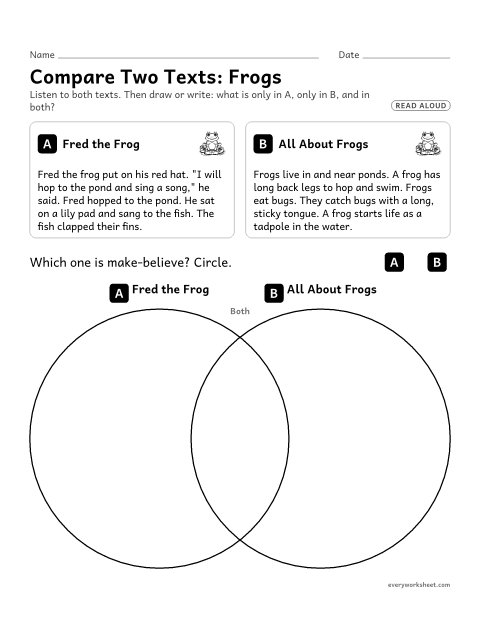
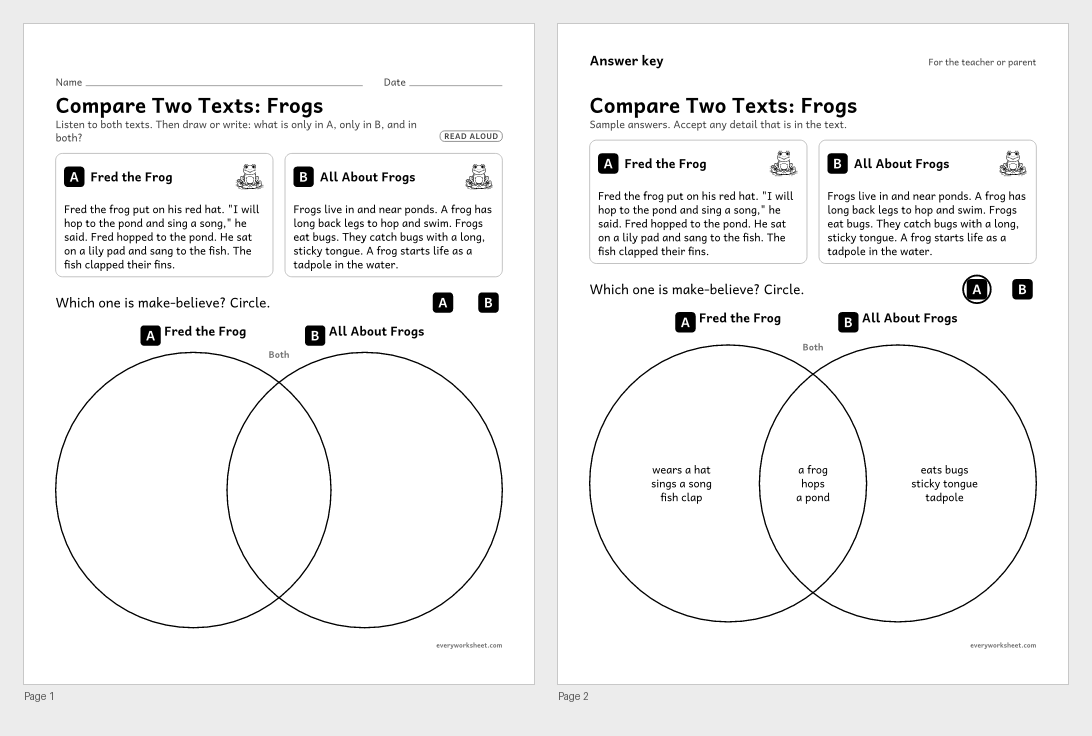
Compare two Texts: frogs
Comparing a story and a fact text on the same topic
Answer key on page 2
2 pages98 KB
 View all 2 pages
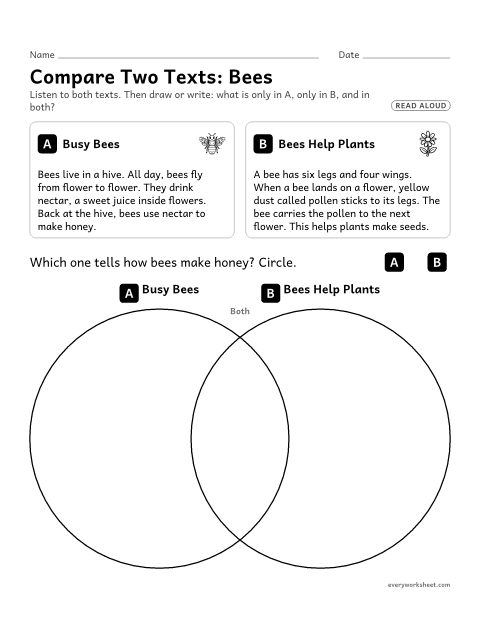
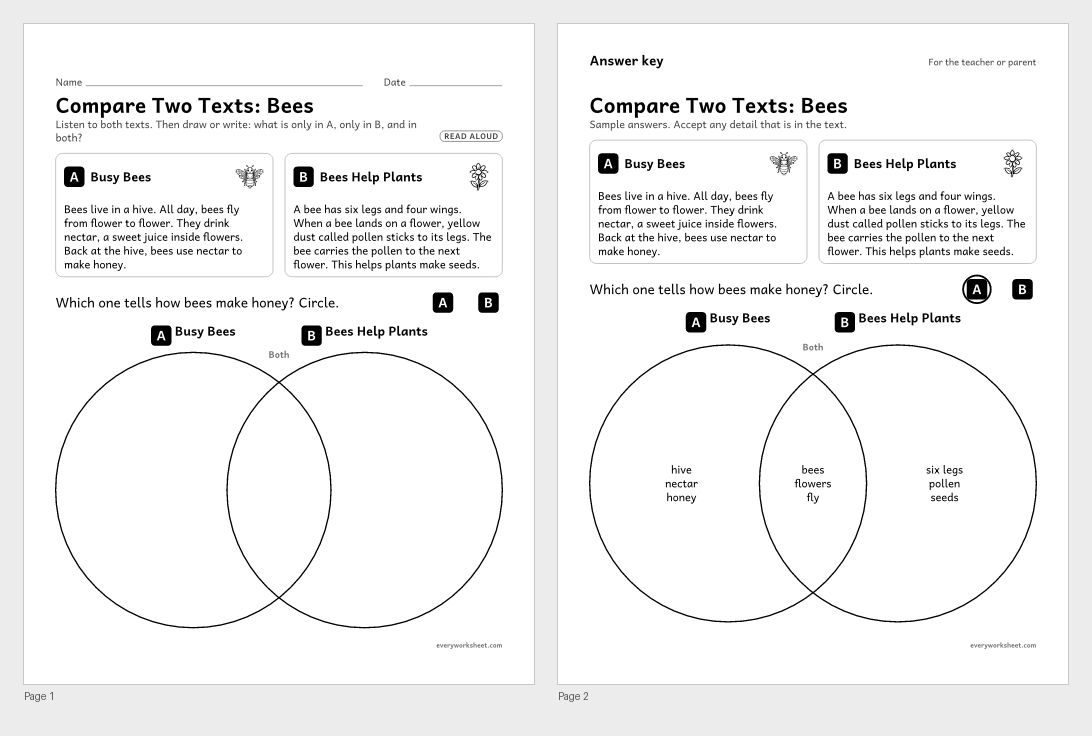
Compare two Texts: bees
Finding what is the same and different in two texts on one topic
Answer key on page 2
2 pages90 KB
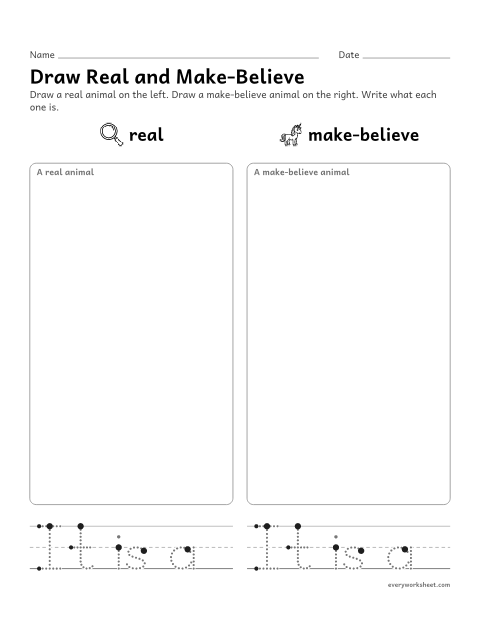
 View larger
Print at 100% (actual size) for the cleanest tracing lines.
About these fiction and nonfiction worksheets
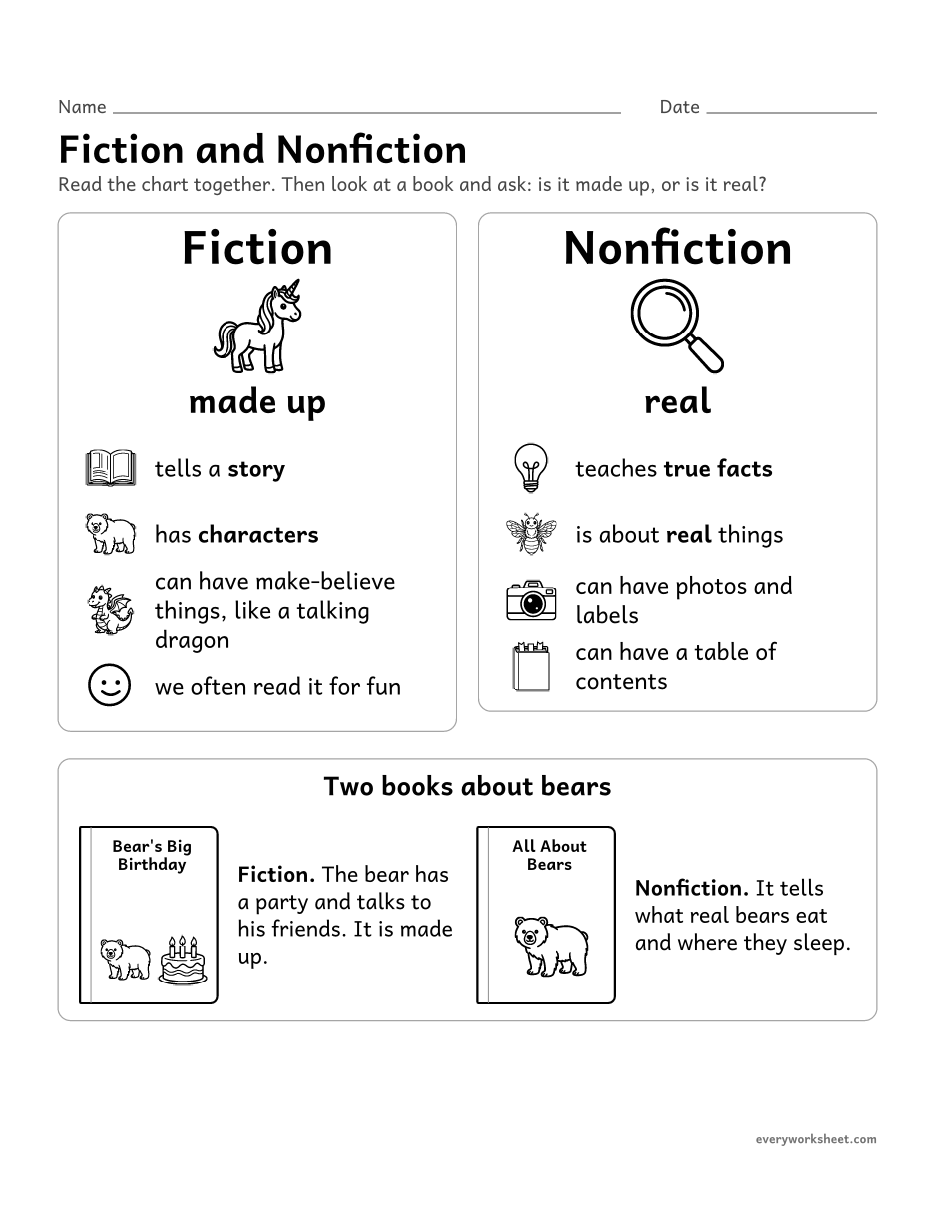
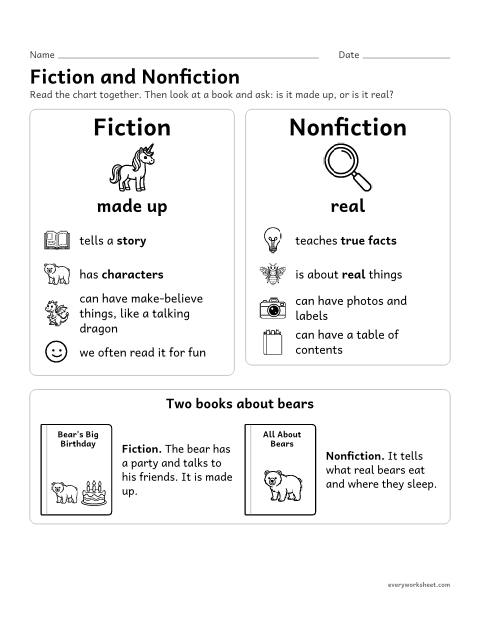
Fiction is made up. Nonfiction is real. That is the whole idea in four words, and it is the place to start with kindergartners. A fiction book tells a made-up story with characters, and it can have things that could never happen, like a talking dragon. A nonfiction book teaches true facts about real things, like how seeds grow or what bears eat.
These fiction and nonfiction worksheets build that idea step by step. The anchor chart explains both kinds and shows two books about the same animal, one of each. Children then sort drawn book covers, read short sentences and decide if they are real or make-believe, and tell a storybook from a poem from an information text.
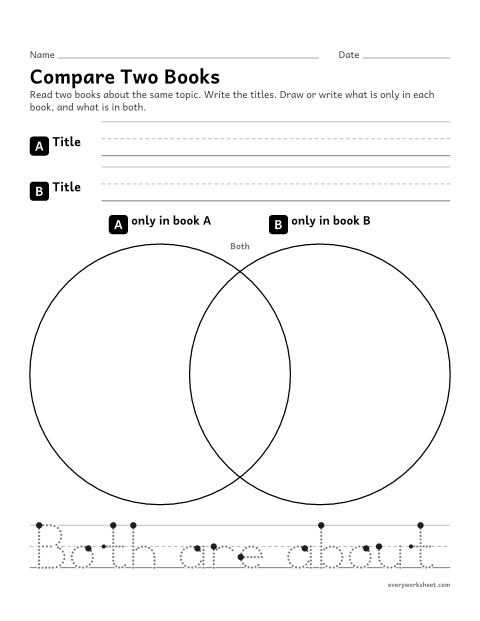
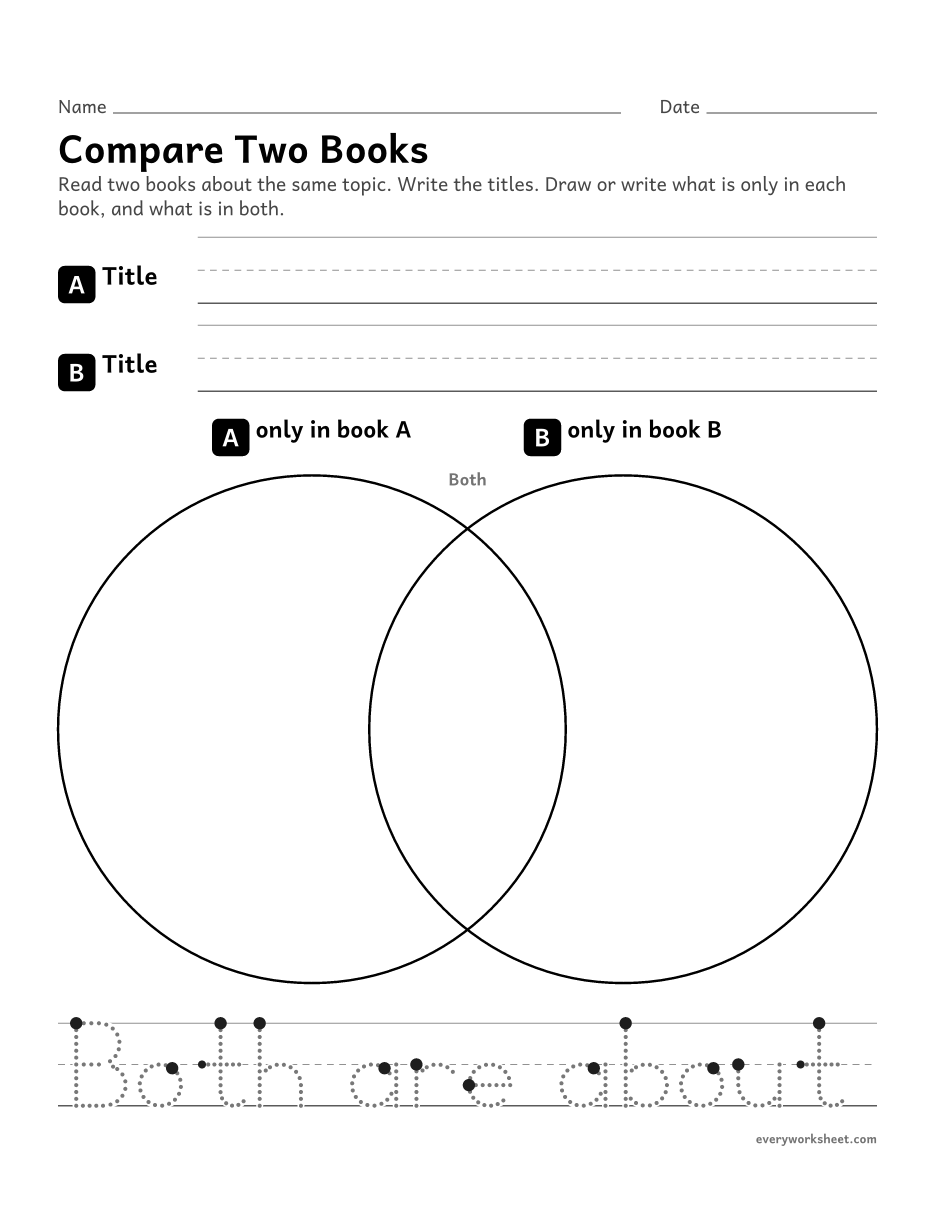
The compare two texts pages read a story and a fact text on the same topic aloud, then ask children what is only in one, only in the other, and in both. Every sheet with one right answer has an answer key on page 2.
Standards
CCSS.ELA-LITERACY.RL.K.5Recognize common types of texts (e.g., storybooks, poems).CCSS.ELA-LITERACY.RI.K.9With prompting and support, identify basic similarities in and differences between two texts on the same topic (e.g., in illustrations, descriptions, or procedures).CCSS.ELA-LITERACY.RI.K.2With prompting and support, identify the main topic and retell key details of a text.CCSS.ELA-LITERACY.RF.K.4Read emergent-reader texts with purpose and understanding.CCSS.ELA-LITERACY.SL.K.2Confirm understanding of a text read aloud or information presented orally or through other media by asking and answering questions about key details and requesting clarification if something is not understood.CCSS.ELA-LITERACY.RL.K.10Actively engage in group reading activities with purpose and understanding.CCSS.ELA-LITERACY.RI.K.10Actively engage in group reading activities with purpose and understanding.
How to use them
- Teach with the anchor chart and two real books from your shelf, one fiction and one nonfiction on the same topic.
- On the book cover pages, read each title aloud. Ask: could this really happen? A pig wearing a crown is a clue.
- The real or make-believe sentences use kindergarten sight words and short words children can sound out, so most children can read them on their own.
- The storybook, poem or information page has six short texts for a grown-up to read aloud. Listen for rhymes, a story with characters, or facts.
- For compare two texts, read both texts aloud twice. Children can draw or write in each part of the circles.
- Finish with the book hunt: children pick four books from the class library and sort them.
Teaching tips
- Kindergartners often think any book with animals is fiction. Show a nonfiction animal book with photos to break that idea.
- Use the words made up and real alongside fiction and nonfiction until the new words stick.
- Real does not mean it happened to me. A story about a boy at the park is still fiction if someone made it up. Keep the first lessons to clear cases.
- Photos, labels and a table of contents are strong clues that a book is nonfiction.
- If a child is unsure, ask: does this book tell a story, or does it teach me something?
- On the Venn diagram pages, accept drawings. The idea of same and different matters more than spelling.
Questions teachers and parents ask
What is the difference between fiction and nonfiction?
Fiction is a made-up story. It has characters and can include things that could not really happen. Nonfiction is true. It teaches facts about real people, animals, places and things.
How do I explain fiction and nonfiction to a kindergartner?
Use two words they know: made up and real. Show two books about the same animal, one story and one fact book, and ask which one could really happen.
Is a poem fiction or nonfiction?
Poems are their own kind of text. In kindergarten, children learn to tell storybooks, poems and information books apart by listening for rhyme, a story, or facts.
Can kindergartners read these sheets alone?
The real or make-believe sentences use only kindergarten sight words and simple sound-it-out words. The book titles and longer texts are meant to be read aloud by a grown-up.