 View larger
Five Senses Worksheets for Kindergarten
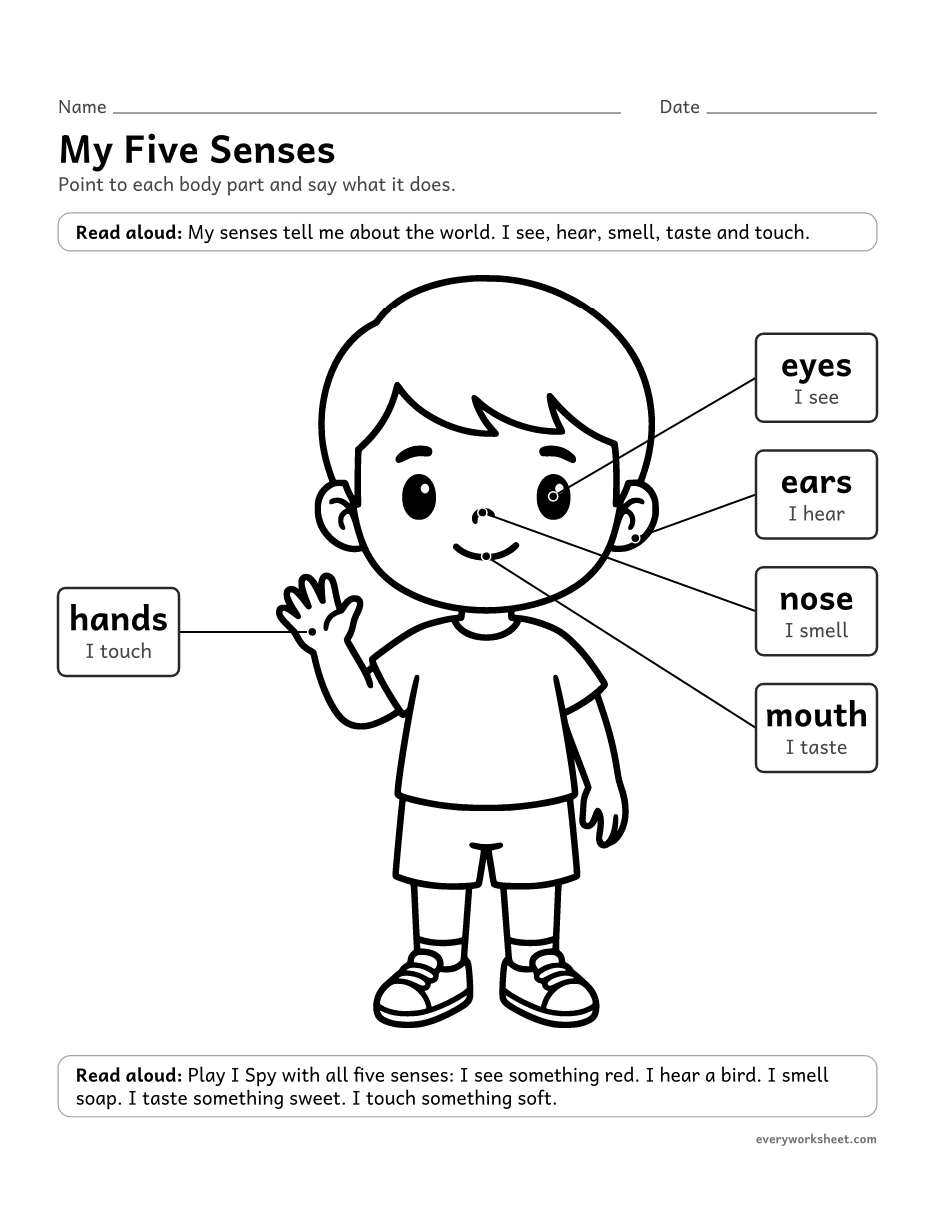
Five senses printables for kindergarten: a labeled body parts poster, label-it and cut-and-paste pages, a sense sort, a popcorn observation and a mini book.
Download the five senses worksheets
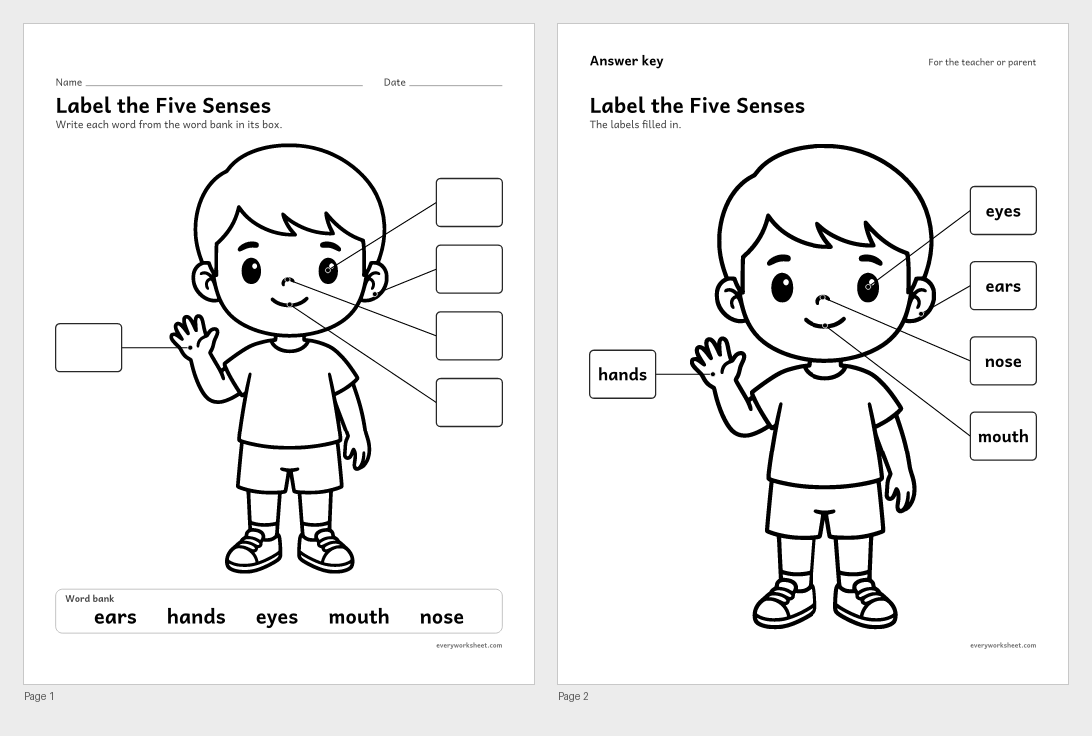
Label the five senses
 View larger
 View all 2 pages
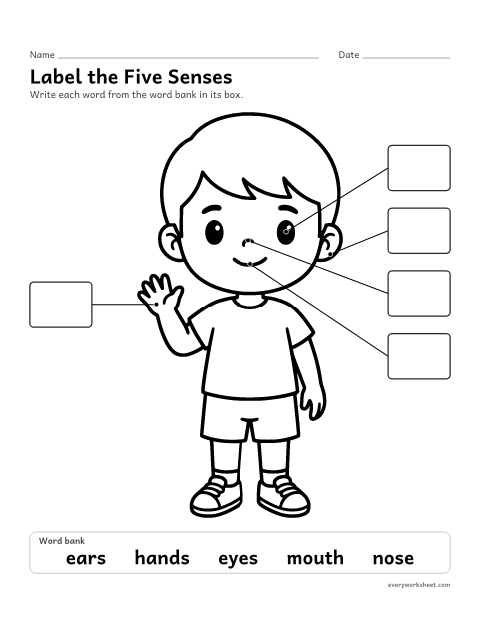
Label the five senses (Word Bank)
Labeling the body parts for the five senses
Answer key on page 2
2 pages47 KB
 View all 2 pages
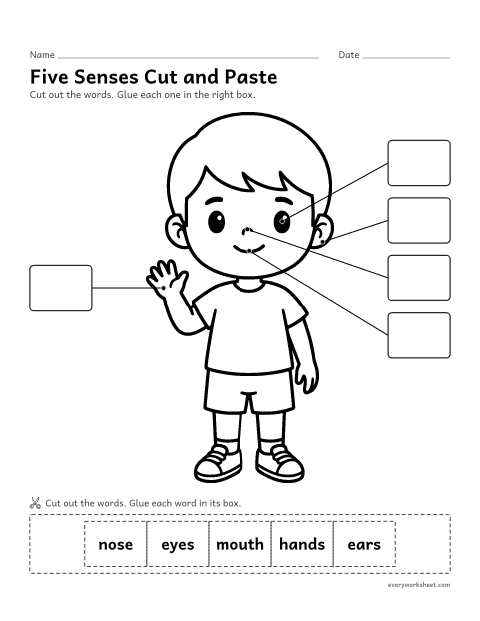
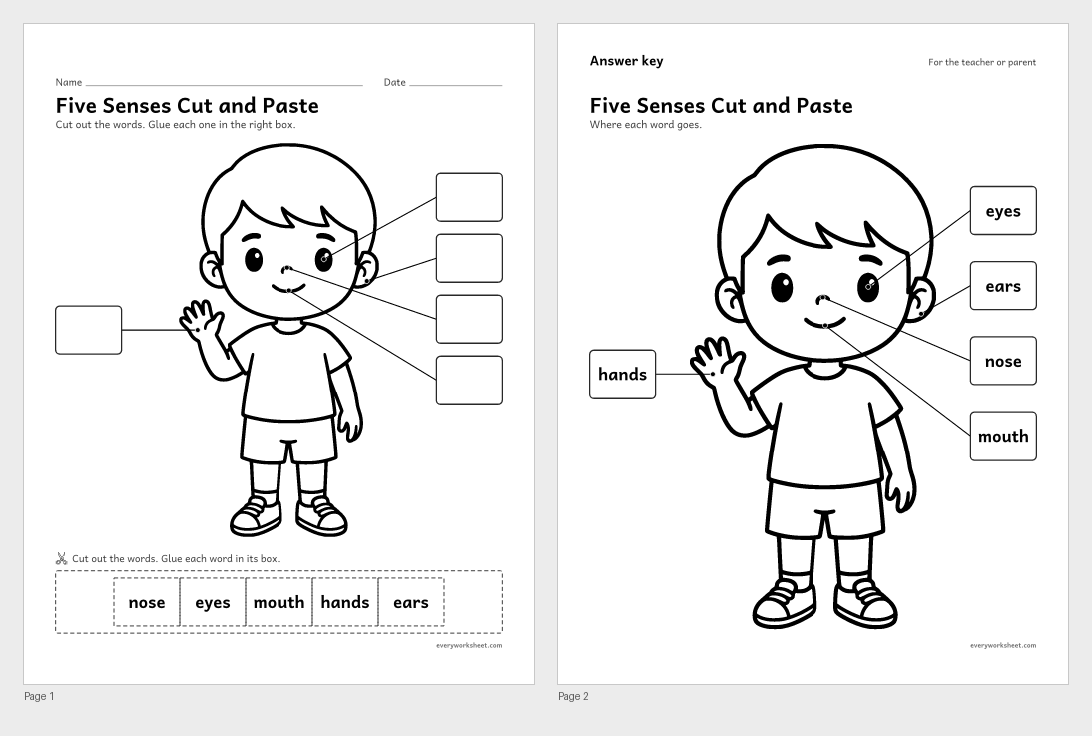
Five senses cut and paste labels
Labeling the body parts for the five senses
Answer key on page 2
2 pages76 KB
Use all five senses
 View all 2 pages
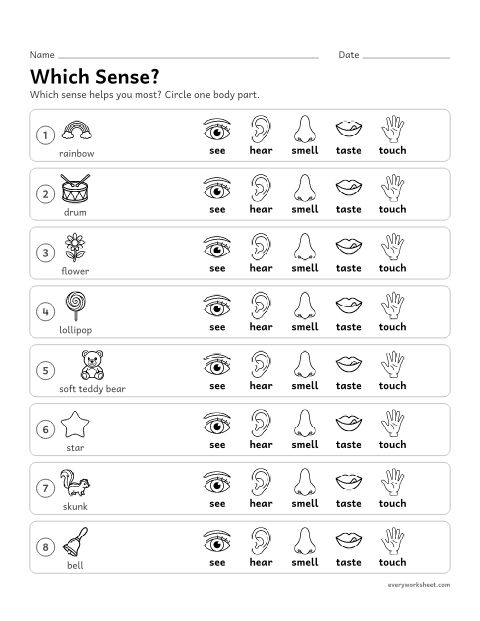
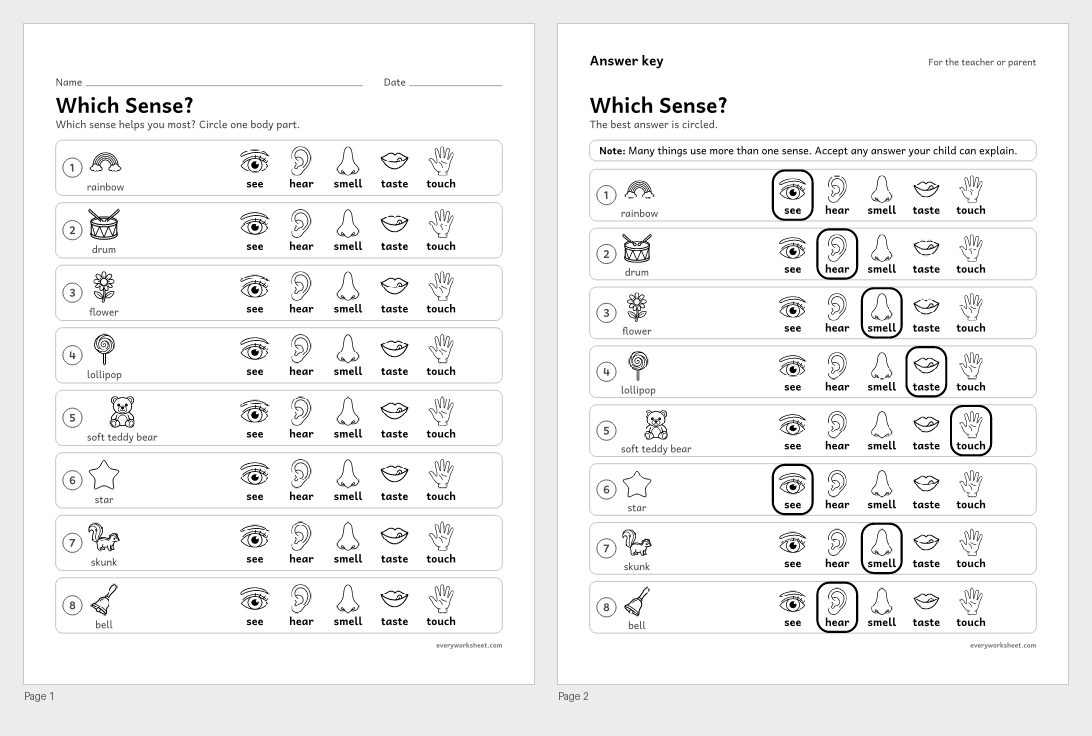
Five senses Sort: circle the sense
Matching things to the sense we use
Answer key on page 2
2 pages452 KB
 View larger
 View larger
Print at 100% (actual size) for the cleanest tracing lines.
About these five senses worksheets
Our five senses are how we learn about the world. We see with our eyes, hear with our ears, smell with our nose, taste with our tongue and touch with our skin. Using the senses on purpose is the first step in doing science: good scientists notice details.
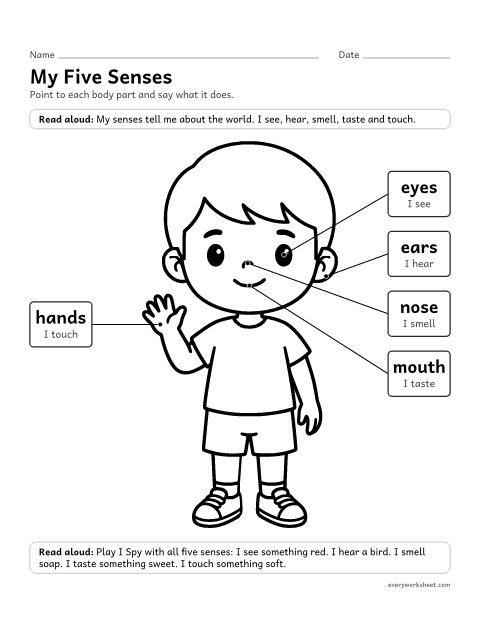
Start with the poster: a child's face and hands with the eyes, ears, nose, mouth and hands labeled, and what each one does (I see, I hear, I smell, I taste, I touch). Then children label the same picture themselves, writing from a word bank or cutting out the words and gluing them in. The sort asks which sense helps most with a rainbow, a drum, a flower or a lollipop. Many things use more than one sense, so the key accepts any answer a child can explain.
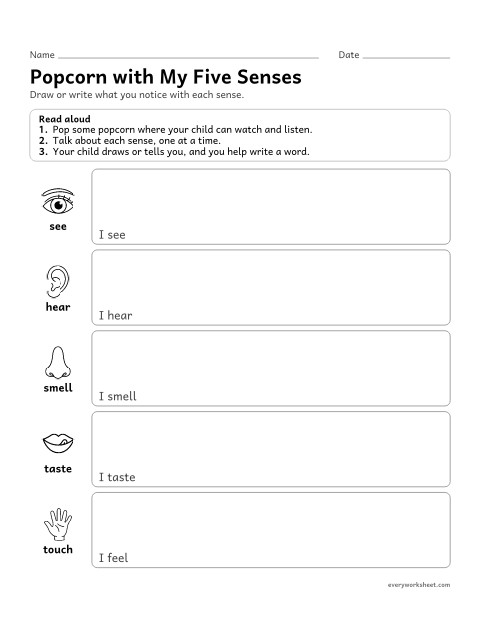
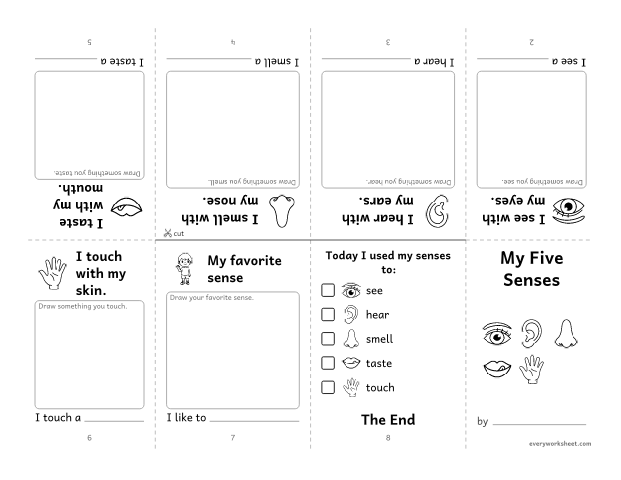
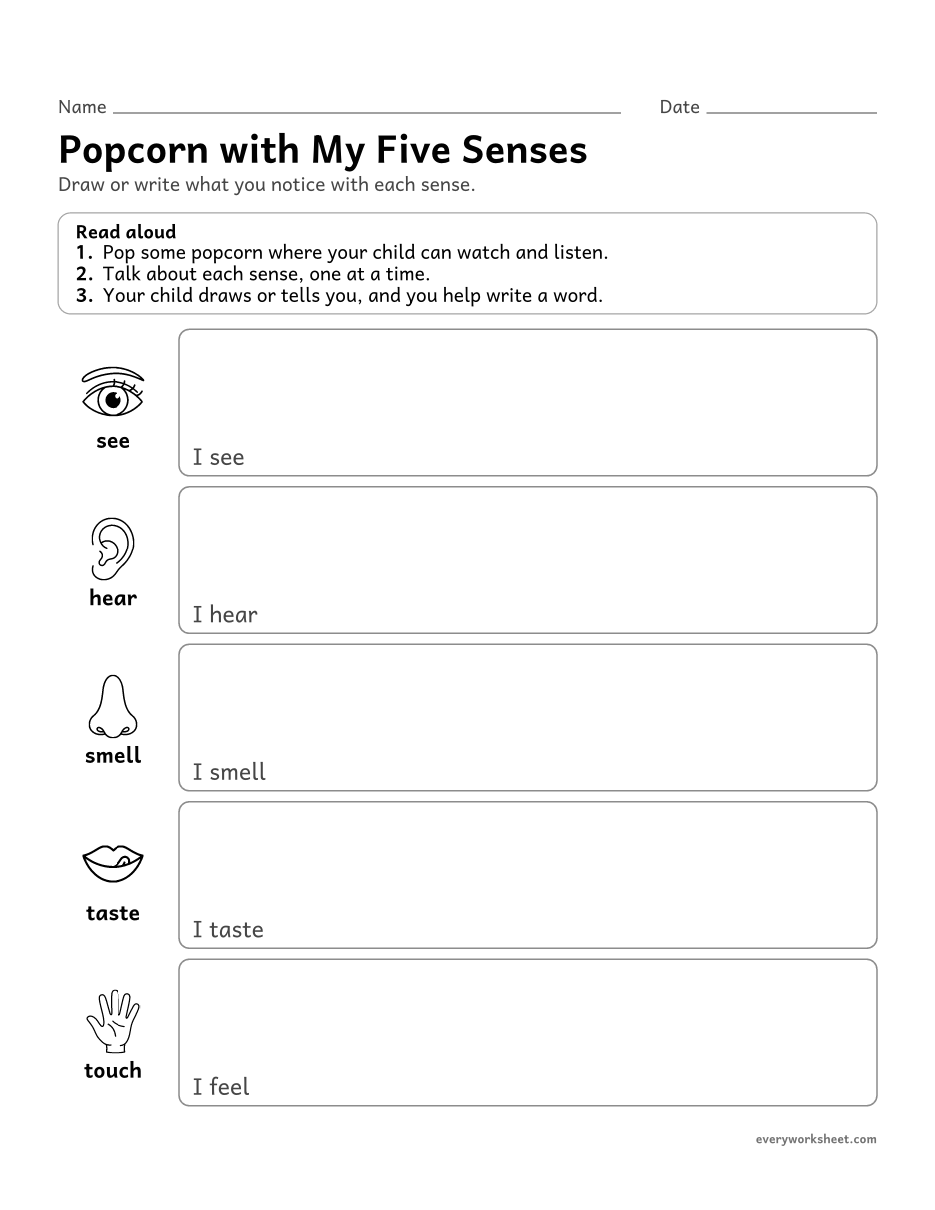
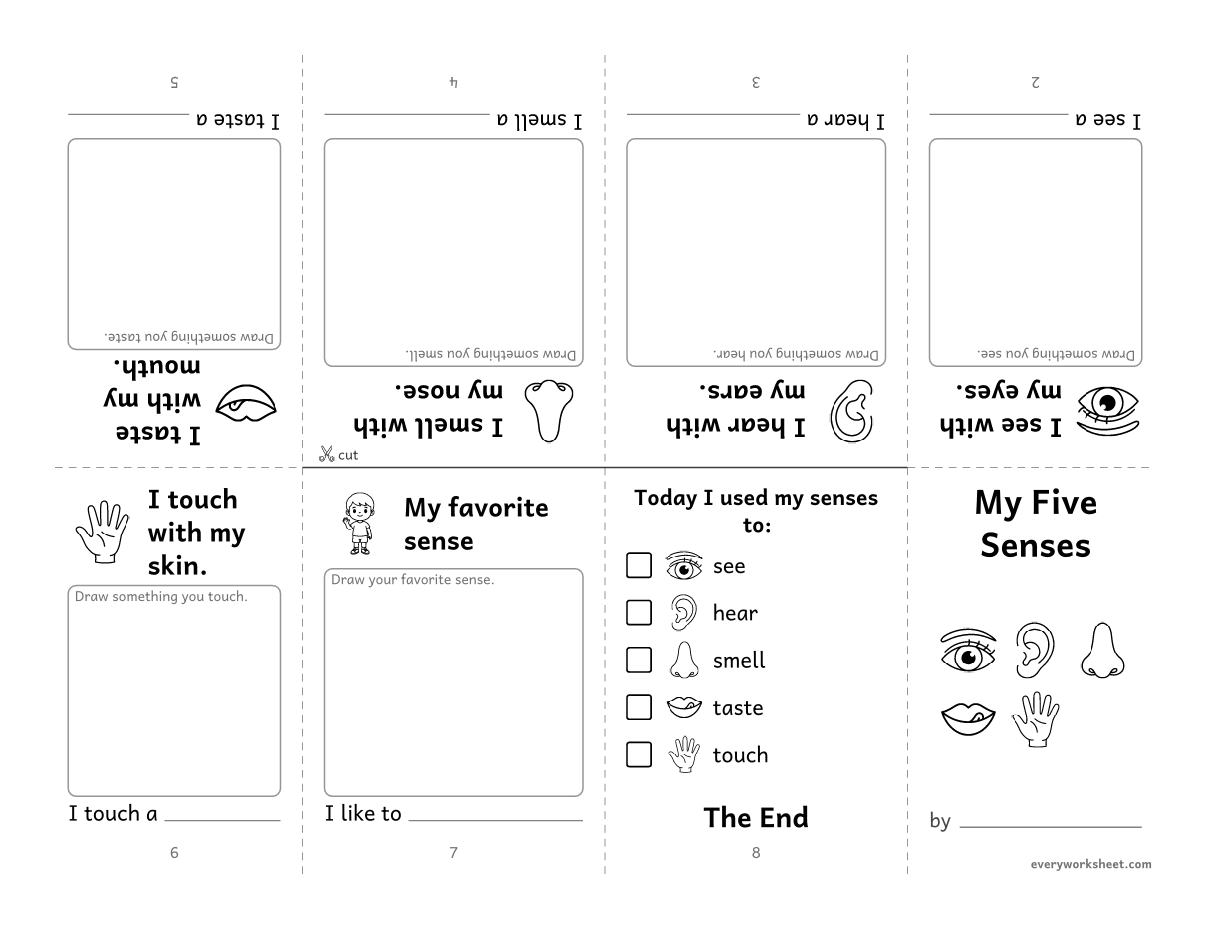
Then put the senses to work. On the popcorn page children use all five senses on one snack, and the fold-up My Five Senses mini book gives them a page to draw for each sense.
Standards
NGSS 1-LS1-1Use materials to design a solution to a human problem by mimicking how plants and/or animals use their external parts to help them survive, grow, and meet their needs (grade 1; the senses are the body parts children explore first).NGSS K-LS1-1Use observations to describe patterns of what plants and animals (including humans) need to survive.CCSS.ELA-LITERACY.W.K.2Use a combination of drawing, dictating, and writing to compose informative/explanatory texts in which they name what they are writing about and supply some information about the topic.CCSS.ELA-LITERACY.W.K.8With guidance and support from adults, recall information from experiences or gather information from provided sources to answer a question.CCSS.ELA-LITERACY.SL.K.5Add drawings or other visual displays to descriptions as desired to provide additional detail.CCSS.MATH.CONTENT.K.MD.B.3Classify objects into given categories; count the numbers of objects in each category and sort the categories by count.CCSS.ELA-LITERACY.L.K.6Use words and phrases acquired through conversations, reading and being read to, and responding to texts.
How to use them
- Point to each body part as you read the poster, and do the action: blink, cup your ears, sniff, lick your lips, wiggle your fingers.
- After the poster, do the label page with the word bank, or the cut-and-paste page if your child enjoys scissors and glue.
- Use the sort for review. Ask, "Why did you pick that sense?"
- For the popcorn page, pop popcorn where your child can see, hear and smell it, then taste and touch it once it cools.
- Make the mini book last. One sheet folds into an 8-page book with one cut; the folding steps are printed on the sheet.
Teaching tips
- Touch is felt with the skin all over the body, not only the hands. The hand is just the easiest picture.
- Only taste things a grown-up says are safe. Never taste unknown objects for a science test.
- Check for food allergies before any tasting activity.
- For children with vision or hearing differences, focus on the senses they use most and celebrate how they notice things.
Questions teachers and parents ask
What are the five senses?
Sight, hearing, smell, taste and touch. We see with our eyes, hear with our ears, smell with our nose, taste with our tongue and touch with our skin.
How do you teach the five senses in kindergarten?
Act out each sense, read a labeled five senses poster, and then use the senses on purpose: a listening walk, a smelling jar or a popcorn snack. Label-it pages and draw-and-write pages help children record what they notice.
What is in the five senses mini book?
A cover, one page for each sense with a sentence and a box to draw in, a favorite sense page and a checklist on the back. It is one sheet that folds into a book.
Why do the answer keys say other answers can be right?
Many things use more than one sense. A lemon can be tasted, smelled and seen. The key shows the best match, but any answer your child can explain is fine.
Are the five senses worksheets free?
Yes. Every page is a free PDF with no sign-up, in US Letter and A4. The label, cut-and-paste and sort pages include an answer key.