 View larger
Frog Life Cycle Worksheets
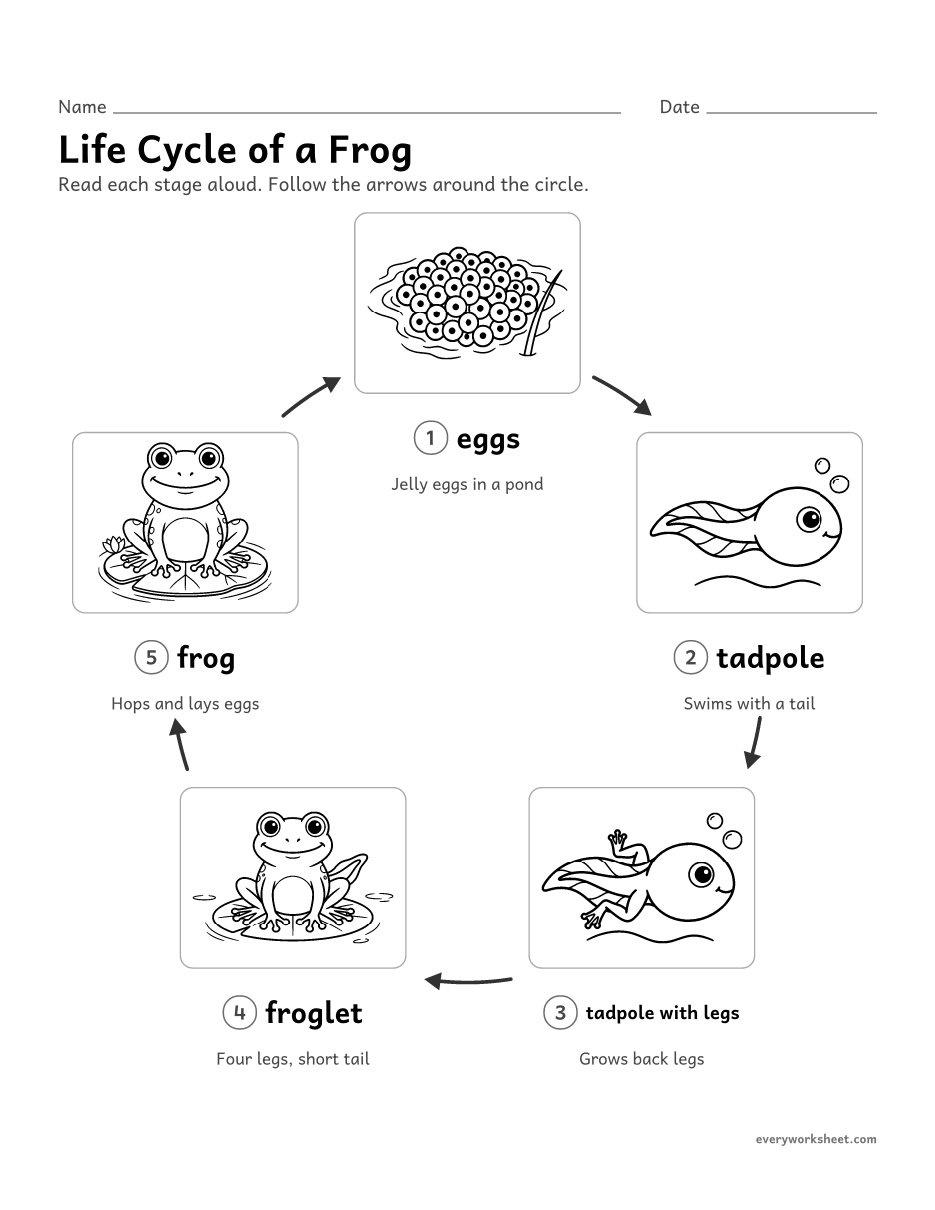
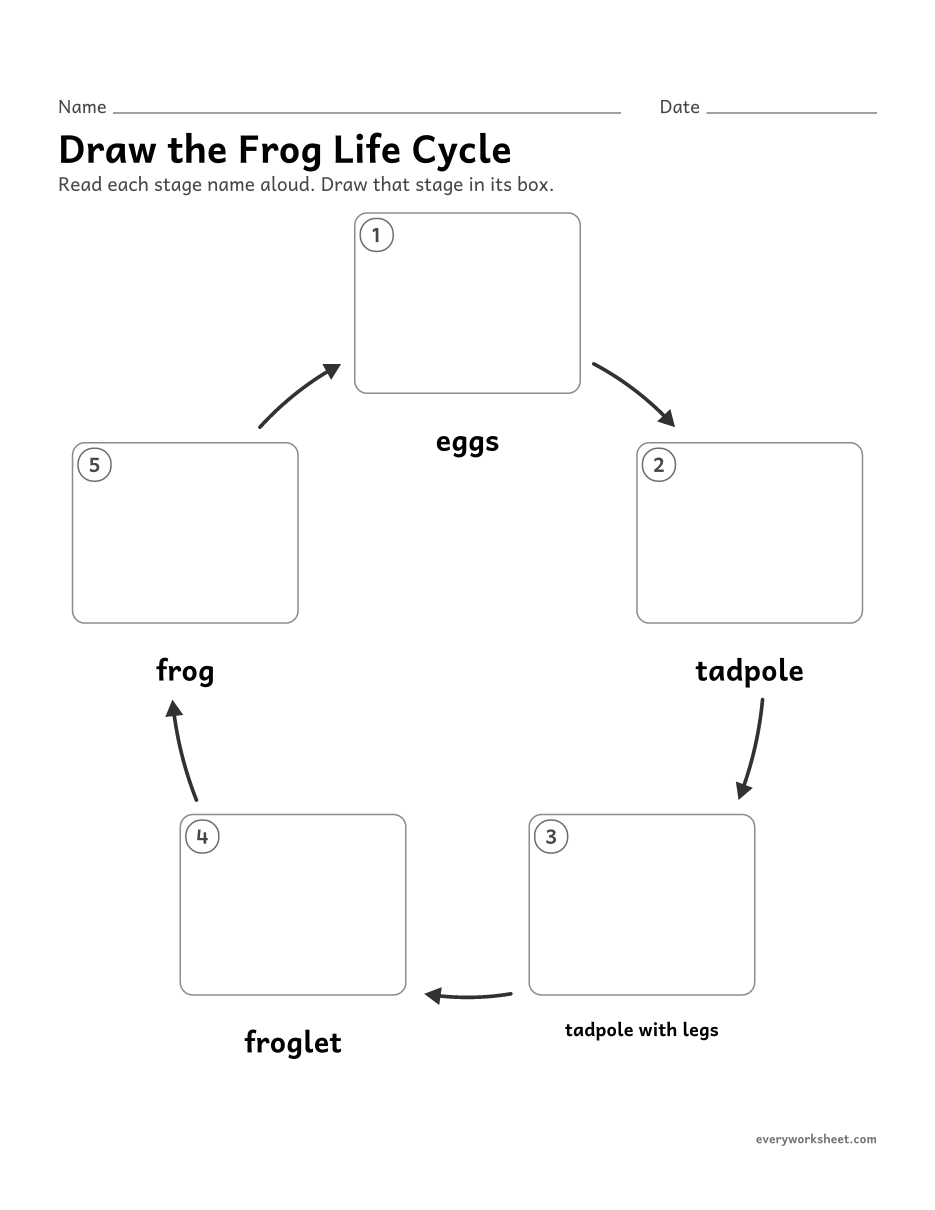
Eggs, tadpole, tadpole with legs, froglet, frog: a five-stage chart with labeling, cut and paste, a spinning wheel, drawing and a read-aloud page.
Download the frog life cycle worksheets
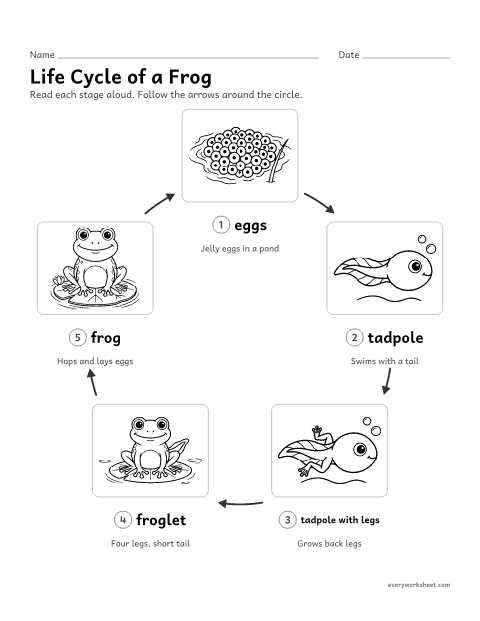
Frog life cycle chart and labeling
 View larger
 View all 2 pages
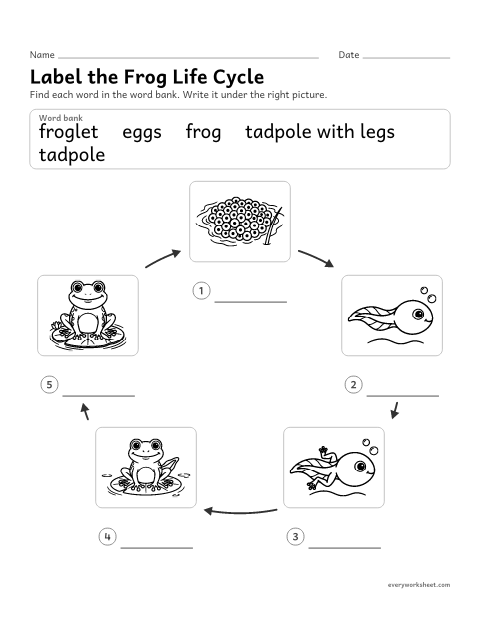
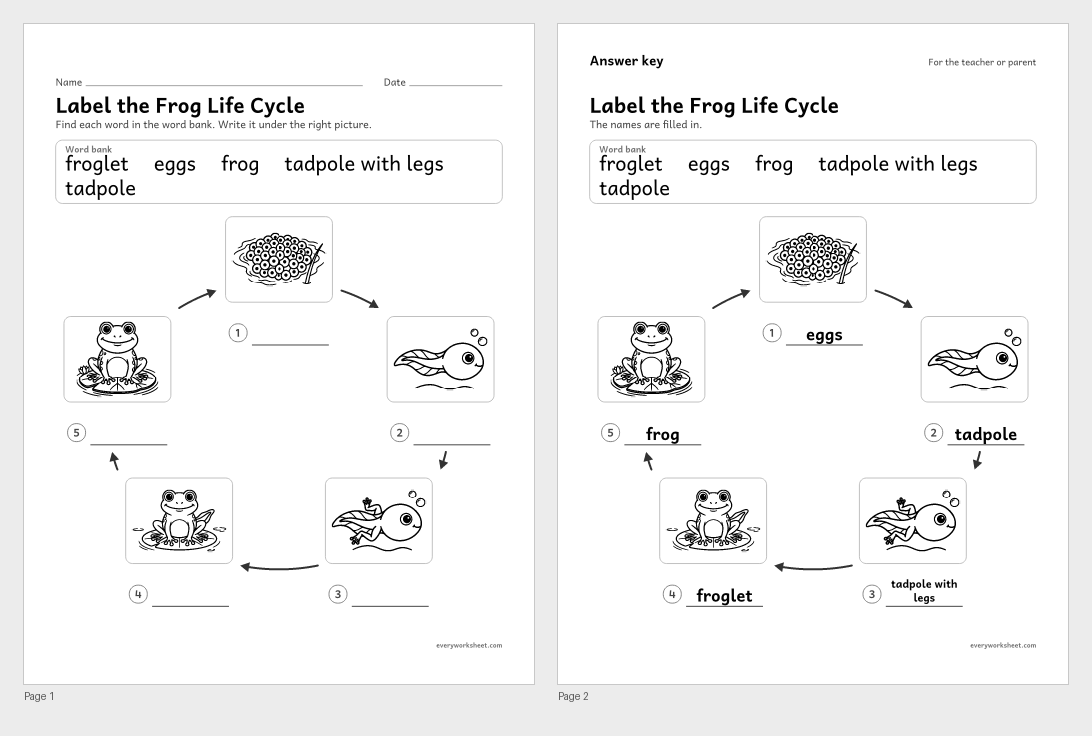
Label the frog life cycle
Labeling the stages of the frog life cycle
Answer key on page 2
2 pages142 KB
Put the stages in order
 View all 2 pages
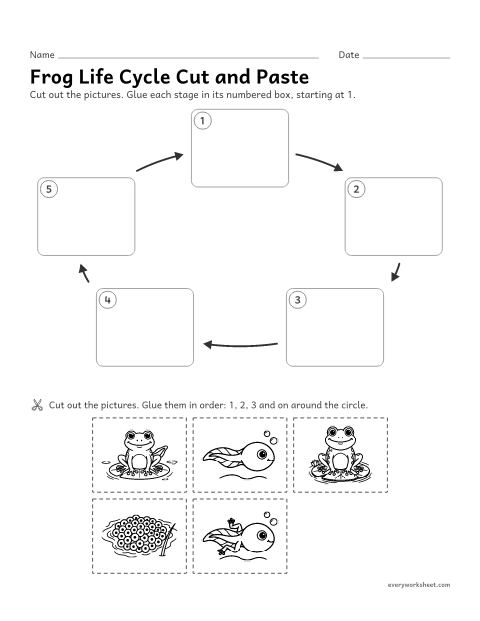
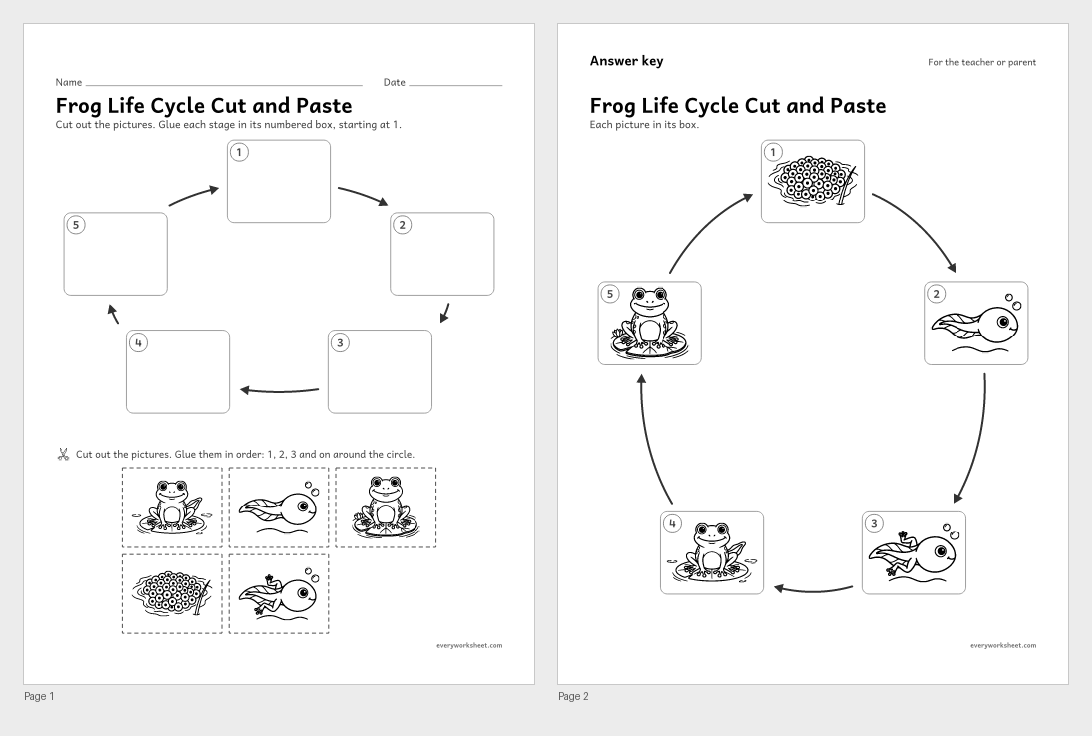
Frog life cycle cut and paste
Putting the frog life cycle stages in order
Answer key on page 2
2 pages169 KB
 View all 2 pages
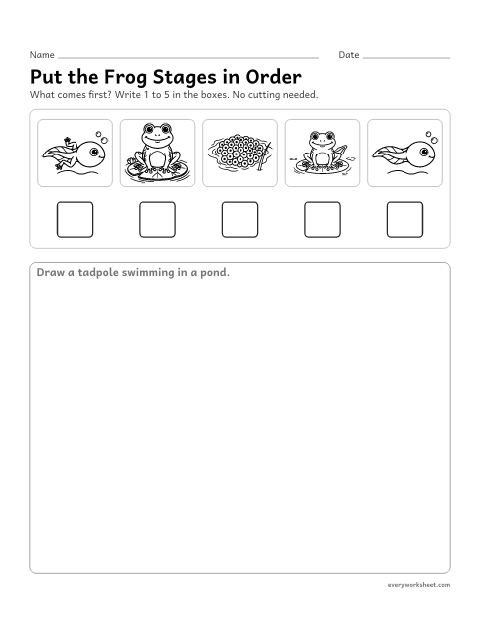
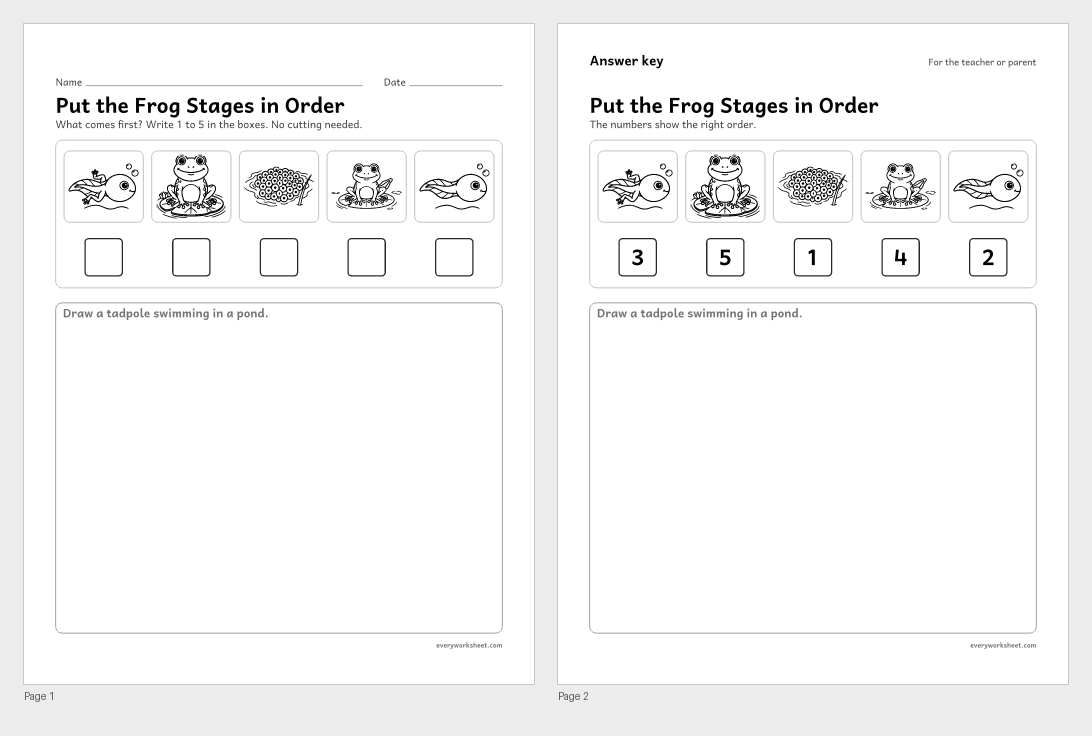
Number the frog life cycle stages
Ordering the stages of the frog life cycle
Answer key on page 2
2 pages140 KB
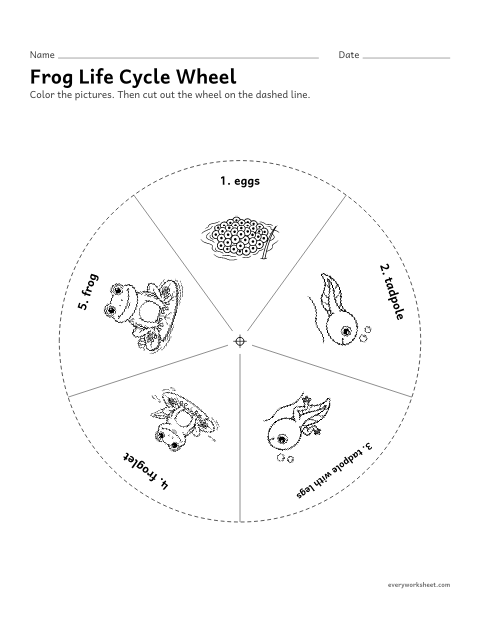
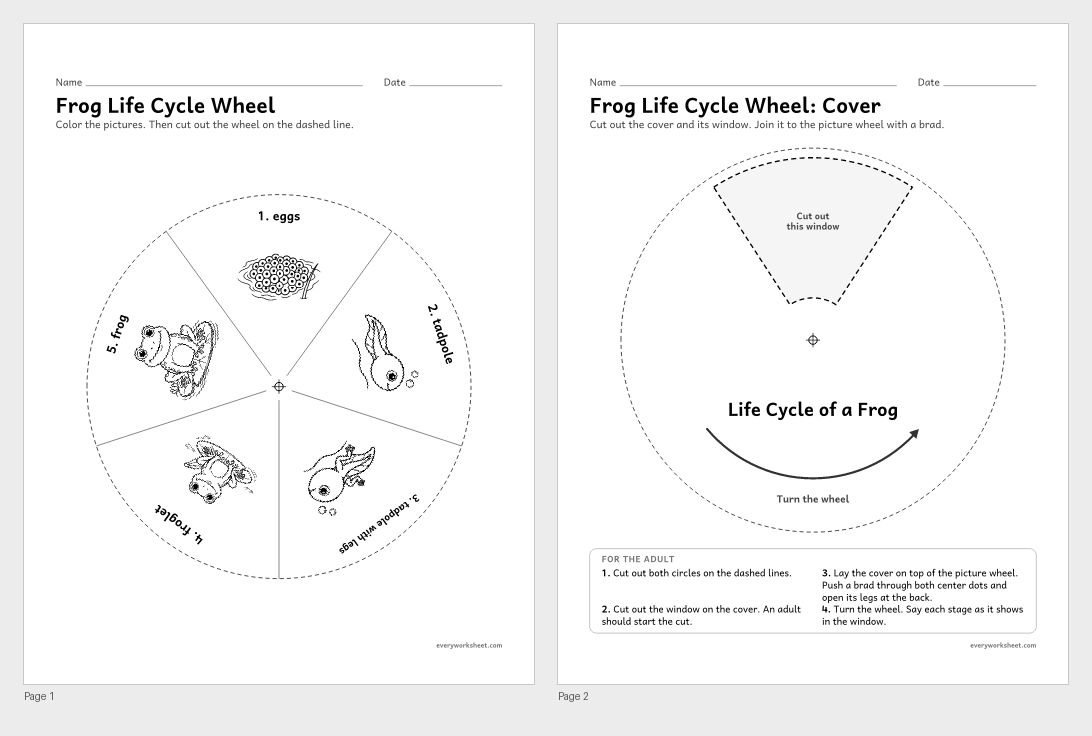
Frog life cycle wheel
 View all 2 pages
Frog life cycle wheel
Turning a wheel to show the frog life cycle as a cycle
2 pages89 KB
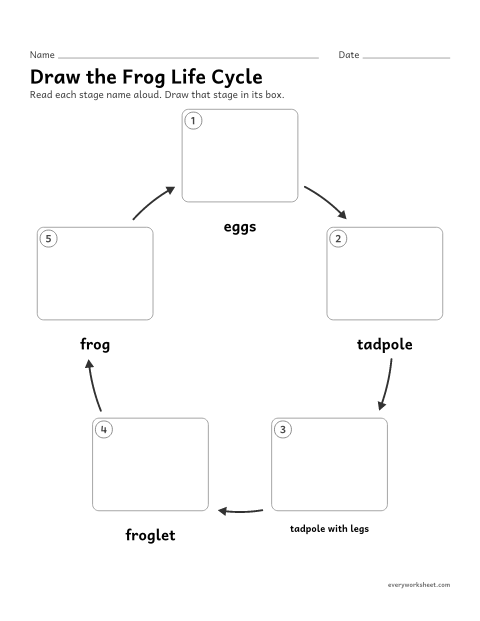
Draw and read aloud
 View larger
 View all 2 pages
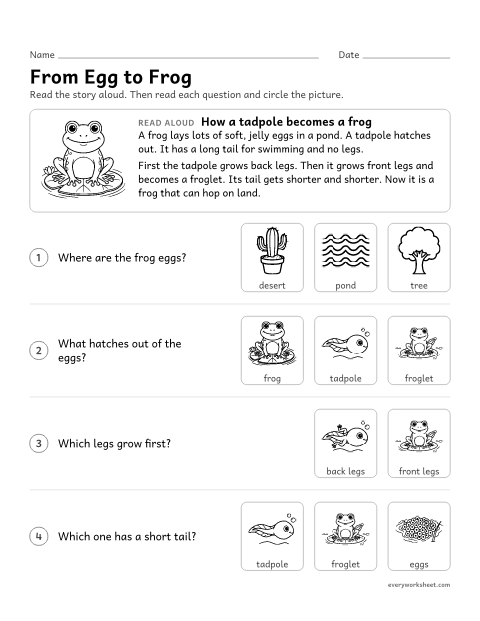
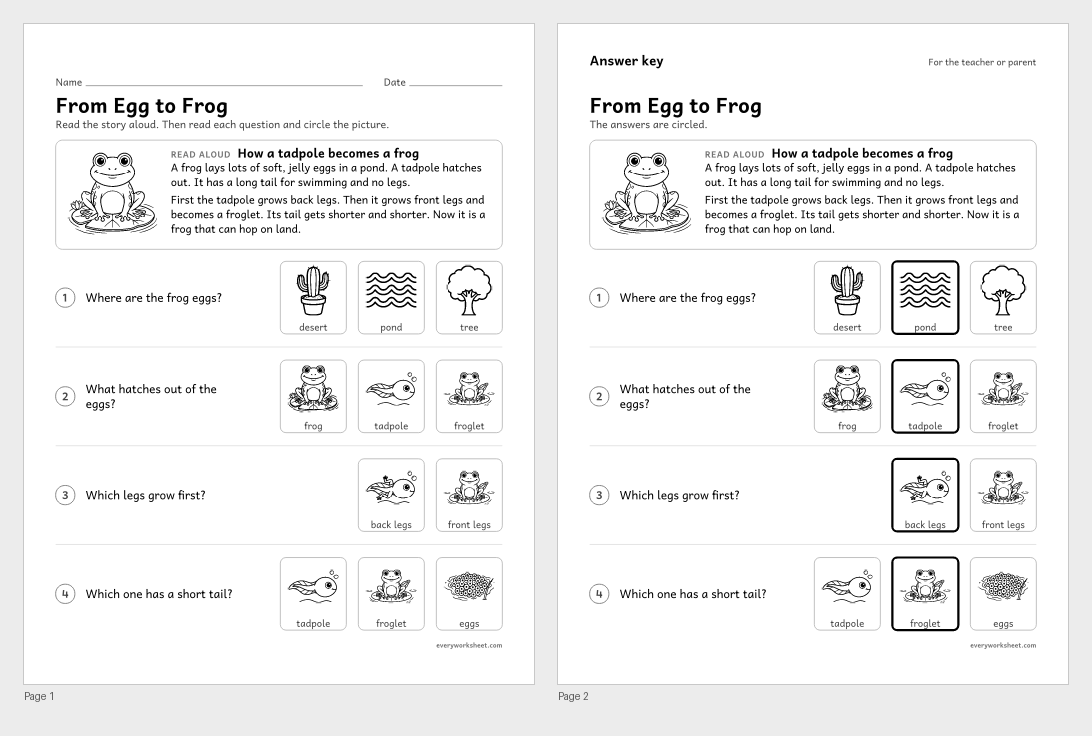
Frog life cycle read aloud
Answering questions about the frog life cycle read aloud
Answer key on page 2
2 pages305 KB
Print at 100% (actual size) for the cleanest tracing lines.
About these frog life cycle worksheets
A frog changes more than almost any animal children know. It starts as a jelly egg in a pond, hatches into a tadpole with a tail and no legs, grows back legs and then front legs, becomes a froglet with a short tail, and finally hops away as a frog.
These frog life cycle worksheets show all five stages with detailed line drawings, so children can see the legs grow and the tail shrink from one picture to the next. Children read the chart, label the stages, cut and paste the pictures around the circle (or number them with no cutting), build a life cycle wheel, draw the cycle and answer questions about a story read aloud.
Life cycles are formally taught in grade 3 (NGSS 3-LS1-1). These pages introduce the idea at a kindergarten level, with pictures, read-aloud text and no reading required.
Standards
NGSS 3-LS1-1Grade 3 standard, introduced here at a kindergarten level: develop models to describe that organisms have unique and diverse life cycles but all have in common birth, growth, reproduction, and death.NGSS K-LS1-1Use observations to describe patterns of what plants and animals (including humans) need to survive.CCSS.ELA-LITERACY.W.K.2Use a combination of drawing, dictating, and writing to compose informative/explanatory texts in which they name what they are writing about and supply some information about the topic.CCSS.ELA-LITERACY.L.K.1.APrint many upper- and lowercase letters.CCSS.ELA-LITERACY.RI.K.1With prompting and support, ask and answer questions about key details in a text.CCSS.ELA-LITERACY.SL.K.2Confirm understanding of a text read aloud or information presented orally or through other media by asking and answering questions about key details and requesting clarification if something is not understood.
How to use them
- Read the chart together. Ask, "What is different in this picture?" at each stage (legs, then a shorter tail).
- Label the cycle from the word bank, or cut and paste the pictures in order: 1 eggs, 2 tadpole, 3 tadpole with legs, 4 froglet, 5 frog.
- Make the life cycle wheel and turn it to tell the story.
- Read the story aloud and let your child circle the answers. Answer keys are on page 2.
- Have your child draw the whole cycle and tell you about each stage.
Teaching tips
- Children often think a tadpole is a fish. Point out that a tadpole grows legs and leaves the water; a fish does not.
- Five stages is a lot. Start with eggs, tadpole and frog, then add the two in-between stages.
- Count the legs at each stage: 0, 2, 4, 4, 4. Then look at the tail: long, long, long, short, none.
- A froglet is a young frog that still has a little tail. The tail is not dropped off; the body takes it in.
- Visit a pond in spring and look for clumps of frog eggs and swimming tadpoles.
Questions teachers and parents ask
What are the stages of the frog life cycle?
Eggs (frogspawn), tadpole, tadpole with legs, froglet and adult frog. The frog lays eggs and the cycle starts again.
What is a froglet?
A froglet is a young frog that has all four legs but still has a short tail. It can leave the water for the first time.
Where do frogs lay their eggs?
Most frogs lay their eggs in water, like a pond. The eggs are soft and covered in clear jelly.
Do these worksheets have answer keys?
Yes. The label, cut and paste, number and read-aloud pages each have an answer key on page 2 of the PDF.