 View all 2 pages
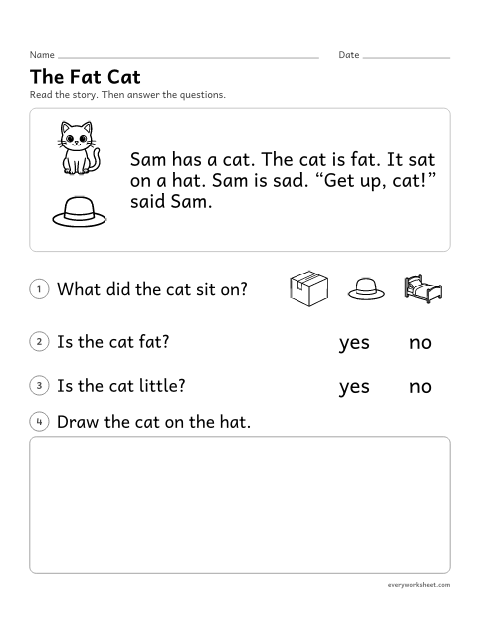
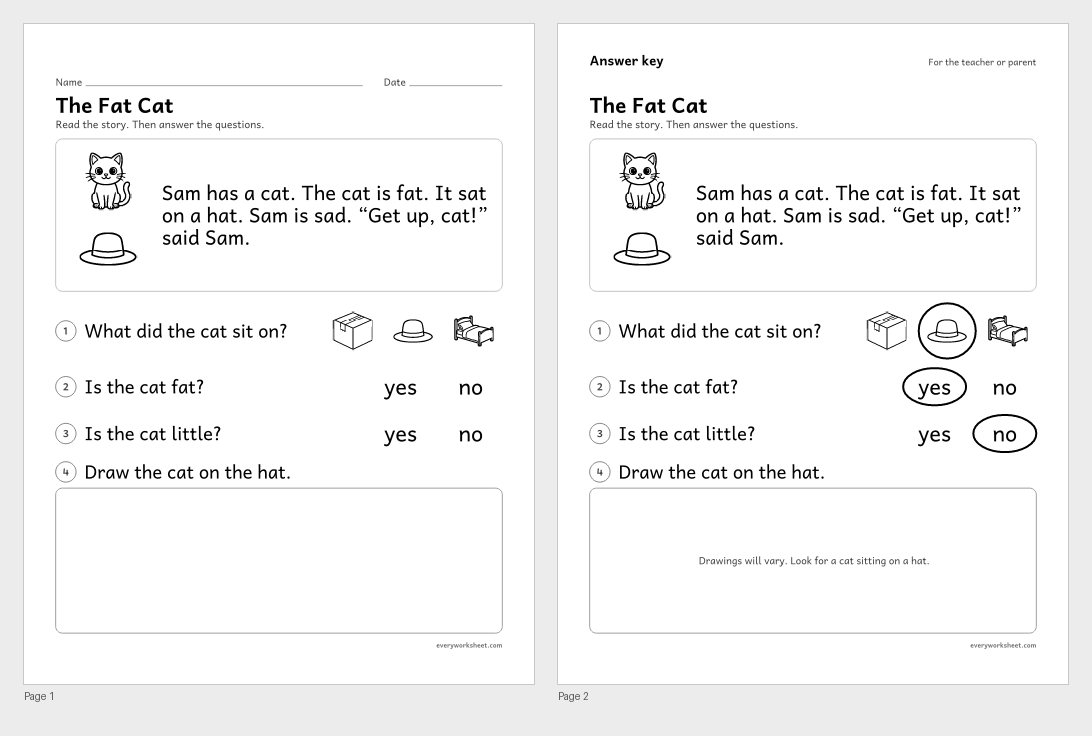
Reading comprehension Passage: the fat cat
Reading a short decodable story and answering questions about key details
Answer key on page 2
2 pages227 KB
Short stories a kindergartner can read alone, plus read-aloud stories and nonfiction passages, each with picture questions and an answer key.
View all 2 pagesReading a short decodable story and answering questions about key details
Answer key on page 2
2 pages227 KB
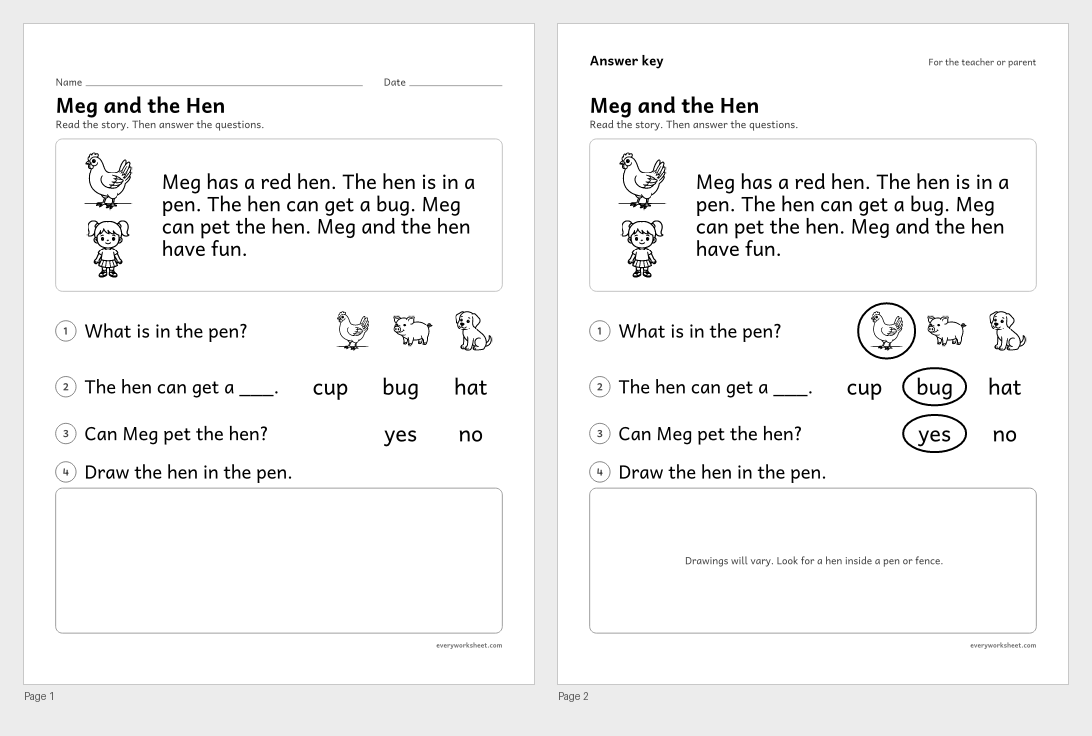 View all 2 pages
Reading a short decodable story and answering questions about key details
Answer key on page 2
2 pages193 KB
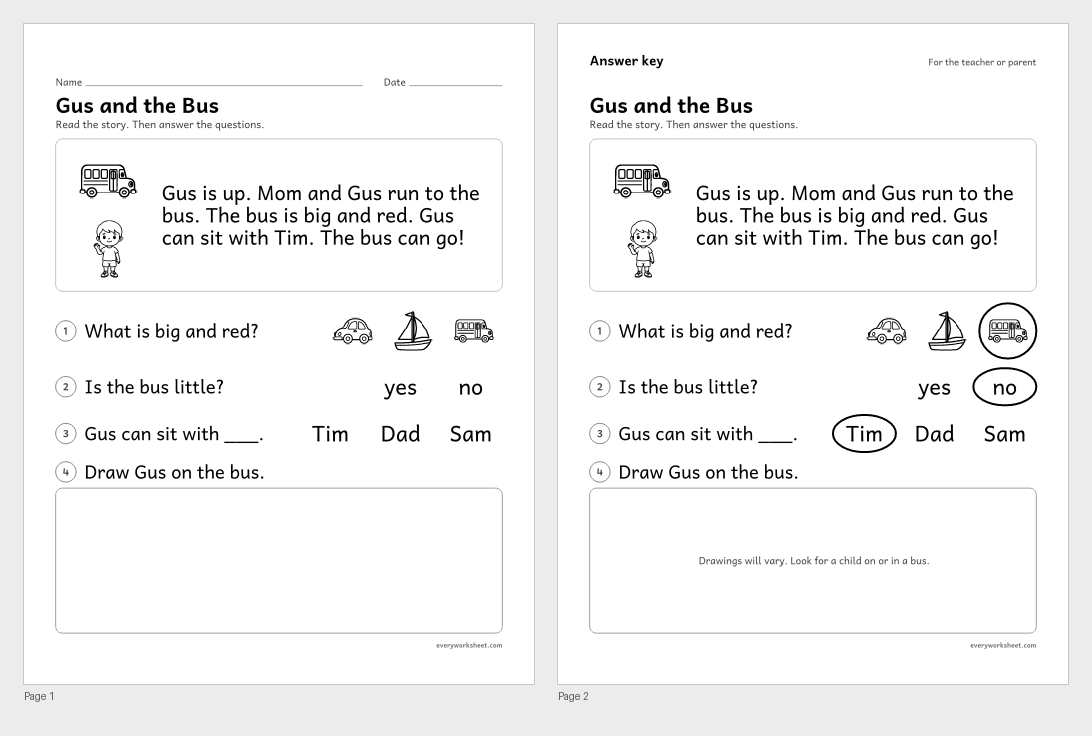 View all 2 pages
Reading a short decodable story and answering questions about key details
Answer key on page 2
2 pages152 KB
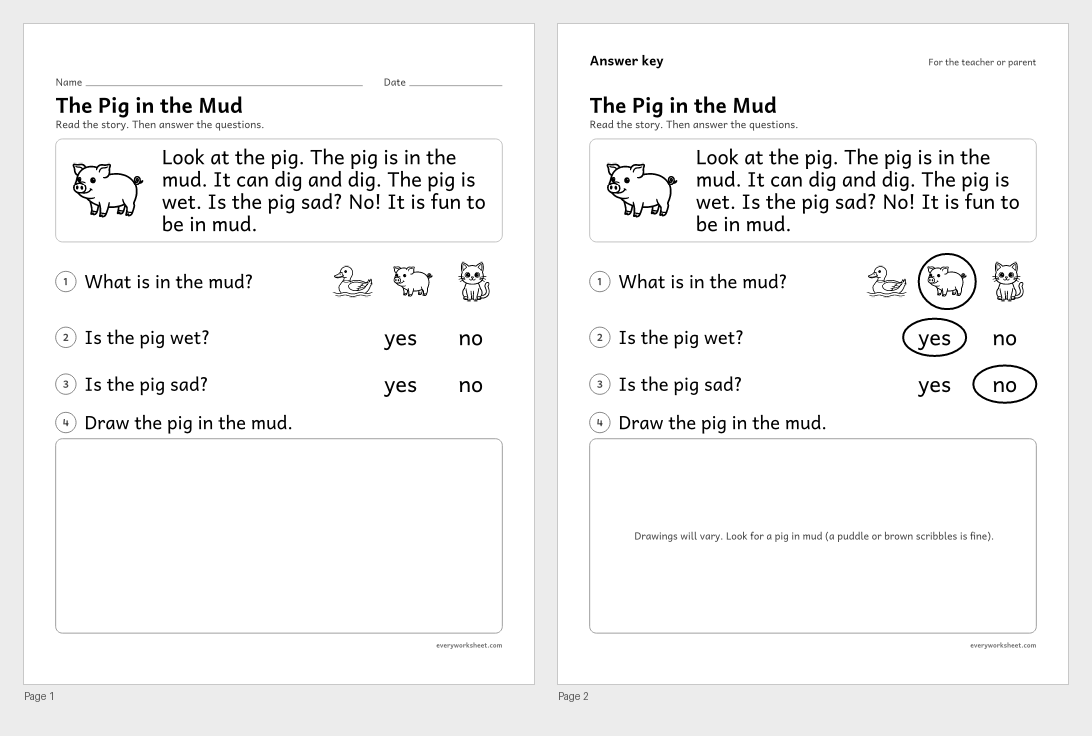 View all 2 pages
Reading a short decodable story and answering questions about key details
Answer key on page 2
2 pages170 KB
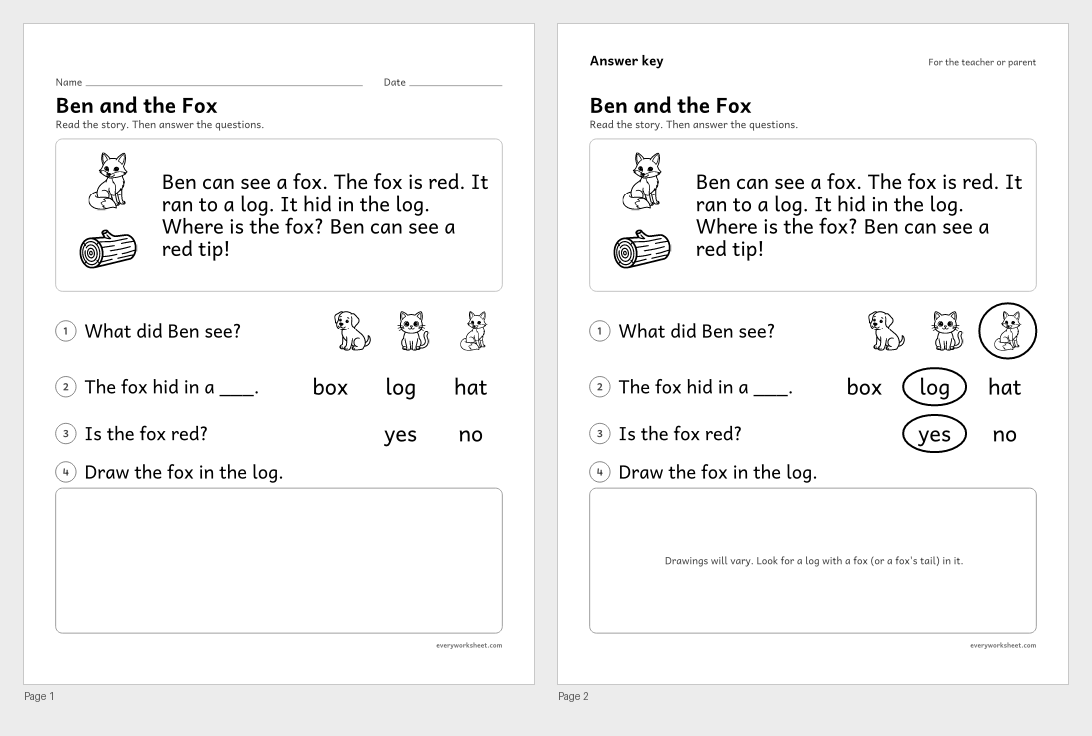 View all 2 pages
Reading a short decodable story and answering questions about key details
Answer key on page 2
2 pages195 KB
 View all 2 pages
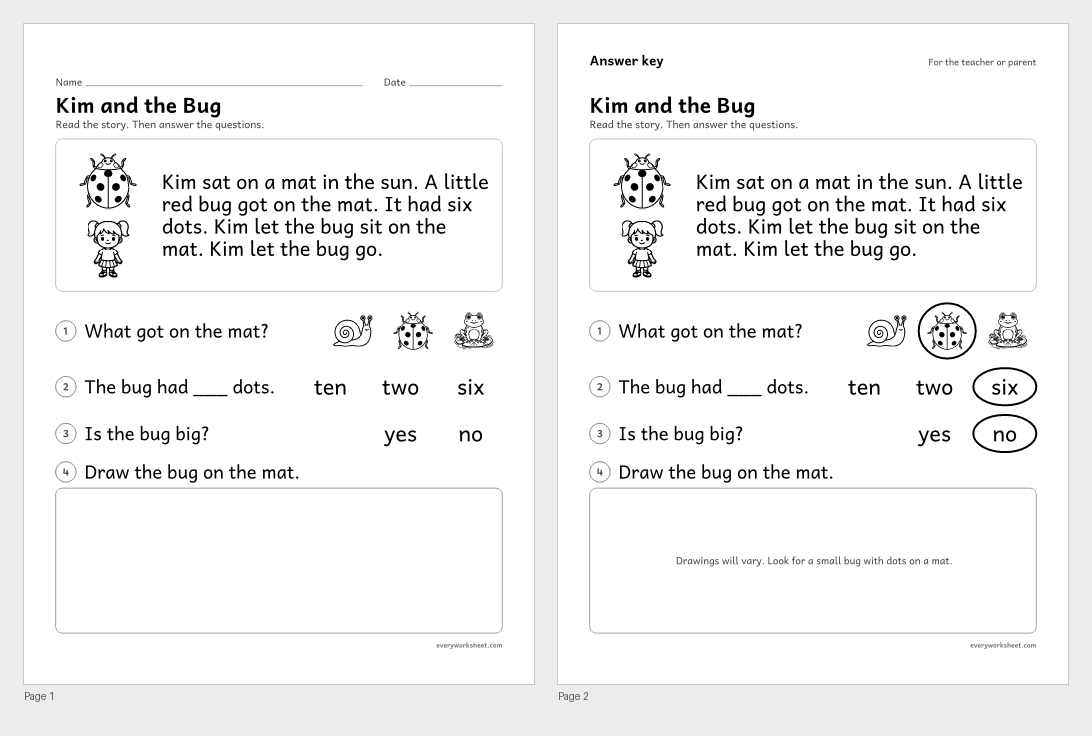
Reading a short decodable story and answering questions about key details
Answer key on page 2
2 pages177 KB
 View all 2 pages
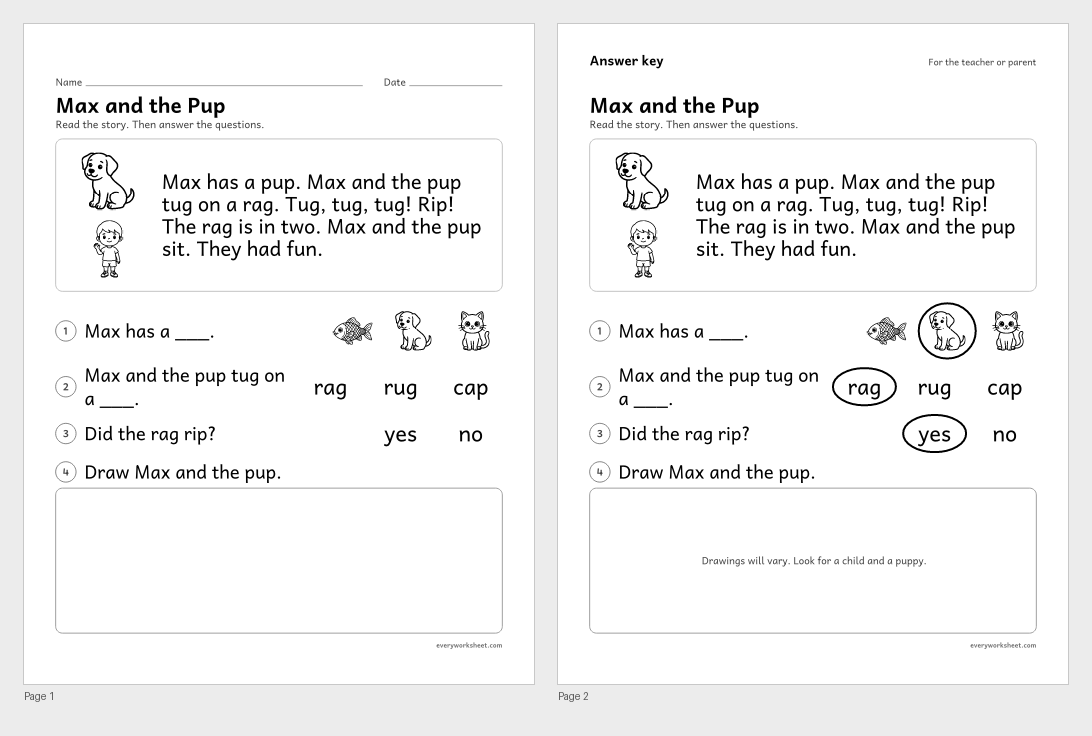
Reading a short decodable story and answering questions about key details
Answer key on page 2
2 pages193 KB
 View all 2 pages
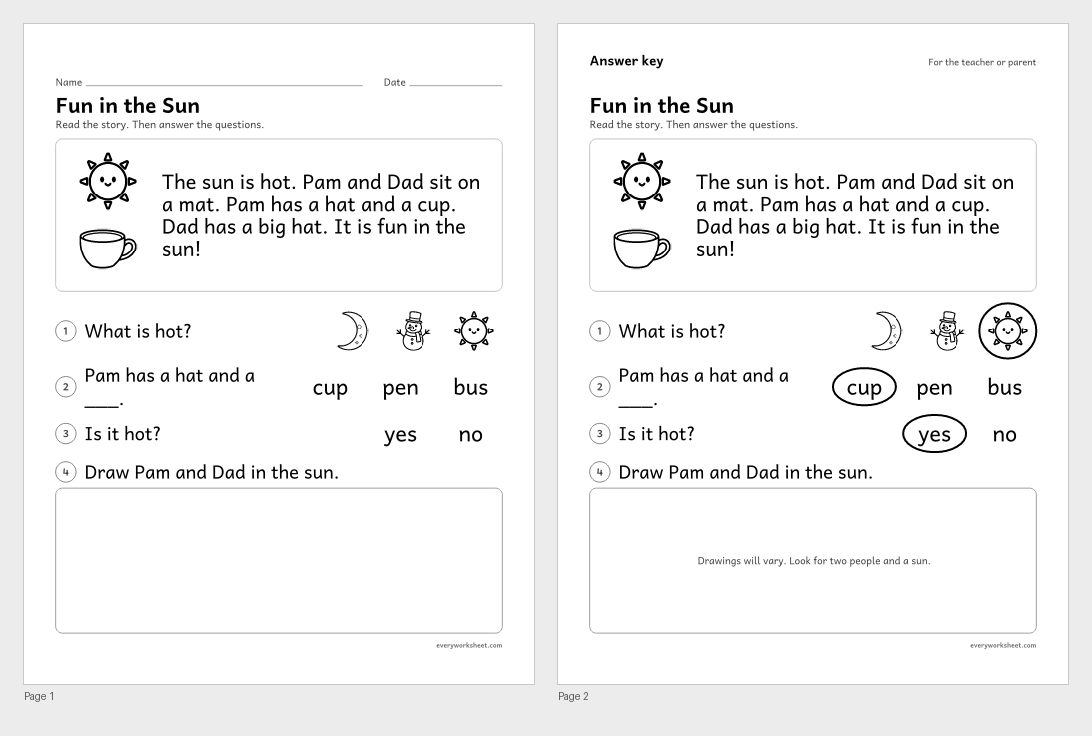
Reading a short decodable story and answering questions about key details
Answer key on page 2
2 pages121 KB
 View all 2 pages
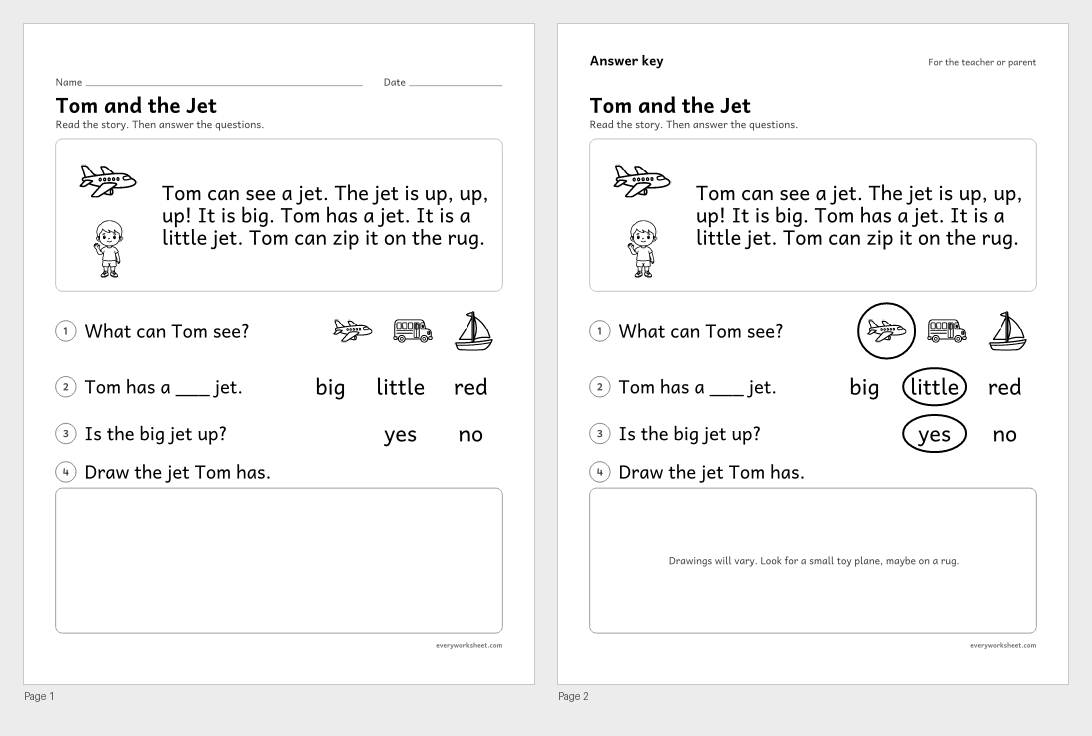
Reading a short decodable story and answering questions about key details
Answer key on page 2
2 pages166 KB
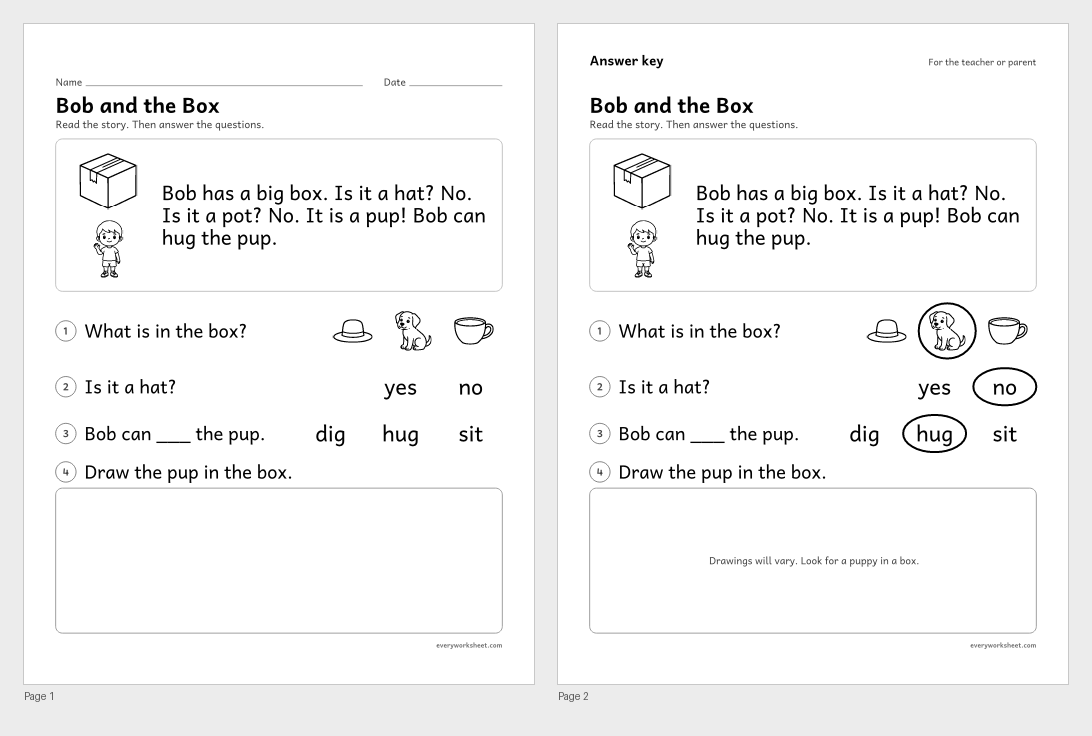 View all 2 pages
Reading a short decodable story and answering questions about key details
Answer key on page 2
2 pages185 KB
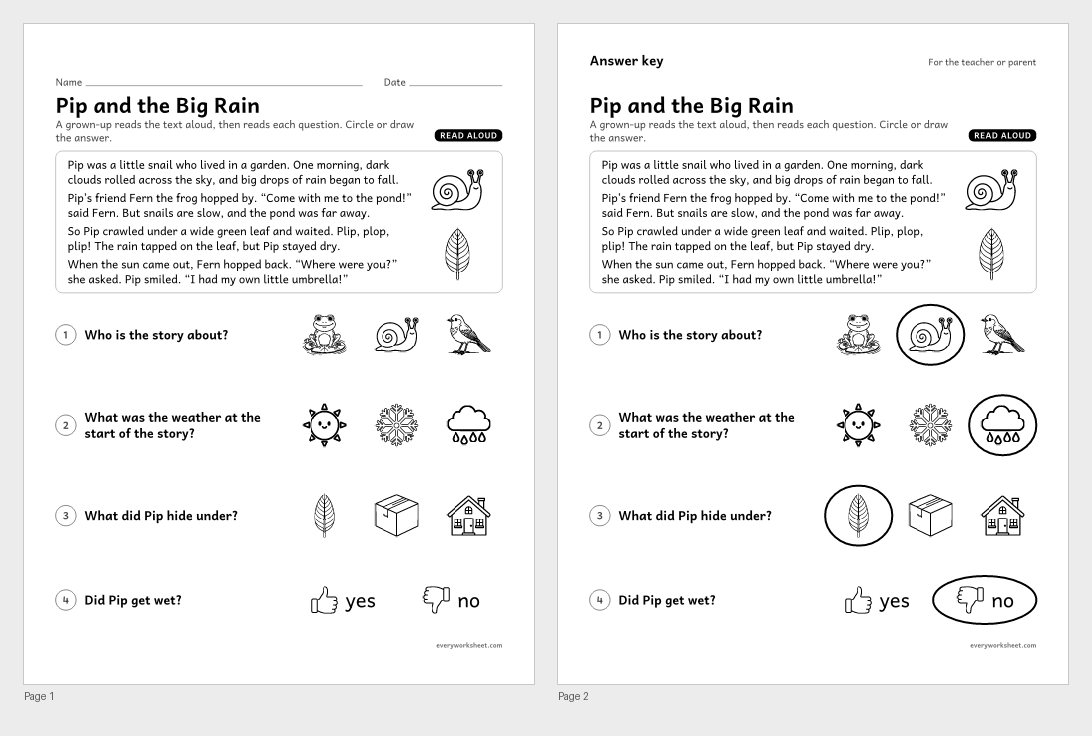 View all 2 pages
Listening to a story and answering questions about characters, setting and events
Answer key on page 2
2 pages303 KB
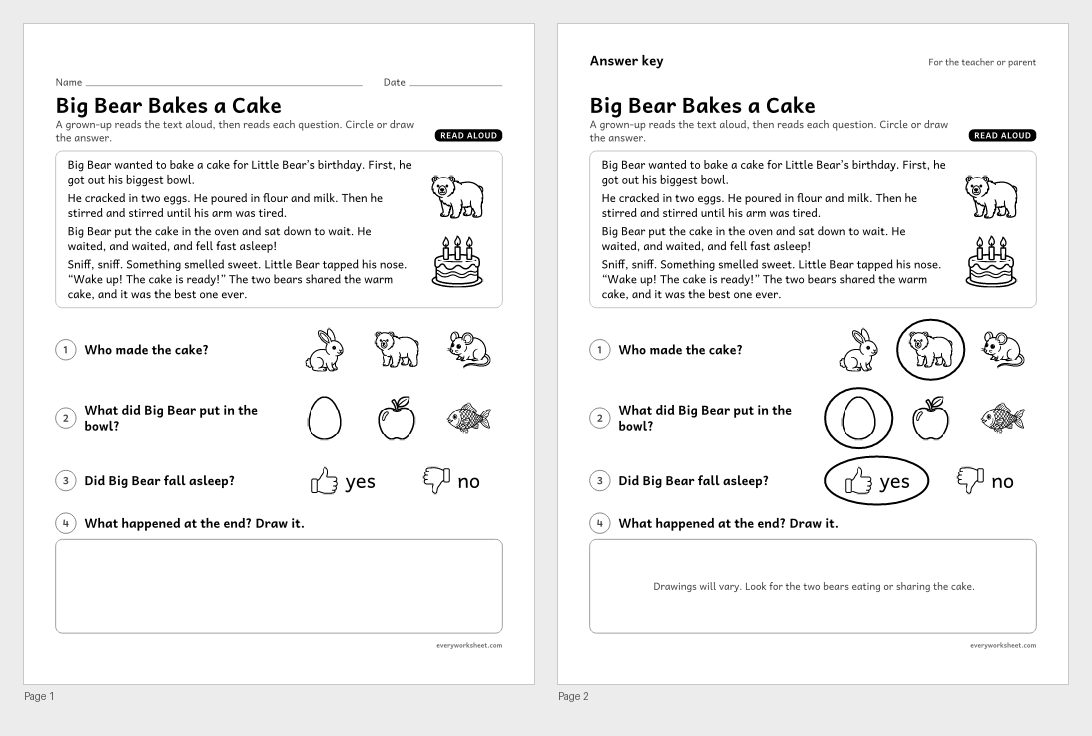 View all 2 pages
Listening to a story and answering questions about characters, setting and events
Answer key on page 2
2 pages326 KB
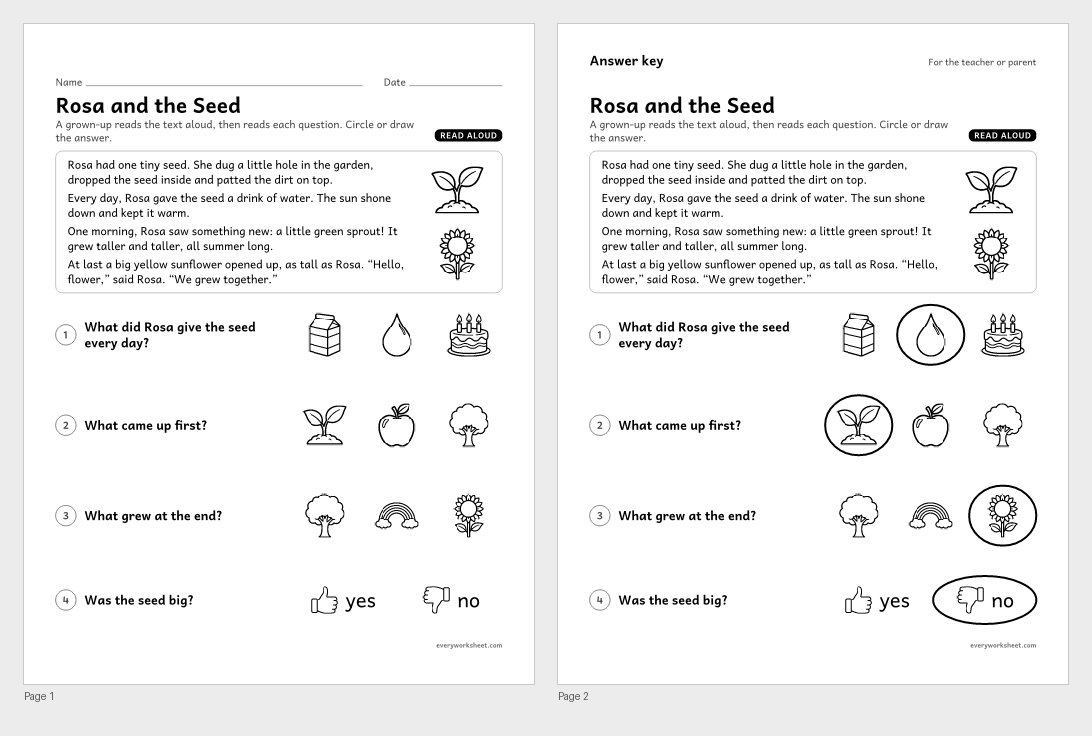 View all 2 pages
Listening to a story and answering questions about characters, setting and events
Answer key on page 2
2 pages342 KB
 View all 2 pages
Listening to an informational text and naming the main topic and key details
Answer key on page 2
2 pages346 KB
 View all 2 pages
Listening to an informational text and naming the main topic and key details
Answer key on page 2
2 pages394 KB
 View all 2 pages
Listening to an informational text and naming the main topic and key details
Answer key on page 2
2 pages247 KB
 View all 2 pages
Listening to an informational text and naming the main topic and key details
Answer key on page 2
2 pages284 KB
Print at 100% (actual size) for the cleanest tracing lines.
Reading comprehension in kindergarten means two things. Children answer questions about a story someone reads to them, and, by spring, about a few short sentences they read on their own. These kindergarten reading comprehension worksheets practice both.
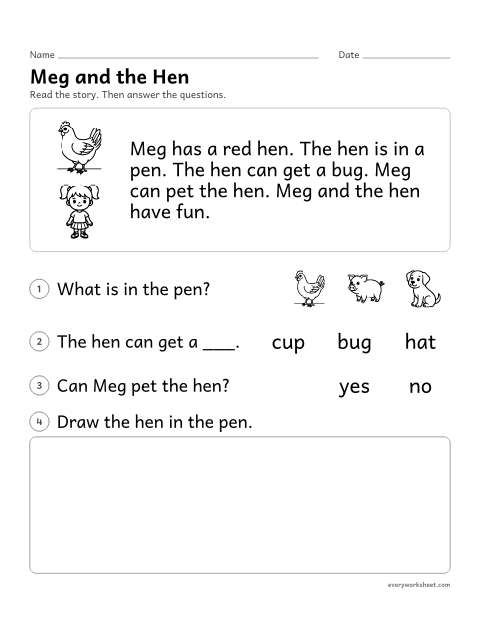
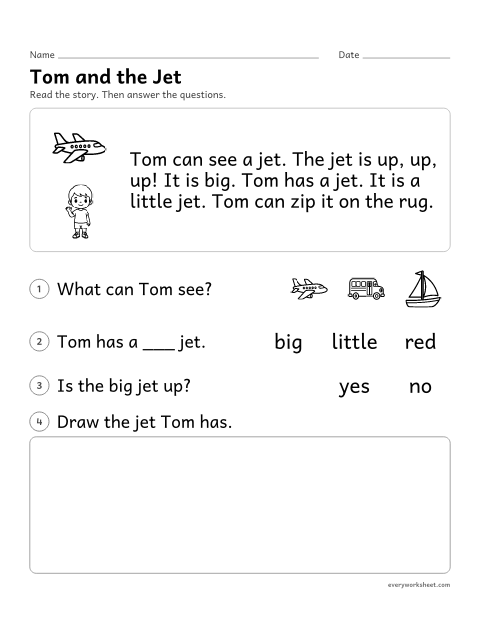
The ten reading passages for kindergarten are short stories a child can read alone. Every word is either one of our 50 kindergarten sight words or a short-vowel word like cat, hen, pig, fox or bug that can be sounded out, so there is nothing to guess. A picture sits beside each story. Four questions follow: circle the picture, circle the word, circle yes or no, and draw the story.
The seven read-aloud pages are for listening. A grown-up reads the story or nonfiction passage aloud and then reads each question, and the child answers by circling a picture or a thumbs up or down. Three are short stories about characters, setting and what happens. Four are nonfiction, about frogs, bees, rain and snow, and each starts with the big question: what is this mostly about? Every page has an answer key on page 2.
CCSS.ELA-LITERACY.RL.K.1With prompting and support, ask and answer questions about key details in a text.CCSS.ELA-LITERACY.RL.K.2With prompting and support, retell familiar stories, including key details.CCSS.ELA-LITERACY.RL.K.3With prompting and support, identify characters, settings, and major events in a story.CCSS.ELA-LITERACY.RL.K.7With prompting and support, describe the relationship between illustrations and the story in which they appear (e.g., what moment in a story an illustration depicts).CCSS.ELA-LITERACY.RL.K.10Actively engage in group reading activities with purpose and understanding.CCSS.ELA-LITERACY.RI.K.1With prompting and support, ask and answer questions about key details in a text.CCSS.ELA-LITERACY.RI.K.2With prompting and support, identify the main topic and retell key details of a text.CCSS.ELA-LITERACY.RI.K.7With prompting and support, describe the relationship between illustrations and the text in which they appear (e.g., what person, place, thing, or idea in the text an illustration depicts).CCSS.ELA-LITERACY.RI.K.8With prompting and support, identify the reasons an author gives to support points in a text.CCSS.ELA-LITERACY.RI.K.10Actively engage in group reading activities with purpose and understanding.CCSS.ELA-LITERACY.SL.K.2Confirm understanding of a text read aloud or information presented orally or through other media by asking and answering questions about key details and requesting clarification if something is not understood.CCSS.ELA-LITERACY.RF.K.4Read emergent-reader texts with purpose and understanding.Mostly it is listening comprehension: answering questions about who, where and what happened in a story read aloud, and naming the main topic of a nonfiction text. By the end of the year, children also answer simple questions about short sentences they read themselves.
The ten reading passages are written so they can. Every word is a kindergarten sight word or a short-vowel word like cat, red or bug that can be sounded out. The read-aloud pages are meant for a grown-up to read.
Short and concrete: one or two characters, one place and a simple event, told in four to seven sentences. A picture helps, and the words should be ones a child can sound out or knows by sight.
It asks what a nonfiction text is mostly about, such as frogs or rain. Kindergartners learn to name the main topic and then a few details that tell about it.
Yes. Every page has an answer key on page 2 with the right answers circled. For drawing questions, the key says what to look for.
Yes. Every page is a free PDF in US Letter and A4, with no account or email sign-up.