 View all 2 pages
Living and nonliving things sort
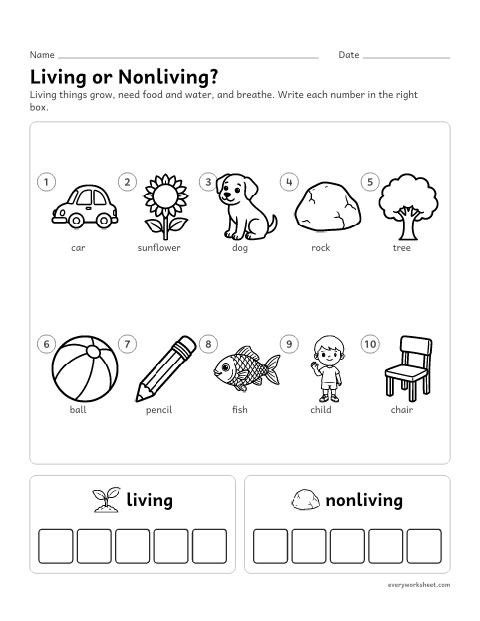
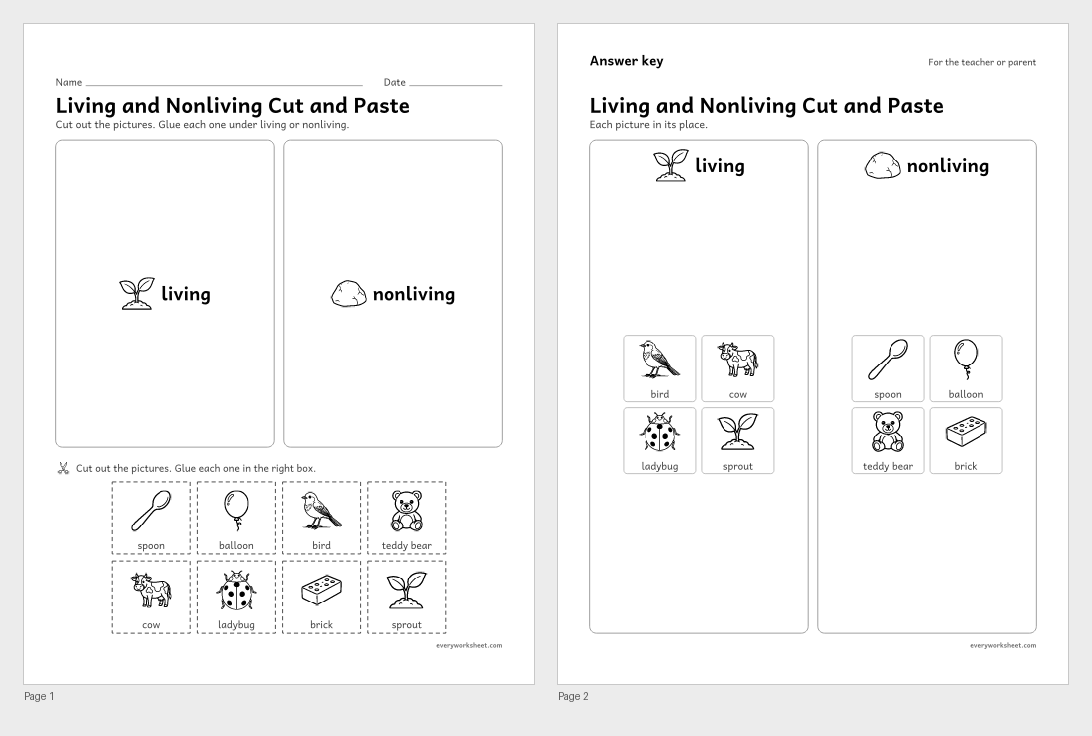
Sorting living and nonliving things
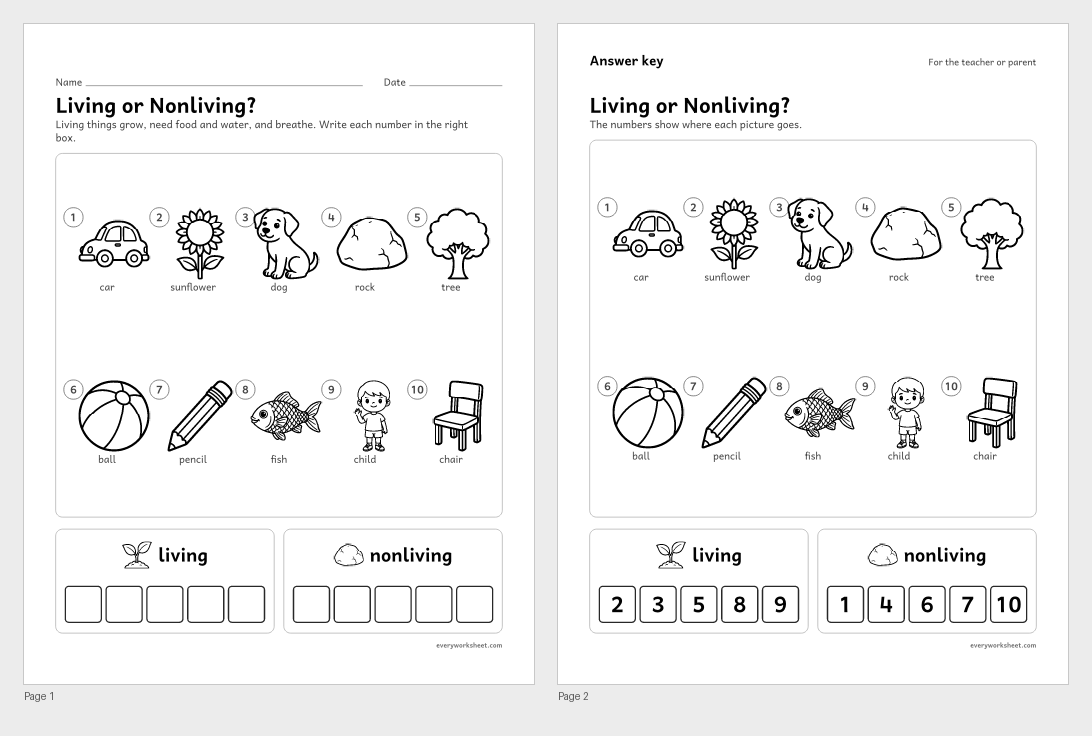
Answer key on page 2
2 pages307 KB
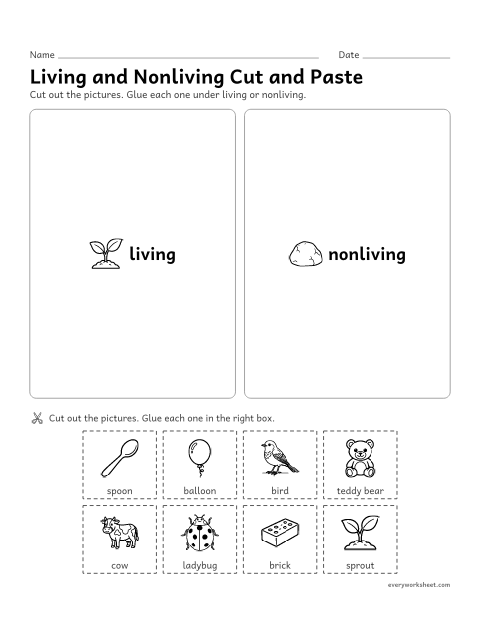
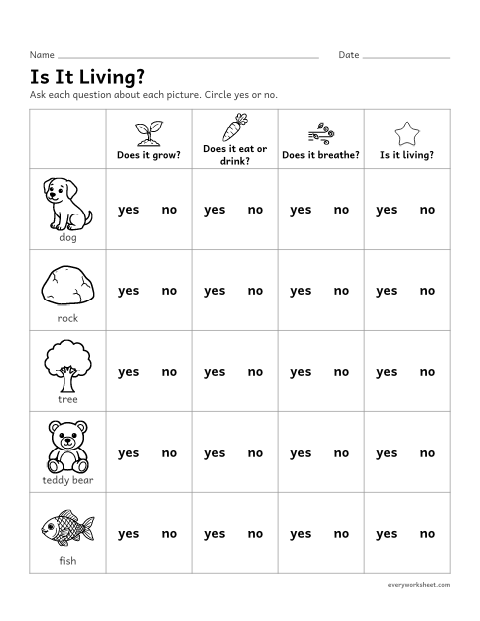
A picture sort, a cut and paste sort, an is it living checklist, a read-aloud page on what makes something living and a drawing page.
View all 2 pagesSorting living and nonliving things
Answer key on page 2
2 pages307 KB
 View all 2 pages
Sorting living and nonliving things
Answer key on page 2
2 pages277 KB
 View all 2 pages
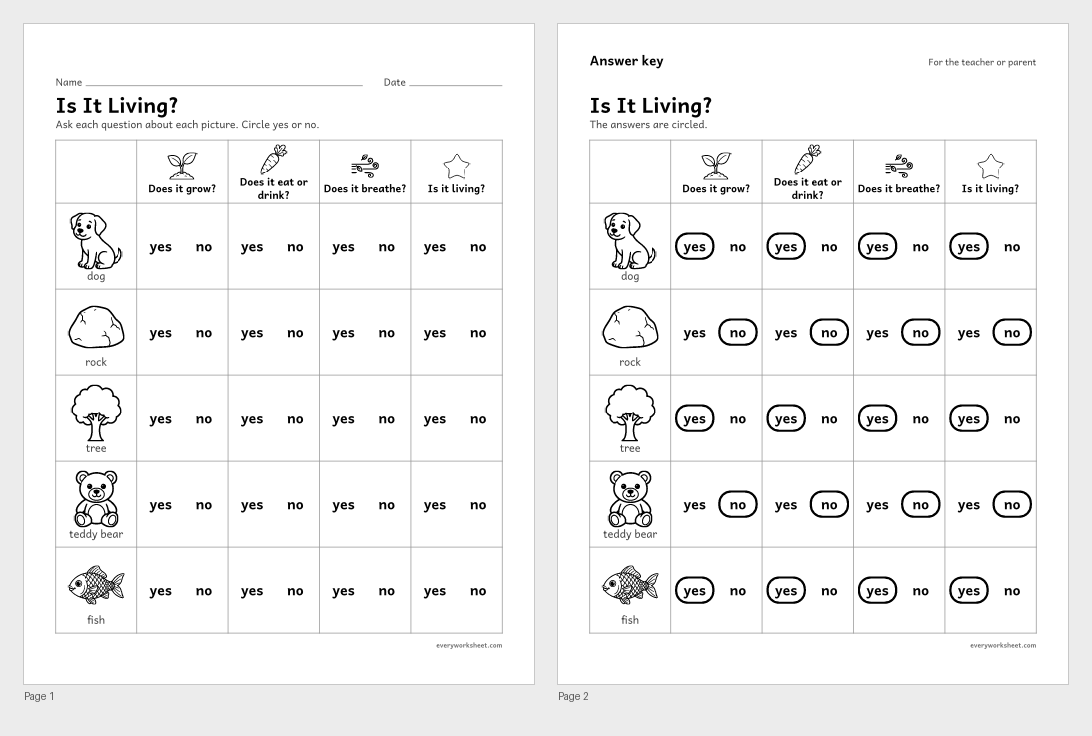
Using grows, eats and breathes to decide if something is living
Answer key on page 2
2 pages209 KB
 View all 2 pages
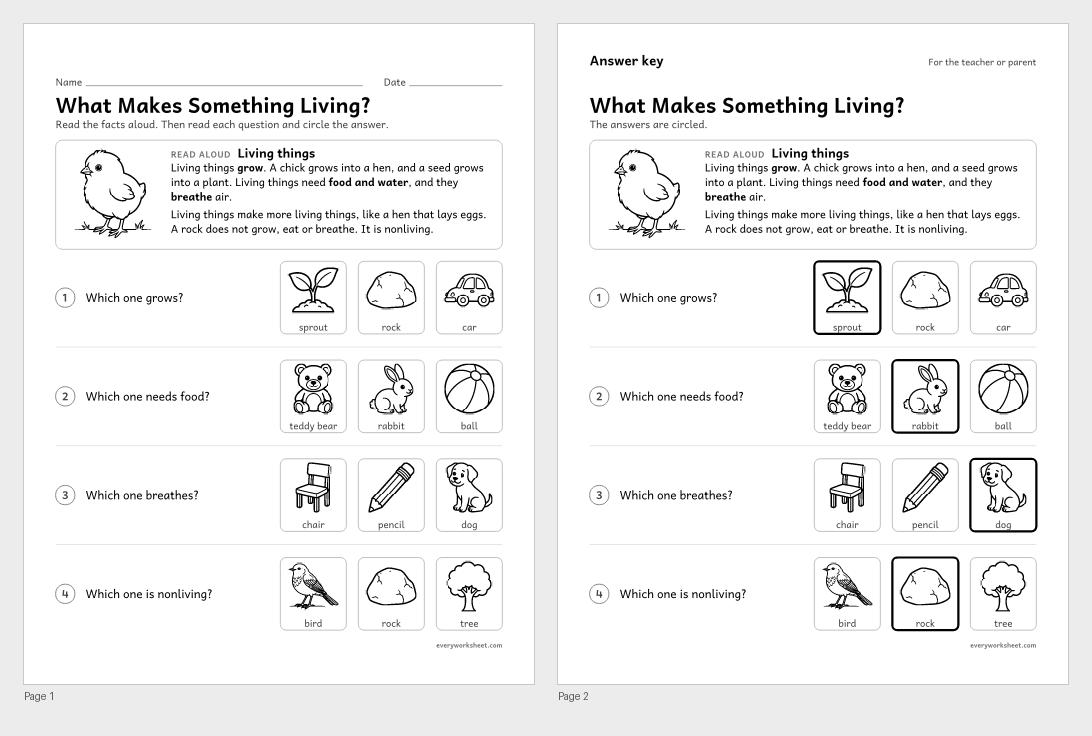
Telling what makes something living
Answer key on page 2
2 pages332 KB
 View larger
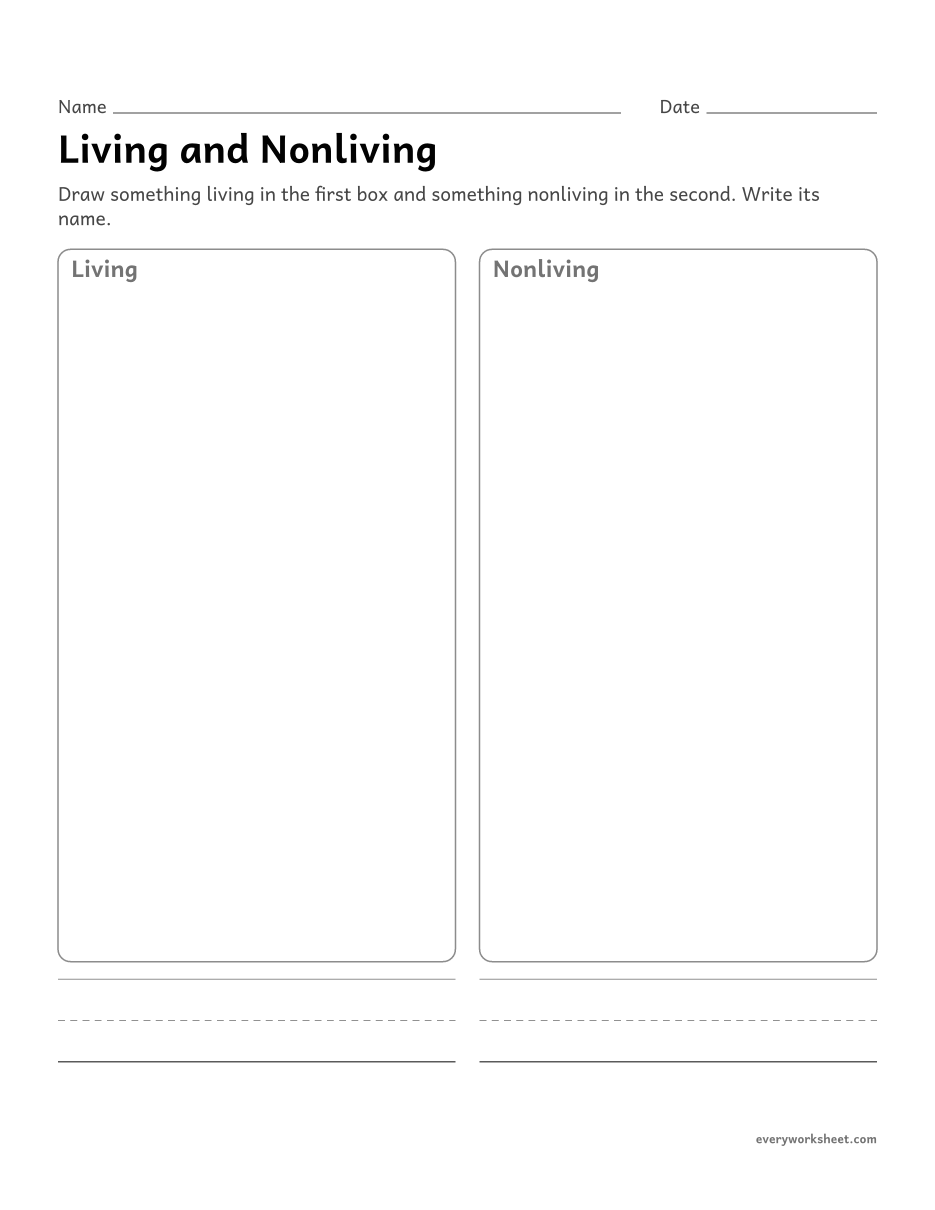
Drawing and naming living and nonliving things
1 page24 KB
Print at 100% (actual size) for the cleanest tracing lines.
Living things grow, need food and water, breathe, and change. They also make more living things like themselves. Nonliving things, like rocks, cars and chairs, do none of these.
These living and nonliving things worksheets give children several ways to practice: sort pictures by writing numbers, cut and paste pictures under living or nonliving, and use a simple checklist (does it grow? does it eat or drink? does it breathe?) to decide.
A read-aloud page explains what makes something living in plain words, and a drawing page lets children show one living and one nonliving thing. Plants and people count as living things, too.
NGSS K-LS1-1Use observations to describe patterns of what plants and animals (including humans) need to survive.CCSS.MATH.CONTENT.K.MD.B.3Classify objects into given categories; count the numbers of objects in each category and sort the categories by count.CCSS.ELA-LITERACY.L.K.5.ASort common objects into categories (e.g., shapes, foods) to gain a sense of the concepts the categories represent.CCSS.ELA-LITERACY.RI.K.1With prompting and support, ask and answer questions about key details in a text.CCSS.ELA-LITERACY.SL.K.2Confirm understanding of a text read aloud or information presented orally or through other media by asking and answering questions about key details and requesting clarification if something is not understood.CCSS.ELA-LITERACY.W.K.2Use a combination of drawing, dictating, and writing to compose informative/explanatory texts in which they name what they are writing about and supply some information about the topic.Living things grow, need food and water, breathe and make more of their own kind. Nonliving things do not.
Yes. Plants grow, take in water and air, use sunlight to make food, and make seeds.
Water is nonliving. All living things need it, but water itself does not grow, eat or breathe.
Yes. The sort, cut and paste, checklist and read-aloud pages have an answer key on page 2.