 View larger
List of nocturnal animals with pictures
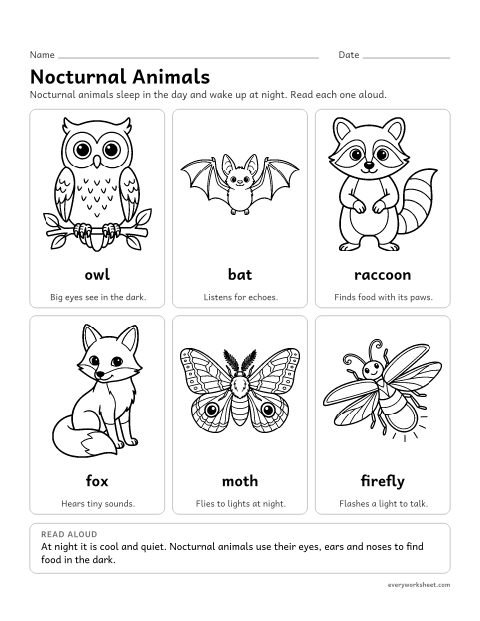
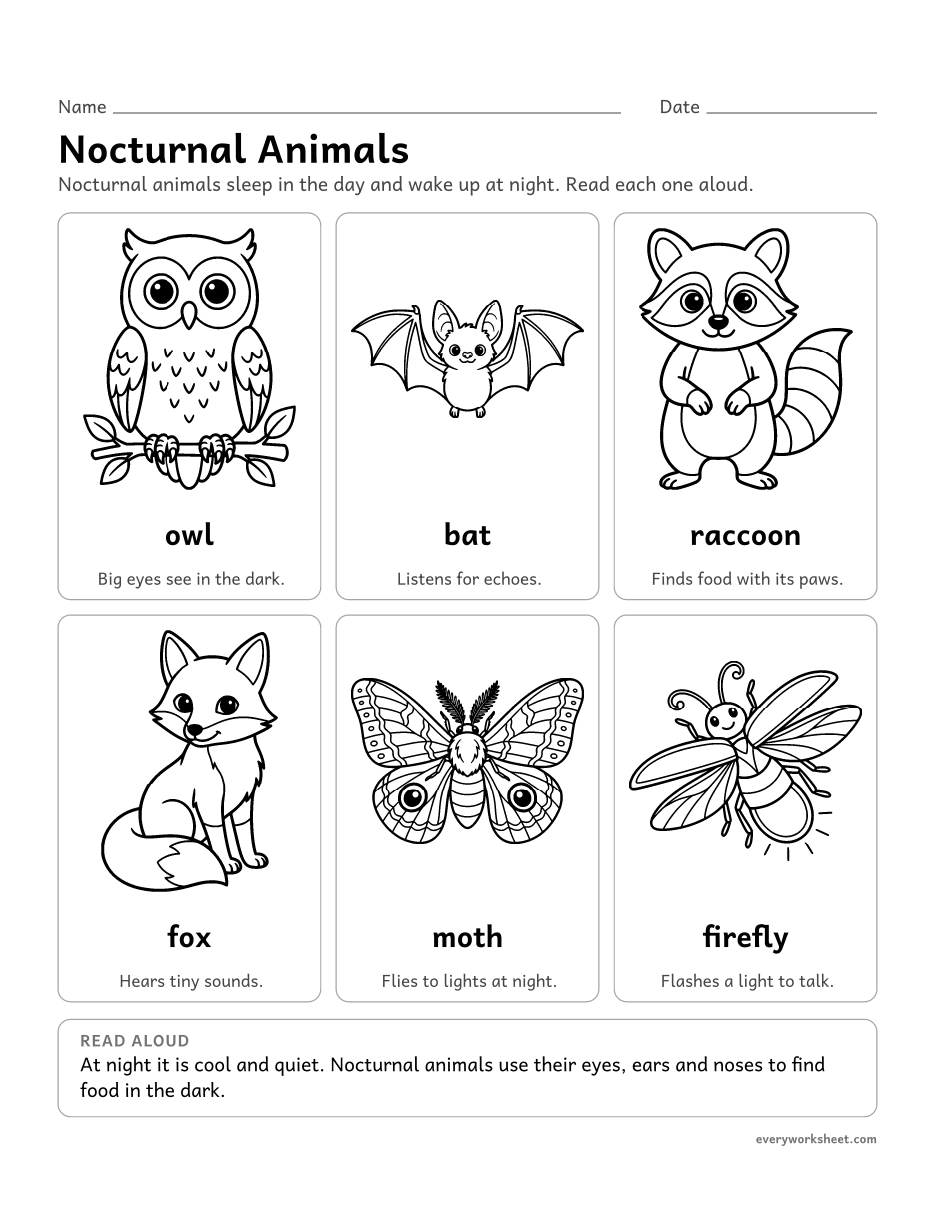
Naming nocturnal animals and how they find food at night
1 page118 KB
A picture list of nocturnal animals, a day or night sort, a cut and paste sort, a read-aloud page and a night animal drawing page.
View largerNaming nocturnal animals and how they find food at night
1 page118 KB
 View all 2 pages
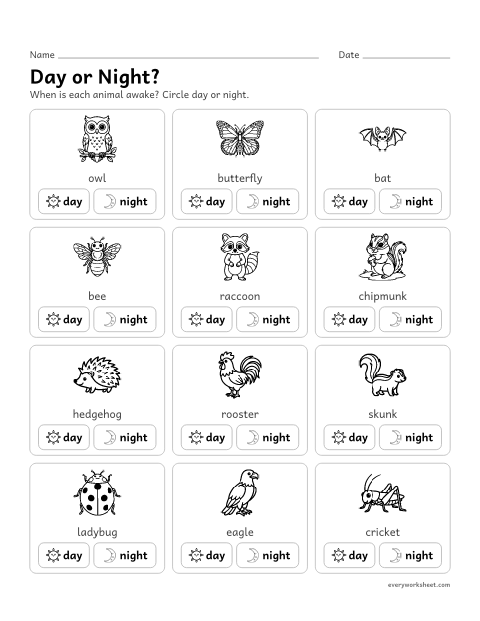
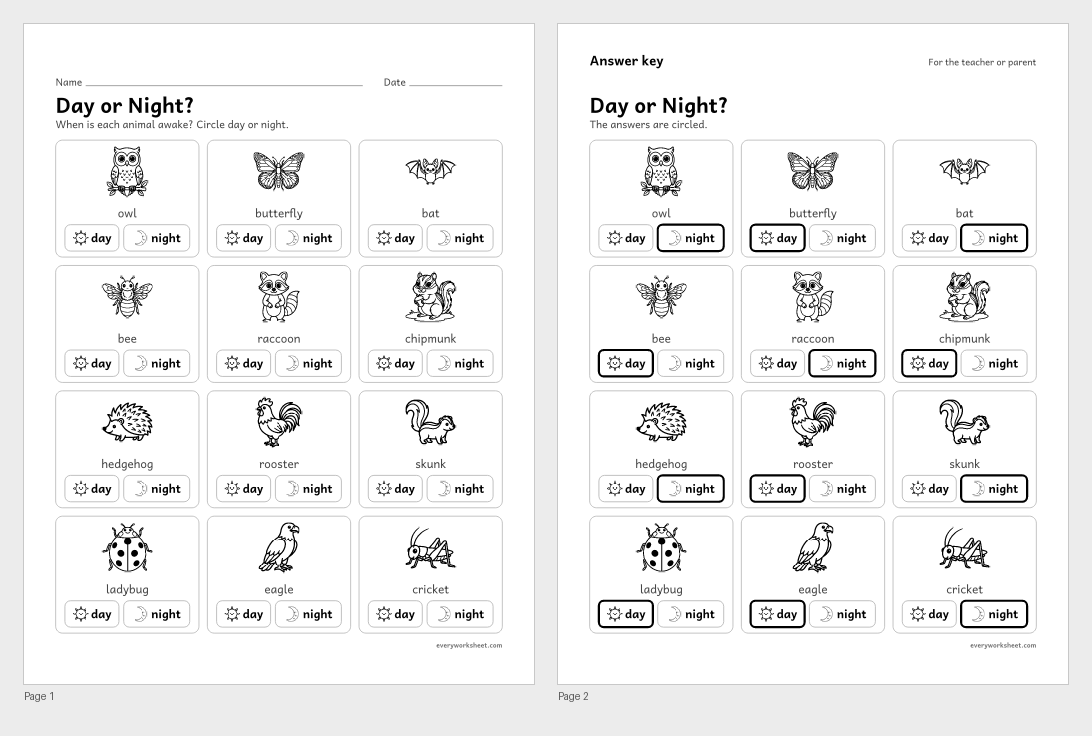
Sorting animals that are awake in the day or at night
Answer key on page 2
2 pages578 KB
 View all 2 pages
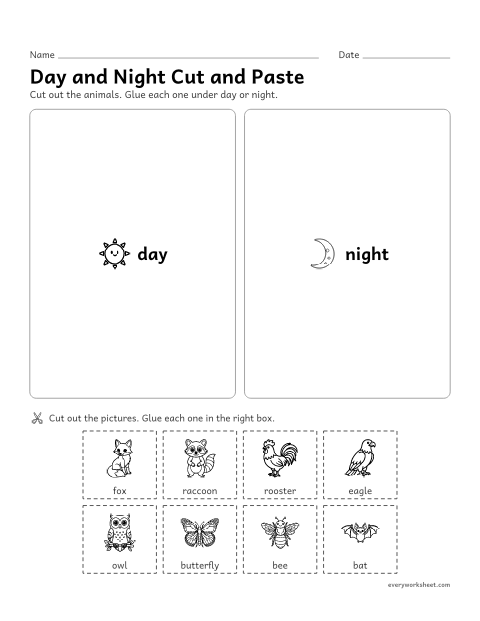
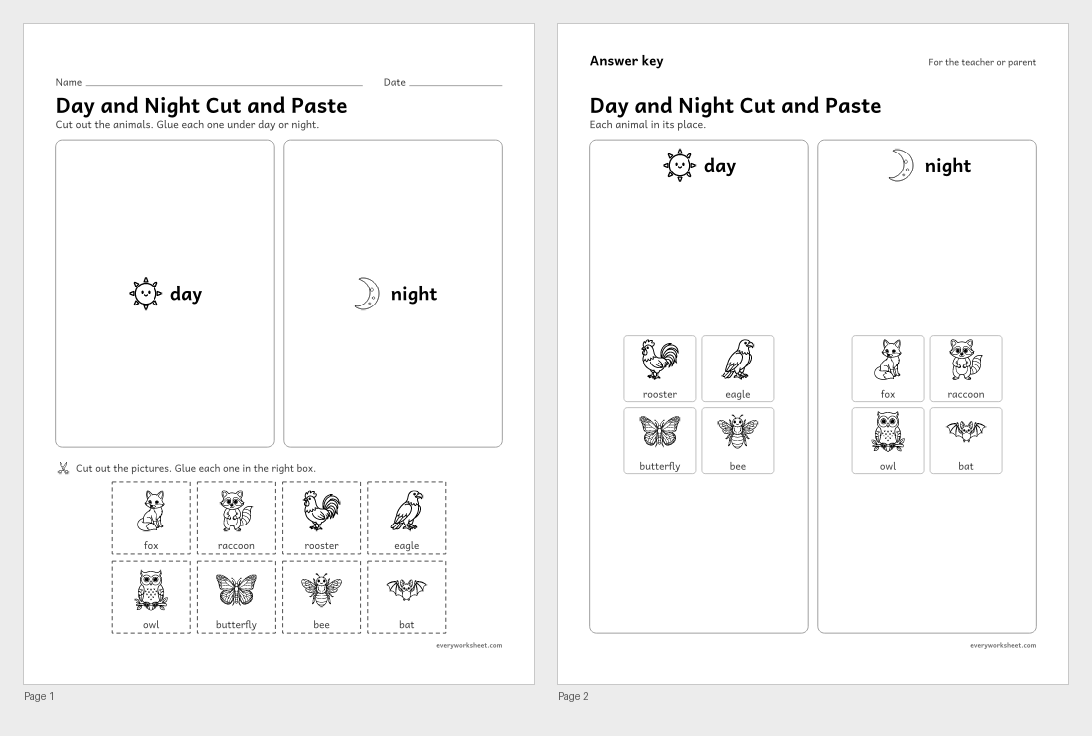
Sorting day and night animals
Answer key on page 2
2 pages317 KB
 View all 2 pages
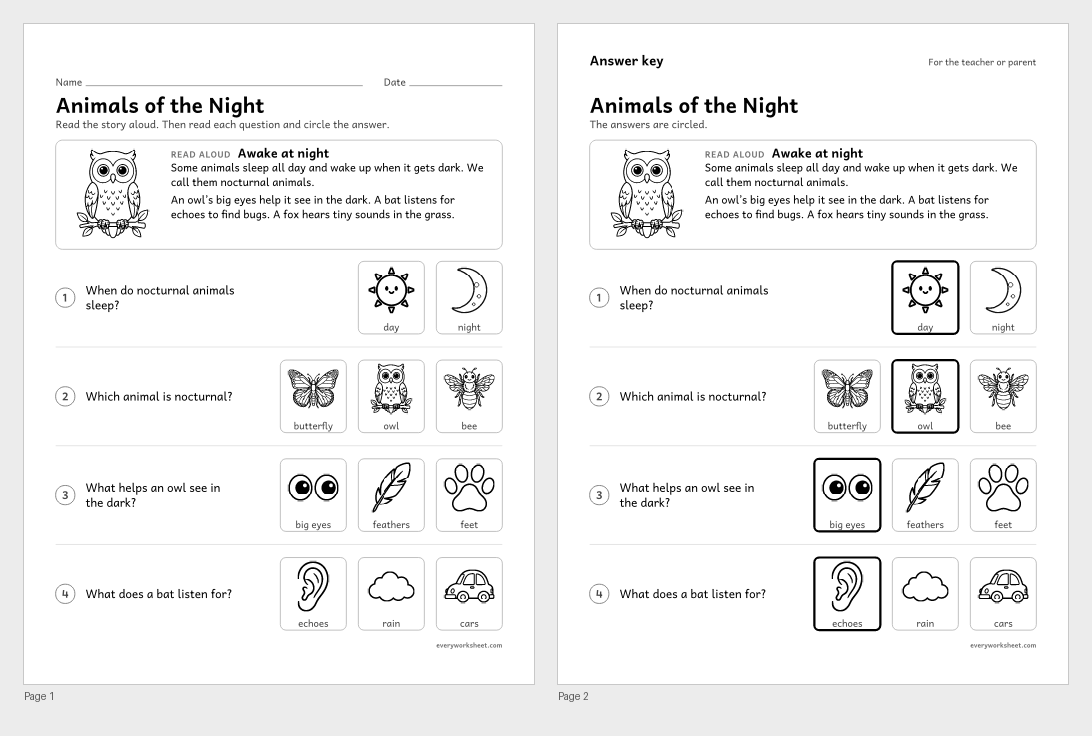
Answering questions about nocturnal animals read aloud
Answer key on page 2
2 pages317 KB
 View larger
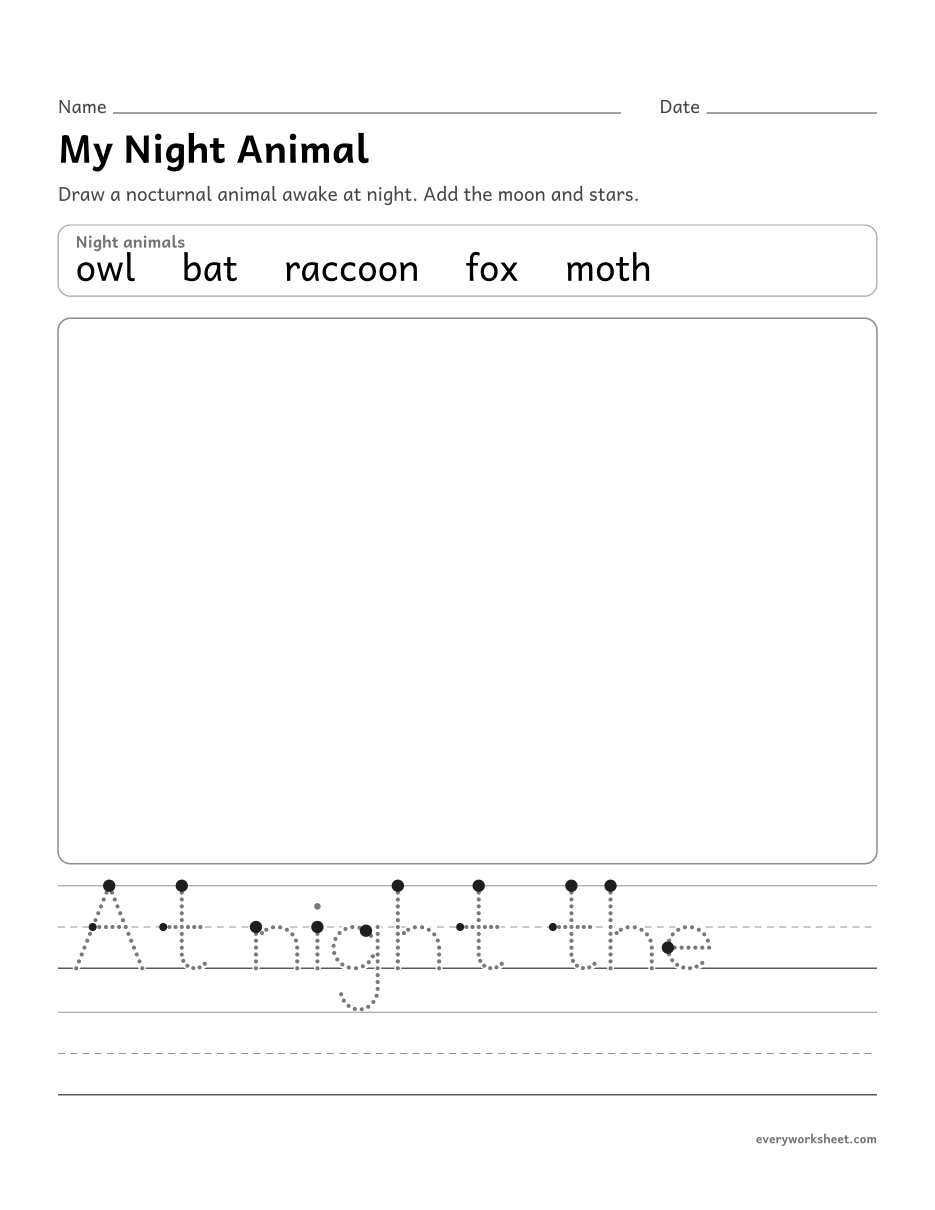
Drawing and writing about a nocturnal animal
1 page26 KB
Print at 100% (actual size) for the cleanest tracing lines.
Nocturnal animals sleep during the day and wake up at night. Owls, bats, raccoons, foxes, moths and fireflies all do their hunting, eating and exploring in the dark.
These nocturnal animals worksheets start with a list of six nocturnal animals with detailed line drawings and a simple fact for each. Children then circle day or night under a dozen animals, cut and paste animals under day or night, listen to a short story and circle answers, and draw a night animal under the moon.
Animals that are awake in the day are called diurnal, like bees, butterflies, chipmunks and people. Day and night patterns are studied in grade 1 (1-ESS1-1); here children connect them to what animals need, like finding food safely.
NGSS K-LS1-1Use observations to describe patterns of what plants and animals (including humans) need to survive.NGSS 1-ESS1-1Grade 1 standard, used here for context: use observations of the sun, moon, and stars to describe patterns that can be predicted.CCSS.MATH.CONTENT.K.MD.B.3Classify objects into given categories; count the numbers of objects in each category and sort the categories by count.CCSS.ELA-LITERACY.L.K.5.ASort common objects into categories (e.g., shapes, foods) to gain a sense of the concepts the categories represent.CCSS.ELA-LITERACY.RI.K.1With prompting and support, ask and answer questions about key details in a text.CCSS.ELA-LITERACY.SL.K.2Confirm understanding of a text read aloud or information presented orally or through other media by asking and answering questions about key details and requesting clarification if something is not understood.CCSS.ELA-LITERACY.W.K.2Use a combination of drawing, dictating, and writing to compose informative/explanatory texts in which they name what they are writing about and supply some information about the topic.Nocturnal means awake and active at night. Nocturnal animals sleep during the day.
Owls, bats, raccoons, foxes, moths, fireflies, hedgehogs, skunks, mice and crickets.
Night is cooler and quieter, and there are fewer animals around that might eat them. Many find their food at night, too.
Diurnal. Diurnal animals, like people, bees and butterflies, are awake during the day.