 View larger
Parts of a Book Worksheets
A parts of a book chart, label, match and cut-and-paste pages, concepts of print practice and checklists, and author and illustrator sheets.
Download the parts of a book worksheets
Parts of a book
 View larger
 View larger
 View all 2 pages
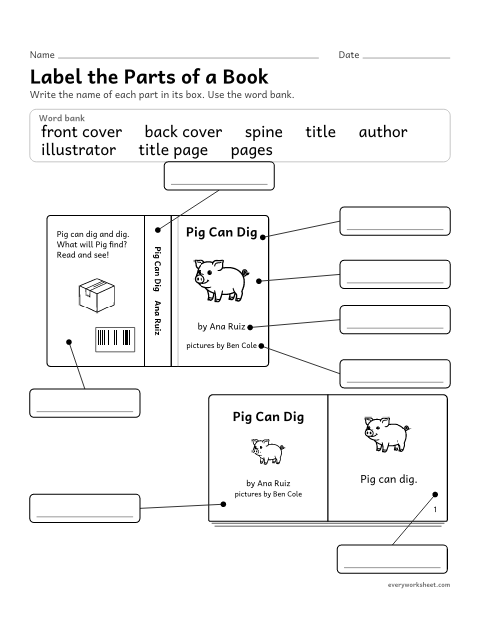
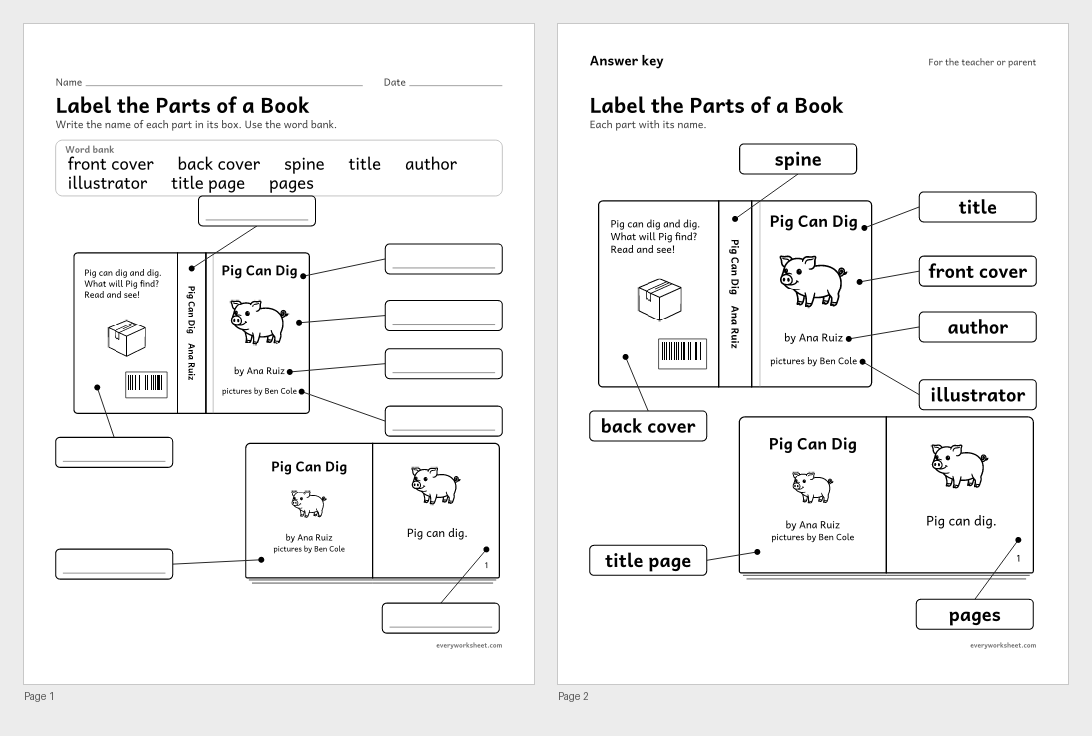
Label the parts of a book
Labeling the parts of a book
Answer key on page 2
2 pages198 KB
 View all 2 pages
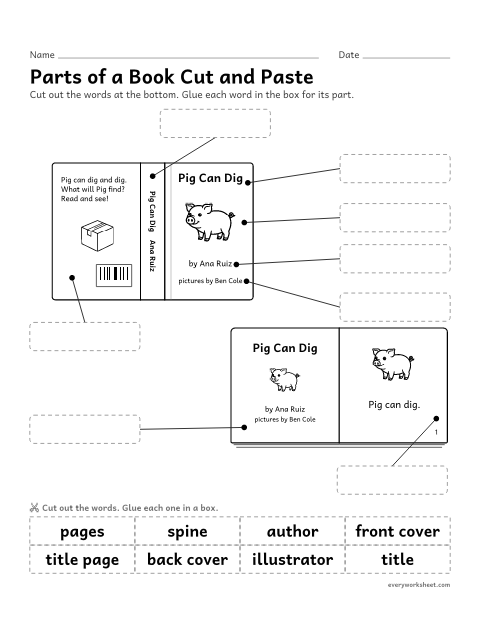
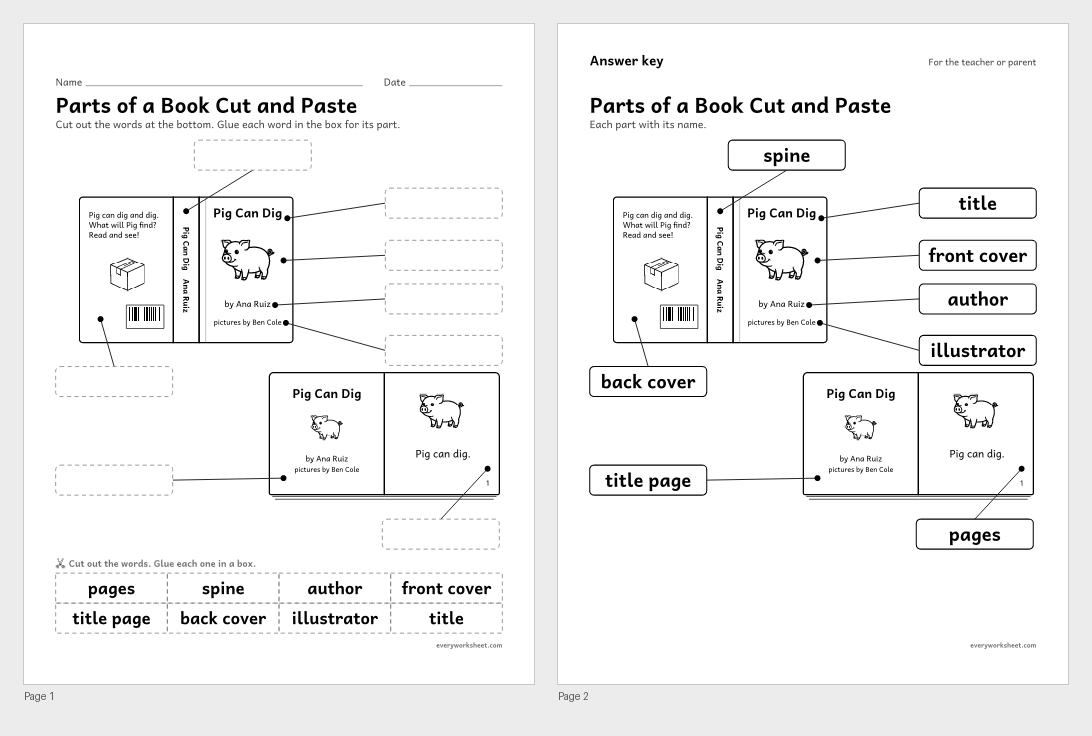
Parts of a book cut and paste
Labeling the parts of a book
Answer key on page 2
2 pages228 KB
 View all 2 pages
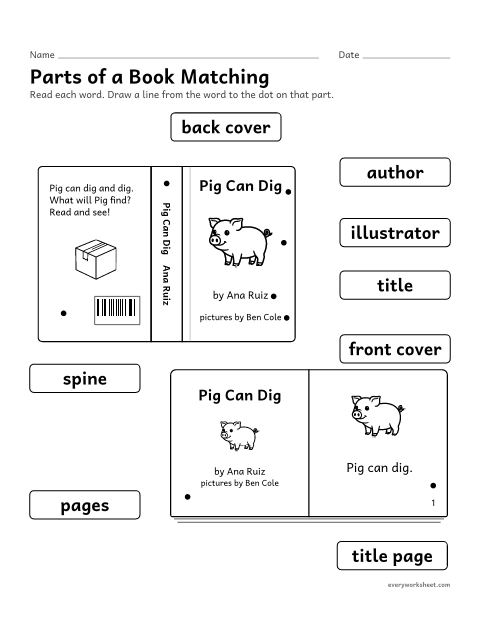
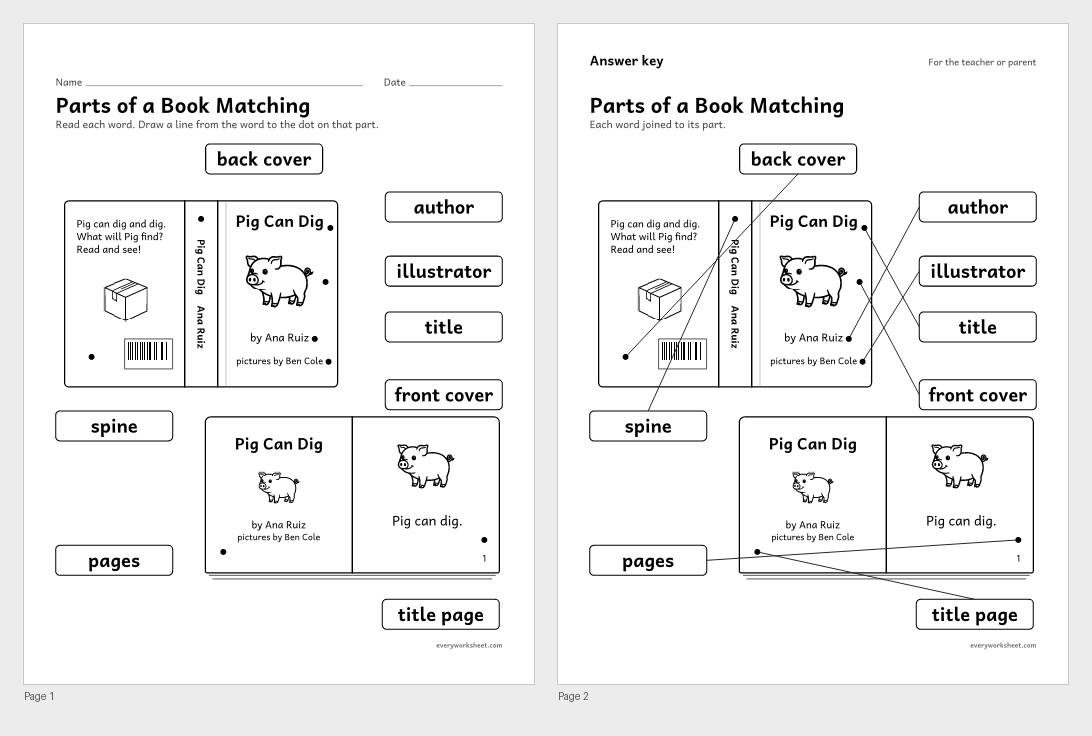
Parts of a book matching
Matching each part of a book to its name
Answer key on page 2
2 pages197 KB
 View all 2 pages
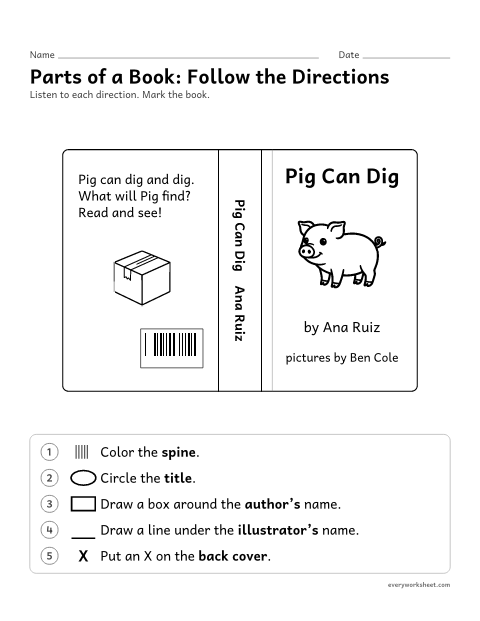
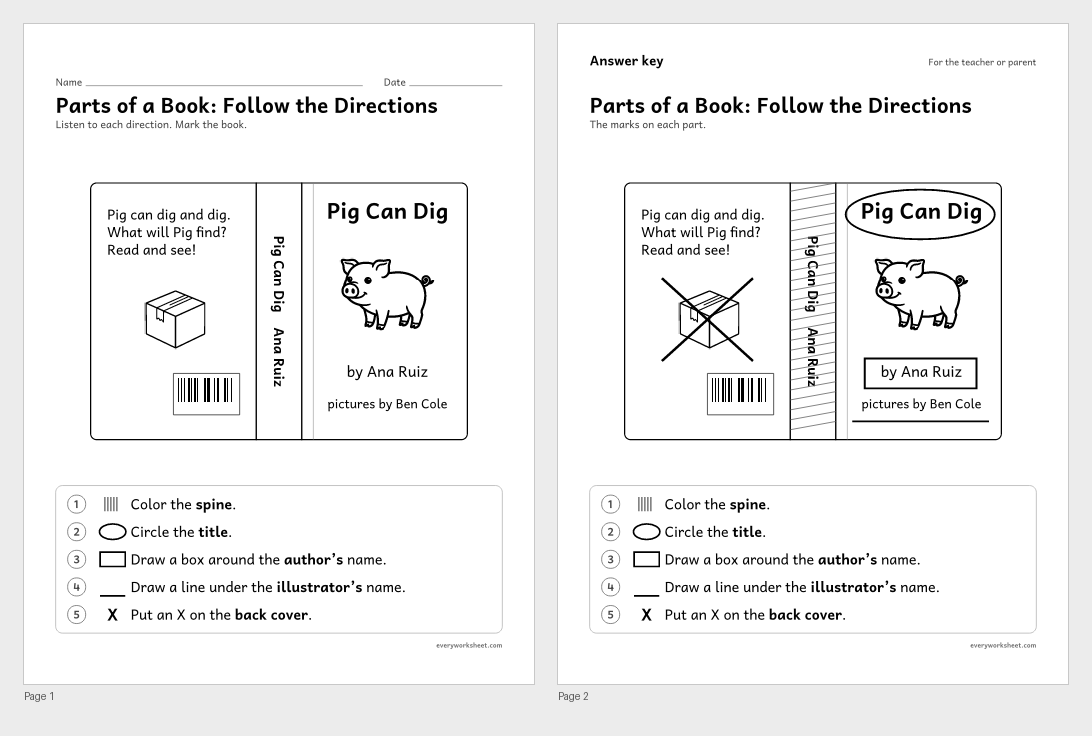
Parts of a Book: follow the directions
Finding the cover, spine, title, author and illustrator
Answer key on page 2
2 pages133 KB
 View larger
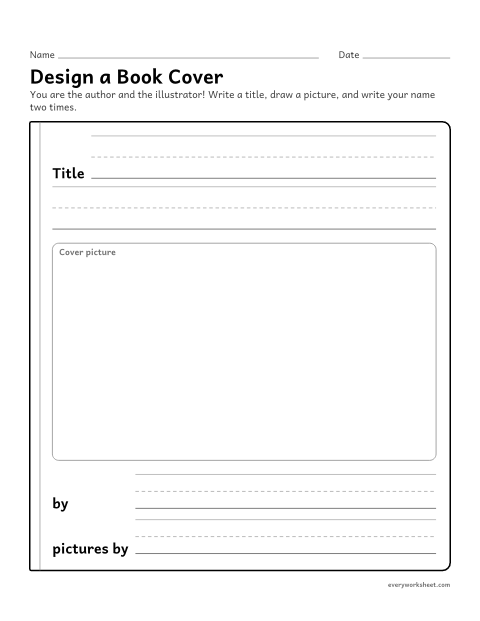
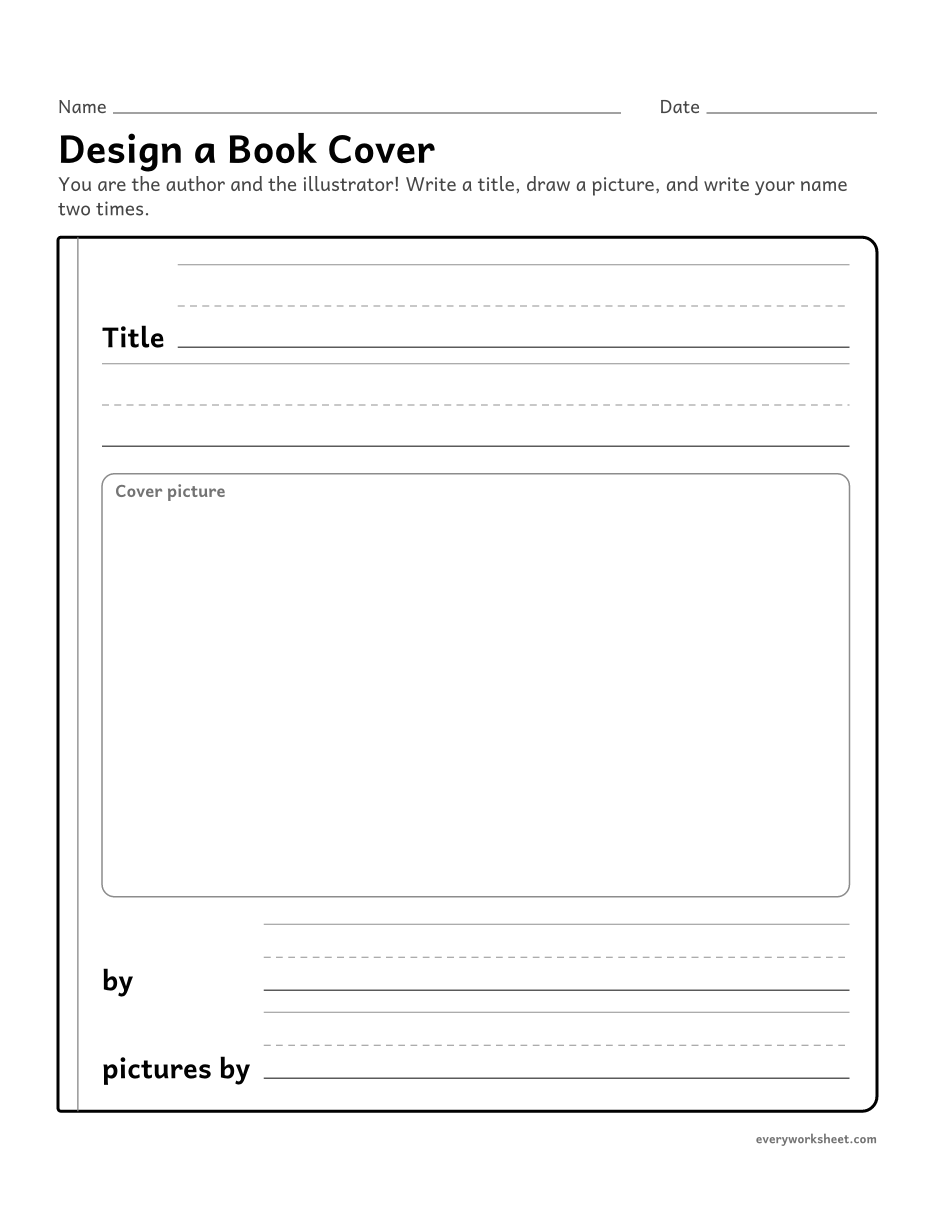
Design a book cover
Making a front cover with a title, author and illustrator
1 page26 KB
Concepts of print
 View all 2 pages
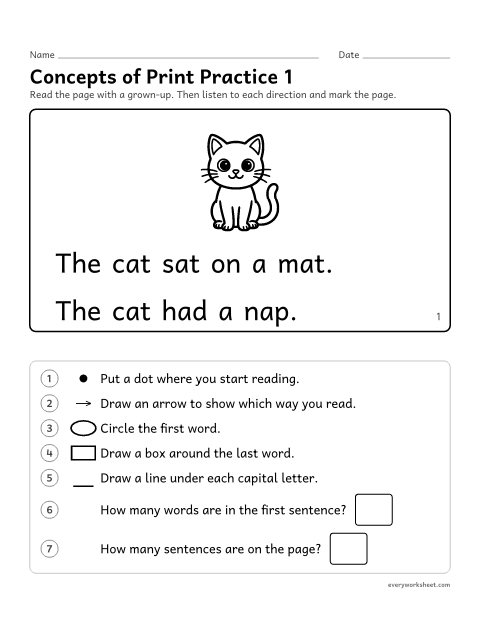
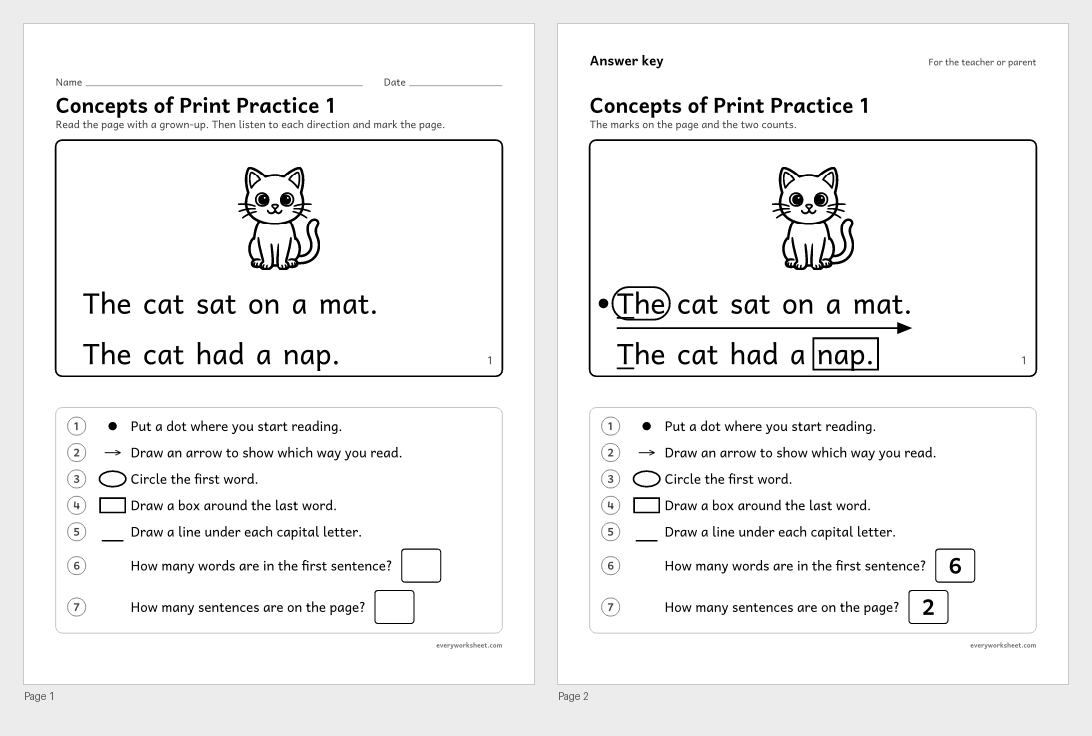
Concepts of print practice 1
Finding where to start, which way to read, words, letters and sentences
Answer key on page 2
2 pages90 KB
 View all 2 pages
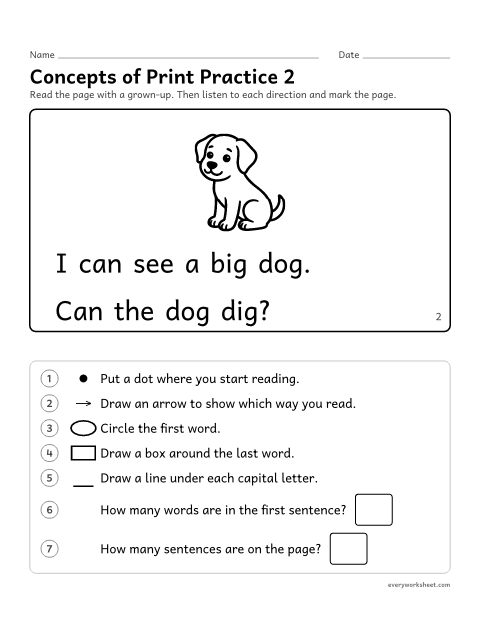
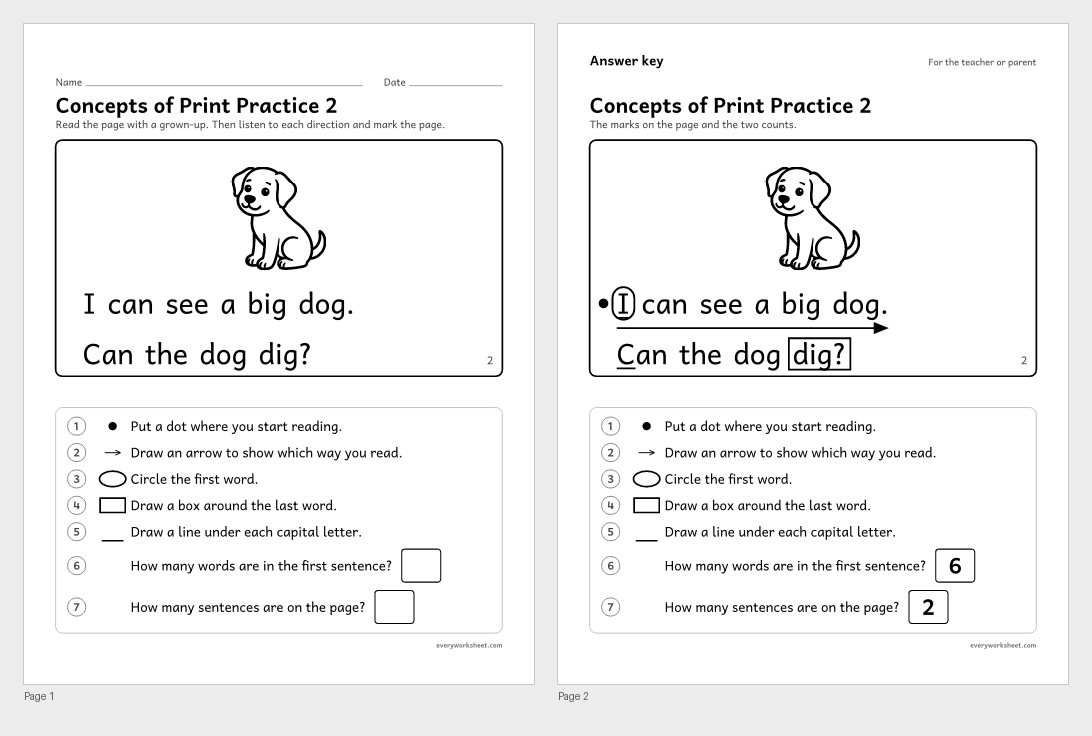
Concepts of print practice 2
Finding where to start, which way to read, words, letters and sentences
Answer key on page 2
2 pages66 KB
 View larger
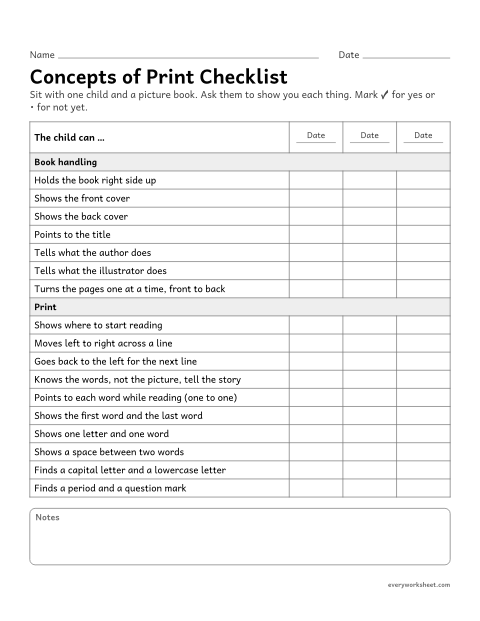
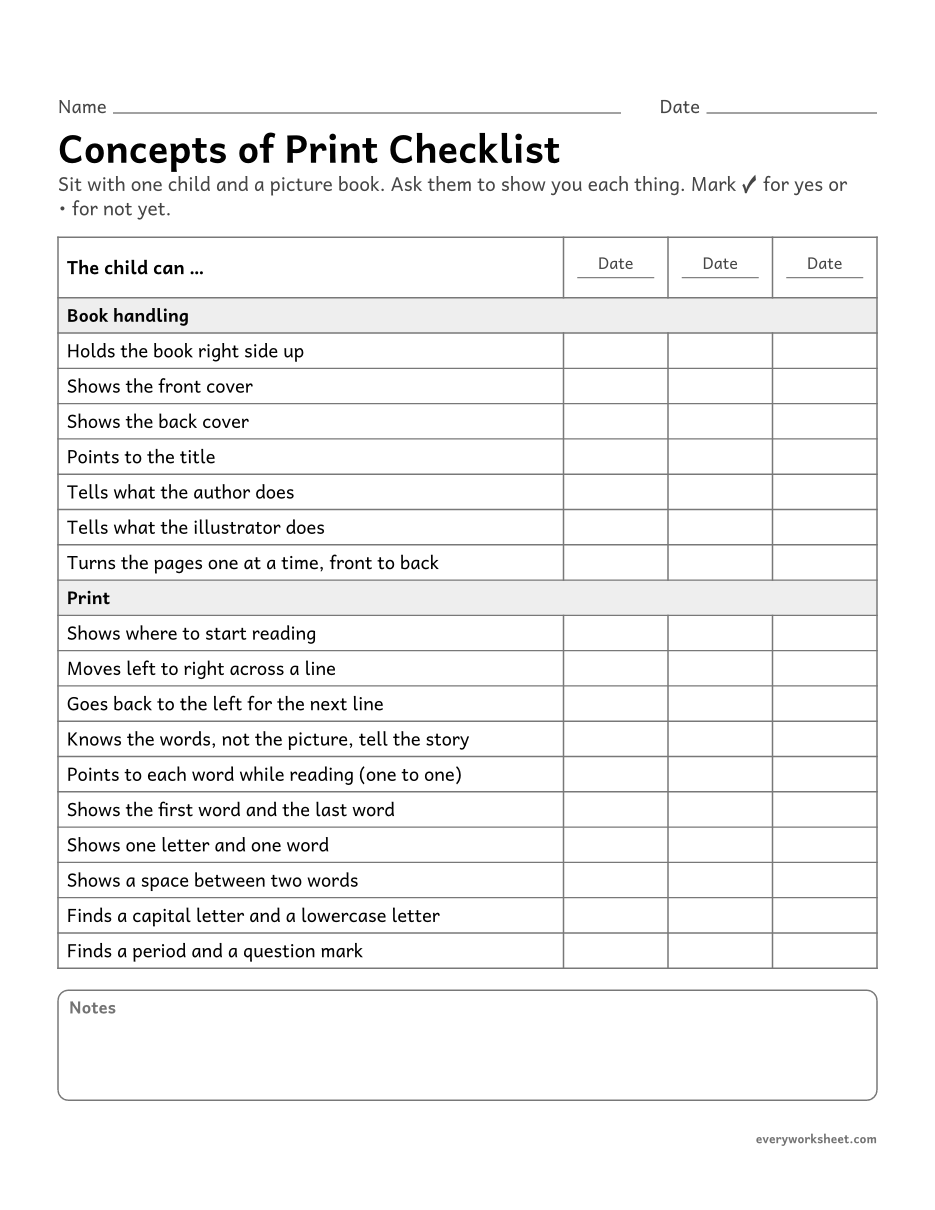
Concepts of print checklist
Checking how a child handles a book and print
1 page41 KB
 View larger
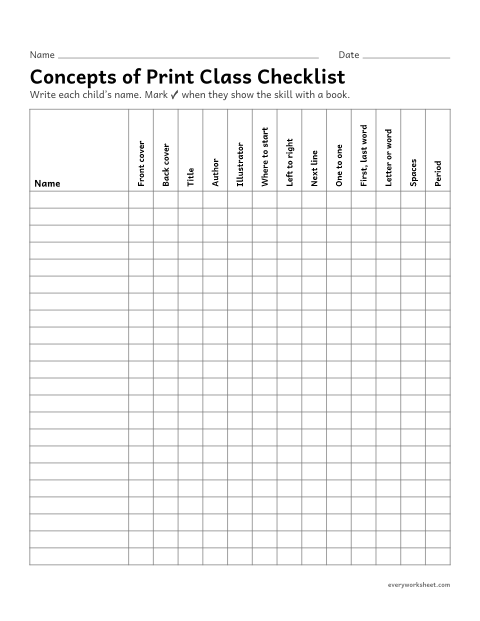
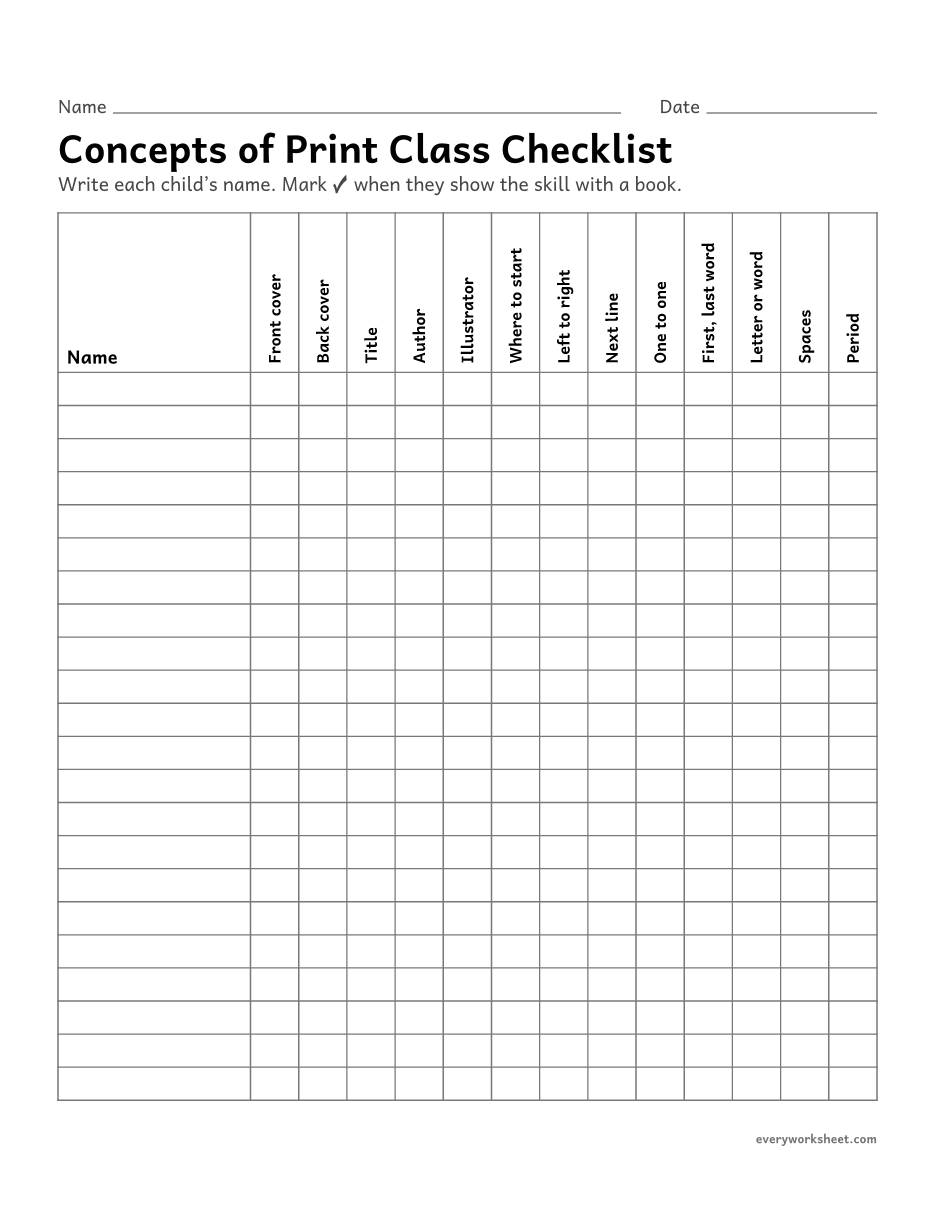
Concepts of print class checklist
Tracking concepts of print for a whole class
1 page73 KB
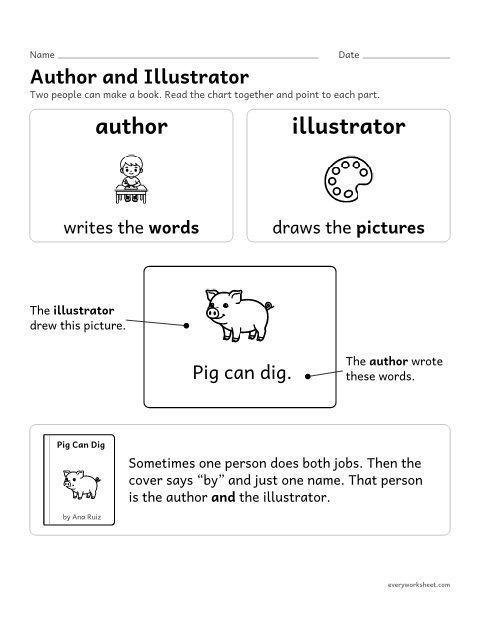
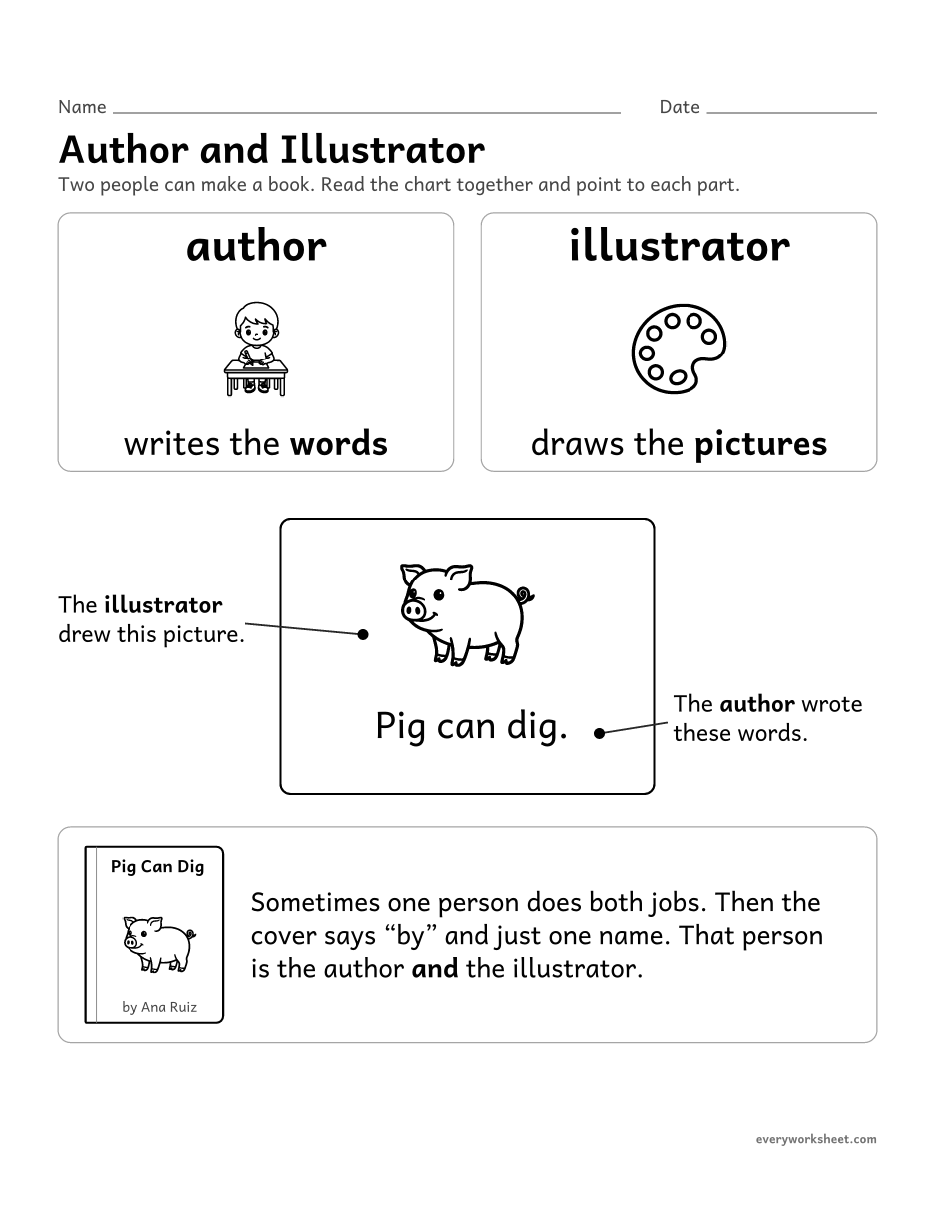
Author and illustrator
 View larger
 View all 2 pages
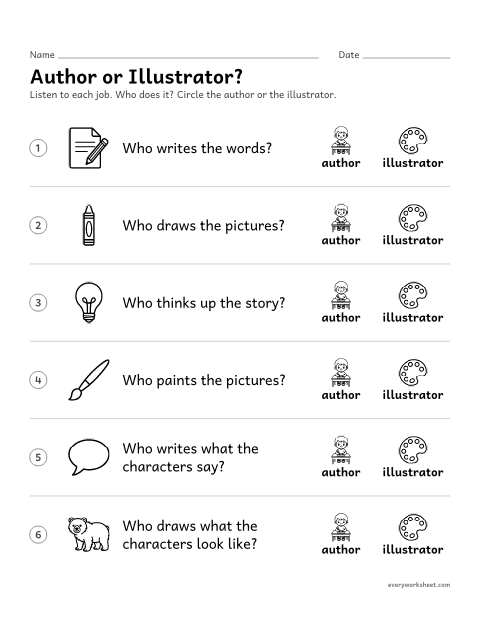
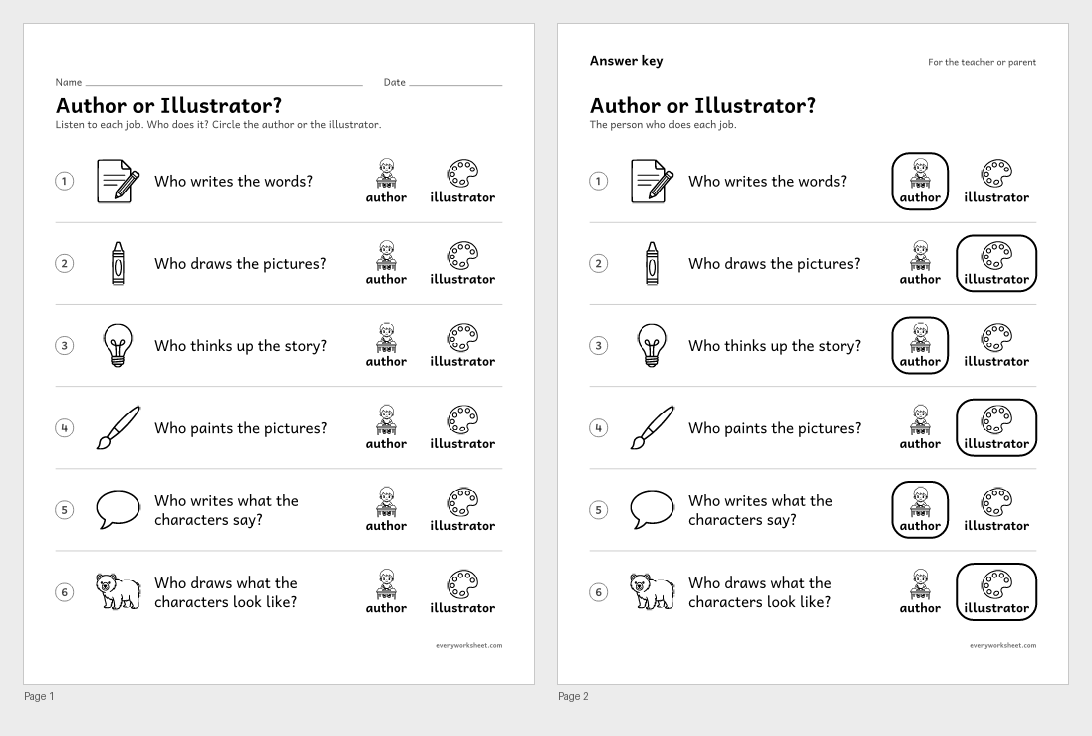
Author or Illustrator?
Telling what the author and the illustrator do
Answer key on page 2
2 pages649 KB
 View larger
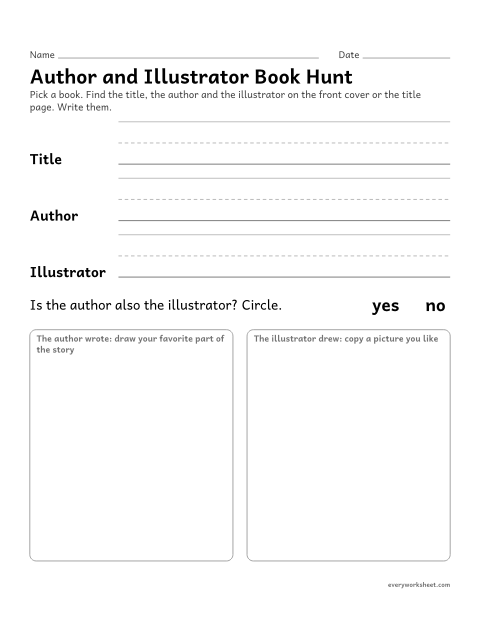
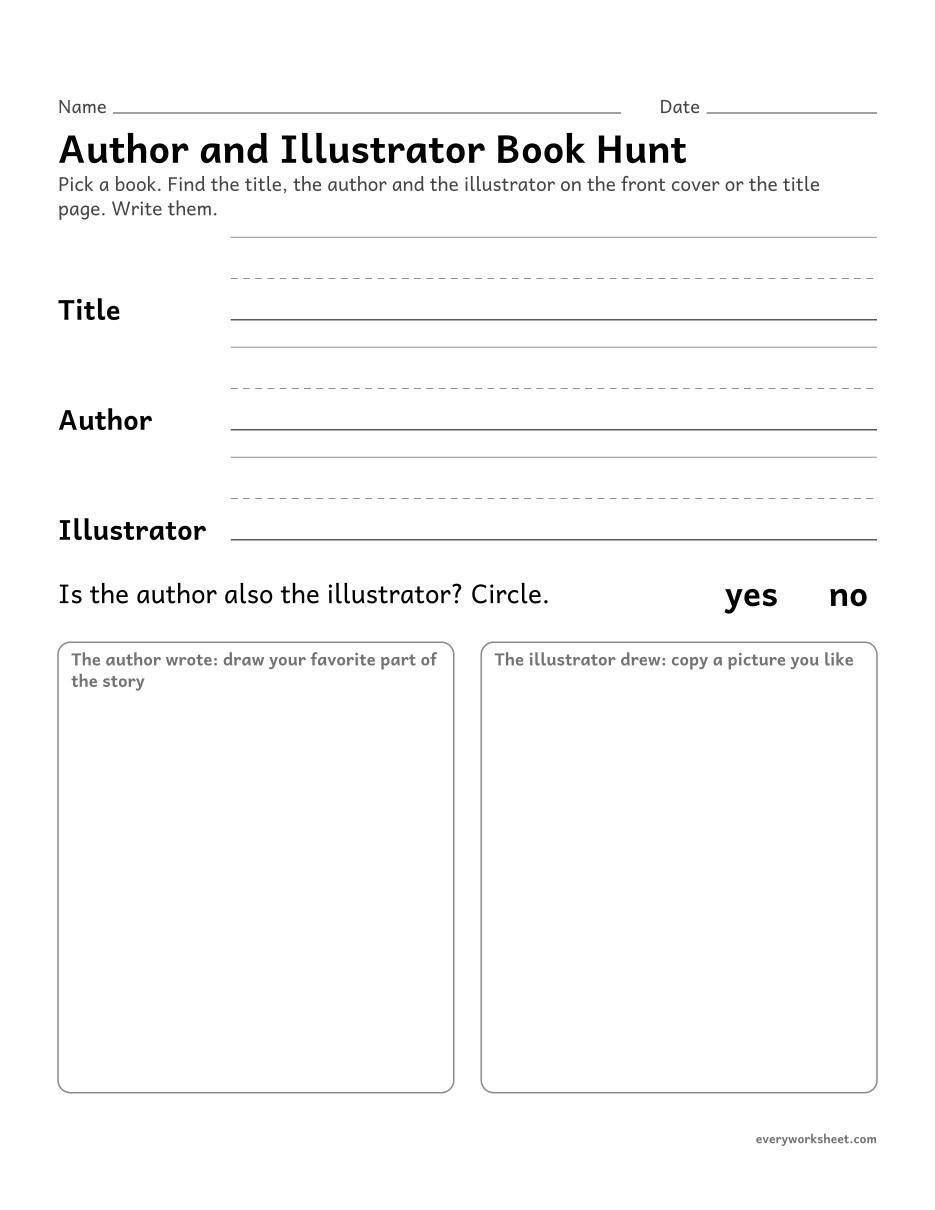
Author and illustrator book hunt
Naming the author and illustrator of a book
1 page28 KB
Print at 100% (actual size) for the cleanest tracing lines.
About these parts of a book worksheets
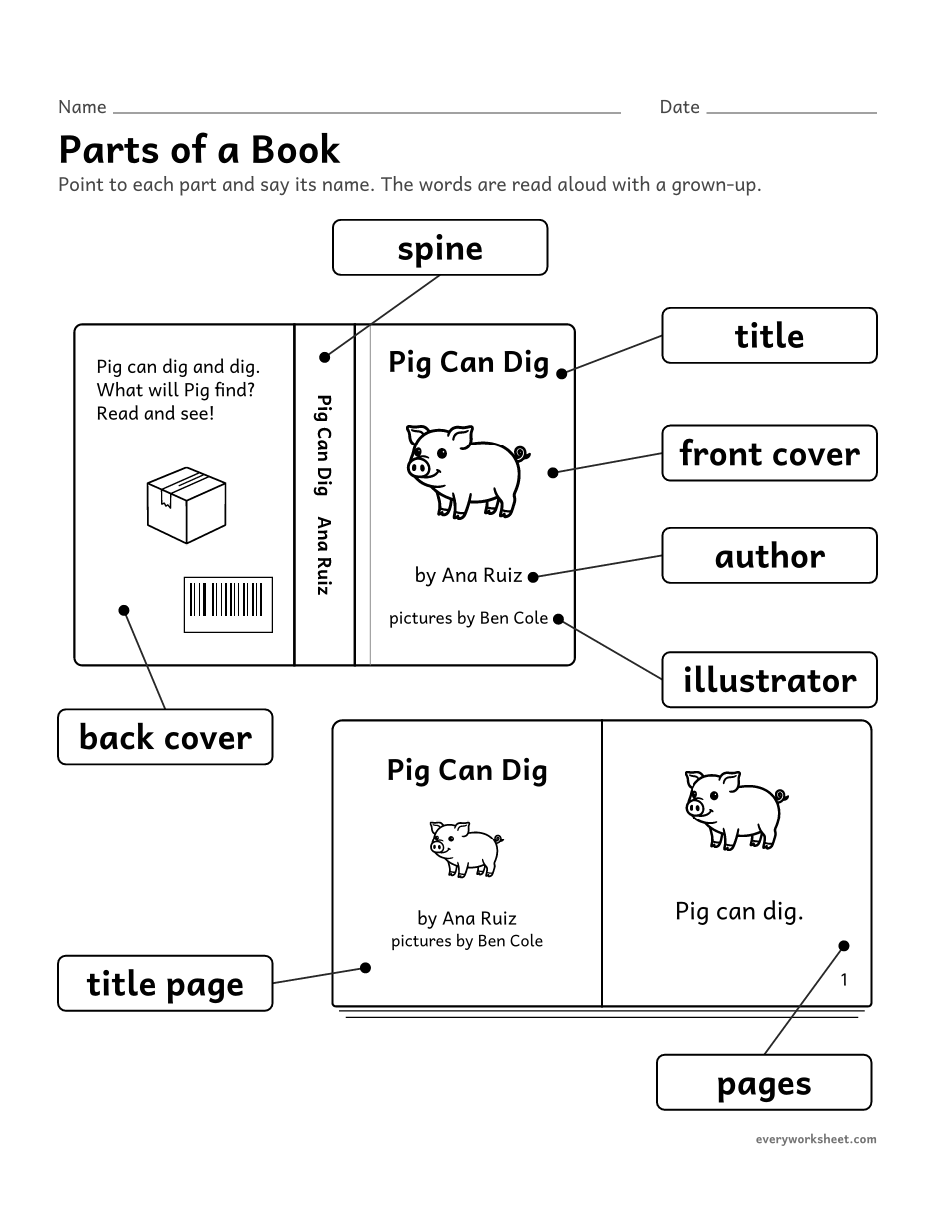
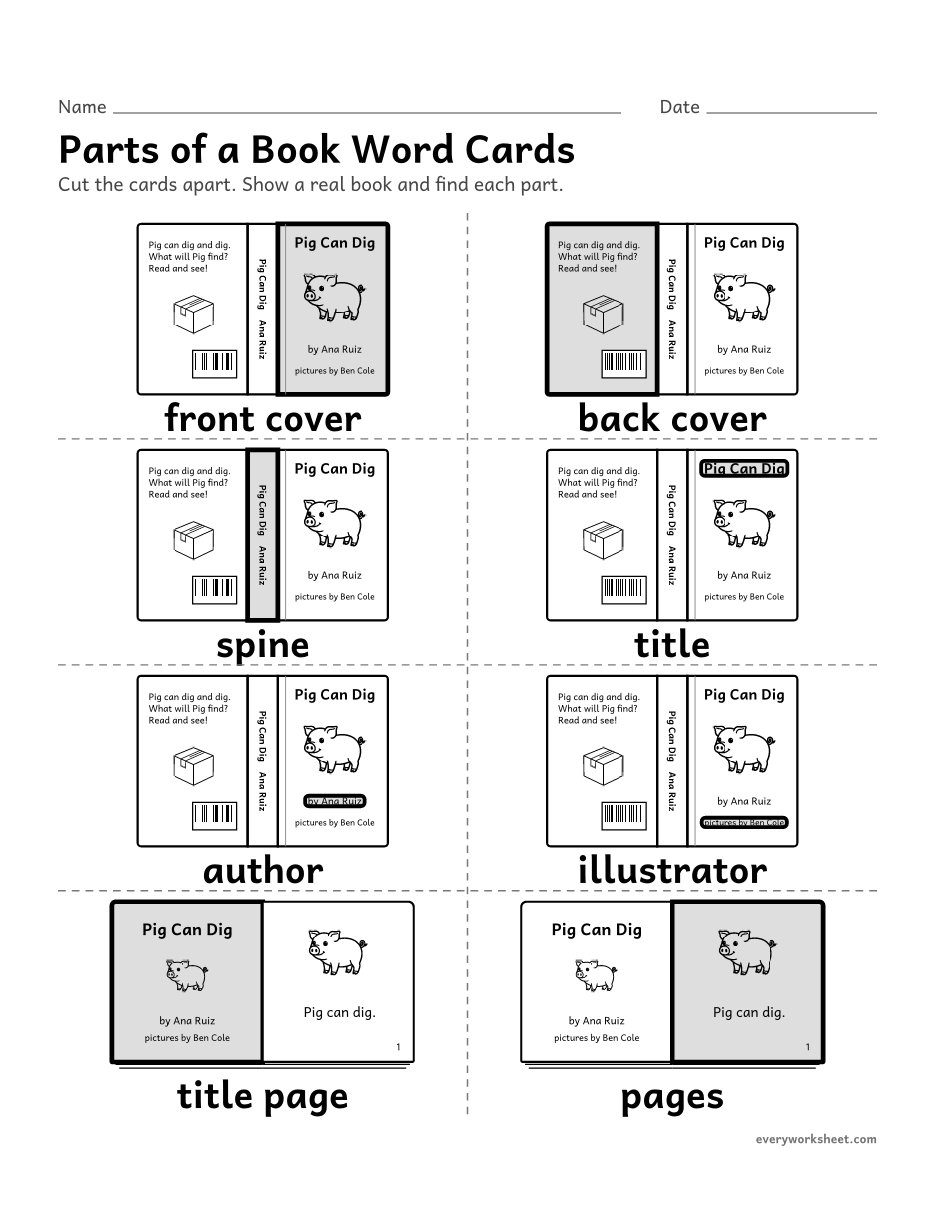
Before children can read a book, they need to know how one works. Where is the front? Which way do the pages turn? Where does the title go, and who made the pictures? These parts of a book worksheets teach the eight parts kindergartners meet first: the front cover, back cover, spine, title, author, illustrator, title page and pages.
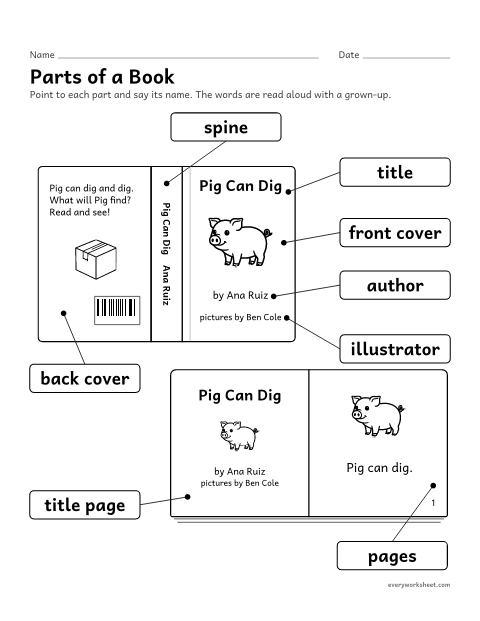
Every sheet uses the same simple book, drawn with clear lines, so children see each part in the same place every time. Start with the chart, then label it, match it or cut and paste the words. Pages with one right answer have an answer key on page 2.
The concepts of print pages go one step further, from the book to the words inside it: where to start reading, which way to go, and what a word, a letter and a sentence are. The author and illustrator sheets show who writes the words and who draws the pictures.
Standards
CCSS.ELA-LITERACY.RI.K.5Identify the front cover, back cover, and title page of a book.CCSS.ELA-LITERACY.RI.K.6Name the author and illustrator of a text and define the role of each in presenting the ideas or information in a text.CCSS.ELA-LITERACY.RL.K.6With prompting and support, name the author and illustrator of a story and define the role of each in telling the story.CCSS.ELA-LITERACY.RF.K.1Demonstrate understanding of the organization and basic features of print.CCSS.ELA-LITERACY.RF.K.1.AFollow words from left to right, top to bottom, and page by page.CCSS.ELA-LITERACY.RF.K.1.BRecognize that spoken words are represented in written language by specific sequences of letters.CCSS.ELA-LITERACY.RF.K.1.CUnderstand that words are separated by spaces in print.
How to use them
- Hold up a real picture book as you teach each part. Point to it on the book first, then on the chart.
- Do the chart together, then a labeling page the next day. Use the cut and paste page for children who cannot write the words yet.
- Use the follow-the-directions page as a listening activity: read each step aloud and let children mark the book.
- For concepts of print, read the page to the child first. Then read each direction and let them mark it. The answer key shows every mark.
- Use the concepts of print checklist one-on-one with a picture book a few times a year. The class checklist shows at a glance who still needs practice.
- After the author and illustrator chart, send children on the book hunt to find both names in a real book.
Teaching tips
- Teach the spine by putting books on a shelf. The spine is the part you can see.
- Kindergartners often mix up the title page and the front cover. Show both side by side in one book: the same title, two places.
- If a child mixes up author and illustrator, link each to its job: the author writes, the illustrator draws.
- Some books have one name for both jobs. Point this out so children do not think a name is missing.
- To check one-to-one matching, ask the child to point under each word as you read. Watch for a finger that runs ahead of the voice.
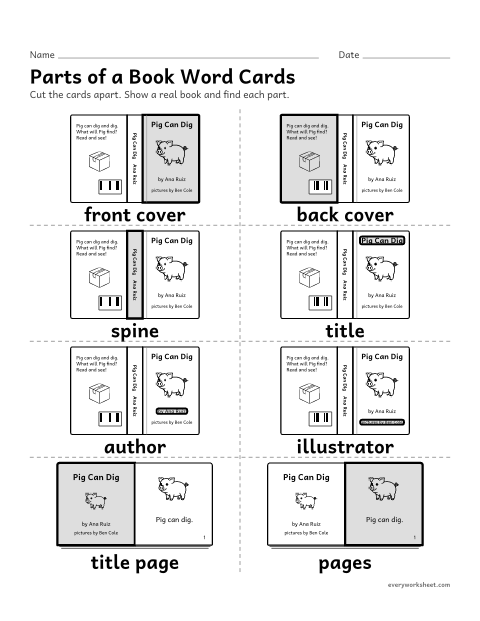
- The word cards make a quick game: hold up a book, say a part, and have children hold up the card.
Questions teachers and parents ask
What are the parts of a book for kindergarten?
Kindergartners learn the front cover, back cover, spine, title, author, illustrator, title page and pages. Our chart shows all eight on one simple drawing of a book.
What are concepts of print?
Concepts of print are the basic ideas about how books and print work: holding a book the right way, reading left to right and top to bottom, knowing that print carries the message, and telling letters, words and sentences apart.
What is the difference between an author and an illustrator?
The author writes the words of the book. The illustrator draws or paints the pictures. Sometimes one person does both jobs.
How do I use the concepts of print checklist?
Sit with one child and a picture book. Ask them to show you each item, like the front cover or where to start reading, and mark yes or not yet. Repeat it two more times during the year to see growth.