 View larger
Parts of a flower chart
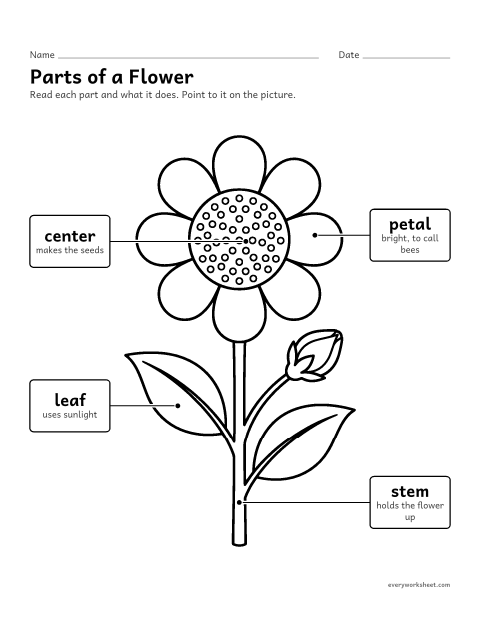
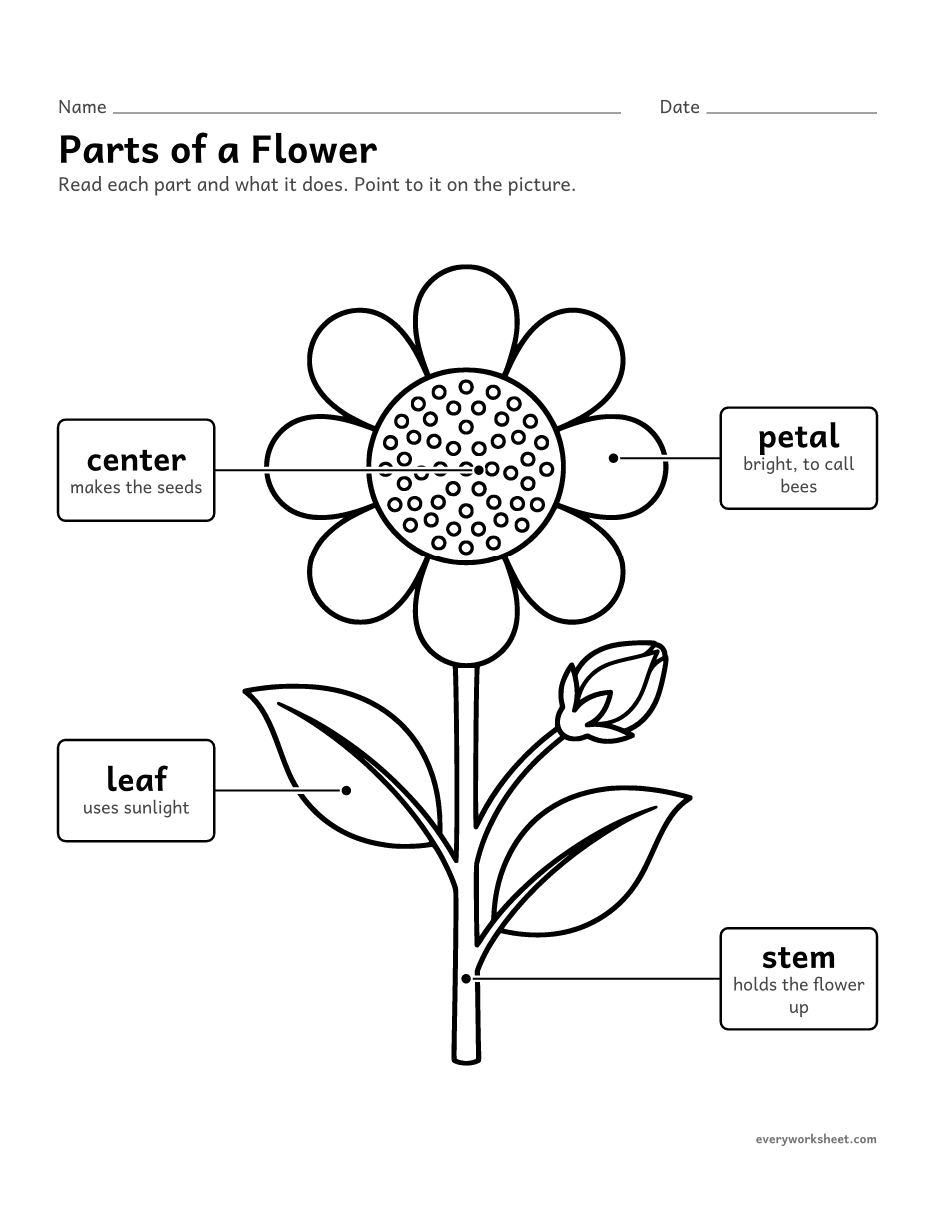
Naming the parts of a flower and what each part does
1 page38 KB
A big flower to label, cut and paste and color: petal, center, stem and leaf, plus a pollen and bud page and a bee story.
View largerNaming the parts of a flower and what each part does
1 page38 KB
 View all 2 pages
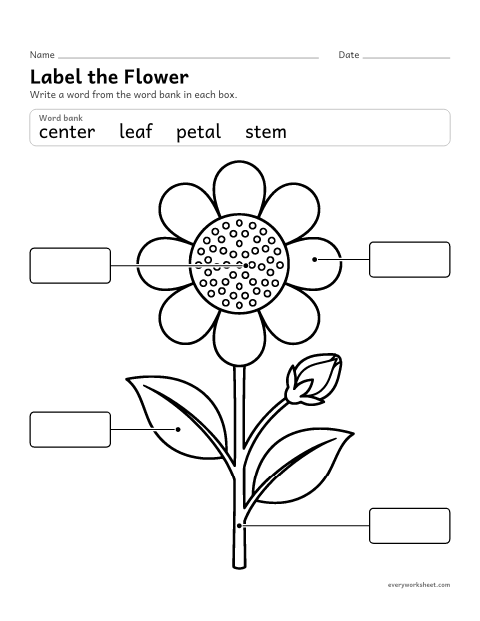
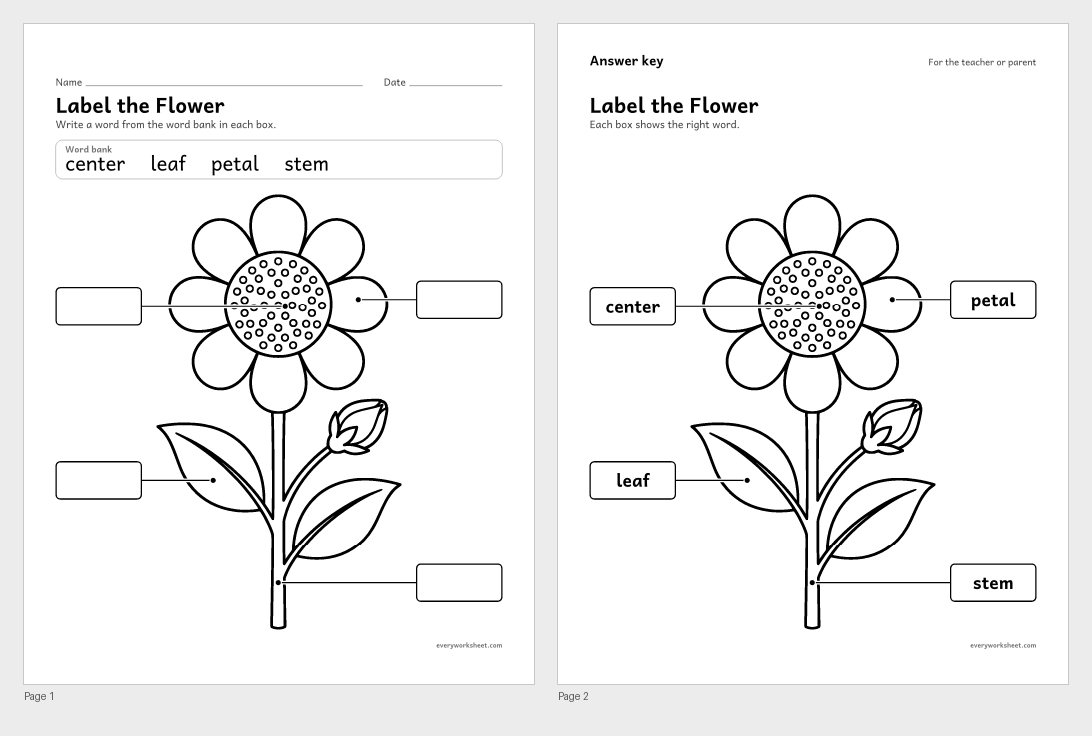
Labeling the petal, center, stem and leaf
Answer key on page 2
2 pages53 KB
 View all 2 pages
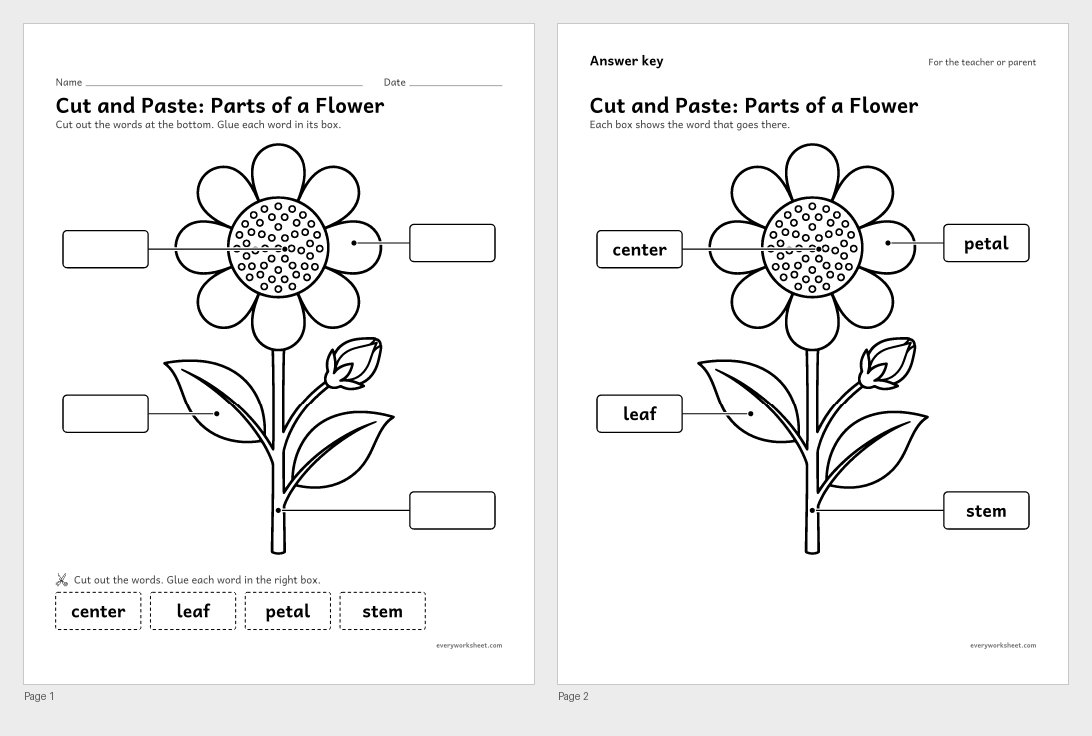
Matching the words petal, center, stem and leaf to the parts
Answer key on page 2
2 pages82 KB
 View larger
 View all 2 pages
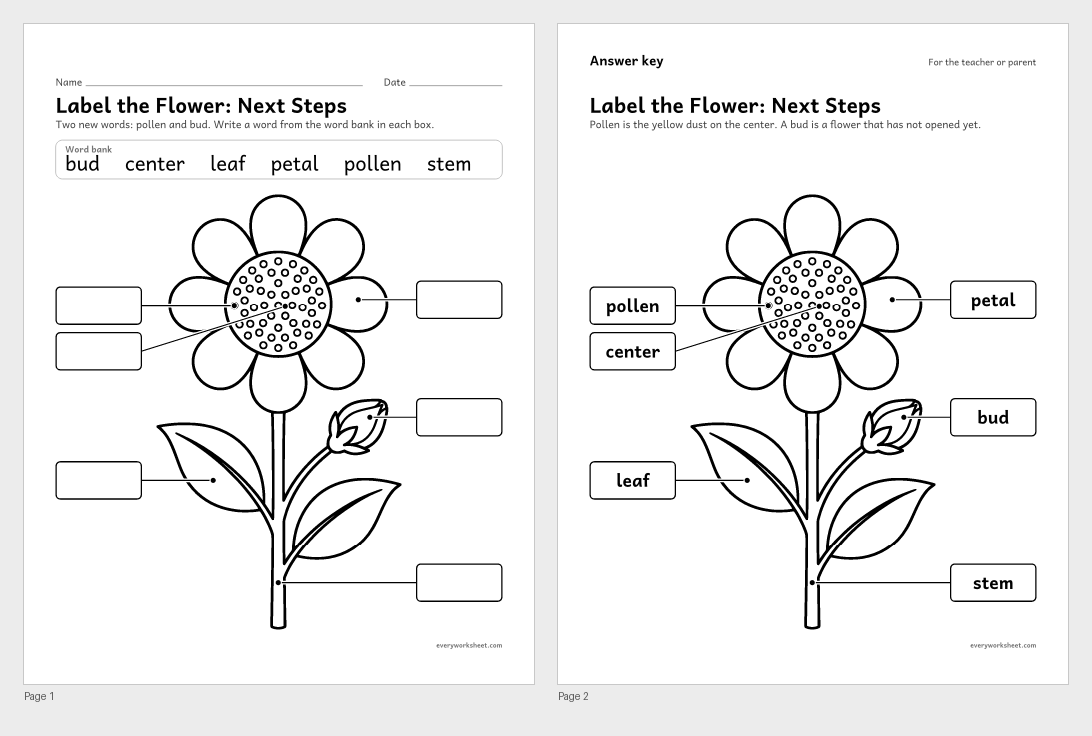
Labeling the pollen and bud as well as the petal, center, stem and leaf
Answer key on page 2
2 pages55 KB
 View all 2 pages
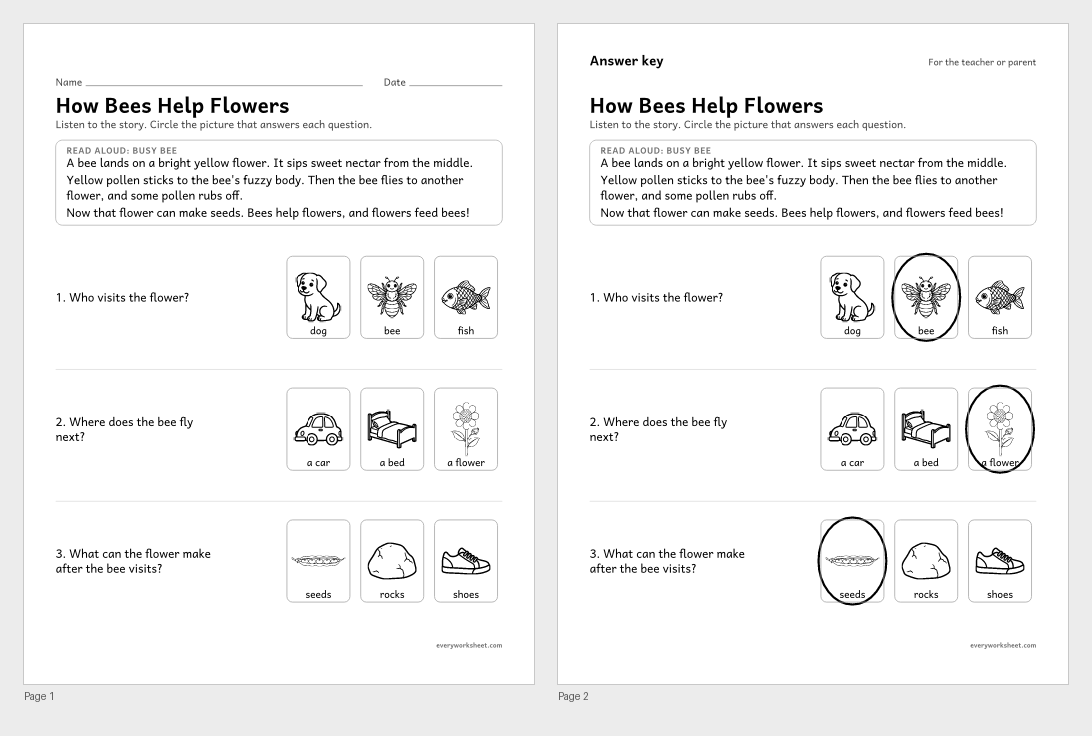
Listening to a passage about pollination and answering questions
Answer key on page 2
2 pages273 KB
Print at 100% (actual size) for the cleanest tracing lines.
These parts of a flower worksheets use one big, detailed flower drawing with a round center, a ring of petals, a curving stem, two leaves and a bud. Kindergartners learn four parts they can see and touch: the petal, the center, the stem and the leaf.
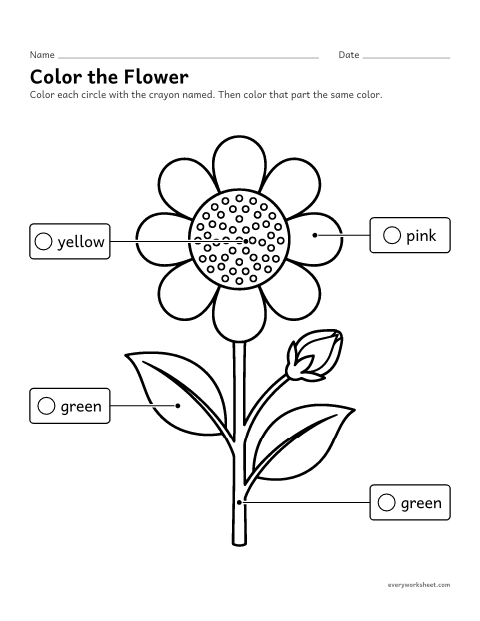
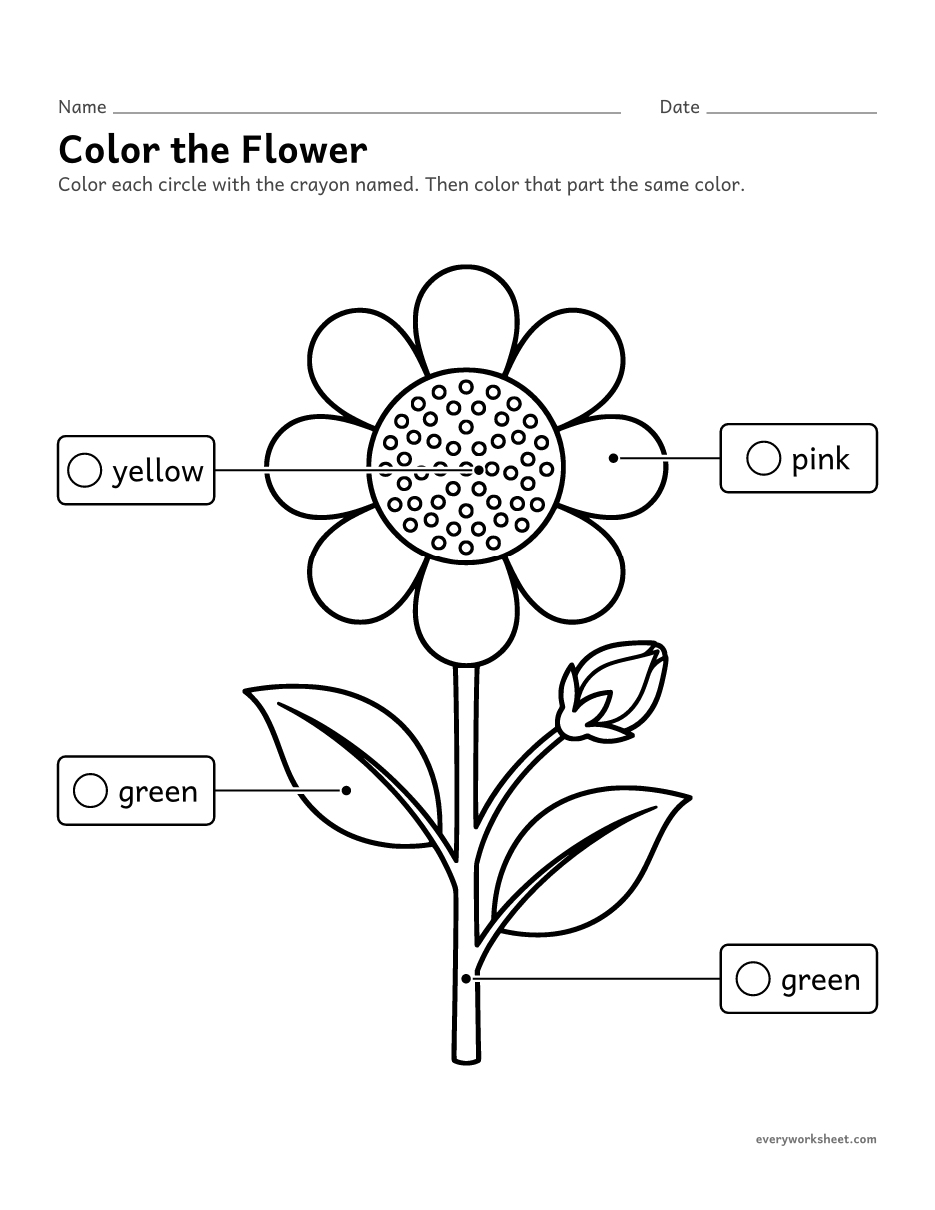
Start with the parts of a flower chart, then label the flower from a word bank or cut out the words and glue them in place. The color by part page names a crayon for each part. A next steps page adds two new words, pollen and bud, for children who are ready.
The bee story is a short read-aloud with picture questions. It shows how a bee carries pollen from flower to flower so the flower can make seeds.
NGSS K-LS1-1Use observations to describe patterns of what plants and animals (including humans) need to survive.NGSS 2-LS2-2Grade 2, introduced early: develop a simple model that mimics the function of an animal in dispersing seeds or pollinating plants.NGSS 4-LS1-1Grade 4, introduced early: construct an argument that plants and animals have internal and external structures that function to support survival, growth, behavior, and reproduction.CCSS.ELA-LITERACY.W.K.2Use a combination of drawing, dictating, and writing to compose informative/explanatory texts in which they name what they are writing about and supply some information about the topic.CCSS.ELA-LITERACY.L.K.6Use words and phrases acquired through conversations, reading and being read to, and responding to texts.The petals, the center, the stem and the leaves. Older children add pollen, the yellow dust on the center, and the bud, a flower that has not opened yet.
Not usually, so these pages leave them out. The next steps page adds only pollen and bud, two words young children can see on a real flower.
Yes. The label it, cut and paste, next steps and bee story pages each have an answer key on page 2.