 View larger
Parts of a plant chart
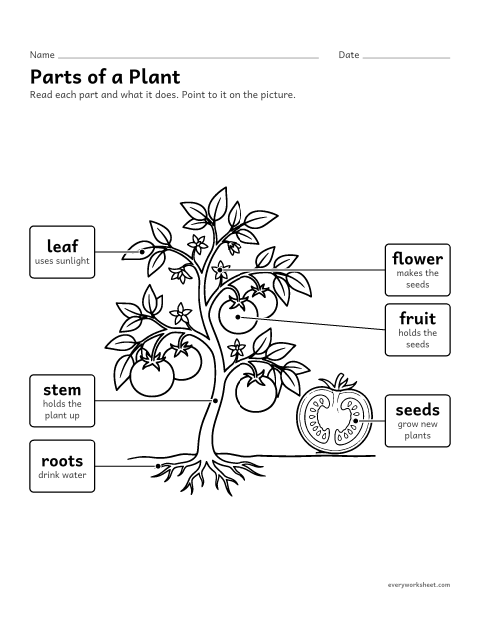
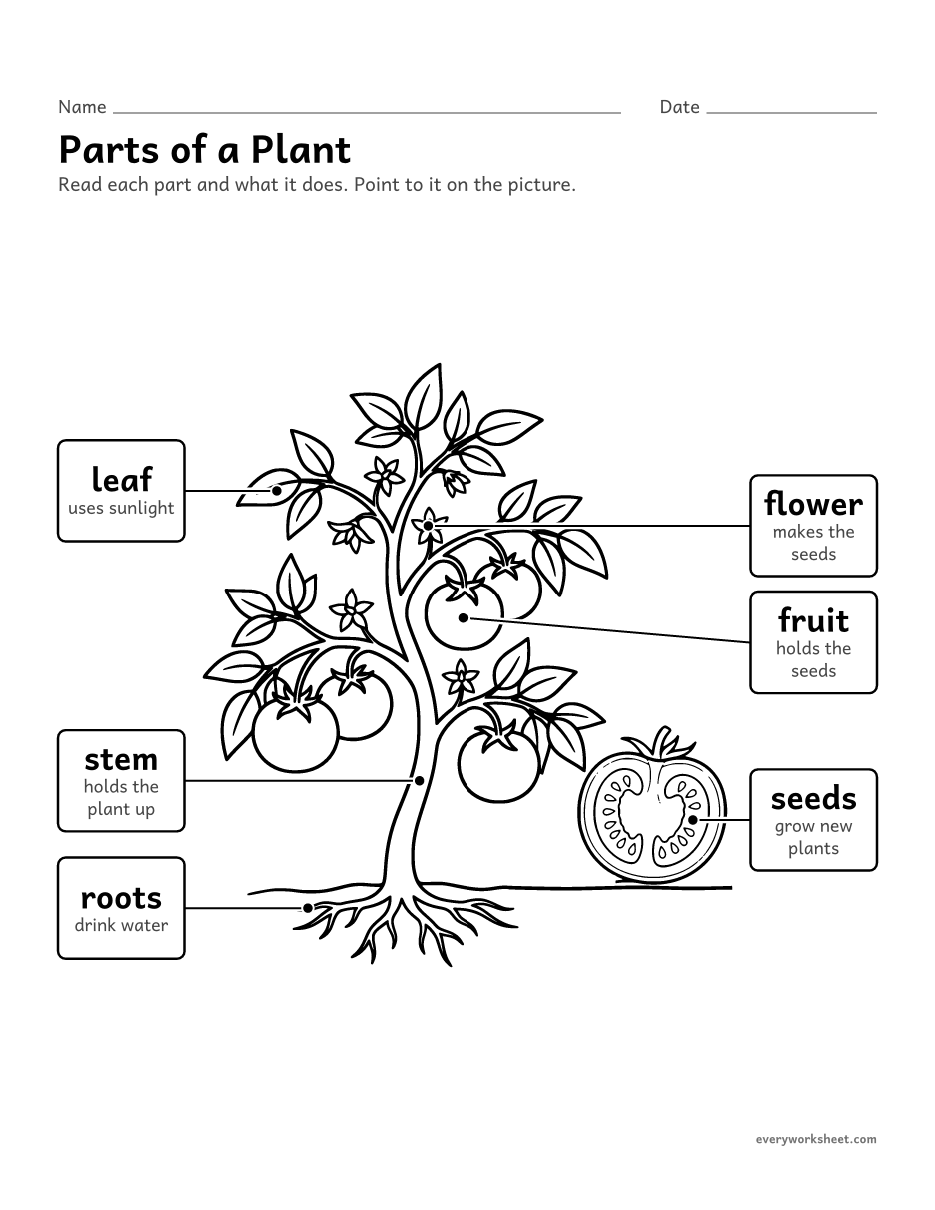
Naming the parts of a plant and what each part does
1 page61 KB
A detailed tomato plant to label, cut and paste and color: roots, stem, leaf, flower, fruit and seeds, plus a plants we eat page.
View largerNaming the parts of a plant and what each part does
1 page61 KB
 View all 2 pages
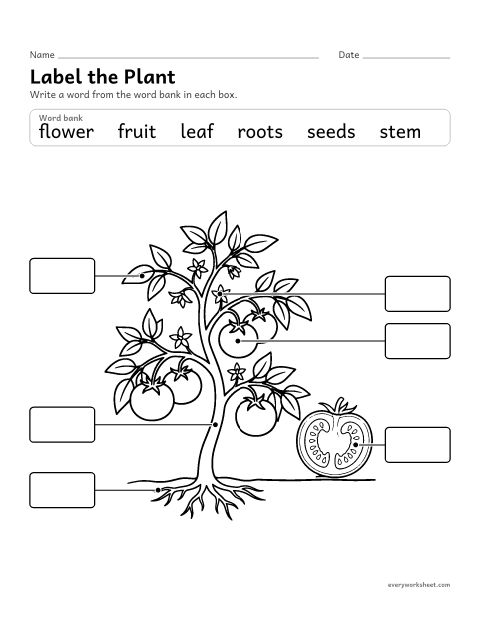
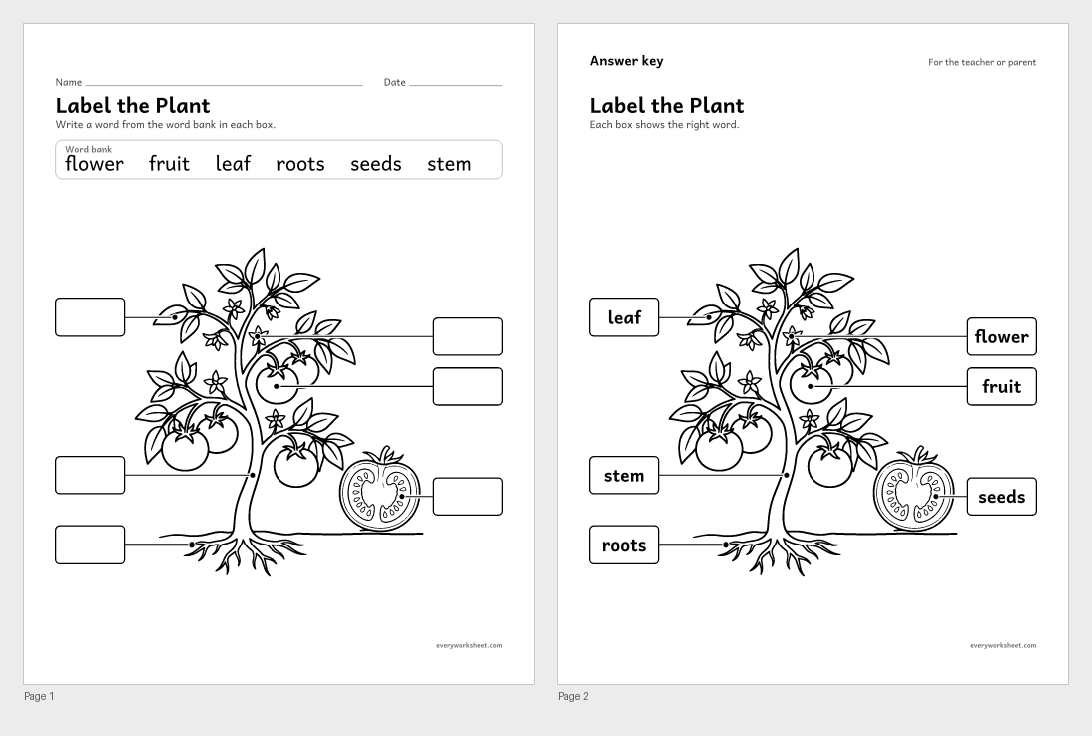
Labeling the flower, fruit, seeds, leaf, stem and roots
Answer key on page 2
2 pages101 KB
 View all 2 pages
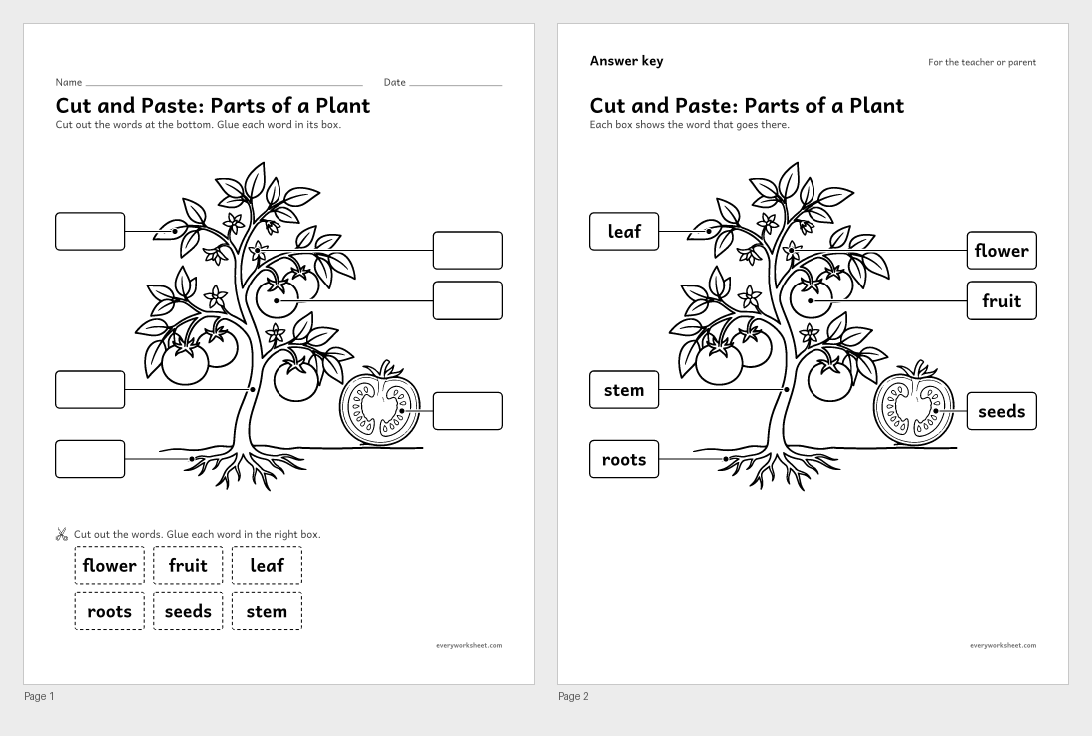
Matching the words flower, fruit, seeds, leaf, stem and roots to the parts
Answer key on page 2
2 pages129 KB
 View larger
 View all 2 pages
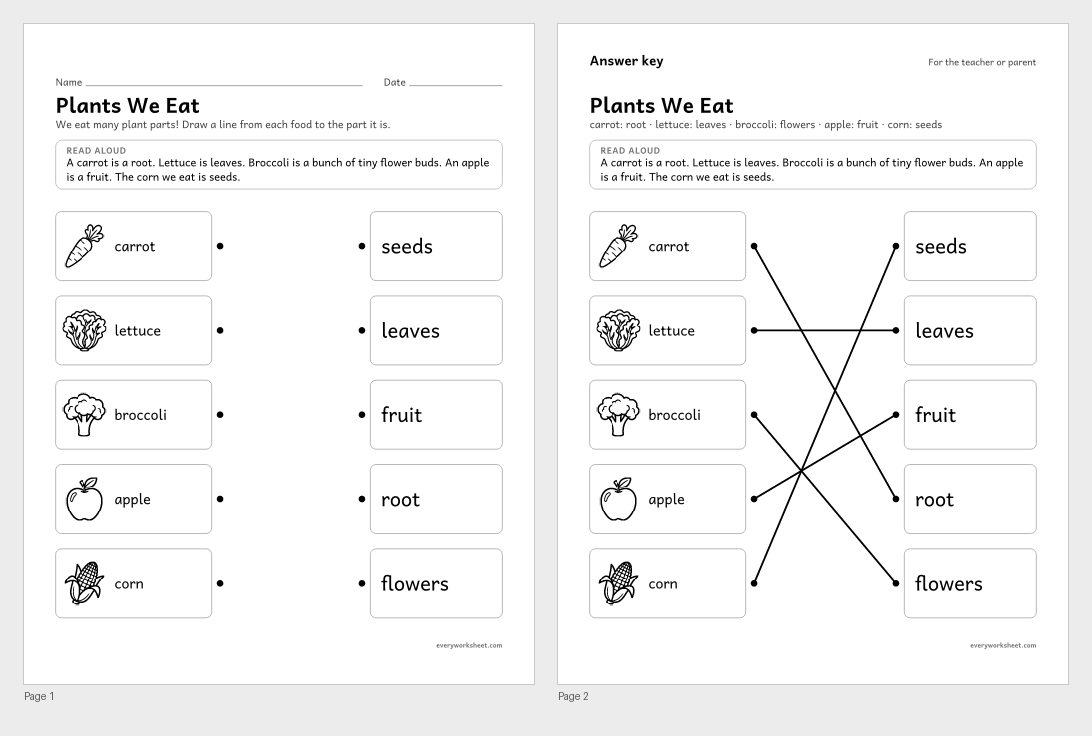
Matching foods to the plant part we eat
Answer key on page 2
2 pages256 KB
 View larger
Print at 100% (actual size) for the cleanest tracing lines.
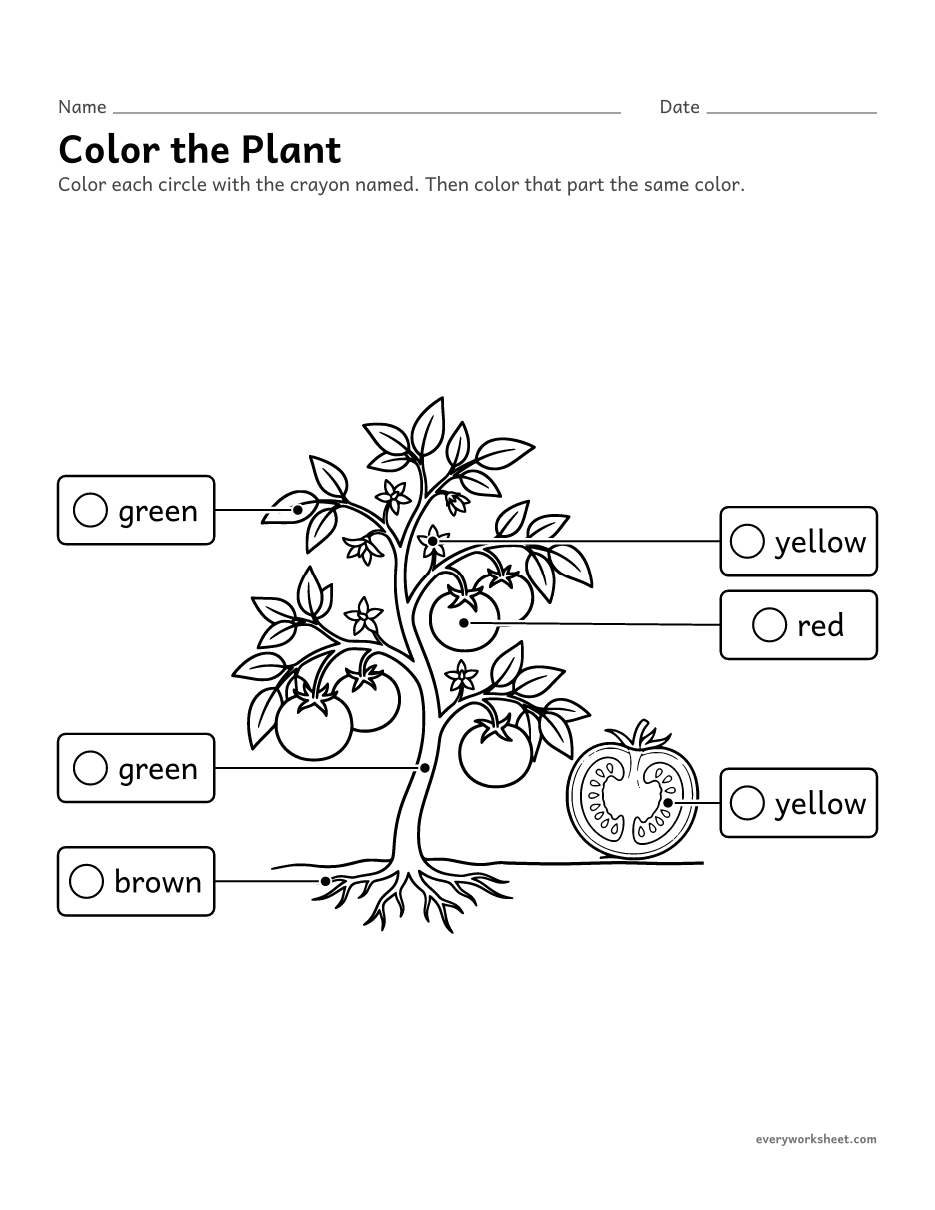
These parts of a plant worksheets teach the six parts kindergartners meet first: roots, stem, leaf, flower, fruit and seeds. Every page uses the same big line drawing of a tomato plant, with flowers and tomatoes on their stalks, roots spreading in the soil, and a tomato cut open to show the seeds inside.
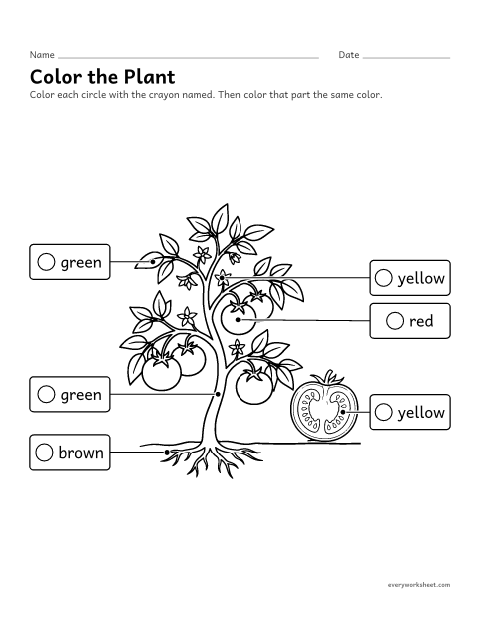
Start with the parts of a plant chart, which names each part and says what it does in a few words. Then children write the labels from a word bank, or cut out the words and glue them in the boxes. The color by part page names a crayon for each part. Every label line ends right on its part, so there is no guessing.
To connect plants to lunch, the plants we eat page matches a carrot to roots, lettuce to leaves and corn to seeds. The draw and label page lets children show what they know without a picture to copy.
NGSS K-LS1-1Use observations to describe patterns of what plants and animals (including humans) need to survive.NGSS 4-LS1-1Grade 4, introduced early: construct an argument that plants and animals have internal and external structures that function to support survival, growth, behavior, and reproduction.CCSS.ELA-LITERACY.W.K.2Use a combination of drawing, dictating, and writing to compose informative/explanatory texts in which they name what they are writing about and supply some information about the topic.CCSS.ELA-LITERACY.L.K.6Use words and phrases acquired through conversations, reading and being read to, and responding to texts.CCSS.ELA-LITERACY.L.K.5.ASort common objects into categories (e.g., shapes, foods) to gain a sense of the concepts the categories represent.Roots, stem, leaves, flower, fruit and seeds. Roots drink water and hold the plant, the stem holds it up, leaves use sunlight to make food, the flower makes seeds, and the fruit holds the seeds.
Yes. The label it, cut and paste and plants we eat pages each have an answer key on page 2.
A tomato plant shows every part clearly: yellow flowers, fruit growing on the same stalks, and seeds you can see when you cut a tomato open.