 View larger
Parts of an Insect Worksheets
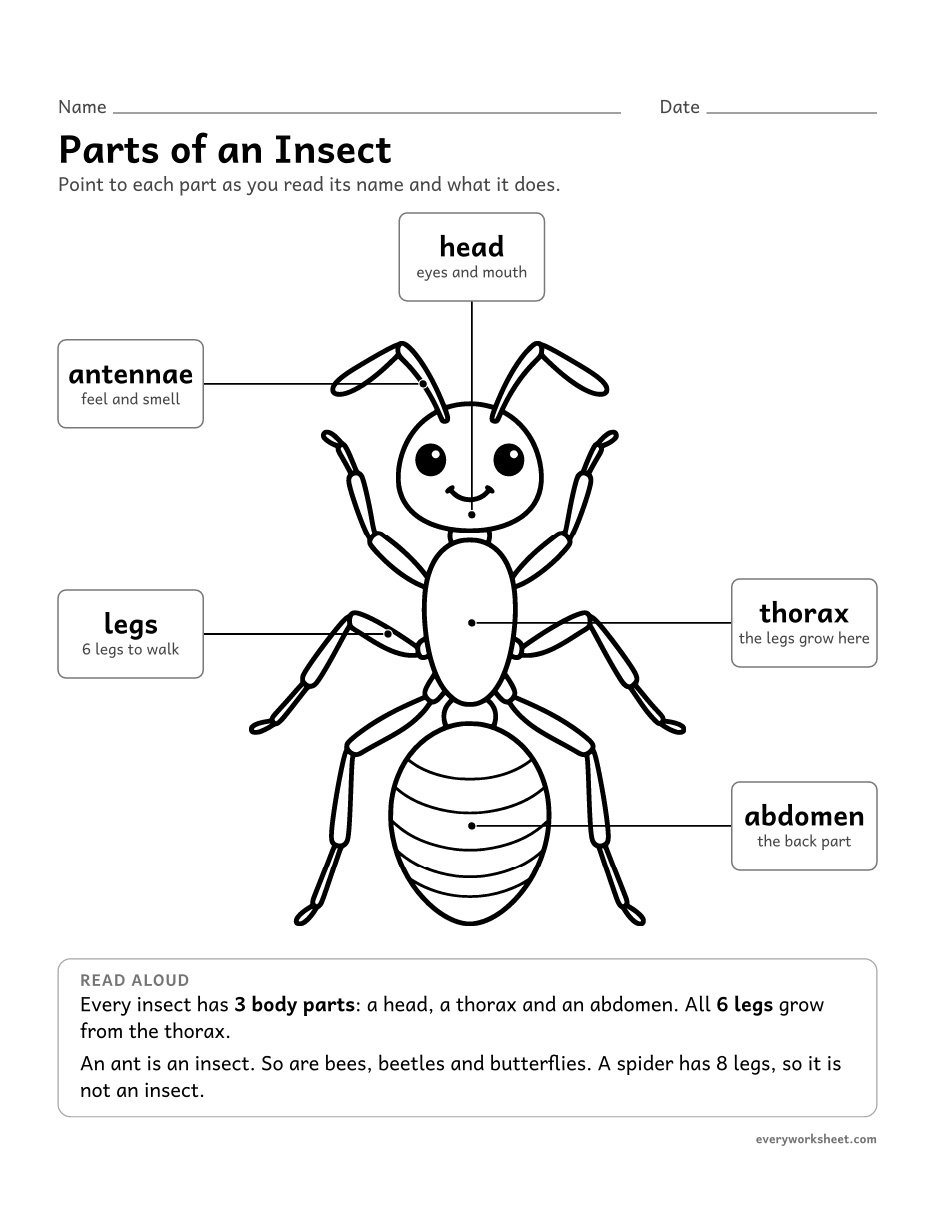
Head, thorax, abdomen, six legs and two antennae: a labeled ant chart, label it, cut and paste and color pages, and an insect or not sort.
Download the parts of an insect worksheets
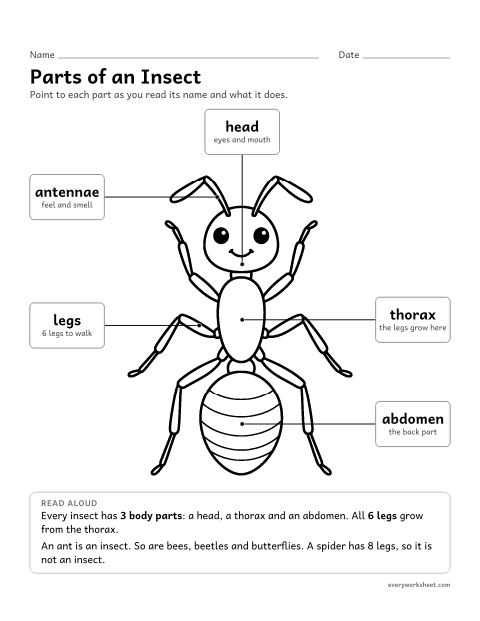
Parts of an insect chart
 View larger
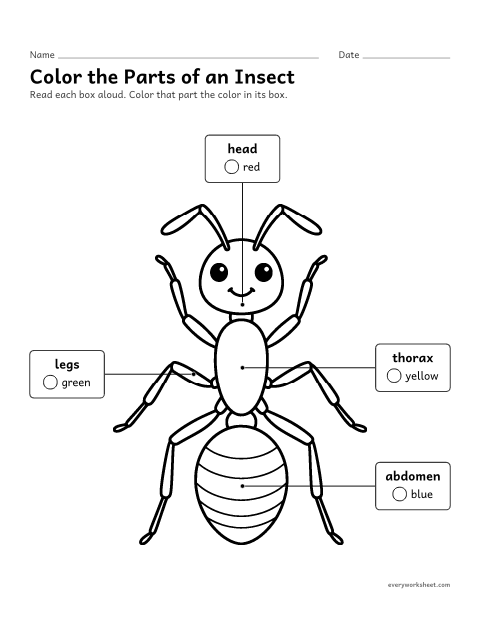
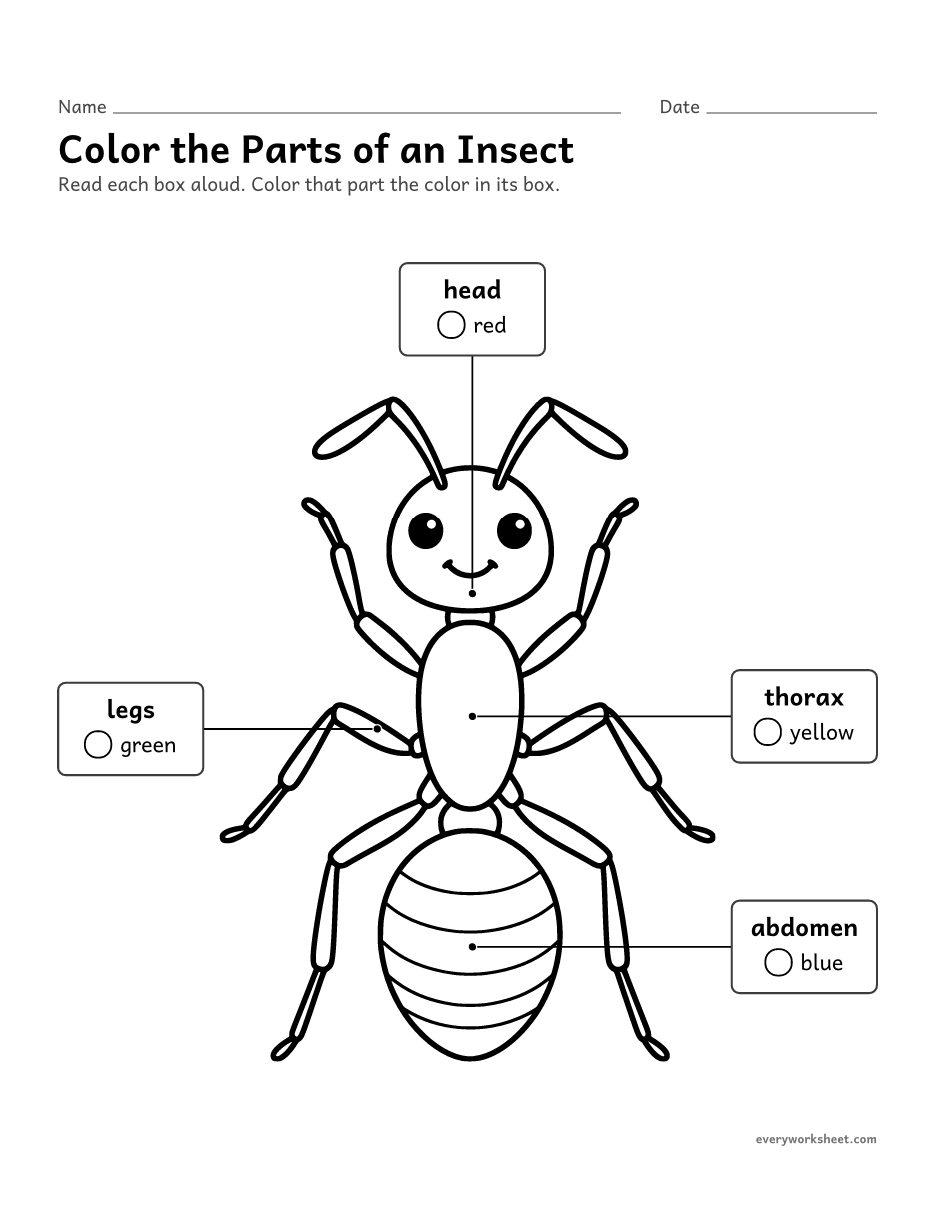
Label, cut and paste, color
 View all 2 pages
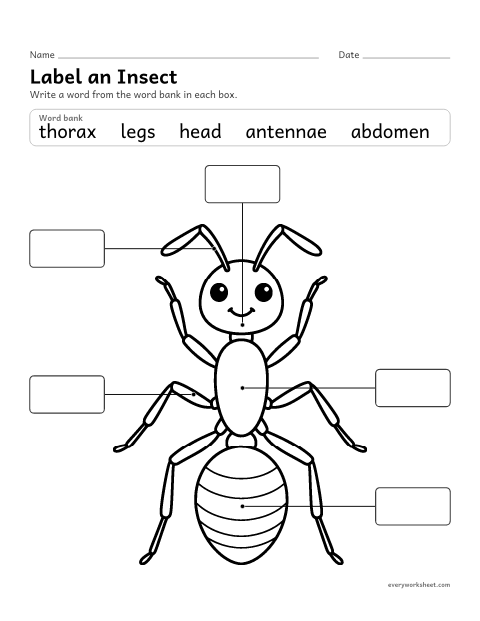
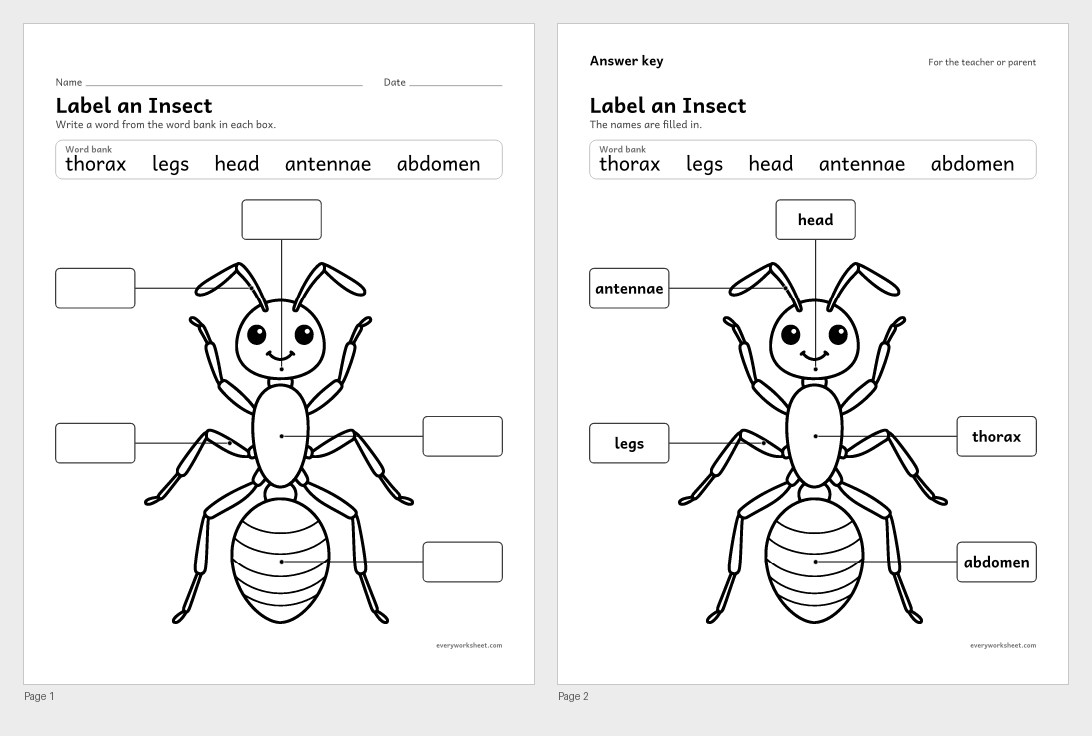
Label the parts of an insect
Labeling the parts of an insect
Answer key on page 2
2 pages49 KB
 View all 2 pages
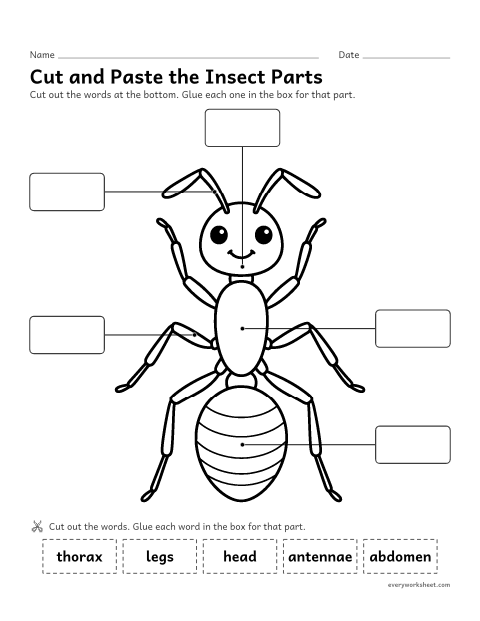
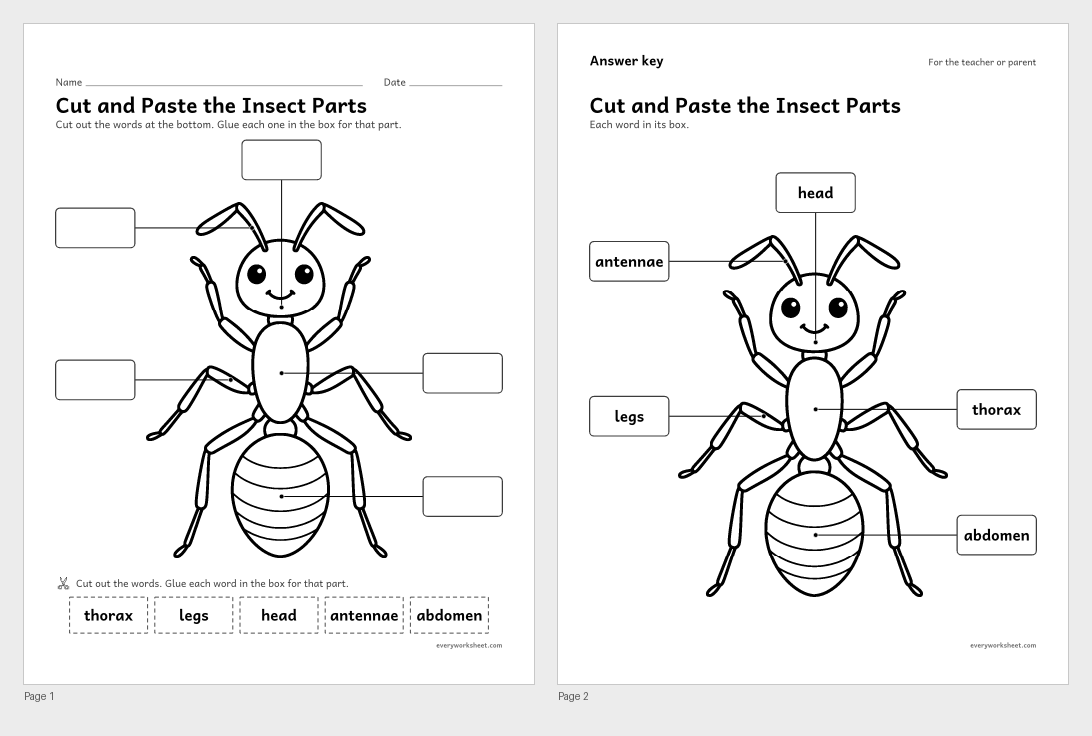
Parts of an insect cut and paste
Matching part names to the parts of an insect
Answer key on page 2
2 pages78 KB
 View larger
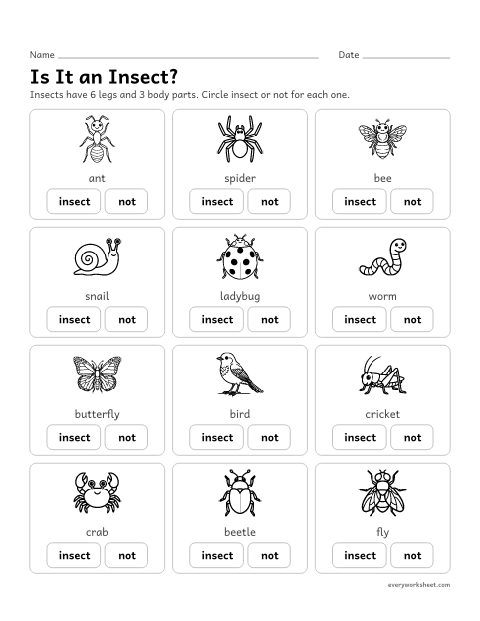
Insect or not?
 View all 2 pages
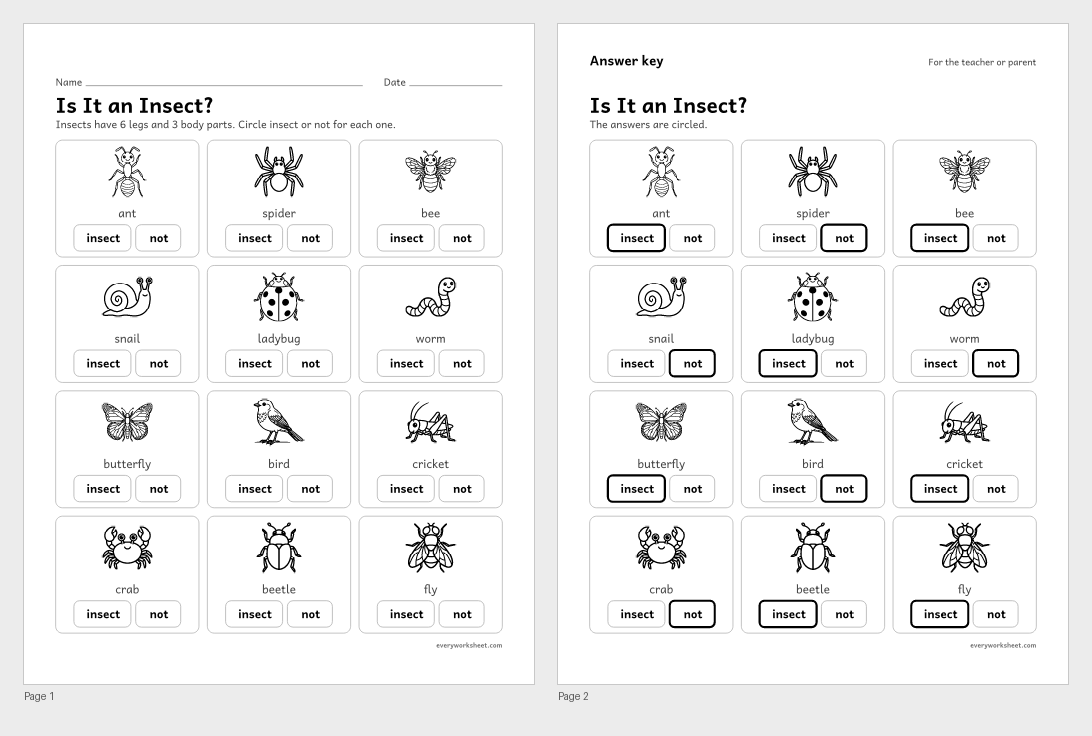
Insect or Not? circle the answer
Telling insects from other small animals
Answer key on page 2
2 pages427 KB
Print at 100% (actual size) for the cleanest tracing lines.
About these parts of an insect worksheets
Every insect has the same simple body plan: three body parts (head, thorax and abdomen), six legs and two antennae. Once children know that rule, they can look at any bug and decide if it is an insect.
These parts of an insect worksheets use a big, detailed ant drawn from above, so every leg can be seen joining the thorax. Children read the chart, write the part names from a word bank, cut and paste the names, and color each part a different color. A sort asks children to circle insect or not for a dozen small animals, from ants and bees to spiders, snails and worms.
Animal body parts and what they do are part of the grade 1 standard 1-LS1-1. These pages introduce the names at a kindergarten level, with a clear line drawing and facts read aloud.
Standards
NGSS 1-LS1-1Grade 1 standard, introduced here at a kindergarten level: use materials to design a solution to a human problem by mimicking how plants and/or animals use their external parts to help them survive, grow, and meet their needs.NGSS K-LS1-1Use observations to describe patterns of what plants and animals (including humans) need to survive.CCSS.ELA-LITERACY.W.K.2Use a combination of drawing, dictating, and writing to compose informative/explanatory texts in which they name what they are writing about and supply some information about the topic.CCSS.ELA-LITERACY.L.K.1.APrint many upper- and lowercase letters.CCSS.MATH.CONTENT.K.MD.B.3Classify objects into given categories; count the numbers of objects in each category and sort the categories by count.CCSS.ELA-LITERACY.L.K.5.ASort common objects into categories (e.g., shapes, foods) to gain a sense of the concepts the categories represent.CCSS.ELA-LITERACY.SL.K.2Confirm understanding of a text read aloud or information presented orally or through other media by asking and answering questions about key details and requesting clarification if something is not understood.
How to use them
- Read the chart together and point to each part. Count the legs out loud: 1 to 6.
- Use the label page or the cut and paste page to practice the words. Answer keys are on page 2.
- Read the color page aloud and let your child color each part.
- Use the insect or not page after a bug hunt outside.
Teaching tips
- All six legs grow from the middle part, the thorax.
- A spider is not an insect: it has 8 legs and only 2 body parts.
- Antennae is the word for more than one antenna. Insects use them to feel and smell.
- Make an insect with three balls of play dough, six pipe-cleaner legs and two antennae.
Questions teachers and parents ask
What are the 3 body parts of an insect?
The head, the thorax (the middle) and the abdomen (the back end).
How many legs does an insect have?
Six. All six legs are attached to the thorax.
Is a spider an insect?
No. A spider has 8 legs and 2 body parts, and it has no antennae.
Do these worksheets have answer keys?
Yes. The label, cut and paste and insect or not pages have an answer key on page 2.