 View larger
Pumpkin life cycle chart
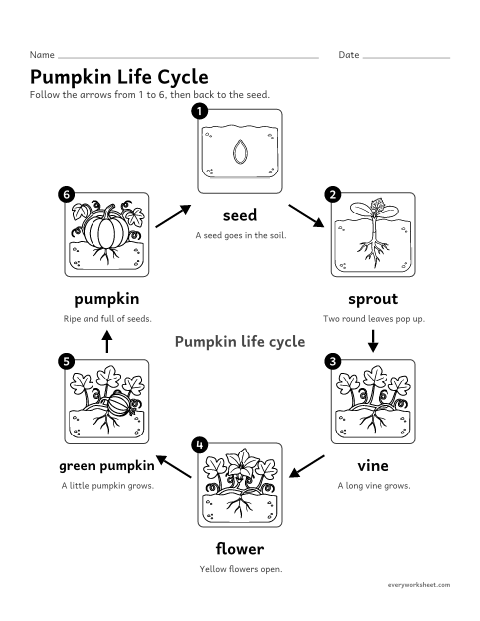
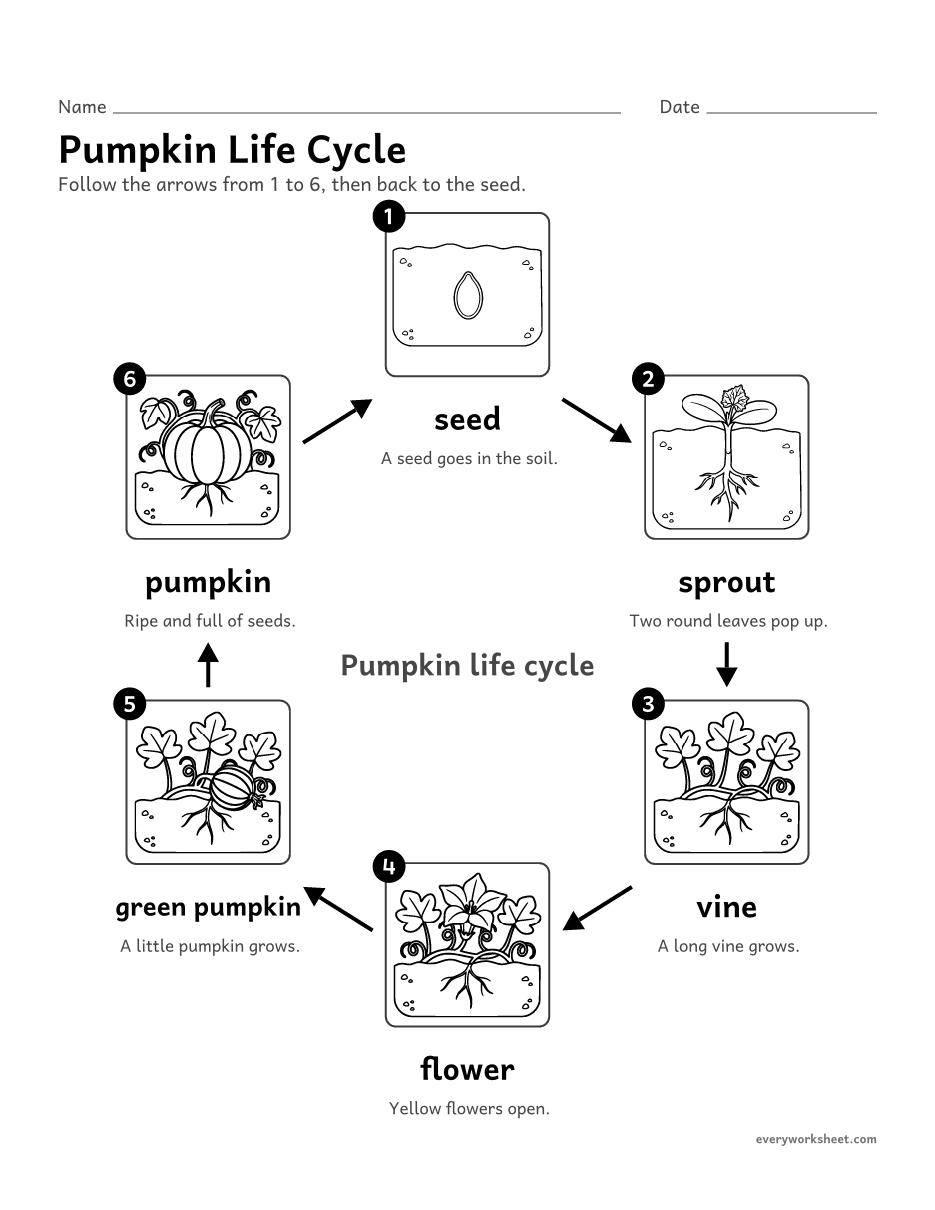
Naming the stages of the pumpkin life cycle in order
1 page86 KB
Seed, sprout, vine, flower, green pumpkin and pumpkin: a chart, cut and paste, a wheel to spin, parts of a pumpkin and counting seeds.
View largerNaming the stages of the pumpkin life cycle in order
1 page86 KB
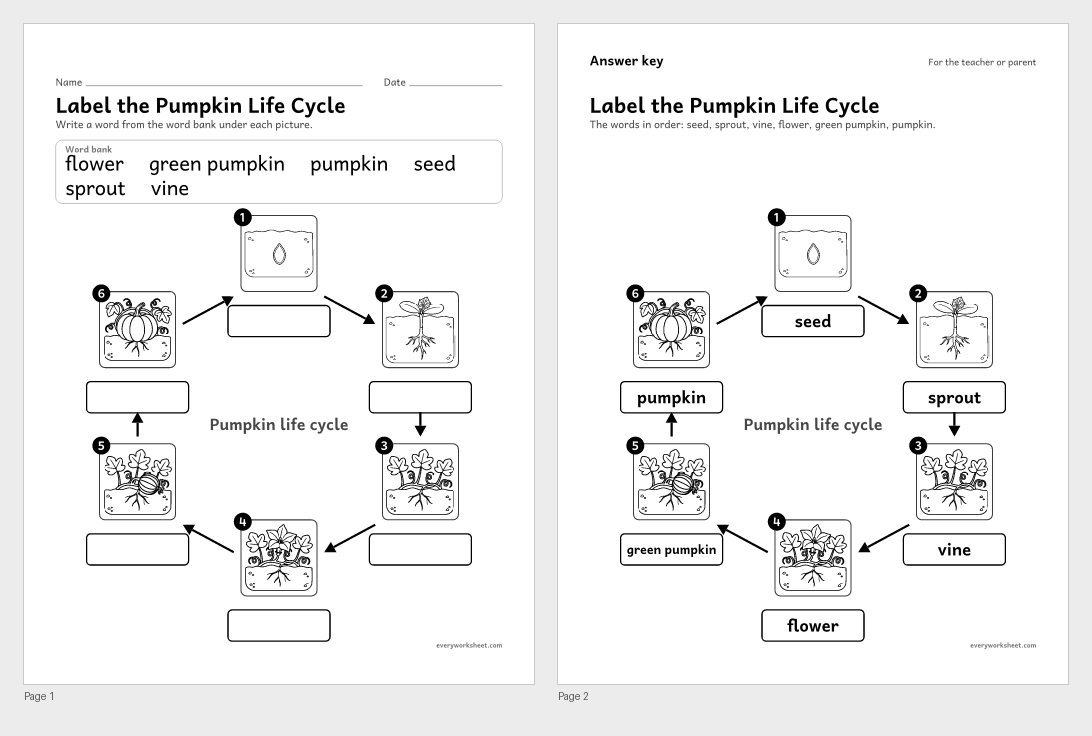 View all 2 pages
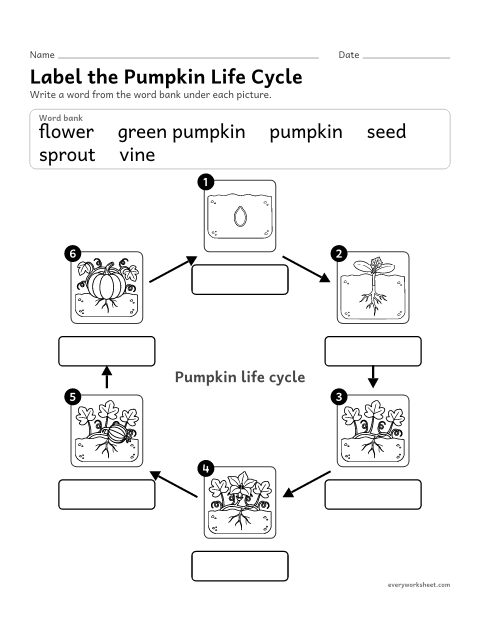
Writing the name of each life-cycle stage
Answer key on page 2
2 pages145 KB
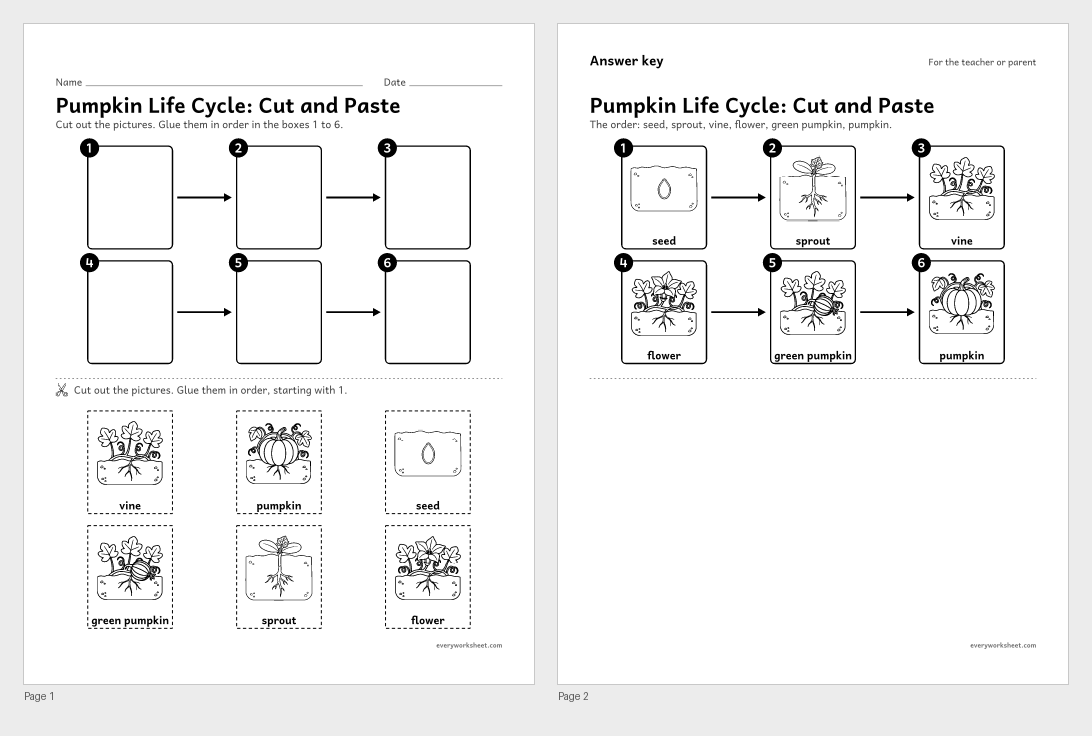 View all 2 pages
Putting the pumpkin life-cycle pictures in order
Answer key on page 2
2 pages174 KB
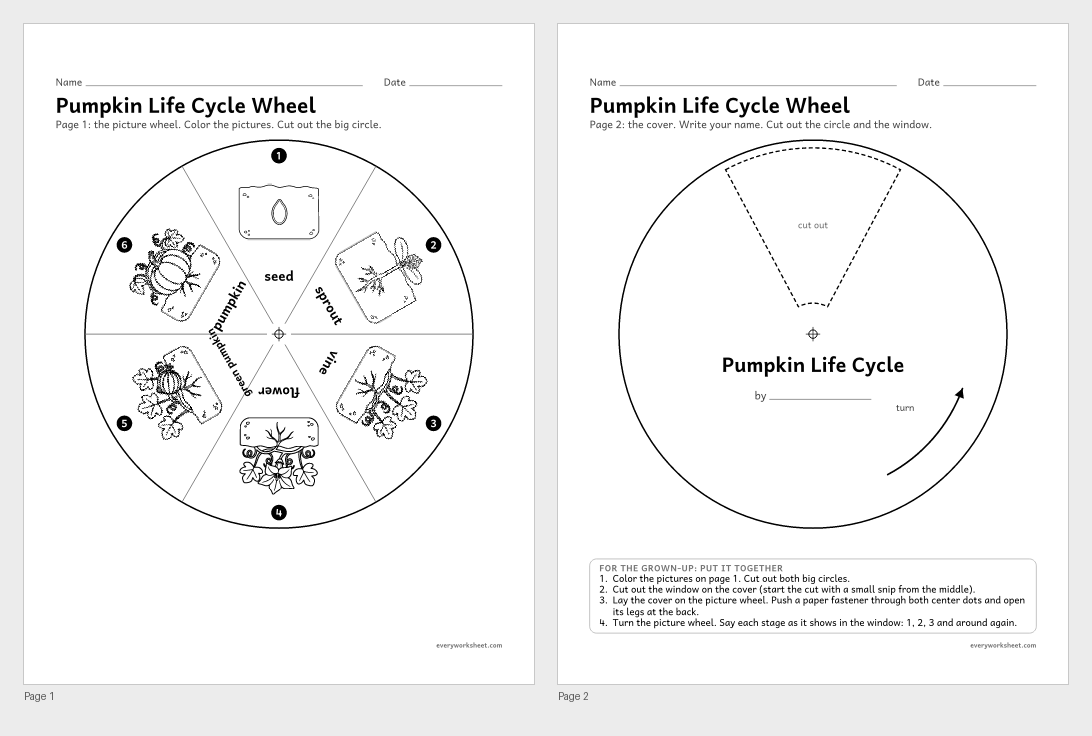 View all 2 pages
Making a turning wheel that shows the pumpkin life cycle
2 pages91 KB
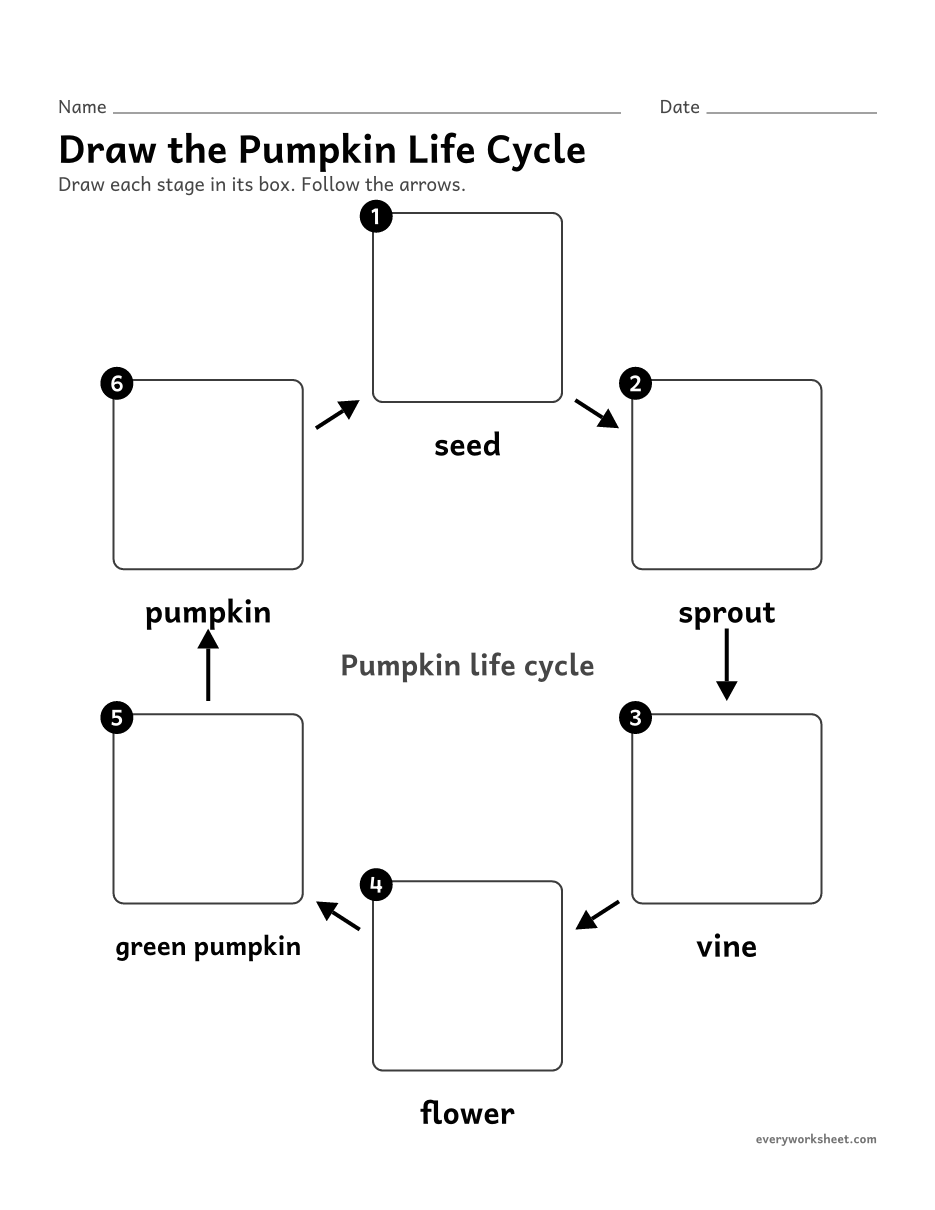 View larger
 View all 2 pages
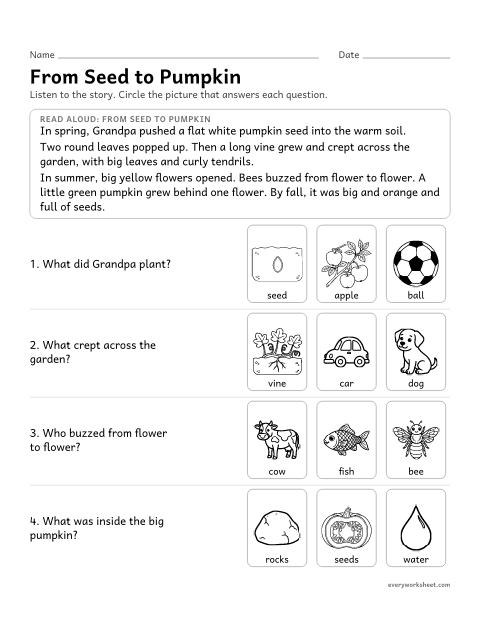
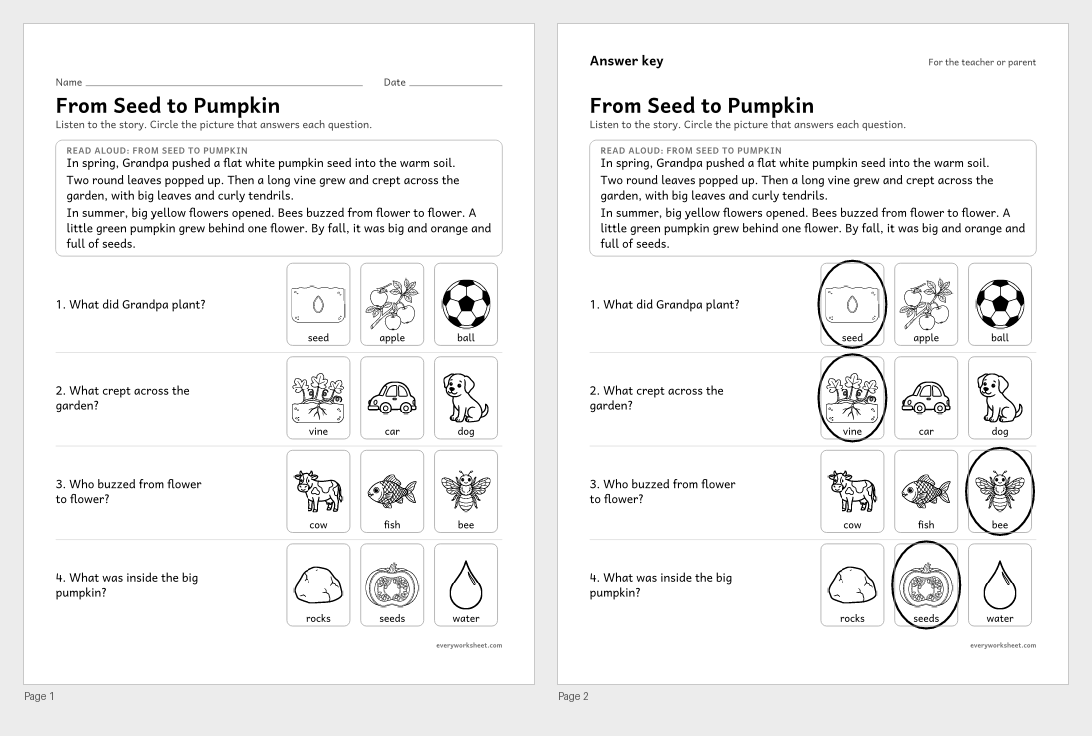
Listening to a passage about the pumpkin life cycle and answering questions
Answer key on page 2
2 pages315 KB
 View larger
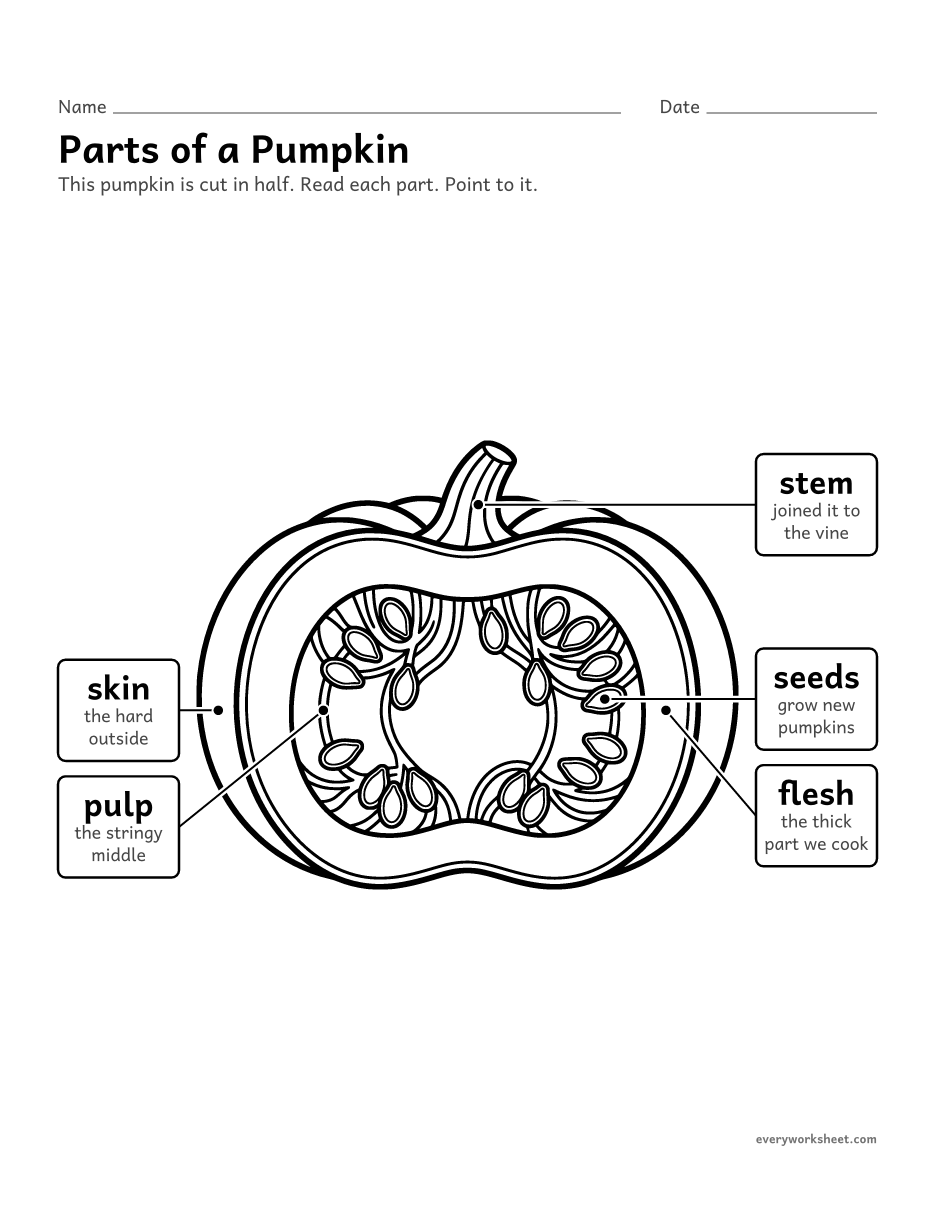
Naming the parts of a pumpkin and what each part does
1 page50 KB
 View all 2 pages
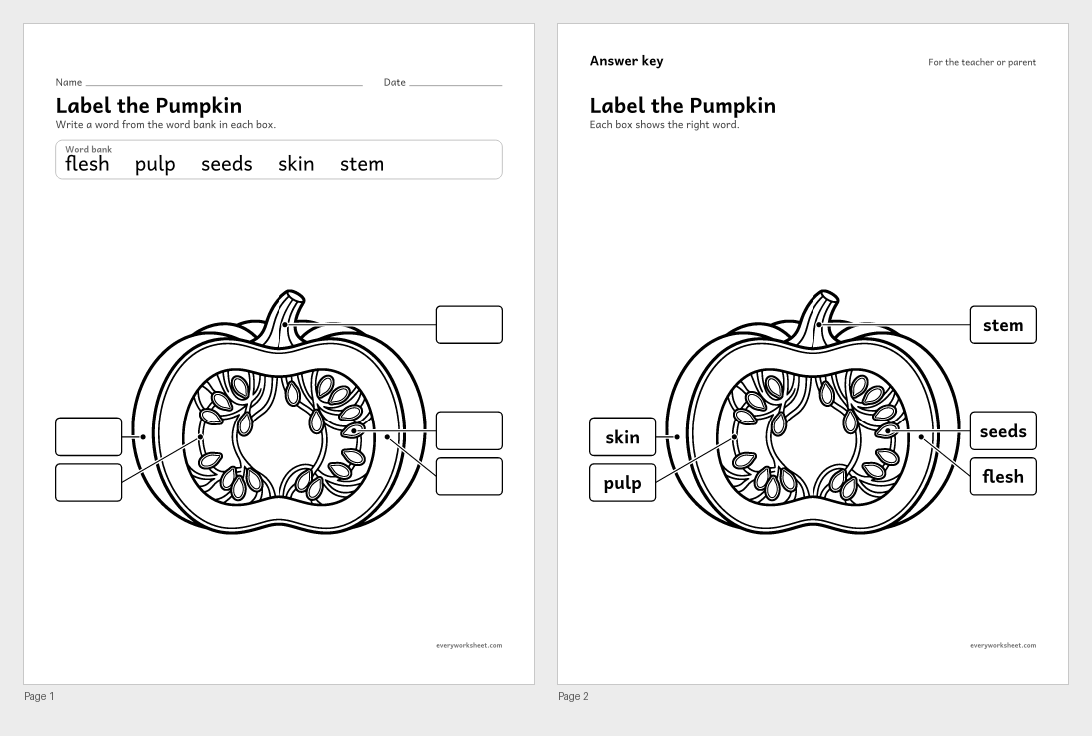
Labeling the stem, skin, flesh, pulp and seeds
Answer key on page 2
2 pages76 KB
 View all 2 pages
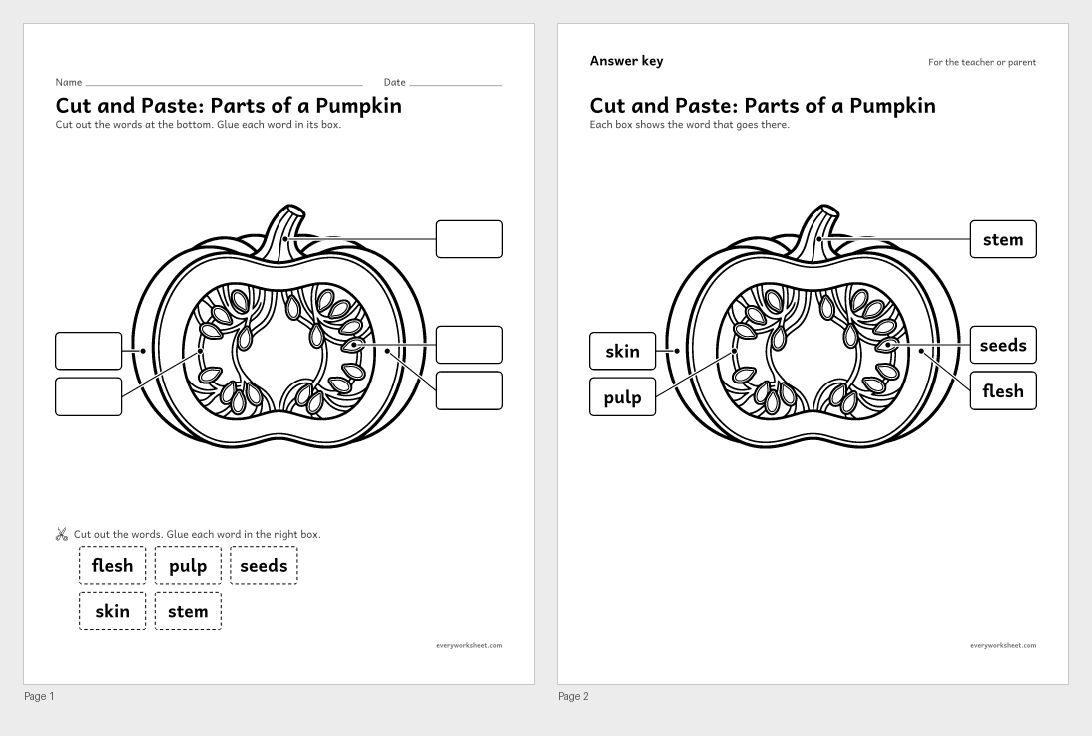
Matching the words stem, skin, flesh, pulp and seeds to the parts
Answer key on page 2
2 pages105 KB
 View all 2 pages
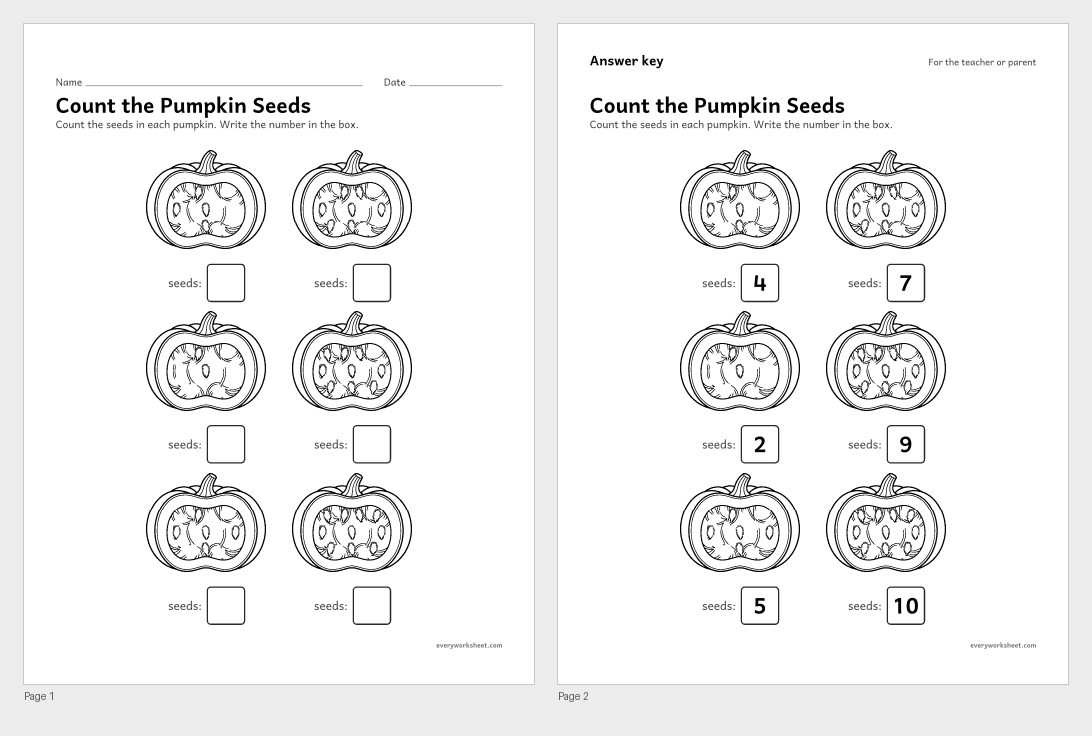
Counting seeds to 10 and writing the number
Answer key on page 2
2 pages197 KB
 View larger
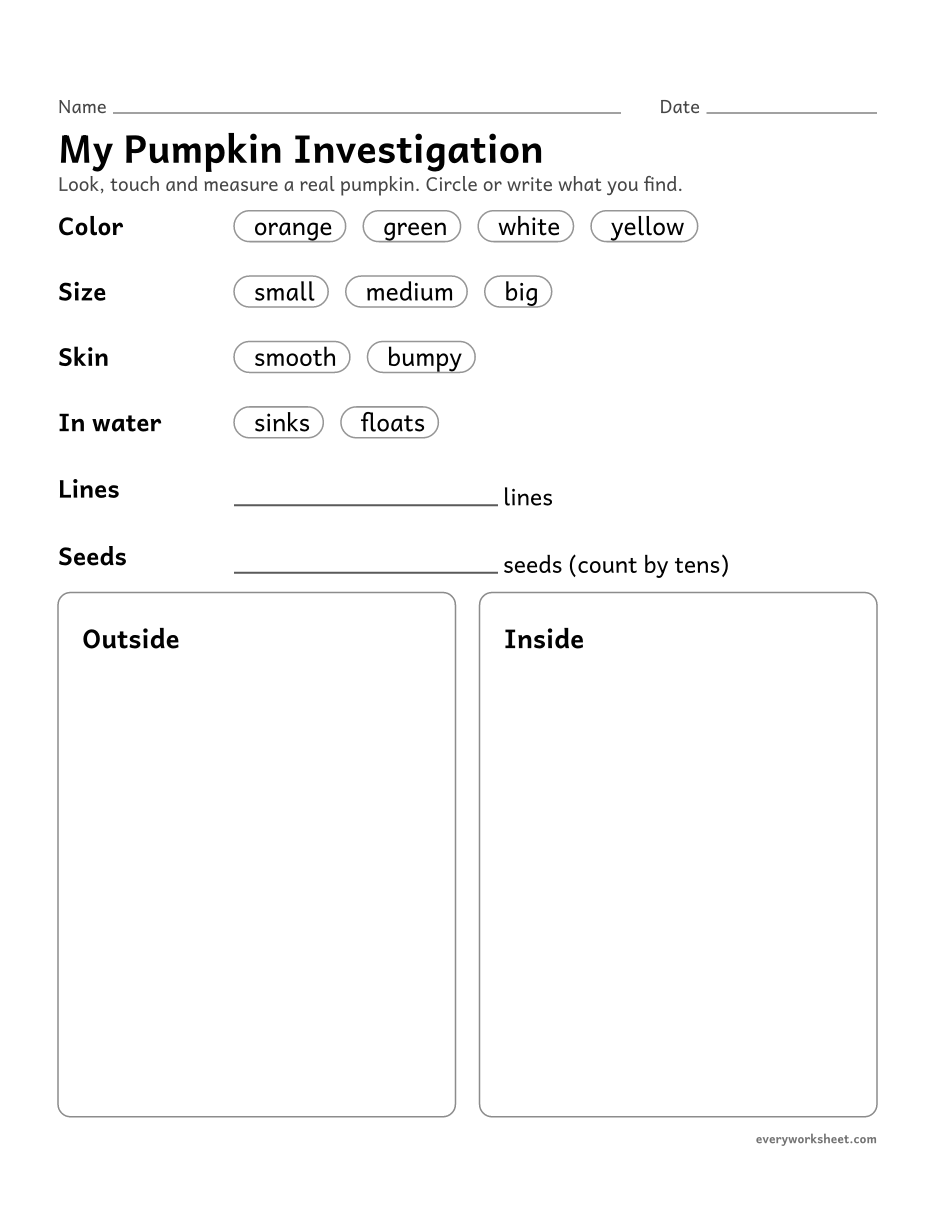
Observing and describing a real pumpkin's size, color and other attributes
1 page30 KB
Print at 100% (actual size) for the cleanest tracing lines.
A pumpkin grows from a flat white seed into a sprout with two round leaves, then a long vine with big leaves and curly tendrils. Yellow flowers open, a little green pumpkin grows behind a flower, and by fall it is a big orange pumpkin full of seeds.
These pumpkin life cycle worksheets show all six stages in detailed line drawings. Every life cycle set has a chart, a label the stages page, a cut and paste sequence, a life cycle wheel to color and spin, a draw the stages page and a read-aloud story with picture questions.
The parts of a pumpkin pages show a pumpkin cut in half, with the stem, skin, flesh, stringy pulp and seeds to label. Bring a real pumpkin to class for the counting page and the pumpkin investigation page.
NGSS 3-LS1-1Grade 3, introduced early: develop models to describe that organisms have unique and diverse life cycles but all have in common birth, growth, reproduction, and death.NGSS 4-LS1-1Grade 4, introduced early: construct an argument that plants and animals have internal and external structures that function to support survival, growth, behavior, and reproduction.CCSS.ELA-LITERACY.W.K.2Use a combination of drawing, dictating, and writing to compose informative/explanatory texts in which they name what they are writing about and supply some information about the topic.CCSS.ELA-LITERACY.SL.K.2Confirm understanding of a text read aloud or information presented orally or through other media by asking and answering questions about key details and requesting clarification if something is not understood.CCSS.ELA-LITERACY.L.K.6Use words and phrases acquired through conversations, reading and being read to, and responding to texts.CCSS.MATH.CONTENT.K.CC.B.5Count to answer "how many?" questions about as many as 20 things arranged in a line, a rectangular array, or a circle, or as many as 10 things in a scattered configuration; given a number from 1–20, count out that many objects.CCSS.MATH.CONTENT.K.MD.A.1Describe measurable attributes of objects, such as length or weight. Describe several measurable attributes of a single object.Seed, sprout, vine, flower, green pumpkin and orange pumpkin. The ripe pumpkin is full of seeds that can grow new pumpkins.
Scientists call a pumpkin a fruit because it grows from a flower and holds the seeds. In the kitchen people often cook it like a vegetable.
Yes. The label, cut and paste, read-aloud, parts of a pumpkin and seed counting pages each have an answer key on page 2.