 View larger
Push and Pull Worksheets for Kindergarten
Push and pull pages with clear line art: a poster, draw-the-force-arrow pictures, a sort, strong and gentle pushes, a ramp investigation and a design task.
Download the push and pull worksheets
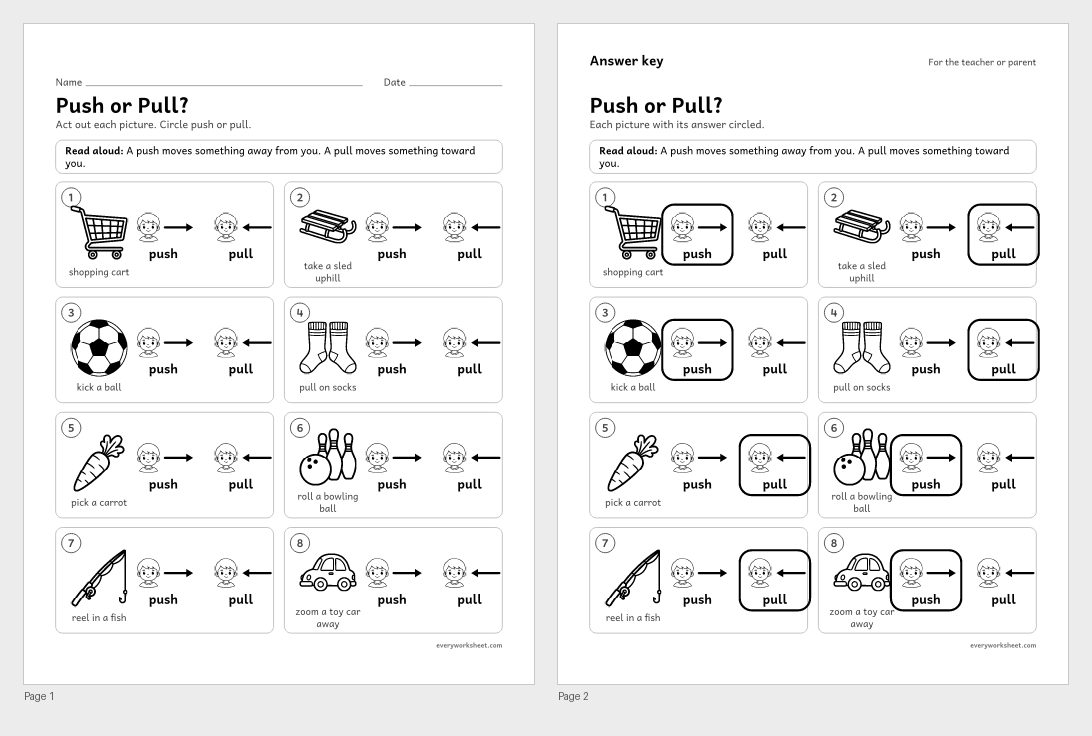
Push or pull?
 View larger
 View all 2 pages
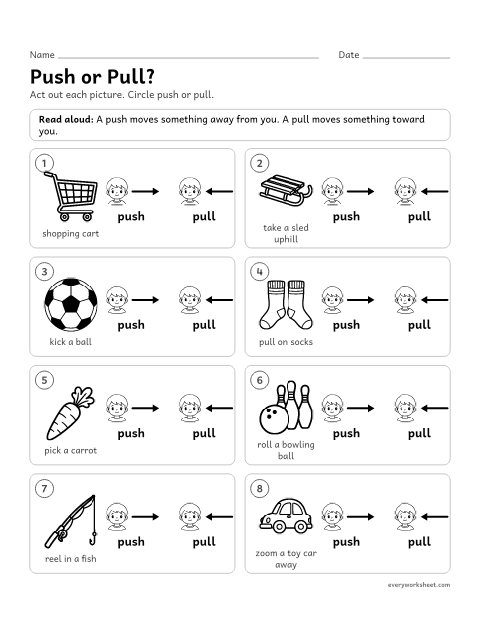
Push or pull picture sort
Telling a push from a pull
Answer key on page 2
2 pages325 KB
 View all 2 pages
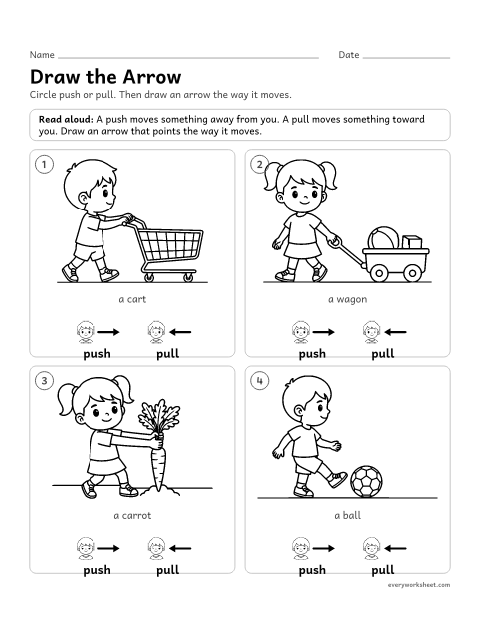
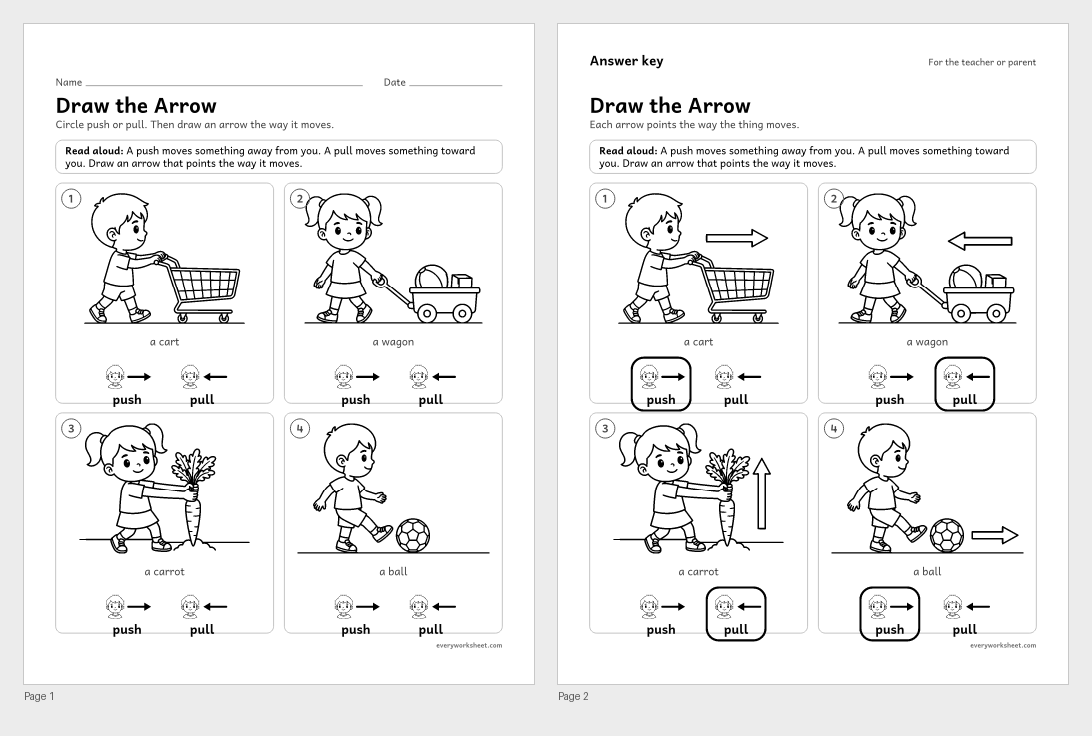
Push or Pull: draw the force arrow
Showing which way a push or pull moves something
Answer key on page 2
2 pages185 KB
Strong, gentle and which way
 View all 2 pages
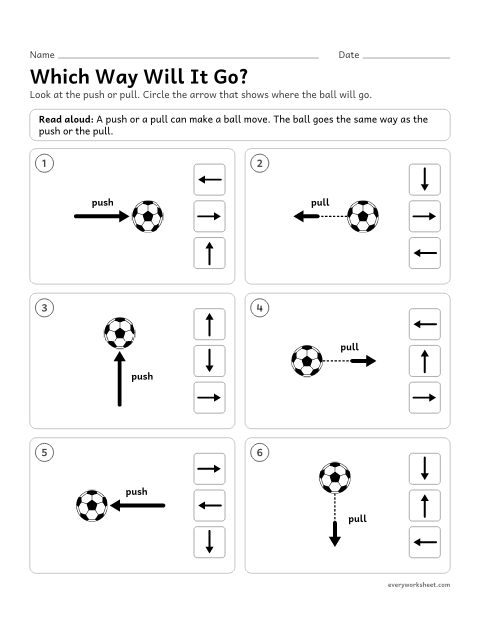
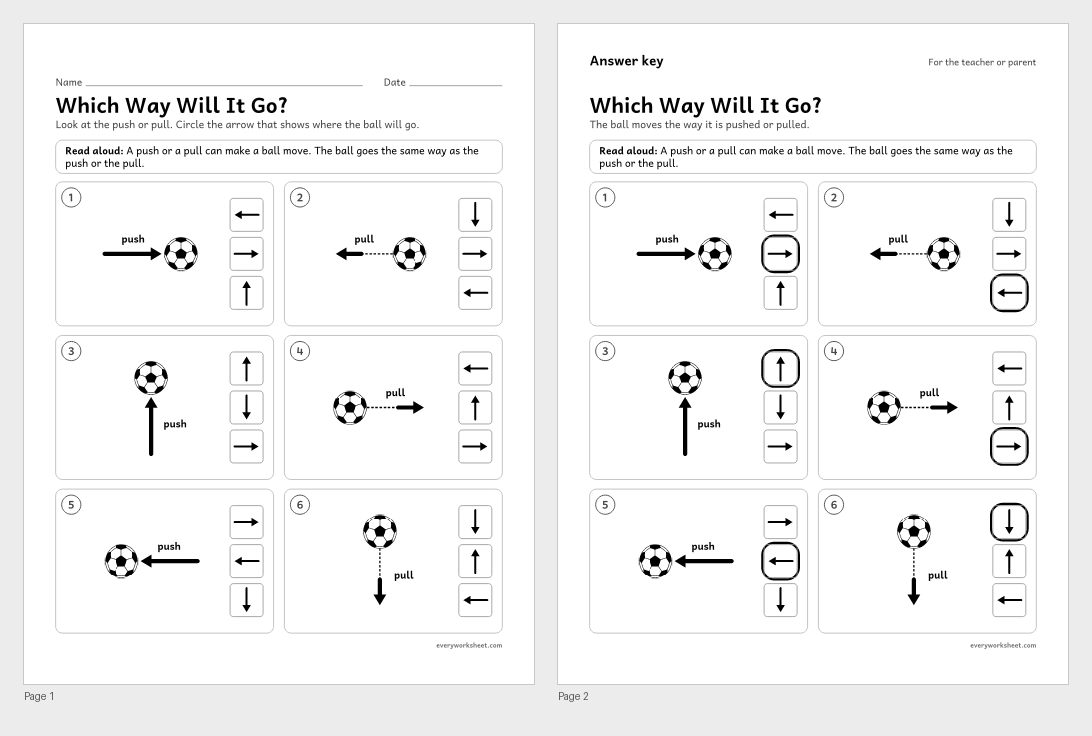
Which way will it Go? push and pull directions
Predicting the direction of a push or pull
Answer key on page 2
2 pages47 KB
 View larger
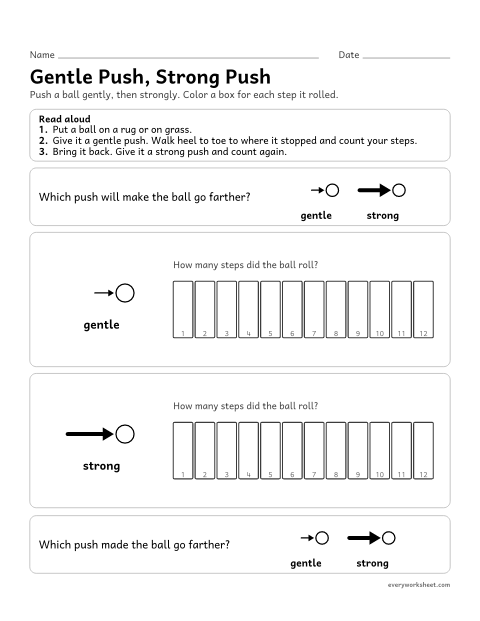
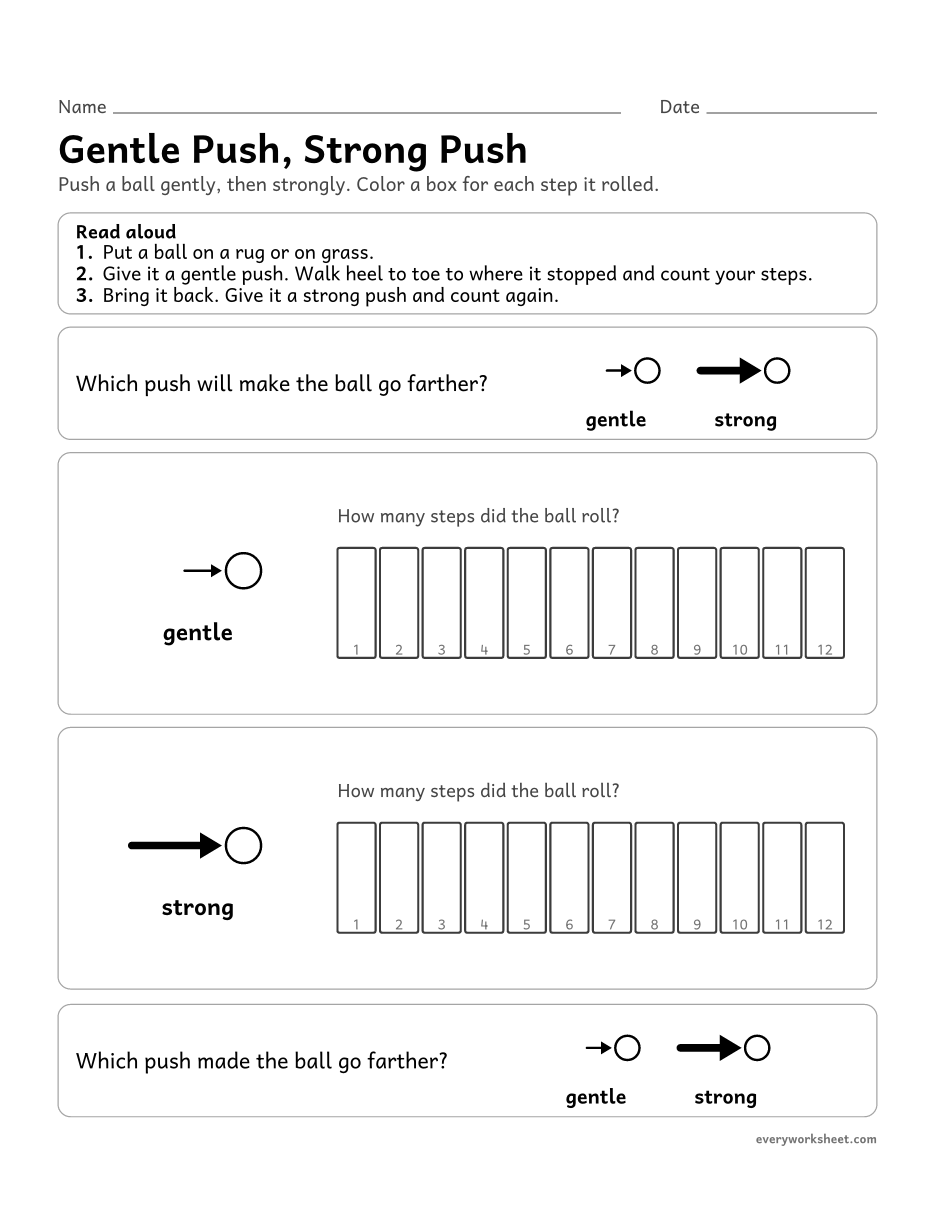
Strong vs gentle push investigation
Comparing a gentle push and a strong push
1 page33 KB
 View larger
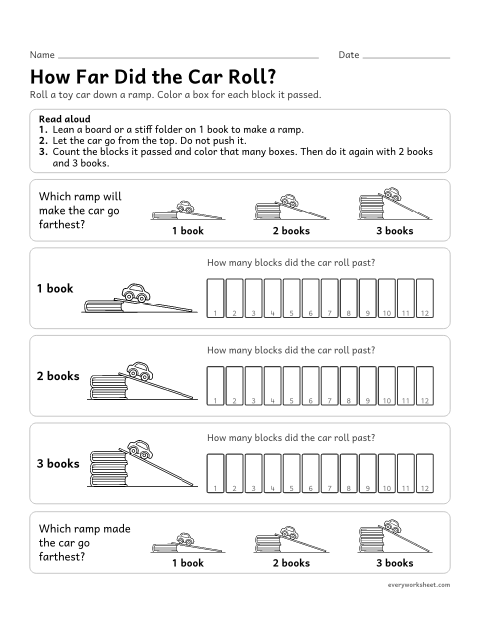
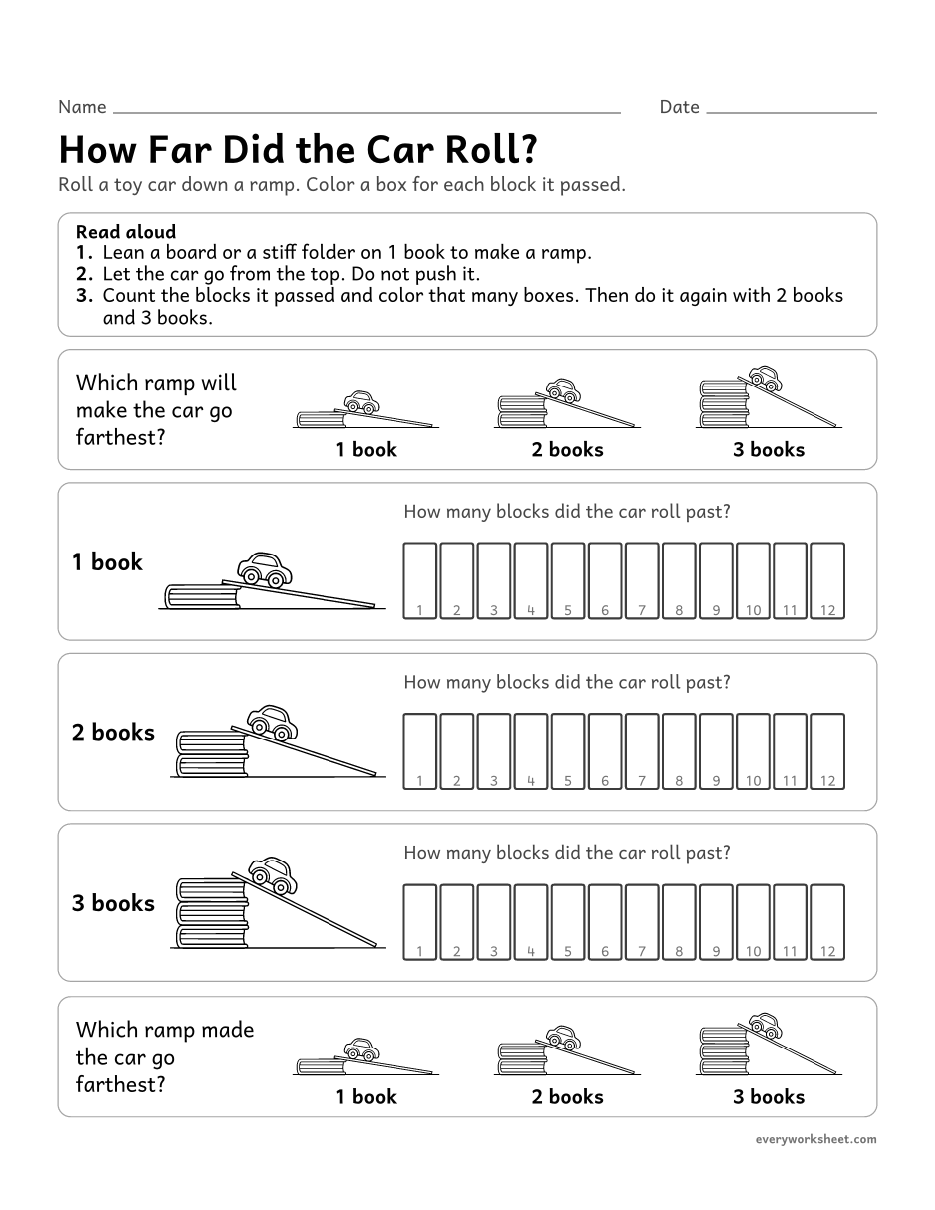
Ramp investigation record Sheet: how far did the car Roll?
Testing how ramp height changes how far a car rolls
1 page61 KB
Design challenge
 View larger
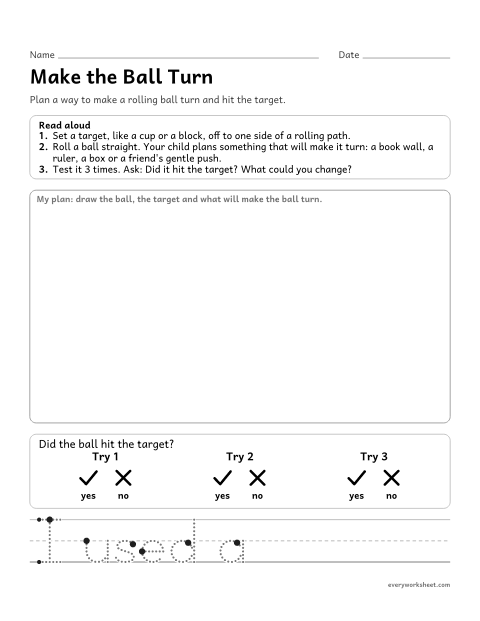
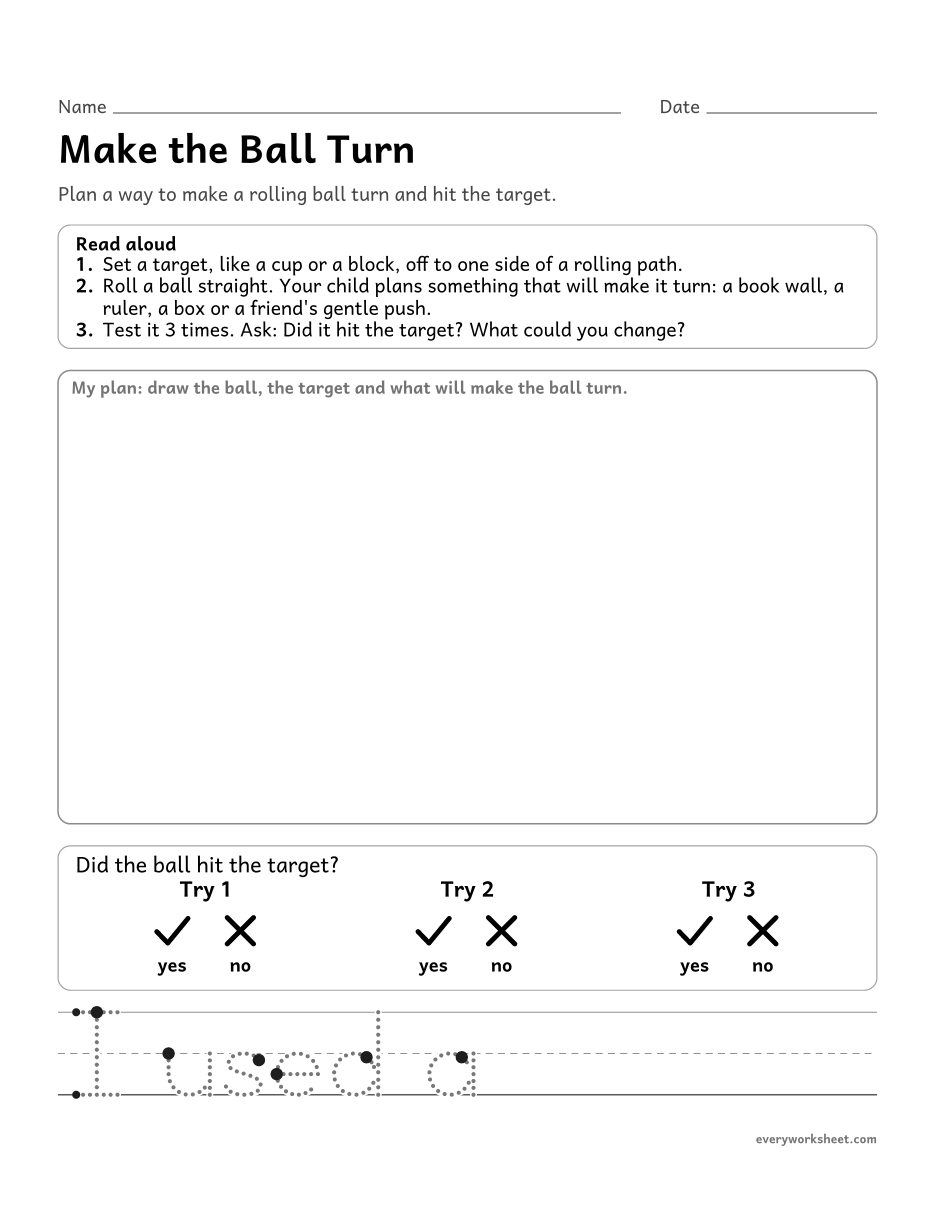
Design Challenge: change the Ball's direction
Designing a way to change a ball's direction
1 page32 KB
Print at 100% (actual size) for the cleanest tracing lines.
About these push and pull worksheets
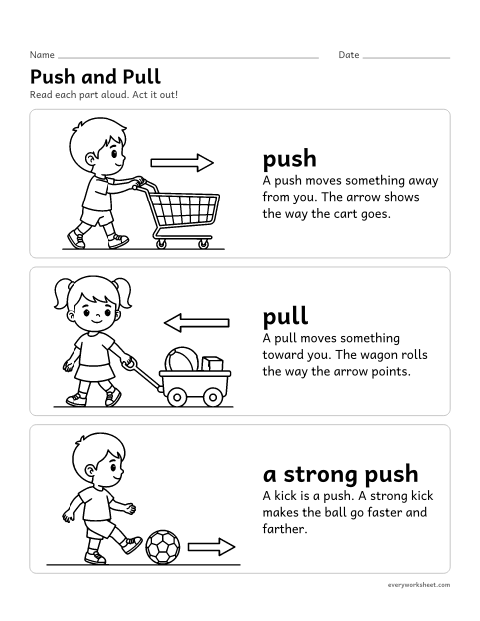
A push moves something away from you. A pull moves something toward you. Kindergartners push and pull things all day long, from doors and wagons to swings and sleds, so this is a topic they can feel in their own hands.
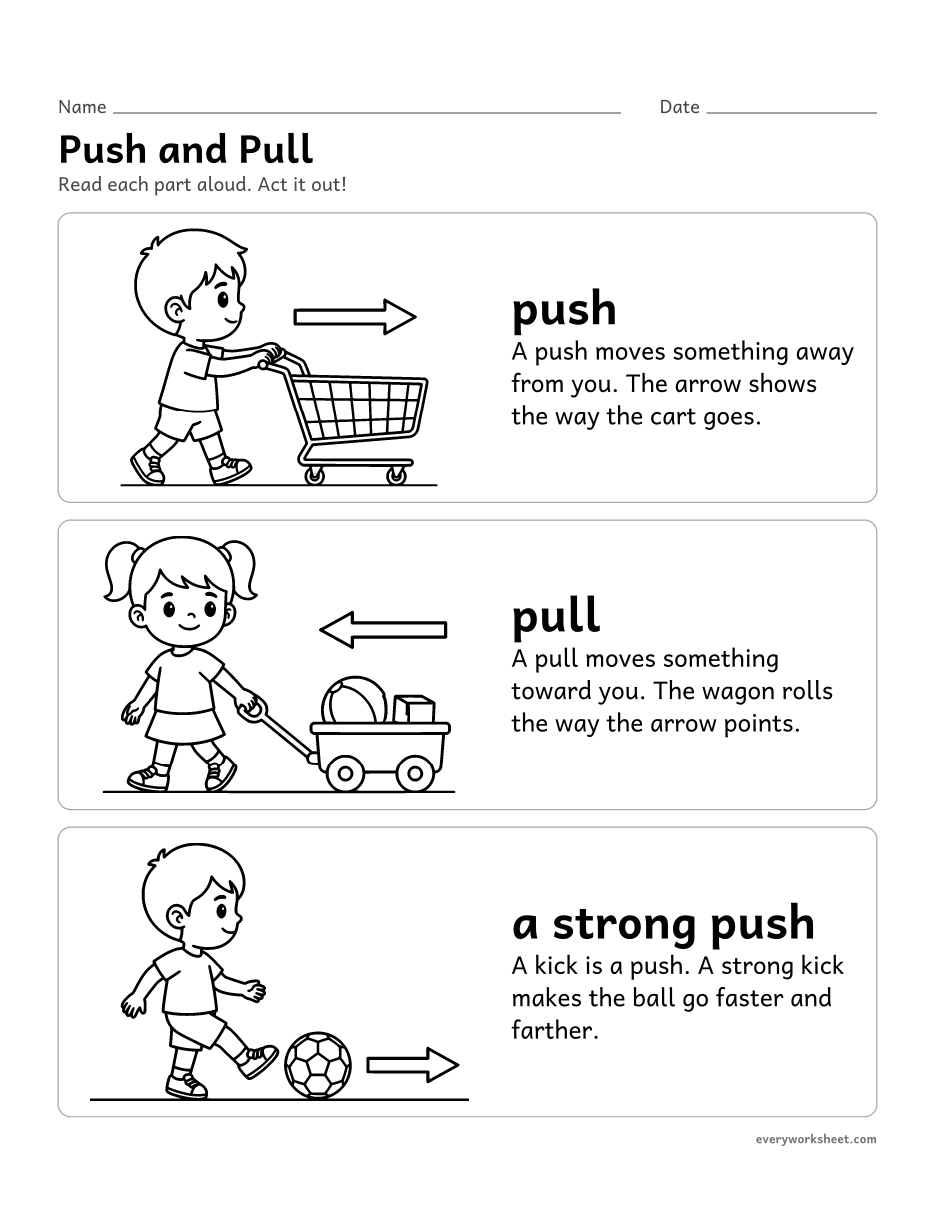
These sheets start with the words. The poster shows a child pushing a cart and a child pulling a wagon, with a big arrow for the way each one moves. On the draw-the-arrow page, children circle push or pull for four pictures and draw that arrow themselves. The sort and the which-way page practice the same idea: a thing moves the way it is pushed or pulled.
The investigation pages turn that into real science. Children roll a toy car down ramps made of 1, 2 and 3 books and color a box for each block it passes, and push a ball gently and then strongly. The design challenge asks them to plan, test and improve a way to make a rolling ball turn and hit a target.
Standards
NGSS K-PS2-1Plan and conduct an investigation to compare the effects of different strengths or different directions of pushes and pulls on the motion of an object.NGSS K-PS2-2Analyze data to determine if a design solution works as intended to change the speed or direction of an object with a push or a pull.NGSS K-2-ETS1-1Ask questions, make observations, and gather information about a situation people want to change to define a simple problem that can be solved through the development of a new or improved object or tool.NGSS K-2-ETS1-2Develop a simple sketch, drawing, or physical model to illustrate how the shape of an object helps it function as needed to solve a given problem.NGSS K-2-ETS1-3Analyze data from tests of two objects designed to solve the same problem to compare the strengths and weaknesses of how each performs.CCSS.MATH.CONTENT.K.MD.A.2Directly compare two objects with a measurable attribute in common, to see which object has "more of"/"less of" the attribute, and describe the difference.CCSS.MATH.CONTENT.K.CC.B.5Count to answer "how many?" questions about as many as 20 things arranged in a line, a rectangular array, or a circle, or as many as 10 things in a scattered configuration.CCSS.ELA-LITERACY.W.K.8With guidance and support from adults, recall information from experiences or gather information from provided sources to answer a question.CCSS.ELA-LITERACY.W.K.2Use a combination of drawing, dictating, and writing to compose informative/explanatory texts in which they name what they are writing about and supply some information about the topic.CCSS.ELA-LITERACY.L.K.6Use words and phrases acquired through conversations, reading and being read to, and responding to texts.
How to use them
- Act it out first. Push a chair, pull a drawer, and say the word as you do it. Then do the picture sort together and let your child act out each picture.
- On the draw-the-arrow page, ask: Which way does the cart go? Trace that way in the air with your finger, then draw the arrow.
- For the ramp sheet, lean a board or a stiff folder on books and line up blocks or cubes after the end of the ramp. Let the car go without pushing, and count the blocks it passes.
- Ask your child to circle a prediction before each test. Afterward, compare: was the guess right? Both answers are fine. Changing your mind because of what you saw is real science.
- Use the design challenge after the ramp and push tests. Give a few materials, such as books, a ruler and a box, and let your child try their own idea before you help.
- Keep the poster on the wall while you work through the topic, and come back to it when your child finds a new push or pull at home.
Teaching tips
- Some actions use both. Opening a door can be a push or a pull, so pick clear examples for the first sort.
- If a car stops at different places each time, that is normal. Roll it 2 or 3 times and use the middle result, or talk about why the results changed.
- Children often think heavier things always go farther. Let them test it rather than telling them the answer.
- To help a child who is not yet counting past 10, use big blocks and count together, touching each block.
- Extend the topic outside: pushes and pulls on swings, slides, balls and wagons all count.
Questions teachers and parents ask
What is a push and pull for kindergarten?
A push moves something away from you, like kicking a ball. A pull moves something toward you, like pulling a sled. Both can make things start, stop, speed up, slow down or change direction.
How do you do a ramp investigation with kindergartners?
Lean a board on 1, 2 and then 3 books. Let a toy car roll down without pushing and count the blocks it passes. The record sheet shows each ramp and has a box to color for each block, then asks which ramp made the car go farthest.
What does a strong push do compared with a gentle push?
A strong push makes an object move faster and farther. A gentle push makes it move slower and not as far. The strong vs gentle sheet lets children test this with a ball.
Why do the arrows point the way things move?
In science pictures, a force arrow shows the direction of a push or pull. The cart is pushed forward, so its arrow points forward. The wagon is pulled toward the child, so its arrow points toward the child.
Do these sheets need a lot of supplies?
No. A toy car, a ball, a few books, a board or stiff folder and some blocks cover every activity.
Are the push and pull worksheets free?
Yes. Every page is a free PDF with no sign-up, in US Letter and A4. The sort, the draw-the-arrow page and the which-way page include an answer key.