 View larger
Reading Log Printables
Kid-friendly printable reading logs: color a book, 100 book challenge, weekly, monthly and 20 minute logs, a ratings log, a class read-aloud log and reading bingo.
Download the reading log worksheets
Color-in reading logs
 View larger
 View larger
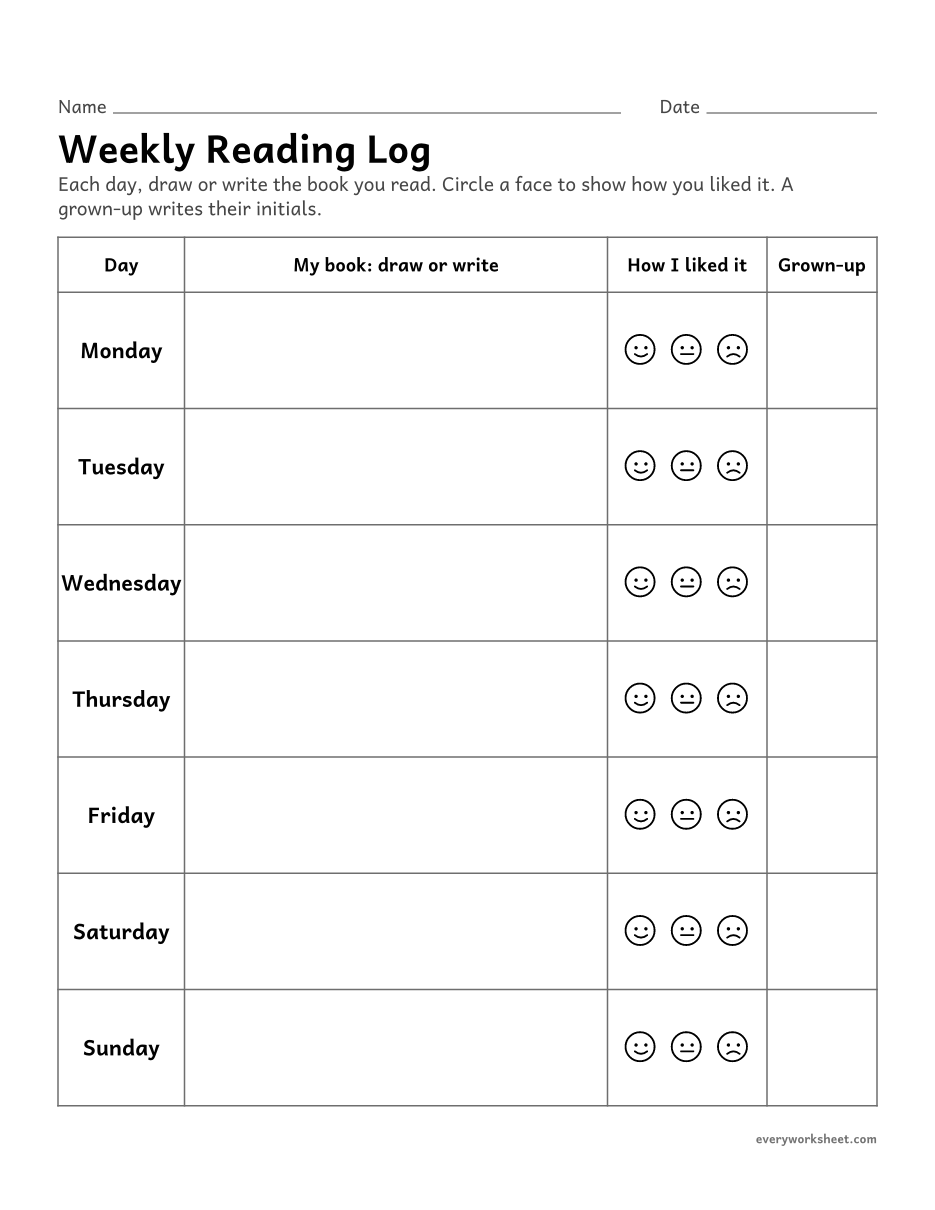
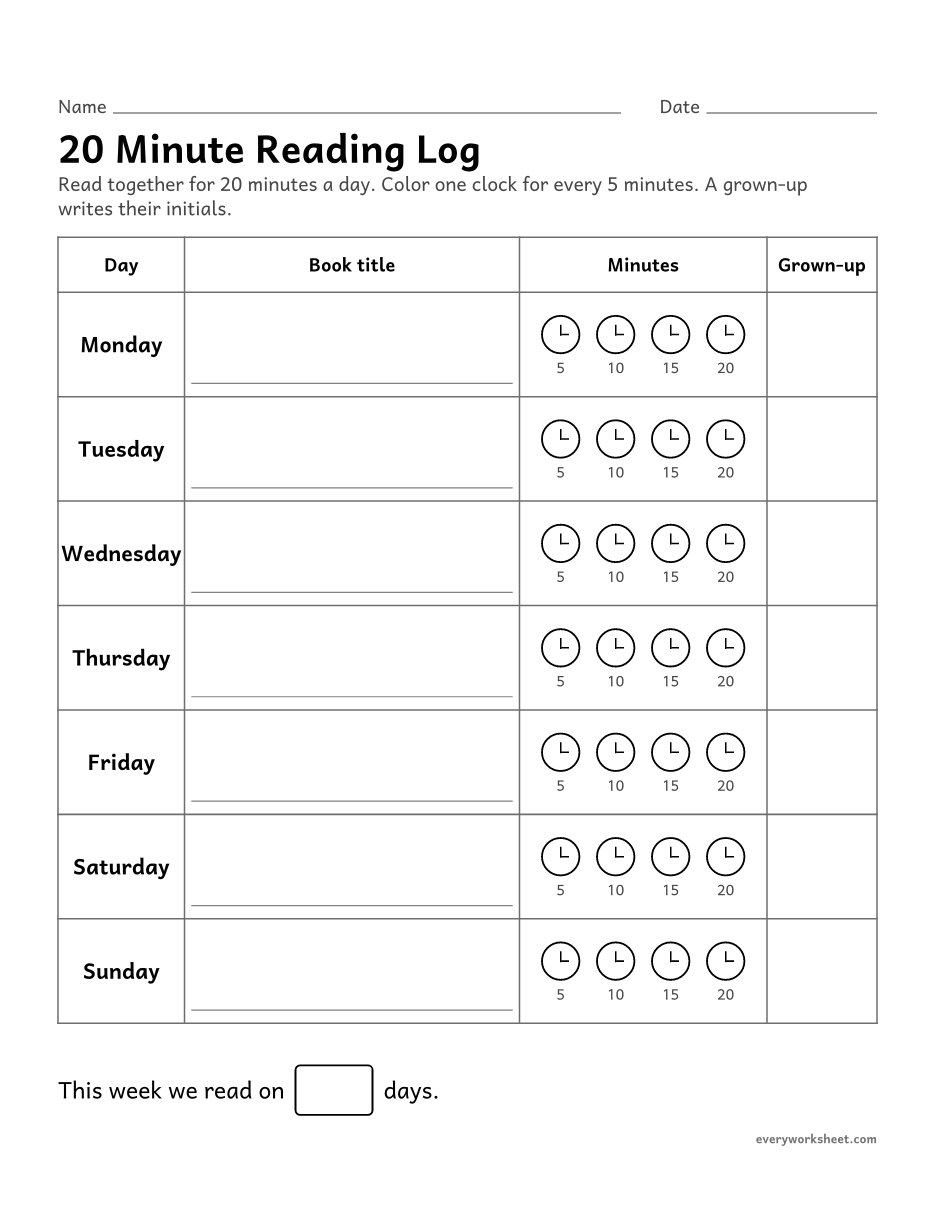
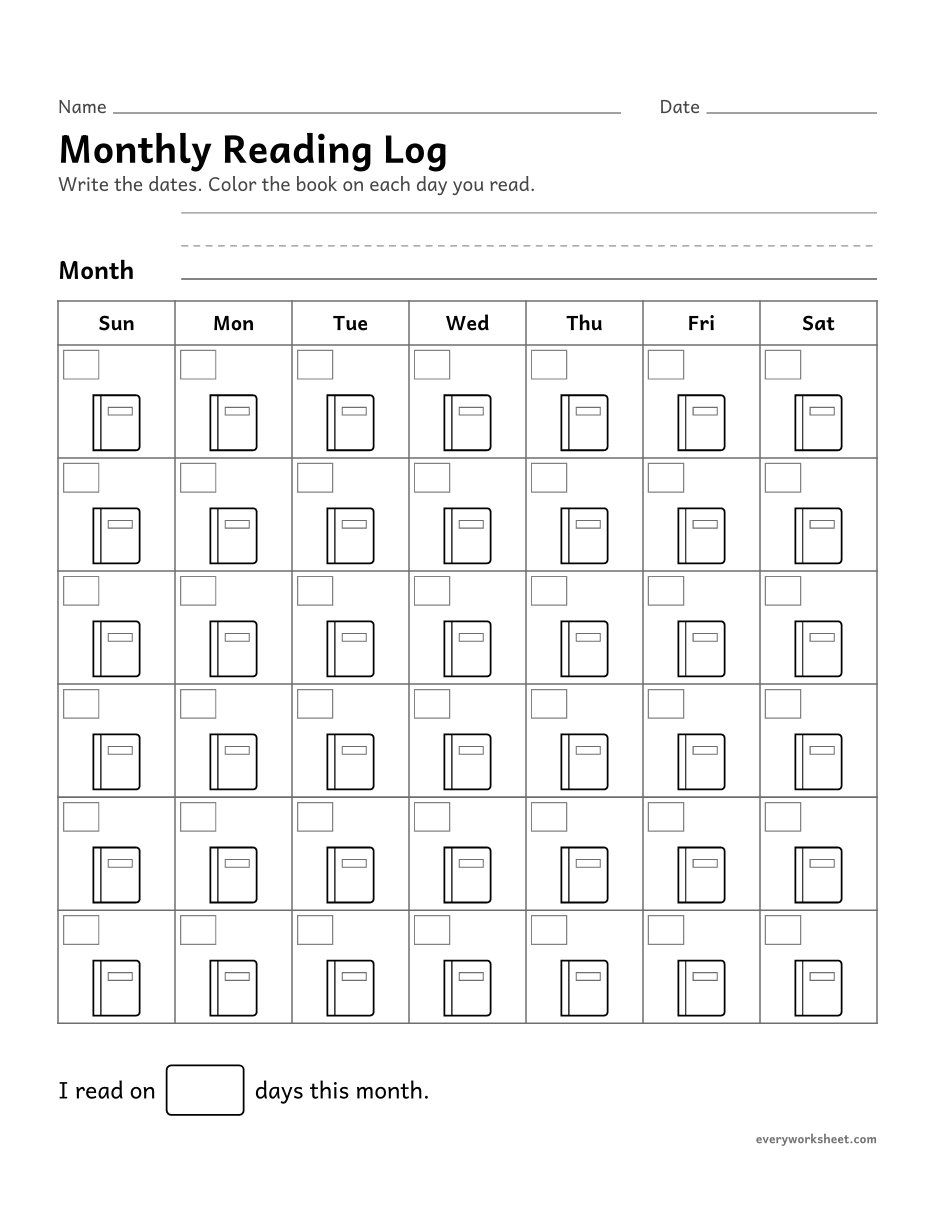
Weekly, monthly and 20 minute logs
For the classroom
Print at 100% (actual size) for the cleanest tracing lines.
About these reading log worksheets
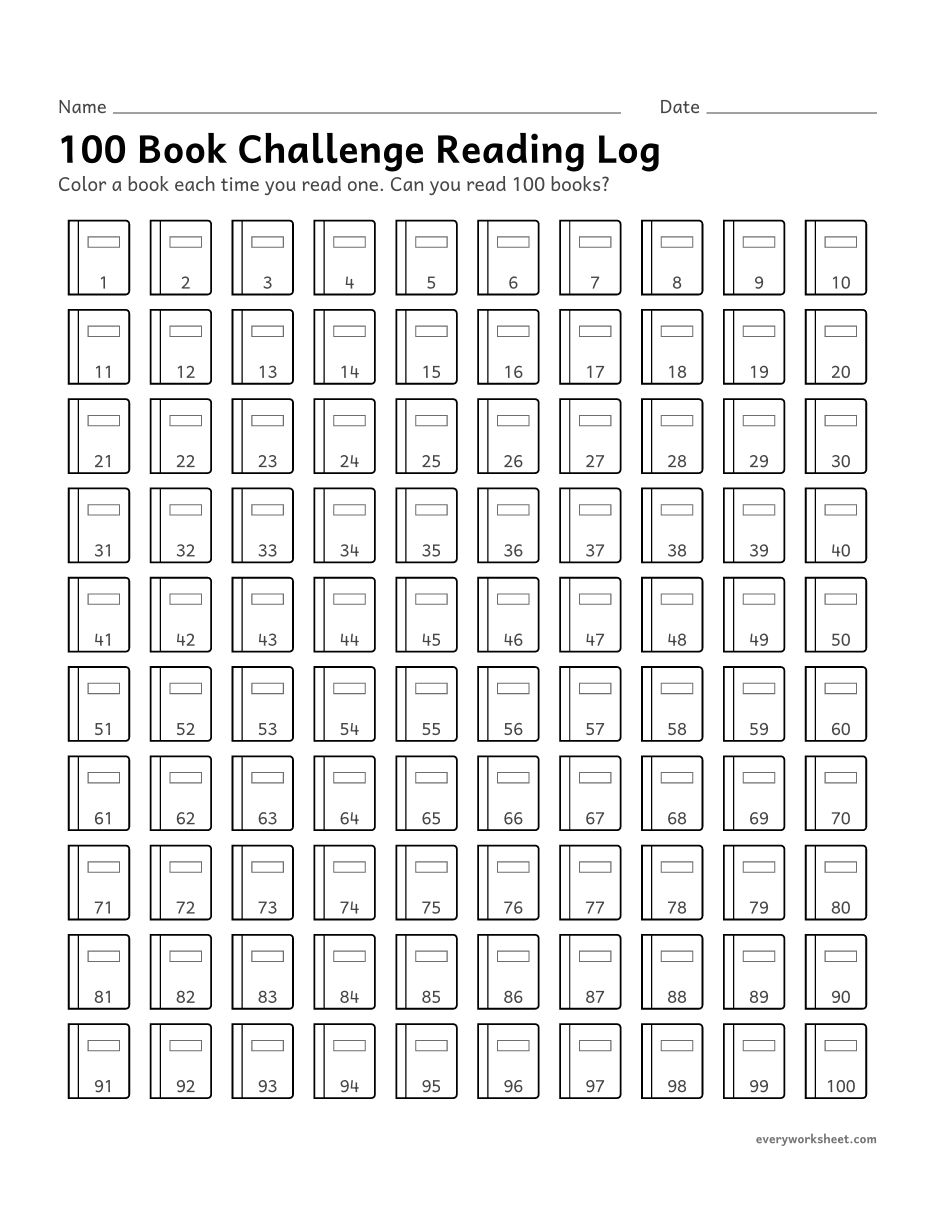
A reading log helps children see how much they read, and young readers love watching it fill up. These reading logs are made for kindergarten and 1st grade, so most of them need no writing at all: children color a book, a clock or a square each time they read.
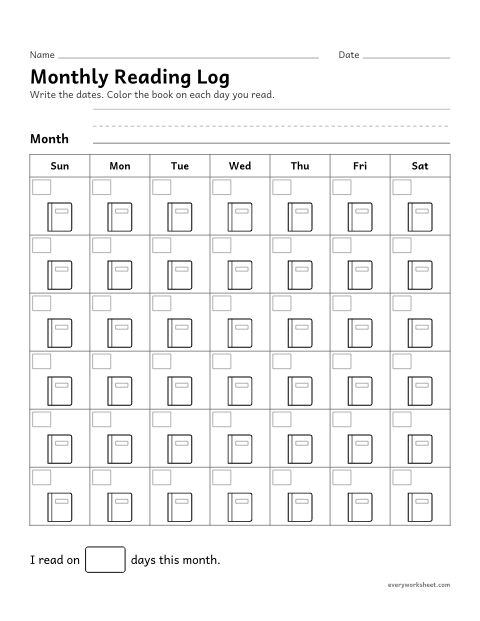
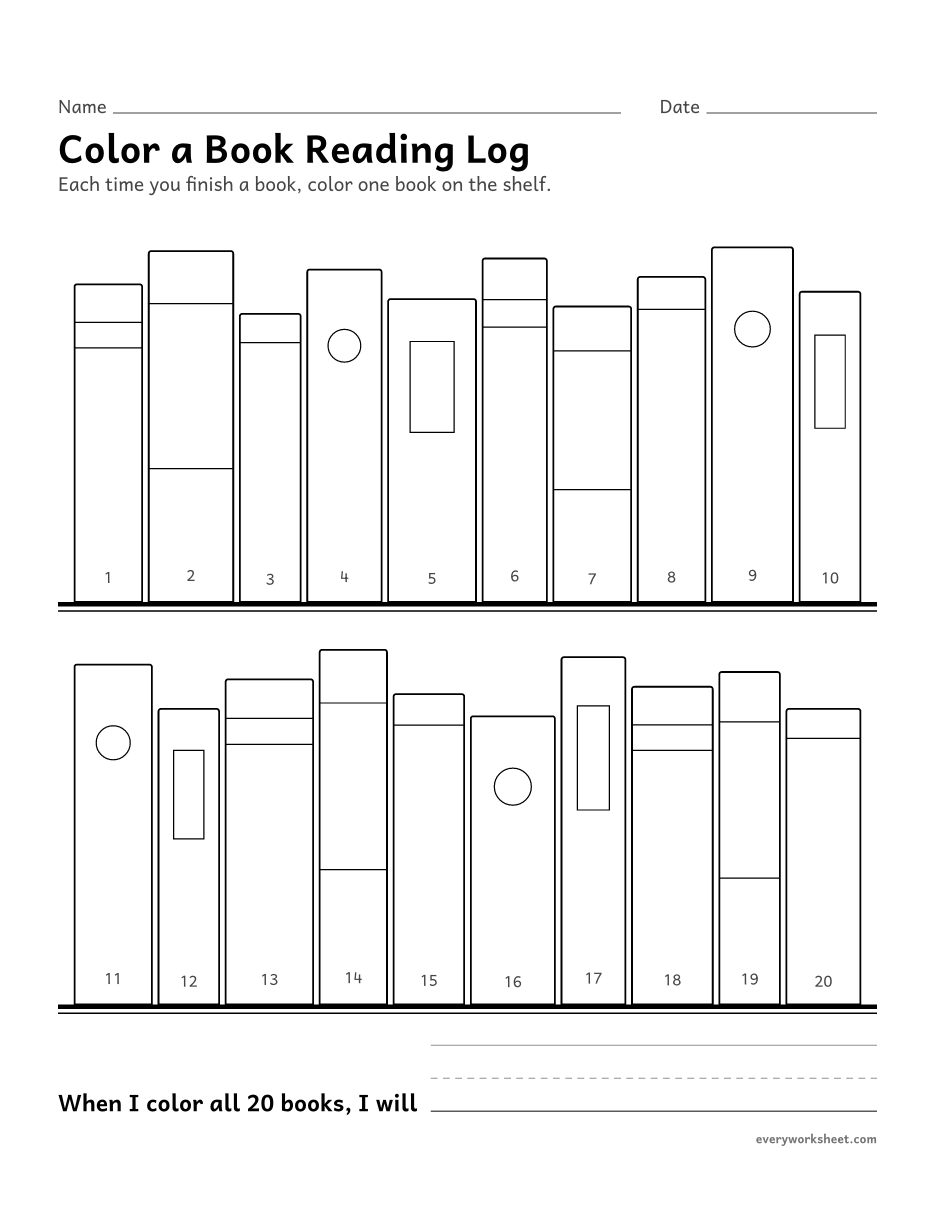
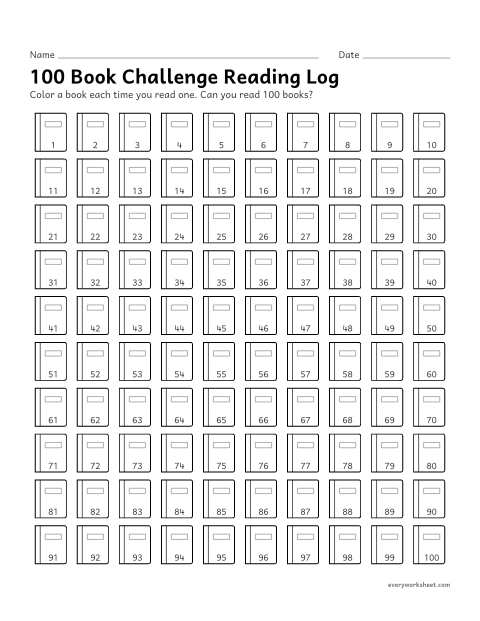
There are logs for every way you track reading. The color a book shelf and the 100 book challenge count books. The weekly and monthly logs count days. The 20 minute reading log is made for families who read together each night, with a clock to color for every five minutes and a space for a grown-up's initials.
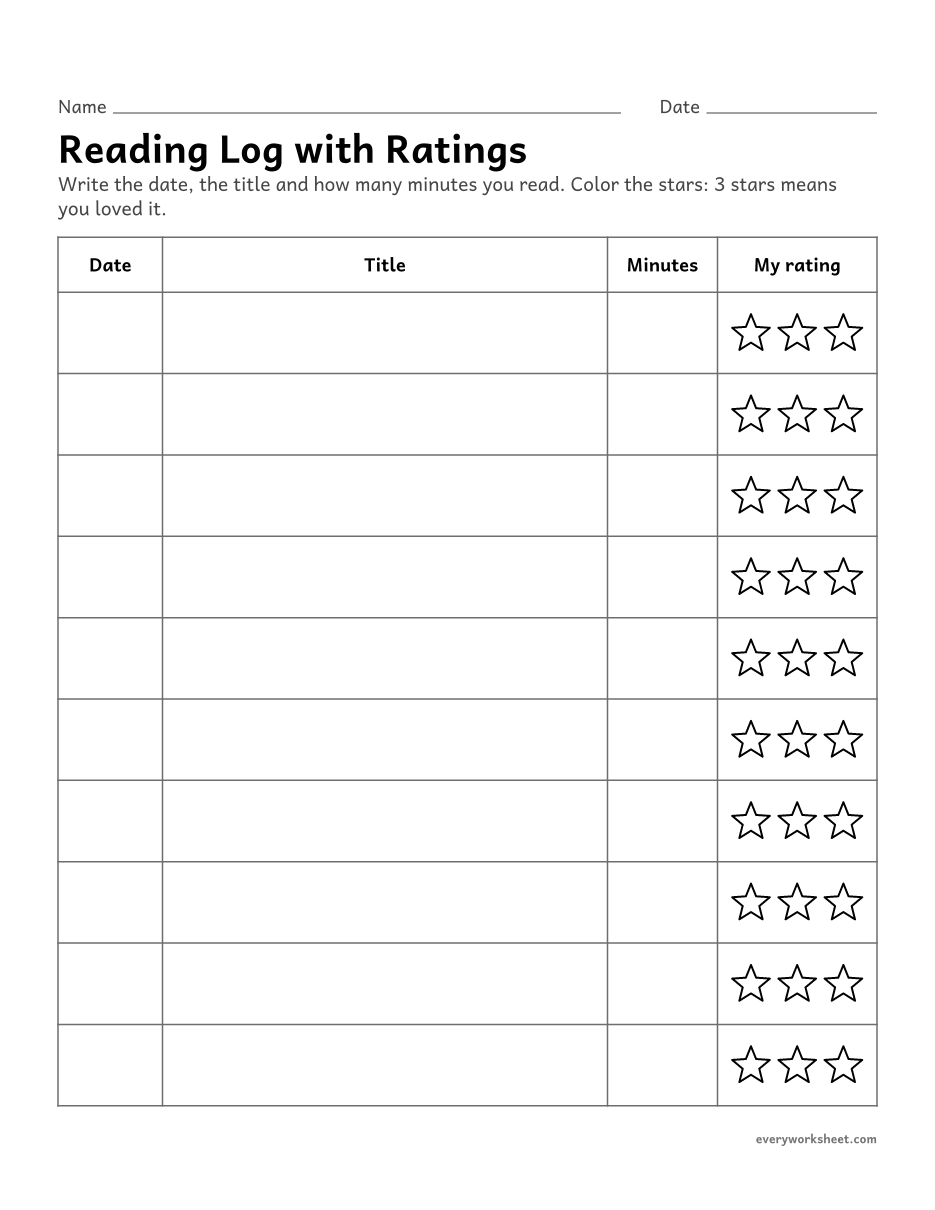
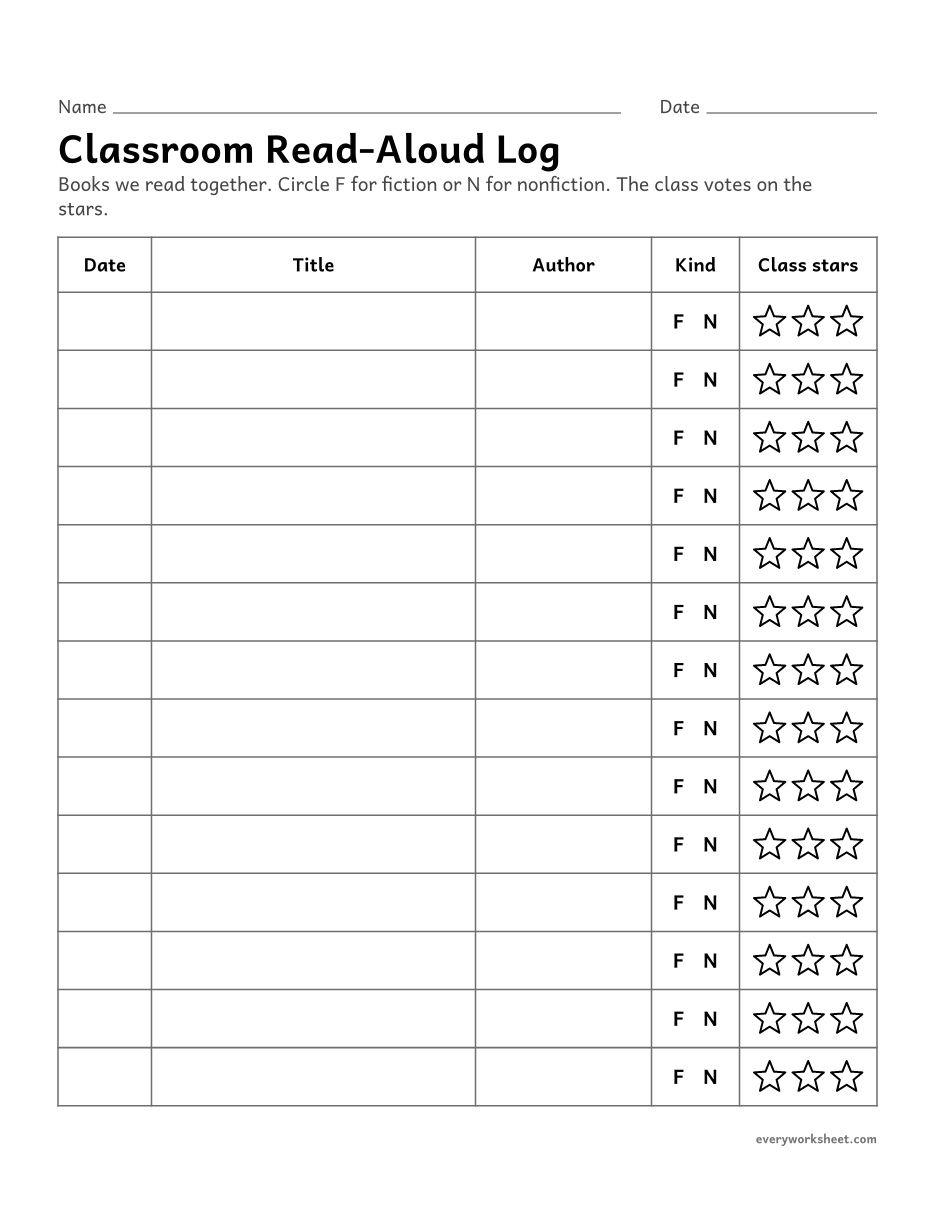
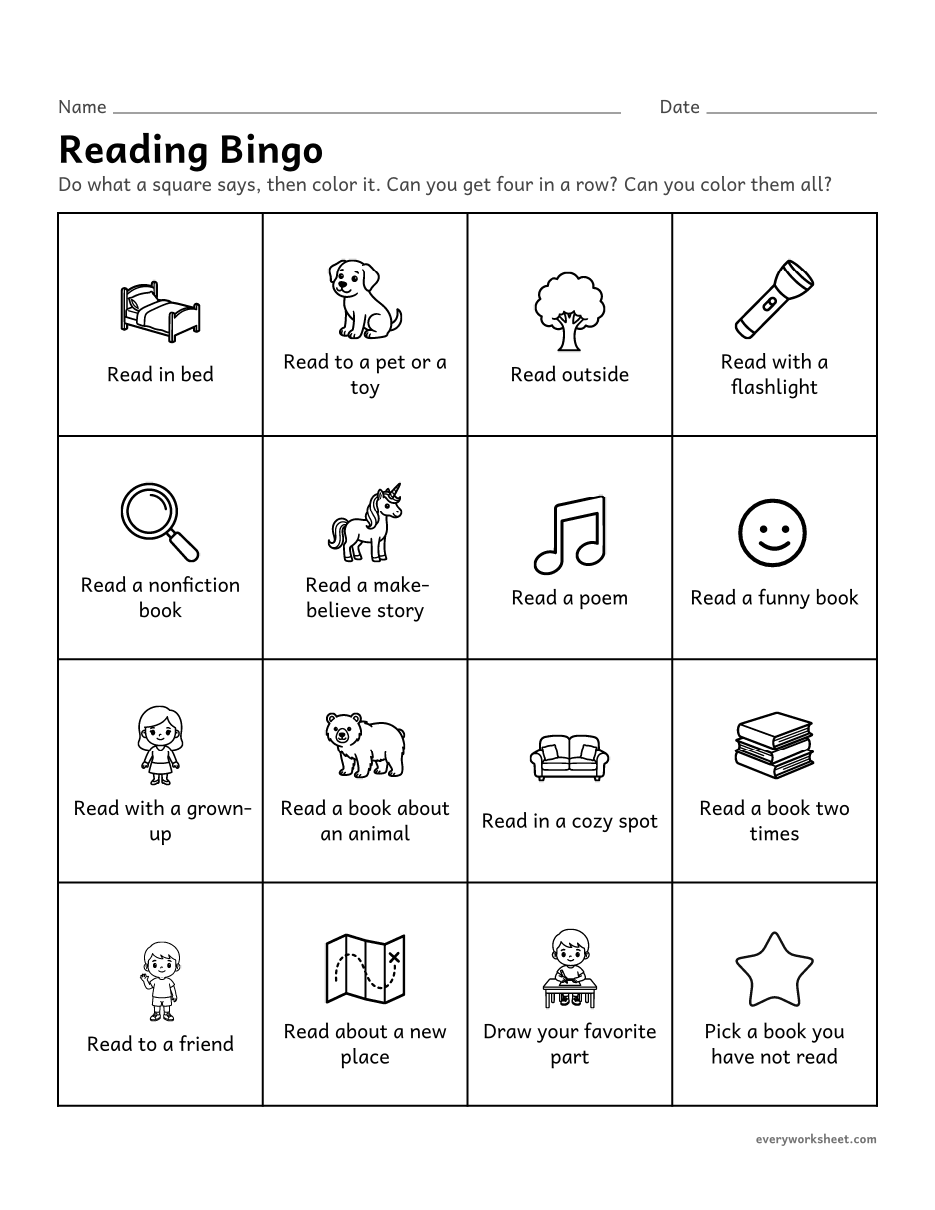
For children who are ready to write, the reading log with ratings has room for the date, the title and the minutes, plus three stars to color. Teachers can keep the classroom read-aloud log of every book read to the class, and reading bingo turns a month of reading into a game.
Standards
CCSS.ELA-LITERACY.RL.K.10Actively engage in group reading activities with purpose and understanding.CCSS.ELA-LITERACY.RI.K.10Actively engage in group reading activities with purpose and understanding.CCSS.ELA-LITERACY.RF.K.4Read emergent-reader texts with purpose and understanding.
How to use them
- Pick one log and stick with it for a week or a month. Changing logs too often makes the habit harder to build.
- Send the 20 minute reading log home on Monday and collect it on Friday. Ask families to color one clock for every five minutes they read together.
- Keep the color a book shelf or 100 book challenge in a folder at school. Children color a book each time they finish one in class or at home.
- Use the monthly log on the fridge at home. Children write the dates and color the book on each day they read.
- Fill in the classroom read-aloud log with the class after each read-aloud and vote on the stars together.
- Hand out reading bingo before a long weekend or a school break.
Teaching tips
- Count books read to a child as well as books a child reads alone. Both count in kindergarten.
- Re-reading a favorite book counts too. Repeated reading builds fluency.
- Keep the goal small at first: five books or three days a week is a win.
- For kindergartners, the grown-up initials column is for the adult, not a test of the child's writing.
- Celebrate a full log with a small reward the child chose, like picking the next class read-aloud.
- If a log comes back empty, ask what made reading hard that week, rather than marking it as missed.
Questions teachers and parents ask
How long should a kindergartner read each night?
Many schools ask families to read together for about 20 minutes a day. Our 20 minute reading log breaks that into four five-minute clocks, so shorter sessions still count.
Does reading aloud to my child count on the reading log?
Yes. In kindergarten, listening to a book read aloud is real reading practice. Color the log for books you read together as well as books your child reads alone.
Which reading log is best for kindergarten?
Start with a log that needs no writing, like the color a book shelf, the 100 book challenge or the monthly calendar. Move to the ratings log when your child can copy a title.
What is the 100 book challenge?
It is a goal to read 100 books, often by the 100th day of school or the end of the year. Children color one book on the chart for each book they read.