 View larger
Reduce, Reuse, Recycle Worksheets
Reduce, reuse, recycle chart and sorts, trash or recycle cut and paste, ways I can help the earth and how animals and people change the land, with keys.
Download the caring for the earth worksheets
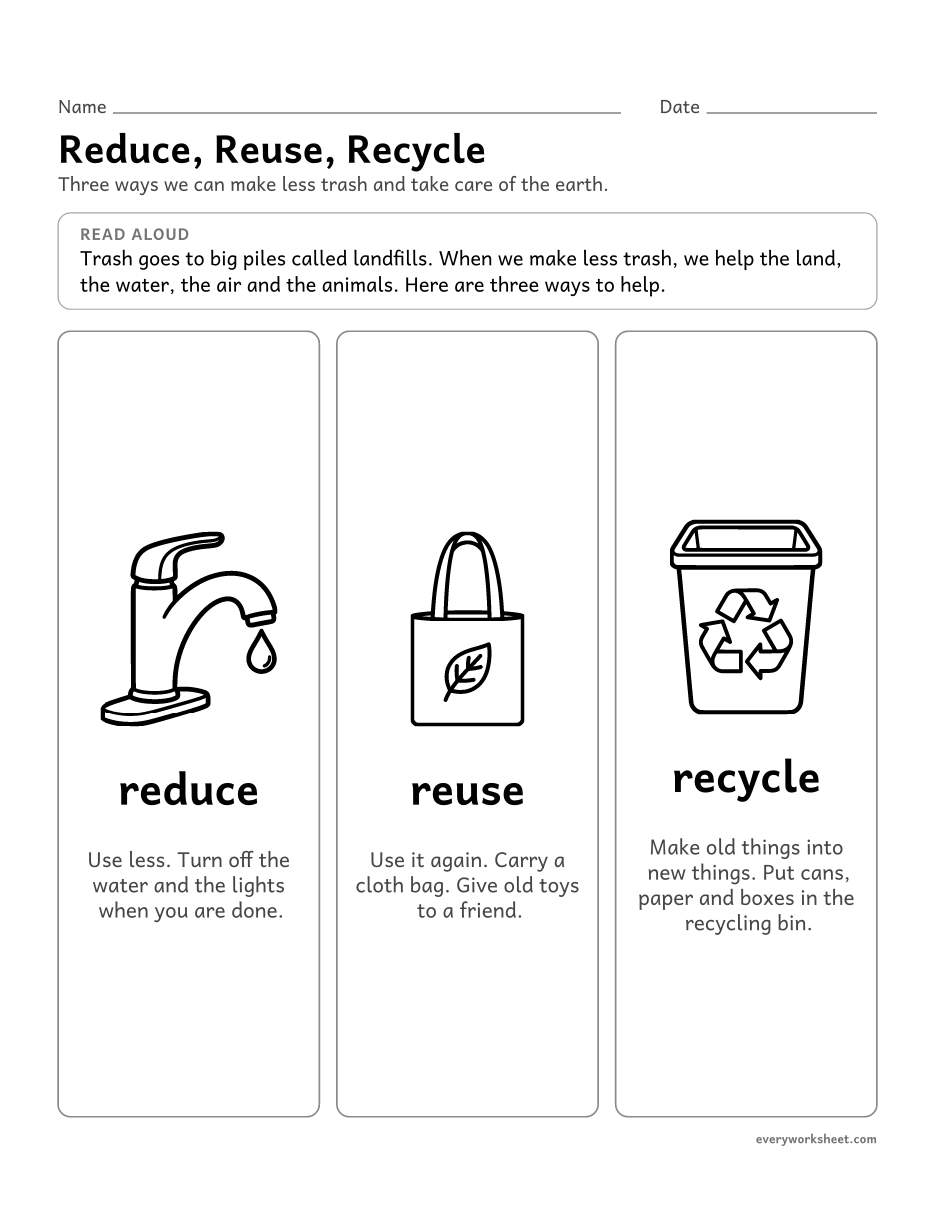
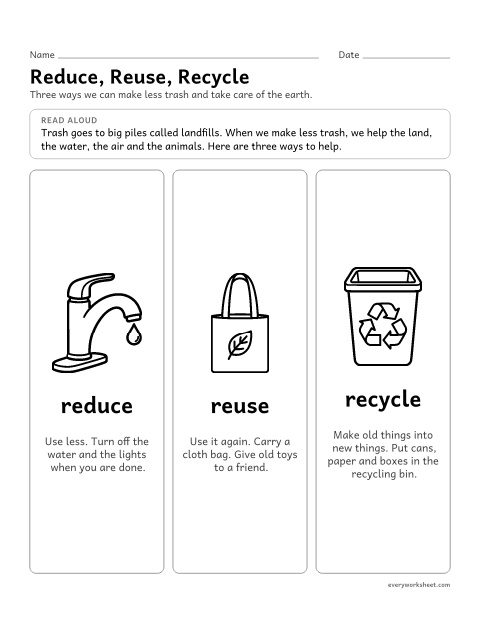
Reduce, reuse, recycle
 View larger
 View all 2 pages
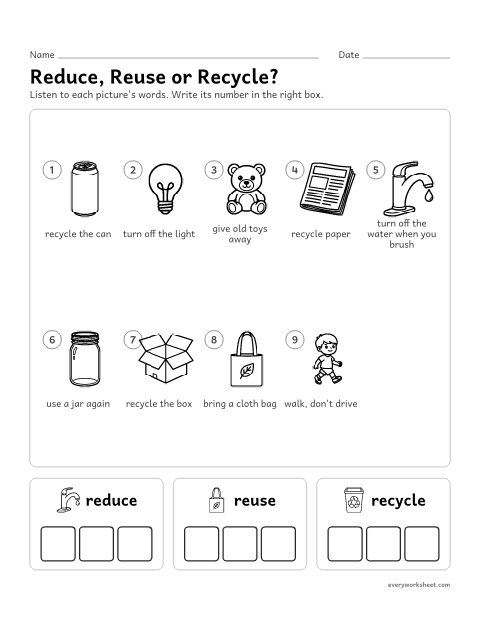
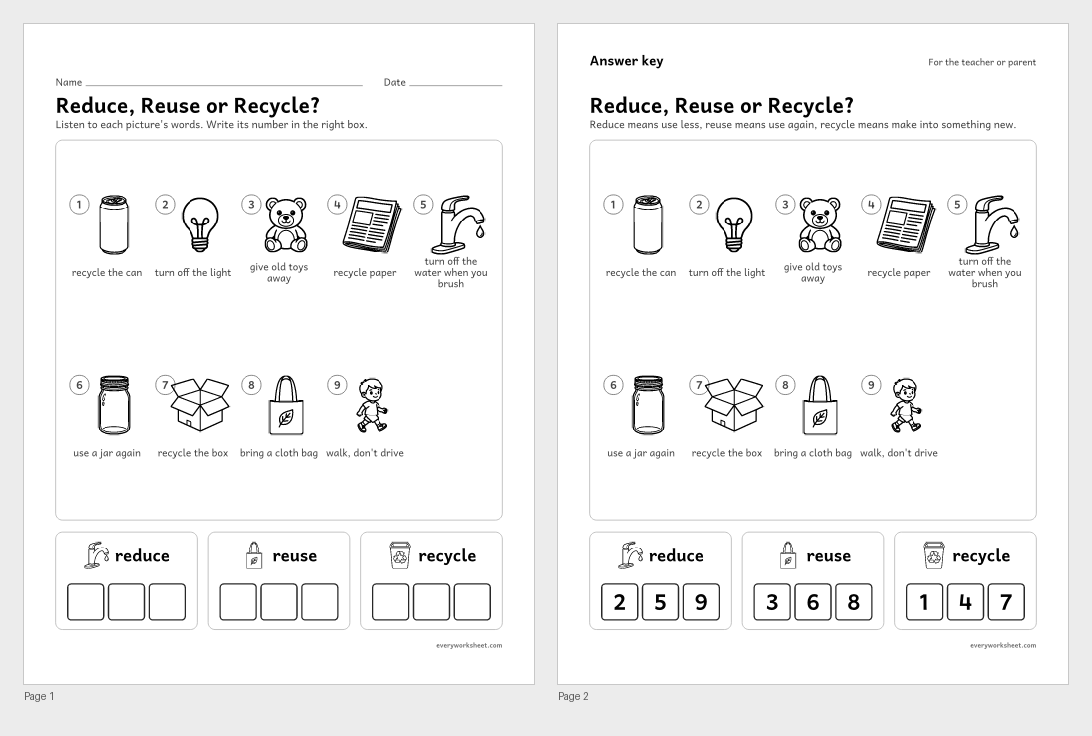
Reduce, Reuse, recycle sort
Sorting earth-friendly actions into reduce, reuse and recycle
Answer key on page 2
2 pages211 KB
 View all 2 pages
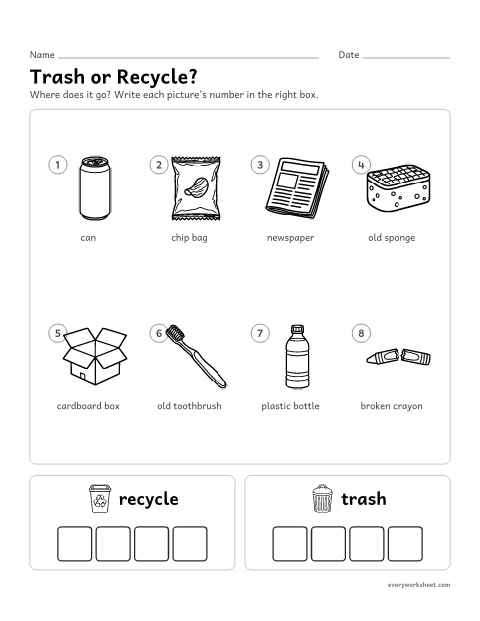
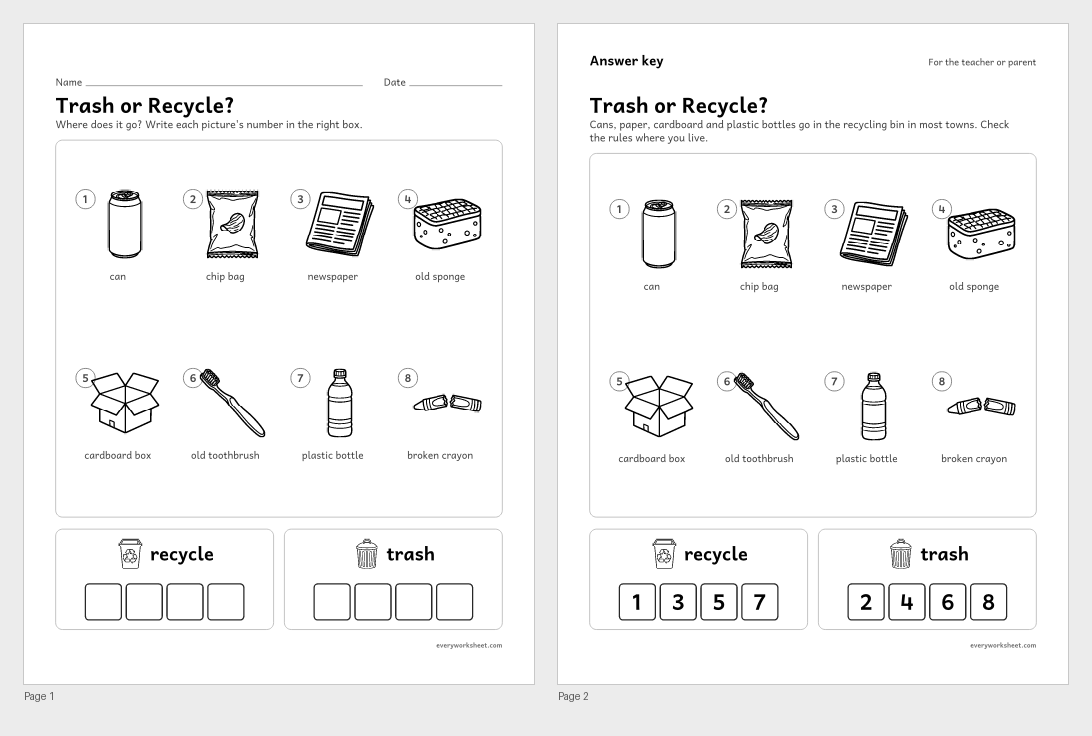
Trash or recycle sort
Sorting things into trash and recycling
Answer key on page 2
2 pages144 KB
 View all 2 pages
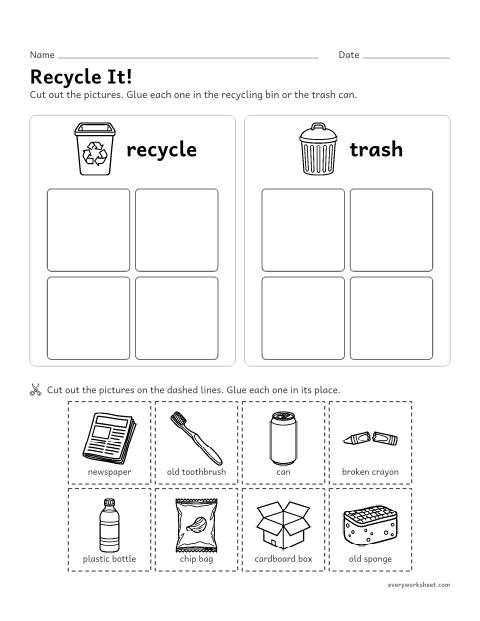
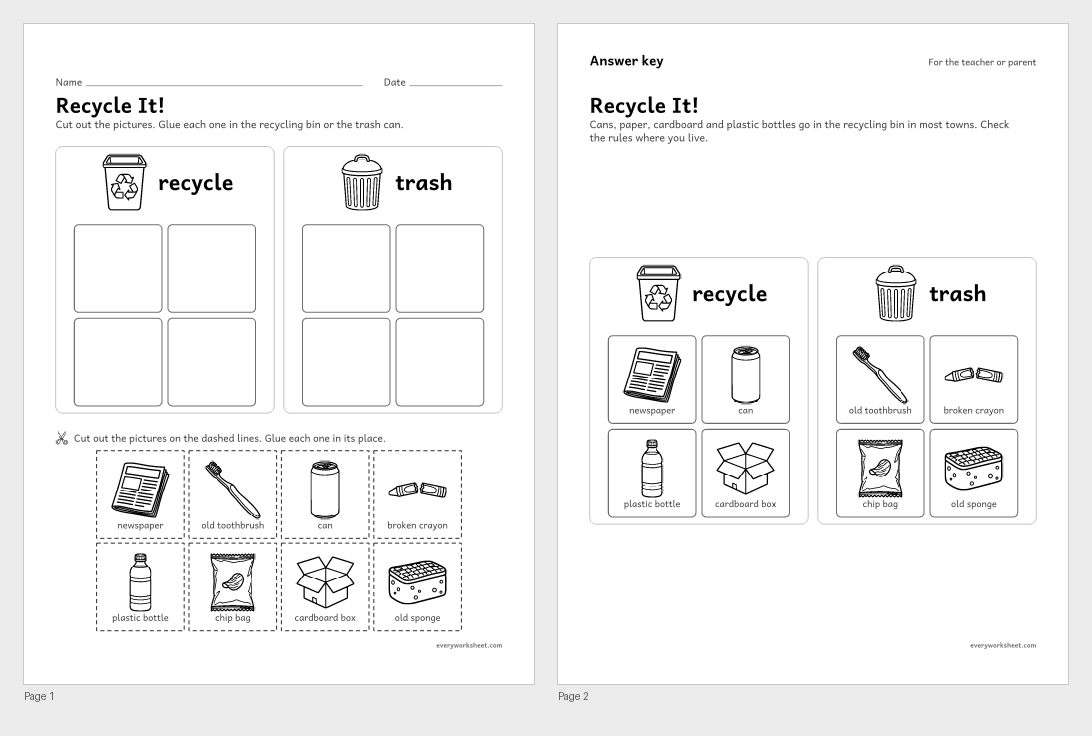
Recycling cut and Paste: trash or recycle
Sorting things into trash and recycling by cutting and gluing
Answer key on page 2
2 pages164 KB
Ways I can help the earth
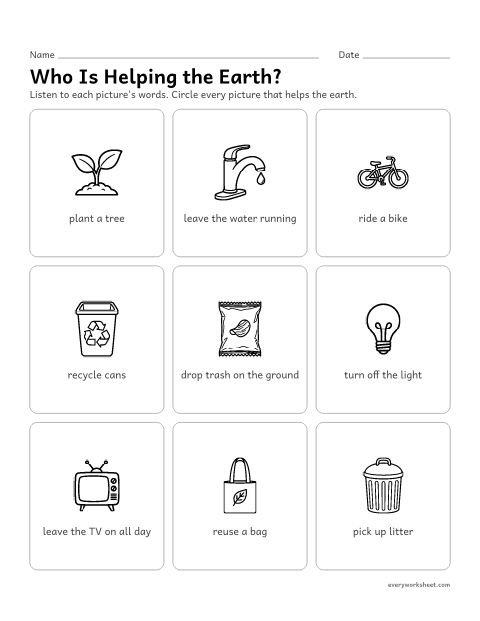 View all 2 pages
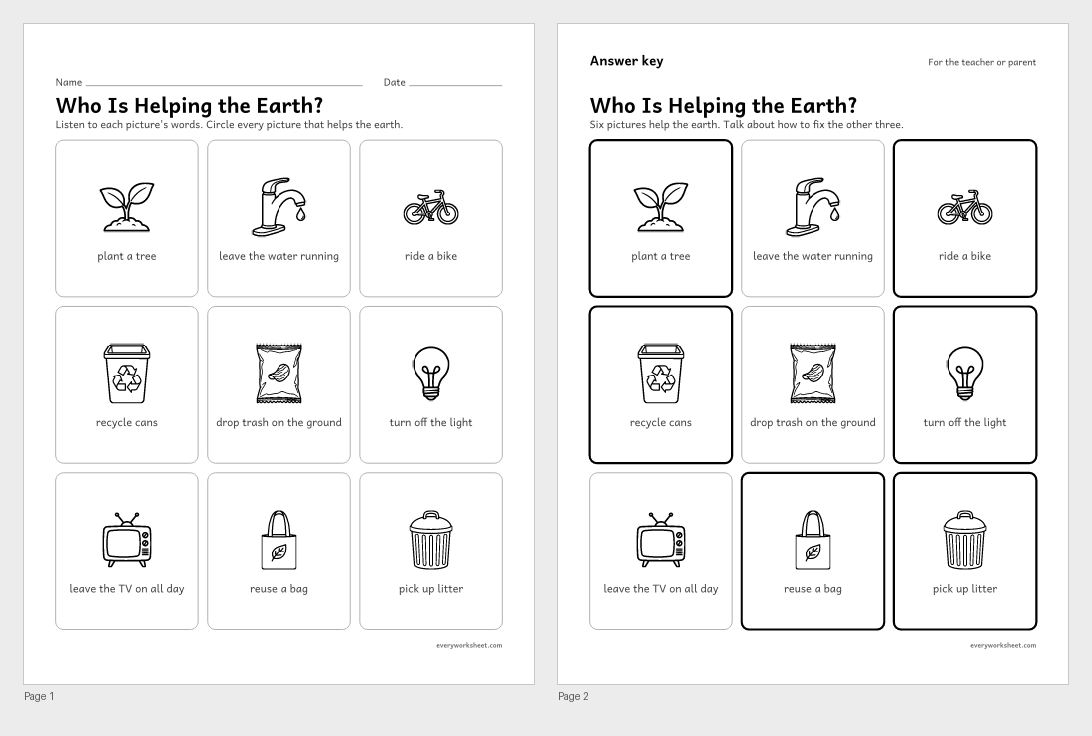
Earth Helpers: circle the ways to help
Telling which actions help the earth
Answer key on page 2
2 pages208 KB
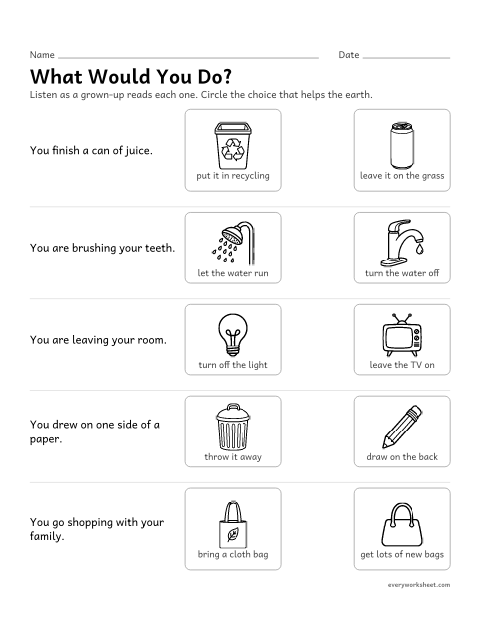 View all 2 pages
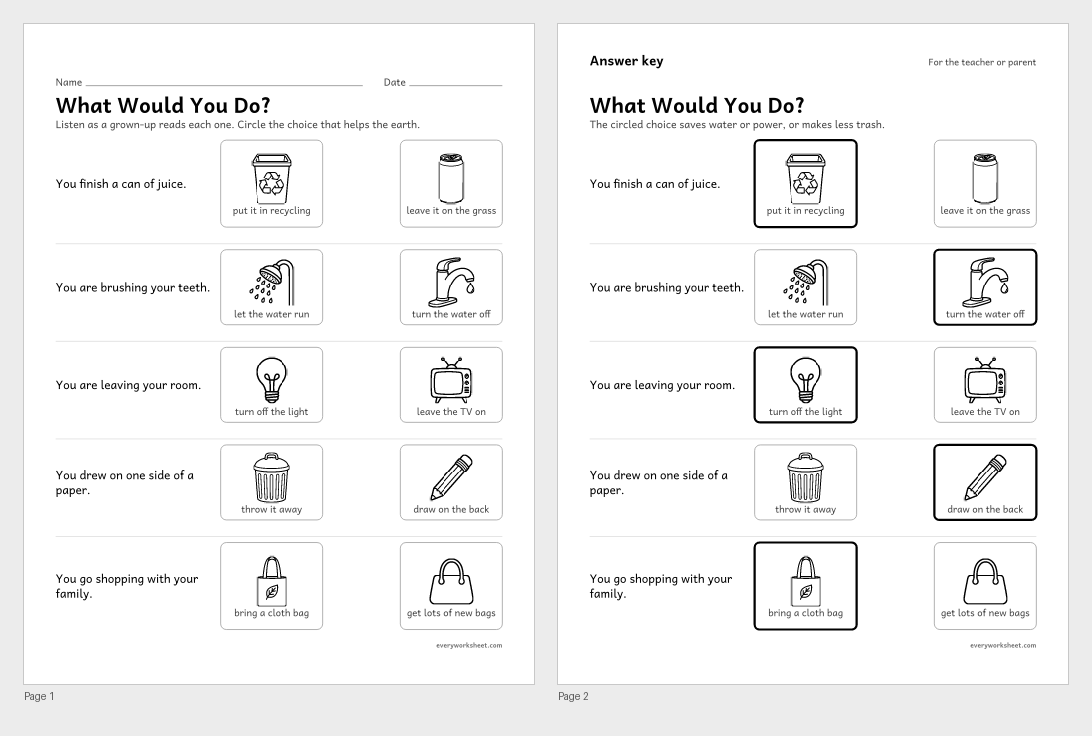
Ways I can help the earth
Choosing actions that reduce our impact on the earth
Answer key on page 2
2 pages210 KB
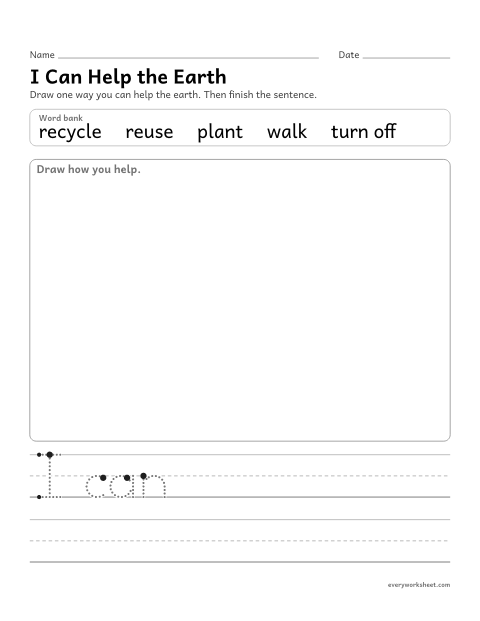 View larger
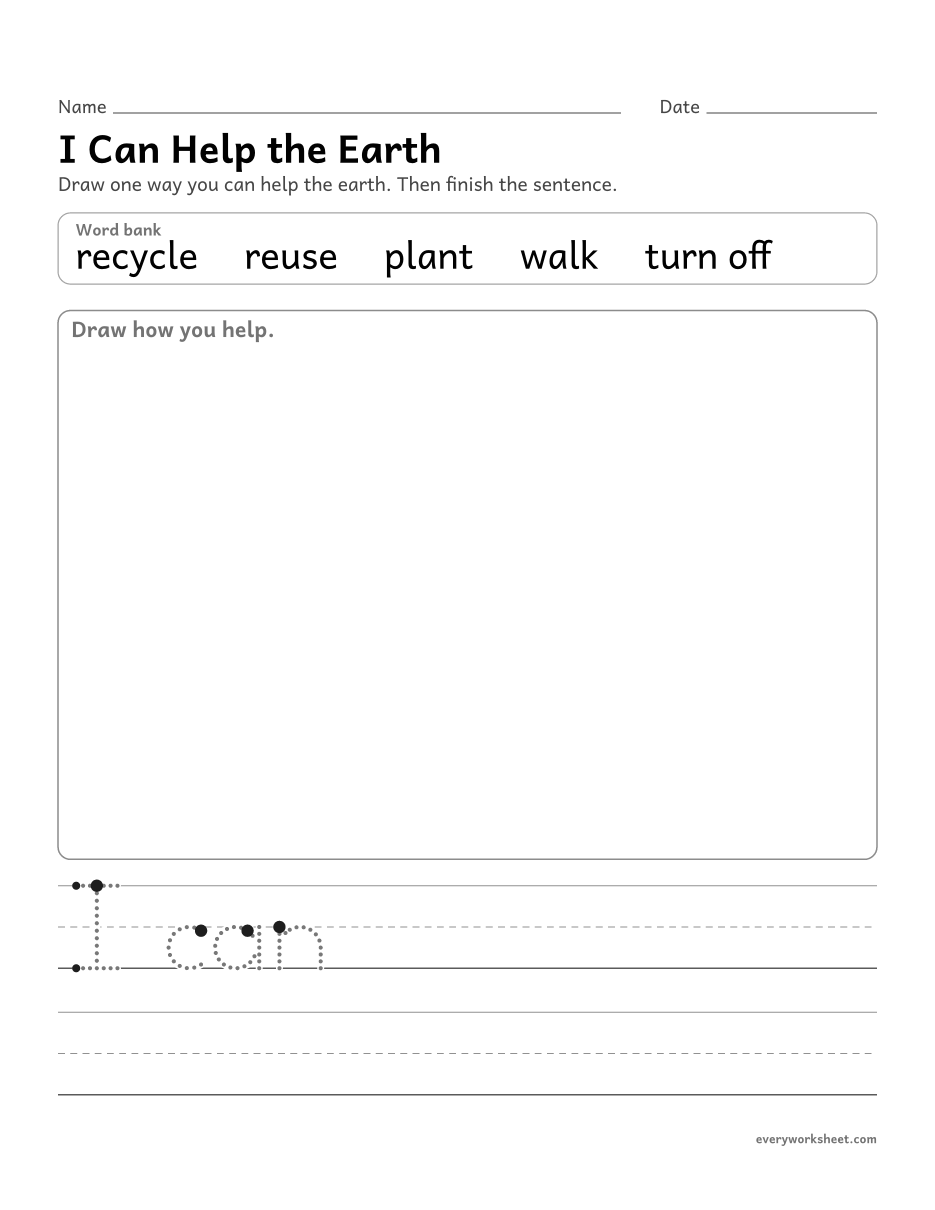
I can help the earth drawing and writing page
Sharing a way to help the earth with a drawing and words
1 page26 KB
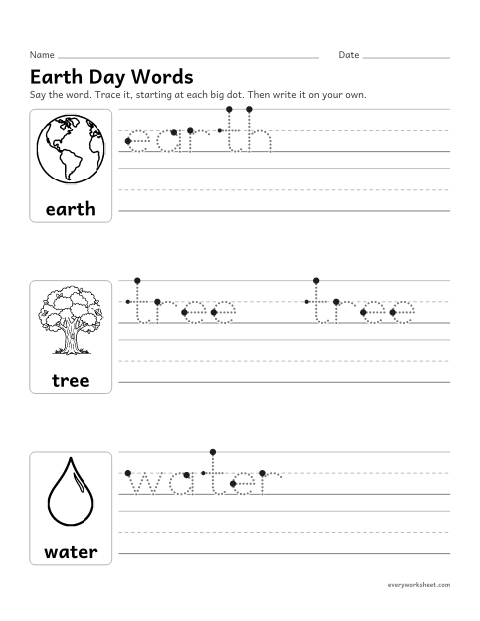 View larger
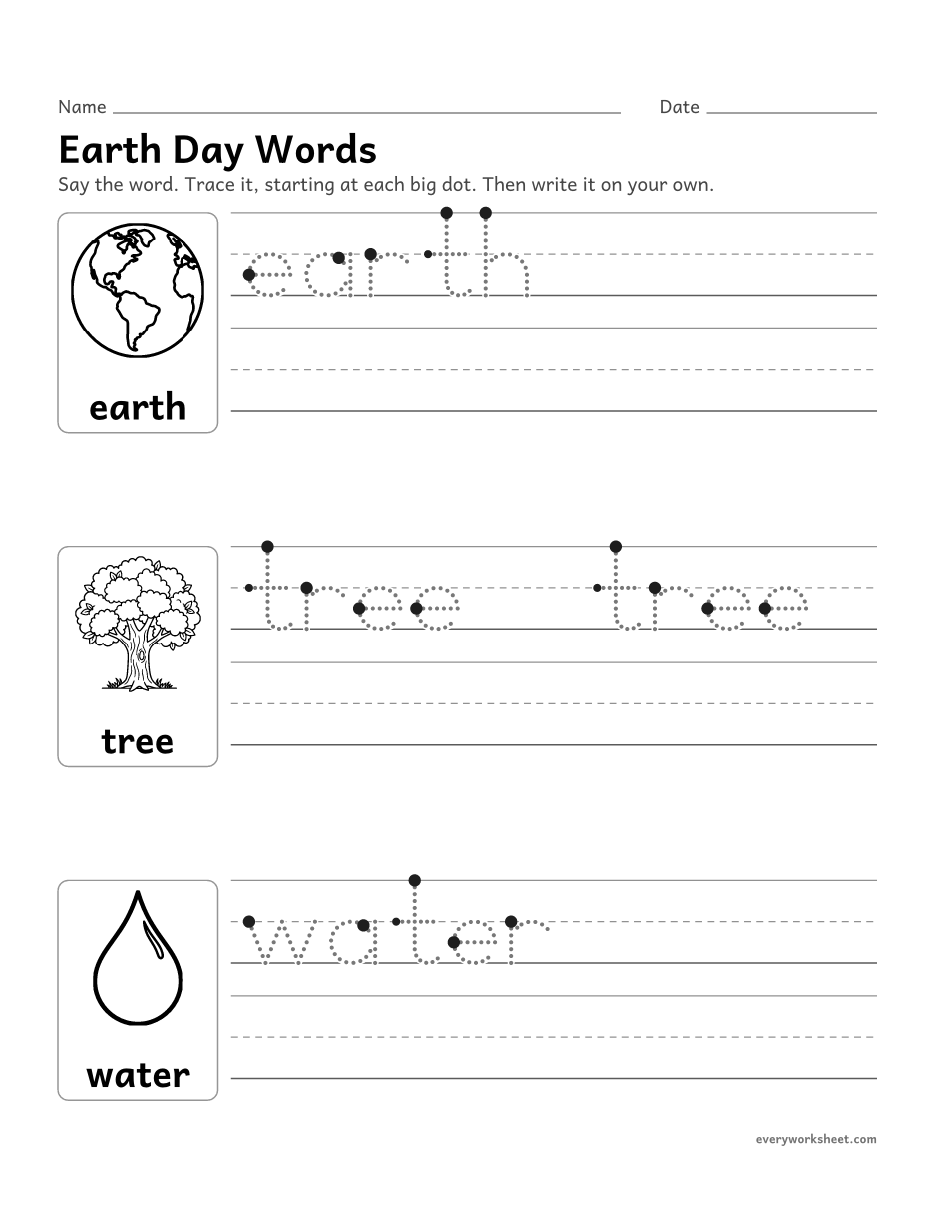
Earth day words Tracing: Earth, Tree, water
Tracing and writing earth, tree and water
1 page67 KB
How animals and people change their environment
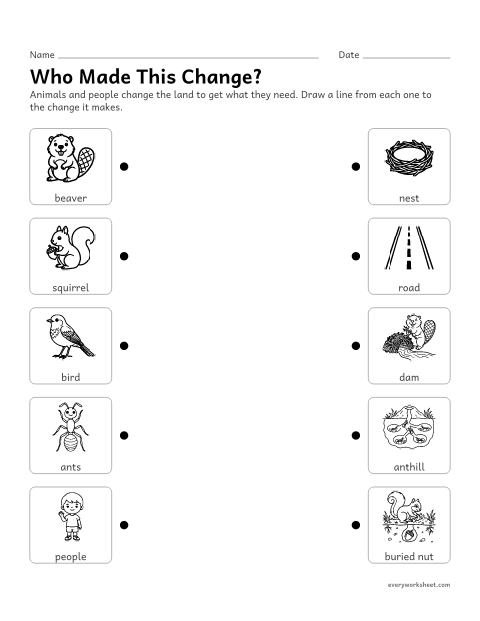 View all 2 pages
How animals change their Environment: match
Matching animals and people to the ways they change their environment
Answer key on page 2
2 pages465 KB
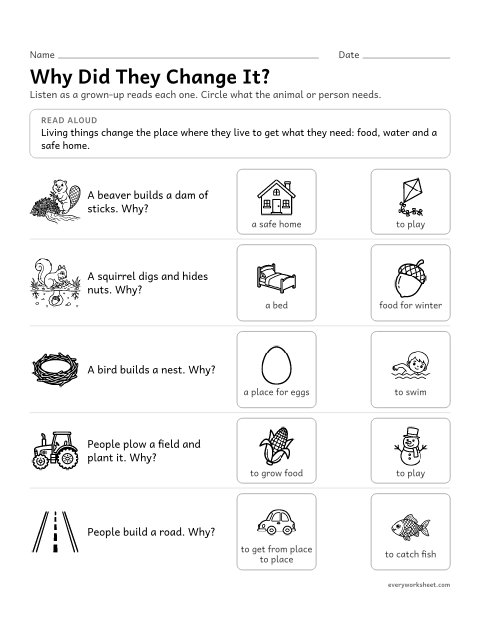 View all 2 pages
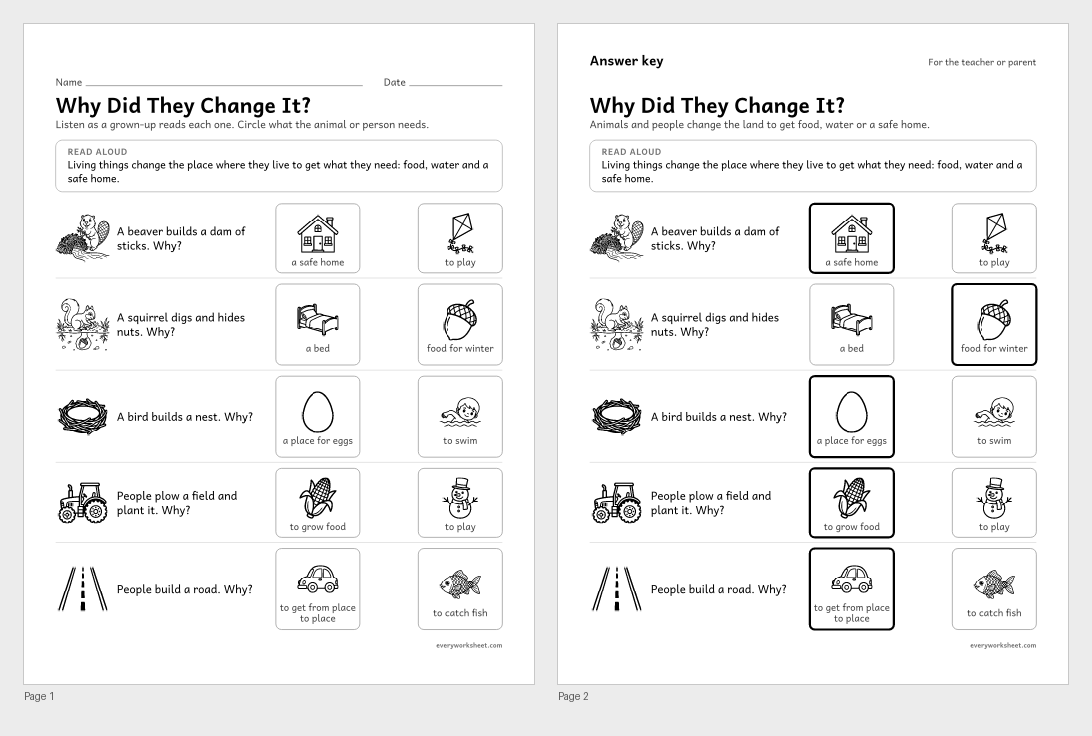
Animals change their Environment: Why?
Explaining why animals and people change their surroundings
Answer key on page 2
2 pages673 KB
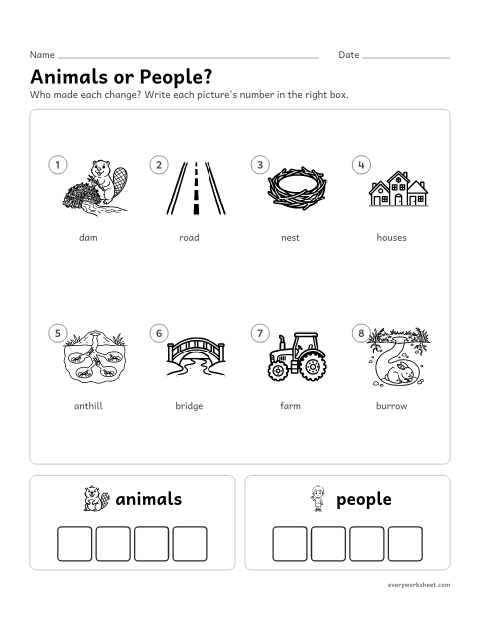 View all 2 pages
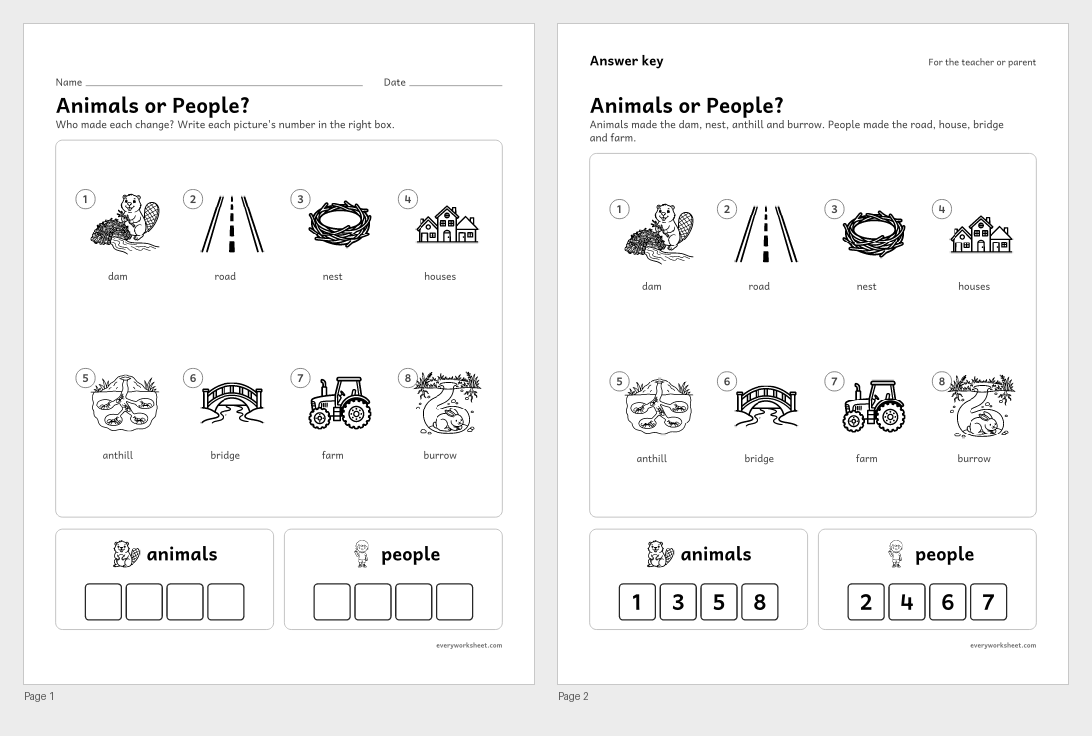
Animals or People: who changed the Land?
Sorting changes to the land made by animals and by people
Answer key on page 2
2 pages492 KB
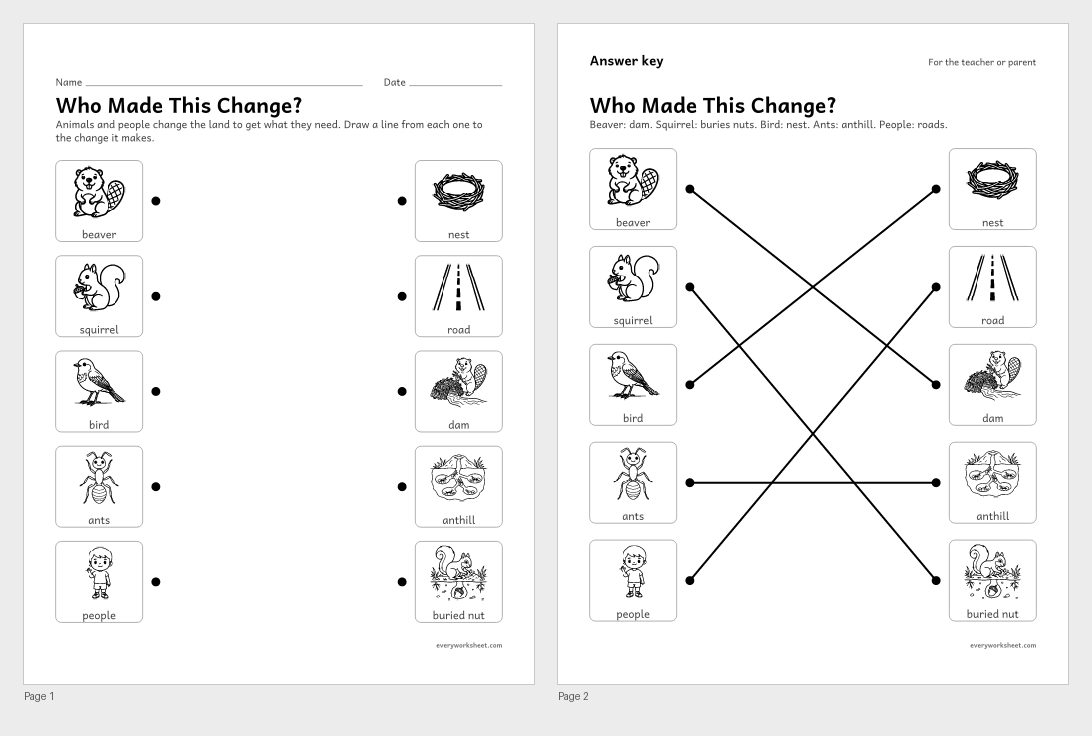
Print at 100% (actual size) for the cleanest tracing lines.
About these caring for the earth worksheets
Kindergarteners can do real things to help the earth: turn off the lights, turn off the water while brushing, reuse a bag and put cans in the recycling bin. These reduce, reuse, recycle worksheets teach what the three words mean and give children practice choosing earth-friendly actions. They are a good fit for Earth Day in April or any time of year.
Reduce means use less. Reuse means use something again. Recycle means turning old things, like cans, paper and boxes, into new things. The chart explains each one with a picture, the sorts ask children to decide which is which (with a pencil, or with scissors and glue on the recycle it page), and the drawing page lets them share their own way to help.
The last group of pages looks at how living things change the places they live. A beaver builds a dam, a squirrel digs to hide nuts, birds build nests and people build roads and farms. Children match each change to who made it and talk about why: to get food, water or a safe home. Every page with one right answer has an answer key on page 2.
Standards
NGSS K-ESS3-3Communicate solutions that will reduce the impact of humans on the land, water, air, and/or other living things in the local environment.NGSS K-ESS2-2Construct an argument supported by evidence for how plants and animals (including humans) can change the environment to meet their needs.CCSS.MATH.CONTENT.K.MD.B.3Classify objects into given categories; count the numbers of objects in each category and sort the categories by count.CCSS.ELA-LITERACY.L.K.5.ASort common objects into categories (e.g., shapes, foods) to gain a sense of the concepts the categories represent.CCSS.ELA-LITERACY.L.K.1.APrint many upper- and lowercase letters.CCSS.ELA-LITERACY.W.K.2Use a combination of drawing, dictating, and writing to compose informative/explanatory texts in which they name what they are writing about and supply some information about the topic.CCSS.ELA-LITERACY.SL.K.2Confirm understanding of a text read aloud or information presented orally or through other media by asking and answering questions about key details and requesting clarification if something is not understood.
How to use them
- Read the reduce, reuse, recycle chart aloud and act out each word.
- Before the trash or recycle sort, look at your own classroom or kitchen bins together.
- On the earth helper and what would you do pages, read each picture's words aloud and let children explain their choice.
- Use the I can help the earth page to make a class book or an Earth Day display.
- For the animals and people pages, read the short read-aloud first, then match or sort.
Teaching tips
- Recycling rules change from town to town. Check what your local bins take and adjust the answers if you need to.
- Many children think recycling is the only way to help. Point out that reducing (using less) helps the most.
- Keep it hopeful: focus on the small things children can do every day.
- Take a walk and look for changes made by animals (nests, holes, anthills) and by people (roads, buildings, gardens).
- The words under each picture are for the adult to read. Children work from the pictures.
Questions teachers and parents ask
How do you explain reduce, reuse, recycle to kindergarteners?
Reduce means use less, like turning off the water. Reuse means use it again, like carrying a cloth bag. Recycle means making old things into new things, like putting cans in the recycling bin.
Are these good Earth Day worksheets?
Yes. The earth helper pages, the I can help the earth drawing page and the Earth Day words tracing page work well for Earth Day in April, and all year.
How do animals change their environment?
Animals change the places they live to meet their needs. Beavers build dams to make a pond home, birds build nests for their eggs, and squirrels dig holes to hide food for winter. People change the land too, with roads, houses and farms.