 View all 2 pages
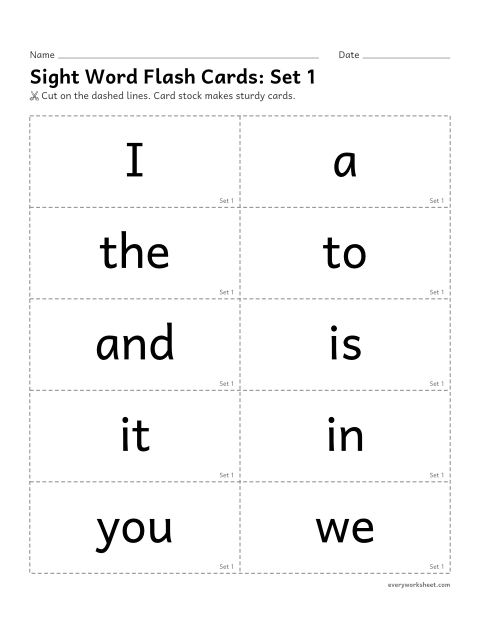
Sight word flash Cards: set 1
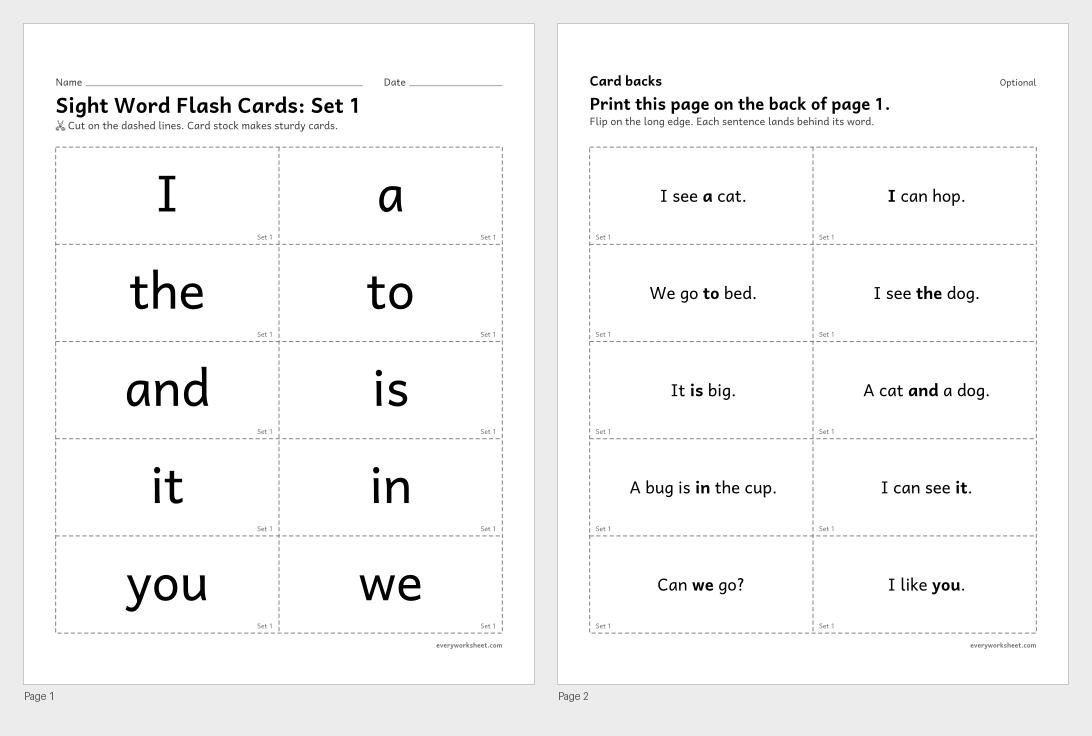
Reading sight words 1-10 on flash cards, with sentence backs
2 pages60 KB
Cut-apart flash cards for all 50 kindergarten sight words, with sentence backs, a pre-K starter set, 1st grade next steps and blank cards.
View all 2 pagesReading sight words 1-10 on flash cards, with sentence backs
2 pages60 KB
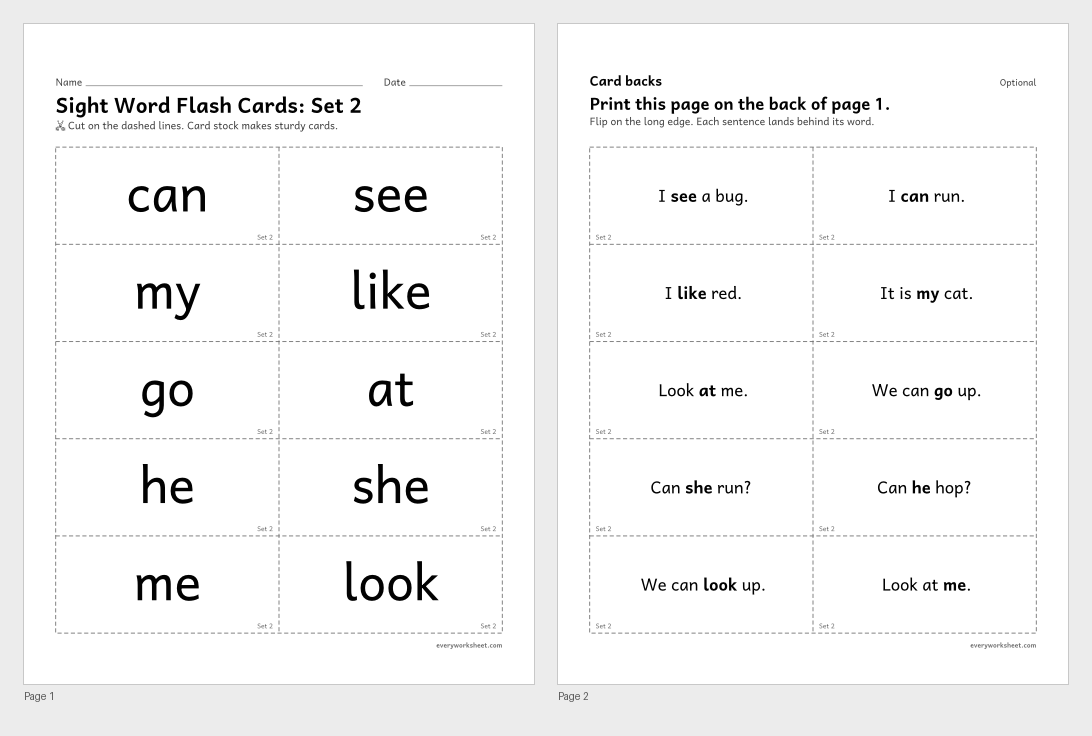 View all 2 pages
Reading sight words 11-20 on flash cards, with sentence backs
2 pages60 KB
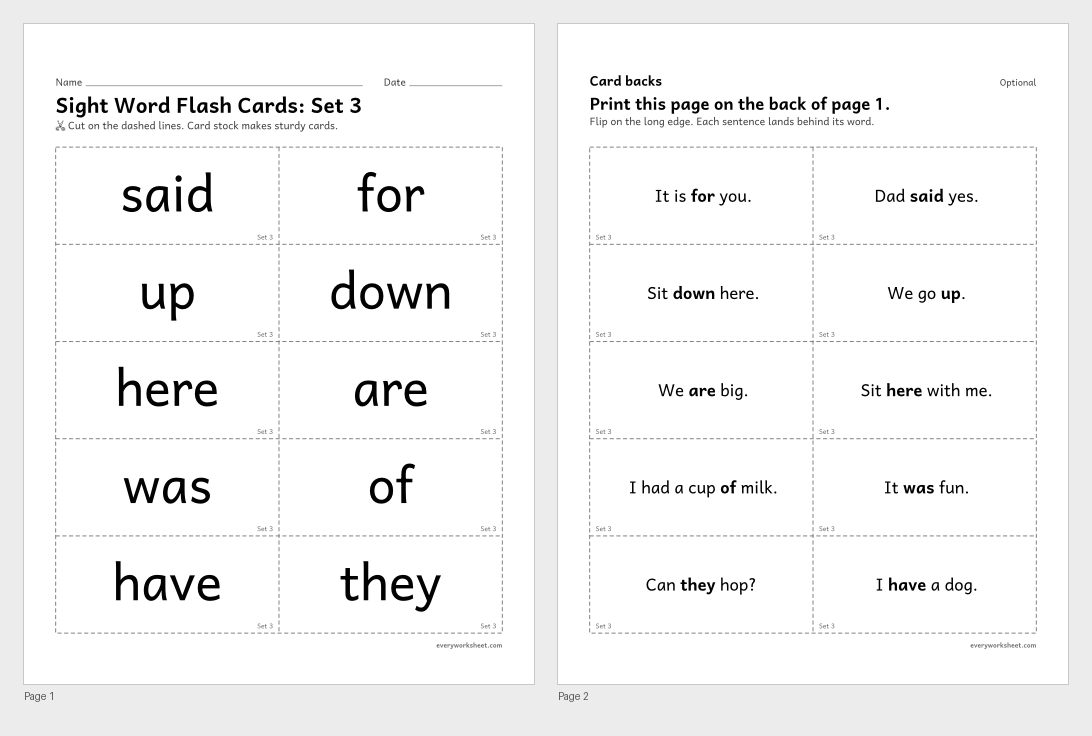 View all 2 pages
Reading sight words 21-30 on flash cards, with sentence backs
2 pages60 KB
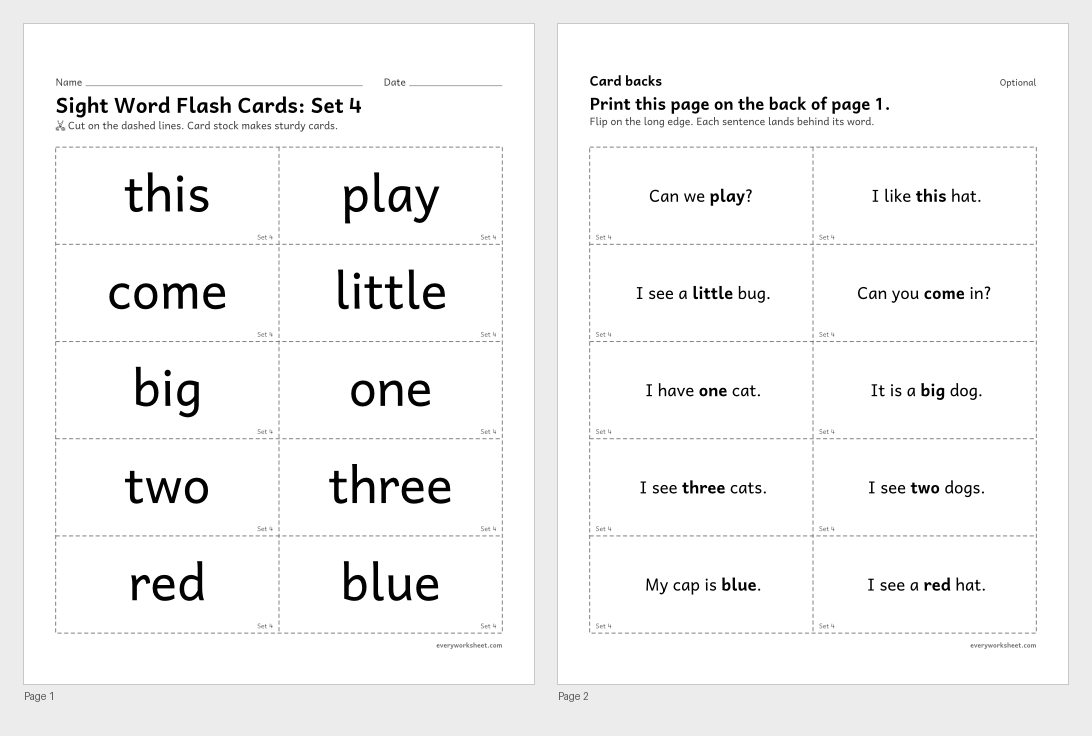 View all 2 pages
Reading sight words 31-40 on flash cards, with sentence backs
2 pages60 KB
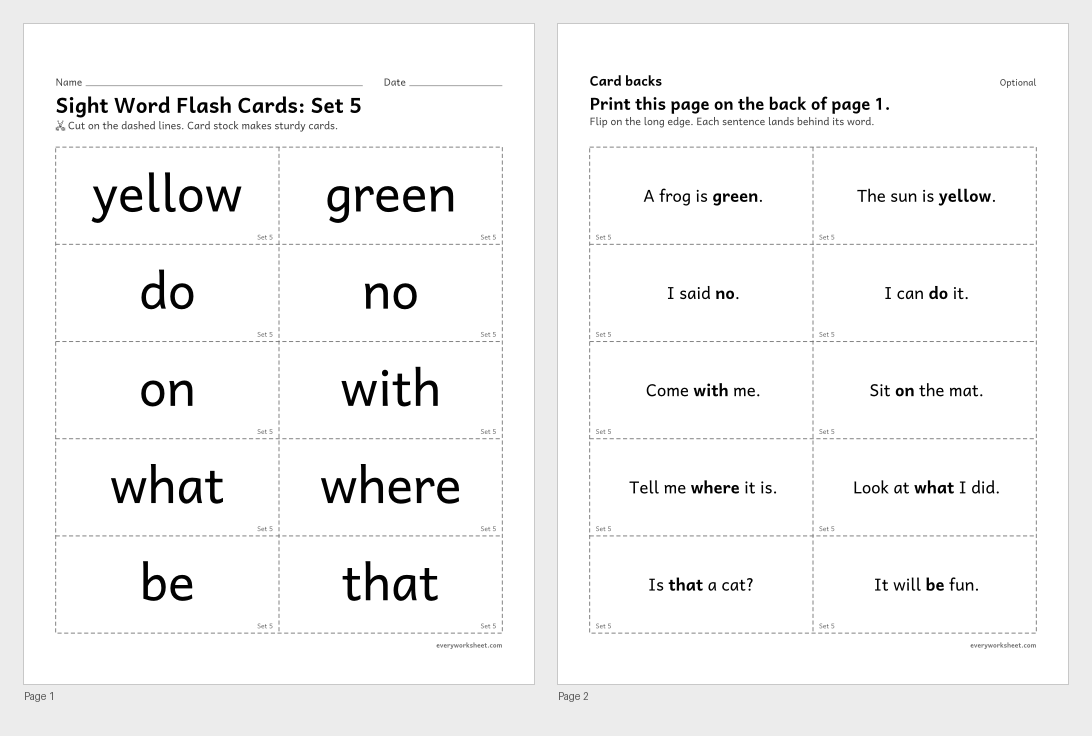 View all 2 pages
Reading sight words 41-50 on flash cards, with sentence backs
2 pages60 KB
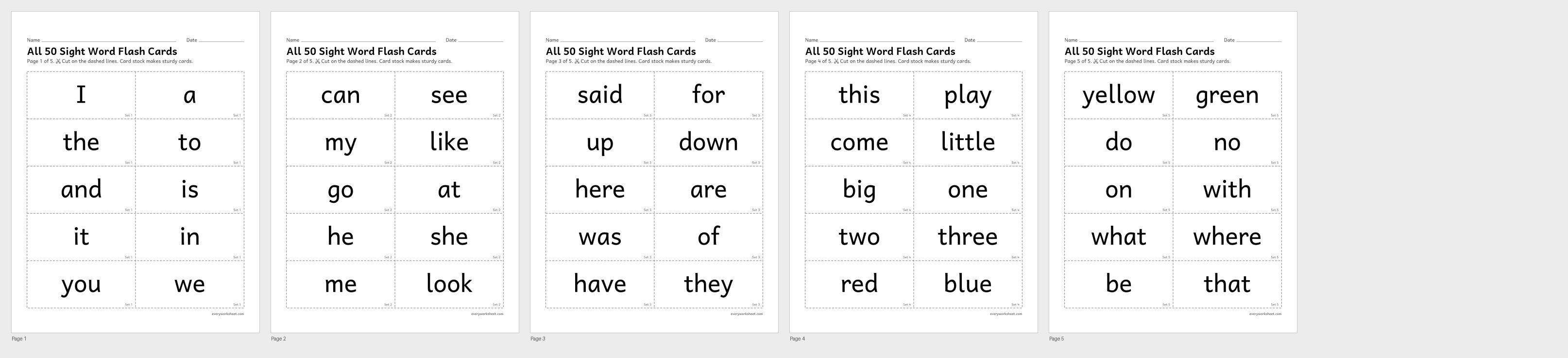 5 pagesView all 5 pages
Reading all 50 kindergarten sight words on flash cards
5 pages177 KB
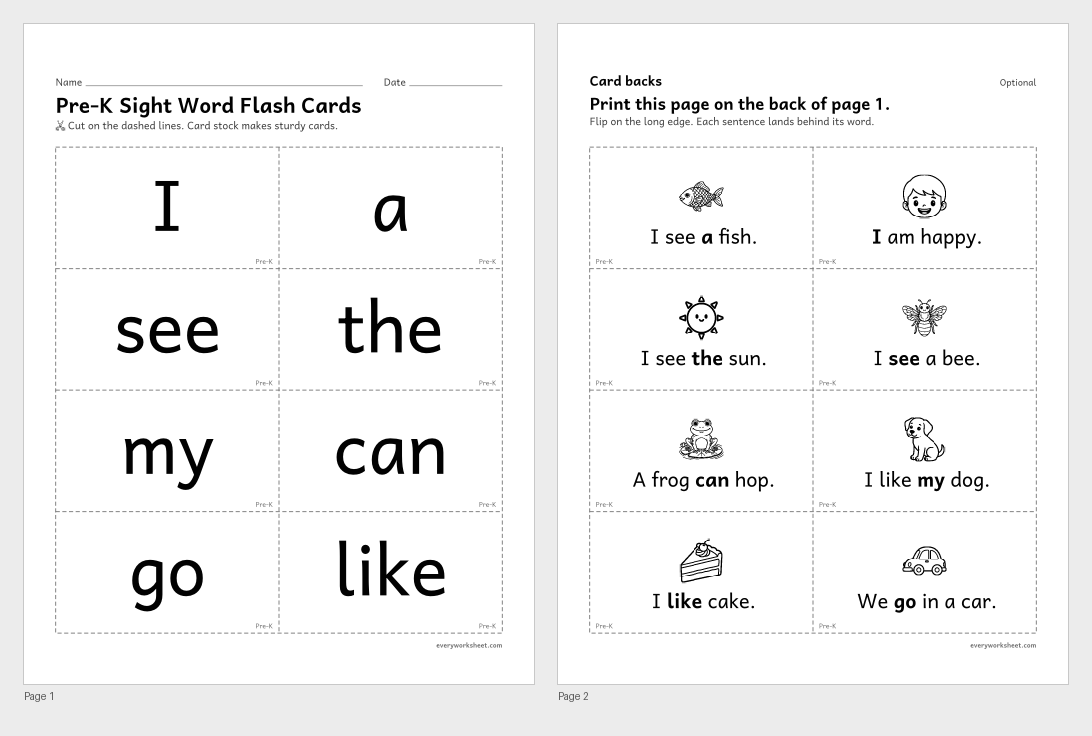 View all 2 pages
Reading eight first sight words, with picture sentence backs
2 pages177 KB
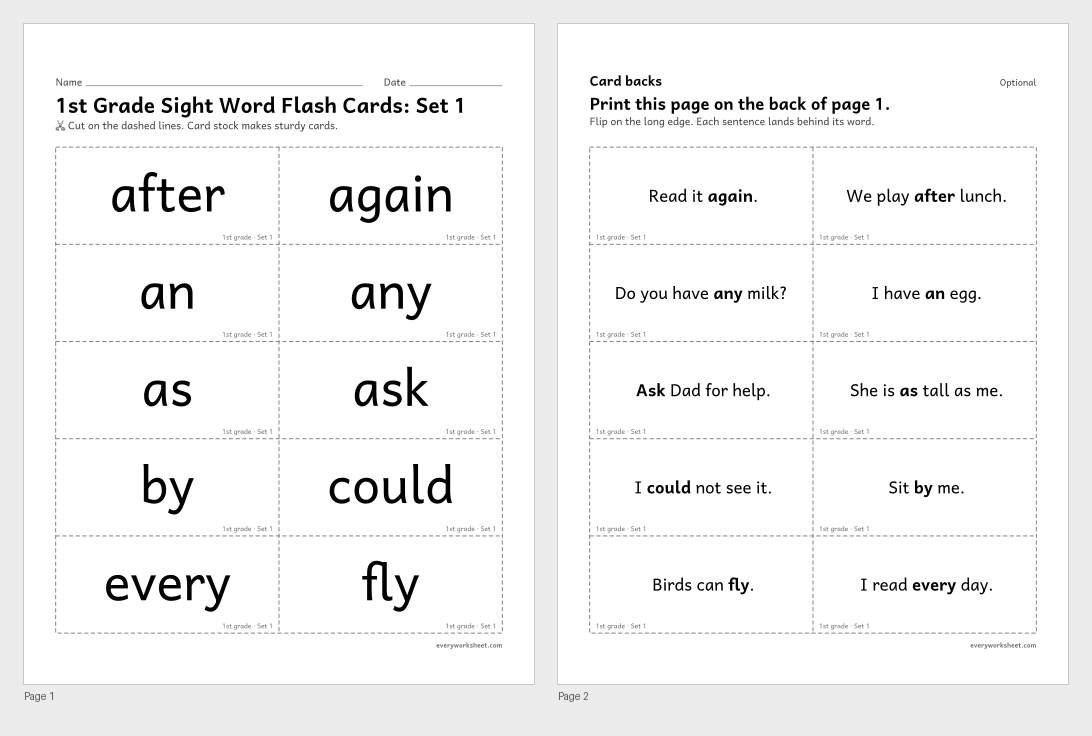 View all 2 pages
Reading next-step sight words for 1st grade, with sentence backs
2 pages61 KB
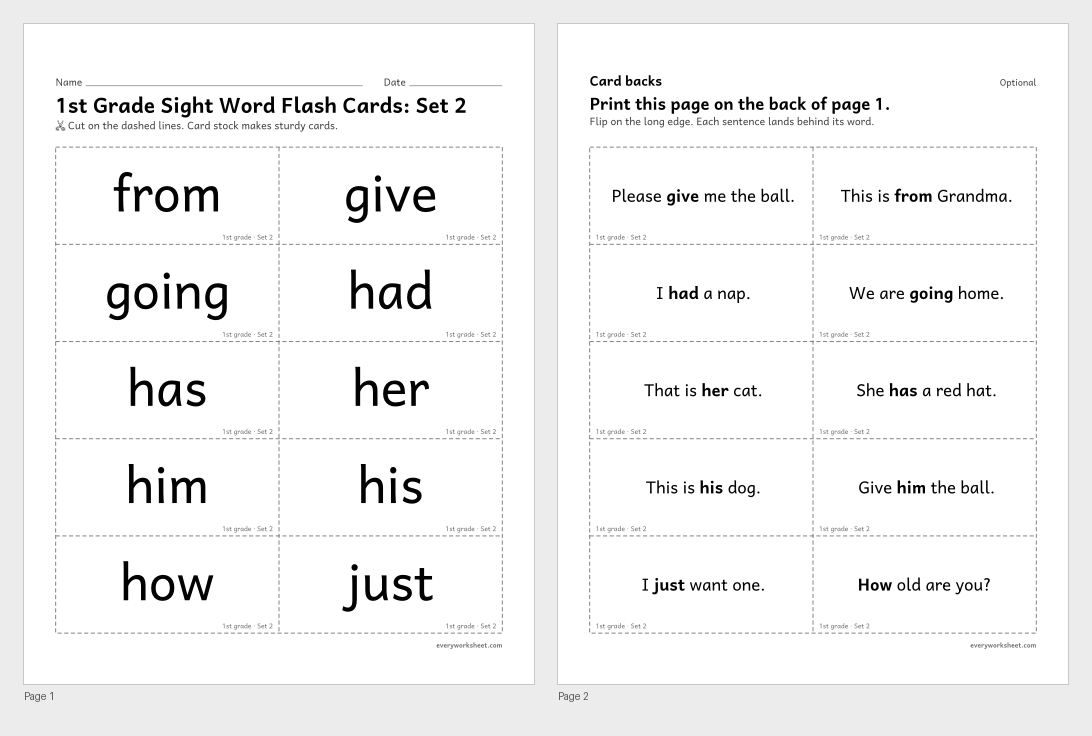 View all 2 pages
Reading next-step sight words for 1st grade, with sentence backs
2 pages61 KB
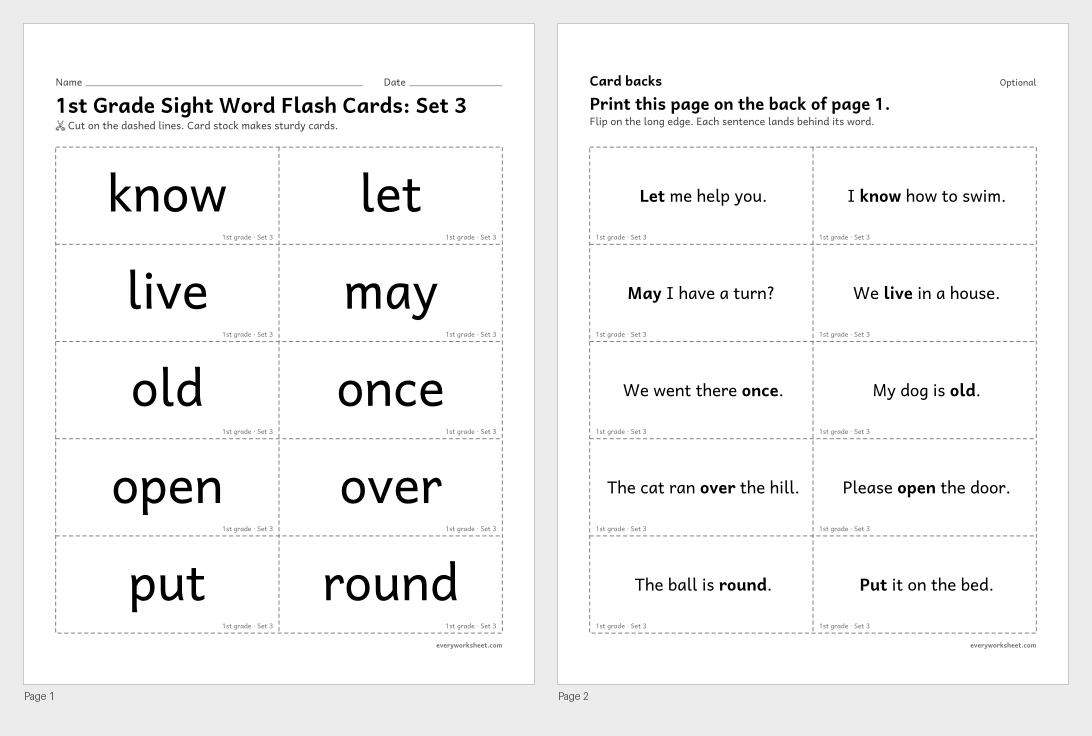 View all 2 pages
Reading next-step sight words for 1st grade, with sentence backs
2 pages61 KB
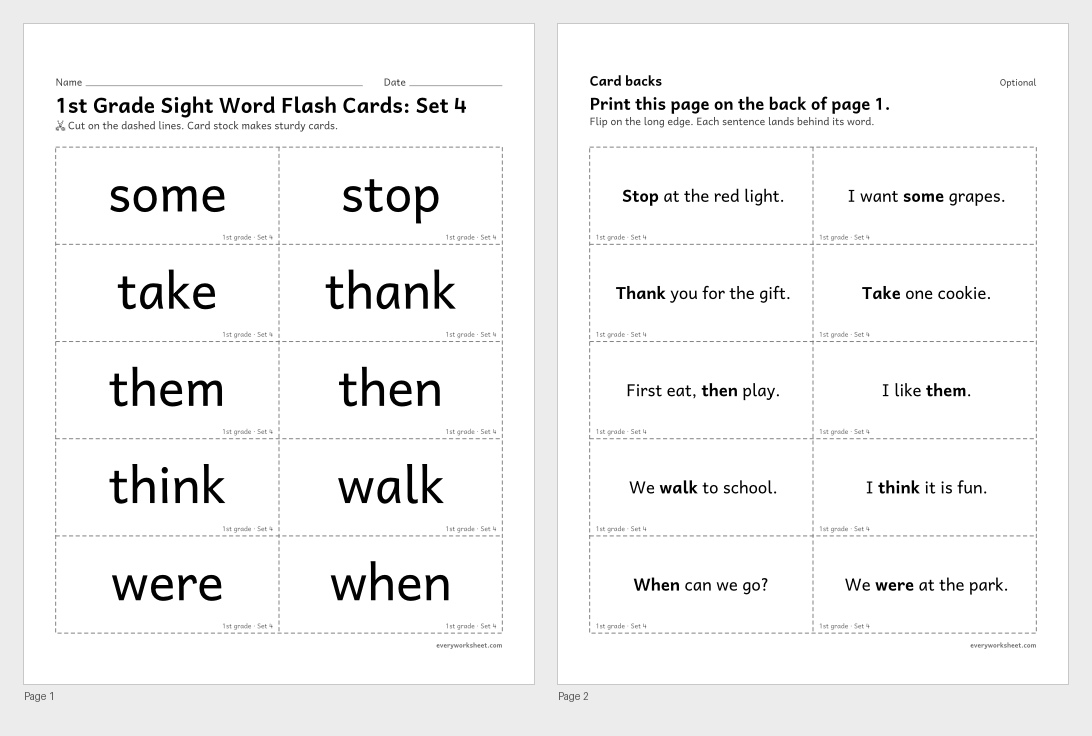 View all 2 pages
Reading next-step sight words for 1st grade, with sentence backs
2 pages60 KB
 View larger
Writing sight words to make your own flash cards
1 page52 KB
Print at 100% (actual size) for the cleanest tracing lines.
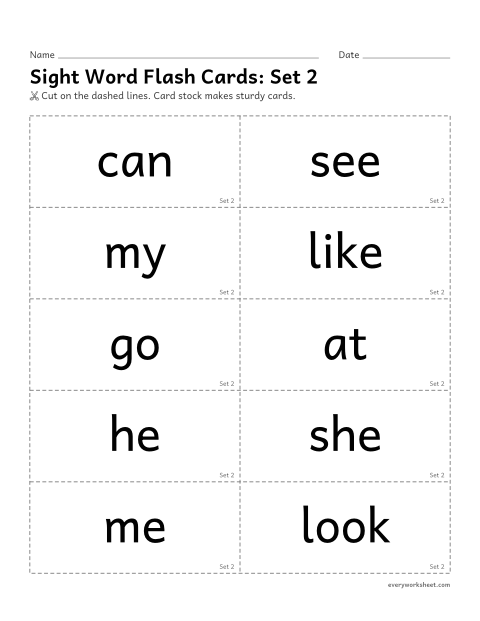
These printable sight word flash cards cover all 50 kindergarten sight words in five sets of ten, in the order most classrooms teach them. Each card has one word in big, clean letters, and dashed lines show where to cut. They print well on card stock, which makes them sturdy enough for daily practice.
Every set has an optional second page of card backs. Print it on the back of the cards (flip on the long edge) and each card gets a short sentence that uses its word, so a child can read the word alone and then read it in a sentence. There is also a pre-K starter set of eight big cards with picture sentences, four sets of 1st grade words for children who are ready for more, and blank cards to write your own words.
CCSS.ELA-LITERACY.RF.K.3.CRead common high-frequency words by sight (e.g., the, of, to, you, she, my, is, are, do, does).CCSS.ELA-LITERACY.RF.K.4Read emergent-reader texts with purpose and understanding.CCSS.ELA-LITERACY.L.K.1.APrint many upper- and lowercase letters.The 50 kindergarten sight words, from I, a, the, to and and through what, where, be and that. They are split into five sets of ten in the order they are usually taught, so you can start with set 1 and work forward.
Card stock is best because the cards last longer and you can't see through them. Plain paper works too; you can glue the cards onto index cards or laminate them.
Print page 1, put the sheet back in the printer, and print page 2 on the other side, or choose two-sided printing and flip on the long edge. The backs are mirrored so each sentence lands behind its word.
Many kindergarten classrooms aim for about 25 to 50 sight words by the end of the year. Go at your child's pace: a few new words a week, with lots of review, is plenty.
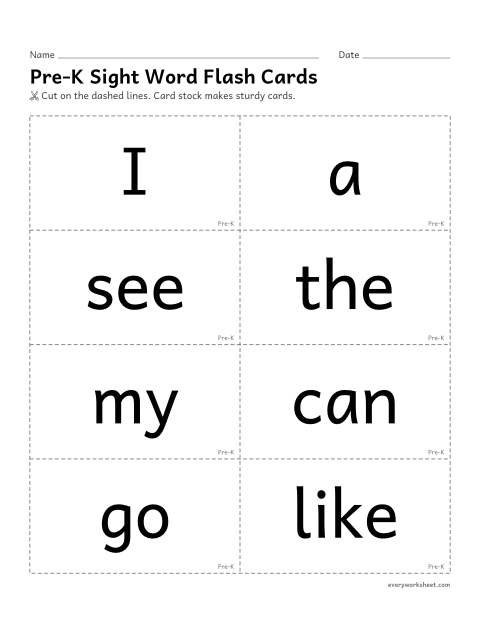
Yes. The pre-K starter set has eight big cards for first words like I, see, my and can, with picture sentences on the back. The 1st grade sets add 40 next-step words such as after, could, every and when.