 View larger
States of Matter Worksheets: Solid, Liquid and Gas
Solid, liquid and gas pages for kindergarten and early grades: a line-art water poster, label it and cut-and-paste pages, a sort and ice melting sequences.
Download the states of matter worksheets
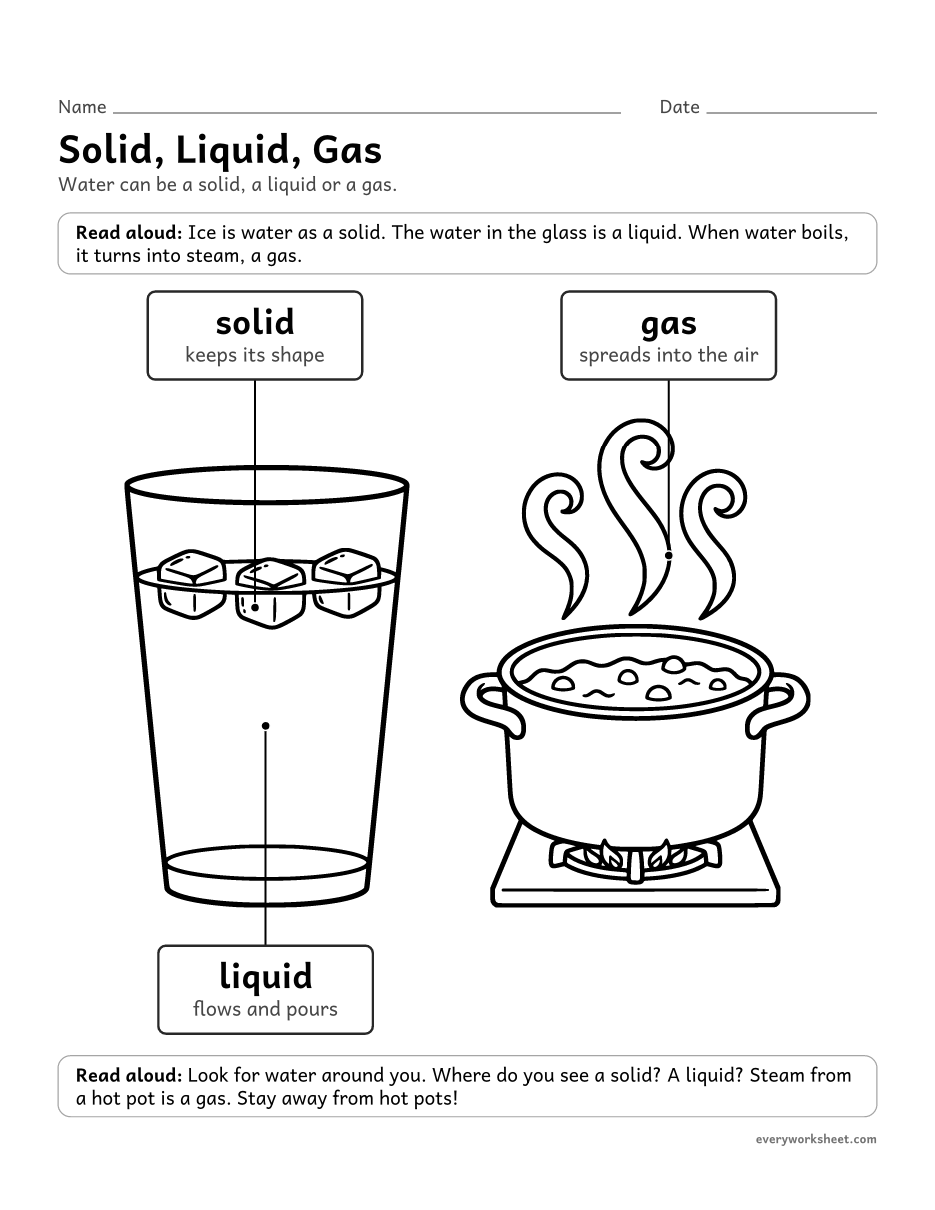
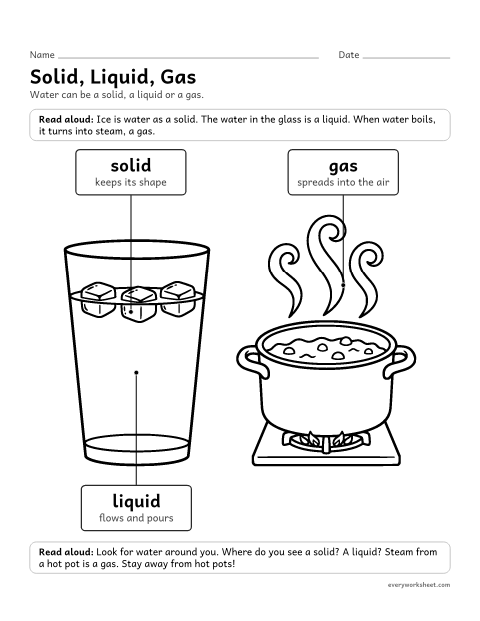
Solid, liquid, gas with water
 View larger
 View all 2 pages
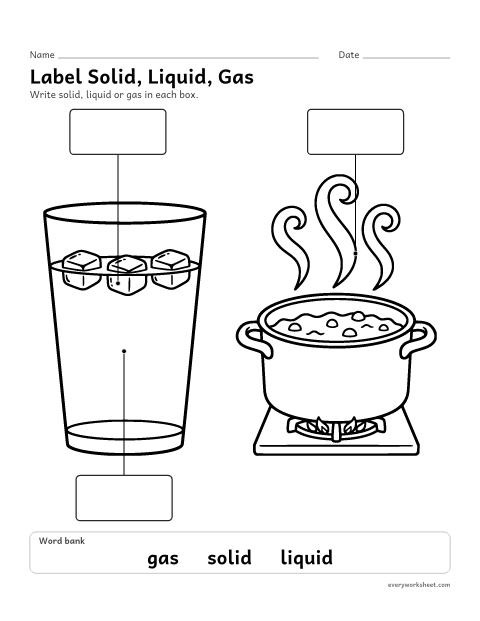
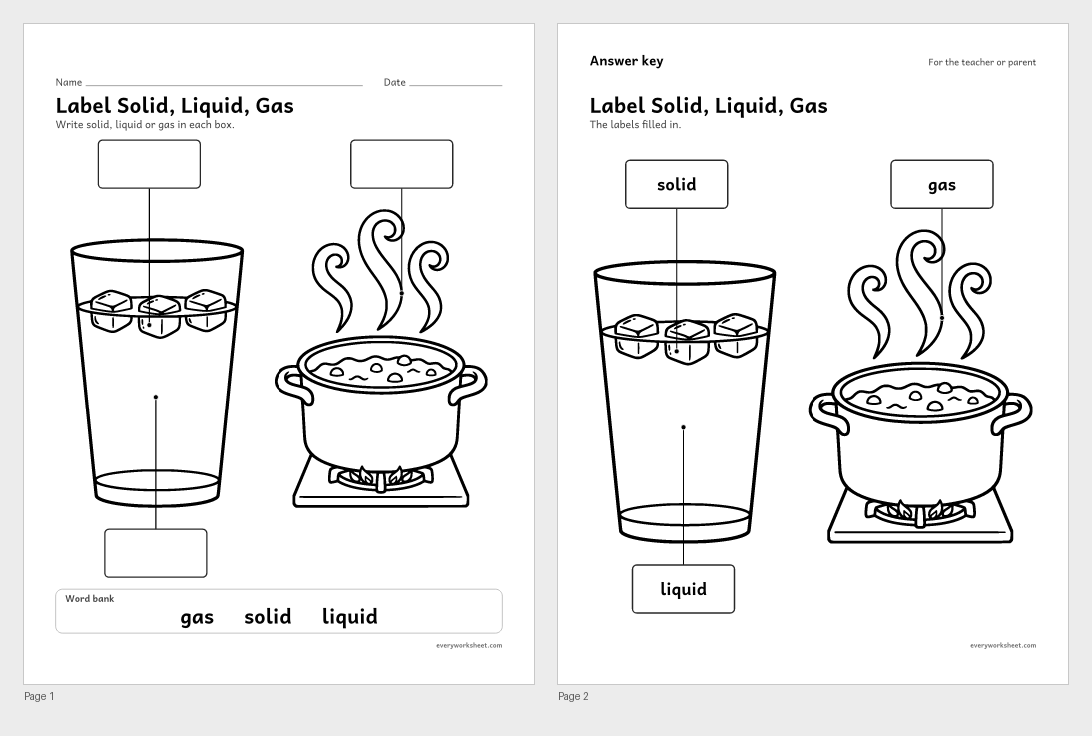
Label Solid, Liquid, gas (Word Bank)
Labeling solid, liquid and gas
Answer key on page 2
2 pages56 KB
 View all 2 pages
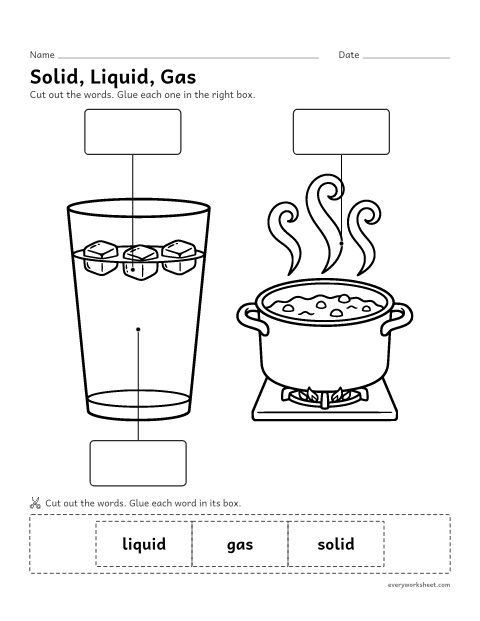
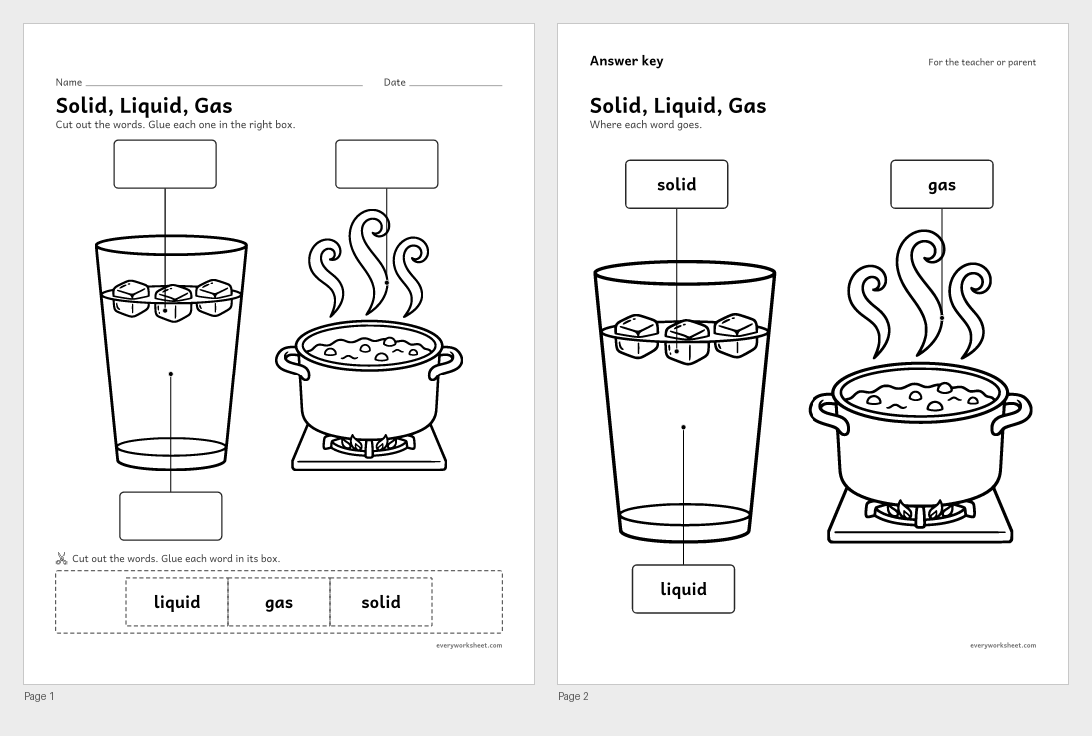
Solid, Liquid, gas cut and paste
Labeling solid, liquid and gas
Answer key on page 2
2 pages84 KB
Sort and sequence
 View all 2 pages
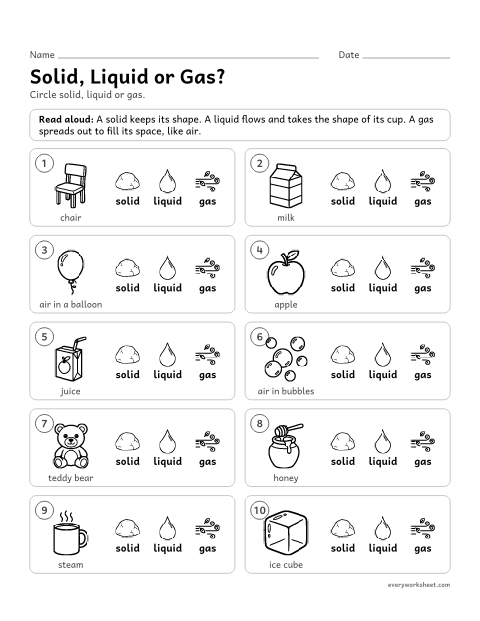
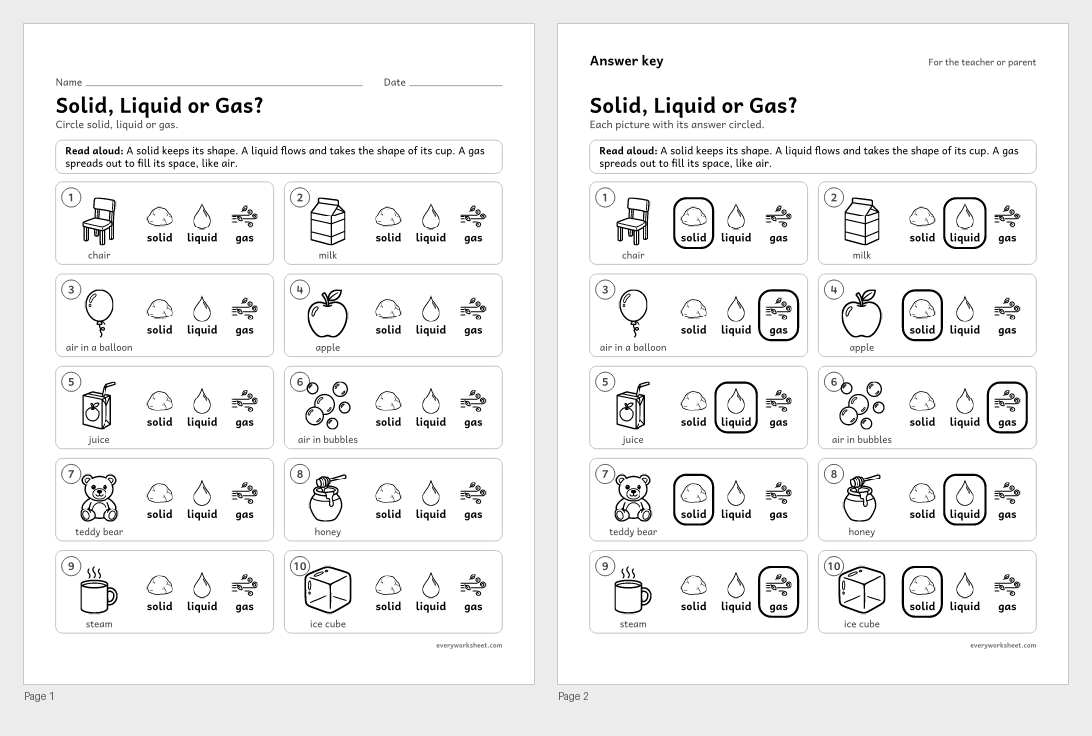
Solid, liquid or gas picture sort
Sorting solids, liquids and gases
Answer key on page 2
2 pages612 KB
 View all 2 pages
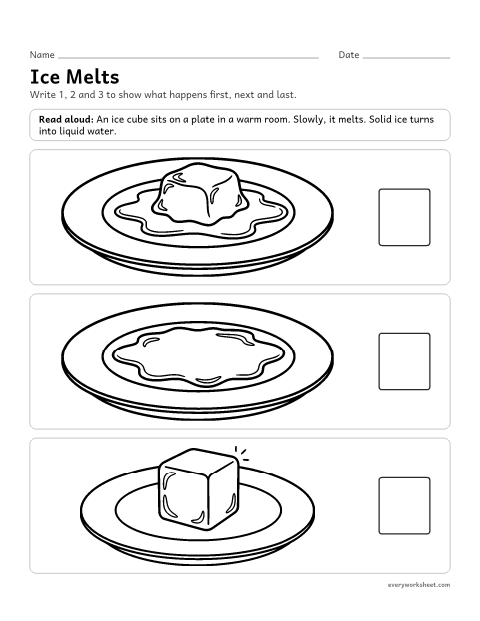
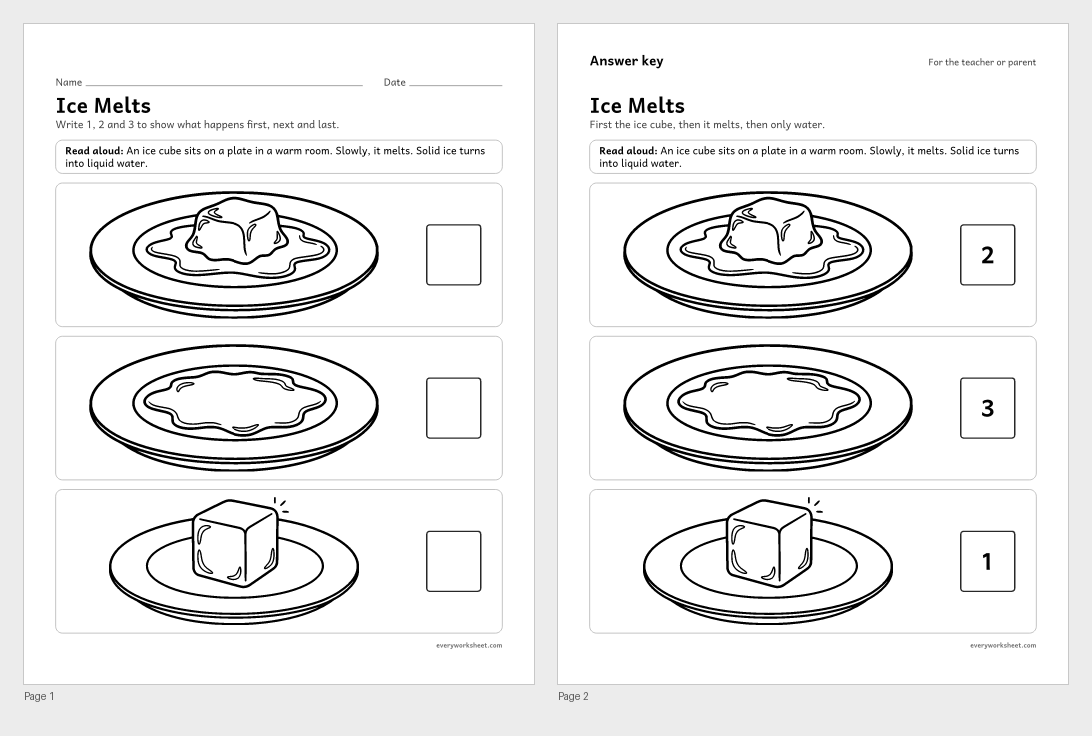
Ice Melts: put it in order
Ordering the steps of ice melting
Answer key on page 2
2 pages60 KB
 View all 2 pages
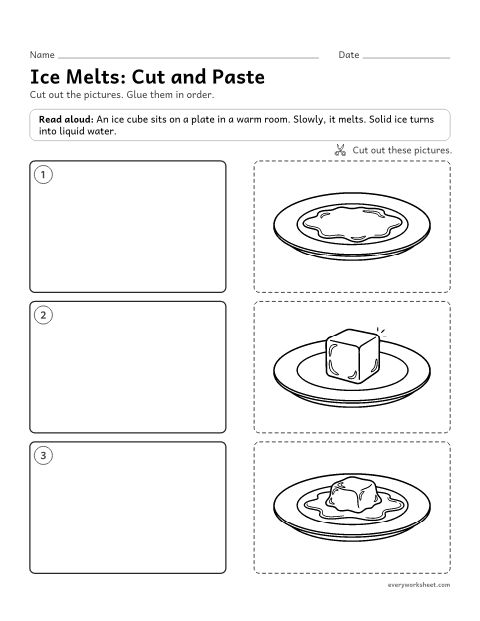
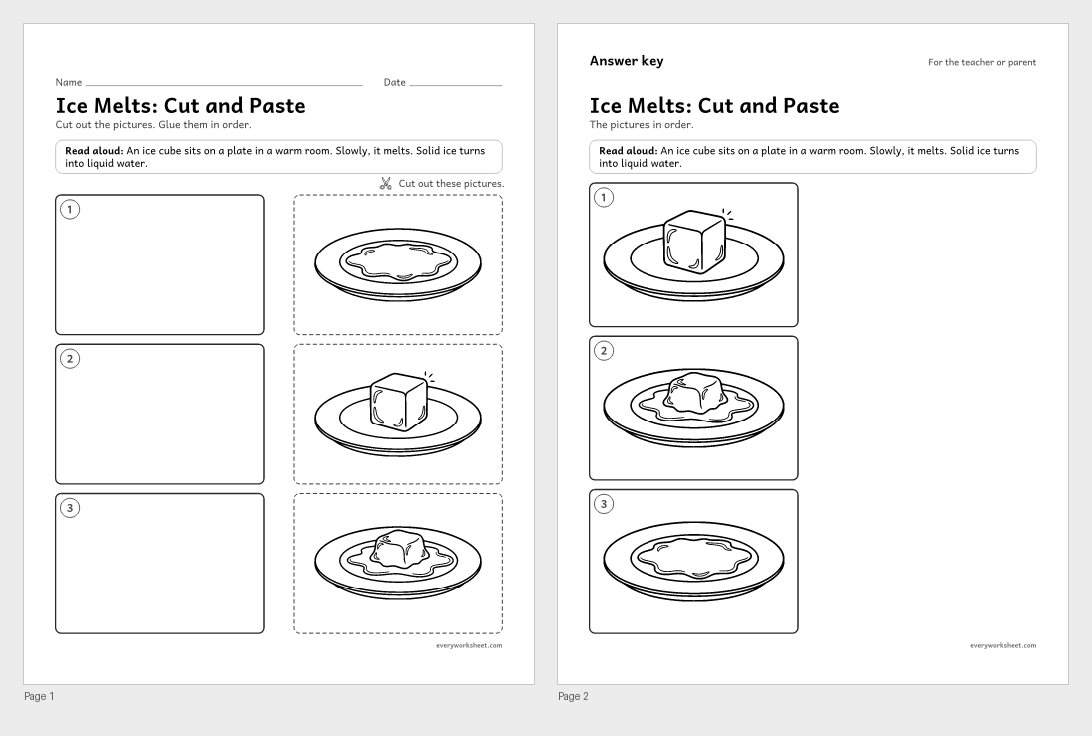
Ice melts cut and paste sequence
Ordering the steps of ice melting
Answer key on page 2
2 pages88 KB
Print at 100% (actual size) for the cleanest tracing lines.
About these states of matter worksheets
Everything around us is a solid, a liquid or a gas. A solid keeps its own shape, like a block or a chair. A liquid flows and takes the shape of its cup, like milk or juice. A gas, like the air inside a balloon, spreads out to fill its space, and most of the time you cannot see it.
Water is the best way in, because children see it in all three states. The poster shows ice cubes (a solid) in a glass of water (a liquid) next to a pot of boiling water giving off steam (a gas). The label page asks children to write solid, liquid or gas in each box from a word bank, and the cut-and-paste page does the same with words to cut out. The picture sort then asks about everyday things like milk, a chair and a balloon.
States of matter are formally taught in 2nd grade, but kindergartners are ready to notice them. The ice melting pages are a good bridge: children put three pictures in order, from an ice cube to a melting cube to a puddle, by writing 1, 2, 3 or by cutting and gluing.
Standards
NGSS 2-PS1-1Plan and conduct an investigation to describe and classify different kinds of materials by their observable properties (grade 2).NGSS 2-PS1-4Construct an argument with evidence that some changes caused by heating or cooling can be reversed and some cannot (grade 2).CCSS.MATH.CONTENT.K.MD.B.3Classify objects into given categories; count the numbers of objects in each category and sort the categories by count.CCSS.ELA-LITERACY.W.K.2Use a combination of drawing, dictating, and writing to compose informative/explanatory texts in which they name what they are writing about and supply some information about the topic.CCSS.ELA-LITERACY.W.K.8With guidance and support from adults, recall information from experiences or gather information from provided sources to answer a question.CCSS.ELA-LITERACY.L.K.6Use words and phrases acquired through conversations, reading and being read to, and responding to texts.
How to use them
- Gather a few real examples: a block, a cup of water and a balloon. Let your child hold the block, pour the water and feel the air from the balloon.
- Read the poster together. Ask, "Does it keep its shape? Can you pour it?"
- Do the label page or the cut-and-paste page, then the picture sort as a review.
- For the ice melting pages, put a real ice cube on a plate in a warm spot first, and look at it every few minutes. Then put the pictures in order.
- Use the answer keys to check together and talk about any surprises, like honey being a liquid.
Teaching tips
- Ice is a solid, even though it melts into water. This is a good one to talk about.
- Thick liquids like honey and ketchup still flow and take the shape of their container, so they are liquids.
- Gases are hard for young children because most are invisible. Use balloons, bubbles and a blown-up ball to show that air takes up space.
- Sand and salt pour, but each tiny grain is a solid that keeps its shape. Save that puzzle for curious older children.
Questions teachers and parents ask
How do you explain solid, liquid and gas to a kindergartner?
A solid keeps its shape and you can hold it. A liquid flows and pours into the shape of its cup. A gas, like air, spreads out to fill its space and is usually invisible.
What grade learns states of matter?
States of matter are part of 2nd grade science standards. These pages give kindergartners a simple, picture-based first look.
What are examples of solids, liquids and gases?
Solids: a block, a chair, an apple, ice. Liquids: water, milk, juice, honey. Gases: the air in a balloon, the air in bubbles, wind and steam.
Are these worksheets free?
Yes. Every page is a free PDF with no sign-up, in US Letter and A4. The label, cut-and-paste, sort and ice melting pages include an answer key.