 View all 2 pages
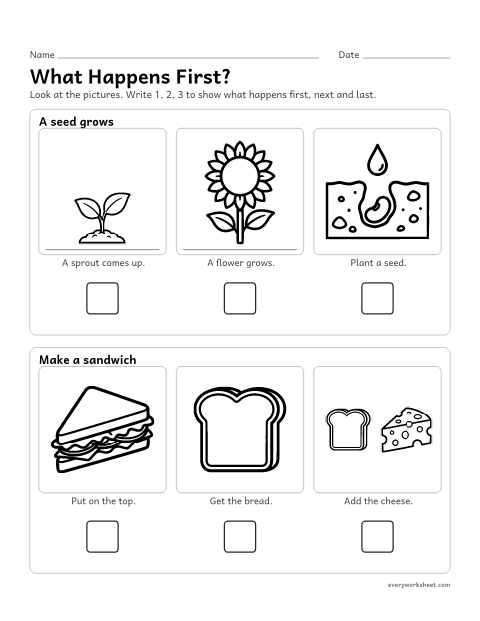
Story Sequencing: 3-Step pictures 1
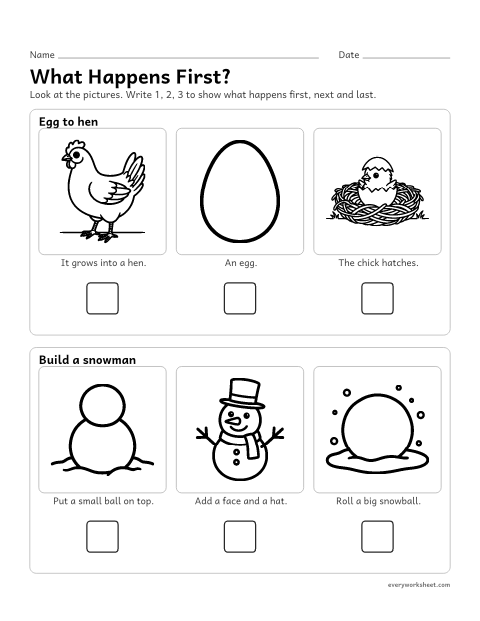
Putting three pictures in story order (first, next, last)
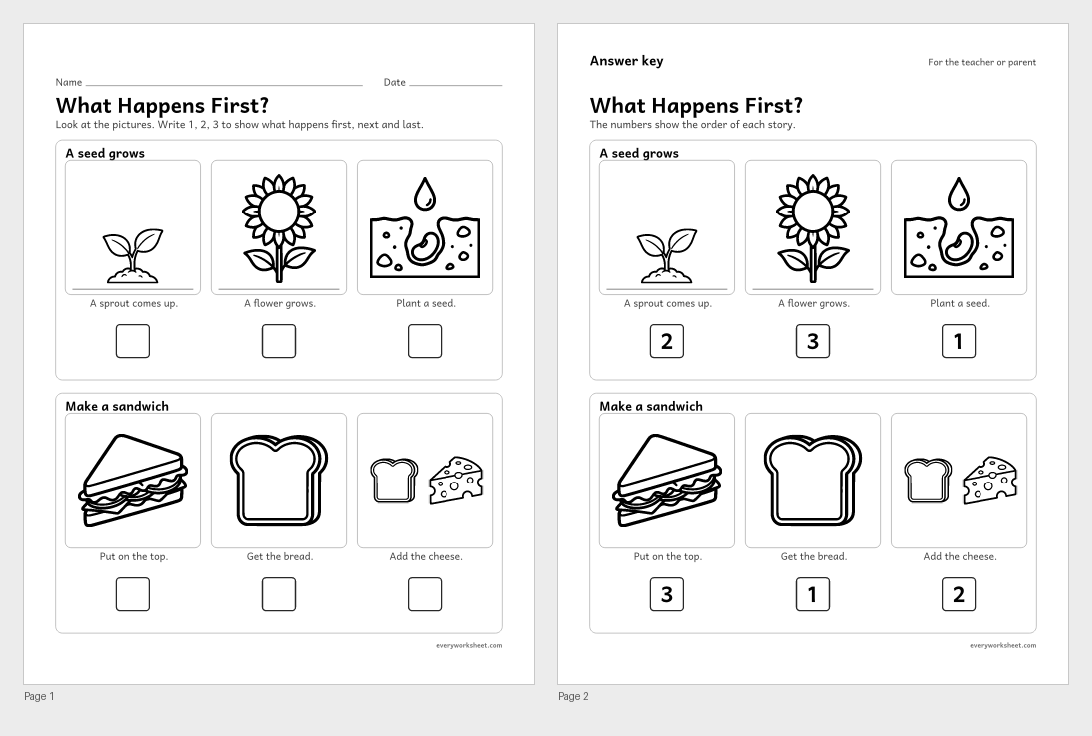
Answer key on page 2
2 pages261 KB
Picture stories to put in order, first, next and last pages, and beginning, middle and end stories to read aloud, with no cutting and an answer key for each.
View all 2 pagesPutting three pictures in story order (first, next, last)
Answer key on page 2
2 pages261 KB
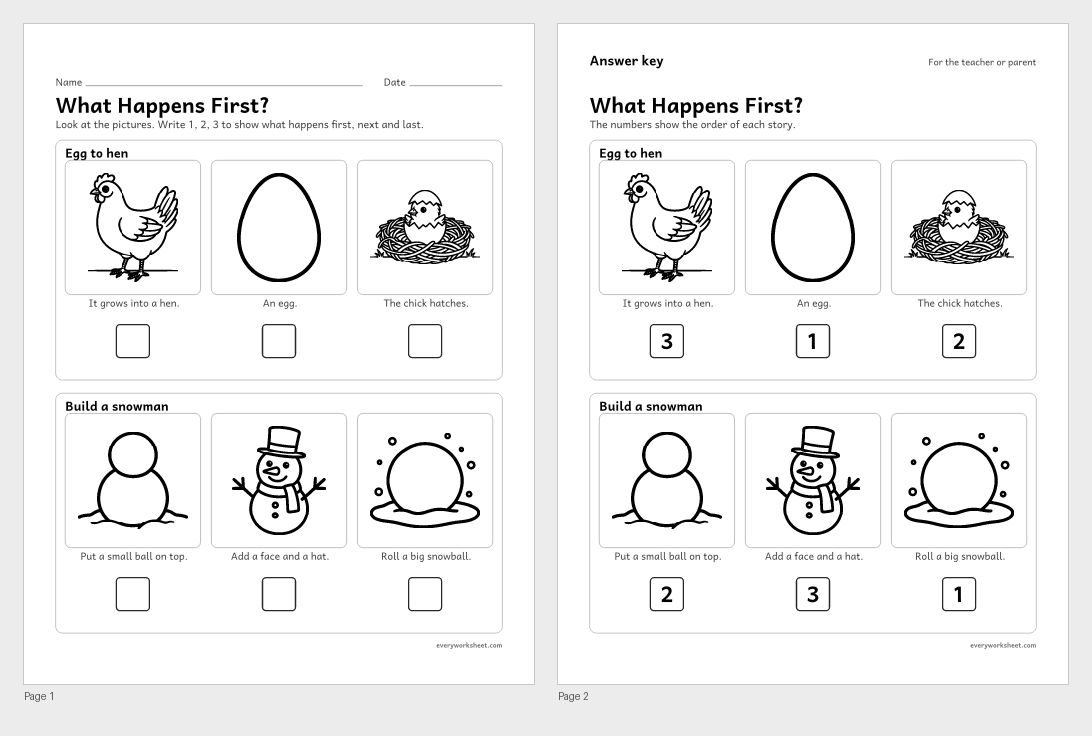 View all 2 pages
Putting three pictures in story order (first, next, last)
Answer key on page 2
2 pages200 KB
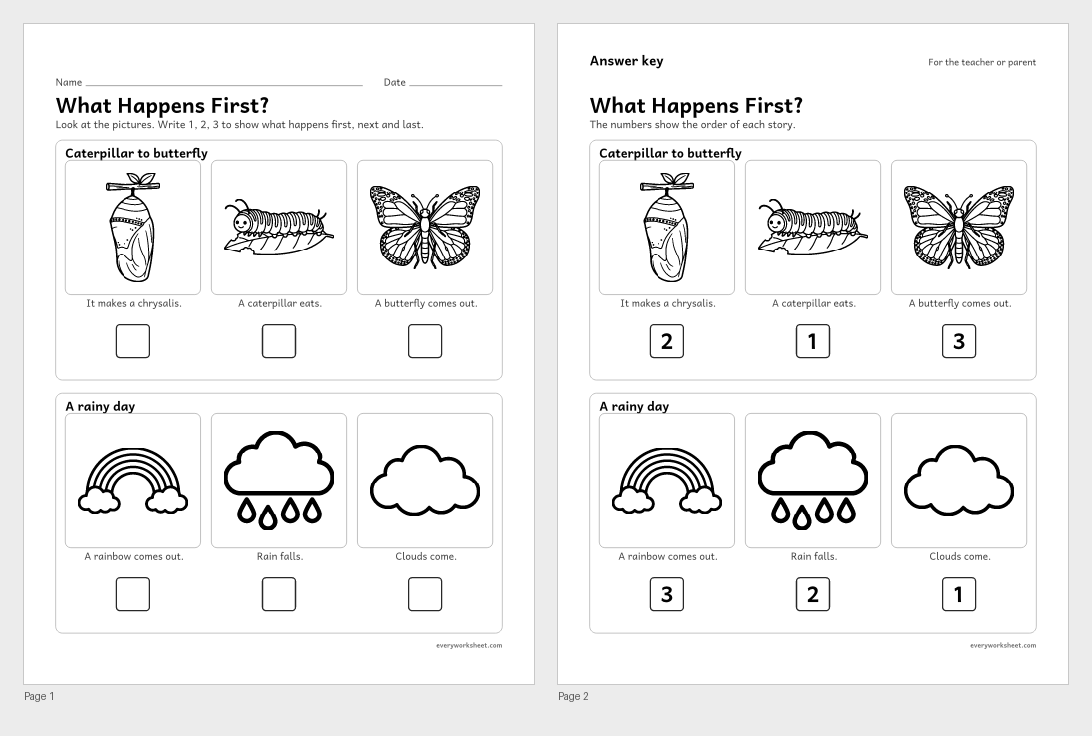 View all 2 pages
Putting three pictures in story order (first, next, last)
Answer key on page 2
2 pages207 KB
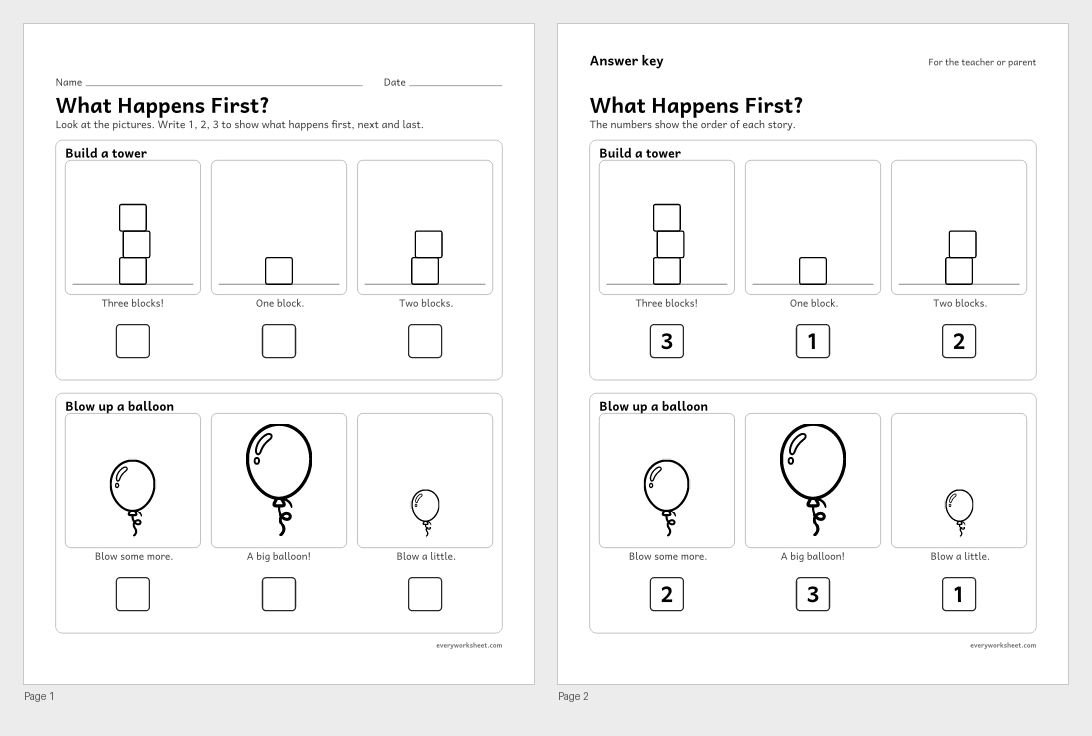 View all 2 pages
Putting three pictures in story order (first, next, last)
Answer key on page 2
2 pages49 KB
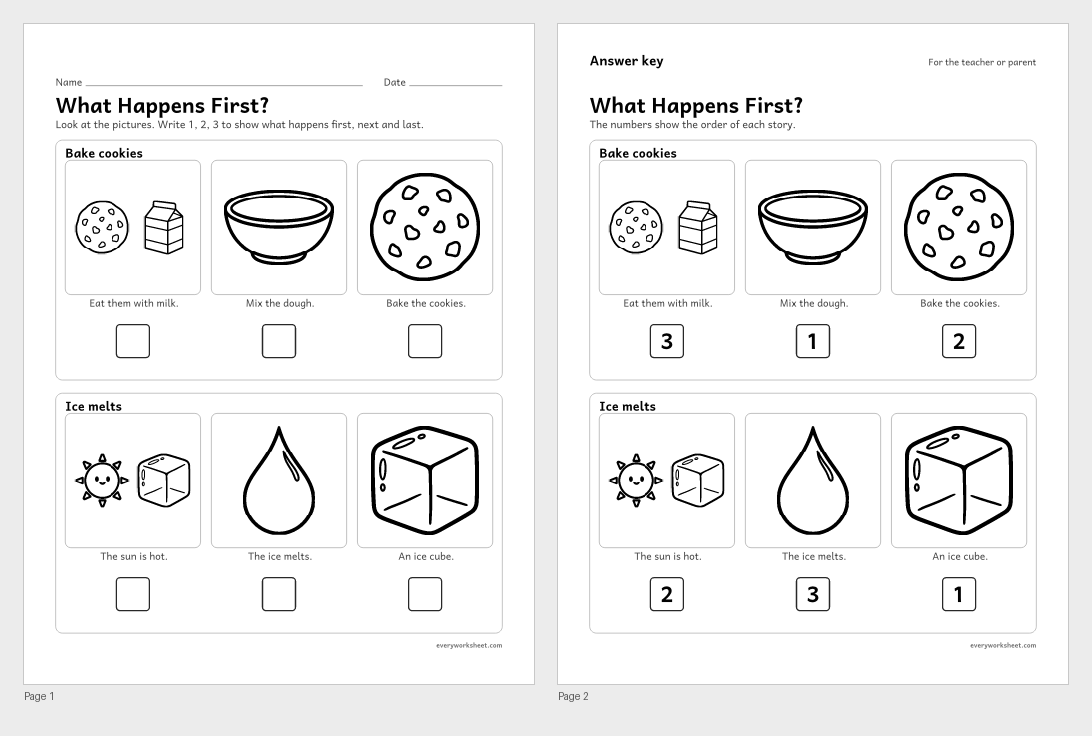 View all 2 pages
Putting three pictures in story order (first, next, last)
Answer key on page 2
2 pages269 KB
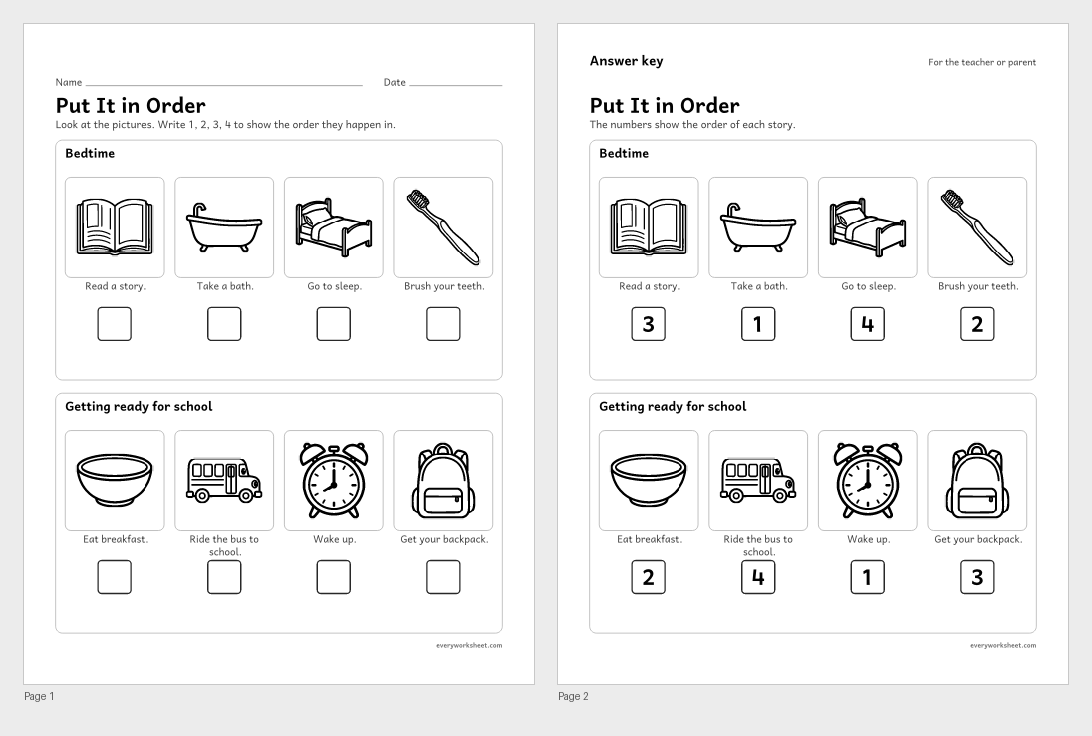 View all 2 pages
Putting four pictures in story order
Answer key on page 2
2 pages295 KB
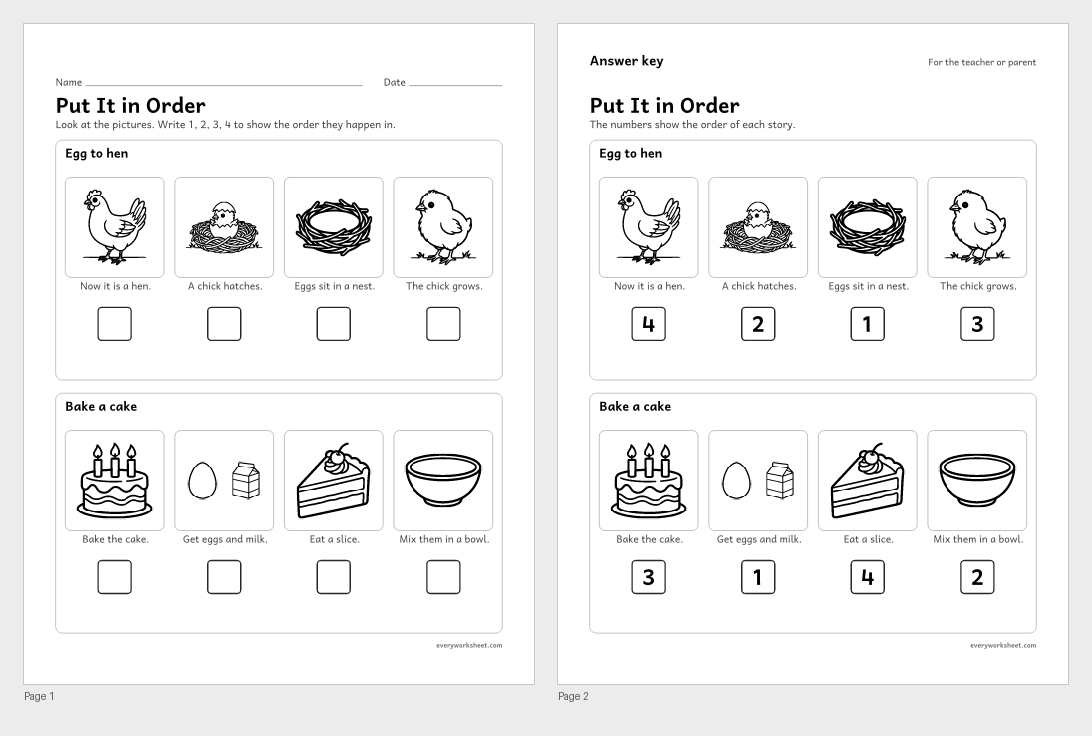 View all 2 pages
Putting four pictures in story order
Answer key on page 2
2 pages345 KB
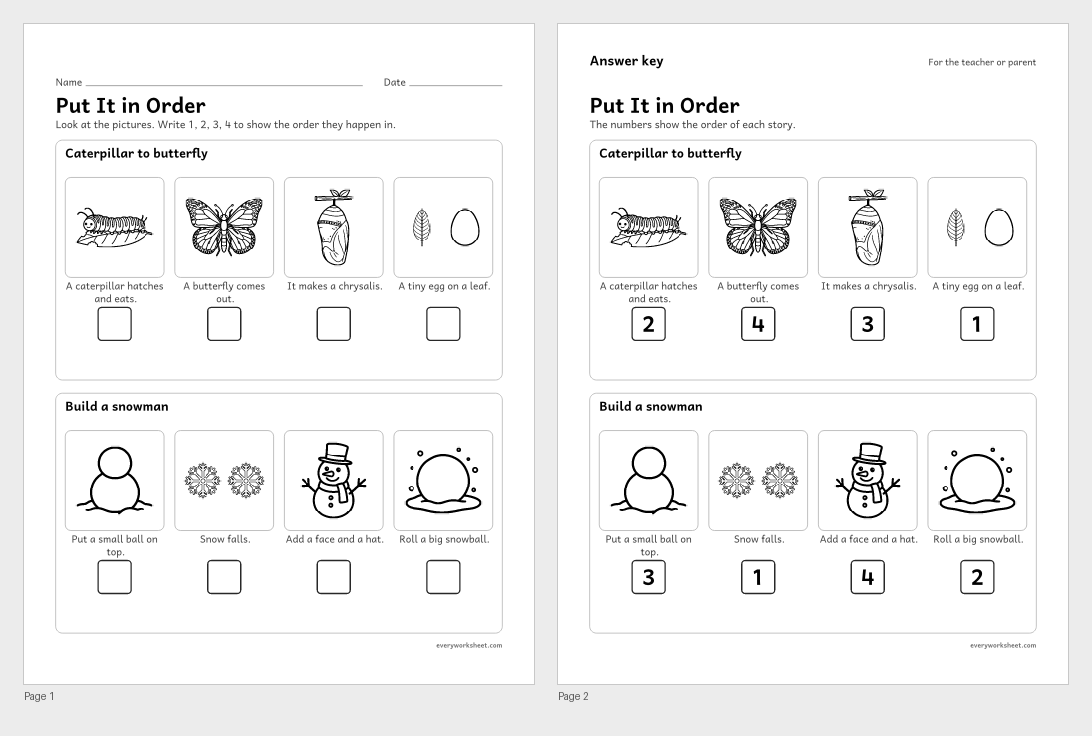 View all 2 pages
Putting four pictures in story order
Answer key on page 2
2 pages278 KB
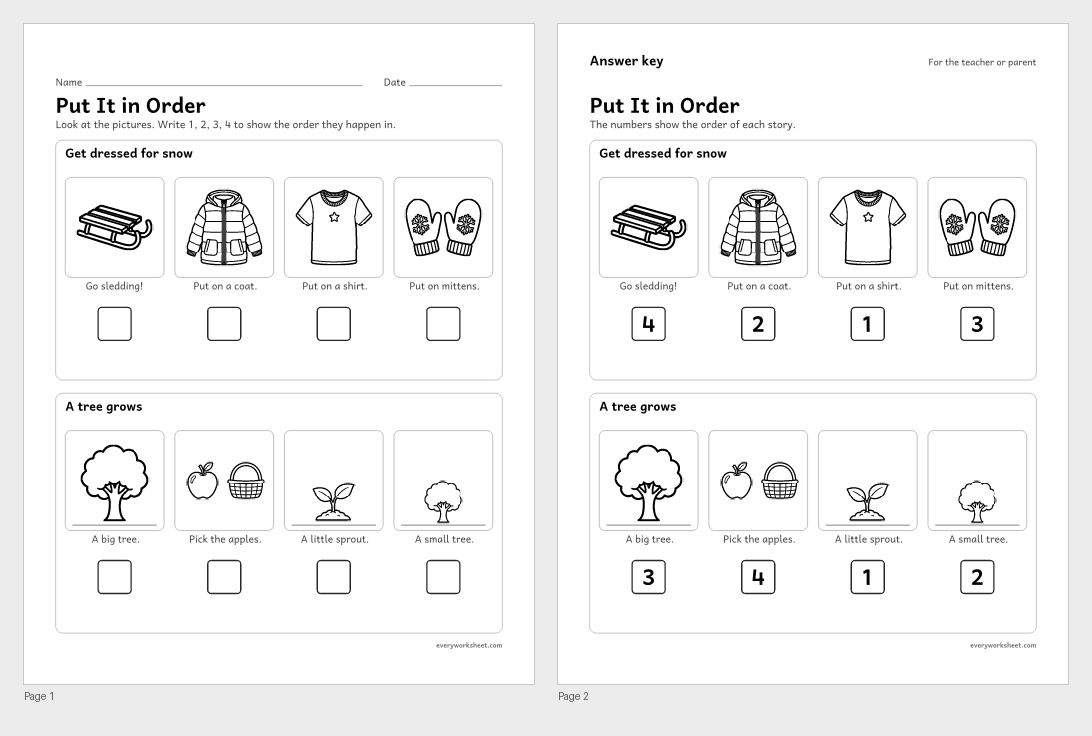 View all 2 pages
Putting four pictures in story order
Answer key on page 2
2 pages277 KB
 View all 2 pages
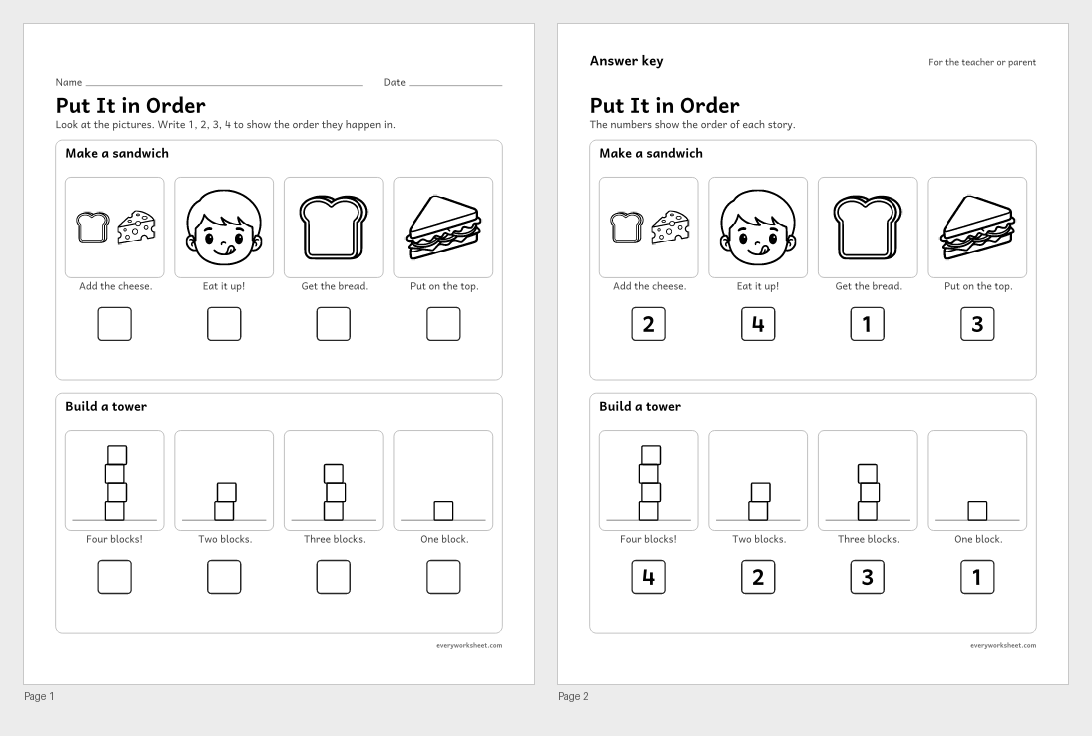
Putting four pictures in story order
Answer key on page 2
2 pages225 KB
 View all 2 pages
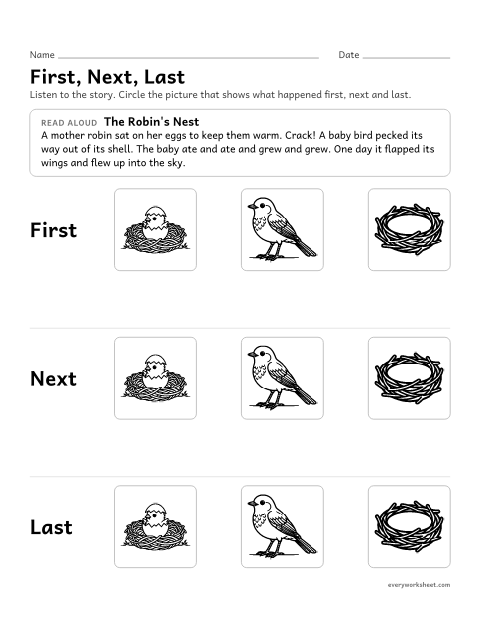
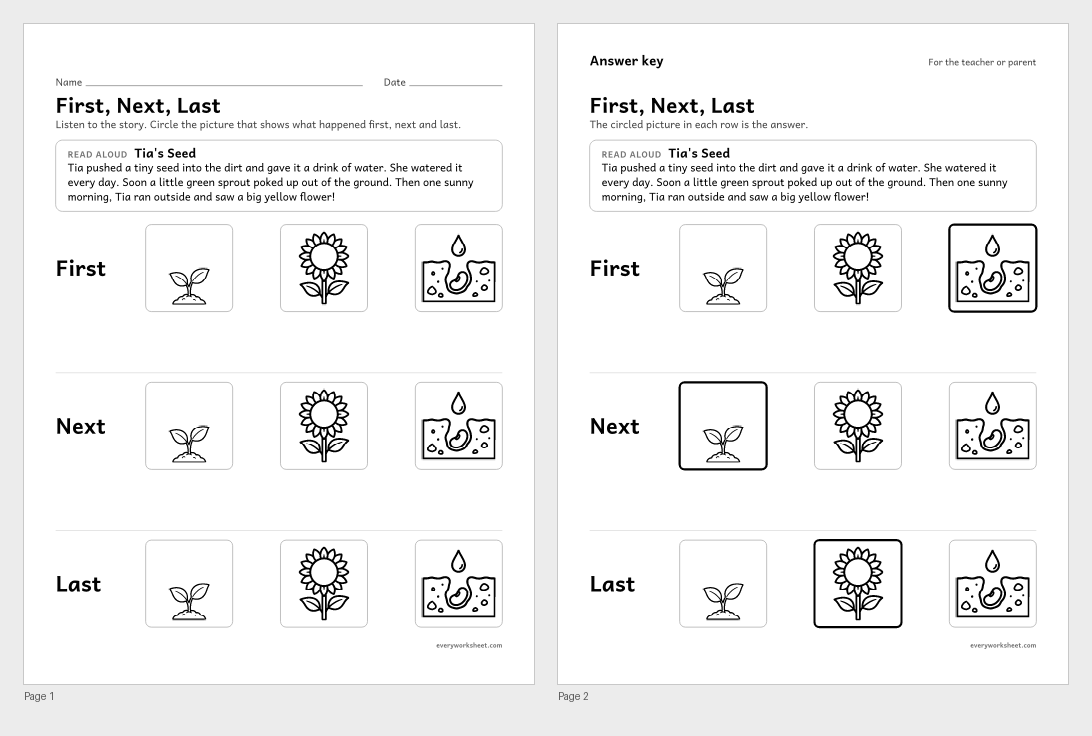
Retelling a read-aloud story in order using first, next and last
Answer key on page 2
2 pages275 KB
 View all 2 pages
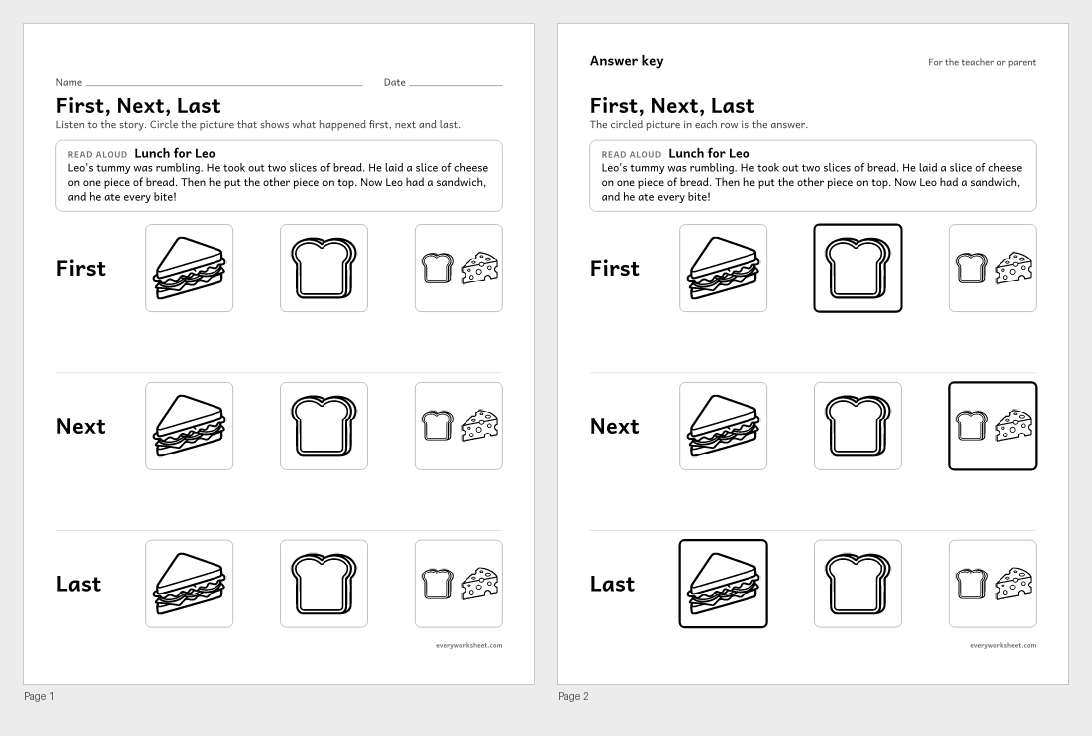
Retelling a read-aloud story in order using first, next and last
Answer key on page 2
2 pages463 KB
 View all 2 pages
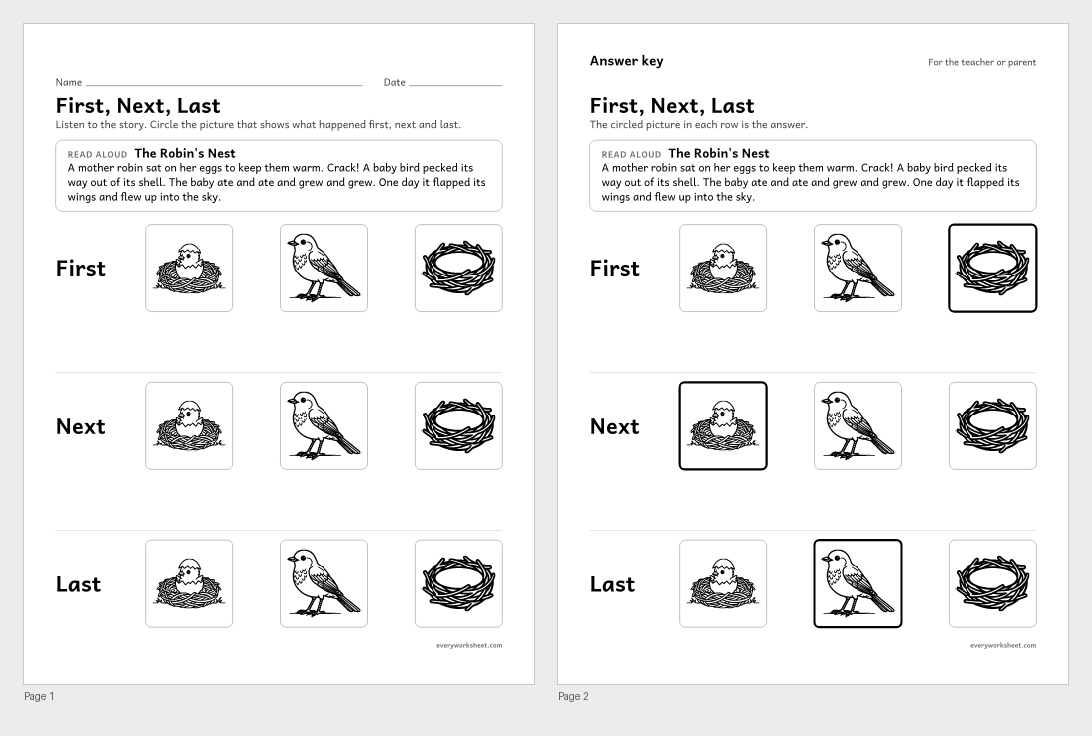
Retelling a read-aloud story in order using first, next and last
Answer key on page 2
2 pages368 KB
 View all 2 pages
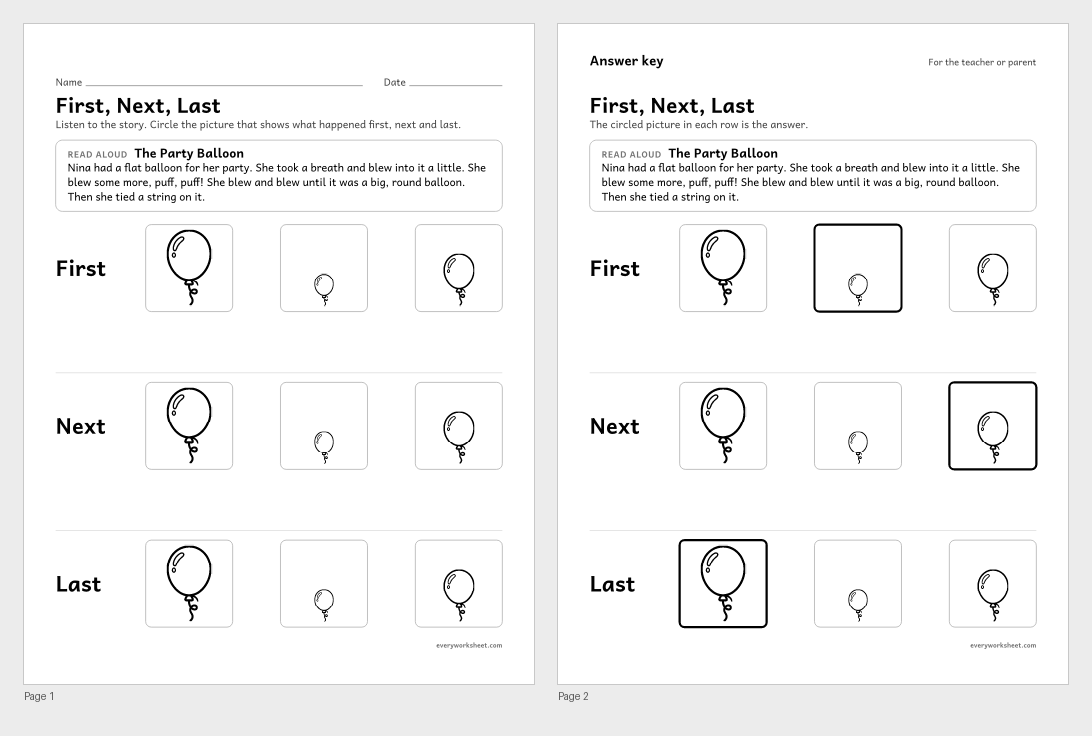
Retelling a read-aloud story in order using first, next and last
Answer key on page 2
2 pages51 KB
 View all 2 pages
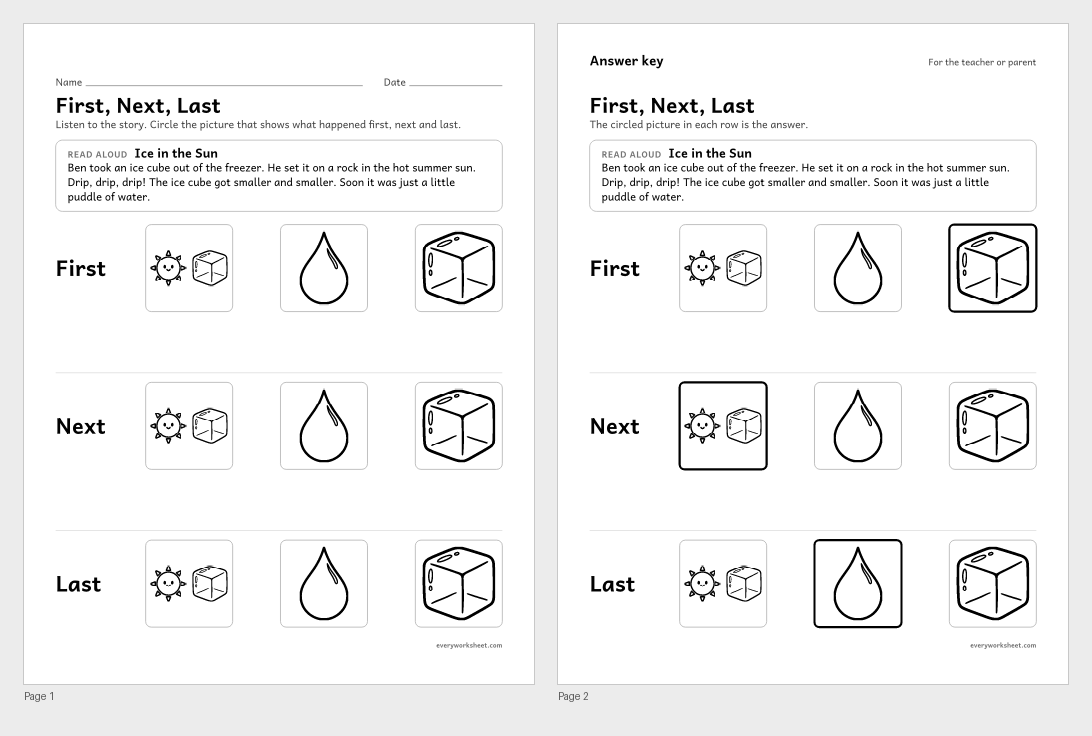
Retelling a read-aloud story in order using first, next and last
Answer key on page 2
2 pages271 KB
 View all 2 pages
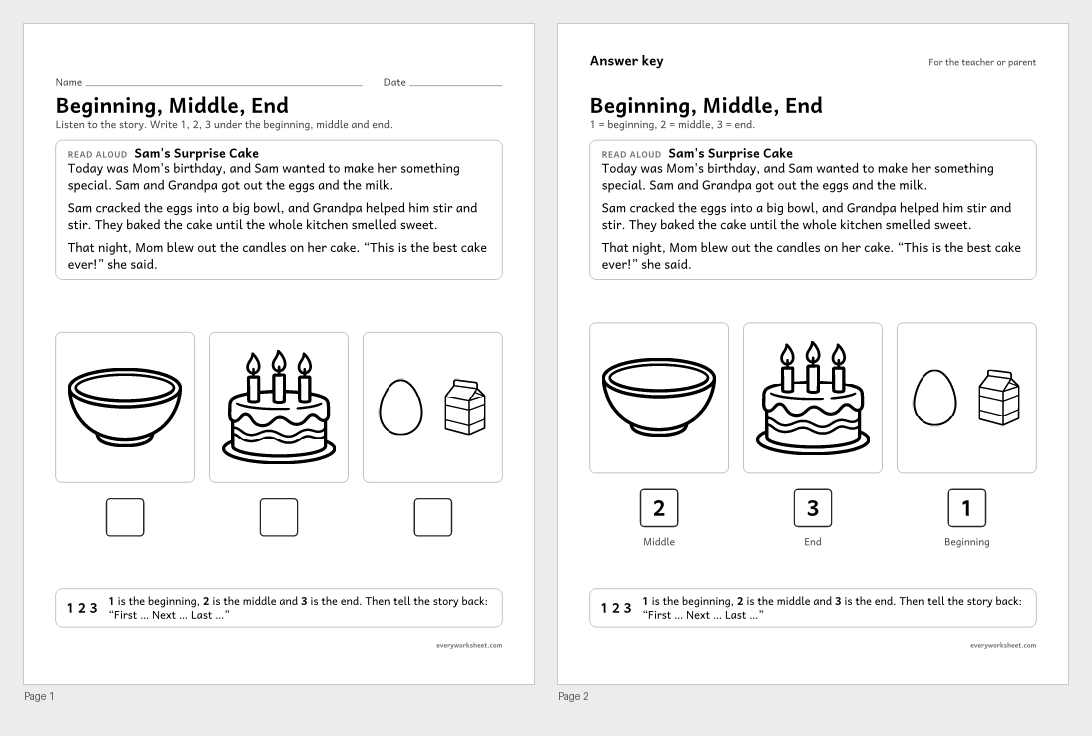
Putting the beginning, middle and end of a read-aloud story in order
Answer key on page 2
2 pages176 KB
 View all 2 pages
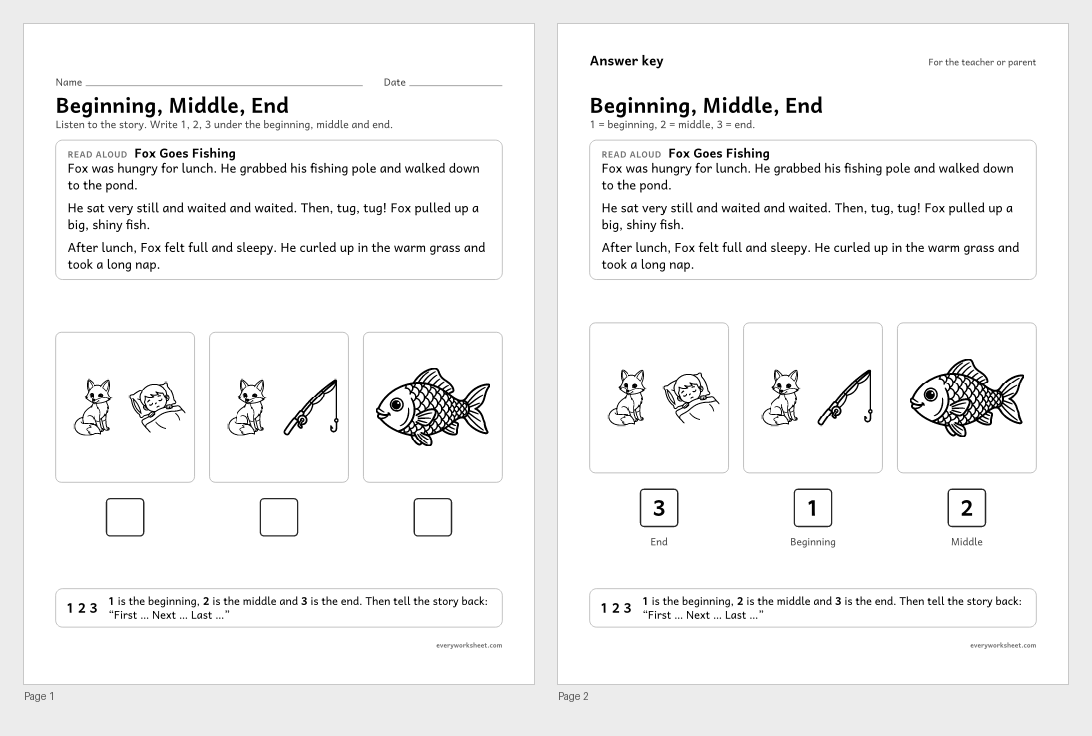
Putting the beginning, middle and end of a read-aloud story in order
Answer key on page 2
2 pages189 KB
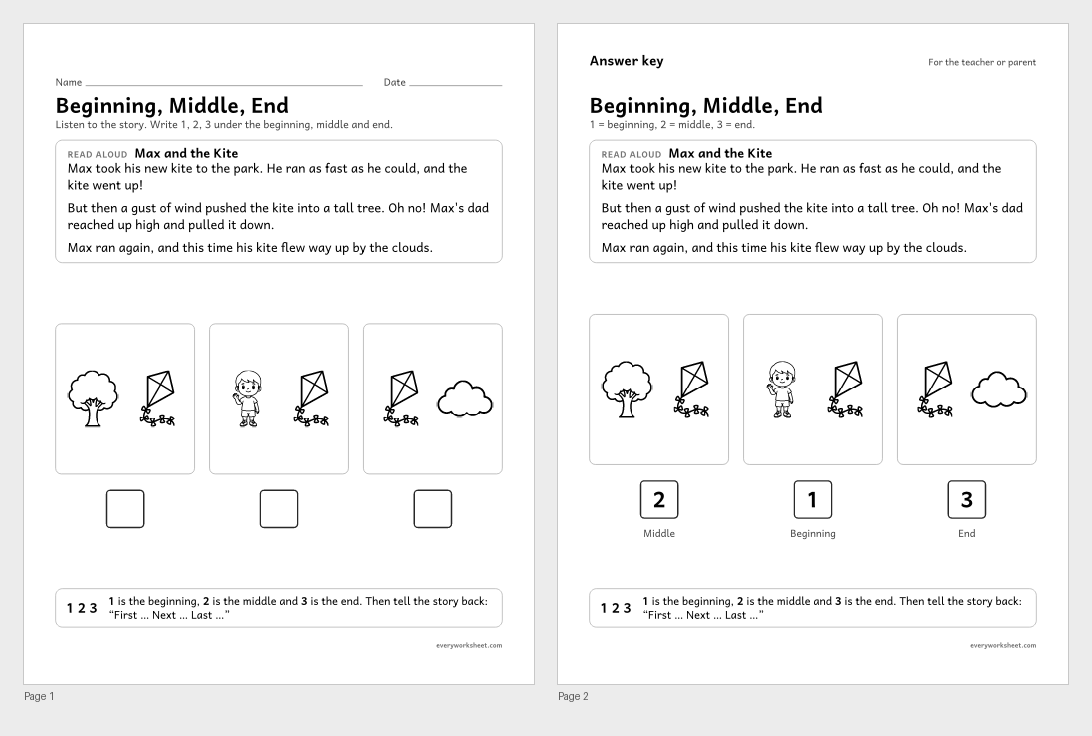 View all 2 pages
Putting the beginning, middle and end of a read-aloud story in order
Answer key on page 2
2 pages218 KB
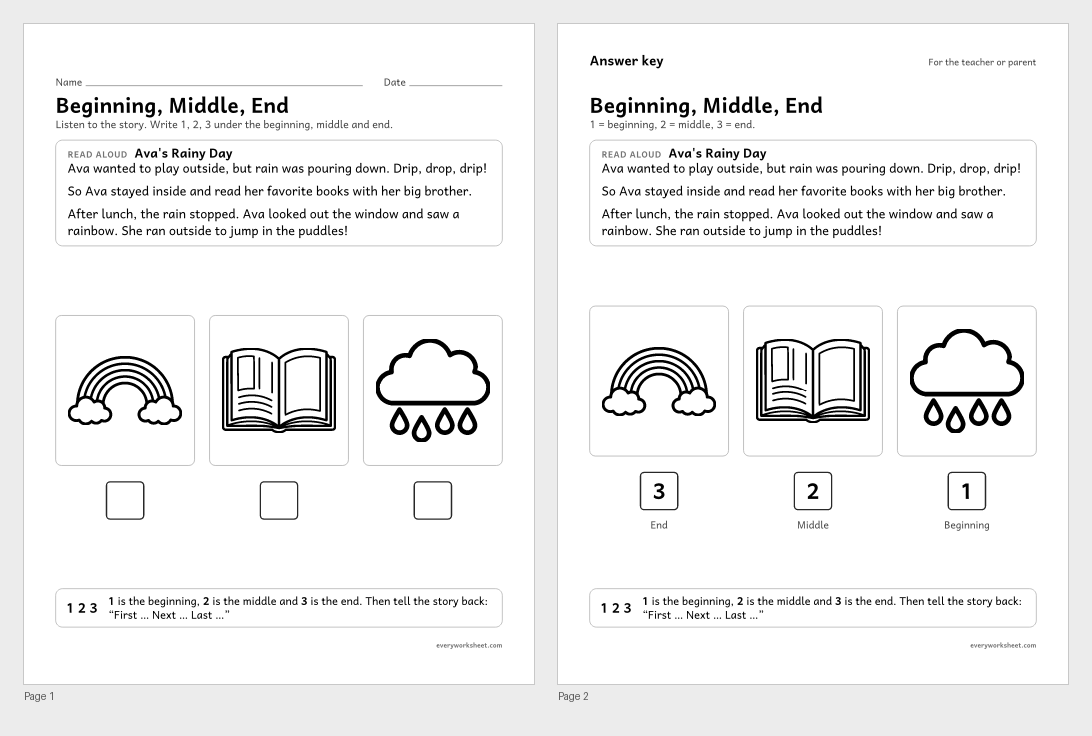 View all 2 pages
Putting the beginning, middle and end of a read-aloud story in order
Answer key on page 2
2 pages119 KB
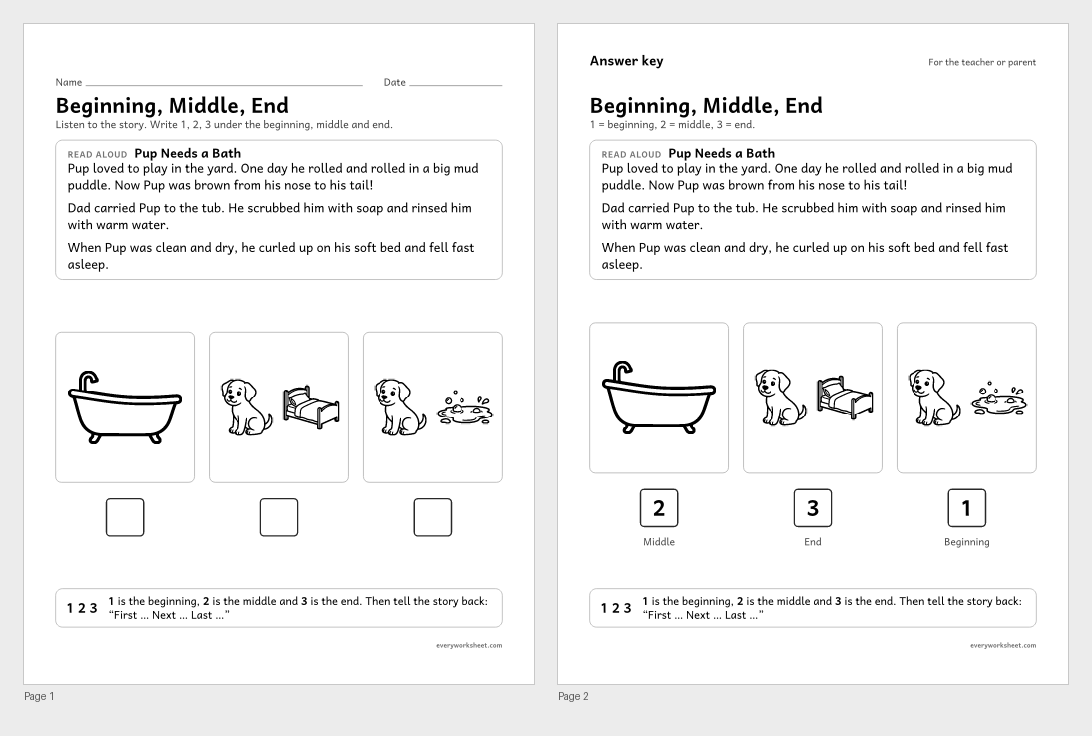 View all 2 pages
Putting the beginning, middle and end of a read-aloud story in order
Answer key on page 2
2 pages184 KB
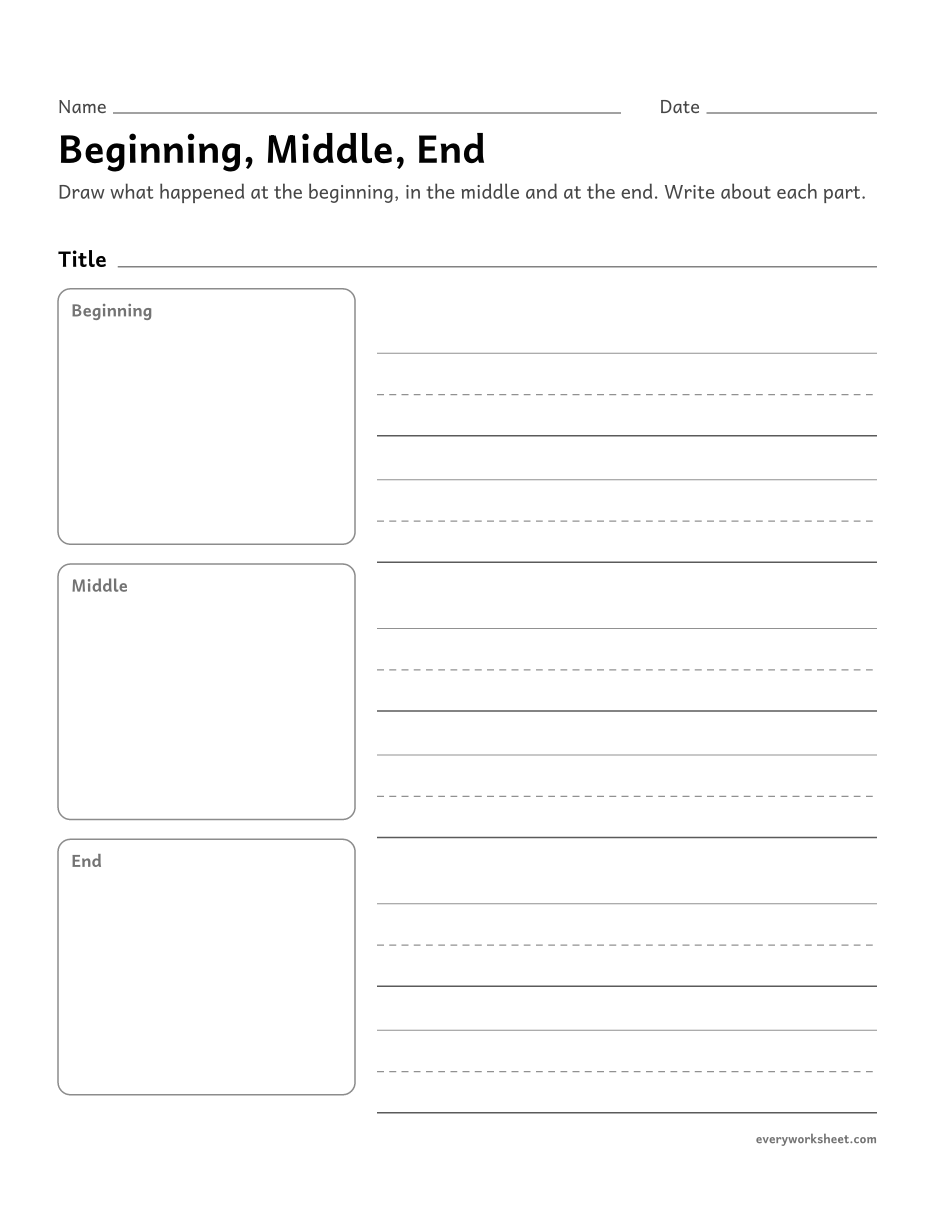 View larger
Retelling the beginning, middle and end of a story
1 page25 KB
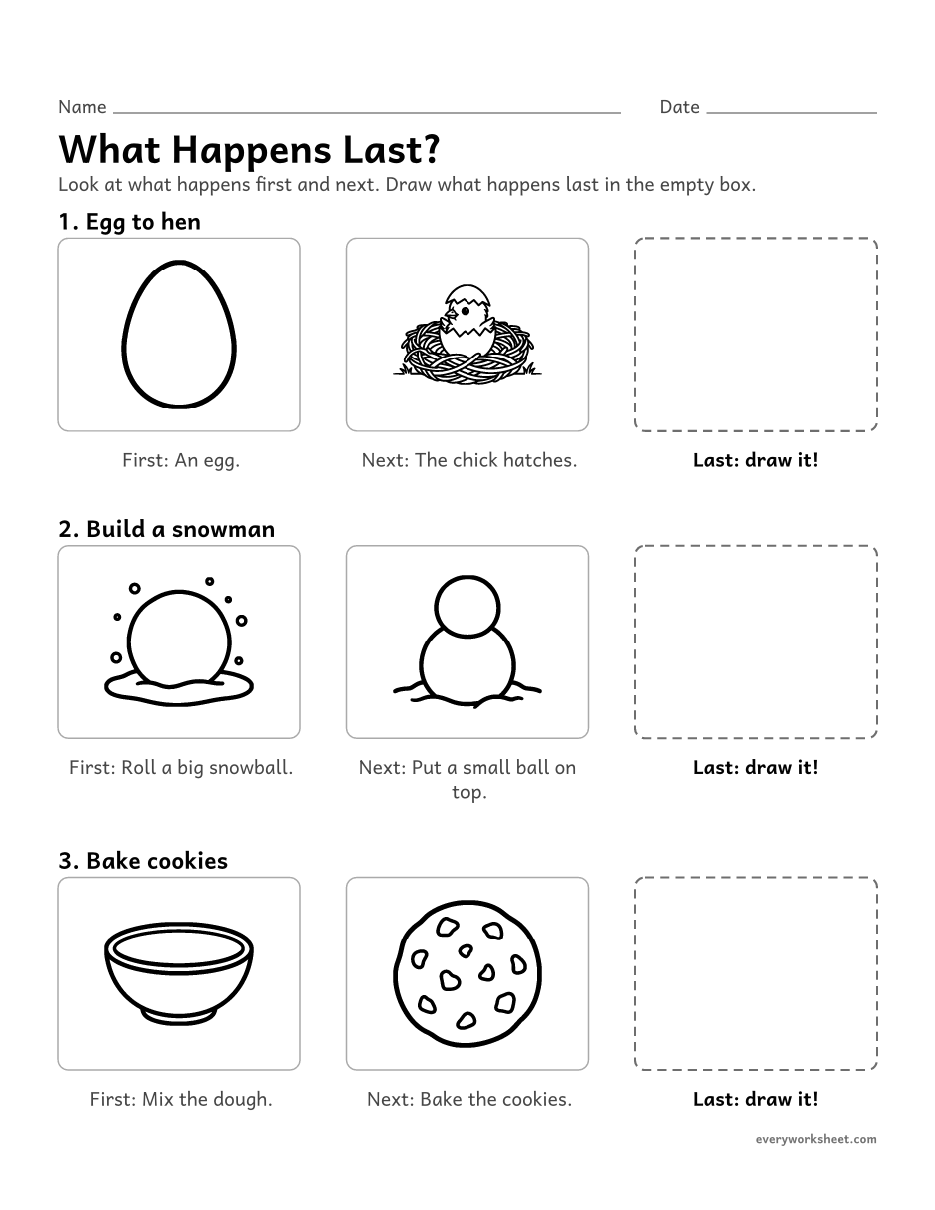 View larger
Finishing a picture sequence by drawing the last step
1 page121 KB
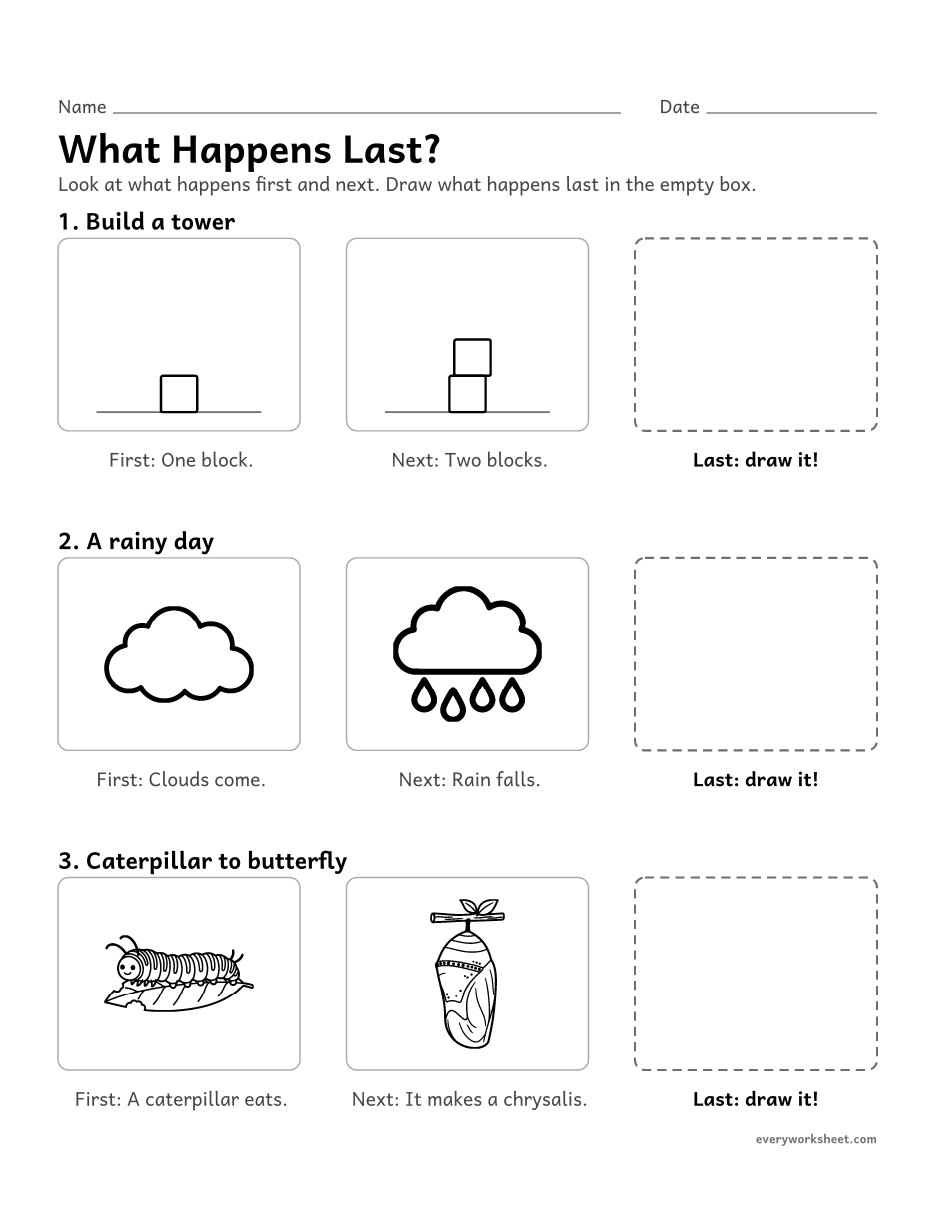 View larger
Finishing a picture sequence by drawing the last step
1 page60 KB
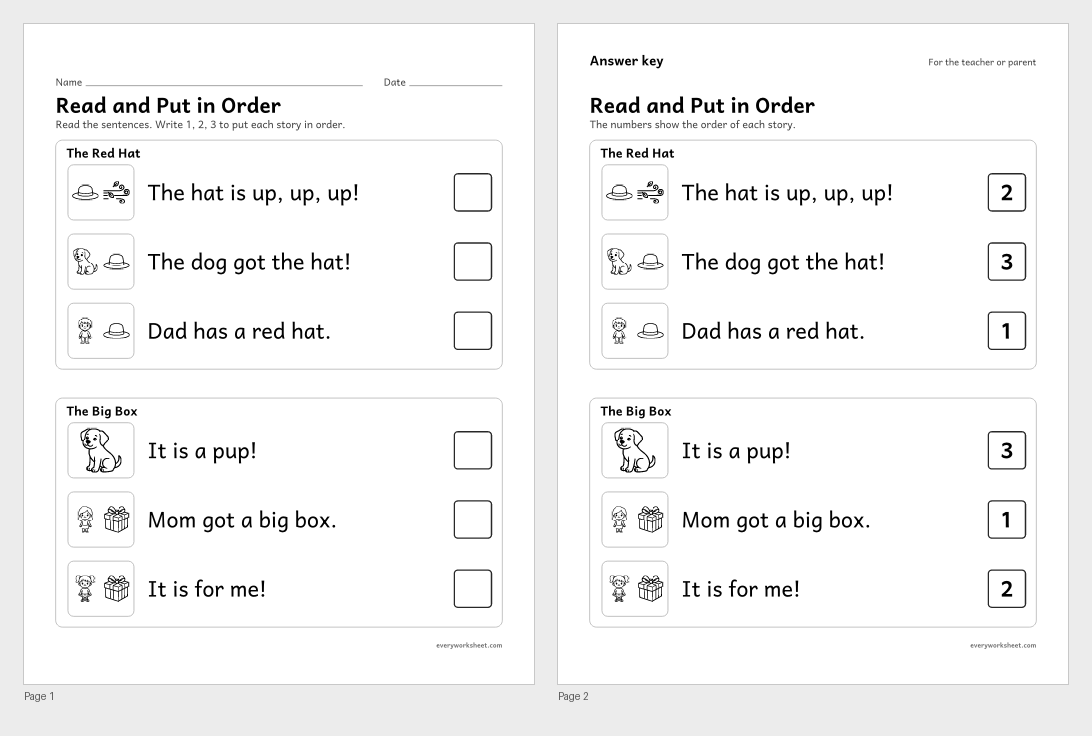 View all 2 pages
Reading simple sentences and putting them in story order
Answer key on page 2
2 pages395 KB
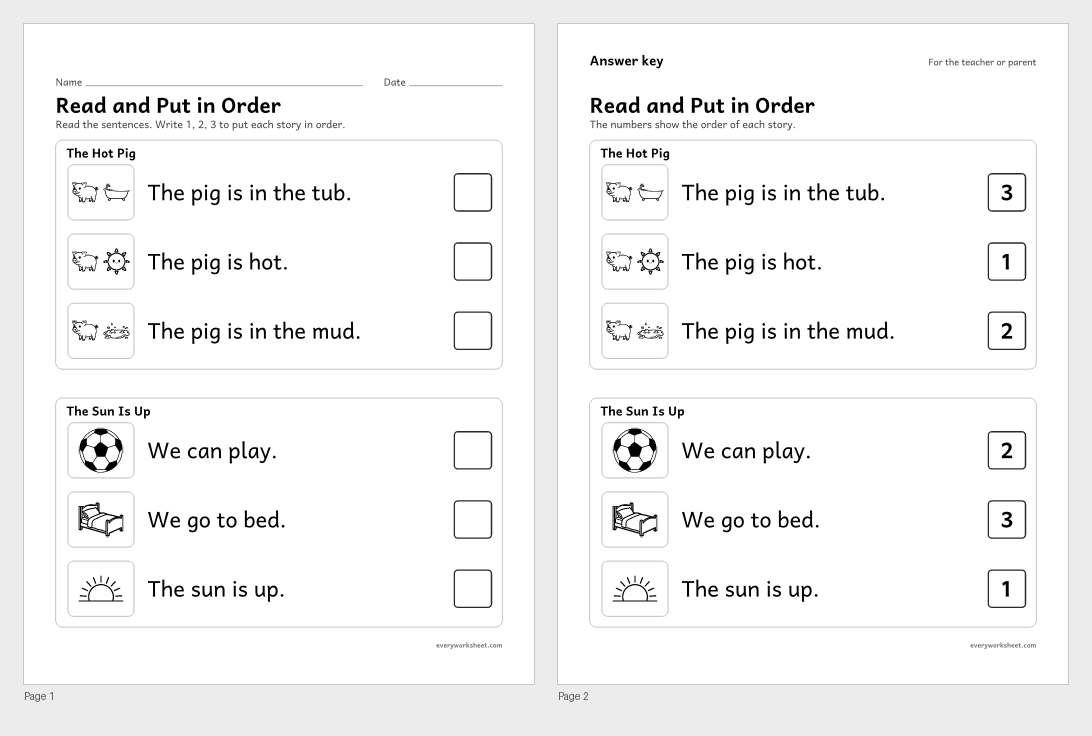 View all 2 pages
Reading simple sentences and putting them in story order
Answer key on page 2
2 pages268 KB
Print at 100% (actual size) for the cleanest tracing lines.
Sequencing is knowing what happened first, what happened next and how it ended. It is one of the first big steps in understanding a story, and it is what children use every time they retell one. These story sequencing worksheets build that skill one step at a time, starting with three pictures and moving up to four.
The picture sequences use everyday events children already know: a seed growing into a flower, an egg hatching into a chick, making a sandwich, building a snowman and getting ready for bed. Children look at the pictures, think about what comes first and write 1, 2, 3 (or 4) in the boxes. There is nothing to cut or glue, so every page works for homework and quick centers.
The first, next, last and beginning, middle and end pages each start with a short, original story for an adult to read aloud. Children listen, then show the order with the pictures. Two pages of short sentences let early readers read the story themselves, and a blank beginning, middle and end page works with any book. Pages with one right answer have an answer key on page 2.
CCSS.ELA-LITERACY.RL.K.2With prompting and support, retell familiar stories, including key details.CCSS.ELA-LITERACY.RL.K.3With prompting and support, identify characters, settings, and major events in a story.CCSS.ELA-LITERACY.RL.K.7With prompting and support, describe the relationship between illustrations and the story in which they appear (e.g., what moment in a story an illustration depicts).CCSS.ELA-LITERACY.RL.K.10Actively engage in group reading activities with purpose and understanding.CCSS.ELA-LITERACY.RF.K.4Read emergent-reader texts with purpose and understanding.CCSS.ELA-LITERACY.SL.K.2Confirm understanding of a text read aloud or information presented orally or through other media by asking and answering questions about key details and requesting clarification if something is not understood.Story sequencing means putting the events of a story in the order they happened: first, next and last, or beginning, middle and end. It helps children understand and retell stories.
Start with 3 steps. Most kindergarteners can handle 4 steps by the middle of the year, especially when the events are familiar, like getting ready for school.
No. Children write numbers in boxes, circle pictures or draw, so every page works without scissors or glue.
Yes. Every read-aloud story on these pages was written for this site, so you can use them freely in class or at home.
Yes. Every page with one right answer has an answer key on page 2 of the PDF. The drawing pages and the blank beginning, middle and end page do not need one.