 View larger
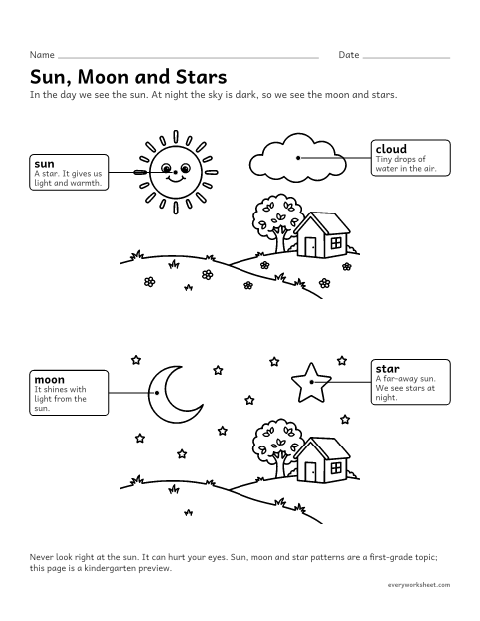
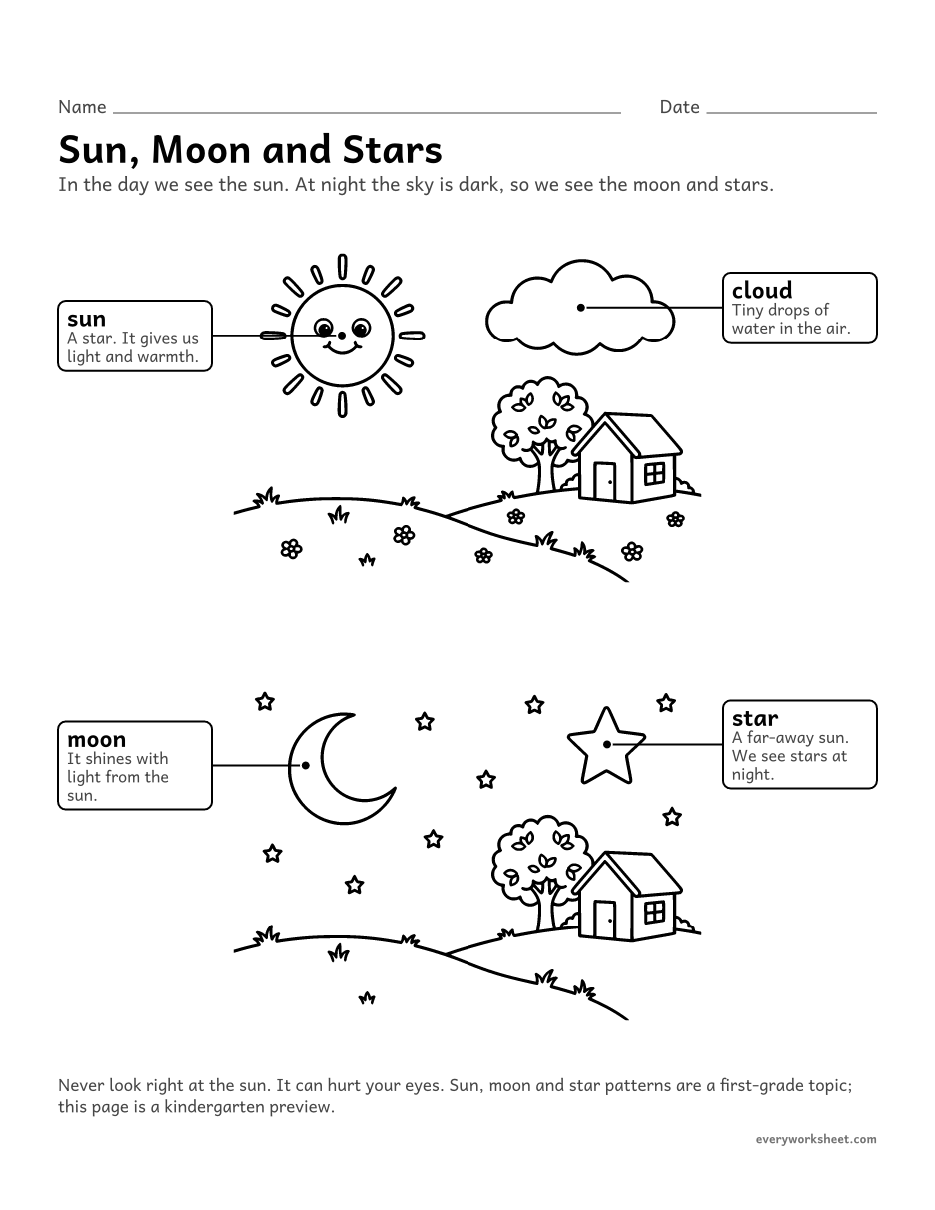
Sun, moon and stars Chart: day and night sky
Naming what we see in the day sky and the night sky
1 page64 KB
A labeled day sky and night sky poster with label it and cut and paste versions, day and night sorts, sky riddles and a first look at moon shapes.
View largerNaming what we see in the day sky and the night sky
1 page64 KB
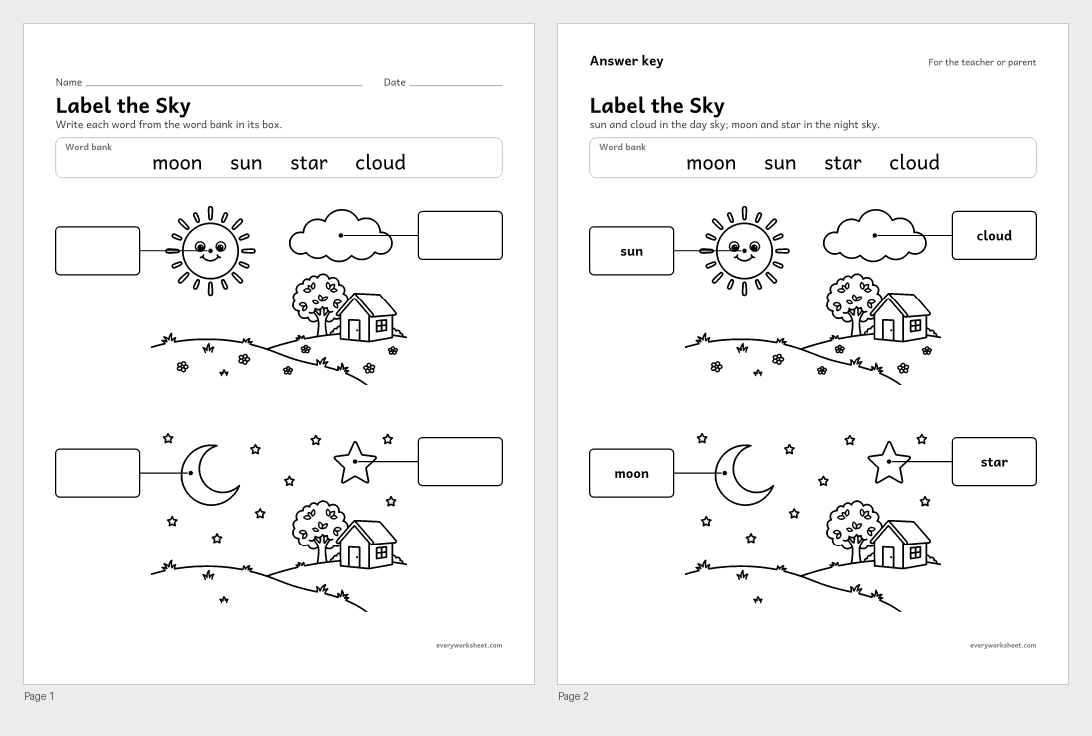 View all 2 pages
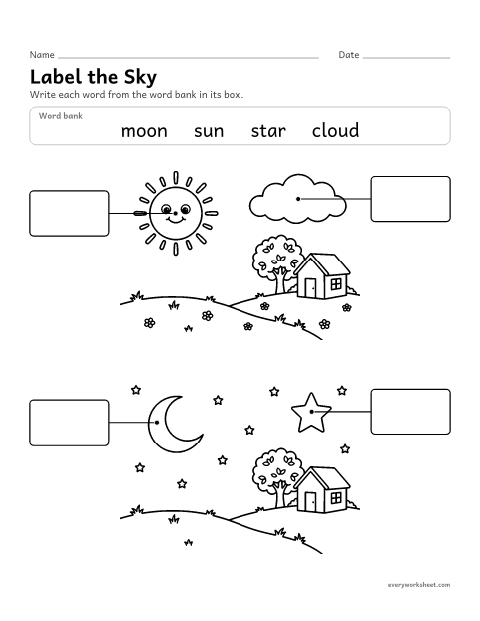
Labeling the sun, a cloud, the moon and a star
Answer key on page 2
2 pages102 KB
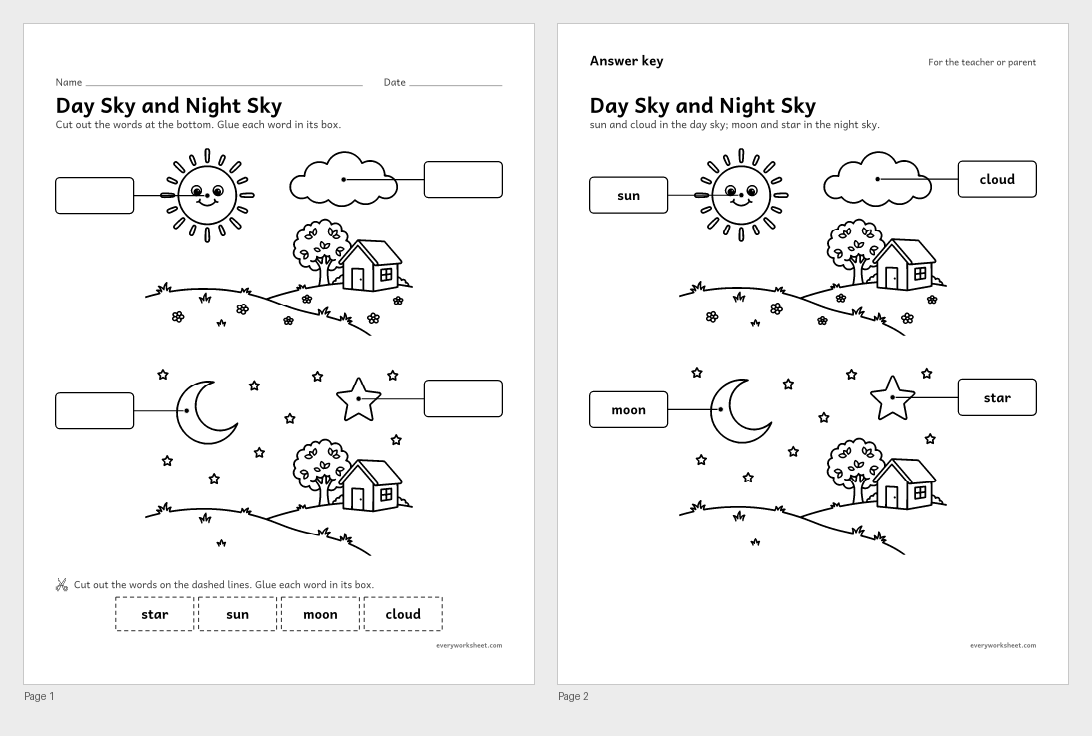 View all 2 pages
Labeling the day sky and the night sky by cutting and gluing words
Answer key on page 2
2 pages129 KB
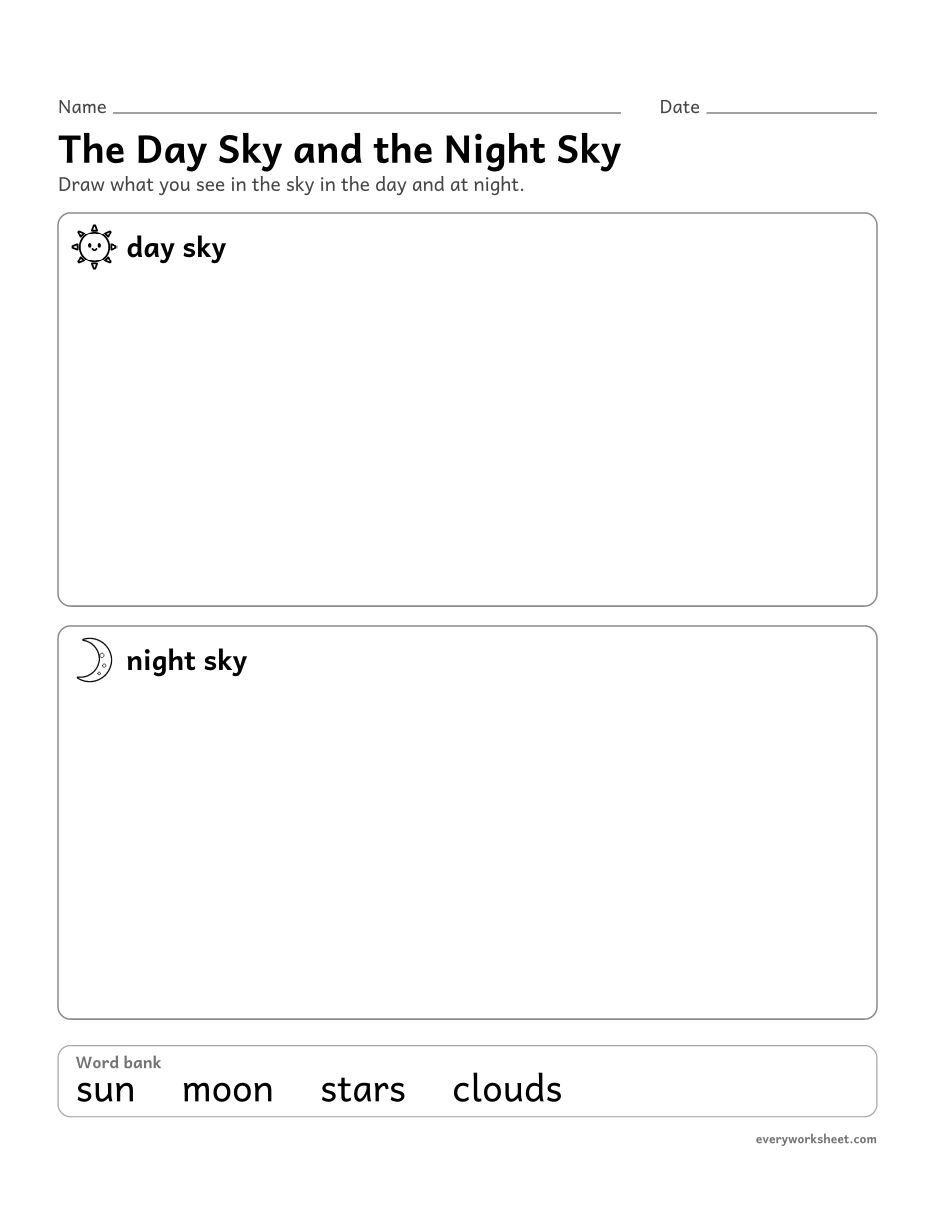 View larger
Drawing and comparing the day sky and the night sky
1 page32 KB
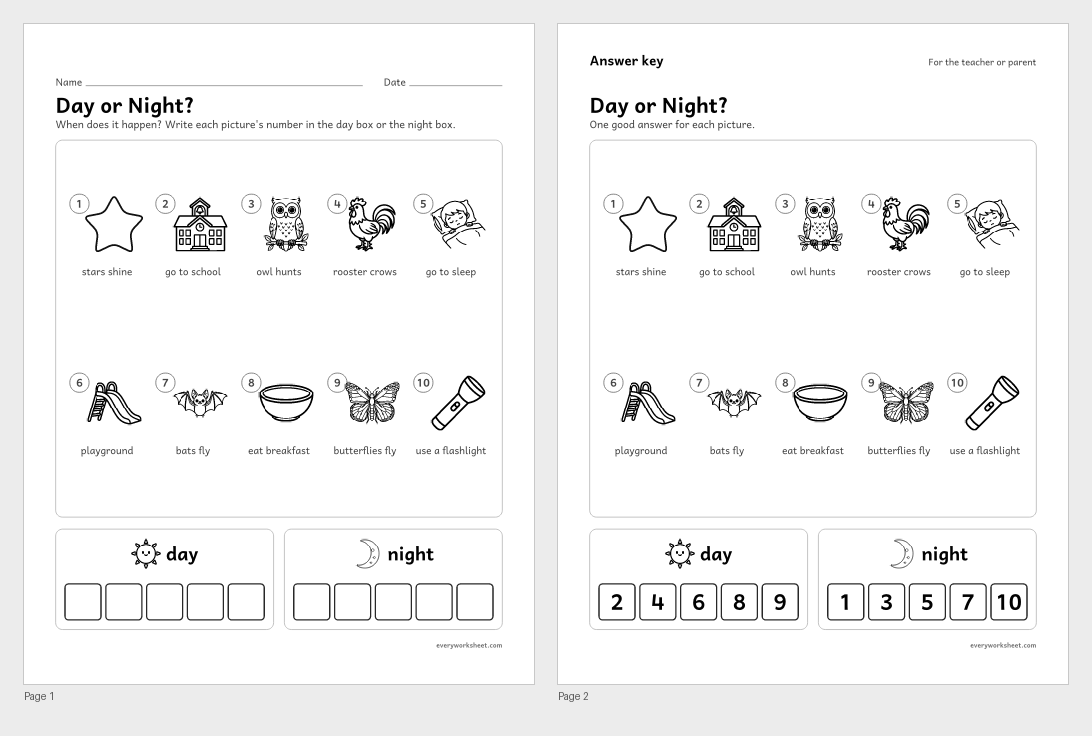 View all 2 pages
Sorting things and activities into day and night
Answer key on page 2
2 pages432 KB
 View all 2 pages
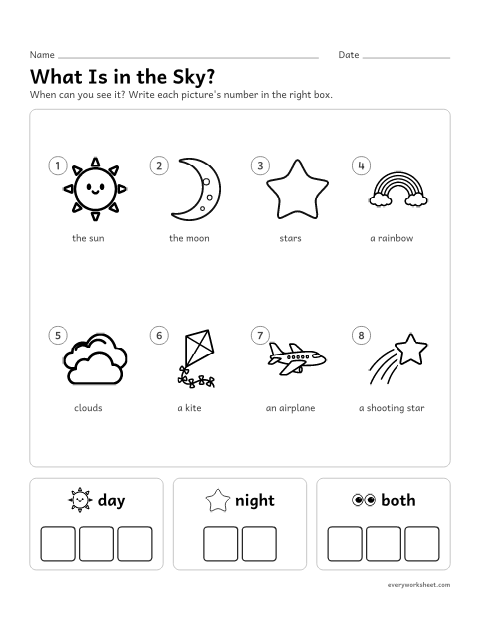
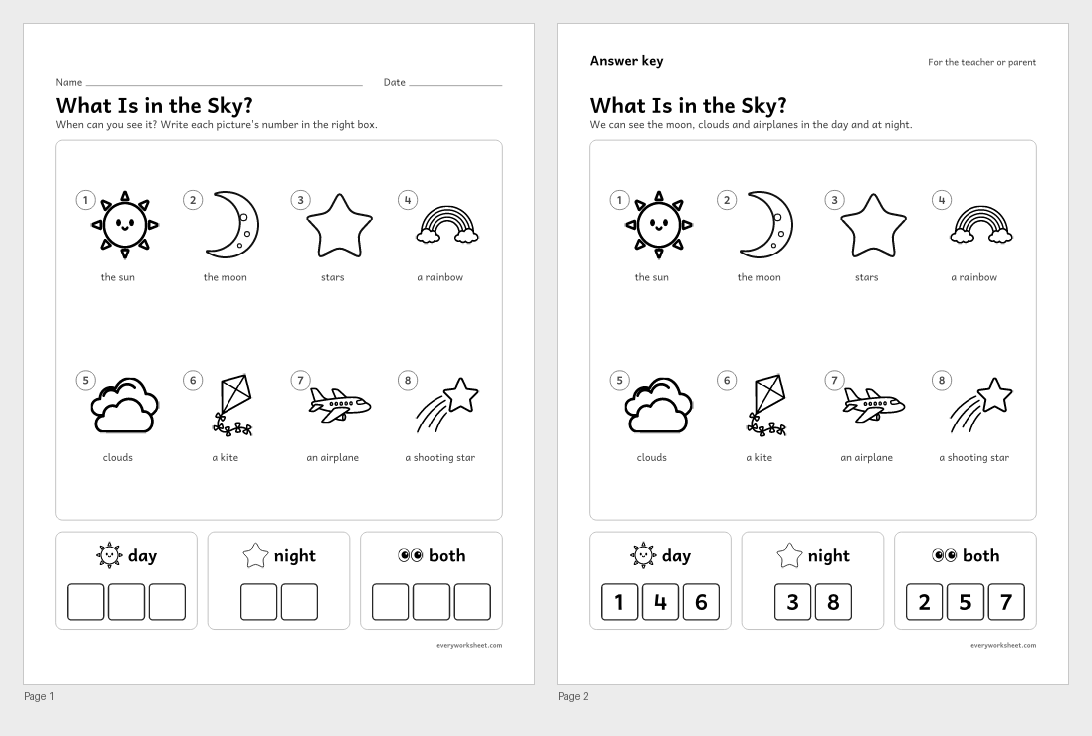
Sorting things in the sky by when we can see them
Answer key on page 2
2 pages228 KB
 View all 2 pages
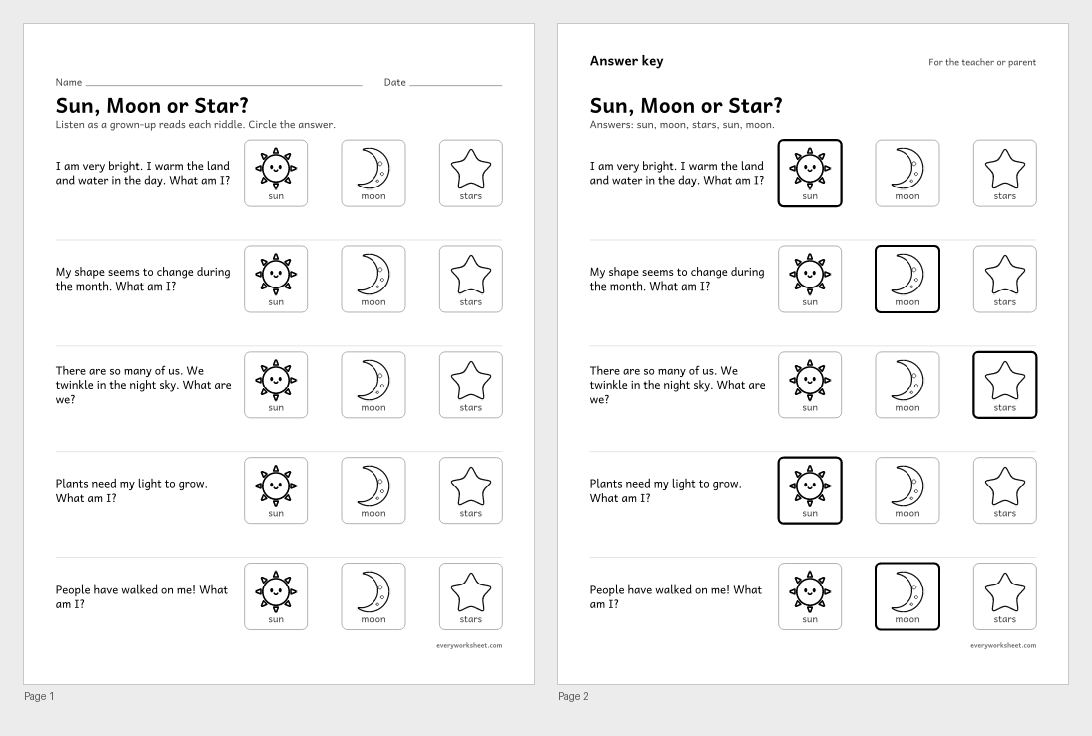
Using clues to tell the sun, moon and stars apart
Answer key on page 2
2 pages61 KB
 View larger
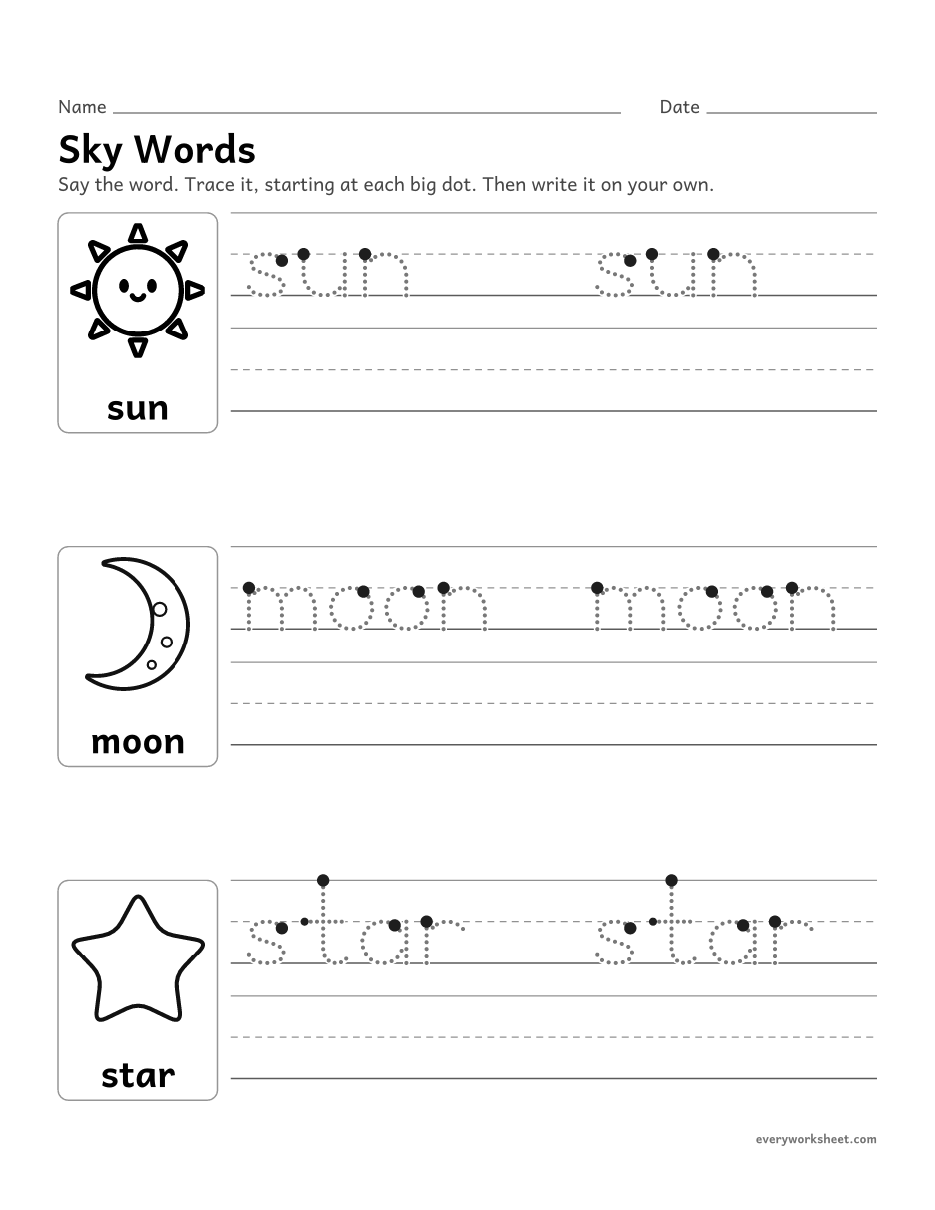
Tracing and writing sun, moon and star
1 page35 KB
 View larger
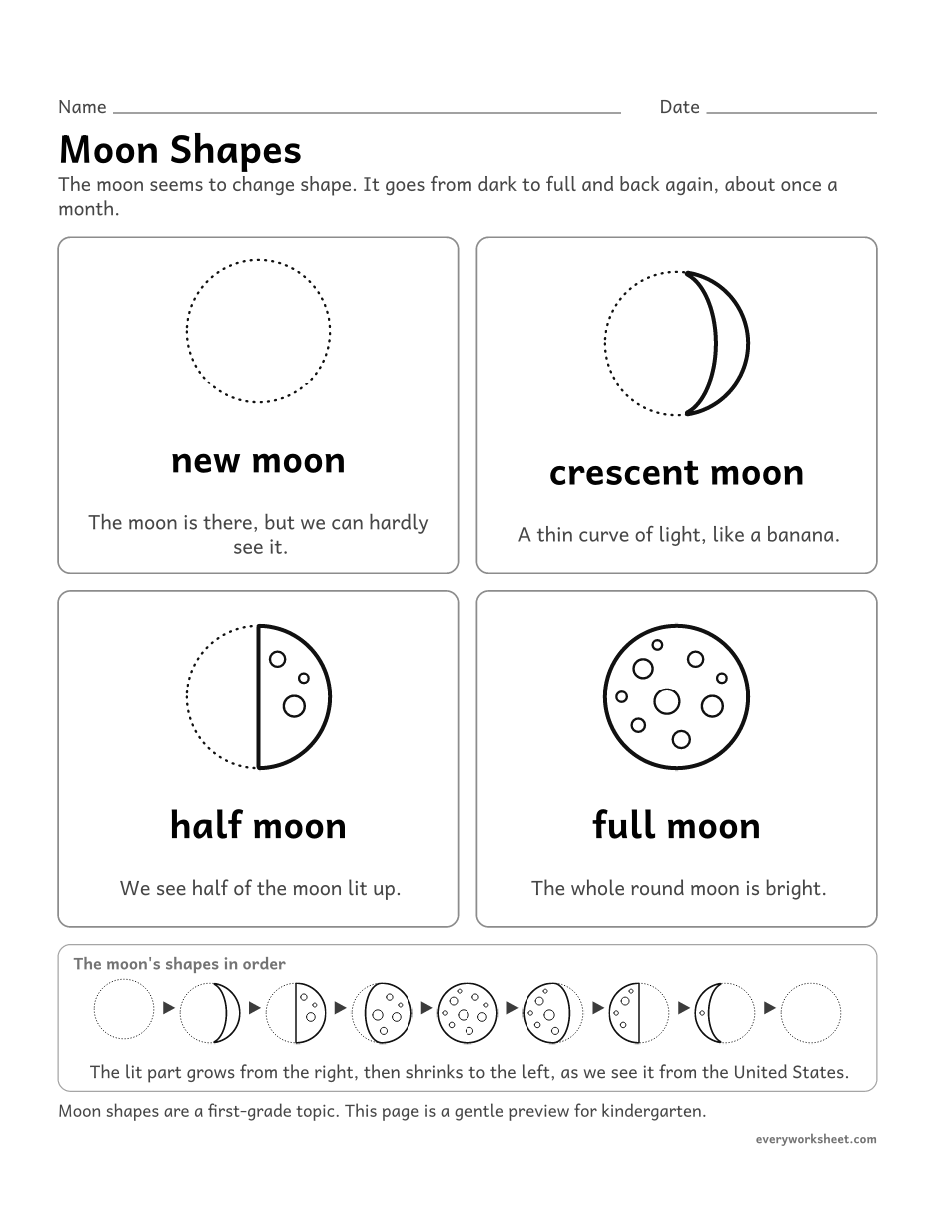
Naming four moon shapes and seeing that they repeat (a first-grade preview)
1 page53 KB
 View all 2 pages
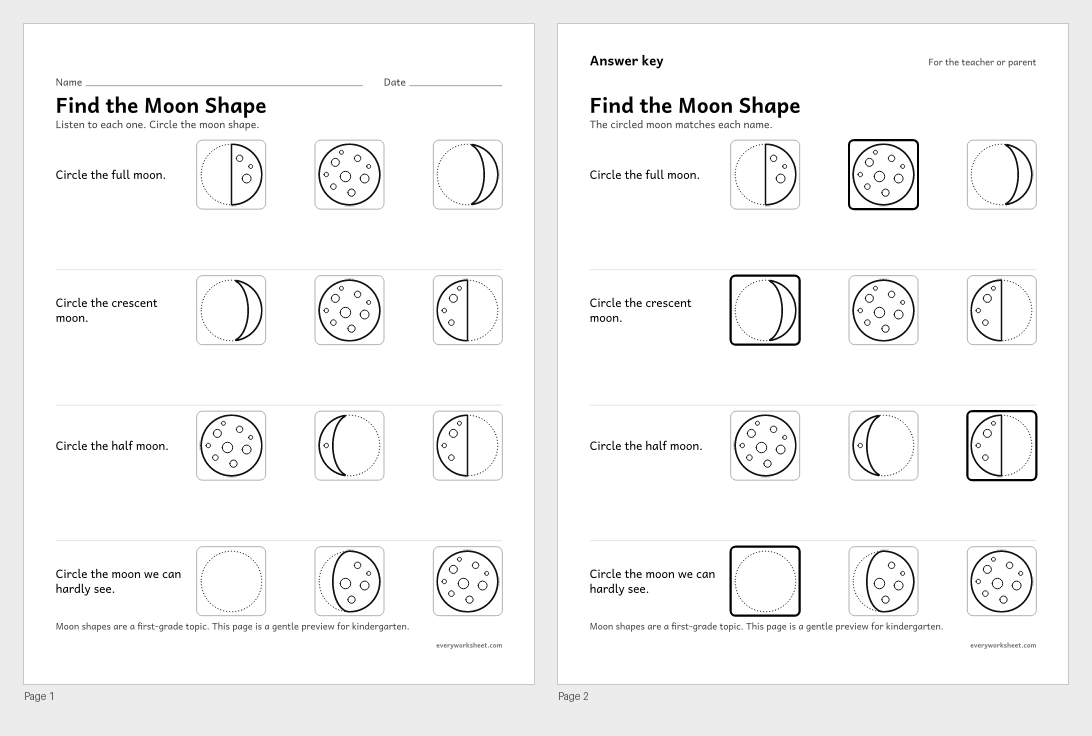
Recognizing full, half and crescent moon shapes (a first-grade preview)
Answer key on page 2
2 pages74 KB
Print at 100% (actual size) for the cleanest tracing lines.
Children see the sky every day, and they are full of questions about it. Where does the sun go at night? Why does the moon change shape? These sun, moon and stars worksheets answer the first questions in simple words and pictures.
The sun is a star that gives us light and warmth in the day. At night the sky is dark, so we can see other stars, which are very far away. The moon shines with light from the sun, and we can often see it at night and sometimes in the day too. A labeled poster of the day sky and the night sky shows these ideas, and children then label it themselves with a word bank or with cut and paste words.
Sun, moon and star patterns are a first-grade science topic, so these kindergarten pages are a gentle introduction. The two moon shapes pages are marked as a preview: children learn to name a new, crescent, half and full moon and see the moon's shapes in order, drawn the way they look from the United States. Every page with one right answer has an answer key on page 2.
NGSS 1-ESS1-1Grade 1: Use observations of the sun, moon, and stars to describe patterns that can be predicted. Kindergarten pages introduce day and night and simple moon shapes as a preview.NGSS K-PS3-1Make observations to determine the effect of sunlight on Earth's surface.CCSS.MATH.CONTENT.K.MD.B.3Classify objects into given categories; count the numbers of objects in each category and sort the categories by count.CCSS.ELA-LITERACY.L.K.5.ASort common objects into categories (e.g., shapes, foods) to gain a sense of the concepts the categories represent.CCSS.ELA-LITERACY.L.K.1.APrint many upper- and lowercase letters.CCSS.ELA-LITERACY.W.K.2Use a combination of drawing, dictating, and writing to compose informative/explanatory texts in which they name what they are writing about and supply some information about the topic.CCSS.ELA-LITERACY.SL.K.2Confirm understanding of a text read aloud or information presented orally or through other media by asking and answering questions about key details and requesting clarification if something is not understood.Yes. The sun is a star. It looks much bigger and brighter than other stars because it is so much closer to us.
Not yet. Moon patterns are a first-grade topic. Our moon shapes pages are a simple preview that names four shapes: new, crescent, half and full.
The stars are there in the day too, but the sun is so bright that we cannot see them. At night the sky is dark, so the stars show.