 View larger
Sunlight and Shade Worksheets for Kindergarten
Sunlight and shade pages for kindergarten: a line-art poster, picture questions, a sunny vs shady record, an ice cube race and a shade to design and test.
Download the sunlight and shade worksheets
The sun warms things
 View larger
 View all 2 pages
 View larger
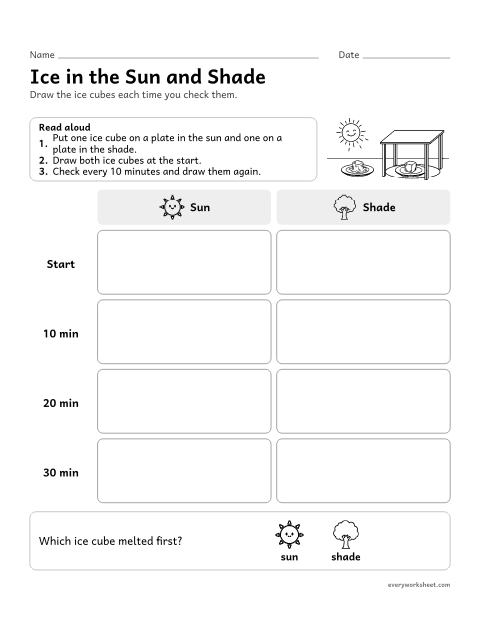
Sunny vs shady observation record sheet
Observing how sunlight warms things
1 page131 KB
 View all 2 pages
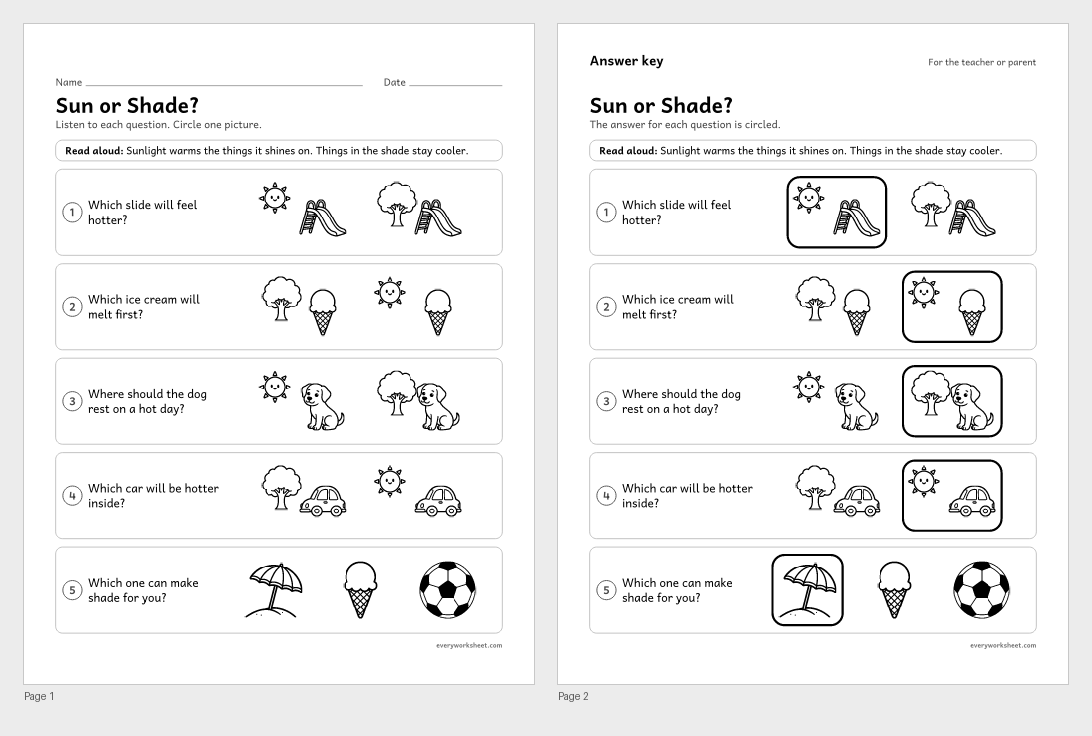
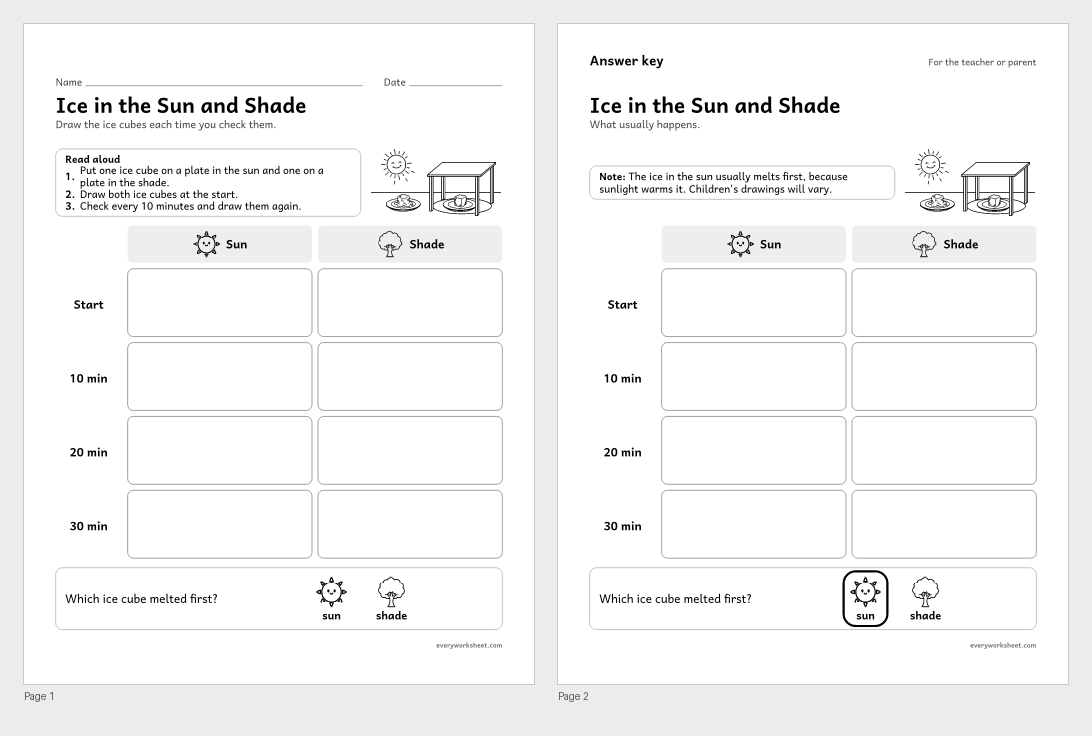
Ice cube Melt: sun vs shade observation
Observing how sunlight warms ice
Answer key on page 2
2 pages80 KB
Design a shade
 View all 2 pages
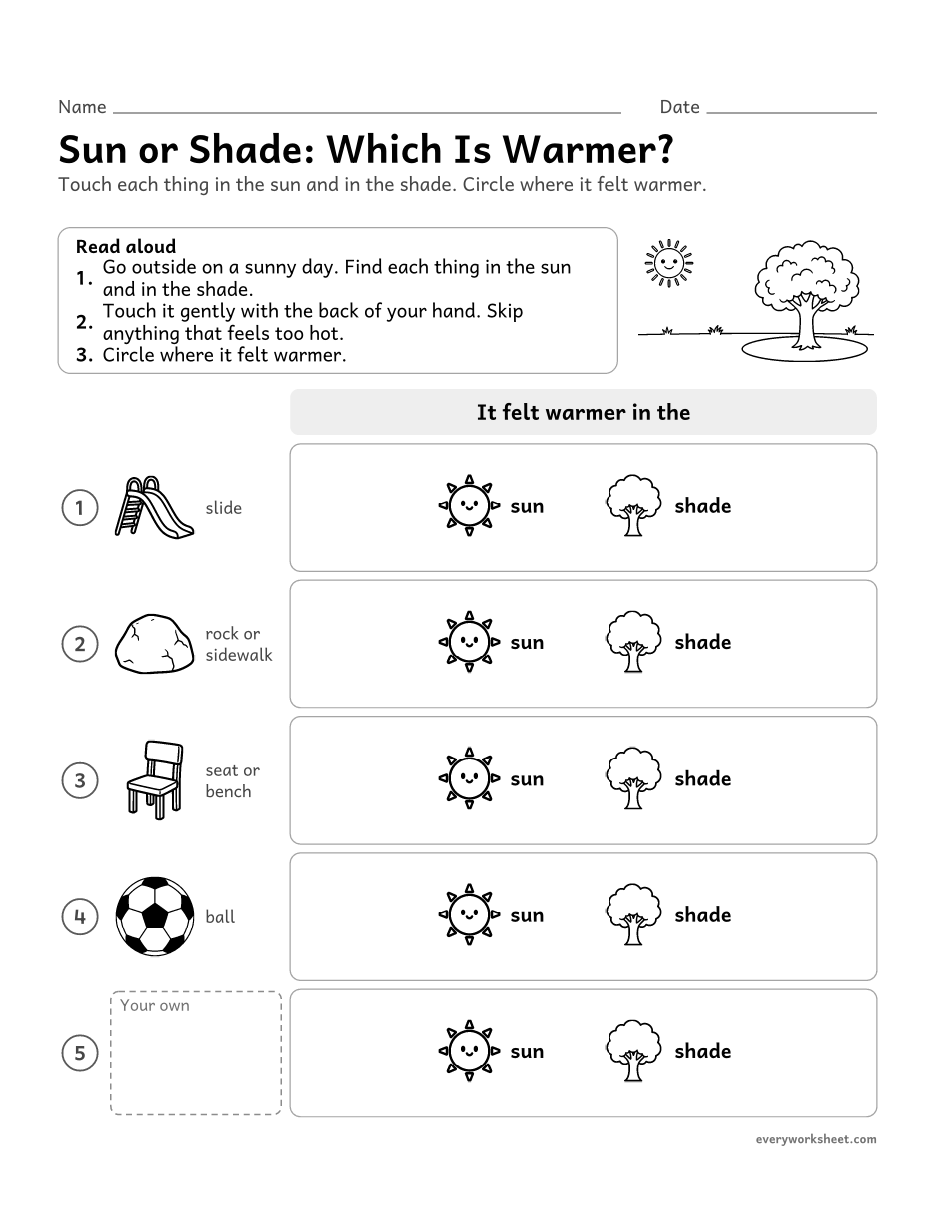
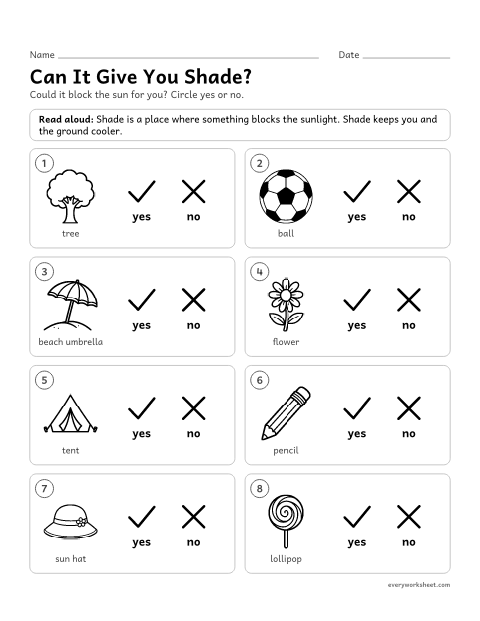
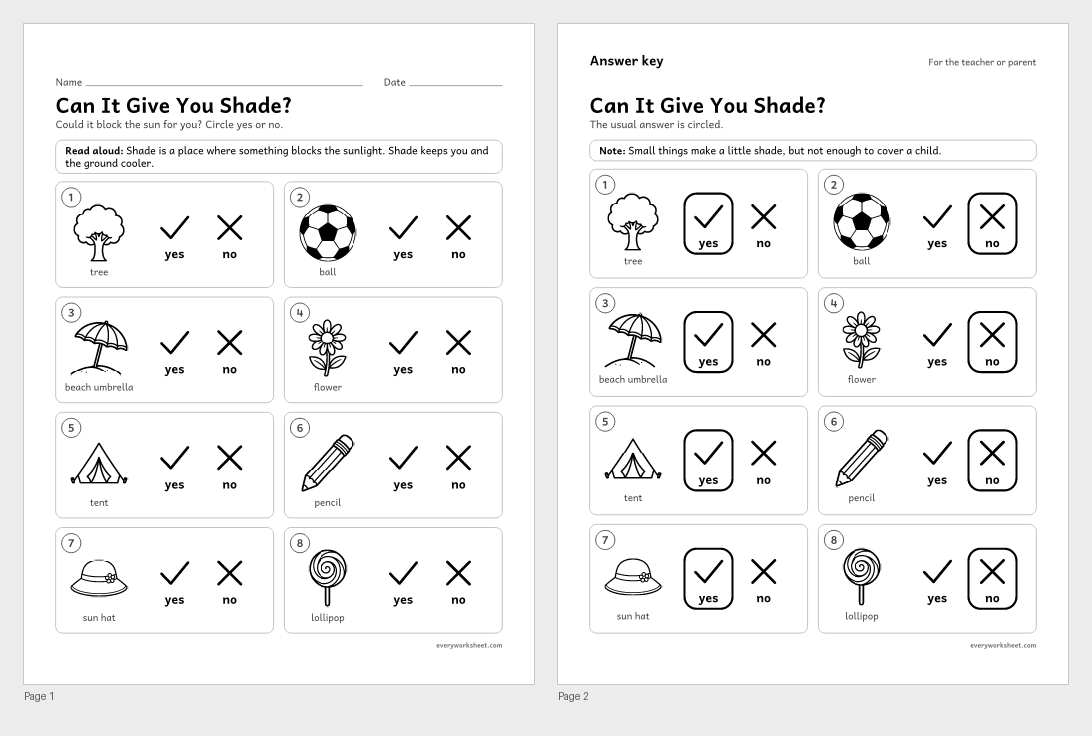
What makes shade picture sort
Finding things that make shade
Answer key on page 2
2 pages237 KB
 View larger
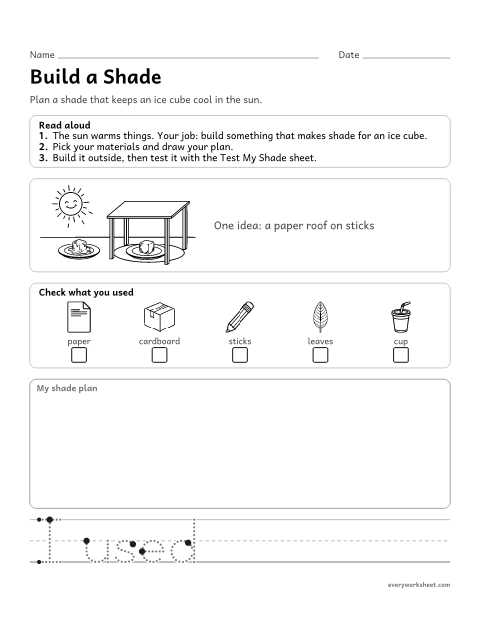
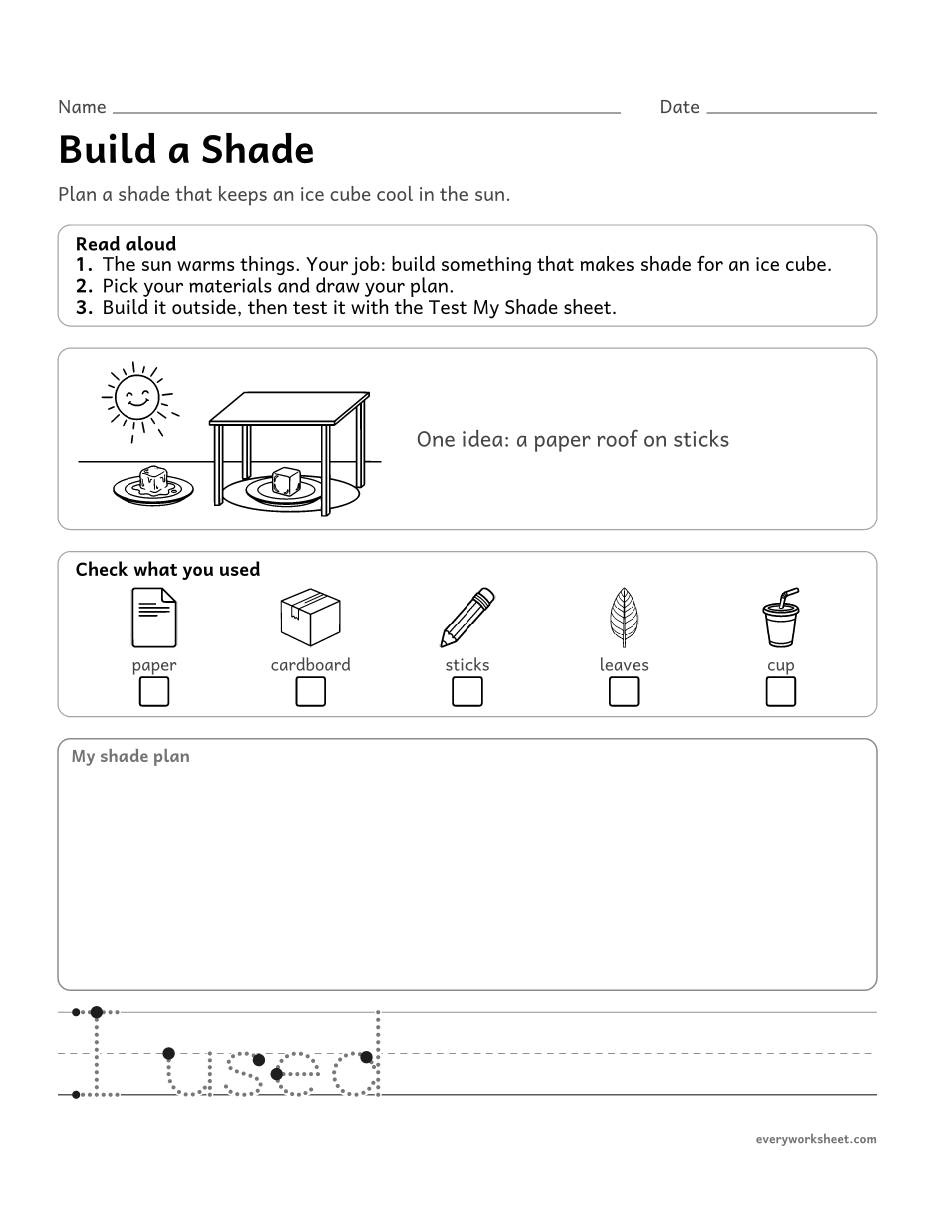
Design a shade Structure: plan and build
Designing a structure that makes shade
1 page101 KB
 View all 2 pages
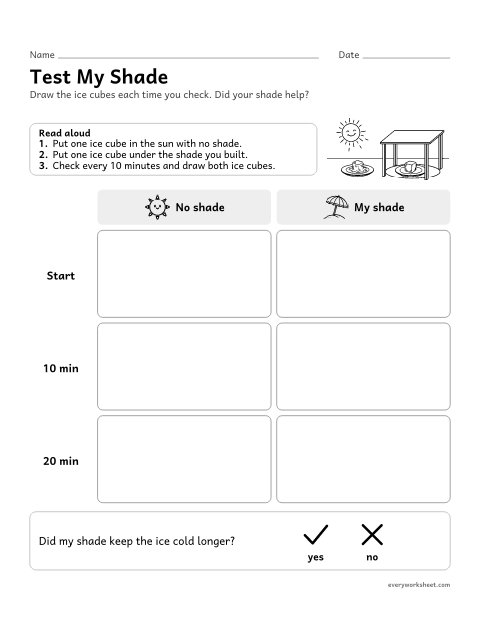
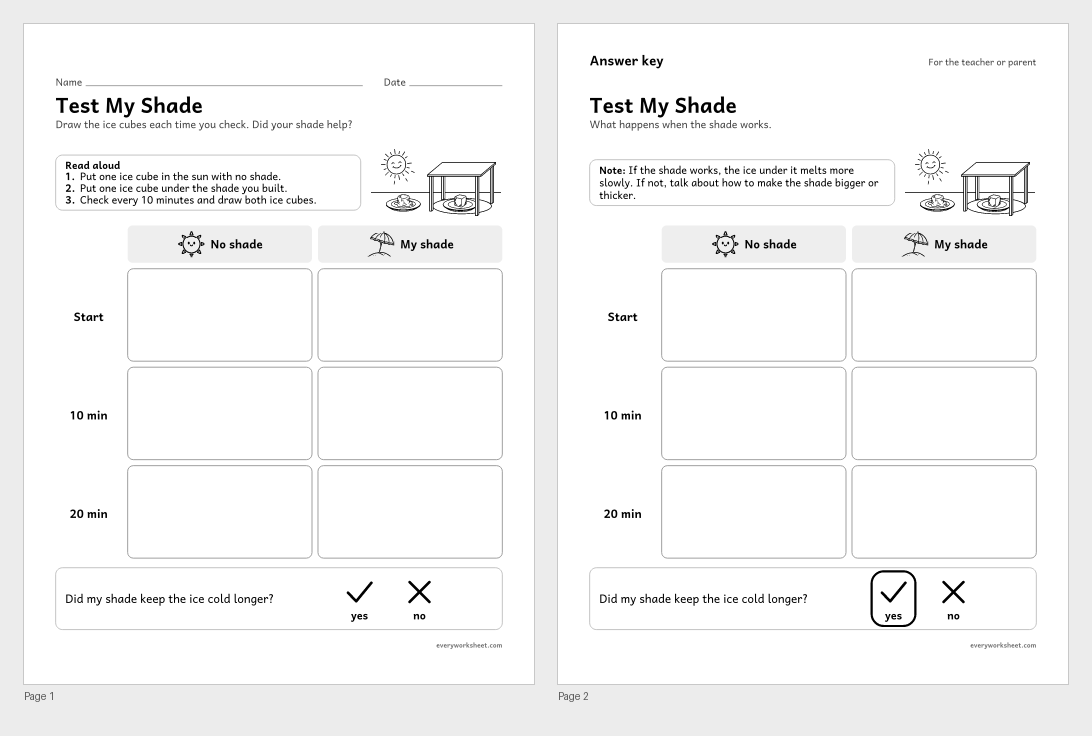
Test a shade structure record sheet
Testing a shade structure
Answer key on page 2
2 pages111 KB
Print at 100% (actual size) for the cleanest tracing lines.
About these sunlight and shade worksheets
Sunlight warms the land, the water, the air and us. On a sunny day a slide in the sun feels hot, while the same slide in the shade stays cooler. Shade is a place where something, like a tree or an umbrella, blocks the sunlight.
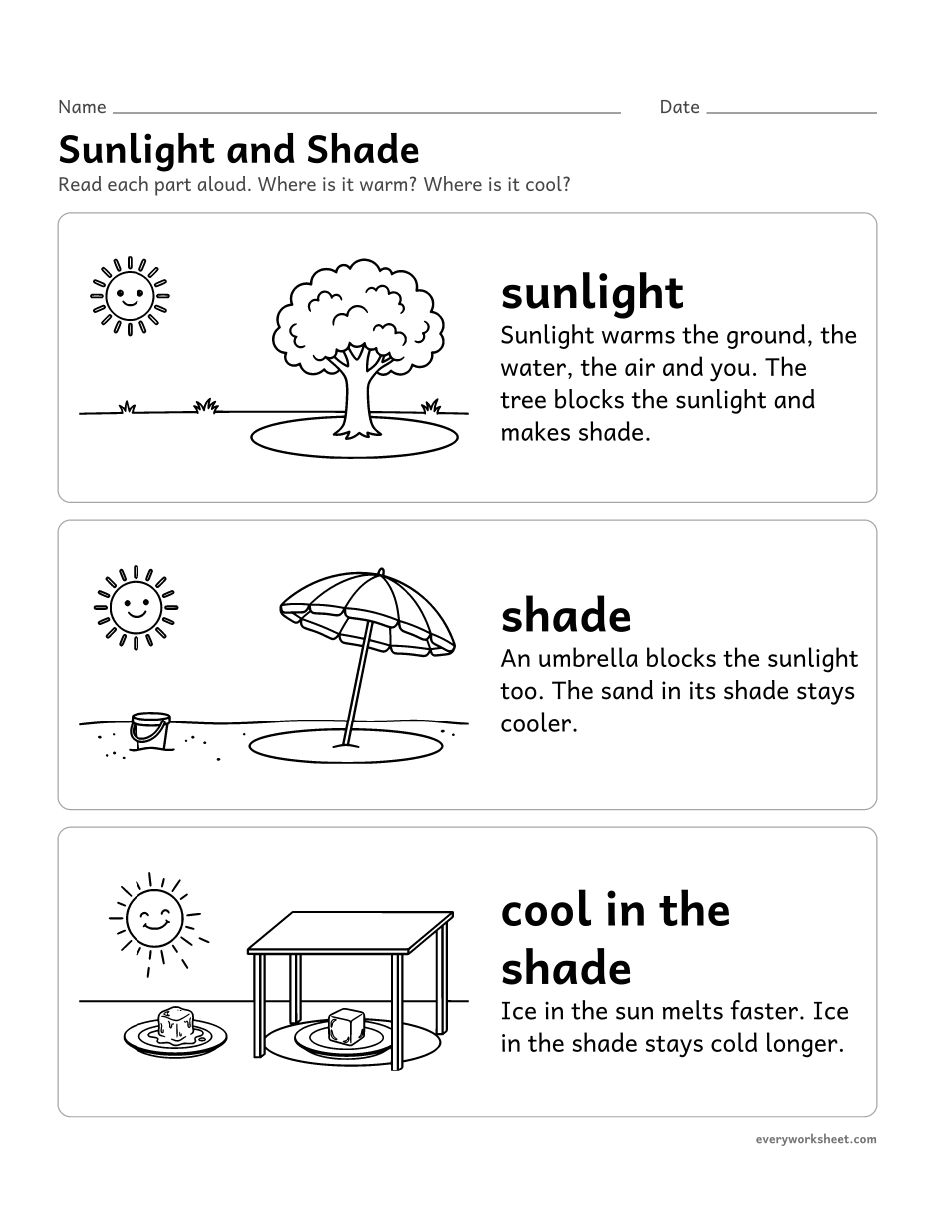
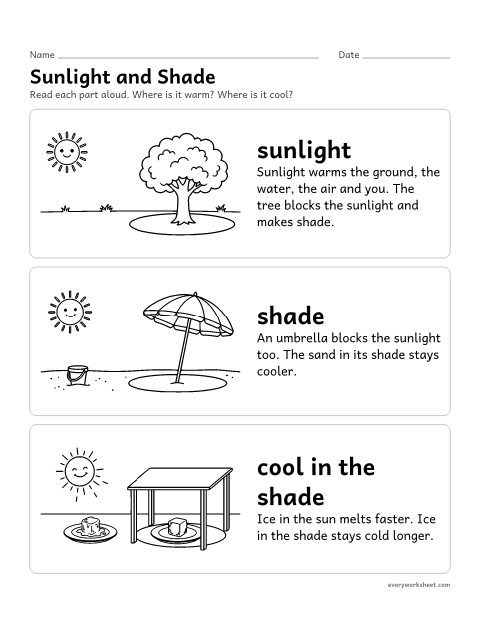
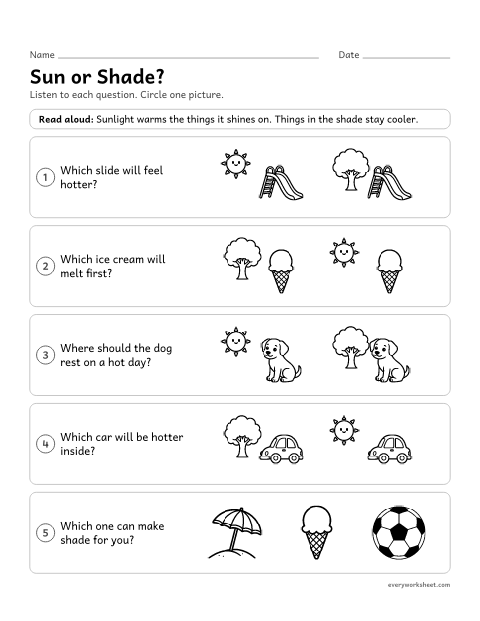
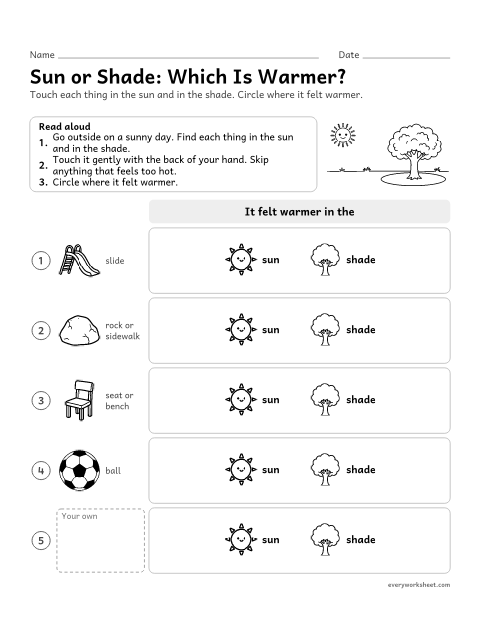
Start with the poster: a tree and a beach umbrella block the sunlight and make shade, and an ice cube in the sun melts while one under a little roof stays cold. Then children observe for themselves. On the sunny vs shady record sheet they touch things in the sun and in the shade and circle where each felt warmer. The ice cube page compares how fast ice melts in each spot, and two picture pages ask what gets hot in the sun and what can make shade.
Then children become engineers. They plan a shade from paper, cardboard, sticks or leaves, build it outside, and test it with two ice cubes: one in the sun and one under their shade. If their ice stays frozen longer, their design worked.
Standards
NGSS K-PS3-1Make observations to determine the effect of sunlight on Earth's surface.NGSS K-PS3-2Use tools and materials to design and build a structure that will reduce the warming effect of sunlight on an area.NGSS K-2-ETS1-1Ask questions, make observations, and gather information about a situation people want to change to define a simple problem that can be solved through the development of a new or improved object or tool.NGSS K-2-ETS1-2Develop a simple sketch, drawing, or physical model to illustrate how the shape of an object helps it function as needed to solve a given problem.NGSS K-2-ETS1-3Analyze data from tests of two objects designed to solve the same problem to compare the strengths and weaknesses of how each performs.CCSS.MATH.CONTENT.K.MD.A.2Directly compare two objects with a measurable attribute in common, to see which object has "more of"/"less of" the attribute, and describe the difference.CCSS.ELA-LITERACY.W.K.8With guidance and support from adults, recall information from experiences or gather information from provided sources to answer a question.CCSS.ELA-LITERACY.W.K.2Use a combination of drawing, dictating, and writing to compose informative/explanatory texts in which they name what they are writing about and supply some information about the topic.CCSS.ELA-LITERACY.L.K.6Use words and phrases acquired through conversations, reading and being read to, and responding to texts.
How to use them
- Pick a sunny, warm day. Read the sunlight and shade poster together first.
- For the sunny vs shady sheet, find a slide, a rock or sidewalk, a seat and a ball in both places. Touch each one gently with the back of your hand.
- Set up the ice cube test on two plates, one in the sun and one in the shade, and check every 10 minutes.
- For the design challenge, give a few materials and let your child plan before building. Then run the Test My Shade sheet.
- Talk about results. Ask, "How could you make your shade work better?"
Teaching tips
- Skip anything that feels too hot to touch, like dark metal or a car seat in midday sun. Use the back of the hand for a quick, gentle touch.
- Thin paper lets some light through. Thick cardboard or a doubled cloth usually makes better shade, a good thing to discover by testing.
- Wear hats and sunscreen, and keep outdoor tests short on very hot days.
- If it is cloudy, try again another day and talk about why the results were different.
Questions teachers and parents ask
What does sunlight do to Earth's surface?
Sunlight warms it. Sand, sidewalks, water and air all get warmer in the sun. Places in the shade stay cooler because something blocks the sunlight.
How do kindergartners design a shade structure?
They plan a small shade with paper, cardboard, sticks or leaves, build it outside and test it: an ice cube under their shade should melt more slowly than one in full sun.
What is a good sun and shade experiment for kindergarten?
Put one ice cube in the sun and one in the shade and check every 10 minutes. The ice in the sun usually melts first, which shows that sunlight warms things.
Are these worksheets free?
Yes. Every page is a free PDF with no sign-up, in US Letter and A4. Pages with a right answer include an answer key.