 View larger
Water cycle diagram for kids
Following a simple labeled water cycle diagram
1 page52 KB
A labeled water cycle diagram, label it and cut and paste versions, a coloring page, a sequence, a read-aloud story with questions and a rain cloud in a jar sheet.
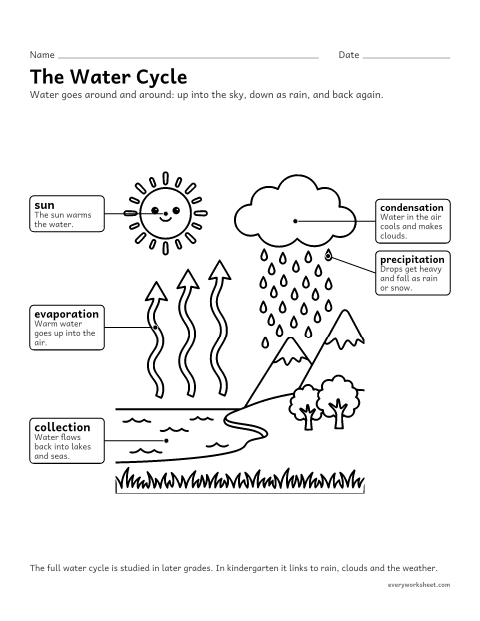
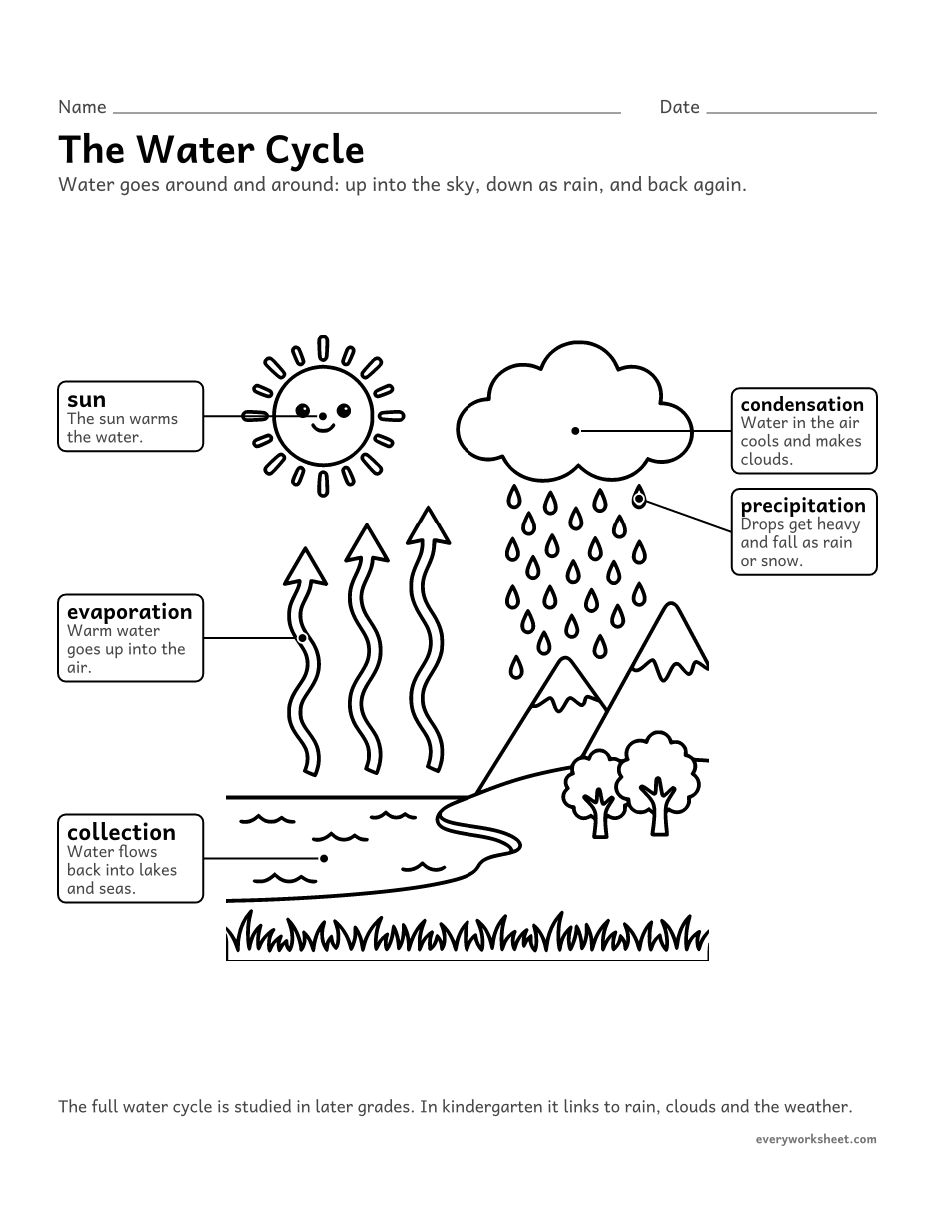
View largerFollowing a simple labeled water cycle diagram
1 page52 KB
 View all 2 pages
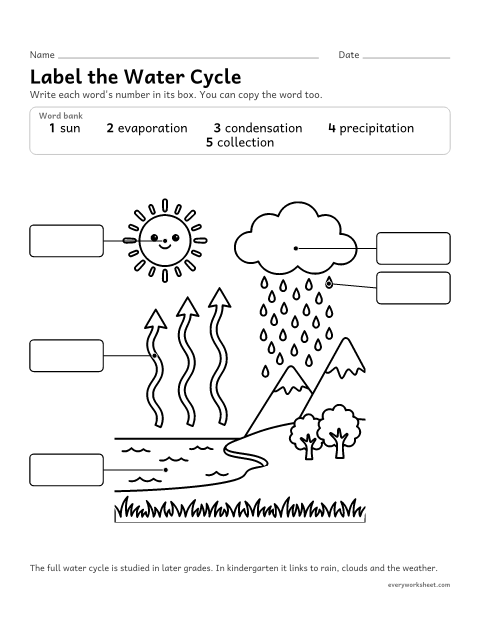
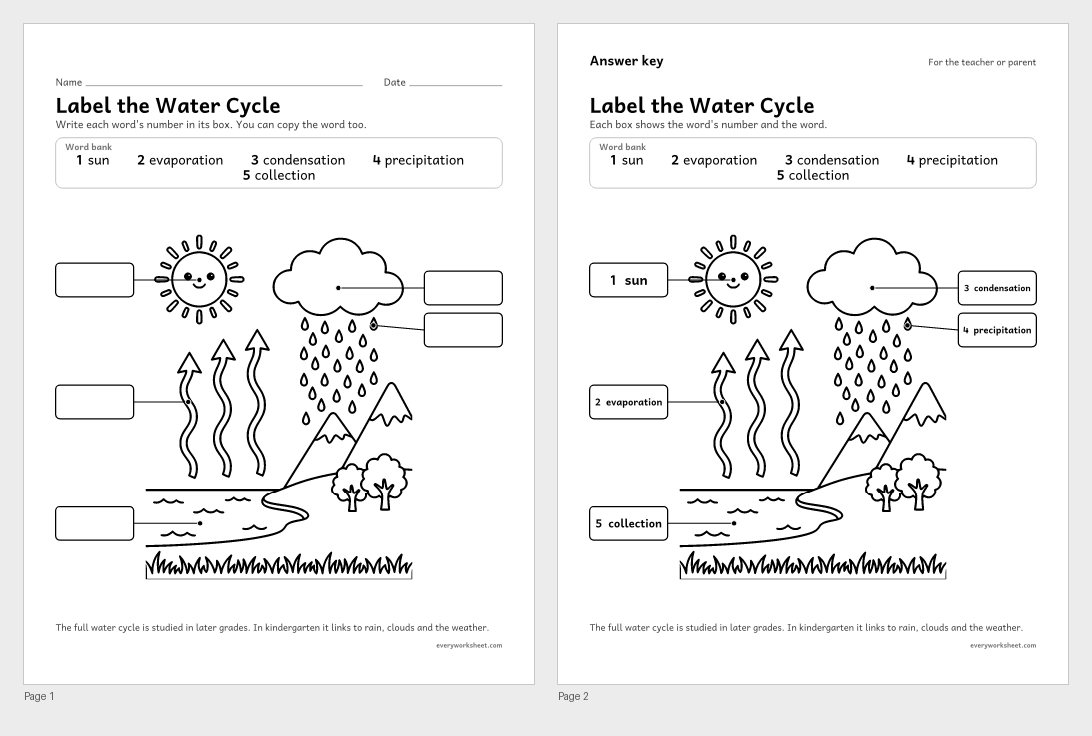
Labeling the sun and the four steps of a simple water cycle
Answer key on page 2
2 pages80 KB
 View all 2 pages
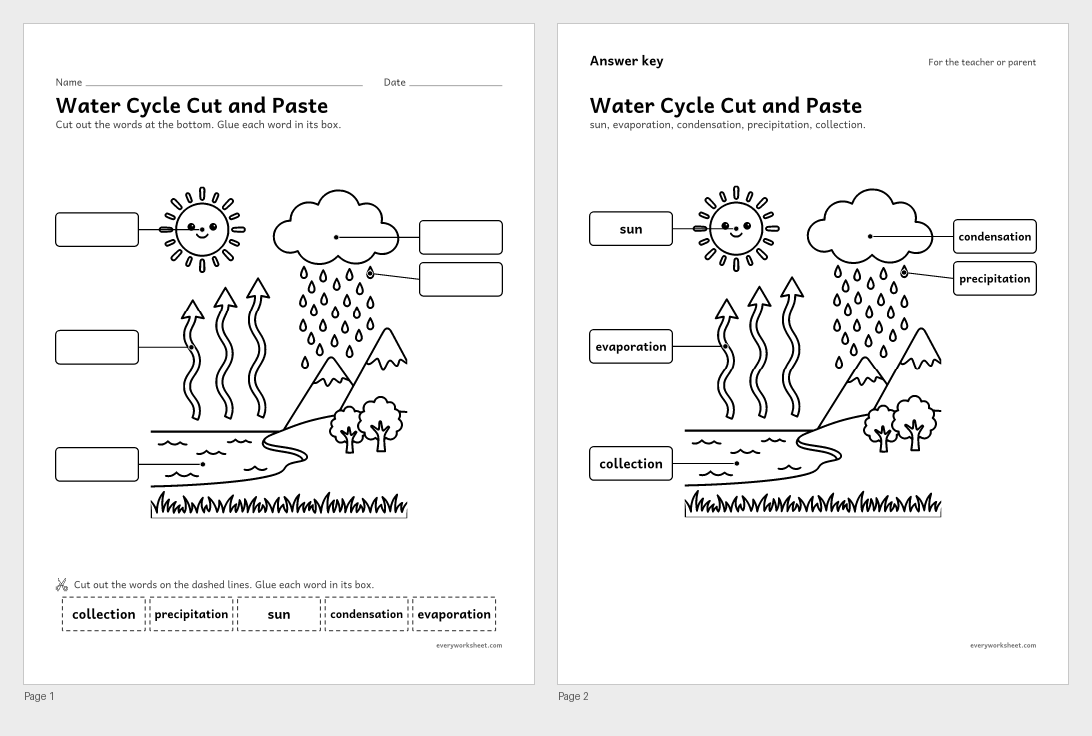
Labeling the water cycle by cutting and gluing words
Answer key on page 2
2 pages105 KB
 View larger
 View all 2 pages
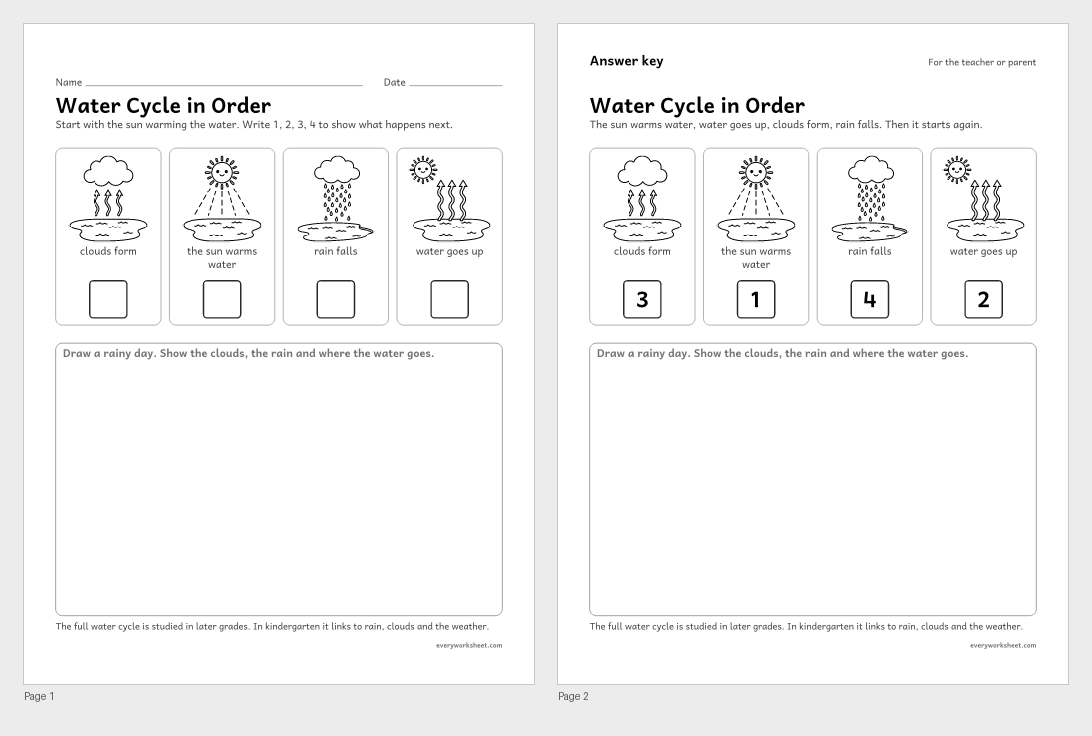
Putting the steps of the water cycle in order
Answer key on page 2
2 pages103 KB
 View all 2 pages
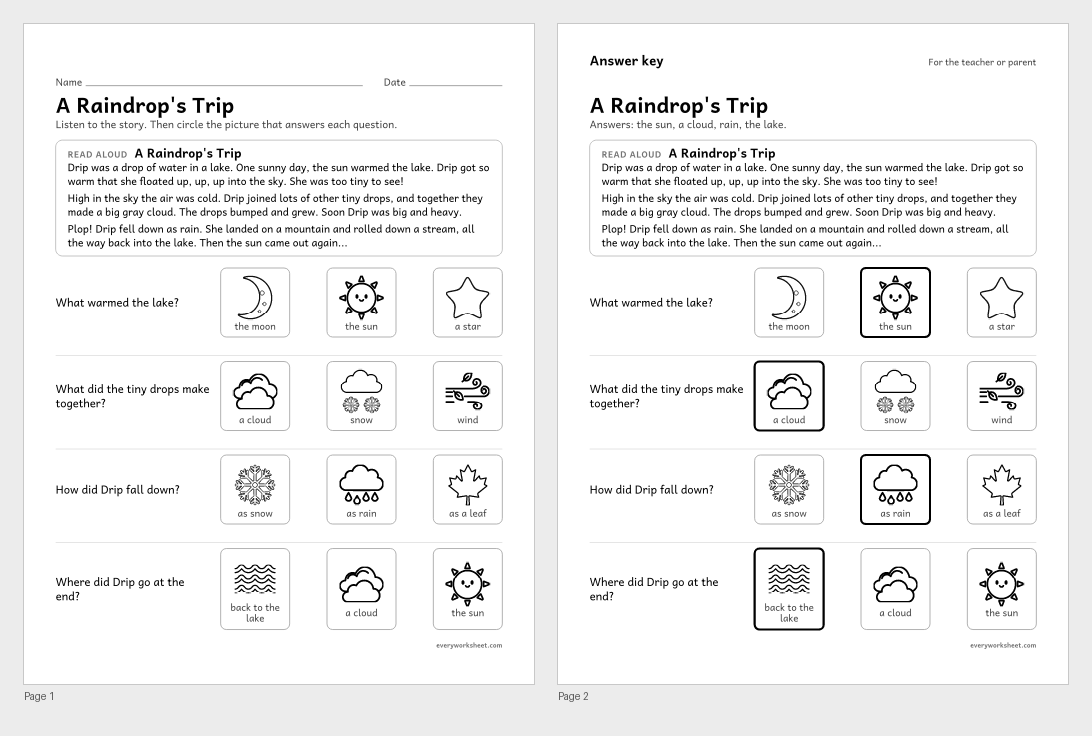
Listening to a water cycle story and answering questions about it
Answer key on page 2
2 pages175 KB
 View larger
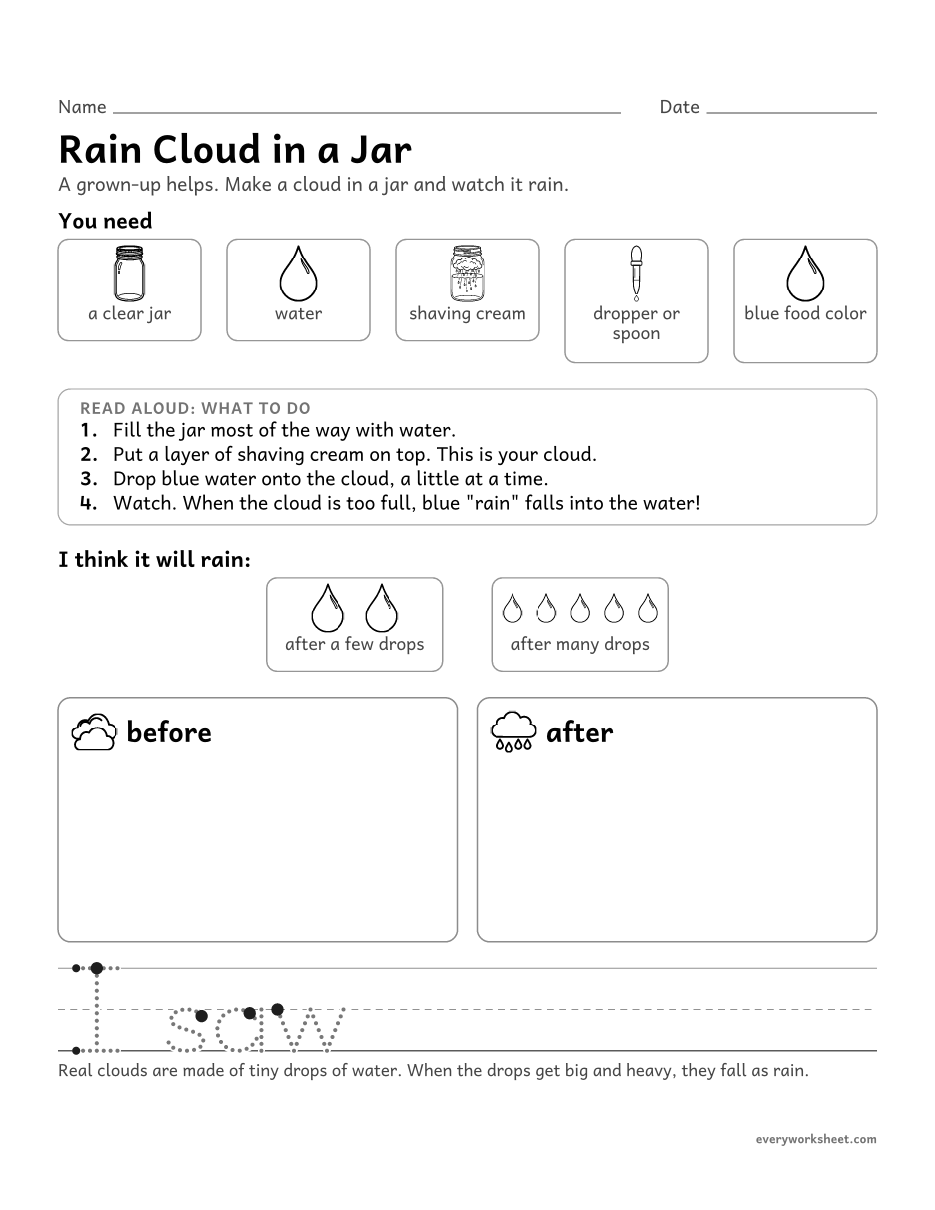
Making a model rain cloud and recording what happens
1 page66 KB
Print at 100% (actual size) for the cleanest tracing lines.
Where does rain come from? The water cycle answers that question. The sun warms water in lakes and oceans, and some of it goes up into the air (evaporation). High in the sky the water cools and makes clouds (condensation). When the drops in a cloud get big and heavy, they fall as rain or snow (precipitation), and the water flows back into lakes, rivers and the ocean (collection). Then it all starts again.
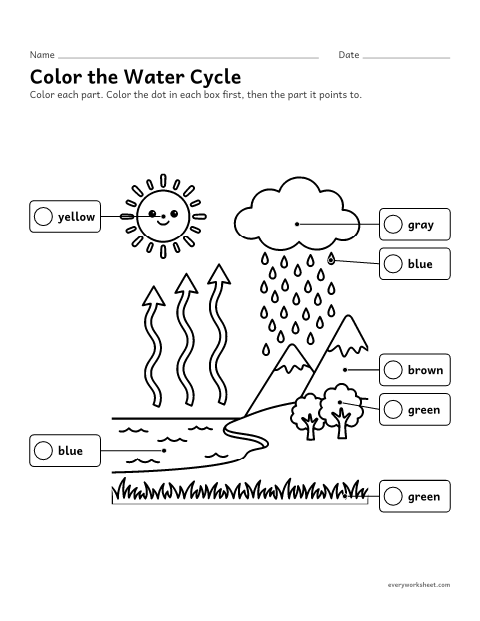
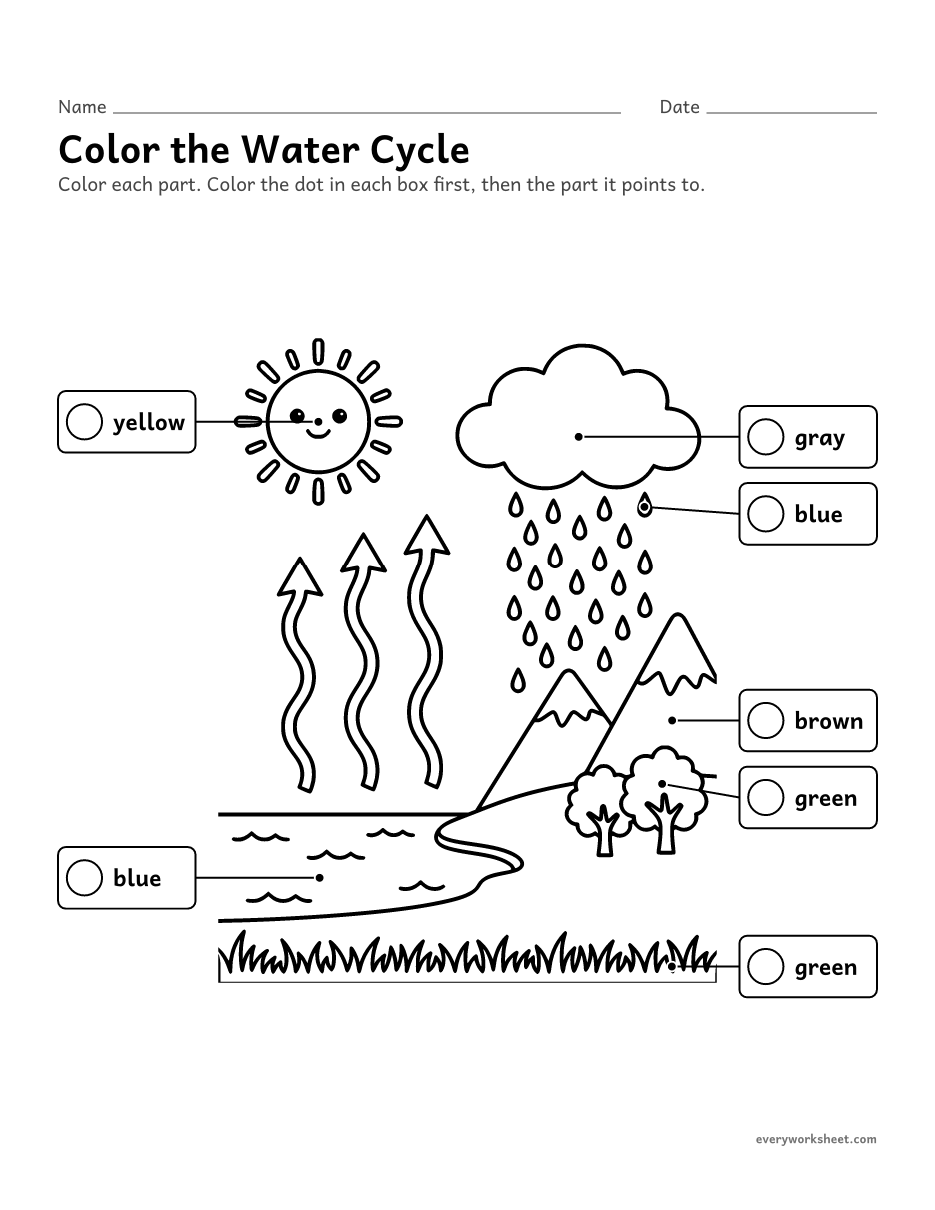
These water cycle worksheets keep it simple. One clear picture, with the sun, a lake, rising water vapor, a cloud, rain on the mountains and a stream running back to the lake, is used four ways: a labeled poster with a short explanation of each step, a label it page with a numbered word bank, a cut and paste labels page and a coloring page. A picture sequence and a short read-aloud story about a raindrop's trip help children retell the cycle in their own words.
The full water cycle is studied in later grades. In kindergarten it connects to weather: children notice clouds, rain and puddles and talk about where the water goes. The rain cloud in a jar experiment sheet turns that into a hands-on model. Pages with one right answer have an answer key on page 2.
NGSS K-ESS2-1Use and share observations of local weather conditions to describe patterns over time.NGSS 2-ESS2-3Grade 2 context: Obtain information to identify where water is found on Earth and that it can be solid or liquid. The full water cycle is taught in later grades; kindergarten pages link it to rain, clouds and weather.CCSS.ELA-LITERACY.W.K.2Use a combination of drawing, dictating, and writing to compose informative/explanatory texts in which they name what they are writing about and supply some information about the topic.CCSS.ELA-LITERACY.W.K.8With guidance and support from adults, recall information from experiences or gather information from provided sources to answer a question.CCSS.ELA-LITERACY.SL.K.2Confirm understanding of a text read aloud or information presented orally or through other media by asking and answering questions about key details and requesting clarification if something is not understood.The sun warms water and it goes up into the air. Up high it cools and makes clouds. When the clouds get heavy, the water falls as rain or snow and flows back into lakes and oceans. Then it goes around again.
The full water cycle is usually taught in later elementary grades. Kindergarten and first grade children can learn the simple version, linked to clouds, rain and the weather.
Shaving cream on top of a jar of water stands for a cloud. As you add drops of colored water, the cloud fills up, and when it cannot hold any more, the colored water falls through like rain.