 View larger
Weather symbols chart
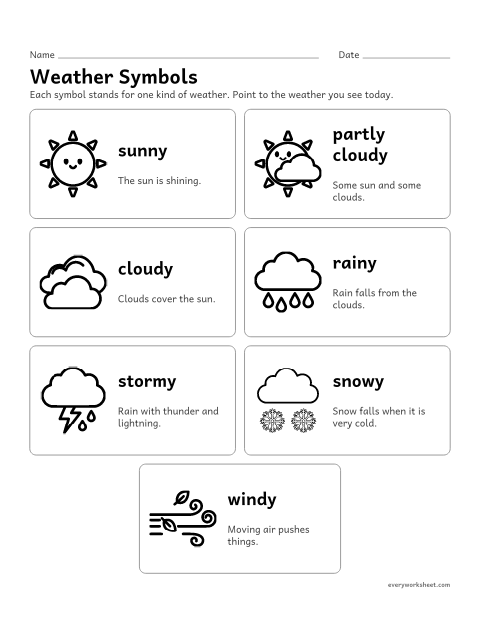
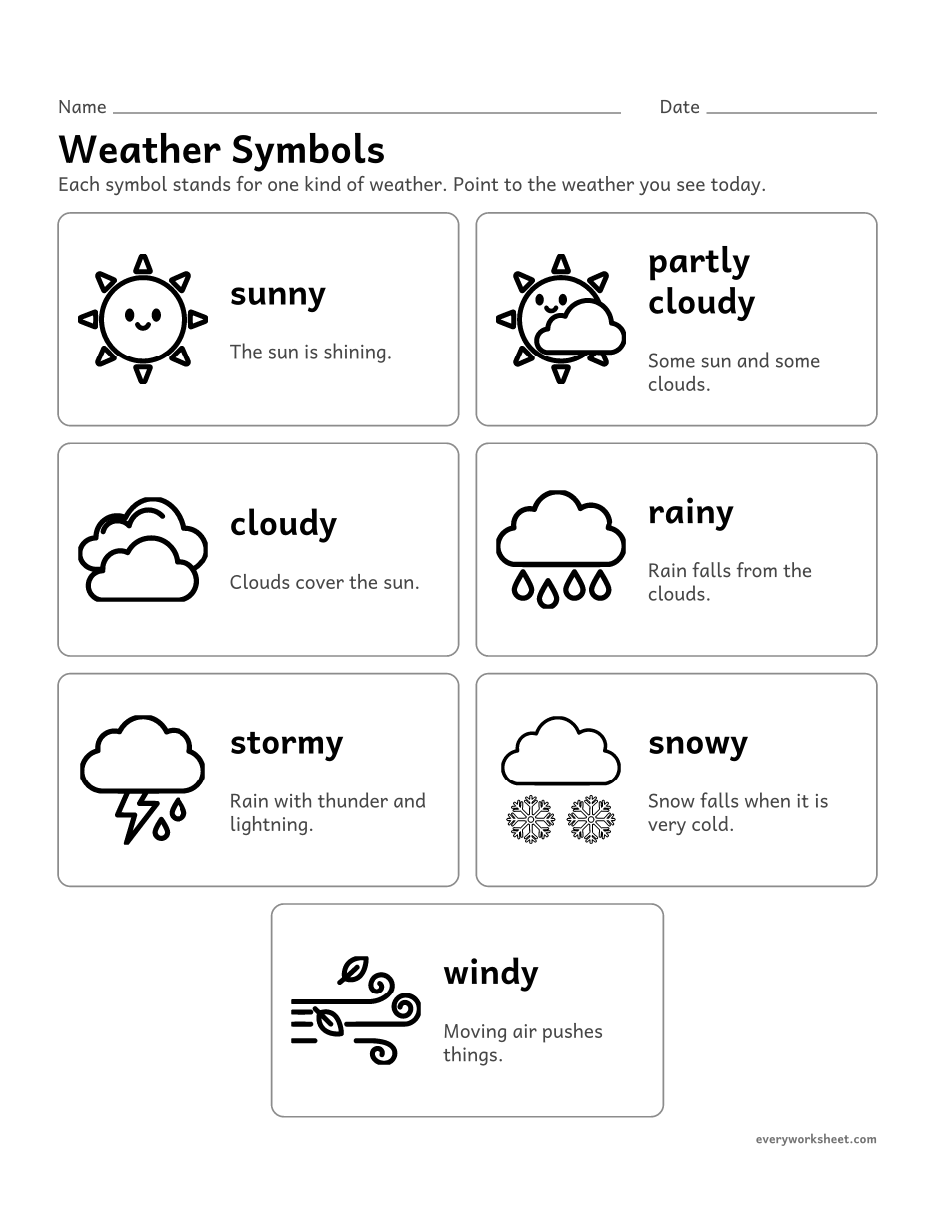
Naming weather symbols and the weather each one shows
1 page62 KB
Weather symbols, symbol cards, daily and monthly weather charts, weather graphs, what to wear and severe weather safety pages, with answer keys.
View largerNaming weather symbols and the weather each one shows
1 page62 KB
 View larger
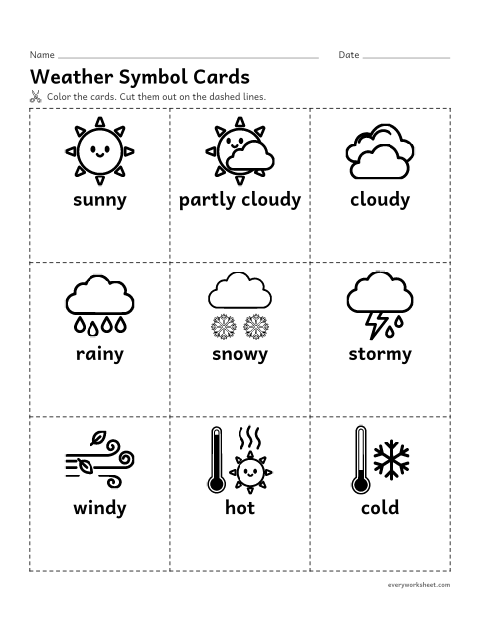
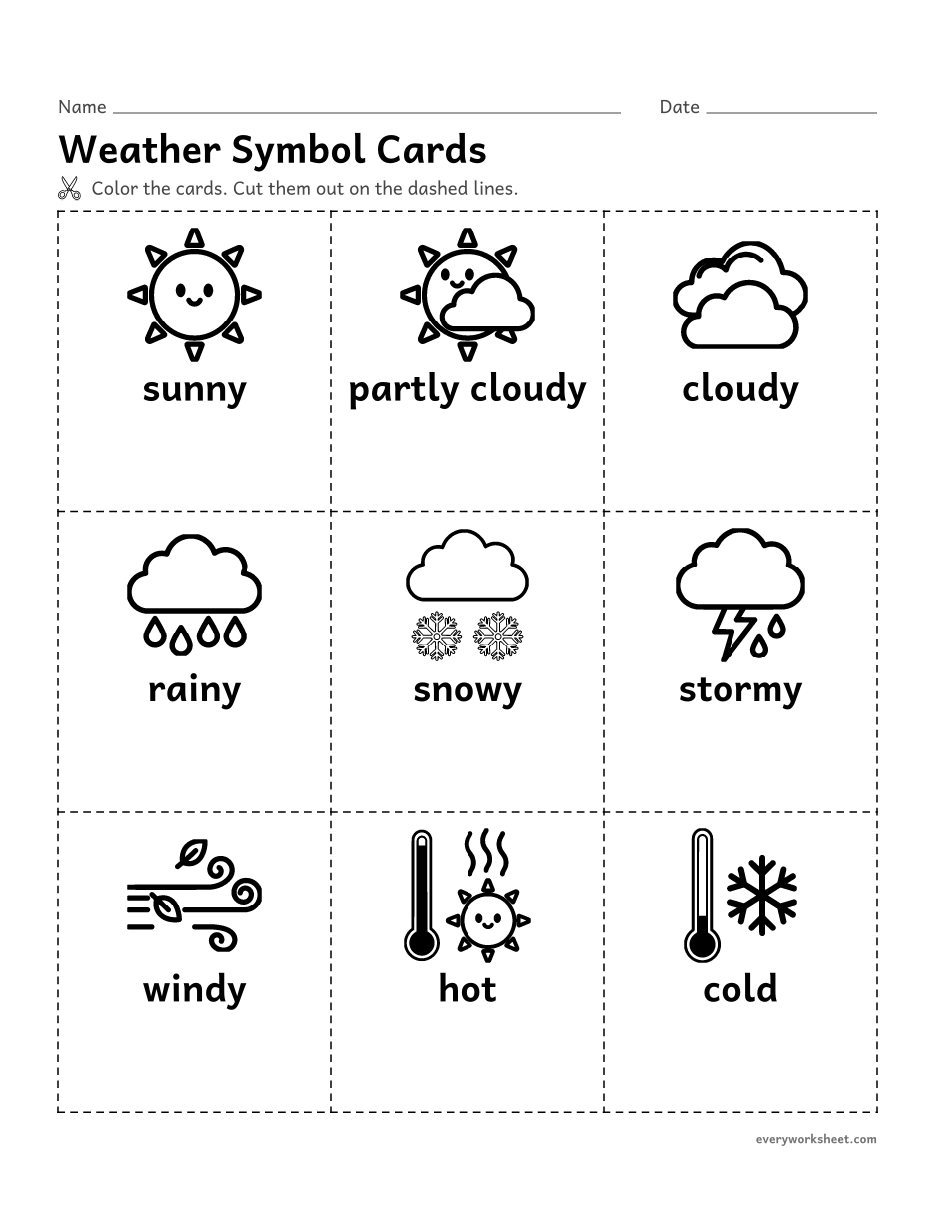
Coloring and naming weather symbol cards for a class weather chart
1 page103 KB
 View all 2 pages
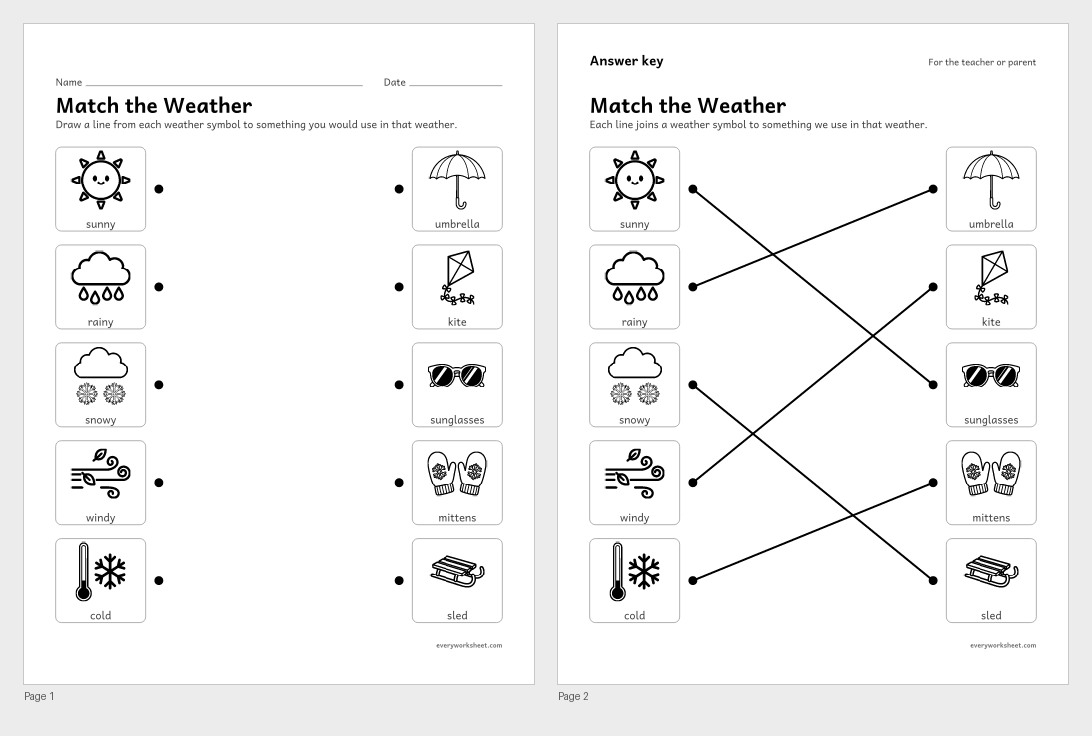
Matching weather symbols to things we use in that weather
Answer key on page 2
2 pages221 KB
 View all 2 pages
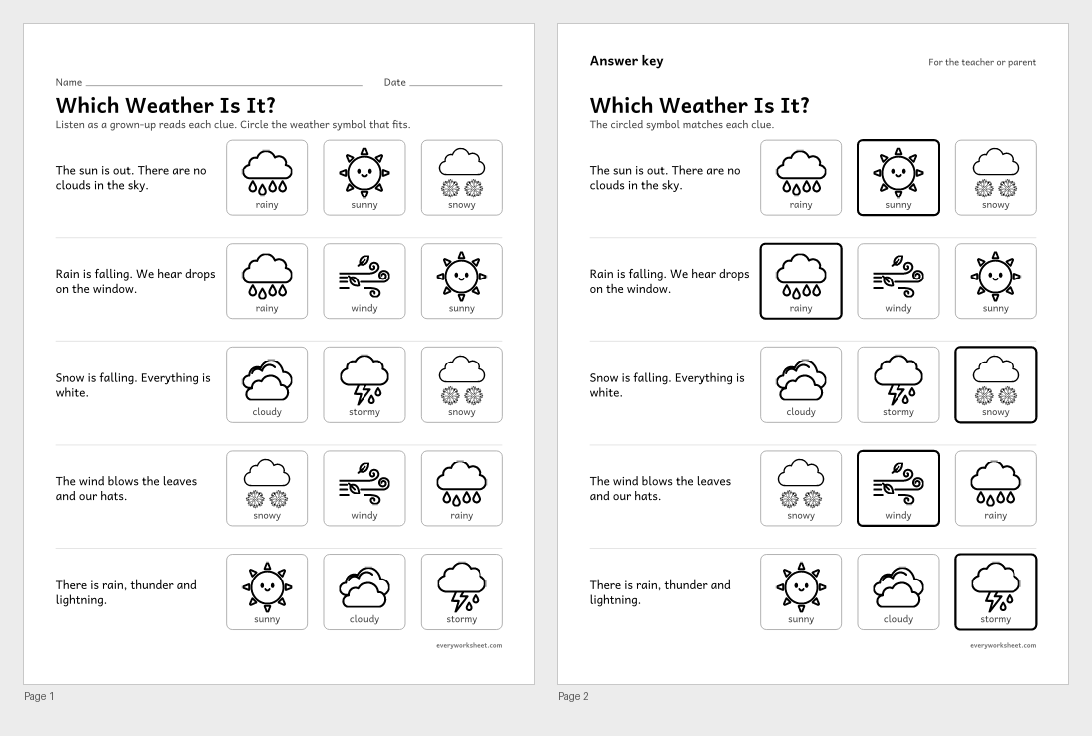
Choosing the weather symbol that matches a description
Answer key on page 2
2 pages162 KB
 View larger
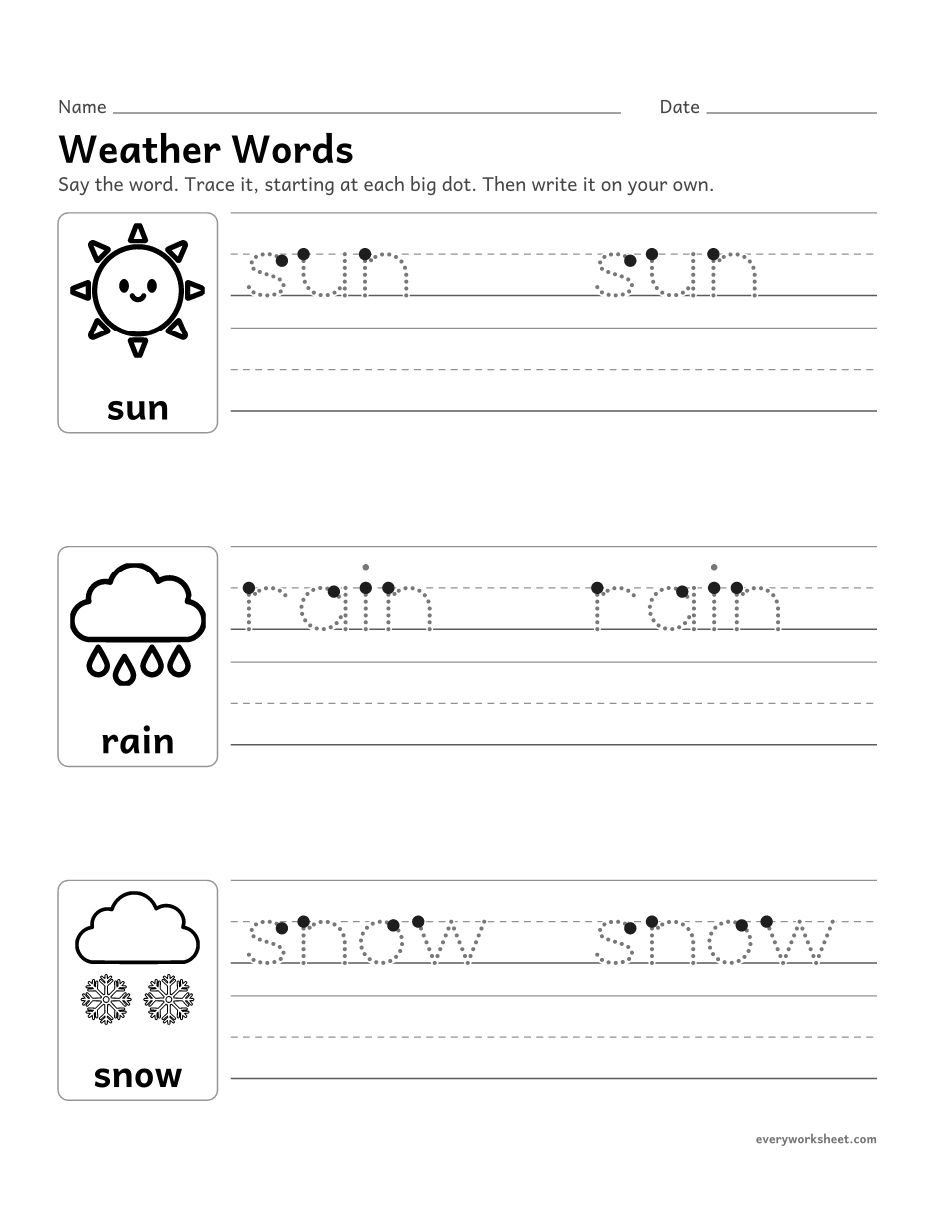
Tracing and writing weather words
1 page48 KB
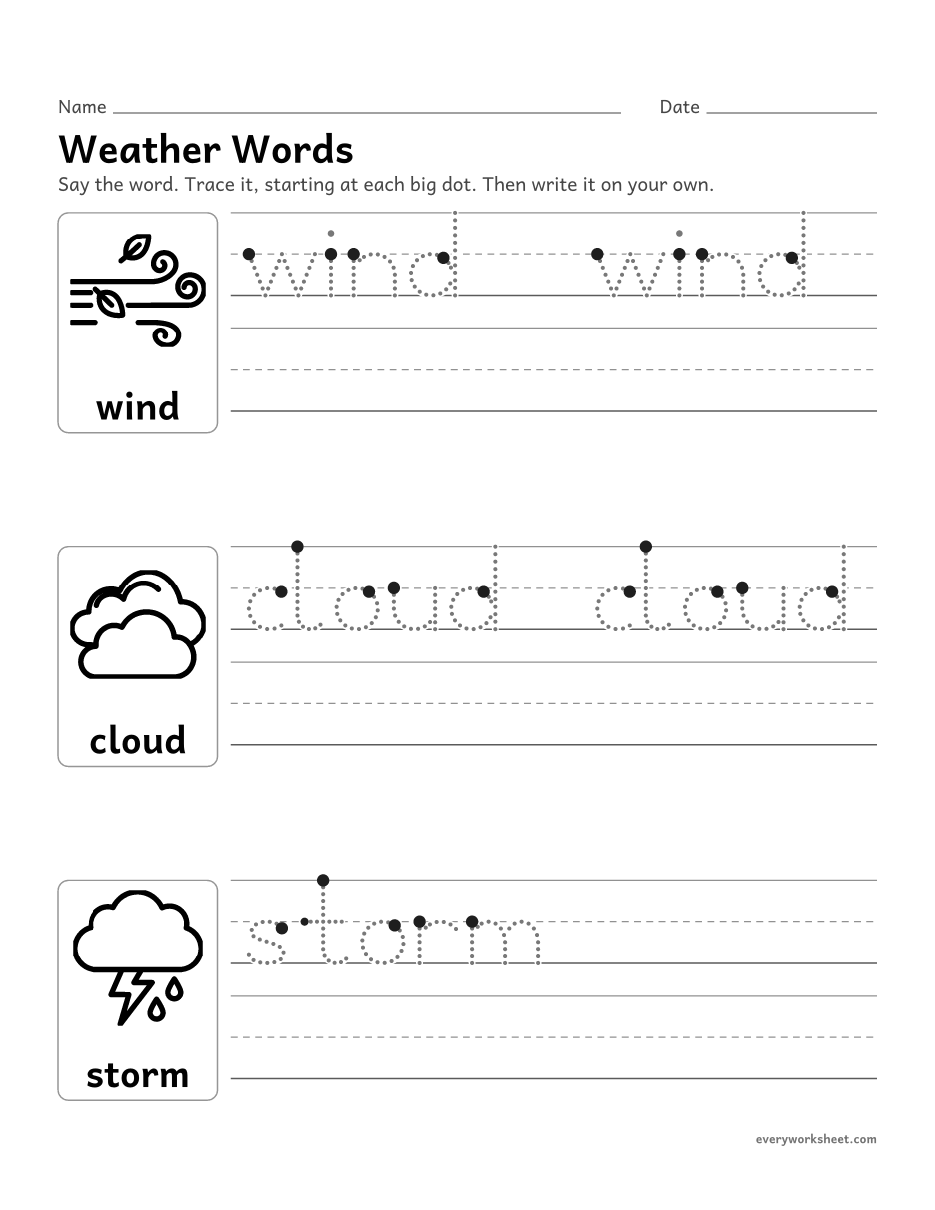 View larger
Tracing and writing weather words
1 page37 KB
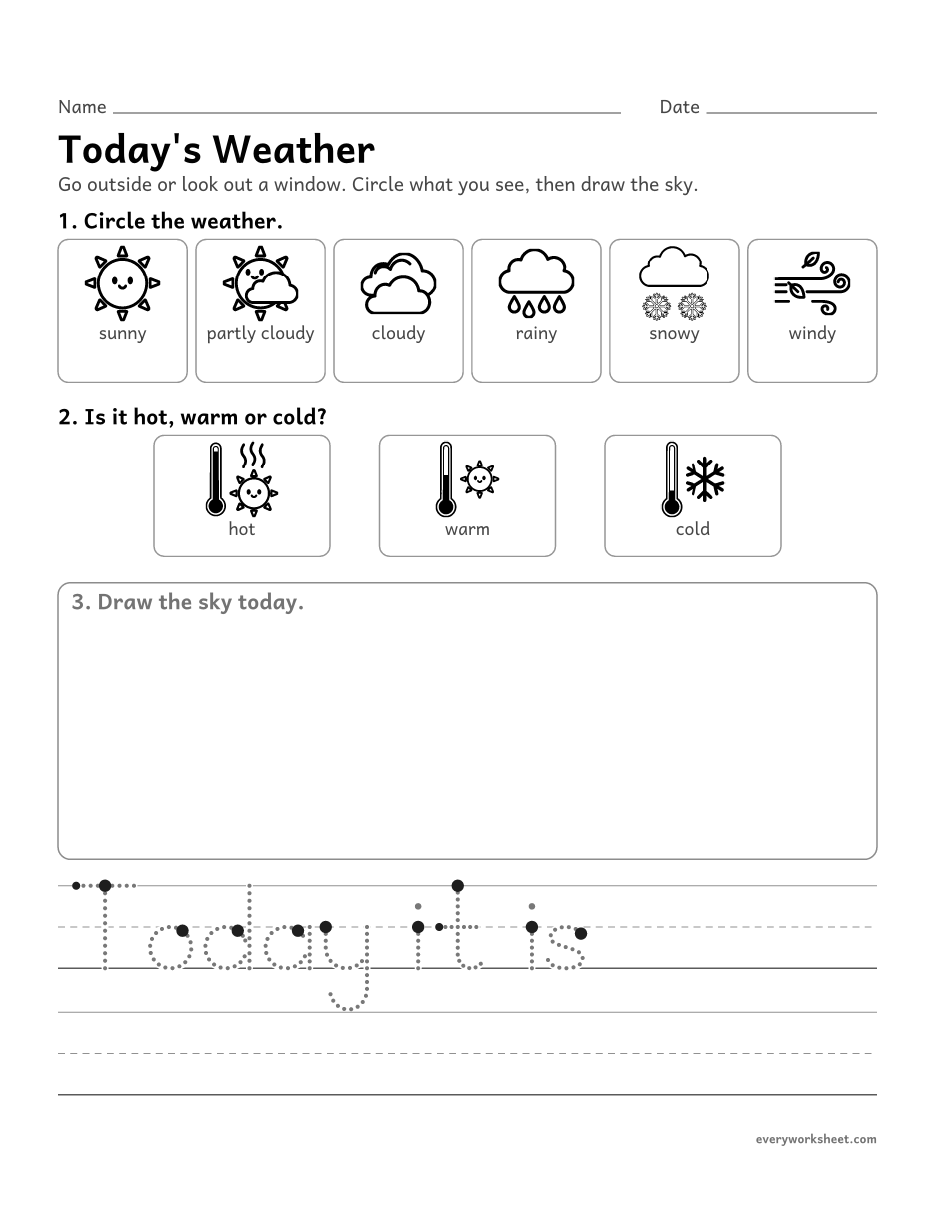 View larger
Observing and describing today's weather
1 page86 KB
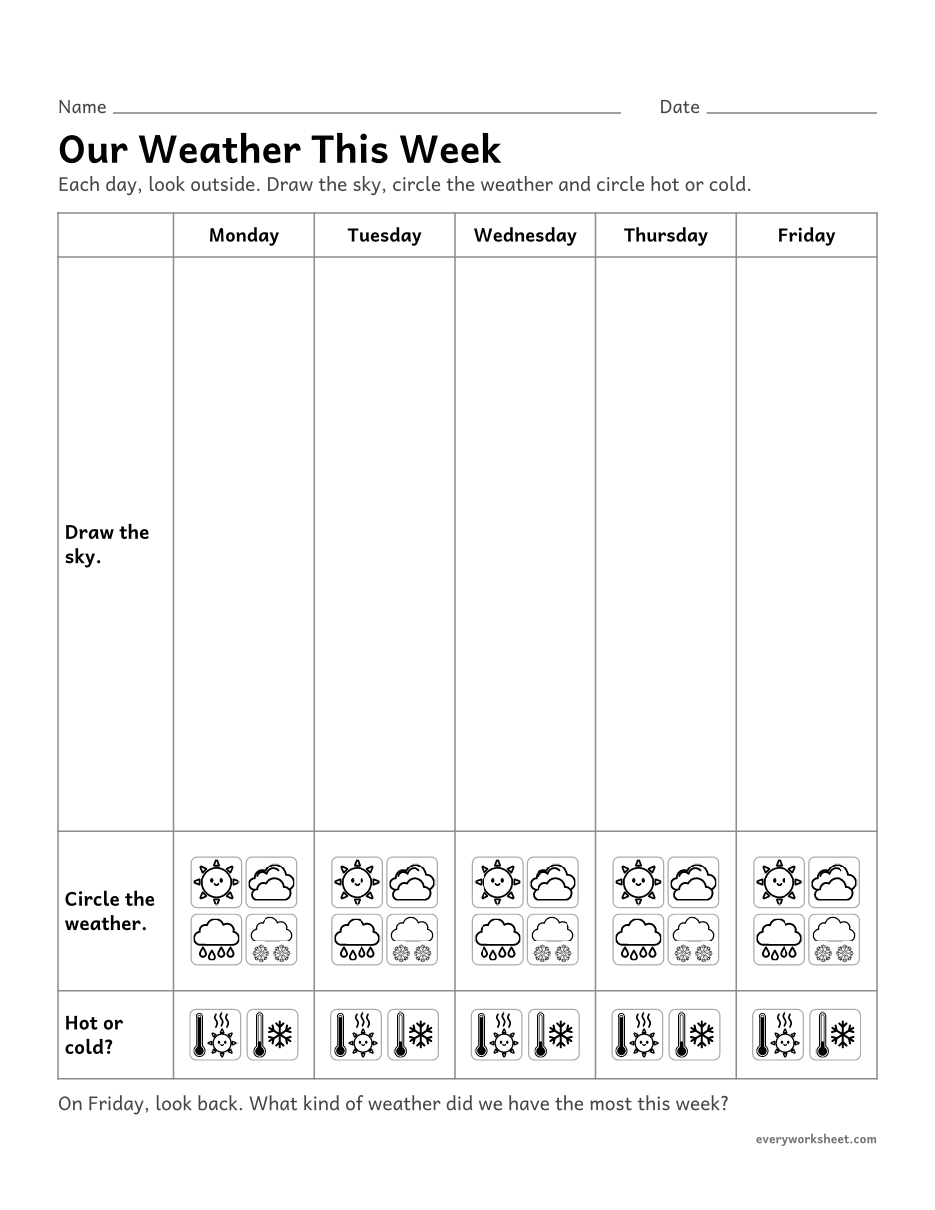 View larger
Observing and recording weather and temperature each day for a week
1 page227 KB
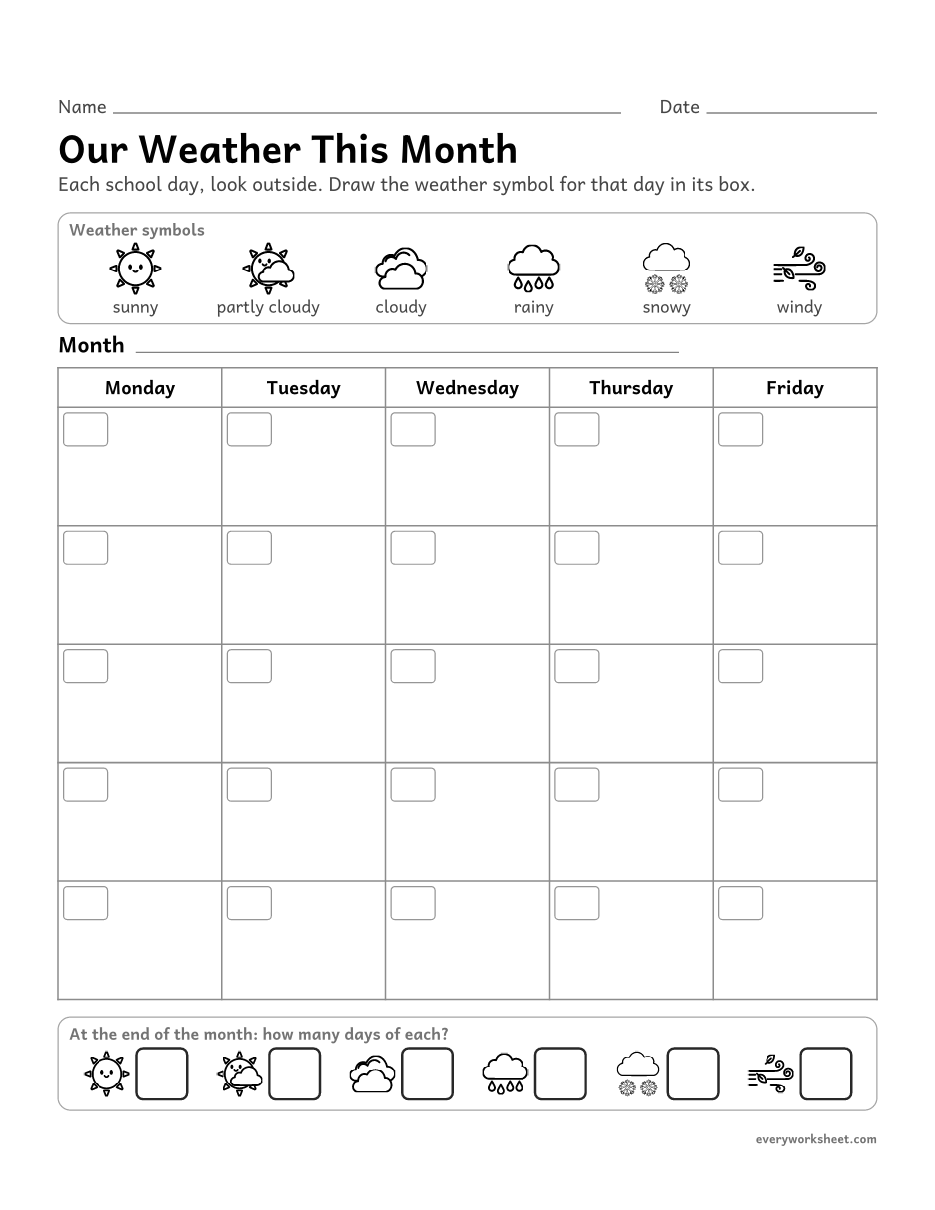 View larger
 View larger
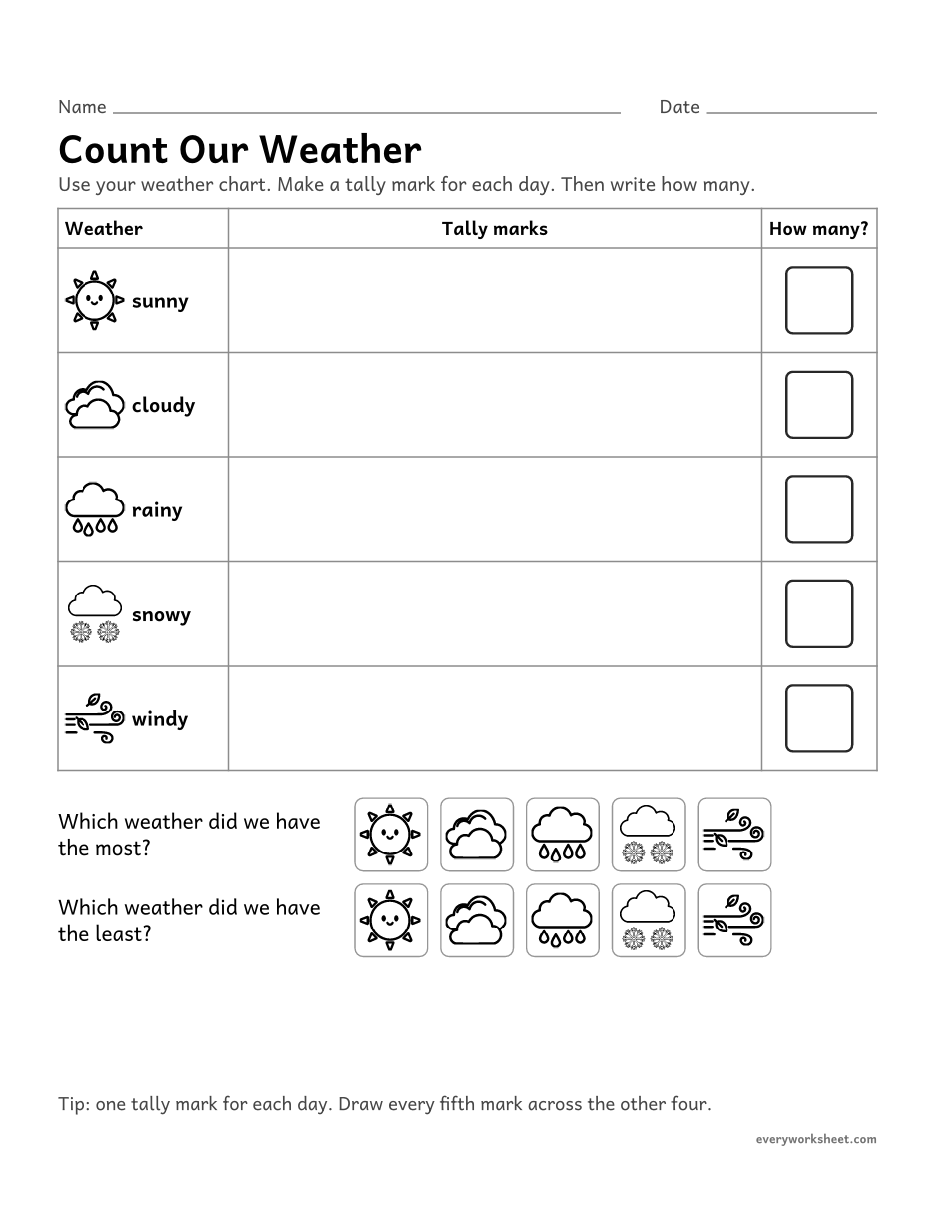
Tallying a month of weather observations and comparing the counts
1 page104 KB
 View all 2 pages
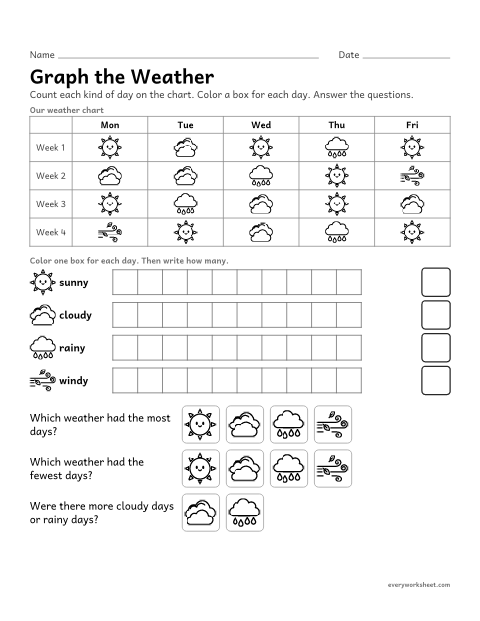
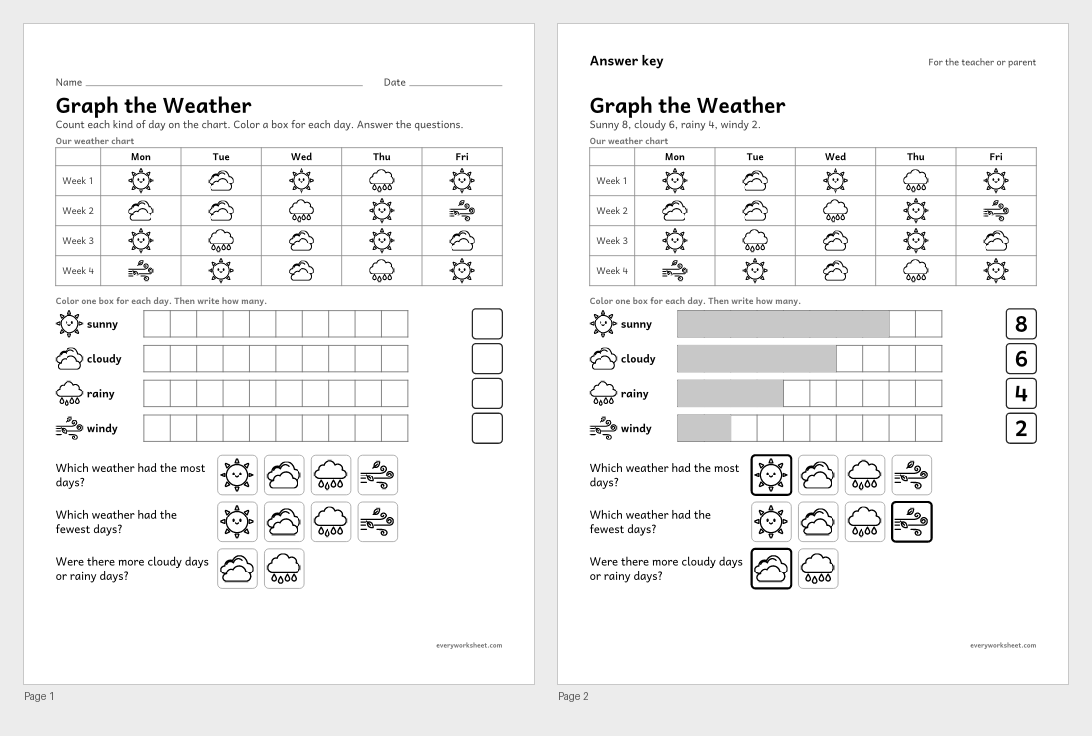
Counting and graphing a month of weather to find a pattern
Answer key on page 2
2 pages140 KB
 View all 2 pages
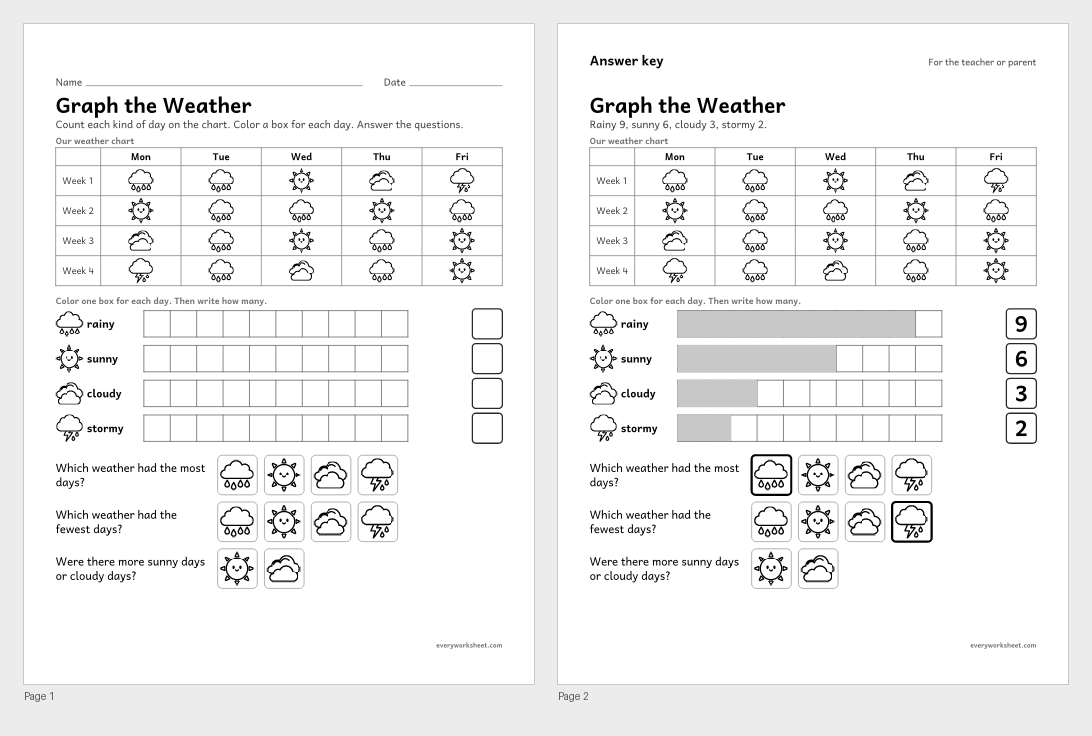
Counting and graphing a month of weather to find a pattern
Answer key on page 2
2 pages131 KB
 View all 2 pages
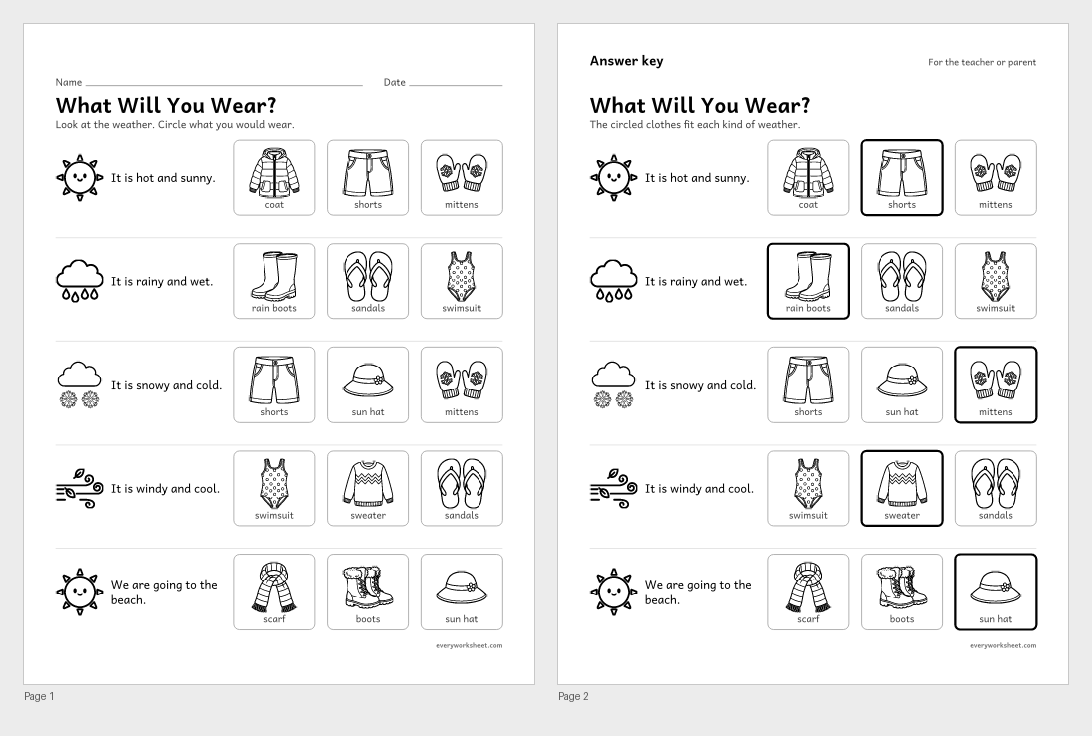
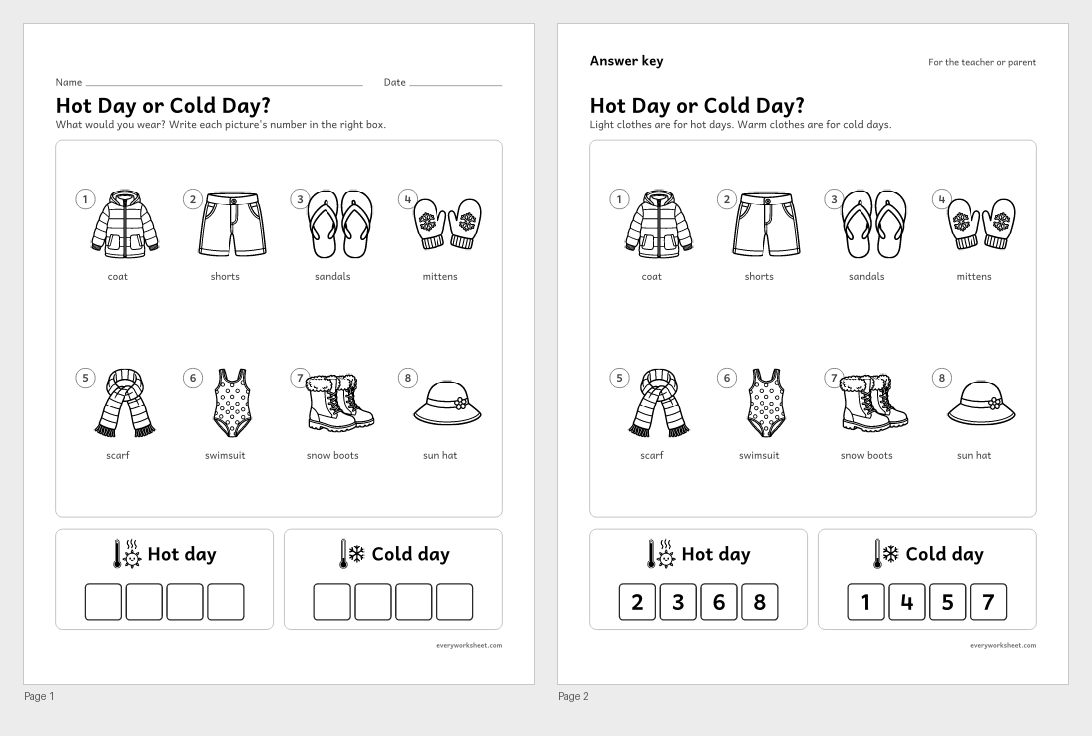
Choosing clothes that fit the weather
Answer key on page 2
2 pages318 KB
 View all 2 pages
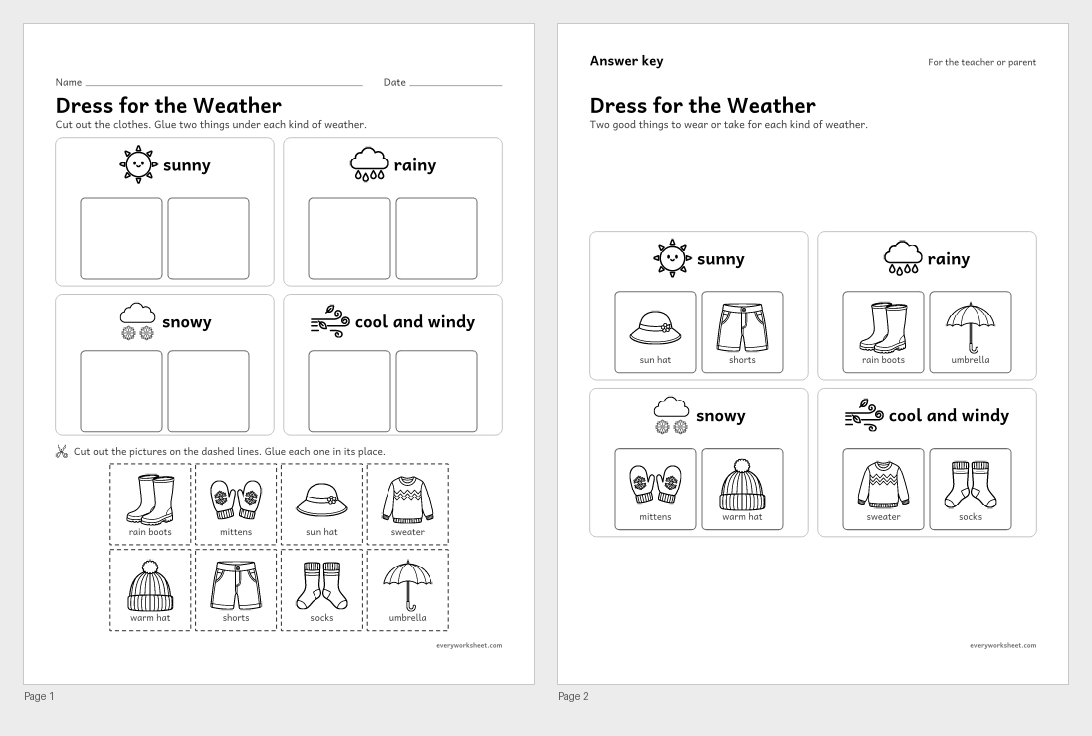
Sorting clothes by hot and cold weather
Answer key on page 2
2 pages218 KB
 View all 2 pages
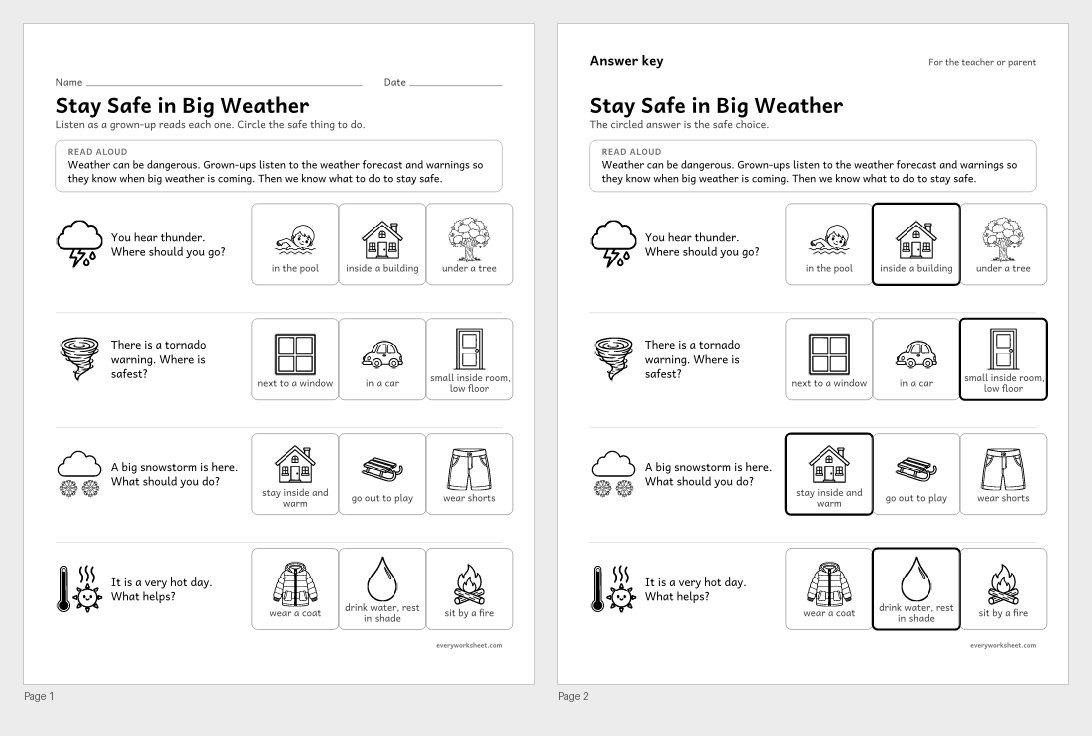
Matching clothes to sunny, rainy, snowy and windy weather
Answer key on page 2
2 pages197 KB
 View all 2 pages
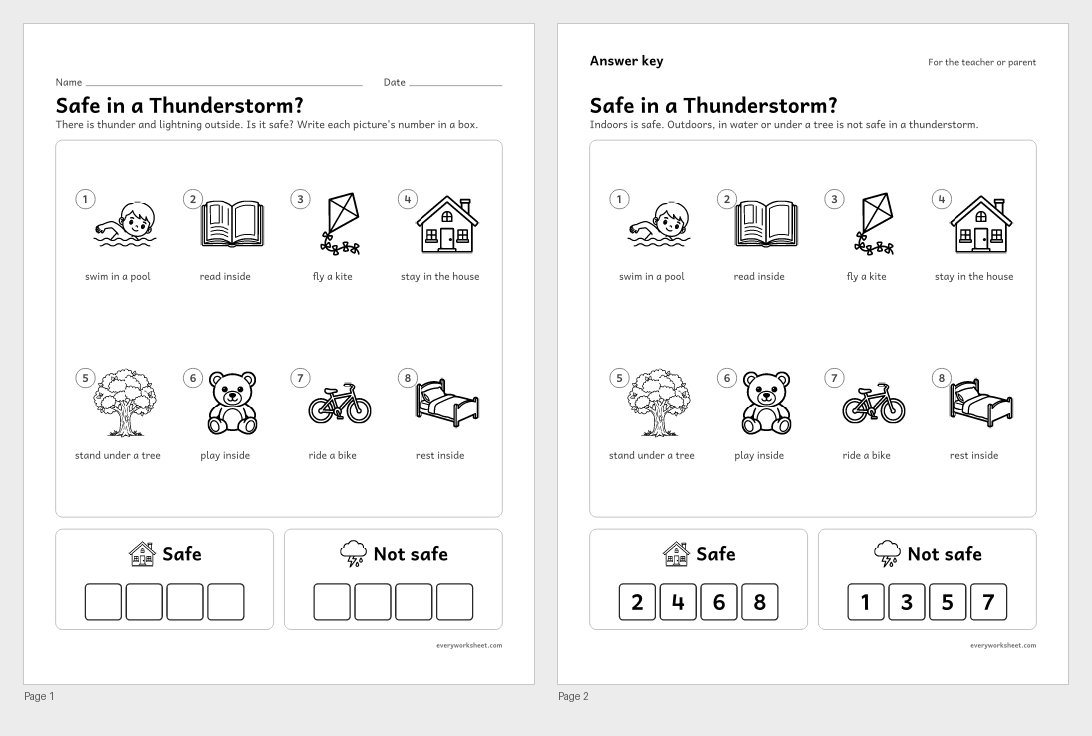
Choosing safe actions in thunderstorms, tornadoes, snowstorms and heat
Answer key on page 2
2 pages457 KB
 View all 2 pages
Sorting safe and unsafe actions during a thunderstorm
Answer key on page 2
2 pages387 KB
 View all 2 pages
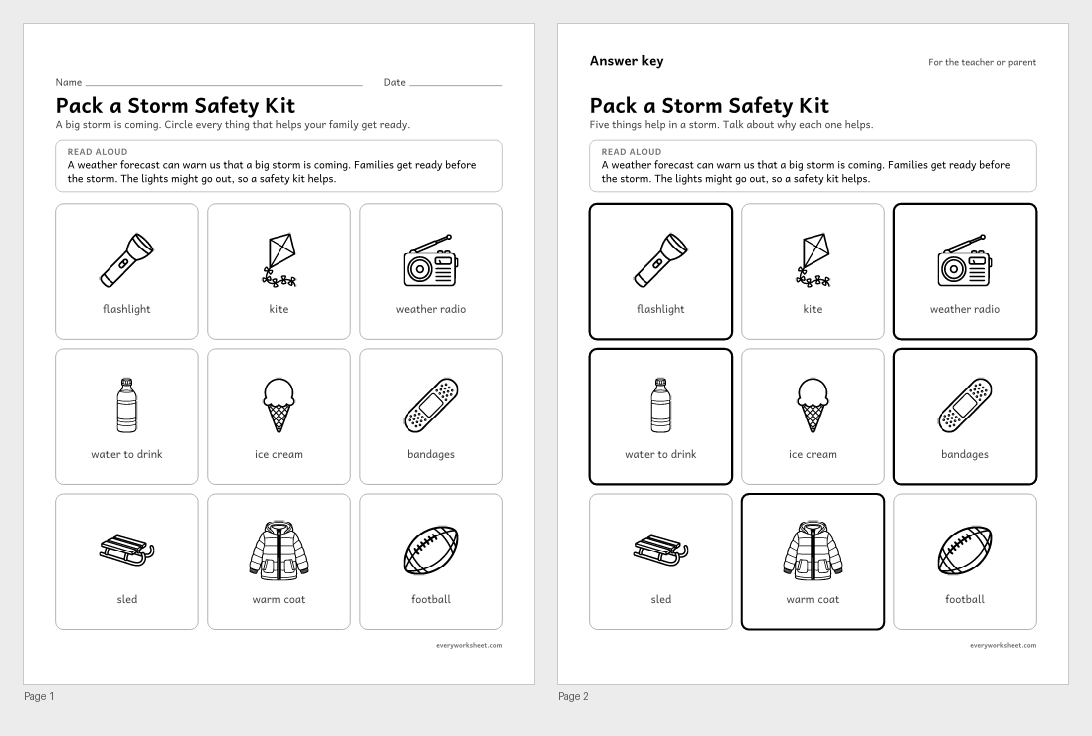
Choosing supplies that help a family prepare for severe weather
Answer key on page 2
2 pages328 KB
 View all 2 pages
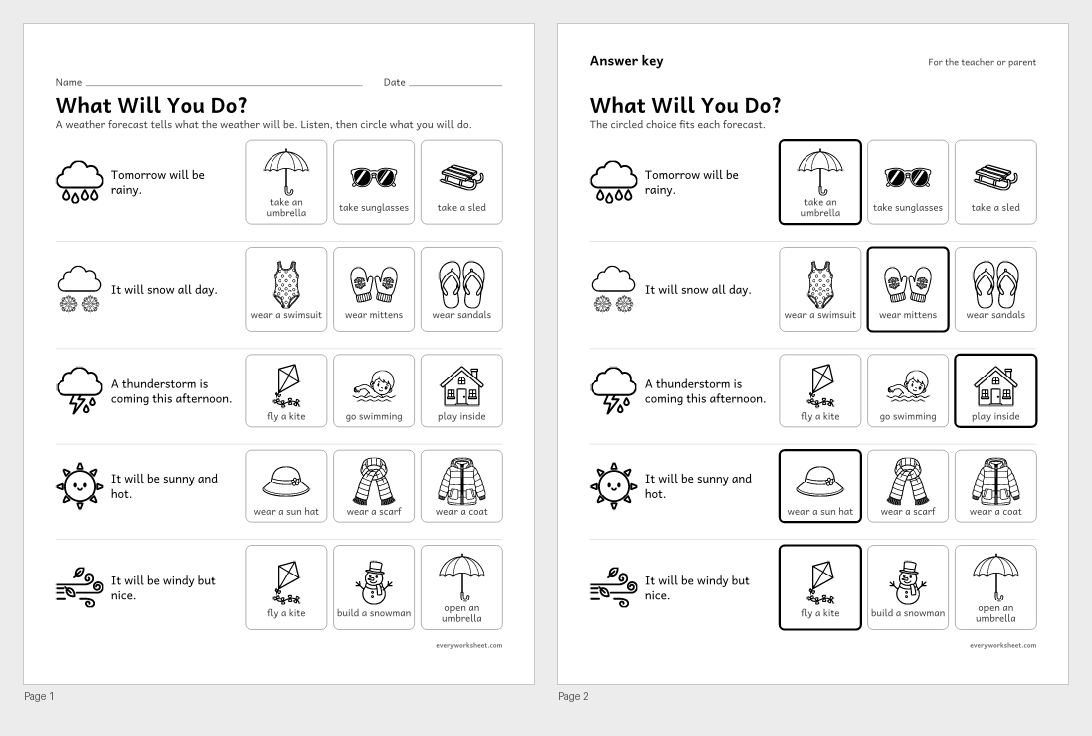
Using a weather forecast to plan what to do
Answer key on page 2
2 pages448 KB
 View larger
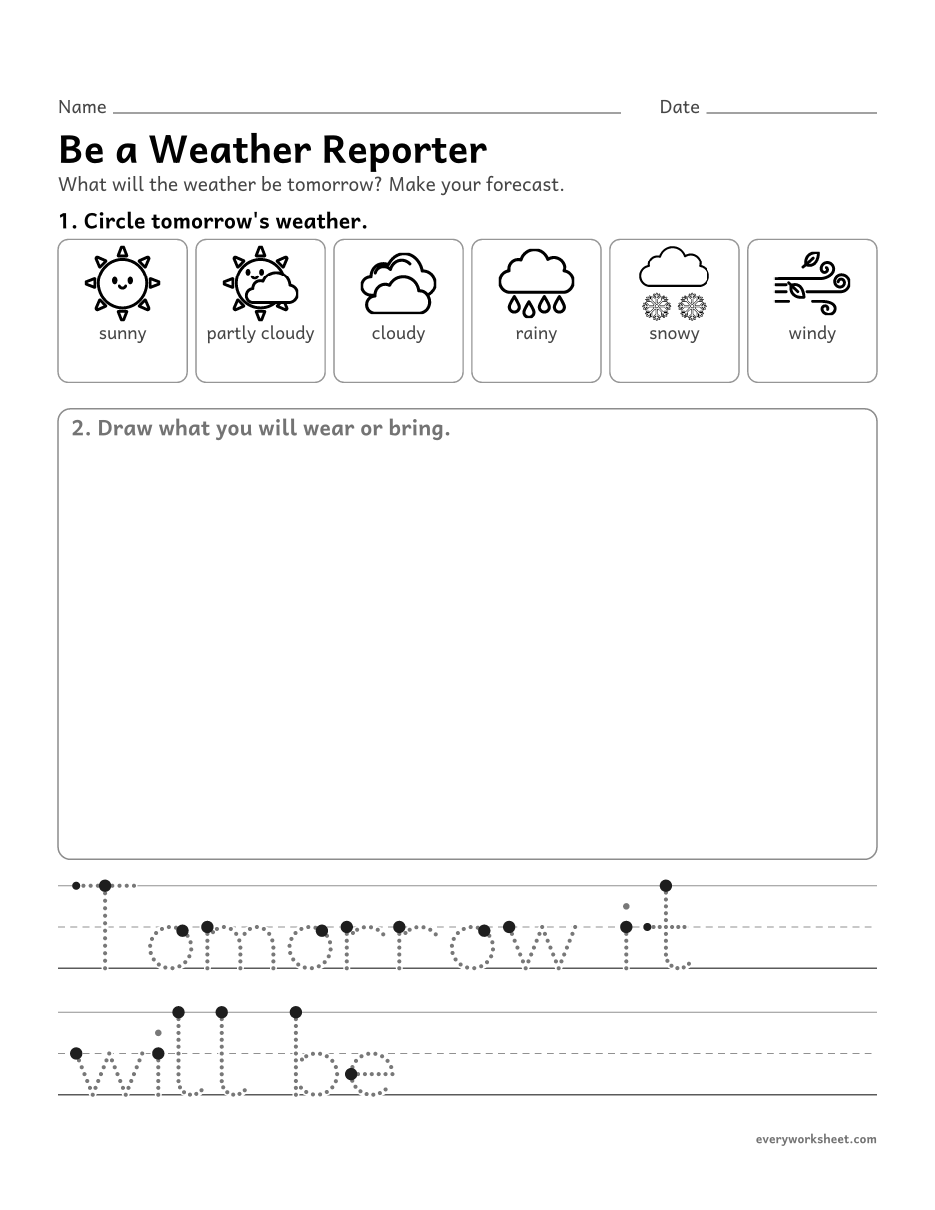
Making and sharing a simple weather forecast
1 page60 KB
Print at 100% (actual size) for the cleanest tracing lines.
Kindergarten weather is all about looking outside and noticing. Is it sunny, cloudy, rainy, snowy or windy? Is it hot or cold? When children write down the weather every day, they start to see patterns: more rainy days in spring, more cold days in winter. These weather worksheets give them simple tools to do that, with pictures they can use before they can read.
Start with the weather symbols chart and the matching pages so every child knows the symbols. The symbol cards can be colored, cut out and used on your class weather chart. Then use the weekly or monthly weather chart each morning. At the end of the month, children tally the days and compare the counts on a graph. Two ready-made graph pages, each with a month of weather already filled in, let them practice counting and comparing first.
The what to wear pages connect weather to everyday choices, with a pencil-only sort and a cut and paste version. The severe weather pages cover what to do in a thunderstorm, a tornado, a snowstorm and a very hot day, what goes in a storm safety kit, and why families listen to the weather forecast. Every page with one right answer has an answer key on page 2.
NGSS K-ESS2-1Use and share observations of local weather conditions to describe patterns over time.NGSS K-ESS3-2Ask questions to obtain information about the purpose of weather forecasting to prepare for, and respond to, severe weather.CCSS.MATH.CONTENT.K.MD.B.3Classify objects into given categories; count the numbers of objects in each category and sort the categories by count.CCSS.MATH.CONTENT.K.CC.B.5Count to answer "how many?" questions about as many as 20 things arranged in a line, a rectangular array, or a circle, or as many as 10 things in a scattered configuration; given a number from 1–20, count out that many objects.CCSS.MATH.CONTENT.K.CC.C.6Identify whether the number of objects in one group is greater than, less than, or equal to the number of objects in another group, e.g., by using matching and counting strategies.CCSS.ELA-LITERACY.L.K.5.ASort common objects into categories (e.g., shapes, foods) to gain a sense of the concepts the categories represent.CCSS.ELA-LITERACY.L.K.1.APrint many upper- and lowercase letters.CCSS.ELA-LITERACY.W.K.2Use a combination of drawing, dictating, and writing to compose informative/explanatory texts in which they name what they are writing about and supply some information about the topic.CCSS.ELA-LITERACY.SL.K.2Confirm understanding of a text read aloud or information presented orally or through other media by asking and answering questions about key details and requesting clarification if something is not understood.Start with sunny, cloudy, rainy, snowy and windy. Add partly cloudy and stormy once those feel easy. The weather symbols chart shows all of them with a short description.
Look outside at the same time each day and draw the weather symbol on a weekly or monthly chart. At the end of the month, count each kind of day and make a graph to find the pattern.
A forecast tells us what the weather will be, so we can get ready. It helps us choose what to wear and keeps us safe when big storms, tornadoes, snowstorms or heat are coming.
Yes. Every page with one right answer, like the matching, circle, sort, cut and paste and graph pages, has an answer key on page 2. Charts, cards and drawing pages do not need one.