 View larger
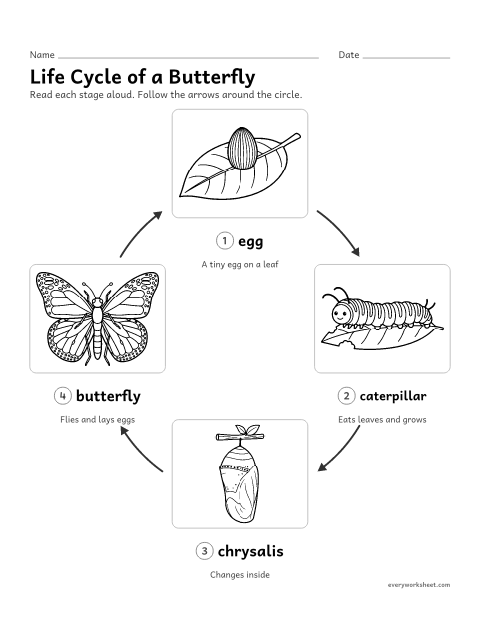
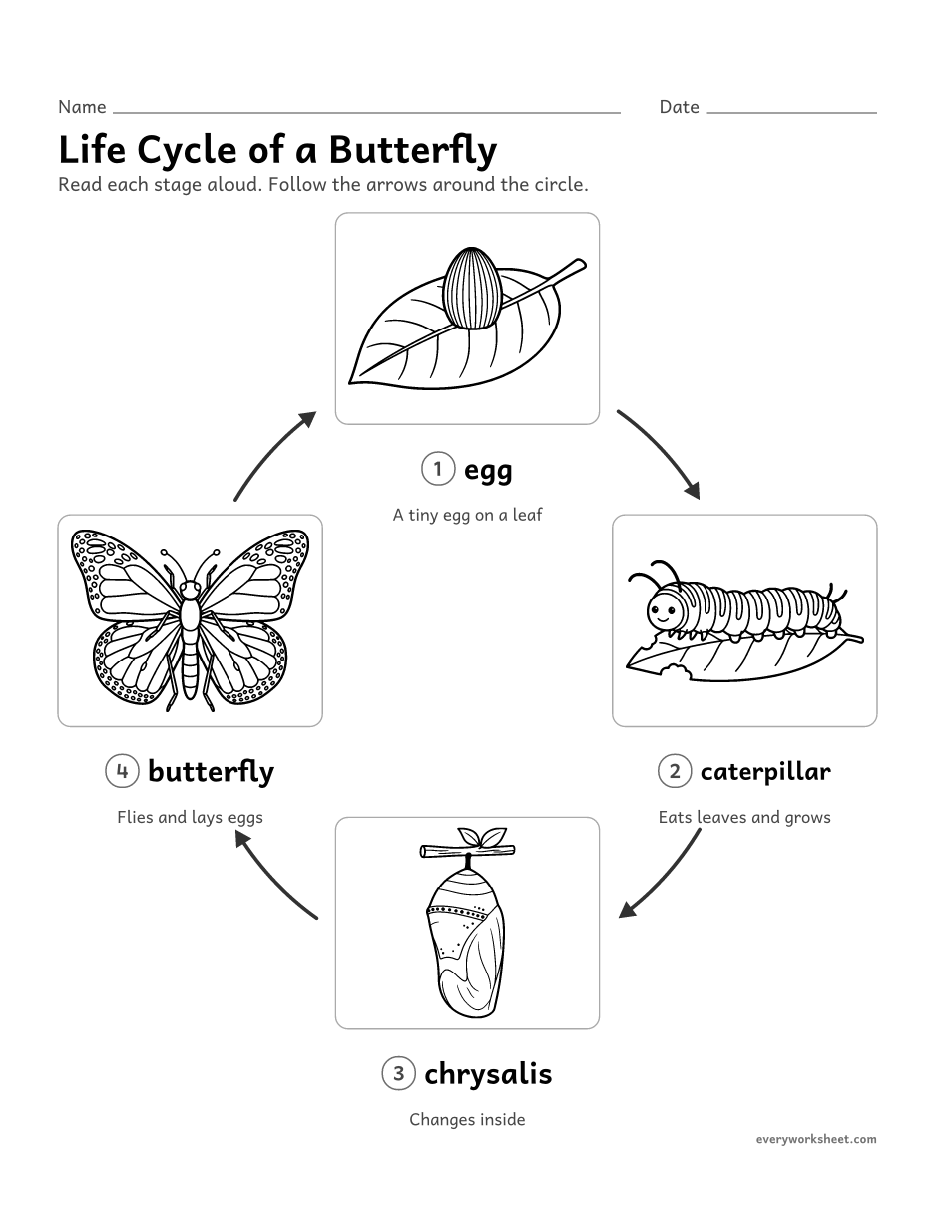
Butterfly life cycle chart
Naming the stages of the butterfly life cycle in order
1 page92 KB
Egg, caterpillar, chrysalis, butterfly: a detailed life cycle chart plus labeling, cut and paste, a spinning wheel, drawing, a journal and a read-aloud page.
View largerNaming the stages of the butterfly life cycle in order
1 page92 KB
 View all 2 pages
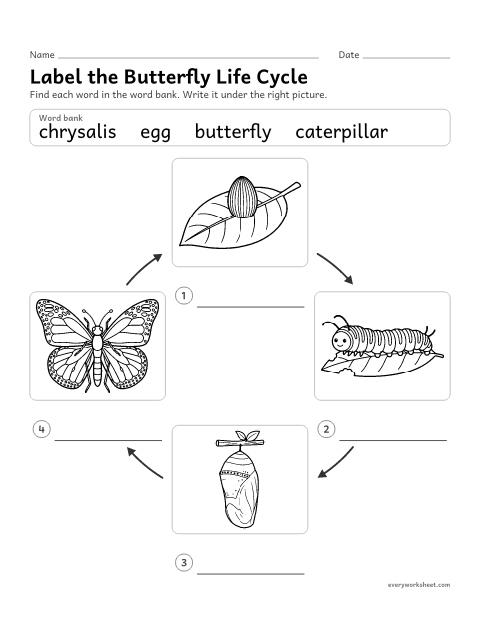
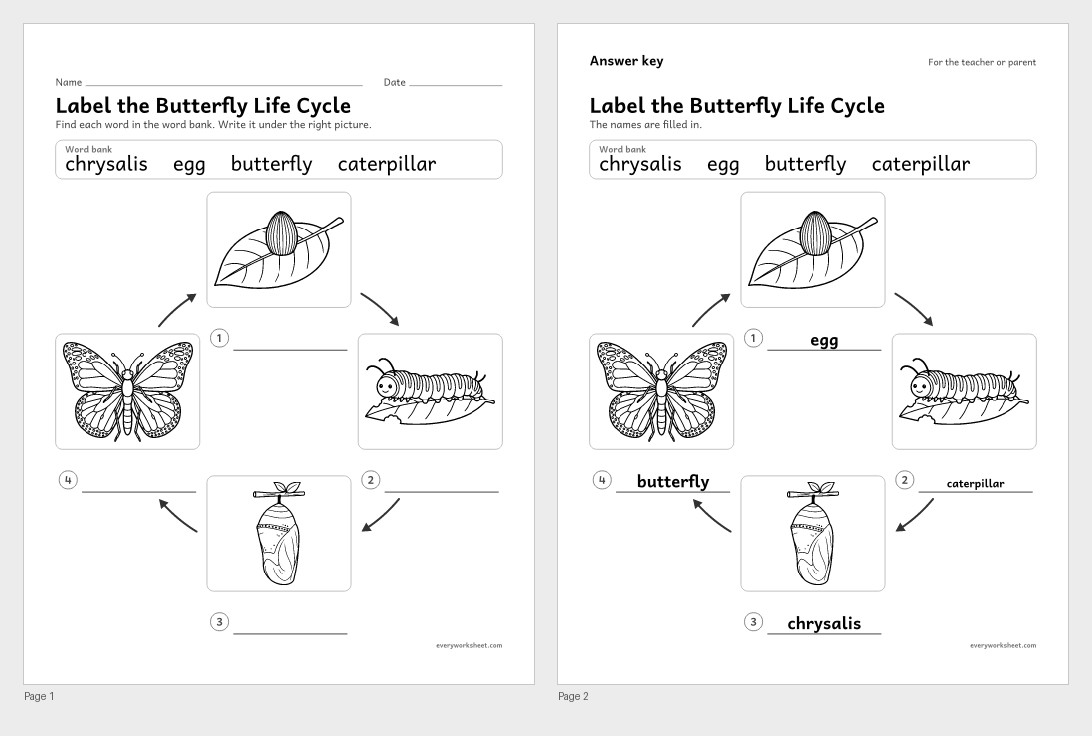
Labeling the stages of the butterfly life cycle
Answer key on page 2
2 pages160 KB
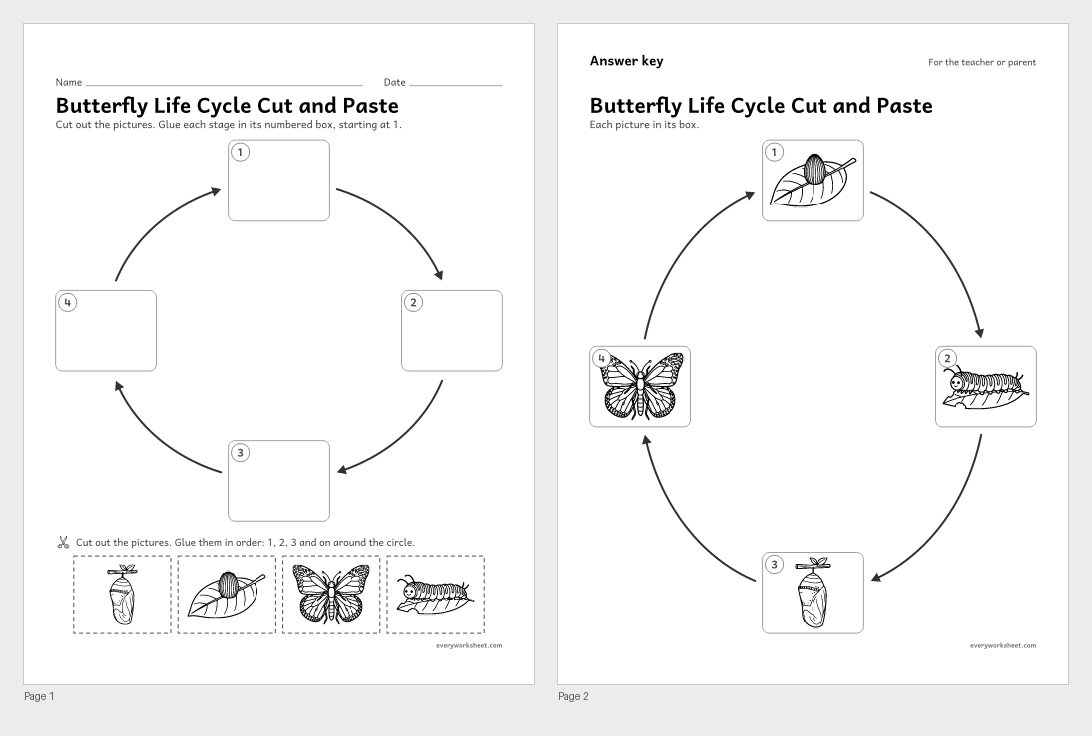 View all 2 pages
Putting the butterfly life cycle stages in order
Answer key on page 2
2 pages176 KB
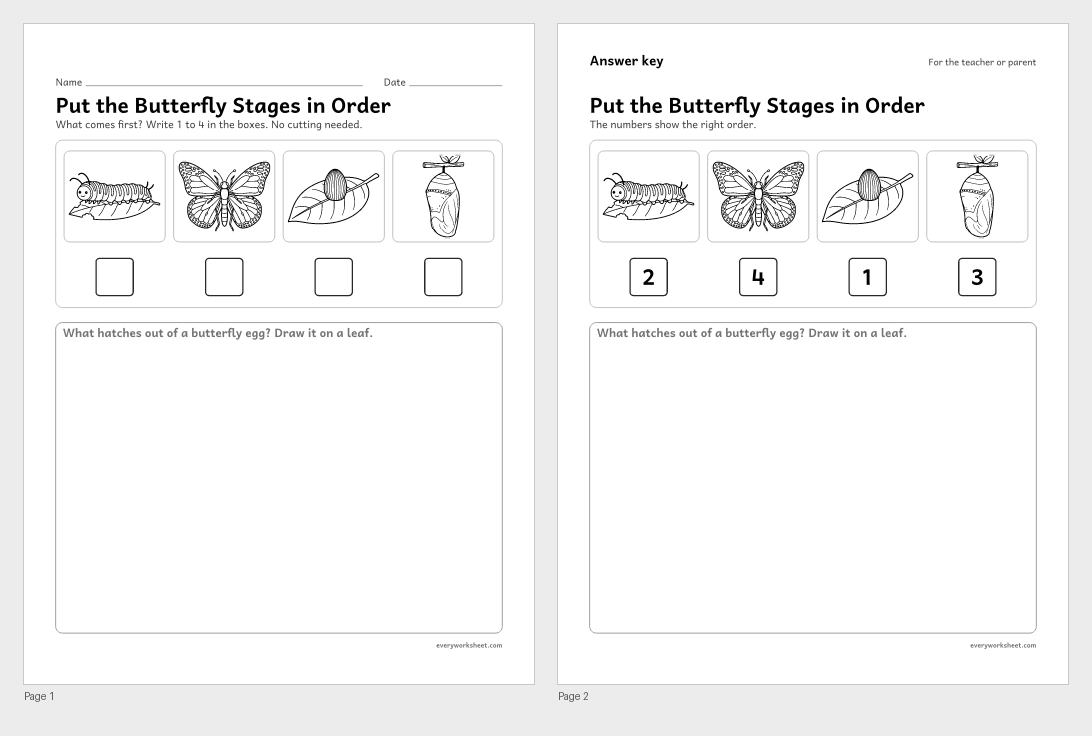 View all 2 pages
Ordering the stages of the butterfly life cycle
Answer key on page 2
2 pages159 KB
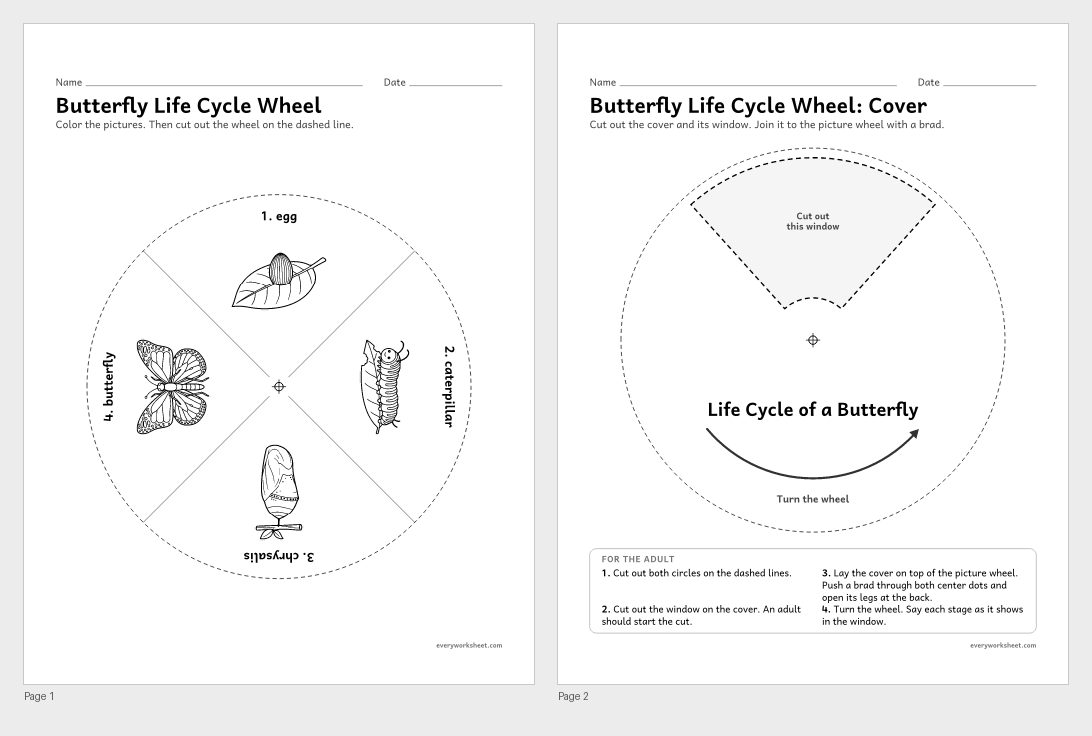 View all 2 pages
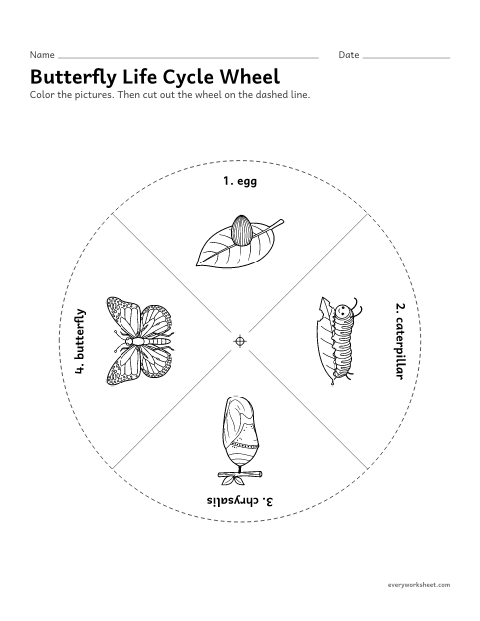
Turning a wheel to show the butterfly life cycle as a cycle
2 pages97 KB
 View larger
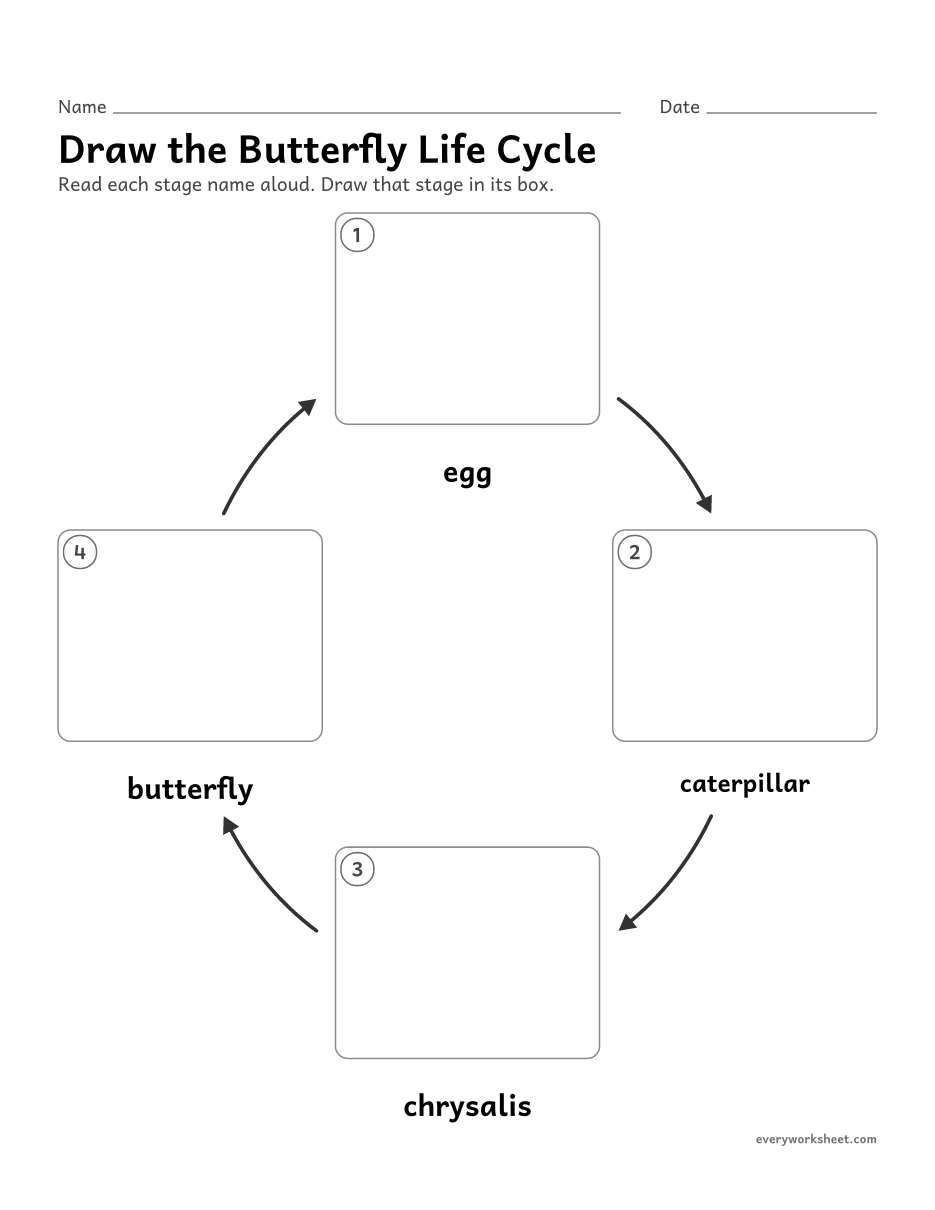
Drawing the stages of the butterfly life cycle
1 page27 KB
 View all 2 pages
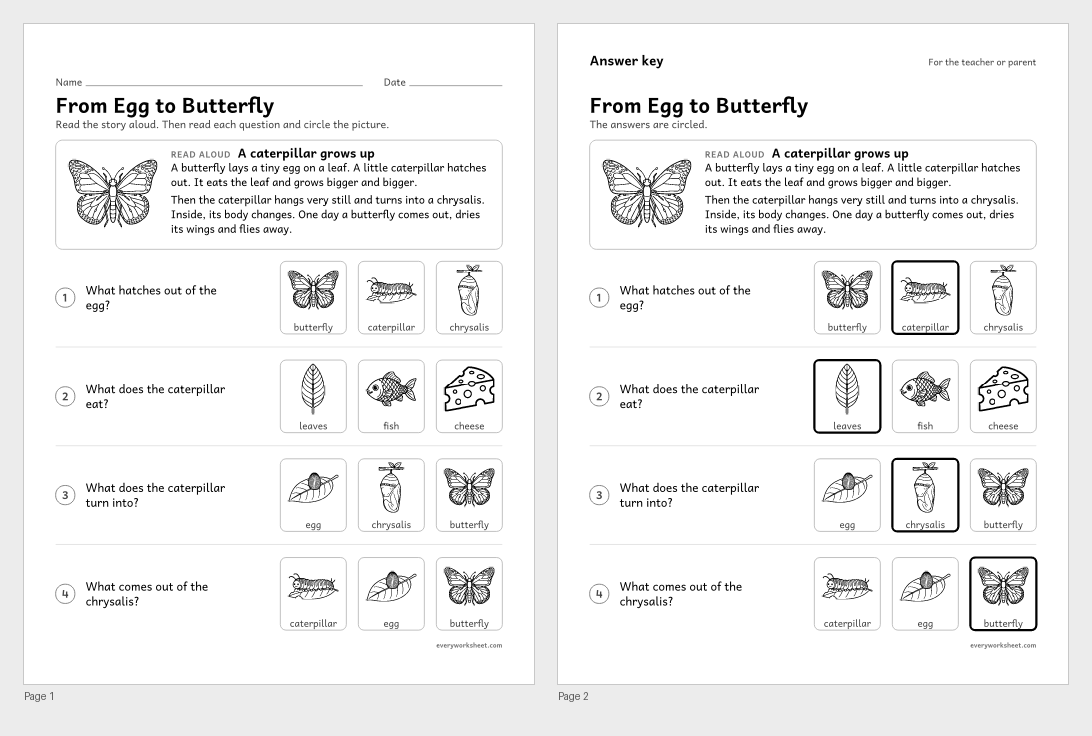
Answering questions about the butterfly life cycle read aloud
Answer key on page 2
2 pages491 KB
 View larger
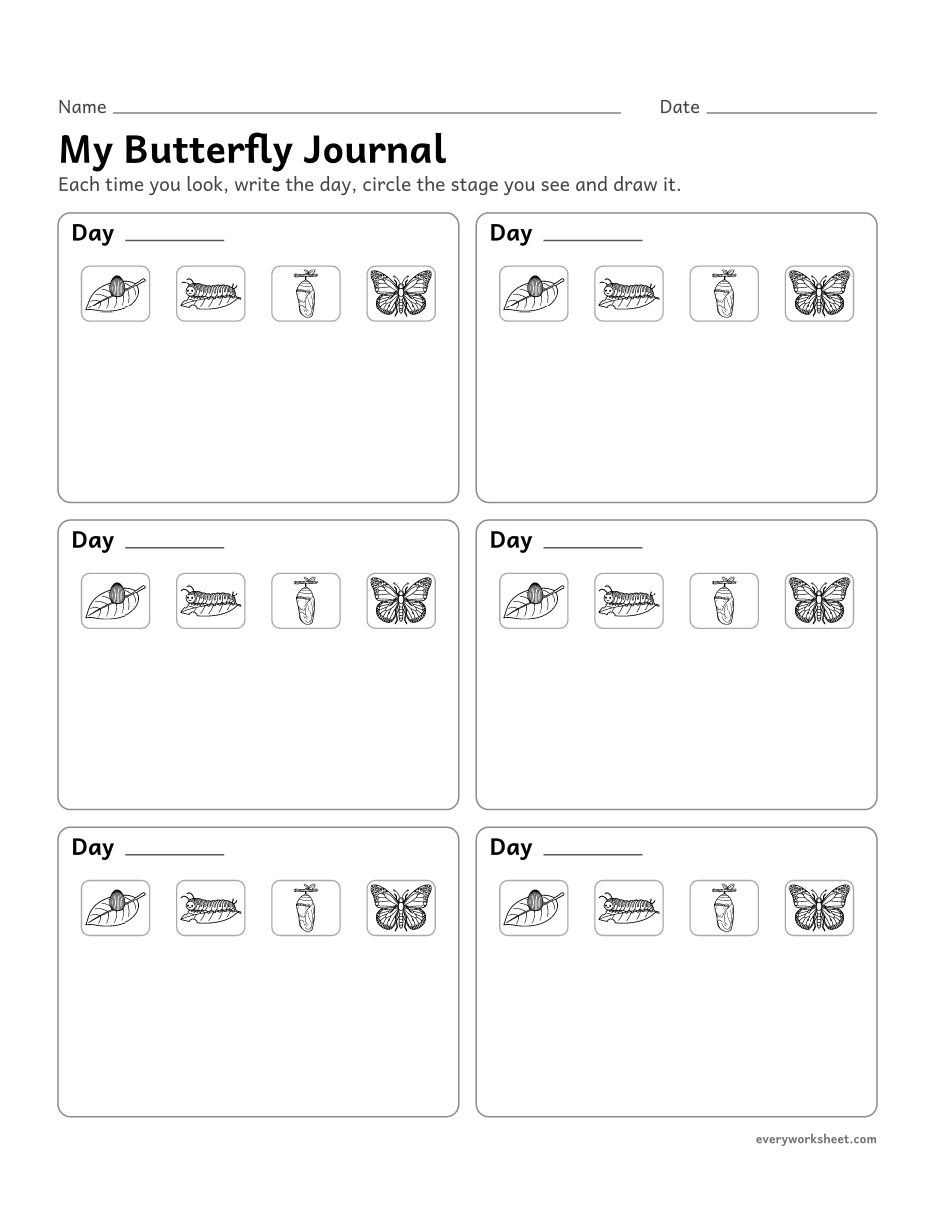
Observing and recording a caterpillar as it changes
1 page375 KB
Print at 100% (actual size) for the cleanest tracing lines.
The life cycle of a butterfly is one of the best first science stories for young children. A tiny egg on a milkweed leaf becomes a hungry caterpillar, the caterpillar hangs from a twig and turns into a chrysalis, and a monarch butterfly comes out. Four stages, big changes, and pictures children remember.
These butterfly life cycle worksheets use detailed line drawings of every stage: the egg on its leaf, the striped caterpillar, the chrysalis hanging from a twig and a monarch with veined wings. Children read the chart, label the stages from a word bank, cut and paste the pictures around the circle, build a life cycle wheel, draw the cycle and answer questions about a story read aloud. A no-cut version of the sequencing page is included, and an observation journal goes with a classroom caterpillar habitat.
Every page is in black and white, ready to color. Life cycles are formally taught in grade 3 (NGSS 3-LS1-1). These pages introduce the idea at a kindergarten level, with pictures, read-aloud text and no reading required.
NGSS 3-LS1-1Grade 3 standard, introduced here at a kindergarten level: develop models to describe that organisms have unique and diverse life cycles but all have in common birth, growth, reproduction, and death.NGSS K-LS1-1Use observations to describe patterns of what plants and animals (including humans) need to survive.CCSS.ELA-LITERACY.W.K.2Use a combination of drawing, dictating, and writing to compose informative/explanatory texts in which they name what they are writing about and supply some information about the topic.CCSS.ELA-LITERACY.L.K.1.APrint many upper- and lowercase letters.CCSS.ELA-LITERACY.RI.K.1With prompting and support, ask and answer questions about key details in a text.CCSS.ELA-LITERACY.SL.K.2Confirm understanding of a text read aloud or information presented orally or through other media by asking and answering questions about key details and requesting clarification if something is not understood.Egg, caterpillar (also called a larva), chrysalis (also called a pupa) and adult butterfly. Then the butterfly lays eggs and the cycle starts again.
Life cycles are a grade 3 standard, but many kindergarten classes study butterflies in spring. These pages keep it to pictures, four simple words and text read aloud.
A butterfly caterpillar turns into a chrysalis, a hard case made from its own skin. Many moth caterpillars spin a cocoon of silk instead.
Print both pages. Cut out the two circles and the window on the cover, lay the cover on the picture wheel and push a brad through both centers. Turn the wheel to show each stage.
Yes. The label, cut and paste, number and read-aloud pages each have an answer key on page 2 of the PDF.