 View larger
Parts of a Butterfly Worksheets
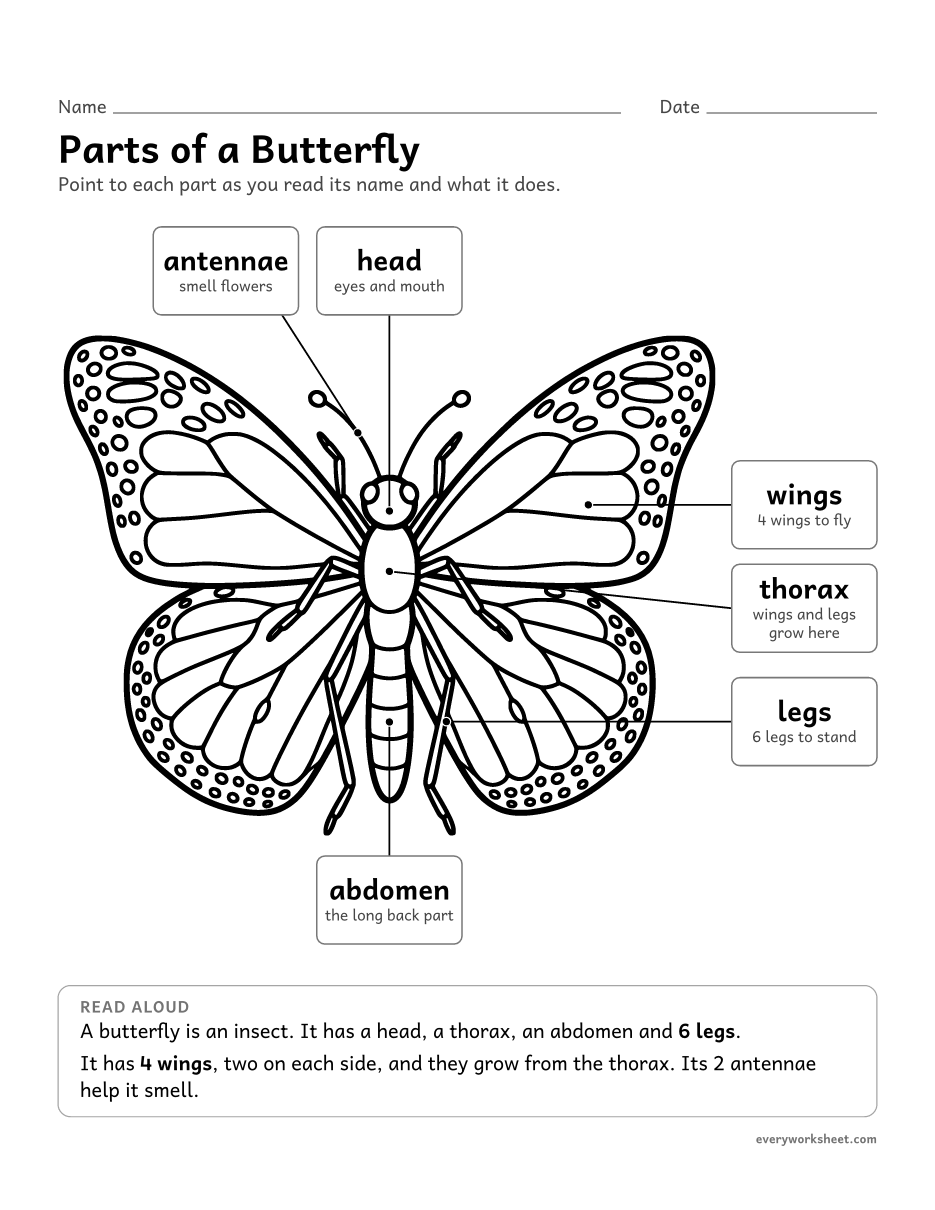
Head, thorax, abdomen, wings, antennae and legs on a detailed monarch: a labeled chart, label it, cut and paste and color pages.
Download the parts of a butterfly worksheets
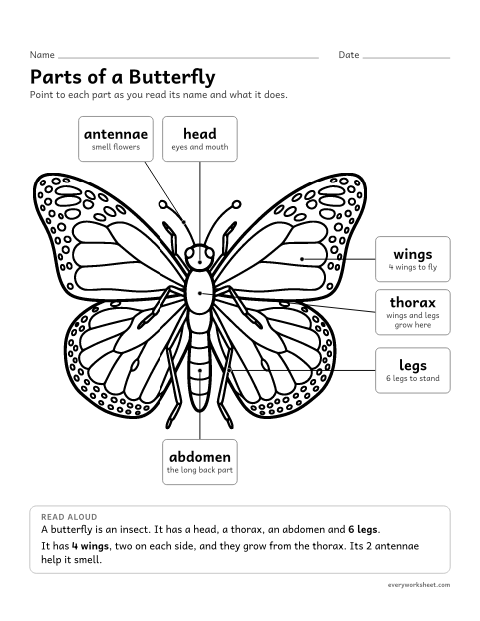
Parts of a butterfly chart
 View larger
Label, cut and paste, color
 View all 2 pages
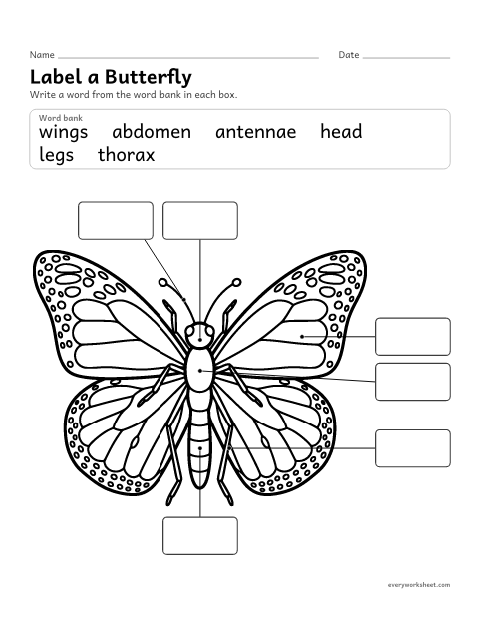
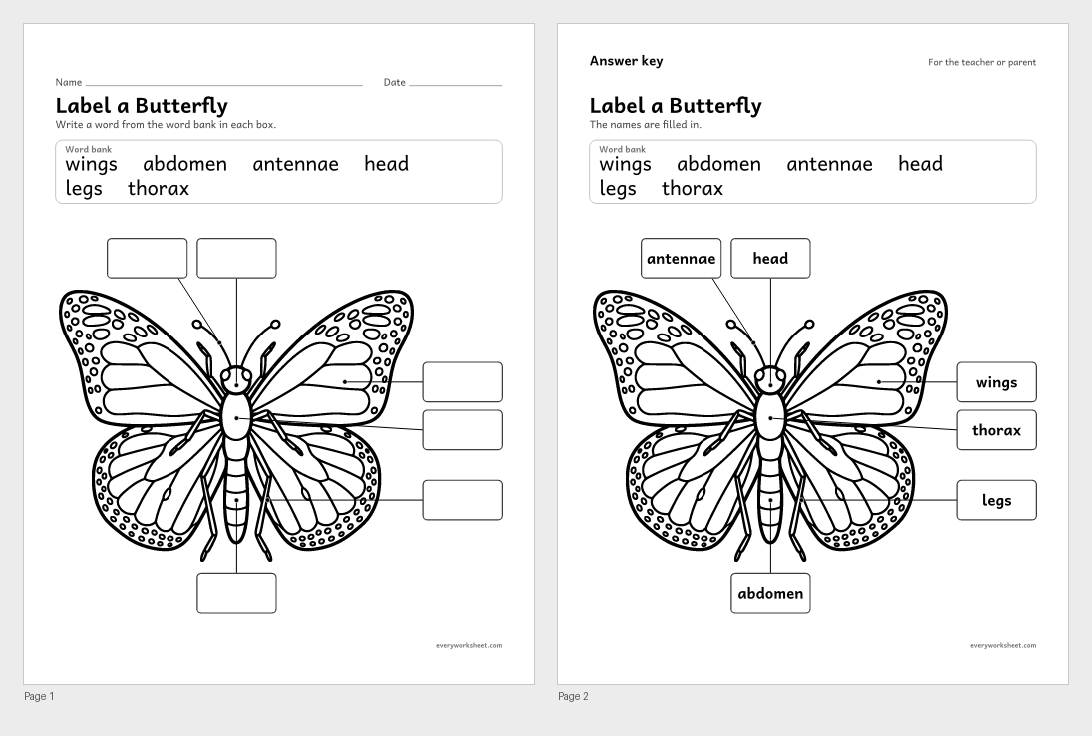
Label the parts of a butterfly
Labeling the parts of a butterfly
Answer key on page 2
2 pages105 KB
 View all 2 pages
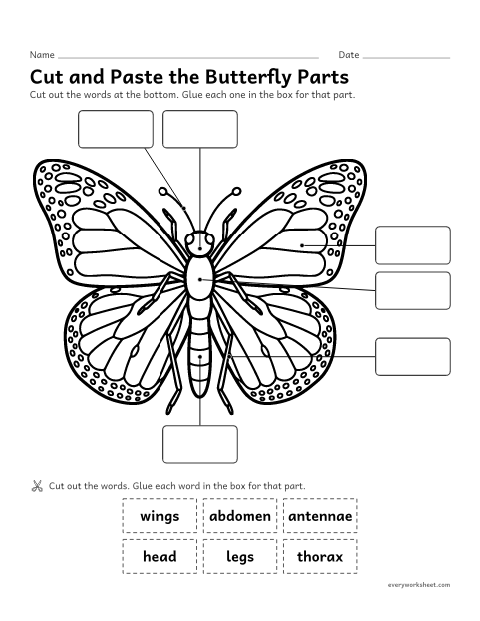
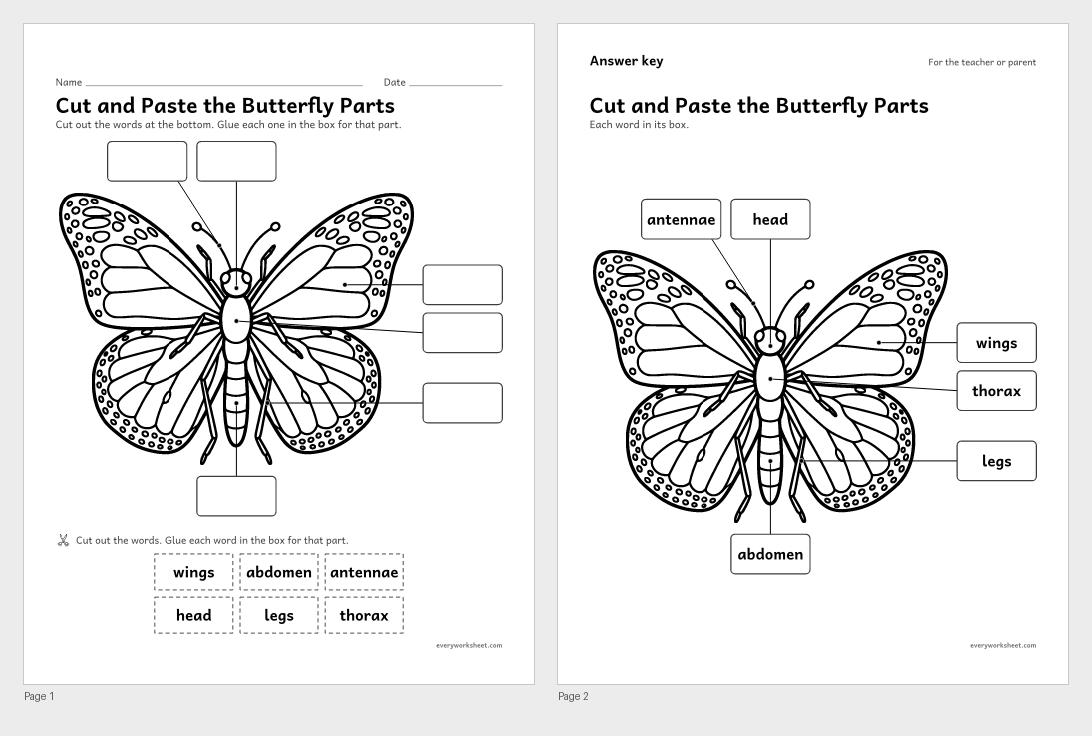
Parts of a butterfly cut and paste
Matching part names to the parts of a butterfly
Answer key on page 2
2 pages134 KB
 View larger
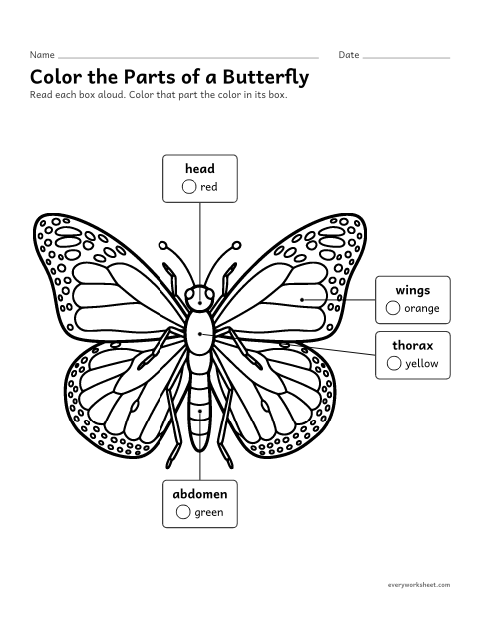
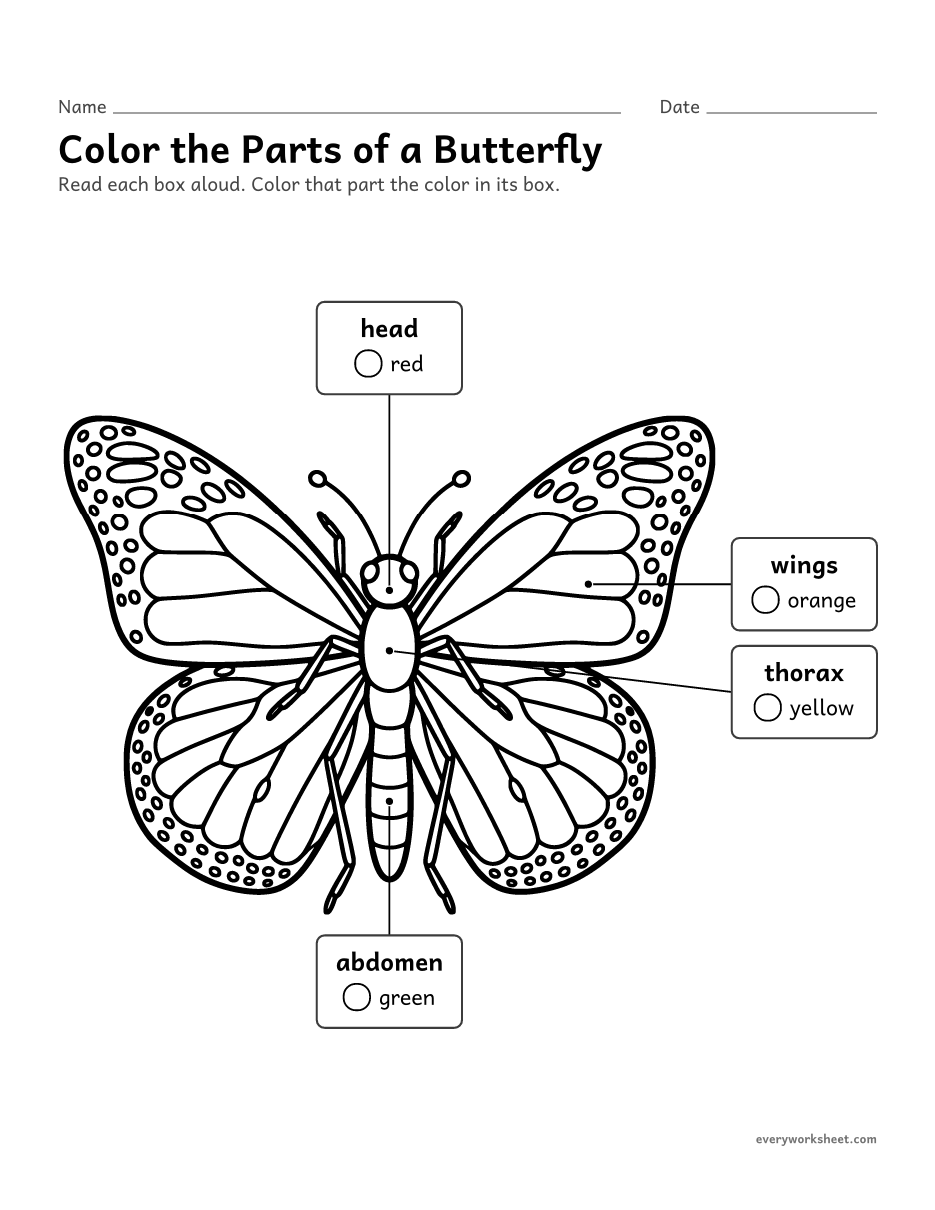
Color the parts of a butterfly
Finding the parts of a butterfly by coloring
1 page64 KB
Print at 100% (actual size) for the cleanest tracing lines.
About these parts of a butterfly worksheets
A butterfly is an insect, so it has a head, a thorax and an abdomen, six legs and two antennae, plus four wings that grow from the thorax. These parts of a butterfly worksheets name each part on a detailed monarch drawing with veined wings that children can also color.
Children read the chart with an adult, write the part names from a word bank, cut and paste the names, and color each part. The pages pair well with the butterfly life cycle worksheets.
Animal body parts and what they do are part of the grade 1 standard 1-LS1-1. These pages introduce the names at a kindergarten level, with a clear line drawing and facts read aloud.
Standards
NGSS 1-LS1-1Grade 1 standard, introduced here at a kindergarten level: use materials to design a solution to a human problem by mimicking how plants and/or animals use their external parts to help them survive, grow, and meet their needs.NGSS K-LS1-1Use observations to describe patterns of what plants and animals (including humans) need to survive.CCSS.ELA-LITERACY.W.K.2Use a combination of drawing, dictating, and writing to compose informative/explanatory texts in which they name what they are writing about and supply some information about the topic.CCSS.ELA-LITERACY.L.K.1.APrint many upper- and lowercase letters.CCSS.ELA-LITERACY.SL.K.2Confirm understanding of a text read aloud or information presented orally or through other media by asking and answering questions about key details and requesting clarification if something is not understood.
How to use them
- Read the chart and have your child touch each part as you say its name.
- Label the parts with the word bank, or cut and paste the names. Check with the answer key on page 2.
- Read the color page aloud and let your child color each part.
Teaching tips
- Fold a paper butterfly to show that the wings match on both sides.
- Butterflies taste with their feet and smell with their antennae.
- The wings and the legs all grow from the thorax, the middle body part.
- Look at a real butterfly or a photo and count its wings together: most children are surprised there are four.
Questions teachers and parents ask
What are the parts of a butterfly?
A butterfly has a head with two antennae, a thorax, an abdomen, six legs and four wings.
How many wings does a butterfly have?
Four: two front wings and two back wings. All four grow from the thorax.
Do these worksheets have answer keys?
Yes. The label and cut and paste pages have an answer key on page 2.