 View all 2 pages
Sight Word: look
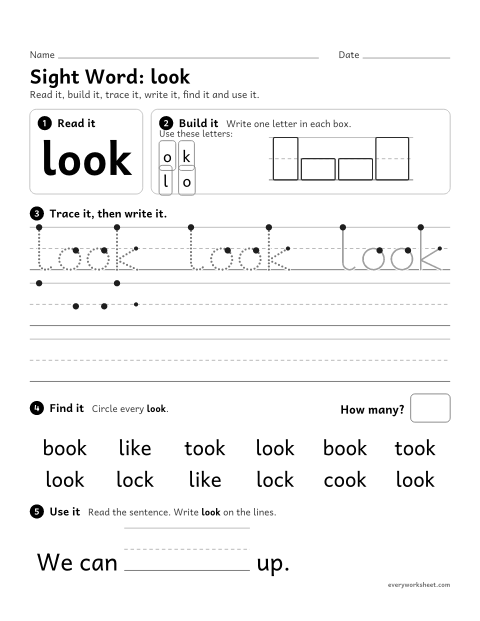
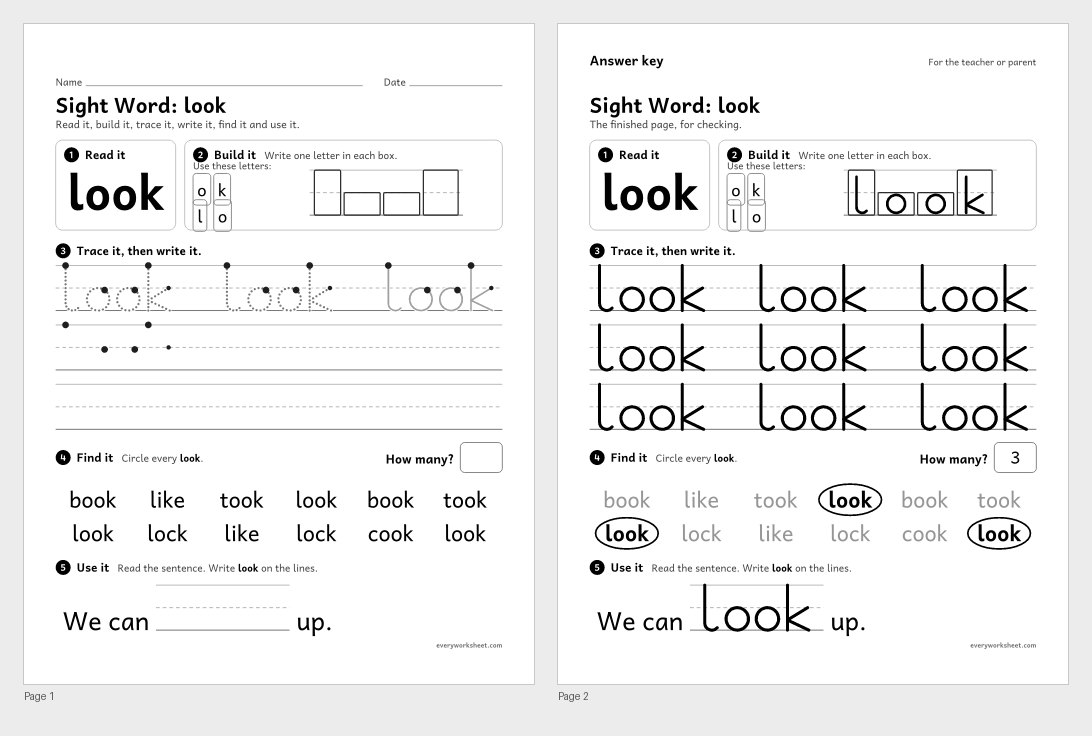
Reading and writing the sight word "look"
Answer key on page 2
2 pages46 KB
Three free worksheets for the sight word “look”: read, build, trace and write it, read it in short sentences, then find it in a story and color it.
View all 2 pagesReading and writing the sight word "look"
Answer key on page 2
2 pages46 KB
 View larger
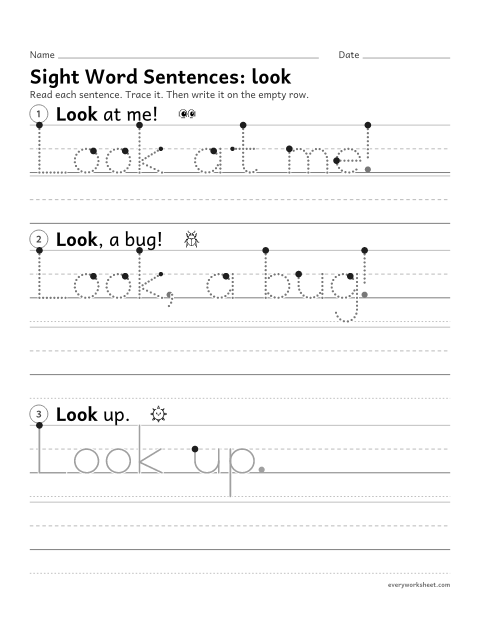
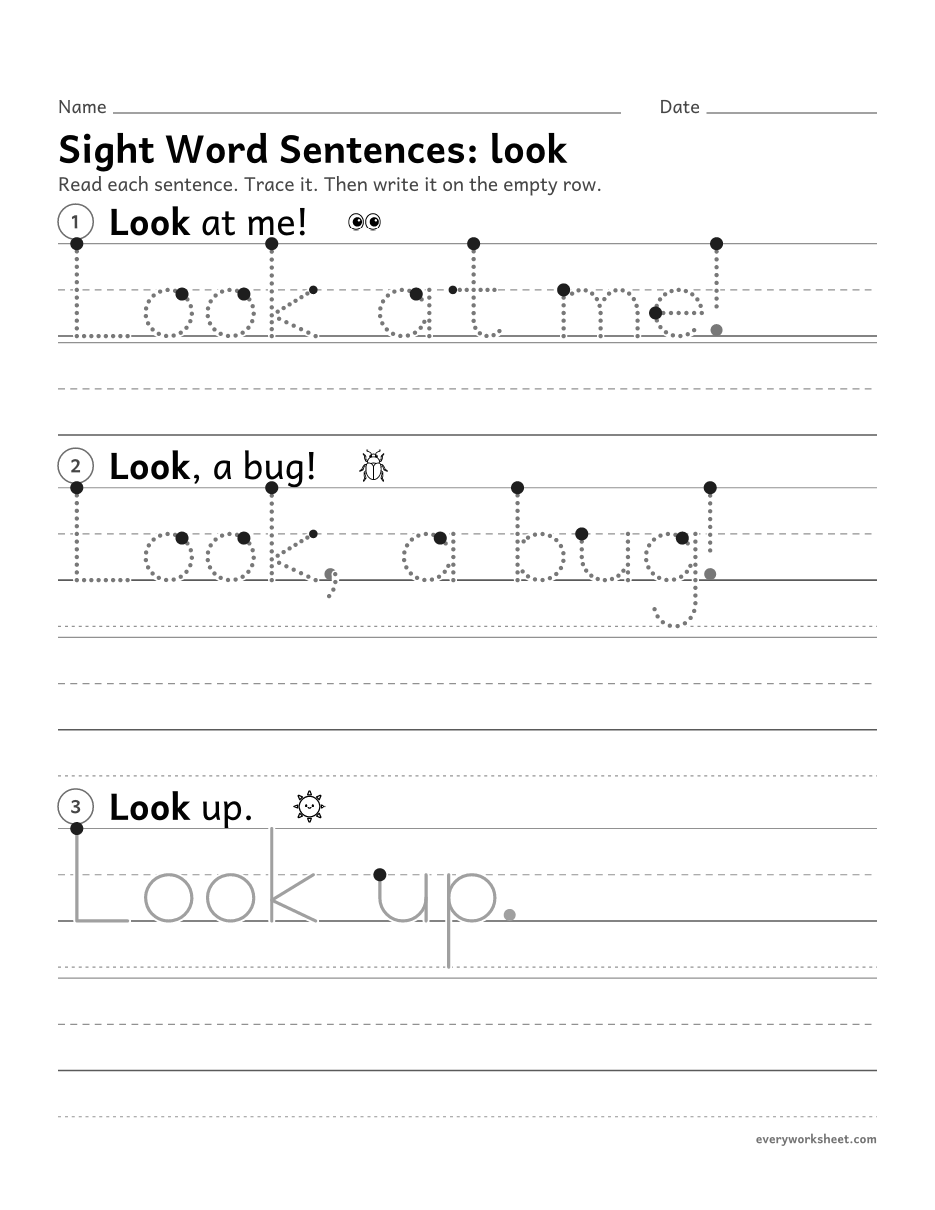
Reading and writing short sentences with the sight word "look"
1 page57 KB
 View all 2 pages
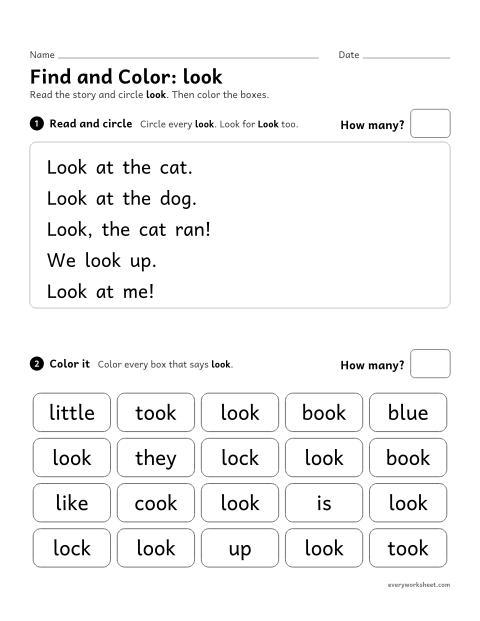
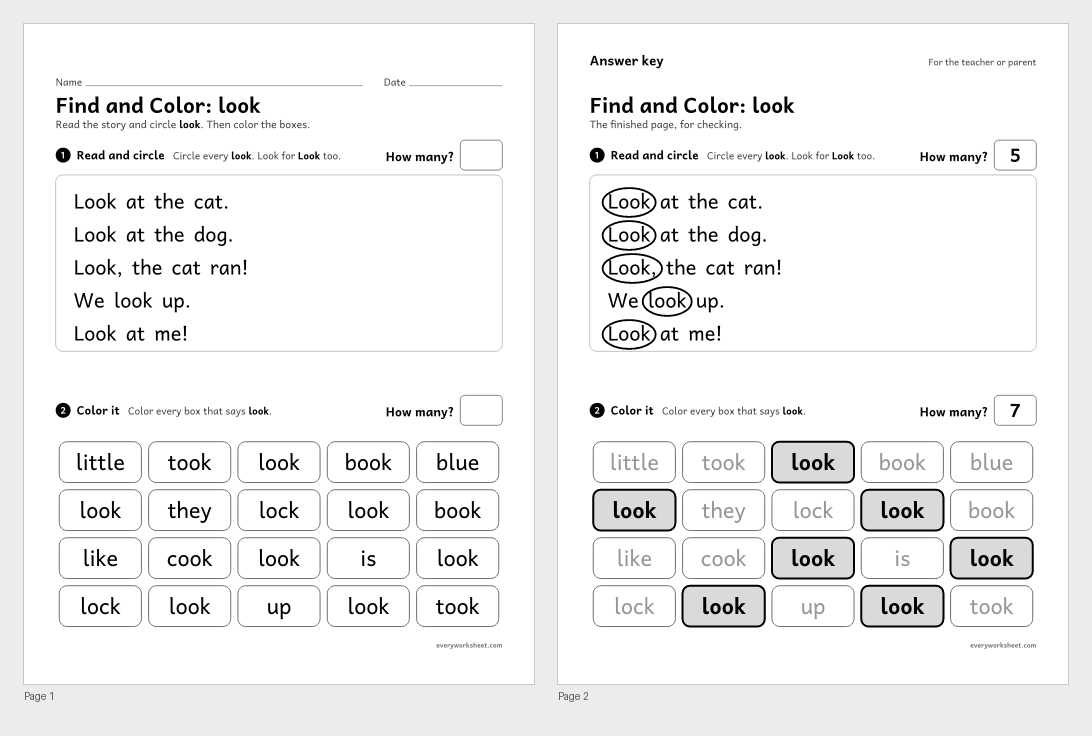
Finding the sight word "look" in a short story and among look-alike words
Answer key on page 2
2 pages43 KB
Print at 100% (actual size) for the cleanest tracing lines.
“look” has oo in the middle, which here says the short oo of book and cook, not the long oo of moon. It is spelled l-o-o-k: four letters, with two tall letters (l, k) and two short letters (o). It is word 20 of 50 on our kindergarten sight words list, an early sight word, usually taught in the first half of kindergarten.
There are three worksheets for “look”. The first one has six short steps: read it in big print, build it from scrambled letters, trace it, write it, circle it among look-alike words, and write it to finish the sentence “We can look up.” The sentences sheet has three short sentences to read, trace and write: “Look at me!”, “Look, a bug!” and “Look up.” The find and color sheet has a five-line story to read while circling every “look”, and a grid of word boxes to color.
Every sentence uses only “look”, sight words that come before it on the list and short sound-it-out words, so children can read them on their own. Each page is black and white with simple pictures, prints on US Letter or A4, and the find-it pages have an answer key on page 2.
CCSS.ELA-LITERACY.RF.K.3.CRead common high-frequency words by sight (e.g., the, of, to, you, she, my, is, are, do, does).CCSS.ELA-LITERACY.RF.K.4Read emergent-reader texts with purpose and understanding.CCSS.ELA-LITERACY.RF.K.1.AFollow words from left to right, top to bottom, and page by page.CCSS.ELA-LITERACY.RF.K.1.BRecognize that spoken words are represented in written language by specific sequences of letters.CCSS.ELA-LITERACY.RF.K.1.CUnderstand that words are separated by spaces in print.CCSS.ELA-LITERACY.L.K.1.APrint many upper- and lowercase letters.CCSS.ELA-LITERACY.L.K.2.DSpell simple words phonetically, drawing on knowledge of sound-letter relationships.Draw two eyes inside the two o's of “look.” Then say “Look!” and point every time you read it. Then work through the three sheets: trace and write “look”, read it in short sentences, and find it in a story. Short daily practice works better than one long session.
Yes, once children know that oo can say the sound in book. Most kindergartners learn it as a whole word before that pattern is taught.
Book, took, lock, like and cook are easy to mix up with “look”. The find-it rows on these worksheets mix them in on purpose, so children look at every letter, not just the first one.
Try “Look at me!”, “Look, a bug!”, “Look up.” and “Look at me!” They use only sight words and short words children can sound out.
Yes. The “look” worksheet and the find and color sheet each have an answer key on page 2, with the circled words and the counts. The sentences sheet needs no key: each sentence is printed above its trace row.