 View larger
Apple Worksheets
Apple-themed math and literacy pages for an apple week: counting, patterns, size order, addition, beginning sounds, story order, reading, writing and graphing.
Download the apple worksheets
Apple worksheets for preschool
 View larger
 View larger
 View larger
 View all 2 pages
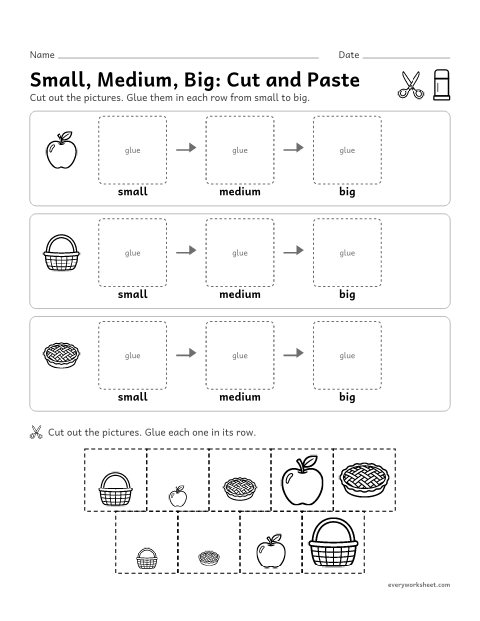
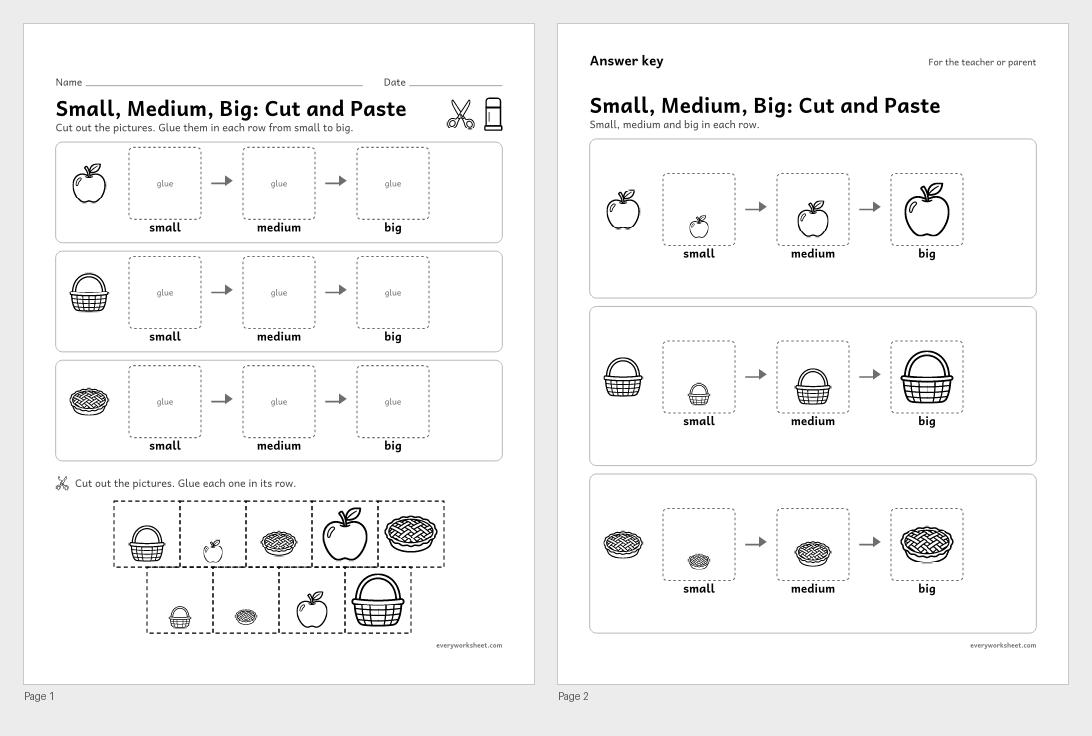
Small, Medium, Big: cut and paste
Putting 3 apples, baskets and pies in order from small to big
Answer key on page 2
2 pages707 KB
 View all 2 pages
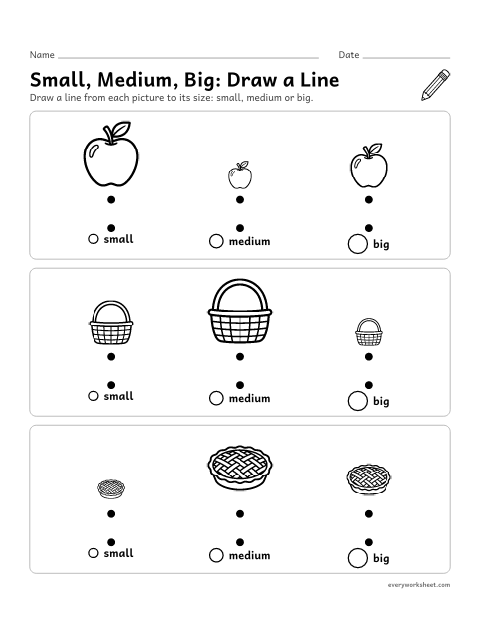
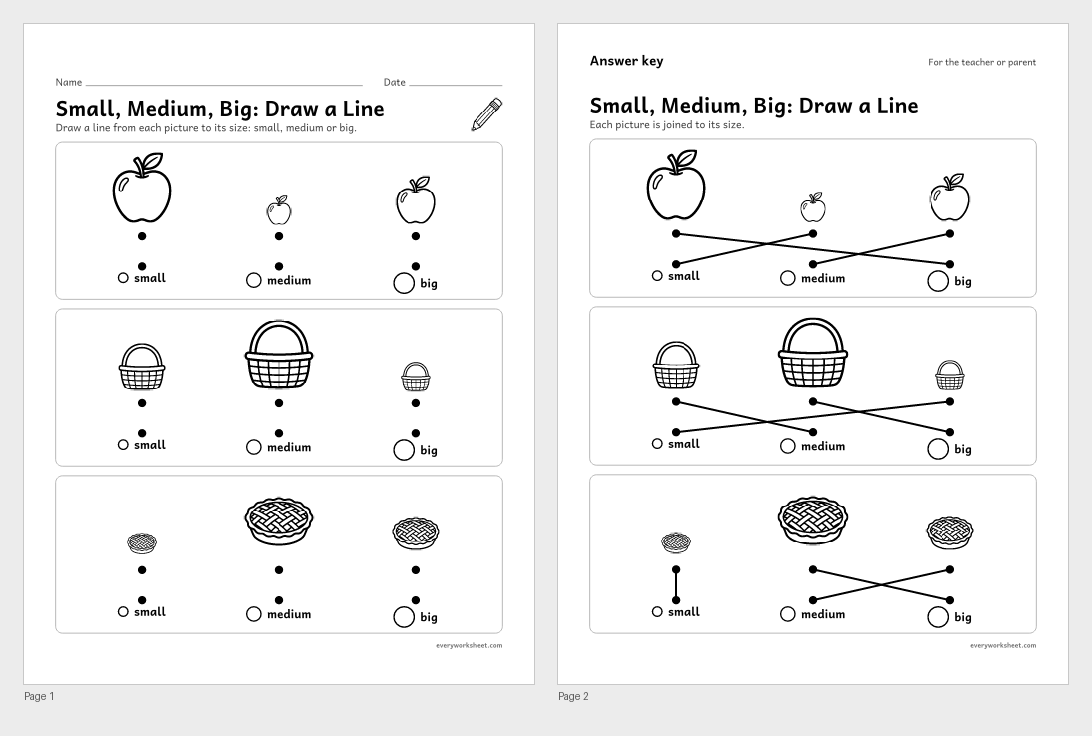
Small, Medium, Big: draw a line
Putting 3 apples, baskets and pies in order from small to big
Answer key on page 2
2 pages505 KB
 View all 2 pages
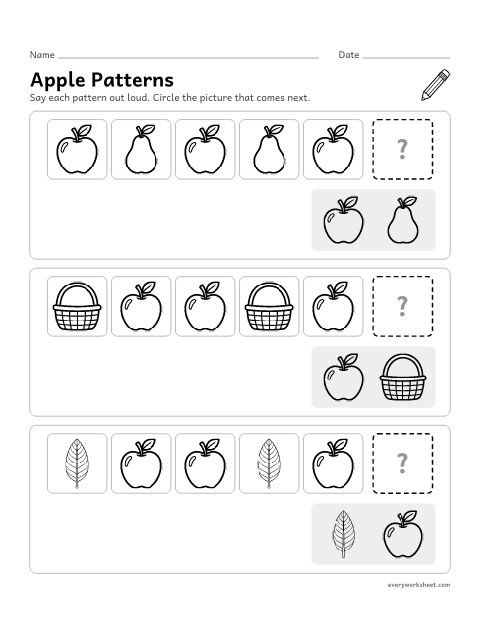
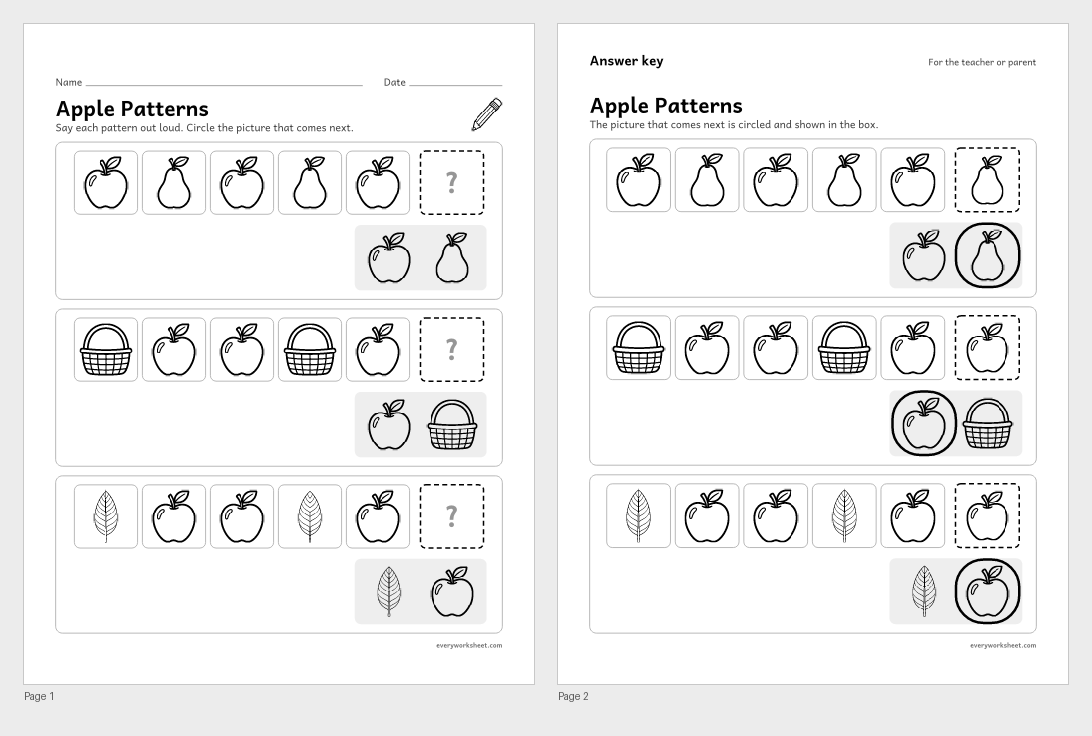
Apple patterns
Finishing AB and ABB patterns of apple things
Answer key on page 2
2 pages697 KB
 View all 2 pages
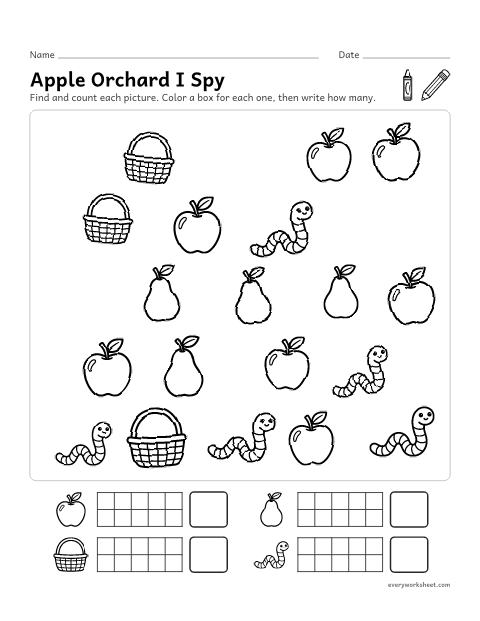
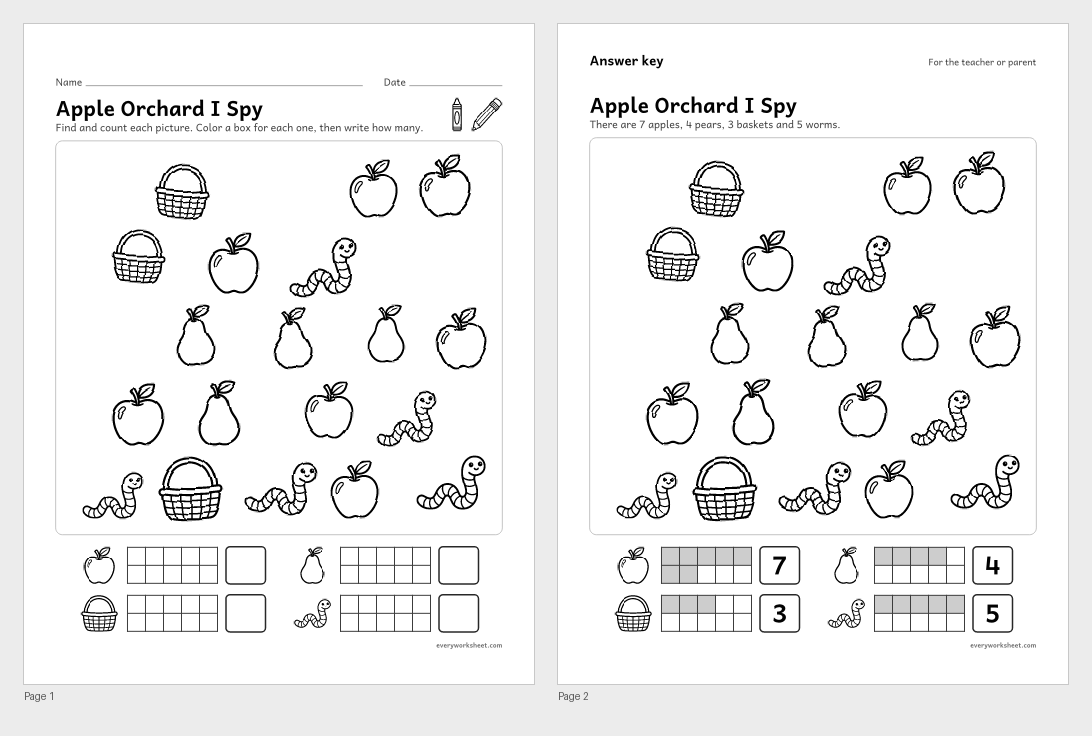
Apple orchard I spy
Finding and counting apple orchard things to 10
Answer key on page 2
2 pages687 KB
Apple worksheets for kindergarten
 View all 2 pages
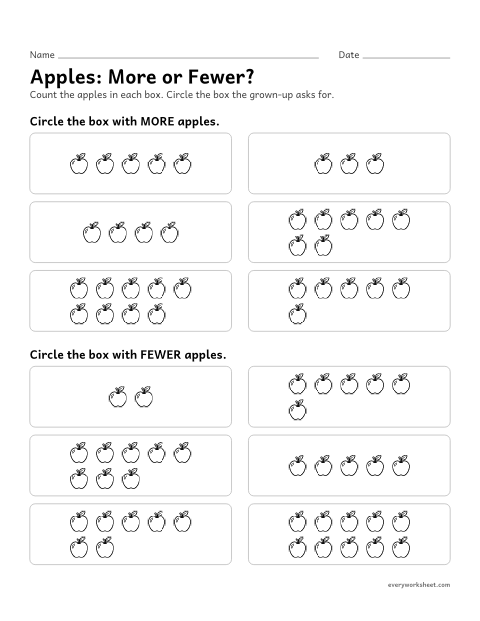
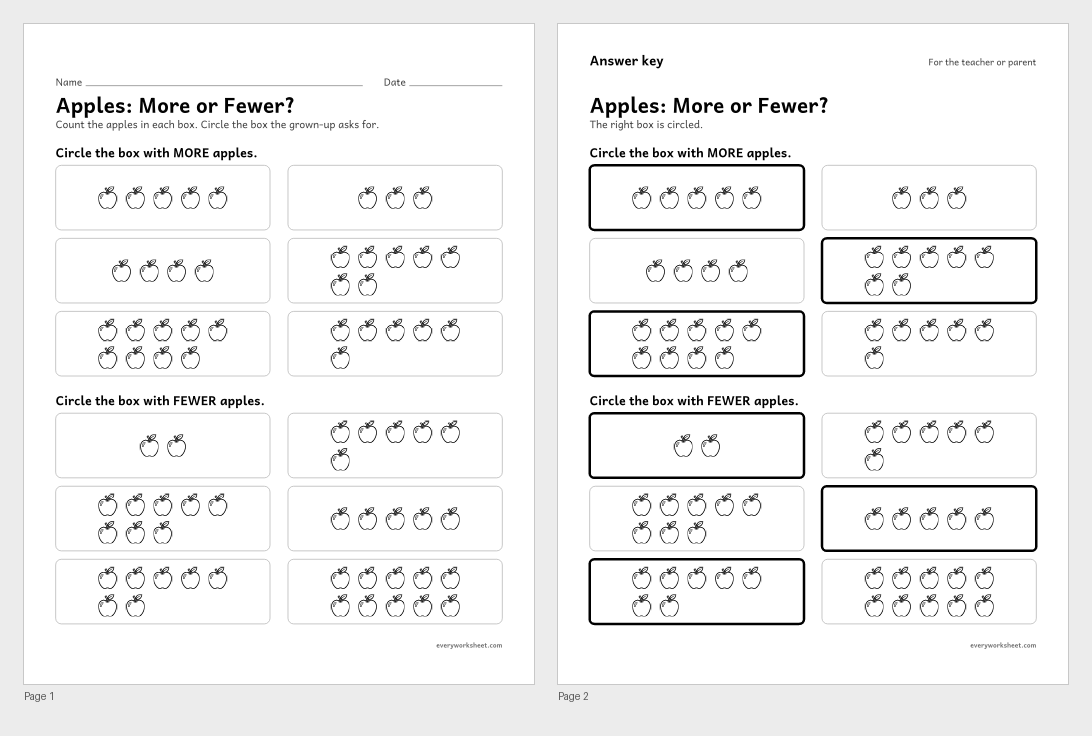
Apples: more or Fewer?
Comparing two groups to find more and fewer
Answer key on page 2
2 pages2.3 MB
 View all 2 pages
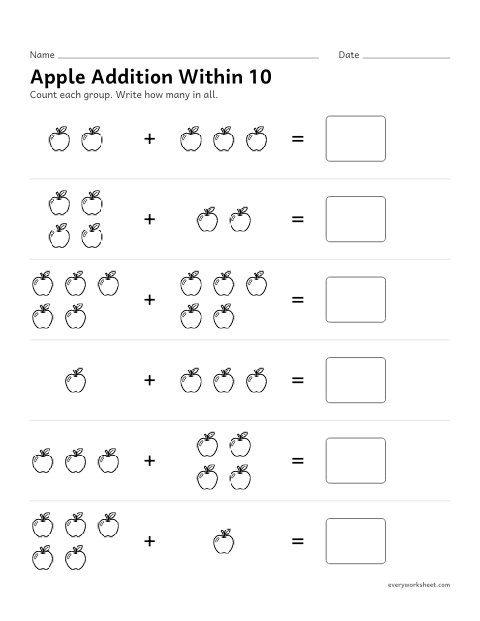
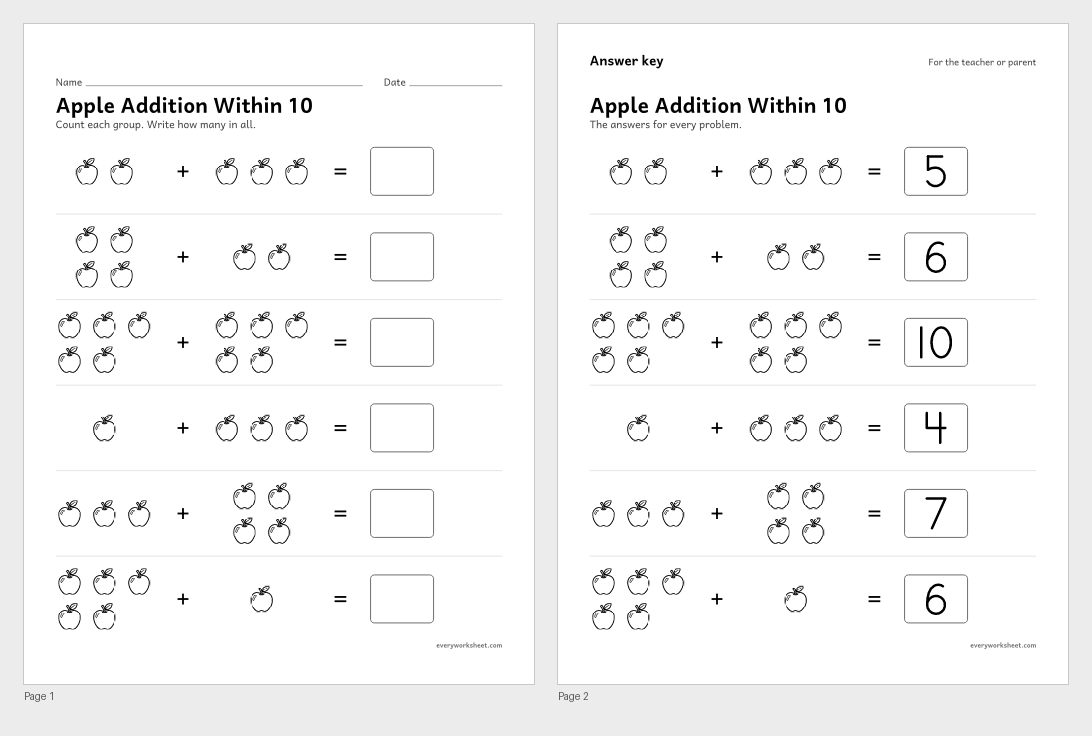
Apple addition within 10
Adding two groups of pictures within 10
Answer key on page 2
2 pages1.2 MB
 View all 2 pages
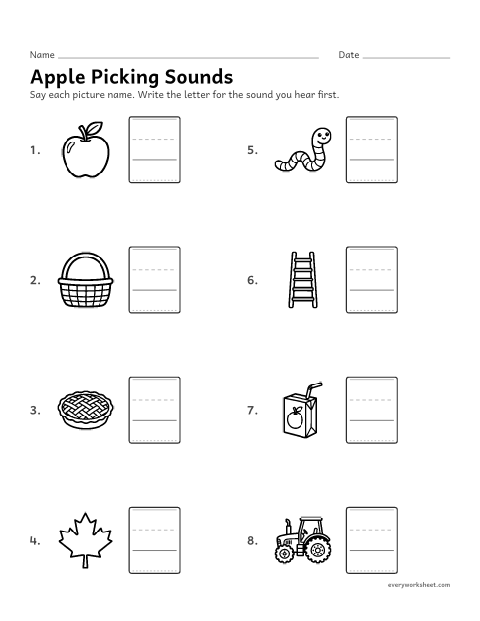
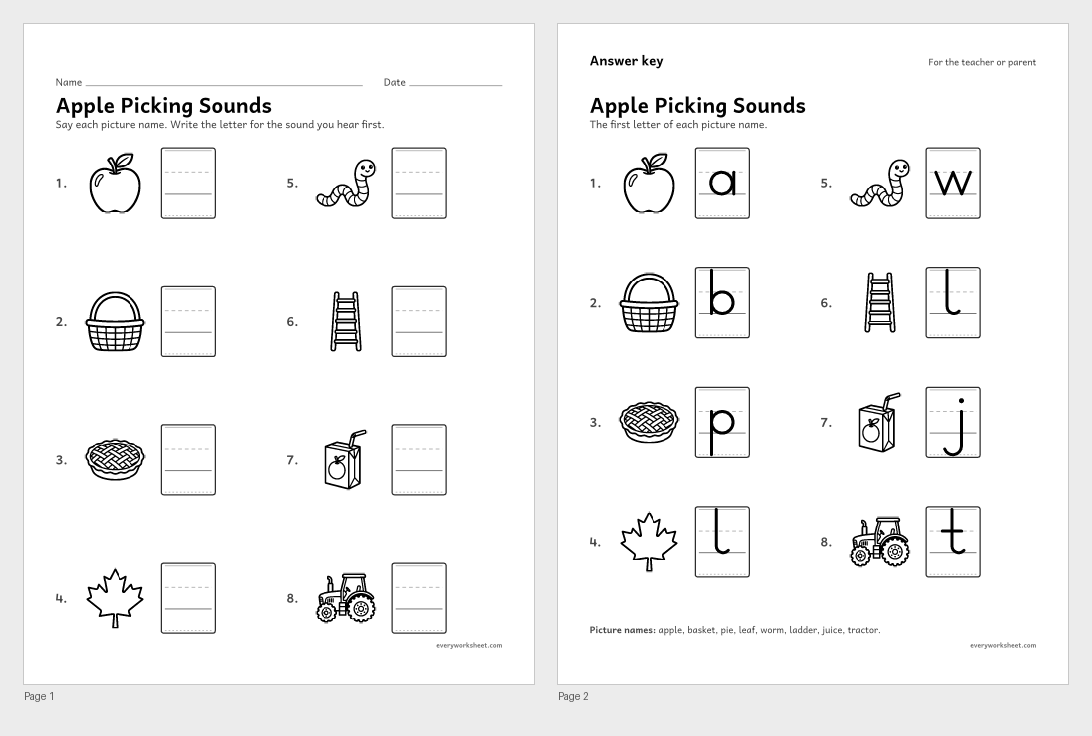
Apple picking beginning sounds
Writing the letter for the first sound in a word
Answer key on page 2
2 pages342 KB
 View all 2 pages
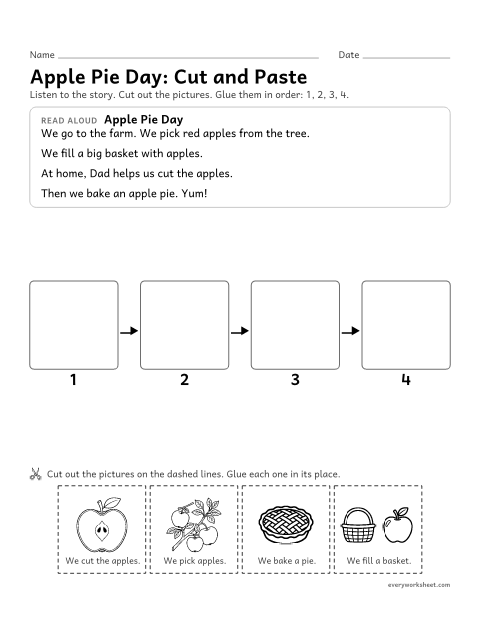
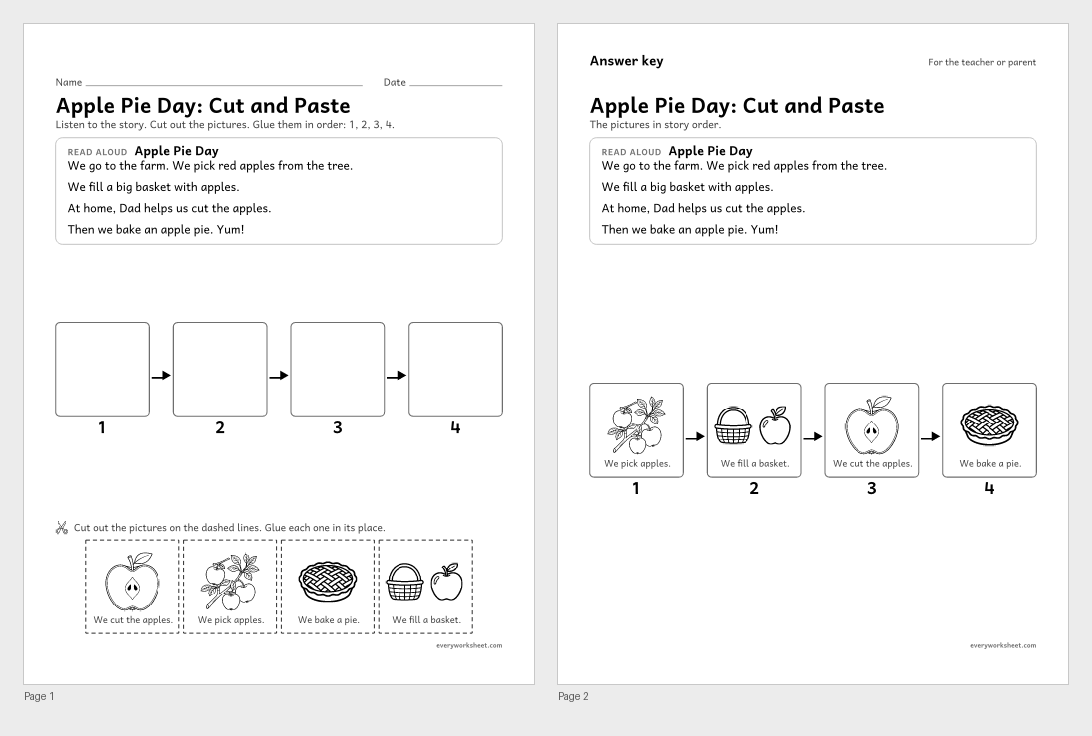
Apple pie story sequencing cut and paste
Putting the events of a story in order
Answer key on page 2
2 pages267 KB
 View all 2 pages
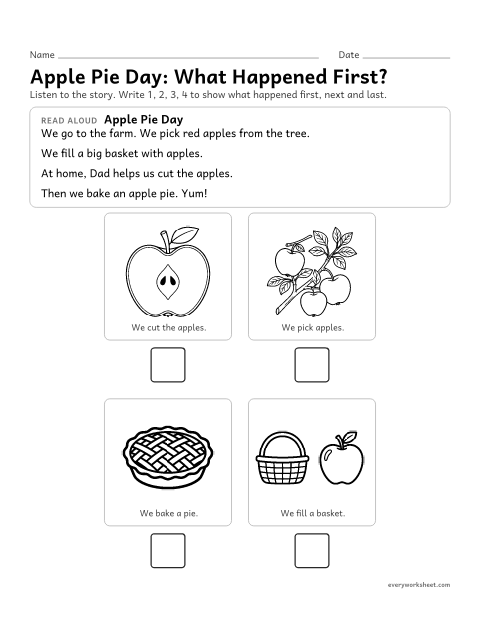
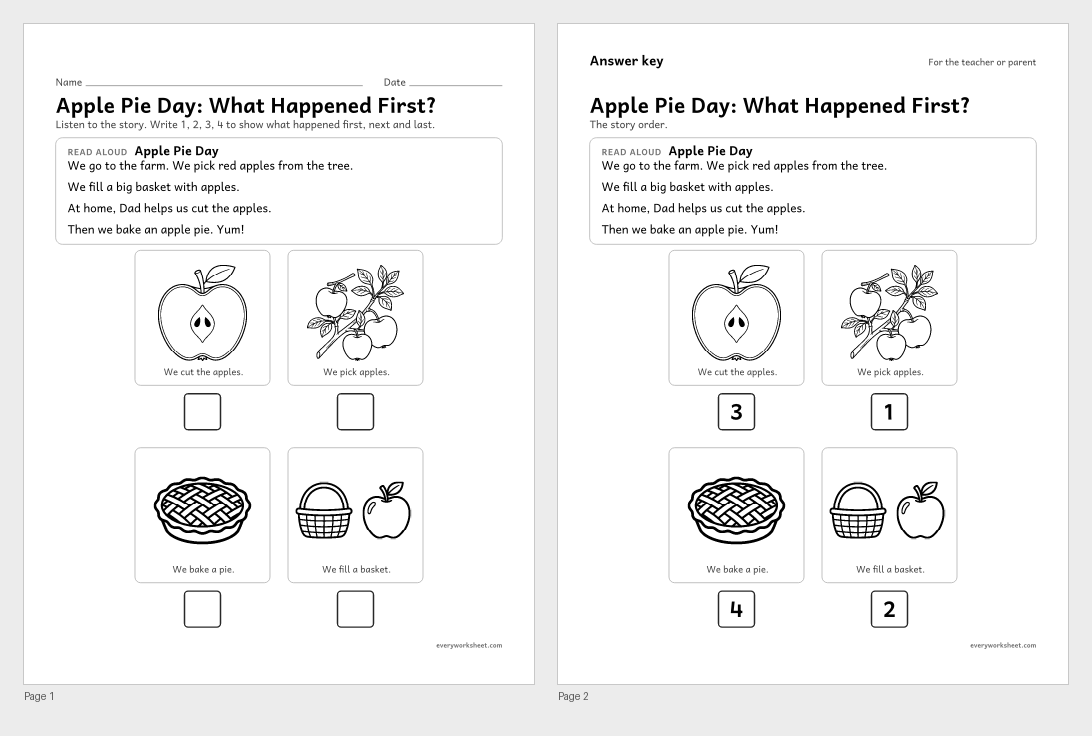
Apple pie story sequencing
Putting the events of a story in order
Answer key on page 2
2 pages241 KB
 View larger
 View all 2 pages
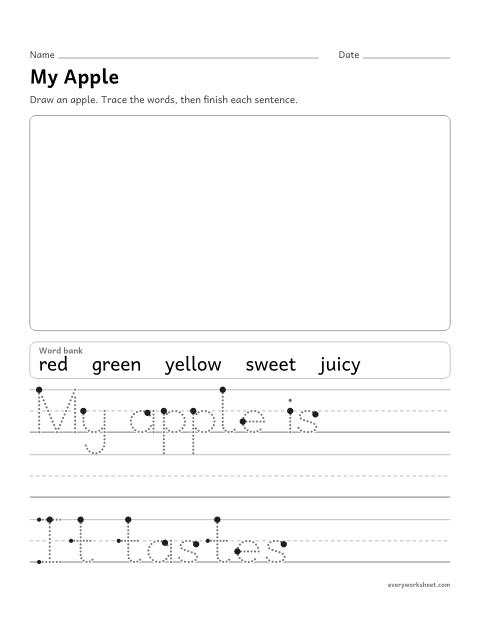
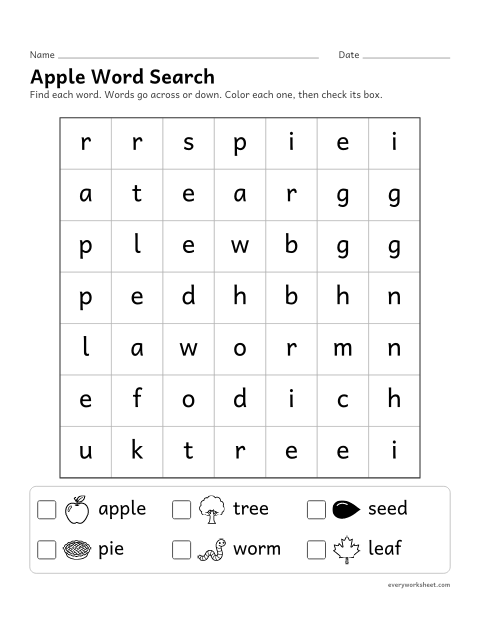
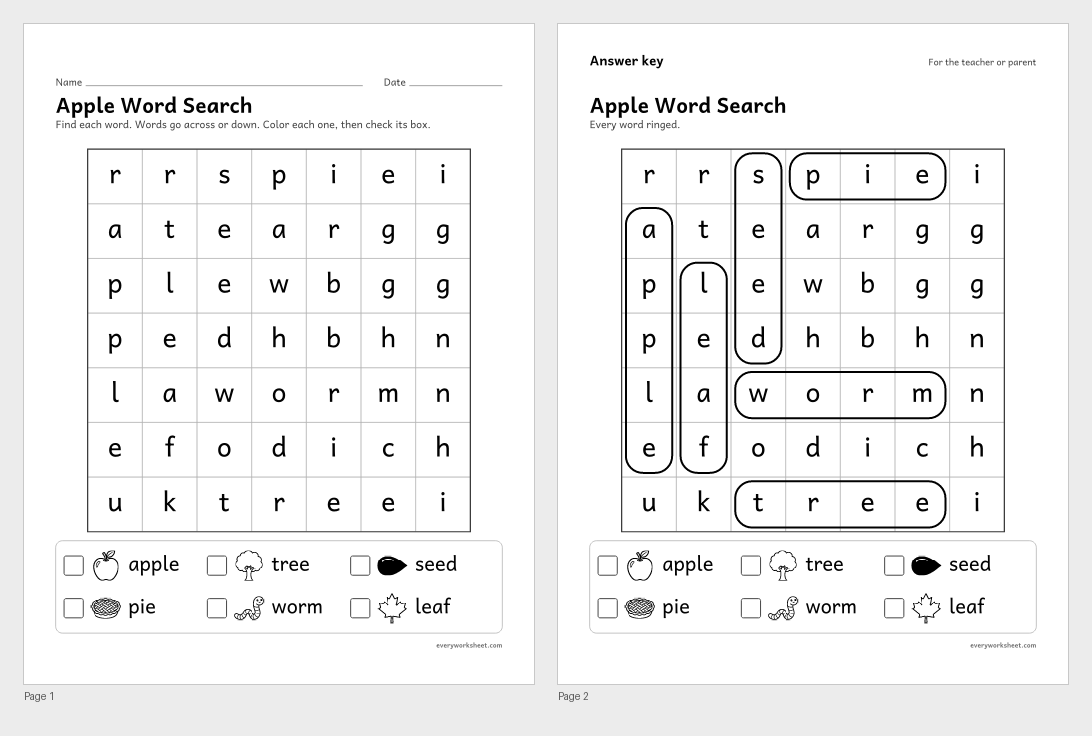
Apple word search
Finding seasonal words by their letters
Answer key on page 2
2 pages207 KB
Apple worksheets for 1st grade
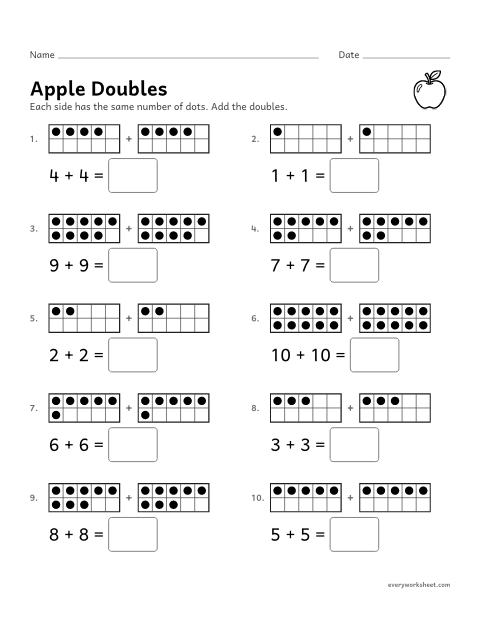 View all 2 pages
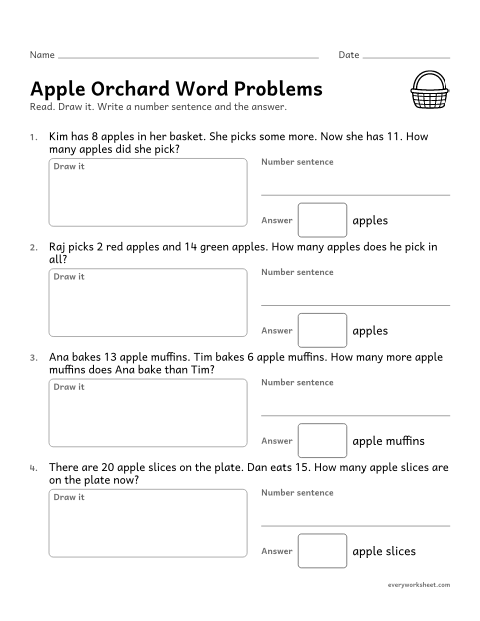 View all 2 pages
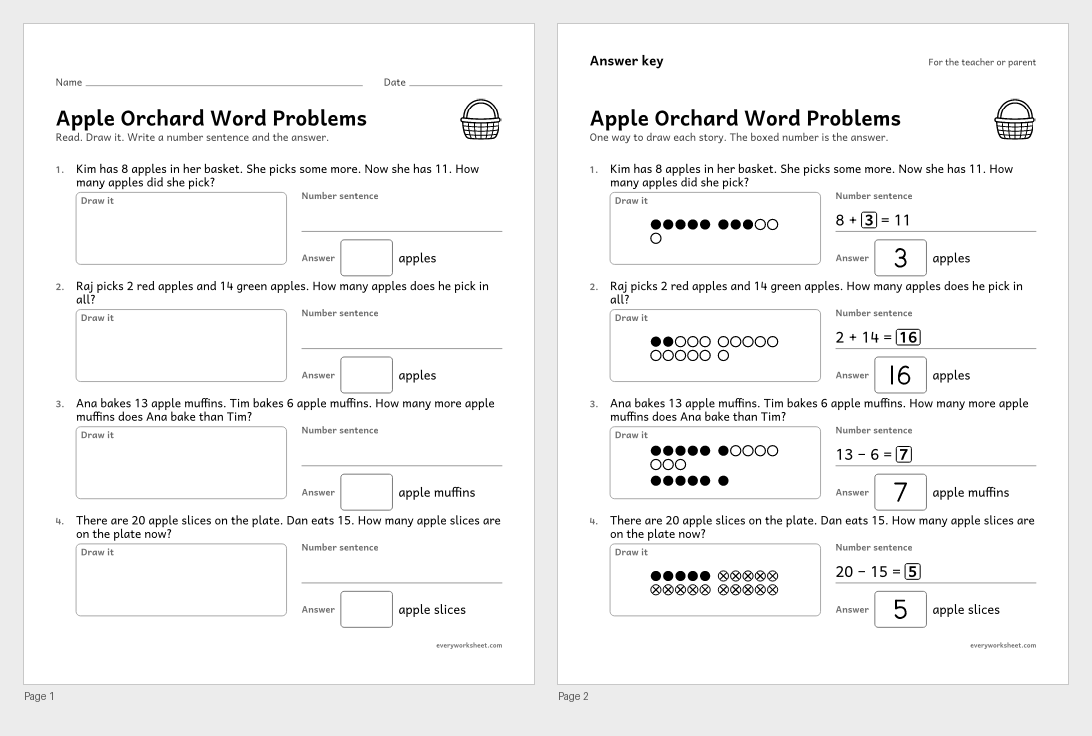
Apple orchard word problems
Solving apple word problems within 20, including compare and missing change
Answer key on page 2
2 pages94 KB
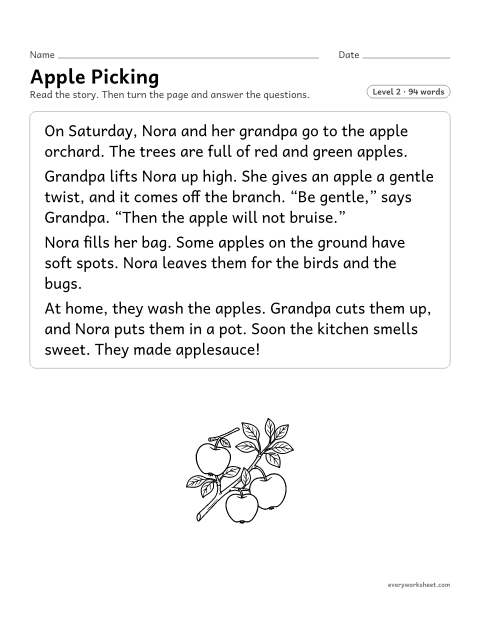 3 pagesView all 3 pages
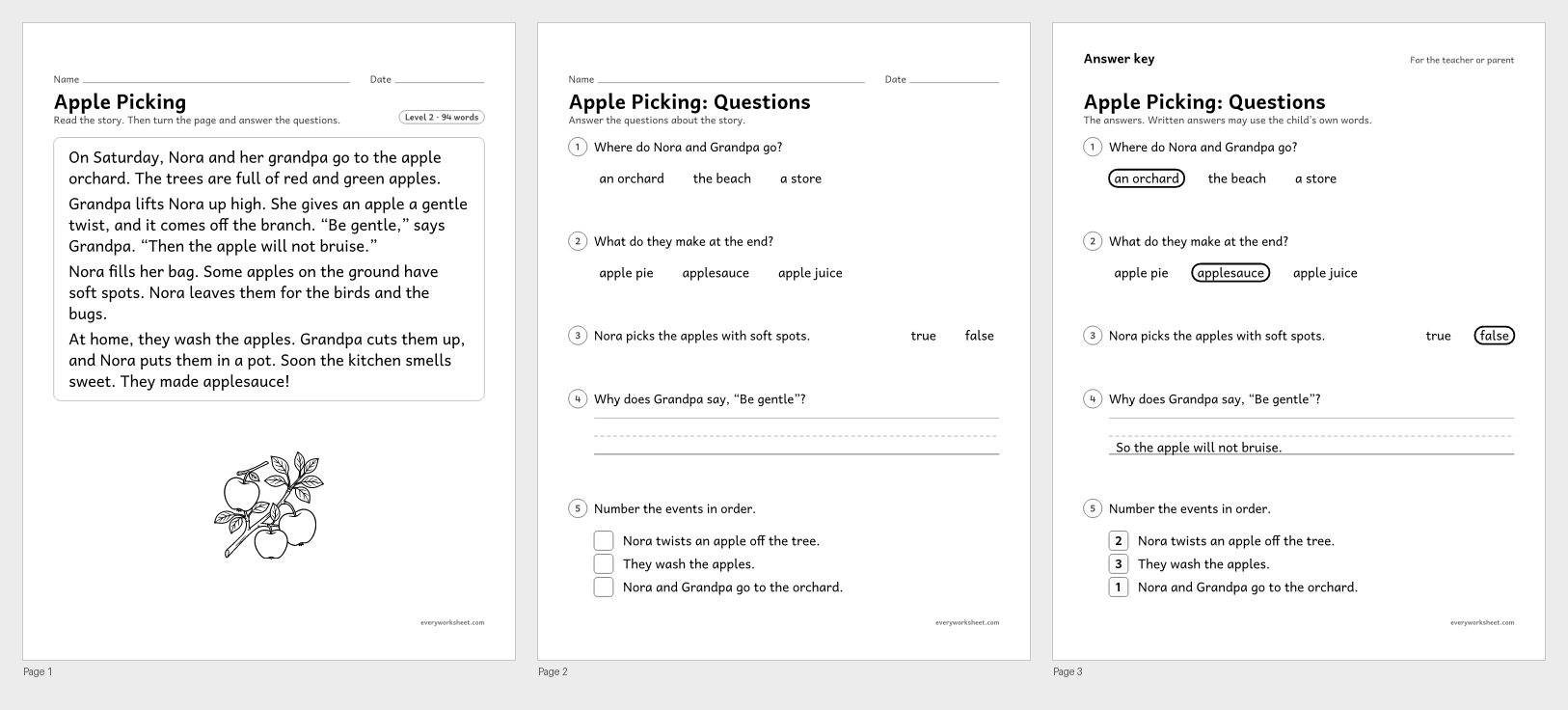
Apple picking
Answering questions about key details in a story about picking apples
Answer key on page 3
3 pages65 KB
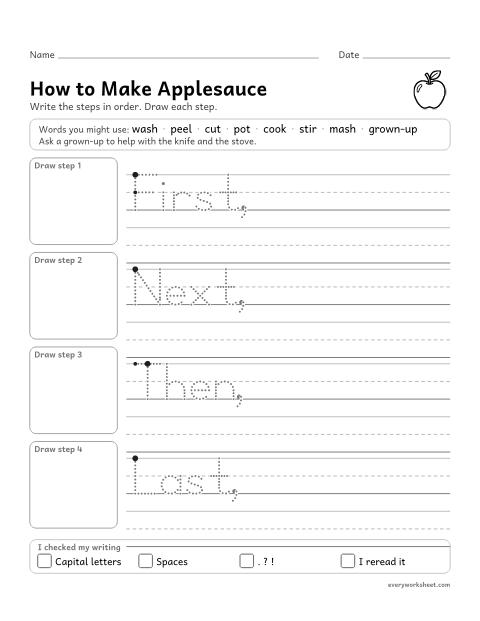 View larger
 View all 2 pages
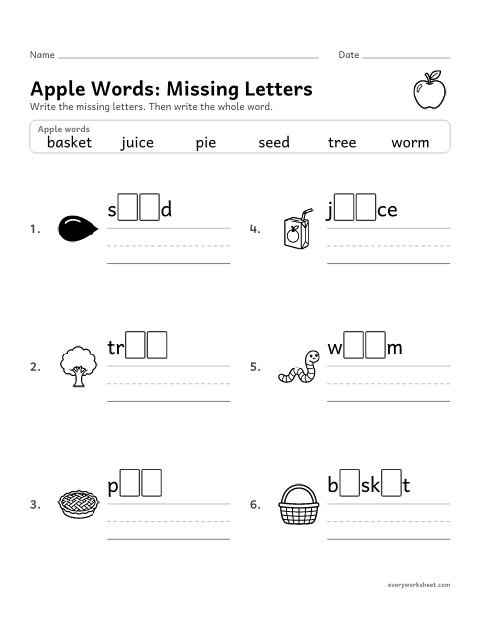
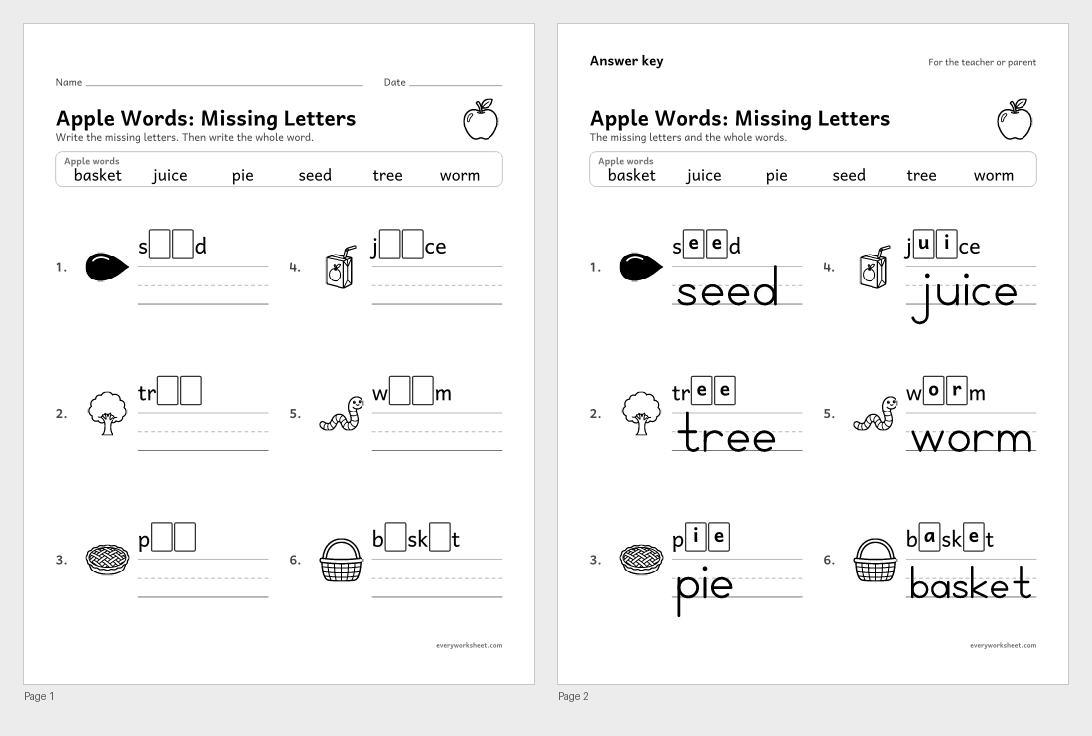
Apple Words: missing letters
Spelling apple words with vowel teams and r-controlled vowels
Answer key on page 2
2 pages270 KB
 View all 2 pages
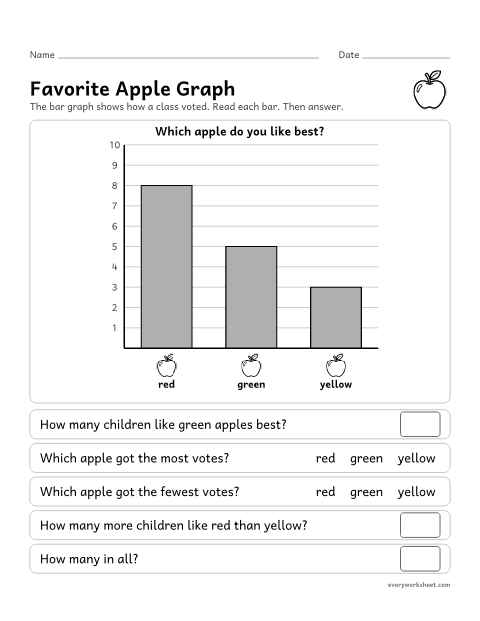
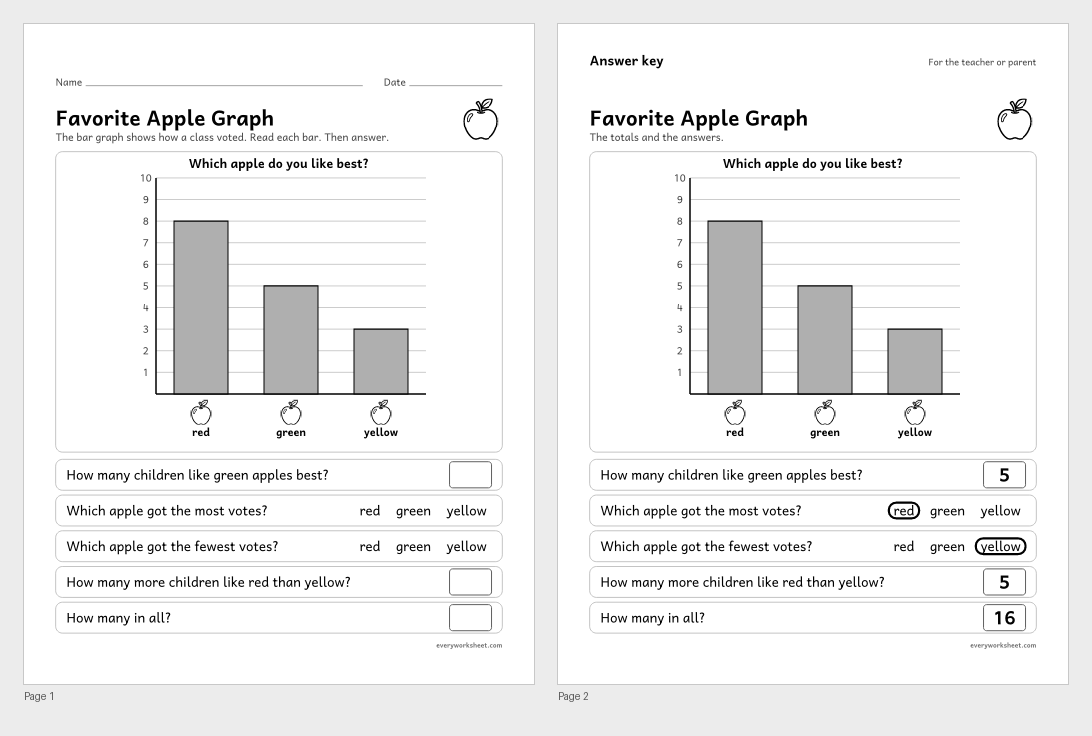
Favorite apple graph
Reading a bar graph and answering how many and how many more
Answer key on page 2
2 pages167 KB
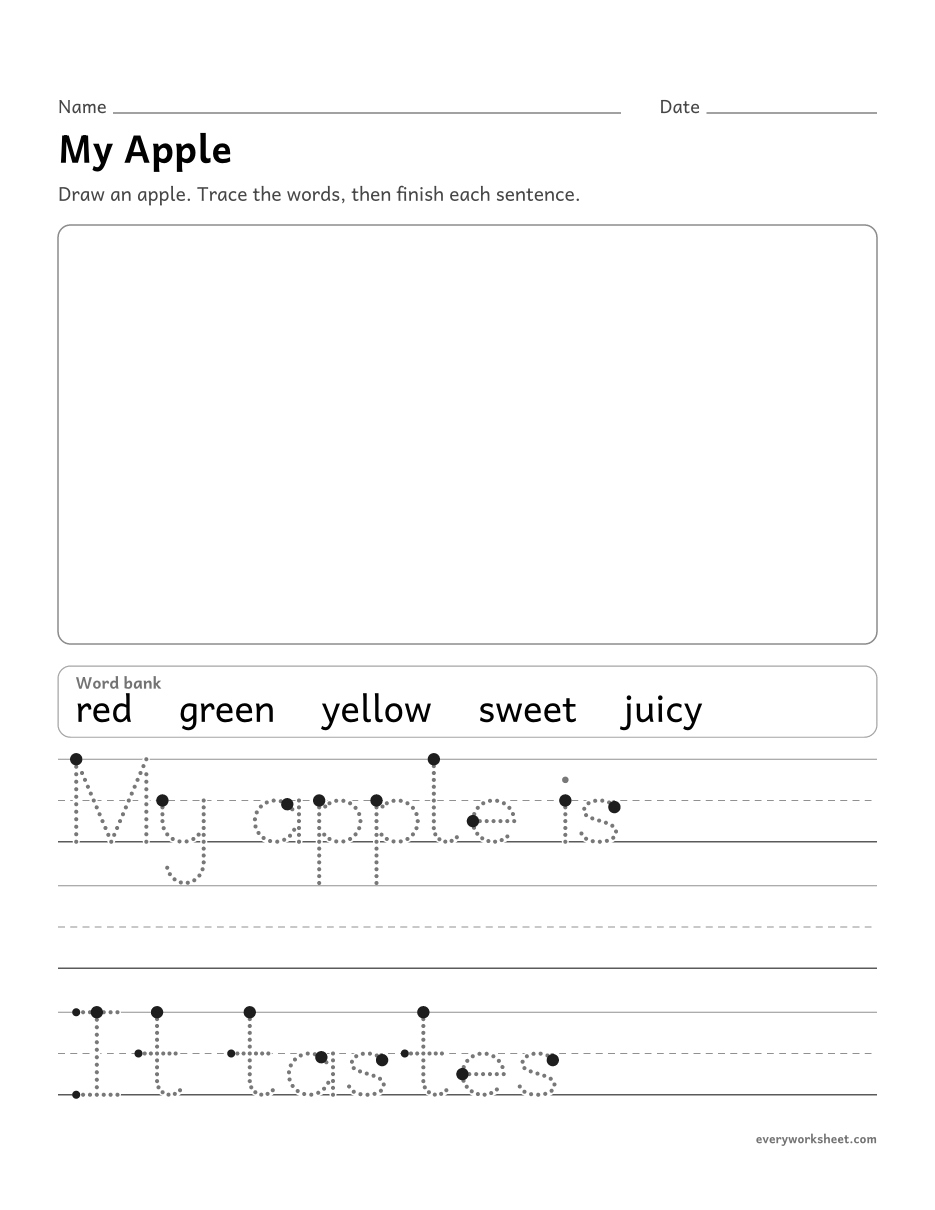
Print at 100% (actual size) for the cleanest tracing lines.
About these apple worksheets
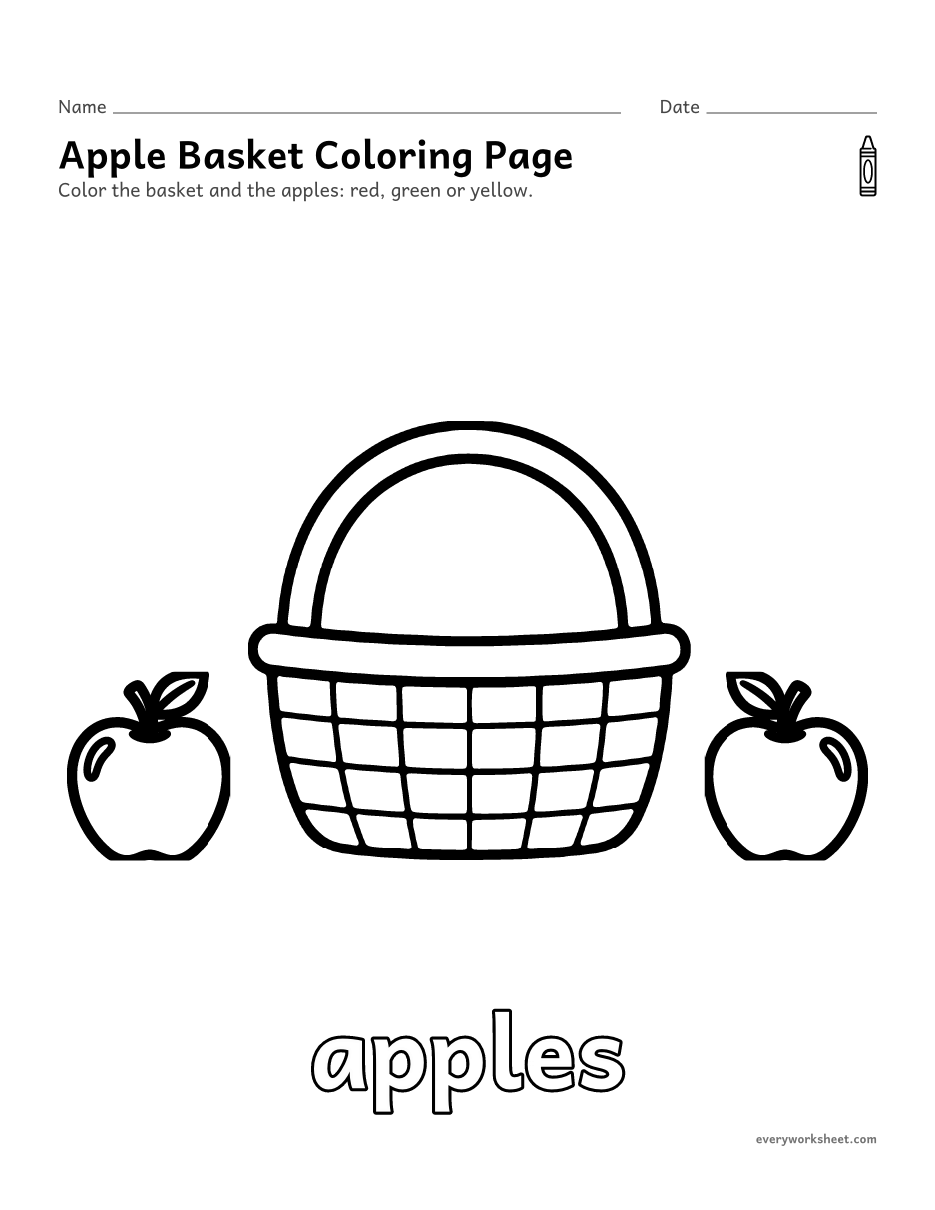
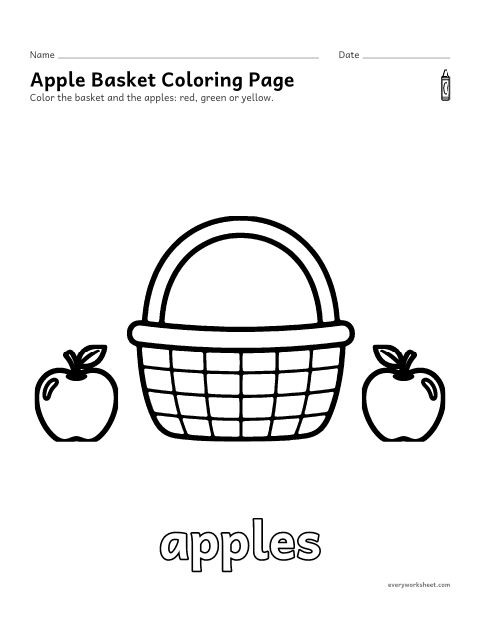
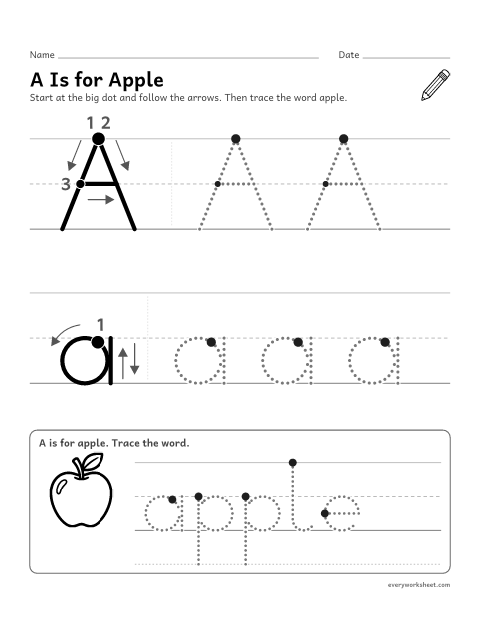
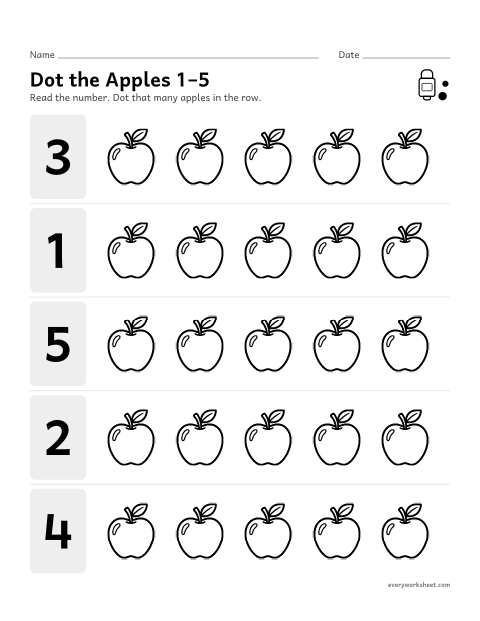
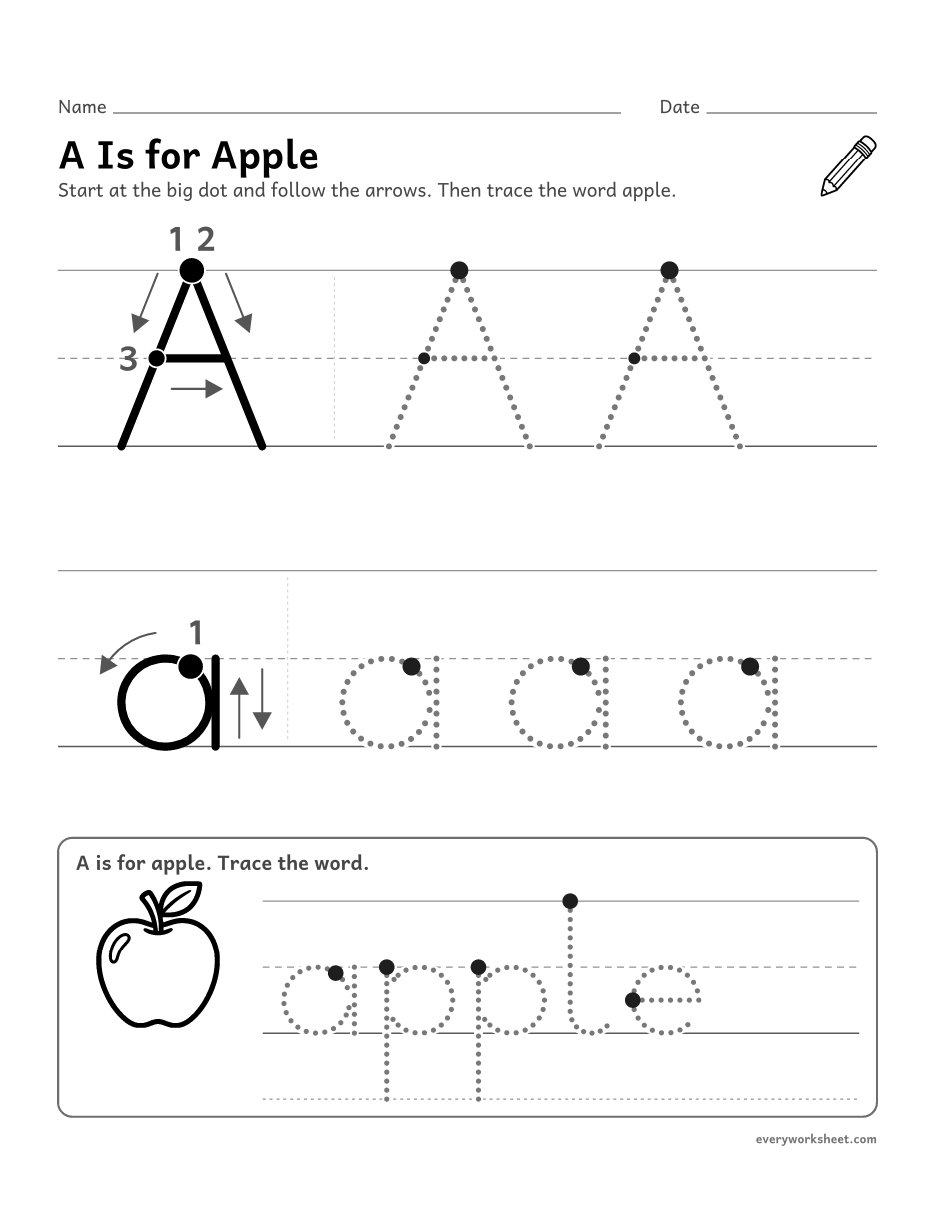
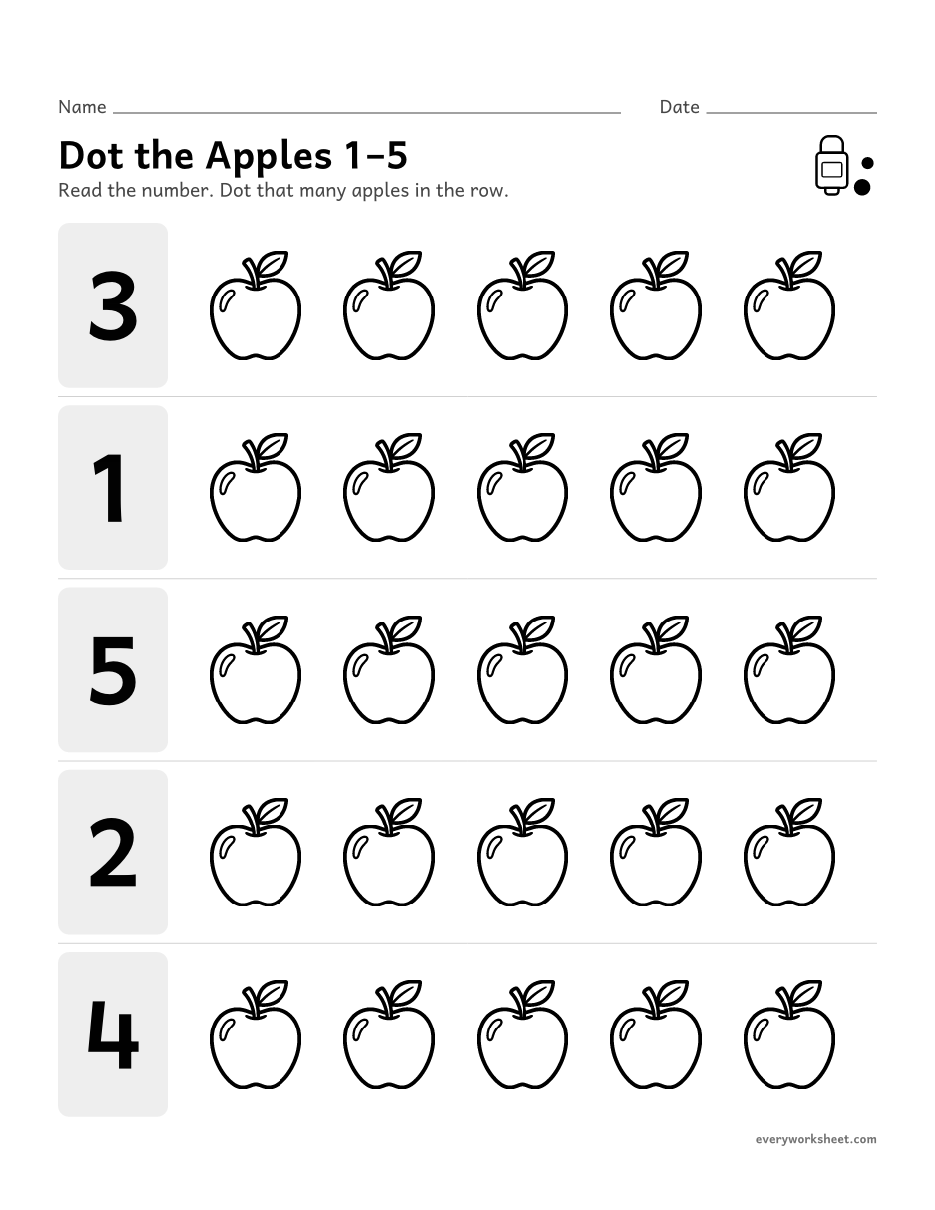
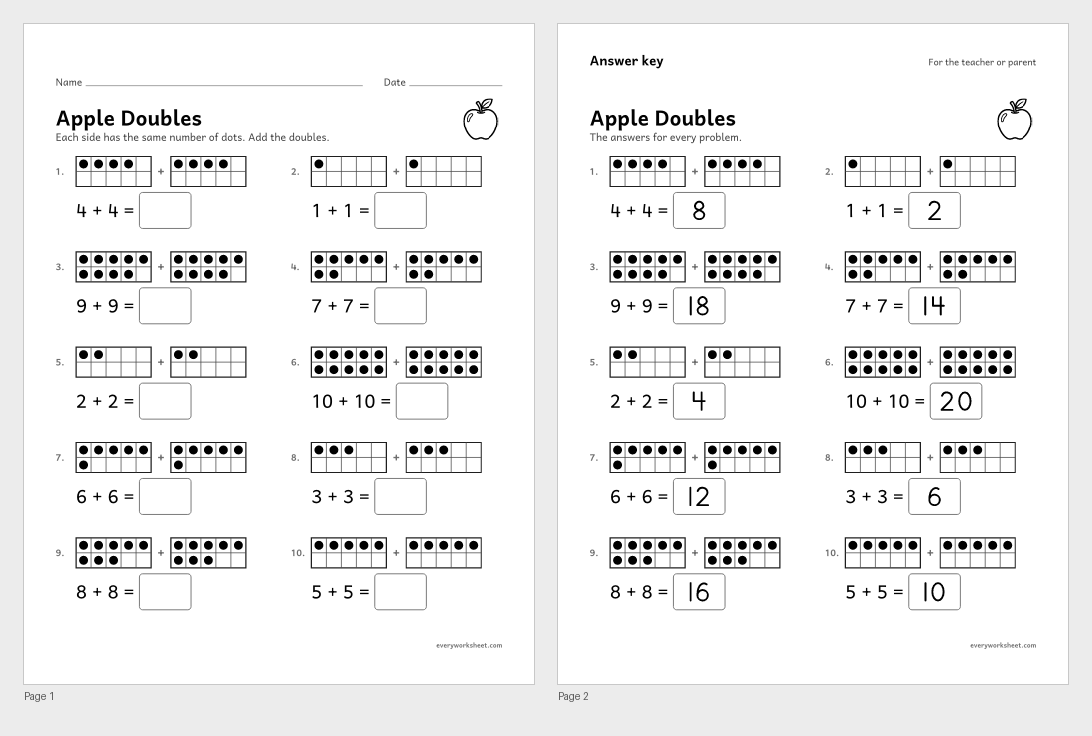
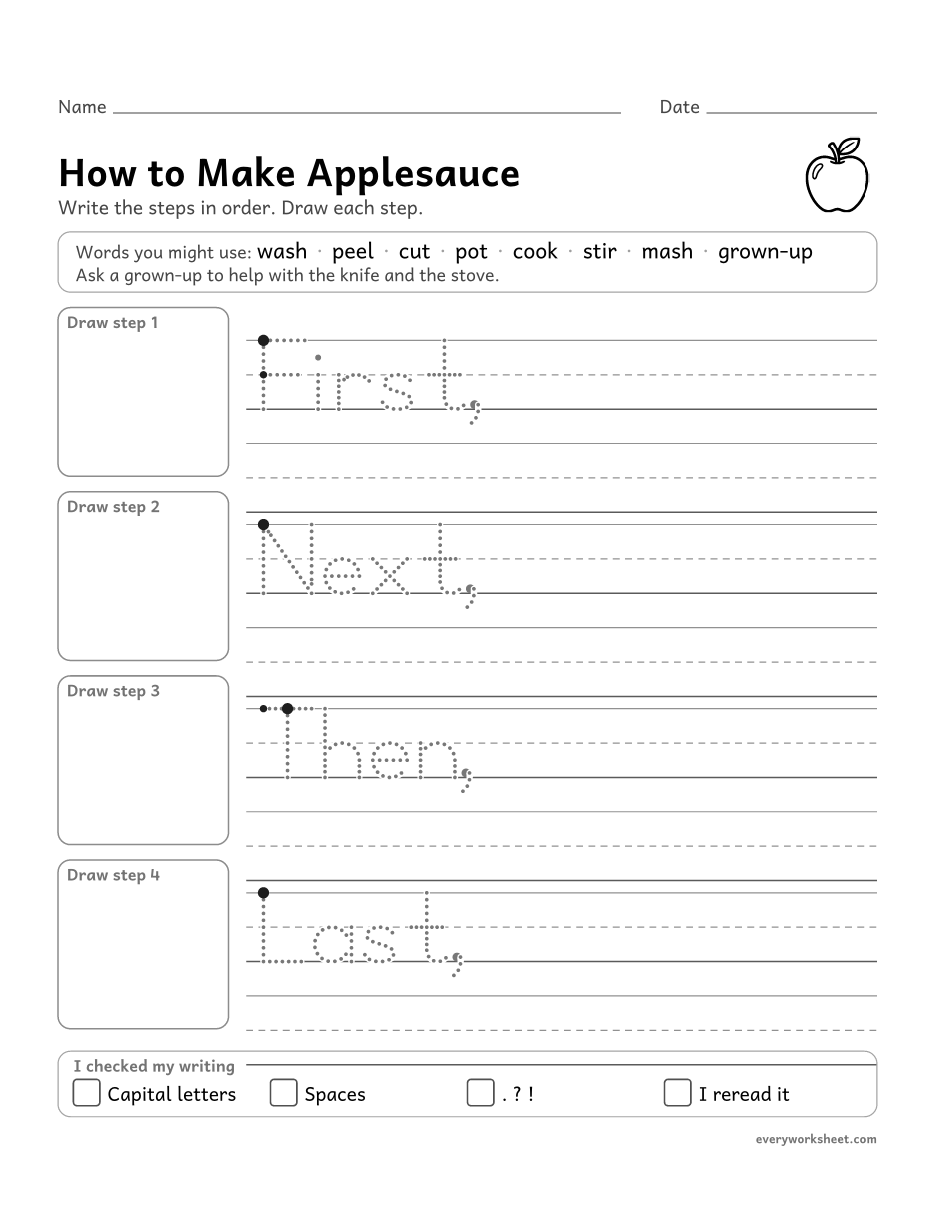
These apple worksheets turn an apple week into real math and literacy practice. Preschoolers color an apple basket, trace A for apple, dot apples to count, put apples in size order and play apple orchard I spy. Kindergartners compare groups of apples, add apples within 10, hear beginning sounds, put an apple pie story in order and write about apples. 1st graders practice doubles, solve apple orchard word problems, read a story about apple picking, write how to make applesauce and graph favorite apples.
For how an apple grows from seed to tree, see Apple Life Cycle. These pages pair well with it in the same week.
Every page is black and white, prints on US Letter or A4, and pages with one right answer have an answer key on page 2.
Standards
ELOF P-LIT 6Child writes for a variety of purposes using increasingly sophisticated marks.ELOF P-MATH 2Child recognizes the number of objects in a small set.ELOF P-MATH 3Child understands the relationship between numbers and quantities.ELOF P-MATH 7Child understands simple patterns.ELOF P-MATH 8Child measures objects by their various attributes using standard and non-standard measurement. Uses differences in attributes to make comparisons.ELOF P-PMP 3Child demonstrates increasing control, strength, and coordination of small muscles.CCSS.MATH.CONTENT.K.CC.C.6Identify whether the number of objects in one group is greater than, less than, or equal to the number of objects in another group, e.g., by using matching and counting strategies.CCSS.MATH.CONTENT.K.OA.A.1Represent addition and subtraction with objects, fingers, mental images, drawings, sounds (e.g., claps), acting out situations, verbal explanations, expressions, or equations.CCSS.ELA-LITERACY.RF.K.1.BRecognize that spoken words are represented in written language by specific sequences of letters.CCSS.ELA-LITERACY.RF.K.3.ADemonstrate basic knowledge of one-to-one letter-sound correspondences by producing the primary sound or many of the most frequent sounds for each consonant.CCSS.ELA-LITERACY.RL.K.2With prompting and support, retell familiar stories, including key details.CCSS.ELA-LITERACY.W.K.2Use a combination of drawing, dictating, and writing to compose informative/explanatory texts in which they name what they are writing about and supply some information about the topic.CCSS.MATH.CONTENT.1.MD.C.4Organize, represent, and interpret data with up to three categories; ask and answer questions about the total number of data points, how many in each category, and how many more or less are in one category than in another.CCSS.MATH.CONTENT.1.OA.A.1Use addition and subtraction within 20 to solve word problems involving situations of adding to, taking from, putting together, taking apart, and comparing, with unknowns in all positions, e.g., by using objects, drawings, and equations with a symbol for the unknown number to represent the problem.CCSS.MATH.CONTENT.1.OA.C.6Add and subtract within 20, demonstrating fluency for addition and subtraction within 10. Use strategies such as counting on; making ten (e.g., 8 + 6 = 8 + 2 + 4 = 10 + 4 = 14); decomposing a number leading to a ten (e.g., 13 - 4 = 13 - 3 - 1 = 10 - 1 = 9); using the relationship between addition and subtraction (e.g., knowing that 8 + 4 = 12, one knows 12 - 8 = 4); and creating equivalent but easier or known sums (e.g., adding 6 + 7 by creating the known equivalent 6 + 6 + 1 = 12 + 1 = 13).CCSS.ELA-LITERACY.RL.1.1Ask and answer questions about key details in a text.CCSS.ELA-LITERACY.L.1.2.DUse conventional spelling for words with common spelling patterns and for frequently occurring irregular words.CCSS.ELA-LITERACY.W.1.2Write informative/explanatory texts in which they name a topic, supply some facts about the topic, and provide some sense of closure.
How to use them
- Pick the group for your child's grade, or mix pages across a week of apple learning.
- Bring in real apples. Cut one across the middle to find the star of seeds, then count the seeds.
- Do an apple taste test (red, green and yellow) before the 1st grade graph, and graph your own class votes on the back.
- Read the apple pie story aloud before children put the pictures in order.
Teaching tips
- Preschool: use small and large real apples to show small, medium and big before the size order page.
- Kindergarten: on more or fewer, line up the two groups one to one, then look at which row has apples left over.
- 1st grade: doubles are easy to see with apple halves. Two halves make one apple; 4 + 4 is 8 halves.
- Making applesauce or apple slices together turns the how-to writing page into a real retell.
Questions teachers and parents ask
When should I use apple worksheets?
In September and October, during apple season. Many classes do an apple week near Johnny Appleseed's birthday on September 26 or after a trip to an orchard.
Do you have apple life cycle pages?
Yes. Apple Life Cycle has the seed to tree cycle, the parts of an apple and more. These apple worksheets focus on math and literacy.
Is there an answer key?
Yes. Every page with one right answer has an answer key on page 2 of the same PDF. Coloring, tracing, playdough and writing pages do not need one.
Can I use the cut and paste pages without scissors?
Yes. Every cut and paste page has a no-cut twin: children draw lines or write numbers instead.